Our Top Picks


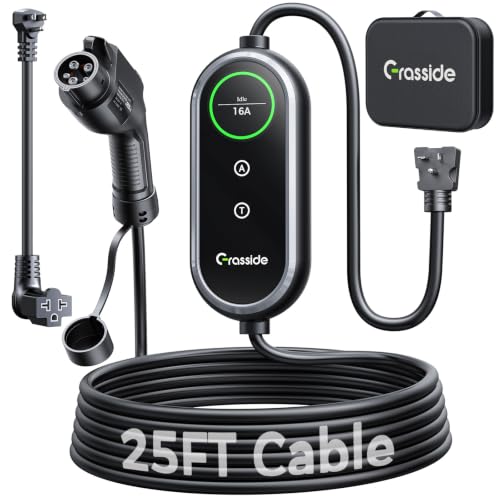


What's inside
- Who a dual-level charger actually suits
- The charging math, worked in full
- Adjustable amperage and the eighty percent rule
- The plug ecosystem, outlet by outlet
- The vehicle connector: J1772 and the Tesla question
- Cable length, gauge, and cold mornings
- Travel use cases that justify the combo design
- Safety certification is the whole ballgame
- Weather ratings and outdoor mounting
- Displays, timers, apps, and the case for simple units
- The onboard charger is the real ceiling
- Common mistakes that cause most of the trouble
- Installation decisions: receptacle, circuit, and electrician
- Electricity cost, rates, and what speed does to the bill
- Two electric cars, one circuit
- Reading faults instead of fearing them
- Check prices on Amazon
- A decision framework that starts with the car
As an Amazon Associate I earn from qualifying purchases. This post may contain affiliate links at no extra cost to you.
A dual-level portable charger, often sold as a combo Level 1 and Level 2 EVSE, is a single charging cord that can draw power at two very different rates depending on which wall outlet it is connected to and which adapter sits on its input end. Plugged into an ordinary household outlet, it behaves like the slow emergency cord that ships with many electric cars. Fitted with a larger adapter and connected to a 240-volt outlet of the kind used by electric dryers, ranges, and recreational vehicle parks, the same unit delivers several times the power and turns an overnight trickle into a genuinely useful overnight charge.
Disclosure: this guide contains affiliate links, and if you buy through a link on this page the retailer may pay us a commission that helps fund the research behind these guides at no extra cost to you. Our research compared manufacturer spec sheets, listing databases, electrical code references, and vehicle documentation, and the recommendations below reflect that published documentation rather than any claim about how a charger performed in a garage we controlled. Prices and availability change, so check the retailer listing for current details before you order.
The word EVSE matters here. The box on the cord is technically electric vehicle supply equipment, not the charger itself. The actual charger that converts alternating current from the wall into direct current for the battery lives inside the vehicle, and the EVSE is a smart, safety-monitored switch that negotiates with the car, advertises how much current it is allowed to draw, and opens or closes the connection when conditions are safe. Understanding that division explains almost every confusing specification on these products, from why a bigger unit cannot speed up a car with a small onboard charger to why the safety electronics matter more than the housing color.
Who a dual-level charger actually suits
The natural buyer is a driver whose charging life spans two worlds. At home there may be a 240-volt outlet in the garage, or the realistic prospect of adding one, while at a parent’s house, a rented cabin, or a workplace there is only a standard wall outlet within reach of the parking spot. A dual-level unit covers both without forcing the owner to carry two separate cords, and it replaces the single-purpose Level 1 cord in the trunk with something far more capable when opportunity appears.
Renters are a second strong fit. A tenant who cannot justify paying an electrician to hardwire a wall unit into someone else’s property can still use a dryer outlet or a range outlet that already exists, unplug the charger when the lease ends, and take it along. The same logic applies to households expecting to move within a few years, to military families who relocate often, and to anyone whose second home, workshop, or lake house has a 240-volt receptacle but no permanent charging installation.
Drivers of plug-in hybrids form a third group that is easy to overlook. A hybrid with a battery in the range of eight to eighteen kilowatt-hours charges fully in a couple of hours at modest Level 2 rates, so a portable dual-level unit is often all the charging hardware such a household will ever need. The Level 1 mode remains useful at destinations, and the modest amperage settings suit older wiring that would never support a high-current wall unit running all night.
There are also buyers for whom this category is the wrong answer. A driver with a long commute, a large-battery truck or SUV, and a fixed home parking spot will usually be better served by a permanently installed, hardwired wall unit on a dedicated circuit sized for the vehicle. A dual-level portable tops out at forty amps in most designs, depends on a receptacle that wears with repeated plugging, and offers fewer mounting and cable-management options than a fixed installation designed for daily use over a decade.
The charging math, worked in full
Power in this category is simple multiplication. Watts equal volts multiplied by amps, and kilowatts are watts divided by one thousand. A Level 1 connection in North America supplies 120 volts. A portable EVSE on a standard household circuit is limited to twelve amps of continuous draw, so the arithmetic is 120 multiplied by 12, which gives 1,440 watts, or roughly 1.4 kilowatts. That figure is the ceiling for Level 1, no matter how rugged the cord looks or how the product page phrases it.
Miles of range per hour follow from vehicle efficiency. Most electric cars use somewhere between 250 and 350 watt-hours per mile depending on size, speed, temperature, and terrain. Dividing 1.4 kilowatts by those consumption figures gives roughly four to five and a half miles of range added per hour before charging losses, and a realistic planning figure of three to five miles per hour once conversion losses and battery conditioning are included. Over a ten-hour overnight session, that is thirty to fifty miles, which genuinely covers a short commute but leaves a depleted large battery still depleted in the morning.
Level 2 uses 240 volts, and the steps scale quickly. At sixteen amps, 240 multiplied by 16 gives 3,840 watts, about 3.8 kilowatts. At twenty-four amps the product is 5,760 watts, about 5.8 kilowatts. At thirty-two amps the result is 7,680 watts, about 7.7 kilowatts. At forty amps the result is 9,600 watts, about 9.6 kilowatts. Each step is a direct consequence of the same multiplication, which is why spec sheets that advertise a kilowatt figure wildly out of line with the stated amperage deserve immediate suspicion.
Translated into range, those power levels add roughly twelve to fifteen miles per hour at sixteen amps, eighteen to twenty-two at twenty-four amps, twenty-five to thirty at thirty-two amps, and thirty to thirty-five at forty amps for a typical midsize electric car. A sixty kilowatt-hour battery that arrives nearly empty needs about forty-three hours at Level 1, about sixteen hours at sixteen amps, about eight hours at thirty-two amps, and a little over six hours at forty amps, again before losses. The overnight question therefore answers itself: Level 2 at even the middle settings turns a full charge into a single night’s work.
Losses deserve their own paragraph because they explain why wall energy and battery energy never match exactly. The onboard charger converts alternating current to direct current with an efficiency commonly in the mid-eighties to low-nineties percent range, and the battery itself, the cooling or heating system, and the vehicle’s standby electronics consume part of what arrives. Level 1 tends to lose a larger share because the session lasts so long that fixed overheads accumulate for more hours, which is one more reason a driver who charges daily at home usually spends less on electricity per mile at Level 2 despite drawing far more power at any given moment.
Adjustable amperage and the eighty percent rule
Electrical code in the United States treats an EV charging session as a continuous load, meaning a load expected to run for three hours or more. The National Electrical Code requires that a continuous load use no more than eighty percent of the circuit’s rated capacity, because breakers, receptacles, and conductors heat up over long sessions in ways that short bursts never reveal. That single rule generates the pairings every buyer should memorize before touching an amperage setting.
A charger set to sixteen amps belongs on a twenty-amp circuit. A charger set to twenty-four amps belongs on a thirty-amp circuit. A charger set to thirty-two amps belongs on a forty-amp circuit. A charger set to forty amps belongs on a fifty-amp circuit. In each case the charging current is exactly eighty percent of the breaker rating, and the wiring, breaker, and receptacle are all sized to carry that load for an entire night without running hot.
Adjustable amperage exists precisely because real outlets rarely match a charger’s maximum. Many dual-level units offer settings such as ten, sixteen, twenty-four, and thirty-two amps, or a smaller set chosen by swapping adapters. The better designs tie the maximum current to the adapter fitted: attach the household adapter and the unit caps itself at twelve amps, attach the large 240-volt adapter and it allows the higher steps. Designs that rely entirely on the user remembering to dial down the current before plugging into a smaller circuit place a safety-critical decision in the hands of a tired driver at midnight.
The dryer outlet scenario shows why adjustment matters in practice. A common dryer receptacle sits on a thirty-amp circuit, which supports twenty-four amps of continuous charging, not thirty-two. A charger left at its thirty-two-amp setting on that circuit will usually trip the breaker eventually, and repeated trips are a warning, not an inconvenience to be managed by resetting the panel and trying again. Setting the unit to twenty-four amps, or choosing a model whose dryer adapter enforces that ceiling automatically, is the correct and only acceptable approach.
Panel capacity sits behind the circuit rating. A house with a one-hundred-amp service panel that already runs electric cooking, electric water heating, and air conditioning may have little headroom left at the hours when those loads coincide. An electrician performing a load calculation under the code can state plainly whether a new forty- or fifty-amp circuit fits, whether a smaller twenty- or thirty-amp circuit is the honest limit, or whether load management equipment is needed. Adjustable amperage makes a modest circuit genuinely useful, since twenty-four amps at 240 volts still delivers more than four times the power of Level 1.
Some chargers advertise current adjustment through a button on the control box, others through an app, and others through interchangeable adapter recognition alone. Button-based adjustment has the advantage of working with cold hands and no phone, but it also creates the risk of an accidental change, so designs that require a long press or that lock the setting once charging begins are preferable. App-based adjustment is convenient from inside the house, though it adds an account, a password, and a dependency on the manufacturer’s servers for a function that a dial handled perfectly well a generation ago.
The plug ecosystem, outlet by outlet
Every dual-level charger lives or dies by its adapters, because the adapter is what connects one electronic control box to a wall of mutually incompatible receptacles. The input side of the unit is a short pigtail or a proprietary connector, and each adapter translates that connector into a specific plug pattern with a specific voltage and current rating. Treating adapters as trivial accessories is a mistake; they carry the full charging current for hours and their internal wiring tells better chargers which current ceiling to apply.
The starting point is the NEMA 5-15 plug, the ordinary three-prong household plug found on lamps and phone chargers. On a dual-level EVSE this adapter enables Level 1 charging at 120 volts and twelve amps. It fits the outlets in garages, on porches, and on the exterior walls of older houses, which is exactly why it remains indispensable for travel even though it is slow. Buyers should confirm that the household adapter is a genuine three-prong grounded design and that the unit refuses to charge, rather than charging anyway, when it detects a missing ground.
The NEMA 14-50 is the workhorse of portable Level 2 charging. It is a four-prong, 240-volt, fifty-amp receptacle originally common for electric ranges and now standard at recreational vehicle parks, where it is often labeled the fifty-amp service connection. A dual-level charger with a 14-50 adapter can draw up to forty amps continuously from a healthy 14-50 circuit, which is the maximum most portable units offer. Because so many campgrounds, fairgrounds, and newer garages already have this receptacle, the 14-50 adapter is usually the single most valuable piece in the bag.
The NEMA 6-50 is the welder’s outlet: three prongs, 240 volts, fifty amps, no neutral conductor. Workshops and farm buildings frequently have one installed for a welder or a plasma cutter, and a charger with a 6-50 adapter can use the same circuit at up to forty amps. The absence of a neutral does not matter to an EVSE, which only needs the two hot conductors and ground, but the adapter must be made for this purpose rather than improvised, and the circuit may be shared with heavy shop equipment that should never run at the same time as a charging session.
Dryer outlets come in two generations. The older NEMA 10-30 is a three-prong, thirty-amp receptacle without a separate ground, common in houses built before the mid-1990s. The newer NEMA 14-30 is a four-prong, thirty-amp receptacle with separate neutral and ground. Both support twenty-four amps of continuous charging when the circuit is sound. The 10-30 deserves extra caution: its missing ground means the charger’s own ground-fault protection carries more of the safety burden, the receptacle itself is often decades old, and many electricians advise replacing the circuit rather than adapting to it indefinitely. Readers comparing chargers for twelve-volt accessories in the same garage will find a different plug world entirely in our notes at best 12 volt battery chargers, which covers the clamp-and-terminal side of vehicle charging.
Adapter quality matters because adapters concentrate heat. Each adapter contains blade contacts, internal conductors, and often a temperature sensor, all packed into a small housing that sits in the wall outlet for eight hours under load. A well-made adapter uses conductors sized for the full rated current, blades that grip firmly, and a housing material that tolerates sustained warmth. A poorly made one develops resistance at a loose contact, resistance becomes heat, and heat degrades the contact further in a cycle that ends with a melted receptacle. This is why the adapter supplied or approved by the charger manufacturer is the only adapter that should be used, and why stacking generic travel adapters between the charger and the wall is unsafe.
Third-party adapter ecosystems exist for turning one receptacle type into another, including dryer splitters that share a dryer outlet between the dryer and a charger. A quality automatic splitter that never energizes both loads at once can be a legitimate solution for a laundry-room charging setup, provided it is listed by a recognized testing laboratory and rated for continuous duty. A passive Y-cable that simply parallels two loads onto one thirty-amp circuit is a different and dangerous object, because nothing prevents the dryer and the car from drawing together and overloading conductors hidden inside the wall.
Buyers should also note what is missing from most kits. Adapters for the NEMA 14-30 and 10-30 are frequently sold separately from the main unit, and the locking TT-30 receptacle found on the thirty-amp pedestals at older campgrounds needs its own adapter that many manufacturers do not offer at all. Reading the adapter list carefully before purchase, rather than assuming every 240-volt outlet in North America is covered, prevents the classic road-trip discovery that the one outlet available at the destination matches nothing in the bag.
The vehicle connector: J1772 and the Tesla question
On the car end, nearly every non-Tesla electric vehicle and plug-in hybrid sold in North America uses the J1772 connector, a round five-pin plug with a latch and a proximity switch in the handle. The latch matters: the car will not begin charging until the connector is fully seated and latched, and pressing the release button signals the car and the EVSE to stop current flow before the pins separate, which prevents arcing at the contacts. A handle that feels loose, fails to latch with a clear click, or shows cracked plastic around the pins is worn out and should be replaced rather than coaxed.
The J1772 standard also defines the communication that makes adjustable charging possible. A pilot signal from the EVSE tells the car the maximum current available, and the car promises to draw no more than that figure or its own onboard limit, whichever is lower. This handshake happens in the first seconds of every session and repeats the safety logic of the whole system in miniature: the wall side advertises a ceiling, the car side respects it, and either side can end the session instantly if the conversation stops making sense.
Tesla vehicles use a different inlet, now formalized as the North American Charging Standard connector, so a J1772 portable charger needs a J1772-to-Tesla adapter to serve a Tesla. Such adapters are small passive rings with no electronics, they are widely supplied with the cars themselves, and they work reliably for alternating-current charging at home and on the road. The reverse direction is equally common: a Tesla-supplied mobile connector can serve a J1772 car through the opposite adapter. Either way, the adapter must be rated for the full current and for continuous duty, and it should be inspected for heat discoloration like any other current-carrying accessory.
Newer vehicles are beginning to ship with the NACS inlet across many brands, which will gradually change what handle a buyer wants on a portable cord. During the transition, the practical advice is to match the charger handle to the car owned today and to treat adapters as a normal, expected part of the kit rather than a sign of failure. A household with two vehicles using different inlets can share one dual-level EVSE and two small adapters far more cheaply than it can buy two complete charging cords.
Cable length, gauge, and cold mornings
Cable length decides where the car can park. Portable dual-level units commonly offer cables between twenty and twenty-five feet measured from the control box to the vehicle connector, and that measurement excludes the short input pigtail between the wall outlet and the control box. A twenty-five-foot cable lets a car parked nose-out in a driveway reach a garage outlet that a sixteen-foot bargain cable cannot, and it gives flexibility when the charge port is on the far side of the vehicle from the outlet. Port location varies by model, front fender on some, rear quarter on others, so the generous cable is rarely wasted.
Length is not free. Longer cable means more weight in the trunk, more copper cost, and more voltage drop along the run, although at these lengths and currents the drop is small when the conductor gauge is honest. Gauge is the number to check: a forty-amp portable unit needs substantially heavier conductors than a sixteen-amp unit, and the cable jacket usually carries printed markings stating the conductor size and the cable’s temperature and water-resistance ratings. A suspiciously thin, light cable on a unit claiming forty amps is a physical contradiction that no app feature can excuse.
Cold weather exposes cable quality in a way a showroom never will. The plasticizers in inexpensive cable jackets stiffen as temperatures fall below freezing, turning the cord into something closer to a garden hose filled with sand: hard to coil, hard to route around a tire, and prone to stressing its own connectors when forced. Better cables use elastomer jackets formulated to stay flexible in winter, a detail that manufacturers of cold-rated units state explicitly with a low-temperature flexibility figure. Anyone charging outdoors through a northern winter should weight this specification heavily, because it is encountered every single night.
Cable care is unglamorous and decisive. Coiling the cable in loose loops rather than tight wraps avoids internal twisting, keeping it off the ground where tires cross a driveway avoids crushing damage to the conductors, and hanging the vehicle connector in a holster or under a cover keeps water and grit out of the pins. The control box should never hang from the wall outlet by its pigtail, since its weight works the receptacle loose over months; a simple hook or shelf that carries the box’s weight is a small installation detail with an outsized effect on outlet life. Households that also keep low-current maintenance gear in the same space can compare the smaller end of the spectrum at best 10 amp battery chargers for conventional vehicle batteries.
Travel use cases that justify the combo design
Recreational vehicle parks are the classic showcase. A fifty-amp pedestal at a campsite provides a healthy 14-50 receptacle a few feet from where the car parks, and an overnight session there can return a road-tripping electric car to a full battery while its owners sleep in a cabin or a tent nearby. Park etiquette matters: the pedestal may be shared, the park’s wiring may be old, and reducing the charger to twenty-four or thirty-two amps on a visibly aged installation is courteous as well as prudent. Asking the office before plugging in is equally basic, since some parks price their fifty-amp sites for large motorhomes and prefer to know about a continuous overnight load.
Second homes present a quieter version of the same logic. A cabin or beach house visited on weekends often has a dryer or range outlet and no justification for a permanent charging installation that will sit unused five days a week. The dual-level charger lives in the car, works at home through the week, and works at the cabin on arrival without any infrastructure at the destination beyond the outlet itself. For properties that sit empty in winter, the absence of a permanently wired device is also one less appliance drawing standby power and one less thing to worry about during a freeze.
Rented houses and visiting family fill out the picture. A driver spending a month in a rented house can charge at Level 1 from a porch outlet from the first night and, if the laundry room is near the parking, step up to dryer-outlet Level 2 charging with the right adapter and the landlord’s permission. At a relative’s house during the holidays, even plain Level 1 charging transforms the visit: the car that arrived at twenty percent leaves two days later near full, at a pace that feels invisible while it happens and invaluable when the return trip starts.
Workplace and apartment edge cases deserve honest treatment. Some employers provide ordinary outdoor outlets at the edge of a parking lot, and a Level 1 session across an eight-hour shift adds twenty-five to forty miles, which can cover a commute entirely. Apartment dwellers face a harder reality: an outlet that exists may belong to the building, using it without agreement is taking electricity that belongs to someone else, and extension runs across sidewalks create trip hazards and liability. The portable charger helps only where permission and a safe cable path both exist, and no product feature changes that.
Safety certification is the whole ballgame
A device that connects a car to the electrical grid for eight hours at up to forty amps is not a phone accessory, and its safety certification is not a marketing detail. In North America, buyers should look for a genuine listing from a nationally recognized testing laboratory, meaning UL or ETL marks that can be verified in the laboratory’s public directory under the manufacturer’s name and model number. The relevant standard for this equipment is UL 2594, with related requirements for the personnel protection system built into the unit. A printed mark that cannot be found in the directory is decoration, not certification.
Ground-fault protection is the core protective function. EVSE for North American use incorporates a ground-fault circuit interrupter function, often described as GFCI or, in the charging-specific form, a charge circuit interrupting device with a trip threshold around twenty milliamps and automatic self-checking. Its job is to cut power in milliseconds if current leaks anywhere it should not go, including through a person. This protection is one reason a listed EVSE can be safer than the raw receptacle it plugs into, and it is also why the unit’s periodic self-checks and refusal to charge on a failed check are features, not faults.
Plug temperature sensing is the second protection that separates serious designs from toys. Better units place a temperature sensor in the wall plug or adapter and reduce current, then stop charging entirely, if the plug gets hot. Heat at the plug almost always means a worn, loose, or corroded receptacle, which is the single most common failure point in portable charging because household outlets were never designed for thousands of hours of maximum continuous load. A charger that detects that heat and shuts down is protecting the wall, the house, and itself; a charger without sensing will cheerfully feed a deteriorating connection until something melts.
The unlisted no-name unit is a fire risk for reasons that compound. Its contactor may be undersized for continuous duty, its ground-fault circuit may exist only as a claim on the box, its cable gauge may be optimistic, and its control board has passed no independent examination at all. Insurance adds a colder consideration: a fire traced to an unlisted electrical device gives an insurer an argument that would never arise with listed equipment installed and used as directed. Against a purchase that will run unattended overnight for years, the saving offered by an uncertified unit is the most expensive bargain in the category.
Receptacle condition deserves equal billing with the charger itself. A receptacle used for daily charging should be a commercial- or industrial-grade device, firmly gripping the plug blades, with terminals torqued correctly and no scorch marks, cracks, or looseness in its face. Many electricians recommend replacing a builder-grade outlet with a heavy-duty specification-grade or EV-rated receptacle before beginning nightly Level 2 charging, and replacing any receptacle that feels warm to the touch after an hour of charging. The charger cannot compensate for a failing wall connection beyond shutting down, which is protection, not a cure.
Surge and environment complete the safety picture. A control box mounted where a garage door can strike it, where meltwater pools, or where the cable crosses a walkway at ankle height is an accident arranged in advance. Lightning-prone regions argue for whole-panel surge protection that guards the car and the charger together. None of these considerations appear in a product title, and all of them matter more than the color of the carrying case.
Weather ratings and outdoor mounting
Portable does not have to mean indoor-only, but the enclosure rating decides where a unit may live. The NEMA enclosure types most relevant here are Type 3R, which protects against rain and sleet for outdoor use, and Type 4, which adds protection against windblown dust and hose-directed water. The international IP system expresses similar ideas in two digits: IP65 means dust-tight with protection against water jets, and IP66 raises the water protection to powerful jets. A unit rated NEMA 3R or IP65 can handle a driveway installation under normal weather, while an unrated unit belongs inside a garage, full stop.
Ratings apply to the control box, not automatically to every connection in the chain. The wall receptacle outdoors needs its own in-use cover that closes over the inserted plug, the vehicle connector benefits from a cap or holster when stored, and the adapter junction between pigtail and control box should sit where dripping water cannot pool inside it. Manufacturers state the orientation and conditions under which their rating was achieved, and an installation that inverts the box or leaves a connector facing the sky in a rainstorm has left the tested configuration behind.
Sun exposure is the slow variable. Ultraviolet light degrades cable jackets and housing plastics over years, and a control box baking on a south-facing wall reaches internal temperatures that shorten electronic life even when no specification is technically violated. A shaded mounting spot, or a small cover that sheds direct sun while allowing airflow, extends service life in hot climates just as surely as cold-rated cable extends it in northern ones. Coastal installations add salt corrosion to the list, favoring units with sealed enclosures and corrosion-resistant connector plating.
Displays, timers, apps, and the case for simple units
Feature sets divide this category into two philosophies. The connected chargers offer Wi-Fi, an app, scheduling, energy tracking, notifications when charging completes or faults, and sometimes integration with utility programs that pay drivers to charge at off-peak hours. The simple chargers offer a few indicator lights, perhaps a small display of voltage, current, and energy delivered, and a delay timer. Both philosophies charge the car identically at the same amperage; the difference is entirely in information, scheduling, and dependence on external services.
A display on the control box earns its keep in specific moments. Confirming that the unit is actually delivering thirty-two amps rather than silently defaulting to sixteen, watching accumulated kilowatt-hours to sanity-check a utility bill, and reading a fault code at the car instead of through a phone in the house are all real conveniences. A delay-start timer serves drivers on time-of-use electricity plans who plug in at six in the evening but want charging to begin when rates fall at nine or eleven. Many vehicles offer the same scheduling internally, so buyers should check whether the car’s own timer makes the charger’s timer redundant before paying for it twice.
App-connected units carry obligations that spec sheets underplay. The app requires an account, the account requires the manufacturer’s servers to remain in business, and features have a habit of migrating, changing, or disappearing across the product’s life. A charger is a ten-year appliance; a startup’s cloud service may not be. The resilient buying rule is that a connected unit should still charge perfectly, at a sensible default current, with the Wi-Fi disabled and the app deleted, because that is the state it may end its life in regardless of anyone’s intentions.
There is also a security dimension that our research flagged in manufacturer documentation and industry guidance alike. A network-connected device on a home network should support firmware updates, use a unique password rather than a shared default, and ideally sit on a guest or device network segment. Buyers who do not want that maintenance burden are not Luddites; they are making a rational trade, and the simple unit with a good display is often the connoisseur’s choice rather than the cheap one. Drivers who mainly need dependable in-car power for phones on the same trips can cross-check the low-voltage side at best 18w car chargers for the cabin accessories that share the travel bag.
The onboard charger is the real ceiling
Every electric vehicle contains an onboard charger rated for a maximum alternating-current input, and that rating caps what any EVSE can deliver regardless of the circuit behind it. Common onboard limits include 3.3 kilowatts on older plug-in hybrids, 6.6 or 7.2 kilowatts on many mainstream models, 7.7 kilowatts on several current crossovers, 9.6 kilowatts on vehicles that accept forty amps, and 11.5 kilowatts on models built for forty-eight-amp hardwired installations. The vehicle’s specification sheet states the figure, and it is the first number a buyer should find.
The worked example is unforgiving. A car whose onboard charger accepts only 7.7 kilowatts will draw at most thirty-two amps at 240 volts. Connecting it to a forty-amp portable charger on a fifty-amp circuit changes nothing about the session: the car still takes 7.7 kilowatts, still finishes in the same time, and the extra capacity sits unused. Paying more for the forty-amp unit buys future-proofing for a different car, nothing for this one. Conversely, a vehicle with an 11.5-kilowatt onboard charger connected to a forty-amp portable unit receives 9.6 kilowatts and leaves the rest of its capability idle, which may still be perfectly adequate overnight.
Plug-in hybrids sharpen the point. Many carry onboard chargers of 3.3 to 7.2 kilowatts and batteries small enough that even the lower figure fills them in two to three hours. For such a household, a dual-level unit adjustable down to sixteen amps is not a compromise but a match, and the ability to use a twenty-amp 240-volt circuit that a larger unit would scorn becomes the feature that avoids an electrician’s visit entirely. Matching equipment to the vehicle, rather than to the largest number in the catalog, is the recurring theme of sensible charging purchases. Buyers comparing the higher-power fixed end of this market will find useful context in best 6 6 kwh ev chargers, which deals with the class of equipment many of these cars were designed around.
Voltage variation adds a footnote. A nominal 240-volt service may actually deliver 230 to 245 volts depending on the utility and the hour, and some homes have 208-volt service derived from three-phase supply, common in apartment buildings. At 208 volts, a thirty-two-amp session delivers about 6.7 kilowatts instead of 7.7, a difference that surprises drivers who move between a house and a condominium and find the same charger performing differently. The charger is not faulty; the multiplication simply has a different first term.
Common mistakes that cause most of the trouble
The extension cord is the canonical error. A portable EVSE should plug directly into the receptacle, because ordinary extension cords are not rated for hours of continuous maximum load, their connections add resistance and heat, and coiled excess cord traps warmth exactly where it does harm. If the car cannot reach the outlet, the correct answers are a longer-cable charger, a properly installed new receptacle within reach, or a different parking arrangement. Purpose-built, heavy-gauge extension products marketed for RV use exist, but they remain a compromise that manufacturers of the EVSE itself generally prohibit in their manuals, and the manual governs.
Shared circuits cause the second family of failures. A garage receptacle may share a circuit with a freezer, a workshop tool, or the laundry room, and a car drawing twelve amps for ten hours leaves almost nothing on a fifteen- or twenty-amp circuit for anything else. The symptom is a breaker that trips at unpredictable hours, often blamed on the charger when the actual cause is arithmetic. Mapping which receptacles share a breaker, a fifteen-minute exercise with a helper and a lamp, prevents the entire category of mystery trips.
Ignoring panel capacity is the structural version of the same mistake. Adding a fifty-amp circuit to a panel that is already near its calculated load does not fail immediately; it fails on the hottest evening of the year when the air conditioner, the dryer, the range, and the car coincide. A load calculation, or a listed load-management device that pauses charging when the house peaks, converts that gamble into engineering. Electricians perform this assessment routinely, and its cost is small next to the circuit installation itself.
Setting the current once and forgetting the context is a subtler error unique to adjustable units. A charger configured for forty amps at home travels to a relative’s thirty-amp dryer outlet in the same bag, and nothing about the plug adapters prevents an over-current setting if the design allows it. The habits that protect against this are procedural: check the setting every time the adapter changes, prefer adapters that enforce their own ceiling, and treat a tripped breaker at a new location as information about the circuit rather than an obstacle to defeat by persistence.
Weather and housekeeping mistakes round out the list. Leaving the vehicle connector lying in a puddle or packed with snow, charging through a closed garage door that pinches the cable, letting the control box dangle from the receptacle, and ignoring a plug that has begun to feel warm are all small neglects with large consequences. A monthly minute spent inspecting blades, cable jacket, connector pins, and receptacle grip is the cheapest maintenance in all of electric vehicle ownership.
Installation decisions: receptacle, circuit, and electrician
For home use, the pivotal decision is whether to add a dedicated 240-volt circuit, and if so, of what size. A thirty-two-amp charging setup on a forty-amp circuit covers the overnight needs of the great majority of drivers and asks less of the panel than a fifty-amp circuit. A forty-amp setup on a fifty-amp circuit suits large-battery vehicles driven long distances daily and households expecting a second electric car. Hardwiring becomes attractive when the charger will never move, when local code requires it for higher currents, or when a forty-eight-amp vehicle justifies a sixty-amp circuit that portable units cannot serve anyway.
The receptacle itself should be installed with continuous duty in mind. Industrial-grade 14-50 receptacles with robust contacts exist specifically because the consumer-grade version, designed for a range that cycles its elements, wears quickly under nightly insertion and sustained load. An electrician who works on EV installations will raise this point unprompted; one who proposes the cheapest receptacle on the shelf for a nightly forty-amp load is telling the customer something worth hearing.
Permits and inspection are not bureaucracy for its own sake. A permitted circuit has been checked against the code’s load and wiring rules by someone other than the person paid to install it, and the paperwork matters at resale and after any insurance event. Portable charging equipment does not remove the need for that diligence, because the circuit behind the receptacle is a permanent part of the house even when the charger is not.
Electricity cost, rates, and what speed does to the bill
Charging speed and charging cost are related only loosely, and separating them clears up a persistent confusion. The energy a battery needs is fixed by the miles driven, so a faster charger does not meaningfully increase the total energy purchased; it delivers roughly the same kilowatt-hours in fewer hours, with slightly better efficiency because the vehicle’s overhead systems run for less time. What speed changes is when the energy is drawn, and timing is exactly what time-of-use electricity plans price. A household whose rates fall sharply overnight gains real money from a charger, or a vehicle timer, that can reliably postpone a session into the cheap window, while a household on a flat rate gains nothing from scheduling at all.
Demand charges and panel-level peaks matter to a minority of households but dominate their bills when they apply. Some utilities, and many commercial tariffs at workplaces or multi-unit buildings, bill partly on the highest power drawn in any short interval during the month. A forty-amp session that coincides with cooking and air conditioning can set that peak by itself. In those settings, deliberately choosing twenty-four amps is not settling for less; it is the economically literate setting, and an adjustable dual-level unit earns its price by making that choice available without new hardware.
Two electric cars, one circuit
Households adding a second electric vehicle often assume a second circuit must follow, but overnight arithmetic usually disagrees. Two cars that each need thirty to forty miles by morning require roughly twenty kilowatt-hours between them, which a single thirty-two-amp circuit delivers in under three hours of total charging. The practical problem is sequencing, not capacity: one car charges in the evening, the other after midnight, managed by vehicle timers, by a charger with scheduling, or by the unglamorous habit of swapping the connector before bed.
A portable dual-level unit fits this pattern as the flexible second charger. The primary car keeps the hardwired wall unit, while the second car uses the portable unit on a dryer or range circuit that sits idle overnight, or on Level 1 if its daily mileage is small. This division avoids panel upgrades in many homes and explains why a portable unit often remains useful even after a household installs permanent charging: it becomes the overflow, guest, and travel charger rather than a discarded first step.
Reading faults instead of fearing them
When a session stops, the equipment is usually communicating something specific. A ground-fault trip that repeats on the same receptacle but not on others points at the wiring or at moisture in the outlet box. A thermal shutdown after an hour points at a worn receptacle or a loose plug connection, and the plug blades may show discoloration that confirms it. A charger that refuses to start on a particular vehicle but works on another suggests a vehicle-side inlet or proximity-switch issue rather than a wall problem. Published documentation from manufacturers lists these fault codes deliberately, and working through them in order resolves most interruptions without replacing any equipment.
The discipline that ties these cases together is changing one variable at a time. Try a different receptacle on a different circuit, then a different amperage setting, then a different vehicle if one is available, noting which change alters the behavior. Randomly replacing the charger first is the expensive version of guessing, and it frequently exchanges a healthy unit while the failing receptacle stays in the wall waiting for the next device to find it.
Check prices on Amazon
Live listings for the shortlist in this guide are pulled from Amazon below, so prices and availability are always current at the moment you look.


A decision framework that starts with the car
Begin with three facts: the vehicle’s onboard charger limit, the realistic miles driven between charging opportunities, and the electrical reality of the parking place. The onboard limit caps useful amperage. The mileage, divided by the miles-per-hour figures for each setting, tells you which settings actually finish the job in the hours available. The parking place, meaning its existing receptacles, its panel headroom, and its exposure to weather, decides which of those settings are honestly available.
Then match buyer profiles to configurations. A plug-in hybrid driver with a garage and no spare panel capacity is well served by a sixteen-amp setting on a modest new or existing circuit. A single electric car household driving forty miles a day is fully covered by twenty-four or thirty-two amps and should not pay for capacity it cannot use. A two-electric-car household, a long-distance commuter, or a driver who charges at home and at a second property gains the most from the full forty-amp dual-level unit with both household and 14-50 adapters, because its flexibility is exercised weekly rather than imagined.
Renters and frequent movers should weight adapter breadth and automatic current limiting above app features, since their outlets will change more often than their car will. Homeowners settling in should weight certification, cable quality, and receptacle-grade installation, because their unit will run thousands of hours in one place. Travelers who rely on campground pedestals should confirm the 14-50 adapter is included rather than optional, carry the dryer adapters for family visits, and practice dialing the current down as a reflex whenever an installation looks old.
Finally, hold the safety line without exception across every profile. A verifiable UL or ETL listing, ground-fault protection with self-checking, plug temperature sensing, honest cable gauge, and adapters made by the manufacturer for the unit are not upgrades to be weighed against a nicer display. They are the product. Everything else in this guide is optimization layered on top of a device that must first be safe to run unattended in the building where your family sleeps.
One last ownership detail separates a satisfying purchase from a recurring annoyance: warranty and support for a device that works nightly. Look for a warranty measured in years rather than months, a manufacturer that sells replacement cables and adapters individually, and support channels that can interpret a fault code instead of only processing a return. A charger whose maker has vanished leaves its owner with an orphaned app and no source for the one adapter that wears out first, which is a practical argument for established electrical brands over anonymous listings.
Choose the charger whose ceiling matches your car, whose adapters match your life, and whose certifications you can verify, and the quiet arithmetic of volts times amps will take care of every night that follows.
Related guides
- Best Fast Charge Qi Wireless Chargers: Qi2 at 15W and Qi2.2 at 25W
- Best 3rd Party MacBook Chargers: 96W-Class Alternatives, the 100W Cable Rule, and the Apple Benchmark
- Best Chargers for Google Pixel 6 Pro: Six Bricks Judged on Output, Ports and Negotiation Language
- Best 12 Volt Battery Chargers: Smart Picks From 1 Amp to 15 Amp