What's inside
- Key Takeaways
- Quick Picks
- How Did We Choose the Best Drones With Cameras for Beginning Adults?
- What Do GPS, Auto Return and the Flight Modes Actually Do?
- The Six Picks in Detail
- How Do You Learn Aerial Photography Once the Flying Settles?
- What About Wind, Light and Choosing Where to Fly?
- How Do You Read a Drone Title Like a Buyer Rather Than a Fan?
- Side-by-Side: How Do the Six Drones Compare?
- How Should a Beginning Adult Structure the First Ten Flights?
- What Mistakes Do New Pilots Make in the First Month?
- Final Recommendation
- How Should You Care for Batteries, Props and the Aircraft?
- What Does the Second Season Look Like?
- How Do You Fly Well Around Family, Friends and Onlookers?
- What Should You Pack for a Flying Outing?
- Frequently Asked Questions
- Related Guides
As an Amazon Associate I earn from qualifying purchases. This post may contain affiliate links at no extra cost to you.
gizmoverdict.com is reader-supported. When you buy through links on our site, we may earn an affiliate commission.
Where to buy: All six drones in this guide link to their live Amazon listings, and the listing page is where you confirm the current bundle — batteries, case, spare props — before ordering, because these models are sold in several kit configurations. Nothing here is prose-only; the beginner drone shelf is well stocked, and the work is in matching the right first drone to the right new pilot.
Every adult who takes up drone flying remembers the same first month: the cautious hover in the garden, the first nervous circuit of the park, the photograph of their own house from an angle no ladder ever offered. The best drones with cameras for beginning adults are the ones that make that month forgiving. They hold their position when the sticks are released, they come home on their own when the signal or the battery gives out, and their cameras are honest tools for learning what aerial photography actually is. A beginning adult is not a child with a toy budget — the phrase describes a pilot after the real hobby, entered through a door that does not punish early mistakes with a lost aircraft.
Read the titles below the way this guide read them: as the only promises you are entitled to rely on. Where a title states a weight — 249g on the Holy Stone, under 249g or under 250g on several others — we report it as titled, and where a title is silent we do not fill the silence with guesses. Flight time is claimed in exactly two titles here, at 60 minutes; the rest make no claim we can repeat, so we do not invent one. Control range appears once, as 10,000 feet in the Holy Stone title, and nowhere else. What every single title does claim is the beginner’s safety net in some combination: GPS positioning, auto return, brushless motors, a foldable body that travels, and a 4K camera to learn on. That combination — not any single figure — is what this shortlist is really selling.
One responsibility belongs in the introduction rather than the small print. Wherever you live, drones come with rules — where they may fly, what registration or testing your weight class requires, how privacy and airspace limits apply — and those rules are set by your aviation authority, change over time, and are yours to check before the first flight rather than after the first complaint. The weights stated in these titles are part of that picture, which is one reason makers print them so prominently. This guide judges the aircraft; the rulebook for your postcode is a separate, short and genuinely interesting read.
Key Takeaways
- GPS plus auto return is the beginner’s core safety net, and every pick here states both or their close equivalents in its title.
- The Holy Stone HS360S is the most fully specified pick: 249g as titled, a stated 10,000 feet control range, Follow Me and Smart Return Home.
- Two picks state a 60-minute flight time and two state a 4.5-inch screen controller — a screen in the handset removes the phone-as-display juggling that frustrates many first pilots.
- Weight claims are as titled only: 249g, under 249g and under 250g appear across the list; always confirm the current rules for where you will fly.
- Brushless motors are named in every title — the durable, efficient motor type a first drone should have, rather than a brushed toy-grade alternative.
- Follow Me, Circle Fly and Waypoint Fly appear on several titles; they are creative tools to grow into, not features a first flight needs.
Quick Picks
| Pick | Badge | Why it earns a place |
|---|---|---|
| Holy Stone HS360S GPS Drone | Most completely specified | 249g as titled, stated control range, Follow Me and Smart Return Home from the category’s best-known beginner brand. |
| Drone with Camera 4K (4.5″ screen controller) | Screen in the controller | A 4.5-inch screen in the handset, GPS auto return and a stated 60-minute flight time, under 249g as titled. |
| GPS Drone with Auto Return (Follow Me) | Most flight modes | Follow Me, Circle Fly, Waypoint Fly and Optical Flow alongside GPS auto return, under 250g as titled. |
| GPS Drone with EIS 4K Camera | Stabilised camera, full kit | EIS on the 4K camera, a 4.5-inch LCD remote, gesture control and a carrying case in the title. |
| GPS Drone 4K (60-min, 2 batteries) | Endurance as titled | A stated 60-minute flight time across 2 batteries, a screen controller and a 4GB SD card included. |
| Drone with Camera 4K (GPS Auto Return) | Steady-hover specialist | Stable Hover named in the title, with Follow Me, Circle Fly and Waypoint Fly on 5G transmission. |
How Did We Choose the Best Drones With Cameras for Beginning Adults?
We filtered for forgiveness first. A first drone must hold a GPS position hover when the pilot lets go of the sticks — because every beginner lets go, usually in a small panic — and it must return home autonomously when the link drops or the battery fades, because the alternative is a walk of shame across a stranger’s field. Every pick states GPS and some form of auto return in its title; anything that could not make that claim did not make this list, however pretty its camera. Brushless motors were the second filter: they are named in all six titles, and they matter because they run cooler, last longer and hold power more smoothly than the brushed motors of toy-grade aircraft.
The third filter was honesty of specification. We credited titles that state checkable facts — a weight, a flight time, a range figure, a screen size — and we report each fact only where its own title states it, which is why the comparison table below has gaps that are genuinely informative: a blank in that table is a question to ask the listing, not a detail to assume. The camera, finally, is a learning instrument here. All six state 4K; none of that makes any of them a cinema tool, and a beginning pilot should expect to learn framing, light and movement on these cameras rather than to sell footage from them. Pilots who later pair a larger drone with a dedicated display will find the same philosophy in our guide to the best android tablets for dji mavic.
What Do GPS, Auto Return and the Flight Modes Actually Do?
GPS positioning is the difference between a drone and a kite with a motor. With a satellite fix, the aircraft knows where it is, holds that spot against a breeze when you release the sticks, and measures its distance from home. Auto return builds on it: command it, or trigger it by low battery or lost signal, and the drone climbs, turns and flies itself back to its take-off point. For a beginner, this single feature converts the two classic first-month disasters — the flyaway and the flat-battery landing in the worst possible place — into stories with happy endings, and its presence in every title here is the shortlist’s backbone.
The creative modes layer on top. Follow Me keeps the camera on a moving subject — the pilot walking, cycling gently, kayaking — and is the mode new owners show their friends first. Circle Fly orbits a point of interest for the classic reveal shot of a house, a boat, a summit cross. Waypoint Fly flies a route you tap on a map, letting the pilot concentrate on the camera while the aircraft commutes. Optical Flow, named on one pick, uses a downward sensor to hold position precisely at low altitude and indoors-adjacent conditions where GPS is weakest. None of these is needed on flight one. All of them are the curriculum of flights five to fifty, and a drone that includes them gives the hobby somewhere to go.
The Six Picks in Detail
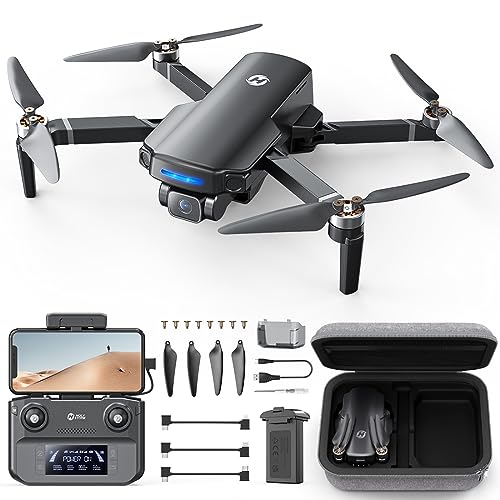
Holy Stone HS360S GPS Drone — Most completely specified
Holy Stone is the name most beginning adults in this hobby start with, and the HS360S title shows why: it is the only one in the guide that reads like a complete specification sheet. The weight is stated precisely — 249g. The control range is stated — 10,000 feet. The transmission is 5G, the motor is brushless, the body folds, and the intelligent features are named rather than implied: Follow Me and Smart Return Home. A buyer comparing paper will find this the easiest drone in the list to understand, and there is real value in that clarity when every other listing asks you to trust adjectives.
In the air, on the title’s evidence, it is built around the same bargain as the rest of the list — GPS steadiness plus autonomous return — with the creative layer already aboard in Follow Me, so the pilot’s second month is covered as well as their first weekend. The 4K UHD camera is the learning instrument described earlier: good enough to make the house, the coastline and the family walk look genuinely cinematic to a newcomer, honest enough in its class that nobody should promise a client footage from it. As the reference point against which the five generics are measured, it earns the top slot on specification transparency alone.
- Weight stated in title: 249g, foldable
- Camera stated in title: 4K UHD camera
- Control range stated in title: 10,000 feet
- Motor stated in title: Brushless motor
- Features stated in title: Follow Me, Smart Return Home
- Transmission stated in title: 5G transmission
- Flight time: Not stated in the listing title — verify with the maker’s documentation
- Battery count in the box: Not stated in the listing title — verify with the maker’s documentation
Strengths
- The most transparent title in the guide — weight, range and features all stated, nothing left to inference.
- Smart Return Home plus GPS is the full beginner safety net, from the hobby’s best-known starter brand.
- Follow Me is included from day one, so the creative second month needs no upgrade.
Trade-offs
- No flight-time figure is stated in the title, so endurance expectations must come from the documentation.
- No screen controller is mentioned; the pilot’s phone is the display, with the juggling that implies.
- No EIS or stabilisation claim appears in the title, unlike the EIS pick below.
Best for: the methodical beginner set on having the specification in writing and the safety net complete. Not suited for: a pilot who dislikes flying with their phone as the screen, since no controller display is stated in its title.

Drone with Camera 4K (4.5″ screen controller) — Screen in the controller
The defining idea here is in the handset: a 4.5-inch screen built into the controller. Every pilot who has flown a phone-display drone knows the small frictions it removes — no clamping the phone in, no notifications sliding over the camera view, no flight ended by a phone call, no screen dimming itself in sunshine to save its own battery while the drone’s fate hangs on it. For a beginning adult, whose attention should be on the aircraft and the airspace, a dedicated screen is a genuinely thoughtful piece of design, and it anchors this pick’s identity.
The rest of the title keeps pace: GPS with auto return, a brushless motor, a foldable body, a stated weight under 249g, and one of only two flight-time claims in the guide — 60 minutes, as titled. Read that figure the way experienced pilots read all such figures: as the maker’s headline for the package, with real endurance shaped by wind, temperature and how the time is divided across the kit’s batteries, which the listing will detail. Even discounted by experience, a long stated endurance plus a screen controller plus the full GPS safety net makes this the most convenience-complete package in the list.
- Camera stated in title: 4K
- Controller stated in title: 4.5-inch screen controller
- Flight time stated in title: 60 min flight time (maker’s figure, as titled)
- Weight stated in title: Under 249g
- Motor stated in title: Brushless motor
- Features stated in title: GPS auto return, foldable
- Follow Me or waypoint modes: Not stated in the listing title — verify with the maker’s documentation
- Control range: Not stated in the listing title — verify with the maker’s documentation
Strengths
- The built-in screen removes the phone from the flying loop entirely — the calmest first-flight experience here.
- A stated 60-minute flight time is the joint-longest claim in the guide.
- Under 249g as titled keeps it in the lightest weight class named on this page.
Trade-offs
- No Follow Me or waypoint modes are named, so the creative toolkit looks thinner than the mode-rich picks.
- The screen is another battery to keep charged alongside the aircraft and controller.
- No range figure is stated, so distance expectations rest on the maker’s documentation.
Best for: the beginner after the fewest devices and the least faff between arriving at the field and flying. Not suited for: a pilot set on Follow Me filming from the start, since that mode is not stated in this title.

GPS Drone with Auto Return (Follow Me) — Most flight modes
Count the named flight intelligence in this title: GPS auto return, Follow Me, Circle Fly, Waypoint Fly and Optical Flow, on a brushless, foldable airframe with 5G transmission and a 4K camera, under 250g as titled. That is the fullest creative menu in the guide. Each mode is a small course in itself — the orbit teaches framing around a subject, the waypoint route teaches planning and camera discipline, Follow Me teaches the pilot to be a subject and a director at once — and a beginning adult who works through them across a season will come out the other side a genuinely competent aerial photographer, on the same aircraft they learned to hover with.
Optical Flow is the connoisseur’s detail in the list: a downward-looking sensor that steadies the hover at low level, in the garden, between buildings, in the places where a beginner actually practises and where satellite positioning is at its least certain. Paired with GPS for the open field, it gives this drone the broadest positioning story here. The cautions are the usual ones, honestly stated: the weight is titled as under 250g rather than a precise figure, no flight time or range is claimed, and a mode menu this long rewards a pilot who reads the manual in order rather than pressing everything on day one.
- Camera stated in title: 4K
- Weight stated in title: Under 250g, foldable
- Motor stated in title: Brushless motor
- Features stated in title: GPS auto return, Follow Me, Circle Fly, Waypoint Fly, Optical Flow
- Transmission stated in title: 5G transmission FPV
- Flight time: Not stated in the listing title — verify with the maker’s documentation
- Controller screen: Not stated in the listing title — verify with the maker’s documentation
Strengths
- Four named intelligent modes plus Optical Flow — the deepest curriculum in the guide, on one airframe.
- GPS and optical positioning cover both the open field and the low, sheltered practice spaces.
- 5G FPV transmission is stated, matching the transmission class of the Holy Stone.
Trade-offs
- No endurance or range figure is stated, so the practical envelope needs the documentation.
- The mode menu can seduce a beginner into automation before the manual basics are learned.
- Weight is stated as a band, under 250g, rather than the precise figure the Holy Stone gives.
Best for: the beginner who learns by doing and wants a season of new modes to grow through. Not suited for: a pilot who flies mainly long, simple scenic runs, since no range or flight-time figure is stated in its title.

GPS Drone with EIS 4K Camera — Stabilised camera, full kit
EIS — electronic image stabilisation — is this pick’s headline, and it addresses the first disappointment of every new drone photographer: footage that wobbles. A small drone in real air is a camera on a vibrating, tilting platform, and stabilisation is what turns that raw feed into something watchable. The title pairs the EIS 4K camera with a 4.5-inch LCD screen remote — the second screen controller in the guide — plus 5GHz FPV real-time transmission, gesture control, speed adjustment and a carrying case, at under 249g as titled, with support for a 32GB SD card stated. As a presented package, it is the most thoughtfully assembled of the generics.
Gesture control and speed adjustment are beginner-shaped features in different ways. Gestures — commanding a photo or video with a hand signal — serve the solo pilot who is also the subject, the hiker on the outcrop, the parent on the beach. Speed adjustment is the quieter gift: a slower maximum speed makes the aircraft’s responses gentle while coordination is new, and the full pace is there when the season turns. The carrying case completes the thought — a drone that lives in a case travels, and a drone that travels gets flown. Pilots comparing this shelf with the wider market will find the same stabilisation questions at the heart of our guide to the best affordable drones with cameras.
- Camera stated in title: EIS 4K camera
- Controller stated in title: 4.5-inch LCD screen remote
- Transmission stated in title: 5GHz FPV real-time
- Features stated in title: Gesture control, speed adjustment
- Weight stated in title: Under 249g
- Storage stated in title: Support 32GB SD card
- In the box as titled: Carrying case
- GPS auto return wording: Not stated in the listing title — verify with the maker’s documentation
Strengths
- EIS directly attacks the wobble that ruins beginners’ footage, and no other title here names it.
- A screen remote and a carrying case make it the most travel-ready package in the guide.
- Speed adjustment lets the aircraft’s temperament match a new pilot’s coordination.
Trade-offs
- The title does not spell out GPS auto return in so many words; confirm the return behaviour in the documentation before relying on it.
- No flight time or range is stated, so the practical envelope is a documentation question.
- Gesture control is a fair-weather friend — it serves posed shots, not general flying.
Best for: the beginner whose priority is watchable footage from the first month, and who travels to fly. Not suited for: a pilot who insists on the return-home behaviour being spelled out in the title itself, as the Holy Stone and the mode-rich pick state it.

GPS Drone 4K (60-min, 2 batteries) — Endurance as titled
This title leads with time: 60 minutes of flight, and — the detail that makes the claim intelligible — 2 batteries in the kit. Endurance in this class is almost always a fleet figure, the sum of the batteries in the bag, and a title that states both the total and the battery count is being straighter with its buyer than most. For a beginning adult, two batteries change the shape of an outing: the first flies the practice, the second flies the photography, and the session ends when the light does rather than when the first pack fades at the far end of the field.
Around that headline sits the now-familiar complete kit: GPS auto return, brushless motor, foldable body, a 4.5-inch HD screen controller — the third in this guide, a pattern worth noticing — under 249g as titled, and a 4GB SD card included. The card is small by the standards of 4K appetites and a larger one will join it soon enough, but its inclusion means the drone records from the first flight rather than the first accessory order. Positioned against its screen-controller sibling above, this one trades the other’s cleaner presentation for the battery pair; against the field, it is the endurance pick, honestly labelled.
- Camera stated in title: 4K camera
- Flight time stated in title: 60 min flight (maker’s figure, as titled)
- In the box as titled: 2 batteries, 4GB SD card
- Controller stated in title: 4.5-inch HD screen controller
- Weight stated in title: Under 249g
- Motor stated in title: Brushless motor
- Features stated in title: GPS auto return, foldable
- Intelligent flight modes: Not stated in the listing title — verify with the maker’s documentation
Strengths
- Two batteries with a stated combined endurance — the session-shaped kit a beginner actually needs.
- Screen controller included, keeping the phone out of the flying loop.
- A card in the box means flight one is recorded, not just flown.
Trade-offs
- The included card is only 4GB as titled, so a larger card is an early and necessary addition.
- No Follow Me or waypoint modes are named, narrowing the creative curriculum.
- The 60-minute figure is the kit’s total across both batteries, not a single flight.
Best for: the beginner who flies in longer sessions — the walking route, the coastal afternoon — and hates landing to swap. Not suited for: a mode collector, since no intelligent flight modes are stated in its title.
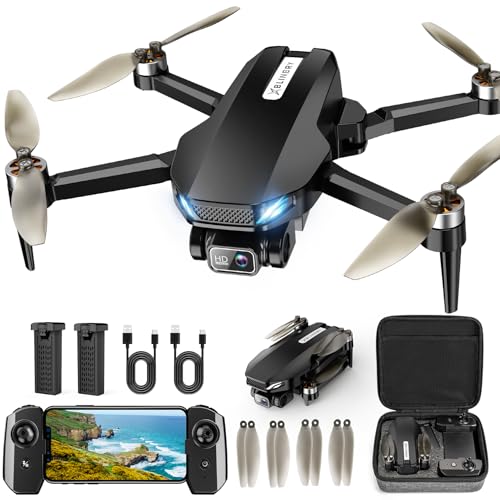
Drone with Camera 4K (GPS Auto Return) — Steady-hover specialist
Stable Hover is the phrase this title chooses to headline, and it is a more perceptive headline than it first appears. The beginner’s foundational experience is not the daring flight; it is the hover — the aircraft sitting in the air where it was left, calmly, while the pilot breathes, looks, and decides. A drone that advertises the steadiness of that moment understands its audience. Around it, the title assembles the full creative set — GPS auto return, Follow Me, Circle Fly, Waypoint Fly — on a brushless, foldable frame with 5G transmission, in black.
Against its mode-rich sibling earlier in the list, this one lacks the Optical Flow mention but matches the mode menu; against the field, it lacks a stated weight band, flight time and range, so its documentation carries more of the buyer’s homework. What it offers is the combination a photography-minded beginner most plausibly wants: a steady platform, the full set of orbiting and following shots, and the safety net underneath. If the hover is honest, everything built on it — the first panorama attempt, the first orbit of the lighthouse — inherits that steadiness.
- Camera stated in title: 4K
- Features stated in title: GPS auto return, Follow Me, Circle Fly, Waypoint Fly, Stable Hover
- Motor stated in title: Brushless motor
- Transmission stated in title: 5G transmission
- Body stated in title: Foldable
- Colour stated in title: Black
- Weight: Not stated in the listing title — verify with the maker’s documentation
- Flight time: Not stated in the listing title — verify with the maker’s documentation
Strengths
- Stable Hover as a headline speaks directly to the beginner’s foundational skill.
- The full creative mode set — follow, circle, waypoint — matches the richest menu in the guide.
- GPS auto return keeps the safety net under all that creativity.
Trade-offs
- No weight is stated in the title, so its class must be confirmed before checking your local rules.
- No flight time or range figures are given, leaving the envelope to the documentation.
- No screen controller or case is mentioned, so the travel kit is plainer than the EIS pick’s.
Best for: the photography-minded beginner who will live in the orbit and follow modes once the basics settle. Not suited for: a buyer for whom the weight class must appear in writing at purchase time, since this title does not state one.
How Do You Learn Aerial Photography Once the Flying Settles?
The revelation of the first season is that height is the least interesting thing a drone does. Straight-down shots of the same field pall quickly; the photographs that hold up are the ones where altitude is combined with the photographer’s older virtues — low light, a strong shape, a leading line. Fly at the day’s edges. The long shadows of early morning turn a dull meadow into a relief map, and the last light on water does more for a coastal shot than any resolution figure. Learn the slow reveal: start low behind a tree line or a roof, climb gently while tilting the camera down, and let the landscape open — it is the first move of every aerial film you have ever admired, and every mode-rich pick here can fly it by hand within a month.
Composition transfers from the ground with one twist: you are composing in three dimensions, and the frame’s foreground is often air. Give the shot an anchor — a road entering the corner, a river bending through, a single tree casting the long shadow — and let the height supply the pattern around it. Review on a big screen the same evening, ruthlessly: the aerial archive fills with near-identical frames, and the beginner who deletes nine of ten becomes the photographer whose thirty kept frames from a season would hang happily on a wall. That editing discipline, more than the aircraft, is the hobby’s real graduation.
What About Wind, Light and Choosing Where to Fly?
Every aircraft in this guide is light — that is stated in title after title — and light aircraft feel weather. Build a personal wind limit and keep it: if the trees at the field are in constant motion, the session becomes a fight the footage will show. Mornings are the beginner’s ally twice over, offering the calmest air and the best light in the same hour, and a pilot who builds the habit of dawn sessions will out-photograph the fleet-and-furious within a season. Site choice matters as much: open ground away from crowds, water you can afford to lose nothing into, and a clear understanding of the local rules — airspace restrictions near airports and sensitive sites, landowner permission on private ground, and the privacy of the people below, which a considerate pilot treats as a rule even where the law is silent.
Keep a mental map of three home fields: the practice field, empty and forgiving; the pretty field, where the photography happens once the skills are proven; and the travel field, the viewpoint or coastline the carrying-case picks were bought for. Rotating among them keeps the hobby fresh, and each makes its own demands — the practice field teaches hands, the pretty field teaches eyes, and the travel field teaches planning, because the light at a distant location forgives nobody who arrives with a flat battery and the wrong hour.
How Do You Read a Drone Title Like a Buyer Rather Than a Fan?
This guide’s method generalises, and a beginning adult shopping beyond it will meet titles far noisier than these six. Sort every claim into three piles. Pile one is the checkable fact: a weight, a battery count, a screen size, a card in the box — things that will be true or false when the parcel opens, and the only claims worth paying for. Pile two is the named feature: GPS return, Follow Me, EIS — real capabilities whose quality varies, worth having, worth testing in the first week while returns are easy. Pile three is the adjective cloud — pro, ultimate, advanced, 8K-style resolution badges on cameras whose optics are never described — which should be read as decoration and priced at zero. The six titles above are unusually rich in pile one, which is precisely how they earned their places.
Then read for absence, the skill this guide’s caution lines practise on every pick. A missing flight time is not a scandal; it is an instruction to ask. A missing weight is not a disqualification; it is a reminder that your local rules will ask the question even if the title does not. The buyer who reads titles this way stops being the audience for marketing and becomes the customer of engineering — and notices, with some pleasure, how many buying decisions across this whole category quietly make themselves once the three piles are sorted.
Side-by-Side: How Do the Six Drones Compare?
| Drone | Weight as titled | Flight time as titled | Controller | Standout fact |
|---|---|---|---|---|
| Holy Stone HS360S | 249g | Not stated in title | Phone display | Stated 10,000 feet range, Follow Me |
| Drone with Camera 4K (screen controller) | Under 249g | 60 min | 4.5-inch screen | Screen in the handset |
| GPS Drone with Auto Return (Follow Me) | Under 250g | Not stated in title | Not stated in title | Four modes plus Optical Flow |
| GPS Drone with EIS 4K Camera | Under 249g | Not stated in title | 4.5-inch LCD remote | EIS stabilisation, carrying case |
| GPS Drone 4K (60-min, 2 batteries) | Under 249g | 60 min | 4.5-inch HD screen | Two batteries in the kit |
| Drone with Camera 4K (GPS Auto Return) | Not stated in title | Not stated in title | Not stated in title | Stable Hover headline, full mode set |
How Should a Beginning Adult Structure the First Ten Flights?
Flights one to three belong in the largest, emptiest space available, in calm air, at walking height. The syllabus is unglamorous: take off, hover, rotate slowly, land; a square flown by hand; a gentle circuit with the nose pointing outward, then inward. The GPS hover is the safety net under all of it — the moment coordination frays, release the sticks and let the aircraft sit while you regroup. Flights four to six add the camera: stills first, because a photograph forgives and teaches framing cheaply, then short video passes flown slowly enough to stay smooth. The return-home button gets pressed deliberately in this block, in safe conditions, so its behaviour is a known friend rather than an emergency stranger.
After flight ten, the syllabus hands over to projects, and projects are where skills consolidate. Photograph the same landmark in four seasons. Film the route of a favourite walk as a single gentle pass, then again a month later and compare the smoothness honestly. Document a building’s renovation from the same three aerial positions each fortnight. Each project imposes the discipline that free flying dissolves — a reason to be at the field, a standard to judge the result against, a next attempt already implied. The modes stop being features and become vocabulary, which is the moment the beginning adult quietly becomes a pilot.
Flights seven to ten earn the modes, one at a time: a Circle Fly around a willing tree, a Follow Me along a quiet path, a short waypoint route over the practice field itself. Keep a notebook — pilots of full-size aircraft do, and the habit scales down beautifully. Note the wind, the battery’s behaviour, the shot that worked. By flight ten the beginner has a logbook, a routine and a realistic sense of which specification in the title above actually governs their flying, which is the moment a second battery, a larger card or a polarising filter stops being a guess and becomes a decision.
What Mistakes Do New Pilots Make in the First Month?
Range ambition is the classic: flying far before flying well, because distance is thrilling and the aircraft makes it easy, until orientation is lost at exactly the distance where a beginner cannot fly home by eye. The cure is the boring syllabus above and a personal rule — no farther than you can clearly see its nose direction — held until the modes and the return drills are reflexes. The second mistake is weather optimism. Small drones and gusty days are unhappy partners; a calm morning teaches more in twenty minutes than a wrestling match with a crosswind teaches in an hour, and every title here describes an aircraft light enough, as titled, to feel the air it’s in.
The third mistake is filming everything and photographing nothing, then wondering why the card holds an hour of wobble and no single frame worth printing. Stills discipline — hover, frame, shoot, review — is the fastest teacher in the hobby. And the fourth is neglecting the pre-flight ritual: props seated, battery latched, home point set, a glance at the sky for the aircraft and birds that share it. Ninety seconds, every flight, for the whole hobby. The pilots who keep their first drone for years are not the lucky ones; they are the ritualistic ones.
Final Recommendation
Choose by the friction you most want removed. Specification clarity and the trusted name: the Holy Stone HS360S. The phone out of the loop: any of the three screen-controller picks — the EIS model for footage steadiness and its case, the 2-battery model for session length, the first screen model for the cleanest statement of the idea. A season of modes to grow through: the Optical Flow pick or the Stable Hover pick, which between them hold the full creative menu. Every one of them carries the GPS-and-return safety net that defines this class, and every one will teach the same first month honestly.
Buy the drone, then buy the discipline: the empty field, the calm morning, the notebook by the charger — because a year from now it will not be the aircraft you remember, but the morning the park finally looked the way it does from up there. That morning is waiting at the end of the boring syllabus, and every pilot who has ever earned it will tell you the same thing: it was worth every single careful hover that came before it.
How Should You Care for Batteries, Props and the Aircraft?
Lithium flight batteries reward routine and punish neglect. Charge them the day before flying rather than the week before; a pack left full for a month ages faster than one cycled regularly, and a pack left empty ages fastest of all — the middle state is where stored batteries are happiest, and several of these systems manage that automatically if you let them. Never fly a pack that has taken a hard knock without inspecting it, never charge a warm battery straight off a flight, and retire anything that swells, however young it is. The notebook habit from the flight syllabus extends naturally: log cycles per battery, and the fleet — even a fleet of two — starts telling you its future.
Propellers are the aircraft’s tyres: cheap, consumable, and responsible for more vibration and noise than any other part. Inspect them at every pre-flight, replace any with a nick or a bend, and carry the spares the kit provides rather than leaving them in a drawer at home. The foldable bodies in every title here travel best in a case — two picks name one in the box — with the props and arms free of grit before folding. None of this is thrilling, and all of it is the difference between a first drone that is still flying, sweetly, in its third season and one that became a cautionary tale by August.
What Does the Second Season Look Like?
By the second season the question changes from which drone to what flying. The beginner who logged the first ten flights honestly now has opinions: perhaps the orbit shots are the joy and the waypoint routes feel like paperwork, perhaps Follow Me filming of the family’s cycling has become the point of the whole hobby. Equipment decisions follow those opinions — a larger card, the second battery the endurance pick’s owner already owns, a set of neutral-density filters for smoother video in bright light, chosen against the camera actually in the bag rather than against a forum’s enthusiasm. Some pilots step up an aircraft class at this point; just as many discover that the forgiving drone they learned on, flown at dawn by a pilot who now knows light, produces the best work of their lives.
The social hobby arrives in the second season, too: the local flying group, the friend whose farm is a photograph waiting to happen, the holiday planned partly around a coastline. Every pick in this guide folds, every one was bought to travel, and the case-and-routine habits from the care section are what make those trips uneventful in the best way. Keep the logbook. It becomes, sooner than expected, the story of how a cautious hover in the garden turned into the way you see your whole county.
How Do You Fly Well Around Family, Friends and Onlookers?
A drone gathers an audience the way a bonfire gathers a circle, and a beginning adult should plan for the social physics as carefully as for the wind. Brief the family before the flight, not during: where you will fly, what the aircraft will do, and the one rule that matters — nobody approaches it while the props are turning, and children watch from beside the pilot, where the view of the screen is best anyway. That framing turns spectators from a hazard into a crew; the grandparent who has been shown the live view becomes the household’s second enthusiast, and the dog gets a named exclusion zone and a lead.
Strangers deserve the same courtesy in briefer form. A smile, a sentence about what you are photographing, and an obvious willingness to land if anyone is uncomfortable will carry a pilot through ninety-nine encounters in a hundred — most people are curious, many are delighted to see their own village from above, and the occasional objector is almost always objecting to feeling surprised. Fly like a guest in the landscape, visibly and unhurriedly, and the hobby’s reputation — which every pilot carries for every other — stays as clean as your own record.
What Should You Pack for a Flying Outing?
The kit assembles itself once the habits exist. The aircraft, folded, in its case — two picks here include the case, and the others deserve one bought alongside. Every charged battery you own, in the order you will use them, with the notebook and a pen riding in the same bag because the log gets written at the field or not at all. Spare props and the small tool the kit provides. The card situation settled before departure: last session’s card copied and cleared, a spare in the case, because the only card failure that ruins a day is the one discovered at the viewpoint. And the unglamorous layer — water, a hat, the phone charged for the map and the weather rather than for the flying, on the screen-controller picks — that turns a technical exercise into a morning a person would repeat.
Check the forecast the night before and the sky on arrival, in that order, and be willing to convert a flying trip into a scouting trip when the wind disagrees. The pilots who last in this hobby treat a grounded morning as information rather than insult; the pretty field keeps, the light returns, and the aircraft — unlike a pilot’s temper — is exactly as patient as its owner.
Frequently Asked Questions
Do I need to register a drone like these?
That depends on where you live and the weight class you fly in, and the rules are set by your national aviation authority and updated from time to time. Several titles here state weights around 249g to under 250g, which is why makers print them — but the correct step is to read your authority’s current guidance for your exact model and use, before the first flight, rather than rely on any general summary including this one.
How far and how long can these drones really fly?
Only two figures are stated in these titles: a 10,000 feet control range on the Holy Stone, and 60-minute flight times on two picks, the latter being kit totals across batteries where stated. Real-world endurance and range shrink with wind, temperature and flying style, so treat titled figures as the maker’s headline and plan your flights with generous reserves. A practical habit from experienced pilots: decide your landing time before take-off, set it conservatively, and treat the battery gauge as a countdown you respect rather than a challenge you negotiate with. The aircraft that comes home with a third of its charge, every time, is the aircraft whose battery lives longest and whose pilot never has to watch an auto return triggered by desperation instead of by choice.
What does GPS auto return actually protect against?
The two classic beginner losses: a signal that drops while the drone is distant, and a battery that fades before the pilot notices. In both cases a GPS-equipped drone with auto return flies itself back to its take-off point instead of landing wherever it happens to be. It is a safety net, not an autopilot for carelessness — the pre-flight checks and the calm-weather rule still apply. Practise with it deliberately in the early flights, as the syllabus in this guide suggests: send the drone a modest distance, press return, and watch exactly what it does — how high it climbs first, how it descends, where it settles relative to where it left. A pilot who has watched that sequence three times in calm conditions owns a reflex; a pilot whose first return happens in a genuine emergency is meeting a stranger at the worst possible moment.
Is a screen controller worth it over using my phone?
For many beginners, yes. A built-in screen removes notifications, calls, clamping and phone-battery anxiety from the flying loop, and three picks here include one. If you are happy flying with your phone — as the Holy Stone expects — you gain the most completely specified aircraft in the guide instead. It is a preference about workflow, not a quality divide. Decide it by imagining the actual moment: a bright field, a buzzing aircraft, a screen you must read at a glance. Whichever display you trust in that moment, at that distance, in that light, is the right answer for your hands — and both answers are sitting in this guide, honestly labelled, waiting for their first calm morning.
Can a beginner make money or shoot professionally with these?
These are learning aircraft with 4K cameras as titled, and commercial work brings its own licensing, insurance and quality requirements that vary by country and client. Treat the first season as skill-building: the pilot who masters framing, light and the flight modes on a forgiving drone is exactly the pilot ready to step up — and to find out what the professional rules require — later. Keep the logbook as your evidence and your portfolio’s foundation; the clients and clubs who take pilots seriously ask first about hours, habits and judgement, and a beginner who can show a season of documented, disciplined flying is already answering like a professional, whatever aircraft the work eventually demands.
What happens if the drone crashes?
Inspect before you judge. Many first-season crashes are prop strikes and grass stains: check the props for nicks, the arms and body for cracks, the camera for grit, then run a cautious low hover in open space and listen for new vibration or noise. Anything structural, swollen or electrically strange grounds the aircraft until it is checked properly. Write the incident in the logbook with the same honesty you would want from any pilot — what the wind was doing, what the sticks were doing, what the aircraft did — because a crash understood is a lesson banked, while a crash shrugged off is a deposit on the next one. The honest prevention remains the syllabus — calm air, empty fields, small distances — which is why this guide spends more words on the first ten flights than on any specification.
Related Guides
Keep the kit growing sensibly with the best dji drone sd cards for the storage side of aerial work, and the best bang for your buck racing drone lipo batteries when the hobby’s faster branch starts calling.


