What's inside
- Where to buy
- Key Takeaways
- Quick Picks
- How We Chose These Picks
- Why Roku Won the Small-Television Shelf
- The Hisense 32 QD4 Question, Answered Plainly
- Six Roku Sets, Taken in Turn
- The Roku Field at a Glance
- Living With Roku in a Small Room: The Features That Matter
- Setting Up a Roku Set: The First Evening Done Well
- Where the Border Lies: TCL’s Google TV Set and Insignia’s Fire TVs
- The Channel Store, Examined: What Roku Carries and What It Refuses
- Sound in Small Rooms: Making a Roku Set Easy to Hear
- Games and Consoles on These Roku Sets
- One Platform, Many Rooms: Running Roku Across a House
- Errors Roku Shoppers Make at 32 Inches
- When a Roku Set Misbehaves: The Short Diagnostic Path
- Power, Standby and the Cost of Always Listening
- Roku in the Rooms That Test It: Rentals, Wards and Waiting Rooms
- Accessories That Earn Their Drawer Space
- Final Recommendation
- Frequently Asked Questions
- Related Guides
As an Amazon Associate I earn from qualifying purchases. This post may contain affiliate links at no extra cost to you.
gizmoverdict.com is reader-supported. When you buy through links on our site, we may earn an affiliate commission.
Where to buy
The best 32 inch tvs roku form a happier shelf than most platform-specific searches, because Roku’s licensing model put its system into several brands’ small sets — and yet the shelf still needs honest reading. Roku’s own 32-inch Select is here, full 1080p and current. But the 32-inch Roku model shoppers often picture from Hisense’s range, the QD4, appears in this guide as a prose-only mention rather than a linked pick: it surfaced in raw search results without a verified pool entry, and this guide links only what its pool has verified. Around those two facts, the guide builds the real Roku landscape at and near 32 inches: Roku’s own hardware in three sizes, and Roku-powered 40-inch sets from TCL and Hisense for rooms that can stretch — every heading carrying its true size and its Roku credentials where a reader can see them.
Consider also who this search usually serves. The 32-inch Roku buyer is rarely building a cinema; they are furnishing the second, third or fourth screen of a house — the bedroom that finally gets its own set, the kitchen that graduates from a tablet on the counter, the student room, the caravan, the spare room before guests arrive. Those purchases share a profile: the budget is set, the deadline is often a weekend, and the tolerance for research is low because the stakes feel low. That is exactly the profile that platform confusion preys on, since a hurried buyer reads a brand, assumes a platform, and clicks. This guide is written for that hurried buyer at the moment of the click: six verified sets, their sizes and systems printed where a skim cannot miss them, and the one unverified model flagged before it can be bought by accident under this guide’s authority.
Why does Roku thrive at exactly the size where Google TV thinned to a single model? Because Roku’s business is the platform itself. Where Google treats television software as an extension of a larger empire, Roku sells the operating system as the product, licenses it widely, builds its own sets at the volume sizes, and keeps the interface uniform enough that a Hisense Roku and a Roku Roku feel like cousins rather than strangers. At 32 inches — the world’s default small television — that strategy fills shelf after shelf, and it means the Roku shopper’s problem is not scarcity but discrimination: several good sets, one platform, and differences that live in panels, sizes and sound rather than software.
Two cautions frame the reading. First, size honesty: only one linked pick measures exactly 32 inches, because the pool’s verified Roku sets cluster at 24, 32 and 40, and this guide prints those numbers rather than rounding them toward the search term. Second, the prose-only Hisense 32 QD4: it is discussed because shoppers will meet it in the wild and deserve to know it exists as a Roku model — but it carries no link here, and the guide says why, in its own section, rather than quietly substituting another set under its name.
Key Takeaways
- Roku’s own 32-inch Select is the exact-size anchor: 1080p, current, and the platform in its purest form.
- Hisense’s 32-inch QD4 Roku exists as a model but is prose-only in this guide — it was not in the verified pool, so it carries no purchase link.
- Roku’s own range brackets the size: a 24-inch Select below and a 40-inch Select above, same interface throughout.
- TCL’s 40-inch S3 and Hisense’s 40-inch A4 and QD4SR bring Roku to 1080p and QLED-flavoured panels one size up.
- Every linked pick runs Roku TV; the platform differences in this guide are panel, size and sound, not software.
- TCL’s 32-inch set is a Google TV model — the contrast case, discussed in prose so nobody confuses the brands’ platforms.
Quick Picks
| Pick | Badge | Why it earns its place |
|---|---|---|
| Roku 32-Inch Select | Exact size — Roku’s own hardware | The reference 32-inch Roku: 1080p panel, voice remote, and the platform maintained by its maker. |
| Roku 24-Inch Select | 24 inch — the small-room sibling | Same Roku manners on a 720p panel for counters, bunks and desks that cannot take a 32. |
| Roku 40-Inch Select | 40 inch — Roku’s own step up | Roku-built hardware at 1080p for small living rooms that outgrew the 32-inch brief. |
| TCL 40-Inch S3 Roku TV | 40 inch — TCL’s Roku line | The S3 family’s Roku edition: a proven 1080p panel with Roku’s interface instead of Google’s. |
| Hisense 40-Inch A4 Roku TV | 40 inch — Hisense panel craft, Roku brain | Hisense’s FHD Roku set with Dolby Audio, for buyers who trust the brand’s panels. |
| Hisense 40-Inch QD4SR Roku TV | 40 inch — QLED colour at FHD | The QD4 family’s Roku flagship at this tier: Hi-QLED panel, 1080p, 2026 model. |
How We Chose These Picks
Verification came first, and it is what makes this guide’s shape unusual. A pick earns a purchase link only if its ASIN sits in the verified pool for this batch; a model that appears in raw search results but never cleared verification is discussed honestly as prose, without a link and without an image marker pretending otherwise. That rule is why the Hisense 32 QD4 — a real Roku model that many shoppers will find elsewhere — is a paragraph here instead of a pick. Rules like this cost a guide its neatest headline and buy it the only thing it trades in: the reader’s justified trust.
With the pool fixed, selection sorted by role. One exact-size anchor was mandatory: Roku’s own 32-inch Select fills it. The platform’s own range then supplied the brackets — the 24-inch for measured small spaces, the 40-inch for rooms misjudged as smaller than they are. The remaining slots went to the strongest Roku licensees at the neighbouring size, because at 40 inches the Roku shopper genuinely chooses between Roku’s own hardware, TCL’s S3 and Hisense’s two lines, and a guide that ignored them would be hiding the market’s real shape. Panel resolution was checked per model — all the 40-inch picks and the 32 are 1080p; the 24 is 720p and labelled so.
Finally, each pick was read for its Roku-ness: does it carry the current Roku TV experience, the voice remote, the channel store and the update stream that make the platform a safe buy? Licensee sets occasionally lag their maker’s software by a version, and that is acceptable; what is not acceptable is an orphaned Roku variant, and none appears here. The contrast cases — TCL’s 32-inch Google TV set and Insignia’s Fire TV sets — were kept in prose deliberately, because a Roku guide owes its readers a clear view of the border, drawn where the platforms actually divide.
Why Roku Won the Small-Television Shelf
Roku’s dominance at 32 inches is a business-model story before it is a technology story. The company gives television makers a complete, maintained operating system and a revenue share on the platform’s advertising and subscriptions; in exchange, makers get a smart TV without building a software division. At premium sizes, big brands prefer their own systems and their own data. At 32 inches, where margins are thin and buyers are brand-agnostic, the trade is irresistible — which is why Roku’s purple interface stares out of small sets from half a dozen makers, and why the platform feels like the default setting of the small-television world.
For buyers, the consequence is a rare luxury: platform continuity across sizes and brands. The Roku learned in a bedroom behaves the same in a kitchen Hisense and a living-room TCL, with the same account, the same watchlist habits and the same remote grammar. Households expand their screens without re-teaching anyone anything. The second consequence is update discipline: because the platform is Roku’s product, Roku maintains it across licensees with a uniformity its rivals rarely match, and a modest 32-inch set bought today can expect years of the same calm competence. That, more than any panel specification, is what the Roku shopper is buying — and it is a rational thing to buy.
The Hisense 32 QD4 Question, Answered Plainly
Because shoppers will ask: yes, Hisense sells a 32-inch Roku television in its QD4 line, and by the accounts of its raw listing data it pairs the Roku platform with the QD4 family’s QLED-flavoured panel at 1080p. It is, on paper, exactly the set this search describes. It is not a linked pick in this guide because the verification pool for this batch did not confirm it — the model appeared in raw results only — and this guide’s standing rule is that unverified models are discussed, never linked. That is the whole story, and it is printed here rather than buried, because a guide that quietly omits the model leaves readers to find it elsewhere with no context, while a guide that links it unverified has broken the only promise that matters.
Practically, the QD4’s absence from the linked list changes little. A shopper set on a 32-inch Hisense Roku can hunt the model down through other channels with the knowledge that it exists; a shopper set on Roku at 32 inches has Roku’s own Select, verified and linked above, which is the platform’s reference hardware at this size. And a shopper whose heart is set on the QD4 panel specifically can buy its verified 40-inch sibling, the QD4SR, one size up. The guide loses a neat symmetry and keeps its integrity — a trade it will make every time, in print, where readers can watch it happen.
Six Roku Sets, Taken in Turn
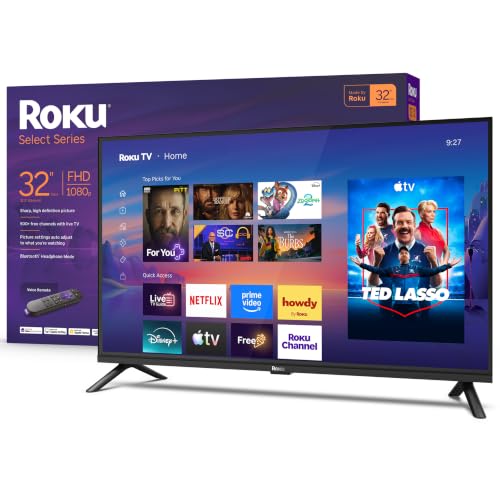
Roku 32-Inch Select — the reference model at the exact size
When the platform’s maker builds the television, the result is the definition of the category, and Roku’s 32-inch Select is exactly that: a full 1080p panel, the current Roku TV experience without a licensee’s variations, a voice remote that searches across services with Roku’s studied neutrality, and software updates that arrive from the source. For the shopper who typed this search with a specific picture in mind, this set is the picture. It does not try to be a cinema or a games machine; it tries to be the small television that never gives its owner a reason to think about it, and at that job it is the benchmark every other pick here is measured against.
The supporting details are the ones small-room life actually uses. Private listening through the Roku app turns a bedroom set into a considerate one after a partner falls asleep. The home screen stays where you left it, week after week, which sounds like nothing until a rival platform rearranges itself overnight. Antenna television sits on the home screen as a tile among tiles, with a proper guide. If the guide’s other picks are arguments — for a smaller gap, a larger wall, a particular brand’s panel — this one is the absence of argument: the 32-inch Roku, made by Roku.
- Screen: 32-inch class, 1920×1080 full HD
- Platform: Roku TV, first-party hardware
- Voice: Roku voice remote with cross-service search
- Extras: private listening via the Roku mobile app
Strengths
- The platform exactly as its maker intends it
- 1080p panel at precisely the searched size
- Update stream direct from Roku, no licensee lag
Trade-offs
- Roku’s home screen carries a promotional rail
- Panel is a good FHD screen, not a QLED showcase
- Speakers serve speech better than film scores
Best for: the Roku shopper who wants the canonical 32-inch set with no detours. Not suited for: a viewer chasing QLED colour, who should read the QD4SR’s section below.

Roku 24-Inch Select — the same manners in a smaller cabinet
Roku’s 24-inch Select is the guide’s fit-first pick: the full Roku platform — same grid, same search, same app — on a 720p panel in a cabinet that enters the spaces a 32 cannot. Under-cabinet kitchen gaps, caravan interiors, the shelf at the foot of a bunk, a desk corner in a studio flat: these are its stations, and in each of them the relevant comparison is not against its 32-inch sibling but against having no proper television at all. A household already running Roku elsewhere adds it without teaching anyone a new interface, which in a family kitchen is worth more than pixels.
The 720p panel is the honest cost of the size, shared by every current 24-inch set in the pool, and at the two-to-four-foot distances of counters and bunks it reads as clean rather than coarse. What the set does not do is scale up: placed on a bedroom wall and watched from a bed, it will look like what it is, a small television asked to do a bigger one’s job. Buy it for a measured gap and it is a delight; buy it as a cheap substitute for the 32 and it is a disappointment with a barcode. The heading prints 24 inches in the same size type as everything else in this guide, and the reader should believe it.
- Screen: 24-inch class, 720p HD
- Platform: Roku TV, first-party hardware
- Fit: under-cabinet, caravan and desk dimensions
- Extras: app-based private listening for shared spaces
Strengths
- Full Roku experience in the smallest current cabinet
- Matches a main Roku set’s interface exactly
- Light and modest in power for mobile installations
Trade-offs
- 720p resolution — right here, wrong for a bedroom wall
- Eight inches below the searched size is a real step down
- Small speakers, voiced for speech
Best for: Roku households with a measured small space to fill. Not suited for: replacing a 32-inch set anywhere the 32 physically fits.

Roku 40-Inch Select — Roku’s own hardware, one size up
The 40-inch Select exists in this guide for the shopper whose “32-inch room” is actually a small living room wearing a modest name. It is Roku’s own hardware again — the same first-party software discipline as the 32 — on a 1080p panel large enough to anchor a sofa’s attention rather than accompany a bedtime. Families upsizing from a faithful old 32 often discover that the new room arrangement wants exactly this: not a television that dominates, but one that gathers. The Select at 40 inches gathers.
Its virtues are the platform’s virtues at larger scale, and its limits are the tier’s: 1080p rather than 4K, sound that a small soundbar would flatter, and a panel that favours even, honest reproduction over showroom fireworks. Against the licensee 40-inch picks below, its claim is purity — no brand layer, no variant software, updates from the source. Against the 32, its claim is presence. Measure the wall at roughly thirty-six inches of width, and if the tape says yes, this is the Roku-first way to say yes back.
- Screen: 40-inch class, 1920×1080 full HD
- Platform: Roku TV, first-party hardware
- Voice: Roku voice remote
- Role: small-living-room anchor in Roku’s own line
Strengths
- First-party Roku experience on a room-anchoring screen
- 1080p stays clean at small-living-room distances
- One interface across the household’s Roku sets
Trade-offs
- Eight inches over the searched size — a deliberate step, not a rounding
- No 4K or QLED at this rung of Roku’s own range
- Needs a stand surface sized for its width
Best for: Roku households whose small living room outgrew the 32-inch idea. Not suited for: a bedroom alcove measured for a 32, where the anchor pick above belongs.

TCL 40-Inch S3 Roku TV — TCL’s panel, Roku’s brain
TCL sells the S3 family with either of two brains, and this guide has now met both: the Google TV editions in its Android sibling guide, and this Roku edition, which pairs the same proven 1080p S3 panel with Roku’s interface. The combination suits a particular and common household — one that trusts TCL’s small-panel manufacturing, has watched the S3 recommended for years, and runs Roku everywhere else. For them the S3 Roku is not a compromise but a convergence: the panel they wanted, the platform they know, in one box.
In daily use the Roku layer behaves as Roku behaves everywhere, which is the point of licensing: same store, same search, same calm. TCL’s contribution is the hardware value the brand is known for at this tier — a tidy cabinet, a backlight that behaves, and a production history long enough that accessories, mounts and replacement remotes are trivially findable. Set against Roku’s own 40-inch Select, the choice is brand trust and retail availability rather than capability; set against the 32-inch anchor, it is purely a question of the wall’s width and the room’s ambition.
- Screen: 40-inch class, 1920×1080 full HD
- Platform: Roku TV (TCL S3 Roku edition — not the Google TV edition)
- Voice: Roku-compatible voice remote
- Note: same S3 family as the Google TV model; platform differs
Strengths
- Proven S3 panel with the household’s Roku interface
- Long production run means easy accessories and support
- Full Roku store and update stream
Trade-offs
- Easy to confuse with the Google TV S3 when shopping — check the edition
- 1080p panel in a size where some rivals start 4K
- Licensee software can trail Roku’s own sets by a step
Best for: TCL loyalists in Roku households with a 40-inch wall. Not suited for: anyone shopping the Android guide’s TCL by mistake — the platforms are different products.
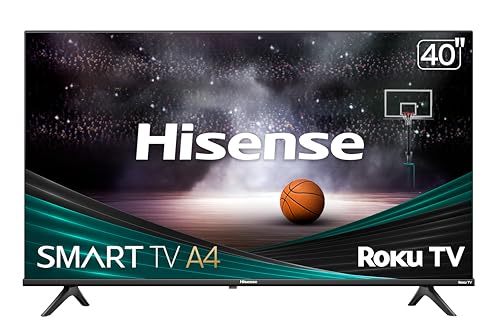
Hisense 40-Inch A4 Roku TV — Hisense’s FHD Roku at 40 inches
Hisense’s A4 line is the brand’s accessible FHD family, and its Roku edition at 40 inches is the straightforward way to buy Hisense panel craft with Roku’s interface one size above the search. Dolby Audio processing gives its modest speakers a wider, clearer presentation than the tier usually manages — a real virtue in the kitchens and bedrooms these sets serve, where dialogue intelligibility beats bass in every honest ranking. The slim-bezel cabinet keeps the set’s footprint close to its screen, which matters when the step from 32 to 40 is being negotiated with a particular piece of furniture.
Shoppers should note the family resemblance trap in reverse: the A4 name also appears on Hisense’s 32-inch Fire TV model discussed in this batch’s Android guide. Same family name, different platform, different size — the platform follows the model, never the badge, and this 40-inch A4 is Roku through and through. Buyers who want Hisense-plus-Roku at exactly 32 inches are the ones the prose-only QD4 section above addresses; buyers who can take 40 inches get their Hisense Roku here, verified and linked.
- Screen: 40-inch class, 1920×1080 full HD
- Platform: Roku TV (A4 Roku edition — distinct from the 32-inch Fire TV A4)
- Sound: Dolby Audio processing
- Design: slim-bezel cabinet
Strengths
- Hisense panel quality with Roku’s calm interface
- Dialogue-friendly sound processing for small rooms
- Slim bezels ease the 32-to-40 furniture negotiation
Trade-offs
- The A4 name spans platforms across sizes — verify the edition
- 1080p, not the QLED step the QD4SR offers
- One size above the search; measure first
Best for: Hisense loyalists who can take 40 inches and want Roku. Not suited for: a strict 32-inch space, or a shopper who wanted the Fire TV A4 instead.

Hisense 40-Inch QD4SR Roku TV — the QD4 family’s verified Roku flagship
The QD4SR is where this guide’s two honest threads tie together. It belongs to the same QD4 family as the prose-only 32-inch model — Hisense’s Hi-QLED line, with a quantum-dot-flavoured panel that stretches colour volume beyond the standard LED sets around it — but at 40 inches it sits in the verified pool, so it carries its link with the guide’s full confidence. For the shopper who came here dreaming of the 32-inch QD4, this is the attainable version of that dream: the family’s panel character and Roku platform, one size up, verified.
As a television it is the picture-quality pick of the guide. The QLED layer earns its keep on the colourful material small-room sets actually show — animation, sport, nature programming — while the 1080p resolution keeps the price of entry in the FHD tier rather than the 4K one. Roku’s interface runs the show with its usual even temper. The compromises are the family’s and the size’s: it is a 40-inch set in a 32-inch guide, included because the platform and the panel family demanded representation at their verified size, and its heading has never pretended otherwise.
- Screen: 40-inch class, 1920×1080 full HD, Hi-QLED panel
- Platform: Roku TV
- Sound: Dolby Audio
- Family: QD4 — the verified sibling of the prose-only 32-inch QD4
Strengths
- Best colour performance of any pick in this guide
- The QD4-plus-Roku combination, verified at 40 inches
- Current 2026 model with Roku’s full store
Trade-offs
- 40 inches, not the 32 of the search or of its unverified sibling
- 1080p resolution despite the premium panel layer
- QLED colour flatters content; it does not add detail
Best for: the QD4 dreamer whose wall can take 40 inches and wants the family’s colour. Not suited for: an exact-32-inch installation, where Roku’s own Select is the verified answer.
The Roku Field at a Glance
| Pick | True size | Panel | Maker | Defining trait |
|---|---|---|---|---|
| Roku Select | 32 inch | 1080p LED | Roku | The exact-size reference set |
| Roku Select 24 | 24 inch | 720p LED | Roku | Fits gaps the 32 cannot |
| Roku Select 40 | 40 inch | 1080p LED | Roku | First-party hardware, room anchor |
| TCL S3 Roku | 40 inch | 1080p LED | TCL | Proven panel, licensed platform |
| Hisense A4 Roku | 40 inch | 1080p LED | Hisense | Dialogue-friendly Dolby Audio |
| Hisense QD4SR | 40 inch | 1080p Hi-QLED | Hisense | Colour flagship of the guide |
One platform, three makers, three sizes: the table is the Roku market at this end of the catalogue in miniature. Software never decides between these rows — Roku saw to that — so the decision runs on the honest variables: the tape measure, the panel’s ambitions, and whose badge the household trusts. The prose-only 32-inch QD4 haunts the table as its missing row, acknowledged in its own section above rather than silently filled with a substitute.
Living With Roku in a Small Room: The Features That Matter
Roku’s small-room virtues are specific, and they repay a listing. Private listening — audio routed to a phone running the Roku app, and from there to any headphones — transforms bedroom and dorm viewing, and it is built into the platform rather than sold as an accessory. The mobile app doubles as a backup remote with a keyboard, which rescues every search-box interaction from remote-control letter-picking. Guest mode, where supported, lets a rental or spare-room set wipe a visitor’s accounts on a chosen date — the feature landlords write grateful reviews about. And Roku’s handling of antenna television, with a proper programme guide and the live tile on the home screen, respects the fact that small sets still watch a great deal of broadcast.
Set against the rivals met elsewhere in this batch, Roku’s trade is equally specific. There is no Chromecast; Android phones cast through supported apps and screen-mirroring standards rather than one universal button. There is no sideloading culture; the channel store is the whole world, curated and safe and occasionally missing the one niche app a household loves. Voice control finds programmes rather than running the house. A buyer who has read the Android guide’s account of Google TV and still chooses Roku is choosing temperament over capability — a legitimate, even wise choice for most rooms, made best when it is made knowingly.
Setting Up a Roku Set: The First Evening Done Well
Roku’s setup is famously brief, and the brevity hides three decisions worth slowing down for. The account: create or sign in with the household’s long-term email, because purchases, subscriptions and the channel lineup hang off it, and a set activated on a throwaway address becomes an orphan with a screen. The home screen: after the default channels install, spend two minutes deleting the ones nobody will open and ordering the rest by use — Roku’s grid rewards this small tidiness for years, since it never rearranges itself behind your back. The inputs: name the HDMI ports for what is actually plugged into them, and set the television to wake on the games console or stick input if that is the room’s real habit.
Then the two settings that separate a good small-room Roku from a merely working one. In audio, enable volume levelling if the set offers it — small rooms and sleeping households both benefit from advertisements and action scenes being tamed to the dialogue’s level. In network, if the router offers both bands, prefer the steadier connection over the faster headline speed; a 1080p stream needs consistency far more than it needs bandwidth bragging rights. Finish by running the channel scan for the antenna, even if streaming is the plan: the day the internet fails, the household with scanned broadcast channels owns a television, and the household without owns a mirror.
Where the Border Lies: TCL’s Google TV Set and Insignia’s Fire TVs
A Roku guide should show its fences. On one side stands TCL’s 32-inch S3 — the same brand family as a pick above, at exactly this size, but running Google TV rather than Roku, and therefore a different product for a different household: the Android guide in this batch gives it its full due. On the other side stand Insignia’s 32-inch Fire TV sets, the F20 at 720p and the F40 at 1080p, which serve Alexa households the way these picks serve Roku ones. Neither fence is a criticism. The small-television market’s platform borders run through brands and even through model families, and the shopper’s protection is the habit this batch of guides keeps repeating: read the platform line of the specific model, in the specifications, before the brand’s reputation or the family’s name talks you into assuming it.
The Channel Store, Examined: What Roku Carries and What It Refuses
Roku’s store is a curated city rather than an open market, and its character shapes ownership. The mainstream is complete — every major subscription service, the free ad-supported channels where Roku is arguably the strongest platform of all, the broadcasters, the sports services. Roku’s own free channel has grown into a genuine destination, which matters in small rooms that often run without any subscription at all: a kitchen or guest-room set on Roku can live respectably on free content alone. Regional and diaspora services are well represented thanks to Roku’s North American weight. What the store refuses is the tinkering class: no alternative launchers, no sideloaded experiments, no file-manager adventures. The platform’s safety and its limits are the same policy viewed from two sides.
For the small-room buyer, the practical test is the five-app list this batch keeps recommending: write down the services the set must run, confirm each in the Roku store, and let that evidence — not a friend’s assurance, not a brand’s badge — clear the platform for purchase. Roku passes that test for the overwhelming majority of households, which is precisely why its absence of the long tail so rarely matters. The households it fails know who they are: they are the media-server curators and emulator archivists, and the Android guide exists for them. Everyone else gets a store that behaves like a well-run shop: everything labelled, nothing surprising, and a returns policy called the delete button.
Sound in Small Rooms: Making a Roku Set Easy to Hear
Every pick in this guide shares the small-television condition: speakers sized for a cabinet a few inches deep, firing from positions chosen by industrial designers rather than acousticians. For the speech-heavy diet of small rooms — news, soaps, cooking programmes, talk — the sets cope, and Hisense’s Dolby Audio processing on the A4 and QD4SR genuinely helps dialogue sit forward. Film and music expose the limit, and the remedies rank by simplicity. First, the television’s own settings: speech or dialogue modes, where offered, and volume levelling for the night hours. Second, headphones through private listening, which in a bedroom is not a compromise but often the best seat in the house. Third, a compact soundbar on the ARC port, which turns any of these picks into a respectable small cinema for less than the step to the next size would cost.
What not to do is chase wattage numbers in listings. Small-set audio specifications are measured in ways that flatter, and two sets with identical paper figures can sound plainly different in a tiled kitchen. The room itself is half the system: a set backed against a wall gains body, a set in a corner gains boom, and a set under a cabinet gains a ceiling of reflections that a slight downward tilt mostly cures. Place first, adjust second, buy a soundbar third — in that order, most small-room sound complaints evaporate before money is spent.
Games and Consoles on These Roku Sets
Bedroom and children’s-room televisions double as console screens, and honesty about the tier applies here as it did in the 30-inch guide. These are 1080p, standard-refresh panels: entirely suitable for family gaming, older consoles, and current machines in their performance modes, with game-mode settings that keep input lag low enough for everything short of competitive play. They are not esports monitors and do not claim to be. Roku’s own casual games catalogue is a footnote; the console is the games platform, and the television’s job is a clean HDMI handshake, which every pick here performs.
Port planning is the one discipline worth importing from larger setups. Count the devices — console, stick if any, soundbar on ARC — against the set’s HDMI inputs before purchase day, and give the console the port the manual favours for game mode. In children’s rooms, enable the platform’s purchase PINs and consider the wall mount: a 32-inch set on a dresser, tugged by a controller cable at the worst moment, is a preventable accident, and at 40 inches the argument only strengthens. Roku’s parental controls are straightforward to set and, once set, stay set — the correct relationship between a parent and a settings menu.
One Platform, Many Rooms: Running Roku Across a House
The deepest argument for Roku at 32 inches only appears when the second and third sets arrive. A household that standardises on Roku gains a single account, a single channel lineup logic, remotes that work in every room by muscle memory, and a search that behaves identically at every screen. Children, guests and grandparents stop needing per-room instruction. The picks in this guide were chosen partly as a system: Roku’s own sets at three sizes for the purist, licensee sets where a brand’s panel or a room’s colour ambitions call for them, all speaking the same software language.
There is a discipline to keeping that system healthy. Activate every set on the same account from the start. Keep the channel lineup roughly common, so any room feels familiar. Name each set for its room in the account, which makes app-based remote control and private listening sane when several televisions answer from one phone. And resist the orphan purchase — the one off-platform bargain set — unless its room has a stated reason, because a platform archipelago is how households end up with four remotes, three interfaces and one person who understands any of it. The Roku shopper’s real product is not a television. It is the absence of all that.
Errors Roku Shoppers Make at 32 Inches
The characteristic error of this search is platform assumption inside a trusted brand — buying a TCL or Hisense 32-inch set and discovering Google TV or Fire TV at unboxing, because the family name was read as a platform promise. The model number is the promise; check it. A second error is size drift in the other direction: letting a retailer’s “customers also viewed” walk a strict 32-inch installation up to a 40-inch set that the alcove then rejects. The tape measure outranks the algorithm. Third, buyers sometimes dismiss Roku’s own hardware as the plain option beside QLED-badged licensees, and miss that first-party software discipline is itself the feature most owners praise after a year.
Fourth comes the unverified-model trap, which this guide has handled in the open: finding the Hisense 32 QD4 on a marketplace listing with no clear provenance, no certain warranty path and a title written by a reseller. It may be a fine television; the point is that its listing is not evidence of anything except that someone typed it. Buy verified models through traceable sellers, or accept the marketplace risk as a priced decision rather than an accident. Finally, there is the account error — activating the set on a child’s or a departing lodger’s Roku account — which is trivial to make in the first excited ten minutes and tiresome to unwind. Slow down at the sign-in screen; it is the only irreversible-feeling step in an otherwise forgiving setup.
When a Roku Set Misbehaves: The Short Diagnostic Path
Roku’s reliability reputation is earned, but small sets still meet the three classic faults of connected televisions, and each has a known order of attack. A set that grows sluggish is usually a set whose storage has filled with channel caches: remove the channels nobody watches, then restart from the settings menu — a true restart, not the sleep that the power button performs. A set that drops Wi-Fi in a far bedroom is usually reporting physics, not defect: the router’s faster band fades through walls, and moving the set to the steadier band, or the router a few feet, ends the story more often than any replacement would. A remote that stops responding wants fresh batteries first, a re-pairing second, and the phone app as the bridge that keeps the evening alive while either is arranged.
The platform’s uniformity pays off here: because every Roku set behaves alike, a fix learned in one room works in all of them, and the household accumulates competence instead of grievances. Keep the sets updated — they manage this themselves when left connected — and resist the factory reset until the gentler steps have had their chance; the reset cures software confusion and costs the household its lineup, its logins and its evening. In the taxonomy of small-television ownership, these are all cheap problems. The expensive ones were the purchase mistakes, and those were preventable back at the headings.
Power, Standby and the Cost of Always Listening
Small Roku sets sip power by large-television standards, but two details deserve a sentence each in an honest guide. The first is standby behaviour: a set configured for fast start and network wake stays slightly awake to hear its remote and its app, which costs a trickle of electricity and buys instant-on convenience — in a caravan or an off-grid cabin, disable it and accept the slower wake; on mains power in a house, keep it and never think about it again. The second is the voice remote’s microphone, which listens when its button is pressed rather than continuously; households that prefer certainty can use the app or a basic remote instead, and Roku’s ecosystem accommodates the preference without punishing it.
Running costs across a year, at ordinary household viewing hours, place all six picks in the category of appliances too cheap to optimise. The meaningful energy decision in this guide was never watts but fit: a set sized correctly for its room is watched comfortably for a decade, while a mis-sized bargain is replaced in two years and carries its embodied cost twice. Buy the right diagonal once, from the verified list, and the power discussion takes care of itself.
Roku in the Rooms That Test It: Rentals, Wards and Waiting Rooms
Some of the strongest evidence for Roku at this size comes from semi-public rooms, where televisions are operated by strangers and maintained by nobody in particular. Holiday rentals choose Roku for guest mode and for the interface a tired traveller can run at midnight without instructions. Student housing chooses it because the account model survives tenant turnover — wipe, re-activate, done. Small clinics, salons and waiting rooms choose it because the free channels fill a screen respectably all day and the sets ask for almost no administration. A platform that survives those environments with its reputation intact has passed a sterner test than any review bench applies.
The domestic reader should borrow the professionals’ two rules. First, treat the account as infrastructure: a dedicated household account, documented credentials, no set activated on a whim address. Second, treat the lineup as a public space even at home — the channels on the grid are the household’s shared shelf, and a few minutes of curation when the set arrives pays out every evening afterwards. Hotels learned long ago that a television’s job is to disappear into the room’s routine. At 32 inches, on Roku, that disappearance is the product — and it is available to a bedroom for the same reasons it is available to a bed-and-breakfast.
Accessories That Earn Their Drawer Space
Three accessories justify themselves around a small Roku set, and the rest of the catalogue can stay in the shop. A spare remote — Roku’s replacements are inexpensive and pair in seconds — ends the household’s most common small emergency before it starts, and in homes with children it is not a spare so much as a rotation. A simple tilting wall mount converts the high placements small sets endure — above workbenches, on kitchen walls — from a contrast-killing compromise into a proper viewing angle, and it removes the tip-over risk that wide-spread feet on furniture can never fully answer. And a short, decent HDMI cable, bought before the console arrives rather than borrowed from a drawer of antiques, prevents the flickering-input mystery that haunts first evenings.
What to skip: the streaming stick, redundant on a platform this complete; the universal remote, in a one-remote ecosystem that is the point of the purchase; and the extended warranty pitch at the till, for sets whose price makes self-insurance the rational policy for most households. The Roku proposition is simplicity, and the accessories drawer should be audited by the same standard as the channel lineup — everything in it should be there because the room asked for it.
Final Recommendation
For the exact search as typed, the answer is Roku’s own 32-inch Select: verified, current, 1080p, and the platform in its reference form. Build outward from it only for stated reasons — down to the 24-inch Select when a measured gap demands it, up to the 40-inch picks when the room is honestly a small living room, choosing among Roku’s own 40, TCL’s S3 and Hisense’s A4 by brand trust, and the QD4SR when colour is the room’s priority. The prose-only 32-inch QD4 remains what this guide has called it throughout: a real model, honestly discussed, deliberately unlinked. A Roku household furnished from this page will never be surprised by its own televisions — and in the small-room market, that absence of surprise is the highest praise a guide can arrange.
It is worth ending on the verification rule that shaped the list, because the reader will shop beyond it. The pool that produced these six picks is a snapshot of what could be confirmed at the time of checking; models drift in and out of catalogues, and a set that is prose-only today may be verified tomorrow, while a linked pick may eventually be succeeded by a newer edition under a confusingly similar name. The defence is portable and takes seconds: confirm the exact model number, the exact size and the exact platform on the manufacturer’s own page before any purchase, here or anywhere. Guides age. The habit of checking does not, and a reader who leaves with the habit has taken the most durable thing this page owns.
Frequently Asked Questions
Does Hisense make a 32-inch Roku TV?
Yes — the QD4 line includes a 32-inch Roku model. It is discussed in this guide as a prose-only mention because it was not confirmed in the verified pool for this batch, so it carries no purchase link here. Roku’s own 32-inch Select is the verified exact-size pick. If you shop for the QD4 elsewhere, apply the discipline this guide models: confirm the model number and platform on Hisense’s own materials, buy from a seller whose returns process you have read, and understand that the set’s absence from this guide’s links is a statement about verification, not a verdict on the television itself — the 40-inch QD4SR in the picks shows what the family offers when it is verified.
Is a TCL 32-inch TV a Roku TV?
Not the one in the current pool: TCL’s 32-inch S3 runs Google TV. TCL sells Roku editions in its S3 family at 40 inches, which is why the guide insists on checking the platform of the specific model and size rather than trusting the family name.
What is the difference between Roku’s own sets and Roku licensee sets?
The interface, store and account are the same platform. Roku’s own hardware takes updates directly from Roku and hews closest to the reference experience; licensee sets from TCL and Hisense pair the platform with those brands’ panels and designs, and their software can trail the first-party sets slightly.
How long will a Roku TV at this size stay supported?
Roku’s business is its platform, and the company has a strong record of updating sets across its licensee family for years after sale — a structural advantage at this tier, where some rival platforms treat small models as afterthoughts. No maker promises a number, and this guide will not invent one, but a current-model Roku set bought today is among the safest small-television purchases for software longevity. Keeping the set connected so updates arrive, and keeping its storage uncluttered, are the owner’s half of that bargain.
Can I cast from an Android phone to a Roku TV?
Partially. Many apps support casting or mirroring to Roku, and Roku accepts standard screen-mirroring from compatible devices, but there is no built-in Chromecast. In practice, the household that casts mostly YouTube and photos will find Roku’s supported routes adequate after one learning curve; the household that casts browser tabs, presentations and a dozen different apps will feel the missing Chromecast weekly. That difference — between occasional and habitual casting — is the most reliable single question for choosing between this guide’s platform and the Google TV guide’s, and it deserves an honest answer rather than a hopeful one, because the television will be asking it back for years. Households for whom one-tap casting from any Android app is essential should look at the Google TV or Chromecast-equipped picks in this batch’s other guides.
Is 720p on the 24-inch Roku Select a problem?
At 24 inches and counter or bunk distances, no — the picture reads cleanly and the full Roku platform is present. The mathematics behind that comfort is pixel density: a 720p panel squeezed into 24 inches keeps its pixels small enough that, at the distance of a kitchen counter or a caravan seat, the eye stops resolving them individually. Stretch the same panel across a bedroom’s six feet and the arithmetic reverses, which is why this guide treats resolution as a property of the room as much as of the set. It becomes a problem only if the set is asked to serve as a bedroom-wall television from several feet away, a job the guide assigns to the 1080p 32-inch Select instead.
Do Roku TVs work with an antenna?
Yes. Every pick here includes a tuner for over-the-air broadcasts, and Roku presents antenna channels with a programme guide and a home-screen tile. Run the channel scan during setup and rescan if the antenna moves. Antenna households should also know that Roku’s live tile can be renamed and repositioned like any other part of the grid, so the household that watches broadcast every morning can put it first and treat streaming as the supplement — a small customisation that says a great deal about the platform’s respect for how small televisions are actually used. In districts where a rooftop aerial is impractical, a modern indoor antenna near a window serves these sets well; the tuner in a current Roku model is not the weak link in that chain, the placement is, and placement is free to change.
Related Guides
Set this page beside our guide to 32-inch Android and Google TV sets, browse the full field in our roundup of the best 32-inch TVs, or check what to know about TV tuners before buying a 32-inch set.
Related guides
- Best 43 1080p TVs: Why 43 Inches Went 4K — and Where True Full HD Survives
- Best 1080p IP Cameras: PoE Domes, Turrets, Bullets and a PTZ That Earn Their Cable
- Best Doorbell Cameras No Subscription: Local Storage Picks, and the Ring/Blink Truth
- Best AC Powered Wireless Security Cameras: Wi-Fi Data, Mains Power, Zero Sleep



[…] the wider field in our guide to the best 32-inch TVs overall, weigh the rival in our roundup of 32-inch Roku TVs, or read how the vanishing 30-inch size […]