What's inside
- Where to buy
- Key Takeaways
- Quick Picks
- How We Chose These Picks
- ATSC, NTSC and QAM: Three Standards, Three Different Centuries of Television
- Before You Buy: Establish What Your Wall Jack Actually Carries
- Six 32-Inch Sets Through a Tuner Lens
- Tuner Facts, Side by Side
- How to Run the Cable Scan Correctly When the Television Arrives
- ATSC 3.0 and the Future: Should a 32-Inch Buyer Wait?
- Choosing an Antenna to Match the Tuner You Already Own
- How Building-Wide TV Systems Actually Work
- A Brief, Honest History of CableCARD and Other Almost-Solutions
- Slips That Leave a Good Television Looking Broken
- After the Scan: Taming a Hundred Channels Into a Lineup
- On the Road: Tuners in RVs, Boats and Second Cabins
- Reading a Specification Sheet Like an Engineer
- Final Recommendation
- Frequently Asked Questions
- Related Guides
As an Amazon Associate I earn from qualifying purchases. This post may contain affiliate links at no extra cost to you.
gizmoverdict.com is reader-supported. When you buy through links on our site, we may earn an affiliate commission.
Where to buy
Shoppers searching for the best 32 inch tvs with atsc ntsc qam tuner are usually solving a specific problem — a dorm room, a campus apartment, a hospital or hotel feed, an RV park, a house wired for cable without a box — and the search phrase itself is a small museum of television history. It bundles three standards from three eras: ATSC, the digital over-the-air system every television sold in the United States carries today; NTSC, the analog system switched off for full-power broadcast in 2009; and QAM, the digital cable modulation that lets a television receive unencrypted cable channels without a set-top box. This guide untangles the bundle honestly. Every pick below has a built-in ATSC tuner — that part is universal and guaranteed. NTSC is history, explained rather than sold. And QAM is the genuinely hard part: it is rarely printed clearly in consumer listings, it cannot be verified from listing text alone, and whether it helps you depends entirely on whether your cable system still sends any channels in the clear — so this guide tells you how to check with your provider and your campus or housing office before you buy, instead of printing a reassurance it cannot back.
That candour shapes the whole list. The six picks are the strongest current 32-inch sets in the verified pool, each with the standard built-in digital tuner for antenna use, chosen across platforms — Google TV, Roku, Fire TV, Samsung’s Tizen and Vizio’s SmartCast — because tuner behaviour for ordinary broadcast is essentially identical across them. Where the picks differ for this search is in the surrounding details that matter to the cord-free viewer: how each platform presents scanned channels, how its guide handles a campus or clear-QAM feed if one is present, and how honestly its documentation treats the tuner question. A television cannot be recommended “for QAM” on the strength of a listing bullet; it can be recommended as a good 32-inch set whose tuner section you should verify against your specific feed using the checks this guide spells out.
Start, therefore, not with the picks but with the feed. If your channels arrive by antenna, any pick here works the day it arrives, and the rest of the guide is about choosing a good television. If your channels arrive through a wall jack in a dorm, barracks, apartment block or RV site, the decisive fact — encrypted or clear, box required or not — belongs to whoever runs that system, and no product page on earth can tell it to you. Read the QAM sections before the picks if that is your situation; they are the difference between a television that lights up forty channels on move-in day and one that lights up a message telling you to visit the housing office.
Key Takeaways
- Every television sold in the US, including all six picks, includes an ATSC digital tuner for over-the-air antenna channels. That requirement is law, not a feature.
- NTSC analog broadcasting ended in 2009; no current set needs an NTSC tuner for broadcast, and listings that boast about one are describing legacy compatibility at best.
- QAM tuning for box-free cable is the rare and murky item: many sets include a QAM-capable tuner, but listings seldom state it clearly, and it only helps if your cable system still offers unencrypted channels.
- Most large cable systems now encrypt everything, which means a box or a provider app is required regardless of the television’s tuner.
- Dorms and campus housing are the main places clear QAM survives — verify with the housing or IT office before buying for that feed.
- All six picks are verified 32-inch, 1080p sets; choose among them by platform, and verify QAM against your feed using the steps in this guide.
Quick Picks
| Pick | Badge | Why it earns its place |
|---|---|---|
| TCL 32-Inch S3 Google TV | ATSC built in — Google TV guide | 1080p with Google TV’s live guide blending antenna channels and streaming in one surface. |
| Roku 32-Inch Select | ATSC built in — the antenna-friendly interface | Roku treats broadcast as a first-class tile with a full programme guide; the cord-cutter’s calm choice. |
| Insignia 32-Inch F40 Fire TV | ATSC built in — live guide integration | Fire TV folds scanned channels into its live tab, handy where broadcast is half the viewing. |
| Samsung 32-Inch F6000 | ATSC built in — Samsung’s tuner documentation | A current 1080p Samsung whose manuals treat tuner specifications more explicitly than most. |
| Hisense 32-Inch A4 Fire TV | ATSC built in — slim-bezel FHD | Hisense’s 1080p Fire TV set with tidy channel handling and dialogue-friendly sound processing. |
| Vizio 32-Inch D-Series | ATSC built in — the veteran small set | A long-running 1080p model whose tuner behaviour is well documented by years of owners. |
How We Chose These Picks
The selection began with a refusal: no pick would be labelled “QAM-verified,” because the evidence available — consumer listings and pool records — does not verify QAM support to the standard this guide requires, and inventing that verification is exactly the failure this search term attracts elsewhere. Instead, picks were chosen as the best current 32-inch televisions in the verified pool, full stop: 1080p panels, living platforms, built-in ATSC tuners as US law requires, and channel-handling behaviour a cord-free viewer will actually meet. Any of them serves an antenna household completely. For a cable-without-a-box household, they are candidates to verify, and the guide provides the verification method rather than a false shortcut.
Platform spread was deliberate. The way a set scans, numbers and guides broadcast channels is a platform behaviour, and dorm and antenna viewers live in that behaviour daily: Roku’s live tile and guide, Google TV’s blended live tab, Fire TV’s live surface, Samsung’s channel manager and Vizio’s plainer presentation each suit different temperaments. A guide about tuners that recommended six sets on one platform would be hiding the variable that matters most once the tuner itself is universal. Sound, size and price tier were then balanced so the six read as a genuine field rather than a podium.
Documentation quality earned the final vote. Brands differ in how findable their full specifications and manuals are, and for a tuner-driven purchase the manual is a working document: it is where the tuner types, the cable-scan modes and the channel-editing tools are actually described. The picks favour sets whose manufacturers publish real manuals and specification sheets, because the QAM verification path in this guide runs through those documents and through a call to the feed’s operator — and a brand that hides its paperwork makes its customers’ verification harder for no good reason.
ATSC, NTSC and QAM: Three Standards, Three Different Centuries of Television
ATSC is the present tense. It is the digital broadcast standard the United States adopted for over-the-air television, and federal rules have required tuners for it in televisions for well over a decade. When any current set in this guide scans with an antenna attached, ATSC is what it is receiving: the major networks and their subchannels, in high definition where the broadcaster sends it, free for the cost of the antenna. A newer generation, ATSC 3.0 — marketed as NextGen TV — is rolling out market by market, but it is a separate tuner feature that small sets in this pool do not carry, and today’s ATSC broadcasts remain the baseline every household can rely on. For antenna purposes, the tuner question is settled law and settled technology: buy any pick, attach an antenna, scan, watch.
NTSC is the past tense, and its presence in the search phrase is a fossil. NTSC was the analog standard that carried American television from the 1950s until full-power stations ended analog broadcasting in 2009. Nothing is transmitted in NTSC over the air anymore. A few analog ghosts linger at the edges — old building distribution systems, legacy modulators in schools or churches feeding ancient channel lineups, a games console or VCR connected by RF — and some sets retain analog tuning for cable-band compatibility, which is why the letters still surface in specification tables. But no buyer in this decade should pay a premium, or make a choice, for NTSC: if a listing trumpets it, the listing is padding its specification with history.
QAM is the conditional tense, and it is where this search actually lives. Quadrature amplitude modulation is how digital cable systems carry channels down the coax. A television with a QAM tuner can, in principle, receive cable channels directly from the wall jack — no box, no rental fee — but only the channels the operator leaves unencrypted, known as clear QAM. Through the 2000s, local broadcast channels were commonly sent in the clear, and dorm rooms and apartments ran happily on QAM tuners. Then operators moved, system by system, to encrypting everything, partly against theft of service and partly to free bandwidth management — and clear QAM quietly vanished from most large systems. It survives in pockets: many university housing networks, some municipal and independent systems, some bulk accounts in apartments, hospitals and hotels that distribute their own lineups. Whether your jack is one of those pockets is a fact about your building, not about any television — which is why the next section matters more than any pick.
Before You Buy: Establish What Your Wall Jack Actually Carries
If the television is destined for a dormitory, campus apartment, barracks, senior residence or any building with a shared cable plant, do the detective work first, in this order. Ask the housing office, residence-life department or campus IT help desk one precise question: “Does the cable service in the rooms require a set-top box, or can a television with a QAM tuner receive the channels directly?” These offices answer the question every semester; many publish the answer, and some publish the channel lineup and setup instructions for exactly this purpose. If the answer names a required box or a required provider app, the tuner search ends there — buy the television you like from the picks and plan on the box or app.
If the answer is that direct tuning works, ask the follow-up: “Are the channels digital, and is a channel scan set to cable mode all I need?” Then, when the television arrives, run the scan in the set’s cable mode rather than its antenna mode — the two scans search differently, and a QAM feed scanned in antenna mode can look like no feed at all. If a borrowed or existing television is available in the room before purchase, test with that: a five-minute scan on any modern set will reveal whether the jack carries clear channels, and it is the single most reliable experiment in this entire guide. No specification sheet, including the ones behind these picks, outranks a scan performed on the actual wire.
For a private house with a retail cable subscription, the answer is simpler and sadder: the major operators encrypt their lineups, and a QAM tuner, however genuine, will find little or nothing in the clear. The box-free paths for that house are an antenna for broadcast — where these picks shine — or the provider’s own streaming app on the television’s platform, which all six picks can run in some form. Buying a television “for its QAM tuner” against an encrypted retail feed is buying a key for a lock that was changed years ago; the honest guide says so before the purchase, not in the returns process.
Six 32-Inch Sets Through a Tuner Lens

TCL 32-Inch S3 Google TV — ATSC built in, Google’s live guide on top
TCL’s S3 is the Google TV representative, and for the antenna viewer its distinction is organisational: once the channel scan completes, Google TV’s live surfaces weave broadcast channels in beside streaming rows, so the tuner stops feeling like a separate input and becomes part of the television’s main street. The set’s tuner is the standard US digital affair — ATSC for over-the-air reception is a given — and its cable-scan behaviour should be verified in the manual and on the wire for any QAM hope, exactly as this guide prescribes for every pick. The 1080p panel does broadcast HD the justice it deserves at this size.
As a television beyond its tuner, the S3 remains the complete small-room package this batch has described elsewhere: Chromecast built in for the dorm room’s phone-driven viewing, Google Assistant on the remote, and the Play Store for the provider apps that encrypted-feed households end up using anyway. That last point matters for this search more than it first appears: the dorm whose feed turns out to need an app, and the apartment whose cable went encrypted, both fall back on the platform — and Google TV is a strong platform to fall back on. Buy it as a good 32-inch set with a standard tuner and a superior fallback, and every outcome of the QAM investigation leaves you well equipped.
- Screen: 32-inch class, 1920×1080 full HD
- Tuner: built-in ATSC digital tuner for antenna use
- Platform: Google TV with blended live guide
- QAM position: not stated verifiably in listing — check manual and test on the wire
Strengths
- Broadcast channels integrate into Google TV’s live surfaces
- Chromecast and Play Store give the strongest app fallback
- 1080p panel flatters HD broadcast at this size
Trade-offs
- QAM support cannot be confirmed from its listing — verification is on the buyer
- Google TV’s recommendation rows add clutter for pure broadcast viewers
- Channel management is serviceable rather than enthusiast-grade
Best for: antenna and streaming households that want one blended guide. Not suited for: a buyer who needs a printed, guaranteed QAM specification before purchase — no pick here can honestly offer one.
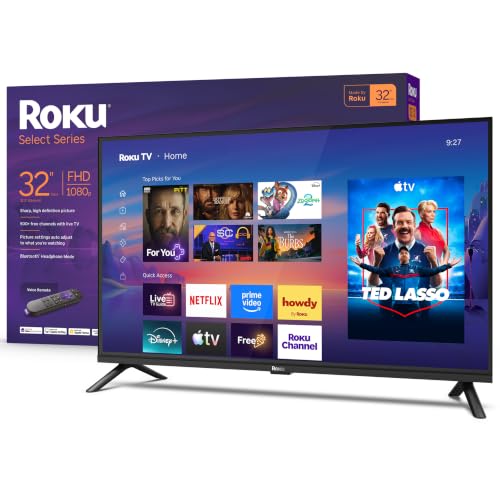
Roku 32-Inch Select — the broadcast tile done right
Roku’s set earns its place in a tuner guide on the strength of respect: Roku treats the antenna input as a citizen. The live TV tile sits on the home screen, the programme guide is a proper guide, and the whole experience assumes that a large share of the set’s life will be spent on scanned channels rather than apps. For the dorm room, the grandparent’s spare room and the cord-cutting household, that assumption is correct, and it makes the Select the most natural broadcast-first pick of the six. Its tuner is the same standard ATSC equipment as every rival’s; its interface is what differs.
For a clear-QAM feed, the honest statement mirrors the TCL’s: Roku sets scan cable feeds in the appropriate mode, owners in campus housing have historically used them on such systems, and none of that constitutes a verification this guide can print for this model — the housing office and the on-the-wire scan remain the authorities. What can be printed is that if the feed works, Roku’s guide presentation will make living with its channel numbering unusually painless, and if the feed does not work, Roku’s free-channel ecosystem is the strongest consolation in the guide. Either way the room ends up with a television that behaves.
- Screen: 32-inch class, 1920×1080 full HD
- Tuner: built-in ATSC digital tuner; antenna tile and guide on the home screen
- Platform: Roku TV
- QAM position: verify with your housing office and a cable-mode scan
Strengths
- Broadcast treated as a first-class citizen, not an input afterthought
- The calmest guide and channel experience of the six
- Free-channel depth cushions an encrypted-feed disappointment
Trade-offs
- No Chromecast for Android-heavy dorm rooms
- QAM documentation is no clearer than rivals’ — the wire decides
- Fewer channel-editing power tools than Samsung’s manager
Best for: broadcast-first rooms and anyone whose feed turns out to be app-based after all. Not suited for: a buyer demanding documentary proof of QAM before ordering.

Insignia 32-Inch F40 Fire TV — broadcast folded into the live tab
Insignia’s F40 brings Fire TV’s live tab to the tuner question, and for the mixed household — antenna for the networks, streaming for everything else — that tab is the daily interface: scanned channels appear in the same guide neighbourhood as the streaming rows, and Alexa can call up a channel by voice from across the kitchen. The set’s tuner is the standard built-in digital unit; its 1080p panel separates it from the 720p F20 sibling that budget listings will try to substitute, a substitution this guide flags because at 32 inches the resolution difference is visible in exactly the broadcast HD this search cares about.
On QAM, the F40’s position is the guide’s position: unverified by listing, decidable only by the feed’s operator and a cable-mode scan on the actual jack. Fire TV’s channel presentation would handle a clear campus lineup gracefully if one is present. The set’s other life — as an Alexa room’s television, with Echo speakers and Prime accounts already in place — is fully formed regardless of the tuner’s verdict, which is the correct way to buy any pick in this guide: the tuner outcome should be a bonus or a footnote, never the load-bearing wall of the purchase.
- Screen: 32-inch class, 1920×1080 full HD
- Tuner: built-in ATSC digital tuner; channels folded into Fire TV’s live tab
- Platform: Fire TV with Alexa voice control
- QAM position: not verifiable from listing — test on your feed
Strengths
- Live tab unifies broadcast and streaming browsing
- Full 1080p, unlike the F20 sibling listings may substitute
- Voice channel control suits kitchens and busy hands
Trade-offs
- Amazon’s home-screen merchandising surrounds the broadcast content
- QAM clarity from documentation is limited
- Fire TV’s app store is curated; the long tail is absent
Best for: Alexa households whose viewing splits between antenna and streaming. Not suited for: a purchaser whose entire plan rests on an unverified clear-QAM assumption.

Samsung 32-Inch F6000 — the documentation reader’s pick
Samsung’s F6000 enters a tuner guide with a particular virtue: Samsung publishes thorough manuals and specification material for its televisions, and its channel-management tooling — editing, reordering, favourites lists — is historically the most developed of the mainstream brands. For the viewer who will genuinely live inside a scanned lineup, whether that lineup arrives by antenna or by a clear campus feed, those management tools are the difference between a channel list as the scanner left it and a channel list arranged the way a household actually watches. The set itself is a current 1080p model on Samsung’s Tizen platform, with the brand’s picture processing and a tidier design language than the tier usually offers.
The QAM paragraph for the Samsung reads like the others because honesty is uniform or it is nothing: confirm the tuner details in the model’s own manual, confirm the feed with its operator, and let a cable-mode scan on the actual wire deliver the verdict. What the Samsung adds is that its documentation makes the first of those steps easier than most. Buyers in institutional housing, where a printed channel map sometimes circulates, will also appreciate a channel manager that lets them impose the map’s order on the set rather than memorising the scanner’s arithmetic.
- Screen: 32-inch class, 1920×1080 full HD
- Tuner: built-in ATSC digital tuner; developed channel-editing tools
- Platform: Samsung Tizen (One UI)
- QAM position: check the model’s manual; verify the feed with its operator
Strengths
- Best-in-guide channel management for large scanned lineups
- Manufacturer documentation is comparatively complete
- Polished 1080p picture for broadcast HD
Trade-offs
- Tizen’s app catalogue trails Google TV’s and Roku’s in the long tail
- Even Samsung’s listing does not turn QAM into a promise — the feed still decides
- Interface carries Samsung’s own promotional surfaces
Best for: viewers who curate big channel lineups and read manuals. Not suited for: app maximalists, who should take the TCL and its Play Store.

Hisense 32-Inch A4 Fire TV — tidy channels, clear voices
Hisense’s A4 is the Fire TV alternative to the Insignia with a different emphasis: where the F40 leads with its live tab, the A4 leads with its panel and its sound. The slim-bezel 1080p screen is the tidy piece of industrial design in this half of the guide, and DTS Virtual:X processing gives broadcast dialogue — newsreaders, interviewers, commentators, the actual soundtrack of tuner-driven viewing — a clarity that small speakers rarely manage. A tuner guide should care about that: a channel you cannot quite hear the words on is a channel half received, whatever the scan reported.
Its tuner is the standard built-in digital unit, its platform is Fire TV — a fact this batch has had to state firmly elsewhere, since Hisense’s Google TV reputation follows the brand into rooms where this model does not bring it — and its QAM position is the guide’s refrain: not verifiable from the listing, testable on the wire, and worth nothing against an encrypted feed. As the second Fire TV pick it gives Alexa households a genuine choice of panel character at 32 inches, which is more choice than the platform usually offers at this size.
- Screen: 32-inch class, 1920×1080 full HD, slim bezel
- Tuner: built-in ATSC digital tuner
- Platform: Fire TV — this A4 is not the Google TV Hisense of other ranges
- Sound: DTS Virtual:X processing for dialogue clarity
Strengths
- Dialogue clarity flatters news and talk-heavy broadcast
- Hisense panel quality in a tidy cabinet
- Fire TV’s live integration for mixed viewing
Trade-offs
- Brand confusion risk: buyers expecting Hisense Google TV must read the platform line
- QAM unverifiable from listing, as with every pick
- Amazon’s merchandising applies here too
Best for: Alexa households that watch talk-heavy broadcast and value Hisense’s panel. Not suited for: the Hisense Android seeker — that product is not this model.

Vizio 32-Inch D-Series — the long-running tuner veteran
Vizio’s D-Series closes the picks with the virtue of a long public record. This 1080p model line has been sold for years, which means its tuner behaviour — its scanning, its channel presentation, its quirks — is documented by an army of owners in a way no launch-year set can match. For a purchase whose central question is “how will this set behave on my feed,” a model with a long record carries a kind of evidence the newer picks cannot: not a QAM guarantee, which no pick here offers, but a known quantity. Its SmartCast platform adds Chromecast built in and AirPlay, so the dorm room’s phones can throw content at it regardless of the tuner’s verdict on the wall jack.
The trade for that record is freshness: SmartCast is the plainest interface in the guide, and the set’s design language belongs to an earlier, chunkier school. Neither flaw touches the tuner mission. If the feed proves clear, the D-Series will present its channels without fuss; if the feed proves encrypted, the casting bridges and the major apps carry the room. It is the pick for the buyer who values the known over the new — a defensible philosophy in a category where the central specification cannot be verified from any listing, this one included.
- Screen: 32-inch class, 1920×1080 full HD
- Tuner: built-in ATSC digital tuner with a long owner-documented record
- Platform: Vizio SmartCast with Chromecast built in and AirPlay
- QAM position: owner reports are anecdotes, not verification — test your feed
Strengths
- Years of owner documentation describe its real behaviour
- Chromecast and AirPlay cover the phone-casting fallback
- Full 1080p panel at the exact size
Trade-offs
- SmartCast is the plainest interface here
- Design and remote feel a generation older
- Long record invites anecdote-trusting — the wire still outranks forums
Best for: the household that values a known quantity and mixed-phone casting. Not suited for: interface connoisseurs, who should take Roku or Google TV.
Tuner Facts, Side by Side
| Pick | ATSC (antenna) | NTSC position | QAM position | Channel experience |
|---|---|---|---|---|
| TCL S3 | Built in | Legacy only; no analog broadcasts exist | Unverified in listing — test on wire | Blended Google TV live guide |
| Roku Select | Built in | Legacy only; no analog broadcasts exist | Unverified in listing — ask housing office | First-class live tile and guide |
| Insignia F40 | Built in | Legacy only; no analog broadcasts exist | Unverified in listing — test on wire | Fire TV live tab |
| Samsung F6000 | Built in | Legacy only; no analog broadcasts exist | Manual is the best place to check | Strongest channel editing |
| Hisense A4 | Built in | Legacy only; no analog broadcasts exist | Unverified in listing — test on wire | Fire TV live tab, clear dialogue |
| Vizio D-Series | Built in | Legacy only; no analog broadcasts exist | Owner anecdotes only — test on wire | Plain, well-documented |
The table’s monotony is its message. ATSC is uniform because the law made it so; NTSC is uniform because history ended it; QAM is uniform because no listing in this pool can honestly verify it. What varies — the only thing that ever varied — is the software wrapped around the tuner and the feed waiting in your wall. Choose the software you like from the rows above, and interrogate the feed with the steps this guide gives you. That division of labour is the entire truth of this search term, and any guide that dresses it up further is selling something.
How to Run the Cable Scan Correctly When the Television Arrives
The scan is a small ritual with a right way and several wrong ones, and on a shared building feed the wrong ones masquerade as a dead jack. Connect the coax from the wall directly to the television’s antenna/cable input — no splitters for the first test, no ancient barrel connectors of unknown ancestry. In the set’s channel menu, choose the cable option rather than the air or antenna option; the two searches sweep differently, and a clear-QAM lineup hunted with an antenna scan can pass unseen. Let the scan finish completely, however long the progress bar takes: digital cable lineups can hold scores of channels, and interrupting early is how half a lineup goes missing.
Then read the results like an investigator. A healthy clear-QAM scan typically yields the local broadcast channels and a building’s shared lineup, often on decimal channel numbers inherited from the system’s internal mapping — 5.1, 12.2 and their kin — which is normal and not a fault. If the scan finds nothing, the order of suspicion runs: wrong scan mode first, then the cable itself, then the jack (try the room’s other outlet or a neighbour’s, with permission), and only then the feed’s encryption. If the scan finds channels that stutter or tile, suspect signal strength and splitters before suspecting the tuner. And write down what the scan found, with the date: housing systems change, sometimes between semesters, and the household that documented its working setup troubleshoots its future self in minutes.
ATSC 3.0 and the Future: Should a 32-Inch Buyer Wait?
Every tuner discussion eventually meets the successor. ATSC 3.0, sold as NextGen TV, is broadcasting in a growing list of American markets, promising better reception, 4K capability and interactive features. It is also, at the time of this guide, absent from small televisions in the verified pool: no 32-inch pick here carries a 3.0 tuner, and the standard’s rollout remains market-by-market with the current ATSC 1.0 broadcasts continuing alongside. The practical advice follows from those two facts. A buyer who needs a television this semester should buy from this list without a flicker of regret; the antenna channels these sets receive are the same channels the nation watches, and they are not scheduled to vanish beneath anyone’s purchase.
The buyer whose market has launched 3.0 and who specifically wants it faces a different shopping trip — larger sets, converter boxes as they mature, or patience. What they should not do is pay a premium for vague “future-ready” language on a small set, or let a listings page blur the distinction between ATSC and ATSC 3.0, which are different tuners sharing a surname. This guide’s picks are described with the plainer acronym because the plainer acronym is what they contain, and the distinction is one more entry in this search term’s long lesson: in tuner land, the exact letters are the product.
Choosing an Antenna to Match the Tuner You Already Own
Since ATSC reception is the one certainty in this guide, the antenna deserves the attention the acronyms usually steal. The physics are friendly: most households in metropolitan and suburban areas can receive the major networks with a modern indoor antenna, and the tuners in all six picks are sensitive enough that placement, not equipment, is the usual variable. Put the antenna high and near a window on the side of the building facing the transmitters — broadcast prediction tools will show you the compass bearing for your postcode — and rescan after every move, because the set only knows about channels it has been told to look for. A wall of foil-backed insulation, a metal roof or a basement room can each defeat a good antenna; in those cases the building, not the television, is the problem to solve, with an attic or outdoor antenna as the grown-up answer.
Amplified antennas deserve their sceptical paragraph. An amplifier helps when the signal arriving is weak but clean and the run to the television is long; it harms when the signal is strong, overloading the tuner into the same tiling break-up that weakness causes. The diagnostic is free: try the antenna unamplified first, note the channels, then amplify and compare. Amplifiers are also why two neighbours with identical sets report different receptions — the tuner is the same, the wire’s story differs. None of this requires expertise, only the willingness to treat the first evening as an experiment with a notebook, which is the correct spirit for the whole tuner enterprise.
How Building-Wide TV Systems Actually Work
The dorm and apartment feeds behind this search term run on equipment most residents never see: a headend. In a traditional bulk system, the building receives satellite or cable service centrally and redistributes a chosen lineup through its own coax plant — historically in analog NTSC, increasingly in digital QAM, sometimes encrypted with a system the building manages, sometimes in the clear. Universities often run the most deliberate versions: a curated lineup, published channel maps, and help-desk pages describing exactly which tuner a resident’s television needs. That is why the campus answer to the QAM question is knowable in a way a random apartment’s is not — someone is employed to know it, and their documentation is the specification that matters.
Hotels and hospitals add their own twist: commercial systems insert the property’s own channels — the welcome screen, the local information loop — into the lineup, and they are engineered for televisions in a managed mode that consumer sets only approximate. A consumer pick from this guide will usually still tune such a feed’s clear channels, which is why these sets turn up in guest-adjacent roles, but nobody should buy one for a commercial installation on a tuner bullet point. The thread running through every building system is the same: the feed is a designed artefact with an operator, and the operator’s documentation outranks every product page, every forum post and — this guide cheerfully includes itself — every buying guide.
A Brief, Honest History of CableCARD and Other Almost-Solutions
Older shoppers sometimes arrive at this search carrying a memory: wasn’t there a card that let a television receive encrypted cable directly? There was — CableCARD, a regulator-backed attempt to let retail devices decode encrypted cable without a rented box. A small number of televisions carried slots for it in the 2000s. The system withered under lukewarm industry support, operators were eventually released from supporting it, and no current small television offers it. It survives here as a caution against buying on remembered technology: the box-free encrypted-cable television was a real product category once, and it is gone, and listings or advice that gesture at it are describing a world that no longer exists — the same warning this guide has issued, in different words, about NTSC.
The living successor to that dream is not a tuner at all but the provider app: the cable companies’ own streaming applications, running on the platforms of these six picks, delivering the full encrypted lineup over the internet with no box and no coax. For the encrypted-feed household, that app — its availability on the chosen platform, its channel coverage, its recording features — is the specification that actually decides satisfaction, and it is checkable in advance from the provider’s own materials. The tuner era’s problems have app-era answers; they just live in a different column of the comparison table than the acronyms suggest.
Slips That Leave a Good Television Looking Broken
The classic slip is scanning in the wrong mode and concluding the jack is dead — it accounts for more abandoned dorm setups than any hardware fault. Close behind is trusting a listing’s tuner bullet list, which may have been copied from a different region’s model or a different year’s panel, over the evidence of the wire in your own wall. A third slip is buying for NTSC: paying extra, or choosing a worse television, for analog compatibility with broadcasts that ended in 2009. If an elderly relative’s building genuinely distributes an in-house analog lineup — a few do, through legacy modulators — that is a fact to confirm with the building, and even then the answer is usually a cheap converter, not a television chosen around a ghost.
Fourth, shoppers forget the return window’s role in an unverifiable purchase. When the feed cannot be tested in advance, buy from a seller whose returns process you have read, keep the packaging until the scan has spoken, and treat the first evening’s cable scan as part of the purchase itself. Fifth, there is the splitter surprise: a room’s coax split between a television and a legacy device, or run through a surge protector’s coax loop, can shave the signal below what a marginal lineup needs. Direct connection first, accessories after the channels are proven. None of these slips is foolish; all of them are the predictable result of a market that prints three acronyms on a box and explains none of them. This guide exists to be the explanation.
After the Scan: Taming a Hundred Channels Into a Lineup
A successful scan on a rich feed presents a new, happier problem: abundance without order. Digital systems deliver the main channels, their subchannels — the retro networks, the shopping and faith and foreign-language services that ride along in the same broadcast — and, on cable plants, the building’s own additions, all numbered by transmission logic rather than by any human’s viewing habits. Every pick in this guide offers some combination of favourites lists, channel hiding and, on the Samsung most fully, reordering. Twenty minutes invested on the first evening — gather the dozen channels the room actually watches into the favourites, hide the rest rather than deleting the knowledge of them — converts the tuner from a directory into a remote-friendly handful of stops, and it is the difference between a household that surfs its lineup and one that retreats to three memorised numbers.
Subchannels deserve their sentence of appreciation, because they are the tuner era’s gift that streaming has not replicated for free: classic-television networks, local weather loops, public-affairs channels and niche film services, all riding the same ATSC signal the main networks use, all present on every pick here the moment an antenna scan completes. Cord-cutters who dismiss broadcast as four networks and a shopping channel are working from a 2009 memory. The modern scanned lineup, antenna or clear cable, is a small cable system of its own — which is, in the end, why this search term refuses to die, and why the televisions that serve it well are worth choosing carefully.
On the Road: Tuners in RVs, Boats and Second Cabins
The mobile version of this search has its own physics. RV parks distribute cable through park-wide plants that range from elderly analog systems to modern digital ones, and the only universal rule is the rescan: a television that stays tuned to the last park’s lineup will show nothing at the next, and owners who build the scan into their arrival routine — hookups, levelling, channel scan — stop experiencing it as a fault. The picks’ ATSC tuners handle the other half of road viewing, the over-the-air reception that a rooftop RV antenna gathers surprisingly well in the rural districts where parks cluster and transmitters are few but unobstructed. A 32-inch set is large for a small RV and standard for a larger one; either way, its tuner will work in more places than its streaming will, because broadcast does not ask for a password or a data allowance.
Boats and cabins repeat the pattern with local variations: marina cable is a building system with a dockmaster instead of a housing office, and the same question — box or direct tune? — gets the answer from the same kind of authority. The guide’s method travels well because it was never really about six televisions. It is about refusing to let three acronyms on a box substitute for one question asked of the people who run the wire.
Reading a Specification Sheet Like an Engineer
For buyers who want to do the documentary half of verification properly, the tuner section of a full specification sheet — the manufacturer’s PDF, not the retailer’s summary — repays a slow read. Look for the tuner types named in full, the distinction between the terrestrial and cable systems listed, and any footnote tying features to region: the same model name can hide different tuner complements in different markets, which is one more mechanism by which a listing copied from another country’s page ends up promising an American buyer a tuner the American set does not carry. If the sheet is silent where you hoped for a QAM line, that silence is itself the answer the sheet is giving, and the guide’s advice stands: the wire, tested, decides.
While the sheet is open, two neighbouring specifications matter to tuner households. The number of HDMI inputs decides how gracefully the set absorbs the box it may end up needing after all, and the presence of an optical or ARC audio output decides the soundbar question for rooms where broadcast dialogue matters. Neither appears in this search’s acronyms, and both will shape the television’s daily life more than NTSC compatibility ever will. Specifications reward the reader who knows which lines are load-bearing — and after this guide, the reader does.
Final Recommendation
Decide the feed first and the television second, and this search resolves itself. Antenna households: every pick is fully equipped, so choose on platform — Roku for broadcast-first calm, Google TV for the blended guide and casting, Fire TV for Alexa rooms, Samsung for channel curation, Vizio for the known quantity. Clear-QAM households, in dorms and buildings whose offices confirm box-free service: buy any pick with the scan ritual in mind and the packaging kept until the wire has spoken. Encrypted-feed households: the tuner cannot save you, so buy the television whose platform runs your provider’s app best and let the acronym go. The letters ATSC, NTSC and QAM describe three eras of television; only one of them is still broadcasting, one is a museum piece, and one is a question only your building can answer — and a buyer who knows which is which cannot be sold a ghost.
If a single pick must be named for the reader who arrived with an antenna and a deadline, it is the Roku Select, because its broadcast interface respects the tuner’s work the most. If the deadline comes with a dorm contract attached, the same pick stands — with the housing office’s answer in hand and the scan ritual understood. And if the investigation reveals an encrypted feed and a provider app at the end of it, the TCL’s platform makes the pivot painless. The acronyms brought you here; the feed decides; the television, whichever of the six it is, will be ready for the answer.
Frequently Asked Questions
My building’s channels worked last year and stopped. What changed?
Most likely the building’s plant was re-engineered — a migration from clear to encrypted distribution, a headend replacement, or a provider change — rather than anything failing in your television. Confirm with the housing or building office, run a fresh cable-mode scan in case the lineup merely moved, and if the system now requires a box or an app, that requirement is the new reality for every set in the building, not a defect in yours. This scenario is precisely why the guide recommends buying a television you value beyond its tuner.
Do all new TVs really include an ATSC tuner?
Televisions sold in the United States are required to include a digital ATSC tuner, and every pick in this guide does. Devices sold as “monitors” or display-only panels are the exception — one more reason this guide recommends proper televisions for antenna households. The rule’s history is worth knowing when a salesperson waves at a cheap display and calls it a TV: during the digital transition, regulators required tuners in anything marketed as a television, precisely so that a purchase could not strand a household without broadcast reception. A screen without a tuner can be an excellent monitor, but it is not a television, and for the purposes of this search — where the tuner is the entire subject — that legal line is the most useful definition on the page.
Can I watch cable without a box using a QAM tuner?
Only if your cable system sends channels unencrypted — clear QAM. Most large retail systems encrypt everything and require a box or the provider’s app. Clear QAM survives mainly in campus housing, some apartment bulk systems and institutional networks. Ask the system’s operator; the television cannot tell you in advance. Be aware, too, that a system which is clear today can be re-engineered tomorrow: buildings migrate their plants, and a lineup that scanned perfectly in September can require a box by spring. That possibility is one more reason this guide steers the purchase toward televisions you would be happy to own for their platform and panel alone, with the tuner as a capable servant rather than the master of the decision. If the feed changes, a good television adapts through its apps; a television bought for one acronym cannot.
Why do listings still mention NTSC?
Because specification tables are conservative documents and analog compatibility lingered in tuner chipsets after the 2009 analog shutdown. It has no bearing on modern broadcast reception. Treat any NTSC boast as padding, not as a feature worth paying for. The same conservatism explains other fossils you may meet on the same listings — references to analog audio outputs, to composite inputs described as headline features, to tuner counts phrased for a market that channel-surfed by number. A specification sheet is written by a committee across a decade; a buying decision should be written by the present tense. Read the sheet for its digital tuner line, its inputs and its platform, and let the fossils rest.
How do I know if my dorm’s cable needs a box?
Ask the housing or campus IT office whether rooms can tune channels directly with a QAM-capable television or whether a box or app is required. Many publish setup pages for exactly this. A test scan on an existing television in the room answers the same question experimentally.
Will these TVs receive ATSC 3.0 (NextGen TV)?
No — none of the 32-inch picks in the verified pool carries an ATSC 3.0 tuner. They receive current ATSC broadcasts, which continue alongside the 3.0 rollout. Buyers who specifically need 3.0 today should look at larger sets or converter solutions rather than this size class.
The cable scan found channels with decimal numbers like 12.2. Is that right?
Yes. Clear-QAM lineups commonly present channels on decimal numbers reflecting the system’s internal mapping rather than the broadcaster’s branding. The building’s published channel map, where one exists, translates those numbers into names; where none exists, an evening of browsing with a notebook builds the translation, and the favourites list preserves it. It is normal behaviour for a direct-tuned feed, and the set’s channel-editing tools can gather your regulars into a favourites list.
Related Guides
Continue with our full roundup of the best 32-inch TVs, compare the platform angles in our guide to 32-inch Roku TVs, or step sideways to the story of the disappearing 30-inch television.



[…] this page beside our guide to 32-inch Android and Google TV sets, browse the full field in our roundup of the best 32-inch TVs, or check what to know about TV […]