Our Top Picks



What's inside
- What a wireless print server actually does
- Printing from a smartphone: the honest version
- Who still needs one of these boxes
- How the seven products compare
- The products, one by one
- Setup, in the order that causes the fewest problems
- Troubleshooting the problems people actually meet
- Buying checklist before you order
- Frequently asked questions
- Check prices on Amazon
- Conclusion: match the box to the printer you actually have
As an Amazon Associate I earn from qualifying purchases. This post may contain affiliate links at no extra cost to you.
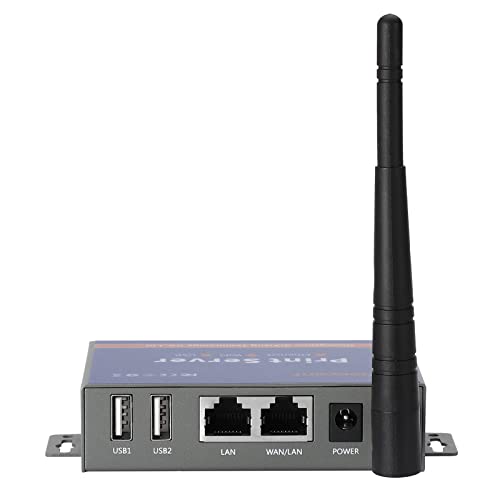
A wireless print server is a small, unglamorous box with one useful job: it takes a printer that only knows how to talk over a USB cable and puts that printer on your home or office network, over Wi-Fi or Ethernet, so that more than one device can reach it. That is the whole promise, and it is a real one. It is also a narrower promise than many listings make it sound, so this guide starts with the limit that matters most for the topic in its title. No box in this article is, by itself, a magic AirPrint solution. Printing from a smartphone works through the printer maker’s own app, or through the printing system built into the phone’s operating system, once the printer is present and reachable on the network. The print server gets the printer onto the network. Whether a given phone, a given printer model, and a given app work smoothly together after that point depends on the printer and the software, not on the box alone. Any buying decision that ignores that distinction is likely to end in frustration, so we checked each product below against what its own listing actually claims, and we state the limits plainly where they belong: at the front.
There is a second honest point to make before any product names appear. This is a legacy, niche product category. Most new printers already include Wi-Fi, and for most households buying a printer today, the correct answer is simply to buy a printer with wireless networking built in and skip this entire class of hardware. Print servers exist for the people for whom that answer does not work. The clearest case is a good USB-only printer that still prints well: a workhorse laser or a dependable inkjet that has years of life left, works with the computers it is attached to, and would be wasteful to replace just to gain a network connection. The second case is a small office, a classroom, a workshop, or a shared household that wants one printer to serve several computers without leaving one particular computer switched on all day as a sharing host. The third case is a mixed desk where a printer sits far from the router, or where several USB devices need a shared network home. If none of those descriptions sounds like you, this guide will still explain the category, but it will not pretend you need to buy anything.
What a wireless print server actually does
Start with the problem in its simplest form. A USB printer expects a direct cable connection to one computer. That computer owns the printer in a practical sense: it holds the driver, it sends the jobs, and if it is asleep, switched off, or carried out of the room, nobody else can print. People worked around this for years by turning on printer sharing in the operating system of the host computer, and that workaround still functions, but it keeps the dependency. The host has to be awake, on the network, and willing to share, every single time anyone else wants a page.
A print server removes the host computer from that chain. You connect the printer to the box with a USB cable, and you connect the box to your network, either with an Ethernet cable to your router or switch, or by joining the box to your Wi-Fi network. From that point the printer has a network presence of its own. Computers on the same network can add it and send jobs to it without any one computer acting as a permanent middleman. The box is, in effect, a tiny, single-purpose network adapter and traffic manager for a printer that was never designed to have one.
Printing from a smartphone: the honest version
Because this guide is framed around smartphones, this section deserves more space than it usually gets. When a phone prints successfully in a setup like this, the chain normally looks like this: the phone is on the same Wi-Fi network, an app from the printer maker or the phone’s built-in printing service looks for printers on that network, the printer is found because the print server has placed it there, and the job is sent using whatever support the printer and the app share. When that chain works, it feels simple, and it is genuinely convenient to send a boarding pass, a homework sheet, or a return label from the phone in your hand instead of walking to a computer.
When the chain breaks, it usually breaks at the software step, not the network step. A printer that predates modern mobile printing standards may be perfectly visible to a Windows or Mac computer, with a full driver installed, and still not appear in a phone’s print sheet, because the phone is looking for a kind of printer the older model never claimed to be. The print server does not fix that gap. It was never in a position to fix that gap. So the correct expectation is this: a wireless print server gives your USB printer a network address and a shared presence. Mobile printing then depends on the printer maker’s app for your printer family, on your phone’s printing system, and on how those two pieces of software treat a networked version of your printer model. Check the app for your printer brand before you buy a box for phone printing specifically, and treat any listing that implies universal phone printing with the scepticism it has earned.
Who still needs one of these boxes
The strongest case is the good old printer. Printers age differently from computers. A laser printer from many years ago can still produce crisp text at a pace that satisfies a household or a small office, and its only real deficiency is that it was built before Wi-Fi became standard equipment. Replacing it solely to gain wireless access means discarding working hardware and buying a new machine whose print quality may be no better for the documents you actually produce. A print server that costs a fraction of a replacement, and an afternoon of setup patience, can be the rational middle path, provided your expectations about phone printing are the realistic ones described above.
The second case is the shared printer in a small team. In a home office shared by two people, a small business with a handful of desks, a studio, or a community space, one good printer serving everyone is tidier than several cheap printers serving one desk each. A print server makes that sharing independent of any individual’s computer. Nobody’s laptop has to stay docked and awake for a colleague to print an invoice. That independence, more than wireless convenience alone, is what many buyers of the multi-port products below are actually purchasing.
How the seven products compare
| Product | ASIN | Shares | Network connection as listed | Systems named in listing |
|---|---|---|---|---|
| Xiiaozet LK100W Wireless Print Server | B0D22WL8DD | One USB printer | Ethernet or WiFi | Not specified in title |
| CHEECENT Wireless Print Server, CR202 | B0B19T1GKY | 2-port USB print server | WiFi and Ethernet networking | Windows, Mac, Linux |
| Wireless Print Server, LAN Bridge | B0DWXYHKRY | USB printers, standalone use | 10/100Mbps LAN bridge, wired and wireless modes | Not specified in title |
| LP-N110W Wireless Print Server | B0FSQ3V1L1 | One USB printer | Network printing over Wi-Fi as described | Windows, macOS |
| Xiiaozet LK300EW USB Device Server | B0DJSW5HQB | 3-port USB sharing: printers, scanners, USB devices | Ethernet or WiFi | Windows, Mac, Linux |
| EVGATSAUTO USB Print Server | B0HJCLRN6Q | 4 USB printers | 10/100Mbps LAN bridge, wired or 2.4G wireless modes | Not specified in title |
| Lexmark N8352 Wireless Print Server Plus NFC | B00STR4WBY | Lexmark printers only, as a brand accessory | Wireless, plus NFC | Not specified in title |
The products, one by one
1. Xiiaozet LK100W Wireless Print Server
ASIN: B0D22WL8DD. The Xiiaozet LK100W is the most straightforward product in this guide, and for many readers it will be the reference point against which the others are judged. Its listing describes a wireless print server with a USB 2.0 connection for printer sharing, whose job is to convert USB printers into network printers via Ethernet or WiFi, so that one printer can be shared with multiple computers. Every part of that sentence matters. USB 2.0 is the printer connection. Ethernet or WiFi is the network connection, and the word or is doing real work: you can wire the box into your network for the most stable arrangement, or you can let it join your wireless network where a cable run is impractical. Multiple computers is the purpose. This is a box for taking the single-user printer on your desk and making it the shared printer for the household or the small office.
Apply the smartphone framing honestly here, as everywhere in this guide. Once the LK100W has placed your printer on the network, your computers share it as the listing describes. Your phone’s access then runs through your printer maker’s app or your phone’s printing system, and it will succeed or struggle based on your printer model’s software support, not on anything extra this box does or fails to do. Buy the LK100W for dependable printer sharing among computers, with phone printing as a possibility your printer’s own software will decide. Within those terms, it is the clean, general-purpose starting point of this roundup, and readers with one printer and no unusual requirements should read the rest of the guide mainly to confirm that nothing more specialised fits them better.
2. CHEECENT Wireless Print Server for USB Printer, CR202
ASIN: B0B19T1GKY. The CHEECENT print server, model CR202 as named in its listing, earns a kind of respect before anything else is said about it, because its title contains three words most listings would hide: NOT Plug and Play, presented in the listing itself as NOT Plug&Play. That is an honest warning, and this guide will not soften it. This model needs more deliberate setup than a box you simply connect and forget. You should expect to spend time on configuration, to follow the maker’s instructions carefully, and to work through network settings rather than waiting for everything to announce itself automatically. For a patient buyer, or for anyone who has configured network hardware before, that is a fair trade. For a buyer who wants the gentlest possible first experience with a print server, it is a genuine reason to choose one of the other products in this guide instead.
So the CHEECENT’s identity is clear, and it is a coherent one. It asks more of you during setup and offers more in return: an extra port and the broadest stated platform support among the dedicated print servers here. The correct way to shop it is to decide, honestly, which side of that trade you live on. If your network is mixed, your printer count might grow, and your tolerance for a configuration session is reasonable, the warning in the title is simply information, and useful information at that. If your household is one printer, one system, and a strong preference for the shortest path between box and first printed page, the same warning is the listing itself telling you to look at the LK100W or the LP-N110W instead. Few products describe their own ideal buyer this clearly. Credit the listing for doing so, and take it at its word in both directions.
3. Wireless Print Server for Sharing USB Printers, LAN Bridge
ASIN: B0DWXYHKRY. This wireless print server presents itself in the language of a network bridge, and that framing is informative. Its listing describes a 10/100Mbps LAN bridge for sharing USB printers, with wired, wireless, and standalone modes, a USB 2.0 print server connection, and plug and play setup, with the listing specifying a US version. Take those claims one at a time. The 10/100Mbps figure describes the wired Ethernet side of the bridge, the standard Fast Ethernet connection found across this category, which is comfortably sufficient for print traffic; print jobs are small compared with the video and file transfers that strain networks, and no printer in this class is waiting on a faster network port to do its work. The wired and wireless modes restate the category’s usual choice: cable the box to the network, or let it join wirelessly. The standalone wording points to the box working as an independent network device rather than depending on a host computer, which is, as explained earlier, the entire point of owning a print server rather than relying on one computer’s sharing settings.
Who should shortlist this one? A household or small office with a USB printer, a preference for the simplest stated setup route, and no need for the extra ports or the device-sharing breadth found elsewhere in this guide. Its bridge language also suits buyers who think of the purchase as a piece of network infrastructure rather than as a printer accessory, which is a healthy way to think about all of these products. As ever, the smartphone note applies unchanged: the box puts the printer on the network in wired or wireless mode, and phone printing then depends on your printer maker’s app or your phone’s printing system and on your printer model’s place in that software. Judge this product on sharing and setup, and it presents a tidy, general case for itself.
4. LP-N110W Wireless Print Server for USB Printer
ASIN: B0FSQ3V1L1. The LP-N110W describes itself in the language of the home office, and its listing is built around two promises: easy USB sharing and stable network printing. It names compatibility with Windows and macOS, and it addresses itself to home office use. That combination defines a specific and very common reader. You work at home, or your household runs on a mixture of Windows and Mac computers, you have a USB printer that still serves you well, and you want the people and machines in the house to share it without a host computer acting as gatekeeper and without a configuration project eating your weekend. The LP-N110W is pitched directly at that reader, and its listing does not pretend to be aimed at anyone else.
The easy sharing claim deserves the same balanced reading given to the plug and play claim in the previous section. Easy is a direction, not a spell. You will still connect the printer, join the box to your network, and add the printer on each computer, and the calm sequence of wired or careful wireless setup, one computer first, then the rest, remains the reliable route. Within a Windows and macOS home, though, this product’s stated compatibility covers the two systems such a home actually runs, and that focus is a strength rather than a limitation for its intended buyer. For phone printing, repeat the guide’s standing note to yourself before ordering: the box makes the printer a network citizen, and your phone then works through your printer maker’s app or your operating system’s printing support for that printer model. If your home office matches the listing’s own description of itself, the LP-N110W is the most directly addressed option in this roundup.
5. Xiiaozet LK300EW Wireless USB Device Server
ASIN: B0DJSW5HQB. The LK300EW must be introduced with its correct job title, because it is not quite the same kind of product as the four boxes above. Its listing calls it a wireless USB device server: a 3-port USB 2.0 sharing device that supports printers, scanners, and USB devices over Ethernet or WiFi, with support for Windows, Mac, and Linux. A print server shares a printer. A device server shares USB devices more generally, placing them on the network so that computers can reach equipment that was designed for a direct cable connection. Printing is one of the jobs such a device can do, and the listing names printers first, but scanners and other USB devices are explicitly part of its brief, and that breadth changes both what it is for and who should buy it.
The reverse is equally true, and a trustworthy guide should say so. If your entire problem is one printer and several computers, a device server is more general than your need, and generality in network hardware usually arrives with more configuration surface than a single-purpose box. The LK100W from the same maker exists precisely for the narrower job. Choose between them by inventory, not by enthusiasm: count the USB devices you genuinely need to share, and let that number decide. One printer points to a print server. A printer plus a scanner, or a small cluster of shared USB equipment, points here. And the smartphone note, inevitably, still applies, with an extra wrinkle: sharing a printer through a device server puts it on the network for computers as described, while phone printing continues to depend on the printer maker’s app and the phone’s printing system, and phone access to scanners or other USB devices is a separate software question entirely that no buyer should assume is answered by the presence of this box.
6. EVGATSAUTO USB Print Server, LAN Bridge for 4 Printers
ASIN: B0HJCLRN6Q. The EVGATSAUTO print server is the capacity play in this guide. Its listing describes a USB print server built as a 10/100Mbps LAN bridge for four printers, able to share four USB printers, with wired or 2.4G wireless modes and web interface setup. Every element of that description points at the same buyer: not a household with one printer, but a small office, a workshop, a retail back room, a school office, or a busy shared space where several printers each have a job. One machine may handle everyday documents, another labels, another a specialised format, another the heavy draft work. Cabling each of them to its own computer recreates the host-dependency problem four times over. A single bridge that brings all four onto the network is a tidier architecture, and tidiness in a working office is not cosmetic; it is fewer failure points and one place to look when something stops responding.
Scale also changes the support conversation, and honesty requires a sentence about it. When one bridge carries four printers, its setup deserves the careful sequence this guide keeps recommending, performed once and properly: connect, configure through the web interface, add one printer, confirm it from one computer, then add the rest and extend access machine by machine. An office that rushes that sequence will have four printers’ worth of confusion instead of one printer’s worth. An office that follows it gains a genuinely shared print room. Phone printing, for staff who want it, follows the same rule as everywhere else here: the bridge places the printers on the network, and each phone then works through the relevant printer maker’s app or the phone’s printing system for that printer model. For a multi-printer space, that per-printer software question is worth checking four times, once per machine, before anyone promises the team effortless mobile printing.
7. Lexmark N8352 Wireless Print Server Plus NFC
ASIN: B00STR4WBY. The Lexmark N8352 requires the clearest label in this guide, so here it is without decoration: this is a Lexmark accessory, made for Lexmark printers. It is not a universal print server, it is not addressed to printers from other brands, and it should not be bought by anyone whose printer does not come from Lexmark. Its listing presents it as a wireless print server plus NFC, and that NFC element is unique in this roundup: no other product here names it. Within its intended world, the product makes a particular kind of sense. A brand’s own accessory is designed around that brand’s printers, sold through that brand’s channels, and expected to fit into that brand’s way of networking its machines, which is a different proposition from a third-party box that must speak to many makers’ hardware at once.
There is also a broader lesson in this product’s presence, and it is worth stating before the buying advice begins. In legacy categories, brand-specific accessories and general-purpose boxes sit side by side in search results with similar titles and very different intentions. The words wireless print server appear in both. The discipline that protects you is the discipline this guide has applied throughout: read what the listing actually claims, identify exactly which printers it addresses, and never let a shared category name talk you into assuming shared compatibility. That discipline matters even more for phone printing expectations, where, as established at the start, the printer and its maker’s software carry most of the answer. A Lexmark owner considering this accessory should check Lexmark’s own software story for their model with the same care a buyer of any other box here should check theirs.
best wifi routers for small apartments
Setup, in the order that causes the fewest problems
Whichever product you choose, the setup sequence that produces the calmest results is the same, and it is worth writing down before the box arrives. First, place the printer where it will live and confirm it prints happily over a direct USB connection to one computer. That step feels redundant and is anything but: it proves the printer, its cable, and its driver are healthy before the network enters the story, so that any later problem can be assigned to the new element rather than guessed at among three. Second, connect the print server to the printer, and connect the print server to your network, by Ethernet if you possibly can for this first stage, even if its final home will be wireless. A wired first connection removes wireless passwords and signal quality from the list of things that can go wrong during configuration.
Third, follow the maker’s configuration route for your specific box, whether that is a utility, a web interface as the EVGATSAUTO names, or the maker’s documented steps, and give the printer its network presence. Fourth, add the printer on one computer, print a real document rather than only a test page, and use it for a day. Fifth, and only then, add the printer on the remaining computers, one at a time, printing something real from each. Sixth, if the box will live wirelessly, move it to wireless operation now, re-check printing from two machines, and confirm the setup survives a restart of the printer and the box. That last check, the restart check, is the one people skip and later regret, because a setup that works until the first power cut and then needs rediscovering is not finished, whatever the first afternoon suggested.
Troubleshooting the problems people actually meet
Most print server problems announce themselves in one of four ways, and each has a sensible first move. If computers cannot see the printer at all, check the boring layer first: is the box powered, is the printer powered and awake, is the network cable seated or the wireless connection joined to the correct network, and is the computer on that same network rather than on a guest network that cannot see local devices? Guest networks deserve special mention, because they are designed to isolate devices from one another, and a phone or laptop chatting happily to the internet through a guest network may still be completely unable to reach a printer sitting on the main network. More shared-printing mysteries are solved by that one observation than by any driver reinstall.
If one computer prints and another does not, the problem is almost certainly local to the silent computer: its printer entry, its driver, or its network. Remove and re-add the printer on that machine before touching the shared setup that is demonstrably working for others. If printing works and then stops after a router change, a power cut, or a network reconfiguration, suspect that addresses on the network have shifted and the stored route to the printer no longer matches reality; re-adding the printer, or following the maker’s steps for fixing its network presence, addresses that class of problem. If a phone cannot find a printer that computers use happily, return to the honest framing of this guide: check the printer maker’s app for your model, confirm the phone is on the main network rather than the guest one, and accept, if the app does not support your printer’s networked form, that the limitation lives in the software layer rather than in a box you can swap your way out of.
Buying checklist before you order
- Count your printers first. One printer points to the single-printer boxes; two ports, three ports, and four-printer capacity exist for genuinely larger inventories, not as future-proofing you will never use.
- Decide whether you need a print server or a device server. If a scanner or other USB devices must be shared as well as a printer, only the LK300EW in this guide is listed for that broader job.
- Check the operating systems in the listing against the computers you own. Windows and macOS cover most homes; the listings that also name Linux are the CHEECENT and the LK300EW.
- Be honest about setup appetite. One listing in this guide warns in its own title that it is not plug and play. Believe it, and choose accordingly.
- Confirm your printer brand before considering the Lexmark N8352. It is a Lexmark accessory for Lexmark printers, full stop.
- Check your printer maker’s phone app for your exact printer model before buying any box primarily for smartphone printing, because that app, not the box, decides most of the mobile experience.
- Plan the network route: where the box will sit, whether Ethernet reaches that spot, and how strong the Wi-Fi is there if it will join wirelessly.
- Confirm your printer works well over a direct USB connection first. A print server shares a healthy printer; it does not rehabilitate a broken one.
Frequently asked questions
Will a wireless print server make my old printer work with my phone?
It will put your printer on the network, which is the necessary first step. Whether your phone then prints to it depends on your printer maker’s app or your phone’s built-in printing system and on how they support your printer model once it is networked. Some combinations work smoothly; older printers may remain computer-only in practice. Check the app for your printer model before buying a box for this purpose alone, so that your expectation is set by the software that actually decides the question.
Is Ethernet or Wi-Fi better for a print server?
Ethernet is the more stable route whenever a cable can reach the printer’s location, because it removes signal strength and wireless congestion from the equation entirely. Wi-Fi is the more flexible route, letting the printer live where no network outlet exists. Many buyers use both in sequence: Ethernet while setting up, because it eliminates variables, and then a deliberate choice about the final arrangement once everything is known to work.
Can one print server share a printer with Windows and Mac computers at the same time?
Sharing across systems is the normal purpose of these boxes, and the listings here name their system support explicitly. The LP-N110W names Windows and macOS. The CHEECENT and the LK300EW name Windows, Mac, and Linux. Match the listing’s named systems to the computers in your home or office, and add the printer on each computer using that system’s own printer setup, with the driver for your printer model.
What is the difference between a print server and the LK300EW device server?
A print server shares printers. A USB device server shares USB devices more broadly, and the LK300EW’s listing names printers, scanners, and USB devices across its three ports, over Ethernet or WiFi, for Windows, Mac, and Linux. If you only need to share a printer, a print server is the narrower and usually simpler tool. If a scanner or other USB equipment must also live on the network, the device server is the category designed for that job.
My office has several printers. Which product addresses that?
The EVGATSAUTO is listed as a LAN bridge for four printers, sharing four USB printers in wired or 2.4G wireless modes with web interface setup, and it is the clearest multi-printer answer here. The CHEECENT’s two ports suit a smaller step up from a single printer. Offices should also plan setup as a staged project, adding and confirming one printer at a time, rather than connecting everything at once and troubleshooting the whole room simultaneously.
Is the Lexmark N8352 a good universal option?
It is not a universal option at all, and it is not presented as one in this guide. It is a Lexmark wireless print server accessory with NFC, addressed to Lexmark printers. For a Lexmark owner it is the brand’s own route and worth considering on those terms. For everyone else, the correct move is to choose among the general-purpose boxes whose listings address USB printers broadly.
Why buy a print server at all when new printers have Wi-Fi?
For a new printer purchase, you generally should not; built-in Wi-Fi is the simpler answer, and this guide says so plainly. The print server case rests on hardware you already own: a USB-only printer that still prints well, a shared printer that should not depend on one computer staying awake, or a small fleet of printers that needs a shared network home. When the existing hardware is good, a small box that networks it is cheaper, less wasteful, and often faster to deploy than replacing machines that were never the problem.
Check prices on Amazon
Live listings for the shortlist in this guide are pulled from Amazon below, so prices and availability are always current at the moment you look.


Conclusion: match the box to the printer you actually have
The best wireless print server for smartphones is, honestly, the one whose limits you understand before it arrives. For the classic case of one good USB printer and several computers, the Xiiaozet LK100W states the category’s core offer cleanly: USB 2.0 printer sharing, conversion to a network printer via Ethernet or WiFi, and one printer shared with multiple computers. For a mixed Windows, Mac, and Linux environment that can accept a more involved setup, the CHEECENT CR202 pairs two ports with the broadest stated system support, and its own not plug and play warning lets you choose it with open eyes. For the buyer who wants the simplest stated route, the LAN bridge model presents 10/100Mbps wired and wireless standalone sharing with plug and play setup. For a Windows and macOS home office that values steady, forgotten infrastructure, the LP-N110W aims its easy sharing and stable network printing directly at that desk.
Hold on to the two honest ideas from the opening while you decide. First, phone printing runs through your printer maker’s app or your phone’s printing system once the printer is on the network, and no box here changes that; buy for network sharing, and let mobile printing be the welcome extra your printer’s software may provide. Second, this is legacy hardware for a real but specific problem, and if your printer is due for replacement anyway, a new printer with built-in Wi-Fi is the cleaner purchase. But if your USB printer still earns its place on your desk, a box the size of a deck of cards can give it a second, shared, networked life, and that remains one of the more satisfying small upgrades in home and office technology.
Disclosure: This article contains affiliate links to products on Amazon. As an Amazon Associate we earn from qualifying purchases. Purchases made through links on this page come at no additional cost to you. That relationship funds guides like this one, and it does not change which products we include, which limits we state, or how we describe the difference between a print server, a device server, and a brand-specific accessory. Our research for this guide drew on the product listings themselves and on the general behaviour of home and office networks, and readers should confirm compatibility with their own printer model and network before ordering.