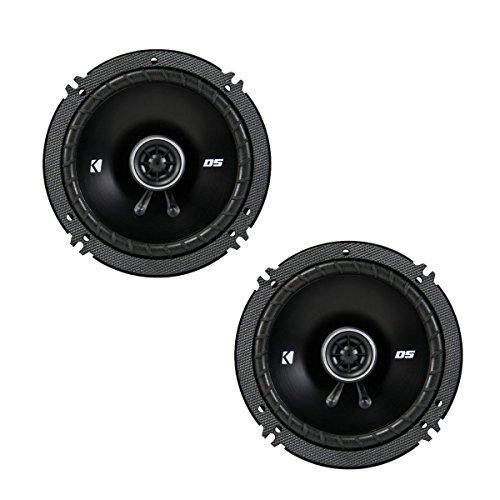
Our Top Picks
 Skar Audio Quad 8" Ported Subwoofer Enclosure CompatibleQuad 8" (Ported)55.75 x 19.5 x 9 inches59.9 poundsCheck on Amazon
 Skar Audio Dual 12" Loaded Ported Subwoofer EnclosureDual 12" (Ported)14.11 x 56.75 x 8 inchesCheck on Amazon
 Harmony Audio Fits Nissan Titan 2004-2007 R65 SpeakerRhythm Series16 x 10 x 8 inches10.1 poundsCheck on Amazon


What's inside
- Start With the Truck, Not the Speaker
- Two Generations, One Nameplate
- King Cab and Crew Cab Change the Plan
- Factory Speaker Locations and Commonly Documented Sizes
- The Rockford Fosgate Factory System Changes the Rules
- Impedance and Sensitivity, Explained for Factory Power
- Component or Coaxial, Location by Location
- Mounting Depth, Baskets, Rings and Harnesses
- Doors Are Enclosures: Baffles and Sound Treatment
- Power Handling in RMS Terms, Read Honestly
- Subwoofer Context for a Truck Cabin
- A Staged Upgrade Path That Stays Coherent
- The Pre-Purchase Fitment Checklist
- Choosing Well for the Way This Truck Is Used
- Check prices on Amazon
- Reading a Specification Sheet as One Connected Story
As an Amazon Associate I earn from qualifying purchases. This post may contain affiliate links at no extra cost to you.
As an Amazon Associate we earn from qualifying purchases. This guide treats a Nissan Titan speaker upgrade as a fitment problem first and a shopping problem second, because the truck changed across two long generations, two cab shapes, several trim levels and more than one factory audio system. Everything that follows is built from manufacturer specifications, published fitment documentation, wiring and mounting references, and documented feature sets for replacement speakers, so the reasoning stays tied to dimensions, electrical ratings and installation requirements that can be checked before any purchase. A speaker that looks impressive in a catalogue can still be the wrong choice if its basket is too deep for a Titan door, if its impedance loads a factory amplifier incorrectly, or if its tweeter has nowhere sensible to live. Reading the truck before reading the speaker box prevents most of those mistakes.
The Titan rewards a methodical approach more than many cars do. Its doors are large, its cabin is wide, and the distance between the front seats and the dash speakers shapes how music arrives at the listener. That scale can make a well-matched system sound spacious and relaxed, yet it also exposes a mismatched one, because a bright tweeter in the dash and a dull woofer low in the door will not blend into a single voice. Year, cab, trim and factory system are therefore not administrative details to confirm at checkout. They are the facts that decide which sizes belong on a shortlist, which adapters belong in the same order, and whether a simple speaker swap is sensible at all or whether amplification should enter the plan from the beginning.
Start With the Truck, Not the Speaker
A useful shortlist begins with four questions answered in order. What model year is the truck, which cab does it have, which trim and factory audio system were fitted when it was built, and what actually needs to improve? The last question matters because complaints that sound similar often have different causes. Thin bass may reflect small factory drivers with limited excursion, a door cavity that leaks energy, or a head unit that reduces low frequencies as volume rises. Harsh treble may come from an aging dash tweeter, from a replacement coaxial whose tweeter sits far from its woofer, or from reflective glass and hard trim close to the listening position. Clarity at highway speed is partly a sensitivity question and partly a noise question, since a truck cabin at speed competes with tyre, wind and engine sound.
Writing those answers down before comparing products changes the order of decisions. Size and depth come first, then electrical compatibility, then tonal character, then cosmetic details such as grille style that barely affect the result inside a closed door. Many buyers reverse that order, choosing by cone material or a headline power figure and only later discovering that the window glass, a door brace or a factory wiring plug disagrees. Fitment documentation exists precisely to prevent that reversal, and reputable listings state cutout diameter, mounting depth, basket diameter and recommended enclosure or baffle conditions in plain terms. When a listing omits those figures, the absence itself is information, and a comparable speaker with complete documentation is usually the safer research path.
Budget planning follows the same logic, even though this guide discusses no prices. Allocate attention in proportion to audible effect. Front speakers carry the vocal range, most instrumental detail and the stereo image, so they deserve the most careful matching. Door treatment supports whatever driver is fitted and remains useful if speakers change again later. Harness adapters and mounting rings cost little attention in a catalogue yet save hours and prevent cut factory wiring. Amplification, when it is needed, should be planned as part of the system rather than added as an afterthought with whatever power wire happens to be available. A staged plan built on that hierarchy can stop after any stage and still leave a coherent system.
Two Generations, One Nameplate
The first-generation Titan, sold from the 2004 through 2015 model years, was a full-size truck built around a spacious cabin and relatively straightforward door constructions by modern standards. Speaker locations were conventional for the period, factory systems ranged from basic units with modest power to the upgraded Rockford Fosgate package, and the aftermarket support for this generation is deep because so many trucks remain in service. Documentation for these years is plentiful, but it must still be read year by year, because trim changes and running revisions altered grilles, dash arrangements and option packages. Assuming that a 2005 and a 2013 are identical inside the door is a common shortcut that fitment guides do not support.
The second generation arrived for 2016 and continues in revised form, including the heavier-duty Titan XD with its different frame, powertrain options and cab offerings. The XD is not simply a badge variation. Its size, weight and intended towing role brought different equipment combinations, and interior trim and audio packaging followed the broader redesign. Doors, dash surfaces and electronic architecture are more integrated than on the earlier truck, which raises the value of vehicle-specific harness adapters and raises the cost of improvising. A speaker plan that worked elegantly in a first-generation door may need different rings, different fasteners and a different tweeter strategy in the newer cabin, even when the nominal speaker diameter printed in a guide is the same.
That nominal sameness hides the details that decide success. Cutout shape, screw hole pattern, basket clearance behind the mounting plane, the thickness of the factory spacer, and the way the door card presses against a foam surround all vary in ways a single diameter figure cannot capture. Generational research therefore means confirming the exact year range a mounting accessory covers, checking whether a guide distinguishes the XD from the standard truck, and treating mid-cycle refresh years with extra care. When two sources disagree, the more specific source, the one that names cab and trim rather than merely the model, deserves more weight, and a physical measurement of the removed factory speaker resolves most remaining doubt.
There is also a longevity difference to keep in mind. First-generation trucks may carry two decades of heat cycles, door moisture and previous owner modifications. Factory wiring may have been repaired, speakers may already have been replaced once with unknown parts, and door clips may be brittle. Second-generation trucks are more likely to be stock, but their factory systems are more likely to include processing, integration modules and amplified channels that react badly to careless changes. In both cases, the first door card removed tells the truth about that particular truck, and a careful owner photographs connectors, notes wire colours and keeps every factory screw until the job is finished and verified.
King Cab and Crew Cab Change the Plan
Cab configuration alters the rear half of the speaker plan more than the front. Titan Crew Cab models provide full rear doors with conventional speaker locations that can contribute real fill, ambience and rear passenger coverage. King Cab models use smaller rear access doors and a tighter rear seating area, and their rear speaker provision, where fitted, is more constrained in size, depth and usefulness. The practical consequence is that a Crew Cab can justify a considered rear upgrade as part of a balanced system, while a King Cab often returns more value from concentrating effort on the front stage and treating the rear as light fill or leaving it factory until later stages.
The difference is not only about diameter. Rear door depth, the position of the seat and the proximity of listeners to the rear speakers change what a rear upgrade should try to do. In a Crew Cab carrying family or crew, rear passengers sit close enough to their door speakers that a harsh or overly loud rear set will annoy rather than entertain, so smooth, moderate coaxial speakers with sensible sensitivity usually serve better than aggressive designs. In a King Cab used mostly with one or two occupants, rear output mainly supports the sense of space in the front seats, and excessive rear volume pulls the stereo image backwards, blurring the placement of voices that should appear ahead of the listener.
Cab shape also affects bass expectations and subwoofer placement, discussed later in this guide, and it affects how much sound treatment material a door plan requires. Larger Crew Cab rear doors present more flat sheet metal that can resonate, while King Cab access doors have their own latch and hinge hardware competing for space. Measuring each door type separately, rather than ordering identical hardware for every opening, avoids the familiar frustration of discovering on installation day that the rear adapters differ from the front. Fitment guides that separate cab configurations in their tables are reflecting real sheet metal, not marketing caution.
Seating use should be stated honestly when planning. A work truck that rarely carries rear passengers, a family truck that carries children daily, and a tow vehicle used for long highway days place different demands on the same cabin. Children in the rear benefit from clear, moderate rear sound at low volume. Long solo drives benefit from a strong front image and low listening fatigue. Those priorities decide whether money and effort flow to rear speakers early or stay at the front, and no universal ranking of speaker models can make that judgement for a particular household or crew.
Factory Speaker Locations and Commonly Documented Sizes
Across both generations, the Titan follows the classic full-size truck layout. The front doors carry the main woofers, the dash corners or upper door and pillar areas carry tweeters on many trims, the rear doors or rear cabin panels carry fill speakers, and certain higher trims add a centre channel in the dash. Commonly documented front door sizes for the Titan fall in the large oval and large round classes that dominate full-size trucks, with many guides listing a 6 by 9 inch class woofer for front doors on numerous trims and years, while rear locations are most often documented in the 6.5 inch round class. Dash tweeters are small format drivers, and the centre speaker, where fitted, is a small wide-range unit. Those are starting points for research, not substitutes for a year-specific guide, because trim and system level can move a location from one size class to another.
For readers comparing round replacement options for locations documented in the 6.5 inch class, our companion roundup of door speakers in that size class is collected here for cross-checking cutout and depth figures: best 6 5 coaxial car speakers. Treat any such cross-reference as a dimensions library rather than a promise that a given model suits a given Titan, since the Titan check still requires year, cab and system confirmation. The value of a size-class roundup lies in its comparable specification tables, which make differences in sensitivity, depth and power handling visible side by side before a vehicle-specific shortlist is narrowed.
Front door woofers do the heavy lifting in this layout. They reproduce male voices, guitars, drums and the upper bass that gives music its physical presence, and they do so from low in the door, firing across the footwell rather than directly at the ear. That placement explains why door speakers benefit so much from a solid mounting surface and a sealed front wave, and why a modest but well-installed front set often satisfies more listeners than an expensive set mounted loosely. It also explains why the dash tweeter matters out of proportion to its size. The tweeter supplies the directional high frequencies that tell the ear where sounds are located, lifting the perceived image from the footwell toward the windscreen when level and placement are right.
Rear speakers in the Titan are best understood as supporting actors. They add ambience, serve rear passengers and help the cabin feel evenly filled at moderate volume. They rarely determine whether a system sounds good from the driver seat. That hierarchy should guide both selection and level setting. Rear speakers that are far more sensitive than the fronts will dominate at low volume and distort the balance the head unit fader then has to correct. Matching rear sensitivity roughly to the front, or choosing slightly lower, keeps the fader near its centre and preserves adjustment range in both directions.
The centre channel, fitted on some higher-trim and upgraded-system trucks, complicates replacement planning. It may carry a summed or processed signal intended to stabilise the image for both front occupants, and replacing it casually with an arbitrary small speaker can unbalance that processing. Many careful upgrades leave a working factory centre in place while improving doors and dash tweeters, then reassess. If a centre speaker has failed, matching its documented impedance and approximate sensitivity matters more than seeking exotic cone materials in a location whose role is support rather than primary reproduction. Dash corner locations deserve similar restraint, because their small enclosures and proximity to glass make them prone to brightness if a replacement tweeter is considerably hotter than the factory part.
The Rockford Fosgate Factory System Changes the Rules
Higher-trim Titans offered a Rockford Fosgate branded factory system with external amplification, more channels and drivers chosen to work with that amplification and its processing. This is the single most important branch point in Titan speaker research. A truck with the basic system sends modest head-unit power through conventional wiring to conventional speakers, and a careful like-for-like swap is usually straightforward. A truck with the amplified system may use low-impedance door drivers, actively crossed-over channels that send only a limited frequency band to each location, and signal processing that expects the factory drivers to be present. Replacing one element of that chain with a standard part can produce sound that is quieter, thinner or harsher than before, not because the new speaker is poor, but because it is receiving the wrong signal or presenting the wrong load.
Low impedance deserves particular attention. Some factory amplified systems use drivers rated around two ohms to draw more current from an amplifier designed for that load. Fitting a conventional four-ohm replacement on such a channel typically reduces output on that channel relative to its neighbours, upsetting balance. Fitting a lower-impedance part than a basic head unit expects creates the opposite risk, asking an amplifier stage to deliver current it was not designed for, which can trigger protection or heat. The documented impedance of the factory driver being replaced, or a measurement taken with the speaker disconnected, is therefore a required research item on Fosgate-equipped trucks, not an optional detail for enthusiasts.
Active crossovers in the factory amplifier create a second trap. If the door channel carries only low and mid frequencies because the amplifier already filtered them, then a full-range coaxial fitted there will never receive treble, and its tweeter will sit silent while its woofer works. The owner may conclude the new speaker is dull when the signal itself is band-limited. Conversely, a dash channel may carry only high frequencies, making it suitable for a tweeter but not for a small full-range speaker expected to add midrange body. Fitment and integration documentation for the specific system level explains which locations receive full-range signals, and that page is worth more than any number of generic installation videos filmed on differently equipped trucks.
Owners of Fosgate-equipped Titans generally face three honest paths. The first is targeted repair, replacing a failed driver with a part whose impedance, size and sensitivity closely match the factory specification, preserving the system design. The second is a planned integration upgrade, using documented interface modules or amplifier replacement so that new speakers receive appropriate full-range or correctly filtered signals. The third is a full system build that treats the factory amplification as retired and plans power, processing and speakers together. The path that disappoints is the unplanned middle, where premium speakers are attached one pair at a time to channels whose signals and loads were designed for something else. Naming which path a purchase belongs to, before ordering, is the clearest predictor of satisfaction with this particular factory option.
Impedance and Sensitivity, Explained for Factory Power
Impedance, measured in ohms, describes the load a speaker presents to an amplifier. Most aftermarket car speakers are nominally four ohms, most basic factory head units are designed around four-ohm loads, and most standalone amplifiers are stable into lower loads within their published limits. Nominal impedance is a shorthand rather than a fixed value, since real impedance varies with frequency, but the shorthand is what compatibility tables are built on, so it should be matched as tables direct. Series and parallel wiring of multiple drivers changes the combined load, which is why adding a second speaker to a channel or bridging channels should follow the amplifier documentation rather than enthusiasm.
Sensitivity describes how much sound a speaker produces from a given input, commonly stated as a decibel figure at one watt measured at one metre, though some brands state it at a fixed voltage that favours their numbers in comparison. Even allowing for differing measurement conventions, sensitivity is the specification that most predicts how a speaker behaves on modest factory power. A higher-sensitivity design reaches satisfying volume with less power, stays further from the head unit’s strained upper range, and generally sounds clearer at the moderate levels where most driving listening happens. A lower-sensitivity design may offer other virtues, such as power capacity for a large amplifier, but on a basic factory system it can sound restrained and invite the volume control upward into distortion generated by the electronics rather than the speaker itself.
For a Titan kept on factory power, sensitivity deserves priority close to fitment itself. The cabin is large, road noise is real, and the listening distance is greater than in a compact car, all of which spend acoustic energy. Comparing sensitivity figures only within a single brand’s stated method, or converting carefully when methods differ, keeps comparisons honest. A difference of a few decibels is not trivial. It represents a substantial change in required power for the same loudness, roughly comparable to doubling or halving amplifier output, which is why two speakers with identical size and similar power ratings can feel entirely different behind the same head unit.
When an aftermarket amplifier enters the plan, the emphasis shifts rather than disappears. Sensitivity still governs how loud a system plays for a given amplifier size, but power handling, thermal capacity and the amplifier’s documented output into the speaker’s impedance become equally relevant. Amplifiers state different output figures into different loads, and a speaker plan that presents the load the amplifier was rated around will deliver the documented performance. Reading both specification sheets together, amplifier and speaker, as a paired document set, is the research habit that separates planned systems from collections of individually impressive parts.
Component or Coaxial, Location by Location
A component set separates woofer and tweeter into individual drivers joined by an external crossover network, while a coaxial speaker mounts the tweeter within the woofer’s frame and uses a simpler built-in crossover. Neither format is universally superior. Each suits particular Titan locations, budgets of installation time, and factory signal conditions. The front stage is where the component format earns its complexity, because the Titan already provides separate woofer and tweeter locations on many trims. Using those locations keeps the tweeter high and near the dash, where it can establish a plausible soundstage, while the crossover coordinates the handover between drivers designed to work as a pair.
Shoppers whose front doors are documented in the larger oval class will find the dedicated survey of that format useful for comparing component and coaxial approaches on equal footing: best 6 9 car speakers. The comparison discipline matters more than any single model in such a survey, because oval woofers offer greater cone area than round speakers of similar width, which can support stronger upper bass, yet that advantage only materialises when depth and mounting pattern also suit the Titan door. Reading oval and round options against the same criteria prevents format loyalty from replacing fitment evidence.
Coaxial speakers earn their place in rear doors, in basic-system trucks where the factory tweeter location may be absent, and in staged builds where simplicity now preserves options later. A good coaxial concentrates engineering on a single mounting point, installs quickly, and avoids the question of where to hide a crossover box inside a door or dash cavity. Its limitation is geometric. The tweeter sits low in the door, close to legs and seat bases that block high frequencies, and its aim is fixed by the woofer’s mounting plane. Some designs allow the tweeter to pivot slightly, which helps at the margins, but no pivot fully substitutes for the height of a dash or pillar location when imaging is the priority.
Tweeter placement inside a component installation deserves slow thought. Factory dash corner locations offer discretion, existing grilles and wiring proximity, but they fire into the windscreen on some trims, which can exaggerate brightness through reflection. Sail panel and upper door positions aim more directly toward listeners and often produce a calmer balance, at the cost of visible modification. Pillar mounting can raise the image further still, yet places a small driver near the ear where level errors become obvious. Documented mounting hardware, the tweeter’s own dispersion character and the crossover’s level adjustment options, where provided, should be weighed together. A crossover with a tweeter attenuation setting is genuinely useful in a reflective truck cabin, because it lets the installer tame dash brightness electrically instead of stuffing material around a grille and hoping.
Crossover placement is the unglamorous detail that decides whether a component installation ages well. Inside a door, a crossover faces moisture, vibration and the window mechanism, so it needs secure mounting away from the glass travel path and away from the door’s wet zone near the bottom. Inside the cabin, behind trim or under the dash, it stays drier but requires longer wire runs through the door jamb boot, which must be routed without pinching. Manufacturer instructions usually show both options with wiring diagrams. Following the diagram for the chosen option, including polarity markings, matters because a tweeter wired in reverse polarity relative to its woofer creates a audible dip at the crossover frequency that no equaliser setting fully repairs.
Mounting Depth, Baskets, Rings and Harnesses
Mounting depth is the distance a speaker extends behind its mounting surface, and in a Titan door that space is shared with the window glass, its regulator, wiring looms and impact structures. A speaker whose depth exceeds the available clearance may prevent the window from lowering fully, foul a brace, or force the door card outward so clips no longer seat. Published depth figures should be compared against the vehicle-specific clearance in fitment documentation, with a margin for the thickness of any adapter ring and for the excursion of the speaker’s surround at the front. Rings add depth behind the panel in some designs and move the speaker outward in others, so the ring and speaker must be considered as a combined stack, not as independent purchases.
Basket diameter and shape cause a quieter class of failure. Two speakers sharing a nominal size can have different cutout requirements, different screw hole circles and baskets that flare at different points. A basket that passes through the factory opening at its rim may still strike the opening’s edge deeper inside the door. Adapter rings solve many of these mismatches by providing the correct hole pattern and a flat, rigid mounting surface, and vehicle-specific rings for the Titan also compensate for factory mounting planes that are not perfectly flat. Generic rings forced to fit with elongated holes and uneven tightening invite rattles and air leaks that undermine the speaker they carry.
Harness adapters preserve the factory wiring by converting the vehicle’s speaker plug to the standard terminals replacement speakers use. Their value is partly convenience and partly integrity. Cutting factory plugs commits future owners and future repairs to splices, risks polarity errors when wire colours are misread, and can complicate returning the truck to stock. A documented adapter for the correct year and system level clicks into place and keeps polarity consistent from side to side. Polarity consistency across all speakers is not pedantry. Woofers moving in opposite phase cancel each other’s bass, producing the puzzling result of a system with capable speakers and almost no low-frequency weight at the listening position.
Fasteners and sealing complete the mechanical picture. A speaker screwed to a thin door panel with an air gap behind its flange leaks the pressure its cone generates, weakening bass and midrange clarity. Foam gasket tape or the sealing material supplied with quality speakers closes that gap. Screws should be snug and evenly tightened rather than forced, because a warped basket distorts the voice coil’s alignment in its gap. Where factory speakers were riveted, as occurs on various trucks, drilling rivets carefully and protecting the exposed metal edge are part of the documented procedure, and replacement fasteners should match the ring or bracket rather than whatever happens to be in a toolbox. These small disciplines, repeated identically at every location, are what installation guides mean when they describe a speaker as properly mounted.
Doors Are Enclosures: Baffles and Sound Treatment
A car door is a compromised speaker enclosure. It is large, irregular, full of holes for wiring, latches and drains, and its outer skin is thin metal that flexes. The front of the cone and the back of the cone share that space through every unsealed opening, so some of the energy the speaker produces cancels itself, particularly in the bass and lower midrange. Foam baffles placed behind door speakers address part of this problem by giving the driver a defined rear volume and shielding it from water that enters past the window seal, which is a genuine hazard in truck doors. A baffle should be sized to the speaker, should not cramp the cone’s rearward air movement so tightly that it chokes output, and is often trimmed or ported according to its maker’s guidance for larger woofers.
Sound treatment addresses the door itself. Constrained-layer damping material applied to the outer skin reduces the panel’s tendency to ring and resonate at particular frequencies, which listeners perceive as buzz on bass notes and a general looseness in the midrange. Covering major access openings in the inner skin, where the design of the door allows it without obstructing mechanisms, improves the separation between the speaker’s front and rear waves. The result is not more bass in the sense of a larger driver, but cleaner bass from the driver already fitted, plus a door that closes with a more solid sound and admits less road noise. In a full-size truck used for long drives, that noise reduction alone can justify the effort, because lower background noise means satisfying listening at lower volume.
Priorities within a door should follow physics rather than coverage for its own sake. The area immediately around and behind the speaker matters most, followed by the largest unsupported spans of the outer skin. Every added sheet adds weight the hinges, check strap and window motor must manage, so thorough treatment of the front doors usually outperforms thin treatment spread everywhere. Wiring must be secured so it cannot buzz against treated panels, and drain holes at the door bottom must remain open, since a sealed drain converts treatment into a water trap. Manufacturer application instructions for treatment products specify surface cleaning and rolling pressure because adhesion determines whether the material damps the panel or merely rides on it, and those instructions are worth following literally.
Rattles deserve a separate hunt before speakers are blamed for them. Door cards with tired clips, loose trim panels, objects stored in door pockets and unsecured crossovers all sing along at particular frequencies. A methodical installer identifies rattles with the factory speakers still in place where possible, notes the frequencies and conditions that provoke them, and corrects the mechanical causes during the same door-open session as the speaker work. Hunting a rattle after everything is reassembled costs a second removal of the card and risks breaking clips that survived the first removal. The cheapest time to silence a Titan door is while it is already open on a workbench schedule.
Power Handling in RMS Terms, Read Honestly
Power handling figures mislead more buyers than any other specification, largely because two different numbers share the same unit. The RMS or continuous rating describes the power a speaker can handle over time within its thermal and mechanical limits, measured under a stated test method. The peak or maximum rating describes a brief transient ceiling and has little to do with how the speaker should be powered in daily use. Comparing one speaker’s peak figure against another’s continuous figure produces confident nonsense. Honest comparison uses continuous ratings on both sides, read alongside sensitivity, because a speaker that handles generous continuous power but converts it inefficiently may play no louder than a sensitive speaker on a fraction of that input.
Matching those figures to an amplifier follows the same discipline. An amplifier’s continuous output per channel, stated into the load the speaker presents and at a stated distortion level, is the number to pair with a speaker’s continuous handling. A sensible pairing places the amplifier’s clean output within or modestly near the speaker’s continuous range, then relies on correct gain setting to keep the system out of distortion. Distortion damages speakers more reliably than clean power does. When an undersized amplifier is driven into clipping, its waveform flattens, average power rises sharply and tweeters in particular suffer, which is why a modest amplifier played within its limits is kinder to speakers than a small one forced to its maximum on every journey.
Owners keeping a factory head unit should translate this into a simpler rule. Factory systems deliver modest continuous power by aftermarket standards, so speakers intended for them should emphasise sensitivity and a continuous rating that comfortably covers factory output, rather than boasting a large handling figure that will never be approached. Owners planning amplification should choose speakers whose continuous handling matches the amplifier they realistically intend to install, in the configuration they intend to run, rather than a hypothetical future amplifier of twice the size. Specification sheets reward this realism because their figures assume the test conditions they describe, and a system planned around real conditions behaves predictably when it is finally switched on.
For the smaller rear and secondary locations, a focused collection organised around bass-capable compact speakers can help readers understand how continuous ratings scale down with cone size: best 5 25 car speakers with bass. Smaller drivers move less air, so their honest role is midrange clarity and fill rather than deep bass, whatever their handling figures suggest. Recognising that role in advance prevents the disappointment of expecting a compact rear speaker to pressurise a full-size truck cabin, and it redirects bass ambitions toward the subwoofer discussion where they belong.
Subwoofer Context for a Truck Cabin
Door speakers, even excellent ones, are not subwoofers. Their cones are sized for midrange clarity as much as low-frequency output, their mounting in a leaky door limits deep bass, and asking them to reproduce the lowest octaves at volume consumes excursion they need for clean vocals. A subwoofer relieves them of that burden. In the Titan, the commonly documented solution places a shallow enclosure beneath the rear seat in Crew Cab models, using the broad, low space that cab provides, while King Cab installations work with tighter areas behind or beneath seating depending on configuration. Enclosure volume, driver depth and seat clearance are the governing constraints, and vehicle-specific enclosures exist because those constraints are unforgiving of approximate carpentry.
This guide treats subwoofers at a general level deliberately, because a subwoofer decision drags amplification, power wiring and signal integration with it. A powered enclosure simplifies that chain for owners who want low-frequency support without a separate amplifier installation, while a component subwoofer with a dedicated amplifier offers more control and more output at the cost of complexity. Either route benefits from a high-pass filter protecting the door speakers from the lowest frequencies, which cleans their midrange noticeably. Signal source matters as well, particularly on amplified factory systems where the signal available at a speaker wire may already be filtered or processed in ways integration documentation must clarify.
Expectations should be calibrated to the cabin. A Titan interior is large, and low frequencies need to fill it evenly rather than boom at one seat. A modest subwoofer correctly integrated, with level set so its contribution is felt as foundation rather than heard as a separate event, improves every genre listeners actually play, from spoken word podcasts whose voices gain body to acoustic recordings whose room ambience becomes believable. Excess level impresses for one demonstration track and fatigues on a long drive. The research question is therefore not which subwoofer is largest, but which documented enclosure fits the specific cab without sacrificing the seat function, storage or spare access the owner actually uses.
A Staged Upgrade Path That Stays Coherent
Stage one is the front doors, with dash tweeters where the trim provides them, because the front stage determines most of what the driver hears. On a basic factory system this stage is a speaker decision plus mounting hardware, harness adapters and a modest amount of door treatment. On a Fosgate-equipped truck, stage one begins with the integration research described earlier and may mean targeted like-for-like replacement rather than a conventional upgrade. Either way, the stage ends with balanced, correctly phased front sound, verified at moderate volume on familiar recordings across several genres, including spoken voice, which exposes midrange errors that instrumental tracks can hide.
Stage two addresses the rear. Crew Cab owners gain the most here, choosing smooth coaxial speakers whose sensitivity sits at or slightly below the front set, installed with the same sealing and polarity discipline. King Cab owners may reasonably defer this stage or keep it minimal. Rear work is also the natural moment to extend sound treatment to the rear doors, since the cards are already off, and to correct rattles discovered since stage one. A system that sounded balanced from the front should remain balanced, with the rears adding spaciousness and rear-seat coverage rather than relocating the performance behind the listener.
Readers weighing the larger rear and alternative door formats against quality and low-frequency balance will benefit from the format comparison gathered in this neighbouring survey: best 6 75 car speakers for quality and bass. Slightly oversized round formats exist because some doors accept them with rings and reward the extra cone area, but the Titan decision still runs through documented cutout and clearance, not through the hope that a fraction more diameter will squeeze past sheet metal. Comparisons of that kind are most useful at this stage of planning, when the front reference is known and rear choices can be judged against a real baseline in the same truck.
Stage three is amplification and, where wanted, the subwoofer, planned together because they share power wiring, signal routing and often physical space. An amplifier that powers the front speakers with clean, documented output transforms speakers chosen with suitable continuous ratings, and it frees the head unit from straining at highway volume. This is also the stage where processing, whether in a replacement head unit, a standalone unit or an integration module, can correct the Titan cabin’s remaining quirks with time alignment and equalisation applied conservatively. Each stage should be allowed to settle before the next is judged. Listening for a few weeks reveals whether a perceived shortcoming is real or merely unfamiliarity with a more accurate balance.
The Pre-Purchase Fitment Checklist
Before any Titan speaker order, confirm the model year and whether the truck is an XD, since generation and variant govern nearly every downstream figure. Confirm the cab, King or Crew, and photograph the rear doors if there is any doubt about which configuration a listing describes. Confirm the trim and, decisively, which factory audio system the truck carries, including whether the Rockford Fosgate name appears on the trim or documentation and whether an external amplifier is fitted. Confirm each location’s documented size, cutout and available depth from a source that separates those variables, and note the factory centre and dash arrangements rather than assuming them.
Then confirm the electrical facts. Establish the impedance of the drivers being replaced, especially on amplified systems. Compare sensitivity figures using consistent measurement methods. Pair continuous power figures with continuous power figures and ignore peak numbers for matching purposes. Establish whether each location receives a full-range signal or a filtered one, because that fact decides whether a coaxial, a component set or a targeted replacement belongs there. List the adapters the job requires in the same document: mounting rings for each distinct location, harness adapters for each connector type, tweeter mounts if the chosen set needs them, sealing material, and treatment material for at least the front doors.
Finally, confirm the installation conditions. Check that door clips, fasteners and any rivets that must be drilled are accounted for, that crossover placement has been decided for component sets, and that polarity will be verified rather than assumed from wire colours alone. Keep factory parts, screws and removed speakers until the new system has been listened to for several days, because returning a door to stock is painless only while everything removed is still labelled in a box. A checklist completed on paper feels slow beside the excitement of new components, yet it is the difference between a single organised installation weekend and a month of partial panels, repeat orders and doors opened three times each.
Choosing Well for the Way This Truck Is Used
Trucks accumulate roles. The same Titan may commute on weekdays, tow at weekends and carry family on holidays, and a speaker plan that serves the dominant role serves the owner. A towing truck spending hours at highway speed values low fatigue, clear spoken content and resistance to road noise, which argues for sensitivity, treatment and a calm treble balance. A truck used for short trips and music at moderate volume may reach complete satisfaction at stage one. A shared family truck values even coverage and durable grilles over the last degree of imaging precision. Stating the dominant role in one sentence, and judging every candidate against it, prunes shortlists faster than any specification table.
Durability is part of that fit. Door speakers live with moisture, temperature swings and vibration, so documented build features such as treated surrounds, corrosion-resistant terminals and rigid baskets matter in proportion to how long the owner keeps trucks. A Titan bought for a decade justifies installation thoroughness that a truck being prepared for sale does not. Warranty terms and the availability of replacement mounting hardware from the same maker also belong in research, because a speaker is a long-lived component in a vehicle that may outlast several head units. Support documentation that remains available years later is a quiet advantage that only becomes visible when it is needed.
What this guide has deliberately avoided is crowning a single winner for a truck it cannot see. The Titan name covers twenty years of production, two cab philosophies, basic and amplified electronics, and owners whose priorities diverge honestly. A recommendation that ignored those variables would be confident and wrong in equal measure. The criteria assembled here, fitment verified by year and cab, electrical matching verified against the actual factory system, mounting treated as part of the sound, and upgrades staged so each can be judged, will identify the right speakers for a specific Titan far more reliably than a universal ranking, and they will keep working when the next generation of replacement speakers arrives with new materials and the same old door dimensions.
Check prices on Amazon
Live listings for the shortlist in this guide are pulled from Amazon below, so prices and availability are always current at the moment you look.


Reading a Specification Sheet as One Connected Story
A specification sheet becomes useful when its figures are read together rather than as isolated boasts. Frequency response describes the range a speaker attempts to reproduce, but the useful portion of that range depends on where the Titan will cross it over to another driver and on how much output it maintains at the edges of the stated span. A door woofer whose response is honest through the vocal region and rolls away gracefully below it will integrate with a subwoofer far better than a woofer claiming extreme low extension it can only suggest at low volume. Similarly, a tweeter extending very high on paper contributes little if its output in the ordinary treble region is uneven, because listeners judge treble by smoothness in the range where cymbals, consonants and string harmonics actually live.
Cone and surround materials should be interpreted through that same connected lens. A stiff, light cone material favours clarity and efficiency, while a heavier, well-damped material may trade some sensitivity for a calmer break-up character at high output. Neither description is a verdict by itself. The motor design, voice coil size and crossover that accompany the cone determine how the material behaves in service, which is why experienced readers look for consistency across a manufacturer’s range rather than a fashionable material name on a single model. Rubber surrounds generally tolerate door moisture and temperature cycles well, foam surrounds can offer compliance advantages but deserve scrutiny in older designs, and treated cloth sits between those poles. The Titan door environment, humid and thermally unstable, makes surround durability a practical specification rather than a footnote.
Magnet and voice coil descriptions carry similar conditional value. A larger motor can support control and thermal capacity, yet it also adds depth and weight that the door must accommodate, returning the discussion to mounting clearance. Neodymium motors reduce that bulk for a given strength, which is why shallow and compact designs often adopt them, but the benefit that matters to a Titan owner is the resulting depth figure, not the magnet material as a badge. Voice coil diameter relates to power capacity and heat dissipation, and again its meaning emerges only beside the continuous rating and the intended amplifier. Reading specifications as a story about trade-offs, where each gain was purchased with a specific cost, protects buyers from the single-number thinking that marketing departments prefer.
Finally, documentation quality itself belongs on the checklist. A maker that publishes cutout templates, Thiele and Small parameters for woofers, crossover slopes for component sets, and clear polarity and mounting instructions is signalling how the product is meant to be installed and judged. A maker that publishes only a peak power figure and a photograph is asking for trust without evidence. For a truck like the Titan, where the difference between generations and factory systems decides outcomes, evidence is the entire basis of a good decision. Preferring the better-documented speaker between two otherwise similar candidates is not caution for its own sake. It is recognition that the installation will be performed once, inside a closed door, and that every missing figure becomes a guess at exactly the moment when guessing is most expensive.
Measure the truck in front of you, trust the documentation that names your exact year, cab and system, and let the front doors of your Titan set the standard that every later upgrade has to meet.