Our Top Picks


What's inside
- Why Binocular Lenses Fog in the First Place
- How Anti-Fog Products Work
- The Eight Products, One by One
- Spray, Paste, or Kit: Choosing the Right Format
- How to Apply Anti-Fog to Binoculars, Step by Step
- Field Scenarios and What Helps in Each
- Storage and Habits That Prevent Fog Between Outings
- Buying Guide: Matching the Product to Your Use
- Frequently Asked Questions
- Check prices on Amazon
- Conclusion
As an Amazon Associate I earn from qualifying purchases. This post may contain affiliate links at no extra cost to you.
Fogged binoculars rarely fail at a convenient moment. The lenses cloud over at first light when a bird moves through wet grass, on a cold morning when you step out of a warm vehicle into still air, or in humid woods where every breath seems to settle on the eyepieces. The glass itself has not failed. What has changed is the air around it, the temperature of the lens surface, and the thin layer of moisture that collects where warm, damp air meets cooler glass. An anti-fog treatment does not stop weather, and it does not repair a binocular. What a good treatment can do is make that moisture spread into a thin, even film instead of beading into thousands of tiny droplets that scatter light and turn a clear view into a grey blur. That difference is why birders, hunters, and anyone who carries optics outdoors keeps some form of defogger, lens spray, paste, or cleaning kit close at hand.
This guide covers eight products that our research found for this job, and it is important to be clear about what they are. Only one product in this list, the Brightn Optic Defogger, names binoculars directly in its product title. Two others, the Vortex Optics Fog Free Lens Cleaning Kit and the Nightforce Professional Optical Cleaning Kit, come from optics makers known for binoculars and riflescopes, and they are built as optical cleaning kits rather than as single-purpose sprays. The remaining products are general anti-fog and lens-care products for glasses, goggles, camera lenses, screens, and other optical surfaces, and people also use them on binocular lenses. We present them that way on purpose. A general lens spray is not suddenly a binocular-specific product because it appears in this roundup, and a full cleaning kit is not the same thing as a pocket defogger. Reading the sections below with that distinction in mind will help you pick the format that actually fits how you use your binoculars.
Why Binocular Lenses Fog in the First Place
Fog on a lens is condensation. Air holds water vapour, and warm air can hold more of it than cold air. When warm, moist air touches a surface that is cooler than the dew point of that air, some of the vapour turns back into liquid water on the surface. On a flat window that liquid may run in streaks. On a small, curved binocular lens it forms a dense field of tiny droplets. Each droplet bends and scatters light in a different direction, so contrast falls, edges soften, and fine detail such as feather barring, distant signage, or the outline of an animal in brush becomes hard to read. The binocular may be excellent, the light may be adequate, and still the view looks washed out because the first surface the light meets is covered in scattered droplets.
External Fog Versus Internal Fog
External fog forms on the outside surfaces you can reach: the outer objective lenses and the outer eyepiece lenses. Anti-fog sprays, pastes, and wipes address this kind of fog, because the treatment sits on the surface where condensation forms. External fog is annoying but normal, and it responds to cleaning, treatment, and patience. If you can gently clear the surface and the view returns, you are dealing with external condensation or surface grime.
Internal fog is different. It forms on glass surfaces inside the binocular, where you cannot reach them. Many modern binoculars are sealed and filled with dry nitrogen or a similar inert gas to reduce this risk, and they carry seals intended to keep moisture out. If moisture does get inside through damaged seals, a crack, or long wear, condensation can appear on internal elements and will not wipe away. No spray or paste in this guide can fix internal fogging, because the treatment cannot reach the affected surface. Persistent internal fog is a repair issue, not a cleaning issue. The honest response is to stop applying products, keep the binocular dry, and contact the maker or a qualified repair service. Knowing this distinction saves money and prevents the common mistake of applying more and more product to a problem that lives inside the housing.
How Anti-Fog Products Work
Most anti-fog products work by changing how water behaves on the surface. Untreated glass lets condensed moisture gather into rounded droplets. A treated surface encourages that same moisture to spread into a thin, transparent sheet. A sheet of water still sits on the lens, but it distorts the view far less than a field of separate beads, much as a clean, wet window can be easier to see through than one covered in fine mist. Formulations differ, and makers do not all describe their chemistry in detail, so this guide sticks to what the product titles state and to general behaviour that applies across sprays, pastes, and kit sprays. The practical lesson is consistent: the layer must be thin, even, and applied to clean glass. A heavy, uneven layer can streak. Too little, or a layer applied over oil, may fail in patches.
The Eight Products, One by One
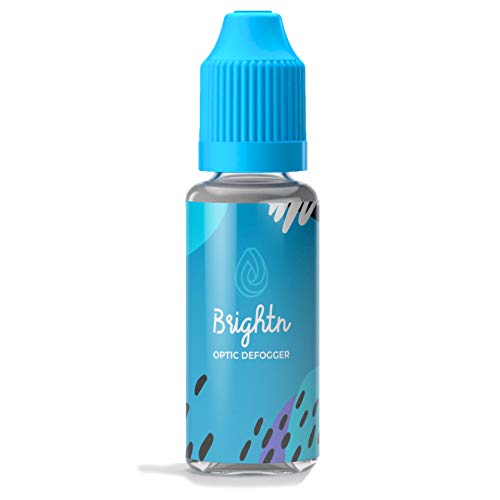
1. Brightn Optic Defogger Anti-Fog Spray (15ml)
The Brightn Optic Defogger is the clearest match for this topic by name. Its full title describes it as an anti-fog spray for glasses, goggles, snorkeling masks, binoculars, scopes, lenses, face shields, and humid conditions, and as a glass defogger for any optic material or surface. Binoculars are named directly, alongside scopes, which makes this the one product here that a binocular user does not have to extrapolate to from a glasses-only description. If you want a dedicated spray whose stated scope already includes your binoculars, this is the most direct option in the group.
In use, a spray of this kind follows the standard routine. Start with a clean, dry lens, remove loose dust without grinding it across the surface, apply a small amount as directed on the product, spread it evenly, and buff lightly with a clean microfiber cloth until the surface looks clear rather than wet. The mention of humid conditions in the title is relevant to binocular use, because humidity, not only cold, drives much field fogging. Coastal birding, lake mornings, and summer wetlands are humid-condition uses even on warm days. For readers comparing camera gear for the same outings, our related coverage of field optics and imaging gear in best birding cameras and lens sits naturally alongside a defogger like this one, since lenses of every kind share the same condensation problem.
Who should consider the Brightn spray first? A binocular owner who wants the least ambiguous choice, a compact bottle, and a product whose stated uses include both binoculars and scopes. Who might look elsewhere? A user who mainly needs a full cleaning station with brushes and swabs will get more from one of the kits below, and a user who prefers a paste format will find that option in the Cat Crap entry. Within its lane, though, the Brightn defogger is the headline pick for binocular-specific anti-fog in this roundup, precisely because its own title says so.
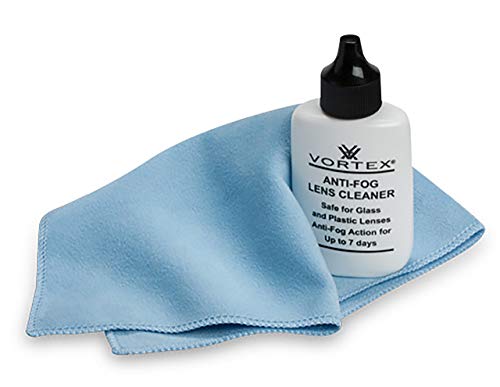
2. Vortex Optics Fog Free Lens Cleaning Kit
The Vortex Optics Fog Free Lens Cleaning Kit comes from a maker whose name binocular and riflescope users already know. The title is short and functional: it is a fog free lens cleaning kit from Vortex Optics. That positioning matters. This is not presented as a pocket spray for every kind of eyewear in the house. It is an optical cleaning kit from an optics brand, aimed at the lenses that brand’s customers carry into the field. For a hunter or birder who already owns Vortex binoculars, or who simply prefers to keep lens care within the optics category rather than the general eyewear category, that focus is the appeal.
A kit format solves a different problem from a spray alone. Fog treatment fails most often because the lens was not properly clean when the treatment went on. A cleaning kit is built around the preparation step: removing what is on the lens so that the fog-free treatment can sit evenly on the glass. Even without listing components that the title does not name, the category itself tells you the intended routine. This is the product you keep in a gear bag, at a cabin, or in a vehicle kit, and use as a deliberate cleaning step before an outing or after a wet day, rather than the tiny bottle you pull out for a ten-second touch-up on a trail.
Consider the Vortex kit if your main need is a proper clean-and-defog routine for binoculars and scopes, if you value an optics-brand kit for field gear, or if your lenses regularly come home with dust, pollen, and water spots that a quick spray alone does not address. Consider a different entry if you want the smallest possible carry item, a multi-pack paste to split across bags and vehicles, or a general spray that also covers household glasses and screens. The Vortex entry earns its place here as the optics-brand cleaning kit option, and for many field users that is exactly the right category.
3. Nightforce Professional Optical Cleaning Kit, 12-Piece Bundle (A431)
The Nightforce Professional Optical Cleaning Kit is the most complete bundle in this guide. Its title spells out the contents: a 12-piece bundle with fob cleaning cloths, cleaning and anti-fog sprays, lens swabs, a dust blower, and a lens brush, under the model reference A431. Nightforce is known for riflescopes, and this kit is built for serious optical care. For a binocular owner who also maintains scopes, spotting scopes, or camera lenses, a bundle like this covers the full cleaning sequence in one case instead of asking you to assemble the pieces yourself.
Each named component has a distinct job, and understanding those jobs explains why a 12-piece kit exists at all. A dust blower removes loose grit with air before anything touches the glass, which is the safest first step on a dusty lens. A lens brush sweeps away remaining loose particles with soft contact. Lens swabs reach edges and small eyepiece surfaces where a cloth folds too thickly to work neatly. Cleaning cloths handle the main wiping and buffing, and having more than one matters because a cloth that has picked up grit or oil should not keep rubbing the lens. The cleaning and anti-fog sprays then do the chemical work: one prepares the surface, the other leaves the treatment that helps condensation spread thinly instead of beading.
The honest limitation is portability and simplicity. If you own one binocular and want one small bottle for a harness pouch, a 12-piece professional bundle is more than you need, and the Brightn spray or a compact ZEISS kit will suit you better. If, on the other hand, you maintain multiple optics and want the anti-fog step to sit inside a complete, optics-focused cleaning system from a scope maker, the Nightforce bundle is the most thorough option in this roundup. Our research placed it here for exactly that user, not as a casual everyday carry.
4. CAT CRAP 18-Pack Anti Fog and Lens Cleaner Paste
CAT CRAP is the paste option in this guide, and its title states the format and quantity plainly: an 18-pack of anti fog and lens cleaner paste. The name is memorable, but the practical points are the paste format and the pack size. A paste is applied differently from a spray. You take a small amount, work it across the lens, let it haze, and buff it clear with a soft cloth. That extra minute of work is why paste users tend to apply it deliberately before an outing rather than as a mid-trail touch-up, and many find that a paste application feels more controlled because you can see where the product has covered and where it has not.
Choose the CAT CRAP 18-pack if you like the paste method, want treatments stationed in several places at once, or supply more than one person or binocular. Choose a spray if speed matters most, and choose one of the kits if your lenses need a full brush, blower, and swab routine before any treatment goes on. In this roundup the paste pack stands out for quantity and format, and for users who prepare their binoculars the evening before a cold or humid outing, that combination can be the most practical of all.
5. ZEISS Fog Defender System Anti-Fog Kit for Glasses, 2 Pack
The ZEISS Fog Defender System is described in its title as an anti-fog kit for glasses, in a 2 pack containing 2 spray bottles and 2 microfiber cloths. ZEISS is an optics name with a long history in lenses, and this kit brings that lens-care background to a compact, matched set. It is honest to label it as it labels itself: a kit for glasses first. Binocular users reach for it because binocular eyepieces and objectives are optical lenses with the same condensation behaviour, and because a spray paired with its own cloth is a tidy, low-guesswork way to treat them. It is a general optical anti-fog kit used on binoculars, not a binocular-branded product, and this guide presents it that way.
Pick the ZEISS Fog Defender System if you want a compact kit from a major optics name, value having the cloth included and matched to the spray, or want two sets to split between binocular gear and everyday glasses. Readers who photograph birds as well as watch them will recognise the same lens-care logic in our guide to best birding dslr cameras, where clean front elements matter for the same optical reasons. If you need brushes, swabs, and a blower as well, step up to the Nightforce bundle. If you want binoculars named on the label, step back to the Brightn spray. The ZEISS kit sits between those poles as the tidy, general optical option.
6. Kraken Clarity Anti-Fog Eyeglass Lens Cleaner Spray
The Kraken Clarity spray describes itself as an anti-fog eyeglass lens cleaner spray that is streak-free and safe for coated lenses, for glasses, sunglasses, goggles, and camera lenses. Two phrases in that title do real work for a binocular user. The first is safe for coated lenses. Binocular lenses rely on coatings to control reflections and preserve contrast, and caution about coatings is the main reason binocular owners hesitate before using a general eyeglass product. A title that states coated-lens safety directly addresses that hesitation in a way that a generic cleaner does not. The second phrase is camera lenses, which places the product among optical lenses generally rather than only fashion eyewear, and binocular lenses belong to that same optical family.
Consider Kraken Clarity if coated-lens safety stated in the title is your deciding factor, if you clean several kinds of lenses with one product, or if streaking has been your main frustration with past sprays. Consider the optics-brand kits if you want a field-optics routine with brushes and swabs, and consider the Brightn spray if you want binoculars named in the product’s own stated uses. Within this roundup, Kraken Clarity is the coated-lens general spray, and that is a genuinely useful lane.
7. OptiPlus Anti-Fog Lens Cleaning Spray and Dual Microfiber Cloth, 2oz
The OptiPlus entry pairs an anti-fog lens cleaning spray with a dual microfiber cloth, in a 2oz size, and its title lists a wide range of surfaces: glasses, laptop screens, smart phones, optical lens, goggles, and watch screen. That breadth defines the product. This is the household and everyday-carry generalist of the group, the bottle that can live on a desk or in a bag and serve screens and glasses daily while also treating a binocular’s lenses when field fogging is the problem of the day. Its title says optical lens among its uses, which fairly includes binocular lenses, but it does not claim a binocular focus, and we do not claim one for it.
The dual microfiber cloth deserves attention because cloth quality decides much of the real-world result with any spray. A dual cloth, with more than one working surface or texture, lets you separate jobs: one side or cloth for the initial wipe that lifts moisture and oil, and a cleaner, drier surface for the final buff that leaves the anti-fog film even. Even with a single cloth, the habit that matters is folding it to expose a fresh section for the final pass. Users who complain that a spray left a haze are very often describing a final buff done with a saturated cloth. The OptiPlus pairing of spray and cloth in one package makes the better habit the default rather than an afterthought.
The 2oz size sits between the pocket 15ml Brightn bottle and a home-only cleaner. It is large enough for regular use across glasses, screens, and optics without feeling rationed, and still small enough for a gear bag or glove compartment. For a binocular user, the sensible pattern is to treat this as the home and vehicle base: clean and treat the binoculars before an outing with the OptiPlus spray and cloth, and carry a smaller spray or a paste in the field for touch-ups if conditions turn. That layered approach matches how fogging behaves, since a careful pre-outing application on clean glass does most of the work and field reapplication only has to handle the hardest, wettest hours.
Choose OptiPlus if you want one spray and cloth set that covers daily glasses and screens as well as binocular lenses, if you value a mid-size bottle, or if your fogging problems are as much about indoor glasses and work screens as about field optics. Trail users comparing compact gear for dawn outings may also find our coverage of best affordable trail cameras relevant, since unattended field lenses face the same dew and condensation cycle overnight. If your need is strictly binoculars and scopes, the Brightn spray and the optics kits above are more focused choices. OptiPlus earns its place as the versatile everyday option that also handles binocular duty honestly.
8. T-Spray Anti Fog Spray for Glasses and Lens Cleaner, 2 fl oz, Made in USA
The T-Spray entry is a 2 fl oz anti fog spray for glasses and lens cleaner, described as a defogger for eyeglasses, swim and ski goggles, safety glasses, hockey, football and motorcycle helmet visors, and dental loupes, and as made in USA. That list tells a clear story. This is an active-use defogger built for eyewear and visors that fog during exertion, temperature change, and indoor-outdoor movement. Binoculars are not named in its title, and this guide does not pretend otherwise. Binocular users consider it because the underlying problem, warm moist air meeting a cooler lens during activity, is the same problem that fogs a ski goggle or a helmet visor, and because a 2 fl oz bottle is a practical size for repeated use.
Made in USA is stated in the title, and for buyers who prefer products made domestically, that is a straightforward deciding detail that needs no embellishment. The 2 fl oz size matches the OptiPlus bottle in practical terms: enough for a season of regular use across several kinds of eyewear and optics, without being a bulk container. Application is the familiar spray routine: clean lens, light application, even spread, gentle buff with a clean microfiber cloth, and a check against the light for streaks before the binocular goes back in its case.
Pick T-Spray if you split your anti-fog needs between binoculars and active eyewear such as ski goggles, safety glasses, or visors, if the made in USA detail matters to you, or if breath-driven fogging during exertion is your main pattern. Concert and event readers dealing with small optics and cameras in crowded, humid venues face a related version of the same problem, which our notes on best cameras allowed into concerts touch on from the gear side. If you want a product that names binoculars itself, return to the Brightn spray at the top of this list. T-Spray closes the roundup as the active-eyewear defogger that binocular users borrow, presented honestly in that role.
Spray, Paste, or Kit: Choosing the Right Format
Format decides more real-world success than brand does, because format decides whether the product is with you and whether you apply it correctly. Sprays win on speed and portability, and suit a quick application before an outing and a fast touch-up in the field, although excess spray is a common cause of streaks. Pastes win on control: you can see where the product has covered while you buff, and a multi-pack can be split across bags and vehicles. Kits win on preparation, adding the blower, brush, swabs, and cloths that remove dust and oil before any treatment goes on. Many users combine formats, keeping a kit at home for a proper clean and carrying a small spray or paste with the binocular itself. If you buy only one format, match it to your usual failure: fog on an otherwise clean lens calls for the portable treatment you will actually carry, while a lens that is usually dusty or spotted when it fogs calls for the kit first.
How to Apply Anti-Fog to Binoculars, Step by Step
Step One: Remove Loose Dust Without Touching the Glass
Start dry and hands-off. Hold the binocular with the lens facing slightly downward and use a blower, such as the dust blower named in the Nightforce kit, to puff loose dust and grit off the surface. Follow with a soft lens brush if needed. This order matters more than any product choice in this guide. Wiping a dusty lens, even with the finest cloth, drags hard particles across coatings and can leave fine scratches that no cleaner can undo. Field lenses collect pollen, sand, dried spray, and pocket lint, so this step is not ceremony. It is the difference between cleaning a lens and grinding its surface.
Step Two: Clean the Lens Gently
With loose particles gone, clean the lens with a small amount of lens cleaner or the cleaning spray from your kit, applied to the cloth rather than flooded onto the glass where possible, and wipe in gentle circular motions from the centre outward. Work on one lens at a time so you can see your progress. Skin oil from fingerprints is the most common film on eyepieces, and it needs this cleaning step; anti-fog applied over a fingerprint will protect the fingerprint, not the view. Let the lens dry fully before moving on. A surface that still holds cleaner or moisture will dilute the anti-fog layer and produce the patchy fogging that users often blame on the treatment.
Step Three: Apply a Thin, Even Anti-Fog Layer
Apply the spray, paste, or kit anti-fog as its own directions state, using less than your instinct suggests. For a spray, a light mist or a small amount on the cloth is usually the working quantity. For a paste, use a small dab and spread it across the whole lens so no area is left untreated, since untreated islands are exactly where droplets will bead first. Cover the full eyepiece and objective surfaces you are treating. Partial coverage gives partial protection, and fog has a way of finding the untreated crescent at the edge of an eyepiece at the worst moment.
Step Four: Buff Lightly and Check Against the Light
Buff with a clean, dry microfiber cloth using light pressure until the lens looks clear. Then hold the binocular up and tilt the lens against the light. Streaks, haze, and missed spots show at an angle long before they show head-on. If you see a smear, buff again with a fresh section of cloth rather than adding more product. Adding product to fix a buffing problem usually makes the smear worse. When the surface looks uniformly clear at an angle, the application is done. Cap the lenses or return the binocular to its case so the treated surfaces stay clean until you use them.
Field Scenarios and What Helps in Each
The same habits help in almost every setting: clean and treat the lenses before the outing, let the binocular adjust gradually to outdoor temperature instead of carrying it exposed through a sudden change, keep caps on until you are ready to look, and breathe away from the eyepieces. Cold dawns test the gap between a warm face and cold glass, blinds and stands trap breath in still air, and vehicles and tents create sharp transitions in both directions. A treated lens does not remove those pressures, but it gives you a longer, clearer window before condensation wins, and a small treatment carried with the binocular lets you recover during a quiet moment rather than losing the rest of the outing.
Humid, Coastal, and Wetland Conditions
In high humidity the air itself is the problem, and no treatment makes a binocular immune. What treatment does is delay beading and keep the view usable longer between wipes. Expect to reapply more often, keep the microfiber cloth dry by storing it in a sealed small bag, and never wipe a lens with a cloth that is already damp, since a damp cloth redistributes moisture instead of removing it. After a wet outing, let the binocular air-dry in a dry room with caps off before storing it, so trapped moisture does not sit against the glass and seals for days.
Storage and Habits That Prevent Fog Between Outings
Most fog prevention happens at home. Store binoculars in a dry place at a steady temperature, away from steamy bathrooms and damp basements. Keep the case clean and dry; a case that absorbed rain on a trip will hand that moisture back to the binocular for weeks if it is closed up wet. If a case gets soaked, dry it open and empty before the binocular goes back in. Avoid leaving binoculars in a hot vehicle for long periods, since heat is hard on seals, lubricants, and coatings over time, and a heat-soaked binocular carried into cool evening air is a fog candidate. Handle lenses by the barrels, not the glass, and replace caps when the binocular is not in use. These habits sound plain beside product choices, but they decide the condition of the surface that every spray, paste, and kit in this guide has to work on.
Buying Guide: Matching the Product to Your Use
- You want binoculars named in the product itself: start with the Brightn Optic Defogger, the only entry whose title lists binoculars and scopes directly, in a portable 15ml spray.
- You want an optics-brand cleaning kit: the Vortex Optics Fog Free Lens Cleaning Kit is the field-optics kit option from a binocular and scope maker.
- You maintain several optics and want a complete system: the Nightforce 12-piece bundle adds fob cloths, cleaning and anti-fog sprays, swabs, a dust blower, and a lens brush in one kit.
- You prefer paste and want supply in several places: the CAT CRAP 18-pack puts a paste container in every bag, vehicle, and case you use.
- You want a compact matched spray and cloth set, in duplicate: the ZEISS Fog Defender System 2 pack pairs each spray bottle with its own microfiber cloth.
- Coated-lens safety stated in the title is your priority: Kraken Clarity leads with streak-free, safe for coated lenses positioning across glasses, goggles, and camera lenses.
- You want one everyday spray for glasses, screens, and optics: OptiPlus pairs its 2oz spray with a dual microfiber cloth for the widest household range in this guide.
- Your fogging comes from active, breath-heavy use: T-Spray is positioned for goggles, safety glasses, and visors, in a 2 fl oz bottle made in USA.
Frequently Asked Questions
Can I use a glasses anti-fog spray on binocular lenses?
Many binocular users do, and several products in this guide are glasses-first sprays whose titles also cover optical or camera lenses. The cautious approach is to choose a product whose title addresses coated lenses where possible, apply it with a clean microfiber cloth, and follow the product’s own directions. If your binocular maker gives specific lens-care guidance, that guidance takes priority over any general advice, including this guide.
How often should I reapply anti-fog?
Reapply when you notice condensation starting to bead again, and expect that moment to arrive sooner in heavy humidity, rain, or repeated temperature swings than on a dry, stable day. A careful application on clean glass before an outing is the foundation; field reapplication is a touch-up, not a failure of the first application. Carrying the product, or a small container of it, is what makes reapplication possible when it counts.
Why did my lenses still fog after treatment?
The usual causes are a lens that was not fully clean or dry before application, too much product left unbuffed, a dirty or damp cloth, or conditions severe enough to overwhelm any surface treatment, such as stepping from a warm vehicle into cold, saturated air with untreated temperature shock. Work through that list in order before blaming the bottle. In our research, preparation and cloth condition explained far more disappointing results than product choice did.
What should I do if fog appears inside the binocular?
Stop applying surface products, because internal fog sits on surfaces no spray or paste can reach. Let the binocular rest in a dry environment, and if the internal condensation persists or returns, treat it as a seal or repair issue and contact the maker or a qualified repairer. Continuing to use and store a binocular with moisture inside risks further harm to internal elements and coatings.
Is paste or spray better for binoculars?
Neither is universally better. Spray is faster and more portable, which suits field touch-ups and quick preparation. Paste gives a controlled, visible application that suits a deliberate routine before an outing, and multi-packs suit users with several kits to stock. The better choice is the one whose routine you will actually follow on clean glass, with a clean cloth, before the conditions that fog your lenses arrive.
Check prices on Amazon
Live listings for the shortlist in this guide are pulled from Amazon below, so prices and availability are always current at the moment you look.
Vortex Optics Fog Free Lens Cleaning Kit

CAT CRAP 18-Pack Anti Fog & Lens Cleaner Paste

ZEISS Fog Defender System Anti-Fog Kit for Glasses 2 Pack – 2 Spray Bottles and 2 Microfiber Cloths


Conclusion
The best anti fog for binoculars is the product whose stated scope, format, and size match how you actually use your optics. For a binocular-named spray in a pocket size, that is the Brightn Optic Defogger. For optics-brand cleaning with fog prevention built in, the Vortex kit and the more complete Nightforce 12-piece bundle cover the preparation side thoroughly. For paste users and multi-bag households, the CAT CRAP 18-pack spreads treatment everywhere it might be needed. For tidy, matched general optical care, the ZEISS Fog Defender System pairs spray and cloth in duplicate. For coated-lens reassurance across glasses and camera lenses, Kraken Clarity states its case in its title. For one everyday bottle across glasses, screens, and optics, OptiPlus fits the desk and the gear bag alike. And for active, breath-heavy fogging borrowed from the world of goggles and visors, T-Spray brings a 2 fl oz, made in USA option. Whichever you choose, the routine around it decides the result: clean gently, dry fully, apply thinly, buff with a clean cloth, store dry, and let temperatures change gradually. Do those things, and the next cold dawn or humid shoreline will cost you far fewer missed views.
Disclosure: This article contains affiliate links to products listed on Amazon. As an Amazon Associate we earn from qualifying purchases. Product descriptions in this guide are based on the titles and stated features provided by the sellers at the time of our research, and we checked those details against the listings referenced here. Prices and availability can change, so please confirm the current details on the product page before buying. This disclosure applies to every product mentioned in this article.


