Our Top Picks


What's inside
- How Barometric Altimetry Works, and Why It Drifts
- Calibration: Known Elevation and Sea-Level Pressure
- The Barometer: Pressure Trends, Graphs and Storm Alarms
- The Compass: Declination, Calibration and Honest Bearings
- Sensor Generations: Casio Triple Sensor and Its Rivals
- Barometric Altitude Versus GPS Altitude
- Battery Strategies: Solar Charging and Coin Cells
- Water Resistance, Construction and Surviving the Weather It Reports
- Display Readability in Sun, Shade and Deep Cold
- Choosing Between the Main Model Families
- Field Routines That Keep an ABC Watch Honest
- Altitude in Practice: Ascent, Descent and Cumulative Gain
- Weather Judgement: From Pressure Shapes to Decisions
- Compass Work on Real Routes
- Questions Buyers Ask About ABC Watches
- Maintenance, Seals and Keeping Sensors Honest Over Years
- What the Connected Alternatives Change, and What They Do Not
- A Short Pre-Purchase Checklist
- Check prices on Amazon
- Learning the Instrument: The First Month of Ownership
As an Amazon Associate I earn from qualifying purchases. This post may contain affiliate links at no extra cost to you.
Links on this page may earn the site a commission that supports its publishing at no extra cost to readers, and inclusion below depends on published specifications and documented owner experience rather than on any arrangement with a watch brand. The discussion that follows draws on manufacturer manuals, sensor documentation and aggregated feedback from hikers, climbers and pilots who rely on these instruments, presented as neutral guidance for comparing models on evidence.
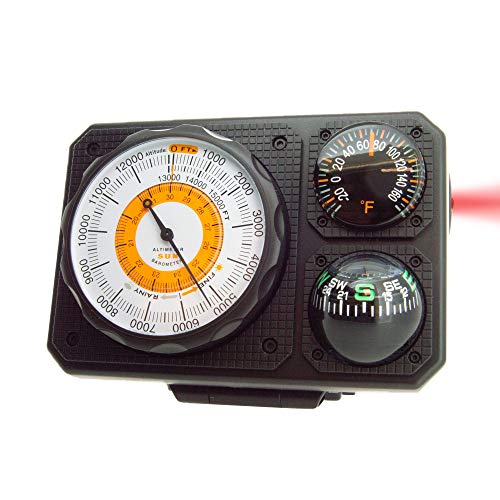
An ABC watch combines three sensors in a wrist instrument: an altimeter that estimates height, a barometer that measures air pressure, and a compass that indicates magnetic direction. The class is defined by instruments such as Casio’s Pro Trek line and the Suunto Core family, watches built for mountains, trails and sea crossings rather than for notifications. Understanding them requires understanding that none of the three sensors measures its quantity directly in the way a newcomer expects. The altimeter reads pressure and converts it, the barometer reads the same pressure and interprets it differently, and the compass reads a magnetic field that does not point to the geographic pole.
That shared pressure sensor explains both the elegance and the frustration of the category. One transducer, sampled intelligently, yields altitude, pressure trend, storm warnings and vertical speed, yet it also means weather and climbing interfere with each other’s readings constantly. A watch that climbs a ridge during an approaching storm watches two signals fight inside a single number. Learning to separate them, through calibration habits and trend interpretation, is the core skill of ABC ownership, and it matters more than any difference between rival models. This guide builds that skill piece by piece, then turns to sensors, batteries, displays and construction.
How Barometric Altimetry Works, and Why It Drifts
Air pressure falls predictably as height increases, because less air sits above the sensor pressing down. Near sea level the relationship is roughly one hectopascal for every eight to nine metres of ascent, and an ABC watch converts its pressure reading into altitude using a standard atmosphere model stored in its firmware. The conversion assumes a particular temperature profile and a particular sea-level pressure, neither of which the real atmosphere guarantees on a given day. When reality departs from the model, the displayed altitude departs with it, even if the sensor itself is perfectly accurate as a pressure gauge.
Weather is the largest source of departure. A high-pressure system settling over a mountain range raises the pressure at every altitude, and the watch interprets that rise as descent, quietly subtracting metres from a stationary wearer’s displayed height overnight. An approaching low does the reverse, crediting the wearer with a climb that never happened while they slept in a hut. Owners who leave an ABC watch on a cabin table for two days routinely find its altitude reading wandered by thirty, fifty or occasionally more than a hundred metres, tracking the passage of weather systems rather than any movement of the building.
Temperature adds a second drift, because cold dense air compresses the pressure gradient and warm air stretches it. A watch calibrated at a sunny trailhead may over-read after climbing into cold summit air, even with stable weather, since the standard model no longer matches the column of air below. Wrist warmth complicates matters further, which is why many manuals advise wearing the watch consistently, or removing it for several minutes before taking a reading that matters, so the sensor housing approaches ambient temperature. The sensor measures the air around the watch case, not an abstract atmosphere, and everything touching the case influences that small sample.
None of this makes barometric altimetry unreliable; it makes it a relative instrument of excellent precision and wandering accuracy. Over a single climb in settled weather, changes in displayed altitude track real ascent closely, often within a few metres, which is what navigation and training actually need. The absolute figure is the fragile part, and it is repaired by calibration against known heights, the subject of the next section. Treating an ABC altimeter as a superb change-measurer that needs occasional anchoring, rather than as an absolute height oracle, aligns expectations with physics.
Calibration: Known Elevation and Sea-Level Pressure
Calibration tells the watch what the pressure at a known altitude is right now, letting it solve for the offset between the standard model and today’s atmosphere. The commonest field method uses a known elevation: a trailhead sign, a surveyed summit marker, a hut whose height appears on the map, or a contour-verified position. Entering that height sets the watch’s reference, and subsequent readings inherit the correction until the weather moves on. Experienced users calibrate at every reliable known point on a route, sometimes several times a day in changeable conditions, treating each signpost as a free accuracy upgrade.
The alternative reference is current sea-level pressure, broadcast by weather services, quoted at airfields and mountain refuges, and displayed by many weather stations. Entering that value achieves the same correction from the opposite direction, since sea-level pressure and known elevation are two expressions of the same atmospheric state. This method suits travellers starting a day in a valley town with a forecast in hand, or sailors whose altitude is definitionally zero at the dock. Whichever reference is used, the watch can only hold one correction, so calibrating at a known summit overrides an earlier sea-level entry rather than combining with it.
Timing shapes calibration quality. Calibrating in the still morning before departure, then again at a summit marker, brackets a climb with two anchors and reveals how much the weather drifted in between. A discrepancy at the summit tells the user the pressure trend during the ascent, information that feeds directly into weather judgement. Some higher-end models log the reference pressure and allow altitude lock, a mode that freezes the altitude when the wearer is stationary and attributes all pressure change to weather, then releases the lock when movement resumes. That feature directly attacks the overnight-drift problem in huts and camps.
Calibration cannot rescue a reading taken through a blocked sensor port. The pressure sensor breathes through small openings in the case, and sunscreen, mud, ice or a tight sleeve can throttle that airflow and produce lagging or stuck readings. Manuals advise rinsing the case in clean fresh water after sea or mud exposure and keeping the port area clear, advice owners rediscover whenever a watch misbehaves after a beach day. Before doubting a calibration, check the port, warm or cool the watch to ambient, and give the sensor several minutes to settle. Most field anomalies dissolve under that routine.
best adventure fit smartwatches
The Barometer: Pressure Trends, Graphs and Storm Alarms
Used as a barometer, the same sensor reports absolute pressure, usually in hectopascals or millibars, and the watch’s firmware tracks how that pressure evolves. The trend matters far more than the instantaneous value. Pressure falling steadily over three to six hours signals deteriorating weather with a reliability that mountain guides have trusted since long before electronics, while a rising trend promises improvement and a flat line suggests more of the same. ABC watches render this as a graph on the display, typically spanning the previous twelve to twenty-four hours depending on model, turning an invisible process into a shape readable at a glance.
Reading the graph well means separating the altitude signal from the weather signal, the same separation problem as before, now viewed from the other side. A climber ascending all day sees pressure fall because of height, and the raw trend graph shows that fall unless the watch compensates using its altimeter logic. Better instruments offer a dedicated barometer mode or automatic profile switching, which locks the reference when the wearer is stationary so overnight pressure changes register as pure weather. Without such a mode, the honest way to read the trend is at a fixed altitude: at camp, at the hut, or across successive mornings at known heights.
Storm alarms automate the vigilance. The watch monitors the rate of pressure change and alerts the wearer when pressure drops faster than a threshold, commonly around two hectopascals within three hours on instruments of this class, with an audible tone and a flashing indicator. Casio builds this feature into much of the Pro Trek range, and Suunto’s designs include a comparable storm alarm that can wake a sleeping wearer. The alarm is a prompt to look at the sky, the forecast and the map, not a verdict, since local effects and rapid altitude changes can occasionally trigger it spuriously. Silencing it during a fast descent in a vehicle or cable car is normal practice.
Sea-level pressure display adds another interpretive layer. Many models convert the station pressure at the wearer’s altitude into an equivalent sea-level figure, the number weather maps use, allowing direct comparison with forecasts and isobar charts. That conversion depends on the altitude the watch currently believes, so a badly drifted altimeter corrupts the sea-level figure in turn, a neat illustration of how entangled the ABC functions are. Calibrating altitude therefore improves the barometer’s comparability as a side effect. Owners who keep one function honest find the others behave better too.
The Compass: Declination, Calibration and Honest Bearings
The compass sensor measures the horizontal component of the Earth’s magnetic field and reports a bearing, but magnetic north and true north diverge by an angle called declination that varies with location and slowly with time. In parts of North America that angle exceeds fifteen degrees in either direction, which translates to hundreds of metres of lateral error over a few kilometres of travel if ignored. ABC watches allow the wearer to enter the local declination, printed on topographic maps and published by national geomagnetic services, after which displayed bearings are true bearings that align with the map’s grid. Setting it once per region, and updating it when travelling between regions, is a basic duty of ownership that many users never learn they have.
Calibration of the compass is a separate ritual. The sensor must learn the magnetic signature of the watch itself and its immediate environment, which the wearer teaches by rotating the watch slowly through figure-eight movements or level turns, depending on the model’s procedure described in its manual. Until that routine is performed, bearings can err by tens of degrees or freeze entirely. Recalibration is needed after battery changes, after exposure to strong magnets, and whenever bearings behave suspiciously near vehicles or buildings. Performing it outdoors, away from cars, fences and power lines, gives the sensor the clean field it needs to learn from.
Even a calibrated compass has enemies in the field. Steel objects, trekking pole tips, ice axes, phone cases with magnetic clasps and the wearer’s own belt buckle can deflect a reading taken at arm’s length, which is why manuals advise holding the watch level, away from the body, and pausing before trusting a bearing. Accuracy claims for this class typically sit within about ten degrees under good conditions, with better models resolving direction to a single degree of display precision that should not be confused with accuracy. For route-finding, that performance supports general navigation and confirming a line of travel, while precision work such as plotting a resection still belongs to a dedicated baseplate compass carried as backup.
Some instruments add bearing memory, allowing a target direction to be locked so the display continuously shows deviation from it, and a few offer a bidirectional calibration or north indicator customisation. These conveniences help in fog and forest, where maintaining a line matters more than knowing its exact number. The wise user still cross-checks with terrain: a bearing that contradicts the slope underfoot, the direction of a stream or the position of the sun deserves suspicion before the landscape does. Instruments inform judgement; they do not replace it, and every manual in this category says so in its own wording.
Sensor Generations: Casio Triple Sensor and Its Rivals
Casio’s Triple Sensor is the best-known sensor package in the category, and its third generation, widely marketed as Triple Sensor Version 3, illustrates how the technology matured. That generation shrank the magnetic sensor dramatically compared with its predecessor, cut power consumption, and enabled continuous compass readings for up to about a minute at a time with measurements at frequent intervals, rather than the brief snapshots earlier versions offered. Altimeter resolution improved to one-metre increments on many models, with measurement intervals as short as one second in dedicated modes, allowing vertical profiles of a climb to be logged rather than merely sampled. These are the kinds of specification-sheet details that separate generations when case designs look nearly identical on a shelf.
Suunto’s approach in the Core line emphasises display clarity and a rotating bezel, with an altimeter-barometer architecture that leans on user-selectable profiles: altimeter, barometer or automatic, the last switching between them by detecting movement. That automatic profile embodies a design philosophy in which the watch reasons about context instead of asking the wearer to declare it. Logbooks, depth and height records, and sunrise and sunset data round out a package aimed at alpine and nautical users who think in profiles and logs. Comparing the two philosophies is more useful than comparing headline specifications, because daily interaction style determines whether an owner actually uses the weather and altitude data or ignores it.
Other makers have entered and left the category over the years, including dedicated outdoor brands offering ABC functions inside larger multisport platforms. What distinguishes the classic ABC watch from those platforms is focus: no touchscreen, no application store, no notification stream, just three sensors, a legible display and buttons that work with gloves. That focus keeps power draw low enough for months or years of battery life and keeps the interface learnable from a manual in an evening. Buyers cross-shopping against full smartwatches should recognise they are comparing philosophies, not merely feature lists, and the internal guides linked from this page explore the connected side of that divide.
Barometric Altitude Versus GPS Altitude
Satellite positioning offers an independent altitude estimate, and owners often ask why ABC watches bother with pressure at all when GPS exists. The answer begins with geometry: satellite altitude is computed from the same signal geometry as horizontal position but with worse dilution of precision in the vertical axis, so instantaneous GPS altitude commonly wanders by tens of metres even when the horizontal fix looks tight. Averaging over time improves it, and modern receivers referencing geoid models produce respectable absolute heights at surveyed points. Moment to moment on a moving climb, however, the barometric trace is smoother, more responsive and far less power-hungry.
The two methods also fail differently, which makes them complementary. Barometric altitude drifts with weather but never loses signal in a gorge, a forest or a whiteout, and it resolves a single metre of ascent on a staircase. GPS altitude ignores weather entirely and anchors the absolute figure, but it fades under dense canopy, reflects off cliff faces and drains batteries in hours rather than months. Instruments that combine both, using GPS to auto-calibrate the barometric sensor periodically, exploit the strengths of each: the satellite supplies the anchor, the pressure sensor supplies the smooth trace between anchors. That fusion, where offered, is the most accurate arrangement available on a wrist.
For the classic ABC watch without satellite reception, the manual anchor remains the calibration ritual already described. Judged fairly, a calibrated barometric altimeter on a day of stable weather outperforms casual GPS altitude for tracking ascent, cumulative gain and current height relative to the day’s starting point. Judged on a week-long traverse without calibration opportunities, its absolute error can grow beyond what a satellite check would allow. The honest summary is that the methods answer slightly different questions, and experienced navigators quote barometric altitude with its calibration time attached, the way sailors quote a sounding with its tide.
Battery Strategies: Solar Charging and Coin Cells
Power strategy divides the ABC category into two camps with distinct ownership rhythms. Casio’s Tough Solar system places a solar panel behind or around the display and charges a rechargeable cell, harvesting enough energy from daylight and even bright indoor light to sustain the sensors indefinitely under ordinary use. A full charge supports months of operation in darkness on many models, and the system removes battery replacement from the owner’s calendar almost entirely, provided the watch sees light regularly and is not stored in a drawer for seasons at a time. Power-saving modes that blank the display during inactivity stretch that reserve further.
The coin-cell camp, represented by the Suunto Core’s user-replaceable CR2032, trades that autonomy for simplicity and a slimmer dependence on light. A fresh cell typically delivers around a year of service depending on compass and backlight use, and replacement takes minutes with a coin to open the case back, no jeweller required. That user-serviceability matters on long expeditions, where carrying a spare cell weighing grams guarantees power in a way a solar watch in a polar winter cannot. The corresponding duties are remembering the spare, protecting the case-back seal during the swap, and accepting that water resistance after a user battery change depends on the care taken with the gasket.
Usage patterns shift both calculations. Frequent compass activation, backlight use in winter darkness, altimeter logging at one-second intervals and storm-alarm monitoring all draw from the same reserve, and cold temperatures reduce the effective capacity of any small cell while it is cold. Manufacturers’ endurance figures assume defined duty cycles that heavy users exceed, so owner reports from winter mountaineers describe shorter intervals than summer hikers experience from the same model. Planning power for a trip therefore means derating the brochure figure for temperature and sensor use, exactly as altitude figures are derated for weather. The parallel is not a coincidence; field instruments reward those who budget margins.
Low-battery behaviour deserves attention before purchase. Better designs warn early, degrade gracefully by shedding power-hungry functions first, and preserve timekeeping to the last, while solar models add charge-level indicators that let an owner correct a light-starved watch before a trip rather than during it. A watch that dies silently on a summit ridge is worse than one with half its features, and the manuals document these behaviours for those who read them. Checking how a candidate model announces and handles exhaustion belongs on the same shortlist as its sensor specifications.
Water Resistance, Construction and Surviving the Weather It Reports
ABC watches are bought to be worn in the conditions their barometers predict, so water resistance is a working specification rather than a luxury. Ratings in this class commonly reach 100 metres, with some models at 200 metres and lighter designs at 50 metres, expressed as static laboratory pressure equivalents rather than guarantees for dynamic use. A 100-metre rating comfortably covers swimming, showering, rain and river crossings, while buttons should not be operated underwater unless the manufacturer explicitly permits it, because pressing a button opens a momentary path past a seal. The manuals state these limits plainly, and they override any impression given by rugged styling.
Construction details beyond the headline rating determine longevity. Resin cases dominate the category because the material absorbs impacts that would dent metal and insulates the wearer’s wrist in cold weather, while mineral glass balances scratch resistance against shatter tolerance, and a few premium variants substitute sapphire for the face. Rotating bezels, where fitted, serve as simple analogue backups for bearing memory and elapsed timing. Strap design matters in the cold, where stiff materials and short adjustment ranges fight against layering over a jacket cuff; a long, supple strap with generous holes accommodates the sleeve-worn style that winter users prefer so the sensors escape insulation.
The pressure sensor’s need to breathe creates the category’s characteristic design tension: the case must admit air to the sensor while excluding water, dust and ice. Manufacturers solve it with protected port geometry and hydrophobic barriers, and the solution works until the port clogs, as discussed under calibration. Salt water deserves a rinse in fresh water afterwards, not because the case leaks but because crystals forming in the port and under the bezel degrade both sensing and moving parts over a season. Owners who treat that rinse as routine report sensor behaviour staying consistent for years; those who skip it meet the drift and lag that fill troubleshooting threads.
Display Readability in Sun, Shade and Deep Cold
The classic ABC display is a segmented or dot-matrix liquid crystal panel, a technology chosen because it sips power and remains legible in direct sunlight where emissive screens wash out. A transflective arrangement uses ambient light as an ally: the brighter the summit glare, the stronger the contrast, precisely when a hiker most needs a bearing or a storm check. Negative displays, with pale digits on a dark background, look striking in a shop and read noticeably worse in many field conditions, a trade owners frequently warn newcomers about in community discussions. Positive displays remain the safer recommendation for anyone whose eyesight or typical terrain makes legibility a safety matter.
Backlighting covers the other half of the day. Electroluminescent or LED illumination, often with an afterglow of a few seconds and on some solar models an automatic tilt-activated light, allows night readings without destroying night vision entirely when used sparingly. Full-brightness white backlights are convenient in a tent and costly in power, linking display habits back to the battery discussion. Models offering adjustable backlight duration let the owner tune that exchange rather than accept a factory compromise. In deep cold, liquid crystal response slows, digits ghosting briefly during transitions below roughly minus twenty degrees Celsius on instruments of this class, and specified operating ranges commonly end near minus ten to minus twenty depending on model, beyond which the watch keeps time but the display lags.
Digit size and layout decide readability as much as technology. Altimeter figures large enough to read while moving, a trend graph that does not require entering a submenu, and a compass that presents a cardinal letter alongside degrees all reduce the seconds spent staring at a wrist on exposed ground. Button size and spacing govern the rest of the interaction, because a mode button that cannot be found with midweight gloves effectively removes its function from winter use. Shop photographs reveal none of this; manuals, dimension sheets and owner commentary do, which is why this guide keeps returning to documents rather than impressions.
Choosing Between the Main Model Families
A buyer choosing within the classic ABC class is really choosing an ecosystem of habits. The solar-powered Pro Trek style suits users who wear the watch daily, expose it to light, and value never planning a battery change, and its feature set leans toward alarms, world time and sunrise data layered over the three sensors. The coin-cell Core style suits users who treat the watch as expedition equipment, stored between trips, and who prize profile-based altimeter logic, a clean display and a battery they can swap in a hut. Neither orientation is wrong; each punishes the opposite lifestyle, the solar watch starving in a dark kit bag, the coin-cell watch expiring unnoticed before a dawn start.
Size is the quiet filter between them. ABC cases run large, commonly from the mid-forties to mid-fifties in millimetres across, because sensors, solar panels and legible displays need area, and smaller wrists may find the largest models overhanging. Lug-to-lug length and case thickness predict comfort better than diameter alone, and trying a comparable case size locally, even of a different model, prevents the commonest disappointment in the category. Weight differences between resin siblings are small enough that fit, not mass, should arbitrate.
Feature checklists should be interrogated rather than merely counted. Altimeter lock, automatic profile switching, bearing memory, storm alarm, sunrise and sunset times, world time, and logbook depth each serve identifiable situations described in earlier sections, and a buyer should name the situation before valuing the feature. A feature without a situation is weight in the menu system, lengthening the button sequences used daily. Conversely, a missing feature with a real situation behind it, such as altitude lock for hut-based ski touring, will be mourned every trip. That discipline, matching functions to itineraries, is the same specification-first thinking that governs the rest of the category.
Field Routines That Keep an ABC Watch Honest
Ownership settles into routines once the novelty fades, and the users who extract the most from these instruments share a recognisable pattern. They calibrate altitude at the day’s first known point without being reminded, glance at the pressure trend whenever they stop, and treat a storm alarm as a cue to reassess shelter and timing rather than as background noise. They recalibrate the compass after battery changes and whenever a bearing smells wrong, and they know their region’s declination the way they know their boot size. None of this requires talent; it requires the manual’s procedures converted into habit during the first few outings, when attention is still high.
Logging deepens the value further. Recording summit altitudes against map heights across a season reveals a particular watch’s drift behaviour in local weather patterns, and noting pressure each morning at a base camp builds an intuitive feel for what a three-hectopascal fall looks like in local sky terms. Some models automate parts of this with internal logs of altitude profiles and pressure history, but even those benefit from a notebook cross-reference, because the log records what the watch believed, and only the notebook records whether it was right. That distinction between instrument belief and verified fact runs through every section of this guide.
Backup discipline completes the picture. An ABC watch is an aid carried alongside a map and a mechanical compass, not a replacement for them, and its battery, however well managed, is a single point of failure that a baseplate compass does not share. Groups that spread navigation tools across members, so no single device loss strands the party, apply the same redundancy thinking at team level. The watch earns its place by being consulted constantly and conveniently, not by being trusted absolutely, and users who hold that balance get years of quiet assistance from a device class that asks remarkably little in return.
Altitude in Practice: Ascent, Descent and Cumulative Gain
Beyond the single current-height figure, ABC watches accumulate the day’s vertical story: total ascent, total descent, maximum altitude reached and, on many models, a log of altitude against time. Those totals interest hikers gauging effort, ski tourers planning energy, and pilots of unpowered aircraft who think in height bands. Their accuracy depends on how the firmware treats small fluctuations, because a pressure sensor sampled on a windy ridge jitters by a metre or two as gusts pass, and naive summation would credit the wearer with hundreds of phantom metres by evening. Better designs apply a threshold, ignoring changes below a small increment until they accumulate into genuine movement, which is why two watches on the same wrist can report noticeably different daily ascent from identical raw data.
Vertical speed readings extend the same data into the present tense. A rate-of-climb figure, expressed in metres per minute or per hour, helps a paraglider pilot sense a thermal’s core and helps a mountaineer pace a long slope against a turnaround time. The reading lags reality by the averaging window the firmware applies, so users learn to interpret it as a smoothed tendency rather than an instantaneous truth. Abrupt weather-driven pressure changes can masquerade as vertical speed while the wearer sits still, one more instance of the entanglement between altitude and weather that defines this instrument class. Recognising that masquerade at a windy camp is a small rite of passage for new owners.
Cumulative figures also expose calibration habits in aggregate. A season of logs in which recorded summit heights consistently overshoot map heights by a similar margin suggests a user who calibrates at trailheads in morning high pressure and climbs into afternoon lows, a pattern correctable by adding a summit calibration to the routine. The watch faithfully recorded the atmosphere’s behaviour; the interpretation belongs to the reader of the log. That feedback loop, in which the instrument’s history teaches its owner how to use it better, is a large part of the category’s enduring appeal among methodical travellers.
Weather Judgement: From Pressure Shapes to Decisions
A falling barometer acquires meaning only in context, and experienced users combine the trend graph with observation in a sequence the manuals sketch and practice refines. Speed matters first: a slow decline over a full day often precedes a frontal system by many hours, while a rapid drop compresses that warning and raises the stakes for exposed routes. Direction of wind shift, thickening and lowering cloud, and temperature behaviour either corroborate or soften the instrument’s suggestion. The watch supplies one disciplined input to a decision that also weighs terrain, escape options and the party’s strength, and its value lies in being objective when hope starts editing the sky.
Diurnal pressure rhythm is the trap inside the data. Atmospheric pressure rises and falls twice daily in a regular tide, by a hectopascal or two in mid-latitudes and more in the tropics, entirely unrelated to weather systems. A user ignorant of that rhythm may read the morning fall as deterioration or the evening rise as rescue, when both are simply the atmosphere breathing on schedule. Trend graphs spanning a full day reveal the rhythm as a gentle wave beneath the larger weather signal, and storm alarms are tuned with thresholds intended to ignore it. Learning the local amplitude of that wave, by watching the graph across a few settled days, calibrates the user’s eye in the same way known summits calibrate the altimeter.
At sea the same instrument serves differently, because altitude is fixed and every pressure change is weather by definition. Sailors historically kept barometer logs at set hours, and an ABC watch automates that discipline on the wrist of whoever is on watch. A steady fall during a passage, read alongside the forecast received before departure, informs reefing and routing decisions hours before conditions arrive. The storm alarm earns particular respect offshore, where a sleeping crew benefits from a device that notices the pressure’s turn before the boat’s motion announces it. Several models’ inclusion of sailing-oriented timing functions acknowledges this second homeland of the barometer.
Compass Work on Real Routes
Knowing a bearing and travelling on it are different skills, and the watch supports the second mainly through convenience. The standard technique remains to sight a distant object on the desired bearing, walk to it, and repeat, using the compass at each pause rather than staring at the wrist while moving, since a swinging arm and an unleveled sensor corrupt readings continuously. In featureless terrain, fog, plateau or dense forest, the intervals shorten and the discipline tightens, with a partner sent ahead to the limit of visibility serving as the sighting target. Bearing memory functions assist by holding the target number while the display shows deviation, reducing arithmetic at moments when cold hands and wind discourage it.
Back bearings and resection locate the traveller rather than direct the travel. Taking a bearing to a known summit, then another to a second identified feature, and plotting both on the map places the observer near the intersection of the reversed lines, provided declination was set and the identifications are correct. The watch performs the bearing-taking half of that procedure as competently as a baseplate compass for most purposes, though the plotting still belongs to the map and a protractor or compass rosette. Users who practise resection on clear days, when the answer can be verified against obvious terrain, build the trust that makes the technique available on the day it is actually needed.
Interference awareness becomes instinct with experience. Bearings taken across a car bonnet, beside a railway line, or standing on a steel bridge deck can err dramatically, and the experienced user steps clear of metal before believing a surprising reading. Geological iron deposits disturb compasses in a few famous districts, a limitation shared by every magnetic instrument and noted on the maps of those regions. The watch cannot warn about most of these influences, which is why cross-checking against slope, drainage and sun remains woven through competent navigation rather than treated as an admission of the instrument’s failure.
Questions Buyers Ask About ABC Watches
How accurate is the altimeter really?
Immediately after calibration at a known point, in settled weather, displayed altitude commonly agrees with surveyed heights within a few metres, and changes in altitude are tracked more precisely still. Hours later, or after a weather front passes, the same watch may sit tens of metres from the truth through no defect of its sensor. Accuracy in this category is therefore a statement about time since calibration and atmospheric stability, not a single figure a manufacturer can honestly guarantee. Buyers comparing models should value fast, convenient calibration procedures as highly as sensor specifications, because the procedure’s ease determines how often the correction actually happens.
Can the compass replace a dedicated baseplate compass?
For confirming direction, following a bearing between sighted objects and general orientation, the wrist compass serves well and is always present, which is its greatest virtue. For plotting lines on a map, measuring bearings from the map, and working in areas of magnetic disturbance, the baseplate instrument remains superior and consumes no battery. Mountain safety guidance consistently treats electronic navigation aids as supplements to map-and-compass competence rather than substitutes for it. Carrying both weighs little and covers each other’s failure modes almost perfectly.
Does the storm alarm predict storms by itself?
The alarm detects a rate of pressure fall associated with approaching severe weather and announces that detection; it does not identify a storm, measure its distance or guarantee its arrival. Local conditions can produce rapid pressure changes without dangerous weather, and dangerous weather occasionally develops through mechanisms a single pressure threshold misses. Used as a prompt to consult the sky, the forecast and the map, the alarm adds a genuine margin, particularly overnight. Used as an oracle, it will eventually mislead in both directions, crying wolf on one trip and staying silent on another.
Solar or coin cell for a long expedition?
The answer follows the expedition’s light and resupply. A solar model travelling on a sunlit wrist through a summer range effectively removes power from the worry list, while the same watch in polar darkness or stored under cuffs and gloves for weeks leans on a reserve that cold also erodes. A coin-cell model with two spare cells in the repair kit offers certainty independent of light, at the price of remembering the spares and minding the case seal during a change. Many expedition accounts describe the choice mattering less than the discipline: whichever system is carried, its state is checked on a schedule rather than discovered at a critical moment.
Maintenance, Seals and Keeping Sensors Honest Over Years
An ABC watch asks little maintenance, but the little it asks is specific. Rinsing after salt water, keeping the sensor port clear, and storing a solar model where light reaches it form the weekly baseline. Straps and spring bars deserve periodic inspection because a watch lost to a failed pin in a river crossing provides no altitude data at all, and resin straps embrittle with age, ultraviolet exposure and repeated flexing in cold. Replacing a strap before an expedition is cheap insurance that owners remember after hearing one story of a watch sinking out of sight. The case itself, in resin, tolerates knocks that would mark metal, though deep scratches over the sensor area should be kept clean rather than allowed to harbour grit.
Gaskets age on a schedule independent of use. The seals that deliver the water-resistance rating gradually harden, and manufacturers recommend periodic pressure verification and gasket replacement through service channels, with the interval shortened for watches that swim or dive frequently. A user-changed coin cell reopens the question each time: the gasket must sit clean, correctly seated and lightly treated exactly as the manual describes, and the case back closed to its mark. Owners unwilling to accept that responsibility can have cells changed by a service centre that pressure-checks afterwards, trading a small fee for restored certainty. Either route is respectable; the disreputable route is changing the cell carelessly and trusting the rating anyway.
Sensor drift over years is modest in quality instruments, and apparent drift usually traces back to port condition, temperature habits or calibration routine rather than to the transducer itself. A watch that suddenly disagrees with known heights by large margins, resists calibration or shows pressure frozen across a day of weather has a genuine fault and should be serviced rather than recalibrated repeatedly. Keeping a simple record of calibration checks at one known local point, a home elevation or a familiar trailhead, gives the owner a baseline against which such faults stand out early. Instruments reward record-keepers, in maintenance as in navigation.
What the Connected Alternatives Change, and What They Do Not
Buyers inevitably compare the classic ABC watch with connected outdoor smartwatches that add satellite positioning, mapping, heart-rate sensing and notifications to the same three environmental sensors. Those platforms genuinely extend capability: a recorded track, a route displayed on the wrist, physiological data for training. They also import the economics of phones, with daily or weekly charging, software updates that rearrange menus, and displays that prioritise richness over the instant legibility of a segmented panel in hard sunlight. Many travellers own both, wearing the connected device for training near home and the ABC instrument on long routes where charging is a burden and simplicity is a feature.
The environmental sensing at the heart of both categories obeys identical physics. A barometer in a flagship smartwatch drifts with the same weather, needs the same calibration anchors, and reads the same magnetic field with the same declination problem. Marketing that implies satellite-era instruments have transcended those realities should be read with the scepticism this guide has applied throughout. Where the connected platforms do advance matters is in fusion, using satellite altitude to discipline the barometer automatically, and in logging, where generous storage turns a season of pressure and altitude into analysable history. Those are real gains, purchased with battery life and complexity, and the exchange suits some itineraries better than others.
For a reader deciding between the philosophies, the deciding questions are practical rather than tribal. How many days pass between charging opportunities on the trips that matter? Will the watch be read in glare, cold and gloves more often than in a gym? Does the owner want a tool that does three things for years without attention, or a platform that does thirty things with regular care? The linked guides on connected models explore the other side of that decision in depth. What no buyer should do is purchase either philosophy expecting the sensors to interpret themselves, because interpretation, as every section here has shown, is the owner’s contribution.
A Short Pre-Purchase Checklist
Before ordering, confirm the sensor essentials against the manufacturer’s manual rather than a retail summary: altimeter range and resolution, whether altitude lock or automatic profile switching is offered, the trend graph’s span, the storm alarm’s existence and threshold behaviour, and the compass’s declination range and calibration method. Note the battery system and its stated endurance under a duty cycle resembling your own, the water-resistance rating with its button restrictions, and the operating temperature range if winter use is planned. Each of those items maps to a section of this guide, and a model that answers them all transparently has earned more trust than one hiding behind lifestyle photography.
Add the physical checks: case diameter and lug-to-lug length against your wrist, strap length if the watch will ride over sleeves, button size against your gloves, and display type, with a positive display favoured for maximum legibility. Confirm that a replacement strap and, for coin-cell models, the correct cell are readily obtainable, because consumables shape the second year of ownership more than launch features shape the first week. Finally, download and read the manual before the watch arrives; the calibration procedures, alarm settings and profile logic are all documented there, and an owner who has read them once learns the instrument in days rather than months.
Check prices on Amazon
Live listings for the shortlist in this guide are pulled from Amazon below, so prices and availability are always current at the moment you look.


Learning the Instrument: The First Month of Ownership
The opening weeks with an ABC watch determine whether it becomes a trusted companion or an ignored gadget, and a deliberate learning routine shortens that passage considerably. Begin at home, where the elevation can be looked up from a map or a surveyed local point, and calibrate the altimeter there each morning for a week while noting the displayed sea-level pressure against a published local reading. That simple diary teaches the size of the diurnal wave in your own district, shows how a passing front bends the trace, and builds the habit of treating every figure as a claim about the atmosphere rather than a fact about the ground. By the end of the week most owners can glance at a morning pressure and say, with evidence, whether the day is settled or turning.
Compass learning follows a parallel course in familiar streets before it is trusted on a hill. Set the declination for your region on the first day, run the calibration routine in an open space away from parked cars, and then check bearings against streets whose directions you already know from maps. Walk a rectangular block using only the watch to hold your headings and observe how readings wobble near vehicles, fences and steel doors, because that wobble, witnessed in safety, becomes recognisable in the field instead of alarming. Repeat the calibration after any battery change and after long journeys by car or train, where the sensor has sat for hours inside a large steel shell.
Only then take the instrument on a route with known heights: a hill whose summit marker carries a surveyed figure, or a trail whose junctions appear on the map with spot heights. Calibrate at the start, resist the urge to recalibrate at every sign, and compare the summit reading with the marker before correcting it, so the day’s drift stands revealed as a number you can learn from. Note the weather that accompanied that drift and file the pairing away mentally; a similar sky next season will likely produce a similar correction. Owners who run this exercise twice or three times stop asking whether their watch is accurate and start knowing, quantitatively, how it behaves.
That learning curve is also the honest answer to give anyone who asks whether an ABC watch is complicated to own. The instrument itself is simple, three sensors and a clock, but it reports a physical world that refuses to hold still, and the owner’s share of the work is supplying the anchors and the interpretation. People who enjoy that share describe the watch as the most engaging item in their kit; people who wanted a device that simply knows the height tend to migrate toward satellite-based models and accept their charging rhythm instead.
Choose well, calibrate often, and an ABC watch becomes the rare electronic companion that grows more useful as its owner grows more skilled, because its three simple sensors feed a judgement that practice keeps sharpening on every ridge, crossing and clearing sky.


