Our Top Picks




What's inside
- The J3 is several phones, not one
- Read the part number, not the headline
- Capacity claims: the arithmetic of exaggeration
- The NFC antenna hiding inside some packs
- Protection circuits and the swelling problem
- Cycle life: what to expect, honestly
- Storage charge and the spare-pack question
- How the buying math differs from sealed phones
- A verification routine for the pack that arrives
- When the phone, not the battery, is the problem
- Model-by-model notes for the main variants
- How counterfeit and low-grade packs reveal themselves
- Troubleshooting patterns after a swap
- Disposal and the end of a pack’s story
- Check prices on Amazon
- What the specification sheet would tell you, if listings quoted it
As an Amazon Associate I earn from qualifying purchases. This post may contain affiliate links at no extra cost to you.
The Samsung Galaxy J3 belongs to a shrinking category of phones: a handset whose battery the owner can swap in under a minute with no heat gun, no adhesive strips and no cracked glass risk. That single design decision changes everything about how a replacement pack should be chosen. Instead of paying a workshop to open a sealed phone, a J3 owner buys a small rectangular lithium-ion cell, clicks off the rear cover, and fits it by hand. The catch is that the J3 name covers several model years and carrier variants, and the battery market for it is crowded with relabelled stock, exaggerated capacity claims and packs that fit the tray while lacking parts the original carried. This guide works through the part numbers, the label details that separate a genuine-specification pack from a dressed-up generic cell, and the safety checks that matter for a phone of this age.
Affiliate disclosure: some of the outbound links on this page are affiliate links, and if you buy through one of them this site may earn a small commission from the retailer at no extra cost to you. That commission never decides which packs this guide recommends or warns against; every judgement below rests on published specifications, part-number records and manufacturer documentation that any reader can check independently. Where a listing makes a claim that cannot be verified from a label photograph or a spec sheet, this guide says so rather than repeating the claim.
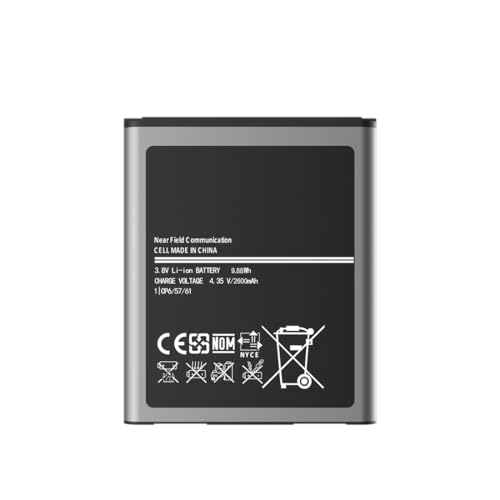
Start with the physics of the pack itself, because every later decision follows from it. The standard J3 battery is a single-cell lithium-ion unit with a nominal voltage of 3.8 volts and a rated capacity in the 2,600 milliamp-hour class. Multiply those two figures and you get roughly 9.88 watt-hours of stored energy, which is the number that actually determines runtime. Nominal voltage matters when comparing listings: a pack advertised at 3.7 volts nominal is built around a different charge ceiling convention than the 3.8-volt original, which charges to about 4.35 volts. Phones in the J3 family expect the higher-voltage chemistry, and fitting a lower-specification cell can produce early shutdowns, inaccurate fuel-gauge readings and a pack that never reports a true full charge.
The J3 is several phones, not one
The first trap is the name on the box. Samsung sold a Galaxy J3 for 2016, another for 2017 and another for 2018, alongside carrier-specific derivatives such as the J3 Prime, the J3 Emerge and the J3 Achieve. These phones share a badge and a rough silhouette, but they were built for different networks, different regional markets and in some cases different internal layouts. A battery listing that says only “fits Galaxy J3” without naming a model number is asking the buyer to gamble. The reliable identifier is the phone’s model code, printed on the sticker under the original battery and shown in the settings menu: codes in the SM-J320, SM-J327, SM-J330 and SM-J337 families each point to a specific generation and region.
The 2016 generation, including the widely sold SM-J320 models, established the battery format that most later variants kept: a removable pack in the EB-BG530 family. The 2017 models, including the J3 Prime sold through prepaid carriers in North America and the J3 Emerge offered by Sprint-family networks, stayed with a pack of the same physical dimensions and the same nominal electrical specification, which is why so many listings cite the Prime and Emerge alongside the base model. The 2018 J3 and its Achieve variant continued the removable design at a point when most of the industry had abandoned it, and Samsung kept the capacity in the same 2,600 milliamp-hour class rather than redesigning the tray around a larger cell.
Because the tray dimensions stayed stable across these generations, a physically compatible pack will often click into several J3 variants. Physical fit, however, is the weakest form of compatibility. The electrical contacts must land in the right order, the pack’s identification and protection behaviour must match what the phone’s charging circuitry expects, and on some variants an antenna element built into the battery itself carries a signal function the phone relies on. Sections below take those points in turn, but the working rule is simple: buy against the battery part number printed on your existing pack, not against the phone’s marketing name, and treat any listing that refuses to state a part number as a listing that has not earned your money.
Regional variants add one more wrinkle. Dual-SIM versions sold in parts of Asia and Latin America, and single-SIM carrier versions sold in North America, can share a battery while differing in firmware and network hardware. That means a pack that behaves perfectly in one J3 may still be the wrong purchase if its label belongs to a different sub-family with a different contact arrangement. The differences are small, which is exactly why they cause trouble: a pack that is two millimetres off in one dimension may still squeeze under the cover, pressing on the cell every time the phone is handled, and a contact block offset by a fraction can leave the phone unable to read the pack’s thermistor, disabling temperature monitoring during charging.
Read the part number, not the headline
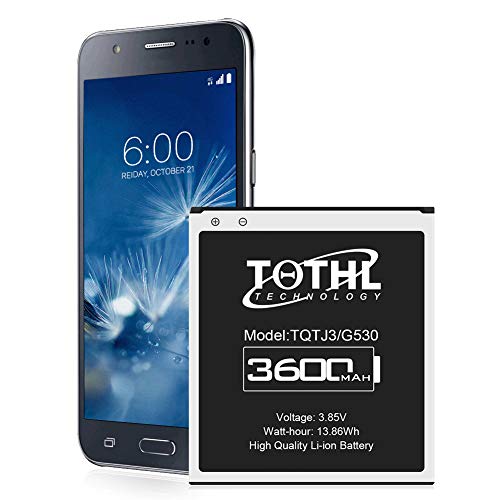
Every genuine-specification J3 pack carries a part number in the EB-BG530 or EB-BG532 family, printed on the label together with the rated capacity, the nominal voltage, a serial string and a production date code. The EB-BG530 designation covers the original line fitted to the earlier phones; EB-BG532 appears on later production associated with the newer variants. Listings use these numbers loosely, sometimes printing one in the title and shipping a pack labelled with another, so the number that counts is the one on the physical label of the unit that arrives. Photograph it before fitting. If the delivered pack’s label shows a different family, a different capacity or no part number at all, that is grounds for a return regardless of how well the pack seems to work on the first day.
The label carries more than the part number, and each field earns a check. The rated capacity should read 2,600 milliamp-hours, sometimes expressed with a minimum capacity slightly below the typical figure, which is normal practice: manufacturers quote a typical value and guarantee a minimum a few percent lower. The charge voltage limit, around 4.35 volts for this chemistry, should be printed as well. A label that lists capacity but omits voltage, or that prints a voltage inconsistent with a 3.8-volt nominal cell, signals a generic label applied to whatever cell the assembler had on hand. The manufacturer’s name and country of assembly also appear on original labels; their absence is not proof of a fake, but their presence in blurry, misspelled or inconsistent type is a strong hint that the label was copied rather than printed by the original maker.
Serial numbers and date codes deserve the same attention. On original packs the serial string encodes production information, and the date code tells you when the cell was made, which matters enormously for a phone whose newest variant is years old. Lithium-ion cells age on the shelf as well as in use. A pack manufactured long ago and stored fully charged may have lost a noticeable share of its capacity before it ever reaches your phone, and a pack stored empty for years can fall below the voltage at which its protection circuit will allow charging at all. Prefer the most recent production date you can find, and be suspicious of listings that crop the date field out of their label photographs.
best aa and aaa battery chargers
Reading a date code takes a little care because formats vary between production lines. Many Samsung-format labels print the date openly as year, month and day; others bury it inside the serial string, where a block of digits after the plant code gives the year and month of manufacture. When the format is not obvious, compare the serial strings of several listings: the digits that change between packs of different ages are usually the date block, while the plant and line codes stay constant. A seller who cannot or will not tell you the production date of the stock being shipped is telling you something about how that stock is stored and rotated. For a consumable with a finite shelf life, that silence should weigh against the listing no matter how attractive its headline capacity looks.
Capacity claims: the arithmetic of exaggeration
No claim in this market is abused more than capacity. The genuine pack is a 2,600 milliamp-hour cell in a fixed physical volume, and lithium-ion energy density improves slowly, by small percentages per year, not by leaps. A listing that offers a 3,400 or 3,800 milliamp-hour pack in the same dimensions at a bargain price is claiming an energy density that the original manufacturer, with far greater resources, did not achieve in that format. Such packs, when measured on a proper discharge rig at a moderate rate, routinely deliver far less than the label figure, sometimes less than a healthy original pack. The honest ceiling for this tray is the original specification; a replacement that matches 2,600 milliamp-hours truthfully is a better buy than one that prints a larger number it cannot deliver.
Buyers can apply two sanity checks without any equipment. First, weight: energy storage scales with the mass of active material, and a genuine 2,600 milliamp-hour pack of this format weighs in the mid-40-gram range. A featherweight pack that claims high capacity is missing material it would need to hold that charge. Second, runtime proportionality: if a new pack claims thirty percent more capacity than the original but delivers the same screen-on time as your old, worn pack, the claim has failed its own test. Neither check replaces a metered discharge test, but both catch the worst offenders, and both can be applied within a returns window while a refund is still available.
Discharge rate matters to how capacity should be read. A milliamp-hour figure is only meaningful alongside the rate at which the cell was drained and the cutoff voltage at which the measurement stopped. Spec sheets for quality cells state both, commonly a gentle 0.2C rate down to a defined cutoff. A phone, by contrast, draws uneven current: spikes during network handovers and screen wake, low draw in standby. A cheap cell with high internal resistance may post a passable capacity figure on a slow bench discharge yet sag badly under the phone’s real load, triggering low-battery warnings at twenty percent indicated charge. This is why two packs with identical printed capacity can behave so differently in the hand, and why the printed number alone should never settle a purchase.
There is also a quieter form of exaggeration: quoting the capacity of the bare cell inside rather than the finished pack, or quoting a design capacity that production units are not individually verified against. Reputable spec records distinguish typical from minimum capacity for exactly this reason. When a listing gives one round number with no tolerance, no rate and no cutoff, it is marketing copy, not a specification. This guide treats such numbers as unverified, and the recommendations framework below weights label completeness, production date and seller accountability ahead of any capacity figure that cannot be traced to a spec sheet.
The NFC antenna hiding inside some packs
One feature separates original J3 packs from many cheap copies, and it is invisible until it stops working. On variants equipped for near-field communication, the NFC antenna is not fixed to the phone’s chassis; a flat antenna loop is built into the battery itself, connected through additional contacts on the pack. Fit a battery without that antenna and the phone loses NFC entirely: contactless payments, tag reading and quick pairing all fail, even though the phone powers on and charges normally. Owners who never use NFC may never notice. Owners who do will chase software settings for hours before suspecting the battery they fitted last week.
Listings handle this badly. Some third-party packs include the antenna loop and say so; others omit it and say nothing; a third group prints “NFC” on the label of a pack that has no antenna at all. The physical check is straightforward. An NFC-equipped pack shows extra contact pads beyond the power terminals and, under the label’s surface, the faint outline of the flat coil can often be felt or seen at an angle. Compare the contact block of any candidate against your original pack before buying: the number and spacing of the gold contacts should match exactly. If your original has the extra pads and the replacement does not, the replacement is the wrong part for your phone, whatever its title claims.
Even on variants without NFC hardware, the lesson generalises. Small functional elements migrate into battery packs more often than buyers expect: temperature sensors are the universal example, since nearly every phone pack carries a thermistor the charger uses to watch cell temperature. A copy built down to a price may substitute a fixed resistor for a real thermistor, which fools the phone into reading a constant, plausible temperature while losing the ability to detect a pack that is genuinely overheating. The phone cannot warn you about a sensor that always reports calm. This is one of the strongest arguments for buying packs whose labels, weights and contact layouts match the original in every observable detail.
Protection circuits and the swelling problem
Inside every legitimate J3 pack sits a small protection circuit board between the cell and the terminals. Its job is to cut the connection if the cell is overcharged, drained too deeply, short-circuited or drawn beyond its safe current. That board is a few cents of electronics, and it is one of the first things omitted or degraded in the cheapest copies. A pack without working overcharge protection leans entirely on the phone’s charger control, removing the second layer of defence that the design intends. A pack without proper over-discharge protection can be drained by a phone left flat in a drawer until the cell is damaged permanently, after which recharging it becomes the risky act rather than the safe one.
Swelling is the failure mode every J3 owner eventually meets, and the removable design turns it into an early-warning system. As a lithium-ion cell ages, side reactions generate gas inside the pouch or can; in a sealed phone that pressure silently bends frames and lifts screens, but in a J3 the first sign is a rear cover that no longer sits flush, or a pack that rocks on a flat table instead of lying still. The tabletop spin check is crude and effective: a pack that spins freely on its face has a bulge, and a bulging pack is finished. Do not charge it again, do not press it back under the cover, and do not puncture it to relieve the pressure. Gas generation means the cell’s internal chemistry has already degraded past the point where any capacity figure matters.
Heat accelerates every one of these failure paths. A J3 left charging on a sunny dashboard, or used for navigation in a hot car while plugged in, ages its battery far faster than the same phone charged on a desk. Cheap cells suffer most because their separators and electrolytes start with less margin. Practical habits follow directly: charge on a hard surface where a warm pack can be noticed, avoid leaving the phone on charge in enclosed heat, and retire any pack that becomes noticeably warm during ordinary charging at room temperature. Warmth during fast, heavy use is unremarkable; warmth at rest on the charger is the cell asking to be replaced.
Storage and handling of spares deserve the same seriousness. A loose J3 pack in a pocket or bag can have its terminals bridged by keys or coins, and the protection board is the only thing standing between that short circuit and a very hot pocket. Keep spares in the small plastic cases or sleeves they ship in, or cover the contact block with tape. Never carry a swollen pack loose, never post a damaged pack through ordinary mail channels, and take retired packs to a battery collection point rather than household waste: the same chemistry that makes these cells useful makes them unwelcome in a refuse truck’s compactor.
Cycle life: what to expect, honestly
A lithium-ion cell in this class is typically rated for several hundred full charge cycles before its capacity falls to about eighty percent of the original figure. That eighty-percent line is the industry’s conventional definition of end of life, not the point where the pack stops working; a J3 pack at seventy-five percent still runs the phone, just for a shorter day. Real-world life depends on how a cycle is spent. Shallow cycles are gentler than deep ones: a user who charges from forty to ninety percent most days will usually get more total service from a pack than a user who runs it to shutdown nightly, even if the second user logs fewer nominal cycles. Heat, as noted, multiplies the wear from either pattern.
This arithmetic explains the most common disappointment with replacement packs. A buyer fits a fresh, genuine-specification battery and finds the phone lasts a day rather than the two days they remember from 2017. The battery is rarely the problem. The phone’s software load has grown: apps are heavier, background sync is more aggressive, and mobile web pages carry far more scripting than they did when the J3 was new. A healthy 2,600 milliamp-hour pack feeding a modern software stack delivers a modern, shorter day. Judging a replacement against memories of the phone’s launch-era stamina leads buyers to return good packs and chase ever more inflated capacity claims, which is precisely the cycle of disappointment the exaggerated listings depend on.
Calibration is the related chore worth doing once after a swap. The phone’s fuel gauge estimates charge from voltage and usage history, and a new pack with a different age profile can leave the estimate drifting: the percentage may fall in steps, or the phone may shut down with a few percent still showing. Running one full, uninterrupted charge to one hundred percent, then using the phone normally down to a low but not exhausted level, gives the gauge the reference points it needs. Repeating deep discharges as a routine is not maintenance; it is wear. One calibration pass after fitting, then ordinary partial charging, is the pattern that serves both accuracy and longevity.
Charge speed expectations should stay modest. The J3 family predates the fast-charge arms race, and its charging circuitry draws power at a gentle rate by current standards, which is quietly good news for battery health: slow charging generates less heat and less stress than the rapid top-ups flagship phones advertise. A full charge from empty taking around two hours is normal behaviour for this hardware, not a symptom of a weak pack. If a replacement charges dramatically faster than the original did on the same charger, that is worth a second look rather than celebration, since the phone, not the battery, sets the rate; a sudden change suggests a gauge or contact problem, not a superior cell.
Storage charge and the spare-pack question
The removable design invites a habit sealed phones forbid: carrying a charged spare and swapping at zero downtime. Done well, this is the J3’s best trick. Done carelessly, it ruins two packs instead of one. Lithium-ion cells stored fully charged age faster than cells stored part-charged, because the high-voltage state stresses the cathode and electrolyte continuously. The accepted storage point for this chemistry sits near half charge, roughly forty to sixty percent, in a cool, dry place. A spare carried daily at one hundred percent, topped up every night and rarely used, can lose capacity faster than the pack in the phone doing real work.
Rotation solves this. Use both packs in turn, a week or a fortnight each, so neither sits at an extreme state of charge for long and both accumulate gentle, partial cycles. Store the resting pack near half charge rather than full or empty, and check a long-stored spare every few months: self-discharge is slow but real, and a pack left for a year can drift down toward the protection circuit’s floor. Before a trip, charge both packs fully the day before travel; a day or two at full charge costs negligible life, while months at full charge is the pattern that does the damage. The distinction is duration, not the act of charging itself.
best affordable smartphones battery
Temperature rules for storage mirror the rules for use, with cold carrying a nuance worth understanding. A cold pack delivers less: its internal resistance rises, voltage sags under load, and the phone may report a sudden drop in indicated charge that recovers as the pack warms. That is temporary. The lasting damage comes from charging a genuinely cold cell, which can plate metallic lithium onto the anode instead of intercalating it, permanently reducing capacity and, in bad cases, creating internal shorts. If a spare has spent the night in a cold car, let it reach room temperature before charging it. The phone’s own thermistor should refuse or slow a charge on a freezing pack, which circles back to why a real thermistor, not a fixed resistor, matters in the pack you buy.
How the buying math differs from sealed phones
With a sealed handset, a tired battery forces a choice between a workshop bill, a risky self-repair and replacing the whole phone. With a J3, the battery is a consumable priced like a consumable, and that changes the rational buying strategy. It is worth paying for a well-labelled, recently manufactured pack from a seller who accepts returns, because the part is cheap relative to the phone’s remaining value and the swap takes a minute. It is not worth paying flagship money for exotic claims, and it is not worth saving a trivial sum on an unlabelled pack, because the downside of a bad cell, from NFC loss to swelling, lands on a phone you still depend on.
Total cost thinking also favours keeping the J3 alive. A phone of this class, fitted with a healthy pack, still handles calls, messaging, navigation and light browsing competently. The environmental arithmetic points the same way: a replacement battery is a few dozen grams of material against the hundreds of grams and the mined inputs of a new handset. None of that argues for keeping a phone past its useful software life, but while security updates and app support remain adequate for the owner’s needs, a battery swap is among the highest-value repairs in consumer electronics, and the J3 makes it the easiest.
The second-hand market adds one more consideration. J3 handsets trade cheaply, and many are sold with their original, ageing packs. A buyer of a used J3 should budget for a fresh battery from the outset and treat any included pack as a bonus of unknown health. Conversely, a seller who fits a new, documented pack before listing can say so honestly and show the label date as evidence. In both directions, the battery’s production date and part number carry more trustworthy information than any claim about how the phone “holds charge well”, which is unverifiable in a listing and conveniently unfalsifiable after the sale.
A verification routine for the pack that arrives
When a replacement arrives, spend five minutes on checks that catch most problems while returns are still painless. Compare the label against the listing photograph and against your original pack: part number, capacity, nominal voltage, contact layout and, where relevant, the NFC contact pads. Weigh it if you have a kitchen scale and set the figure against the original; a large shortfall predicts a capacity shortfall. Fit it, charge it fully on the phone’s normal charger, and watch the first cycle for oddities: rapid percentage climbs, sudden drops, unusual warmth or a phone that reports charging while the percentage stands still. Any of those is a reason to stop and return rather than to hope the pack settles down.
Then give the pack one ordinary day of your real usage. Compare screen-on time and end-of-day percentage against your old pack’s recent behaviour, remembering that a worn original may have been delivering well under its rated capacity, so a healthy replacement should show a clear, if not miraculous, improvement. Check NFC immediately if your variant uses it, with a tag or a terminal you trust, because that failure is silent in every other respect. Check that the rear cover sits perfectly flush after a full day in a warm pocket; early swelling in a poor-quality cell can appear within the first charge cycles, and catching it inside the returns window is far better than discovering it months later.
Sellers worth buying from make this routine easy. They show the actual label in photographs rather than a rendered mock-up, state the production date or the date range of their stock, name the part numbers the pack replaces, and describe their returns process in plain terms. Sellers to avoid lean on superlatives, quote capacities the format cannot hold, blur or crop label images, and list compatibility by phone name alone across dozens of unrelated models. In a market where the product is a small labelled rectangle, the quality of the information around the rectangle is the best available proxy for the quality of the cell inside it.
What about high-capacity aftermarket designs?
A legitimate category worth distinguishing from the exaggerated listings is the honestly labelled standard-capacity pack from an established aftermarket maker. These packs do not promise miracles; they promise the original specification, a real protection board, a correct thermistor and, where applicable, the NFC antenna, backed by a brand that has to protect its name across thousands of other products. Their spec sheets read like spec sheets, with typical and minimum capacities, charge limits and cycle-life figures stated plainly. For most J3 owners, this is the sensible tier: not the original maker’s pack at whatever price old stock commands, and not the anonymous bargain, but the documented middle.
Extended-capacity packs that ship with a deeper replacement rear cover are a different proposition again, and largely theoretical for the J3, whose accessory ecosystem never developed far in that direction. Where such designs exist for other phones, the trade is thickness and weight for runtime, and the capacity claims can be honest because the volume genuinely grows. The J3’s flat, flush cover and the shape of its tray leave little room for that approach, which is another reason to distrust any same-size pack claiming a large capacity jump: the extra energy has nowhere physical to live.
best andriod smartphones with a 5000 mah battery
When the phone, not the battery, is the problem
Not every short day is a battery fault, and fitting pack after pack will not cure a phone-side problem. A failing charger or a worn cable can leave any pack undercharged; swapping to a known-good charger and cable is the cheapest diagnostic in this entire guide. Corroded or sprung battery contacts in the tray can add resistance that mimics a weak cell, and they respond to a gentle clean with a dry, soft brush. Software can drain a healthy pack too: a misbehaving app holding a wakelock, or a phone hunting for signal in a weak-coverage building, will flatten 2,600 milliamp-hours with depressing speed regardless of the pack’s age. The battery statistics screen, read over a full day, separates these cases from genuine cell wear.
There is also the honest endpoint to acknowledge. If a J3’s owner needs current app versions that no longer support the phone’s software, or network features its radios never had, a fresh battery extends the hardware’s life without extending its relevance. The pack decision should follow the phone decision: establish that the handset still does the job, then restore its stamina with a verified pack. Reversing that order, buying batteries for a phone already scheduled for replacement, wastes a good cell on a drawer.
Fitted with a truthful 2,600 milliamp-hour pack, checked contact by contact against the original and given one calibration charge, a Galaxy J3 stops being a phone you apologise for and goes back to being what its removable back always promised: a handset whose weakest consumable can be renewed on a kitchen table, for the price of a modest lunch, in less time than it takes to boil a kettle.
Model-by-model notes for the main variants
The 2016 J3, sold in large numbers across Europe, Asia and the Americas, is the variant most replacement stock targets, and its packs are the easiest to source correctly. Owners should still confirm the exact model code, because that generation includes versions with different regional firmware and at least one derivative with a different display and internal layout sold under a closely related name. The battery tray stayed consistent across the mainstream 2016 models, which is why the EB-BG530 family became the default reference for the whole line. When a listing names the 2016 phone explicitly alongside the part number, that pairing is a good sign; when it names fifteen phones across five brands, it is a sign the seller is working from a keyword list rather than a fitment record.
The J3 Prime and J3 Emerge illustrate how carrier branding complicates a simple purchase. Both were sold under prepaid and postpaid carrier banners in North America, often with the carrier’s name more prominent than Samsung’s, and owners frequently search for batteries using the carrier name alone. Under the cover, these are J3-family phones with model codes in the SM-J327 range, and they draw on the same battery family as their siblings. The practical point is that the sticker under the pack, not the branding on the box or the boot screen, settles the question. Photograph that sticker when you first remove the original battery; it records the model code, the regulatory identifiers and the original battery’s part number in one frame, and it settles nearly every compatibility argument before it starts.
The 2018 J3 and the J3 Achieve arrived when removable batteries had nearly vanished from new phones, which gives their packs a particular market profile: genuine stock is younger than 2016-era stock but the phones sold in smaller numbers, so shelf turnover is slower and date codes deserve even closer reading. A 2018-variant pack manufactured early in the production run may now be older, in calendar terms, than a recently manufactured pack for the older phone. Calendar age, not model year, is what the cell experiences. This is why this guide keeps returning to the date code: it is the single label field that predicts remaining life better than any other, ahead of brand, ahead of price, ahead of the seller’s star-free sales pitch.
One further variant deserves a mention because it generates confused listings: the J3 Pro and related market-specific editions sold in parts of Asia. Names multiply, trays stay similar, and cross-border listings blur the distinctions. The defence is the same routine applied with extra care. Match the part number on your own pack character for character, match the contact block visually, and treat a listing’s compatibility table as a claim to be verified rather than a fact to be relied on. Where a seller offers several part numbers under one listing with a selector, choose by your label, never by the phone name in the selector’s title.
How counterfeit and low-grade packs reveal themselves
Outright counterfeits, packs printed to imitate the original maker’s label, follow recognisable patterns once you know the genuine article’s habits. Original labels are printed with consistent type, even spacing and crisp small text, because they come off production printing lines with quality control. Copies often betray themselves in the small print first: a regulatory line with subtly wrong wording, a barcode that does not scan or that scans to a different product, a serial number repeated identically across every pack in a multipack listing photograph. Identical serials are physically impossible for genuine production, where each pack is individually numbered, so a listing image showing three packs with one serial is documenting its own dishonesty.
Weight and finish tell the same story at the unit level. A genuine-format pack has a firm, even feel, seams that meet cleanly and a label applied squarely without bubbles. Low-grade packs often show a label slightly skewed, edges that flex or creak under gentle pressure, and a contact block where the gold pads sit unevenly or carry a dull, thin finish. None of these observations requires equipment, and together they form a reliable screen. A pack can, of course, be well finished and still contain a mediocre cell, which is why the first-cycle behaviour checks in the verification routine matter; but a pack that fails the visual screen rarely redeems itself electrically.
There is a middle category that causes more confusion than either extreme: the honest generic. These packs carry the assembler’s own branding, state a plausible capacity and fit correctly, but use cells from smaller producers whose cycle life and consistency are weaker than the original maker’s. They are not scams, and for a phone in light secondary use, a child’s handset, a spare for the car, they can be a rational purchase at the right price. The mistake is paying near-original money for them, or trusting one as the sole battery in a phone relied on for work. Price should track documentation: the less a seller can show about the cell inside, the less the pack is worth, full stop.
Travelling with spare packs
Airlines and regulators treat loose lithium-ion batteries as a known hazard category, and the J3’s removable design means its owners are the travellers most likely to carry spares. The standing rule across carriers is that spare packs travel in the cabin, never in checked baggage, with terminals protected against short circuit. A J3 pack’s modest 9.88 watt-hours sits far below the capacity thresholds that trigger airline approval requirements, so quantity limits for ordinary spares are rarely an issue, but the terminal-protection rule still applies: original retail packaging, individual sleeves or tape over the contacts all satisfy it. A swollen or damaged pack should not fly at all; carriers exclude damaged batteries from carriage, and a pack that has started to bulge belongs at a recycling point, not in a carry-on.
Ground travel is simpler but not rule-free. A spare stored in a hot vehicle ages quickly and, in extreme heat, approaches the temperatures where cell degradation accelerates sharply. Keep spares with you rather than in the boot or glovebox on a summer day, and never leave a charging phone or a loose pack on a dashboard in direct sun. These are small habits, but battery incidents are overwhelmingly stories of small habits skipped: a pack left in heat, a damaged cell kept in service, a charger of unknown origin left running overnight in a bedding-adjacent tangle.
Troubleshooting patterns after a swap
A replacement that shows a much lower percentage after an hour off the charger, despite light use, is usually describing one of three situations. The pack may genuinely hold less than its label claims, which the weight check and first-day comparison should have hinted at. The phone’s gauge may not yet have learned the new pack, which one calm calibration cycle addresses. Or the phone may be drawing abnormal current, which the battery usage screen will show as one process dominating the drain. Working through those three in order, cheapest test first, resolves most cases without returning a healthy pack or keeping a bad one. What should not happen is a fourth response: buying a second, even cheaper pack to see whether it behaves differently, which doubles the exposure to the market’s worst tier.
A phone that shuts down abruptly at a moderate indicated percentage, then restarts showing a similar figure, is displaying voltage sag under load. The gauge reads the resting voltage and estimates plenty of charge remains, but a demand spike pulls a high-resistance cell’s voltage below the cutoff and the phone protects itself by switching off. Ageing originals do this; so do new packs built around poor cells, which is why this symptom in a fresh replacement is a return reason rather than a quirk to live with. Cold weather produces the same behaviour temporarily in healthy packs, so context matters: sag at room temperature in a new pack is a defect, sag at freezing temperatures in an old pack is physics.
Slow charging after a swap points away from the cell more often than owners expect. The phone negotiates nothing with a pack this simple; it draws what its circuitry and the charger agree on, and a dirty contact, a tired cable or a low-output charger port all throttle that draw. The pack’s contribution to slow charging is usually limited to a faulty thermistor reporting a temperature the phone dislikes, prompting a protective reduction in charge rate. That failure mode is worth knowing because it is invisible in every other respect: the pack discharges normally, shows plausible capacity, and only misbehaves on the charger. If a new pack charges slowly on two known-good chargers while the old pack charges normally on both, the thermistor is the prime suspect and the pack should go back.
Disposal and the end of a pack’s story
Every J3 battery eventually reaches the end, and the removable design makes responsible disposal easy to do and easy to postpone. A retired pack should be stored, briefly, with its contacts taped, in a cool place away from metal clutter, and then taken to a battery collection point of the kind electronics retailers and municipal schemes operate. The materials inside, lithium, cobalt-bearing cathode compounds, copper and aluminium, are worth recovering, and the hazard profile of a damaged cell in the general waste stream is the reason collection schemes exist. Keeping a dead pack in a drawer for years is not neutral storage: it slowly self-discharges toward the protection floor and, if it was retired for swelling, it does not become safer with time.
Owners replacing a pack proactively, before the old one fails, have a better option than disposal for the outgoing unit: demotion. A pack at eighty percent health that no longer suits a daily driver still serves in a low-demand role, as an emergency spare kept near half charge, or as the battery in a handset used as a music player or a bedside clock. Demotion extracts the remaining value honestly, with expectations matched to the cell’s real condition. What it must never become is denial: a swollen pack has no demoted role, and a pack with a damaged contact block or a torn label exposing the cell beneath is finished in every role.
Seen whole, the J3 battery question is refreshingly decidable for a consumer-electronics purchase. The specification is fixed and public, the part numbers are printed on the product itself, the failure modes announce themselves visibly, and the difference between a good pack and a bad one shows up in checks any owner can run with a scale, a photograph and one ordinary day of use. Buy the label you can verify, from a seller who shows it, at a date you can read, and the last removable-battery Galaxy in the drawer stays a working phone rather than a cautionary tale.
Check prices on Amazon
Live listings for the shortlist in this guide are pulled from Amazon below, so prices and availability are always current at the moment you look.


What the specification sheet would tell you, if listings quoted it
Behind every legitimate pack sits a cell specification sheet, and learning its vocabulary makes the whole market easier to read. The sheet states nominal capacity and minimum capacity side by side, because production cells vary and honest documentation admits the spread. It states the standard charge method, typically a constant-current phase followed by constant voltage at the 4.35-volt ceiling with a defined cutoff current, and the standard discharge condition against which capacity was measured. It gives an internal resistance range in milliohms, a figure that predicts voltage sag better than any other single number, and it rates cycle life to a stated retained capacity under stated conditions. Listings almost never quote these fields, but sellers of documented packs can produce them on request, and the willingness to do so is itself a sorting mechanism.
Internal resistance deserves one more paragraph because it explains behaviour owners otherwise blame on software. A fresh quality cell in this format presents low resistance, so the voltage it delivers under the phone’s bursty load stays close to its resting voltage. As resistance climbs with age and abuse, the gap between resting and loaded voltage widens, the gauge’s estimates grow erratic, and the phone begins its late-life habits: sudden drops when the camera fires, warnings that retreat when the screen sleeps, shutdowns that a rested pack seems to contradict on reboot. A replacement pack restores the low-resistance behaviour, which is why a good swap feels like a new phone out of proportion to the modest capacity involved. It is also why a bargain pack with a tired, recycled cell inside can disappoint from the first day: the capacity printed on its label may be nearly honest while its resistance quietly gives the game away.
That is the note to end the buying advice on: judge these packs the way the specification sheet does, by a cluster of measurable properties rather than a single headline number. Capacity, resistance, production date, protection behaviour and contact fidelity together describe a battery; any one of them alone describes a sales pitch. The J3 rewards that fuller judgement more than most phones, because its owner can act on it directly, swapping a verified pack in by hand and watching the results the same day. Few repairs in modern electronics offer so clean a line from evidence to outcome, and few consumables repay five minutes of label-reading so reliably.
A last word on chargers and cables
The pack is only half of the charging system, and the other half is usually a drawer of accumulated cables and adapters of unknown history. For a phone that charges at a gentle rate, almost any sound adapter will do, but sound is the operative word: a cable with frayed insulation or a loose connector adds resistance, wastes energy as heat at the plug and can leave a healthy pack chronically short of a full charge. Owners who rotate two packs should also rotate their attention once in a while to the contacts in the tray, which collect pocket lint and skin oil across hundreds of swaps; a dry brush and a moment’s care restore a connection that no new battery can fix on its own. Treat the charger, the cable, the contacts and the cell as one system, because the phone experiences them that way, and the weakest element in that chain will set the performance of all the others, however carefully the pack itself was chosen. Keep the original pack’s label photographed on the phone itself, and the next replacement, whenever it comes, becomes a two-minute decision instead of another round of guesswork.


