Our Top Picks

What's inside
- How to Choose an EEG Headset for Home Neurofeedback
- Muse 2: The Brain Sensing Headband for Meditation With Sound Feedback
- Muse S Athena: Brain Sensing Headband for Sleep Tracking, Meditation and Focus
- SereniBrain EEG Neurofeedback Headband for Brainwave Monitoring With an App
- NeuroSky MindWave Mobile 2: Brainwave Starter Kit for Beginners
- Entertech Flowtime: Biosensing Meditation Headband With Brainwave Breakdowns
- Comparing the Five Headsets Side by Side
- Frequently Asked Questions About Home EEG and Neurofeedback
- Check prices on Amazon
- Final Thoughts on Choosing Your Headband
As an Amazon Associate I earn from qualifying purchases. This post may contain affiliate links at no extra cost to you.
Home neurofeedback sounds technical at first, yet the basic idea behind a consumer EEG headband is simple enough to explain in plain language. A headband sits across the forehead and, in some designs, around other parts of the head, and it picks up small electrical patterns associated with brain activity. Software then turns that activity into feedback you can see or hear during a session. Instead of guessing whether a meditation session felt calm or scattered, you receive a signal that changes as your state changes, and you can use that signal to guide breathing, attention, and relaxation practice over time.
That loop, sensing, feedback, adjustment, and reflection, is the heart of neurofeedback training at home. The device does not do the training for you. You still sit down, settle your posture, breathe steadily, and pay attention. The headband simply adds information. For some people, a sound that shifts when attention drifts makes meditation feel more concrete. For others, a graph after a session helps them notice patterns across a week, such as evenings when winding down felt easier or mornings when focus practice felt steadier. Used patiently and consistently, that kind of feedback can make an invisible mental habit easier to observe.
This guide compares five products that approach that idea from different angles. Two come from the Muse family, including the Muse 2 and the newer Muse S Athena. One is the SereniBrain EEG Neurofeedback Headband, which pairs brainwave monitoring with an app. One is the NeuroSky MindWave Mobile 2, presented as a Brainwave Starter Kit and therefore framed here as an entry point. The fifth is the Entertech Flowtime, a biosensing meditation headband that, according to its listing title, reports a wider set of measures alongside brainwave breakdowns, including heart rate, breath, HRV, stress, and flow.
Those differences matter more than any single headline feature. A person who mainly wants guided meditation with sound feedback has different needs from a person who wants sleep preparation support in the evening, and both differ from a beginner who simply wants an affordable way to understand what brainwave feedback feels like before committing to a more elaborate routine. There is no single best choice for every home, every head shape, and every schedule. There is only a better match for a particular goal, budget of time and attention, and tolerance for learning new software.
A clear boundary is important before going further. The products in this guide are consumer devices for meditation training, focus practice, relaxation, and sleep preparation, as described in their own listing titles. They are not presented here as medical equipment, and nothing in this guide should be read as a claim that any headband diagnoses, treats, or cures any condition. If you have a medical concern, a sleep concern that persists, or questions about whether neurofeedback is appropriate for you, the sensible step is to speak with a qualified professional rather than rely on a consumer buying guide. This article stays inside the uses the listings themselves state.
Our research for this comparison was deliberately narrow and careful. We checked the listing titles and the details stated in them, compared how each product positions itself, and separated stated facts from general category advice. Where a title names a feature, we discuss that feature. Where a title stays silent, we do not fill the gap with guesses about sensor counts, certifications, clinical results, or software capabilities. That restraint makes for a more honest guide, because headband listings can sound similar while describing quite different combinations of sensing and feedback.
You will also find practical advice that applies no matter which model you choose. Fit, consistency, session length, environment, and honest record keeping shape results in everyday use far more than chasing one extra chart. A headband worn at a different angle each day, in a noisy room, while answering messages, will give you messy feedback. The same headband worn in a quiet corner, at a similar time, with a short and repeatable routine, gives you information you can actually compare from one session to the next. Good neurofeedback practice at home is mostly good habit design.
Finally, think about what success would look like after a month. It might be a calmer evening wind-down, a meditation habit that finally sticks because the feedback keeps you engaged, or a clearer sense of which practices help you settle before sleep preparation. It might simply be curiosity satisfied, a better understanding of your own attention during focused work practice. Naming that outcome now will help you read the product sections that follow with the right priorities, and it will help you avoid paying for breadth you will never use or choosing a starter design when you already know you want deeper feedback.
How to Choose an EEG Headset for Home Neurofeedback
Start with the job you want the headband to do, and write that job in one sentence before you compare any models. Examples include: I want sound guidance during meditation, I want real-time biofeedback for focus training, I want a tracker that supports sleep preparation in the evening, or I want a starter kit to learn what brainwave feedback is. That sentence becomes your filter. Every feature you read about should answer it directly. If a feature sounds impressive but does not serve your sentence, treat it as decoration rather than value.
Next, consider the form of feedback you are most likely to follow. Some people respond best to sound, because they can keep their eyes closed and stay inside the meditation rather than watching a screen. Responsive sound feedback guidance, which the Muse 2 listing highlights, suits that style. Other people learn better from visual information, such as a real-time activity view in an app, which the SereniBrain listing highlights. Neither approach is inherently better. The better approach is the one you will still be using on a tired weekday evening when motivation is low.
Then look at what the device measures, but only at the level the listing actually states. EEG is the core brainwave sensing in this category. Some listings also name additional sensing, such as the EEG and fNIRS sensors named for the Muse S Athena, or the broader biosensing set named for the Flowtime, including heart rate, breath, and HRV. More measures can give a fuller picture of a session, yet they also create more information to interpret. Beginners often do better with fewer signals and a clear routine, while experienced meditators may enjoy seeing how breathing and heart-related measures move alongside brainwave patterns.
Comfort and fit deserve more weight than many buyers give them. A headband is worn on sensitive areas of the head and face, sometimes for a full meditation session and, in the case of a sleep tracking design, potentially for longer evening use. Look for a design you can imagine wearing without fidgeting. Hair style, head size, glasses, and sensitivity to pressure all affect the experience, and they vary from person to person. A device that feels distracting will quietly shorten your sessions, and shorter, irregular sessions make feedback harder to interpret, whatever the underlying sensing can do.
Consistency of placement is part of comfort, too. Consumer EEG depends on contact between the sensing surfaces and the skin, and that contact changes if the band slips, sits over thick hair, or is placed differently each time. Build a small pre-session ritual: sit in the same chair, place the headband the same way, take a few slow breaths, and only then begin. That ritual sounds almost too simple, yet it removes a surprising amount of noise from your routine and from your own expectations. It also helps you separate a genuinely unsettled day from a poorly fitted session.
Software matters because software is where feedback becomes understandable. An app or companion experience should present information in a way you can act on, during the session and afterwards. Ask yourself simple questions while reading listings. Will I understand what the feedback is telling me to do next? Can I review a session without feeling buried in numbers? Does the presentation match my goal, whether that goal is meditation training, focus, relaxation, or sleep preparation? A clear display you check regularly beats a dense dashboard you open twice and then ignore.
Think about when in the day the headband will earn its place. Morning focus practice, a midday reset, and evening sleep preparation place different demands on a device and on you. A sleep tracking headband belongs naturally in a bedtime routine, where low light, low noise, and a consistent wind-down matter. A starter kit used for curiosity and learning might live near a desk. A meditation tracker used at home might travel between rooms. Matching the device to a real place and a real time in your day is one of the most reliable predictors of whether it will be used at all.
Session length is another practical filter. Short, regular sessions are easier to sustain than occasional long ones, and they produce a cleaner personal record. Many home users do well by starting small, learning the feedback, and extending only when the routine feels natural. If a product encourages a style of practice that fits short daily sessions, that can be a genuine advantage. If your schedule only allows a few sessions a week, choose the device whose feedback you can understand quickly, without relearning the interface every time you return to it.
Finally, consider the total commitment, not just the purchase. You are committing attention, a few minutes of setup each session, and some patience while you learn what your own patterns look like. You may also need to keep the device charged, keep its contact surfaces clean according to the maker instructions, and keep your phone or other companion device nearby if the product uses one. None of that is difficult, but it is real. The right headband is the one whose whole routine, not just its headline feature, fits the life you actually lead.
Muse 2: The Brain Sensing Headband for Meditation With Sound Feedback
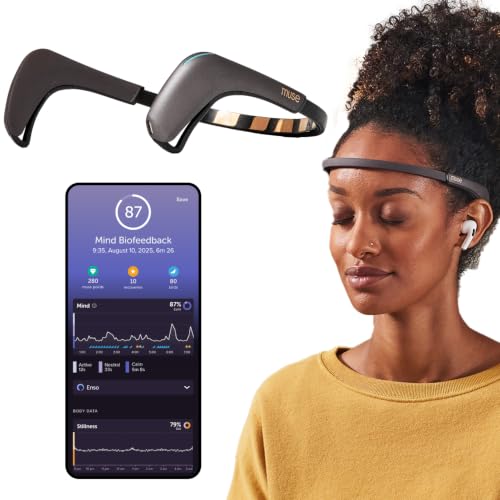
The Muse 2 is presented in its listing as the Brain Sensing Headband with USB-C, an EEG Muse Headband Meditation Tracker, and a multi sensor biofeedback device for home use with responsive sound feedback guidance. That positioning tells you a great deal about who it is for. This is a meditation-centred headband, designed for use at home, whose defining feedback style is sound. Rather than asking you to watch a screen while you meditate, it can guide you through audio that responds to what it senses, which keeps the practice itself at the centre of attention.
Who the Muse 2 suits best
The Muse 2 suits home users whose primary goal is meditation training and who prefer to keep their eyes closed during a session. If you have tried meditation apps and found that looking at a phone breaks your concentration, sound-based guidance is a natural alternative. It also suits people who want biofeedback without turning meditation into a data project. The listing describes a multi sensor biofeedback device, yet the experience it leads with is guidance, not a wall of charts. That balance, sensing in the background and simple feedback in the foreground, is appealing for a daily habit.
It may also suit a household where meditation happens in shared spaces. Sound feedback through a personal listening setup can keep a session private and contained, while the headband itself remains a single, purpose-built object rather than a collection of accessories. Because the listing frames it for home use, the Muse 2 reads as a device to keep in a regular spot, ready for a morning sit or an evening reset, rather than as specialised equipment that needs elaborate preparation before each session.
What stands out in everyday use
Responsive sound feedback changes the psychology of a meditation session. When feedback responds as your state shifts, you get a gentle reason to return attention to the breath or to a chosen point of focus, without scolding yourself for drifting. Drifting is normal. Noticing drifting is, in many meditation traditions, the practice itself. A sound landscape that reflects that movement can make noticing feel less like failure and more like information, which helps beginners persist and helps experienced practitioners stay honest about how settled a session really was.
The USB-C detail in the listing title is small but practical. Many households now have USB-C cables for phones, tablets, and laptops, so a device that uses that connection fits more easily into existing charging habits. We are not adding claims about charging speed or battery performance, because the title does not state them. The point is simpler: familiar connections reduce friction, and reduced friction supports regular use. Keep the headband near the cable you already use, and one small excuse to skip a session disappears.
- Positioned as an EEG meditation tracker for home use
- Multi sensor biofeedback, as described in its listing title
- Responsive sound feedback guidance as the headline feedback style
- USB-C named in the product name
- Neurofeedback device positioning for meditation practice
Limits and trade-offs to keep in mind
A sound-led device will not be the first choice for someone who mainly wants detailed visual review after every session, or whose main interest is sleep tracking. The Muse 2 listing does not present it as a sleep tracking headband, and it does not lead with the broader biosensing list that the Flowtime names. That is not a flaw. It is a focus. Buyers who want meditation guidance should value that focus, while buyers who want the widest possible set of measures should compare the later sections carefully before deciding.
There is also a learning curve with any feedback that responds in real time. In the first sessions, you may find yourself trying to force the sound into a calmer state, which creates the very tension you are trying to release. The better approach is to treat the feedback as a mirror rather than a score. Sit, breathe, notice, and let the sound do its work. Over a couple of weeks of regular practice, most home users develop a calmer relationship with that mirror, and the sessions become easier to compare with one another.
In short, the Muse 2 is the meditation-first option in this group. Choose it if sound guidance, home use, and a tracker built around meditation match the sentence you wrote at the start of the how-to-choose section. It is a focused tool for a focused job, and for many home meditators that focus is exactly the point.
Muse S Athena: Brain Sensing Headband for Sleep Tracking, Meditation and Focus
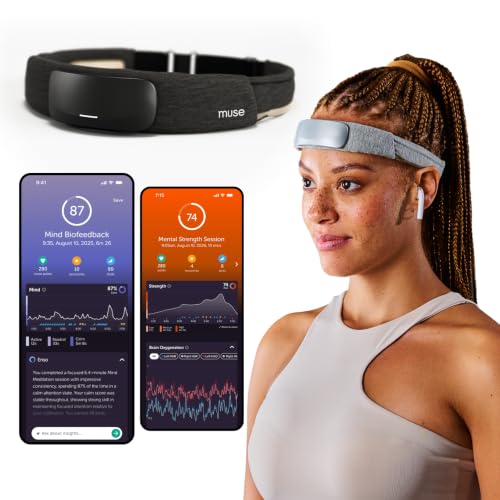
The Muse S Athena is described in its listing as the 3rd Gen Brain Sensing Sleep Tracking Headband, in Dark Grey and Carbon, and as a neurofeedback device for meditation training, focus, and real-time biofeedback with EEG and fNIRS sensors. A note on colours is worthwhile here: a Light Grey listing exists as a colour variant of this same model, so we treat it as one product with colour choices, not as a separate headband with separate capabilities. The Athena therefore sits at the broader end of the Muse family in this comparison, spanning sleep tracking alongside meditation and focus uses.
Who the Muse S Athena suits best
The Athena suits home users who want one headband to cover both daytime practice and evening routines. If your interest in neurofeedback began with meditation but you are equally curious about sleep preparation and the patterns around bedtime, a sleep tracking headband aligns with that wider interest. It also suits users who value real-time biofeedback, because the listing states that explicitly. Real-time feedback lets you connect a change in breathing or attention with a change in the signal while the session is still happening, which can shorten the learning loop considerably.
It may also suit people who have already used a simpler meditation tracker and want to go further. The listing names two sensing approaches, EEG and fNIRS, which signals a more elaborate sensing design than a title that names EEG alone. We do not add technical claims beyond those names, because the title does not provide them. What can fairly be said is that the Athena is positioned as a more advanced model in this group, and buyers who enjoy understanding a device with more than one sensing method will find that positioning relevant.
What stands out in everyday use
The combination of uses is the story here. Meditation training in the morning, focus practice during the day, and sleep tracking as part of an evening routine are three different moments, and a single headband that the listing connects to all three can simplify a household routine. Instead of learning separate devices for separate goals, you learn one fit, one placement habit, and one feedback style, then apply it across the day. Consistency of that kind is valuable, because the skill in home neurofeedback is partly the skill of showing up in the same way, repeatedly.
Colour choice, Dark Grey and Carbon in the listing we used, with Light Grey as a variant of the same model, is a minor point that still matters for a device worn on the head. People are more likely to wear something that feels like their own. If a darker finish suits your taste and your evening environment, choose it without overthinking. The colour does not change the product, and this guide does not treat colour variants as different recommendations, however they are listed in a store.
best smartwatches with sleep tracking
- 3rd Gen brain sensing headband, as described in its listing
- Sleep tracking named alongside meditation training and focus
- Real-time biofeedback stated in the listing title
- EEG and fNIRS sensors both named in the title
- Dark Grey and Carbon finish in the listing used, with Light Grey as a colour variant of the same model
Limits and trade-offs to keep in mind
Breadth brings complexity. A headband positioned for sleep tracking, meditation, and focus asks you to learn how its feedback applies in different settings, and to build more than one routine around it. That is rewarding for an engaged user and potentially overwhelming for a complete beginner who only wants to meditate for a few minutes a day. If you are new to the category, be honest about that. A simpler starting point, used consistently, can teach you more in the first month than a broader device used sporadically.
Sleep-related use also raises the comfort stakes. Any headband considered for evening and sleep routines needs to feel acceptable when you are tired and sensitive to distraction. Fit, pressure, and how the band sits with your usual sleep position are personal factors that no listing can settle for you. Treat the first evenings as an adjustment period, keep the rest of the wind-down routine stable, and judge the experience after several nights rather than after one restless attempt.
In short, the Muse S Athena is the broad, advanced option in the Muse family here. Choose it if sleep tracking, meditation training, focus, and real-time biofeedback with EEG and fNIRS sensors all appear in your one-sentence goal, and if you are willing to learn a device that covers more ground than a meditation-only tracker.
SereniBrain EEG Neurofeedback Headband for Brainwave Monitoring With an App
The SereniBrain is described in its listing as an EEG Neurofeedback Headband for Meditation and Brainwave Monitoring, a real-time brain activity tracker with an app, for training focus, relaxation, and sleep preparation. That is a clear and balanced positioning. It names the core category, EEG neurofeedback, the activity, brainwave monitoring, the feedback timing, real-time, and the companion, an app, then it connects those elements to three everyday goals that many home users recognise immediately: focus, relaxation, and preparing for sleep.
Who the SereniBrain suits best
The SereniBrain suits home users who like to see what is happening. If a visual, app-based view of brain activity motivates you more than sound alone, this positioning will feel natural. It also suits people whose goals span the day rather than sitting in one slot. Focus training might belong to a workday break, relaxation to the early evening, and sleep preparation to the last part of the night. A headband whose listing names all three gives you permission to build those three small routines around one device and one app.
It may particularly suit users who keep a personal log. An app-centred tracker fits neatly beside a simple notebook or notes app where you record time of day, session length, and a sentence about how you felt. Over weeks, that combination of device feedback and your own words becomes more useful than either alone. The device shows the signal, and your notes supply the context: a late coffee, a stressful meeting, a quiet house, a screen-heavy evening. Patterns emerge from the pairing, not from numbers in isolation.
What stands out in everyday use
Real-time brain activity tracking changes how a session feels in a specific way: it shortens the distance between intention and information. You settle, you breathe more slowly, you release tension in the shoulders and jaw, and the tracker responds while those choices are still fresh. That immediacy can be encouraging for focus practice, where the goal is often to notice distraction sooner and return attention sooner. It can also support relaxation practice, where the aim is not to force a result but to observe the body and mind settling at their own pace.
The sleep preparation framing deserves attention because it is modest and sensible. The listing does not promise sleep itself, it names preparation, which is exactly how a home user should think about an evening routine. Preparation means dimming the day down in stages: finishing work, reducing stimulation, sitting for a short session, and letting the transition to bed feel deliberate. A headband used in that window becomes part of a ritual, and rituals are powerful precisely because they repeat. The device does not need to do everything. It needs to mark the turn from activity to rest.
- EEG neurofeedback headband for meditation and brainwave monitoring
- Real-time brain activity tracker, as stated in its listing
- App included in the product positioning
- Named goals of focus, relaxation, and sleep preparation
- A balanced option for users who prefer visual feedback
Limits and trade-offs to keep in mind
An app-based experience depends on your willingness to involve a phone or similar companion device in practices that are meant to calm or focus you. That is a genuine tension. The same screen that shows your brain activity can also show notifications, messages, and the pull of the wider internet. If you choose an app-led headband, protect the session: silence unrelated alerts, open only what the session needs, and put the device down when the session ends. The discipline is simple, and it preserves the point of the practice.
The SereniBrain listing also stays general about its sensing design beyond EEG, so buyers who want a named list of additional measures should compare it carefully with the Flowtime section, where the title names several. General does not mean weak. It means the listing emphasises monitoring, real-time tracking, and its three named goals rather than a long inventory of measures. If your priority is a clear app view of brain activity for focus, relaxation, and sleep preparation, that emphasis may suit you better than a longer list you rarely consult.
In short, the SereniBrain is the app-led, all-round option in this group. Choose it if real-time brainwave monitoring in an app, applied to focus, relaxation, and sleep preparation, matches how you like to learn and how your day is organised.
NeuroSky MindWave Mobile 2: Brainwave Starter Kit for Beginners
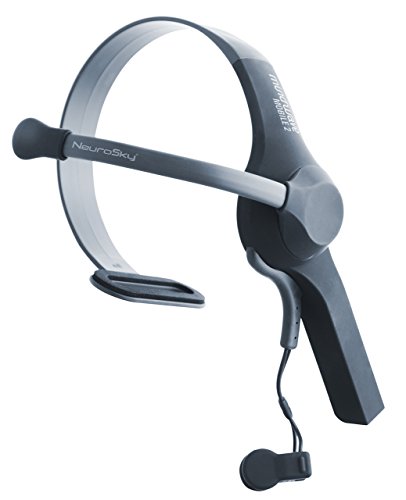
The NeuroSky MindWave Mobile 2 is presented in its listing simply as a Brainwave Starter Kit. That short description carries the clearest beginner positioning in this comparison. A starter kit promises an introduction: a way to encounter brainwave feedback, learn the basic rhythm of wearing a sensing device, sitting for a session, and watching or hearing a response, without first mastering a complex system. For many households, that introduction is the right first step, because curiosity is a perfectly good reason to enter this category.
Who the MindWave Mobile 2 suits best
This kit suits first-time users, students of their own attention, and families or individuals who want to explore what brainwave feedback feels like before deciding whether a more elaborate meditation or sleep-focused headband belongs in their routine. Entry-level, single-sensor starter positioning is a fair general framing for a product sold as a starter kit, and it sets expectations correctly: the value is in learning the basics well, not in collecting the longest feature list in the category.
It also suits people who learn by experimenting. A starter kit invites play in the best sense: try a quiet sitting session, try a focused reading session, notice how the feedback differs, and build an intuitive sense of what the signals mean to you. That intuition is transferable. If you later move to a meditation tracker with sound guidance or a broader biosensing headband, you will arrive with a feel for placement, session discipline, and the difference between a settled day and a scattered one. The starter experience is not wasted. It is foundational.
What stands out in everyday use
Simplicity is the standout quality, and simplicity has real effects on behaviour. A device that is easy to start is a device that gets started. On busy days, the gap between intending a session and beginning one is where most home routines fail. A starter kit narrows that gap. You know what it is for, you know roughly what will happen, and you can be sitting down within moments of deciding to practise. That low friction is worth a great deal in the first month of any new habit.
A starter framing also lowers the emotional stakes. With a more advanced device, beginners can feel they are underusing an expensive capability or misreading detailed output. With a starter kit, the task is plainly to learn. Mistakes in placement, short sessions, and days when focus will not come are all part of the curriculum. That relaxed attitude often produces better practice, because attention settles more easily when it is not being graded. In neurofeedback, as in meditation generally, a lighter grip tends to help.
best active noise cancelling headsets
- Presented as a Brainwave Starter Kit in its listing title
- Entry-level positioning for first-time brainwave users
- Mobile 2 model name in the NeuroSky MindWave line
- A learning-first option before a more elaborate headband
- Suited to experimentation with focus and attention practice
Limits and trade-offs to keep in mind
The trade-off for starter positioning is breadth. The listing title does not name sleep tracking, a list of additional biosensing measures, or sound feedback guidance, and this guide does not invent those capabilities for it. If your goal is specifically sleep preparation with a sleep tracking design, or a wide breakdown of brainwave bands alongside heart-related measures, other products in this guide state those aims more directly. A starter kit is best judged as a starter kit, and it should not be criticised for not being something it never claimed to be.
There is also the question of how long a starter device will satisfy you. If you already meditate daily, already keep a practice log, and already know you want real-time biofeedback tied to sleep or to several named measures, you may outgrow starter positioning quickly. In that case, starting simple is still respectable, but buying once with your longer-term goal in mind may be more sensible. Let your one-sentence goal decide. Beginners gain from simplicity, committed practitioners gain from depth, and confusing those two needs leads to disappointment in either direction.
In short, the NeuroSky MindWave Mobile 2 is the introduction option. Choose it if you want a brainwave starter kit, a gentler learning curve, and a low-pressure way to discover whether home neurofeedback belongs in your routine at all.
Entertech Flowtime: Biosensing Meditation Headband With Brainwave Breakdowns
The Entertech Flowtime is described in its listing as a Biosensing Meditation Headband and a brain tracker for neurofeedback training at home, with heart rate, breath, HRV, stress, flow, and alpha, theta, beta, and gamma wave breakdowns. That is the longest list of named measures in this comparison, and it defines the product. Where other listings lead with one feedback style or one main use, the Flowtime leads with breadth of information, connecting meditation practice to both body signals and a breakdown of brainwave bands.
Who the Flowtime suits best
The Flowtime suits home users who enjoy seeing how mind and body move together during meditation. Breathing, heart rate, and HRV are familiar concepts to many people who practise relaxation or structured breathing, and seeing them alongside brainwave information can make a session feel more complete. It also suits users who like reviewing a session in detail afterwards, comparing one day with another, and noticing, for example, whether slower breathing accompanied a calmer pattern in the same sitting.
It may suit experienced meditators in particular. A beginner can feel flooded by several measures at once, while a practitioner with an established routine has a stable base against which extra information becomes meaningful. If your meditation habit already exists and the question is what additional insight a biosensing headband could add, the Flowtime positioning speaks directly to that question. Its listing frames it for neurofeedback training at home, so it still belongs in a domestic routine rather than a laboratory fantasy.
What stands out in everyday use
The named brainwave breakdowns, alpha, theta, beta, and gamma, give the user a vocabulary for sessions. Instead of a single impression that a session felt busy or calm, a breakdown invites a more specific reflection on how the session unfolded. Used lightly, that vocabulary can sharpen a practice journal. Used heavily, it can tempt a user to chase a preferred pattern rather than meditate. The healthy approach is curiosity without control: observe the breakdown, note it, and return to the simple foundations of posture, breath, and attention next time.
The body measures add a second kind of honesty. It is easy to believe a session was relaxing because the room was quiet, yet heart rate and breath information may tell a more nuanced story, and stress and flow measures, as named in the listing, add further context for reflection. None of these measures needs to be treated as a verdict. Together, they form a richer record of a home practice, and a richer record is valuable for people who adjust their routines thoughtfully, changing one variable at a time and watching what follows over weeks rather than hours.
- Biosensing meditation headband for neurofeedback training at home
- Heart rate, breath, and HRV named in its listing title
- Stress and flow named among its measures
- Alpha, theta, beta, and gamma wave breakdowns named
- The broadest named measure set in this comparison
Limits and trade-offs to keep in mind
Breadth is also the main trade-off. More measures mean more to learn, more to misread, and more temptation to turn meditation into monitoring. If you know that detailed output distracts you, or if you are buying your first headband and have no routine yet, a simpler meditation tracker or a starter kit may serve you better for the first stage. There is no virtue in owning information you do not use, and no shame in preferring a single clear signal that helps you sit down and breathe.
The Flowtime listing emphasises meditation and training at home, rather than sleep tracking as a headline use. Buyers whose central goal is a sleep tracking headband should weigh that emphasis against the Muse S Athena section, where sleep tracking is named directly. Again, this is positioning rather than failure. The Flowtime is built around a rich picture of meditation sessions, and it will satisfy most when that picture is exactly what the buyer came looking for.
In short, the Flowtime is the data-rich biosensing option. Choose it if heart rate, breath, HRV, stress, flow, and alpha, theta, beta, and gamma breakdowns would genuinely inform your meditation practice at home, and if you have the routine and patience to make use of that breadth.
Comparing the Five Headsets Side by Side
Placed together, the five products form a spectrum rather than a ranking. At one end sits the NeuroSky MindWave Mobile 2, a brainwave starter kit for learning the category. In the middle sit the Muse 2, with meditation tracking and responsive sound feedback guidance, and the SereniBrain, with app-based real-time brainwave monitoring for focus, relaxation, and sleep preparation. Toward the broader end sit the Muse S Athena, combining sleep tracking, meditation training, focus, and real-time biofeedback with EEG and fNIRS sensors, and the Flowtime, with its biosensing list of heart rate, breath, HRV, stress, flow, and brainwave band breakdowns.
Feedback style divides the group cleanly. Choose sound if you meditate with eyes closed and want guidance that does not demand a screen, which points toward the Muse 2. Choose an app view if visual, real-time information keeps you engaged, which points toward the SereniBrain. Choose breadth of measures if reviewing body and brainwave information together is the attraction, which points toward the Flowtime. Choose a combined day-and-night positioning if sleep tracking belongs in the same device as meditation and focus, which points toward the Muse S Athena. Choose simplicity if none of those needs is settled yet, which points toward the starter kit.
Goal matching is more reliable than feature counting. A buyer counting features will always drift toward the longest list, yet the longest list only wins when the buyer will use it weekly. A buyer matching goals asks a better question: which listing describes my actual week? Meditation most days, with sound, is one week. Focus breaks and evening relaxation in an app is another. A bedtime routine built around sleep tracking is another. A detailed meditation journal with body measures is another. A curious first month of experiments is another. Each of those weeks has a natural product in this guide.
best affordable bluetooth headsets
Consider also how each device would age with you. A starter kit can teach the basics and may later become a spare or a way to introduce someone else in the household to brainwave feedback. A focused meditation tracker can remain satisfying for years if meditation stays your main goal, because depth of habit matters more than novelty of features. Broader devices offer room to grow into new routines, such as sleep preparation or detailed session review, but only reward that room if you actually expand your practice. Buying for the person you expect to become is reasonable, as long as that expectation is honest.
Household sharing deserves a brief mention. Headbands are personal in fit, yet the learning around them can be shared. Partners or older family members may each build their own routine with the same device at different times, comparing notes about placement, session length, and what helped attention settle. If sharing is likely, favour the product whose feedback style everyone involved can understand, and keep individual notes separate so that one person patterns are not confused with another. A shared device with separate records can be a pleasant, low-pressure way to learn together.
Whatever you choose, apply the same buying discipline. Read the current listing carefully before ordering, confirm the exact model name and colour variant, and check what the listing itself states rather than relying on summaries, including this one. Listings change, variants multiply, and as the Muse S Athena colour example shows, a separate store page does not always mean a separate product. Our research compared the titles supplied for this guide, and your final check should be against the live listing for the specific item in your basket.
Frequently Asked Questions About Home EEG and Neurofeedback
What does an EEG headband actually do at home?
At home, an EEG headband senses brain activity through contact with the head and turns that activity into feedback for training. Depending on the product, that feedback may be sound guidance, a real-time view in an app, or a set of measures to review after a session. The purpose described across these listings is practice: meditation training, focus, relaxation, and sleep preparation. The headband supplies information, and you supply the routine, the attention, and the patience that make the information useful over time.
Is home neurofeedback a medical treatment?
No claim of that kind is made in this guide, and you should not read these consumer products that way. The listings describe meditation, focus, relaxation, sleep tracking, and sleep preparation. Those are wellness and training uses. Nothing here says any device diagnoses, treats, or cures any condition, and a buying guide is not a substitute for professional advice. If a health question is driving your interest, address that question with a qualified professional first, and treat a headband, if you buy one, as a consumer practice tool only.
How often should a beginner use a neurofeedback headband?
Regularity matters more than intensity. A beginner is usually better served by short sessions on most days than by a single long session once a week, because the habit, the placement, and the reading of feedback all improve with repetition. Start with a session length you can complete comfortably, at a time you can protect, and keep notes for the first few weeks. If a session feels frustrating, shorten the next one rather than abandoning the routine. Consistency builds the personal baseline that makes later feedback meaningful.
Why does fit affect the feedback so much?
Consumer EEG depends on contact between the sensing surfaces and the skin, so a band that slips, sits over hair differently each day, or presses unevenly will produce less consistent information. That is a practical point, not a criticism of any model. Build a repeatable placement routine, check comfort before you begin, and avoid adjusting the band repeatedly during a session unless it has clearly moved. When feedback looks unusual, consider fit and environment first, a noisy room, a rushed start, or a late hour, before drawing conclusions about your practice.
Which is better for meditation, sound feedback or an app?
Neither is better for everyone. Sound feedback, as highlighted for the Muse 2, keeps eyes closed and attention inward, which many meditators prefer. An app view, as highlighted for the SereniBrain, gives visible real-time information, which many learners prefer. The honest test is your own history: if screens pull you out of practice, lean toward sound; if unseen feedback leaves you unsure whether anything is happening, lean toward a visual display. Matching feedback to temperament is a legitimate buying criterion.
Can one headband cover meditation, focus, and sleep preparation?
Some listings position a single headband across several of those goals. The Muse S Athena names meditation training, focus, and sleep tracking. The SereniBrain names focus, relaxation, and sleep preparation. Coverage, however, is not the same as fit for your routine. A combined device helps if you genuinely practise at different times of day and want one fit and one feedback style to learn. If you only ever meditate in the morning, a meditation-focused tracker may serve you just as well with less to learn.
What should I do in the first two weeks with a new headband?
Keep everything except the device constant. Use the same chair, the same time of day where possible, the same session length, and the same simple practice, such as following the breath. Write one or two sentences after each session about sleep the night before, energy, and how settled the session felt. Resist changing settings, routines, and goals all at once. After two weeks, read your notes alongside the device feedback. That early record becomes your reference point, and it will teach you more than any general claim about what a typical session should look like.
Check prices on Amazon
Live listings for the shortlist in this guide are pulled from Amazon below, so prices and availability are always current at the moment you look.
NeuroSky MindWave Mobile 2: Brainwave Starter Kit

Final Thoughts on Choosing Your Headband
The best EEG headset for home neurofeedback is the one that matches a clear goal, a feedback style you will follow, and a routine you can repeat on ordinary days. The Muse 2 offers meditation tracking with responsive sound feedback guidance for home use. The Muse S Athena broadens that family idea into sleep tracking, meditation training, focus, and real-time biofeedback with EEG and fNIRS sensors, with colour variants that should not be mistaken for separate products. The SereniBrain centres on app-based, real-time brainwave monitoring for focus, relaxation, and sleep preparation. The NeuroSky MindWave Mobile 2 offers a brainwave starter kit for learning the category gently. The Entertech Flowtime offers the richest named measure set, from heart rate, breath, and HRV to stress, flow, and alpha, theta, beta, and gamma breakdowns, for meditation training at home.
None of those summaries should replace your one-sentence goal. Return to it now, read the five product sections once more with that sentence in mind, and notice which section feels like a description of your own week. That feeling, checked against the listing facts, is a sound basis for a decision. Buy deliberately, set the device up in a place that invites use, protect a small daily or near-daily session, and give the practice several weeks before judging it. Neurofeedback at home rewards patience and honest observation far more than it rewards urgency.
Disclosure: GizmoVerdict is reader-supported and may earn a commission from qualifying purchases made through links in this article, as an Amazon Associate, at no additional cost to you. That relationship helps keep our research and comparison guides available, and it does not change how products are described here, which is based on the listing information we checked and on general advice for using this category of device at home. Prices and availability, where shown by a retailer, can change, so please confirm the details on the product page before you order.
Related guides
- Best Mono Bluetooth Headsets: One Ear on the Call, One on the World
- Best Affordable Bluetooth Headsets: Earpieces and Light Work Headsets That Earn Their Keep
- Best Aviation Headsets With Noise Canceling: ANR Flagships and the Honest Passive Pair
- Best Audiophile Gaming Headsets: Open-Back Greats, Honest Microphone Warnings


