Our Top Picks
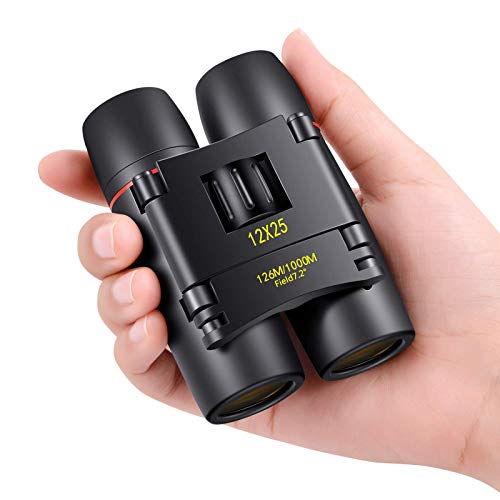 POLDR 12X25 Small Pocket Binoculars Compact for Adults12X253.7 x 2.2 x 0 inches0.4 poundsCheck on Amazon
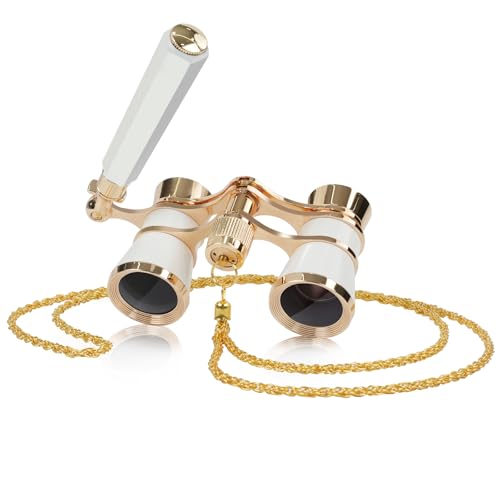
 Aomekie 3X25 Opera Glasses Theater Binoculars with Chainwith Chain4.33 x 3.15 x 1.77 inches0.4 poundsCheck on Amazon



What's inside
- Choosing binoculars for a seat, a stage, and a darkened room
- Opera glasses and the Galilean design
- Compact roof prism binoculars at 8×21, 8×25, and 10×25
- Magnification, explained through faces and choreography
- Field of view: keeping the whole stage picture intact
- Exit pupil and brightness under house lighting
- Closest focusing distance and the front rows
- Interpupillary distance, hinge geometry, and faces of different widths
- Eye relief and viewing with spectacles
- Lens coatings, internal flare, and stage lighting
- Centre focus, individual focus, and focus free designs
- Weight, neck straps, and the third hour
- Why 10x shakes, and why the balcony still wants it
- Stalls, circle, and balcony: matching optics to the ticket
- Opera, ballet, spoken drama, and musicals ask for different things
- A practical shortlist by priority
- Setting up before the house lights fall
- Check prices on Amazon
- Disclosure and a closing note on picking one pair
As an Amazon Associate I earn from qualifying purchases. This post may contain affiliate links at no extra cost to you.
Choosing binoculars for a seat, a stage, and a darkened room
Theater binoculars solve a different problem from birding optics, travel optics, or astronomy instruments. The target is lit rather than self luminous, the distance is fixed once the curtain rises, the user sits still for long stretches, and the instrument must disappear into a coat pocket or a small evening bag between acts. A specification that looks modest on a hiking trail, such as three power magnification and a twenty five millimetre objective, can feel exactly right in row K of the stalls, while a celebrated ten by forty two birding model becomes a heavy, narrow, shaky nuisance in the same seat. Reading the numbers through the geometry of an auditorium is therefore the whole task of this guide.
Three families dominate the conversation. Classic opera glasses use a Galilean layout at roughly three by twenty five, with no prism at all and a very wide, bright view. Compact roof prism binoculars at eight by twenty one or eight by twenty five fold the light path inside slim barrels and deliver a more magnified, more conventional image. A third group, ten by twenty five compacts, trades field width and steadiness for reach that suits the upper balcony. None of these is universally superior, because the right answer changes with seat distance, stage width, eyesight, spectacles, and whether the production is a single singer at a piano or a forty person ballet ensemble spread across twenty metres of boards.
Distance inside a theater is shorter than many buyers assume. Front stalls may sit only eight to twelve metres from the front edge of the stage, mid stalls commonly fall between fifteen and twenty five metres, a dress circle can be twenty five to thirty five metres away, and a high balcony in a large opera house might reach forty five to sixty metres. Even the farthest of those distances is close range for optics designed around hundred metre birding views. That single fact elevates field of view, close focus, and exit pupil, and it demotes raw magnification from the headline number to one variable among several.
This guide works through each variable with the arithmetic shown, because theater seating is one of the few optical purchases where a buyer can measure the actual use distance in advance. A ticket stub gives the row, a venue plan gives the approximate distance, and a stage width can be estimated from the proscenium. With those three figures, field width in metres, exit pupil in millimetres, and angular shake all become calculable rather than matters of guesswork, and the shortlist narrows quickly to one or two sensible configurations.
Opera glasses and the Galilean design
Opera glasses are the oldest form in this comparison and the easiest to misunderstand. A Galilean telescope pairs a convex objective lens with a concave eyepiece lens, producing an upright image without any prism between them. Eliminating the prism shortens the barrel dramatically, keeps weight low, and avoids the light losses and phase effects that prisms introduce. The penalty is optical rather than mechanical: the field of view is inherently restricted by the design, the edges soften sooner, and practical magnification tops out near three or four power before the view becomes tunnel like.
A typical three by twenty five opera glass therefore has short, slightly tapered barrels joined by a central bridge, a small focusing wheel or a sliding bridge adjustment, and often a decorative finish intended for formal dress. The twenty five millimetre objectives gather enough light for a stage that is already illuminated by theatrical lighting rigs, and the low power keeps the whole width of a scene in view at once. Facial detail at twenty metres will be gentle rather than forensic, which matches how many opera and ballet patrons actually watch: they follow expression, costume, and choreography as a whole, not individual eyelashes.
Because there is no prism, there is also no roof prism phase coating to discuss and no Porro prism bulk to accommodate. Light travels a short, mostly direct path, so transmission can be surprisingly good in a well made Galilean instrument despite the humble headline numbers. Cheap novelty versions undermine that advantage with plastic elements, poor centration between the two barrels, and coatings that are decorative tint rather than functional anti reflection layers. Construction quality matters more than the category label, and a misaligned pair will produce eye strain within minutes regardless of design pedigree.
Opera glasses also handle differently in the hand. The barrels are short enough that the fingers wrap around them rather than along them, the focusing control sits close to the face, and there is rarely a proper neck strap lug of the kind found on field binoculars. Many come with a fine chain or a soft pouch instead. For a two hour performance with the glasses raised only during favourite arias or dance passages, that arrangement is perfectly workable. For continuous viewing through a three hour Wagner act, the short grip and minimal support become tiring in a way the specification sheet never mentions.
Compact roof prism binoculars at 8×21, 8×25, and 10×25
Roof prism compacts fold the optical path using a pair of prisms whose reflecting surfaces meet along a roof edge, allowing the objective and eyepiece to sit in a straight line. The result is the familiar slim, straight barrelled silhouette that slips into a jacket pocket. An eight by twenty one model keeps the front lenses small enough for genuine pocketability, an eight by twenty five gathers noticeably more light and usually offers a wider field, and a ten by twenty five stretches reach while keeping the same general body size. All three share the central hinge, centre focus wheel, and right eye dioptre adjustment that opera glasses often simplify or omit.
The roof prism layout carries its own technical demands. One reflecting surface in a Schmidt Pechan prism set does not rely on total internal reflection and needs a mirror coating, while the roof edge itself requires phase correction coating to preserve contrast, because the two halves of the light bundle are phase shifted relative to each other. In inexpensive compacts these coatings may be partial or absent, which shows up as a slightly washed out image under harsh stage lighting rather than as an obvious defect outdoors. Bak four glass, phase coated prisms, and fully multi coated lenses are meaningful markers in this category precisely because the theater punishes weak contrast.
Porro prism compacts exist but are rarer in small sizes, since the offset barrels that give Porro designs their excellent depth perception also make the body wider and harder to pack beside a programme and a pair of gloves. Reverse Porro designs, where the objectives sit closer together than the eyepieces, appear in some budget compacts and can be optically honest instruments. For theater use their wider folded shape is the main objection, not their image quality. Readers comparing pocket cameras for travel days that end at the theater may enjoy our companion coverage of small bodies elsewhere on this site, since the packing logic overlaps considerably best 10 small travel cameras and the same jacket pocket often has to hold both.
Choosing between eight by twenty one and eight by twenty five deserves more attention than the four millimetres of objective diameter suggest. The larger glass typically adds twenty to fifty grams, a few millimetres of length, and a measurably brighter, more relaxed view, plus a wider true field in most model lines. The smaller glass wins only on absolute pocket size and on price tier in many ranges. In a dark auditorium, where the eye is fully adapted and stage lighting swings between near blackout and full glare, the twenty five millimetre version usually feels calmer to look through for a whole evening.
Magnification, explained through faces and choreography
Magnification describes how much larger a subject appears compared with the unaided eye, so a singer twenty metres away appears as if standing two and a half metres away through eight power optics. That reframing helps explain why three power feels subtle and ten power feels dramatic. At three power, a face at twenty metres gains clarity and presence without isolating it from the surrounding scene. At eight power the same face fills a satisfying portion of the view, costume embroidery separates into individual elements, and a raised eyebrow becomes legible from the dress circle. At ten power, viewers in the rear balcony finally receive the facial storytelling that front stalls patrons take for granted.
Higher power also magnifies everything the viewer would rather not see. Hand tremor scales with magnification, the field narrows, the depth of field shallows, and small head movements translate into large image movements. Sitting still helps, because a seated viewer can brace elbows against the torso or rest forearms on the seat arms, which is why ten power remains usable in a theater when the same instrument would be miserable on a windy headland. Even braced, though, the image through ten power carries a fine tremor during quiet passages that some viewers find more distracting than the smaller, steadier picture from eight power.
There is also a dramaturgical argument for restraint. Directors compose stage pictures for the whole house, lighting designers balance faces against scenery, and choreographers build formations whose meaning lives in the spacing between dancers. Cropping tightly onto one performer discards that composition. Many experienced patrons therefore use binoculars intermittently: naked eye for ensemble numbers, glasses raised for a solo, a duet, or a piece of stage business at the back of the set. That pattern of use favours a moderate power with a wide field, because the glasses must reacquire the action quickly each time they come up, without hunting across the stage.
Conversely, spoken drama in a large house rewards magnification more than spectacle does. A two hander performed on a bare stage offers no scenery to appreciate and places the entire burden on faces and hands, so a balcony viewer with eight or ten power gains something real and continuous. The same logic applies to stand up comedy, solo recitals, and lectures in historic halls. Buyers who attend a mixture should weight their most frequent seat and their most frequent art form, rather than optimising for the single farthest seat they occupied once last season.
| Configuration | Exit pupil | Typical true field | Field width at 30 metres | Most natural seating zone |
| 3×25 opera glass | About 8.3 millimetres | Roughly 6 to 7 degrees | About 3.2 to 3.7 metres | Front and mid stalls |
| 8×21 compact | About 2.6 millimetres | Roughly 6 to 7.5 degrees | About 3.2 to 3.9 metres | Stalls and dress circle |
| 8×25 compact | About 3.1 millimetres | Roughly 6.5 to 8 degrees | About 3.4 to 4.2 metres | Stalls, circle, low balcony |
| 10×25 compact | About 2.5 millimetres | Roughly 5 to 6.5 degrees | About 2.6 to 3.4 metres | Balcony and rear circle |
The table above uses field width at thirty metres deliberately, because that distance approximates a dress circle seat in a mid sized lyric theater. Notice that the three power opera glass and the eight by twenty one compact can show a similar slice of stage width despite their very different magnifications, since field of view depends on eyepiece design as well as power. This is the single most counterintuitive fact in theater optics, and it is why comparing only the first number in a model name misleads so many first time buyers.
Field of view: keeping the whole stage picture intact
Manufacturers express field of view in two interchangeable ways: as an angle in degrees, or as a width in metres at one thousand metres. Converting the second form to a real seat is simple division. A model rated at one hundred and twenty metres at one thousand metres shows twelve metres of width at one hundred metres, six metres at fifty metres, three metres at twenty five metres, and one point two metres at ten metres. A stage picture six metres wide, containing perhaps four dancers and a piece of furniture, therefore fits exactly inside that field from a fifty metre balcony seat, with no margin for movement at the edges.
Angular field converts through the tangent of the angle multiplied by distance, but for the narrow angles involved the linear rating method above is accurate enough for seat planning. What matters practically is the margin around the subject. Performers move laterally, entrances happen at the wings, and surtitle screens, conductor, and orchestra pit compete for attention in opera. A field that exactly contains the current grouping will lose performers the moment the scene breathes. Experienced buyers aim for a field at least half again as wide as the grouping they most want to follow, which at balcony distances usually means preferring the widest eight power model over a narrower ten power one.
Apparent field of view, the angle the image seems to span inside the eyepiece, shapes comfort as much as true field shapes coverage. Narrow apparent fields feel like looking down a tube, while apparent fields approaching sixty degrees feel spacious and immersive. Opera glasses often deliver a modest apparent field despite covering a useful slice of stage, because their low power divides the true field down. Compact roof prisms with modern eyepieces usually feel more expansive. Neither number is a quality score on its own; the pairing of true field with the distance to the stage decides what is visible, and apparent field decides how pleasant the viewing feels over an evening.
Edge behaviour completes the field story. Inexpensive eyepieces keep only the central portion truly sharp, with the outer fifth softening or curving straight lines such as the proscenium arch. In theater terms that means a performer standing at the edge of the group may look noticeably less crisp than the lead at centre stage, even when both are the same distance away. A modest amount of edge softness is tolerable and normal in compacts. Severe falloff, coloured fringing on high contrast costume edges, or a visible sweet spot that forces constant recentring are signs to choose a better corrected model rather than a higher magnification one.
Exit pupil and brightness under house lighting
Exit pupil is the diameter of the light bundle leaving the eyepiece, calculated by dividing objective diameter by magnification. Three by twenty five gives about eight point three millimetres, eight by twenty five gives about three point one, and ten by twenty five gives two point five. The human pupil opens to roughly five to seven millimetres in a dark auditorium for younger viewers, and closer to four or five millimetres for many viewers over sixty, because maximum pupil dilation shrinks with age. Light in the exit pupil beyond what the eye pupil can accept is simply not used, while an exit pupil smaller than the eye pupil delivers a dimmer image than the stage itself presents.
This arithmetic explains the enduring appeal of opera glasses in dark houses. Their oversized exit pupil means the eye can move slightly behind the eyepiece without the image blacking out, the view stays as bright as the stage allows, and long scenes feel effortless. It also explains why the same glasses disappoint in facial detail: brightness was purchased with magnification that was never spent. Compact binoculars invert the trade. Their two and a half to three millimetre exit pupils suit the partially light adapted eye during a lit performance surprisingly well, because theatrical stages are bright places even when the auditorium feels black, and the eye pupil during an actual scene rarely reaches its midnight maximum.
Brightness specifications beyond exit pupil deserve sceptical reading. Relative brightness is simply the exit pupil squared, and twilight factor combines magnification and objective size into a single figure designed for hunting at dusk; neither captures coating quality, glass transmission, or prism losses, which in practice separate a good compact from a poor one more than a millimetre of exit pupil does. Two eight by twenty five models can differ visibly in a dark scene solely because one transmits several percent more light through better coatings and cleaner prism surfaces. Published transmission percentages, when a manufacturer provides them, are more informative than either derived index.
Blackout behaviour is the practical test hidden inside the exit pupil number. When the exit pupil is small and the eye is not perfectly centred, kidney bean shaped shadows sweep across the view, especially for spectacle wearers whose eyes sit farther back. Generous exit pupil and forgiving eyebox design reduce this. In a theater seat, where the viewer cannot shuffle around freely and may be glancing between stage and programme notes in near darkness, a forgiving eyebox is worth real money. It is also why handling a candidate model in a dim room, rather than a bright shop floor, reveals more about theater suitability than any daytime comparison.
Closest focusing distance and the front rows
Close focus rarely appears in theater discussions, yet it decides whether front stalls patrons can use their glasses at all. Many compact binoculars focus no nearer than three or four metres, and some travel models stop at five or six metres, distances chosen for sightseeing rather than auditoriums. A viewer seated nine metres from the apron, watching a performer who has stepped forward to the very front of the stage, may be focusing at seven or eight metres once the rake of the seating and the depth of the stage apron are accounted for. That is comfortably inside most specifications, but a front row seat at a small studio theater can place a performer barely four metres away.
Intimate venues change the calculation entirely. Fringe theaters, cabaret rooms, and in the round studio spaces put the nearest performer within two to five metres of the front row, sometimes close enough that binoculars are unnecessary and occasionally close enough that a model with a six metre minimum focus cannot sharpen the image at all. Opera glasses with their simple optics often focus surprisingly close, and their low power makes focus errors less visible anyway. Buyers whose attendance is split between a grand opera house and small studio venues should treat a close focus of two metres or better as a genuine requirement rather than a curiosity.
Focus travel also matters. A focusing system that moves from minimum distance to the typical theater range within a small rotation of the wheel feels responsive when a performer crosses from upstage shadow to the front of the set. A system that needs several full turns feels laborious, and a system with backlash, where reversing the wheel produces a dead zone before focus changes, becomes irritating during dialogue scenes with constant small movements. None of this appears in headline specifications, but focus feel is a legitimate reason to prefer one otherwise similar compact over another.
Depth of field softens some of these demands at low power. A three power instrument keeps a broad slab of stage acceptably sharp at once, so the front row of dancers and the backdrop can coexist without refocusing. At ten power the sharp slab thins considerably, and the viewer begins making small focus corrections as the dramatic focus of a scene shifts from downstage to upstage. That ongoing adjustment is a hidden cost of magnification that balcony buyers should accept knowingly, particularly for productions with deep staging and frequent movement through the depth of the set.
Interpupillary distance, hinge geometry, and faces of different widths
Interpupillary distance is the spacing between the centres of the two pupils, and a binocular hinge must match it or the two circular views will not merge into one. Adult values commonly fall between about fifty five and seventy two millimetres, with meaningful numbers of adults outside that span in both directions. Theater audiences include younger patrons at school matinees whose spacing may be narrower than a compact hinge can close down to, and broader featured adults for whom a hinge that stops at sixty eight millimetres never quite opens far enough. Published interpupillary range therefore deserves a direct check against the intended user, not an assumption.
Setting the hinge correctly takes a moment of care at the start of the evening. The merged image should form a single clean circle with no black crescents at either side, and the stage should not appear doubled at the edges of the field. Once set, a good hinge holds its position when the glasses are lowered to the lap and raised again dozens of times. A loose hinge that drifts forces repeated adjustment in the dark, which is both annoying and faintly antisocial in a quiet auditorium. Hinge stiffness is thus a functional specification in theater use even though brochures treat it as a manufacturing detail.
Double hinge compacts, which fold in two places to become extremely small, introduce a second alignment variable. They pack beautifully and suit the smallest evening bags, but each extra pivot is another place where play can develop and where a hurried unfolding can leave the barrels slightly mis set. Single hinge compacts are bulkier yet more foolproof in darkness. For a shared pair passed between two people with different eye spacing during an interval, the single hinge design also readjusts faster and more predictably, which matters when the house lights are already dimming for the second act.
Dioptre correction belongs in the same conversation, because it balances the focus between eyes that rarely match exactly. On most compacts a small ring on the right eyepiece sets that eye independently after the centre wheel has focused the left. In a theater the setting should be made once, ideally on a detailed distant target such as the lettering on a safety curtain or the ornament of the proscenium, and then left alone. Models that mark the dioptre scale and hold it firmly prevent the slow drift that leaves one eye perpetually a fraction soft, a defect viewers often misattribute to tiredness during a long performance.
Eye relief and viewing with spectacles
Eye relief is the distance behind the eyepiece at which the eye can still see the full field, and it decides whether spectacle wearers get the whole stage picture or a cropped version of it. Eyeglass frames hold the eye roughly twelve to seventeen millimetres behind the eyepiece surface depending on frame style and facial anatomy. Compact binoculars offering fourteen millimetres or less of relief will vignette the field for many glasses wearers, while fifteen to eighteen millimetres generally serves them well. Opera glasses vary widely, and some traditional designs assume an unaided eye placed close to a small metal eyecup.
Twist up eyecups are the modern answer, extending for viewers without glasses and retracting fully for those with them. The mechanism should stop at definite positions rather than sliding freely, because a cup that collapses under light pressure against spectacles changes the eye distance mid scene. Rubber fold down cups on older style compacts work adequately but age poorly and offer no intermediate positions. Fixed shallow cups on opera glasses can actually suit glasses wearers reasonably, since there is little cup depth to retract in the first place, provided the metal or hard plastic rim cannot contact and scratch a spectacle lens.
Viewers who alternate between contact lenses at evening performances and spectacles at matinees should set expectations accordingly: the same binocular will show a slightly wider, easier field on contact lens days. Astigmatism adds another layer, because binoculars correct only spherical focus difference between the eyes, not the cylindrical distortion that spectacles correct. Anyone with significant astigmatism who removes their glasses to use binoculars will see a softer image than the optics are delivering, regardless of dioptre adjustment. Keeping spectacles on and choosing adequate eye relief is almost always the better route for those viewers.
Readers who spend their days comparing camera eyepieces and sensor formats will recognise the same trade between relief, field, and eyepiece size, and our format discussions elsewhere explore how those viewing geometry choices ripple through a whole system best 10 megapixels cameras without changing the underlying rule that the eye must sit where the designer intended. In binoculars the eyepiece is larger and the distances are more forgiving, but the principle is identical, and a specification sheet that omits eye relief entirely is telling the spectacle wearing buyer to look elsewhere.
Lens coatings, internal flare, and stage lighting
Stage lighting is an optical stress examination. Performers are lit by intense spotlights against backgrounds that may be nearly black, follow spots create small sources of extreme brightness inside the field, and modern productions add haze that scatters light through the whole auditorium air. Every uncoated glass to air surface in a binocular reflects a few percent of the light striking it, and with ten or more surfaces those reflections accumulate into veiling glare that lifts blacks, dulls costume colours, and throws ghost images of bright lamps across dark scenes. Anti reflection coatings exist to suppress exactly this behaviour.
The vocabulary on specification sheets forms a ladder. Coated means at least some surfaces carry a single layer. Fully coated means every air to glass surface carries at least that single layer. Multi coated adds multiple layers to at least some surfaces, and fully multi coated applies multiple layers throughout, which is the standard a theater buyer should look for in a roof prism compact. Magnesium fluoride single layers reduce a surface reflection to roughly one and a half percent, while good multi layer stacks push individual surfaces well below half a percent, and the cumulative difference across a whole instrument is plainly visible against a black backdrop behind a lit soloist.
Prism coatings add two more terms. Phase correction coating on the roof surface preserves contrast by realigning the phase of the split light bundle, and its absence shows as a subtle softness that no focusing can remove. Mirror coatings on the non reflective prism surface, in silver, aluminium, or dielectric form, decide how much light survives the folded path; dielectric stacks are the most efficient and the most durable, and they appear on better compacts. In the theater, where contrast between a white costume and a black cyclorama is the entire visual event, these prism treatments matter as much as the lens coatings that get the marketing attention.
Flare control also depends on mechanical details that brochures rarely list: internal baffling, matte blackening of lens edges and barrel walls, and threads inside the tubes that trap stray reflections. A compact can carry excellent coatings and still flare if its interior is glossy. Looking through a candidate toward a bright window and watching for milky wash or coloured ghosts gives a rough field indication. Opera glasses, with few surfaces and no prisms, start with an inherent advantage here, and a clean, well blackened Galilean instrument can look startlingly contrasty in a dark scene despite its antique optical formula.
Centre focus, individual focus, and focus free designs
Centre focus is the default architecture for theater compacts and the right one for most buyers. A single wheel drives both barrels together, the right eyepiece dioptre handles the difference between the eyes, and refocusing as a performer moves downstage takes a fraction of a second. Wheel placement matters in a seat: it should fall under the index or middle finger of the natural grip, turn smoothly without grit, and offer enough resistance that a coat sleeve brushing it does not shift the setting. Large wheels are easier to operate with cold hands after an interval in a draughty foyer.
Focus free and fixed focus models remove the wheel entirely by relying on depth of field, setting the optics at a compromise distance and accepting softness at both near and far extremes. At three power in a mid sized theater that compromise can work tolerably, which is why some opera glasses and novelty compacts adopt it. At eight power the compromise collapses: front stalls viewers get softness at their shorter distances, balcony viewers lose the crispness they bought magnification to obtain, and anyone whose eyesight differs from the assumed standard has no correction available at all beyond the dioptre adjustment, if one is even fitted.
Weight, neck straps, and the third hour
A compact binocular in the two hundred gram class feels weightless in a shop and surprisingly present by the third hour of a performance. The load is not carried continuously, which is precisely the problem: repeated lifting, holding at face height for minutes at a time, and lowering to the lap loads the small muscles of the hands, wrists, and shoulders in a pattern closer to holding a camera for a long ceremony than to carrying a bag. Every additional fifty grams is multiplied by that duty cycle. Models between roughly one hundred and eighty and two hundred and eighty grams cover most of the serious compact market, and the lower half of that span suits smaller hands and longer works noticeably better.
Neck straps in theater use serve a different purpose from straps outdoors. Outside, a strap prevents a fall onto rock or into water. Inside, it prevents a fall onto a hard floor during a dark scene change, gives the hands somewhere to rest the instrument between passages, and keeps the glasses from sliding off a lap when the viewer stands for applause. Wide hiking style straps are overkill and look out of place with evening dress, but the thinnest cord straps cut into the neck under even a light compact during a long opera. A modest flat strap of ten to fifteen millimetres, or a wrist loop for opera glasses, splits the difference sensibly.
Strap attachment points deserve inspection because compacts vary. Some lugs sit where the strap twists naturally and holds the barrels pointing into the chest, others let the instrument hang face outward and knock against seat backs. Cases matter too: a soft pouch that opens silently is theater appropriate, while a rigid case with a loud clasp belongs in a coat check. Several venues restrict bag sizes and require searches, another small argument for an instrument that fits a coat pocket and needs no separate case at all during the performance itself.
Grip surfaces complete the handling picture. Smooth lacquered opera glasses look elegant and slide in warm hands; lightly textured rubber armour on compacts looks utilitarian and stays put. Centre of gravity matters as well, since front heavy compacts tip forward in a relaxed grip and force constant correction. During long orchestral passages where a viewer may hold the glasses loosely while following the conductor, balance and grip decide whether the experience feels restful or fussy, and those qualities are entirely absent from numerical listings.
Why 10x shakes, and why the balcony still wants it
Image shake scales directly with magnification because the instrument amplifies angular movement of the hands by the same factor it amplifies the stage. A tremor that displaces the view by a tenth of a degree becomes a full degree of apparent motion at ten power, which is a substantial fraction of a five or six degree field. The singer does not merely shimmer; at the extremes of an unbraced hold, the face can wander across a noticeable portion of the frame, and following a moving performer compounds the motion with the panning the viewer adds deliberately.
Seated bracing changes the physics in the viewer’s favour. Elbows tucked against the ribs form a stable triangle, forearms resting on the arms of a seat are better still, and leaning slightly back so the head and the glasses move together reduces relative motion. Balcony fronts sometimes offer a rail at exactly the right height for resting the hands, though leaning instruments or elbows on a rail that other patrons are touching transmits their movements instead. Alcohol at the interval, fatigue late in the evening, caffeine, and certain medications all increase physiological tremor, which is why the same ten power glass can feel steady in act one and lively in act three.
The balcony case for ten power rests on distance arithmetic rather than bravado. At fifty metres, an eight power view presents a face at an effective six and a quarter metres, while ten power brings it to five metres, a difference that crosses the threshold where expression reads clearly for many viewers. If the field still covers the relevant grouping, and the exit pupil of two and a half millimetres remains adequate under bright stage lighting, the trade is rational. Viewers who know their hands are unsteady, or who attend mostly dance where the grouping matters more than the face, should let eight power win the same argument.
Image stabilised binoculars exist and cancel tremor electronically or mechanically, but the current instruments are far larger, heavier, and more expensive than anything that belongs in a theater seat, and their battery dependence adds a failure mode at the worst possible moment. For this setting, stabilisation is a technology to watch rather than a recommendation. The practical stabiliser remains a lower magnification, a braced posture, and a strap tensioned gently against the neck, a trick borrowed from photographers that steadies a compact surprisingly well by turning the strap into a third support point. Readers who carry digital bodies to evening events as well will recognise the same longevity thinking in our format coverage best 1 cmos sensor cameras where service life is judged on a very different clock.
Stalls, circle, and balcony: matching optics to the ticket
Front and mid stalls
From the front half of the stalls, the stage is close, wide in angular terms, and bright. Opera glasses at three power are in their element, adding presence and facial clarity while keeping entire ensemble formations inside the field. An eight by twenty one compact also works well, though its narrower slice of stage means more deliberate panning during big numbers. The main risks in these seats are not optical at all: a steep viewing angle in the very front rows, and heads in front when the rake is shallow. No magnification fixes geometry, and money saved by choosing the simpler instrument here is honestly saved.
Dress circle and royal circle
The middle heights of a traditional house are where eight by twenty five compacts earn their reputation as the default theater binocular. Distances of twenty five to thirty five metres suit the magnification, the elevated angle flattens the stage picture pleasantly, and formations remain readable while faces gain real character. This is also the zone where better coatings show their worth, because the view crosses the longest stretch of hazed auditorium air and looks down into the brightest part of the lighting rig’s scatter. A viewer who sits here most often can buy one good eight by twenty five and stop thinking about the question for years.
Balcony, gallery, and the gods
High and far seats invert the priorities again. Distance stretches past forty metres, the stage subtends a smaller angle, and the whole proscenium may fit inside even a ten power field, which removes the usual penalty for magnification. Ten by twenty five becomes a serious candidate, eight by twenty five remains the steadier all rounder, and opera glasses fade to a pleasant supplement rather than a main instrument. Sightlines from these seats often look over a rail or a steeply raked row, so compact size matters for another reason: there is simply less room to manage a large instrument, a bag, and a coat in the narrowest seating in the house.
Side seats and boxes introduce an oblique angle that no specification sheet contemplates. From a side box, part of the stage is hidden, the visible portion is foreshortened, and a wide field helps because the action of interest may sit at an unexpected position within the view. Low power and generous field win again. Boxes also place the viewer close to one side of the stage, sometimes very close to performers on that wing, which brings the close focus discussion back into play. Versatility, meaning moderate power, wide field, close focus, and a forgiving eyebox, is the correct specification for seats whose geometry varies from visit to visit.
Opera, ballet, spoken drama, and musicals ask for different things
Opera combines the longest distances, the largest stages, and the most extreme lighting contrasts, and it adds surtitles placed high above the proscenium or on seat back screens. Viewers alternate between faces and text, so the glasses go up and down constantly, favouring light weight, fast handling, and a field wide enough to find a singer again instantly after reading a line of translation. Facial expression in opera is projected broadly by design, which is why three and eight power both serve well and why the very highest magnifications add less than newcomers expect.
Ballet shifts the emphasis to bodies in motion across the full width of the stage. Following a corps de ballet formation through ten power is an exercise in losing the pattern, while three power opera glasses were practically invented for this art form and remain beloved by regular ballet audiences for good reason. Solo variations reward a brief lift of an eight power compact. The honest summary for dance is that field and steadiness outrank magnification almost completely, and that the cheapest suitable instrument may outperform the most powerful one for this repertoire.
Spoken drama and musicals sit between those poles. Drama rewards faces and tolerates, even welcomes, eight or ten power from the rear of the house, because the stage picture is often sparse and the acting is scaled for intimacy in modern productions. Musicals restore spectacle, choreography, and large ensembles, pulling the recommendation back toward wider fields, while their brighter, more even lighting relaxes the exit pupil and coating demands that opera imposes. Concerts and recitals in the same halls behave like drama for these purposes: one or two performers, generous distances in the upper seats, and long stretches where a steady eight power view of a pianist’s hands or a singer’s face is the entire point.
Readers who also record performances where recording is permitted, at school concerts or community productions, will find the framing logic familiar from video work, where sensor size and frame rate shape what a scene looks like from the back of a hall best 1080 120p vlog cameras in much the same way that magnification and field shape a binocular view. The instruments differ, but the discipline of matching the tool to the seat distance and the subject’s movement is the same discipline, and it transfers in both directions.
A practical shortlist by priority
Buyers who prize the classic theater experience above all, sit mostly in the stalls or front circle, and attend opera and ballet should start with a well made three by twenty five opera glass or a three to four power Galilean equivalent. The priorities in that purchase are optical cleanliness, smooth bridge focusing, comfortable eyecups that will not scratch spectacles, and a finish that survives years of handling. Magnification beyond that range adds little in those seats, and the money is better spent on the quality of the simple design than on a more complex instrument used at half its capability.
Buyers who want one instrument for every seat they might be given should default to an eight by twenty five roof prism compact with fully multi coated optics, phase coated prisms, at least fifteen millimetres of eye relief, an interpupillary range that covers their own spacing with room to spare, close focus near two metres, and weight under roughly two hundred and eighty grams. That specification is the centre of gravity of this entire category. It handles drama from the balcony respectably, ballet from the circle gracefully, and everything from the stalls easily, and it travels in a coat pocket without negotiation.
Buyers who live in the balcony, whether by preference or by ticket economics, and who attend mostly drama, opera, and recitals should compare the eight by twenty five default against a ten by twenty five with the widest field available in that configuration. The decision between them is personal in a specific, knowable way: it depends on the steadiness of the buyer’s hands and on whether their repertoire is built from faces or from formations. Borrowing either power for a single performance settles the question more reliably than any amount of specification comparison, and many regular patrons in the upper seats own the ten power while freely admitting that their neighbours prefer eight.
Setting up before the house lights fall
- Set the hinge width first, while the house is still lit, until the view forms one clean circle without dark edges intruding from either side.
- Focus the left eye with the centre wheel on a detailed fixed target, such as proscenium carving or the lettering across a safety curtain.
- Close or cover the left eye and bring the right side into focus using only the dioptre ring, then leave that ring untouched for the rest of the evening.
- Decide on eyecup position based on whether spectacles are being worn, and extend the cups fully when viewing without glasses.
- Shorten the strap so the instrument rests on the upper chest, where it can be raised quickly without swinging against the seat in front.
- Note the focus wheel position for the distance to the front of the stage, so a glance at the conductor or the surtitles can be followed by a fast return to the performers.
That short ritual takes under a minute and prevents the fumbling in darkness that leads viewers to abandon binoculars entirely. It also provides a diagnostic opportunity: if the two sides cannot be made equally sharp, if the hinge will not hold its setting, or if one eyecup refuses to stay extended, the instrument has a problem that should be addressed in daylight rather than endured for a season. Shared pairs need a compromise version of the ritual, with each user memorising their own hinge width and dioptre position so the swap at the interval takes seconds.
Check prices on Amazon
Live listings for the shortlist in this guide are pulled from Amazon below, so prices and availability are always current at the moment you look.

Disclosure and a closing note on picking one pair
Readers deserve a plain account of how guides like this one support themselves, so here it is before the final recommendation. Some links in this guide are affiliate links. If a reader buys through one of those links, the editorial team may earn a commission from the seller, and the amount the reader pays stays exactly the same as it would without the link. That arrangement never changes which configurations are described as suitable for a given seat, and the arithmetic in the sections above can be checked by any reader with a ticket stub and a tape measure.
For most people reading this far, the decision resolves into a single sentence of advice: buy the eight by twenty five if one pair must do everything, buy the opera glass if the stalls and the ballet are home, and buy the ten by twenty five only when the balcony is a habit and steady hands are a fact. Whichever pair comes home, its real success will be measured on an ordinary evening months from now, when it comes out of a pocket without thought, finds the singer in a breath, and lets a familiar scene look newly near.