Our Top Picks
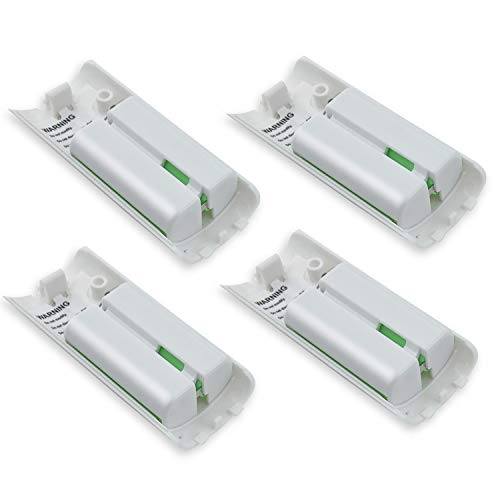
 4-in-1 Charging Station for Wii&Wii U Remote Controller7.5 x 1.8 x 1.5 inches0.7 poundsCheck on Amazon


What's inside
- A controller that was never born rechargeable
- What a dedicated pack actually is
- Contacts that touch versus fields that leap
- Nickel metal hydride and the shape of a charge
- Capacity numbers, play hours, and the slow fade
- Silicone sleeves, skins, and whether the remote still fits its home
- The little lamp that carries the whole conversation
- Why this is not just a story about loose rechargeable cells
- Choosing a kit that suits a particular household
- Living with the system day after day
- MotionPlus, Remote Plus, and other fit questions
- Travel, storage, and the remote that hibernates
- Check prices on Amazon
- Troubleshooting the evening the dock seems to betray everyone
As an Amazon Associate I earn from qualifying purchases. This post may contain affiliate links at no extra cost to you.
How this page pays its bills: some links leaving this article are referral links, so a purchase through one can send a small commission back to this site from the retailer on the other end. Readers pay the same shelf price either way, because that commission comes out of the retailer’s margin rather than being added at checkout. Income of that kind supports the writing here, and it does not steer which charging packs earn praise, which shortcomings get aired, or which alternatives receive a mention.
A controller that was never born rechargeable
The Wii Remote arrived in living rooms designed around disposable power. Its battery door hid a pair of cylindrical cells, and the console’s enormous success meant millions of households developed a drawer, a ritual, and a recurring errand devoted to feeding controllers. Dedicated rechargeable packs answered that errand by replacing the loose cells and the standard back cover with a single fitted unit that could drink power from a dock between sessions. Shoppers searching for the best rechargeable batteries for Wii remote use are usually searching for that fitted system, not for another handful of loose cylinders.
The distinction sounds cosmetic until daily habits enter the picture. A pack-and-dock arrangement changes where controllers live, how they are stored, how quickly a flat controller returns to service, and how a family knows which remote is ready for guests. The remote itself becomes a rechargeable device in behaviour, even though its designers never gave it a charging port. Drop it on the cradle after playing, lift it off when friends arrive: that small loop is the entire product, and everything else in this guide hangs from it.
Wii U owners belong in this conversation too, because that later console kept full compatibility with the earlier controller. A household that upgraded consoles often carried its remotes, accessories, and charging habits across the generational line without changing anything. Packs and docks shaped for the original remote therefore serve both machines, provided the pack follows the original cover geometry faithfully. Sellers occasionally market identical hardware under labels aimed at one console or the other, which explains some confusing listings where the same cradle appears twice wearing different badges.
Nothing here attempts to judge games, consoles, or the controller’s motion tracking. The subject is the ecosystem of fitted packs, replacement covers with cells sealed inside, cradles, contact plates, indicator lamps, and the wall adapters feeding them. Within that narrow territory, meaningful differences separate thoughtful kits from careless ones: charging method, cell chemistry, stated capacity, physical fit under silicone sleeves, and the honesty of the little light that claims a pack is full.
What a dedicated pack actually is
Peel back the marketing and a typical kit contains three cooperating pieces. First comes the pack itself, a flat rechargeable unit shaped to occupy the remote’s battery bay, with electrical contacts positioned where the original cell terminals sat. Second comes a replacement battery cover, frequently moulded as part of the pack or supplied as a matching shell, carrying charging contacts or a coil on its outer surface. Third comes the dock, a cradle wired to mains power through an adapter or a USB lead, shaped to hold one, two, or four remotes upright and ready.
Because the pack replaces the cover, its outer profile decides several practical matters at once. A flush cover preserves the controller’s original feel in the palm and slides into storage stands exactly as the stock cover did. A bulged cover adds grip for some hands and bulk for others, and it can interfere with tight-fitting accessories. Guitar shells, wheels, and other snap-on peripherals from the console’s accessory boom years assumed a standard rear profile, so an oversized pack can quietly break compatibility with a family’s favourite plastic guitar.
The electrical handshake between pack and controller is deliberately simple. Inside the bay, spring terminals that once pressed against disposable cells now meet the pack’s contact pads, delivering the voltage the remote expects. Most packs are built around nickel metal hydride chemistry, whose nominal voltage per cell sits a touch below that of a fresh alkaline. Designers arrange cells inside the pack to present a combined output the remote tolerates happily, and the controller’s own low-power warning was calibrated generously enough that the pairing works in practice for the overwhelming majority of kits sold during the console’s long life.
The cover is part of the battery, like it or not
Treating the replacement cover as a mere lid undersells its role. On contact-charging kits, the cover carries the metal points that meet the dock, so its alignment determines whether charging begins at all. On inductive kits, the cover hides the receiving coil, and its thickness and material influence how efficiently power crosses the gap. A cracked cover on such a system is not cosmetic damage; it can be a charging fault wearing a disguise. Owners who crack a cover against a coffee table edge sometimes chase mysterious charging failures for weeks before connecting the two events.
Replacement covers also carry the sync button access and the small structural clips that keep everything seated during vigorous play. Cheaply moulded covers flex, creak, and occasionally pop loose mid-game when a wrist strap yanks at the wrong angle. Better kits mirror the original cover’s clip geometry closely, because the accessory makers had the genuine article on the bench while tooling their moulds. Fit at the clips is one of those unglamorous details that separates a kit a family keeps for years from a kit that migrates to a junk drawer by spring.
Contacts that touch versus fields that leap
Two charging philosophies divide the dock market, and each carries a distinct personality. Contact charging passes current through exposed metal points: studs on the cradle meet pads on the pack cover when the remote settles into place. The method is electrically direct, cheap to build, and easy to diagnose, since a lamp usually confirms the connection within a second of seating. Its weakness is exposure. Skin oils, dust, spilled drinks, and the gentle oxidation of years all collect on those little metal faces, and a film invisible to the eye can be thick enough to interrupt a charge.
Inductive charging moves power across a short gap using magnetic fields, the same broad principle behind charging pads for phones. The remote simply rests in a shaped cradle or lies on a flat pad, with no electrical contact exposed to the room. Sealed surfaces wipe clean with a cloth, alignment forgives a slightly casual placement on better designs, and nothing corrodes. The costs are slower charging on many implementations, extra warmth during the transfer, and a dependence on the receiving coil sitting exactly where the dock designer assumed it would be.
Households with young children often lean inductive without ever articulating why. There are no little metal points for small fingers to probe, no precise seating ritual for a tired seven-year-old to get wrong at bedtime, and no morning discovery that a remote sat almost-charging all night because it leaned two millimetres off its studs. Households of adults who value speed and certainty often lean the other way, preferring the unambiguous click and lamp of a contact system. Neither instinct is wrong; they are answers to different kitchens, lounges, and bedtime routines.
Charging speed comparisons between the two camps need careful reading. A contact dock fed by a modest adapter may still take most of an evening to refill a deeply drained pack, while a well-fed inductive pad can surprise its owner pleasantly. The adapter’s output rating, printed on its label, frequently matters more than the transfer method. Kits that draw power from a console USB port inherit whatever that port provides, which can be modest, and some consoles stop supplying power in standby unless a settings option says otherwise. A dock that seems dead overnight may simply be plugged into a sleeping port.
Alignment, magnets, and the almost-seated remote
Every dock negotiates a small daily drama: a remote returned one-handed, in the dark, by somebody thinking about something else. Generous cradle funnels, guide ribs, and in some designs small magnets all exist to make that careless placement succeed anyway. Narrow cradles with exacting geometry punish haste, and their owners learn to perform a little wiggle-and-check ritual that quietly erodes the convenience the dock was bought to provide. When reading published user feedback, comments about seating fussiness deserve as much weight as comments about capacity, because a dock that frustrates weekly will be abandoned long before its packs wear out.
Indicator behaviour is the other half of that drama, covered in depth further along. Briefly, a remote that looks docked but is not charging is the single most common complaint across both charging philosophies. Contact systems fail through dirty or misaligned points. Inductive systems fail through offset coils, foreign metal objects confusing the pad, or a sleeve shifting the remote’s resting position. Designs that make the charging state obvious from across the room, through a lamp visible at sofa distance, convert a silent failure into a two-second correction.
Multi-remote docks multiply both the convenience and the alignment stakes. A four-bay cradle serving a family fleet can refill everything during one overnight rest, yet its shared power supply divides attention among bays. Some designs charge each bay independently at full pace. Others sequence or share, so four flat remotes take considerably longer than one. The packaging rarely explains which architecture lives inside, but adapter wattage offers a clue: a beefy supply hints at parallel charging, while a featherweight wall plug suggests the bays take turns sipping. Gamers planning around a party would do well to stage charging the night before regardless, a habit as old as the console itself. Readers setting up a broader entertainment corner may also browse best gaming monitors for xbox x for display ideas beyond the Wii shelf.
Nickel metal hydride and the shape of a charge
Nearly every dedicated Wii pack relies on nickel metal hydride cells, a chemistry chosen for safety, cost, and tolerance of the shallow daily cycling a games console imposes. NiMH carries a long service record in household gadgets, forgives being left on a charger better than more volatile chemistries, and contains no need for the protection circuitry that lithium packs demand. Its quirks are equally well documented: a nominal voltage a shade under alkaline equivalents, a noticeable self-discharge appetite in older formulations, and a gradual capacity fade measured across hundreds of cycles.
Self-discharge deserves translation into household terms. A pack lifted from its dock after a full charge and then left inside a drawer for a month returns with part of its charge quietly gone, surrendered to internal chemistry rather than gameplay. Low-self-discharge variants, developed originally for loose rechargeable cells, reduce that leak substantially and appear in some premium packs. For a remote that lives on its dock, the trait barely matters. For a spare pack stored in a travel case, it can decide whether the backup is ready at a holiday rental or merely decorative.
Voltage behaviour shapes the on-screen battery gauge’s honesty. The remote estimates remaining power largely from voltage, and NiMH holds a fairly flat plateau through much of its discharge before dropping away near the end. Players experience that as a gauge that lingers reassuringly, then falls off a cliff during one long session. Alkaline cells, by contrast, slope downward more gradually, giving earlier visible warning. Neither behaviour indicates a fault. Families simply learn their own pack’s dialect: when a NiMH-powered remote shows two bars during a party, experience teaches that the cliff is nearer than the same reading once suggested with disposables.
Heat during charging is normal within limits and alarming beyond them. A pack that feels mildly warm near the end of a long charge is behaving as NiMH packs do, since energy that cannot be stored steadily turns into warmth once the cells approach full. A pack that grows hot enough to be uncomfortable to hold, or a dock that smells of warm electronics, is asking for retirement or at least removal from service until inspected. Charging on soft furnishings traps heat, so docks belong on hard, ventilated surfaces away from the cushion fort, however natural it feels to tuck the cradle beside the sofa arm.
Capacity numbers, play hours, and the slow fade
Pack capacities are quoted in milliamp hours, and the figures printed on Wii-era packaging wander across a wide band depending on how much cell the maker managed to fit behind the cover. Comparing two kits by that single number is tempting and incomplete. Physical volume inside the remote’s bay is fixed, so a dramatically higher claim than rival packs should prompt a raised eyebrow rather than admiration. Some listings historically counted the combined capacity of two packs in a twin kit, a bookkeeping flourish that doubles the headline while changing nothing inside any single remote.
Play time per charge depends on how the remote is being used, which varies more than most owners appreciate. A pointer-heavy game keeps the infrared camera and its illumination busy. A title built around constant shaking keeps the accelerometer reporting and the rumble motor drinking deeply on every effect. The little speaker in the remote, charming as it is, draws its own share whenever a game routes sounds through it. Attachments matter too: a connected nunchuk shares the host remote’s supply, and later accessories with their own motion sensors add their own appetites to the same small pack.
Realistic expectations sit somewhere in the span of a long weekend of enthusiastic play for a healthy pack, shrinking toward a single heavy day as the pack ages. Owners who remember the disposable era can calibrate against that memory: a fresh pair of quality alkaline cells generally outlasted a standard rechargeable pack, which is precisely why the dock matters. The pack was never meant to win a marathon against disposables. It was meant to make refuelling thoughtless, frequent, and free at the margin, so that shorter legs never become a practical problem.
How fading announces itself over the years
NiMH capacity does not vanish in a single dramatic failure, except when a cell inside the pack dies outright. The usual story is erosion. A pack that once carried a family through a tournament weekend begins asking for the dock by Sunday lunch. Months later it wants the dock on Saturday night. The decline is gentle enough that households adapt unconsciously, charging more often, until one day somebody does the arithmetic and realises the pack now holds perhaps half its original store. Cycle counts in maker literature, often quoted in the several hundreds, describe laboratory conditions; calendar age, heat, and storage habits bend the real curve considerably.
Storage state influences that curve in ways worth knowing. NiMH packs stored fully charged and warm age faster than packs stored partly charged and cool, a nuance that matters for spares rather than for the remote living on its dock. A backup pack bought for holidays is best kept in a cool drawer at partial charge and topped up before a trip, rather than parked on a charger for eleven months awaiting its annual outing. The main pack on the dock lives a different life of constant readiness, and its owner should simply accept that convenience and longevity trade against each other at the margins.
One failing cell inside a multi-cell pack drags its companions down with it, because the weakest member limits what the group can deliver and may even be driven into reverse polarity by its stronger partners near exhaustion. Symptoms include a pack that charges suspiciously fast, shows full on the lamp, and then collapses early in play: the charger filled the healthy cells quickly while the weak one contributed almost nothing. No dock setting cures that condition. Replacement is the honest answer, and the wide availability of bare replacement packs, sold without docks, exists precisely for this stage of a kit’s life.
Revival tricks circulate in forums with the persistence of folklore. Slow discharge followed by a long gentle charge occasionally coaxes a lazy pack partway back, because NiMH can develop voltage depression that mimics lost capacity. The improvement, when it comes, is usually partial and temporary. Owners should treat such rituals as a diagnostic rather than a resurrection: a pack that responds briefly still belongs on the replacement list, merely with a slightly relaxed deadline. Money spent on exotic recovery gadgets would almost always serve better as a new pack from a reputable accessory maker.
Silicone sleeves, skins, and whether the remote still fits its home
The console’s era popularised the silicone sleeve, that soft jacket Nintendo itself bundled with later remotes to soften impacts and improve grip. Sleeves collide with charging docks in two distinct ways. First, bulk: a cradle moulded tightly around a naked remote may refuse a sleeved one entirely, or accept it with a squeeze that stresses the cradle’s ribs. Second, contacts: a contact-charging cover needs its metal points exposed, so either the sleeve carries cutouts in exactly the right places or the sleeve must come off for every charge, a nightly undressing nobody sustains for long.
Accessory makers responded with sleeves of their own, moulded with windows over the charging points and sometimes with thinner material across the back for inductive designs. A matched ecosystem, sleeve and dock from the same kit, sidesteps the guessing. Mixing brands invites small misalignments that show up as intermittent charging, the most maddening fault in this entire product category. Shoppers with a beloved existing sleeve should check dock listings for explicit statements about sleeve compatibility, and treat silence on the subject as an answer in itself.
Inductive systems forgive sleeves more gracefully in principle, since power crosses small gaps, but physics still collects its toll. Every extra millimetre between coil and coil trims efficiency and adds warmth, and a thick novelty sleeve with metallic glitter or a foil logo can obstruct the field outright. Flat charging pads are pickier than shaped cradles here, because a sleeve changes how the remote lies and can tilt the internal coil away from its intended partner. A remote that charged beautifully naked and refuses while dressed is not broken; it is reporting geometry.
Grip preferences complicate the shopping further. Some players remove sleeves for precision titles and wear them for rowdy party games, which argues for a dock tolerant of both states. Others keep one dedicated sleeved remote for children and naked remotes for adults, which argues for a multi-bay dock with generous bays. There is no universal answer, only an honest inventory of how a particular household actually handles its controllers. The dock that fits the household’s real habits beats the dock that fits an imagined tidier family. Players who also keep headsets in the same entertainment unit might enjoy best xbox one game headsets while organising the shelf.
The little lamp that carries the whole conversation
Charging indicators on these docks range from a single shared lamp to a small light show with a lamp per bay, and their vocabulary is limited: usually one colour for charging, another for complete, sometimes a blink for a fault. Within that tiny vocabulary, clarity varies enormously. A lamp visible only from directly above forces a deliberate inspection. A lamp that wraps the cradle’s front edge, readable from the sofa in peripheral vision, turns status into ambient knowledge. Families absorb that ambient knowledge without noticing, glancing at the familiar glow the way they glance at a hallway clock.
Colour conventions are not standardised across makers, which trips up households running two dock brands. Red means charging in one maker’s dialect and finished in another’s, while green flips meaning just as cheerfully. The first week with any kit should include one deliberate observation of a full cycle, so the household learns its own dock’s language while the stakes are low. Writing the meaning on a small label beneath the dock sounds excessive right up until a grandparent, a babysitter, or a houseguest tries to interpret the lights at midnight.
Some lamps lie politely. Timer-based chargers flip to the finished colour after a fixed interval whether or not the pack truly filled, a cost-saving design that works tolerably with healthy packs and misleads badly with aged ones. Smarter docks watch voltage behaviour or temperature to decide when a pack has genuinely had enough. The difference rarely appears on packaging, yet it explains why one kit’s green light can be trusted at face value while another kit’s green merely means the clock ran out. Published feedback from long-term owners tends to surface this distinction, because it only becomes visible across months of use.
Fault indication, where it exists, earns real gratitude. A blinking lamp that reports a poorly seated remote, a pack inserted in a non-charging bay, or a cell gone short saves the overnight disappointment of a dead controller at party time. Docks without fault reporting fail silently, which is the worst failure mode available to any charging product. When comparing kits, the presence of a distinct error signal is a legitimate feature to weigh alongside capacity and bay count, even though it photographs badly and never leads a marketing bullet list. Nintendo-focused players may also appreciate best headsets for gaming nintendo switch for the other console on the same shelf.
What the remote itself reports
The controller offers its own rough testimony through the battery display summoned on the console’s home menu, and through the row of small lights near its base during pairing and player assignment. Those player-number lamps are not a fuel gauge, a confusion that persists among casual owners, though a remote that cannot muster its assignment lights at all is certainly reporting an empty or disconnected pack. The on-screen gauge remains the honest reference, coarse as its handful of bars may be. Checking it at the start of a session, rather than mid-game when a warning interrupts, is a habit worth teaching younger players.
Low-battery warnings during play arrive with enough margin for a graceful swap on a healthy pack, and with almost none on a faded one. That shrinking margin is itself a useful diagnostic, a household-scale measurement of pack health that requires no equipment. When the interval between warning and darkness compresses from an hour to minutes across a season, the pack is filing its resignation in plain language. Planning a replacement at that point, rather than after a mid-party failure, keeps the lesson cheap.
Why this is not just a story about loose rechargeable cells
A brief contrast with loose rechargeable AA cells clarifies what the dock system really sells. Loose cells demand a separate charger, a swapping ritual involving the battery door, and a storage answer for charged spares waiting their turn. They can be excellent cells, and a good standalone charger treats them kindly, but the labour lands on the player every single cycle. The fitted pack moves that labour into furniture: the dock waits by the television, the remote returns to it by reflex, and nobody opens a battery door for months at a stretch.
The fitted approach also removes a small recurring hazard of the loose-cell routine, which is mixing states. Charged and depleted loose cells look identical in a drawer, and every household develops its own unreliable folklore for telling them apart. A pack is either in the remote or on the dock, and its state follows from its location with reasonable reliability. That legibility, more than any electrical advantage, is what families are actually buying. General background on standalone charging gear lives at best aa and aaa battery chargers for readers weighing the two philosophies side by side.
There are honest trade-offs in the other direction, and a fair guide should name them. A proprietary pack fits exactly one controller family, so its value evaporates if the household retires the console. Loose cells wander off to serve torches, clocks, and toys for years afterward. A failed pack also idles its remote until a replacement arrives, whereas a drawer of loose cells offers instant substitutes. Households still deep in their Wii years accept those terms easily. Households dusting off a console for one nostalgic weekend each year might rationally choose the drawer instead, and no dock salesman should argue with them.
Choosing a kit that suits a particular household
Start the decision with bay count, because it follows directly from the remote census. A solo player needs one bay and gains nothing from a wider cradle except a larger footprint. A family with four remotes and a party habit should house all four, since a two-bay dock creates a rotation queue that somebody must manage during gatherings. Between those poles, consider where the dock will live: a media unit shelf with limited depth, a side table, or a charging corner shared with phones and tablets. Measure the shelf before falling for a handsome wide cradle, because returns for furniture reasons are a special kind of annoying.
Power source is the next filter. Docks fed by their own mains adapter charge independently of any console state and can sit anywhere near a socket. Docks fed by USB borrow their energy from a console port, a television port, or a general charging brick, each with its own habits. A console that cuts port power in standby turns an overnight charge into a rumour unless its settings are adjusted. A television port may only wake while the screen is on. None of these arrangements is disqualifying, but the buyer should know which arrangement is coming home before the first flat remote causes an investigation.
Pack replaceability separates kits built for a season from kits built for a decade. In better ecosystems, the dock endures while bare packs are sold separately as consumables, so a faded pack can be swapped without discarding working hardware. In sealed ecosystems, a dead pack can orphan the whole cradle. Checking whether replacement packs exist for a given dock, and whether they are sold by the original maker rather than anonymous imitators, is five minutes of diligence that protects the entire purchase. The Wii accessory market is mature enough that orphaned docks are common at second-hand sales, priced temptingly and worthless without their matching packs.
Second-hand docks and the archaeology of a discontinued ecosystem
Because the console belongs to an earlier generation, much of today’s dock market is second-hand, remaindered, or produced by accessory makers serving a loyal retro audience. Buying used charging gear demands a particular scepticism. Packs in a used kit have unknown cycle histories and may hold a fraction of their original capacity, while the dock itself, having no moving parts beyond its contacts, often remains perfectly serviceable. A used dock bundled with fresh replacement packs can be the smartest purchase in the whole category. A used kit whose packs are its originals is a lottery ticket wearing a bargain’s clothing.
Inspecting a used dock in person or through detailed photographs rewards attention to the contact points. Bright, springy contacts suggest a cared-for life. Greenish corrosion, a bent stud, or a cradle rib cracked at its base predicts intermittent charging that no amount of optimism will fix. Smell, oddly enough, is evidence too: a dock that carries a sharp electrical odour has overheated at some point and should be passed over. Retro gaming shops with reputations to protect usually grade such items more honestly than anonymous online sellers, and their small premium buys a meaningful reduction in archaeology risk.
Compatibility traps await the unwary in this mature market. Packs shaped for one accessory maker’s cover do not necessarily mate with another maker’s dock, even when both claim Wii compatibility, because the contact positions on the covers differ. A household expanding an existing setup should match brands deliberately, ideally matching the exact kit generation, since makers revised contact layouts between product runs without fanfare. Photographs of the cover’s contact pattern, compared side by side before ordering, prevent the most common mismatch in the category.
Living with the system day after day
The households that love their docks share a placement decision: the cradle sits where remotes naturally land after play, not where a designer would photograph it. If controllers migrate to a coffee table, the dock belongs within arm’s reach of that table’s usual clutter zone. If they live in a media cabinet, the dock needs ventilation and a cable route that does not fight the cabinet door. Every extra step between the end of a session and the cradle is a small tax on the habit, and habits taxed daily eventually stop being paid.
Cable management sounds trivial until a dock’s lead becomes the thing a vacuum cleaner eats monthly. Routing the lead behind furniture, choosing a dock whose cable exits at the rear rather than the side, and leaving enough slack for the cradle to be lifted for cleaning all belong to the unglamorous craft of keeping a system in service. A dock that gets unplugged during a tidying spree and never replugged is a common silent failure, discovered of course at the worst moment. Some households label the plug, a tiny act of communication with future tidiers.
Guests change the energy equation in ways worth planning around. A remote that handles a solo player’s week may surrender during one long party day of constant motion games, shared among players who never set it down. Owning one more pack than the remote count, kept charged as a floating spare, converts a mid-party failure into a thirty-second swap. The spare lives in the dock’s spare bay or in a drawer near the console, and its existence is the difference between a host who shrugs and a host who apologises. Party hosts learn this once, permanently.
Children can be taught the dock ritual remarkably early, especially when the cradle gives satisfying feedback: a click, a glow, a remote standing upright like a little sentinel. Turning the return into part of the game’s ending ceremony works better than nagging. The remote goes home, the light comes on, the next adventure starts from full. Families report that the ritual sticks precisely because it is visible and finite, unlike abstract instructions about saving power. The dock, in that sense, is a piece of household choreography as much as a piece of electronics.
Cleaning contacts and other small maintenance
Contact-charging systems ask for one chore in exchange for their speed and simplicity: an occasional wipe of the metal points on both cover and cradle. A dry cloth handles routine dust. A cloth barely touched with a suitable contact cleaner addresses the dull film that months of handling deposit, and the pack should be fully dry before it returns to the dock. Abrasive scouring is never the answer, because the thin plating on those points is the entire corrosion defence, and scrubbing through it invites the very oxidation the owner was fighting.
Inductive systems trade that chore for a simpler one: keep the pad or cradle surface free of grit that could hold the remote at an angle, and keep metal objects, coins especially, away from the charging area. A coin left on an inductive pad can grow warm and will certainly prevent a proper charge. A quick glance before setting the remote down becomes second nature, much like checking a hob is clear. Neither system’s maintenance burden is heavy; both punish total neglect with the same symptom, a remote that was supposedly charging and was not.
Once or twice a year, a household audit pays for itself. Each pack takes a turn powering a long session while somebody notes roughly how long it lasts compared with its siblings. The weakest pack gets replaced or demoted to the least-used remote. Covers get inspected for cracked clips, docks for frayed leads, sleeves for tears that change how a remote seats. Fifteen minutes of attention annually keeps the whole fleet honest, and it is far cheaper than replacing a full kit in a panic before a holiday gathering.
MotionPlus, Remote Plus, and other fit questions
Accessory evolution during the console’s life complicates the fit picture in one specific way. The MotionPlus attachment lengthened the original remote, and the later Remote Plus folded that sensing hardware inside a slightly revised shell. Battery bay geometry stayed compatible across those generations, so packs generally serve all of them, but dock cradles were sometimes sculpted tightly around the original remote’s length and rear profile. A cradle that cradles the classic remote beautifully may hold a lengthened one at a tilt that breaks contact alignment. Listings that explicitly name Remote Plus compatibility have done the measuring already; listings silent on the question leave the measuring to the buyer.
The wrist strap, humble as it seems, interacts with docks too. A strap left dangling into the cradle can prop a remote at a fraction of an angle, enough to defeat a fussy contact dock while leaving an inductive cradle unbothered. Households develop micro-habits here without noticing: strap draped over the front, strap tucked behind, strap removed entirely for the household’s main remote. When a dock begins failing intermittently after months of faithful service, the strap’s new resting position is a suspect worth eliminating before the contacts are blamed, because somebody always eventually changes how the strap falls.
Third-party remotes add one more layer of caution. Clone controllers copied the original’s outward shape with varying fidelity, and a millimetre of difference at the battery door can decide whether a pack seats, latches, or rattles. Some clone bays are fractionally shallow, leaving a pack’s cover sitting proud and its charging contacts misaligned with the dock. Owners of mixed fleets, common in households that expanded cheaply over the years, should trial-fit one pack across every remote before buying a fleet’s worth. The genuine controllers in the drawer will almost certainly behave; the clones are where surprises breed.
Travel, storage, and the remote that hibernates
A Wii that travels to a holiday home or a student flat takes its charging habits with it, or fails to. Docks are not fragile, but their shaped cradles pack awkwardly, and the wall adapter is precisely the sort of small essential that gets left behind in a strange house’s socket. Some households keep a second, simpler single-bay dock at the destination, bought cheaply, so only remotes and packs make the journey. Others accept loose cells for travel weeks as a pragmatic exception to the household system. Either approach beats discovering, on the first rainy afternoon of a holiday, that four remotes are flat and the dock is three hundred miles away glowing at an empty room.
Long storage asks different things of a pack than daily service does. A console packed away for a year, perhaps awaiting a younger sibling’s readiness or a retro revival, should not keep its packs sealed inside remotes in a hot attic. NiMH cells stored warm and full age fastest, and a neglected pack can leak or swell enough to make its cover stubborn to remove later. Better practice stores packs partly charged, in a cool drawer, separate from the remotes, with a note of the storage date tucked alongside. The dock can rest in the same drawer, its lead coiled loosely rather than kinked around the cradle.
Reviving a hibernating system benefits from patience. A pack that sat for a year may accept a charge slowly, show odd lamp behaviour during its first cycle, and deliver a short first session before settling back toward its honest capacity across a few cycles. Judging it by that first evening alone condemns some recoverable packs. Judging it after three gentle cycles gives a fairer verdict. Packs that swell, smell, grow hot, or refuse to hold any charge across those cycles have finished their service and should be recycled rather than coaxed further, because persistence with a damaged NiMH pack stops being thrift and becomes risk.
End of life and responsible exits
Retired packs belong in battery recycling streams, not household rubbish, a point accessory manuals repeat and households routinely forget. Local electronics retailers and municipal collection points accept NiMH packs without ceremony in most regions. Removing a dead pack from circulation promptly also protects the living system: a failed pack left in the family rotation keeps generating disappointing evenings and false accusations against the dock. Marking a suspect pack with a small sticker the moment doubt arises prevents it from quietly rejoining the fleet after a drawer reshuffle.
The dock usually outlives several generations of packs, which is the economic heart of the whole arrangement. Its eventual failure modes are mundane: a tired adapter, a cracked cradle, contacts worn past cleaning. Adapters with matching voltage and connector can often be substituted from general electronics supplies, provided polarity and output match the original label exactly. Cradles and covers have no such generic substitutes, which circles back to the wisdom of choosing a kit whose maker still sells parts. Longevity in this category is a supply-chain feature disguised as a hardware feature.
Check prices on Amazon
Live listings for the shortlist in this guide are pulled from Amazon below, so prices and availability are always current at the moment you look.


Troubleshooting the evening the dock seems to betray everyone
Most charging mysteries resolve into one of a handful of ordinary causes, and working through them calmly beats buying replacement gear in a temper. Begin with power: confirm the dock’s adapter is seated in a live socket, especially if the socket is switched or lives on a power strip somebody toggles. Continue with seating: lift the remote, inspect the cradle for a stray coin, a strap, or a crumb of something, then set the remote down deliberately and watch the lamp respond. Only after those two checks should contacts, sleeves, and pack health enter the investigation, in that order.
Swapping components between bays and remotes isolates faults with satisfying speed. A pack that fails in every bay indicts itself. A bay that fails every pack indicts the cradle. A remote that refuses several known-good packs points suspicion at its internal terminals or its cover’s alignment. This elementary cross-checking, borrowed from every repair bench in the world, converts a household argument about what might be wrong into a small pile of evidence. Writing the conclusion on a sticky note attached to the faulty piece prevents the same investigation from being repeated by another family member next month.
Heat and smell outrank every other symptom and end the investigation immediately. A pack or dock that is hot, swollen, discoloured, or sharp-smelling comes off power at once and stays off. NiMH technology has earned its reputation for gentleness honestly, but damaged cells of any chemistry deserve respect rather than experimentation. Replacement packs are cheap, widely stocked, and entirely unmemorable; a scorched shelf is none of those things. Safety margins in this hobby are wide precisely so that nobody needs to test where their edges lie.
Questions that surface in nearly every household
Can a remote charge while somebody plays with it? In the dock-based world, essentially no, and that limitation shapes buying decisions more than newcomers expect. The pack charges in the cradle or works in the hand, never both, which is why spare packs and multi-bay docks exist. Households with marathon habits should size their fleet so a fresh pack is always waiting, rather than imagining a cable trailing from a controller mid-game. The console’s design era simply did not contemplate tethered play, and the accessory ecosystem inherited that assumption completely.
Does leaving a remote on its dock permanently ruin the pack? The honest answer is that constant readiness costs some longevity at the margins, particularly with simpler timer-based chargers that keep nudging a full pack, yet the effect is slow and the convenience is the entire point of the product. Owners who play daily should leave the system as designed and replace packs when they fade, treating them as the consumables they are. Owners whose console sleeps for months between revivals should store packs off the dock, partly charged, as the storage guidance above describes. Matching the habit to the household’s actual rhythm matters more than any universal rule.
Why does one remote in a matched set always die first? Because matched sets live unmatched lives. One remote becomes the favourite, accumulates cycles at triple the rate of its siblings, hosts the rumble-heaviest games, and spends its rests in the bay nearest the radiator. Rotation is the simple corrective: cycle which remote is player one, and the fleet ages together instead of sacrificing a leader. A small dot of coloured tape on each battery cover, changed in position monthly, gives the rotation a visible system that even children can administer without a spreadsheet.
Are newer packs from current accessory makers better than surviving stock from the console’s heyday? Fresh production carries real advantages in this category, because NiMH cells age on shelves as surely as they age in service. A pack manufactured recently for the retro market starts life younger than a sealed pack that spent a decade in a warehouse, even if the older box looks more authentic. Seller turnover and production freshness, those unglamorous virtues, decide outcomes here just as they do in every other corner of the battery world.
A note on pairing new packs with an old dock
Mixing generations deserves one final word, because nearly every long-serving household eventually faces it: the original packs fade, the dock still glows, and fresh packs arrive from a maker whose name differs from the one moulded into the cradle. Success depends on the cover contacts landing where the cradle expects them, on the pack presenting the voltage the remote wants, and on the cradle’s charging temperament suiting cells it never met in a factory. Trial matters more than theory here. Buy one pack first, run it through several evenings, watch how the lamp behaves and how the second morning feels, and only then commit to a full fleet. A single-pack experiment costs little and answers questions that no listing photograph can settle.
When the experiment succeeds, record what was bought and when, on a slip of tape beneath the dock or a note in the household drawer where such knowledge lives. Future replacement then becomes a reorder rather than a research project, and a guest house-sitting for a fortnight can make sense of the system without a briefing. When the experiment fails, the failure is contained to one pack, one return, and one lesson about contact geometry. Either way, the household ends up knowing its own equipment better, which is the quiet dividend that careful ownership pays across every category of home electronics, from the largest television down to a humble controller cradle humming beside it.
One small courtesy completes the system: a note near the dock recording which pack entered service when, and which bay belongs to which remote in a colour-coded household. Such trivia feels excessive on the day it is written and priceless eighteen months later, when two packs of identical appearance have lived entirely different lives and only the note remembers which one carried the family through last winter’s tournaments and which one spent that season resting in a drawer, barely cycled, waiting for its turn in the favourite controller.
Long after the console’s spotlight years have faded into retro evenings and borrowed nostalgia, there remains a particular comfort in lifting a remote from its little glowing cradle and feeling, before a single button is pressed, that the evening ahead has already been quietly provided for.