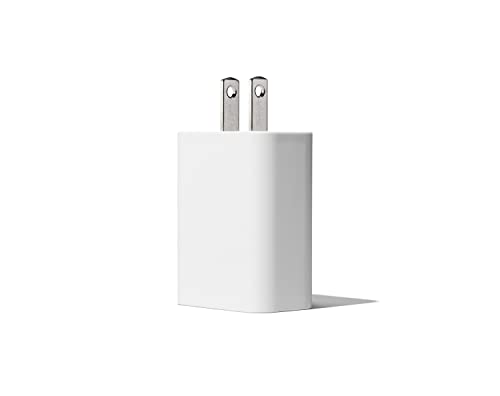
Our Top Picks
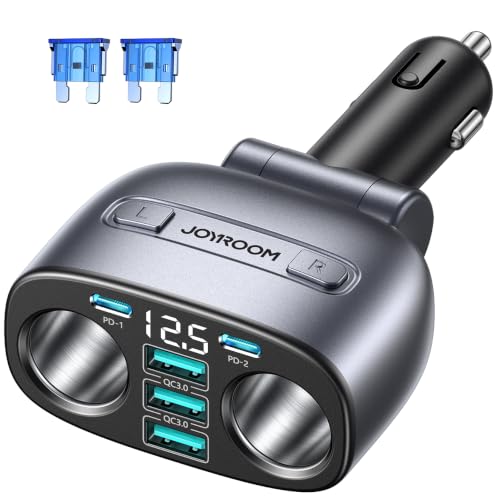
 Ankuee 12V/24V Car Cigarette Lighter Splitter with USB-CSmall0.5 x 0.6 x 1 inches0.1 poundsCheck on Amazon




What's inside
- What a cigarette lighter splitter actually does
- Working out a safe total load for your outlet
- The difference between 12 volt and 24 volt vehicles
- Compact two-socket splitters for everyday cars
- High-output splitters built around fast USB charging
- Three-socket splitters for trucks, RVs, and family SUVs
- Why independent switches for each socket matter
- Reading a voltmeter display like a battery health check
- Extension cables, placement, and cable discipline
- Fuses, heat, and the safety features that actually count
- Matching socket count to your actual devices
- Installation walkthrough and everyday use
- Check prices on Amazon
- Which of these eight splitters should you choose?
As an Amazon Associate I earn from qualifying purchases. This post may contain affiliate links at no extra cost to you.
A single cigarette lighter socket made sense when the only thing plugged into it was a lighter. Modern driving looks very different. A typical car now carries a dash camera recording the whole journey, a GPS unit or phone giving directions, a second phone for a passenger, and sometimes a tablet, a small air compressor, or a portable cooler that all expect power at the same time. One socket cannot serve that list, and stacking cheap adapters on top of each other is a poor answer. A cigarette lighter splitter solves the problem at the source: it takes the one 12 volt or 24 volt outlet in your dashboard and turns it into two or three full sockets, usually with several USB ports built into the same housing, so every device gets its own connection point from a single plug.
This guide explains how these splitters work, how to judge whether your vehicle can safely power what you want to connect, and how the eight models covered here differ from one another. The range runs from simple two-socket adapters that mainly add a second outlet and a couple of fast USB ports, through high-output units built around USB-C Power Delivery and Quick Charge 3.0, to larger three-socket designs with long extension cables, individual switches, and voltage displays aimed at trucks, SUVs, and RVs. None of them changes what your vehicle can supply. Each one simply divides and distributes the power that is already there, which is why understanding the limits of that supply matters more than the headline number printed on the box.
A quick note on how this guide was put together, because it affects how you should read it. This article contains affiliate links, which means the site may earn a commission if you buy through a link here, at no extra cost to you. All product details in this guide come from specifications and documentation published by the manufacturers, and the site does not directly try out, handle, or bench-measure the products described. Treat the figures quoted here as manufacturer-stated figures, check them against the listing and manual for the exact unit you buy, and use the general guidance sections to decide which type of splitter fits your vehicle and your devices.
What a cigarette lighter splitter actually does
Despite the old-fashioned name, the socket in your dashboard is simply a DC power outlet. In most cars it delivers nominal 12 volt direct current from the vehicle electrical system, protected by a fuse in the car fuse box, commonly rated at 10 amps or 15 amps. A splitter plugs into that outlet with a single barrel plug and presents two or more identical sockets on its own body or on the end of a cable. Anything designed to run from a car socket, a dash camera power lead, a GPS charger, a tyre inflator, a heated seat cover, a 12 volt cooler, can plug into one of those new sockets exactly as it would plug into the original.
Most modern splitters add USB charging on top of the extra sockets. That matters because phones and tablets no longer need a separate car charger occupying a socket of their own. A splitter with USB-A and USB-C ports lets the sockets stay free for true 12 volt accessories while phones charge directly from the USB section. The better designs separate these two jobs clearly: full-size sockets for vehicle accessories, and a USB block with defined outputs such as Quick Charge 3.0 for compatible Android phones or USB-C Power Delivery for phones, tablets, and in some cases laptops that accept USB-C charging. When you compare models, look at those two halves separately rather than judging the unit as a single lump of ports.
Working out a safe total load for your outlet
The most important calculation in this whole category takes ten seconds. Power in watts equals voltage multiplied by current in amps. A 12 volt circuit fused at 10 amps can therefore supply about 120 watts before the fuse is at its limit, and a 15 amp circuit can supply about 180 watts. Those are ceilings, not targets. Fuses protect wiring, and running any circuit continuously at its absolute maximum invites nuisance fuse failures and hot plugs. A sensible working rule is to keep sustained loads comfortably below the fuse rating, roughly at eighty percent or less, so around 96 watts on a 10 amp circuit and around 144 watts on a 15 amp circuit for loads that run for long periods.
Start by finding your own fuse rating. It is printed in the vehicle handbook and usually on the fuse box diagram, labelled for the cigarette lighter, accessory socket, or power outlet. Some vehicles have more than one outlet on different circuits, for example a dashboard socket on one fuse and a boot or rear-seat socket on another, which effectively gives you two separate power budgets. If you cannot find the rating, assume the lower figure and plan around 10 amps until you can confirm otherwise. Never replace a blown outlet fuse with a higher-rated fuse to gain headroom. The fuse is sized for the wiring behind the dashboard, and oversizing it removes the protection that wiring depends on.
Next, add up what you actually intend to run at the same time. A dash camera typically draws only a few watts. A GPS unit is similarly light. Phone charging varies widely: a slow USB port might deliver 10 watts, a Quick Charge port up to around 18 to 30 watts, and a USB-C Power Delivery port anywhere from 30 watts upward depending on the model and the device negotiating the charge. A laptop charging over USB-C can request far more than a phone. Among socket accessories, the heavy draws are the ones with motors or heating elements: tyre inflators, heated blankets and seat covers, kettles, and larger coolers can each pull 60 to 150 watts on their own. Two light devices plus phone charging will fit almost any car. One heavy device plus fast charging for a laptop may not, even if the splitter itself offers enough sockets.
Simultaneity is the detail people miss. A splitter with three sockets and four USB ports does not promise that every port can run at full output at once. Total output is shared and capped, first by the splitter design and then by the vehicle circuit behind it. When a manufacturer states a total such as 120 watts, 179 watts, 180 watts, 210 watts, or 225 watts for the models in this guide, read that as the combined budget for the whole unit. If your planned devices add up beyond the smaller of that budget and your vehicle fuse budget, expect slower charging, a warm plug, or a blown fuse. The fix is simple: run the heavy accessory on its own, or charge the hungriest device while the heavy accessory is off.
The difference between 12 volt and 24 volt vehicles
Most cars, hatchbacks, and small vans run a 12 volt electrical system. Most large trucks and many commercial vehicles run 24 volt, usually two 12 volt batteries in series. Several splitters in this guide are explicitly rated for both 12 volt and 24 volt use, which makes them suitable for a family SUV one day and a work truck the next, and it also means the same unit can move between vehicles in a mixed household or small fleet without any adjustment. The electronics inside detect and work across that input range automatically. You do not set a switch for voltage on the models described here.
Compatibility still needs a moment of attention. If a product listing states only 12 volt, do not use it in a 24 volt vehicle, because components designed for a lower input can overheat or fail when fed double the voltage. Conversely, a 12 volt or 24 volt rating on the splitter does not make every accessory you plug into it dual-voltage. The splitter passes vehicle voltage through its full-size sockets unchanged, so a dash camera lead or cooler designed only for 12 volt still receives 24 volt in a truck if it is plugged into a pass-through socket. Check each accessory rating separately, especially in commercial vehicles. USB outputs are different: the splitter electronics regulate those down to USB voltages regardless of whether the input is 12 or 24 volt, so phones are not exposed to vehicle voltage on the USB side.
Compact two-socket splitters for everyday cars
The simplest useful upgrade is a two-socket splitter: one plug in, two sockets out, plus USB charging in the same unit. This format suits the most common real-world pairing, a dash camera that should stay connected permanently and one rotating guest slot for a GPS unit, a second charger, or an occasional inflator. Because the housing stays close to the dashboard, there is little cable to manage, the original socket area remains tidy, and the whole thing can be removed in seconds when you change cars. The trade-off is reach. Everything connected has to live near the dashboard, and passengers in the back gain nothing unless they use long charging cables of their own.
The SUPERONE Cigarette Lighter Splitter, rated at 180 watts, is a representative example of the type done with an emphasis on USB speed. Alongside its two sockets it provides a USB-C Power Delivery port, dual Quick Charge 3.0 ports, and a 30 watt USB-C car charging output as described by the manufacturer. That combination is aimed at the device mix listed for it: GPS units and dash cameras on the sockets, and phones, iPads, and laptops that accept USB-C charging on the powered ports. For a driver who wants the dash camera permanently wired and still wants genuinely fast phone charging without giving up a socket to a separate phone charger, this layout is the point. As with every model here, remember that the 180 watt figure is the unit total, and your vehicle fuse sets the practical limit underneath it.
The Ankuee 12V/24V Car Cigarette Lighter Splitter takes the same two-socket idea and adds information. It offers dual-socket output with USB-C charging and an LED voltmeter display, and it is rated for both 12 volt and 24 volt vehicles, with phones, GPS units, and dash cameras named as its intended loads. The voltmeter is more than decoration, as a later section explains in detail: at a glance before you start the engine it shows the resting battery voltage, and while driving it shows whether the charging system is holding voltage up. For an older vehicle, a car that sits unused for days at a time, or a work vehicle shared between drivers, that small display can be the feature you end up valuing most, even though the sockets and USB-C port do the actual work.
The 12V Double Cigarette Lighter Adapter is the most traditional design in this guide and the easiest to understand. It is a one-to-two splitter built around a dual extension cord, using 18AWG cable and fitted with a 15 amp fuse, giving two sockets away from the dashboard rather than in a rigid housing. There is no USB block and no display in its description, and that plainness is its appeal for a specific job: powering two genuine 12 volt accessories, in places a rigid adapter cannot reach, with cable thick enough to be a stated feature and a fuse of its own protecting the splitter lead. If your need is two sockets for accessories rather than phone charging, for example a dash camera and a cooler, or an inflator and a work light, this style avoids paying for electronics you will not use. You would pair it with a separate USB charger only if phone charging also becomes a requirement.
Choosing among these three is mostly a question of what the second job is. If fast USB-C and Quick Charge charging matter daily, the SUPERONE layout fits. If you want voltage information and cross-compatibility between a 12 volt car and a 24 volt vehicle, the Ankuee layout fits. If you want reach and a simple fused extension for two accessories, the double adapter fits. Drivers comparing smaller dedicated chargers for a single phone will also find useful context in our guide to best 18w car chargers, which covers the compact end of in-car USB charging.
High-output splitters built around fast USB charging
A second family of splitters treats USB charging as the main event. These units still multiply your sockets, but their distinguishing feature is a bank of fast-charge ports with named outputs, intended for drivers and passengers who charge several personal devices at once and do not want to wait on slow legacy USB speeds. Laptops and tablets that charge over USB-C are the clearest beneficiaries, because Power Delivery ports can offer them substantially more power than an old 5 volt USB-A port, provided the total budget is not already consumed by everything else plugged in at the same time.
The JOYROOM 7-in-1 Cigarette Lighter Splitter rated at 225 watts is the highest total figure in this guide. It provides two sockets and a fast-charging section described as three Quick Charge 3.0 ports at 30 watts, plus Power Delivery outputs of 36 watts and 30 watts. The manufacturer positions it for GPS units, dash cameras, laptops, iPads, and iPhones, which tells you the intended split of labour: vehicle accessories on the two sockets, personal electronics spread across the USB ports. Seven functions in one unit only helps if your vehicle circuit can feed the combination you actually run. On a typical 15 amp car circuit, treat the 225 watt rating as capacity in the hardware rather than a promise from the car, stagger the largest loads, and expect the unit to share output intelligently rather than deliver every stated port maximum simultaneously.
The other JOYROOM 7-in-1 model in this guide, rated at 179 watts, takes a different route to a similar count of connections. It combines Power Delivery at 30 watts over Type-C with three USB ports, works on both 12 volt and 24 volt systems, and adds three features aimed squarely at larger vehicles: a 39.6-inch extension cable, independent switches, and a voltage display. That cable length changes where the sockets can live. Instead of crowding the dashboard, the socket block can sit lower on the console, between seats, or further back in a truck cab, RV, or large SUV, which is exactly where passengers and accessories tend to be. The switches let each section be turned off without unplugging anything, and the display keeps battery voltage visible in vehicles that often power accessories while parked.
Readers whose charging needs stop at two phones may not need a seven-function unit at all, and our roundup of best 2 port usb chargers covers that simpler category for drivers who would rather keep the dashboard socket free for a single accessory.
Three-socket splitters for trucks, RVs, and family SUVs
When two sockets are not enough, the next step is a three-socket splitter. The typical customer is not charging three phones. They are running a dash camera, a GPS or phone cradle, and one rotating heavy or seasonal accessory: a cooler on a long trip, an inflator, a heated cover in winter, or equipment for work. Three sockets also suit families, where the front of the vehicle runs navigation and recording while children or passengers in the middle row need power that a dashboard unit cannot reach. Extension cables and independent switches stop being luxuries at this size and become the features that make the extra sockets usable in practice.
The LIHAN 7-in-1 Cigarette Lighter Splitter provides three sockets together with a 30 watt Power Delivery Type-C port, Quick Charge 3.0, and dual USB ports. It works on 12 volt and 24 volt systems, includes independent switches and a voltage display, and reaches into the cabin on a 3.3 foot extension cord, with trucks, RVs, and SUVs named as its intended vehicles. That is a balanced specification for a large vehicle: enough sockets for a permanent dash camera plus two changeable accessories, one properly fast USB-C port for a phone or tablet, and the ability to switch individual sections off when parked rather than pulling plugs in the dark. The extension length is roughly a metre, enough to move the socket block from an awkward dashboard position to a console or seat-side location where plugs are easier to reach and less likely to be knocked by knees or gear levers.
The JOYROOM 9-in-1 Cigarette Lighter Splitter, rated at 210 watts, offers the largest function count in this guide. Its charging section is described as a 36 watt Power Delivery Type-C port, two Quick Charge 3.0 ports, and three USB ports, on a unit that works across 12 volt and 24 volt vehicles, with a 3.3 foot extension cable, independent switches, and a voltage display. Nine functions is a lot to feed from one outlet, and this model makes most sense where the vehicle and the routine genuinely support it: a truck cab with a driver and passenger both charging, navigation and recording running continuously, and accessories swapped through the sockets across a working day. In a small car with a 10 amp outlet fuse, the same unit can still be useful as an organiser and switch panel, but its higher total rating will rarely be reachable, and buyers should choose it for layout and reach rather than for the headline wattage.
The Anyongora 7-in-1 Cigarette Lighter Splitter takes yet another emphasis. Rated at 120 watts, it provides three sockets and four USB ports across USB-A and USB-C, with independent switches for each socket, an LED voltage display, built-in and spare fuses, and UL certification as stated by the manufacturer. The 120 watt total is the most conservative figure in this guide, and arguably the most honest match for a standard car circuit, since it sits right at the theoretical ceiling of a 10 amp 12 volt outlet. For many buyers that alignment is reassuring rather than limiting: the unit is sized for what a typical vehicle can actually give. Per-socket switches are particularly valuable here, because with three sockets in constant use the ability to cut one accessory, a cooler overnight, for instance, without disturbing a dash camera on another socket is a daily convenience, and the inclusion of a spare fuse acknowledges that fuses are consumables that tend to be needed far from a parts shop.
Comparing the three-socket group, the LIHAN design balances sockets, one strong Power Delivery port, and reach. The JOYROOM nine-function design maximises USB choice and total capacity for power-hungry cabins. The Anyongora design prioritises socket control, a moderate total matched to ordinary cars, and fuse provision. All three include voltage displays and switching in some form, which reflects what experienced truck and RV users ask for: visibility of the battery state and control over each load, because in those vehicles the splitter is closer to a small power distribution panel than to a phone accessory.
Why independent switches for each socket matter
An independent switch sounds like a minor detail until you live without one. Many vehicle accessories have no power switch of their own. A dash camera lead, a cooler, or a GPS charger starts the moment it is plugged in and stops only when unplugged or when the vehicle cuts power to the outlet. On a splitter without switches, managing three such accessories means pulling plugs, which wears sockets, invites bent pins, and usually happens in a cramped footwell. A switch per socket, as fitted on the LIHAN, JOYROOM extension models, and Anyongora designs in this guide, turns each socket into a controlled outlet. Leave everything plugged in, and decide what runs.
Switches also protect the battery. Some vehicle outlets remain live after the ignition is off, which is convenient for charging while parked and risky overnight. A cooler or heated accessory forgotten on a live outlet can flatten a starter battery by morning. Switching that socket off at the splitter, while leaving a dash camera in parking mode on another socket if that is your intention, gives you deliberate control instead of an all-or-nothing plug. In RVs and trucks that sit between trips, the same habit prevents slow parasitic drains from accessories that draw a small standby current even when they appear to be idle. Pair the switches with the voltage display where one is fitted, and you have both the control and the information needed to use parked power responsibly.
Reading a voltmeter display like a battery health check
Several splitters in this guide, from Ankuee, LIHAN, both extension-cable JOYROOM models, and Anyongora, include an LED voltage display. The number shown is the voltage at the vehicle electrical system as seen through the outlet. Read at the right moments, it tells a simple story about battery and charging health. With the engine off and the vehicle rested, a healthy 12 volt battery typically shows roughly 12.4 to 12.8 volts. Readings persistently below that range, especially near or under 12.0 volts at rest, suggest a battery that is discharged, ageing, or being drained by something. With the engine running, the alternator should lift the reading, commonly into the region of 13.8 to 14.4 volts, confirming that charging is taking place.
In a 24 volt truck, expect roughly double those figures, around 25 to 26 volts at rest and around 27 to 29 volts while charging, with the exact values varying by vehicle. What matters in either system is change. A display you glance at every day turns voltage into a habit: you notice the morning the resting figure is lower than usual, or the drive where the running figure never rises, long before the vehicle fails to start. That early warning is worth real money in a work truck or on an RV trip, and it costs nothing once the display is there. It is also the honest way to manage parked accessory use. Watch the resting voltage while a cooler runs, set yourself a floor you will not go below, commonly around 12.2 volts for a starter battery, and switch the load off when you reach it.
Extension cables, placement, and cable discipline
Rigid splitters plug straight into the dashboard and keep everything within a few centimetres of the original socket. Extension models move the socket block on a cable: 39.6 inches on the 179 watt JOYROOM, and 3.3 feet on both the LIHAN and the 210 watt JOYROOM, figures that are effectively the same reach of about one metre. That metre changes the ergonomics completely. The block can sit in a console tray, on the side of a transmission tunnel, or within reach of the middle row, plugs point in a direction you choose, and bulky accessory plugs that would foul the gear selector or climate controls at the dashboard gain room to fit.
Placement deserves the same care as electrical load. Choose a spot where the block cannot slide into pedals, seat rails, or door shuts, where switches remain reachable without looking down for long, and where the voltmeter, if fitted, can be glanced at safely. Secure loose cable with clips or ties so it cannot loop around a gear lever or handbrake. Keep the block out of direct footwell traffic, away from heater vents blowing hot air onto it, and never under a seat where a passenger weight can bear on plugs. In an RV, mounting the block near the living area rather than leaving it at the cab end of its cable often makes the difference between a system people use properly and a tangle they work around.
Fuses, heat, and the safety features that actually count
There are two fuse layers in a splitter setup, and confusing them causes most misunderstandings. The first is the vehicle fuse for the outlet circuit, in the car fuse box, which protects the vehicle wiring. The second, present on some splitters, is a fuse in the splitter plug or body, like the 15 amp fuse specified for the double adapter and the built-in and spare fuses supplied with the Anyongora unit. That second fuse protects the splitter and its lead and gives you a first, easy place to check when everything on the splitter stops at once. If the splitter fuse blows repeatedly, the load is too large or an accessory is faulty. Replacing it with a higher rating defeats its purpose in exactly the same way as oversizing the vehicle fuse.
Heat is the other honest signal in this category. Plugs and sockets carry real current through small contacts, and a poor connection, an overloaded circuit, or a plug that is not fully seated will show itself as warmth. A splitter that feels slightly warm under a heavy sustained load is not automatically faulty, but a plug too hot to hold comfortably, a smell of hot plastic, discolouration, or a socket that has become loose and intermittent are all stop-and-investigate signs. Switch off, unplug, let things cool, and check for a plug that was half-seated, a damaged cable, or a load total that crept upward as devices were added one by one. Certification marks stated by a manufacturer, such as the UL certification listed for the Anyongora model, indicate that a design has been assessed against a recognised safety standard, which is a meaningful data point alongside fuse provision when you compare otherwise similar units.
Matching socket count to your actual devices
Before choosing between two sockets and three, list your devices by how they behave rather than by how many plugs you own. A dash camera is a permanent resident: it wants a socket or a hardwired supply that is always available while driving, draws little, and should never be displaced by a passenger request. A GPS unit is a journey resident: present on most trips, light in draw, and tolerant of sharing. Phones and tablets belong on USB ports wherever possible, which is why splitters with strong USB sections reduce socket pressure so effectively. The socket-hungry devices are the occasional heavy ones: inflators used for minutes at high draw, coolers used for hours at moderate draw, and heated accessories used seasonally at high draw.
With that list, most car drivers land on two sockets plus good USB. Dash camera in one, a spare socket for the GPS or the occasional inflator, and phones on Power Delivery and Quick Charge ports covers the overwhelming majority of real journeys, which is why the SUPERONE and Ankuee formats exist. Drivers who regularly add a cooler, carry work equipment, or travel with rear passengers who need socket access land on three sockets with an extension cable, the LIHAN, JOYROOM nine-function, and Anyongora territory. Buying three sockets for a car that will only ever run a camera and a phone adds bulk and cable without benefit, while buying two sockets for an RV that runs a cooler daily guarantees daily plug swapping. The honest list decides, not the function count on the box.
Think about charging speed with the same honesty. If your phone supports USB-C Power Delivery and you take short journeys, a 30 watt or 36 watt PD port can add meaningful charge in twenty minutes, whereas a basic USB port might barely hold the battery level against navigation drain. If your journeys are long, even modest ports finish the job, and socket layout matters more than port speed. Drivers researching higher-output USB-C charging for laptops will find the dedicated category covered in our guide to best 45w usb c chargers, while anyone maintaining the vehicle battery itself, rather than drawing from it, should look at best 12 volt battery chargers for mains-powered charging and maintenance equipment.
Installation walkthrough and everyday use
Fitting any splitter in this guide follows the same short sequence. With the ignition off, remove anything already in the dashboard socket and check the socket is clean and undamaged. Insert the splitter plug fully until it seats firmly; a plug that rocks or sits shallow will run warm and cut out over bumps. If the unit has an extension cable, route and secure the cable before connecting accessories, following the placement guidance above. Connect the lightest permanent device first, usually the dash camera, then switch the vehicle on and confirm the camera starts, the voltmeter if fitted shows a sensible running voltage, and each switch controls the socket you expect it to control. Add remaining devices one at a time, watching for any that cause flicker, resets, or unusual warmth as they join.
Check prices on Amazon
Live listings for the shortlist in this guide are pulled from Amazon below, so prices and availability are always current at the moment you look.


Which of these eight splitters should you choose?
For a straightforward car upgrade centred on fast phone charging, the SUPERONE two-socket design with its Power Delivery port, dual Quick Charge 3.0 ports, and 30 watt USB-C output is the natural starting point, provided your device mix matches the GPS, dash camera, phone, tablet, and USB-C laptop use it is described for. For the same two-socket layout with voltage visibility and 12 volt or 24 volt flexibility, the Ankuee design is the alternative to weigh. For two sockets with reach and no USB ambitions, the fused 18AWG double adapter remains the simplest tool for the job.
For maximum fast charging from a dashboard-based unit, the 225 watt JOYROOM seven-function model offers the broadest stated port selection, with three Quick Charge 3.0 ports and two Power Delivery outputs beside its two sockets. For a large vehicle where the socket block needs to live away from the dashboard, its 179 watt JOYROOM sibling trades some charging emphasis for a 39.6-inch cable, switches, and a voltage display. Judge both against your vehicle fuse budget first and their port lists second.
For three sockets, decide by emphasis. The LIHAN model balances three sockets, 30 watt Power Delivery, switches, display, and a 3.3 foot cord for trucks, RVs, and SUVs. The JOYROOM nine-function model maximises USB variety and total capacity at 210 watts for cabins full of devices. The Anyongora model matches its 120 watt total closely to ordinary car circuits and adds per-socket switches, an LED display, stated UL certification, and spare fuse provision. Any of the three will disappoint if the simultaneous load ignores the vehicle fuse, and any of them will serve well for years if the load list is honest, the cable is routed with care, and the switches and display are used as the everyday controls they are meant to be.
Whichever direction you choose, buy the layout that fits your written device list, confirm the voltage rating matches every vehicle it will be used in, keep sustained totals below your outlet fuse with room to spare, and treat warmth, repeated fuse failures, or falling resting voltage as information to act on rather than quirks to tolerate. A cigarette lighter splitter is a small piece of equipment, but it sits at the junction of your vehicle battery, your safety devices such as the dash camera, and the phones your navigation depends on. Chosen and used with that in mind, it quietly removes one of the most common frictions of modern driving: having more devices that need power than places to plug them in.
FAQ
Which of these eight splitters should you choose?
Related guides
- Best 3rd Party MacBook Chargers: 96W-Class Alternatives, the 100W Cable Rule, and the Apple Benchmark
- Best Chargers for Google Pixel 6 Pro: Six Bricks Judged on Output, Ports and Negotiation Language
- Best Fast Charge Qi Wireless Chargers: Qi2 at 15W and Qi2.2 at 25W
- Best 12 Volt Battery Chargers: Smart Picks From 1 Amp to 15 Amp