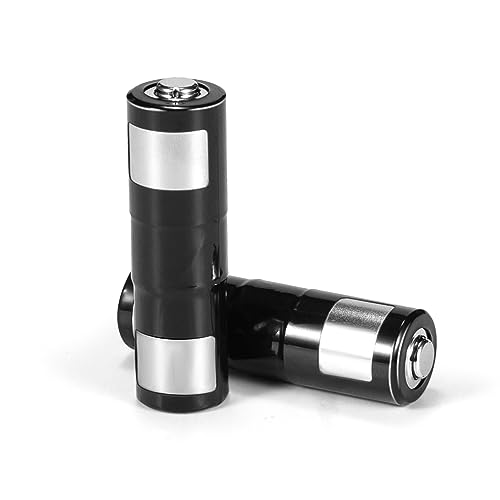
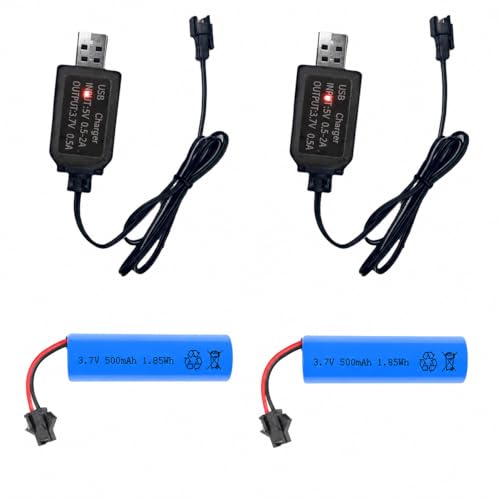
Our Top Picks


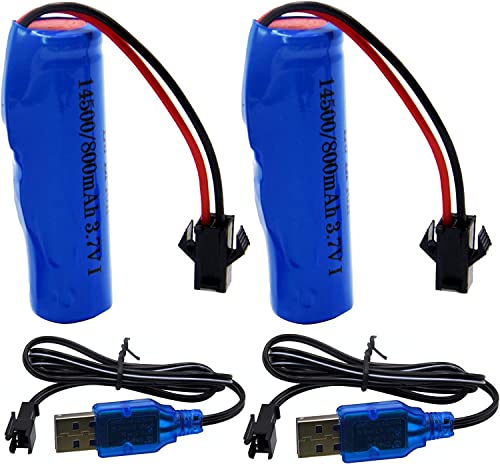


What's inside
- An AA shape carrying a completely different voltage
- Why the voltage gap cannot be negotiated with
- Protected cells, unprotected cells, and what the circuit actually does
- Button top, flat top, and the geometry of a reliable connection
- Honest capacity in a small can: the eight hundred to eleven hundred range
- Where the 14500 earns its keep, and where it never belongs
- Charging lithium cells with equipment built for the job
- Brief comparisons with its larger and smaller lithium relatives
- Cycle life, calendar life, and what realistic longevity looks like
- Troubleshooting the common disappointments in this format
- Check prices on Amazon
- How temperature and season quietly reshape performance
As an Amazon Associate I earn from qualifying purchases. This post may contain affiliate links at no extra cost to you.
A short disclosure before the cells: this page contains referral links, and when a reader follows one of them and completes a purchase, the seller may pay this site a commission for having sent that reader across. The commission is settled between the seller and this site, it is not added to the reader’s bill, and the amount involved has no bearing on which cell types are praised, which limitations are spelled out, or which safety warnings appear in full below. Those judgements rest on manufacturer documentation, published specifications, and feedback shared publicly by owners who use these cells in demanding equipment.
An AA shape carrying a completely different voltage
The 14500 is the most misunderstood cylinder in the rechargeable world, because everything about its appearance invites a false assumption. It measures roughly fourteen millimetres across and fifty millimetres long, the same silhouette as an ordinary AA cell, and it slides into the same springs, clips, and compartments without resistance. Inside that familiar outline, however, sits lithium ion chemistry with a nominal voltage of three point seven volts and a fully charged voltage of four point two, which is roughly two and a half times what a nickel based AA delivers and well beyond what most AA powered devices were ever designed to receive. Shape says interchangeable; voltage says otherwise, and voltage is the one telling the truth.
That voltage is precisely why the format exists and why enthusiasts seek it out deliberately. Certain high performance flashlights are engineered to accept either a conventional AA or a 14500, and when the lithium cell is installed the driver receives far more electrical headroom, unlocking substantially brighter output from the same compact body. Some small radio controlled devices, specialised electronics, and purpose built torches are likewise designed around the higher voltage from the outset. In equipment created with the 14500 in mind, the cell is not a risky improvisation but the intended power source, delivering energy density that nickel chemistry in this size cannot approach.
The danger arrives when the cell wanders into equipment that was never consulted about the arrangement. A toy, a remote control, a clock, a computer mouse, or a child’s night light built for one point five volt cells can be damaged instantly by a 14500, because motors overheat, circuits designed for gentle voltages are overdriven, and in multi cell devices a single lithium cell mixed among nickel cells creates an imbalance that stresses everything in the string. The most serious incidents in owner reports follow a consistent pattern: the cell was stored loose among AA batteries, somebody in the household reasonably assumed it was one, and the device paid for an assumption its compartment made far too easy.
Everything else in this guide flows from holding those two truths together at once. Within its intended niche, the 14500 is a remarkable little power source that rewards informed ownership with performance no same sized alternative can match. Outside that niche, it is a hazard disguised as the most familiar object in the battery drawer. Buying well therefore means more than choosing capacity or brand; it means deciding how the cells will be identified, stored, charged, and kept permanently separated from the AA population they so convincingly imitate.
Why the voltage gap cannot be negotiated with
Electrical devices tolerate some variation in supply voltage, and that tolerance is what allows a product built for alkaline cells to keep working as those cells decline from one point five volts toward one volt during discharge. Designers choose components, motor windings, and circuit limits around an expected range, and reputable products include headroom above and below the nominal figure for safety and for battery variation. The gap between a nickel cell and a 14500, however, is not variation within a range but a leap into a different range altogether. Feeding four point two volts into a system engineered around one point five is comparable to connecting household equipment to a supply of entirely the wrong rating and hoping the plug shape settles the question.
Series arrangements multiply the problem in ways that catch even careful owners. A device taking two AA cells expects roughly three volts from the pair, so a single 14500 substituted for one of them already pushes the total beyond design limits while also creating a severe mismatch, because the lithium cell will drive current through its nickel partner in ways that can force that partner into damaging conditions as the pair discharges unevenly. Two 14500 cells installed together deliver over eight volts when fully charged, a figure that will destroy many small electronics outright rather than merely shortening their lives. There is no partial credit for getting only one cell wrong; the string behaves as a system, and the system fails together.
Some products occupy a deliberate middle ground and deserve careful reading rather than assumption in either direction. Dual fuel flashlights, as makers often describe them, are designed with drivers that recognise or safely handle both voltage ranges, accepting a 14500 for maximum output or a conventional AA for convenience and longer, gentler running. That compatibility is a designed feature documented by the manufacturer, not a property conferred by the cell’s shape, and it applies only to the specific models that state it. A torch that looks nearly identical from the same brand may lack the wide range driver entirely, which is why checking the exact model’s documentation matters more than remembering what a sibling product could do.
Households should treat the separation of 14500 cells from ordinary AA cells as a standing rule rather than a preference. Distinct storage boxes, unmistakable labelling, and a shared understanding among everyone old enough to change a battery all reduce the chance of the classic mix up far more effectively than individual vigilance alone. Children in particular should never be left to swap these cells unsupervised, not because the cells are uniquely sinister but because the entire risk rests on a distinction that is invisible once the wrapper colours are ignored. Systems beat intentions wherever lookalike objects with different consequences share a drawer.
The dummy cell question and series pairs in dual fuel lights
A related topic surfaces often in owner discussions: some two cell devices designed for lithium power use a single 14500 alongside a spacer, sometimes called a dummy cell, that occupies the second bay and simply conducts current without storing energy. That arrangement exists only where the device maker explicitly supports it, with the spacer sized and constructed for the purpose. Improvising spacers from foil, coins, or hardware is dangerous and should never be attempted, because a shifting improvised conductor inside a battery tube can create short circuits in a confined metal space. Where a maker does not document a spacer configuration, the correct conclusion is that the configuration is not supported, full stop.
Equally, the existence of dual fuel lights should not be read backwards into a general permission for experimentation. Each host device defines the contract: supported chemistries, supported cell lengths, maximum voltages, and required protection behaviour all appear in its documentation or on the maker’s specification pages. Owners who build the habit of reading that contract before inserting any lithium cell will find that nearly every frightening story in this category traces back to a contract nobody consulted. The cell itself is blameless in most of those stories; the mismatch was authored at the moment of insertion.
Protected cells, unprotected cells, and what the circuit actually does
A protected 14500 carries a small circuit board, usually seated at the negative end beneath the wrapper, that watches the cell’s voltage and current and intervenes when either leaves a safe region. If discharge pulls the voltage too low, the circuit disconnects the cell before the chemistry suffers the kind of deep depletion that permanently damages lithium cells and can make later recharging risky. If a short circuit or an excessive draw occurs, the circuit cuts output rapidly, and during charging it provides a final guard against voltage climbing beyond the four point two ceiling. For most owners, in most devices, that quiet supervision is worth having, because it converts several common mistakes from cell ending events into recoverable non events.
An unprotected cell omits the board entirely and relies on the host device, the charger, and the owner to provide every safeguard. Such cells exist for legitimate reasons: some high performance flashlights draw currents that would trip a protection circuit during legitimate use, and some tightly toleranced hosts cannot accept the extra length a board adds. Experienced enthusiasts running lights with their own low voltage warnings and current regulation sometimes prefer unprotected cells for those reasons, accepting personal responsibility for monitoring discharge. That is a considered trade made with full information, and it should never be confused with buying unprotected cells casually because they were cheaper or because the distinction seemed unimportant.
The physical consequences of protection deserve attention before purchase rather than after a frustrating fitting attempt. The circuit board and its connecting strip typically add a few millimetres to overall length and occasionally a fraction to diameter, so a protected 14500 can measure noticeably longer than the fifty millimetres its name implies. Flashlight tubes with generous springs usually absorb the difference happily, while hosts built to exact dimensions may refuse to close, may crush the cell under excessive spring pressure, or may make intermittent contact that mimics electronic faults. Checking the host maker’s stated maximum cell length against the cell maker’s stated actual length is a two minute exercise that prevents the most common disappointment in this entire category.
Protection also interacts with performance in ways that matter for demanding lights. Every circuit board has a current ceiling, and a board set conservatively will disconnect when a high output mode asks for more than the ceiling allows, leaving the owner staring at a dark torch that has healthy charge remaining. Makers of quality protected cells publish that ceiling so buyers can match it against the appetite of their lights, while vague listings omit it and leave the matching to luck. A protected cell whose ceiling comfortably exceeds the host’s maximum draw is the correct pairing; a cell whose ceiling sits below it will appear defective in exactly the moments the owner bought it for.
When unprotected makes sense, and the discipline it demands
The narrow case for unprotected cells rests on hosts that genuinely manage the cell themselves. A flashlight with documented low voltage protection built into its driver, used by an owner who understands the signals and removes cells promptly, can run unprotected cells responsibly. Even then, the owner inherits duties the circuit board used to perform: never leaving a cell in a device that has dimmed to exhaustion, never charging with equipment of uncertain voltage, and never storing cells where a stray conductor could bridge the terminals. Anyone unwilling to maintain that discipline consistently should regard protection as mandatory rather than optional, because lithium chemistry forgives inattention less readily than the nickel cells most households grew up with.
There is also a middle population of owners who begin with protected cells and only reconsider after experience accumulates, and that sequence is the healthy one. Starting protected teaches the format’s behaviour inside a safety margin, reveals whether a particular host is length sensitive, and establishes the storage and charging habits that any lithium ownership requires. If a specific high draw light later justifies an unprotected cell, the decision arrives informed by real usage rather than by a listing’s suggestion that enthusiasts prefer them. Sequence matters in hobbies involving stored energy, and patience at the buying stage is a safety feature in its own right.
Owners comparing charging equipment across lithium formats will recognise many of the same bay and termination questions explored in the companion guide to chargers for the larger cylindrical lithium size that dominates enthusiast torches best 18650 chargers.
Button top, flat top, and the geometry of a reliable connection
The positive terminal of a 14500 comes in two broad forms, and the difference between them decides whether a given host makes contact at all. A button top cell carries a small raised nub resembling the terminal of a conventional AA, which suits devices whose positive contact is recessed, spring based, or designed around that familiar profile. A flat top cell ends in a nearly flush disc, which suits hosts built with flat contact plates or with physical reverse polarity protection that expects a flush profile. Neither form is superior in the abstract; each is simply the correct or incorrect key for a particular lock, and forcing the wrong one produces either no connection or a connection maintained by unhealthy pressure.
Reverse polarity protection explains much of the market’s shape. Many flashlights guard against a cell inserted backwards by surrounding the positive contact with a raised ring, so that only a protruding button can reach the contact while a reversed cell’s flat negative end cannot complete the circuit. In such hosts a flat top cell inserted correctly may fail to reach the contact at all, which owners occasionally misdiagnose as a dead cell or a faulty light. Reading the host documentation resolves the mystery instantly, since makers state the required terminal form alongside supported lengths. The lesson generalises: in this format, mechanical specifications are electrical specifications, and both deserve reading before money moves.
Length and terminal form interact with protection in a three way puzzle that careful buyers solve on paper first. A protected button top cell is commonly the longest variant of the format, a flat top unprotected cell the shortest, and the remaining combinations fall between. A host with a stiff, short spring may accept the longest variant only by compressing harder than is healthy for the cell’s circuit board, while a host with a long, soft spring may lose contact with the shortest variant when knocked. Published dimensions from both makers, compared directly, predict these outcomes reliably, whereas hoping that a size named 14500 guarantees a standardised reality ignores how much variation the accessories around the cell introduce.
Contact quality also influences performance in high draw lights, because resistance at any junction converts precious voltage into waste heat exactly where it is least affordable. Clean terminals, sound springs, and a cell that sits firmly without rattling all contribute to the output the owner actually sees, particularly on the highest modes where current peaks. Intermittent flicker in a demanding light often traces back to this mechanical layer rather than to the cell’s chemistry or charge state. Treating fit as a performance feature, not merely a question of whether the tailcap closes, separates satisfying purchases from puzzling ones.
Honest capacity in a small can: the eight hundred to eleven hundred range
Physics sets the capacity conversation for this format before marketing gets a chance to distort it. A 14500 encloses a modest volume, and current lithium ion chemistry stores a broadly predictable amount of energy in that volume, which is why credible cells cluster between roughly eight hundred and eleven hundred milliamp hours. The best examples from established makers sit near the top of that band, value oriented examples sit lower, and high drain variants sometimes trade a little capacity for the ability to deliver current without sagging. Any listing claiming two or three times the top of that range for a cell of this size is not describing a breakthrough; it is describing a printing decision, and the cell inside will reveal ordinary or below ordinary reserves the first time a demanding light asks for them.
Understanding watt hours helps compare across voltages where milliamp hours alone mislead. Multiplying capacity by nominal voltage gives approximate energy, so a nine hundred milliamp hour 14500 stores a little over three watt hours, noticeably more energy than a two thousand milliamp hour nickel AA despite the smaller milliamp figure, because each milliamp travels at far higher voltage. That arithmetic explains the format’s appeal in compact lights: more total energy in the same silhouette, delivered at a voltage that lets efficient drivers produce serious output. It also explains why cross chemistry capacity comparisons quoted in listings should always be converted before they are believed.
Discharge rate changes the capacity a cell effectively delivers, and honest makers show this with curves at several currents rather than a single flattering number measured gently. A cell discharged slowly in a low mode may approach its rated figure, while the same cell feeding a turbo mode at high current will deliver somewhat less usable charge before reaching cutoff, because internal resistance wastes a portion as heat and voltage falls faster under load. Buyers for high performance lights should therefore study how a cell behaves at currents resembling their light’s appetite, not merely at the mild rate used for the headline rating. A slightly lower rated cell that holds voltage proudly under load will outshine a higher rated rival that wilts.
Current ratings, continuous draw, and matching cell to light
Alongside capacity, every serious 14500 listing should state a maximum continuous discharge current, and that figure deserves as much scrutiny as the capacity itself. Compact lights on their highest settings can ask for several amps from a single small cell, which is a demanding request that not every 14500 can honour. A cell rated for modest currents will sag, heat, or trip its protection in that service, while a cell engineered for high drain keeps its voltage steadier and its temperature safer. Matching the cell’s published current capability to the host’s documented maximum draw is the central technical decision in this category, more decisive for real world output than small differences in rated capacity.
Heat is the signal that a mismatch has occurred, and owners should learn to read it without drama or denial. A cell that emerges from a hard run warm is behaving normally, because high current work generates warmth in any small package. A cell that becomes uncomfortably hot, or a light body that heats rapidly beyond what its maker describes as normal, is asking for a pause and an investigation into whether the cell is being overdrawn, whether contacts are resisting, or whether the cell itself is ageing into higher internal resistance. Respecting that signal promptly protects both the cell and the host, and it preserves the owner’s confidence in equipment that may be needed in genuinely dark places.
Ageing follows a pattern that informed owners can plan around rather than fear. Lithium cells gradually lose capacity with cycles and with calendar time, and storage at full charge in warm conditions accelerates the calendar portion of that decline. A 14500 that once delivered the top of the honest band will, after extended service, deliver less, and its voltage under load will sag earlier than it used to. None of that indicates a defective product; it indicates a consumable doing what consumables do. Replacing cells when runtime in a familiar light has plainly shrunk, and recycling the retirees properly, is the normal rhythm of ownership in this format.
Anyone whose battery shelf spans several sizes at once, from small cells up to the large household cylinders, may appreciate the organisational approach set out in the article examining chargers with many independent bays for sizeable mixed collections best 16 bay battery chargers.
Where the 14500 earns its keep, and where it never belongs
High performance compact flashlights are the format’s heartland, and the reasoning is straightforward: a pocketable tube has room for exactly one AA sized cell, so the only route to greater output within that tube is a cell carrying more energy at higher voltage. Enthusiast lights exploit this brilliantly, offering low modes that sip for hours alongside brief high modes that would embarrass far larger torches from earlier generations. Owners who walk dogs on unlit lanes, inspect machinery in dark corners, or travel with a single small light benefit directly from that range. The 14500 turns a keychain class object into a genuinely capable tool without asking the pocket for any additional room.
Small radio controlled models form the second legitimate territory, particularly lightweight aircraft, boats, and cars whose designers specify lithium cells of this size for receiver power or for compact drive arrangements. In that world the cell’s energy density translates into runtime without the weight penalty that would spoil a small model’s handling, and the community’s charging culture already revolves around lithium discipline. The specification always originates with the model’s designer, however, and substituting a 14500 into a system built for nickel packs is the same voltage error wearing a hobbyist’s clothes. Documentation decides, in the workshop exactly as in the flashlight tube.
Beyond those territories lies a long list of devices where the cell must never appear, and naming the categories plainly serves safety better than abstraction. Toys of every kind, unless a manufacturer has explicitly designed and documented otherwise, belong to the never list, because their users cannot be expected to police cell identity. Clocks, remote controls, wireless mice, game controllers built for AA pairs, decorative lights, and medical adjacent household devices such as simple monitors all assume gentle voltages and long, mild service that nickel or alkaline cells provide safely. The 14500 offers none of those products anything they need, since their designers never asked for voltage, only for endurance at a familiar level.
Adopting a household rule captures all of this without requiring case by case judgement in the moment: 14500 cells live in their own case, serve only the devices named on that case, and are charged only by the people who understand them. Guests, children, and hurried adults reaching for a spare AA will then never encounter one in the general population of the battery drawer. Rules of that simplicity survive busy evenings and tired mornings, which is precisely when the dangerous substitutions historically happen. The format’s considerable virtues are fully available inside the rule; outside it, they are not worth the risk they travel with.
Charging lithium cells with equipment built for the job
A 14500 must be charged on equipment designed for lithium ion cells, with a proper constant current and constant voltage profile that finishes at four point two volts and then stops. That requirement is absolute, because a charger built for nickel chemistry follows a completely different logic, detecting fullness by voltage behaviour that lithium cells do not exhibit and potentially continuing to push current where none should flow. The two charger families may share a similar cradle shape and even similar bay springs, which makes the distinction easy to blur on a crowded shelf. Keeping the lithium charger physically distinct, labelled, and stored with the lithium cells themselves removes ambiguity at the exact moment it matters.
Charge current selection matters more in this small format than in larger lithium sizes, because a modest sounding current can be aggressive relative to a cell holding under a thousand milliamp hours. Many owners charge 14500 cells at around half an amp or below unless the cell maker explicitly endorses a faster rate, accepting a longer session in exchange for less heat and gentler treatment that supports a longer working life. Chargers with selectable current, or with automatic rates that account for small cells, suit this format better than fixed high output units designed for big cells. A charger that treats every bay as though it holds the largest lithium cylinder is the wrong partner for the smallest one.
Owners of dual fuel lights sometimes encounter cells with built in charging ports, and those designs follow their own maker instructions rather than cradle charger logic. Where a port exists, the specified cable and supply should be used, the cell should be charged outside the host unless the maker states otherwise, and the arrangement should still respect the general rules about supervision and heat. Convenience features do not repeal lithium discipline; they merely relocate it. Whether charging happens in a bay or through a port, a cell that becomes unusually hot, swells, or behaves erratically has ended the session and probably its own service life.
General background on chargers intended for the smallest everyday rechargeable sizes can still help owners organise a mixed shelf sensibly, provided the chemistry boundary stays unblurred, and that background is covered in the piece looking at everyday chargers for the two most common small formats best aa and aaa battery chargers.
Storage, cases, and the journey outside the house
Storage discipline for lithium cells begins with a hard case, and the rule admits no casual exceptions. A 14500 carried loose in a pocket, a handbag, or a glovebox can meet coins, keys, or foil in exactly the configuration that creates a short circuit across its terminals, and the resulting rapid heating in a confined space beside flammable material is the scenario behind the most alarming stories attached to small lithium cells generally. Rigid cases holding each cell in its own compartment cost very little, weigh almost nothing, and eliminate that entire category of accident. Any owner unwilling to use a case should reconsider owning loose lithium cells at all, because the case is not an accessory but part of the product’s safe system.
At home, cells awaiting use are best kept at a partial state of charge when storage will stretch for months, since lithium chemistry ages more slowly stored around the middle of its range than stored brim full, and always in a cool, dry place away from heating appliances and direct sun. Cells in regular rotation can simply be charged after use and used again soon, which is the pattern flashlight owners naturally follow through the darker months. Labelling acquisition dates on the case helps owners retire cells by age and behaviour rather than by guesswork, and keeping the lithium case visibly different from every AA container in the house reinforces the separation rule every single day.
Travel adds a layer of regulation that owners should check rather than assume. Airlines generally require spare lithium cells to travel in cabin baggage, in protective cases, with terminals safeguarded, and quantities and watt hour limits are defined by carrier and aviation authority rules that change occasionally. The 14500 sits far below the watt hour thresholds that attract special scrutiny, yet the case and cabin requirements still apply to it as a spare lithium cell. Checking the carrier’s current page before a trip takes minutes and prevents the particular misery of surrendering equipment at a security checkpoint for want of a small plastic box.
Workshops maintaining heavier battery systems alongside these small cells sometimes ask whether one bench unit can supervise everything, and the limits of that idea are discussed in the survey of powerful chargers in the ten amp bracket intended for much larger battery work best 10 amp battery chargers.
Brief comparisons with its larger and smaller lithium relatives
The 18650 invites comparison because it dominates enthusiast lighting, and the contrast is instructive mainly for scale. That larger cell holds several times the energy of a 14500 and sustains higher currents with less strain, which is why sustained high output lights are built around it. The 14500 answers a different design brief: the smallest possible host, the pocket or keychain form, the light that is present because it asks nothing of its carrier. Choosing between them is therefore really choosing between host sizes, and many owners happily keep both formats, each in its documented devices, each charged on suitable equipment, without regarding either as the other’s replacement.
The 123A family, including its rechargeable relatives in similar dimensions, offers another instructive contrast from the world of compact tactical and camera lighting. Those cells are shorter and wider than a 14500, deliver their power in a stubbier package, and built a long track record in lights designed around pairs or singles of that shape. A 14500 cannot substitute for them mechanically or electrically, and they cannot substitute for it, which reinforces the guide’s recurring theme: lithium formats are a family of distinct contracts, not a set of interchangeable tubes. Owners crossing between systems should expect to own distinct cells, distinct spares, and often distinct chargers for each.
What the 14500 uniquely owns is the intersection of ubiquity and surprise: a host size found everywhere, filled with performance found almost nowhere else at that scale. That combination justifies both the enthusiasm and the caution threaded through this guide. No other common format offers so much capability in so familiar an outline, and no other common format so thoroughly punishes the assumption that outline is identity. Respecting the format means enjoying the first fact while organising your household around the second.
A final buying checklist for this exact format
Start with the host and let it dictate every subsequent choice, because a 14500 purchase made without a named device in mind is a hazard looking for a drawer to happen in. Confirm from the host maker’s documentation that the model supports lithium voltage, note whether it requires protection or merely permits it, and record the required terminal form and maximum cell length. Only then shop for cells, filtering for published capacity inside the honest band, a stated continuous current rating comfortably above the host’s maximum draw, and dimensions that match the recorded limits rather than the nominal size printed in the format’s name.
Then arrange the supporting system before the cells arrive: a lithium charger with a suitably gentle rate for small cells, a rigid storage case that will live apart from all AA storage, and labels or a marker so that dates and identity stay attached to each cell’s story. Decide which members of the household may handle charging and swapping, and make sure everyone else knows these cells are never theirs to borrow for a remote control. That preparation, completed once, converts each later purchase into a simple refill of a working system rather than a fresh negotiation with risk.
Retirement deserves a line in the checklist too, since small lithium cells announce decline through shorter runtimes, earlier sag under load, slower acceptance of charge, or warmth that was not part of their younger behaviour. Any cell showing swelling, wrapper damage exposing metal, a dented terminal, or leakage residue should be removed from service immediately, kept in a safe non conductive container, and taken to a battery recycling point. Healthy retirees that have simply faded can travel to the same destination without the urgency. A format this capable deserves an ending as deliberate as its beginning, and owners who plan the whole lifecycle tend to be the ones who enjoy the middle of it without incident.
In the end the 14500 rewards a particular temperament: the owner who delights in a small light performing far beyond its size, yet who keeps that light’s cells in a labelled case, on a proper charger, and out of every other device in the house, understands the format completely — and on a black lane at midnight, when the little tube in a coat pocket answers with a beam like a held breath released, that quiet discipline feels entirely worth it.
Cycle life, calendar life, and what realistic longevity looks like
Owners new to lithium formats often ask how long a 14500 should last, and the honest answer separates two different clocks that run simultaneously. The first clock counts cycles: each full charge and discharge consumes a small portion of the cell’s total life, and manufacturers typically describe endurance in terms of cycles completed before capacity falls to a stated fraction of its original value. Gentle treatment stretches that allowance considerably, because shallow discharges, moderate currents, and avoidance of heat all reduce the wear each cycle inflicts. An owner who uses a light nightly on a medium mode and recharges calmly will usually see far more service than an owner who drains cells to cutoff on turbo every evening.
The second clock counts calendar time and runs even while a cell rests in its case. Lithium chemistry ages slowly at room temperature and faster in warmth, and it ages faster still when resting at a completely full charge, which is why the storage guidance earlier in this guide favours a partial charge for cells entering long quiet periods. A cell bought and forgotten in a hot drawer for several years may emerge with noticeably diminished capacity despite having completed almost no cycles at all, a result that puzzles owners who expect unused equipment to remain new. Rotation solves the practical side of this: buying only as many cells as the household genuinely rotates keeps stock young, while date labels reveal which examples should be used first.
Realistic expectations sit comfortably between pessimism and brochure optimism. A quality 14500 in regular flashlight service commonly gives a few years of satisfying use before its decline becomes obvious in familiar equipment, and the decline announces itself gradually through shorter high mode endurance rather than through sudden failure. That gradual character is a gift to the organised owner, because it allows replacement to be planned, new cells to be bought deliberately with dimensions and protection checked, and old cells to be retired through recycling rather than discovered dead during a power cut. Planning replacements around observed behaviour in a known light is more reliable than counting cycles nobody actually tallied.
Counterfeit and relabelled cells complicate the longevity picture in this format more than in larger sizes, because a small cell with a printed wrapper is cheap to imitate and the honest capacity band is narrow enough that fakes hide inside plausible sounding claims. Cells sold in bundles at prices that imply the wrapper cost more than the contents, cells bearing capacity figures beyond physical plausibility, and cells arriving with inconsistent weights between supposedly identical examples all belong in the reject pile. Established makers and reputable specialist retailers publish dimensions, weights, and discharge data precisely because their products survive that scrutiny. Longevity begins at the point of purchase, since no charging ritual can extend the life of a cell that was never honestly built.
Troubleshooting the common disappointments in this format
When a 14500 disappoints, methodical checking resolves most cases without discarding good cells or blaming good lights. The first suspect should always be fit, because the length and terminal variations described earlier produce symptoms that masquerade as electronic failure: a light that flickers when shaken, works when the tailcap is tightened further, or refuses to wake with one cell while behaving perfectly with another is usually reporting a mechanical conversation problem. Comparing the suspect cell’s length against a known good example, inspecting the wrapper near the positive end for compression damage, and cleaning both terminals with a dry cloth settles that entire class of mystery in minutes.
The second suspect is protection behaviour, which owners sometimes meet as an apparently dead cell that revives after a brief visit to the charger. A protection circuit that tripped during a deep discharge or a momentary short will hold the cell offline until the charger resets it, and the cell may then perform normally for months. That revival should still be treated as information: something in the pattern of use pulled the cell low enough or hard enough to trigger intervention, and adjusting that pattern protects the cell’s future. A cell that trips repeatedly in ordinary service, by contrast, may be ageing into higher resistance or may simply be mismatched to a light whose appetite exceeds its ceiling, and either explanation calls for replacement or rematching rather than persistence.
Charging complaints form the third family of puzzles, most often involving cells that seem to finish suspiciously quickly or lights that dim far sooner than rated capacity predicts. A charger applying an inappropriate rate to a small cell, a bay with tired contacts adding resistance, or a cell quietly losing capacity with age can each produce that picture, and separating them requires changing one variable at a time. Charging the suspect cell in a different bay, then running it in a familiar light on a familiar mode, gives a clean comparison against memory. Owners who recorded purchase dates and rough usage patterns find these judgements easy; owners who did not can start recording from the next set onward and still benefit within a single season.
The final family involves heat, and it should be handled with the least tolerance of the four. A cell that grows hot during gentle charging, a light that warms alarmingly on a modest mode, or a case that smells of sweet chemical odour all justify immediate retirement of the cell involved, regardless of its age or cost. Such symptoms are rare with reputable cells used inside their ratings, which is exactly why they deserve a decisive response rather than a wait and see experiment. The economics are not close: a replacement cell costs little, while the equipment and the household around a failing lithium cell are worth considerably more, and caution is the only rational exchange rate between them.
Keeping a small format fleet organised over years
Long term satisfaction with this format tends to belong to owners who run it as a tiny fleet rather than as a scattering of individual purchases. Two or three cells per supported light, rotated evenly, labelled by date, and retired together when their behaviour fades gives each light a predictable power supply and gives the owner a clear moment to reassess the market before buying the next set. Spares beyond that rotation mostly age in storage without contributing anything, so restraint at the point of sale quietly improves both safety and value. The fleet mindset also keeps the separation rule effortless, because a defined population in a defined case is far easier to account for than a shifting crowd of lookalike cylinders.
Documentation at fleet scale can be almost absurdly simple and still pay for itself repeatedly. A note inside the case lid recording which lights accept which cells, which terminal form each light needs, and when each set entered service answers, in ten seconds, questions that otherwise consume evenings of forum searching and guesswork. When a light is sold or given away, its cells and its note should be considered deliberately rather than bundled automatically, because the recipient may not share the household’s lithium habits. Passing on knowledge alongside hardware is part of responsible ownership in a format whose entire risk profile rests on informed handling.
So the small cylinder finishes where it began, as a study in contrast: no larger than the most ordinary battery in any kitchen drawer, yet carrying enough voltage, energy, and consequence to demand its own case, its own charger, and its own rules — and for the owner who grants it those three small dignities, it repays the respect every single night, turning a pocket sized light into a brief, bright argument that size was never the measure of power.
Check prices on Amazon
Live listings for the shortlist in this guide are pulled from Amazon below, so prices and availability are always current at the moment you look.


How temperature and season quietly reshape performance
Lithium cells have a climate personality that owners in cold regions discover quickly and owners in hot regions ignore at their cost. In cold conditions the chemistry slows, internal resistance rises, and a 14500 that performs generously indoors may deliver noticeably less from a coat pocket on a frosty night, sagging earlier under high modes and recovering some of its composure once warmed again. That behaviour is normal physics rather than decline, and experienced winter users adapt by carrying the spare cell in an inside pocket where body warmth keeps it ready, swapping cells rather than blaming them when the exposed one tires in the cold.
Heat pushes in the opposite and less forgiving direction. High temperatures accelerate every ageing process inside the cell, raise the stakes of any charging mistake, and can turn a car dashboard in summer into the single worst storage location in an owner’s entire environment. A cell left through a hot season in a vehicle glovebox may lose more life than a sibling that completed hundreds of honest cycles in a cool house, which is why the storage guidance in this guide keeps returning to cool, dry, indoor conditions. Owners who treat temperature as a specification, checking it with the same attention they give to voltage and capacity, consistently extract longer and safer service from identical products.
Seasonal patterns of use interact with both effects in ways worth planning around. Flashlights work hardest in the long nights of winter, exactly when cold trims their cells’ delivery, so winter readiness means charged spares, warm storage, and modest expectations of turbo endurance in freezing air. Summer brings camping and travel, which add transport rules, heat exposure, and the temptation to leave cells in tents and vehicles that bake by day. A household that thinks seasonally about a format this small stays ahead of both patterns with nothing more elaborate than a case, a cupboard, and a calendar habit of checking the fleet when the clocks change.
Humidity and condensation deserve a brief mention for owners near coasts or in damp workshops, because moisture attacks the wrapper, the terminals, and eventually the protection board long before it troubles the sealed chemistry inside. A torn wrapper on a lithium cell is not cosmetic damage; the metal can beneath forms part of the electrical system, and exposure invites short circuits against springs and tubes. Cells with damaged wrappers should be professionally rewrapped by someone equipped for the task or retired outright, never patched casually and never used bare. That single rule, applied without exception, prevents a category of accident that has nothing to do with how carefully the cell was charged.
Taken together, these environmental lessons complete the portrait of a format that asks for thoughtfulness in every dimension: electrical, mechanical, and now climatic. None of the demands is onerous, and most owners absorb them into routine within a few weeks, after which the cells simply work, night after night, in the small lights that depend on them. Perhaps that is the most fitting final reflection for this little cylinder: mastery of it looks undramatic from the outside — a labelled case, a suitable charger, a warm pocket in winter — while inside that calm routine a remarkable amount of stored energy sits patiently, ready to turn the darkest minute of the year into something entirely manageable.
One more habit quietly separates experienced owners from beginners in this format, and it concerns the moment a new cell first arrives. Rather than sending a fresh purchase straight into the most demanding light on its highest setting, seasoned users give it a gentle first cycle on a suitable charger, observe how warm it becomes, confirm that its length and terminal form suit the intended host without force, and only then promote it to full service. That unhurried introduction catches the rare defective example while the stakes are lowest, establishes a personal baseline for how the cell behaves when healthy, and turns the first week of ownership into quiet evidence gathering. Every later judgement about ageing, runtime, or warmth is sharper for having that baseline, which is why the small ritual survives among people who have owned these cells for years and intend to keep enjoying them safely.