What's inside
- Key Takeaways
- Quick Picks
- How Did We Choose These Picks?
- Which 8GB Gaming Laptops Deserve a Detailed Look?
- How Do You Actually Upgrade One of These Machines?
- Which Games Forgive 8GB and Which Refuse To?
- Comparison Table
- What Mistakes Do Buyers in This Class Keep Making?
- How Should You Live With 8GB Until the Upgrade?
- How Do You Choose the Right Memory Module Without Guesswork?
- What Does the Rest of the Machine Need to Deserve the Upgrade?
- How Does 8GB Interact With Everything Else You Do?
- What Should Happen in the First Month of Ownership?
- Who Should Skip This Class Altogether?
- A Short History of How 8GB Became the Floor
- What About Resale, Hand-Downs and the Machine’s Second Life?
- How Do You Verify All of This on Delivery Day?
- One More Distinction: This Class Is Not the 16GB Class on Sale
- What If the Upgrade Reveals a Different Problem?
- Should You Upgrade Storage at the Same Time?
- Final Recommendation
- Frequently Asked Questions
- Related Guides
As an Amazon Associate I earn from qualifying purchases. This post may contain affiliate links at no extra cost to you.
gizmoverdict.com is reader-supported. When you buy through links on our site, we may earn an affiliate commission.
Where to buy: Verified listings anchor the first half of this guide: three linked models lead to their current Amazon pages. The three prose-only models are base configurations of familiar lines, covered without links. On every listing in this category, verify the memory slots and the fitted configuration before ordering — in this class, the upgrade path is the product.
This guide to the best 8gb ram gaming laptops begins with the sentence most roundups in this category avoid: 8GB is the minimum, not the target. It is the amount of memory a gaming laptop can ship with and still function, and for a growing list of games released since 2024 it is no longer enough to function well. Stutter in open-world titles, textures that arrive late, a browser or chat application that must be closed before a game will behave — these are the daily symptoms of the 8GB ceiling, and no graphics chip, however proud its badge, can spend its way around them, because system memory is where the whole machine lives.
So why does this guide exist, and why should anyone buy into this class at all? Because the honest version of the purchase is a two-step one. A base-configuration gaming laptop, bought at the friendly end of the market and upgraded with a second memory module or a matched pair, can deliver a genuinely good 16GB machine for less total commitment than the factory 16GB model — provided the chassis cooperates. That proviso is the entire ballgame, and it sets this guide’s first criterion by a wide margin: does the machine have a free memory slot, or replaceable modules at all? A laptop with soldered 8GB is a dead end wearing a gaming badge. A laptop with an open slot is a plan.
The six machines below divide accordingly. Three are linked picks with verified listings — two HP Victus configurations and an ASUS TUF — each examined for its upgrade path as rigorously as for its gaming hardware. Three are prose-only base configurations of the Acer Nitro V, Lenovo LOQ and MSI GF63 Thin lines, covered because your search will surface them constantly and you deserve to know how to read a base configuration’s listing before one reads you. Every review in this article answers the slot question before it praises anything else.
Key Takeaways
- Say it plainly: 8GB is a floor that many current games already press against. Buy into this class as step one of a 16GB plan, not as a finished specification.
- The number one criterion is a free or replaceable memory slot. A machine that can reach 16GB is a bargain; a machine soldered at 8GB is a trap.
- The linked Victus and TUF picks pair their 8GB with real gaming chips — an RTX 3050 in two, an AMD Radeon RX 6550M in one — and 144Hz-class panels, so the graphics side is not the compromise.
- One listing in this category markets its AMD graphics with an aggressive comparison claim. This guide ignores seller slogans and places the RX 6550M where it belongs: an entry-level discrete GPU for esports and lighter play.
- Budget the upgrade when you budget the laptop. A memory module bought in the same month turns every pick here into the machine it should have been.
Quick Picks
| Pick | Badge | Why it earns its place |
|---|---|---|
| HP Victus 15 (i5-12500H, RTX 3050) | Strong-processor base | A 12th-generation Core i5 with an RTX 3050 and a Full HD panel — the sturdiest foundation in this list for an upgrade-first purchase. |
| HP Victus 15 (Ryzen, RX 6550M) | AMD-graphics alternative | A Ryzen Victus with a 144Hz FreeSync panel and AMD’s entry discrete graphics, for buyers whose library is esports-shaped. |
| ASUS TUF A15 (Ryzen 7, RTX 3050) | Durable upgrade host | A Ryzen 7 TUF with DDR5 memory and the family’s serviceable chassis — the pick most likely to reward years of ownership and tinkering. |
| Acer Nitro V 15 (base 8GB) | Prose-only base configuration | The entry rung of a popular line; read its listing for the slot situation before anything else. |
| Lenovo LOQ (base 8GB) | Prose-only base configuration | The mainstream line’s starting configuration, with the same upgrade question at its centre. |
| MSI GF63 Thin (8GB) | Prose-only earlier thin line | An older thin-and-light gaming design whose age and thermals must be priced into any decision. |
How Did We Choose These Picks?
We chose against a single ruthless question: after the memory upgrade this class demands, what machine do you own? That question favours strong foundations — capable processors, real discrete graphics, panels worth keeping, chassis worth opening — over headline bargains whose ceilings are built in. The three linked picks are the configurations whose listings we could verify and whose post-upgrade selves we can recommend without crossing our fingers. The three prose models are the base configurations buyers most often meet, included so the comparison happens inside this guide, with the slot question asked loudly, rather than inside a checkout page, where it is asked too late.
Graphics honesty shaped the list’s language. Two picks carry the RTX 3050, this class’s realistic gaming chip, and one carries AMD’s Radeon RX 6550M, a discrete entry-level GPU aimed at esports and lighter titles. One of those listings dresses its AMD chip in a comparative slogan against NVIDIA’s card; this guide does not repeat seller marketing as analysis. The RX 6550M is described here by its station — a genuine discrete GPU, a real step beyond integrated graphics, and an entry rung — because a reader who buys on a slogan will blame the chip for the slogan’s promises.
Finally, we favoured lines with documented serviceability. In a class defined by an upgrade, the ability to open the machine without drama, source the right memory module confidently and find a teardown from a previous owner is not a hobbyist nicety. It is the difference between a plan and a hope, and it is why established families dominate this list.
Which 8GB Gaming Laptops Deserve a Detailed Look?
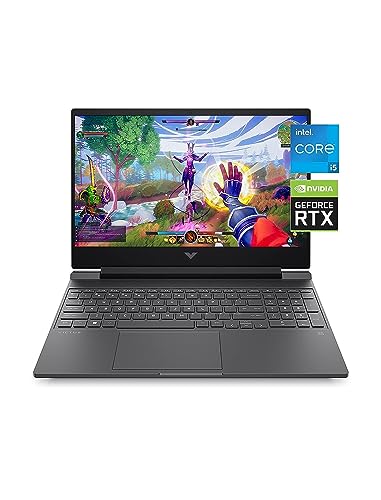
HP Victus 15 (i5-12500H, RTX 3050) — Strong-processor base
This Victus is the upgrade-first purchase in its most defensible form. The foundation is genuinely strong: a 12th-generation Intel Core i5-12500H, a processor with the core count and pace to serve a gaming machine for years, paired with a GeForce RTX 3050, 512GB of SSD storage and a Full HD display, in HP’s understated Victus chassis with a backlit keyboard. Against that foundation stands the single familiar number — 8GB of memory — and the whole review is the conversation between the two.
The conversation goes like this. As delivered, the machine plays esports titles well, handles older games comfortably, and meets newer demanding releases with the stutter and texture delay this guide’s introduction described, because 8GB is where those symptoms live. With a memory upgrade completed — the Victus line’s chassis is built to be opened, and the buyer’s job is to confirm the slot arrangement on this exact listing and match the module type — the same machine becomes what its processor and graphics chip always promised: a balanced 1080p gaming laptop with no structural apology left. No other purchase in this guide changes character so completely for so modest a second step.
That is why it leads the list. Its processor is the strongest foundation among the linked picks for a machine intended to be kept, its graphics rung is the class’s honest gaming chip, and its brand’s service footprint means the upgrade path is documented by owners before you. Buy it as a finished product and you will be disappointed by a number this guide has underlined three times. Buy it as the two-step purchase it is, and it is the smartest money in the article.
- Memory as shipped: 8GB — confirm the free slot or module layout on this listing before ordering
- Graphics: GeForce RTX 3050 laptop GPU
- Processor: Intel Core i5-12500H, 12th generation
- Display and storage: Full HD panel, 512GB SSD
- Upgrade verdict: the strongest foundation here for a planned move to 16GB
Strengths
- A processor with genuine longevity at the heart of an entry purchase.
- The RTX 3050 is a real gaming chip, not a badge exercise.
- Victus chassis and owner community make the upgrade well documented.
Trade-offs
- As shipped, 8GB limits newer games until the upgrade lands.
- The upgrade is an errand — small, but real — that not every buyer will complete.
- Storage starts at 512GB, the class’s usual constraint.
Best for: value buyers who will complete the memory upgrade promptly and keep the machine for years. Not suited for: anyone who wants a finished gaming laptop on the first night.

HP Victus 15 (Ryzen, RX 6550M) — AMD-graphics alternative
The second linked Victus takes the other silicon road: an AMD Ryzen 5 7535HS driving a Radeon RX 6550M discrete graphics chip, behind a 15.6-inch Full HD IPS panel at 144Hz with FreeSync Premium, with 8GB of DDR5 memory and a 512GB drive. It earns its place by being this list’s AMD-graphics option and its panel is a genuine highlight — variable refresh synchronised to an AMD GPU is exactly the technology that makes modest hardware feel smooth, because the screen waits for the frame instead of tearing at it.
The graphics chip needs this guide’s plainest language. The RX 6550M is an entry-level discrete GPU: a clear step beyond integrated graphics, entirely at home in esports and lighter titles, and not a flagship in disguise. The seller’s listing for this machine dresses it in a bold comparative claim against a rival chip, and this guide declines to repeat that claim, because discrete GPUs are not ranked by slogans and this one’s honest station is impressive enough without embroidery. Judge it as the entry rung it is, pair it with the library it serves, and it will not disappoint you; judge it by marketing and everything disappoints eventually.
The memory story is the family story: 8GB of DDR5 as shipped, with the upgrade question — slots, module type, the path to 16GB — to be confirmed on the listing and completed early. DDR5 at least means the upgrade buys current-generation modules that will stay relevant, and the Ryzen platform’s efficiency makes the machine pleasant company in the everyday work between games. As an AMD-flavoured route into this class, with the smoothest budget panel behaviour here, it makes a case no slogan needs to make for it.
- Memory as shipped: 8GB DDR5 — plan the move to 16GB and verify the slot layout first
- Graphics: Radeon RX 6550M, an entry-level discrete GPU for esports and lighter play
- Processor: AMD Ryzen 5 7535HS
- Display: 15.6-inch Full HD IPS, 144Hz, FreeSync Premium
- Storage: 512GB SSD
Strengths
- FreeSync panel behaviour flatters modest hardware better than any rival feature here.
- Efficient Ryzen platform and DDR5 memory keep the machine current in daily use.
- A genuine discrete GPU at the class’s friendly end, honestly positioned.
Trade-offs
- The RX 6550M is an entry rung; heavy new releases are beyond its brief.
- 8GB as shipped carries the class’s universal caveat until upgraded.
- Ignore the listing’s comparative marketing and judge the chip by its station.
Best for: esports-focused buyers who value panel smoothness and an AMD platform. Not suited for: players centred on demanding new releases at high settings.

ASUS TUF A15 (Ryzen 7, RTX 3050) — Durable upgrade host
The TUF A15 is what this class looks like when the foundation is a Ryzen 7. This configuration pairs an AMD Ryzen 7 7435HS — the strongest processor among the linked picks — with a GeForce RTX 3050, 8GB of DDR5 memory and a 512GB PCIe drive, behind a 15.6-inch Full HD panel at 144Hz, inside ASUS’s durability-led TUF chassis with Wi-Fi 6. If the Victus above is the smart two-step purchase, the TUF is the two-step purchase built to be opened, carried and kept: the family’s whole design philosophy is serviceability and survival, and an upgrade-centred class could ask for no better host.
Consider what the Ryzen 7 means for the machine’s second act. Memory upgraded to 16GB, this chassis houses a processor with headroom for streaming, recording and the background sprawl of a real gaming life, a graphics chip at the class’s honest rung, and a DDR5 platform that will not date the way older memory standards do. Owners who tinker — and this class selects for them — will find the TUF the most welcoming of the three linked picks to live inside of: panels that open sensibly, components laid out by people who expect to meet a screwdriver.
The caveats are the class’s own, stated for the third and final time in the linked reviews: 8GB as shipped is a starting line, and this machine’s considerable virtues are all on the far side of the upgrade. Its graphics ceiling is the RTX 3050’s, which no processor can raise. Buy the TUF as the durable, upgradeable foundation it is, complete the memory step in the first month, and you own the pick in this guide most likely to still be serving, upgraded and unbothered, when its rivals are memories.
- Memory as shipped: 8GB DDR5 — the TUF chassis is the friendliest here for the upgrade
- Graphics: GeForce RTX 3050 laptop GPU
- Processor: AMD Ryzen 7 7435HS — strongest CPU among the linked picks
- Display and storage: 15.6-inch Full HD 144Hz, 512GB PCIe SSD
- Design focus: durability-tested, service-friendly TUF construction
Strengths
- The strongest processor foundation in the linked list, built for a long second act.
- Serviceable, durable chassis suits an upgrade-centred purchase perfectly.
- DDR5 platform keeps the upgraded machine current for years.
Trade-offs
- Ships at 8GB like its peers; the upgrade is the price of admission.
- RTX 3050 defines the gaming ceiling regardless of processor strength.
- Utilitarian TUF styling will not charm design-led buyers.
Best for: tinkerers and long-keepers who want the most durable host for an upgraded machine. Not suited for: buyers who will never open a laptop or add a module.
Acer Nitro V 15 (base 8GB) — Prose-only base configuration
The Nitro V line appears elsewhere in this batch of guides in stronger configurations, and its base 8GB form is the version budget searches surface first: the same angular Acer chassis and gaming intent, trimmed to the entry memory amount to hit the friendliest position in the range. It is covered in prose because the base configuration is a moving target — listings vary by region and season — and because the honest advice for it is a method rather than a model number.
The method is this guide’s refrain, applied to Acer’s line. Establish the slot situation for the exact unit in front of you: how many modules are fitted, whether a slot stands free, and what memory type the machine takes. Nitro chassis have a long owner history of upgrades, which is encouraging, but encouragement is not verification and the specific listing’s specification is the only document that counts. Then judge the rest of the base configuration — graphics rung, panel refresh, storage — against the linked picks above, and let the total, laptop plus the memory it needs, cast the deciding vote.
Read that way, a base Nitro V can be a perfectly rational purchase: a known chassis, a real gaming line, and a defined path to the machine it should be. Read casually, it is an 8GB laptop with a gaming logo, and this class has already explained what that means in 2026’s game library. The difference is entirely in the reading, which is why the model earns a prose briefing instead of a link.
- Memory in this form: the line’s starting 8GB trim — treat the slot check as the purchase itself
- Family: Acer Nitro V, an established entry gaming line
- What varies: graphics rung and panel details shift across base listings and regions
- Buying key: price the laptop and its memory upgrade together, never separately
- Guide treatment: briefed in prose because base listings move faster than links should
Strengths
- A known gaming chassis with a deep owner community documenting upgrades.
- Base trims can price the two-step route below factory 16GB models.
- The line’s stronger configurations prove the platform’s ceiling is respectable.
Trade-offs
- Base specifications vary; the listing in front of you is the only truth.
- Ships at the 8GB floor with everything that implies until upgraded.
- Requires the most listing diligence of any pick in this guide.
Best for: diligent value hunters who verify slots and price the whole plan. Not suited for: casual buyers who want the listing to do the thinking.
Lenovo LOQ (base 8GB) — Prose-only base configuration
Lenovo’s LOQ line earned its mainstream reputation on sensible configurations, which makes its base 8GB form the class’s most interesting tension: a well-judged chassis and design carrying the one specification this guide keeps warning about. The base LOQ circulates widely in listings, often as the price leader of its family, and a buyer comparing it against the linked 16GB LOQ configuration in this batch’s other guides is really comparing two philosophies of purchase — pay for completion now, or pay less and complete it yourself.
The prose treatment exists to make that comparison fair. The LOQ’s virtues survive the base trim: the calm design, the family’s cooling inheritance from Legion, the port selection that usually remembers wired networking. What does not survive is any excuse about the memory. Establish the module layout for the unit you are considering, confirm the path to 16GB in the manufacturer’s documentation for that model code, and then compare honest totals. A base LOQ plus its upgrade, priced against the factory 16GB machine, is a comparison a buyer can win in either direction — but only a buyer who runs the numbers wins it on purpose.
We do not link the base form because its listings fragment across configurations and sellers more than any other model here, and a guide’s link should land on a specification it can stand behind. The briefing above is the standing behind: the LOQ base is a legitimate doorway into a good line, provided the person walking through it carries a memory module and a plan.
- Memory in this form: the family’s entry 8GB trim — module layout must be confirmed per model code
- Family: Lenovo LOQ, the mainstream line beneath Legion
- What to compare: base unit plus upgrade, priced against the factory 16GB configuration
- Buying key: manufacturer documentation for the exact model code settles the slot question
- Guide treatment: covered in prose while its listings fragment across sellers
Strengths
- A well-judged mainstream chassis and design at the family’s friendliest entry.
- Cooling and port inheritance from the Legion side of the family.
- A clear, documentable upgrade path in most configurations.
Trade-offs
- The base trim’s memory is the compromise the whole guide warns about.
- Listing fragmentation makes verification slower than for the linked picks.
- The factory 16GB sibling may be the better buy once totals are compared.
Best for: methodical buyers who enjoy winning the totals comparison. Not suited for: anyone who finds per-model documentation homework a burden.
MSI GF63 Thin (8GB) — Prose-only earlier thin line
The GF63 Thin is this guide’s elder: MSI’s earlier attempt at a genuinely thin and light gaming laptop, a design from the seasons when portability in a gaming chassis was still a novelty worth a headline. Its 8GB configurations circulate at the friendly end of listings, and its slim silhouette still photographs well. A buyer owes it the respect of an honest context, which is what this prose section provides: it is an earlier-generation thin gaming design, and both halves of that description carry consequences.
The generation half is straightforward — older processor and graphics platforms, with the support horizon and game compatibility that follow, in a market where the linked picks offer current silicon. The thin half is subtler and more important. Slim gaming chassis of its era made their peace with heat by limiting it, and sustained gaming loads meet that peace treaty quickly; the GF63’s appeal was always the bag, not the marathon session. Neither fact makes it a bad machine for a light library at a fair position. Together they make it a machine to buy with both eyes open, at a price that respects its age, for esports and older titles, by a buyer who values the carry.
It closes the guide’s prose trio as the cautionary end of the class’s spectrum: the pick where the upgrade question shares the stage with generation and thermals, and where the discount must therefore be deepest to make the same sense. If you find one cheap, clean and honestly described, and your library is light, it can serve. If you find one priced like its younger rivals, the linked picks above are waiting with newer silicon and stronger foundations.
- Memory in this form: 8GB trims are the common circulating configuration
- Family: MSI GF63 Thin, an earlier thin gaming line
- Defining trait: slim, light chassis from its generation — portability first
- Buying key: its age and thermal ceiling must both be priced into the decision
- Guide treatment: written in prose as the class’s elder, not its recommendation
Strengths
- Genuinely portable for a gaming-badged machine of its era.
- Can represent fair value for light libraries when priced as the elder it is.
- MSI’s gaming line heritage means parts and knowledge still circulate.
Trade-offs
- Earlier-generation platforms with the support horizon that implies.
- Thin chassis thermals limit sustained gaming loads.
- Must be priced well below the linked picks to make its case.
Best for: portability-first buyers with light libraries who find one honestly priced. Not suited for: marathon sessions, new demanding games, or anyone paying current-generation money.
How Do You Actually Upgrade One of These Machines?
The upgrade this whole guide leans on is genuinely simple, and demystifying it is a service. You need the correct memory module for your machine — matched to its type, DDR4 or DDR5 as the listing specifies, in laptop SO-DIMM form — a small screwdriver, and twenty unhurried minutes. Power the machine off and unplug it, remove the bottom panel by its screws, and you will find the memory slots near the centre of the board. A free slot accepts the new module at a shallow angle until its clips click; a machine with both slots filled needs its existing module replaced with a larger one, which is why the slot layout check precedes the purchase rather than following it.
Two refinements separate a good upgrade from a merely bigger one. Dual-channel operation — two modules working as a pair — measurably helps performance, especially with integrated graphics in everyday tasks, so a matched pair is the ideal end state even if a single added module is the pragmatic first step. And before the panel goes back on, boot the machine and confirm the new total in system information; discovering a badly seated module is a two-minute fix on the desk and a mystery if first met inside a game. Warranty anxiety deserves a calm word: opening a laptop to fit memory in a provided slot is a normal owner action on these lines, but read your specific warranty terms if the point worries you, and keep the original module in case a service visit ever asks for the machine as shipped.
Which Games Forgive 8GB and Which Refuse To?
Until the upgrade lands — and for owners who never make it — library choice decides whether 8GB is a footnote or a frustration. The forgiving catalogue is large and excellent: competitive esports titles are engineered to run on modest hardware because their audiences are everyone; indie games overwhelmingly sip memory; and the great back catalogue of the last decade was built when 8GB was a respectable specification, so it behaves like one. A player whose life is that catalogue can run an 8GB machine happily for a long while, especially with the discipline of closing the browser before a session.
The refusing catalogue is newer and louder. Recent open-world and flagship releases increasingly treat larger memory pools as their natural habitat, and on 8GB they announce it through stutter as new areas stream in, textures that resolve late, and frame pacing that no graphics setting fully cures — because the bottleneck is not the graphics chip’s power but the system’s room to feed it. Lowering settings helps the GPU’s side of the problem and cannot fix the memory side. That asymmetry is the technical heart of this guide’s advice: settings are negotiable, memory is structural, and structural problems get structural solutions — a module, fitted early, while the machine is new to you and the errand is small.
Comparison Table
| Laptop | Graphics | Memory as shipped | Watch out for |
|---|---|---|---|
| HP Victus 15 (i5-12500H, RTX 3050) | RTX 3050 | 8GB | Confirm slot layout; upgrade promptly |
| HP Victus 15 (Ryzen, RX 6550M) | RX 6550M | 8GB DDR5 | Entry GPU station; ignore seller slogans |
| ASUS TUF A15 (Ryzen 7, RTX 3050) | RTX 3050 | 8GB DDR5 | Upgrade unlocks the machine’s real self |
| Acer Nitro V 15 (base 8GB) | Varies by listing | 8GB base trim | Verify the exact unit’s slots and specs |
| Lenovo LOQ (base 8GB) | Varies by listing | 8GB base trim | Compare totals against factory 16GB |
| MSI GF63 Thin (8GB) | Earlier-generation | 8GB | Age and thin-chassis thermals |
What Mistakes Do Buyers in This Class Keep Making?
The first and worst is buying soldered 8GB: a machine whose memory cannot grow, purchased on the strength of its graphics badge, becomes a countdown rather than a computer. Every other mistake in this class is recoverable; that one is architectural. The second is believing the ceiling is the graphics chip — blaming an RTX 3050 for stutter that belongs to the memory pool, and shopping for a stronger GPU to fix a problem located elsewhere. The third is trusting comparative slogans in listings, of which this category’s marketing offers a florid example; a GPU’s station is established by its class and generation, not by a parenthesis in a seller’s title.
The fourth mistake is deferring the upgrade indefinitely. The two-step purchase only works if step two happens; an 8GB machine still at 8GB in year two is not a plan but a postponement that hardened. Buy the module with the laptop, or calendar the purchase for the first month, and treat the machine as unfinished until then — because by this guide’s accounting, it is. The fifth is arithmetic laziness: never comparing the base-plus-upgrade total against the factory 16GB price, a comparison that sometimes crowns the base model and sometimes exposes it, and always rewards the buyer who runs it.
How Should You Live With 8GB Until the Upgrade?
Some owners will spend weeks or months at the shipped specification, and the interim has its own craft. Keep the gaming session clean: close the browser and the heavy launchers before play, because on 8GB every background suite is a tenant in a small house. Let Windows manage its page file on the SSD rather than disabling it in a fit of optimisation folklore; the page file is the pressure valve that keeps a memory-tight machine stable. Prefer the games’ medium texture settings, since textures are where memory pressure shows first, and favour the forgiving catalogue from the earlier section for your longest sessions.
Watch the machine’s own telemetry once, so the abstract becomes personal: open the performance monitor during your favourite demanding game and watch memory commit press against the ceiling. Owners who have seen that graph stop debating whether the upgrade is necessary. Then do the upgrade, and enjoy the specific pleasure of a problem that stays solved — the rarest kind in computing, and the whole reason this class, bought correctly, is worth a guide at all.
How Do You Choose the Right Memory Module Without Guesswork?
The module purchase defeats more owners than the installation ever will, so treat it as a specification exercise. Three facts decide compatibility: the generation, DDR4 or DDR5, which the machine’s listing states and which are physically different and non-interchangeable; the form factor, SO-DIMM for laptops rather than the desktop’s longer DIMM; and the speed, where matching the fitted module’s rating keeps the pair in step. The reliable method is to read the machine’s own documentation or a reputable memory maker’s compatibility tool with your exact model code in hand, and to buy from a seller whose return policy forgives an honest mismatch.
Capacity strategy deserves a sentence of planning. If the machine holds one fitted 8GB module and one free slot, adding a second 8GB module reaches the 16GB target with dual-channel symmetry in one step — the cleanest outcome in this class. If both slots are filled with smaller modules, the path is a replacement pair, and the arithmetic against a factory 16GB machine deserves re-running before money moves. Photograph the fitted module’s label during your first opening if you ever need its exact specification again; owners who do this once never guess twice.
What Does the Rest of the Machine Need to Deserve the Upgrade?
An upgrade is an investment, and investments deserve due diligence on the whole asset. The processor decides the machine’s horizon: the linked picks’ chips — a 12th-generation Intel, a Ryzen 5 HS, a Ryzen 7 HS — all promise years of relevance once memory stops throttling them, which is precisely why they were chosen. The panel decides daily pleasure, and the 144Hz-class screens here will still flatter the machine in year four. Storage at 512GB is workable and usually expandable, the one specification besides memory that this class lets you grow.
The chassis is the quiet partner in the whole arrangement. Hinges, cooling and keyboard are the parts you cannot upgrade at any price, so a machine whose bones are good — the TUF’s durability brief, the Victus line’s maturity — converts a memory module into a multi-year extension of life, while a fragile machine converts it into money spent prolonging a disappointment. That is the editorial logic of this list in one paragraph: strong bones, honest graphics, one fixable flaw. Judge every base-configuration listing you meet by the same three questions and you will rarely buy this class wrong.
How Does 8GB Interact With Everything Else You Do?
Gaming does not happen in a vacuum, and 8GB’s tax is collected in the margins around the game. The voice chat that shares the machine, the browser holding the guide or the stream, the recording software capturing the session, the launcher updating the next title — each is modest alone and decisive together on a small pool. Players discover that their 8GB machine games acceptably in a sterile test and poorly in a real evening, and the difference is the entourage. The upgrade’s gift is therefore larger than any single game’s requirement chart suggests: it buys back the whole evening, entourage included.
Everyday work feels the same arithmetic. A gaming laptop in this class is usually a household’s only serious computer, and the school project, the video call and the photo library all draw from the same 8GB until the module lands. Readers sometimes ask whether they should upgrade memory or buy a separate cheap laptop for work; in this class the answer is almost always the module, because one well-fed machine outperforms two starved ones at everything except being in two rooms at once.
What Should Happen in the First Month of Ownership?
Treat the first month as the completion window, with a small ceremony of tasks. Week one belongs to verification: confirm the shipped specification against the listing, test the panel and ports, and run your library’s most demanding title once — not to enjoy it, but to establish the baseline your upgrade will be measured against, ideally while watching the memory graph this guide described. Week two is for ordering the module with the compatibility facts in hand, calmly rather than in the midnight panic that produces wrong parts. The upgrade itself takes an evening’s unhurried half hour, panel off, module seated, total confirmed, and the same demanding title run again as the receipt.
The remaining weeks are for the habits that make the completed machine feel finished: profiles set for quiet work and full play, the panel verified at its full refresh rate, storage organised before the library sprawls, and the original memory module labelled and stored with the invoice. Owners who run this month deliberately describe their 8GB purchase ever after as the clever route. Owners who let the month drift describe it as the cheap laptop that stutters. The hardware in both stories is identical; the month is the difference, and it is entirely within the buyer’s control.
Who Should Skip This Class Altogether?
Three readers should close this guide and buy a factory 16GB machine from its siblings instead. The buyer who will never open a laptop — by temperament, circumstance or a warranty they refuse to discuss — is buying a permanent 8GB machine here, and permanent 8GB is the one purchase this article argues against in every section. The buyer whose library is next year’s demanding releases at high settings needs a stronger graphics rung and a finished specification, not a project. And the buyer for whom the price difference between the base-plus-module total and the factory machine is trivial should take the factory machine and spend their tinkering hours playing.
Everyone else — the value hunter, the tinkerer, the parent buying a first gaming laptop for a household that will grow into it, the student whose budget arrives in two instalments like the purchase itself — is this class’s true audience. For them, an 8GB gaming laptop bought with open eyes and a dated plan is not a compromise at all. It is the market’s one honest loophole, and this guide exists to hand it over with the instructions attached.
A Short History of How 8GB Became the Floor
Context steadies judgement. Within living memory of the market, 8GB was a respectable gaming specification — the amount a well-built machine carried while 16GB was the enthusiast’s luxury. Games grew, operating systems grew, browsers grew enormously, and the centre of gravity moved until 16GB became the mainstream recommendation and 8GB inherited the role of minimum viable. Manufacturers kept shipping it at the entry rung for an understandable reason: it is the cheapest specification that still demonstrates a game running in a shop, and entry price points are where new buyers enter the hobby.
Understanding that history prevents two opposite errors. The first is nostalgia — assuming that because 8GB once sufficed, it suffices now, in a library that has demonstrably moved on. The second is snobbery — assuming an 8GB machine is junk, when its bones are often the same bones sold at 16GB for more, separated by one module and one honest errand. This guide’s position is the middle one the evidence supports: respect the floor for what it is, buy above it whenever the totals allow, and when you buy at it, buy the version with a door in the floor — a free slot — and walk through it promptly.
What About Resale, Hand-Downs and the Machine’s Second Life?
An upgraded machine from this class hands down beautifully, which is a real if unglamorous part of its value. The younger sibling, the parent, the household’s second desk — all inherit a laptop whose specification needs no apology once the module is in, and whose gaming badge still opens a library of thousands of suitable titles. The same machine left at 8GB hands down as a problem to be explained. If there is a single sentence that captures why this guide is so insistent about a small, cheap component, it is that one: the module is the difference between a laptop with a future and a laptop with an excuse, and it costs less than the games you will buy in its first season.
How Do You Verify All of This on Delivery Day?
The class’s diligence ends with a delivery-day ritual. Confirm in system information that the processor, graphics chip, storage and — above all — the memory amount and module count match the listing you ordered, because base configurations ship in lookalike boxes across this whole market. Open the performance monitor during a familiar game and record the memory behaviour as your baseline. Check the panel at full refresh, test the ports, and photograph the bottom panel’s screws before your first opening so their original state is documented. Then schedule the module purchase while the return window still protects every assumption in this paragraph. A buyer who verifies on day one owns the plan; a buyer who assumes owns the surprises.
One More Distinction: This Class Is Not the 16GB Class on Sale
It is tempting to describe these machines as bargains, and the description needs its final qualification. A factory 16GB laptop arrives with its warranty unambiguous, its memory matched and tested as a pair, and its first evening free for playing rather than planning. The 8GB route trades those certainties for a lower entry total and a small project, and the trade is only wise for the buyer who values the difference more than the certainties. Nothing in this guide should be read as claiming the project is free — it costs an evening, a module and a measure of attention. The claim is narrower and stronger: for the right buyer, it is the best-value honest transaction in the entry gaming market, and the machines above are its best foundations.
What If the Upgrade Reveals a Different Problem?
Occasionally an owner upgrades in good faith and finds a favourite game still unhappy, and the moment deserves a calm diagnostic rather than despair. Memory was the structural ceiling for the symptoms this guide catalogued — stutter on streaming in new areas, late textures, an entourage that had to be closed — and if those specific symptoms persist unchanged, re-seat the module and confirm the new total is actually recognised before suspecting anything grander. If the memory graph now sits comfortably while frame rates stay low, the bottleneck has honestly moved to the graphics chip’s settings, which is progress of a kind: the machine is now limited by the specification you chose knowingly, adjustable in the settings menu, rather than by the one you were warned about. Either way, the upgraded machine is strictly better diagnosed than the starved one, because each remaining limit is the one on the label.
Should You Upgrade Storage at the Same Time?
Since the panel will be open anyway, the question naturally arises, and the answer is: only if the drive is already pinching. A 512GB drive with a focused library has room to breathe, and memory — not storage — is the structural fix this class exists to make. Owners with sprawling libraries should check whether their chassis offers a second drive bay while it is open and note the fact for later, rather than buying capacity in a panic. One upgrade at a time keeps the diagnosis clean, the budget honest and the evening short, and the storage decision will still be there, better informed, in the season when the library actually demands it.
Final Recommendation
Buy into this class only as the two-step purchase it honestly is, and it will serve you well. The ASUS TUF A15 is the finest foundation here — the strongest processor, the most serviceable chassis, the machine whose upgraded self has the longest future. The Intel Victus matches it closely for buyers who prefer its platform and owner community, and the Ryzen Victus with the FreeSync panel is the esports-flavoured route, its AMD graphics chip judged by its honest entry station rather than its listing’s embroidery. The prose trio — base Nitro V, base LOQ, the elder GF63 Thin — are doorways to be walked through with the slot check in hand and the totals compared. Fit the memory module in the first month, and the laptop you end up owning is not an 8GB compromise at all; it is the 16GB machine this guide would have recommended anyway, bought the clever way.
Frequently Asked Questions
Is 8GB of RAM enough for gaming in 2026?
For esports, indie titles and the last decade’s catalogue, it remains workable. For a growing list of recent releases it is not enough to play well, with stutter and late textures as the symptoms. This guide treats 8GB as a starting specification to upgrade from, and recommends planning the move to 16GB with the purchase itself.
What is the single most important thing to check before buying?
The memory slots. Confirm whether the machine has a free slot or replaceable modules, and what type it takes, from the listing or the manufacturer’s documentation for the exact model. A soldered 8GB machine cannot be fixed later at any price, which makes it the one configuration this guide advises against outright.
Is the Radeon RX 6550M a strong graphics chip?
It is an entry-level discrete GPU: a real step beyond integrated graphics, well suited to esports and lighter titles, and not a high-end card. One listing markets it with an aggressive comparison against a rival chip; this guide does not repeat seller slogans and places the chip by its class, where it earns an honest recommendation for the right library.
How hard is the memory upgrade, really?
For most owners, it is a twenty-minute job with a small screwdriver: bottom panel off, module seated until the clips click, boot and confirm the new total. The genuine work is beforehand — verifying the slot layout and buying the correct module type for your machine. Keep the original module in case a warranty service ever wants the machine as shipped.
Should I just buy a factory 16GB laptop instead?
Often, yes — and this guide’s sibling articles recommend exactly those machines. The 8GB route wins only when the totals favour it: base machine plus module priced clearly below the factory 16GB equivalent, with a chassis you are happy to open. Run that comparison honestly and let arithmetic, not optimism, decide.
Will adding a single module help, or must it be a matched pair?
A single added module helps immediately by doubling the pool, which is where most of the pain lives. A matched pair adds dual-channel symmetry, the ideal end state for performance. Many owners add one module now and complete the pair later; both steps are progress, and the first is the one that changes daily life.
Does 8GB affect battery life or everyday work?
Everyday work feels it whenever several suites run together, because the system spends effort shuffling memory instead of doing yours. Battery effects are indirect: a memory-starved machine works its storage harder through the page file, which is effort spent standing still. Neither effect is the headline — gaming is — but both improve with the same module, which is why upgraded owners often report the whole machine feels newer rather than merely faster in games.
What if a listing does not state the memory slots?
Treat the silence as a research assignment, not an answer. The manufacturer’s specification and support pages for the exact model code will state the slot arrangement, and owner teardowns for established lines are easy to find. If neither source can confirm an upgrade path, assume the worst and choose a machine whose path is documented — in this class, an unverifiable slot is functionally a soldered one.
Can I upgrade the memory later in an 8GB gaming laptop?
In many of them, yes — and whether you can is one of the most valuable checks to run before buying in this class. Traditional gaming laptops carry one or two SODIMM slots under the base panel; an 8GB configuration often occupies a single slot, leaving the second free so a later upgrade is a ten-minute job with a small screwdriver. Other designs solder the memory to the board, and on those machines 8GB is a permanent ceiling no upgrade path relieves. The listing rarely shouts which arrangement you are getting, so confirm the exact model’s memory configuration — slot count and whether the fitted memory is removable — in the maker’s specification for that model number, not the series. If the machine is slotted, an 8GB pick here can be a sensible staged purchase: play now within the limits this guide describes, then double the memory when budget allows and remove the class’s main constraint in one step.
Related Guides
Compare this route against the finished machines in best 1080p gaming laptops and best 15.6 inch gaming laptops, and if memory itself is your household’s theme, best 32gb ram laptops non gaming shows the specification at its most generous for work. You may also want our guide to best 32GB RAM laptops for work. You may also want our guide to best 14-inch gaming laptops.


