What's inside
- Where to buy
- Key Takeaways
- Quick Picks
- How We Chose These Picks
- Why Did the 30-Inch TV Disappear?
- Will a 32-Inch Set Fit Where a 30-Inch One Did?
- A Short History of the Small Television, and Where 30 Inches Sat in It
- The Six Nearest Televisions, Examined One by One
- Can These Small Sets Handle a Games Console or a Streaming Stick?
- Side-by-Side: What Actually Separates These Six?
- How Far Away Will You Sit? The Distance Maths for Neighbouring Sizes
- Getting a Small Television Set Up Properly: Antenna, Sound and Light
- Room by Room: Placing the Neighbour Sizes Where They Belong
- What Goes Wrong When People Shop for a Dead Size?
- Final Recommendation
- How “Class” Sizes Work, and How to Check a Diagonal Yourself
- Power Draw, Heat and Running Costs in Small Rooms
- Should You Buy a Second-Hand 30-Inch Set Instead?
- A Note on Warranties and Support for Budget Small Sets
- Frequently Asked Questions
- Related Guides
As an Amazon Associate I earn from qualifying purchases. This post may contain affiliate links at no extra cost to you.
gizmoverdict.com is reader-supported. When you buy through links on our site, we may earn an affiliate commission.
Where to buy
Shoppers hunting for the best 30 inch tvs run into a strange fact within the first few minutes: the size on the search box barely exists. No major brand in the current verified pool sells a television that measures exactly thirty inches across the diagonal, and that absence is not a stock shortage or a seasonal gap. The 30-inch class quietly died when panel factories stopped cutting glass at that diagonal, and the shelves reorganised themselves around the two sizes that flank it — 32 inches above and 24 inches below. This guide treats that disappearance as the story it is, and every pick below carries its true measurement in its heading so nobody orders a “30-inch TV” that turns out to be something else.
Why did the factories abandon it? Television panels are cut from enormous mother-glass sheets, and a diagonal survives only if it tiles those sheets with minimal waste. Thirty inches tiles badly next to the sizes the industry standardised on — 32 inches became the universal small-room panel, produced in such volume that its price fell below what a low-volume 30-inch panel could ever match. Once 32-inch sets cost the same or less than the hypothetical 30-inch ones, retailers stopped ordering the odd size, brands stopped designing around it, and within a few model years the class was gone from mainstream catalogues. What remains are commercial and specialty panels at prices that make no sense for a bedroom or kitchen.
So the honest shortlist splits three ways. Three picks are 32-inch sets — the size that absorbed the 30-inch demand — covering Google TV, Roku and Fire TV at full 1080p. Two picks are 24-inch sets that mark the lower boundary, useful where a 32 genuinely will not fit a shelf, a caravan or a narrow kitchen counter. One pick is a 40-inch set included deliberately as the upper warning: if your space measurement was approximate, this is where the ladder actually goes next, and it is better to see that now than after a delivery. Measure your alcove, then read the size in each heading as the real diagonal, because in this guide the label always wins over the search term.
Key Takeaways
- No current mainstream brand in the verified pool sells a true 30-inch television; the class ended when panel cutting standardised on 32 inches.
- Three picks measure 32 inches — TCL S3, Roku Select and Insignia F40 — and all three are full 1080p, the resolution a 30-inch buyer would have wanted anyway.
- Two 24-inch sets, from Insignia and Roku, mark the lower boundary for shelves and counters where even a 32-inch cabinet overhangs.
- The TCL 40-inch S3 sits at the top of the guide as a deliberate ceiling check for buyers whose “about thirty inches” was a guess.
- Panel economics, not picture quality, killed the size: 32-inch glass is cut in such volume that it undercut the odd diagonal completely.
Quick Picks
| Pick | Badge | Why it earns its place |
|---|---|---|
| TCL 32-Inch S3 Google TV | 32 inch — the size that replaced 30 | Full 1080p, Google TV and a voice remote: the closest living answer to what a 30-inch shopper actually wanted. |
| Roku 32-Inch Select | 32 inch — simplest interface in the guide | Roku’s own hardware with a 1080p panel and the least cluttered home screen of any pick here. |
| Insignia 32-Inch F40 Fire TV | 32 inch — Alexa households | The 1080p Fire TV option for rooms already run by Echo speakers and Alexa routines. |
| Insignia 24-Inch F20 Fire TV | 24 inch — the lower boundary | A 720p kitchen-and-counter set that fits the gaps a 32-inch cabinet physically cannot. |
| Roku 24-Inch Select | 24 inch — small screen, full Roku | The same Roku platform as its 32-inch sibling, shrunk to a 720p panel for tight rooms. |
| TCL 40-Inch S3 Roku TV | 40 inch — the ceiling check | Included so approximate measurers can see the next real size up before committing to a 32. |
How We Chose These Picks
A guide to a vanished size has one overriding duty: never let a pick pretend to be 30 inches. Every candidate was checked against the verified pool for its true diagonal first, and only then for the things that matter at this end of the market — panel resolution, platform behaviour, and whether the set still receives current software support. Anything described by a seller with a rounded or “class” measurement that hid a different real diagonal was treated with suspicion, because “30-inch class” language was exactly how the old size lingered in listings after the panels themselves had changed.
Resolution earned unusual weight. A genuine 30-inch set from the class’s final years was typically 720p or 1080p, and buyers searching today usually picture the sharper end of that memory. The three 32-inch picks are all full 1080p, so stepping up two inches also steps up clarity — a trade most people accept gladly once it is stated plainly. The 24-inch picks are 720p, which is defensible at that diagonal and viewing distance, and the guide says so at each heading rather than letting the smaller sets borrow the bigger ones’ sharpness by association.
Platform coverage was the third filter. Small TVs end up in kitchens, spare rooms, dorms and caravans, where the interface matters more than panel heroics: whoever uses the room should be able to reach a streaming app or the antenna channels without a lesson. Google TV, Roku and Fire TV all appear among the 32-inch picks, so the recommendation can follow the household’s existing accounts and voice assistant instead of forcing a new one for the sake of a bedroom set. Finally, each pick had to be a current, supported model in the pool — no legacy 30-inch stock, no commercial signage panels dressed up as televisions, and no marketplace ghosts trading on a dead size’s search traffic.
Why Did the 30-Inch TV Disappear?
The mechanics are worth understanding because they explain several other odd sizes in this batch of guides. A modern LCD factory does not make screens one at a time; it cuts many panels from a single sheet of mother glass, and the profitability of a size depends on how completely those cuts fill the sheet. The industry’s sheet generations settled into cutting patterns that yield 32-inch and 40-inch panels efficiently. A 30-inch diagonal fits those patterns poorly, leaving slivers of glass that cannot be sold. When volumes were smaller and prices higher, brands tolerated the waste. Once 32-inch panels became a commodity — fitted to everything from monitors to hotel TVs — the waste became indefensible.
Retail finished the job. A shelf or web listing can only carry so many sizes, and buyers comparing a 30-inch set against a 32-inch set at the same price chose the larger screen almost every time. The two-inch difference is invisible in a product photo and barely visible in a room, so the smaller set had no story to tell. Brands read the sales data, dropped the diagonal from their line-ups, and the tooling followed. The same gravity explains why 36, 37 and 39 inches have thinned out in the current catalogues: the market now moves in steps the factories like — 24, 32, 40, 43 — and everything between those steps is living on borrowed time or already gone.
There is one place the size survives: commercial displays, medical and industrial monitors, and a few regional brands selling into markets with different supply chains. Those products are real, but they are built for signage loops and spec-sheet tenders, not for a living room — they often lack the streaming platforms, tuner behaviour and remote ergonomics a home buyer assumes. Chasing one to satisfy a search term is how people end up with an expensive screen that does none of the things a television should. The sensible move is the one this guide makes: buy the neighbouring size, knowingly, with the true diagonal printed where you can see it.
Will a 32-Inch Set Fit Where a 30-Inch One Did?
Usually, yes — and it is worth doing the small amount of maths that proves it before ordering. A 32-inch 16:9 screen is roughly 27.9 inches wide and 15.7 inches tall for the panel itself; most current cabinets land around 28.8 inches wide once the bezel is counted. A 30-inch panel would have been about 26.1 inches wide. The difference that decides fit is therefore under three inches of width, and modern bezels are so thin that a current 32-inch set is frequently narrower than a ten-year-old 30-inch set with its thick frame and side speakers. If the old television fitted its alcove with any margin at all, the new one very likely fits too.
Height and depth cause the real surprises. On feet, a 32-inch set stands around 19 inches tall; check that against shelf spacing, especially under kitchen cabinets where the gap is often 18 inches and the 32 will not slide in — that is precisely the case the 24-inch picks exist for. Depth matters for corner placement and for wall mounts near door swings. VESA patterns on these small sets are typically small squares, and an existing mount from a 30-inch television often carries over, but the only honest method is to compare the pattern numbers rather than assume. Stand width is the last trap: several current models spread their feet nearly the full width of the cabinet, so a narrow dresser that held a centre-stand 30-inch set may not support them. Measure the furniture, not just the wall.
A Short History of the Small Television, and Where 30 Inches Sat in It
Thirty inches was never a flagship size; it was a compromise size, and understanding its job explains why its neighbours divide the work so cleanly today. In the flat-panel era’s first decade, the small-television ladder ran 19, 22, 26 and 32 inches, and 26 was the bedroom standard. As panel prices collapsed, 32 became cheap enough to take the bedroom, and manufacturers opened a rung between the kitchen’s 24 and the bedroom’s 32 for dens, dorms and larger kitchens. Thirty inches filled that rung for a while, marketed heavily in the mid-2010s as the “big small TV.” It was, in truth, a panel-cutting by-product: a diagonal that appeared when a particular generation of glass made it cheap, and vanished when the next generation made it awkward.
The rooms, meanwhile, did not change. Kitchens still have 18-to-24-inch gaps under cabinets. Bedrooms still place the screen six feet from the pillow. Dorm rooms still offer one shelf. The by-product size disappeared and the rooms simply re-sorted themselves: the dens and dorms took 32, the tightest kitchens kept 24, and a generation of buyers learned to say “about thirty inches” when they meant “the small one.” Search data still carries the old phrase, which is why guides like this one exist — to translate a remembered size into the sizes the factories actually ship, without letting the translation become a trick.
There is a lesson in the episode for anyone shopping other odd sizes. A diagonal that exists because of one factory generation’s cutting pattern is a diagonal with no guarantee of a successor, spare parts or a like-for-like replacement in five years. The safe sizes are the boring ones — 24, 32, 40, 43 — because the industry’s volume sits behind them: mounts, stands, replacement remotes and resale demand all concentrate there. Buying into the volume sizes is not surrender; it is how a small television stays supportable for its whole working life.
The Six Nearest Televisions, Examined One by One

TCL 32-Inch S3 Google TV — 32 inch, the heir apparent
If the 30-inch class had a natural successor, this is it. TCL’s S3 at 32 inches pairs a full 1080p panel with Google TV, which means the home screen organises itself around the streaming accounts the household already pays for, and the voice remote handles the “play the thing” requests that small-room TVs mostly receive. In a bedroom or study — the rooms a 30-inch set would have served — that combination covers the entire job: broadcast through the tuner, streaming through the platform, and casting from an Android phone without extra hardware.
The panel deserves a plain statement. At 32 inches, 1080p gives a pixel density that holds up at the four-to-six-foot distances these sets are watched from; text in menus stays crisp and sport does not dissolve into smear the way 720p can at this size. TCL’s direct-LED backlighting keeps brightness even across the small screen, and the set’s modest footprint means it asks for roughly the same shelf as the vanished size did. Nothing about it pretends to be a cinema screen, and that restraint is the point.
- Screen: 32-inch class, 1920×1080 full HD
- Platform: Google TV with Google Assistant voice remote
- Tuner: built-in over-the-air tuner for antenna channels
- Role in this guide: nearest living size above 30 inches
Strengths
- Full 1080p at the exact size that absorbed 30-inch demand
- Google TV recommendations draw from existing subscriptions
- Chromecast built in for Android households
Trade-offs
- It is two inches larger than the search term — measure first
- Google TV’s home screen carries sponsored rows some dislike
- Sound is adequate for speech, thin for films
Best for: the 30-inch shopper whose alcove has three spare inches of width and who lives in Google’s ecosystem. Not suited for: a fixed 18-inch under-cabinet gap, where only the 24-inch picks physically fit.
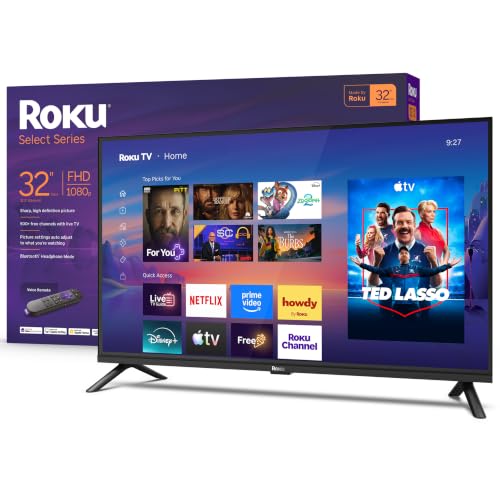
Roku 32-Inch Select — 32 inch, the calm interface
Roku builds this set itself, and the advantage shows in the software’s manners. The home screen is a grid of apps in the order you left them, the search spans services without playing favourites too aggressively, and the whole thing boots and responds like an appliance rather than a computer. For a spare room, a parent’s bedroom or a rental property — classic 30-inch territory — that predictability is worth more than any panel specification, because the person using it rarely wants to learn a new interface to watch the news.
Hardware is straightforward: a 1080p panel, a voice remote, and Roku’s channel store, which remains the broadest of the three platforms in this guide for niche and regional apps. The set also plays well with both major phone ecosystems for casting and private listening through the Roku app, a genuinely useful trick for a bedroom television used after someone else has gone to sleep. As with the TCL, the honest caveat is size: it measures 32 inches, and this guide lists it as the replacement size, not as a 30-inch set in disguise.
- Screen: 32-inch class, 1920×1080 full HD
- Platform: Roku TV with voice remote
- Extras: private listening via the Roku mobile app
- Role in this guide: easiest 32-inch step-up for non-technical rooms
Strengths
- The least confusing interface of any pick in this guide
- App catalogue covers obscure services rivals sometimes miss
- Consistent, prompt software updates from Roku itself
Trade-offs
- Home screen includes a promotional rail on the side
- No built-in Chromecast; casting follows Roku’s own rules
- Panel is 1080p, not 4K — correct for the size, but know it
Best for: guest rooms, grandparents and anyone who wants the television to behave like a television. Not suited for: a household standardised on Google Assistant routines for every screen.

Insignia 32-Inch F40 Fire TV — 32 inch, the Alexa option
Insignia’s F40 is the pick that corrects a common small-TV mistake: buying the cheaper F20 and discovering its panel is 720p. The F40 is the 1080p member of the family, and at 32 inches that difference is visible in menu text, subtitles and sport. It runs Fire TV, so its home screen leans on Amazon’s storefront and Alexa answers from the remote — the right personality for a kitchen or bedroom already dotted with Echo speakers, where “Alexa, put the match on” is how viewing sessions start.
Fire TV’s integration with live sources is its quiet strength in small rooms: antenna channels and streaming apps share one guide surface, which suits the way secondary televisions are actually used — ten minutes of news, a cooking video, half an episode. The set’s speakers are voiced for speech clarity rather than cinema weight, again appropriate to its stations in life. It completes the 32-inch trio by giving the Amazon-ecosystem household a full-HD answer at the size that replaced 30 inches, rather than forcing a choice between the right platform and the right resolution.
- Screen: 32-inch class, 1920×1080 full HD
- Platform: Fire TV with Alexa voice remote
- Tuner: over-the-air channels integrated into the live guide
- Role in this guide: full-HD Fire TV at the successor size
Strengths
- Proper 1080p panel, unlike the 720p F20 below it
- Alexa voice control suits Echo-heavy homes
- Live TV and streaming share one guide
Trade-offs
- Fire TV’s home screen promotes Amazon content heavily
- Fewer niche apps than Roku’s store
- Interface can feel busy for technophobic users
Best for: Alexa households wanting full HD in a bedroom or kitchen at 32 inches. Not suited for: viewers who want the home screen to stay out of the way entirely.

Insignia 24-Inch F20 Fire TV — 24 inch, the lower boundary
Every “vanished size” guide needs its floor, and this 24-inch Insignia marks it. There are spaces — under-cabinet kitchen gaps, caravan bunks, narrow boat cabins, the shelf above a workbench — where the question is not 30 versus 32 but whether any television fits at all. The F20 answers with a cabinet small enough for those gaps and a Fire TV platform that behaves exactly like its bigger siblings, so the household’s accounts and watchlists follow it into the small room without a second ecosystem to maintain.
The panel is 720p, and at 24 inches watched from a counter’s distance that is a reasonable engineering choice rather than a cheat: the pixels are small enough that broadcast television and streaming video look clean, and the money saved went into the platform instead. What this set must never be sold as is a 30-inch substitute for a bedroom wall — six inches of diagonal is a large, visible step down, and anyone with room for the 32-inch picks should take them. Its place here is honest and specific: it is the boundary marker showing how far down the ladder goes before “television” becomes “monitor with ambitions.”
- Screen: 24-inch class, 720p HD
- Platform: Fire TV with Alexa voice remote
- Fit: sized for under-cabinet and caravan spaces
- Role in this guide: smallest sensible step down from 30 inches
Strengths
- Fits gaps no 32-inch cabinet can enter
- Full Fire TV platform despite the small panel
- Light enough for modest shelves and brackets
Trade-offs
- 720p resolution — fine here, wrong for a main bedroom wall
- Six inches below the searched size is a big visual step
- Small speakers; speech is clear, music is not its party trick
Best for: kitchens, caravans and workrooms where the gap is measured and small. Not suited for: replacing a 30-inch bedroom set when a 32 would fit.

Roku 24-Inch Select — 24 inch, small screen, same manners
Roku’s 24-inch Select exists for the same tight spaces as the Insignia above it, and the choice between them is purely about platform loyalty. Everything said about the 32-inch Roku’s calm interface applies here at a smaller scale: the same grid, the same universal search, the same private-listening trick through the phone app, which in a caravan or a shared dorm room may be the feature that matters most. A household already running Roku on its main set can add this one and teach nobody anything new.
The panel is 720p, as every current 24-inch television in the pool is, and the set makes no attempt to hide it. Viewing distances in the spaces this TV serves — across a kitchen counter, from a bunk, over a desk — are short enough that the resolution reads as adequate rather than lacking. Think of it as the floor of the guide with the best manners: if the measurement says 24 inches is what fits, this is the version of 24 inches that behaves most like the family television it is standing in for.
- Screen: 24-inch class, 720p HD
- Platform: Roku TV with voice remote
- Extras: app-based private listening for shared spaces
- Role in this guide: Roku-ecosystem floor pick
Strengths
- Identical interface to larger Roku sets in the home
- Private listening suits dorms and caravans
- Simple setup for non-technical rooms
Trade-offs
- 720p panel, like all current 24-inch options here
- Far below the searched diagonal — a fit decision, not a like-for-like swap
- Roku’s promotional rail still appears
Best for: Roku households furnishing a space only a 24-inch set can enter. Not suited for: rooms that actually have width for the 32-inch picks and only settled here by habit.

TCL 40-Inch S3 Roku TV — 40 inch, the ceiling check
This final pick is in the guide as a question, not a recommendation: are you sure the space is small? A striking number of “30-inch” searches come from buyers who measured nothing and simply mean “not a big TV.” For them, the 40-inch S3 is the honest next landmark — a 1080p Roku set from the same TCL family as the 32-inch heir, with a screen large enough to serve as a small living room’s main television rather than a secondary one. Seeing it priced and specced beside the 32-inch picks lets the approximate measurer make the real decision with open eyes.
If the tape measure says the alcove is genuinely tight, ignore this pick entirely; ten inches above the search term is not a rounding error. But if the “30 inches” was inherited from the old set’s marketing label — and many older “30-inch class” televisions were already 31.5-inch panels in wide-bezel cabinets barely narrower than this TCL — then the 40 may fit the same wall while transforming what the room can do. That is why it closes the guide: the vanished size’s story ends with buyers discovering which neighbour they actually needed.
- Screen: 40-inch class, 1920×1080 full HD
- Platform: Roku TV
- Fit check: roughly 36 inches wide — measure before dreaming
- Role in this guide: upper boundary for approximate measurers
Strengths
- Large enough to anchor a small living room, not just a bedroom
- Same Roku calm as the guide’s smaller Roku picks
- 1080p at 40 inches still looks clean at normal distances
Trade-offs
- Ten inches over the search term — wrong for genuinely tight spaces
- Needs a wider stand surface than any other pick here
- 1080p rather than 4K, if it becomes a main family screen
Best for: the household whose size estimate was a guess and whose wall turns out generous. Not suited for: any alcove, cabinet or caravan measured at under 34 inches wide.
Can These Small Sets Handle a Games Console or a Streaming Stick?
A second question follows many 30-inch searches: the old set often doubled as the screen for a console in a bedroom or a child’s room. The 32-inch picks handle that duty honestly at the level these rooms need. All are 1080p panels with standard refresh rates, which suits casual and family gaming, older consoles and the current machines running in their performance modes; what they do not offer is the high-refresh, low-lag specification of dedicated gaming televisions, and a competitive player should not pretend otherwise. For the Mario Kart and movie-night workload that bedroom consoles actually carry, input lag on modern game modes is low enough to disappear from consciousness.
HDMI count is the practical detail to check before the console arrives: small sets commonly carry two or three ports, and a console, a streaming stick and a soundbar with ARC ambitions can exhaust them quickly. Decide in advance which device gets the enhanced port, put the console on it, and let the stick take a standard one. As for streaming sticks themselves, they remain a legitimate life-extension tool for an ageing small TV, but every pick in this guide has a current platform built in, so a stick adds a second remote and a second interface to learn for no gain. Buy the stick for the television you already own; do not buy one alongside a new set in this guide.
Children’s rooms add one more consideration: durability and control. A 32-inch set at this end of the market is inexpensive enough that a games controller incident is a bad day rather than a catastrophe, and all three platforms offer parental controls and PIN-protected purchases — worth setting up in the first ten minutes, before the television’s first unsupervised afternoon. Wall-mounting in a child’s room is not paranoia; a small set on wide-spread feet on a dresser is exactly the configuration that gets pulled forward by a cable. The mount costs little and removes the risk entirely.
Side-by-Side: What Actually Separates These Six?
| Pick | True size | Resolution | Platform | Best station |
|---|---|---|---|---|
| TCL S3 Google TV | 32 inch | 1080p | Google TV | Bedroom or study in a Google home |
| Roku Select | 32 inch | 1080p | Roku | Guest room, rental, parents’ room |
| Insignia F40 | 32 inch | 1080p | Fire TV | Kitchen or bedroom with Echo speakers |
| Insignia F20 | 24 inch | 720p | Fire TV | Under-cabinet gap, caravan, workbench |
| Roku Select 24 | 24 inch | 720p | Roku | Dorm shelf, bunk, desk corner |
| TCL S3 Roku | 40 inch | 1080p | Roku | Small living room main screen |
Treat the table as a map of the territory around a missing address. The middle row of the market — the three 32-inch sets — differs only in platform personality, because their panels and sizes match; choose by ecosystem. The bottom of the map is governed by physics: the 24-inch pair exist for measured gaps, and their 720p panels are the correct engineering for those gaps. The top is governed by honesty about measurement. Nobody in this table is a 30-inch television, and the guide’s whole value lies in saying which neighbour serves which room instead of pretending otherwise.
How Far Away Will You Sit? The Distance Maths for Neighbouring Sizes
Because the purchase is really a choice between 24, 32 and 40 inches, viewing distance becomes the deciding science. The useful rule for 1080p content is that the picture stops looking like a grid of pixels once you sit beyond roughly one and a half times the screen’s width, and it starts feeling small once you pass about three times the width. For a 32-inch set — about 28 inches wide — that window runs from roughly three and a half feet to seven feet, which maps almost perfectly onto bedrooms, studies and kitchen tables. This is why the 32 inherited the 30-inch role so completely: at the distances those rooms impose, the two diagonals are perceptually the same television, and the extra two inches simply buy a little more presence for film scenes without demanding a new room layout.
The 24-inch picks live by different maths. Across a kitchen counter you are often two to three feet from the glass, and at that range a 720p 24-inch panel still resolves cleanly because the pixels are physically tiny; the same set watched from a bed six feet away would look soft and mean, which is why this guide refuses to present it as a bedroom substitute. The 40-inch TCL stretches the window upward: comfortable from about five feet to nine, the span of a small living room’s sofa-to-wall distance. Lay your room against those three windows and the “which neighbour” question usually answers itself before platform or brand enter the discussion. People who reverse the order — pick a brand first, then force its size into the room — are the ones writing one-star reviews about a perfectly good television.
There is also a mounting consequence hiding in the distance question. Small sets are often placed high — above a workbench, on a kitchen wall, at the foot of a bunk — and a screen viewed from below at an angle loses contrast on the inexpensive panels this end of the market uses. If the only available position is high and close, the smaller 24-inch sets actually suffer less, because the angle to the far edge of the glass stays gentler. A tilting mount earns its modest cost in exactly these rooms, letting the panel face the viewer rather than the floor. None of this appears on a specification sheet, yet it decides satisfaction more than the difference between two competing 32-inch models ever will.
Getting a Small Television Set Up Properly: Antenna, Sound and Light
Most of these sets will spend part of their lives on broadcast television, so the antenna deserves ten minutes of respect. Every pick in this guide carries a built-in tuner for over-the-air channels; a modest indoor antenna placed near a window, rescanned after positioning, will usually pull in the major networks in metropolitan and suburban areas. Run the channel scan twice — once with the antenna in its first position, once moved — because digital reception has cliffs: a foot of placement can be the difference between a stable picture and a mosaic. In kitchens, keep the antenna away from the microwave’s side of the room, and in caravans, expect to rescan at every new site, since the transmitter map changes with the postcode.
Sound is the second setup task, and honesty helps here: no 32-inch television, from any brand, produces bass worth writing home about, because the cabinet has no air to move. For news, cooking programmes and talk, the built-in speakers of these picks are voiced clearly enough. For film nights in a bedroom, the cheap and transformative upgrade is a small soundbar or even a decent Bluetooth speaker paired for the evening — every platform in this guide supports some route to external audio. Set the television’s audio output to PCM if a soundbar ever falls out of sync, a two-minute fix that solves the most common small-room complaint.
Light finishes the job. Small TVs often live in bright rooms — kitchens with windows, conservatories, workshops — where the enemy is reflection rather than darkness. Angle the set so windows sit behind the viewer, not behind the set and not facing it; if the room forces a bad angle, a matte screen protector is a last resort that costs some sharpness. In the picture settings, the single change worth making is leaving the vivid or dynamic mode that shops use and choosing the standard or movie preset, which restores skin tones the showroom mode destroys. Backlight, not brightness, is the control that fights a bright room: raise backlight for daytime, lower it for evening, and the little panel will look twice as expensive as it was.
Room by Room: Placing the Neighbour Sizes Where They Belong
The kitchen is the strictest room in the house. Under-cabinet clearance is usually the binding constraint, and it is a height constraint, not a width one: a 24-inch set on its feet stands roughly fifteen inches tall, while a 32-inch set needs about nineteen. If the gap fails that test, no argument about resolution matters — the Insignia or Roku 24 is the kitchen television, ideally on a small tilting mount that folds the screen toward the cook. Steam and splashes argue for distance from the hob; every small-TV kitchen disaster story begins with a screen mounted where the kettle vents.
The bedroom is the 32-inch set’s home ground. Six feet from pillow to wall is the classic geometry, squarely inside the 1080p window, and the platform features that matter are the domestic ones: sleep timers, private listening so one partner can watch after the other sleeps, and a remote that can be operated by feel in the dark. All three 32-inch picks offer versions of that toolkit; Roku’s app-based listening is the most flexible, Fire TV and Google TV lean on Bluetooth headphones instead. The spare room and the rental follow the bedroom’s logic with an added premium on simplicity — the set will be operated by guests, which quietly promotes the Roku Select up the order for those addresses.
Dorms, caravans and boats form the third territory, where the 24-inch pair and the smaller 32s compete on practicalities the spec sheet ignores: weight for wall brackets, power draw for leisure batteries, and headphone options for shared air. A 32-inch set draws modest power and is entirely feasible in a modern caravan, but the bracket and the cupboard door swing must both clear it; the 24-inch sets forgive more. Students should also check the institution’s network rules, since some campus Wi-Fi networks make smart-TV sign-in awkward and an antenna or a laptop over HDMI becomes the real source. In every one of these rooms the pattern repeats: measure the physical truth first, then let platform taste make the final call among the sets that fit.
What Goes Wrong When People Shop for a Dead Size?
The most expensive mistake is trusting a listing title over a specification sheet. Marketplace sellers know “30 inch” still draws searches, and some attach the phrase to sets that measure 31.5, 32 or even 24 inches, counting on buyers never to check the diagonal line in the specs. The defence takes ten seconds: find the stated screen size in the manufacturer’s own specifications, and treat any title that disagrees with it as fiction. The second mistake is the mirror image — refusing the 32-inch replacement on principle and ordering an obscure commercial panel that truly measures 30 inches, then discovering it has no streaming platform, a signage remote and a tuner menu designed for installers. The size was satisfied; the television was not.
Third comes measuring the old television instead of the space. An outgoing 30-inch set’s cabinet, with its wide bezel, may be wider than a new 32-inch set — or the alcove may have been built around the old cabinet with no margin at all. Measure the hole, not the furniture leaving it. Fourth, buyers fixate on the diagonal and forget the feet: several current small sets stand on wide-spread legs, and a dresser that cradled a centre-stand television for a decade can be too narrow for its replacement. Finally, there is the resolution slip — assuming every modern small TV is 1080p and landing a 720p set for a bedroom wall. At 24 inches that trade is fair; at 32 it is a downgrade you will see every day. This guide labels resolution at every heading precisely so that slip cannot happen here.
Final Recommendation
Start with the tape measure, because it decides this purchase more than any specification does. If the space offers roughly 29 inches of width or more, buy one of the 32-inch picks and let the platform choose it: Google TV for Google households, Roku for anyone who values calm, Fire TV where Alexa already runs the room. If the gap is genuinely small — under a kitchen cabinet, in a caravan — take the 24-inch pick that matches your platform and accept 720p as the correct price of fitting at all. And if measuring reveals the wall was never small, the 40-inch TCL is waiting at the top of the ladder with no apology needed. The 30-inch television served its rooms well for years; its neighbours, chosen knowingly, will serve the same rooms better.
If a single default must be named for the reader who skips to the end: it is the TCL 32-inch S3, because it pairs the successor size with the full 1080p panel and the platform most households already use elsewhere — but that default yields instantly to the measurements and ecosystems described above. A Roku household should buy the Roku without a flicker of doubt, an Alexa kitchen should buy the Insignia, and a gap that only admits 24 inches should be honoured rather than argued with. Dead sizes make honest shoppers of us all: the diagonal you wanted is gone, and the one you choose instead will be chosen for reasons you can actually state.
How “Class” Sizes Work, and How to Check a Diagonal Yourself
One source of confusion deserves clearing up, because it explains half the misleading listings in this size range. Televisions are sold by “class”: a “32-inch class” set has a viewable diagonal that may measure 31.5 inches, and the industry regards that rounding as honest because every brand does it the same way. The old 30-inch class was the same arrangement — its panels typically measured about 29.5 to 30 inches viewable. So a buyer whose deceased television was a “30-inch class” model and who buys a “32-inch class” replacement is stepping up by roughly two real inches, not the three or four that frightened arithmetic sometimes suggests, and the cabinet comparison is closer than the labels imply.
You can verify any set’s real diagonal with a tape measure in seconds: measure the illuminated screen corner to corner, excluding the bezel, with the television showing a picture. Sellers of second-hand sets and marketplace listings occasionally resist this measurement, which is itself information. For new sets, the manufacturer’s specification sheet lists the viewable diagonal, and energy labels repeat it. This guide’s headings use the class sizes every brand prints — 24, 32, 40 — because those are the numbers buyers can check against listings, while the text keeps repeating the one fact that matters for this keyword: none of those numbers is thirty, and any product claiming otherwise should be measured before it is believed.
Power Draw, Heat and Running Costs in Small Rooms
Small televisions are cheap to run, but the differences between the neighbour sizes are real enough to matter in the rooms that care. A modern 32-inch LED set typically draws somewhere in the range of a bright household bulb while showing a picture, and a 24-inch set draws noticeably less — a gap that means little on a mains socket and a great deal on a caravan’s leisure battery or a boat’s inverter budget, where every evening of television is accounted against stored power. Off-grid and semi-off-grid buyers should read the wattage line in each model’s specifications rather than assume small means negligible, and should test the set’s standby behaviour too, since a television that keeps its network connection awake for voice control sips power all night.
Heat follows the same curve. A 32-inch panel in a small, closed bedroom adds a gentle warmth that is welcome in January and less so in August; the 24-inch sets add less. None of these sets needs ventilation drama — the clearances in their manuals are modest — but a television sealed into a cabinet with a closing door should be given its air, whatever its size. The practical summary matches the rest of this guide: on mains power in an ordinary room, ignore running costs and choose by fit and platform; on stored power or in a sealed cabinet, the smaller neighbour earns another point, and the 24-inch picks’ modesty becomes a feature rather than a compromise.
Should You Buy a Second-Hand 30-Inch Set Instead?
The used market is the one place genuine 30-inch televisions still circulate, and the temptation deserves a fair hearing before it is refused. A decade-old 30-inch set will typically be a 720p or early 1080p panel with a smart platform that has stopped receiving updates — or no platform at all — and a backlight with most of its brightest years behind it. Against that, it measures exactly thirty inches and costs very little. If the destination is a workshop or a spare corner where an antenna feed and an HDMI stick cover the whole job, a used set can be a rational purchase, provided the panel shows no blotching, the remote is present, and the price reflects that it is a disposable appliance.
For a bedroom or kitchen that will be used daily, the arithmetic turns. A new 32-inch pick from this guide brings a warranty, a current platform with years of updates ahead, a brighter and more efficient panel, and a tuner that handles today’s broadcast standards — for a sum that the used market’s uncertainty rarely undercuts by enough to matter. There is also the disposal question at the other end: the outgoing 30-inch set should go to electronics recycling rather than landfill, and many retailers run take-back schemes when delivering its replacement. The size is gone from the catalogues, but its owners can retire it properly and step sideways into the sizes that replaced it.
A Note on Warranties and Support for Budget Small Sets
One quiet advantage the neighbour sizes hold over any surviving 30-inch stock is support. The picks in this guide are current models from brands with active service networks, which means replacement remotes are orderable, firmware updates still arrive, and a panel fault inside the warranty period is a phone call rather than an archaeology project. Small televisions are often bought as if they were kettles — appliances beneath consideration — but they are networked computers now, and the difference between a supported platform and an abandoned one compounds every year of the set’s life. A streaming app that stops working on an unsupported television does not announce itself as a support problem; it announces itself as a black screen on the evening you wanted it.
Keep the receipt and register the set if the brand asks; small TVs migrate between rooms and houses, and proof of purchase migrates badly. If the set will live in a rental, a student house or a caravan, photograph the serial label during setup. None of this is glamorous, but it is the difference between a small television that serves a decade and one that becomes e-waste at the first software sunset — and it is a difference the vanished size, bought second-hand or from old stock, can no longer offer at all.
Frequently Asked Questions
Does anyone still make a true 30-inch TV?
Not among the mainstream consumer brands in the current verified pool. The size survives in commercial signage and specialty panels, but for home use the market has standardised on 32 inches above and 24 inches below, and current consumer catalogues reflect that split.
Why did manufacturers stop making 30-inch TVs?
Panel factories cut screens from large glass sheets, and 30 inches tiles those sheets wastefully compared with 32 inches. Once 32-inch panels became high-volume commodities, they cost no more than a low-volume 30-inch panel would, retailers stopped ordering the odd size, and brands dropped it.
Will a 32-inch TV fit where my 30-inch TV sat?
Very often, yes. A current 32-inch set is roughly 29 inches wide including its slim bezel, while older 30-inch sets wore wide frames that ate much of that difference. Measure the alcove width and the height under any shelf, and check the stand’s foot spread against your furniture.
Is 720p acceptable on the 24-inch picks?
At 24 inches and the short distances of kitchens, caravans and desks, yes — broadcast and streaming content look clean, and the savings fund a proper smart platform. The same resolution at 32 inches is a visible downgrade, which is why all three 32-inch picks here are 1080p.
What if a listing advertises a 30-inch TV today?
Check the manufacturer’s specification for the actual diagonal before believing the title. Some listings use “30-inch class” loosely or attach the phrase to neighbouring sizes because the search term still draws traffic. If the spec sheet and the title disagree, the spec sheet is the truth.
Should I consider a monitor instead of a TV at this size?
Only if the screen will live on a desk attached to a computer or streaming stick. Monitors in this range lack television tuners and television remotes, and their speakers are usually worse. They also wake and sleep on a computer’s schedule rather than a viewer’s, which matters in a kitchen at breakfast time. A monitor plus a stick can imitate a television, but it imitates it with two remotes and no antenna input. For a bedroom, kitchen or caravan, a proper small TV remains the simpler instrument, and at these sizes it is usually the cheaper one too once the stick and speakers are honestly added to the monitor’s price.
Related Guides
From this shelf, continue with our guide to the best 32-inch televisions overall, compare platforms in our roundup of 32-inch Roku TVs, or step up a size with the best 40-inch smart TVs.



[…] with our guide to the best 26-inch TV alternatives, compare the living small sizes in the best 24-inch LED TVs, or go bigger with the best 32-inch TVs […]