Our Top Picks
 AKLOT Expanded-Size Electric Drum Sets for Adult with55.12 x 14.57 x 45.28 inches61.29 poundsCheck on Amazon
 Yamaha Rydeen 5-Piece Drum Set With 22" Bass22" Bass Drum29.92 x 23.43 x 19.29 inchesCheck on Amazon
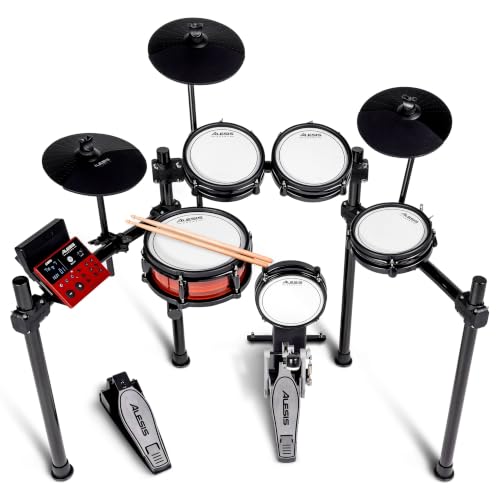 Alesis Nitro Pro Electric Drum Set with 8Drum Set Only37.44 x 49.56 x 47.16 inches49.2 poundsCheck on Amazon


What's inside
- What counts as a double bass setup
- Choosing the route that fits the music
- Drive types and how they feel underfoot
- Slave pedal lag and the universal joint problem
- Beaters, attack, and head response
- Notable pedal lines in published material
- Matching and tuning two kick drums
- Heel up, heel down, and what technique asks of hardware
- Practice, noise, and the neighbors
- Setup details that separate good rigs from frustrating ones
- Common buying mistakes
- Questions buyers ask most often
- How to compare models on paper before spending
- Shells, depths, and heads for a two drum rig
- Recording and live sound for double kicks
- Ergonomics, stamina, and avoiding injury
- A simple maintenance calendar
- Reading pedal specifications without being misled
- A short note on electronic and hybrid rigs
- Check prices on Amazon
- Verdict: where the money actually matters
As an Amazon Associate I earn from qualifying purchases. This post may contain affiliate links at no extra cost to you.
Double bass means different things to different drummers, and that simple fact explains a lot of confused buying. One player pictures two separate kick drums, each with its own pedal, tuned to feel like mirror images under the feet. Another pictures a single kick drum worked by a double pedal, with a main pedal beside the hi-hat and a slave pedal linked by a drive shaft. A third player, often in a rehearsal room with limited space, runs two single pedals on two electronic pads or on a shared practice rig. All three routes can produce the rolling sixteenth notes, gallops, and accented patterns that define the style, yet they differ sharply in cost, setup time, tuning work, transport, and feel.
This guide treats the published record as the evidence base. Manufacturer specification sheets, owner manuals, and product documents describe pedal geometry, drive systems, beater options, spring adjustment, and shell dimensions. Those documents do not settle taste, and they were never meant to. What they do provide is a reliable vocabulary, so a drummer can compare a Tama Iron Cobra with a Pearl Eliminator Redline or a DW 9000 without relying on slogans. Read the sections in order if the topic is new. Experienced players can jump to drive types, slave pedal lag, or the tuning discussion, where most ownership problems actually begin.
What counts as a double bass setup
A true two-drum setup uses two bass drums, usually of matched diameter and depth, although some players deliberately choose different sizes for different voices. Each drum carries its own single pedal, its own beater, and its own tuning. The appeal is symmetry of response. The left foot meets a head that behaves much like the head under the right foot, and there is no connecting shaft to absorb energy or introduce delay. The drawbacks are obvious the first time the kit has to move. Two kicks take floor space, need two cases or careful padding, add a second drum to tune, and can crowd a small stage where the hi-hat stand, snare stand, and floor tom already compete for room.
A double pedal on one drum is the far more common route, and for good reason. The main pedal attaches at the hoop of the single kick, while the slave pedal sits to the left, linked by a shaft with universal joints at both ends. Both beaters strike the same head, close to its center. The drummer gains a compact footprint, one drum to tune and mic, and a much simpler load-in. The trade involves feel. The slave side travels through a shaft, two joints, and a second set of bearings, so its response depends heavily on joint quality, shaft alignment, and lubrication. Good designs narrow the gap to a point many players accept without thought. Budget designs leave the left foot feeling late, heavy, or vague.
Two single pedals on one drum is not really possible in the ordinary sense, because both pedals cannot occupy the same hoop position and strike the same spot without collision. That is why the double pedal exists. Two singles appear instead on electronic kits, where two trigger pads can sit side by side, or in practice setups built around two pads. Electronic routes also help with volume, since a mesh or rubber pad makes far less noise than an acoustic head. Players shopping for an acoustic kit should keep the categories clean in their head: two drums with two singles, or one drum with a linked double pedal. Mixing the language leads to ordering the wrong hardware.
Choosing the route that fits the music
Genre alone does not decide the setup, but it frames the demands. Metal and hardcore patterns often call for long runs at steady tempo, where beater consistency and pedal recovery matter more than raw power. Progressive rock adds odd groupings and sudden accents, which reward a pedal that tracks dynamics rather than one tuned only for speed. Fusion and funk players may use the second foot sparingly, for flams between the feet, short bursts, and endings, so a smooth slave response at low volume matters as much as top speed. A drummer who only needs occasional doubles may be better served by a well made midrange pedal than by a flagship built for extreme tempos.
Space deserves an honest look before money changes hands. Measure the footprint with the hi-hat in its real playing position, not pushed aside for the photograph. A slave pedal needs room to sit flat, and its shaft needs a fairly straight run to the main pedal. Tight corners force the shaft into angles that increase friction. On small stages, a single kick with a double pedal usually wins. In a permanent studio or rehearsal room, two drums remain a legitimate choice, especially for recording, where each drum can carry its own microphone and tuning character.
Transport habits matter just as much. A double pedal folds into a case and travels with the hardware bag. Two kick drums demand a larger vehicle, more trips from the car, and more time at soundcheck. None of that makes the two-drum route wrong. It simply means the buyer should want the benefits on purpose, for feel or for sound, rather than drifting into them because a kit looked impressive in a listing photograph.
Amplification rarely enters the drum buying conversation, yet live players who sing, cue tracks, or run electronic pads alongside an acoustic kit soon meet the monitor problem, and a guide such as best 10 inch pa speakers belongs on the reading list for the same rehearsal room budget. Keep the drum decision separate, though. Buy the pedal system for the feet first, then solve monitoring with gear chosen for that job.
Drive types and how they feel underfoot
Chain drive is the familiar standard. A chain, single or double, links the footboard to the cam that turns the beater shaft. Chain systems feel connected and forgiving, with a slight give that many players read as natural. Double chain spreads load and resists stretching and twisting better than a narrow single chain, which is why it appears on most serious pedals. Chains need occasional cleaning, because grit from stage floors works into the links. They also transmit a little texture through the footboard, which some drummers like and others describe as noise in the feel.
Belt drive, usually a reinforced strap, offers a smoother and lighter stroke. The belt does not rattle, does not need the same cleaning routine, and tends to feel even from the top of the stroke to the beater strike. Pearl built much of the Eliminator identity around interchangeable cams and drive choices, and belt versions appeal to players who want a fluid action at moderate tension. Belts can stretch over long service and should be inspected for fraying at the attachment points. A spare belt is cheap insurance in a hardware case, even though belts rarely fail without warning signs.
Direct drive removes the chain or belt and links the footboard to the beater assembly with a solid linkage. The result is immediate response with almost no lost motion. Longboard direct drive pedals from Axis built a loyal following among fast players for exactly this reason, and the Yamaha FP9 offers direct drive and chain variants within one flagship line. Direct drive can feel unforgiving at first. Small errors in foot placement show up at once, and players raised on chain sometimes find the stroke abrupt. After an adjustment period, many value the honesty of the linkage, especially for heel-up playing at speed where the beater must clear the head cleanly between strokes.
Cam shape shapes feel as much as drive type. A round cam gives an even pull through the stroke. An eccentric or offset cam speeds the beater as it nears the head, producing a heavier strike for a given foot effort, then lets the beater fall back quickly. Tama, Pearl, and DW all publish cam descriptions in their pedal literature, and Pearl went furthest with swappable cam profiles in the Eliminator line. Treat cam language as a starting point rather than a verdict. Foot size, spring tension, beater weight, and technique change how any cam behaves in practice.
Slave pedal lag and the universal joint problem
Lag on the slave side is the most common complaint about double pedals, and it has mechanical causes that a buyer can inspect. The drive shaft must turn with the main axle while allowing the two pedals to sit at slightly different angles on an uneven floor. Universal joints at each end handle that geometry. A joint with loose tolerances introduces play, so the footboard moves a fraction before the beater responds. That fraction feels large during fast patterns because the pattern itself leaves little time between strokes. Quality shafts use tight bearings, rigid tubing, and joints that can be locked firmly to both axles.
Alignment matters as much as parts quality. If the slave pedal sits twisted relative to the main pedal, the joints run at sharper angles and friction rises. Set both pedals on a flat surface, level the base plates, and keep the shaft run as straight as the hi-hat position allows. Many manuals show the intended shaft angle range, and staying inside it is not fussy detail, it is the difference between a slave side that tracks and one that drags. After positioning, work the slave footboard slowly by hand and feel for gritty spots or tight arcs. A smooth slow stroke usually predicts a smooth fast one.
Length adjustment also deserves care. Shafts telescope to suit pedal spacing, and the locking screws must bite on clean metal, not on the edge of the tube. A shaft that slips mid song changes beater timing at once. Mark the settled length with a small piece of tape on the tube so a hurried setup returns to the same spacing. Players who share backline pedals should expect to reset this every time, because another drummer’s spacing rarely matches their own stance.
Bearing quality at the main axle sets the ceiling for both sides. Sealed bearings that spin freely, a hinge with no side play, and a footboard that does not flex under load all contribute to a slave side that feels connected. When comparing models in published material, look for bearing descriptions, shaft construction, and whether replacement shafts and joints are sold as service parts. A pedal line with a real parts catalog signals that the maker expects the hardware to be maintained rather than replaced whole.
Beaters, attack, and head response
Beater material changes the sound at the drum as clearly as it changes feel at the foot. Felt beaters produce a rounded attack with softer high frequency content, a sound that suits rock, pop, and studio work where the kick should support rather than cut. Plastic beaters strike with a sharper click and stronger definition, helpful in dense mixes and fast patterns where each note must read separately. Wood beaters sit at the firm end of the range, with a pronounced knock and very little give at impact. Many modern beaters are two sided, felt on one face and plastic on the other, so the player can flip the beater rather than buy a second pair.
Weight and shape interact with that choice. A heavy beater carries momentum, gives a fuller strike at moderate foot effort, and can feel slow to recover if spring tension is light. A light beater returns quickly and favors speed, but asks the foot to supply more of the power. Flat faces contact more head area and sound broader. Rounded faces concentrate the strike and sound more pointed. Tama’s Iron Cobra beaters, DW’s two way beaters, and similar designs from other makers all explore this same trade space, which is why reading the beater specification is worthwhile rather than treating the beater as a fixed accessory.
Beater angle and memory lock settings decide where the beater rests and how far it travels. A beater set close to the head shortens the stroke and can speed recovery, while a wider rest angle builds momentum for louder work. Independent beater angle adjustment, separate from footboard height, appears on better pedals and is worth having. Once a setting works, memory locks keep it from drifting during transport. Drummers who bury the beater into the head after each stroke should also think about head wear, because a hard plastic or wood face held against a vibrating head chews the coating and, over time, the film itself. An impact patch spreads that load and extends head life on any setup.
Notable pedal lines in published material
Tama Iron Cobra 900 and 600
The Iron Cobra name has been Tama’s flagship pedal identity for decades, and the current 900 series sits at the top with a choice of rolling glide and power glide cam styles, a sturdy double chain, and detailed adjustment for beater angle and spring tension. The 600 series brings much of the same layout to a lower tier, with a duo glide cam that can be reversed to change the feel profile. For double bass buyers, both series are sold as twin pedal versions with a connecting shaft, and Tama publishes the adjustment points clearly in its manuals. The Cobra family suits players who want a proven chain feel with strong parts support and a wide used market for spares and cases.
Pearl Eliminator Redline
Pearl’s Eliminator Redline stands out for tunability. Its interchangeable cam system lets the player swap among profiles that alter acceleration through the stroke, and the line offers chain and belt drive variants. The footboard traction, the quad beater with four faces, and the power shifter heel plate adjustment all appear in Pearl’s published documents. Few pedals ask as much of the owner in setup time, and few reward that time as directly. A drummer who enjoys dialing hardware to a specific feel will find material to work with here. A drummer who wants to play within five minutes of opening the box may prefer a simpler design.
DW 5000 and 9000 series
DW’s 5000 series is a long running professional standard, built around a double chain drive, a two way beater, and a solid, road oriented frame. The 9000 series moves to a smoother bearing hinge, an adjustable cam that can shift between turbo and accelerator profiles, and a notably fluid stroke that many players describe as effortless. DW publishes extensive parts diagrams for both lines, which matters for touring players who need a specific spring or hinge component quickly. The double pedal versions carry the same design language to the slave side, with DW shafts that are widely regarded as a benchmark for low play.
Yamaha FP9 and Axis longboards
Yamaha’s FP9 flagship offers chain and direct drive models, a long footboard option in its design language, quick side access spring adjustment, and self centering features described in Yamaha’s own literature. It appeals to players who value precise, almost clinical adjustment. Axis longboard pedals take a different path: direct drive, an extended footboard that gives the foot more leverage positions, and a focus on speed that has made the brand a fixture in extreme metal. The long board changes heel placement options and suits heel-up players who slide or use swivel motions. Both lines show how far design can travel from the basic chain pedal while still doing the same job.
Entry level double pedals
Budget double pedals from major makers and house brands share a pattern worth knowing. The main side often feels acceptable, while the slave side reveals the savings: thinner shaft tubing, looser joints, simpler bearings, and beaters with fewer adjustment points. That does not make them pointless. For a first year of learning patterns, a modest pedal that holds together beats no pedal at all. The risk is outgrowing it quickly and paying twice. A sensible rule is to buy the best shaft and bearing quality the budget allows, because those parts decide slave feel, and slave feel decides whether the left foot develops or gives up.
Readers comparing monitor options for a rehearsal space where an electronic kit joins the acoustic one may also look at best 12 active pa speakers for the larger format side of that separate question.
Matching and tuning two kick drums
Two separate kicks only deliver their promise when they match in response. Start with shells of the same diameter and depth when the goal is one unified voice. A 22 inch drum paired with a 20 inch drum will always speak differently, which some players want for effect, but it should be a choice rather than an accident of buying used gear. Head selection should match as well: same batter model, same resonant model, same muffling strategy. Small differences that seem minor on paper, such as one coated head and one clear head, show up at once under alternating feet.
Tune in small steps and alternate between the drums constantly. Bring both batters to a low, even tension where wrinkles just disappear, then add quarter turns in a star pattern, striking near each lug to match pitch around the head. The goal is not a specific note for most rock and metal work. The goal is equal pitch and equal feel. A beater should rebound from the left drum the way it rebounds from the right. If one head feels dead and the other lively, patterns will limp even when the feet are even. Drum tuning devices that read head tension can help repeat a setting, but the alternating strike comparison remains the core skill.
Muffling decides how much of the shell voice survives. A pillow or foam strip touching both heads shortens decay and focuses the low thump that close microphones capture well. External muffling rings and ported resonant heads serve the same broad purpose with different flavors. Ported heads, with an offset hole, let air escape, reduce beater bounce slightly, and give engineers a path for a microphone inside the drum. Keep the port position matched on both drums if two are in use, because port size and placement change both feel and tone.
On a single drum with a double pedal, tuning is simpler but beater placement needs attention. Both beaters should strike at equal distance from head center, at matching heights, so their contact patches and tone agree. If one beater lands higher than the other, the two feet will produce two slightly different sounds from the same drum, and listeners may hear the pattern as uneven even when timing is exact. Adjust the beater shaft lengths, set the memory locks, and confirm the pair visually from the front of the drum before tightening everything down.
Heel up, heel down, and what technique asks of hardware
Heel down playing keeps the heel on the footboard or base and works the ankle like a hinge. It favors control, soft dynamics, and relaxed long sessions at moderate tempo. The pedal for this style should feel smooth at low spring tension and respond to small ankle motions without demanding a full leg stroke. Heel up playing lifts the heel and uses the leg’s larger muscles, trading some fine control for power and speed. Most fast double bass work is heel up, often with the foot floating and the stroke driven from the hip and ankle together.
Footboard length interacts with both styles. A standard board suits a planted heel and a compact stroke. A longboard gives the foot room to shift position, supports slide and swivel motions, and lets taller players keep a natural ankle angle. Neither is better in the abstract. Problems start when a player buys a longboard for speed alone while their technique is built on a short board, then blames the pedal for a learning curve that any board change would bring. Allow weeks, not days, before judging a new board length.
Spring tension is the other half of the equation. Tight springs return the beater fast and support rapid heel up patterns, but they tire the leg and can make soft playing clumsy. Loose springs feel easy and musical at low volume, then struggle to clear the beater from the head during fast runs, which muddies the pattern. Set tension for the fastest passage in the set list, then practice quiet control at that setting rather than loosening the springs for practice and tightening them for the show. Consistency builds the muscle memory that speed depends on.
Beater burying versus rebound playing also shapes hardware choices. Players who let the beater rebound freely usually prefer a livelier head tension and a pedal that returns cleanly. Players who bury the beater choke the head on each stroke, gain a tight, deadened sound, and need a head and impact patch that tolerate constant pressure. Neither approach is wrong, but a pedal tuned for one can fight the other. State the habit honestly when reading model descriptions, because published feel language assumes a rebound stroke in most cases.
Practice, noise, and the neighbors
Acoustic double bass practice is loud at the exact frequencies that travel through floors. The kick drum couples energy into the room structure, and fast patterns turn that energy into a steady thud that neighbors hear as vibration more than music. A practice pad setup, mesh heads, or low volume cymbals and heads can cut the disturbance sharply. Many drummers keep a second, quiet configuration for weekday evenings: mesh batter head on the kick, a practice beater with a softer face, and pads for the rest of the kit. The pedal transfers between setups unchanged, which is another argument for buying pedal quality once.
Technique practice deserves structure. Work single strokes between the feet at slow tempo with a metronome, keeping volume even before seeking speed. Add doubles, paradiddle style groupings between feet and hands, and short bursts that start and stop cleanly on a chosen beat. Record practice with a phone placed across the room. The recording reveals uneven slave strokes that the player cannot hear while concentrating on the pattern. Raise tempo in small steps only when the slower tempo sounds boringly even. That patience is not a slogan; it is how left foot strength actually develops.
Electronic practice rigs solve noise and add measurement. A dual pad or two pad setup with a module can count strokes, show timing against a grid in some software, and let the drummer practice at midnight with headphones. The pedal feel on pads differs from an acoustic head, mainly in rebound, so time on the real drum still matters before a performance. Treat the electronic rig as a training tool and volume solution, not a perfect substitute.
Guitarists sharing the rehearsal room face a parallel gear path, and the speaker discussion in best 10 guitar speakers shows how much published specifications can clarify a buying choice before anyone plugs in.
Setup details that separate good rigs from frustrating ones
Hoop clamps and pedal positioning look trivial until a pedal creeps forward mid set. Tighten the hoop clamp on the bass drum hoop, not on a head collar, and check that the clamp teeth or pads grip without chewing the wood or metal hoop. A small piece of rubber or leather under the clamp protects the hoop finish. Drive the pedal by hand through full strokes and watch the base. Any rocking means the floor, the spurs, or the pedal leveling needs attention. Velcro style hook material on pedal base plates, a common factory feature, grips drum rugs well and is worth using on carpeted stages.
Bass drum spurs should hold the drum so the batter head sits at a slight angle that suits the beater strike, with the front of the drum lifted a little off the floor on many setups. If the drum walks forward, extend the spurs, angle them forward, and confirm the pedal clamp is secure, because a walking drum drags the pedal geometry with it. On two drum setups, match spur height so both drums present the same beater angle. Small setup photographs on a phone, taken once the rig feels right, save real time at the next load-in.
Hi-hat placement is the silent partner in every double pedal setup. The slave pedal and the hi-hat pedal compete for the same left foot territory. Two leg hi-hat stands rotate their legs to make room, and three leg stands can be the reason a slave pedal sits at a bad angle. Plan the pair together. The left foot must travel between slave pedal and hi-hat pedal without catching a stand leg, and both pedals should sit at a similar height and distance so the foot does not have to search during a song.
Common buying mistakes
The first mistake is buying for top speed specifications before the left foot has basic strength. A flagship direct drive pedal will not install coordination that only practice builds, and its unforgiving stroke can discourage a beginner. Start where the budget allows solid bearings and a good shaft, then grow into faster hardware. The second mistake is ignoring the slave side entirely during comparison. Read shaft and joint descriptions, not just cam and beater features on the main pedal. The main side of almost any modern pedal feels fine. The slave side is where models separate.
A third mistake is mismatching drum sizes or heads on a two drum rig and then seeking the uneven feel with pedal adjustments. Pedal settings cannot fix a head that is tuned a third higher than its partner. A fourth mistake is forgetting cases, a rug, and spare parts in the budget. Springs break, belts fray, chains stretch, and a spare spring in the hardware bag has saved many sets. A fifth mistake is choosing beater material by fashion. Plastic beaters in a quiet acoustic setting can sound harsh and click heavy, while felt beaters in a dense metal mix can vanish. Match beater voice to the room and the band.
Finally, many buyers skip the manuals. Modern pedals hide useful adjustments: independent beater angle, footboard height, cam profile swaps, heel plate position, spring tension access from the side. A pedal that feels wrong out of the box may feel right after twenty minutes with the manual and a drum key. Manufacturers publish those manuals freely, and reading one before buying is the cheapest research a drummer can do. It also reveals whether spare parts are listed, which predicts how the pedal will age.
Questions buyers ask most often
Is a double pedal harder to maintain than a single?
Slightly, yes. There is a second footboard, a second beater, a shaft with two joints, and more fasteners to check. The routine itself is simple: wipe grit from the chain or inspect the belt, confirm joint screws are snug, keep bearings clean, and check spring condition. Ten minutes a month covers most of it. Direct drive models remove chain care but add linkage pivots that deserve the same attention.
Can a left footed or open handed player use these setups?
Yes. Double pedals are built in right handed layout by convention, with the slave on the left, but the musical roles can reverse. Some left dominant players lead patterns with the left foot on the slave side, which makes shaft quality even more important. A smaller number of players build mirrored setups with two drums. Published product lines rarely offer factory left handed double pedals, so two drum rigs or strong slave shafts are the practical routes.
What drum size works best for fast double bass?
Smaller kicks, often 20 inch or compact 22 inch depths, return the head quickly and speak with focus at speed, while larger 24 inch drums give weight and bloom that suit slower, heavier music. There is no single answer, because head choice, muffling, and tuning move the result as much as diameter. Many fast players choose a 22 by 16 or similar depth for a balance of punch and control. The shell size should serve the band’s sound first and the stopwatch second.
Do ported heads change pedal feel?
They can. A port lets air escape, which reduces the cushion of air that pushes the beater back, so the stroke feels a touch firmer and less bouncy. The change is modest but real, and players who switch to a ported resonant head sometimes adjust spring tension slightly afterward. Match port choices across two drums to keep the pair consistent.
When should a player choose two drums over a double pedal?
Choose two drums when the space is permanent, the budget covers matched shells and heads, recording plans benefit from separate microphones, or the feel of two independent pedals is a deliberate priority. Choose the double pedal when transport, stage size, setup speed, or cost matters more. Most players, including many professionals, live happily in the second camp.
For live sound reinforcement beyond the kit itself, larger rooms move the conversation toward formats covered in best 15 powered speakers, which is a separate purchase with its own logic.
How to compare models on paper before spending
Build a short comparison sheet from published documents. List drive type, cam options, beater type and whether it flips, footboard length, bearing description, shaft construction, independent adjustments, weight, case inclusion, and parts availability. Gaps in that sheet are informative. A maker who publishes bearing and shaft detail is speaking to players who maintain gear. A listing that offers only adjectives is asking for trust without evidence. Fill the sheet for three or four candidates, then rank by the rows that match the technique discussion earlier: board length for playing style, drive for feel preference, shaft quality for slave response.
Used buying deserves its own caution list. Check for bent beater shafts, cracked footboard hinges, stripped clamp screws, and joints with visible play. Springs lose tension with age and are cheap to replace, while a worn hinge is not. Ask whether the case, spare cams, and extra beaters are included, since accessory completeness changes the real value of a used flagship. On used drums, inspect bearing edges and hoop condition, because shell damage hides under heads in photographs.
Warranty and dealer support round out the paper comparison. Pedals are mechanical devices that live on floors and travel in bags. A clear warranty and a dealer who stocks springs, straps, and beaters will matter more over five years than a small difference in cam marketing. Keep receipts and register products where the maker offers registration, because date proof speeds any claim.
Shells, depths, and heads for a two drum rig
Shell material colors the kick voice, though head choice and muffling can overwhelm subtle wood differences. Maple shells are the common reference, with a balanced low end and smooth midrange that engineers know well. Birch tends toward a brighter attack and tighter low end, a profile many recording drummers favor for fast patterns that need definition. Mahogany style shells lean warm and round. Metal and acrylic kicks exist as specialty voices, loud and focused, but they are rare in double bass rigs where matching a pair matters. Whatever the material, matched construction across the pair keeps the comparison honest.
Depth changes feel as well as tone. A shallow 14 inch depth returns air quickly, gives a punchy, compact note, and lightens transport. An 18 inch depth adds sustain and low end weight, and it also moves more air against the beater, which some players feel as resistance during very fast work. The popular middle depths exist for a reason. When two drums are in play, depth must match even more strictly than diameter folklore suggests, because depth drives the air behavior that the foot feels through the head.
Head weight completes the picture. Single ply batters respond fast and sound open, but they dent sooner under hard beaters. Double ply batters endure longer, control overtones, and suit heavy hitters. Pre muffled batter designs with built in rings or foam simplify setup and record well, at the cost of some openness. Resonant heads range from full and unported for a round jazz leaning voice to heavily controlled designs for modern production. Buy heads in matched pairs and replace them in pairs, because a fresh head beside a tired one recreates the uneven pair problem that careful tuning tries to solve.
Recording and live sound for double kicks
Engineers approach two kicks in two ways. The matched pair method treats both drums as one instrument: same microphone model in the same position on each drum, same processing, and a stereo or summed result that keeps left and right strokes equal. The character method gives each drum a distinct role, which suits music where the feet play different figures rather than one combined pattern. Most metal and rock work uses the matched approach, because the pattern is the point and any level difference between feet reads as a performance flaw even when it came from the microphone placement.
On a single drum with a double pedal, one microphone hears both beaters, which simplifies balance but puts pressure on beater matching. If the two beaters differ in material or strike point, the engineer cannot fix that split at the desk without treating every other stroke differently, which no one wants to do. Sort beater height and material at the kit. Trigger modules, used by many live metal drummers, sidestep some of this by sensing beater or head movement and firing a sampled voice, yet triggers bring their own setup demands: false triggering from vibration, missed soft strokes, and a feel that still depends on the acoustic head underneath.
Stage volume is a practical concern for smaller rooms. A loud acoustic kick can overwhelm a modest vocal system, bleed into every open microphone, and force the whole band louder. Muffling, a ported head with a microphone inside the drum, and disciplined beater choice help the engineer keep the kit present without swallowing the room. These are arrangement decisions as much as gear decisions, and they belong in the band conversation before a headline pedal purchase.
Ergonomics, stamina, and avoiding injury
Double bass playing is athletic work for the ankles, calves, hip flexors, and lower back. Throne height sets the geometry. Too low, and the hip angle closes, the stroke loses power, and the lower back rounds under effort. Too high, and the foot loses stable contact with the board. A common starting point places the thigh roughly parallel to the floor or sloping slightly down from hip to knee, with both feet reaching their pedals without the knees drifting far inward. From there, small changes serve personal anatomy better than any universal number.
Warm up before fast work, stretch calves and hip flexors after playing, and build tempo across weeks rather than forcing a target speed in one session. Pain that sharpens, numbness, or recurring cramps are signals to stop and, if they persist, to consult a qualified clinician rather than a forum. Footwear changes pedal feel more than many players expect. Thin soles transmit board texture and suit players who value feedback. Thick cushioned shoes mute that feedback but can help on long standing gigs. Practice in the footwear that performance will use, so the stroke learned at home is the stroke available on stage.
Stamina also depends on economy. Watch for wasted motion: the knee bouncing higher than the stroke needs, the whole leg lifting for a soft note, the shoulders tensing during fast passages. Efficient double bass looks almost quiet from the waist up. Pedal setup supports economy when springs, beater angle, and board height let the foot work in its strongest range instead of fighting the hardware at the extremes of its travel.
A simple maintenance calendar
Weekly, during heavy use, wipe the footboards, clear grit from around the hinge and chain, and confirm the hoop clamp and shaft locks are snug. Monthly, inspect the chain for stiff links or the belt for fraying, check beater faces for grooves worn by the head patch, and work each joint slowly to feel for play that was not there before. Twice a year, replace springs that have lost their return snap, fit fresh impact patches, and look at batter heads with fresh eyes, because gradual head wear hides in daily familiarity. Keep a small kit in the hardware bag: spare spring, spare belt or chain link parts as the maker supplies, a drum key, the correct hex keys for the pedal’s fasteners, and a short note of personal settings.
Record personal settings in numbers where the pedal allows it. Spring tension can be noted by exposed thread length or turns from a reference point. Beater angle, footboard height, and cam choice can be photographed. After any repair or deep clean, those notes return the pedal to the known good state in minutes. Touring players treat this as routine. Home players benefit just as much, because a pedal knocked out of adjustment in a car boot otherwise takes an evening of trial and error to recover.
Reading pedal specifications without being misled
Specification sheets for pedals are thinner than those for electronics, so every line carries weight. Weight itself tells a story about materials and transport, but a heavy pedal is not automatically a stable one, and a light pedal is not automatically flimsy. Look instead for frame material, base plate construction, and hinge design. A cast frame with a solid base plate behaves differently on a flexing stage floor than a folded steel design, and the manuals usually name the construction plainly enough for a careful reader.
Adjustment range is the second useful line of inquiry. A pedal that allows independent beater angle and footboard height can serve two very different techniques over its life. A pedal with fixed relationships between those settings asks the player to adapt. Neither approach fails on its own, yet the flexible design holds value longer as technique evolves. Spring housing design matters for the same reason. External, easily reached tension adjustment invites small experiments. Buried adjustment discourages them, and many owners never find the setting that was available all along.
Third, study the twin pedal conversion and parts story. Some single pedals can grow into doubles by adding a slave unit and shaft from the same maker. That path suits a player who owns a good single now and wants to spread cost across a year. Ask whether the maker sells that conversion openly and whether the shaft is the same unit supplied with the factory twin. A lesser conversion shaft quietly recreates the lag problem in a pedal that was bought to avoid it.
Fourth, note what the maker says about intended use. Product documents use careful language. A pedal described around speed, long boards, and direct linkage is aimed at a different player than one described around smoothness, tradition, and road durability. Believing that language, rather than headline endorsements, aligns expectations with design intent. Endorsement rosters show who is paid or supported to play a line, and those rosters can confirm that a pedal survives professional schedules, but they say little about whether its feel suits a particular foot.
Finally, compare the total cost of ownership across five years. Add the case if one is not included, a spare spring set, replacement beaters, and, for two drum rigs, the second set of heads and the extra case. A midrange pedal with included case and cheap spares can cost less to own than a cheaper pedal that eats beaters and needs a case bought separately. This arithmetic is unglamorous, and it is exactly the kind of thinking that separates a satisfying purchase from a recurring annoyance.
A short note on electronic and hybrid rigs
Hybrid kits deserve a brief word because many double bass players now blend acoustic drums with electronic pads. A second kick pad, or a compact multi pad, can add low voices without a second acoustic shell, and modern modules handle two kick inputs cleanly. The pedal does not care what it strikes, but the pad surface changes rebound, so settings tuned on a pad may feel firm on an acoustic head. Players who move between the two should note their spring and beater settings for each surface. Hybrid rigs also ease the noise problem at home while keeping a real pedal stroke, which is why they have become a common practice answer for apartment drummers who still perform on acoustic kits.
One last practical point concerns rehearsal room sharing. Pedals walk out of adjustment when several drummers share one kit across a week. A strip of tape marking footboard position on the rug, plus the settings note described earlier, lets each player restore a personal setup quickly and return the kit to a neutral state afterward. Studios that label house settings on the pedal itself reduce arguments and keep the shared hardware in better condition for everyone who depends on it.
Check prices on Amazon
Live listings for the shortlist in this guide are pulled from Amazon below, so prices and availability are always current at the moment you look.


Verdict: where the money actually matters
Spend first on bearings, shaft quality, and a frame that stays rigid on a real floor. Those parts decide whether the left foot can join the right as an equal partner. Spend next on the beater and head pairing, because that pairing is the sound the audience hears. Cam systems, board options, and finish choices refine a good pedal, but they cannot rescue a loose shaft or a mismatched pair of drums. For most buyers, a professional tier double pedal from Tama, Pearl, DW, or Yamaha, chosen by drive preference and board length, will serve for years. Direct drive specialists such as Axis earn their place when speed and immediate response are the whole point. Entry models make sense as a first step when the budget is firm, with the understanding that the slave side sets their limit.
Two drum rigs remain the purist answer, and in a fixed room with matched shells they are genuinely satisfying. They are also the expensive, space hungry answer, and honesty about room and transport should guide that choice more than photographs of famous kits. The single drum and double pedal route won the wider world for practical reasons that have nothing to do with compromise in the music itself.
Our picks and rankings in this guide rest on published specifications, manufacturer documents, and owner manuals, not on hands-on use of the pedals and drums discussed. Where a model line is described, the description follows the maker’s own published material. If a reader buys through retailer links on this site, the retailer may pay this site a commission, and that payment comes at no extra cost to the reader. That arrangement does not change which specifications are reported here, and readers should confirm current model details with the retailer and the manufacturer before ordering.
Choose the setup that lets both feet tell the same story, then give that story the months of patient practice it deserves.


