Our Top Picks
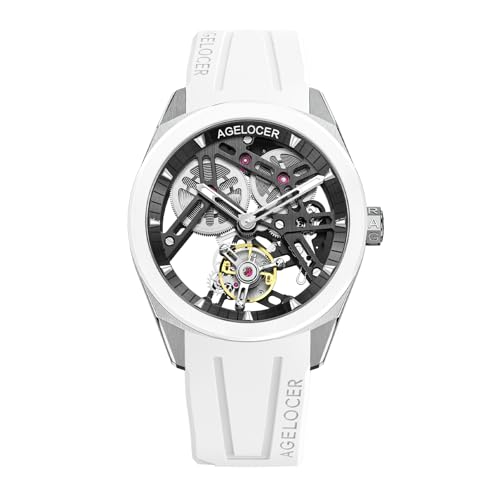
 AGELOCER Automatic Watches for Men Original Design8.66 x 1.18 x 0.39 inches0.18 poundsCheck on Amazon


What's inside
- What in-house actually means, and what it does not
- Seiko: manufacture watchmaking at the entry level
- Orient: the other Japanese answer
- Nomos: German manufacture with a design accent
- Frederique Constant: manufacture ambition in a classical frame
- Oris Calibre 400: the modern benchmark specification
- Tudor and Kenissi: in-house at group scale
- Christopher Ward: British design, Swiss manufacture, honest hybrids
- How to verify a calibre claim before paying
- Servicing realities: intervals, parts and watchmakers
- Finishing: the visible half of the manufacture argument
- The cost ladder, read qualitatively
- Which buyers benefit, and which are paying for romance
- Reading the makers against each other
- Magnetic resistance, water and the modern daily watch
- Check prices on Amazon
- How these selections were researched and how this page earns
As an Amazon Associate I earn from qualifying purchases. This post may contain affiliate links at no extra cost to you.
Every watch contains a movement, and most watch marketing would prefer that buyers stopped asking questions at that point. The phrase in-house, or manufacture, promises something more specific: a calibre designed and produced by the same company whose name sits on the dial, rather than a movement bought in from a specialist supplier and dropped into a case. That distinction has become one of the most powerful selling ideas in modern watchmaking. It is also one of the most loosely used, stretched to cover everything from a fully original calibre built in the brand own workshops to a bought-in base movement wearing a decorated rotor and a new reference number.
This guide takes the strict, useful definition and follows it through the part of the market where ordinary buyers actually shop, in ranges sold through large online retailers rather than by appointment in a flagship boutique. A movement counts as in-house here when the brand itself is responsible for its design and production: its architecture, its key components, and its assembly. Under that definition, Seiko and Orient qualify at remarkably modest budget levels, because both belong to groups that have made their own movements for generations. Nomos qualifies with its own calibre family built in Glashutte. Frederique Constant qualifies for its manufacture series, though not for every watch it sells. Oris qualifies for watches carrying Calibre 400 and its relatives, though much of the Oris catalogue still runs on supplier movements. Tudor qualifies through Kenissi, the movement maker within its own group. Christopher Ward qualifies most clearly for its SH21 calibre, while some of its other celebrated movements are in-house modules mounted on supplier bases, a distinction this guide will not blur.
Why care at all? A movement is the part of a watch that determines accuracy, power reserve, service needs, and long-term parts supply. It is also the part a buyer cannot see without a display case back or a watchmaker help. Paying for a manufacture calibre can buy longer reserves, better published tolerances, distinctive engineering, and a maker who controls the spare parts future of the watch. It can also buy nothing but a story, at a higher service cost, in a watch that keeps worse time than a humble supplier movement. Sorting one outcome from the other is the entire purpose of the pages that follow.
What in-house actually means, and what it does not
The watch industry grew up on division of labour. For most of the twentieth century, specialist firms made movements, called ebauches in their unfinished form, and hundreds of brands cased them, dialled them, and sold the finished watch. ETA and Sellita are the best-known modern suppliers, and their movements power a vast share of the Swiss watches sold today. There is no shame in that arrangement and no automatic quality gap: a well-regulated ETA 2824 pattern movement, or its Sellita SW200 equivalent, is accurate, tough, understood by every watchmaker alive, and supported by a deep pool of spare parts. Any honest account of in-house watchmaking has to start by admitting how good the bought-in alternative is.
An in-house calibre changes the chain of responsibility. The brand designs the gear train layout, chooses the balance frequency and escapement, decides the jewel count and the finishing standard, and manufactures or directly controls the plates, bridges, and wheels. That control lets a maker pursue goals a supplier cannot: a five-day power reserve, a movement thin enough for a dress watch of unusual elegance, a date mechanism that jumps at midnight without a long changeover, or a level of hand finishing that a display back can show off. It also concentrates risk. If the maker stops supporting an unusual calibre, the independent watchmaker who services it in twenty years will need parts that only that maker ever produced.
The grey zones deserve naming, because buyers meet them constantly. A movement with an in-house module on a supplier base – a moonphase or jump-hour complication designed by the brand and fitted over an ETA or Sellita foundation – is a hybrid, and it should be described as one. A calibre made by a sister company inside the same group, as Kenissi makes movements for Tudor, is reasonably called in-house at group level, and the industry generally accepts that usage. A bought-in movement with a brand-engraved rotor and a new calibre name is not in-house at all, whatever the brochure implies, and the fastest way to detect that case is to compare the published specifications: identical jewel counts, identical frequency, identical reserve, and identical layout to a known supplier calibre tell the story without any detective work.
The vocabulary on a spec sheet
Four published figures do most of the work in judging any calibre, and each needs a plain explanation. Accuracy tolerance is quoted in seconds gained or lost per day, and a narrower band is better, though the figure is a factory promise under test conditions rather than a guarantee of what a given wrist will see. Power reserve is the running time from full wind to stop, quoted in hours or days, and it decides whether a watch survives a weekend off the wrist. Jewel count records the number of synthetic ruby bearings at friction points; more is not automatically better, since a simple time-only movement needs fewer than a chronograph, and counts in the high teens to low thirties cover nearly everything in this guide. Hacking means the seconds hand stops when the crown is pulled, allowing exact setting, and hand-winding means the crown can power the watch directly rather than relying only on wrist motion through the automatic rotor.
Frequency, quoted in vibrations per hour or in hertz, shapes both character and service needs. The common modern rate of 28,800 vibrations per hour, or 4 Hz, gives a smooth seconds sweep and a good balance of accuracy and wear. Slower rates such as 21,600 vibrations per hour appear in many Seiko and Orient calibres and in some manufacture movements that trade sweep smoothness for longer reserves or lower cost. Faster rates exist but bring lubrication and wear demands of their own. None of these figures, alone, ranks a movement. Read together, they describe a set of engineering choices, and the sections below judge each maker by whether those choices suit the watches and the buyers they are aimed at.
Seiko: manufacture watchmaking at the entry level
Seiko is the standing refutation of the idea that an in-house movement must cost a fortune. The Japanese group designs and produces its own calibres across an enormous range, from the workhorse movements in its affordable Seiko 5 line to the finely finished calibres of Grand Seiko. Because the group also makes cases, dials, hands, and even the lubricants and spring alloys inside its watches, Seiko is one of the most vertically complete watchmakers in the world. A buyer at the modest end of the market is therefore not buying a diluted version of the manufacture idea; the movement in an entry Seiko was genuinely designed and built by Seiko, in Seiko facilities, to Seiko drawings.
The published figures describe honest, durable engineering rather than spectacle. The widely used 4R family, including the 4R36 with day and date, runs at 21,600 vibrations per hour, offers hacking and hand-winding, carries 24 jewels, and holds roughly 41 hours of reserve, with a published accuracy band of +45 to -35 seconds per day that is wide on paper yet often delivered far better in practice. The 6R family steps up meaningfully: the 6R35 runs at 21,600 vibrations per hour with 24 jewels, extends the reserve to about 70 hours, and tightens the published band to +25 to -15 seconds per day. That 70-hour figure matters in daily life, because a watch taken off on Friday evening can still be running on Monday morning, a convenience buyers feel every single week.
Grand Seiko occupies a different conversation at the top of the same house. Its 9S mechanical calibres are regulated to the Grand Seiko standard, published as +5 to -3 seconds per day in static testing, tighter than the common Swiss chronometer band, with reserves around 55 to 72 hours depending on the calibre, and finishing that is applied to the movement as carefully as to the cases the brand is famous for polishing. The 9F quartz calibres and the 9R Spring Drive calibres are also in-house, and Spring Drive in particular – a mechanical movement regulated by an electronic system, with a perfectly smooth seconds motion – is a technology no other maker offers. Buyers who want manufacture credentials with a deep service network and a long production history will find Seiko the lowest-risk route into this entire category.
The trade-offs are equally clear. Seiko published tolerances at the affordable end are loose, the bracelets and clasps at that level have historically lagged the movements inside the cases, and the sheer size of the catalogue means some models are far better resolved than others. None of that undermines the central point: if the goal is a watch whose movement its maker truly designed and built, Seiko delivers it at the first rung of the ladder, and every maker charging far more should be asked what their premium adds beyond what Seiko already provides.
Orient: the other Japanese answer
Orient, part of the wider Epson and Seiko group family yet long operated with its own identity and its own movement production, makes the same point from a slightly different angle. Its in-house calibres power the Orient and Orient Star lines, and the company has built its reputation on giving buyers a manufacture automatic movement, a display of traditional watchmaking value, at prices of admission that sit in the entry tier of the whole mechanical market. The Bambino dress watch line is the best-known example, and its popularity rests squarely on the movement story combined with restrained styling.
The calibre F6722 and its relatives in the F6 family run at 21,600 vibrations per hour, carry 22 jewels, offer hacking and hand-winding, and hold about 40 hours of reserve, with published accuracy quoted at +25 to -15 seconds per day. Orient Star models step up to calibres such as the F7 family with reserves around 50 hours and, in some versions, a power reserve indicator on the dial – a complication that shows the state of wind and that buyers tend to love out of proportion to its cost, because it makes the mechanical nature of the watch visible every time the dial is checked. Finishing on Orient Star movements, visible through display backs, is a clear grade above the standard line.
Orient also illustrates a servicing truth that runs through this guide. A simple, long-lived in-house calibre produced in large numbers is not a servicing risk; it is a servicing asset. Watchmakers know these movements, parts circulate, and the maker support behind them is a large industrial group rather than a small atelier. The romance of in-house production and the practicality of ownership only conflict when production is small and the design is unusual. Orient, like Seiko, shows that the two can align when scale is on the maker side.
Nomos: German manufacture with a design accent
Nomos, based in Glashutte, the German town with its own protected watchmaking tradition, built its reputation in two layers. The first was design: clean, Bauhaus-influenced dials in slim cases that looked like nothing else in the shop window. The second, decisive layer was movement independence. Nomos developed its own escapement, the Nomos swing system, freeing itself from the supplier part that had constrained so many brands, and built a family of in-house calibres around it, from the hand-wound Alpha to the automatic DUW series.
The Alpha is the foundation: a hand-wound calibre with 17 jewels, a reserve of about 43 hours, and the small-seconds layout that defines the classic Tangente and Orion models. The DUW 3001 automatic is the technical showcase, only 3.2 millimetres thick, with 27 jewels and a reserve of about 43 hours, allowing automatic Nomos watches to stay genuinely slim on the wrist where rival automatics grow bulky. The DUW 6101 adds a date mechanism engineered so the date ring sits around the movement rather than on top of it, preserving thinness, and allows the date to be set in both directions. Published accuracy for Nomos calibres is regulated in six positions, and the brand quotes its watches as adjusted to chronometer-like values without sending every calibre for external certification, a point buyers should note: the claim is the maker own, published in its documentation, rather than an independent certificate.
Nomos finishing follows the Glashutte school: three-quarter plates, striped and perlage decoration, blued screws, and sunburst winding wheels, all visible through the display backs fitted to most models. This is manufacture watchmaking presented as craft transparency – the buyer can literally see where the money went. The limits are stylistic and practical. The design language is coherent to the point that the whole catalogue shares one accent, long lugs make some models wear larger than their case diameters suggest, and water resistance on the dressier pieces suits daily life rather than swimming. Buyers who want a manufacture movement in a watch that looks designed rather than assembled will find Nomos the clearest expression of that idea in its tier.
Frederique Constant: manufacture ambition in a classical frame
Frederique Constant built its name on classical Swiss styling at accessible levels, and then did something unusual for a brand in that position: it invested in its own manufacture calibres, produced in its Geneva facility, and sold them in watches that undercut the traditional manufacture brands by a wide margin. The FC-700 series of in-house movements underpins dress watches, worldtimers, and moonphase models, and the line extends to complications that are rare at any level, including an in-house flyback chronograph calibre, the FC-760, and manufacture perpetual calendar movements in the FC-775 family.
The base manufacture automatic, the FC-705 and its relatives, runs at 28,800 vibrations per hour, carries 26 jewels, and offers a reserve of about 38 to 42 hours depending on version – figures that are respectable rather than headline-grabbing, and that buyers should weigh honestly. The value of the Frederique Constant manufacture proposition is not reserve records; it is the combination of an own-design calibre, traditional Geneva finishing visible through a display back, and complications such as a worldtimer whose city ring and date are all set from the crown, a piece of user-centred engineering that simplifies a complication famous for fiddly correctors. The brand later manufacture tourbillon and perpetual calendar models show how far the platform stretches, though those sit far above the entry manufacture tier.
Discrimination matters inside this catalogue more than in most. Frederique Constant also sells many watches powered by supplier movements, and the word manufacture applies only to the designated manufacture series. A buyer must check the calibre reference of the exact model, not the brand reputation in general – advice that applies across this whole guide and that the verification section below turns into a checklist. For the buyer who checks, the manufacture line offers something genuinely scarce: Swiss in-house production, classical looks, and complication choice, in a tier where most rivals are offering decorated supplier movements.
Oris Calibre 400: the modern benchmark specification
When Oris launched Calibre 400 in 2020, it published a specification that read like a direct challenge to the rest of the industry, and it remains the clearest example of what a modern in-house programme can offer a buyer in concrete, checkable terms. The calibre is an automatic with a twin-barrel system delivering a five-day, 120-hour power reserve. It runs at 28,800 vibrations per hour and carries 21 jewels. Oris publishes an accuracy tolerance of -3 to +5 seconds per day, a band tighter than the standard Swiss chronometer range, achieved without external certification and stated plainly in the brand documentation. The movement was designed with elevated resistance to magnetic fields, using non-ferrous components in the escapement and elsewhere, addressing a real modern hazard: the magnets in phone cases, bag clasps, and laptop lids that quietly magnetise mechanical watches and send their rates wandering.
The ownership claims are as notable as the technical ones. Oris publishes a recommended service interval of ten years for Calibre 400 watches and backs the movement with a ten-year warranty when the owner registers the watch. Ten-year intervals were once the preserve of a handful of very expensive brands; printing the claim for a manufacture movement in this tier changed buyer expectations across the market. The calibre also uses a distinctive winding and setting feel and a movement architecture designed for stability, with the balance secured in a way intended to resist shocks in daily wear. Variants followed, including Calibre 401 with a small seconds display and Calibre 403 with a pointer date, all sharing the same core specification.
Balance requires noting the context. Calibre 400 powers a defined part of the Oris range, notably Aquis dive watches and Big Crown ProPilot models in manufacture form, while many other Oris watches use Sellita-based calibres that Oris designates with its own numbers. Early production of Calibre 400 drew owner reports about the minute hand behaviour when setting, which Oris addressed in documentation and in later production; a buyer considering an early used example should check the setting behaviour and the service record with care. None of that diminishes the central achievement. Judged purely on published figures – reserve, tolerance, magnetism resistance, service interval, warranty – Calibre 400 is the specification sheet every rival in its tier now has to answer.
Tudor and Kenissi: in-house at group scale
Tudor path to manufacture status runs through Kenissi, a movement production company within the Tudor and Rolex orbit, established to supply Tudor and, later, selected partner brands. Tudor manufacture calibres, identified by the MT prefix, arrived in 2015 and now power the core of the range, including the Black Bay lines that dominate the brand catalogue. Because Kenissi also supplies movements to other makers, the Tudor story usefully complicates the definition from earlier in this guide: a calibre can be in-house to a group, designed for a family of brands, and still represent genuine manufacture production rather than bought-in ebauche supply in the old sense.
The specifications are strong and consistent. The MT5402, fitted to the Black Bay Fifty-Eight, is a time-only automatic running at 28,800 vibrations per hour with a reserve of about 70 hours, a silicon balance spring for magnetic resistance, and 27 jewels. The MT5602 in the larger Black Bay models adds a date and a slightly larger architecture with the same 70-hour reserve. The MT5813 chronograph calibre, derived from a Breitling manufacture design under a well-documented exchange between the two houses, brings a column-wheel chronograph with about 70 hours of reserve. Tudor publishes chronometer certification for its manufacture movements: the calibres are certified by COSC, the Swiss testing institute, to the standard band of -4 to +6 seconds per day, and Tudor states that its finished watches are held to a tighter in-house expectation of -2 to +4 seconds per day on the wrist.
For buyers, the Tudor proposition is the industrial-strength version of the manufacture idea. Volumes are large, the group behind the movements is the most capable service organisation in Swiss watchmaking, and the watches are built as daily tools rather than display pieces. The costs of that formula are a certain uniformity – the MT calibres are finished to a functional standard rather than decorated for exhibition – and case sizes and thicknesses that reflect tool-watch briefs. Readers whose interest in wrist technology leans toward the electronic side will find a useful contrast in best mens smartwatches, where the ownership equation is driven by batteries and software rather than by calibre origin.
Christopher Ward: British design, Swiss manufacture, honest hybrids
Christopher Ward is the most instructive brand in this guide, because its catalogue contains, side by side, a true manufacture calibre, clever in-house modules on supplier bases, and plain supplier movements – and the brand documentation is generally candid about which is which. The manufacture calibre is the SH21, launched in 2014 as the first commercially viable in-house movement from a British brand in decades. It is built in Switzerland by the brand movement operation, uses twin barrels to deliver a five-day, 120-hour reserve, runs at 28,800 vibrations per hour, and carries 33 jewels in automatic form. A chronometer version is certified by COSC to the -4 to +6 seconds per day band. Hand-wound and automatic versions power the brand flagship dress and dive models.
The JJ calibres tell the second story. Named for the watchmaker who developed them, these are modules designed in-house and mounted on Sellita or ETA bases: the JJ01 jump hour, the JJ02 single-pusher chronograph conversion, and the JJ03 moonphase are the best known. The moonphase module, for example, tracks the lunar cycle with a mechanism that, once set, stays accurate far longer than a conventional moonphase display, and the jump hour turns a standard base into a display format usually found at far higher levels. These are real engineering contributions and they deserve credit – as modules. A buyer paying for a JJ model is paying for the module design and the base movement together, and should value it on those terms rather than on a manufacture claim the brand itself phrases carefully.
The third story is the rest of the range, where Sellita SW200 and similar supplier calibres do dependable work in the brand popular dive and field watches. Far from weakening the Christopher Ward case, this transparency strengthens it, and it offers buyers a live comparison inside one catalogue: the same design team, similar cases, three different movement philosophies at three different levels. A buyer who wants to understand what the manufacture premium buys could do worse than handle the spec sheets of an SH21 model and an SW200 model from the same brand and list the differences that actually matter to them. That exercise, repeated for any brand, is the heart of sensible watch buying, and it connects to the broader question of value explored in best all around smartwatches for the connected side of the market, where specification honesty matters just as much.
How to verify a calibre claim before paying
Verification is a skill any buyer can learn in an afternoon, and it protects against the soft marketing that surrounds this topic. Start with the calibre reference itself, printed in the brand own specification for the exact model under consideration. Search that reference in the manufacturer technical documents rather than in retailer copy, because retailer listings compress and sometimes garble movement information. A genuine manufacture calibre will have a documented identity: its own dimensions, jewel count, frequency, reserve, and a history that can be traced through the brand technical communication over several years.
Next, compare the suspect calibre against the known supplier catalogue. ETA and Sellita publish their movement specifications openly, and the common references – ETA 2824-2, Sellita SW200-1, ETA 2892, Sellita SW300, and their chronograph counterparts – have distinctive combinations of diameter, height, jewel count, and reserve. If a brand calibre matches a supplier reference on every published figure and the movement photograph shows the same architecture under a decorated rotor, the reasonable conclusion is a rebranded supplier movement, whatever name it carries. Brands that rename supplier calibres often disclose the base in their own documentation when pressed, and some state it openly; the disclosure, or its absence, is itself information about how a brand treats its buyers.
Then read the tolerance and service claims with a lawyer eye for what is actually promised. A published accuracy band is a specification; a phrase like regulated to chronometer standards without certification is an aspiration unless a test certificate accompanies the watch. A long service interval claim should appear in the brand own warranty and care documents, as the Oris ten-year claim does, not only in launch coverage. Finally, look at the movement. A display case back is not proof of anything, but a calibre designed in-house usually looks like its maker other products and unlike everyone else, with a bridge layout and finishing style that form a family resemblance across the range. Seiko, Nomos, and Tudor movements each have that kind of recognisable architecture, which is one reason their claims are easy to credit.
Servicing realities: intervals, parts and watchmakers
Every mechanical watch is a machine that wears. Lubricants age and migrate, gaskets harden, and amplitude falls until timekeeping suffers. The traditional guidance was a service every three to five years; modern synthetic lubricants and better sealing have stretched realistic intervals for many calibres to five to seven years, and a small number of makers publish longer claims, led in this guide by the Oris ten-year recommendation for Calibre 400. Tudor and Seiko publish guidance in the five-to-ten-year conversation depending on use, and Grand Seiko intervals sit in a similar band. The honest rule is that interval claims describe a design intent under normal use, and a watch worn in water, dust, or sport will need attention sooner than a watch worn at a desk.
Cost follows complexity and exclusivity. A service for a common Seiko or Orient calibre, or for a supplier ETA or Sellita movement, is the cheapest kind of mechanical watch service, because independent watchmakers know the movements, hold or can order the parts, and work to familiar procedures. A manufacture calibre from a smaller maker may need to return to the brand own service centre, where the work is done correctly and the parts are genuine, but where the bill and the turnaround time both grow. Chronographs, perpetual calendars, and other complications multiply the labour in any service, in-house or not. Buyers should therefore treat the service plan as part of the purchase: ask who can service the calibre, where, at what published service tariff if the brand prints one, and with what expected wait.
Parts supply is the long game. A movement produced in the hundreds of thousands, like the Seiko 4R and 6R families or the big Tudor MT production runs, will be supportable for decades because parts, donor movements, and knowledge accumulate in the trade. A small-run manufacture calibre depends on its maker continued solvency and goodwill, which is why the financial weight behind a brand is a legitimate buying criterion in this category and not snobbery. The makers in this guide were chosen partly on that ground: each stands behind its calibres with an organisation large enough, or established enough, to make a twenty-year ownership horizon plausible. Athletes comparing ownership burdens across watch types may also enjoy best running smartwatches, where service means a battery swap rather than a movement overhaul.
Hacking, hand-winding and living with a mechanical watch
Two features decide much of the daily pleasure of a mechanical watch, and both are published in any complete spec sheet. Hacking, the ability to stop the seconds hand with the crown, lets an owner set the watch to a reference clock exactly and watch the published tolerance play out over the following week; without it, setting is approximate and accuracy checks become guesswork. Nearly every calibre in this guide hacks, but some entry movements in older Seiko and Orient lines did not, and used buyers should check the exact reference. Hand-winding lets the owner top up the reserve from the crown, which matters for rotating collections: a watch that can be wound on the day it is chosen starts its shift fully powered rather than depending on wrist motion to recover from rest.
Automatic winding efficiency also varies in ways spec sheets only partly reveal. Rotor design, winding direction, and gearing decide how much wrist movement a calibre needs to stay near full reserve, and a sedentary owner may find a 70-hour watch still stopped on Monday if the preceding days were spent at a desk. This is normal behaviour, not a fault, and it is why reserve figures should be read as capacity rather than as a promise. Owners who rotate several watches often keep the current favourite on a winder or simply accept the Monday ritual of winding and setting, which many enthusiasts quietly regard as part of the pleasure of the hobby rather than a chore imposed by it.
Finishing: the visible half of the manufacture argument
Open a display back on a Nomos, a Grand Seiko, or a Frederique Constant manufacture model and the finishing argument makes itself. Stripes are cut into bridges, edges are bevelled, screw heads are polished or blued, and the perlage on base plates is laid in even overlapping circles. None of this improves timekeeping by a single second. Its value is craft evidence: it shows that the maker spent skilled hours on surfaces only an owner will ever see, which correlates, in practice, with care taken in places that do affect timekeeping. It is also, frankly, pleasure. A movement finished to be looked at turns a watch from an instrument into an object, and for many buyers that transformation is the entire point of mechanical watchmaking in an age of perfect cheap timekeeping.
Finishing exists on a ladder and honesty about rungs matters. Tudor manufacture calibres are finished functionally, with clean industrial surfaces that suit tool watches and keep costs aimed at performance. Seiko at the affordable end finishes movements plainly, reserving decoration for Grand Seiko and higher 6R and 8L models. Nomos and Frederique Constant put decoration near the centre of their offer at mid-range levels. Christopher Ward SH21 models sit between, with tidy Geneva-wave style decoration. A buyer should decide in advance how much of the budget they are willing to assign to beauty inside the case, because the market will happily absorb any amount, and because a display back on a watch that lives face-up on the wrist is a pleasure sampled occasionally rather than constantly.
The cost ladder, read qualitatively
Money in this category climbs in recognisable tiers, described here in relative terms because retail figures shift with currency, season, and seller. The first tier is the Japanese entry point, where Seiko and Orient sell genuine manufacture automatics for the kind of money that elsewhere buys a fashion watch with a bought-in quartz movement. The second tier holds the upper Seiko lines, Orient Star, entry Nomos hand-wound models, and Christopher Ward supplier-powered watches, where finishing and case quality rise while movement ambition stays moderate. The third tier is where manufacture claims become the headline: Nomos automatics with the DUW calibres, Frederique Constant manufacture models, Oris Calibre 400 watches, and Christopher Ward SH21 pieces cluster here, each offering a distinct technical story. Above them sit Tudor manufacture lines and Grand Seiko, where brand weight, certification, and finishing all deepen together, and beyond them the traditional Swiss and German manufacture houses operate at levels this guide deliberately leaves aside.
What does each step actually buy? Moving from the first tier to the third typically buys a longer reserve, from roughly 40 hours toward 70 or 120; a tighter published tolerance, from bands measured in tens of seconds toward single figures; better finishing inside and outside the case; and features such as silicon components or elevated magnetic resistance. It does not buy a watch that tells time more usefully in daily life, because a well-kept entry Seiko already does that. It buys engineering headroom, craft, and the satisfaction of a specification sheet with no apologies on it. Buyers who understand that distinction tend to be happy at every tier; buyers who expect each step to transform the experience of reading the time tend to keep spending and stay restless.
Depreciation and demand belong in a complete account. Manufacture movements from recognised makers generally support used values better than anonymous supplier movements in otherwise similar watches, because the calibre gives a used buyer something specific to seek out. Tudor and Grand Seiko benefit most from this effect in the ranges covered here, while limited or unusual manufacture pieces from smaller makers can be slower to sell despite their technical merit. None of this makes a watch an investment, and this guide treats any purchase as money spent on an object to wear. It simply notes that the calibre is part of what the next owner will value, which is one more reason to verify claims while the first owner still has a choice. Shoppers at the value end of the wider watch market will find a parallel discussion in best affordable android smartwatches, where the same discipline of reading specifications against claims applies to a very different kind of wrist machine.
Which buyers benefit, and which are paying for romance
The manufacture premium makes clear sense for four kinds of buyer. The long-term owner, who intends to wear one watch for decades, benefits from maker-controlled parts supply and from the service organisations described earlier. The specification enthusiast, who genuinely enjoys a 120-hour reserve or a silicon balance spring and can explain why, is buying real engineering and will feel its value weekly. The craft admirer, who turns a watch over to look at the movement, is buying finishing that only manufacture production at this level supplies. And the buyer of complications – worldtimers, manufacture moonphases, jump hours – is often buying mechanisms that simply do not exist in the supplier catalogue.
Romance takes over in other cases. A buyer who wants the most accurate, most robust watch for a fixed budget will usually be better served by a good supplier movement in a better case, or even by high-accuracy quartz, than by an entry manufacture calibre with loose tolerances. A buyer who flips watches yearly gains little from twenty-year parts logic. A buyer drawn mainly by the word manufacture on a retailer listing, without checking which calibre is actually inside, is paying for a syllable. There is nothing disgraceful in paying for romance knowingly – much of mechanical watchmaking is romance, and this guide is written by people who feel it – but the honest purchase is the one where the buyer can name the engineering, finishing, or service benefit the premium bought, in one sentence, without using the word exclusive.
A short decision routine
Reduce the choice to a sequence. First, set the role: daily wear, dress, dive, or collection piece, because role decides water resistance, size, and legibility before movements enter the discussion. Second, pick the calibre tier that role justifies, using the published reserve and tolerance figures in this guide as the comparison language. Third, verify the exact calibre in the exact model through the manufacturer documents, following the checks in the verification section. Fourth, price the ownership, not just the watch: service interval, service route, and warranty length, all of which the makers in this guide publish. Fifth, and only then, allow design and brand feeling their vote, because a watch that passes every technical test and leaves its owner cold will not be worn, and an unworn watch keeps perfect time for nobody.
Applied patiently, that routine lands different buyers on different answers, and every answer can be right. The routine might deliver a Seiko 6R model to a first-time buyer who wants manufacture credibility with minimal risk, an Oris Calibre 400 dive watch to an owner who hates winding and servicing in equal measure, a Nomos to a design-led buyer who values thinness, a Tudor to someone who wants certification and industrial backing, or a Frederique Constant worldtimer to a traveller who sets everything from one crown. The calibre is the foundation of each of those choices, but the building is the whole watch, and the best purchases in this category are the ones where foundation and building were judged together.
Reading the makers against each other
Set side by side, the makers in this guide divide by philosophy as much as by specification. Seiko and Orient treat manufacture production as a birthright, scaled to millions of movements, with innovation expressed through ranges like Spring Drive rather than through scarcity. Nomos treats it as independence, the freedom to design watches from the movement outward and to keep a small German factory at the centre of the brand story. Frederique Constant treats it as ambition, a claim that classical Geneva watchmaking, including complications, can be produced and sold without the traditional gatekeeping of the old houses. Oris treats it as a specification challenge, answering with published numbers – reserve, tolerance, interval, warranty – that any rival can be measured against.
Tudor treats manufacture production as infrastructure: build the movement factory, certify the output, and let reliability at scale become the luxury. Christopher Ward treats it as a ladder the buyer can climb inside one catalogue, from supplier workhorse to SH21 flagship, with hybrid modules on the middle rungs labelled for what they are. None of these philosophies is the correct one. They produce different watches, different service experiences, and different relationships between owner and maker, and the summaries in this guide exist so that a buyer can choose a philosophy as deliberately as a case diameter.
One final caution binds the whole subject. Movement origin is a means, not a verdict. A watch with a bought-in calibre can be excellent in every way its owner cares about, and a watch with a manufacture calibre can be poorly cased, badly proportioned, or wrong for the wrist that wears it. Judge the calibre by its published figures, judge the watch as a whole object, and let the phrase in-house start the investigation rather than end it. Buyers who hold that line will find that the makers discussed here reward the scrutiny, because their claims survive it.
Magnetic resistance, water and the modern daily watch
Two practical subjects cut across every calibre claim in this guide, and both are easy to overlook while admiring a movement photograph. The first is magnetism. A mechanical watch keeps time through the oscillation of a balance wheel governed by a fine hairspring, and a magnetised hairspring coils against itself and shortens its effective length, so the watch gains time, sometimes dramatically. Modern life surrounds watches with magnetic sources that earlier generations never met at a desk: tablet covers, phone accessories, handbag clasps, and the speakers inside laptops. Makers answer in different ways. Tudor fits silicon balance springs to its manufacture calibres, and silicon cannot be magnetised in the way a metal spring can. Oris designed Calibre 400 with non-ferrous components at the points where magnetism does the most harm and publishes a resistance claim in its documentation. Seiko uses its own alloy springs, developed inside the group, with published resistance figures for many calibres. A buyer who works around strong magnets should treat this specification as seriously as water resistance, and should know that a demagnetiser in a watchmaker workshop can cure a magnetised watch in minutes, so a sudden rate change is a diagnosis to check before it is a disaster to mourn.
The second subject is the seal between the movement and the world. Water resistance is a property of the case, crown, crystal, and gaskets rather than of the calibre itself, yet it decides the service rhythm of the whole watch, because gaskets age whether a watch swims or not and a failed seal admits moisture that attacks a movement from the outside. Manufacture status does not change that physics. A Nomos dress watch with modest resistance and a Tudor dive watch built for depth can contain movements of comparable quality, and each is correct for its brief; the error is wearing the dress watch as if the calibre pedigree extended to the seals. Annual pressure checks for watches that swim, and gasket renewal at each service, are the maintenance habits that keep any of the movements in this guide alive for the decades their makers designed them to span.
Shock deserves a brief word in the same practical spirit. Every modern calibre in this guide uses a spring-mounted jewel system to protect the balance staff, the most fragile axle in the watch, against the knocks of daily life. Golf, tennis, and mountain biking deliver repeated shocks that a desk never will, and while manufacture calibres from Tudor and Oris are designed and promoted for active wear, a mechanical watch remains a precision machine rather than a sports instrument. The sensible division of labour, followed by many owners in this category, is to wear the mechanical watch for the life it was built for and to let a dedicated sports device take the impacts, the vibration, and the swimming starts. That division protects the service budget as effectively as it protects the balance staff, and it keeps the manufacture watch doing the job at which it has no rival: telling the time with mechanical integrity, day after ordinary day, for years between services.
Keep a simple record for whichever watch follows from this guide: the calibre reference, the date of purchase, the warranty terms, the observed rate over the first month of wear, and the service guidance printed for that movement. That single page of notes, kept with the watch papers, turns future servicing from guesswork into a conversation with evidence, helps a watchmaker judge whether a rate change is new or longstanding, and preserves the very facts that give a manufacture watch its meaning over time. Owners who keep such records tend to keep their watches longer, and keeping a good watch longer is the quiet outcome every claim in this category is really selling.
Check prices on Amazon
Live listings for the shortlist in this guide are pulled from Amazon below, so prices and availability are always current at the moment you look.

AGELOCER Manta Tourbillon Watches Men Original Design, Luxury Skeleton Mechanical Watch, Leather Strap, Gift


How these selections were researched and how this page earns
The watches and calibres covered here were selected and assessed from manufacturer specification sheets, technical documents, warranty terms, and published service guidance, not from direct handling, and every figure quoted for accuracy, reserve, jewel count, frequency, and interval is a figure its maker prints in those documents. Where a maker claim rests on the maker own testing rather than on an outside certificate, this guide says so in the relevant section, because the difference between a certified tolerance and a house promise is exactly the kind of detail a buyer deserves to have in front of them. The funding behind the page is simple to state in different words from the usual formula: this publication carries retail listings, and when a reader buys through one of them the seller returns a portion of the sale to the publication, while the sum the reader hands over stays exactly what it would have been without the listing. No maker paid for a place in this guide, and two of the brands discussed are praised here mainly for movements sold in their least expensive lines. Before buying, check the calibre reference and tolerance for the precise model, dial variant, and production year under consideration against the current manufacturer document, since brands revise calibres in running production and a reference suffix can change the specification. Choose the watch whose documented movement, service path, and design all point the same way, and it will still be earning its place on the wrist long after the argument about who made its calibre has faded into the background of ordinary, reliable use.


