Our Top Picks
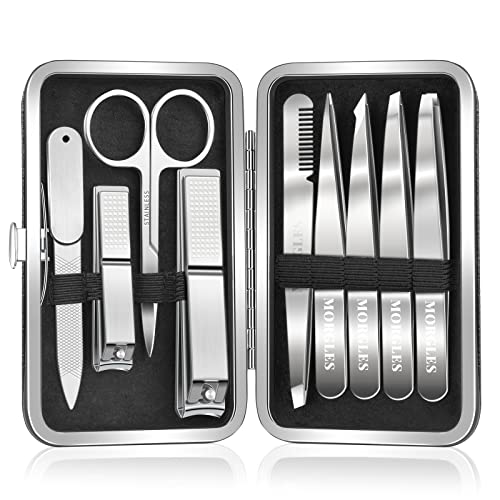
 Antonki 12-in-1 Precision Metal Tweezers Set with Leather12 Piece Set5.4 x 0.7 x 0.4 inchesCheck on Amazon


What's inside
- What a tweezer set for men actually has to do
- The four tip geometries and their real jobs
- Tip alignment: the tolerance that decides everything
- Steel grades and what they mean in the hand
- Hand-finished and electrochemically sharpened tips
- Spring tension and temper
- Grip, finish, and damp hands
- Set composition: useful pieces versus filler
- Cases: leather rolls, canvas, and hard tins
- Cleaning, disinfection, and autoclavable steel
- Brow shaping for men, done conservatively
- Ingrown hairs and splinters: point technique
- Nose and ear stray hairs, safely
- Why cheap stamped tweezers misalign
- How to check a set when it arrives
- Matching a set to how you live
- Common buying mistakes
- Care habits that keep tips true
- Length, weight, and hand size
- The science of gripping a hair
- Materials beyond stainless steel
- Reading a product listing like an instrument buyer
- Tweezers in a family first-aid kit
- Travel rules and airline reality
- When to replace, when to repair
- Grooming routines a good set quietly improves
- Gift buying and buying for someone else
- A short history of a very old tool
- Final checks before you commit
- Questions buyers ask most
- Check prices on Amazon
- Verdict guidance
As an Amazon Associate I earn from qualifying purchases. This post may contain affiliate links at no extra cost to you.
A good pair of tweezers is a small tool that either works every time or fails in the one moment you need it: a splinter before a shift, a stray brow hair before a photograph, an ingrown hair that has started to ache. Men buying a set for the first time often discover that the market mixes genuinely well-made instruments with stamped metal novelties that look similar in a listing and behave very differently in the hand. The difference lives in tip alignment, steel quality, spring temper, and finish, and none of those require guesswork once you know what to look for.
This guide rests on published specifications and manufacturer documentation: steel grades, tip geometry descriptions, finishing methods, dimensional notes, and care guidance supplied by makers. It explains what slant, point, split-tip, and flat geometries are actually for, why hand-finished tips outperform cheap stamped edges, how much tension a well-tempered arm should carry, and which set compositions earn their space in a wash bag or a pocket. The aim is simple: a set that grips the hair or the splinter, not the skin around it, and keeps doing so for years.
What a tweezer set for men actually has to do
Men’s grooming work clusters into a few repeatable jobs. Brow shaping for most men means restraint: removing the bridge hairs between the brows, lifting strays that wander below the natural line, and leaving the shape itself alone. Stray hairs around the ears and the nose appear with age and need a tool that can grip a short, coarse hair without slipping. Ingrown hairs, especially along the neck where collars rub and shaving cuts hair below the surface, need a fine point that can lift the trapped end without digging. Splinters from wood, metal, or garden work need the same point, plus enough closing force to hold a fragment while you draw it out.
Coarse hair changes the tool requirements. A fine facial hair yields to almost any tip, but a thick brow hair or a wiry grey hair resists, and a weak or misaligned tip will slide along the shaft, snap the hair at the surface, and leave the root to grow in again. That failure mode, repeated weekly, is what separates a proper instrument from a novelty. Grip at the very tip, alignment along the full closing edge, and tension that does not fade are the qualities that matter, and they are all visible in maker specifications when you know how to read them.
Everyday carry adds a second set of demands. A tweezer that lives in a dopp kit, a desk drawer, or a work bag gets knocked around, and fine points bend when they meet hard objects unprotected. That is why the case is not packaging but part of the product, and why set composition matters: the right three tools in a sound roll beat six flimsy pieces in a pretty tin.
The four tip geometries and their real jobs
Slant tip
The slant tip is the general-purpose geometry and the one most men should own first. Its angled edge meets the skin at a natural working angle, presents a broad gripping surface, and lets you see the hair against the tip as you close. It suits brow work, stray hairs, and most surface tasks. A well-made slant closes evenly from the front of the tip to the back, so it can grip a fine hair at the point or a coarse one deeper in the jaw. When a listing describes a slant as hand-finished with an aligned edge, that is the claim that matters, because the slant geometry forgives nothing: a slant whose edges meet at one corner only will fail on fine hairs every time.
Point tip
Point tweezers close to a fine, sharp meeting of two tapered arms. They exist for precision work under the surface edge: lifting an ingrown hair, coaxing out a splinter, removing a tick from skin or from a dog, and handling tiny objects from watch parts to model components. The point demands respect and a steady hand, because it can pierce skin if used carelessly, and it demands protection in storage, because the last fraction of a millimetre does all the work and bends easily. Makers who electrochemically sharpen or carefully hand-finish their points produce a tip that meets cleanly without the burrs that stamped points carry.
Split-tip and flat geometries
Split-tip designs divide the gripping end so the tip can close around a hair with a small degree of self-adjustment, which some users find forgiving on coarse hairs. Flat or straight tips present a squared edge that suits gripping larger objects, applying false lashes in shared households, handling contact lenses accessories in some kits, and general utility tasks where a broad, even bite matters more than a fine point. In men’s sets, a flat piece often serves as the utility member: splinter-adjacent work that is too coarse for the point, small fasteners, and workshop tasks. Judge it by the same alignment standard as the rest, because a flat tip that rocks on one corner is useless for holding anything small.
Needle-nose and ultra-fine variants extend the point family for electronics and craft, and they appear in some larger sets. For grooming-led buying, they are optional. The core trio that covers nearly every job is slant for daily grooming, point for ingrowns and splinters, and one utility geometry, flat or split-tip, for broader gripping.
Tip alignment: the tolerance that decides everything
Alignment is the whole game. When tweezers close, the inner faces of the tips should meet evenly, with no visible gap at the front, no overlap, and no sideways offset. Quality makers state a hand-alignment step in their process, where a worker closes the tool against light and adjusts the arms until the meeting is true. That labour is the main reason a good tweezer costs more than a stamped one, and it is the first thing to check when a set arrives: close the tips slowly against a bright background and look for light leaking through the last few millimetres.
Tolerance talk in listings can be vague, so translate claims into checks you can perform. The tips should meet tip-first or evenly, not heel-first with a gap at the point. There should be no lateral play when the closed tips are pressed gently side to side. The gripping faces should be free of burrs and bright polished lines that signal uneven grinding. A hair laid across the closed tip should be held along the edge, not only at one favoured spot.
Misalignment grows with use when the steel or temper is poor. Dropping a fine point onto tile can bend it, and forcing a tweezer to grip hard objects like wire or thick plastic fatigues the arms. Good steel and honest temper resist that drift; cheap stamped arms, cut from sheet and bent into shape with minimal finishing, often arrive slightly misaligned and get worse, because the material was never stress-relieved or properly hardened in the first place.
Steel grades and what they mean in the hand
Most quality tweezers are made from stainless steel, commonly in the 300 or 400 series families, with surgical and instrument grades prized for corrosion resistance and the ability to take a fine, durable edge. Makers who name a grade, describe passivation, or state that a tool is autoclavable are signalling a material that tolerates water, disinfectant, and years of bathroom humidity without pitting. Unnamed alloy claims and chrome plating over mystery metal deserve scepticism: plating chips at the tip first, exactly where the work happens, and the exposed base metal then corrodes.
Hardness is a balance. Steel hardened well holds alignment and a fine point, but excessive hardness makes a thin point brittle and prone to snapping if dropped. Instrument makers temper for resilience, aiming for a tool that flexes as a spring along its arms and stays true at its tip. When documentation mentions temper, spring testing, or hand-finishing after hardening, it is describing that balance being managed deliberately rather than left to chance.
Finish interacts with steel choice. A matte or brushed finish hides micro-scratches, improves grip, and tends to age gracefully. A polished finish wipes clean easily and looks sharp, but shows fingerprints and can feel slick. Black and colour coatings add grip and identification value in a shared drawer, though a coating is only as good as its adhesion; flaking at the tip is a defect, not patina. Titanium-coated and solid lightweight variants exist for travel and for users sensitive to heavier tools, and they trade some spring feel for corrosion resistance and low weight.
Hand-finished and electrochemically sharpened tips
Two finishing routes dominate quality production. Hand-finishing means a person grinds, files, and aligns the tips after forming, checking closure repeatedly and refining the edge until it meets true. It is slow, skilled, and the reason established instrument makers can promise alignment as a feature. Electrochemical sharpening, sometimes described as electropolishing or chemical sharpening of the point, uses a controlled process to remove microscopic burrs and leave a smooth, keen edge, particularly valuable on point tips where a file would be too coarse.
Stamped budget tweezers skip both. The shape is punched from sheet, the arms are bent, and the tip edge is whatever the die left behind: often slightly rounded, sometimes burred, and rarely aligned to a fine tolerance. That is why cheap tweezers so often cut a hair instead of gripping it, or grip only when squeezed with full force at one exact spot. The metal may be adequate; the finishing is absent, and finishing is the product.
When comparing listings, look for process language with specifics: hand-aligned, hand-finished tips, perfectly aligned, calibrated tension, made in a named instrument-making region with a tradition of small steel goods. Vague luxury adjectives without a process behind them carry no information. A maker who explains how the tip is finished is a maker who finishes it.
Spring tension and temper
Close a good tweezer and the resistance rises smoothly, the tips meet with light to moderate pressure, and the arms spring back fully when released. That feel is temper made tangible. Too little tension and the tool cannot hold a coarse hair against the pull; too much and your fingers tire, control suffers, and fine work around an ingrown hair becomes clumsy. Balanced tension lets you modulate: a whisper of pressure for a fine hair, a firm close for a splinter.
Tension should be even along the close, with no gritty or staged feeling that suggests uneven arm geometry. Over months of use, a well-tempered tool keeps its spring; a poorly tempered one takes a set, closing with a duller snap and holding less firmly. Makers who calibrate tension as a named production step are addressing exactly this. If a set arrives with one piece noticeably stiffer than its siblings, that inconsistency hints at loose process control across the whole set.
Ergonomics support tension. Wider arms spread pressure across the fingers and reduce fatigue during a longer brow session. Cut-outs and shaping that reduce weight can help or hurt depending on execution: they should never introduce flex at the gripping end. Length matters too. Standard grooming tweezers cluster around a familiar hand length; mini and travel sizes trade control for portability, and keychain sizes are emergency tools rather than grooming instruments.
Grip, finish, and damp hands
Bathroom work happens with damp hands, steam on the mirror, and sometimes a trace of shaving gel on the fingers. A mirror-polished, narrow tweezer can skate at exactly the wrong moment. Matte finishes, brushed textures, subtle knurling or ridges on the outer arms, and slightly wider bodies all improve purchase without adding bulk. Some makers add a soft-touch or rubberised coating to travel models; it grips well but should be checked for how it tolerates disinfectant and heat over time.
Grip also depends on where the tool balances. A tweezer that is tip-heavy feels precise for point work; one balanced nearer the middle feels calmer for longer slant work. Neither is universally better. What matters is that the finish, width, and balance suit the jobs you do most, and that the set you buy does not force one compromise across every piece. A thoughtful set varies the members slightly: the point piece slimmer and finer, the slant piece broader and grippier.
Colour can be functional. Distinct finishes per piece let you grab the point rather than the slant without looking closely, which matters when a splinter is halfway out. In shared bathrooms, a distinctive finish also keeps your grooming set from migrating into someone else’s kit, a small domestic benefit that owners appreciate out of proportion to its cost.
Set composition: useful pieces versus filler
Count pieces with suspicion. A useful men’s set usually contains three to five tools: a slant, a point, a flat or split-tip utility piece, and sometimes a dedicated nose and ear hair tool with a guarded or rounded approach, plus small scissors in grooming-led kits. Beyond that, count duplicates and exotica carefully. Two near-identical slants, a flimsy blackhead tool, and a decorative piece nobody can name are filler dressed as value.
Think in jobs, not pieces. List what you actually do monthly: brow maintenance, ingrown care after shaving, splinters from work or sport, stray ear hairs, perhaps first-aid duty in a family kit. A set that covers your list with quality pieces beats a larger set that covers it with mediocrity plus extras. First-aid overlap is real and valuable: the point tweezer in a grooming set is often the best splinter tool in the house, provided it is cleaned properly between roles.
Sets aimed at men sometimes add a nail file, small scissors, or a clipper companion. Those additions can be worthwhile when made to the same steel standard, and dead weight when they are not. Judge every member by the alignment and finish tests in this guide, not only the headline slant piece, because makers of uneven sets polish the star and stamp the supporting cast. Readers who track grooming alongside training and sleep may also enjoy best mens smartwatches as a companion browse for the same wash-bag shelf of everyday kit.
Cases: leather rolls, canvas, and hard tins
A leather roll ages well, protects each tip in its own slot, and lies flat in a drawer or bag. It suits home and travel, breathes around damp tools better than a sealed box, and signals at a glance which piece is missing. A canvas roll trades some structure for lightness and washability, a fair exchange for gym bags and field work. Waxed canvas sheds bathroom moisture admirably.
Hard tins and zip cases protect points best against crushing, which matters for fine point tweezers in luggage. Their weakness is moisture: a damp tool sealed in a tin stays damp, and even stainless steel deserves better. Dry tools before closing any case, and favour a case that holds pieces separately rather than letting tips strike each other. Magnetic closures are convenient and generally safe for steel tools; tight elastic loops that force a bent entry angle are not, because they stress fine tips on every use.
Tip guards, the small caps or tubes that cover a point, are worth keeping rather than discarding. They cost nothing to use, they prevent the most common tweezer injury to the tool itself, and they stop a sharp point from piercing a roll pocket or a wash bag lining. A set that includes guards for its point piece has been designed by someone who has carried one.
Cleaning, disinfection, and autoclavable steel
Tweezers touch broken skin during ingrown and splinter work, so cleaning is not cosmetic. Wash the tool with warm water and soap after such jobs, dry it fully, and disinfect the tips with rubbing alcohol before and after use on skin that is pierced or lifted. Sets whose steel is described as autoclavable tolerate steam sterilisation temperatures used in medical settings, which is more than home use requires, but the rating signals steel and finish that shrug off repeated disinfection without pitting or fading.
Avoid harsh bleach soaks and abrasive pads on finished tips; both attack the fine edge you paid for. Store tools dry and separate. If a point dulls or a tip bends, many established makers offer resharpening or alignment services, and a local instrument sharpener can often restore a slant. A tweezer that can be serviced is a different class of object from one that must be replaced, and buying with that path in mind changes the value calculation entirely.
Rust spots on stainless steel usually trace to surface contamination or long storage in a damp sealed case rather than a failed alloy. A gentle polish with a non-abrasive cleaner often removes them. Persistent pitting at the tip, however, ends a precision tool’s useful life for skin work, though it may retire honourably to workshop duty for splinters in timber and other coarse tasks.
Brow shaping for men, done conservatively
The slant tweezer earns its keep here. Work after a warm shower, when hair releases more easily, under bright, frontal light with a normal mirror rather than a magnifying one, which encourages over-removal. Clear the bridge between the brows first, pulling in the direction of growth with the skin held taut. Then take only hairs that clearly sit outside the natural brow boundary below the line. Step back after every few hairs and look at the whole face; symmetry is judged at conversational distance, not at two inches from the glass.
Grey and wiry hairs resist and tempt a harder pull, which is when alignment proves itself: a true tip grips near the root and removes the hair whole, while a poor tip snaps it and leaves a sharp stub that looks worse than the original. Never dig for a hair that is not ready to come; inflamed skin before an event is a worse outcome than one stray hair. Men who wear glasses should check the result with frames on, since frames redraw the brow line visually.
Ingrown hairs and splinters: point technique
For an ingrown hair, clean the area and the point tips first. Use the point to lift the trapped loop or end free of the surface, then switch to the slant to grip and remove the hair whole if it needs to come out, or leave the freed hair to grow out if the skin is calm. Do not excavate. A hair buried with redness, swelling, or pain that spreads is a medical matter, not a grooming one, and the same restraint applies to deep or dirty splinters, anything near the eye, and anything under a nail that resists a gentle attempt.
For a surface splinter, work along the entry angle, expose the end with the point, grip it low and close with the slant or the point itself, and draw it out steadily along the path it entered. Rushing snaps the fragment and leaves the deeper half behind. Clean and disinfect afterwards, and note that the same point piece you use here is the one to keep guarded and sharp, which is why many owners keep grooming and workshop roles in separate sets once they can. Athletes who split time between trail work and grooming will find a kindred kit discussion in best running smartwatches, since both topics reward gear that survives being carried everywhere.
Nose and ear stray hairs, safely
Visible nose hairs that protrude can be trimmed, and most guidance favours small rounded-tip scissors or a rotary trimmer over pulling, because the inside of the nose is delicate, richly supplied with blood, and prone to infection when a follicle is torn. Tweezers belong on the outer ear and the ear rim, where stray coarse hairs appear and can be removed cleanly with a slant tip under good light. Dedicated guarded tools in some men’s sets exist for these zones; their rounded or shielded geometry trades precision for safety, which is the correct trade in that location.
Work slowly around the ears, with the skin taut and the tip visible throughout. Never insert a point tweezer into the ear canal or deep into the nostril. The rule is absolute and worth stating plainly in a guide that otherwise celebrates a sharp point: points are for surfaces you can see clearly.
Why cheap stamped tweezers misalign
The failure has a manufacturing explanation. Stamping cuts the outline fast and cheap, but the cut edge is rough on one side and rounded on the other, and bending the arms into a tweezer shape without later stress relief locks in uneven spring behaviour. Without a hand-alignment step, the tips meet however the bend left them. Without controlled hardening and tempering, the arms soften or take a set with use. The tool photographs well and performs briefly, then slides on hairs, then gets forced, then bends. Owners conclude that tweezers in general are useless, when in fact they have only met the stamped kind.
Price alone does not prove construction, but process language nearly always tracks it. A listing that names steel, finishing, alignment, and tension calibration describes a factory doing those steps. A listing built from lifestyle photographs and superlatives describes a marketing exercise around a stamping. Spend attention on the process words and the guarantee: a maker who offers alignment or lifetime sharpening support expects the tool to be in your hand long enough to need it.
How to check a set when it arrives
Run the light test on every piece: close the tips slowly against a bright window or lamp and look for gaps, overlap, or sideways offset. Grip a single hair from a brush and pull gently; the tool should hold without full finger force. Try a fine hair at the very tip and a coarse one deeper in the jaw. Check that the arms spring back fully and evenly, that no edge feels burred when a fingertip passes lightly along the closed tip exterior, and that the case holds each piece without tips touching neighbours.
Also check the boring details that predict years of use. Seams and coating should be even, with no flaking at the tips. Any included scissors should cut cleanly to their point. Case stitching, snaps, and zips should work without forcing. If the star slant piece passes and a supporting piece fails badly, treat that as information about the maker’s standards rather than a trivial flaw, and use the return window while it is open.
Matching a set to how you live
Home grooming only
A three-piece core set in a leather roll, kept in the bathroom drawer, covers brow, ingrown, and splinter work for most men. Prioritise the best slant and point you can, in matte steel with balanced tension, and let the case be simple. You do not need travel features you will never use.
Frequent travel and everyday carry
Portability argues for a hard case or a roll with tip guards, corrosion-proof steel that tolerates a damp wash bag after drying, and a compact slant plus point pairing. Mini sizes save space but cost control; a full-size set in a slim case usually serves better than a novelty mini set. Frequent flyers who also track rest and training on the road may like browsing best smartwatches with sleep tracking alongside their kit planning, since both purchases reward honest specifications over headline counts.
Workshop, outdoors, and first aid
If splinters are a weekly event in your work or hobbies, weight the point piece heavily: electrochemical sharpening, a guard, and steel that disinfects cleanly. Consider keeping a second, dedicated set for the workshop and first-aid box so the grooming slant is not borrowed into dirty jobs and returned dull. Gardeners, carpenters, and anglers all remove small sharp things from skin regularly, and for them the point tweezer is a safety tool, not a cosmetic one.
Sensitive skin and shared households
Men whose skin reacts easily should favour smooth, electropolished finishes that clean fully and carry no coating that could flake, plus disciplined disinfection between uses. In shared households, distinct colours per owner end arguments and reduce cross-use of tools that touch broken skin. A set per person is not extravagance where ingrown work is routine; it is hygiene.
Common buying mistakes
The commonest mistake is counting pieces instead of checking alignment, and ending with eight tools that each fail on a fine hair. The second is buying only a slant set and then attacking an ingrown hair with the wrong geometry, digging with a broad edge that was never meant for that work. The third is the reverse: a needle point bought for everything, which makes ordinary brow work slow and raises the risk of nicking skin. Geometry exists because jobs differ.
Storage neglect ruins good tools quietly. A fine point thrown loose into a wash bag will bend against a razor or a bottle within a few trips, and the owner will blame the steel. Use the case and the guards. Finally, many buyers never learn that alignment can often be restored: before replacing a beloved tweezer that took a knock, check the maker’s service options or a local sharpener, because a true instrument is built to be maintained.
Expectation errors round out the list. Tweezers will not fix a recurring ingrown problem rooted in shaving technique; they manage individual hairs while you adjust how you shave the neck, perhaps with the grain and with less pressure. And no set makes nose-hair pulling a good idea. Buy the set for the jobs it should do, and let trimmers and scissors do theirs.
Care habits that keep tips true
Rinse and dry after wet use, disinfect after skin work, and store each piece in its slot with guards on points. Keep tweezers out of the shower itself, where constant soaking and drops onto tile conspire against fine tips. Never use a grooming point to pry, open packaging, or grip screws; lateral force is the enemy of alignment, and a utility flat piece exists in the set for coarse gripping. If a tool falls onto a hard floor, run the light test before trusting it on skin again.
Once or twice a year, look over the whole set the way you did on arrival day: closure, spring, edges, case. That minute of attention catches a loosening case snap, a coating starting to lift, or a point that needs professional attention while the fix is still small. Small steel tools reward this rhythm more than almost any other object in the bathroom, because their whole value is precision, and precision is maintained, never assumed. Readers building a broader everyday kit may also compare notes with best activity smartwatches, another category where durability claims deserve the same sceptical reading as steel claims here.
Length, weight, and hand size
Tweezers are hand tools, and hands differ. A longer body gives larger hands room to grip without crowding the tip, and it keeps fingers farther from a splinter site or an inflamed follicle. A shorter body can feel nimble for brow work in a small mirror but cramped during a longer session. Makers publish overall length for most models, and comparing that figure with a ruler against your own hand is a more useful exercise than reading adjectives about comfort. Weight follows steel thickness: a substantial arm resists flex and feels calm under load, while a featherweight travel piece can feel nervous when a coarse hair resists. Neither extreme is correct for everyone, which is why a set whose members share a sensible, middle-weight build tends to satisfy the widest range of owners.
Balance interacts with length. Hold a tweezer as you would a pen, between thumb and forefinger with support from the middle finger, and the working point should sit where your eyes expect it. Tools that force a pinch grip right at the tip tire the fingers and shake during fine point work. Tools gripped too far back feel vague. Good designs place a subtle waist or texture change where the fingers naturally land, guiding the hand without instruction.
The science of gripping a hair
A hair is a smooth, slightly tapered fibre, and a tweezer grips it by friction across a very small contact patch. That is why edge condition matters so much: a crisp, evenly meeting edge concentrates force along the hair and holds it, while a rounded or gapped edge lets the hair roll and slip. Squeezing harder cannot fully compensate, because excess force on a poor edge tends to shear the hair at the surface instead of holding it. The clean removal that owners describe as effortless is really correct geometry doing the work at modest pressure.
Pull technique completes the picture. Grip close to the skin without pinching it, hold the skin taut with the free hand, and pull firmly in the direction the hair grows, at a steady speed. A hesitant, angled pull snaps hairs and hurts more. For coarse hairs, a brief pause after gripping lets the edge settle before the pull. These habits cost nothing, they work with any sound tool, and they explain why two people can own the same set and report different results until the second person watches the first work.
Materials beyond stainless steel
While stainless steel dominates for good reason, other materials appear at the edges of the market and deserve a fair hearing. Titanium tools are light, highly resistant to corrosion, and kind to users who react to nickel-bearing alloys, though titanium springs feel different and a fine titanium point can be less hard than a steel one. Ceramic-tipped and plastic tweezers serve laboratory and electronics roles where metal is unwelcome, and they occasionally appear in grooming kits as novelty members; for skin work they lack the edge and alignment that steel provides. Carbon steel, once common, takes a superb edge but rusts in bathroom conditions unless cared for like a pocket knife, which most owners will not do. For a men’s grooming set that lives near water, stainless remains the sensible default, and deviations should argue their case clearly.
Handles and inlays follow a similar logic. A plain steel arm cleans fully and tolerates disinfectant indefinitely. Rubberised inserts grip beautifully when new and can perish after years of alcohol wipes. Wooden or decorative scales photograph well and complicate cleaning. Choose the version you can maintain without thinking, because maintenance skipped is precision lost.
Reading a product listing like an instrument buyer
Instrument buyers read listings in a particular order: material, process, dimensions, service, and only then appearance. Apply that order here. Material first, with a named steel or a credible instrument-grade description. Process second, with hand-finishing, alignment, tension calibration, or electrochemical sharpening stated in plain words. Dimensions third, so the length and tip style match your hand and your jobs. Service fourth, in the form of a guarantee, a sharpening path, or a maker with a traceable history of small steel goods. Appearance last, where it belongs.
Photographs can be read critically too. Look for a close view of closed tips, ideally against light, rather than only lifestyle scenes of a set fanned on marble. Look for the case interior, the guards, and each piece shown separately at a scale that reveals its tip. A seller confident in alignment shows the tips. A seller hiding them behind towels and shaving foam is telling you something, even if the words claim perfection.
Reviews reward the same scepticism. Reports that mention specific jobs over months, splinters removed, ingrowns lifted, alignment holding after a year, carry weight. A burst of short praise in the first week after a product launch, with no job ever named, carries little. You are buying a tool whose virtues appear over years, so favour evidence gathered over years.
Tweezers in a family first-aid kit
Many men’s sets quietly become the household splinter station, and it is worth organising for that role on purpose. Keep the point and slant pieces clean, guarded, and findable, with alcohol wipes and a small magnifier in the same pouch if your household removes splinters often, for example in a home with keen gardeners, woodworkers, or children who play barefoot. Teach older children the surface-splinter routine with supervision, and keep the rule firm that deep, dirty, or eye-area problems go straight to a professional. A labelled pouch beats a loose drawer when a crying child and a thorn are involved, and the calm that organisation buys is part of what a good set is for.
Restock the small consumables around the tool as you would around any kit: wipes, plasters in useful sizes, and a note of when the point was last serviced or replaced. The tweezer itself asks for almost nothing, which makes it easy to forget the one thing it does ask for, a true tip, until the day it is needed urgently.
Travel rules and airline reality
Tweezers are generally permitted in hand luggage in many jurisdictions, but rules vary and security staff have discretion, and a fine point tool is exactly the kind of object that can draw a second look. For a trip where the set matters, pack it in checked luggage or confirm the current rules for your route before flying. Within a wash bag, keep guards on points and pieces in their case, because baggage handling delivers the drops and crushes that bend tips. On arrival, a quick light test tells you whether the set survived the journey unchanged.
Hotel bathrooms test grip and light rather than the tool itself. Work at the best-lit mirror, dry your hands fully, and take the extra minute that unfamiliar surroundings deserve. A travel set that mirrors your home set, same geometries and similar tension, removes the adjustment period entirely, which is why some frequent travellers own the same set twice rather than a separate novelty travel kit.
When to replace, when to repair
Replace a piece when its tip is pitted, when a point has bent and been straightened more than once, when coating flakes into skin work, or when the arms no longer spring back evenly after a service attempt. Repair, through the maker or a sharpener, when a sound tool has dulled or drifted slightly and its steel and temper are worth keeping. The decision mirrors knife ownership: quality rewards maintenance, and disposability is a property of cheap tools, not a law of tweezers. Keeping one spare slant at home is a reasonable habit for men who groom daily, so a dropped tool never forces a week of bad brows while a repair travels back and forth.
Grooming routines a good set quietly improves
A set that works changes small routines in ways owners rarely list but always notice. The Sunday-evening reset, brows tidied, stray ear hairs gone, nails checked, takes minutes when the slant grips first time and becomes a chore skipped when it does not. Pre-event preparation, a wedding, a presentation, a photograph for a new profile, stops including a close, anxious inspection for hairs that a poor tool would have snapped and left as stubble. After a shave, a single ingrown hair on the neck can be lifted while the skin is still warm and calm, rather than discovered two days later as a sore bump under a collar.
There is a confidence effect as well, modest but real. Men who trust their tools maintain details steadily instead of in occasional, frustrated purges, and steady maintenance always looks better than rescue work. The set in the drawer becomes like a good razor or a reliable trimmer: unremarkable in daily thought, and quietly responsible for looking put together in photographs taken years apart.
Gift buying and buying for someone else
A tweezer set is a surprisingly successful gift for a man who has everything, provided it is bought by the rules in this guide rather than by novelty. Choose the core geometries, sound steel, and a case that suits his travel habits, and avoid joke finishes or oversized collections that signal filler. A compact, excellent three-piece set in a leather roll reads as considered; a sprawling tin of mediocre pieces reads as a last-minute purchase. If he works with his hands, weight the point piece. If he travels weekly, weight the case. Include nothing with his initials engraved on a tip-bearing surface, and keep the receipt, because hand size and tension preference are personal enough that an exchange should stay easy.
A short history of a very old tool
Tweezers are among the oldest grooming implements in the archaeological record, found in ancient Egyptian and Roman contexts in bronze and iron, because the jobs they do predate every modern cosmetic industry: removing splinters, thorns, and unwanted hairs is as old as hands and eyes. The modern instrument differs from its ancestors mainly in metallurgy and finishing tolerance, not in concept. That long continuity is reassuring for a buyer: there is no disruptive new tweezer technology around the corner that will make a sound steel set obsolete next year. Buy the mature, well-made version of an ancient tool, maintain it lightly, and it will outlast every powered gadget in the same drawer.
The manufacturing centres that make fine tweezers today often grew from older small-steel trades: cutlery towns, surgical instrument workshops, and watchmaking regions where aligning two fine points of metal was already a daily skill. That lineage shows in the products. Tools from such traditions carry process discipline in their bones, and their makers write specifications the way instrument makers have always written them, plainly and with pride in tolerances.
Final checks before you commit
Before ordering, run one last pass over your shortlist with a pencil. Name the jobs each set will do in your house. Confirm the slant and point are both present and described with finishing detail. Confirm the steel is named or credibly described, the case suits your storage and travel, and a service or guarantee path exists. Confirm the members are not padded with duplicates. If a set survives that pass, order it, run the arrival checks on day one, and then put it to work for a month before judging it, because hand tools reveal themselves across many small jobs rather than in a single dramatic moment. The set that keeps earning its drawer space in month six is the set this guide has been pointing toward all along.
One more consideration belongs in every buying decision, and it is easy to overlook because it concerns the years after the purchase rather than the day of it. Keep the set complete. A missing point piece turns a balanced kit back into a single-purpose tool, and borrowed members have a way of settling in other drawers, other bags, and other houses. If a piece travels with you, return it to its slot the same evening. If a partner or a teenager borrows the slant for a splinter, let the loan be brief and visible. The discipline sounds fussy until the morning a thorn, a tick, or an ingrown hair appears minutes before you must leave, and the whole set is exactly where it should be, clean, guarded, and ready. Reliability, in the end, is a habit shared between a well-made tool and the person who keeps it whole.
There is also a simple pleasure in owning a tool that has no battery, no software, and no planned replacement date, and that pleasure compounds quietly over the years. A sound tweezer set asks for a dry slot, a guard on its point, and a wipe after honest work, and in return it performs the same clean grip in year ten that it performed in week one. Few objects in a modern bathroom can make that promise truthfully. When you choose steel, alignment, and temper over piece count and decoration, you are really choosing that long, uneventful reliability, and every splinter removed in one pull and every hair lifted whole is the dividend arriving, one small moment at a time, for as long as you keep the set together.
Questions buyers ask most
How many tweezers does a man actually need?
Two cover most lives: a slant for grooming and a point for ingrowns and splinters. A third utility piece, flat or split-tip, earns its place if you regularly grip larger small objects or share first-aid duty. Beyond three or four, additional pieces should justify themselves by a named job, not by the appeal of a larger count in a listing photograph.
What steel should I look for?
Look for a named stainless grade or instrument-grade description, a statement about corrosion resistance or autoclavable construction, and finishing language that mentions hand alignment or calibrated tension. Be wary of unnamed alloys under decorative plating, especially when the tips themselves are plated, because that is where plating fails first.
Can tweezers be resharpened?
Often, yes. Slant tips can be realigned and refinished by the maker or a skilled sharpener, and many established brands support their tools with such services. A bent point is harder to save than a dulled slant, which is another argument for guards and cases. Ask about service before buying if you intend to keep a set for a decade, as you should.
Are black or coloured coatings a problem?
Not inherently. A sound coating adds grip and identification and can protect the surface. Judge it at the tip: it should be even, adherent, and free of chips on arrival. Coating over a misaligned tip is decoration on a defect, so run the same closure tests regardless of finish.
Should I pull nose hairs with tweezers?
No. Trim protruding nose hairs with rounded-tip scissors or a trimmer made for the purpose, and reserve tweezers for the outer ear and other visible surfaces. The inner nose is easily injured and slow to forgive, and no grooming benefit justifies that risk.
Check prices on Amazon
Live listings for the shortlist in this guide are pulled from Amazon below, so prices and availability are always current at the moment you look.



Verdict guidance
Buy geometry first: a slant and a point, genuinely aligned, in named stainless steel with balanced tension and a finish you can grip with damp hands. Add a flat or split-tip utility piece if your life includes splinters, workshops, or first aid. Choose the case for how the set will actually travel, insist on guards for the point, and treat extra pieces as suspects until each names its job. Read listings for process, steel, and service, and run the light test the day the set arrives.
A set chosen that way stops being a bathroom afterthought and becomes what good small tools always become: invisible until needed, then exactly right. You will forget the brand name between uses and remember only that the hair came out whole, the splinter came out in one piece, and the tool felt calm in the hand while it happened.
Disclosure: this article draws only on published specifications and manufacturer documentation supplied by makers, and pages on this site include affiliate links. Following one of those links and completing a purchase may earn the site a commission that supports its guides, at no extra cost to the reader, and the wording of each guide is written independently of any such arrangement.
Choose the set that grips cleanly on the first close, and it will still be the set you reach for when a steady hand matters most.


