Our Top Picks
 Gretsch Drums CT1-J483-SAF Catalina Club 3 Piece Drum-inch33 x 21 x 21 inches21 poundsCheck on Amazon


What's inside
- The Gretsch line ladder at a glance
- Energy: the complete starter outfit
- Catalina Club: mahogany shells in small sizes
- Catalina Maple: the general purpose middle rung
- Renown: the gigging kit with flagship echoes
- Brooklyn: American built, maple and poplar blend
- USA Custom: the flagship, built to order
- Shell woods and what they do to tone
- The 30-degree bearing edge and Silver Sealer interiors
- Die-cast hoops versus triple-flanged hoops
- Shell pack versus full kit: budgeting the missing pieces
- Configuration arithmetic: sizes, depths, and setups
- GTS mounting and isolation
- Throw-offs and snare options: wood versus metal
- Genre fit: bop, rock, and the studio
- How to read a Gretsch listing
- Check prices on Amazon
- Used market checks
As an Amazon Associate I earn from qualifying purchases. This post may contain affiliate links at no extra cost to you.
Gretsch has been building drums in the United States since 1883, and the company name carries a weight in drum shops that few other badges can match. The slogan that follows the brand around, often rendered as that great Gretsch sound, points at a specific recipe rather than a vague promise: thin shells, a distinctive bearing edge, painted shell interiors, and hardware choices that favor a focused, musical tone over brute volume. For a buyer, though, the badge alone settles very little. The current catalogue stretches from an entry level shell pack that a teenager can carry onto a first rehearsal room floor to a fully custom American built kit ordered through a dealer with a finish chosen from a swatch book. Prices, woods, hardware, and even the country of manufacture change a great deal along that ladder, and the model names give only partial clues about where one rung ends and the next begins.
This guide works through the Gretsch line as a ladder, rung by rung, and then steps sideways into the details that actually decide how a kit sounds and feels: shell woods, the 30-degree bearing edge, Silver Sealer interiors, die-cast hoops against triple-flanged hoops, mounting systems, snare options, and the arithmetic of shell sizes. It also covers the unglamorous side of buying, which is where most mistakes happen. A shell pack is not a playable drum set until stands, pedals, cymbals, and a throne join it, and the gap between the box price and the ready to play price surprises many first time buyers. Used Gretsch kits hold their value well enough that the secondhand market deserves its own checklist, covering bearing edge nicks, wrap bubbling, and lug cracks. By the end, a reader should be able to look at any Gretsch listing, decode the sizes and finish name in the title, and know which questions the listing has failed to answer.
The Gretsch line ladder at a glance
Six families make up the core of the modern Gretsch range, and they sort cleanly by price, shell construction, and intended player. At the bottom sits Energy, a complete outfit aimed at beginners and returning players who want everything in one carton. Above it, Catalina Club pairs small sizes with mahogany shells for jazz, bop, and compact stage work. Catalina Maple keeps a similar price neighborhood but swaps in maple shells and larger, more general purpose sizes. Renown steps into serious gigging territory with a maple shell recipe that echoes the flagship lines. Brooklyn brings production back to the United States with a maple and poplar blend and a nod to the company roots in New York. At the top, USA Custom is the flagship: built to order in Ridgeland, South Carolina, with the broadest choice of sizes, finishes, and shell options in the catalogue.
The ladder matters because Gretsch reuses ideas across rungs. The 30-degree bearing edge appears from Catalina upward. Silver Sealer interior paint, a silver gray coating inside the shells, shows up on most lines above the entry level. Die-cast hoops, once a flagship signature, appear on Renown snares and on USA Custom toms. A buyer who understands which features arrive at which rung can judge whether a step up buys a real change in sound and hardware or mainly a change in finish choice and badge. Sometimes the honest answer is that the cheaper kit already contains the feature that matters most for a given player, and the money saved is better spent on cymbals, which no drum maker includes at a quality level most players keep for long.
Energy: the complete starter outfit
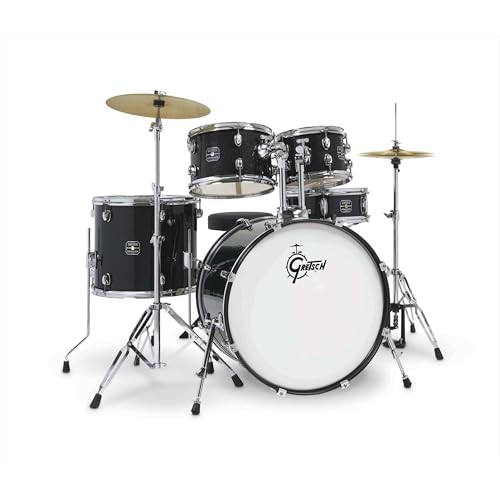
Energy exists to remove friction from a first purchase. Where most Gretsch lines sell as shell packs, Energy is commonly offered as a full outfit with hardware and cymbals in the box, so a new player can set up and play the same day. The shells are poplar, a light, relatively soft wood that makers use at this level because it is affordable, easy to work, and forgiving under the stick. Poplar does not deliver the low end authority of mahogany or the polished top end of maple, but at beginner volumes, in bedrooms and school practice rooms, it produces a perfectly serviceable short, warm note that records acceptably and does not punish poor tuning as harshly as a more resonant shell might.
Typical Energy configurations run a 22 inch bass drum with 10 and 12 inch rack toms, a 16 inch floor tom, and a matching 14 inch snare, though a smaller setup with an 18 or 20 inch kick also appears in the range for younger players and tight spaces. The included hardware is light duty, single braced in most cases, and the included cymbals are brass starter discs that most players replace within the first year or two. None of that is a criticism at this rung. The point of Energy is a low cost of entry and a complete, working instrument, and judged on those terms it does its job. The buyer who should pause is the adult returning player with a real budget: stepping straight to Catalina money buys shells, edges, and hardware that will not need replacing when skills improve, and the total spent over three years often ends up lower.
Catalina Club: mahogany shells in small sizes
Catalina Club is where the Gretsch identity starts to assert itself. The shells are mahogany, in the luan family of Asian mahogany used widely in mid priced drums, formed into thin shells with the 30-degree bearing edge that defines the house sound. Mahogany brings a naturally dark, warm voice with strong low frequencies and a softer attack than maple, and in small sizes that warmth reads as roundness rather than boom. The classic Catalina Club configuration is a bop setup: an 18 inch bass drum, a 12 inch rack tom, a 14 inch floor tom, and a 14 inch snare, sold as a four piece shell pack. A larger rock leaning variant with a 24 inch kick and deeper toms has also been offered under the Club name, which is worth remembering when comparing listings, because the two feel like different instruments that happen to share a badge.
The 18 inch kick deserves a word of its own. Small bass drums tune up into a tight, articulate punch that suits jazz, bop, funk, and low volume acoustic work, and they make load in and stage footprint trivially easy. Many club players fit the kick with a riser so the beater strikes near the center of the head and the pedal sits at a natural angle. What an 18 cannot do is move air like a 22 or 24. In a loud rock room it will need microphone help and careful tuning, and a buyer whose main gig is unamplified rock should look at the bigger Club variant or at Catalina Maple instead. Finish choices on Catalina Club lean toward wraps and satin lacquers with a vintage flavor, including marine pearl style wraps that suit the bop heritage of the sizes.
Catalina Maple: the general purpose middle rung
Catalina Maple takes the Catalina concept and aims it at the broad middle of the market. The shells are maple, formed in multiple plies with the same 30-degree edge profile, and the sizes grow up: a 22 inch bass drum is the norm, with rack toms in 10 and 12 inch diameters or a 12 and 13 pairing, a 16 inch floor tom, and in the common seven piece version an extra 8 inch tom and a 14 inch floor tom join the set. The snare is a matching maple shell drum, usually 14 by 5.5 inches. Where Catalina Club whispers bop and small rooms, Catalina Maple speaks the default language of rock, pop, worship, and cover band work, which is why it turns up so often as a first serious kit and as a school or studio workhorse.
Maple changes the feel under the stick as much as the sound in the room. The attack firms up, the top end gains a polished sheen, and the dynamic range widens: the drums speak clearly at low volume and hold together when struck hard, where mahogany can start to blur. Tuning range also widens in practice, because maple shells keep a defined pitch center across more of the head tension range. For a player moving up from a poplar starter kit, the first session on Catalina Maple usually registers as clarity, each drum occupying its own pitch space instead of a general thud. That clarity is the maple recipe working, and it is the reason maple dominates the middle and upper tiers of nearly every major drum catalogue, not only this one.
The compromises at this rung are in the fittings. Hoops are triple-flanged steel rather than die-cast, lugs are a standard design shared with other lines, and finishes, while attractive, come from a fixed menu of lacquers and wraps rather than a custom book. Mounting uses the GTS suspension system described later in this guide, which is a genuine functional plus at this price. A buyer comparing Catalina Maple against similarly priced maple kits from rival makers will find the Gretsch edge and interior finish give the drums a slightly darker, more focused character than the brighter, more open sound of many competitors, and that house character, more than any single specification, is what the badge is selling at this level.
Renown: the gigging kit with flagship echoes
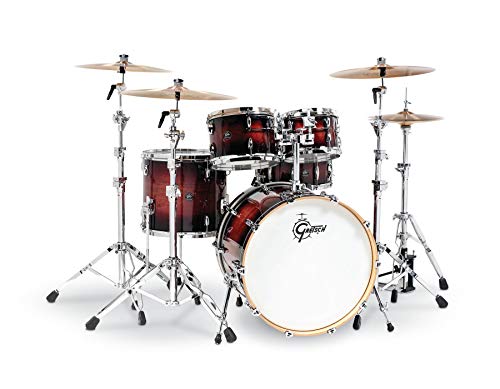
Renown is the rung where Gretsch starts fitting hardware and shell details borrowed from the top of the range. The shells are North American maple in a multi ply layup, again with 30-degree edges and Silver Sealer interiors, but the fittings step up: die-cast hoops on the snare, low mass lugs, and the chunky 302 double-flanged hoops on toms in recent production runs, a hoop design named for a classic Gretsch part and offering a middle path between triple-flanged openness and die-cast focus. Badges, claw hooks, and bass drum spurs all feel a grade sturdier than the Catalina fittings, and the finish menu moves toward deep gloss lacquers that show the maple figure.
Configuration choice widens here too. Renown sets are sold in several shell pack layouts, commonly a 22 inch kick with 10 and 12 inch toms and a 16 inch floor tom, a variant with a 20 inch kick and a 14 inch floor tom for tighter stages, and a 24 inch kick rock layout with a single 13 inch rack tom. That spread lets a buyer pick a Renown by working context rather than by budget alone, which is the mark of a line aimed at working players. The matching maple snare, fitted with die-cast hoops, is a genuinely strong drum: dry, cracking, and focused, with a cross stick sound that cuts in a way triple-flanged snares rarely match. Many owners report the snare as the piece they would keep if the rest of the kit were sold, and our research across owner commentary and dealer listings shows that pattern repeating often enough to treat as a real trait of the line.
Who should stop at Renown and who should keep climbing? A gigging player who needs reliability, strong hardware, and a professional recorded sound will find Renown covers nearly everything, and the remaining budget buys microphones, cases, and cymbals that matter more on stage than the final few percent of shell refinement. The climbers are players pursuing a specific heritage sound, a custom size, or a finish that exists only in the American lines, and players for whom the instrument itself, its build story and resale gravity, is part of the point. Both decisions are defensible. What is not defensible is buying USA Custom money worth of kit and then fitting it with entry level cymbals and stands, because the audience hears the cymbals on every bar of every song.
Brooklyn: American built, maple and poplar blend
Brooklyn marks the return of regular Gretsch production to American soil below the flagship tier, and the name reaches back to the borough where the company began. The shells blend maple and poplar, a recipe drawn from vintage Gretsch practice, built as a six ply shell with 30-degree edges and Silver Sealer interiors. Poplar in the blend softens the maple attack slightly and warms the midrange, giving Brooklyn kits a voice that sits between the polished modern maple sound of Renown and the darker, drier character of vintage drums. The hoops are the 302 double-flanged design, and the fittings carry a deliberate retro flavor in their shapes and in finishes that include classic wraps alongside satin and gloss options.
Sizes in the Brooklyn line lean traditional: 18, 20, 22, and 24 inch bass drums, toms in the familiar 12 and 13 inch rack diameters with 14 and 16 inch floor toms, and snares in wood and metal shell options. The bop configuration, 18-12-14 with a matching snare, is a natural home for this shell recipe, and the drums record with a round, present quality that engineers tend to praise because it needs little corrective equalization. Brooklyn is also the line where Gretsch heritage buyers who cannot stretch to USA Custom often land, since the American build, the blend shell, and the vintage leaning hardware deliver most of the flagship story at a meaningfully lower commitment.
USA Custom: the flagship, built to order
USA Custom is the kit the rest of the ladder points toward. Shells are built in Ridgeland, South Carolina, using the maple and gumwood formula that traces to classic Gretsch production, a multi ply shell with gumwood in the recipe that contributes the dry, focused, slightly compressed voice heard on decades of jazz and studio recordings. Edges are the 30-degree profile, interiors wear Silver Sealer, toms carry die-cast hoops, and the buyer chooses sizes, depths, finishes, and hardware details from a broad menu when ordering through a dealer. Wait times measured in months are normal, and the price of a full outfit with quality hardware and cymbals reaches territory where the purchase deserves the same deliberation as a car.
The sound argument for USA Custom rests on focus and consistency. The gumwood blend and die-cast hoops produce drums that speak with a defined pitch, a quick decay, and a controlled overtone structure, so a kit tuned across a wide range still sounds like one instrument. Session players value that predictability: the kit tunes fast, holds tuning through a session, and sits in a mix with minimal work. The counterargument is equally real. The same control that flatters a studio can feel restrained on a loud stage where a more open, wilder drum projects character to the back wall, and plenty of rock players prefer the looser feel of triple-flanged hoops and thinner shells at high volume. Flagship does not mean universally best; it means most refined in a particular direction.
Shell woods and what they do to tone
Wood choice is the most discussed and most misunderstood variable in drum buying. The honest summary is that wood species shifts the emphasis of a shell rather than rewriting its character: shell thickness, bearing edge shape, hoop mass, head choice, and tuning each move the sound as much as or more than the species label. Still, the shifts are real and consistent enough to guide a purchase, because each common drum wood brings a characteristic density, hardness, and pore structure that colors attack, sustain, and low end weight in predictable directions.
Mahogany: warmth and low end
Mahogany, the wood of Catalina Club and of many vintage style kits, is relatively soft and porous, with an open grain that absorbs some high frequency energy. The audible result is a warm, dark drum with a strong fundamental, a softened attack, and a shorter, rounder sustain. Mahogany toms tune low happily and sound full at moderate tension, which suits jazz, roots, soul, and any setting where drums should cushion rather than slice. The trade is definition at high volume: struck hard in a loud room, mahogany can lose pitch clarity sooner than maple, and its softer shell demands a little more care with hardware torque and transport knocks. Players who love mahogany describe a forgiving, musical drum that flatters brushes and light stick work, and that description matches the physics of a softer, less reflective shell wall.
Maple: balance and polish
Maple is the reference wood of modern drum making, used in Catalina Maple, Renown, Brooklyn in blend, and countless rival lines. Hard, dense, and fine grained, maple reflects energy evenly across the spectrum, producing a balanced drum with a clear attack, a singing sustain, and enough low end to satisfy without swamping the fundamental pitch. Its great virtue is versatility across tuning ranges and genres: the same maple kit can be tuned up tight for a funk gig on Friday and down loose for a rock session on Saturday and sound native to both. That flexibility explains its dominance of the middle market, where one kit must cover many jobs. If a buyer has no strong genre anchor and wants one kit for years of varied work, maple is the safest wood choice in this guide, and the ladder offers it at three distinct quality levels.
Birch: attack and projection
Birch appears less often in the current Gretsch ladder than in rival catalogues, but it belongs in any wood discussion because used Gretsch kits and special runs surface with birch shells, and because many buyers cross shop birch kits from other makers. Birch is harder and denser than maple, with a brighter, more immediate attack and a slightly scooped midrange that emphasizes low punch and high crack. Birch became a studio favorite in the 1980s and 1990s precisely because that pre equalized character records with little effort: toms speak with definition at low volume, and the bass drum delivers a tight, modern thump. Live, birch projects aggressively and can feel less warm than maple at acoustic volumes. A buyer choosing between a birch kit from another brand and a Gretsch maple kit is really choosing between immediacy and blend, and the right answer depends on whether the drums live mostly under microphones or mostly in rooms.
Walnut and the other voices
Walnut shows up in Gretsch snare drums and in special shell recipes rather than as a standard kit wood in the main ladder, but its voice is distinctive enough to matter for the snare discussion later. Walnut is dark and dry, with a strong low midrange thump and a restrained top end, producing wood snares that sound fat and controlled without the ring that brighter woods carry. Gumwood, the quiet partner in the USA Custom recipe, contributes dryness and focus rather than sparkle, shortening sustain in a way that reads as studio control. Poplar, the Energy wood and Brooklyn blend partner, sits at the warm, soft end of the scale: pleasant, short noted, and undemanding. A complete mental map of the ladder is therefore a spectrum from soft and dark to hard and bright: poplar and mahogany at the warm end, gumwood and walnut adding dry focus, maple in the balanced center, and birch at the bright, projecting end.
The 30-degree bearing edge and Silver Sealer interiors
If one specification defines the Gretsch sound across the ladder, it is the bearing edge. The bearing edge is the rim of the shell where the head makes contact, and its angle and sharpness decide how energy passes from head to shell and how freely the head vibrates. Gretsch uses a 30-degree edge, cut at a shallower angle than the 45-degree edges common on many modern drums, with the apex of the edge set toward the inside of the shell. A shallower edge with more head to shell contact area produces a warmer, darker, more controlled drum: sustain shortens slightly, the fundamental strengthens, and the drum gains the focused, slightly dry character that players describe as the Gretsch voice. A sharp 45-degree edge, by contrast, frees the head for a brighter, more open, more resonant result.
The practical consequences show up at the tuning bench. Gretsch drums tend to find a pleasant pitch quickly and to hold a musical note across a wide tension range, but they reward precise, even tension more than drums with forgiving edges, because the wide contact area transmits any unevenness into the tone. Edge condition matters enormously for the same reason, which is why the used market section of this guide treats edge nicks as a first order check rather than a cosmetic footnote. On a new kit, a buyer can run a fingertip lightly around each edge before accepting delivery; the edge should feel uniformly smooth, with no flat spots, dips, or rough patches, and the shell should sit flat on a true surface without rocking when the hoops and heads are removed.
Silver Sealer is the second half of the recipe: a silver gray paint applied to shell interiors across most of the ladder above the entry rung. Interior coatings change the inner surface hardness and reflectivity of the shell, and the Gretsch coating is generally credited with adding a measure of projection and a slight brightening that balances the warmth of the 30-degree edge. It also serves a humble protective role, sealing the inner plies against humidity swings that drums meet in cars, clubs, and storage rooms. For the used buyer, the interior paint is a diagnostic gift: original Silver Sealer in even condition supports a claim of originality, while a sanded, stripped, or repainted interior raises questions about why the work was done and what else was changed. Interiors that show water staining, lifting paint, or mold spots tell a storage story that should lower the price or end the negotiation.
Die-cast hoops versus triple-flanged hoops
Hoops look like trim and behave like part of the shell. A hoop clamps the head flesh hoop against the bearing edge, and its mass and stiffness shape how the drum responds to rimshots, cross sticks, and hard playing. Die-cast hoops are molded as a solid, heavy ring, typically zinc alloy, and they appear on USA Custom toms and on snares at several rungs. Triple-flanged hoops are pressed from a sheet of steel into a lighter channel shape, and they equip most toms below the flagship. The 302 hoop on Brooklyn and recent Renown kits splits the difference as a double-flanged design with die-cast visual cues and a weight between the two.
The playing differences are easy to feel. Die-cast hoops focus the drum: the note tightens, stray overtones calm down, rimshots gain a solid, cutting crack, and cross stick clicks project with a woody authority that jazz and studio players prize. The costs are literal weight, a stiffer feel under the stick that some players find unforgiving, and a slight loss of the open bloom that lighter hoops allow. Triple-flanged hoops let the shell resonate more freely, giving a wider, more open tone with livelier overtones, a lighter kit to carry, and a more forgiving response for players whose rimshots land inconsistently. Neither is better in the abstract. A bop player pursuing the classic Gretsch studio voice wants die-cast; a rock player who wants toms that bloom and sing at volume may honestly prefer the flanged sound, and several well known players have swapped hoops in both directions pursuing a personal preference.
For buyers, the hoop question folds into the ladder decision. Catalina kits wear triple-flanged hoops, and upgrading them later to die-cast is possible but rarely economical once new hoops and possible lug and tension rod compatibility are priced in. Renown and Brooklyn buyers get the middle path as standard. USA Custom buyers get die-cast as part of the recipe. A player who knows hoop preference from experience should buy the rung that ships with the preferred hoop rather than planning a swap, because hoop swaps also change tuning feel and can expose edge or shell roundness issues that the original hoop was quietly tolerating.
Shell pack versus full kit: budgeting the missing pieces
The phrase shell pack causes more budget pain than any other term in drum retail. A shell pack contains drums only: bass drum, toms, and usually a snare, with tom mounting hardware for the shells themselves. It does not contain the stands that hold the snare and cymbals, the pedals that play the bass drum and hi-hat, the cymbals themselves, or the throne the drummer sits on. Some packs exclude even the snare, so the first step in reading any offer is confirming exactly which drums are in the carton. A complete kit or full outfit, the Energy format, bundles hardware and cymbals, but at entry quality levels. Between those poles sit hardware packs and cymbal packs sold as separate bundles, and the realistic total for a playable setup is the sum of whichever of those bundles a buyer must add.
Budgeting without naming figures works by proportion. For a mid ladder shell pack such as Catalina Maple or Renown, a sensible planning rule is to reserve a hardware and cymbal allowance roughly comparable to the shell pack outlay itself when starting from nothing. A sturdy hardware set with a snare stand, hi-hat stand, two cymbal stands, a bass drum pedal, and a decent throne is not a trivial purchase, and a cymbal set with hi-hats, a crash, and a ride from a reputable maker costs real money even in bundled form. Buyers who spend the entire budget on shells and then improvise stands from the cheapest available metal end up with wobbling cymbals, a pedal that fights their foot, and a throne that punishes an hour of playing. The drums get blamed for a miserable experience that the accessories caused.
A staged plan serves most buyers better. Stage one is the shell pack plus the minimum hardware to play: pedal, hi-hat stand, snare stand, one crash stand, ride on a second stand, and a throne chosen for comfort rather than price, because the throne touches the player more than any drum does. Stage two adds the cymbal upgrades, usually hi-hats first since they are played constantly, then a ride, then crashes. Stage three covers the quiet necessities: cases or bags for transport, spare heads, sticks, a tuning key that lives on the kit, and hearing protection. Used hardware is the budget lever with the least risk, because stands and pedals are simple machines that can be inspected fully before purchase, and a heavy duty used stand often outlasts a light new one. Used cymbals demand more care, since cracks hide at edges and keyholes, but a clean used ride can free a large share of a budget for shells.
Configuration arithmetic: sizes, depths, and setups
Drum sizes are written as diameter by depth in inches, and the order flips between conventions often enough to confuse: most listings give diameter first for toms in modern retail, while some give depth first, so a 10 by 7 tom and a 7 by 10 description can be the same drum. Bass drums are usually stated diameter by depth as well, so an 18 by 14 kick is an 18 inch diameter shell 14 inches deep. When a listing title compresses a whole kit into a string of numbers, slow down and map each pair to a drum before judging the set, and use the configuration arithmetic in this section to check that the sizes form a coherent musical ladder.
Bass drum diameters: 18, 20, 22, and 24
Kick diameter sets the floor of the kit voice. An 18 inch kick is the bop and small room choice: high potential pitch, tight punch, easy transport, and a footprint that fits tiny stages, at the cost of low end weight and unamplified volume. A 20 inch kick is the versatile middle that many working players now treat as default, deep enough for pop and roots work with a ported resonant head and a microphone, nimble enough for funk and jazz, and kind to backs and car boots. A 22 inch kick remains the rock and general standard, delivering the familiar chest thump and tuning down into modern low territory without strain. A 24 inch kick trades agility for authority: huge low end, a slower, broader note, and a physical presence that suits rock, Americana, and vintage leaning music, while making fast double pedal figures and tight stages harder work. Depth adds sustain and volume in the same direction at every diameter, with 14 inch depths feeling quicker and more traditional and 18 inch depths sounding bigger and slower.
Tom sizes and the pitch ladder
Rack toms commonly run 8, 10, 12, and 13 inches, floor toms 14, 16, and 18. A coherent kit spaces these so each drum tunes to a distinct pitch without any drum being forced outside its comfortable range. The classic fusion setup pairs a 20 or 22 inch kick with 10 and 12 inch rack toms and a 14 inch floor tom: compact, even, and happy across pop, funk, and light rock, with depths in the modern shallow range such as 10 by 7 and 12 by 8 that keep the drums responsive and easy to position low over the kick. The classic rock setup runs a 22 or 24 inch kick, a 13 inch rack tom or a 12 and 13 pair, and a 16 inch floor tom, often adding an 18 inch floor tom for the full vintage spread, with deeper shells that trade speed for weight of note. Bop arithmetic is the smallest: 18, 12, 14, tuned high and open.
Depth deserves separate attention because it is the variable buyers most often misread in titles. For a given diameter, a deeper shell lowers the practical pitch floor slightly, lengthens sustain, and increases volume, while a shallower shell responds faster and feels more articulate at low dynamics. A 12 inch tom at 8 inches deep and the same drum at 10 inches deep are not interchangeable in feel even though the diameter matches. When comparing two kits that look identical in a title, check the depths before concluding they are the same instrument. Snare dimensions follow their own logic: 14 inch diameter dominates, with depths of 5, 5.5, and 6.5 inches marking the common steps from crisp and sensitive to fat and authoritative, and the pack snares across the Gretsch ladder mostly sit at 14 by 5.5 in wood shells.
GTS mounting and isolation
The GTS, or Gretsch Tom Suspension, system is the mounting approach used across much of the ladder, and it exists to solve a physical problem: a tom bolted rigidly to a bracket screwed into its shell loses resonance, because the hardware drains vibration and the shell cannot move freely. GTS suspends the tom from its hoop and lugs rather than from a hole drilled through the shell, holding the drum at points that let the shell vibrate closer to its natural behavior. The audible gain is sustain and openness, most noticeable on smaller toms tuned in their sweet range, where a choked mount can shorten the note audibly.
Suspension mounting also protects shell integrity. Every hole drilled in a shell is a stress point and a small acoustic compromise, and undrilled bass drums, often called virgin kicks, are prized partly for resonance and partly for clean resale. Many Gretsch configurations mount the rack toms from a stand or from the GTS arms on the kick without penetrating the tom shells themselves. For the used buyer, mount history matters: extra holes from a replaced mount system, enlarged holes, or cracks radiating from a bracket are structural findings, not cosmetics, and they belong in the price negotiation. For the new buyer, the lesson is to choose the mounting arrangement carefully at purchase, because changing systems later usually means new holes, and new holes are forever.
Isolation thinking extends to the floor tom and the whole kit. Floor tom legs with air cushioned feet, bass drum spurs that grip without gouging, and a drum rug that stops the kick creeping forward all protect both tone and flooring. A kit on a hard reflective floor with the kick sliding an inch per song is a kit whose tuning and feel change through the set. Small isolation details, cheap and unglamorous, separate a setup that feels professional from one that feels improvised, and they apply equally to an Energy kit in a school hall and a USA Custom in a studio.
Throw-offs and snare options: wood versus metal
The snare is the drum a player hears most and the one most often upgraded separately, so the pack snare question deserves clear eyes. Across the Gretsch ladder, shell packs generally include a matching wood snare: mahogany with Catalina Club, maple with Catalina Maple and Renown, and blend or formula shells in the American lines. A matching wood snare gives a coherent kit voice, a warm backbeat with a woody crack, and good sensitivity for brushes and light work. Its limits appear at high volume and in dry, cracking backbeat contexts, where wood can feel soft at the center of the mix. That is a character, not a defect, and for jazz, roots, soul, and singer songwriter work the wood pack snare may be the final snare rather than a placeholder.
Metal snares enter the picture as separate purchases and as options in the broader Gretsch snare catalogue. Steel shells deliver brightness, cutting rimshots, and a wide tuning range at modest cost, with a ring that must be managed by tuning and head choice. Brass brings warmth within the metal family, a musical ring, and a fat backbeat prized for rock and studio work. Aluminum sits between, dry and crisp with a controlled ring and a light stick feel that many players choose as a single all purpose metal drum. Copper and bronze darken further toward wood like warmth with metal attack. Depth multiplies these voices: a 6.5 inch deep metal shell is a different instrument from a 5 inch shell of the same metal, fatter and slower, where the shallow drum is quicker and more sensitive at low volume.
The throw-off, the mechanism that engages and releases the snare wires, is where cheap snares betray themselves and good ones earn loyalty. A quality throw-off moves smoothly, holds tension through hard playing, and adjusts in fine steps so the wires can be set from a dry whisper to a loose rattle without slipping. Gretsch fits its own side action and micro sensitive style mechanisms across the range, and the test on any individual drum is simple: engage and release the wires twenty times, play hard rimshots for a minute, and confirm the setting has not crept. Wires themselves matter as much as the shell: a wider wire set fattens the backbeat, a narrower set sharpens articulation, and worn, kinked wires buzz unevenly no matter how good the drum is. A used snare that sounds tired often needs only fresh wires and heads, which is useful knowledge on both sides of a negotiation.
For kit buyers, the practical snare strategy runs as follows. Start with the pack snare and learn it properly, through head changes and tuning ranges, before judging it. Add a contrasting second snare, usually metal if the pack drum is wood, when the work demands it, because two contrasting snares cover more musical ground than one expensive snare of either type. Keep the pack snare even after upgrading, since a backup snare at a gig is the difference between a two minute swap and a ruined set.
Genre fit: bop, rock, and the studio
Genre fit follows from the size and shell decisions already covered, and it is where the ladder becomes a set of recommendations. For jazz and bop, the natural Gretsch answers are Catalina Club in its 18-12-14 form and Brooklyn in the same sizes, tuned high with open heads, where mahogany warmth or the maple poplar blend supports brushes, feathered kick work, and ride cymbal led timekeeping. The drums should sing at low volume and blend under horns and piano rather than dominate, and small shells with controlled edges do exactly that. A die-cast hoop USA Custom bop kit is the connoisseur version of the same idea, with the focus and cross stick authority that small group recording rewards.
For rock and pop, Catalina Maple and Renown in 22 inch kick configurations cover the mainstream, with the 24 inch Renown layout and the larger Catalina Club variant serving louder, slower, heavier work. Rock asks for low tuning stability, hardware that survives hard hitting, and floor toms that keep pitch under rimshot level backbeats on the snare, and the middle rungs deliver that with less fragility than delicate vintage style kits. For the studio, the calculus shifts toward consistency and tuning speed: Renown and USA Custom earn their keep through predictable response across the kit, controlled overtones that reduce corrective work, and snares that record a usable backbeat quickly. Session reality also favors kits whose sizes are standard, because house engineers own heads, mounts, and microphone habits built around 12, 13, 16, and 22 inch norms.
How to read a Gretsch listing
A drum listing compresses a kit into a title line, and reading that line well prevents most buying regrets. Start with the configuration string: a title that names a five piece with a 22 inch kick and a set of tom diameters is describing shell sizes, and the depths, if present, appear as the second number of each pair. Confirm whether a snare is included and whether the word pack, shell pack, or kit appears, because those words decide whether hardware and cymbals exist in the deal at all. Then find the finish name. Gretsch finish names are specific and sometimes poetic, and the same color family appears under different names across years and lines, so judge the finish from photographs of the actual kit rather than from the name, and remember that wraps and lacquers age differently: wraps can lift and bubble, lacquers can check and chip, and both look different under shop lighting than in daylight.
Model years matter more with Gretsch than with many brands, because specifications have shifted within living lines: hoop types, badge designs, lug shapes, tom mount details, and even shell recipes have changed between production eras. A listing that states a year, or that shows the badge and lugs clearly enough to date the kit, is giving the buyer real information. Round badge, stop sign badge, and modern square badge eras each carry their own specifications and market values, and conflating them produces bad comparisons. When a listing omits the year, ask for it, along with the country of manufacture, which separates the American lines from the imported lines instantly and explains most of the price structure of the whole catalogue.
Finally, read what the listing does not say. Silence about heads usually means tired factory heads. Silence about cases means the kit has traveled unprotected or not at all, and either story is worth knowing. Silence about hardware on a shell pack is normal, but silence about which drums are included is not. Photographs should show every shell, the interiors, the badges, and the bearing edges on a used kit; a listing with three glamorous angles of the same floor tom is withholding the rest of the story, whether by laziness or by intent.
Check prices on Amazon
Live listings for the shortlist in this guide are pulled from Amazon below, so prices and availability are always current at the moment you look.


Used market checks
Used Gretsch kits are plentiful and generally hold value, which makes the secondhand route attractive at every rung and makes inspection skill worth money. Work through the kit in a fixed order so nothing is skipped: shells, edges, wrap or finish, hardware, and then sound. Begin with shell roundness and integrity. Sight down each shell, check for cracks at lug and mount holes, and look inside for water damage, mold, or stripped and repainted interiors. A shell that has gone out of round will fight tuning forever, and a cracked shell is a repair project, not a bargain, unless the price treats it as one.
Bearing edges come next and deserve the closest attention of any check in this guide, because the Gretsch sound lives on that 30-degree edge and edge damage directly attacks it. With heads and hoops off, run a fingertip slowly around each edge feeling for nicks, dips, and flat spots, then set the shell edge down on a known flat surface and look for rocking or light gaps. Small nicks can be repaired by a competent drum technician, and a repair allowance in the price is reasonable; a crushed or deeply gouged edge on a key drum, especially the snare or the main rack tom, is a reason to walk away or to price the kit as a shell project. Sellers who refuse to remove a head for edge inspection are telling the buyer something important.
Wrap bubbling is the signature cosmetic failure of wrapped kits, caused by heat, age, and adhesive failure, showing as raised blisters or ripples most often near seams and around lugs. Small, stable bubbles on an older kit are a cosmetic deduction; spreading bubbles, lifted seams, or wrap cracks signal ongoing failure and a future rewrap cost that should be priced in full. Lacquer finishes fail differently, through chips at edges and checking in the clear coat, and chips that reach bare wood on a shell edge deserve the same suspicion as edge nicks. Lug cracks are the hardware counterpart: vintage style and die-cast lugs can develop hairline cracks at screw bosses and stress points, visible on close inspection and fatal to tuning stability when they spread. Squeeze and wiggle each lug, spin every tension rod to feel for stripped inserts, and check that hoops sit true without bends, because a bent die-cast hoop is an expensive replacement and a bent flanged hoop quietly ruins tuning evenness.
Close the inspection by playing the kit. Tune it roughly, play every drum at soft and loud dynamics, work the throw-off, and listen for rattles, buzzes, and dead spots. Check that bass drum spurs hold, that tom mounts lock without slipping, and that every wing bolt on included stands actually turns. Then price the whole truth: the kit, plus heads, plus any repairs, plus the missing hardware and cymbals the listing never included. A used kit judged on that complete figure, rather than on the badge and the headline number, is the closest thing the drum market offers to a safe purchase.
This guide rests on published documentation and manufacturer specifications gathered through our research, and the writer did not handle, play, or use any of the drum sets discussed while preparing it. Where this page carries links to a retailer, a purchase made through those links may earn the site a commission, and that arrangement does not change the specifications or the buying checks set out above.
Choose the rung that matches the rooms you actually play, and let the sizes, edges, and hardware you can verify matter more than the badge you admire.


