Our Top Picks
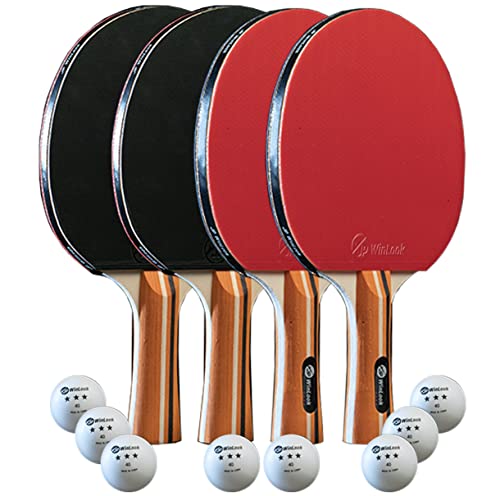 JP WinLook Ping Pong Paddles Sets of 44-Player Set10.75 x 2.5 x 10.75 inches2 poundsCheck on Amazon


What's inside
- What a table tennis paddle set actually bundles
- Premade bats versus building a bat from parts
- Reading a paddle set specification without guesswork
- Smooth pips-in rubber and the mechanics of spin
- Pips-out, long pips and anti-spin surfaces
- Sponge thickness, from control to full attacking speed
- Sponge hardness and how it shapes touch
- ITTF approval and the authorisation logo on rubbers
- Blade construction, from five plies to seven
- Carbon and composite layers in modern blades
- Blade speed classes, defensive to offensive
- Shakehand grips, flared, anatomic and straight
- Penhold grips, Chinese and Japanese styles
- Balls for the set, the 40+ plastic standard
- Ball grades, tolerances and how to check a ball
- Set sizes for pairs and for the whole family
- Sets for schools, clubs and group programmes
- Storage and care that keep rubber alive
- Cleaning mistakes and heat, the quiet rubber killers
- Choosing a first set that teaches good habits
- Choosing for intermediate spin play
- Choosing for club league play and beyond
- Common buying mistakes and how to avoid them
- Check prices on Amazon
- A final checklist before you buy
As an Amazon Associate I earn from qualifying purchases. This post may contain affiliate links at no extra cost to you.
What a table tennis paddle set actually bundles
A paddle set is a matched bundle built around ready-to-play bats, and the contents matter more than the headline count on the box. A typical two-paddle set pairs two premade bats with three or more balls, while a four-paddle set doubles the bats and often adds extra balls so two doubles games or a family rotation can run without waiting. Some bundles add a soft carry case that holds the bats face to face, and a smaller number include a retractable net that clamps to almost any table edge. That net is a bonus for travel and kitchen-table play, yet the core value of the set still sits in the bats and balls, so judge those first and treat extras as secondary.
Premade bats in a set arrive with rubber already glued to both sides of the blade, one side usually red and the other black, as the laws of the game require contrasting colours. The rubber, the sponge beneath it and the wooden blade arrive as one finished unit, tuned by the maker for a broad playing style rather than for one specialist stroke. Ball counts vary, and a set that includes six or eight balls is more practical than one with a single ball, because balls roll under furniture, crack on hard floors and wander off during long sessions. A case that fits all the bats in the bundle also protects rubber faces from dust and knocks between games.
Read the bundle description in layers. First, count the bats and note whether each bat is a full-size adult bat or a shorter junior shape. Second, note the ball grade and the number of balls, since a generous ball count extends the life of the set more than a decorative box does. Third, check whether the case is a simple sleeve, a padded bat wallet for one bat, or a larger bag that swallows the whole bundle. Finally, look for a net only if you truly lack a table with its own net and posts; a retractable net helps on a dining table, but it cannot rescue thin rubber or a warped blade, and those faults show up in every rally.
Premade bats versus building a bat from parts
Every set in this guide is a premade product, and that choice suits most buyers for clear reasons. A premade bat needs no glue, no cutting and no knowledge of how a bare blade pairs with separate rubber sheets. You open the pack, peel off the protective film and play. The maker has already matched a blade speed to a rubber thickness that a broad range of players can control, and the total cost of the bundle stays far below the sum of separate parts bought one by one. For a household, a school or a first club season, that simplicity is the point.
Building a bat from parts follows a different logic. A player picks a bare blade, then picks two rubber sheets, often a tackier and grippier sheet for the forehand and a slightly softer sheet for the backhand, and a fitter glues and trims them with water-based glue that meets volatile organic compound rules for competition. That route allows exact control of weight, sponge hardness and surface type, and it allows a worn rubber to be replaced without discarding the blade. The trade-offs are cost, time and risk: a poor glue job lifts at the edges, a mismatched rubber can make a fast blade hard to tame, and none of that effort helps a beginner who is still learning to brush the ball.
A sensible path runs in stages. Start with a premade set whose sponge is thick enough to generate spin and whose blade sits in the all-round class described later in this guide. Play with it long enough to learn whether you attack close to the table, block and chop from a step back, or mix both. Only when a specific limit bothers you, such as a backhand that needs a softer feel or a forehand loop that needs a firmer sponge, does a custom build earn its extra cost. Many club players keep a premade set as a spare for guests even after moving to a custom bat, because a matched spare set keeps casual games fair and fun. Readers who track long rallies and long sessions on a wrist device may enjoy pairing practice with the recovery data in best running smartwatches once play moves outdoors into training blocks.
Reading a paddle set specification without guesswork
Specification sheets for paddle sets use a compact vocabulary, and learning it prevents most buying errors. Rubber type tells you the surface geometry, sponge thickness is quoted in millimetres, sponge hardness is often quoted on a Shore scale or described as soft, medium or hard, and blade speed is grouped into defensive, all-round and offensive classes. Weight is quoted for the whole bat, commonly somewhere near the middle of the range between a light control bat and a heavy power bat, and grip style is named as shakehand or penhold. When a listing gives none of these figures and leans only on vague praise, treat that silence as information in itself.
Spin, speed and control scores printed by brands deserve caution. Each brand scores its own products on its own scale, so a high spin number from one maker cannot be compared directly with a number from another maker. The underlying physical facts are more reliable: a smooth, grippy rubber with a thicker sponge will, all else equal, hold the ball longer and produce more rotation than a thin, worn or dusty surface. A stiffer, thicker blade will return energy faster than a thin, flexible blade. Use brand scores only to compare models inside one brand family, and use the physical facts to compare across brands.
Smooth pips-in rubber and the mechanics of spin
Most paddles in quality sets use pips-in rubber, also called smooth or inverted rubber. The pimples face inward, toward the sponge, and the outer surface is a flat, grippy sheet that contacts the ball across a broad patch. That broad contact, combined with a tacky or grippy top layer, lets the player brush upward on the ball and load it with topspin, or cut beneath it for backspin. Serves, loops, pushes and chops all rely on this friction, which is why pips-in rubber dominates modern attacking and all-round play at every level from school halls to world competition.
The top sheet formulation changes the feel in ways a specification sheet only partly captures. A tackier surface, common on many Chinese-style rubbers, grips the ball at low impact speeds and helps short serves and heavy backspin pushes, but it picks up dust quickly and needs frequent cleaning. A grippy but less tacky European or Japanese style surface relies more on the sponge engaging under pressure, rewards a fuller stroke and tends to feel livelier on loops. Neither approach is better in the abstract; the tackier sheet suits a control and spin game close to the table, while the livelier sheet suits a player who swings through the ball from a half step back.
Wear shows first on a pips-in surface. A fresh sheet looks deep in colour and feels slightly tacky to a clean fingertip, and a ball pressed and dragged across it resists sliding. A worn sheet turns dull, feels slick and lets the ball skid, which flattens serves and makes loops slip off the face. Sets aimed at regular play use rubber that holds its grip through a season of weekly games, while the cheapest toy-grade sets use a thin decorative layer that loses grip within weeks. Protective plastic sheets, covered later in this guide, slow that wear by keeping dust and air away from the surface between sessions.
Pips-out, long pips and anti-spin surfaces
Pips-out rubber turns the geometry around: short, wide pimples face outward and strike the ball directly. The contact patch is smaller, the ball leaves the surface sooner and the resulting shot carries less spin of the player own making, but it resists the spin arriving from the opponent. Short pips reward a flat, punchy hitting game close to the table, fast blocks and quick counters through the ball. They are less forgiving on a looping stroke, because the surface cannot wrap the ball the way a smooth sheet does, yet for a player who wins points by pace and placement rather than rotation, short pips on one side of the bat can be a deliberate and effective choice.
Long pips stretch the idea further. The pimples are taller, thinner and more flexible, and they bend on contact, returning the ball with a confusing reversal of the spin that arrived. A topspin ball blocked with long pips tends to come back with backspin, and the flight can wobble in ways that unsettle an attacker. Long pips are a defensive and disruptive tool, usually paired on the backhand side with a smooth rubber on the forehand, and they demand a distinct technique of chopping, blocking and guiding rather than brushing. They appear in specialist sets and custom builds far more often than in family bundles, and a beginner set built entirely around long pips would teach habits that transfer poorly.
Anti-spin rubber sits at the far end of the defensive range. Its surface is deliberately low in friction, so the ball slides rather than grips, neutralising heavy spin and returning a slow, floating ball. Like long pips, it is a specialist answer to a specific problem, most often used by defenders who face strong loopers. For the buyer of a general set, the practical lesson is simpler: confirm that both sides of every bat in the bundle are smooth pips-in rubber unless you have a clear reason to want otherwise. A set that quietly substitutes a low-grip surface on one side will frustrate a learner who expects both wings to behave the same way.
Sponge thickness, from control to full attacking speed
Beneath the top sheet sits the sponge, a layer of cellular rubber that compresses when the ball strikes and then rebounds. Its thickness, quoted in millimetres, is the single clearest predictor of how a premade bat will play. A sponge near 1.5 millimetres keeps the ball feel close to the blade, slows the rebound and gives the player more time to place a block or a chop. That thinner sponge suits defensive play, early learning and anyone who values placement over pace, because errors leave the bat at a speed the player can still manage on the next stroke.
Moving up the range changes the character step by step. A sponge near 1.8 millimetres is the classic all-round compromise, thick enough to brush real topspin onto a loop and firm enough to keep pushes low and controlled. Sponges of 2.0 to 2.2 millimetres sit at the attacking end of what premade sets offer: the ball sinks deeper, stays on the rubber longer during a brushing stroke and leaves with more spin and speed, which rewards a confident loop but punishes a lazy block that pops the ball high. Most quality four-paddle sets for improvers choose a thickness in the upper part of this range, while starter sets for children often stay thinner for control.
Thickness interacts with the ball itself. Since the game moved to the larger plastic ball, players across all levels have needed a touch more sponge engagement to generate the same rotation that the older, smaller ball allowed. A very thin sponge that felt adequate years ago can feel dead against the current ball, especially on serves. When comparing two sets, treat a difference of a few tenths of a millimetre as meaningful rather than trivial, and be wary of any set that hides its sponge thickness entirely, because the cheapest products use a layer so thin it is closer to a coat of paint than to a functioning sponge. Hikers who log table sessions as cross-training sometimes cross-shop durable wrist gear through best adventure fit smartwatches for the outdoor half of their week.
Sponge hardness and how it shapes touch
Hardness is the second sponge variable, and it decides how much force is needed before the sponge fully engages. A soft sponge compresses under light contact, which helps short touch shots, gentle blocks and a first topspin stroke from a player with a compact swing. It also produces a higher arc on loops, giving clearance over the net at the cost of some top-end pace. Soft sponge on both sides of a starter bat makes the whole set feel forgiving, and that forgiveness matters most in the first months, when most rallies end on an error rather than on a winner.
A hard sponge behaves in the opposite way. It stays firm under gentle contact, so touch shots need a delicate hand, but it stores and returns more energy when the player swings with commitment, producing a lower, faster and heavier loop. Many tacky forehand rubbers pair a hard sponge with a grippy top sheet for exactly this reason. In a premade set, hardness is rarely quoted as a number, so look for descriptive terms and for the intended playing style in the maker notes. A set described for spin attack with a firm feel will not suit a child learning to keep the ball on the table, however impressive its headline claims sound.
ITTF approval and the authorisation logo on rubbers
Competitive table tennis regulates the rubber surface through an approval system run by the International Table Tennis Federation, the ITTF. Rubber models that meet the published requirements for thickness, surface character and colour are entered on the federation list of authorised racket coverings, and each approved covering carries an authorisation logo moulded into the rubber near the edge, together with the maker name. In sanctioned play, an umpire can ask to see that logo, and a covering that is not on the list, or that has been altered, can be ruled out of the match.
For a set buyer, the logo works as a quality signal even outside formal competition. It confirms that the rubber is a real playing surface made to a known standard, with a total covering thickness, rubber plus sponge, within the limit the laws set at 4.0 millimetres. It also confirms the colours are legal, one side red and the other black, which matters for any player who might enter a local league. Toy-grade sets almost never carry approved coverings, and their absence is a quick way to separate a genuine playing set from a novelty product dressed in similar colours.
Approval applies to the rubber model, not to the whole bat, and it does not certify that a particular set is well made in every other respect. A set can carry approved rubber on a poorly finished blade, just as a beautifully made recreational set can use unlisted rubber that plays perfectly well in a garage. The balanced reading is to treat the logo as a strong positive when league play is even a distant goal, and as a helpful but optional marker for purely casual use. If a listing claims approval, the logo should be visible in product photographs near the bottom edge of the rubber; a claim with no logo in any photograph deserves a question to the seller before money changes hands.
Blade construction, from five plies to seven
The blade is the wooden heart of the bat, built from thin veneers glued in alternating grain directions. A classic five-ply all-wood blade stacks five layers, often with softer outer plies that hold the ball a fraction longer and give clear feedback through the handle. Five-ply blades dominate the all-round and controlled attacking classes, and they are the most common construction inside quality premade sets because they balance feel, weight and cost. Their feedback helps a learner sense whether contact was clean, which speeds up technical improvement in a way a numb, ultra-stiff blade cannot.
A seven-ply blade adds two more veneers, and the result is thicker, stiffer and usually heavier. Energy returns faster, the sweet spot feels broader on hard hits and the arc on loops runs flatter. Seven-ply all-wood blades suit a power game built on driving and hitting from mid-distance, and they appear in sets aimed at strong improvers and club players. The cost is touch: short pushes and delicate blocks need a softer hand, because the blade gives less dwell time. A family set built on seven-ply blades will often feel harsh for younger players, so check the construction before assuming that more layers must mean a better set for everyone.
Carbon and composite layers in modern blades
Composite blades weave or layer synthetic fibres with the wood, and the best known of these materials pair carbon with arylate fibre in a woven layer often shortened to ALC. Placed just under the outer veneer, such a layer widens the effective sweet spot, adds speed on full swings and keeps a measure of the soft feel that pure carbon removes. Placed deeper, next to the core, it stiffens the blade in a calmer way that suits controlled attack. Other fibres appear across the market, including carbon paired with other woven materials and glass fibre in value models, each shifting the balance between pace, vibration and feel.
In premade sets, composite construction is a premium feature rather than a default, and it should be judged by what it does for the intended player. A young attacker who already swings fully and trains weekly can use the extra pace and the broader sweet spot. A casual player who mostly blocks and pushes will gain little, because composite speed shows itself mainly when the sponge is fully engaged, and the added cost buys performance that gentle strokes never unlock. Composite blades also tend to feel less communicative on soft contact, which can slow the learning of touch shots for a complete beginner.
Blade speed classes, defensive to offensive
Makers group blades into speed classes that run from defensive through all-round to offensive, often marked with short codes such as DEF, ALL and OFF, sometimes with minus and plus signs for finer steps. A defensive blade is thin and flexible, built to absorb pace and place the ball precisely during chops and blocks. An all-round blade adds enough stiffness for a genuine attack when the chance appears, which is why the ALL class anchors most sets for mixed groups. An offensive blade is thick and stiff, built to finish points, and it assumes a technique that can keep its pace on the table.
Matching the class to the group matters more than pursuing the fastest label. In a household set, players differ in strength and experience, and an offensive set will produce long nets and long misses for most of them, shortening rallies and draining the fun that keeps people playing. An all-round set keeps the ball in play, lets a stronger player still loop with intent and lets a weaker player block without fear. Defensive sets have a narrower audience, mainly players who already know they chop and defend, plus very young beginners whose rallies benefit from every extra moment of control the equipment can give them.
Class labels are not standardised across brands, so treat them as relative within one maker range. One brand all-round blade can feel quicker than another brand entry offensive blade, especially when sponge thickness differs between the two sets being compared. The physical clues remain the anchor: ply count, blade thickness, composite content and sponge thickness together predict behaviour better than a label alone. When a set listing gives the class and the construction and the sponge figure, the three should tell a consistent story; a claimed offensive set with a thin sponge and a five-ply blade is marketing language rather than engineering, and it should be priced and judged accordingly.
Shakehand grips, flared, anatomic and straight
The shakehand grip holds the bat as if shaking hands with the handle, index finger resting along the back of the blade and thumb along the front. It gives balanced forehand and backhand play, a natural wrist angle for backhand strokes close to the table and an easy path to the modern two-winged attacking game. Almost every premade set for the European and American market uses shakehand handles, and coaches reach for it first with new players because both wings develop together and no stroke requires a grip change in the middle of a rally.
Shakehand handles come in three main shapes. A flared handle widens at the end, which locks the bat against slipping during full forehand swings and suits players who loop with commitment. An anatomic handle carries a shaped bulge that fills the palm, spreading pressure for players who find a plain handle creates hot spots during long sessions. A straight handle keeps a uniform profile, which lets the hand slide and adjust, a quality some defenders and choppers prize when they vary grip pressure between strokes. Sets rarely offer a choice of handle shape, so the shape a set uses is worth a line in the product description and a look in the photographs.
Penhold grips, Chinese and Japanese styles
The penhold grip holds the handle between thumb and index finger, like holding a pen, with the remaining fingers curled or spread behind the blade. It favours a powerful forehand, quick wrist action on serves and deceptive short play, and it has a long and decorated history in Asian table tennis. Traditional penhold play used one side of the bat only, leaving the back of the blade bare, while the modern reverse penhold backhand adds rubber to that back side and develops a full backhand topspin stroke, turning the style into a complete two-sided game.
Chinese and Japanese penhold handles differ in shape. A Chinese penhold handle is shorter and rounder, suited to the curled-finger grip and to switching emphasis between forehand and reverse backhand. A Japanese penhold handle is longer, often with a squared block of cork on the front and a hooked shape that braces the index finger for repeated forehand drives. Japanese-style blades are frequently built for one-sided play with a thick, fast construction, while Chinese-style blades for the modern game are thinner and balanced for two-sided use. A set that claims penhold paddles should say which tradition it follows, because the two feel nothing alike in the hand.
Balls for the set, the 40+ plastic standard
Modern table tennis balls are plastic, a change made for safety and consistency, and the current standard ball is known as 40+, a name that reflects a nominal diameter slightly above forty millimetres. The balls are made from ABS plastic in better grades, formed with a seam or produced seamlessly, and they must meet published tolerances for diameter, weight, roundness and bounce in sanctioned play. A regulation ball weighs about 2.7 grams, and its diameter sits within a narrow band just over the forty millimetre mark, limits that keep flight and bounce predictable from one ball to the next.
ABS matters because cheaper plastics deform and crack. A good ABS ball survives repeated impact with the table edge and the floor, holds its roundness through a season and gives a clean, even bounce that players can trust on a low push or a fast drive. A poor ball wobbles in flight, clicks oddly on bounce and splits along its seam after a few hard sessions. Sets that name ABS as the ball material and give a ball grade are signalling intent; sets that include anonymous balls with no material or grade named are usually cutting the easiest corner, because balls are the part of the bundle a casual buyer is least able to judge in a photograph.
Construction method leaves a fingerprint on flight. A seamed ball is formed from two moulded halves joined along the equator, and a well-made seam sits flush enough that the ball rolls and bounces without a detectable step. A seamless ball is moulded in one piece, which removes the join entirely and is often favoured for training volume because there is no seam line to split under repeated impact.
Ball grades, tolerances and how to check a ball
Ball grades are marked with stars, and the grading runs from one to three, with three at the top. A ball carrying the highest grade is made to the tightest tolerances for roundness, weight and bounce, and it is the grade required for formal competition. The middle grade suits club training, where consistency matters but a tiny variation is acceptable across dozens of balls in a basket. The lowest grade suits casual and multi-ball practice, outdoor tables and settings where balls are lost often. A family set is well served by the middle grade, while a set aimed at a league player should include balls of the highest grade so practice matches match conditions.
Simple checks reveal a ball quality without instruments. Roll the ball slowly on the table and watch the printed logo; a round ball rolls true, while an out-of-round ball wobbles and veers. Drop the ball from a fixed height onto the table beside a ball you trust and compare the bounce; a sound ball rebounds evenly and sounds clean rather than hollow or cracked. Squeeze gently between finger and thumb; the wall should resist evenly all around, with no soft spot that hints at thin material. Sets that include a dozen balls make these checks easy, because one odd ball in a large group stands out at once, while a set with three balls leaves no spare when one fails the roll check. Players who split the week between table sessions and other training sometimes log both through best fitness and music smartwatches to keep the routine honest.
Set sizes for pairs and for the whole family
A two-paddle set is the cleanest starting point for a pair who will mostly play singles. It keeps cost down, usually puts more of the budget into each bat than a four-paddle set at the same total price, and it often includes a better case. Two players who play twice a week will wear rubber at a steady rate, and a focused two-bat bundle with good sponge and approved rubber serves them better than a larger bundle of thinner, weaker bats. Add a separate pack of graded balls and the pair has everything needed for a full season of home play.
A four-paddle set unlocks doubles, round-the-table games and the social rotation that makes a home table the centre of a gathering. Doubles in table tennis alternates strokes between partners, which teaches touch and positioning to players who might otherwise only drive, and it includes family members whose singles game is still developing. For a household of mixed ages, four bats of all-round character with medium sponge beat two excellent bats and two poor ones, because the weakest bat in a doubles game shapes the rally for all four players. Check that all four bats in a set share the same specification rather than assuming it from the box photograph.
Family buying adds two practical filters. The first is handle size and bat weight for younger players, who need a lighter bat they can hold without squeezing, since a death grip on an oversized handle ruins wrist action on every stroke. Some sets include one shorter or lighter bat for juniors, and that inclusion is worth more than an extra net accessory. The second filter is durability of the edge: family bats get dropped, knocked against table edges and left face down on hard surfaces, so a set whose bats have a cleanly sealed edge and whose bundle includes a case will look and play better after a year of real household use.
Sets for schools, clubs and group programmes
Schools and clubs buy sets on a different logic from households. Sessions run back to back, bats pass through many hands in a day and equipment is stored in cupboards and trolleys rather than in a single careful owner case. For these buyers, a set needs a robust blade edge, rubber that tolerates frequent cleaning, balls bought in training grade by the dozen and a case or box system that lets a coach count bats in and out at the end of a session. Consistency across many sets matters as well, because a class learns faster when every bat on every table behaves in roughly the same way.
Bulk bundles for group use sometimes trade rubber quality for quantity, and that trade needs a floor. A bat with paper-thin sponge cannot teach a topspin stroke, however many of them a bundle contains, so a school set should still meet the same minimum sponge and grip standards as a home set. Where budgets are tight, fewer good sets shared on rotation teach more than a cupboard of toy bats. Clubs with league teams should keep at least a small number of higher-grade sets with approved rubber for match players, alongside the general training stock, so developing players can feel the step up before they buy their own equipment.
Labelling and tracking sound mundane, yet they protect a group investment. A small mark on the handle end, a numbered case or a simple sign-out sheet reduces loss and lets a coach retire a bat whose rubber has gone slick before it frustrates a beginner who cannot tell equipment failure from personal failure. Group buyers should also plan a replacement rhythm: balls are consumables, rubber surfaces fade across a heavy term, and a budget line for fresh balls and one or two replacement sets each year keeps a programme running at the standard its first term set. Players who split time between club nights and general activity tracking may find best activity smartwatches useful for logging the week as a whole.
Storage and care that keep rubber alive
Rubber care decides whether a good set still plays well in its second year. After each session, wipe the rubber faces gently with a damp, soft cloth or a dedicated rubber cleaner and a sponge made for the purpose, removing the dust and sweat film that dulls grip. Let the faces dry fully, then cover each with a protective plastic sheet, which clings to the clean surface and seals out air and dust. Store the bats in their case, in a cool indoor place, away from direct sun, radiators and the boot of a car, where heat swings are the fastest route to a ruined set.
A bat case earns its place in a bundle for three reasons. It stops the two rubber faces of stored bats from sticking to each other or picking up grit, it cushions the blade edge against the knocks that start splits in the outer ply, and it keeps balls, a cleaning sponge and protective sheets in one place so the care routine actually happens. A hard or well-padded case suits travel and club bags, while a soft wallet suits home storage. If a set includes no case, buying one separately is the cheapest performance upgrade available, because it protects the rubber that all spin depends on.
Edge tape is a small strip of foam or cloth tape wrapped around the blade edge, and it absorbs the glancing blows against the table that would otherwise dent wood and lift rubber. Many premade bats arrive with it fitted; when it frays, replace it rather than peeling it off and leaving the edge bare. Keep spare balls in a rigid container, keep the set away from solvents and household sprays that attack rubber, and never leave a bat face down on a gritty surface. None of this takes more than a minute after a session, and the reward is a surface that still grips, serves that still bite and a set that does not need replacing every season.
Cleaning mistakes and heat, the quiet rubber killers
Strong household cleaners damage table tennis rubber. Products built for kitchens and glass contain solvents and additives that strip the top sheet, leaving it shiny, hard and slick, the opposite of the grippy matte surface the game needs. Water alone, or a cleaner sold for rubber care, is the safe limit. Abrasive pads are equally harmful, scratching the surface in fine lines that collect dirt. A soft sponge, light pressure and patience clean a bat properly; a rubber that still looks dull after gentle cleaning is usually worn rather than dirty, and no amount of scrubbing will restore a surface whose grip has aged away.
Heat is the other quiet killer. A bat left on a dashboard or beside a heater can suffer a top sheet that bubbles as the glue layer fails, and sponge that warps so contact feels uneven across the face. Cold is less destructive but still unhelpful, making sponge feel firm and lifeless until it warms. Sets shared by a family often migrate to garages and car boots, so agree a home for the case indoors and keep it there. If a bat does get hot, let it cool slowly at room temperature rather than running it under cold water, which shocks the glue line and the wood in ways that shorten its life further.
Choosing a first set that teaches good habits
A first set should make correct strokes feel natural. Look for shakehand bats with a five-ply all-wood blade in the all-round class, sponge in the middle of the thickness range and smooth pips-in rubber on both sides, ideally with an authorisation logo that confirms a genuine playing surface. Balls of the middle or highest grade and a case complete a bundle that can carry a learner through the first year without the equipment ever being the reason a stroke failed. That combination is widely available, and it should not require a premium budget, because the all-round class is the heart of the market.
What a first set should avoid is equally clear. Avoid sponge so thin that the ball feels like it strikes bare wood, avoid decorative rubbers with printed designs across the hitting area, avoid blades that arrive slightly warped and avoid bundles whose main selling point is a long list of unrelated accessories. A beginner cannot yet feel subtle differences in hardness or blade composition, but a beginner feels a dead rubber and a warped blade on every shot, as a wobble and a skid that no lesson can explain away. Spend on the bat and the balls first, and let nets, cases beyond a basic wallet and other extras follow only when the core is sound.
Fit the set to the setting as well as to the player. A home table in a garage suits a standard set with a padded case for storage on a shelf. A foldaway table in a shared room suits a compact set whose case keeps everything together between sessions. A learner who will also play at a school or club should choose colours and a case that make the set easy to identify among many similar bats. Small practical choices like these decide whether the set is used three times a week or left in a cupboard, and regular use is what turns a first set into skill.
Choosing for intermediate spin play
An intermediate player has a recognisable style, and the set should follow it. A player building a looping game needs sponge toward the upper end of the thickness range, a grippy pips-in surface that holds the ball through a brushing contact and a blade with enough flex or composite support to produce a safe arc over the net. A player winning through blocks, counters and placement may prefer slightly thinner sponge and a stiffer blade that keeps the ball low and fast off the bounce. Both players benefit from approved rubber, because league play often begins at this stage and equipment questions are best settled before the first match night.
At this level the limits of a set format start to show, and an honest guide should name them. A set gives every bat the same rubber and sponge, while an intermediate player may already want a softer backhand side or a tackier forehand side. If that difference is the main reason for upgrading, a single carefully chosen premade bat for the main player, plus the existing set for family and guests, is often smarter than a whole new set. If, instead, several players in a household are improving together, a higher-grade four-paddle set with consistent specifications keeps games balanced and delays the move to individual custom bats for everyone.
Ball choice should rise with the player. Intermediate training uses more multi-ball drills, faster rallies and heavier spin, and balls of the highest grade repay their cost by behaving identically from one rally to the next. Keep a separate small stock of match-grade balls for games that matter, and run daily practice on the training stock, so the best balls stay round and clean. At this stage a player also starts to feel when rubber is fading, typically as serves lose bite and loops slip on contact, and planning a replacement set or a first custom bat at that moment prevents a slow slide in results being blamed on technique alone.
Choosing for club league play and beyond
League play adds rules, opponents and consequence. The rubber on a league bat must be authorised, the colours must be one red and one black, and the covering must be unaltered and within the thickness limit, because an umpire or an opposing captain can challenge equipment that looks irregular. A set that meets those requirements can serve a first league season well, especially in local divisions where all-round equipment is common. Its player should still check the current list of authorised coverings before the season, since models enter and leave the list over time and a set bought years earlier may carry a covering that is no longer listed.
Beyond legality, league play rewards consistency of equipment. Changing bats between matches resets timing, so a league player should train and compete with the same bat, keep the set spare for emergencies and protect the main bat with sheets, a case and a cleaning routine that never slips. Many players keep two identical bats once they commit to a custom build, yet a premade set can play the spare role well if its specification is close to the main bat in weight and sponge thickness. Record the weight of the main bat and the set bats, and keep the closest match as the designated reserve.
Knowing when a set has done its job is part of good buying. A player who trains several times a week, plays league matches and has a defined style will eventually gain more from a blade and rubbers chosen separately than from any bundle, however good. That is not a failure of the set; it is the set succeeding, carrying a player from first rallies to the point where individual choices matter. The set then remains valuable for family, guests and warm-up games, and its balls and case continue in service. Buy a set for the stage you are at, use it fully, and let the next purchase be guided by the style the set helped you discover.
Common buying mistakes and how to avoid them
The most common mistake is buying a toy-grade set at a playing-set price. The warning signs repeat across the market: sponge described nowhere or measured in vague layers rather than millimetres, rubber with a printed pattern across the face, a blade edge that is rough and unsealed, balls with no grade or material named and a box that lists accessories at length while saying nothing about the bats. A set with those signs will produce short, skidding rallies and will teach a new player that the game is random, when the randomness is in the equipment. Walking away from such a bundle is the single highest-value decision in this whole guide.
Warped blades form the second classic fault. A blade warps when veneers dry unevenly or storage bends the bat under weight, and a warped face makes one side of the bat behave differently from the other and turns edge contacts into lotteries. Sight along the blade from the handle end before first use, lay the face on a flat table and look for rocking, and return any bat that fails those checks while the return window is open. Dead rubber is the third fault: a surface that arrives slick, shiny or cracked cannot grip the ball, and it appears in old stock stored in heat. The fingertip drag check described earlier exposes it in seconds.
The remaining mistakes are about fit rather than faults. Buying an offensive set for a mixed family shortens rallies, buying a penhold set for a group that has never held one invites frustration, buying the largest bundle when only two people will ever play wastes budget that could have bought better bats, and buying on brand scores alone confuses one maker internal scale with a universal truth. Each mistake is avoided by the same habit: return to the physical specification, match it to the people who will actually use the set, and let the headline claims follow the facts rather than lead them.
Check prices on Amazon
Live listings for the shortlist in this guide are pulled from Amazon below, so prices and availability are always current at the moment you look.



A final checklist before you buy
Run through the physical facts one last time. The bats should be premade with smooth pips-in rubber on both sides, sponge thickness stated in millimetres and suited to the group level, a blade construction and speed class that match the players, and a grip style everyone can hold. The balls should be plastic 40+ balls of a named grade, ideally ABS, in a count that survives losses. The bundle should include or be paired with a case, protective sheets and a plan for cleaning, because care is what keeps the specification true after the first month.
Then check the formal points. If league play is possible, look for the authorisation logo on the rubber and confirm the colours are red and black. Check the return terms in case a blade arrives warped or a rubber arrives dead, and check whether replacement balls of the same grade are easy to obtain. Confirm how many bats share the same specification in a multi-paddle bundle, and confirm the weight range if players of very different ages will share the set. Ten minutes of checking at this stage prevents the slow disappointment of a set that looked right in photographs and plays wrong on the table.
Guides like this one are funded in part by the retailer links scattered through the page: when a reader buys after following one, a small commission comes back to the site at no extra cost to the buyer. Recommendations in this guide rest on published specifications, governing-body standards and manufacturer documentation, and no payment from a maker decides which construction, rubber type or set size is described as suitable for a given level of play. Readers should compare the specification of any set against the checklist above before ordering, because batches and model revisions can change details over time. For a household that plays every week, a well-chosen paddle set turns an ordinary table into the most contested piece of furniture in the home.


