Our Top Picks
What's inside
- What a fluted bezel is, precisely
- From waterproof tool to dress signature: a short history
- Fixed fluting versus coin-edge rotating bezels
- Materials: precious metal, steel, and gold-tone interpretations
- How fluting is made, and why worn fluting stays worn
- Case sizes and proportions in the dress range
- Dial pairings that let fluting do its work
- Movements behind the style
- Bracelets and straps that suit the style
- Judging fluting quality in photographs
- Care: living with a ring of fine grooves
- Alternatives for daily wear
- Buying checks: hallmarks, lug width, crystal, and papers
- Matching a fluted bezel watch to a wardrobe and a life
- Common mistakes when choosing this style
- Fluting across brands, regions, and schools of design
- Vintage examples versus modern production
- A short in-store routine for a serious candidate
- Check prices on Amazon
- Disclosure
As an Amazon Associate I earn from qualifying purchases. This post may contain affiliate links at no extra cost to you.
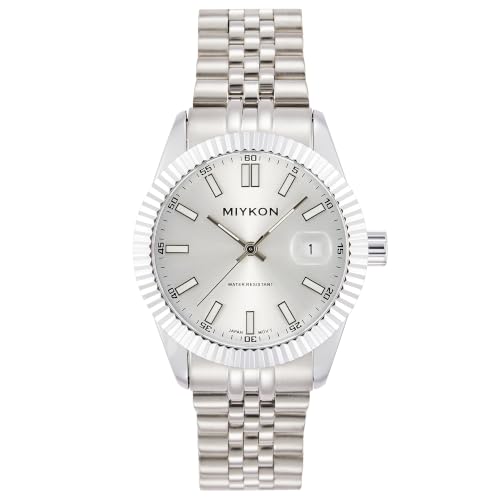
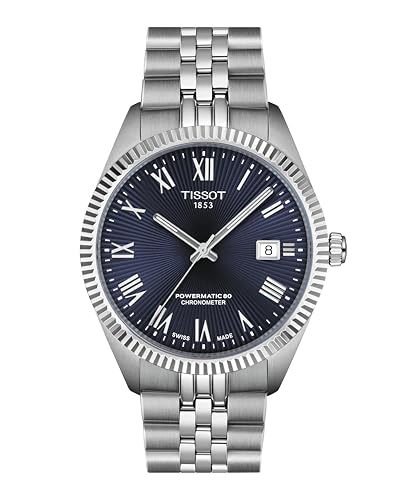
A fluted bezel is one of those details that a watch either has or does not, and when it has one, the bezel tends to define the whole character of the piece. From across a room, a fluted bezel reads as a ring of light. Up close, it resolves into a series of angled grooves and ridges, cut or formed into the metal ring that surrounds the dial and holds the crystal. Each ridge catches illumination from a different angle, so the watch face seems to shimmer as the wrist moves, even when the dial itself is plain and restrained. That interplay between restraint and brilliance is the heart of the style. The dial can stay calm, the case can stay classical, and the bezel supplies the jewellery note that lifts the watch from plain timekeeping into dress territory.
This guide explains what fluting is, where the design came from, and how to judge it well when choosing a watch. It separates the fixed decorative fluted bezel of the classic dress watch from the rotating coin-edge bezel of tool watches, two features that casual descriptions often confuse. It covers materials from solid precious metal to steel and gold-tone interpretations, the way fluting is made and why worn fluting is so difficult to restore, and the practical questions of case size, dial pairing, movement choice, bracelets, and care. The aim is not to push any single model. The aim is to give a reader the vocabulary and the checks needed to look at a photograph of a fluted bezel watch, or to hold one in a shop, and know whether the fluting is crisp, honest, and suited to the life the watch will actually live.
What a fluted bezel is, precisely
The bezel is the ring that sits on top of the watch case, framing the dial and usually securing or surrounding the crystal. A fluted bezel carries a repeating pattern of narrow grooves around its circumference, with raised ridges between them. The grooves are angled facets rather than simple vertical cuts, and it is that angling that produces the light play the design is known for. As the wrist turns, successive facets catch and release light, giving the ring a sparkling, almost faceted-gem quality that a polished smooth bezel, which reflects in one broad sweep, cannot reproduce.
Fluting differs from other decorative bezel treatments in both geometry and intent. A coin edge, discussed in its own section below, uses notches around the outer edge of a bezel so fingers can grip and turn it. Engine turning uses a machine-guided pattern of fine intersecting lines, often on a dial or a bezel, producing a woven or sunburst texture. Reeding, a close cousin borrowed from coinage and architecture, uses convex ribs rather than concave grooves. True fluting sits in its own place among these: concave, angled channels cut into a fixed ring, decorative in modern use, regular enough to read as a pattern and deep enough to throw real shadows and highlights.
The visual effect depends heavily on proportion. Fine, closely spaced flutes produce a delicate, jewellery-like shimmer suited to smaller dress watches. Broader flutes with deeper channels produce a bolder, more architectural effect that suits larger cases and more assertive designs. Neither is better in the abstract. The fluting must match the case diameter, the dial layout, and the intended formality of the watch. A heavy, deeply cut bezel on a small slim case can overwhelm the dial, while timid fluting on a large case can look like an afterthought. Makers who handle the style well treat the bezel as the design centre of the watch and proportion everything else around it.
From waterproof tool to dress signature: a short history
The fluted bezel did not begin as decoration. In the early decades of the waterproof wristwatch, most famously in the Oyster era of Swiss watchmaking in the 1920s, the bezel was a functional part of the case construction. A screw-down bezel helped seal the case against water, and the fluted or knurled edge gave watchmakers a surface that tools could grip when opening and closing the case for assembly and servicing. The grooves were, in origin, a workshop feature, closer to the knurling on a tool handle than to jewellery. Water resistance depended on that sealed construction, and the bezel that helped achieve it wore its working texture openly.
As case construction evolved and waterproofing methods improved, the functional need for a grip-textured bezel faded, but the look had become associated with a particular family of prestigious watches. Makers retained the fluted bezel as a signature, and its meaning shifted. Executed in precious metal on watches that were never expected to meet a workshop tool again, fluting became a marker of the dress end of the catalogue: a sign that the watch belonged to formal occasions, precious materials, and classical proportions. The groove pattern that once said waterproof utility came to say refinement, which is a neat example of how watch design preserves forms long after their original engineering purpose has moved on.
That history explains two things a buyer will notice today. First, the strongest association between fluting and precious metal is not an accident of fashion. When fluting became decorative, makers reserved it largely for gold bezels, partly for prestige and partly because gold takes and holds the crisp machined facets beautifully when new. Second, the design language carries expectations with it: a classical dial, stick or baton markers, a date window on many models, and bracelets of a particular linked character. Later sections return to those pairings, because a fluted bezel rarely appears alone. It arrives as part of a complete, historically rooted design grammar that a buyer is really choosing as a whole.
Fixed fluting versus coin-edge rotating bezels
Confusion between fluted bezels and coin-edge bezels is common in listings and casual reviews, and clearing it up prevents a disappointing purchase. The classic fluted bezel on a dress watch is fixed. It does not rotate, it carries no markings, and it performs no timing function. Its grooves run as angled facets across the face of the ring, designed for light rather than grip. Turning it is neither possible nor intended. A buyer who expects a rotating bezel because a listing used the words fluted and bezel together will be surprised, so the first check on any unfamiliar model is simple: does the bezel turn, and is it meant to.
A coin-edge bezel takes its name from the milled edge of a coin, the notched rim that makes a coin easy to handle. On a watch, that edge treatment usually appears on a rotating bezel, where the notches give fingertips purchase to turn the ring against a ratchet or friction mechanism. Diving and timing bezels use related grip treatments, though their edges are often more aggressive than a true coin edge. The notches on a coin edge sit around the outer circumference, oriented for the fingers of someone turning the bezel from the side. The facets on a fluted bezel sit on the visible face of the ring, oriented for the eye. Same family of ideas, different job, different placement.
Hybrid and homage designs blur the line deliberately. Some watches apply a fluted appearance to a rotating bezel, and some dress-styled watches borrow a coin edge for a fixed ring. Neither is dishonest when described accurately, but descriptions are not always accurate, which is why physical checks matter. In a shop, a gentle attempt to rotate the bezel, with the seller agreement, settles the question at once. In photographs, look for timing markings, numerals, or a luminous pip: their presence signals a functional rotating bezel, while a completely plain ring of facets signals the fixed decorative form. Readers whose daily wear leans toward connected features rather than classical dress design will find a different set of trade-offs surveyed in best mens smartwatches, where the bezel question becomes one of buttons, crowns, and touchscreens instead.
Materials: precious metal, steel, and gold-tone interpretations
The reference point for the style is the solid precious metal bezel, most often 18k gold. White gold fluted bezels are the signature of the best-known Swiss dress-classic line, giving a cool, bright sparkle that reads almost like steel at a glance and rewards a closer look with a warmth and density steel cannot match. Yellow gold fluting gives the full traditional effect, an unmistakably warm ring of light that pairs with champagne and silvered dials in the classic manner. Rose and pink gold versions appear less often in this specific style but follow the same logic, suiting warmer skin tones and softer dial colours. In every case, solid gold means the colour runs through the metal. Wear at the ridge crests may soften the geometry over decades, but it cannot rub through to a different coloured metal beneath, because there is none.
Stainless steel fluted bezels occupy a different and steadily more popular position. Steel is harder than gold, holds a machined edge well, and brings the fluted look into watches intended for regular wear without precious-metal anxiety. Japanese makers in particular have produced steel watches with fluted or fluted-style bezels that deliver much of the light play at a very different level of commitment, and Swiss makers outside the most famous houses have done the same. A steel bezel will never have the heft or the exact lustre of gold, and honest makers and sellers present it as its own thing rather than as a substitute. For many buyers that honesty is the appeal: the design language, translated into a practical material.
Gold-tone and plated interpretations require the most careful reading. A gold-tone bezel may be a surface treatment over steel or base metal, and its long-term behaviour depends on the thickness and method of that treatment. Modern physical vapour deposition coatings are far tougher than old thin plating, yet any coating on the sharp crests of fluting faces a hard life, because crests are exactly where contact and abrasion concentrate. A worn crest on a coated bezel can reveal the metal beneath in a way that a worn solid gold crest never does. Sellers should state the material and coating plainly, and buyers should ask directly when a listing is vague. Fashion brands produce many fluted-look watches in this tier, and the better ones are enjoyable, attractive objects. The buyer simply needs to know that the bezel finish is a coating with a service life, not a solid material with a lifetime.
Two-tone construction, typically a steel case and bracelet with a gold bezel and gold centre links or accents, deserves a mention as its own tradition. The fluted gold bezel is often the largest single precious component in a two-tone watch, which makes its condition and authenticity disproportionately important to the value of the whole piece. When assessing a two-tone example, the bezel deserves the closest inspection of any part, for reasons the section on judging fluting quality will make concrete.
How fluting is made, and why worn fluting stays worn
Fluting begins as precision machining or forming on a metal ring. In traditional manufacture, the bezel blank is cut with a shaped tool or milled so that each groove and ridge is formed to a consistent depth and angle, then finished so the facets are bright and the grooves hold their shadow. Consistency is the difficulty. Dozens of facets must match around the full circle, meet cleanly at every point, and align symmetrically with the dial markers, particularly at 12 o clock, where the eye detects misalignment most readily. A bezel that achieves that consistency has passed a genuine manufacturing test, which is part of why crisp fluting has remained a prestige detail rather than a cheap decoration.
Some bezels are cast or stamped toward their final form and then finished by machining and polishing, a route more common at accessible price tiers. The results can be attractive, especially in steel, but the facets usually start life slightly softer than fully machined precious-metal work. That starting softness matters when judging photographs: a modestly priced steel watch should not be condemned for fluting that is a touch less razor-defined than a luxury gold example, provided the spacing is even and the pattern is symmetrical. The standard is honesty of execution within the material and tier, not a single absolute sharpness demanded of every watch.
Wear and polishing are where fluting becomes a serious ownership topic. Every polish removes a small amount of metal, and on a fluted bezel the metal removed comes disproportionately from the ridge crests, because they stand proud and meet the polishing wheel first. Over repeated servicing across decades, crisp ridges round into soft waves, grooves lose depth, and the sparkling facet play dulls into a general shine. Collectors describe such bezels as softened or melted, and the market values them accordingly. The hard truth is that lost fluting cannot be restored cheaply. Re-cutting a bezel to original sharpness requires specialist machining, removes more metal, and risks changing the bezel dimensions and fit. In many cases the realistic remedies are living with the softened bezel or replacing the bezel entirely where the maker supplies one, neither of which is a small decision on a precious-metal watch.
The practical consequences for buyers are direct. On a vintage or pre-owned piece, bezel condition is a primary value factor and should be inspected before dial patina or bracelet stretch, because those are easier to address. On a new piece, the servicing conversation matters from day one: ask how the maker handles bezel refinishing during service, and favour the lightest possible touch when the watch eventually goes in. Owners can protect fluting by declining aggressive polishing at routine services. A watch that keeps its original crisp bezel through decades of careful ownership carries its history in the best possible way, written in sharp facets rather than in rounded ones.
Case sizes and proportions in the dress range
Fluted bezel watches live mostly in the classical dress size range, roughly 31 to 41 millimetres in case diameter, and each point in that range serves a different wrist and a different intention. The smaller sizes around 31 to 34 millimetres descend from traditional ladies and midsize models, and they wear with a jewellery character in which the fluted bezel is the dominant feature. On a smaller case the fluting occupies a greater share of the visual field, so its quality is even more exposed. These sizes suit smaller wrists and formal settings where a watch should gleam rather than assert.
The middle of the range, around 36 millimetres, is the historical centre of the style and the size most associated with the classic dress watch proportions. It suits a wide span of wrists, slides under a shirt cuff without protest, and keeps the dial open and legible without spare emptiness. Many long production runs of fluted bezel classics were built around this size, which means the pre-owned market is deepest here, dial variations are widest, and bracelet and parts support is strongest. A buyer unsure where to begin will rarely go wrong starting the search at 36 millimetres and adjusting for wrist size and taste from that anchor.
The upper end, around 41 millimetres, reflects modern preferences for larger watches. A bigger case gives the fluting more circumference to work with, and makers typically broaden the flutes to keep the pattern in proportion. The result reads more contemporary and more assertive, and it suits larger wrists that make a 36 millimetre watch look lost. The cautions are dress discipline and weight. A 41 millimetre watch with a gold fluted bezel and a metal bracelet is a substantial object that will not disappear under every cuff, and buyers who split their time between formal and casual settings should try this size in person. Diameter alone also misleads: lug-to-lug length, case thickness, and bezel width all shape how a watch wears, and two watches with the same stated diameter can sit very differently on the same wrist.
Dial pairings that let fluting do its work
The classic dial partners for a fluted bezel share a quality of calm. Sunray dials, brushed so that fine lines radiate from the centre, echo the bezel light play in a subtler register, and the combination of a sunray dial with a fluted bezel gives a watch two coordinated forms of movement in the light. Silvered, champagne, white, and pale blue sunray dials are the traditional choices, with darker blue and slate versions offering a more modern mood while keeping the same reflective logic. The risk to avoid is excess. A dial that is itself heavily textured, gem-set, and multicoloured, surrounded by a sparkling bezel, can tip from richness into noise.
Linen dials offer a different and historically rich pairing. Their woven crosshatch texture, found on many vintage and vintage-inspired pieces, absorbs light rather than reflecting it, so the fluted bezel stands out by contrast. Stick and baton markers suit both dial types, keeping the geometry linear and letting the bezel supply the ornament. Roman numerals appear on many classic models and bring a more formal, traditional voice, while plain stick markers read cleaner and slightly more contemporary. Diamond markers exist in this style family and serve a specific taste for overt luxury; buyers considering them should judge the whole composition in person, because photographs flatten the interaction between stones, facets, and dial finish.
Date windows are part of the classic layout on many fluted bezel models, often with a magnifying lens on the crystal above the date. That lens, where fitted, is another authenticity and condition checkpoint on pre-owned pieces, since replacement crystals and lenses are common service items. Dial condition on older watches deserves the same rigour as bezel condition. Original dials with honest ageing are valued by collectors, while refinished dials, however tidy, change the character and the market standing of a watch. A fluted bezel in crisp original condition paired with a refinished dial is a mixed object, and its price should reflect that mixture.
Movements behind the style
The fluted bezel says nothing about the movement inside, and this style of watch has been built around nearly every kind of timekeeping mechanism. At the luxury end, automatic mechanical movements are the norm, wound by wrist motion and built for decades of serviced life. Dress automatics in this class typically prioritise slimness, smooth date change, and reliable daily accuracy over extreme complications. Hacking seconds, quickset date mechanisms, and a power reserve around a day and a half to three days are the practical features to confirm in maker documentation, because they shape daily ownership more than headline specifications do.
Manual-wind movements appear in some dress interpretations, particularly slimmer or historically styled pieces, and they offer a thinner case at the cost of a daily winding ritual that some owners genuinely enjoy. Quartz movements power the accessible end of the fluted style, including many Japanese and fashion interpretations, and they bring real advantages: thin cases, exact timekeeping, low servicing needs beyond battery changes, and freedom from accuracy anxiety. A buyer who loves the fluted look and wants a watch that is simply ready every morning should not let mechanical snobbery close the quartz door. The bezel does not know what drives the hands, and neither does anyone admiring the watch across a table.
Smartwatches form a separate universe that occasionally borrows classical styling cues, and readers weighing a traditional fluted piece against a connected watch are really choosing between two relationships with time and objects. The round connected options gathered in best affordable round android smartwatches show how far the classical round case language travels into modern devices, while a fluted bezel watch remains a purely mechanical or quartz object whose value lies in materials and permanence rather than in notifications and sensors.
Servicing expectations should be set by movement type at purchase. Mechanical movements need periodic professional servicing, and each service is the moment when bezel polishing decisions get made, so the movement and the bezel are linked in ownership even though they never touch. Quartz pieces need battery changes that should always include seal checks where water resistance matters. In both cases, using a watchmaker who understands that the fluted bezel is to be protected, not brightened, is the single most valuable servicing decision an owner makes.
Bracelets and straps that suit the style
The five-link bracelet of the Jubilee type is the historical partner of the fluted bezel, and the pairing is close to a uniform. Its rows of small, rounded links drape closely around the wrist, catch light in small increments that harmonise with the bezel facets, and carry a dress character that a heavier bracelet cannot match. On classic models the centre links may be polished or executed in the same precious metal as the bezel, tying the whole watch together. A fluted bezel on a five-link bracelet is the complete traditional statement, and buyers who want the style in its fullest form should begin there.
The three-link Oyster-style bracelet offers the sportier alternative: broader, flatter links, a more substantial feel, and a slightly more casual voice that lets a fluted bezel watch travel further into everyday settings. The combination is common and successful, particularly on larger case sizes where the five-link pattern can look delicate. President-style bracelets, with their semicircular three-piece links and concealed clasp, sit at the most formal end and are traditionally paired with precious-metal cases and fluted bezels in the grandest versions of the style. In all metal bracelet cases, condition checks are the same: stretch between links from years of wear, clasp function, and the presence of any spare links needed to size the bracelet correctly.
Leather straps change the watch completely and deserve serious consideration. A fluted bezel watch on a dark alligator or calf strap becomes quieter, more classical, and in some settings more elegant than its bracelet form, because the strap removes the competing light play and lets the bezel own the composition. Leather also reduces weight and total presence, which can rescue a larger case for a smaller wrist. The practical checks are lug width, covered in the buying section below, strap quality, and buckle metal matching the case. A gold case on a strap with a steel-coloured buckle is a small dissonance that owners notice daily. Curved-end straps that meet the case closely give the most finished result, while straight-end straps leave a gap that some owners accept and others cannot unsee.
Judging fluting quality in photographs
Most fluted bezel watches are first encountered in photographs, and online listings live or die by images that may flatter or conceal. A disciplined reading of photographs is therefore a core buying skill for this style. Begin with the ridge edges. On a crisp bezel, each ridge reads as a clean, bright line, and the grooves between ridges hold a defined shadow. On a softened bezel, the lines blur, the grooves look shallow and washed out, and the whole ring takes on a smooth, almost liquid shine. Comparing the bezel against the sharpness of the dial printing in the same photograph gives a useful internal reference: if the dial text is razor sharp and the fluting still looks vague, the softness is in the metal, not in the photography.
Spacing and symmetry come next. The flutes should repeat evenly around the full circle with no facet visibly wider or narrower than its neighbours. At 12 o clock, the pattern should sit symmetrically around the marker, typically with either a ridge or a groove centred exactly, depending on the design. Asymmetry at the top of the dial is the easiest manufacturing or refinishing flaw to spot and one of the hardest to excuse. Work around the full circle in a large image rather than judging from the single most flattering angle, because sellers naturally lead with the view that sparkles most, and wear is rarely distributed evenly. The side of the bezel nearest the crown and the side that has met desk surfaces and door frames through the years often tell different stories.
Lighting can deceive, so use it deliberately. A bezel photographed under a single hard light will sparkle even when worn, while flat, diffuse lighting reveals true geometry. Listings that include several lighting conditions and at least one straight-on dial view are giving the buyer the material needed for an honest judgement, and that openness is itself a signal about the seller. Where images are few or evasive, asking for a straight-on photograph and a short video that turns the watch slowly in the light is a reasonable request before any significant payment. The broader question of whether a classical watch or a connected watch fits a given life is explored from the other side in best all around smartwatches, and the contrast is instructive: smartwatch condition is judged by battery and screen, while a fluted bezel is judged by edges that either survived or did not.
Care: living with a ring of fine grooves
Fluting traps what smooth bezels shed. The grooves collect dust, skin oils, sunscreen, soap residue, and the general film of daily wear, and because the grooves are narrow, that accumulation dulls the light play quickly if it is left in place. Regular gentle cleaning is therefore not cosmetic fussiness but the basic maintenance that keeps the design working. A soft brush, of the kind sold for watch care or a very soft toothbrush reserved for the purpose, worked gently along the grooves with lukewarm water and a drop of mild soap, lifts the deposits without threatening the metal. The watch should then be rinsed carefully and dried with a soft, lint-free cloth, with attention to drying the grooves rather than merely the crests.
Water resistance governs how wet that cleaning may be, and it must be confirmed for the specific watch rather than assumed from the style. Many dress watches carry only splash resistance, and older pieces may have seals that no longer deliver even that. Where water resistance is doubtful, cleaning should stay nearly dry: a soft brush used dry, followed by a slightly dampened cloth on the case, achieves most of the benefit with none of the risk. Crown position matters too. A screw-down crown should be confirmed fully closed before any water comes near the watch, and push-pull crowns on dress pieces are a further argument for caution.
Polishing cloths are the enemy of crisp fluting in daily care. Abrasive impregnated cloths brighten metal by removing a trace of it, and on a fluted bezel they remove it from the ridge crests first, exactly where removal does the most visual damage. The same logic applies to enthusiastic buffing with any cloth: pressure concentrates on the high points. Owners should keep polishing cloths away from the bezel entirely and reserve them, if used at all, for smooth case surfaces. Storage completes the care picture. A fluted bezel stored loose in a drawer or travel roll against other metal objects will gather small dents and crest damage, so a separate soft pouch or a compartment of its own is a small discipline with a long payoff.
Alternatives for daily wear
Not every admirer of the fluted look should own a precious-metal dress watch, and the market offers honest routes to the same visual pleasure for harder daily use. Steel fluted and fluted-look bezels lead the alternatives. A well-machined steel bezel keeps the facet play, shrugs off the knocks of ordinary life with less financial anxiety, and pairs with steel bracelets and cases for a unified, contemporary look. Steel also tolerates the occasional professional refinish better than gold, because the metal is harder and the stakes of each intervention are lower, though the same rule about protecting crests applies in principle to every fluted bezel regardless of material.
Engine-turned bezels are the cousin design worth knowing. Where fluting cuts parallel grooves around the ring, engine turning engraves a patterned texture, often a barley-corn or hobnail field, using a rose engine or a modern equivalent process. The effect is related but distinct: a fine, even texture that glows rather than sparkles, with no tall crests to soften and a slightly more understated, vintage-instrument character. Some makers have built entire dress lines around engine-turned bezels and dials, and a buyer who loves the fluted idea but worries about crest wear may find this cousin the more forgiving daily companion. Coin-edge fixed bezels form another branch of the family, giving grip texture as pure decoration on watches that nod toward vintage field and pilot styles.
There is also the option of enjoying the fluted aesthetic at one remove, through a watch that applies fluting to the crown, the case band, or a chapter ring rather than the bezel itself. These designs quote the classic without committing the whole watch to it, and they can suit buyers who find a full fluted bezel too formal for their wardrobe. What should be avoided is the dishonest middle: a coated bezel sold with solid-metal implications, or a soft, poorly spaced fluted-look ring on a watch whose listing promises luxury execution. The alternatives earn their place by being accurately described, and a buyer equipped with the photograph checks in this guide can sort the honest translations from the careless ones. Owners who ultimately decide their daily wear belongs to a connected device can compare that path in best apple smartwatches, while keeping a fluted classic for the occasions where a screen would be out of place.
Buying checks: hallmarks, lug width, crystal, and papers
Precious metal demands documentary and physical verification, and hallmarks are the starting point. A solid gold bezel and case should carry the legally required marks for the market in which the watch was sold, typically indicating the gold purity, such as the 750 mark denoting 18k gold, along with maker and assay marks whose form varies by country and era. Marks are usually placed discreetly, on the case back, between the lugs, or on a lug itself, and they should be legible rather than rubbed into suggestion. A listing for a supposedly solid gold watch that cannot show or describe its hallmarks is asking the buyer to fund an assumption. Walk away, or price the watch as unverified until an independent watchmaker has examined it.
Lug width sounds minor and decides daily happiness. It is the distance between the lugs where the strap or bracelet attaches, commonly in the 19 to 21 millimetre range on classic dress sizes, and it governs which straps will fit. An odd lug width narrows strap choice considerably, so a buyer planning to alternate between bracelet and leather should confirm the width and the availability of quality straps in that size before purchase. Spring bar quality and lug hole condition on older watches also deserve a look, because a strap is only as secure as the bars and holes holding it, and a precious watch lost to a failed spring bar is a preventable tragedy.
Crystal type shapes both appearance and ownership cost. Sapphire crystal, standard on modern luxury pieces, resists scratches so effectively that it will look new long after an unprotected bezel has gathered marks, which can make bezel wear more noticeable by contrast. Acrylic crystal, common on vintage pieces, scratches readily but polishes back with ease and carries a warm optical character many collectors love. Mineral glass sits between the two. On pre-owned watches, confirm whether the crystal is original or a service replacement, and inspect any date magnifier for alignment and clarity. A replaced crystal is not a fault, but like a refinished dial it belongs in the price conversation.
Papers, boxes, and service history complete the checks. Original papers support provenance and resale, service records from reputable watchmakers show that the watch was maintained rather than merely owned, and a documented history of light-touch servicing is especially valuable for this style, because it suggests the bezel was protected through each intervention. Where records are absent, a pre-purchase inspection by an independent watchmaker, covering movement condition, case and bezel originality, and water resistance, is money well spent relative to the sums these watches command.
Matching a fluted bezel watch to a wardrobe and a life
A fluted bezel watch is a formal accent, and its success depends on the wardrobe around it. With tailoring, the watch is entirely at home: the bezel echoes the jewellery register of cufflinks and a wedding band, and a 36 millimetre example on a five-link bracelet under a shirt cuff is one of the most settled combinations in all of watch wearing. With smart casual clothing the watch still works, particularly on leather or in steel, though a full gold example with a matching gold bracelet can feel overdressed against knitwear and denim for some tastes. The watch does not need to match the metals of other jewellery exactly, but a deliberate relationship between bezel metal, belt buckle, and ring tones gives an outfit coherence that observers register without analysing.
Occasion planning protects the watch as much as it flatters the owner. A precious fluted bezel is a poor companion for gardening, workshop tasks, contact sport, or any setting where grit and hard edges are in play, not because the watch is fragile but because every crest mark is permanent in a way that a mark on a smooth bezel is not. Owners who rotate between a fluted classic for formal and office wear and a plainer watch for rough duty will keep both watches better looking than an owner who asks one watch to do everything. Rotation also spreads servicing intervals and gives each piece rest, which mechanical movements tolerate happily.
Budget planning should include the ownership costs that listings omit. Mechanical servicing at proper intervals, occasional strap replacement, insurance for a precious-metal piece, and secure storage all belong in the true cost of the style. A buyer who stretches to reach a gold fluted watch and then defers its servicing for a decade has bought the object without buying the ownership, and the bezel will record that deferral if unqualified hands eventually brighten it. The calmer purchase is the watch, at whatever tier, whose upkeep fits comfortably inside the buyer ongoing means.
Common mistakes when choosing this style
The most frequent mistake is buying the photograph rather than the bezel. Heavy retouching, hard lighting, and a single heroic angle can make a softened bezel look crisp, and buyers who skip the straight-on view and the full-circle check discover the truth only when the watch is on their wrist under ordinary light. The remedy is procedural: multiple angles, diffuse light, and comparison against the dial printing sharpness, every time, without exception for trusted sellers or attractive prices.
The second mistake is confusing a fixed fluted bezel with a rotating one and discovering the difference after purchase, which the earlier section on coin edges exists to prevent. A close third is overlooking case size in pursuit of a famous reference or a tempting listing, ending with a watch that wears too small or too large and therefore stays in its box. A watch that is not worn delivers no value at any price, so wrist fit outranks pedigree. Trying the target size in any watch of similar dimensions, even a different brand entirely, gives more useful information than another hour of reading listings.
Material misunderstandings form the fourth pattern: paying solid-metal money for a coated bezel, or dismissing an honest steel watch because it is not gold, when steel would have served the buyer actual life far better. Both errors come from judging the label instead of the object. The fifth mistake is commissioning or accepting aggressive polishing to make an old watch look new. A vintage fluted bezel with honest, slightly softened crests and an original dial is a coherent, desirable object. The same watch polished hard becomes neither new nor honestly old, and its market standing falls accordingly. Restraint is a form of expertise in this style, for owners and watchmakers alike.
Fluting across brands, regions, and schools of design
Although one Swiss house defines the popular image of the fluted bezel, the technique has never belonged to a single maker. Swiss competitors have long offered their own grooved and reeded bezels on dress lines, each with a house character: some cut the flutes finer and closer, giving a subdued shimmer for conservative tastes, while others broaden the facets for a bolder, more contemporary flash. German dress watchmaking tends toward restraint, and where grooved bezels appear in that tradition they are usually shallow and precise, treated as one quiet texture among several rather than as the headline of the design. Reading these regional habits helps a buyer place an unfamiliar watch. A bezel that looks understated may not be a lesser effort; it may simply come from a school that values understatement.
Japanese makers bring a different strength to the style, rooted in highly developed case finishing. The best Japanese steel cases are polished with techniques that produce distortion-free mirror surfaces, and when fluting is cut into such a case the contrast between bright facets and dark grooves can be remarkably sharp. Japanese dress lines at several levels have used fluted or fluted-style bezels to give formal watches a presence that plain polished steel lacks, and their quartz and automatic movements behind those bezels are typically finished and regulated to standards that embarrass many better-known names. A buyer who judges by bezel execution and movement quality rather than by badge will find some of the most satisfying fluted watches of the modern era in Japanese catalogues.
Fashion and microbrand interpretations complete the map. Independent small brands have revived fluted bezels as part of a broader return to mid-century dress design, often pairing them with sector dials, small cases, and mechanical movements sourced from established movement makers. The better microbrand efforts are notable for honest materials, usually solid steel, and for fluting that is photographed plainly and described accurately. The weaker efforts cut corners in exactly the places this guide has taught the reader to inspect: uneven spacing, crests that were soft before the watch ever left the factory, and coatings described in language designed to be misread. The style is democratic now, available at nearly every level, and that is precisely why judgement matters more than budget.
Vintage examples versus modern production
Choosing between a vintage fluted bezel watch and a modern one is a choice between two kinds of pleasure, and the bezel sits at the centre of the decision. A vintage piece offers proportions that modern catalogues have largely abandoned, dial textures such as linen and tapestry that are costly to produce today, and the particular warmth of gold that has lived a life. It also carries the accumulated record of every service and every polishing wheel it has met. The buyer of a vintage example is therefore buying condition above all, and the fluted bezel is the most legible record of that condition on the entire watch. Sharp vintage fluting with an honest dial is a combination the market rewards because it is genuinely rare: most watches were polished by somebody, sometime, with the best intentions and the worst consequences for the crests.
Modern production answers with certainty. A new watch offers a bezel at factory sharpness, a movement with a full service life ahead, seals that deliver the stated water resistance, and a warranty that transfers the early risks to the maker. Modern machining also holds tolerances that vintage production could not always match, so spacing and symmetry on a good modern bezel are exemplary. What modern pieces cannot offer is the historical texture, and their larger average sizes change the character of the style from jewellery toward statement. Neither answer is wrong. The disciplined approach is to decide which pleasure is actually wanted, then apply the full set of checks proper to that path: hallmarks, originality, and service history for vintage; sizing, material honesty, and servicing policy for modern.
One further consideration links the two paths, and it is worth stating plainly because sellers rarely raise it. A modern watch bought today becomes a vintage watch through the owner hands, and every servicing decision made along the way writes itself into the bezel. The owner who instructs watchmakers to leave the bezel alone, who cleans the grooves gently and often, and who stores the watch apart from harder objects is not merely preserving value. That owner is deciding what the next generation of buyers will see when they turn the watch in the light, and whether the ring of facets will still answer sharply or will have gone soft and silent. Few objects record their care as faithfully as a fluted bezel, and few reward care as visibly.
A short in-store routine for a serious candidate
When a specific watch has survived the paper checks and the photograph checks, a brief hands-on routine in the shop settles what images cannot. Begin away from the counter spotlights, holding the watch under ordinary room light and turning it slowly, because fluting that only performs under jewellery lighting will disappoint in daily life. Move to a window if the shop allows it, since daylight is the least forgiving and most honest illumination a bezel will ever meet. Check the 12 o clock symmetry with the watch held square to the eyes, then run a clean fingertip lightly around the crests: sharp, even ridges feel consistent all the way around, while a softened section announces itself as a smooth patch in an otherwise textured circle.
Finish with the wearing checks. Fasten the bracelet or strap at the correct size, confirm the case sits centred on the wrist without the crown digging in, and slide a shirt cuff over the watch to test the dress duty the style promises. Wind the crown gently on a mechanical piece, set the date only outside any maker-stated caution window near midnight, and listen to the bracelet for the rattle that reveals advanced link stretch. Ten unhurried minutes of this kind will tell a buyer more about a fluted bezel watch than a month of listing photographs.
Check prices on Amazon
Live listings for the shortlist in this guide are pulled from Amazon below, so prices and availability are always current at the moment you look.



Disclosure
This article was written from manufacturer documentation, horological reference material, and published standards on precious-metal marking, and it aims to help readers judge a particular bezel style with clear eyes. Certain links in the article point to the retailer, and a purchase made through such a link may earn a commission that supports the work behind guides of this kind, without changing the price paid by the reader. Recommendations here are framed around design, materials, and condition rather than around any single brand, and readers should verify hallmarks, materials, and movement details with the seller or an independent watchmaker before committing to a significant purchase.
When the light catches a well-kept fluted bezel and every ridge answers in turn, the watch on your wrist is carrying a century of workshop history in a ring no wider than a coin edge, and it will keep telling that story for as long as its edges stay sharp.


