Our Top Picks
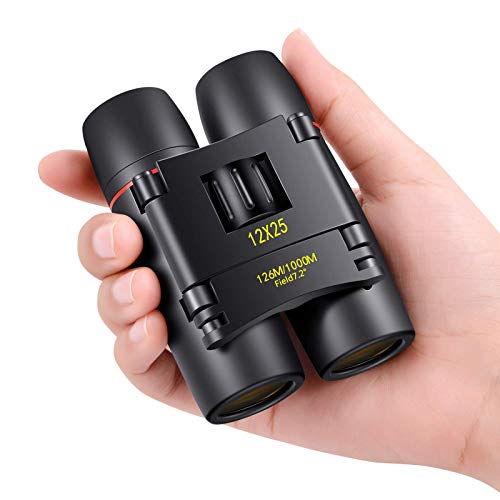 POLDR 12X25 Small Pocket Binoculars Compact for Adults12X253.7 x 2.2 x 0 inches0.4 poundsCheck on Amazon
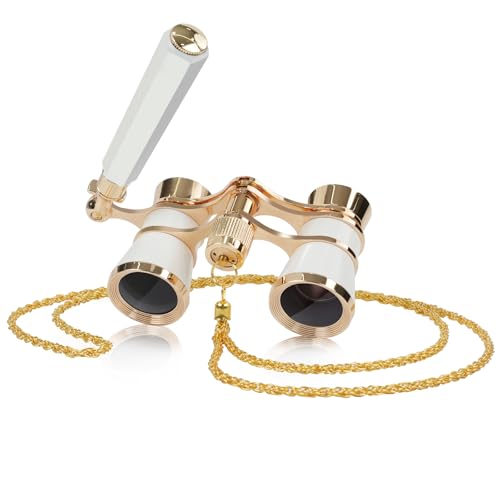 BOSTRON 3X25 Theater Glasses Opera Binoculars with Adjustable3.5x2x1.2in3.5 x 2 x 0.1 inches0.4 poundsCheck on Amazon
 Aomekie 3X25 Opera Glasses Theater Binoculars with Chainwith Chain4.33 x 3.15 x 1.77 inches0.4 poundsCheck on Amazon


What's inside
- Why low power suits the theatre
- Two optical families: Galilean and roof prism
- Field of view matters more than power
- Light in a dim hall: exit pupil and coatings
- Focus systems: fixed, centre wheel, and individual eyepieces
- Fit: interpupillary distance, hinges, and folding bodies
- Choosing by seat: stalls, dress circle, and balcony
- Eye relief and viewing with spectacles
- Weight, straps, cases, and hall etiquette
- Reading a spec sheet without being misled
- Before the performance: setup in daylight
- Care, storage, and longevity
- Common mistakes and how to dodge them
- A short buying checklist
- How stage lighting changes what you see
- Opera, ballet, plays, and concerts ask slightly different things
- Understanding sharpness claims and lens materials
- Handling in real rows: shake, breathing, and support
- Renting, borrowing, and buying second-hand versus new
- Children and first-time theatregoers
- Travel to touring productions and outdoor performances
- Check prices on Amazon
- What the numbers cannot tell you
As an Amazon Associate I earn from qualifying purchases. This post may contain affiliate links at no extra cost to you.
From a theatre seat, the stage can feel both close and distant at once. Faces carry the drama, yet the full width of a set, a chorus line, or an orchestra pit tells the rest of the story. Opera glasses and small low-power binoculars exist for that exact tension. They bring expression nearer without cutting away the scene around it, and they do so from a package small enough to rest in a coat pocket or a tiny evening bag.
This guide covers instruments sold new for opera, ballet, musical theatre, plays, and concert halls. The range runs from traditional Galilean opera glasses at roughly three times magnification through compact roof-prism binoculars at four or five times. That modest power is deliberate. Higher figures sound impressive in a shop listing, but inside a hall they often narrow the view, magnify hand shake, and make following a moving singer harder than it needs to be.
Everything here rests on published specifications, optical definitions, and manufacturer documentation rather than handling claims. Magnification, objective diameter, field of view, exit pupil, eye relief, interpupillary distance, close focus, weight, and dimensions can all be checked on a spec sheet. How those numbers interact with seat position, house lighting, spectacles, and your own eyes is where a sensible choice gets made.
Why low power suits the theatre
Magnification describes how much larger an object appears compared with the naked eye. A 3x glass makes a singer twenty metres away look as if she stood under seven metres away, at least in angular terms. A 5x model closes that apparent gap further, to roughly four metres. Neither figure changes the real distance, the light reaching you, or the width of stage you can hold in view at one moment.
Newcomers often assume more power must reveal more detail. In a dim auditorium the opposite can happen. As magnification rises for a given front lens size, the exit pupil shrinks, the image dims, and small tremors in your hands become large movements in the frame. Performers also cross the stage. A wide, steady, bright view at 3x usually shows a duet better than a jittery cropped view at 8x that keeps losing one of the pair.
There is also the social geometry of a hall to consider. Rows sit close together, neighbours share armrests, and programmes rustle during quiet passages. A bulky instrument raised for long stretches can block sightlines behind you and tire your arms. Compact low-power models ask less of everyone. They lift quickly for an aria, lower easily for a full-stage tableau, and rarely draw attention in a darkened row.
Consider what you actually want to see. If the goal is facial nuance during a solo, a little enlargement helps enormously because eyes and mouth read clearly at modest power. If the goal is choreography, set design, or surtitles plus stage together, restraint matters even more. The best theatre optic is the one you forget between uses, not the one that turns every scene into a hunt for the subject.
Two optical families: Galilean and roof prism
Traditional opera glasses use the Galilean layout, named for the early telescope form. A convex objective lens at the front pairs with a concave eyepiece lens at the rear, and the light path stays straight, with no prisms folding it. The result is short, light, and elegant, often with a central focusing wheel and a small bridge joining two smooth barrels. Many designs add a handle or a decorative finish meant for formal dress.
Galilean instruments have real limits that spec sheets quietly reveal. Their field of view tends to be narrower than a comparable prism design, eye relief is often short, and magnification beyond about 5x becomes impractical because the tube would need to grow long. Image quality near the edge of the field can soften, and there is no easy route to full waterproof sealing. For a seat in the stalls watching a brightly lit stage, none of that may matter. For a balcony seat in a cavernous hall, it might.
Roof-prism compacts take a different route. Light passes through a pair of prisms whose peaked surfaces fold the path inside a straight, slim body, hence the roof name. Modern versions carry phase correction coatings on those prism surfaces and multi-coating on lens elements, both of which lift contrast. The bodies can be sealed, filled with dry nitrogen to resist internal fogging, and fitted with twist-up eyecups that suit spectacle wearers far better than most Galilean eyepieces do.
Between those families sits a third, smaller group: reverse Porro compacts, where the front lenses sit closer together than the eyepieces. They tend to give a slightly more three-dimensional feel and generous fields, though their offset shape looks less sleek. For theatre use the practical differences are field width, eye comfort, and size in the hand, not fashion. Any of the three can serve well if the numbers line up with your seat and your eyes.
Price-free advice sounds odd, yet it helps here: ignore styling first. Check the optical figures, then hold questions about finish and trim for later. A handsome glass with a cramped field will frustrate you through a three-hour performance, while a plain compact with a wide, relaxed view will earn its place in your pocket season after season.
Field of view matters more than power
Field of view states how wide a slice of the world fits inside the frame. Makers quote it two ways: as an angle in degrees, or as a width at a set distance, often metres at one thousand metres. For theatre maths, degrees are easier. At twenty metres from the stage, each degree of field covers roughly thirty-five centimetres of width. A seven-degree field therefore spans about two and a half metres at that distance, enough for a small group scene. A five-degree field trims that to under two metres.
That simple multiplication explains why seasoned theatregoers prize width. A singer rarely performs alone in a tight spotlight for long. Partners answer from across the stage, dancers enter from the wings, and a conductor cue may be part of the moment you want. A broader field keeps relationships visible. It also forgives imperfect aim when the lights drop and you raise the glass by feel alone.
Apparent field, sometimes listed separately, describes how large the image feels to your eye, and it follows from true field multiplied by magnification. A 3x glass with a seven-degree true field gives an apparent field near twenty-one degrees, which can feel tunnel-like despite covering a decent stage width. This is the Galilean trade-off in one line: adequate stage coverage, modest sense of immersion. Roof-prism models at similar power often deliver a wider apparent field, so the scene feels less like looking through a keyhole.
Edge behaviour belongs in the same conversation. Few compact optics stay perfectly sharp from centre to rim. Mild softness at the extreme edge is normal and rarely troubles stage viewing, since your attention sits centrally anyway. Heavy blur, colour fringing on high-contrast edges such as a white shirt against a dark backdrop, or a visible sweet spot that feels tiny are stronger reasons to look elsewhere. Documentation rarely quantifies edge falloff, so treat headline field figures as a starting point rather than a promise of uniform clarity.
When comparing listings, convert before you judge. A width quoted at one thousand yards can be turned into degrees by dividing by fifty-two point five, roughly. A width in metres at one thousand metres divides by about seventeen point five. Small rounding errors do not matter for seat planning. What matters is spotting the model whose generous sounding figure shrinks once converted, a trick that catches out many hurried buyers.
Light in a dim hall: exit pupil and coatings
Halls are darker than daylight yet brighter than night outdoors, a middle condition that confuses simple buying rules. Stage lighting concentrates on performers, leaving the auditorium in shadow, so your pupils dilate wider than they would in a living room. A young adult pupil may open to five millimetres or beyond in low light; an older pupil often reaches less. The optic should feed that opening without waste or shortfall.
Exit pupil is the term for the bright disc of light leaving each eyepiece, and the maths could hardly be simpler. Take the objective diameter in millimetres and divide it by the magnification. A 3×21 glass gives seven millimetres. A 4×30 compact gives seven and a half. A 5×25 model gives five exactly. When the exit pupil matches or slightly exceeds your own pupil, the image reaches full brightness for that design. When it falls short, the view dims even if the lenses are excellent.
That arithmetic favours low power all over again. A modest front lens can still deliver a generous exit pupil at 3x or 4x, which keeps faces luminous under stage spots. Push the same glass to higher power and brightness ebbs away. This is why tiny opera glasses with 21 millimetre objectives remain viable indoors: at 3x they waste little light, and the stage itself supplies strong illumination on the subjects that matter.
Coatings decide how much of the gathered light survives the journey through glass and air boundaries. Each uncoated surface reflects a small share away, and a binocular holds many surfaces. Single coating on some elements earns the label coated. Coating every air-to-glass surface earns fully coated. Applying several layers across the system earns fully multi-coated, the strongest of the common descriptions. Better coatings raise transmission, deepen contrast, and tame ghost reflections from follow spots and exit signs.
Prism coatings deserve a separate glance on roof models. Phase correction aligns light waves split by the roof surfaces, restoring sharpness that would otherwise dip. Silver or dielectric mirror treatments on one prism face affect brightness too, with dielectric generally reflecting more. Galilean glasses sidestep prism questions entirely because they contain no prisms, one quiet advantage of their simple path when light levels are forgiving.
Do not chase twilight factor, a figure some listings still promote. It blends magnification and objective size into a single number that flatters high power even when the exit pupil tells a dimmer story. For theatre seats, rank exit pupil, coating level, and field width ahead of that composite score, and you will land closer to a view that feels bright during a hushed second act.
Focus systems: fixed, centre wheel, and individual eyepieces
Some opera glasses arrive with focus preset at the factory, sometimes called fixed focus or focus-free. In practice the design leans on depth of field at low magnification: everything from a moderate distance to the far wall of the stage falls within acceptable sharpness at once. There is nothing to adjust in the dark, nothing to knock out of place, and a companion can borrow the glass without a lesson. The compromise appears if your eyes differ notably from the assumed average, or if you sit very close to the stage.
Centre focus remains the most flexible arrangement. One wheel between the barrels drives both sides together, while a diopter ring on one eyepiece, usually the right, lets you offset that side for the difference between your eyes. Set correctly once, the wheel then handles seat changes and stage depth with small turns. Wheel size and resistance matter more than novelty here. A wheel you can find by touch, turn smoothly with one finger, and stop precisely beats a stiff or gritty control every time.
Individual focus, where each eyepiece turns on its own, appears on some rugged compacts. It suits a fixed viewing distance because both sides, once dialled in, stay put. Theatre distances do change, though, from pit to rear stage, and refocusing two rings in darkness is slow work. Unless you value sealing and simplicity over speed, centre focus serves a changing programme better.
Minimum focus distance sounds like a birdwatching concern, yet it has a quiet theatre role. A model focusing down to two metres can sharpen a programme page, a score on a stand, or detail on a costume displayed in a foyer. One whose near limit sits at five metres cannot. Check the figure if you enjoy reading small print during the interval without swapping to separate reading glasses.
Diopter range deserves equal attention. Listings state it as a plus and minus span, commonly around four dioptres. If the gap between your eyes falls inside that span, the centre wheel system can balance them. If it falls outside, contact lenses or spectacles worn while viewing may solve the mismatch. None of this is guesswork; an optician record gives your correction, and the spec sheet gives the adjustment span, so the two can be compared before any money moves.
Fit: interpupillary distance, hinges, and folding bodies
Interpupillary distance, shortened to IPD, measures the gap between the centres of your pupils. Adult values commonly fall between about fifty-six and seventy-four millimetres, with plenty of people outside that band. A binocular must narrow or widen until its two eyepieces line up with your eyes. Fail that alignment and you get overlapping circles, dark crescents at the edges, or a headache that builds through the first act.
Makers state IPD as a range. Match your own figure, measured by an optician or mirrored carefully at home, against that range with room to spare at both ends. Children and smaller adults should pay special heed to the minimum figure, because many compacts stop near fifty-five millimetres. Traditional opera glasses on a rigid bridge sometimes adjust less than hinged compacts, another point where the spec sheet speaks plainly.
Hinge design controls how that adjustment happens. A single central hinge folds both barrels inward together, keeping alignment symmetric and packing the body narrow. Dual hinges, one per barrel, fold further still, letting some compacts tuck into a surprisingly flat shape for a clutch or jacket. Dual hinges also introduce more ways for alignment to drift if the joints loosen, so smooth, firm movement without wobble is the quality to seek in descriptions and owner documentation.
Folding pocket binoculars built for travel share DNA with theatre models, and readers comparing kit for a city break may also weigh best 10 small travel cameras when planning what earns space in a small bag. The shared lesson is that packed size only counts if the instrument opens back to your exact IPD quickly. Detents or memory marks that return the hinge to a known position save fumbling when house lights fall.
Bridge rigidity matters during long scenes. If the two halves flex, focus and alignment wander together, and your eyes work harder to fuse the images. Metal chassis and hinge barrels get mentioned in better documentation for good reason. Weight plays into this too, since a heavier body often reflects denser construction, though heft alone proves nothing about tolerances inside.
Choosing by seat: stalls, dress circle, and balcony
Seat position changes the right answer more than brand loyalty ever will. In the stalls, distances to the front of the stage may run from eight to twenty metres. At that range a 3x glass already enlarges faces substantially, and its wide field holds groups together. Spectacle wearers in these rows often prefer the relaxed eye placement of a roof compact, while traditionalists enjoy how a Galilean glass disappears into a palm between scenes.
The dress circle, raised and set back, typically doubles the distance. Four times magnification starts to earn its keep here, restoring facial scale without surrendering too much width. A 4×30 configuration is a sweet configuration for this tier: exit pupil above seven millimetres, moderate size, and enough reach for soloists at the rear of a deep stage. If the production leans on large ensemble staging, stay at the lower end of that band rather than drifting upward.
Balcony and upper gallery seats can sit forty metres or more from the performers, sometimes with a steep downward angle. Five times magnification becomes defensible, and a few viewers choose six, accepting narrower fields and dimmer discs of light as the trade. At those distances surtitles mounted above the proscenium may fall outside the field while the stage fills it, so expect to lower the glass to read text, then raise it again for the reply on stage.
Side seats add a twist that raw distance hides. An oblique angle compresses stage depth and can place part of the set behind a pillar or box edge. No magnification fixes an obstructed line, but a wide field helps you take in the visible portion without constant panning. If your subscription seats sit far to one side, weight field width even more heavily than the guidance for centre seats suggests.
Concert halls shift priorities slightly. Orchestral players stay seated, soloists stand at the front, and the detail many listeners seek is hands on a keyboard, bowing, or a singer in a song cycle. Distances in mid-hall rows suit 3x to 4x comfortably. For choral works with singers massed in tiers, width wins again, because the blend of a choir is visual as well as musical, rows of faces reacting together.
Touring venues complicate planning because hall depths vary wildly, from intimate rooms under twenty metres to arenas reconfigured for staged works. A versatile 4x compact travels well across that spread. Readers who document trips with long-reach optics may glance at best 200mm cameras for a different kind of distance tool, though a camera lens and a theatre glass solve very different problems in very different light.
Eye relief and viewing with spectacles
Eye relief measures how far your eye can sit behind the eyepiece while still seeing the full field. Documentation gives it in millimetres, measured from the last lens surface. Bare eyes sit close naturally, so short relief rarely troubles them. Spectacles hold the eye further back by the depth of the frame plus the gap to the lens, and that extra distance eats relief quickly.
As a working guide, spectacle wearers should look for relief around fifteen millimetres or more, with longer figures giving a fuller view and less vignetting at the corners. Galilean opera glasses frequently offer less, sometimes near ten millimetres, which is why many glasses wearers find their field clipped through traditional designs. Twist-up or fold-down eyecups on prism compacts let the eye approach as close as the frames allow, recovering some of that lost ground.
Eyecup behaviour matters in the dark. Cups that click into stable positions and stay there beat cups that collapse under light pressure against a brow. Rubber rims protect spectacle lenses from hard contact. If you wear different frames for reading and distance, remember that theatre viewing uses your distance correction, since the stage sits well beyond arm length even from the front row.
Some viewers prefer removing spectacles and letting the binocular diopter do the correction. That works when your prescription falls inside the adjustment range and astigmatism is mild. Strong astigmatism cannot be corrected by focus alone, because focus shifts a single power while astigmatism involves differing powers across meridians. For those eyes, keeping spectacles on and choosing long relief is the honest route to a sharp, comfortable image.
Contact lens wearers sidestep most relief worries, though dry eyes during a long performance can still soften vision late in the evening. Blink consciously during applause, and avoid aiming the glass so that a contact edge catches light from a stage spot. Small comforts like these decide whether an optic feels welcome in the final act or stays in its case after the interval.
Weight, straps, cases, and hall etiquette
Published weights for theatre-suitable optics run from under one hundred grams for the lightest Galilean frames to around three hundred grams for sturdy 4×30 compacts. Neither extreme is wrong. Featherweight models suit an evening bag and a short programme. Heavier compacts steady the image slightly and often bring better eyecups, sealing, and focus controls. Your arms, holding the glass at eye height through long arias, cast the deciding vote.
Neck straps prevent the classic disaster of a glass slipping to a hard floor mid-performance, with the clatter arriving during the quietest bar of the night. Look for a strap that attaches without metal parts able to knock against the body, and adjust it so the instrument rests mid-chest, reachable in one motion. Wrist loops suit the very lightest models and keep a hand free for a programme or a rail on steep balcony stairs.
Cases protect coatings and alignment between outings. Soft pouches guard against scratches inside a bag; semi-rigid cases resist crushing when luggage stacks up on a trip. A case that opens silently matters more than it sounds. Velcro closures announce themselves to an entire row, while a magnetic clasp or a quiet zip drawn slowly respects the room. Lens caps, if supplied, should tether or stow somewhere they cannot dangle and tap against the barrels.
Etiquette extends to light discipline. Some opera glasses carry a tiny reading lamp on a stalk, a legacy feature meant for libretti. Modern halls generally frown on any added light, and phone screens have made ushers stricter still. Leave lamps off, keep the glass itself free of reflective trim where possible, and time longer looks for applause or scene changes if your neighbours sit very close.
Sharing a glass between companions works best with a plan. Agree who holds it for which scene, reset nothing between handoffs if your eyes are similar, and accept that a full refocus for a partner with different eyes takes a few seconds at the interval rather than during a whispered passage. A second inexpensive glass often serves a pair better than one premium model passed back and forth all evening.
Reading a spec sheet without being misled
Specification tables reward slow reading. Magnification and objective diameter appear as a pair, such as 3×21 or 4×30, and everything else flows from those two numbers. Confirm which figure the field of view uses, degrees or width at distance, then convert rival models to a single basis. Confirm whether weight includes strap and case, because totals can differ by tens of grams between listings of the same product.
Close focus, IPD span, eye relief, and diopter range form the fit quartet. A model can post a lovely field figure yet fail your eyes on any one of those four. Water resistance ratings, where quoted, use ingress codes: a rating ending in seven suggests temporary immersion resistance under test conditions, while lower digits cover splashes only. Theatre use rarely needs immersion protection, though sealing still helps against dust and the odd drink spill in a foyer crush.
Dimension figures deserve a bag check. Folded length and width decide whether a compact rides in the pocket you actually own. Some listings quote unfolded size only. If a maker publishes both, trust the folded pair for packing and the unfolded pair for judging hand fit. Readers assembling a small kit for performance photography research might compare notes with best 16 mp cameras, since sensor count tells only part of a story there just as magnification tells only part of one here.
Beware zoom claims in this category. A variable-power opera glass sounds adaptable, yet zoom mechanisms at low cost tend to narrow the field at every setting, complicate focus, and drift out of sync between barrels. Fixed low power, well executed, beats a wobbly zoom range for stage work almost every time. The same caution applies to digital enhancement badges, night vision labels borrowed from outdoor marketing, and magnification figures that quietly combine optical and digital effects.
Warranty and service notes belong on the checklist too. Collimation, the alignment of the two optical paths, can shift after a hard drop. A maker or retailer with a clear repair route protects a long-lived purchase better than a slightly wider field on paper. Keep the receipt and the serial record somewhere findable, and store the glass dry, because fungus on internal elements is a storage failure far more than a design one.
Before the performance: setup in daylight
Set the hinge first
Do all initial adjustment at home in good light, never during an overture. Begin with the hinge. Hold the glass to your eyes and move the barrels until the two circular views merge into one clean circle with no dark overlap at the sides. Note any scale mark near the hinge that records your IPD setting, so you can return to it after the body has been folded for storage or borrowed by someone else.
Balance the diopter
Next, balance the eyes. Pick a detailed target at roughly your expected seat distance, perhaps lettering across a room or a garden sign. Cover the eyepiece side that carries the diopter ring, focus the other side sharply with the centre wheel, then swap. Cover the first side, leave the wheel untouched, and turn only the diopter ring until the second eye matches. Open both eyes and confirm the combined view snaps into clarity. That offset now stays set unless your prescription changes.
Rehearse the small motions
Finally, practise the motions the dark will demand. Find the focus wheel by touch. Raise the glass from chest height without hunting for the strap. Learn which pocket or bag section holds the case by feel. Two minutes of rehearsal at home removes the rustling, elbow nudging search that annoys a row and steals the opening bars from you as well.
If you wear spectacles, repeat the setup with the exact frames you plan to wear, eyecups in their lowered position. Check that the full field remains visible and that frame rims do not press the eyecups out of place. If the view clips at the corners, a model with longer relief belongs on your shortlist before the next outing, not after another evening of squinting past dark edges.
Care, storage, and longevity
Lens surfaces collect skin oil from brows and lashes, plus dust from bags and coat pockets. Blow loose grit away first, because wiping dry grit across a coating can score it. Then use a clean microfibre cloth with a breath of moisture or a drop of lens fluid, working in small circles from centre outward. Keep household tissues and shirt tails away from coated glass; both can carry abrasive fibres or trapped particles.
Store the instrument in its case, in a dry cupboard away from radiators and steamy bathrooms. Silica gel sachets inside a sealed box help in humid climates. Avoid leaving any optic in a hot car, where lubricants migrate and cemented elements suffer. If the glass gets wet during a rainy walk to the theatre, let it air dry fully before putting it away, and never aim a hairdryer at the seals.
Check hinge tension and wheel smoothness a few times a year. Grit in a focus mechanism often announces itself as a scratchy patch in the travel of the wheel. Manufacturer service guidance should be followed rather than home lubricant experiments, because the greases inside optical instruments are chosen for temperature stability and low vapour. A drop of the wrong oil can fog internal surfaces for good.
Straps fray at attachment points long before bodies wear out. Inspect stitching and split rings each season, replace tired cords early, and keep a spare loop in the case. These small habits explain why some theatre glasses serve for decades while others fail within a few outings despite similar optics on paper.
Common mistakes and how to dodge them
The most frequent error is buying for a different hobby entirely. A high-power glass marketed for stadium sport or hillside walking brings reach a theatre does not need and penalties it does not forgive. The second error mirrors the first: choosing the tiniest novelty glass for its looks, then discovering a field so narrow that following a dancer feels like tracking a bee through a letterbox.
Another trap is judging brightness by objective size alone. A 3×21 Galilean can look brighter on stage than a poorly coated 8×25, because exit pupil and transmission jointly govern what reaches the eye. Read the coating description carefully, distinguish coated from fully multi-coated, and treat vague phrases about ultra-clear lenses as decoration until a specification backs them.
Fit gets skipped surprisingly often. Buyers check power, glance at weight, and never compare IPD spans or relief figures against their own measurements. The result is a technically sound instrument that never feels right. Five minutes with your optician record and a spec table prevents that outcome more reliably than any amount of brand research.
Finally, people forget the programme test. If you love following a libretto, reading cast notes, or admiring foyer exhibits up close, close focus and spectacle compatibility shape the evening as much as stage sharpness does. Match the tool to the whole ritual of a night out, from cloakroom queue to final curtain call, and satisfaction stops depending on a single headline number.
Those who record their travels know the parallel well: a pocket camera chosen for one metric alone disappoints in the same way, which is why roundups such as best 20x optical zoom compact cameras reward balance over a lone reach figure. Theatre optics follow the identical logic, only the venue is darker and the subjects sing.
A short buying checklist
Start with seat reality. Estimate your typical distance, pick 3x for close rows, 4x for mid-hall, and 5x only for genuinely remote galleries. Then demand a true field near or above six degrees where possible, an exit pupil of five millimetres or better, and fully multi-coated optics on prism models. Confirm eye relief suits your spectacles, the IPD span covers your measurement with margin, and the diopter range covers the difference between your eyes.
Weigh the body against your bag and your patience, choose centre focus unless fixed focus simplicity truly fits your eyesight, and prefer a quiet case with a secure strap. Read the warranty route before ordering. If two models tie on paper, favour the one whose documentation answers more of these points plainly, because clarity in a spec sheet usually signals care in manufacture as well.
How stage lighting changes what you see
Stage light rarely behaves like daylight. Designers wash backdrops in saturated colour, carve soloists out of near darkness with a single follow spot, and plunge whole scenes into blue gloom to signal night. Each choice interacts with your optic in a predictable way. Saturated red light, for example, carries less fine detail for the human eye than white light of equal brightness, so a costume that looks rich from the stalls may reveal its embroidery only when the palette cools later in the scene.
Contrast on stage often exceeds what any small binocular can render perfectly. A face lit to brilliance against a black backdrop will flare slightly in modest optics, and internal reflections can place a faint ghost of a bright doorway or candle cluster elsewhere in the view. Better coatings shrink those artefacts, which is one reason two glasses with identical magnification and objective figures can feel quite different during a nocturne or a candlelit chapel scene.
Haze deserves mention because modern productions love it. A thin layer of theatrical haze catches beams and softens edges by design. Through a glass, that softness multiplies: distant figures in a hazed scene will never snap into hard focus, no matter how carefully the wheel is set. Recognising a deliberate effect saves you from hunting for sharpness the production never intended anyone to see, and it explains why the same seat and same instrument can feel sharper on a different night with a cleaner stage picture.
Light levels also shift between repertoire. A bright comic opera with white sets and full ensemble numbers forgives a smaller exit pupil. A brooding tragedy staged in permanent twilight does not. If your subscription leans toward darker contemporary productions, weight brightness figures more heavily than a neighbour who mostly attends sparkling revivals, even if you sit in identical rows.
Opera, ballet, plays, and concerts ask slightly different things
Opera rewards attention to faces and to the conductor in roughly equal measure for many listeners. The pit sits between audience and stage in most houses, so a view that takes in a soloist plus a glimpse of the podium needs moderate width. Surtitles above or beside the stage pull your gaze upward repeatedly, favouring a light instrument you can lower and lift hundreds of times without wrist fatigue building into a distraction.
Ballet shifts the emphasis to bodies in motion and to spacing across the full stage width. A corps de ballet in perfect unison is a pattern first and a set of individuals second. Narrow fields break that pattern into fragments. For dance, many regulars drop a step in magnification compared with their opera choice, trading facial scale for the sweep of a diagonal line of dancers crossing from wing to wing without the glass needing to pan at all.
Straight plays present the quietest challenge. Sets are often shallower, casts smaller, and dialogue carries subtleties of expression that reward a steady, comfortable view over raw reach. Front and mid stalls at 3x suit most spoken drama well. Because plays lack an orchestra swell to cover small noises, silent handling matters even more: soft strap fittings, a quiet pouch, and a focus wheel that turns without clicks all protect the room around you.
Concerts split into several habits. Chamber music in a small recital room may need no optic at all beyond the front rows, yet a large choral society concert in a cathedral-like hall can place soloists at opera-house distances. Lieder recitals reward watching a singer closely, since the repertoire lives on word colour and facial restraint. Orchestral concerts, by contrast, invite wandering attention across sections, from a raised oboe to a harp at the rear, which again argues for width and easy refocusing rather than maximum power.
Understanding sharpness claims and lens materials
Makers describe glass quality with terms that sound similar yet mean different things. Extra-low dispersion elements, often shortened to ED, reduce colour fringing by bringing different wavelengths to a common focus more closely. On stage that shows up as cleaner edges on white costumes and less purple or green fringe along a bright proscenium border. At 3x or 4x the benefit is real but modest, because low magnification stresses glass less than high power does.
BaK-4 and BK-7 are two long-standing optical glass types used for prisms in many binoculars. BaK-4 generally yields a rounder, more evenly lit exit pupil and is widely treated as the preferable choice in prism models. You can see the clue by holding a binocular at arm length toward a bright wall: a squared-off bright disc hints at the lesser prism glass, while a clean round disc suggests the better material. Galilean designs contain no prisms, so this distinction simply does not apply to them.
Resolution figures in documentation sometimes quote lines per millimetre measured on a bench target. Those numbers help engineers compare production samples, but they translate poorly to a living stage where air shimmer from house heating, haze, and your own hand movement dominate. Treat bench resolution as evidence of manufacturing care rather than a forecast of what a trembling hand will deliver in row R during a winter performance.
Anti-reflective layers also protect colour honesty. Cheap or partial coating can tilt the image toward a cool or warm cast. Under stage light that already plays with colour temperature, a neutral optic keeps skin tones believable and lets costume designers’ choices read as intended. Documentation that lists coating honestly, surface by surface in the best cases, gives you more to trust than a slogan about crystal clarity printed in large type.
Handling in real rows: shake, breathing, and support
Hand shake grows with magnification, yet technique can reclaim much of the loss. Tuck elbows against your ribs or rest them lightly on your own torso rather than on a shared armrest, where a neighbour’s movements travel straight into your view. Hold the barrels with fingers wrapped and thumbs supporting from below, keeping grip firm without squeezing, since a clenched hold introduces its own tremor within half a minute.
Breathing patterns matter during long phrases. Slow exhalation steadies the body better than a held breath, which tends to end in a small gasp and a lurch of the image. Many experienced viewers time their longest looks to musical passages where a slight drift harms nothing, and lower the glass during rapid ensemble movement when following the action unaided feels calmer anyway.
Seat backs and rails tempt people to prop an optic for support, but hard contact transmits every vibration from the row, including a restless foot tapping two seats away. A strap drawn snug so the hanging glass acts as a gentle counterweight can help some holders. Others find that bracing the eyecups lightly against the brow bone, with spectacles removed and diopter correction doing the work, gives the steadiest contact of all.
Fatigue accumulates quietly. Eye muscles working to merge a slightly misaligned pair of images may not complain until a headache arrives at the interval. If viewing feels effortful within the first ten minutes, stop and recheck hinge setting and diopter balance rather than pushing through. Persistent double edges or a view that only fuses when you consciously strain suggests collimation trouble in the instrument itself, a repair matter rather than a personal failing.
Renting, borrowing, and buying second-hand versus new
Some venues lend or hire simple opera glasses at the cloakroom, a tradition surviving from an era when a lorgnette formed part of formal dress. House glasses are usually basic Galilean models of modest field, maintained unevenly, and shared by many hands. They still serve a useful purpose: a single evening with a hired pair teaches you your seat distance, your tolerance for short eye relief, and whether 3x feels sufficient before you commit to a purchase of your own.
Borrowing from a friend offers a longer trial, with one caution. Their diopter and hinge settings encode their eyes, not yours, so reset everything from scratch using the daylight routine described earlier in this guide. Judging a borrowed glass without resetting it is the commonest reason people wrongly conclude that binoculars in general give them headaches.
This guide scopes itself to instruments sold new, because new stock carries published specifications, warranty cover, and a known coating standard. The second-hand market holds fine older opera glasses, some beautifully made, but age brings haze on internal surfaces, worn focus threads, and perished eyecup rubber that listings rarely disclose honestly. If you venture there anyway, budget for a professional clean and collimation check, and treat any brightness comparison against a modern coated compact with suspicion.
Children and first-time theatregoers
A child’s first opera or pantomime can be transformed by a simple glass that lets small faces on stage become real people. Choose for them as you would for yourself, with extra weight on three points. The IPD span must close down far enough for a narrow face. The body must survive a drop onto a hard floor, because it will happen. And the focus system should forgive, which points toward fixed focus or a forgiving centre wheel rather than fiddly individual eyepieces.
Weight limits for young viewers are stricter than for adults. A glass under one hundred and fifty grams can be held up through a scene without arms giving out and the instrument drifting onto a lap. Attach the strap without fail, agree a rule that the glass stays around the neck when not in use, and practise the quiet handling routine at home as a game rather than a lecture in the car park.
First-time adult theatregoers often overbuy in the opposite direction, arriving with outdoor binoculars borrowed from a hiking shelf. A kind word before the trip helps: explain that the hall rewards width and brightness, offer the loan of a suitable compact if you own a spare, and suggest they note their row and seat number so any later purchase can be matched to a real distance rather than a guess.
Travel to touring productions and outdoor performances
Opera travels more and more often: festival tents, courtyard stagings, arena tours, and open-air summer seasons all present the art form under different skies. Outdoor evening performances begin in daylight and end in darkness, so an optic chosen for a dim hall must also cope with glare during the first act. Coatings that control reflections earn double value there, and a slightly larger exit pupil helps as natural light fades mid-performance and your pupils widen gradually.
Rain risk changes the sealing calculus. A splash-resistant or fully sealed compact shrugs off a shower that would send an unsealed Galilean glass straight under a coat, possibly for the rest of the night. Temperature swings at outdoor venues can fog external lens surfaces when warm breath meets cool glass; a microfibre cloth kept in an accessible pocket, and a habit of exhaling downward while viewing, keep the image usable without any special product.
For a touring trip built around several venues, versatility beats perfection at any single distance. A 4x compact with a generous field covers a small touring house on Friday and a converted sports hall on Saturday without feeling wrong in either. Pack it in hand luggage, never in checked bags where impacts and temperature extremes concentrate, and keep the strap attached during transit so a hurried security tray moment cannot send it sliding.
Check prices on Amazon
Live listings for the shortlist in this guide are pulled from Amazon below, so prices and availability are always current at the moment you look.


What the numbers cannot tell you
Every specification in this guide can be verified on paper, yet a residue of personal fit always escapes the table. The shape of your brow, the depth of your eye sockets, the width of your nose bridge, and the steadiness of your hands all shape the lived experience of a particular model. Two viewers can swap glasses at the interval and honestly disagree about which felt better, with identical spec sheets in front of them.
That is why return terms belong in a rational buying plan alongside exit pupils and coating layers. A retailer policy that allows a home trial in your own living room, aimed at a detailed target across a long room or garden, tells you more than another hour of listing comparisons. Use the trial properly: set hinge and diopter from scratch, view in evening light as well as daylight, and judge comfort over ten continuous minutes rather than a quick glance.
Tastes also evolve with repertoire and seating habits. The glass that delighted you in front stalls as a student may feel underpowered when a subscription moves you to a higher tier a decade later, and a heavier compact that once seemed excessive can become welcome when your hands grow less steady with age. Buying well means matching the instrument to your present life at the theatre, not to a fantasy seat or a former one.
Disclosure: Links on this page may earn this site a commission paid by the retailer when a reader buys through them, and that payment arrives at no extra cost to the reader. Our coverage draws on published specifications and maker documentation, and we state plainly that this site has not handled the instruments described, so fit checks with your own eyes and seat distance remain essential before any decision.
For the regular who arrives early, glass ready, there is a particular pleasure in watching a house settle and a stage picture sharpen into faces just as the first note rises.


