Our Top Picks
 Powilling 2Pack 4.0Ah Replacement for Craftsman 19.2 Volt10.47 x 6.93 x 4.4 inches10.47 x 6.93 x 4.4 inches3 poundsCheck on Amazon
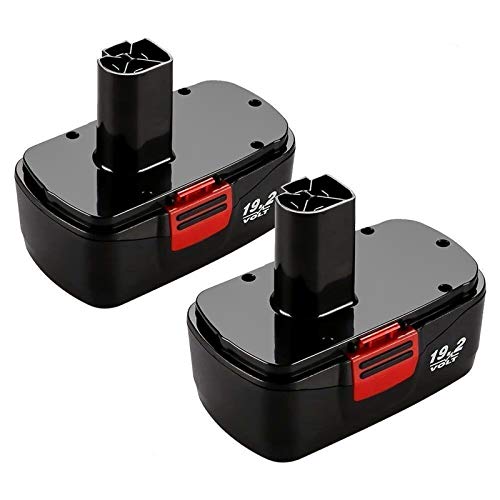 2 Packs 4.5Ah C3 Battery Replacement for Craftsman2Pack-104.7 x 4.1 x 3.8 inches3 poundsCheck on Amazon


What's inside
- Why the C3 platform still earns bench space
- Origins of the 19.2 volt system and the DieHard connection
- Nickel cadmium C3 packs: strengths, limits, and the memory question
- Lithium-ion C3 packs: what changed and what did not
- Model numbers, cross-references, and how to read the charts
- Charger compatibility: the rule that protects every lithium pack
- Judging aftermarket packs: cells, protection boards, and fit
- Capacity claims: milliamp-hours, weight, and honest arithmetic
- Runtime math: matching amp-hours to tool draw
- Safety, storage, and care that actually extend pack life
- Rebuild, replace, or migrate: making the honest call
- Check prices on Amazon
- A final checklist for choosing the right C3 pack
As an Amazon Associate I earn from qualifying purchases. This post may contain affiliate links at no extra cost to you.
A drill that still runs true, a circular saw with a sharp blade, and a work light that has survived a decade of garages all become useless the moment their shared battery pack will no longer hold a useful charge. That single fact explains the continued demand for replacement packs for the Craftsman 19.2 volt C3 platform, a system that left retail shelves years ago yet remains in daily service in workshops, barns, rental properties, and home garages across the country. Owners are not shopping out of nostalgia alone. They are protecting an investment in tools that still cut, drive, fasten, and illuminate perfectly well, and a sound replacement pack often costs far less in money, waste, and relearning than abandoning the whole kit for a new platform.
This guide works through the decision in the order an owner actually faces it. First comes identification, because C3 packs share a family look while differing in chemistry, capacity, and charger needs. Next comes compatibility, since a pack that slides onto a tool can still be wrong for the charger on the bench. Then comes judgment of aftermarket quality, where printed labels tell only part of the story and cell grade, protection electronics, and housing tolerances tell the rest. Finally come runtime expectations, care habits, and the honest point at which rebuilding, replacing, or migrating to a newer system each makes sense.
Links in this guide are affiliate links, and the site may earn a commission when a reader buys through them at no added cost to the reader. The guide itself is based on published specifications, manufacturer documentation, cross-reference charts, and platform references rather than on any claim of physical product evaluation by the site. Readers should treat the specifications and documentation cited here as the starting point and confirm the exact pack and charger markings on their own equipment before ordering.
Why the C3 platform still earns bench space
The C3 system succeeded because it put one battery interface under a very wide range of tools. A homeowner could run a drill driver in the morning, swap the same pack into a reciprocating saw after lunch, and finish the day with that pack in a fluorescent or LED work light. Contractors and maintenance workers valued the same logic on a larger scale, since fewer charger types and fewer spare pack formats meant simpler trucks, simpler job boxes, and fewer dead tools waiting on the wrong battery.
Breadth remains the strongest argument for keeping the platform alive. The catalog over the years covered drill drivers, hammer drills, impact drivers, impact wrenches, circular saws, reciprocating saws, jigsaws, angle grinders, sanders, polishers, vacuums, inflators, radios, fans, and several styles of work light. Specialty tools joined the line as well, including caulk guns, rotary tools, and multi-tools. Many of those bodies were sold in combo kits, so a typical owner holds four to eight tools that all depend on one pack footprint.
Tool bodies from this era also tend to survive. Brushed motors, simple gear cases, and mechanical speed selectors lack the dense electronics that make some modern tools costly to repair. Switches, chucks, and brushes can often be serviced or replaced with ordinary bench skills. When the motor and gearbox remain sound, the battery is the consumable, and treating it that way is rational rather than sentimental.
Economics reinforce the point. Replacing one or two packs restores an entire kit, while migrating means buying new bodies or new batteries and chargers for every function the owner still needs. A tradesperson who uses a C3 reciprocating saw only for occasional demolition may never justify a premium modern equivalent. A homeowner whose C3 drill handles every household task gains little from a new drill if the old one only lacks a healthy pack.
None of this means every C3 tool deserves another pack. A saw with a worn arbor bearing or a drill with a slipping clutch may be near the end regardless of power supply. The later sections on rebuilding and migration address that judgment directly. For a healthy tool collection, though, the pack is the correct place to spend first.
Origins of the 19.2 volt system and the DieHard connection
The C3 line grew out of the Sears Craftsman ecosystem at a time when Sears controlled both the tool brand and a vast retail and catalog network. Early packs carried DieHard branding, a name Sears had long applied to automotive batteries and that signaled durability to generations of buyers. That branding mattered because cordless tools were still proving themselves against corded models, and a familiar battery name lowered the perceived risk of buying into a proprietary pack.
The nominal voltage itself deserves a brief explanation, because 19.2 volts confuses owners who compare it with modern 18 volt and 20 volt max labels. The original nickel cadmium packs used sixteen cells in series at a nominal 1.2 volts per cell, and sixteen multiplied by 1.2 gives 19.2. Lithium versions kept the platform voltage language even though lithium cell nominal voltages differ, using cell arrangements and electronics that deliver power within the range the tools were built to accept. Nominal voltage is a class label, not a promise that a pack sits at exactly that figure throughout discharge.
Voltage under load tells the more useful story. A freshly charged NiCd C3 pack reads well above its nominal figure, then settles into a long, fairly flat working plateau before falling off near the end of charge. Lithium C3 packs start higher still and hold voltage longer into the discharge, which is why a lithium pack can make an older tool feel stronger even at the same labeled capacity. Tools tolerate this because brushed motors respond to delivered voltage and current rather than to a digital handshake with the pack.
That absence of electronic pairing is a quiet advantage for owners today. C3 tools do not check pack identity chips or reject packs for software reasons. Compatibility is mechanical and electrical: the slide rails, latch geometry, terminal spacing, and voltage class must match, and the charger must suit the chemistry. This simplicity is exactly why a healthy aftermarket for these packs can exist at all.
How the ecosystem expanded over time
The platform began with core drilling and sawing tools and expanded outward as NiCd energy density and motor efficiency improved. Each new tool category strengthened the case for the next, because every added body raised the value of the packs an owner already held. Sears leaned on combo kits to accelerate that cycle, bundling two packs and a charger with two or three tools at a combined figure that undercut separate buying.
Later production shifted as Sears declined and the Craftsman brand changed hands and licensing arrangements. Tool lines were redesigned under new voltage branding, and C3 gradually became a legacy platform supported by remaining stock, independent sellers, and aftermarket makers. Legacy status changes where packs come from, not whether the tools still work. It does, however, place more responsibility on the buyer to verify claims, which is why identification and cross-referencing get full sections below.
What 19.2 volts does and does not tell you
Owners sometimes ask whether a 19.2 volt pack can run an 18 volt tool from another brand, or whether an 18 volt pack can be adapted to a C3 tool. The honest answer is that voltage class alone never establishes compatibility. Rail geometry, latch position, terminal layout, polarity, and discharge characteristics all differ between brands, and improvised adapters can defeat protection features and strain both pack and tool. This guide treats cross-brand adaptation as out of scope and unsafe to improvise.
Within the C3 family, voltage language is consistent enough to be useful. Any genuine C3 19.2 volt pack, NiCd or lithium, was designed for the same tool interface. The meaningful differences lie in chemistry, capacity, discharge capability, age, and charger requirements. Those differences, rather than the number on the label, decide whether a given pack suits a given job.
Nickel cadmium C3 packs: strengths, limits, and the memory question
The original C3 packs, including the widely sold 11375, used nickel cadmium cells. NiCd chemistry earned its place in power tools through toughness. It tolerates high discharge rates, works in cold conditions that slow lithium cells, survives electrical abuse that would trouble more delicate chemistries, and delivers a predictable discharge curve that experienced users learned to read by ear and by feel.
Weight is the obvious cost. A NiCd C3 pack carries sixteen comparatively heavy cells plus a robust housing, and the result is noticeably heavier than a lithium pack of similar or greater capacity. On a drill used overhead, that difference accumulates across a day of fastening. On a work light sitting on a bench, it hardly matters at all, which is why some owners keep NiCd packs in service for stationary or low tools while reserving lithium for handheld work.
Self-discharge is the second cost. NiCd packs lose charge on the shelf at a rate that surprises owners returning after a month away. A pack charged in early spring may feel half flat by the first summer project, even though nothing is wrong with it. This behavior makes NiCd a poor fit for emergency kits and rarely used tools unless the owner accepts a charge-before-use routine.
The memory effect needs careful handling because folklore overstates it. True memory, in the strict electrochemical sense, developed in cells subjected to highly regular partial discharge cycles, and it could reduce usable capacity until conditioning cycles restored it. The more common problem in tool packs is voltage depression from repeated shallow use and from individual weak cells dragging the series string down. Either way, the practical lesson matches the folklore in one respect: NiCd packs benefit from occasional full work cycles rather than constant topping off after ten minutes of drilling.
Cell imbalance explains most NiCd pack deaths. Sixteen cells in series must charge and discharge together, yet age, heat, and manufacturing variation make them drift apart. The weakest cell reaches empty first, gets driven into reversal by its stronger neighbors during deep discharge, and then limits the whole pack during charging as well. A pack that runs a drill for four minutes and then stops abruptly usually has one or two failed cells rather than sixteen uniformly tired ones.
Environmental handling also weighs against NiCd today. Cadmium is a toxic heavy metal, and spent NiCd packs belong in battery recycling streams, never in household trash. Retail take-back programs and municipal household hazardous waste events accept them widely. That disposal duty is manageable, but it is real, and it counts as one more reason most owners who replace a dead NiCd pack choose lithium for the next one.
Lithium-ion C3 packs: what changed and what did not
Craftsman later offered lithium-ion C3 packs, commonly grouped in the PP2011, PP2020, and PP2030 class designations that appear in cross-reference charts and marketplace listings. These packs kept the same slide interface and latch arrangement while changing nearly everything inside. Lithium cells store far more energy per unit of weight, hold charge on the shelf for months, and deliver steadier voltage across most of the discharge.
The shelf behavior alone transforms ownership for intermittent users. A lithium pack charged after autumn yard work still has useful energy for a winter repair. There is no need to plan projects around a charging session the night before. For tools kept in vehicles, cabins, or rental units between visits, that readiness is often worth more than any runtime figure.
Lithium packs also change tool feel. Higher sustained voltage under load lets a brushed motor hold speed longer in dense material. A circular saw that bogged midway through a sheet on an aging NiCd pack may track cleanly on a healthy lithium pack of similar labeled capacity. The tool did not gain power in any permanent sense; it simply stopped being starved.
Protection electronics are the less visible change. Lithium cells require supervision that NiCd packs never needed, so lithium C3 packs contain a battery management board that monitors cell voltage, limits discharge, and communicates with a compatible charger to end charging correctly. That board is a safety system, not an accessory. Its quality separates credible replacement packs from risky ones, and a later section examines it in detail.
Lithium brings its own sensitivities. Cells dislike being stored fully charged in hot spaces, suffer capacity loss when left empty for long periods, and reduce output in deep cold until they warm through use or indoor storage. Charging a cold-soaked pack immediately can also stress cells, so makers advise bringing packs to room temperature first. None of these habits is difficult, but they differ from NiCd routines, and owners switching chemistries should switch habits at the same time.
Can NiCd and lithium packs share one tool kit
On the tool side, yes. A C3 drill, saw, or light accepts either chemistry because the interface and voltage class match. Owners can phase in lithium packs one at a time while NiCd packs finish their service life in lighter duties. Marking packs by chemistry in large letters prevents the one error that matters, which is placing a lithium pack on a charger that cannot charge it safely.
Model numbers, cross-references, and how to read the charts
C3 packs accumulated several numbering systems across their production life, and confusion between them causes many wrong orders. The 11375 designation identifies the classic NiCd pack sold for years as the platform standard spare. The number 130279005 appears as a parts-system reference tied to C3 pack listings, reflecting the way Sears parts catalogs tracked items separately from retail packaging. Lithium packs appear under the PP-prefixed designations noted earlier, with different suffixes marking capacity classes and production revisions.
A single physical pack can legitimately carry more than one of these numbers across its documentation. Retail packaging used one identifier, the parts catalog used another, and the pack label itself may show a third format alongside voltage and chemistry markings. Cross-reference charts exist to map those systems onto each other. A good chart lists the original retail number, the parts number, the chemistry, the nominal capacity, and the charger requirement in one row, so a buyer can start from whichever number is printed on the pack in hand.
Reading a chart correctly means matching all columns, not just the headline number. Two packs can share a retail family number while differing in chemistry across production years. The chemistry column therefore outranks the model column when they appear to conflict. If a chart row says lithium and the pack in hand says NiCd on its label, trust the physical label and find the row that matches it.
A step-by-step identification routine
Start with the pack label and photograph it before cleaning or handling the pack further. Record the voltage class, the chemistry abbreviation, every model and parts number, and any capacity figure in amp-hours or milliamp-hours. Labels on the underside and rear face often carry different numbers, so check every printed surface including the area near the latch.
Next, weigh the pack on a kitchen scale and write the result beside the label data. Weight becomes a powerful verification tool later in this guide, because lithium and NiCd packs of the same footprint differ markedly, and because inflated capacity claims usually fail a weight check. A genuine lithium C3 pack feels strikingly light to anyone accustomed to the NiCd original, and that first impression is itself diagnostic.
Then compare the rail and latch geometry with a known good pack. Slide the candidate pack onto a tool without forcing it, and confirm that the latch engages with a positive click and that the pack releases with normal thumb pressure. Resistance, rocking, or a latch that sits half engaged signals a housing tolerance problem that no electrical specification can excuse.
Finally, match the charger before matching the price in any listing. Identify the charger model on the bench, confirm which chemistries its documentation covers, and only then narrow pack choices to those the charger supports or budget for a dual-chemistry charger in the same order. Owners who follow this order rarely face returns. Owners who reverse it often do.
Why suffixes and revisions matter
Suffix letters and revision numbers in C3 documentation usually mark production changes rather than different products. A revision might reflect a new cell supplier, a revised protection board, a housing mold update, or a label change for a new regulatory requirement. For the buyer, revisions matter mainly when a seller uses an old photograph. The listing image may show an earlier label while the shipped pack carries the newer one, which is harmless if chemistry, capacity class, and interface all match the chart row.
Capacity class is the revision detail worth real attention. Within the lithium PP family, different designations correspond to different amp-hour classes, and a buyer expecting the higher class who receives the lower one loses substantial runtime on saws. Compare the amp-hour figure on the received pack against the order before first charging, while return options remain simple. Photographing the unopened package and label creates a clear record if a dispute follows.
Charger compatibility: the rule that protects every lithium pack
Charging is where chemistry stops being an abstract preference and becomes a safety boundary. NiCd chargers of the C3 era typically used simple timers, crude voltage sensing, or temperature cutoffs tuned for nickel chemistry behavior. Lithium cells need a controlled constant-current and constant-voltage profile with precise termination, plus communication with the pack protection board. A charger built only for NiCd does not provide that profile, and using one with a lithium pack risks overcharge, cell damage, overheating, and in the worst case a fire that begins inside a closed housing.
The rule is therefore absolute. Never place a lithium C3 pack on a charger whose documentation does not explicitly cover lithium-ion packs of this platform. A pack sliding onto a charger proves only mechanical fit. Many early C3 chargers accept lithium packs physically because the interface never changed, and that shared footprint makes the warning more important, not less.
Dual-chemistry chargers solve the mixed-fleet problem cleanly. These units detect pack type or rely on the pack board to govern the lithium charge, and they apply the correct profile to each chemistry. Owners keeping both NiCd and lithium packs should treat a dual-chemistry charger as the default purchase. Owners retiring all NiCd packs can choose a lithium-only C3 charger, provided its documentation names this platform rather than lithium charging in general terms.
Charge time expectations should follow documentation rather than hope. Larger capacity packs take longer on the same charger, and rapid chargers trade some long-term cell gentleness for shorter waits. A pack that finishes suspiciously fast on a charger that should take far longer may not be charging fully, may have lost capacity, or may be misreporting through a faulty indicator. A pack that never signals completion deserves removal and inspection rather than an overnight wait.
Reading charger labels and indicators
Charger labels list input requirements, supported chemistries, and the pack families the unit was built to serve. Photograph that label alongside the pack labels gathered earlier, and keep the images together. Indicator lights vary by model: some use a flashing pattern during charge and a steady light at completion, while others add a separate fault indication for a pack that is too hot, too cold, or defective. The documentation for the specific charger model defines those patterns, and guessing from another model misleads.
Temperature behavior during charging offers another check. A pack should become mildly warm at most on a correct charger. Strong heat, a hot spot near one end of the housing, hissing, odor, or a charger that cycles on and off repeatedly all call for immediate disconnection and a move of the pack to a nonflammable surface away from other batteries. Those signs matter more than any indicator light.
Owners who also maintain workshop batteries for vehicles, lawn equipment, or bench projects often keep separate low-voltage charging gear nearby, and keeping those chargers clearly separated from C3 gear prevents cross-use errors during busy work.
best 12 volt battery chargers
A labeled shelf, with each charger parked beside the packs it serves, does more for safety than any amount of memory or good intention.
The same separation logic applies to the smaller utility chargers that accumulate in drawers for seasonal equipment and spare vehicle batteries.
best 6v and 12v battery chargers
None of that equipment belongs in the C3 charging area, and none of it can substitute for a proper C3 charger when a pack runs flat before a job.
Multi-bay charging and fleet habits
Owners with many packs often ask about charging several at once. Multi-bay C3 chargers appeared during the platform years and remain available through resale and aftermarket channels. Their value lies in rotation discipline: packs finish together, enter service together, and get marked with the same date. Their risk lies in heat concentration and in one faulty pack sharing a housing with healthy ones, so bays should be checked individually and a fault in one bay should end the session for inspection.
Charge scheduling matters for lithium longevity. Topping every pack to full after every short task and leaving them full in a warm garage ages cells faster than a calmer routine. A better pattern charges packs after substantial use, stores spares at partial charge as the care section describes, and brings a spare to full the day before heavy work. NiCd packs in a mixed fleet follow the older routine of fuller cycling, which is one more reason to label chemistries clearly.
Judging aftermarket packs: cells, protection boards, and fit
With original production ended, most buyers today choose among aftermarket packs, remaining old stock, and rebuilt packs. Aftermarket quality spans a wide range. At the top sit makers who publish cell sourcing, real capacity, and protection details, and who stand behind returns. At the bottom sit sellers who print optimistic numbers on generic housings and vanish between seasons. The checks in this section separate those groups without any special instruments beyond a scale, a charger, and the tools themselves.
Cell quality is the foundation. Lithium C3 packs are built from cylindrical cells, most often in the 18650 format, arranged in series and parallel groups to reach platform voltage and target capacity. Reputable cell makers produce cells with consistent capacity, low internal resistance, and honest datasheets. Unknown cells may deliver their printed figure for a few cycles and then fade, run hot under saw loads, or drift out of balance so the protection board cuts power early.
Series-parallel arithmetic reveals a great deal. A pack claiming a given amp-hour figure must contain enough cells, of plausible per-cell capacity, wired in parallel groups to reach it. When a listing claims a very high capacity from a pack that weighs like a low-capacity unit, the arithmetic and the scale are both objecting. The capacity section below turns that instinct into a repeatable check.
The cells inside workshop packs connect directly to a broader world of cylindrical cell charging and care that many owners already know from flashlights and other gear.
best 18650 chargers
That background helps explain why cell grade matters here, even though C3 packs are sealed units that should never be opened by owners or charged cell by cell outside a proper rebuild shop.
The protection board and why cheap boards fail tools
The battery management board in a lithium C3 pack watches each cell group for over-voltage during charging and under-voltage during discharge, limits current when a tool demands more than the cells can safely give, and cuts output when temperature or imbalance crosses safe bounds. Good boards set those thresholds with margin and react smoothly. Poor boards cut power abruptly under normal saw loads, refuse to wake after storage, or fail to stop a genuinely harmful discharge.
Symptoms point to the board more often than owners expect. A pack that runs a drill happily but dies instantly in a circular saw may have healthy cells behind an over-eager current limit. A pack that shows full on the charger yet delivers minutes of work may have a sensing fault. A pack that will not accept charge after sitting empty may have a board that locked out correctly to protect deeply discharged cells, which is the board doing its job and a sign the pack should be recycled rather than coaxed.
Sellers who can describe their board protections in plain terms deserve preference. Look for mention of overcharge protection, over-discharge protection, overcurrent protection, short-circuit protection, and temperature monitoring. Vague listings that promise only high capacity and long life, with no protection vocabulary at all, tell the buyer where the maker spent its effort.
Housing, rails, latches, and terminal fit
Mechanical fit decides daily satisfaction. Rails molded slightly wide drag in the tool handle and shave plastic with every swap. Rails molded narrow let the pack rock, which frets terminals and can interrupt power mid-cut. Latch springs that are too weak allow a heavy pack to creep under vibration on a reciprocating saw. Latch buttons placed slightly off the original position force awkward thumb angles that become painful across a long session.
Terminal quality deserves a close look before first use. Contacts should appear clean, evenly sprung, and firmly seated in the housing, with no loose movement when touched with a fingertip. Scorched, pitted, or green-tinted terminals on a supposedly new pack indicate used internals or poor storage. The tool side deserves the same inspection, since a worn tool terminal can make a good pack seem faulty.
Housing plastic and assembly complete the picture. Seams should meet evenly, screws should sit in clean recesses without cracks radiating from the bosses, and the pack should not creak or flex when gripped firmly. A housing that flexes can stress cell connections inside under vibration. Weight distribution should feel centered rather than top-heavy, matching the balance owners expect from the original packs.
Seller signals that correlate with quality
Documentation is the strongest positive signal. A seller providing a real specification sheet, a cross-reference row that matches the charts, charger requirements in plain language, and a stated warranty period is behaving like a manufacturer. A seller providing only lifestyle photographs and superlatives is behaving like a reseller of unknown goods. Warranty handling matters as much as warranty length, so clear return instructions count heavily.
Capacity claims: milliamp-hours, weight, and honest arithmetic
Capacity inflation is the defining problem of the replacement battery market, and C3 packs are no exception. Listings compete on the milliamp-hour figure because buyers compare it first, so weak sellers print numbers that the cells inside cannot deliver. Learning to sanity-check a claim takes minutes and protects every later decision, from runtime planning to whether a pack is worth its asking figure at all.
Begin with units. Capacity in amp-hours multiplied by nominal voltage gives watt-hours, the true measure of stored energy. A 2.0 amp-hour pack at this platform class stores roughly twice the energy of a 1.3 amp-hour pack, and a 4.0 amp-hour class pack stores roughly twice that again, assuming honest figures. Milliamp-hours are the same quantity in smaller units, so 4000 milliamp-hours equals 4.0 amp-hours. Listings that mix units across a product line should be converted before any comparison.
Per-cell reality bounds every claim. Mainstream 18650 cells from established makers cluster in a known capacity band, with high-capacity variants trading some discharge strength for energy and high-drain variants doing the reverse. A pack is built from a countable number of such cells. If a claimed pack capacity would require each cell to exceed the best legitimate per-cell figures by a wide margin, the claim fails regardless of label design or seller confidence.
Weight exposes most exaggeration quickly. Cells dominate pack mass, so a higher-capacity pack built from more or denser cells weighs more than a lower-capacity sibling in the same housing family. When two listings claim very different capacities at nearly identical weights, at least one figure is wrong. Comparing a candidate weight against the documented weight of the original packs in the same class gives the buyer a grounded reference that marketing cannot argue with.
A practical verification routine for a new pack
Weigh the pack on arrival and record the figure with its label data. Charge it fully on the correct charger, noting how long charging takes compared with the charger documentation for that capacity class. Then run a controlled task with a known tool: drilling a set pattern of holes in a standard board, driving a counted set of screws, or running a work light from full to cutoff while timing it. A light is the gentlest measuring instrument of all, since its draw is steady and its runtime translates directly into delivered capacity.
Repeat the same task after several normal cycles. New lithium packs usually deliver close to their honest capacity from the start, while packs built from poor cells often fall away noticeably within the first dozen cycles. Keeping the early measurements creates the evidence a warranty claim needs. Discarding packaging before those first cycles removes the easiest return path, so keep boxes and paperwork until the pack has proven itself.
Compare behavior across tools as well. A pack that delivers plausible light runtime but collapses in a saw may have adequate capacity behind weak discharge capability, a distinction the runtime section explains. A pack that disappoints everywhere, in gentle and heavy tools alike, most likely lacks the capacity it claims. Those two failures call for different conversations with the seller, and the notes taken here make either conversation factual.
Old stock and the calendar problem
Remaining original packs sold as new old stock carry a different risk. NiCd packs tolerate long storage better than lithium, though they arrive deeply self-discharged and may need conditioning cycles before judgment. Lithium packs age by calendar as well as by cycle count, and a pack manufactured many years ago may have lost meaningful capacity on the shelf, especially if it was stored fully charged in warm conditions. A bargain original pack that delivers half its labeled runtime is not a bargain.
Runtime math: matching amp-hours to tool draw
Runtime follows from a simple relationship that every owner can apply. A tool drawing current at a steady rate empties a pack in a time roughly equal to pack amp-hours divided by that draw in amps, adjusted downward for losses, heat, and the protection cutoff that ends discharge before true empty. Real work is never steady, so the math gives planning ranges rather than promises, yet even rough ranges prevent the classic error of expecting a compact pack to feed a saw through an afternoon of framing.
Drill drivers sit at the gentle end for most tasks. Driving screws into pine draws brief bursts of moderate current, and a mid-capacity pack can drive a large counted set of fasteners before fading. Drilling large holes with spade bits or hole saws changes the picture entirely, pushing draw toward saw territory. Owners should judge drill runtime by their heaviest drilling task, not by screwdriving alone.
Circular saws define the high-draw end of the platform. Crosscutting sheet goods at full depth asks for sustained high current, and ripping long boards adds heat on top of load. A small-capacity pack that feels endless in a drill may deliver only a handful of full cuts in a saw before the protection board or simple exhaustion ends the session. This is not a defect. It is arithmetic, and it is why saw owners benefit most from the higher capacity classes.
Reciprocating saws fall between drills and circular saws, with draw spiking at each blade bind or nail strike. Demolition work with aggressive blades in old framing is far hungrier than pruning or cutting thin stock. Runtime claims gathered from gentle cutting should never be extrapolated to demolition, and owners planning a teardown day should stage charged packs in rotation rather than trusting any single pack.
Why high-draw tools expose weak packs
Voltage sag explains the exposure. Every pack has internal resistance, and under heavy current that resistance pulls delivered voltage down. Healthy cells with low resistance sag modestly and recover between cuts. Aged, cheap, or unbalanced cells sag deeply, so the tool slows, the board may cut output to protect the weakest group, and the pack feels empty even though a light would still run from it for a long while. Moving a sagging pack to a light after a saw cutoff demonstrates the point vividly.
Heat compounds sag during sustained work. High current warms cells, warmer cells behave differently, and protection boards watch temperature as well as voltage. Back-to-back ripping on a hot day can therefore end a session sooner than the same work on a cool morning. Resting packs in shade, rotating two packs rather than forcing one, and avoiding immediate recharging of a hot pack all follow from this behavior.
Impact tools deserve a separate note because their draw pattern is spiky rather than sustained. Short bursts let voltage recover between strikes, so impact drivers and wrenches often deliver satisfying fastener counts from mid-capacity packs. Owners frequently find that the pack they condemned in a saw performs respectably in an impact driver, and reassigning packs by tool demand is a legitimate way to extend useful fleet life.
Work lights, vacuums, and the long-draw tools
Work lights draw modest, steady current and therefore showcase capacity honestly. LED versions sip power compared with the older fluorescent and incandescent styles, stretching a mid-capacity pack across a full evening of work. Lights make excellent second careers for packs retired from saw duty, provided the pack shows no heat, swelling, or damage.
Hand vacuums and inflators draw more than lights and run in longer continuous stretches than drills. A vacuum session that cleans a car interior can consume a surprising share of a small pack. Inflator work varies with target pressure, since the final portion of filling a tire asks for the hardest effort. Planning a spare pack for either tool prevents the familiar frustration of a job stopped at ninety percent.
Safety, storage, and care that actually extend pack life
Most pack deaths are slow, but the failures that matter for safety announce themselves through heat, swelling, odor, damage, or sudden behavior changes. A pack that becomes too hot to hold comfortably during normal work should be removed from service and set on a nonflammable surface to cool while the owner watches it. A pack with a bulging housing, a cracked seam, a chemical smell, or hissing sounds should not be charged, used, or stored indoors among other batteries.
Swollen lithium packs require particular respect. Swelling means gas has formed inside cells, and the housing is containing a process that should never be punctured, compressed, or opened. Place the pack in a fire-resistant container or on bare concrete away from combustibles, and take it to a battery recycling or household hazardous waste facility promptly. Many facilities prefer advance notice for damaged lithium packs, so a brief call before transport is wise.
Drops deserve inspection rather than assumption. A fall onto concrete can crack internal connections or damage a cell while leaving the housing nearly unmarked. After a serious drop, watch the pack through its next full charge and its next working session for heat or early cutoff. Any pack that behaves differently after a drop should be retired, since internal damage can declare itself later under load.
Water and metal objects are quieter hazards. Packs stored loose in a toolbox among screws and blades can short across their terminals, and packs left in damp sheds corrode at the contacts. Terminal caps, original packaging, or a dedicated pack case prevent most of these incidents. Cleaning terminals should involve a dry cloth only, with the pack away from any charger.
Storage charge and temperature
Lithium packs store best at partial charge, commonly described in maker guidance as roughly forty to sixty percent, in a cool and dry place. Storing them full accelerates calendar aging, and storing them empty risks the protection board refusing a deeply discharged pack later. Owners with fuel-gauge packs can set the level directly. Owners without gauges can store a pack after moderate use rather than after a full charge or a full drain.
Temperature extremes punish every pack type. A garage that bakes in summer and freezes in winter shortens pack life more than most usage patterns do. Moving packs to a conditioned space, a basement shelf, or an insulated cabinet is one of the cheapest longevity measures available. Vehicle storage is the worst common option, combining heat, cold, vibration, and theft risk in a single location.
Cold-weather behavior
Cold slows the chemistry inside both pack types, lithium more noticeably. A lithium pack brought in from a freezing truck may deliver weak output or trigger an early cutoff, then recover fully once warmed. The correct response is patience: bring the pack indoors, let it reach room temperature naturally, and only then charge or work it hard. Applying external heat from a torch, oven, or heat gun introduces far greater danger than the cold ever posed.
NiCd packs retain a genuine advantage here, which is why some cold-climate owners keep one for winter outdoor work. Even so, cold NiCd packs deliver less than their warm rating, and planning extra packs for winter jobs remains sensible. Rotating a working pack with a spare kept in an inside pocket or warm cab is an old and effective field habit.
Counterfeit and gray-market red flags
Counterfeit packs borrow the platform colors and label style while hiding the weakest internals. Warning signs include misspelled words on labels, blurry printing, missing regulatory marks, absent or evasive seller information, capacity claims beyond the plausible cell arithmetic covered earlier, and weights far below documented figures for the class. Packaging that copies an original brand presentation while the seller disclaims any brand connection deserves special suspicion.
Price positioning can hint at risk without naming any figure. A pack offered far below every comparable listing, from a seller with no history and no warranty, is rarely a discovery of hidden value. The savings vanish the first time a protection board fails under a saw load. Buying from sellers with verifiable histories, clear specifications, and functioning return channels remains the practical defense.
Shops and serious hobbyists who maintain large pack fleets sometimes centralize charging on wide multi-bay units for other battery families, and the organizational thinking behind those stations transfers directly to C3 rotation shelves.
best 16 bay battery chargers
Clear labeling, one chemistry per zone, and a quarantine spot for suspect packs are fleet habits that protect a two-pack homeowner just as well.
Rebuild, replace, or migrate: making the honest call
Rebuilding means opening a pack and fitting new cells, ideally with spot-welded connections, matched cells, and a sound protection board. For NiCd packs, rebuilding has a long hobbyist and shop tradition, and a well-executed rebuild can restore original performance because the chemistry and charger requirements stay unchanged. For lithium packs, rebuilding raises the stakes, since board compatibility, cell matching, and weld quality all affect safety in ways that are hard for an owner to verify afterward.
Reputable rebuild services disclose the cells they install, the capacity those cells genuinely provide, and the warranty on their work. A service that will not name its cells should not receive a lithium pack. Owners should also weigh shipping rules for lithium batteries, which restrict how packs travel and may complicate sending a pack away and receiving it back.
Replacement with a documented aftermarket pack is the default recommendation for most owners. It avoids the unknowns of a rebuild, brings a fresh protection board with fresh cells, and keeps the correct charger pairing simple. The checks in this guide exist precisely to make that default safe: verify the cross-reference, weigh the pack, confirm the charger, measure early runtime, and keep return options open until the pack proves itself.
When migration to a newer platform wins
Migration deserves honest consideration when the tool bodies themselves are failing. A drill with a worn chuck and tired brushes, a saw with a bent shoe, and a reciprocating saw with a sloppy blade clamp will not be saved by fresh batteries. Replacing several dying bodies one by one inside a legacy platform often costs more in time and hunting than adopting a current platform with full support.
Usage intensity points the same direction. An owner who reaches for cordless tools daily, depends on brushless efficiency, needs modern high-demand tools such as framing nailers or large grinders, or values compact batteries for overhead work will outgrow what C3 can offer. The platform never received brushless motors or the newest cell formats, and no replacement pack can add those capabilities.
Partial migration is a valid middle path. Many owners adopt a modern platform for their two or three hardest-working tools while keeping C3 bodies for lights, inflators, occasional sawing, and loaner duty. The C3 packs then serve low-stress roles where their remaining limits matter least, and the owner stops asking a legacy system to carry a full workload. This staged approach spreads cost and avoids discarding tools that still earn their shelf space.
The cost logic without price tags
Because figures vary by seller and season, this guide frames the decision in ratios rather than amounts. One quality pack that revives several healthy tools is almost always justified. A second pack plus a dual-chemistry charger is justified when the owner works away from outlets or runs saws regularly. Spending that approaches the cost of a modern two-tool combo kit, purely to sustain failing bodies, signals that migration math has taken over.
Check prices on Amazon
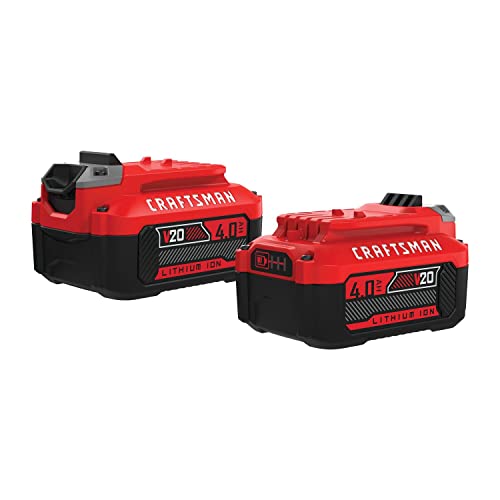
Live listings for the shortlist in this guide are pulled from Amazon below, so prices and availability are always current at the moment you look.


A final checklist for choosing the right C3 pack
Confirm the chemistry first, using the physical label rather than a listing headline, and match it to a charger whose documentation names that chemistry for this platform. Confirm the cross-reference row next, checking model number, parts number, capacity class, and charger requirement together rather than trusting any single identifier. Weigh the candidate pack against documented figures for its class, and treat a large shortfall as a reason to walk away before the first charge.
Match capacity to the hungriest tool the pack must serve, not to the gentlest one. Saw owners should choose the higher capacity classes and plan rotation between two packs. Drill, light, and inflator owners can work comfortably with mid-capacity packs and gain easier handling in return. Every owner should mark each new pack with its arrival date, record its first light-runtime measurement, and keep packaging until several working cycles confirm the early promise.
Choose sellers who publish cell and protection information, state a warranty plainly, and accept returns without argument. Retire any pack, old or new, that swells, overheats, smells unusual, or changes behavior after a drop, and send it through a proper recycling channel. Kept on a sound charger, stored cool and partly charged, and matched honestly to the work at hand, a well-chosen C3 replacement pack lets a proven set of tools go on earning its keep season after season, long after lesser platforms have been forgotten on the shelf.


