Our Top Picks


What's inside
- What an End-Zone System Is, and Why Coaches Film From Behind the End Zone
- Mast and Tower Classes: Tripod Masts, Monopod Poles, and Trailer Towers
- Stability: Ballast, Guy Lines, Wind Limits, and Sway at Full Zoom
- The Camera at Height: Long Optical Zoom and Remote Control
- Pan and Tilt Heads: Motorised Remotes, Fluid Heads, and Latency
- The Ground Station: Monitors, Sunshades, and Recording
- Power at the Field: Battery Packs, Runtime in Quarters, and Cable Runs
- Sideline Replay Workflows: Review Between Series and Quick Tagging
- Setup, Teardown, Crew Size, and Transport
- Safety and Venue Rules: Padding, Lightning, and Staying Clear of Play
- How Systems Scale: Youth Programs, High Schools, and Colleges
- Check prices on Amazon
- A Buying Checklist by Program Level
As an Amazon Associate I earn from qualifying purchases. This post may contain affiliate links at no extra cost to you.
What an End-Zone System Is, and Why Coaches Film From Behind the End Zone
An end-zone camera system is a purpose-built filming rig that places a camera high behind one end zone, looking straight down the length of a football field toward the far goal line. A tall mast or tower raises the camera, a remote head aims it, and a ground station at the base lets an operator frame every snap without ever climbing or touching the camera itself. The whole arrangement exists for coaching analysis rather than broadcast, which shapes every design decision from lens choice to file format.
The view from behind the end zone reveals the parts of football that decide games yet vanish from the traditional press-box angle across the field. From the sideline, offensive linemen stack into a single blurred wall and a running back’s cut disappears behind bodies at the moment it matters. From behind the formation, splits between linemen, the depth of linebacker drops, and the spacing of receivers across the width of the field all become measurable geometry.
Run fits illustrate the value most plainly for a defensive staff reviewing film on a Sunday morning after a difficult Friday night. A safety arriving one gap too wide, a linebacker scraping a half-step late, or a nose tackle losing his anchor shows up as clear space on the end-zone view. The same play from the press box looks like a generic gain of six yards, with the actual coaching point hidden inside the pile.
Route spacing tells the same story for the offense, because passing concepts are drawn on a board as precise horizontal and vertical relationships between receivers. The end-zone angle shows whether the outside receiver held his landmark near the numbers, whether the slot receiver’s stem threatened the safety, and whether the quarterback’s read developed in the order the play intended. Coaches grade those details from this angle because no other single camera position displays the full width of a formation honestly.
Press-box film remains essential for down, distance, and the horizontal development of plays, so an end-zone system complements rather than replaces the sideline camera. Programs typically record both angles, sync them by play, and let position coaches choose the view that teaches their group most clearly. The end-zone rig earns its cost and its setup labour by supplying the angle that cannot be improvised from a bleacher or a ladder.
Readers who want the wider camera background first will find general football filming covered in best video cameras for football, while everything that follows here stays with the elevated end-zone system and its specific demands.
A complete system has four recognisable parts, and weakness in any one of them degrades the footage the coaching staff receives. The support raises the camera, the head aims it, the camera and lens capture the image, and the ground station lets a human control all three from the turf. Buying conversations that focus only on the camera body miss the point, because the mast and the head decide whether that body can be used at height at all.
Mast and Tower Classes: Tripod Masts, Monopod Poles, and Trailer Towers
Support systems divide into three broad classes, each trading working height, stability, transport weight, and setup labour in a different balance. Tripod masts plant three legs on the ground and raise a telescoping column from the centre, giving a stable platform that two people can carry in sections. Monopod poles use a single heavy shaft with a wide base or ground anchoring, packing smaller and lighter at the cost of demanding more care with balance and wind.
Trailer towers mount the mast on a road-legal trailer that doubles as transport, ballast, and sometimes a small equipment platform at the field. A crew tows the trailer into position behind the end zone, levels it on its jacks, and raises a mast that would be impractical to carry by hand. The class suits programs filming at one home venue most weeks, where the trailer can be stored nearby and rolled out on a familiar routine.
Working heights in the widely used classes cluster between about twenty-one and thirty feet of camera elevation above the playing surface. That band is not arbitrary: below it, the far hash marks compress and linemen at the far end of a drive hide behind nearer bodies, while above it, sway, wind exposure, and transport difficulty grow faster than the picture improves. A system in the middle of the band frames a full formation comfortably from most high-school and small-college end zones.
Telescoping sections raise the camera in stages, and the way those stages lock decides how the mast behaves under load in a crosswind. Pinned sections with positive mechanical locks hold their height without creeping during a long second half, while friction collars depend on tightness that gloved hands may not achieve on a cold night. Buyers should raise any candidate mast to full extension with a representative camera load and watch whether the top section settles, twists, or complains.
Mast material shapes both weight and stiffness, with aluminium alloys dominating the portable classes for their balance of the two properties. Thicker wall sections and larger tube diameters resist bending at full extension, at the price of heavier lifts during assembly on the ground. Carbon-fibre poles appear in the lightest monopod designs, prized by small crews, though their behaviour under point loads and accidental knocks deserves respectful handling.
Levelling deserves more attention than catalogues give it, because a mast raised on sloping or soft ground starts the evening already leaning. Adjustable feet, bubble levels at the base, and outriggers that spread the footprint all help the operator begin with a vertical column rather than compensating all night. On artificial turf, the crew must also respect venue rules about stakes and weights, which often prohibit the ground anchors a grass field would accept without comment.
Height should be chosen for the venue rather than for the brochure, since a compact stadium with a close fence line rewards different geometry than an open practice field. A mast that clears the crossbar, the fence, and the heads of spectators behind the end zone by a comfortable margin will frame the near goal-line plays without tilting down so steeply that yard lines foreshorten. Measuring the actual site, from the likely parking spot for the rig to the far thirty-yard line, tells a buyer more than any generic recommendation.
Stability: Ballast, Guy Lines, Wind Limits, and Sway at Full Zoom
Height without stiffness ruins footage, a truth every operator learns the first time a gusty evening turns a fourth-quarter drive into seasick viewing. At long zoom, tiny movements at the top of a mast become large excursions in the frame, because the lens magnifies angular motion just as it magnifies the players. A system that looks rock solid from the ground can still produce film that a coaching staff finds exhausting to grade.
Ballast is the first line of defence, anchoring the base against tipping and against the slow walking movement that vibration can produce on smooth surfaces. Sandbags, water weights, and dedicated ballast trays all serve, provided the weight sits low and the crew actually brings enough of it on the night. Trailer towers gain a natural advantage here, since the trailer’s own mass and its stabilising jacks form a foundation that portable masts must imitate with carried weight.
Guy lines add the second line, triangulating the upper mast against the ground so that wind loads share across anchors instead of bending the column alone. Lines must be tensioned evenly, flagged or marked so spectators and players do not trip over them in the dark, and attached at points the venue permits. A poorly tensioned set can make matters worse by pulling the mast into a lean that the operator then fights with the head all evening.
Every serious system carries a wind limit, a stated maximum operating wind speed beyond which the mast should be lowered rather than trusted. That limit is a safety specification, not a challenge, and it accounts for gusts rather than the steady breeze a phone application reports from a distant station. Programs should write their own conservative threshold into the game-day routine, decided in daylight by the athletic department rather than improvised by a student operator under pressure to keep filming.
Sway has a rhythm that experienced operators learn to read, because a mast oscillates at a natural frequency set by its height, stiffness, and the mass at its top. Panning against that rhythm amplifies the wobble, while pausing briefly at the end of a movement lets the oscillation die before the snap. Zooming out slightly during windy stretches trades a little reach for a great deal of steadiness, a bargain position coaches accept gladly when the alternative is blurred line play.
Ground conditions change the stability picture across a season, from firm September turf to saturated November fields where feet sink and bases tilt. A wide footprint that spreads load protects both the footage and the playing surface, which groundskeepers notice and remember when permissions are renewed. Crews that photograph their setup at each venue build a small atlas of what worked where, turning stability from folklore into repeatable practice.
The honest evaluation of any candidate system therefore happens outdoors, at full height, with the intended camera aboard and a realistic wind blowing across the field. Indoor demonstrations and calm-morning trials conceal exactly the behaviour that decides whether November film is usable. A seller confident in a mast should welcome that examination, and a buyer should insist on it before committing a program’s budget.
The Camera at Height: Long Optical Zoom and Remote Control
The camera riding at the top of an end-zone mast is usually a camcorder rather than an interchangeable-lens cinema body, and the reasons are practical rather than nostalgic. Camcorders in the relevant class offer long optical zoom ranges, commonly in the twenty-times class and beyond, in a single sealed package that needs no lens changes in the rain. Their zoom, focus, and iris can be driven electrically through remote connections, which matters enormously when nobody can reach the camera during a game.
Optical zoom does the real work from the end zone, because the operator must move from a wide shot of the full formation to a tighter view of the far red zone without moving the mast. Digital zoom merely enlarges pixels and discards the fine detail, jersey numbers, hand placement, footwork, that coaching film exists to preserve. A twenty-times optical range covers the distance from the near goal line to deep in the far half for most venues when paired with a sensible sensor size.
Remote zoom and focus control travel down the mast through a wired controller connection of the LANC type, a long-established camcorder control standard. The operator’s hand rests on a zoom rocker and focus control at the ground station, making the small, continuous adjustments that keep a play framed as it develops toward or away from the camera. Wireless camera control exists, yet a wired link at a crowded stadium avoids pairing failures, interference, and the latency surprises of a congested radio environment.
Focus strategy from the end zone differs from sideline filming, because depth of field must hold a formation that stretches thirty yards from front to back. Operators typically set focus for the line of scrimmage and rely on the camcorder’s depth of field at moderate apertures to keep receivers acceptably sharp as routes develop. Full autofocus hunting up and down the field is the enemy, so a controlled manual or limited-range approach, rehearsed in warm-ups, produces calmer and more useful film.
Low-light behaviour matters for the second half of night games, when stadium lighting rather than daylight illuminates the far end of the field. A sensor and lens combination that holds a clean image at the far hash marks, without smearing motion or drowning detail in noise reduction, separates suitable camcorders from fair-weather bargains. The far end is always the darker end from this position, since the camera looks into the ground’s lighting pattern from behind one set of standards.
Recording redundancy at height protects against the silent disaster of a card error discovered after the final whistle has blown. Camcorders offering simultaneous recording to two cards, or a relay mode that rolls from one card to the next, give the crew insurance that a single media fault cannot erase a rivalry game. The operator cannot climb to swap cards mid-quarter, so capacity planning before raising the mast is part of the craft.
Action-camera alternatives discussed in best 1080p action cameras serve other filming jobs well, but their fixed wide lenses and absent remote zoom make them companions for an end-zone rig rather than substitutes for its main camera.
Weather protection for the camera itself completes the specification, because the top of a mast is the most exposed seat in the stadium on a wet night. A fitted rain cover that still allows the lens a clear view and the remote cables a clean exit keeps filming through showers that would send an unprotected body into its bag. Ventilation inside the cover prevents the fogging that otherwise blooms across the front element as temperatures fall after sunset.
Pan and Tilt Heads: Motorised Remotes, Fluid Heads, and Latency
The head between mast and camera carries the aiming workload for three hours, and its character decides whether operating the system feels like flying or like wrestling. Motorised remote heads, driven from the ground station by a joystick or a set of proportional controls, dominate complete end-zone systems for an obvious reason. The operator stands on the ground, the camera stands thirty feet away in the air, and only powered movement connects the two.
A good motorised head moves in two axes with speed proportional to control input, creeping for a subtle reframe and travelling briskly when the play breaks toward the far sideline. Backlash, the small dead zone when direction reverses, shows up on film as a lag followed by a jump, so mechanical quality in the gear train matters more than headline rotation speed. Payload rating must cover the camcorder, its rain cover, and any counterweight with margin to spare, because an overloaded head ages quickly and moves unevenly.
Manual fluid heads on shorter poles serve a different niche, where the operator stands on a platform or the pole height keeps the head within reach of a long handle. A fluid head gives beautifully damped movement in skilled hands, the kind of smoothness broadcast operators prize, yet it cannot help a crew whose camera sits far beyond arm’s reach. Programs choosing this route accept a lower working height in exchange for direct mechanical feel and mechanical simplicity.
Control latency, the delay between an operator’s input and the camera’s response, shapes how confidently a developing play can be followed from the ground. Wired motorised heads respond almost immediately, while systems that route control through consumer wireless links or through a phone application may trail the action by a perceptible beat. At the moment a quarterback breaks the pocket, that beat is the difference between a framed scramble and a frame full of empty turf.
Preset positions and speed limits, offered on more developed heads, help student operators survive their first varsity night without disgracing the film. A limiter that caps pan speed prevents the wild swings a nervous hand produces, and a home position returns the camera to the line of scrimmage framing between series. Experienced operators often disable the training wheels gradually, keeping the speed limit for windy nights when restraint remains a virtue.
Head power and cabling deserve the same scrutiny as the head itself, since a stalled motor at height ends the evening’s filming as surely as a dead camera. Cables should be rated for outdoor flexing, routed so they cannot snag a telescoping section during raising or lowering, and long enough to leave service loops at both ends. A crew that labels each connector and rehearses the hookup in daylight will not be diagnosing a silent head by torchlight at kickoff.
The Ground Station: Monitors, Sunshades, and Recording
The ground station is where the system becomes usable, because the operator judges framing, focus, and exposure from its monitor rather than from the camera’s own small screen far overhead. Monitor size in the practical classes runs from compact field displays to screens large enough for a coach to glance at between plays without crowding the operator. Bigger is not automatically better: the screen must remain readable, portable, and powerable from the same battery system as everything else.
Daylight brightness decides whether that monitor works during a Saturday afternoon game as well as under Friday night lights. A dim display under a bright sky forces the operator into guesswork about exposure and focus precisely when the sun angle is hardest. Sunshades and hoods, simple as they sound, transform marginal screens by cutting reflections, and a deep hood also gives the operator a measure of privacy from spectators leaning in behind the fence.
Recording may happen in the camera, at the ground station, or in both places at once depending on how the system is wired and configured. A ground-level recorder or a capture device feeding a laptop gives the staff immediate access to files without lowering the mast at halftime. That access underpins the sideline review workflows described later in this guide, and it should be planned as part of the system rather than bolted on afterwards.
Cable runs between the top and the station carry video, control, and sometimes power, and their management separates tidy programs from chaotic ones in the eyes of officials and venue staff. Reels or figure-eight wrapping prevent the kinks that shorten cable life, while clearly marked paths keep feet, cleats, and equipment carts off the lines during the game. A spare cable for each critical run, carried as a matter of routine, has rescued more film nights than any other single preparation.
Seating and shelter for the operator sound like comforts until a three-hour game in November rain reframes them as endurance equipment for a volunteer. A station layout that keeps the monitor dry, the controls reachable with gloves, and the operator’s attention on the field sustains film quality into the fourth quarter. Programs that rotate operators at halftime should design the handover into the layout, with notes on zoom habits and head behaviour passed along with the chair.
For programs also weighing image-quality-first cameras for other duties, best 10 bit color sampling 4k cameras covers a different set of priorities, since coaching film values reach, reliability, and review speed above colour depth.
Audio at the ground station is usually a minor channel, yet a simple ambient recording helps sync the end-zone angle with sideline film when play clocks and whistles align the two. The whistle is the synchronisation friend of every film crew, sharp and unmistakable on both recordings when the microphones are even roughly placed. Crews that clap or use a visible marker at the start of each quarter give their future selves an even easier alignment point.
Power at the Field: Battery Packs, Runtime in Quarters, and Cable Runs
An end-zone system lives away from wall outlets, often by a hundred feet or more of turf, fencing, and spectator space, so its power plan is a design element rather than an accessory. Battery packs sized for the whole system, camera, head, monitor, and recorder together, free the crew from negotiating with a stadium electrician before every game. The pack must be rated in honest runtime terms, ideally expressed against a full game rather than against a single component idling on a bench.
Thinking in quarters disciplines that planning, because a football evening includes warm-ups, four quarters, halftime, and the overtime nobody scheduled when the batteries were charged. A pack that comfortably covers the first half but fades during the third quarter forces an undignified swap at the worst moment of a close game. Crews learn to budget power the way coaches budget timeouts, holding a reserve for the ending they cannot predict.
Hot-swappable arrangements, where a fresh pack replaces a tired one without shutting the system down, suit programs that film junior-varsity and varsity doubleheaders on one evening. The swap must be possible in the dark, with gloves, without disturbing the mast or unplugging the wrong lead in a hurry. Colour-coded connectors and a laminated power diagram taped inside the case lid turn a stressful minute into a rehearsed routine.
Mains power, when a venue offers an outlet near the end zone, still requires respect for cable safety across walkways and wet grass. Outdoor-rated extension leads, protected connections, and covers where spectators cross the run are the minimum standard for a school representing itself in public. Residual-current protection on the supply guards people as well as equipment, and no filming convenience justifies improvising around it.
Cold weather taxes batteries precisely when night playoff games demand the most from them, since electrochemical capacity falls as temperatures drop toward freezing. Keeping the spare pack in a vehicle cab or inside a coat between swaps preserves its usefulness for the fourth quarter. A runtime figure earned on a mild September evening should be discounted honestly for November, and the discount written into the crew’s checklist.
Generators occasionally appear at remote fields, yet their noise, fumes, and fuel handling make them a poor neighbour behind an end zone where players and officials concentrate. Battery silence suits the setting, and modern packs have largely retired the generator for systems of this size. Where a generator is unavoidable, distance, exhaust direction, and refuelling discipline while the equipment is cool become part of the safety briefing.
Sideline Replay Workflows: Review Between Series and Quick Tagging
The modern value of an end-zone system multiplies when its film reaches coaches during the game rather than only on the morning after it. Sideline replay workflows move clips from the recording point to a tablet or a sideline monitor, where a coordinator can show a lineman his last series while the defense rests. The technology varies, but the coaching rhythm is constant: capture, transfer, tag, review, teach, and return the player to the field within minutes.
Quick tagging is the organisational habit that makes rapid review possible, because an untagged quarter of film is a haystack when a coach needs one particular third-down play. Operators or a dedicated spotter log down, distance, and play type as the game unfolds, using whatever simple notation the staff agreed during the week. Consistency beats sophistication here; a humble system used on every snap outperforms an elaborate one abandoned by the second quarter.
File formats should favour compatibility over exotic quality, since the film must open on the staff’s existing laptops, tablets, and analysis software without conversion delays on a Sunday. Widely supported containers and codecs, sensible file sizes per play or per quarter, and clear naming conventions keep the exchange friction low. The pregame agreement about who receives which angle, and in what form, prevents the midnight message asking where the end-zone film went.
Between-series review changes what operators prioritise, because a clip destined for immediate teaching must be framed tightly enough to read on a small screen in stadium glare. That argues for decisive zoom work on the formation rather than scenic wide shots that flatter the videographer and frustrate the position coach. It also argues for reliability above novelty: the workflow collapses if the transfer link fails, so wired or locally networked routes with rehearsed fallbacks earn their place.
Postgame, the same tags seed the full breakdown, letting graduate assistants or volunteer analysts clip plays for each position group without rewatching every snap from zero. The end-zone angle typically anchors offensive-line and secondary review, while the sideline angle anchors timing and yardage, and the tags let both be found by the same play number. Programs describe the saving in hours across a season, which is the currency volunteer staffs actually spend.
Care with league and school rules belongs in this workflow, since competitions differ on what sideline technology may be used during a game and where it may be positioned. A program should confirm the current rulebook position before building its Friday routine around a tablet on the bench. The system itself remains legal and valuable for practice filming regardless, which softens the risk of investing in the workflow.
Film from practice sessions may ultimately justify the system more than game film does, because practice offers repetitions that games never will. Twenty consecutive snaps of the same drill from behind the formation let a coach chart footwork progress across a fortnight with evidence instead of impressions. The mast that only travels to games is underemployed; the one that rises over the practice field three afternoons a week becomes part of the program’s teaching staff.
Setup, Teardown, Crew Size, and Transport
An end-zone system earns trust on the evenings when setup feels boring, because boring means the routine has been rehearsed until nothing depends on inspiration. Published setup times for complete systems generally fall in the range a small crew can complete well inside a pregame warm-up period, provided the parts arrive organised. Two trained people form the natural crew for portable mast systems, one leading the mast work and one handling camera, cables, and the ground station.
The sequence matters more than raw speed, since raising a mast before its camera is cabled, or cabling before the head is checked, creates rework at height that nobody enjoys. A sensible order runs base first, then levelling and ballast, then head and camera mounted while the mast is low, then cables dressed along the column, then a full control check before the slow raise to working height. The final check at height, pan, tilt, zoom, focus, record, monitor, happens before warm-ups end, while there is still time to lower and fix.
Teardown after a night game tests discipline harder than setup, because tired volunteers, departing crowds, and dew on every surface all conspire toward careless packing. Lowering in stages, wiping cables as they are coiled, and accounting for every pin and cap before leaving the end zone prevents the slow loss of small parts that cripples systems by midseason. A headlamp and a printed inventory card in the case lid pay for themselves many times over.
Transport shapes which class of system a program can honestly sustain, because a rig that needs a large vehicle and three adults will sit out away games and practice sessions. Portable mast systems break down into cases that fit a car boot or a small van, with the longest case, usually the collapsed mast, setting the minimum cargo length. Trailer towers invert the equation: effortless at the home field they serve, impractical for a program expecting to film at scattered venues.
Cases deserve respect as part of the system rather than as packaging, since they protect precision equipment from the knocks of loading docks, bus bays, and equipment-room shelves. Foam cut for each component, lids that close without forcing, and handles placed for two-person carries all extend the working life of the investment. Programs that label cases by number and keep a contents card in each lid can hand setup to new volunteers without a season of apprenticeship.
Training the crew is the invisible component, and programs that treat operator skill as a renewable resource film well for years. A preseason evening devoted to assembly, operation, and teardown, with the manual open and no game pressure, creates the muscle memory that Friday nights demand. Filming a scrimmage as a dress rehearsal exposes workflow gaps, tagging habits, power surprises, while the stakes are still friendly.
Student operators can excel in these roles when given genuine responsibility, clear checklists, and a supervising adult who understands the system well enough to troubleshoot calmly. The position teaches attention, reliability, and a tactical view of football that many former operators credit for their later coaching or media work. Programs should nonetheless plan for graduation turnover, documenting their particular setup so knowledge leaves more slowly than students do.
Safety and Venue Rules: Padding, Lightning, and Staying Clear of Play
A tall structure behind an end zone introduces obligations that a handheld camera never raises, and responsible programs treat those obligations as part of the system’s specification. The base, its ballast, and any guy-line anchors sit where players, officials, cheerleaders, and spectators move, so padding and marking are the first duties. Bright covers on low components, cones or barriers where the venue allows, and a crew member’s awareness during warm-ups all reduce the chance of a collision.
Lightning policy overrides filming ambition absolutely, and every program should adopt the venue and governing body’s rule without negotiating with the weather radar in public. A metal mast is among the tallest objects at a rural field, and the correct response to a suspended game is to lower the system and move the crew to shelter according to the same protocol as everyone else. No footage justifies a crew standing beside a raised mast under a threatening sky, and athletic directors should say so before the season starts.
Electrical safety in wet conditions extends the same caution to the ground station, where battery systems are inherently gentler than improvised mains arrangements in the rain. Connections should be kept off standing water, damaged cables retired rather than taped and trusted, and any tingling sensation from equipment treated as a stop-and-inspect event. A crew culture that reports such things without embarrassment is a safety feature no catalogue can sell.
Staying clear of play sounds obvious until a goal-line stand brings twenty-two athletes, two officials, and a chain crew toward the end line at speed. The system must sit behind the boundary prescribed by the venue, with the operator positioned where an overthrown pass or a momentum carry cannot reach the station. Local rules and the referee’s instructions govern the exact placement, and a brief pregame conversation with the officiating crew prevents mid-game relocations.
Venue permissions deserve written clarity, covering where the rig may stand, whether stakes or weights are permitted on the surface, and when setup may begin relative to gates opening. Visiting programs should ask the host school rather than assume their home routine travels, since surfaces, fences, and track installations differ widely between stadiums. Courtesy toward grounds staff, whose work the mast stands upon, is both decent and strategically wise for future visits.
Insurance and inspection complete the adult side of ownership, with annual checks of mast sections, locking pins, cables, and head mounts logged like any other athletic equipment inspection. A bent section or a frayed guy line discovered in August costs little; discovered at height in October, it costs a game film or worse. The checklist habit that improves footage turns out to be the same habit that keeps people safe.
This guide is published with affiliate links that may earn the publisher a commission when readers buy through them at no added cost, and that support does not change the order in which products are discussed or the criteria applied to them.
Spectator management around the station is the final, underestimated safety topic, because a compelling monitor draws a crowd of curious fans into the crew’s working space. A small rope line, a polite sign, or simply positioning the station so its back faces a fence keeps the operator’s sightlines and the cables undisturbed. The crew’s job is filming the game for the team, and protecting that focus is part of protecting everyone nearby.
How Systems Scale: Youth Programs, High Schools, and Colleges
Youth programs need the teaching view more than they need height records, and their systems should privilege simplicity, durability, and a setup that two parent volunteers can master in one evening. A shorter mast in the lower part of the common height band, a straightforward camcorder, and a modest monitor cover most youth fields, where formations are compact and the far distance is shorter. The decisive feature is reliability: a system that films every Saturday without drama teaches more football than a sophisticated rig that stays in its cases.
High-school programs form the heartland of end-zone filming, with varsity analysis demands, junior-varsity development needs, and practice schedules that reward a system in regular use. Here the full specification matters: height toward the upper part of the common band, a motorised head, remote zoom control, sideline review, and power for doubleheaders. Budgets at this level justify component quality in the mast and head first, because those parts decide whether the camera investment can be used.
Small-college and junior-college programs add travel, multiple venues, and staff analysts who consume film in larger volumes and tighter turnarounds. Their systems emphasise transport efficiency, rapid setup by a small professional crew, redundant recording, and file workflows that feed shared analysis platforms the same night. A trailer tower may serve a program centred on one stadium, while a peer playing across a conference map may prefer cases and a van.
At every level, the scaling logic is consistent: buy the support and control components for the venues actually used, then match the camera to the distances and lighting those venues impose. Overspending on the camera while underspending on the mast is the classic error, producing beautiful specifications trapped atop a swaying pole. The reverse allocation, a superb mast under a modest camcorder, films usefully for years and welcomes a camera upgrade later.
Component classes rather than brand names should structure the buying conversation, because staff turnover and model cycles outlast any single product recommendation. Mast class and height, head type and payload, camcorder zoom range and remote-control support, monitor brightness, and battery runtime form a checklist that survives catalogue changes. A program can hand that checklist to a booster club, an athletic director, or a future coach and have it still make sense.
Practice-only programs, including those whose leagues restrict game-day technology, should not overlook a simpler configuration dedicated to the training field. A fixed or semi-permanent installation at practice, even at modest height, removes setup friction from weekday teaching and preserves the portable system for matches. The two-rig pattern appears at ambitious colleges, yet its logic, reduce friction where filming happens most, applies at every tier.
Readers comparing lighter camera options for complementary angles may also consult best 1080 120p vlog cameras, keeping in mind that such cameras answer different questions from the elevated, remotely controlled main camera this guide specifies.
Check prices on Amazon
Live listings for the shortlist in this guide are pulled from Amazon below, so prices and availability are always current at the moment you look.
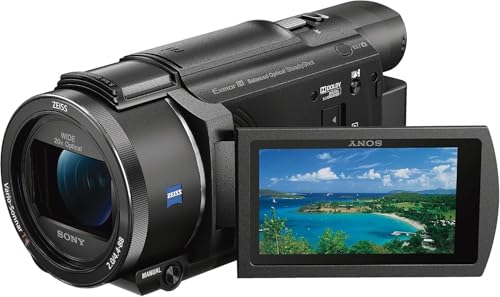
Sony FDRAX53/B 4K HD Video Recording Camcorder (Black)

A Buying Checklist by Program Level
Begin the checklist at the venue, recording the distance from the likely rig position to the far hash marks, the fence and crossbar heights to clear, and the surface rules for weights and anchors. Those measurements determine mast height and class more honestly than any sales conversation, and they cost one site visit with a tape and a notebook. Photograph the position at game time if possible, noting sun angle for afternoon fixtures and the lighting pattern for night games.
Next, specify the support and head as a pair: mast class, working height, locking method, ballast plan, wind limit, and head payload with the intended camcorder, cover, and cables included in the weight. Require a demonstration or a trial at full extension outdoors, and note how the top behaves when the head pans and stops under a realistic load. Reject any combination whose sway the seller explains away rather than demonstrates away.
Then choose the camcorder by zoom range, remote-control compatibility with the head and hand controller, low-light behaviour at the far end of a field, and dual-card or relay recording. Confirm that the control standard the camera uses matches the controllers the system supplies, in writing, before money moves between accounts. Check that a rain cover exists for the chosen body and that its lens diameter and body length sit comfortably within it.
Specify the ground station as deliberately as the top of the mast: monitor size and daylight brightness, hood, recorder or capture route, cable lengths with spares, and the operator seating and shelter the program will actually provide. Walk the workflow from record button to a coach’s tablet in a rehearsal, timing each step, because a workflow that takes twenty minutes will not be used between series. Write the tagging notation on the same rehearsal day and laminate it for the station.
Close with the ownership questions: crew size and training plan, transport vehicle and case dimensions, battery runtime across a doubleheader in cold weather, inspection schedule, spare parts, and the venue permission letters for away fixtures. Price the whole commitment qualitatively against the program’s other needs, recognising that the mast, head, and training are the durable investment while cameras and monitors refresh faster. A checklist answered in this order produces a system fitted to a real program rather than to a catalogue photograph.
For a youth league buying its first rig this autumn, the wisest final step is to film one full Saturday with a borrowed or rented system at your own field, then let that single day’s footage, sway, setup minutes, and coach reactions settle every remaining argument on the checklist.
A rural Friday-night field with a grass surface, a low fence, and no track surrounding the turf shows the portable tripod mast at its best, because the crew can place the base on firm ground close behind the end line and anchor guy lines where the venue allows. The same field punishes complacency about dew, since every cable and case lid comes home wet and must be dried before the cases close for the week. Programs filming at such grounds learn to pack a towel roll as standard equipment, not as an afterthought.
A modern turf stadium with a surrounding track pushes the rig further from the end line and adds height demands, because the camera must see over the track, the fence, and the team area without stealing its angle from too far away. Distance flattens the view of line play slightly, so operators lean on the upper part of their zoom range earlier in each drive than they would at a compact grass field. The compensating gifts are firm footing, predictable surfaces for ballast, and usually a power outlet somewhere a respectful crew can reach.
A dedicated practice field, filmed three afternoons a week from a semi-permanent position, rewards a different kind of investment: a marked base position, a buried or protected cable route, and a setup so familiar that a manager can raise the system between classes. Repetition at practice is where tagging notation becomes automatic and where young operators graduate from nervous supervision to quiet competence. The game-day rig then feels like a simpler version of a routine the crew already owns.
A playoff night in late November, with temperatures near freezing and a wind crossing the open end of the stadium, audits every specification the program paid for and every one it skipped. Batteries shrink, mast sway grows, monitor hoods earn their keep against glare from low floodlights, and the operator’s gloves test whether the zoom rocker and head controls were designed by anyone who has worn a pair. Film that survives that night in usable condition validates the buying checklist more completely than a season of mild Fridays.
A junior-varsity and varsity doubleheader on one evening stretches the same audit across five or six hours, turning power planning and crew rotation from footnotes into the main story. The wise program swaps operators at the break between games, changes or supplements the battery pack while the field is empty, and checks the head and cables in daylight rather than discovering a fault under lights. Tagging discipline usually wobbles in the second game unless the notation is simple enough to survive tired hands.
An away fixture at an unfamiliar stadium adds reconnaissance to the routine, because the visiting crew must find its position, its permissions, and its sightlines in the ninety minutes before kickoff rather than across a familiar season. A compact kit with labelled cases and a one-page setup card travels well through that uncertainty, while a system dependent on one particular fence gap or outlet at home becomes a negotiation. Hosts remember visiting crews who leave their patch of ground tidier than they found it.
A youth Saturday with four short games back to back rewards the simplest reliable configuration most of all, since the crew may be two parents, the operators may change hourly, and the teaching value lies in volume rather than polish. Shorter quarters forgive smaller batteries, compact fields forgive shorter masts, and forgiving schedules forgive a slower setup that would disgrace a varsity Friday. What cannot be forgiven, at any level, is a system so complicated that nobody volunteers to run it twice.
A college spring practice season, filmed daily for installation periods rather than for games, shows the workflow at its most industrial and its most instructive. Analysts tag by drill and by player group, files move to shared storage before dinner, and position coaches build teaching reels from the end-zone angle while the concepts are still being installed. The mast becomes furniture of the program’s teaching environment, noticed only on the rare morning when a fault keeps it in its cases.
A championship game filmed at a neutral venue combines the away-fixture problem with the playoff-weather problem, and adds a crowd large enough to test every decision about station placement and cable protection. Neutral-site crews should arrive earlier than feels reasonable, walk the end-zone area before spectators claim it, and agree with venue staff exactly where ballast, cases, and the operator’s chair will live for the evening. The reward for that diligence is a calm filming position inside a loud building, with sightlines protected and exits kept clear. Programs that document the visit, photographs included, turn a one-off final into next season’s away-game manual.
An indoor practice facility, used during a storm week or a winter training block, removes wind and rain from the equation while introducing ceiling height as the governing limit on mast extension. Operators there trade elevation for proximity, framing tighter formations from a lower camera than the outdoor routine would suggest, and the footage remains valuable because the teaching geometry survives the compromise. Lighting indoors is even and shadowless, which flatters exposure, yet the absence of a sky in frame removes the visual cues that help viewers judge distance on outdoor film.
Across all of those settings, one pattern repeats with a consistency that amounts to a law of end-zone filming: the programs with the best film are rarely the programs with the most expensive camera, and almost always the programs whose crew, checklist, and setup routine were rehearsed before the season began. So borrow or rent a complete rig for one Saturday at your own ground before any money is committed, and let the sway in that footage, the minutes the setup truly took, and the faces of your coaches at the monitor decide the purchase.
Related guides
- Best Sony Full Frame Cameras for Astrophotography: Sensitivity vs Resolution
- Best 1080p IP Cameras: PoE Domes, Turrets, Bullets and a PTZ That Earn Their Cable
- Best AC Powered Wireless Security Cameras: Wi-Fi Data, Mains Power, Zero Sleep
- Best Canon Point and Shoot Digital Cameras: PowerShot Picks From Pocket Compacts to Travel Zooms


