Our Top Picks
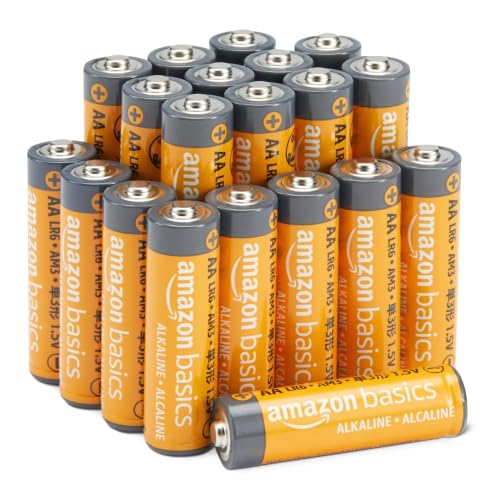 Amazon Basics 20-Pack AA Alkaline Batteries20 Count (Pack of 1)5.71 x 3.98 x 0.57 inches1.06 poundsCheck on Amazon
 Energizer AA Batteries Alkaline PowerAA - 32 Count (Pack of 1)7.56 x 4.21 x 1.22 inchesCheck on Amazon
 4pc Panasonic AA Batteries Super Heavy Duty Power4 Count (Pack of 1)0.02 x 0.02 x 0.02 inches0 poundsCheck on Amazon
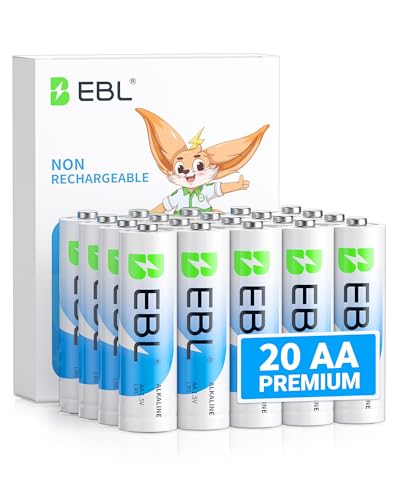 EBL AA Batteries 20 Pack Non-Rechargeable 1.5V AlkalineAA 20 Count (Pack of 1)0.7 poundsCheck on Amazon
What's inside
- How an alkaline leak actually happens, step by step
- Why leaks cluster in nearly-dead cells left inside devices
- Inside an alkaline AA: the steel can, the gel, and the seal
- Lithium iron disulfide AA cells: a different answer to the same problem
- Low-self-discharge NiMH: the rechargeable that can stay in the drawer
- Zinc-carbon: the chemistry that leaks worst, and why it still exists
- Shelf life, date codes, and what the printed year really tells you
- Storing spare cells so they survive to be useful
- Which devices are most at risk, ranked by consequence
- Capacity at a clock’s whisper and at a torch’s full draw
- Weight: twenty-three grams, fifteen grams, and when the difference matters
- Check prices on Amazon
- Cleaning up potassium hydroxide safely, and disposing of cells properly
As an Amazon Associate I earn from qualifying purchases. This post may contain affiliate links at no extra cost to you.
A battery leak rarely announces itself. You pick up a torch that has sat in a drawer since last winter, thumb the switch, and get nothing. The tail cap resists, then gives with a faint crunch. Inside, two AA cells wear a crust of white crystals, the spring has turned dull green, and a sour, soapy smell rises from the tube. Nothing dramatic happened in that drawer. No heat wave, no puncture, no misuse you can point to. The cells simply finished a slow chemical argument they had been having with themselves since the day they were sealed, and the drawer is where the argument ended.
That ordinariness is exactly why leak resistance matters more than most buying guides admit. Peak capacity wins headlines. Leak behaviour decides whether a clock keeps its contacts, whether a detector stays trustworthy, and whether a child’s toy survives a season in a cupboard. This guide works through the chemistry in plain order: what leaks, why it escapes, which constructions resist it, and how the way you store and use a cell changes the odds. The recommendations that follow from that evidence point in a consistent direction. For devices that sit for months, lithium iron disulfide and low-self-discharge nickel-metal hydride cells remove most of the risk at its source. For high-drain, frequently used gear, fresh alkaline from a reputable maker remains reasonable, provided you treat dates and storage seriously. Zinc-carbon, as you will see, belongs in almost none of these roles today.
Links in this guide may earn the publisher a commission when readers buy through them, at no added cost to the reader. That arrangement does not change the order in which chemistries are discussed here, and no manufacturer paid for placement in these pages.
One caution before the detail. No disposable AA is honestly described as leak-proof in an absolute sense. Manufacturers use careful language for a reason, speaking of leak resistance, improved seals, and power preservation rather than guarantees that cover every age, temperature, and abuse. A cell can be damaged, shorted, recharged when it was never designed for charging, or mixed with a depleted partner and forced into reversal. Any of those can defeat a good seal. What you can choose is a chemistry and construction whose normal ageing path does not end in caustic creep, and that distinction, applied device by device, is the real subject here.
How an alkaline leak actually happens, step by step
Start inside a fresh alkaline AA. The negative electrode is powdered zinc suspended in a gel, held in the centre of the cell around a brass current collector pin. The electrolyte that wets both electrodes is an aqueous solution of potassium hydroxide, strongly alkaline, chosen because it conducts ions well and supports the zinc and manganese dioxide reactions efficiently. As the cell discharges, zinc oxidises. That is the useful reaction, the one that delivers current. Trouble begins with a parallel reaction that delivers nothing useful at all.
Zinc in contact with potassium hydroxide corrodes slowly even when the cell is doing no work, and one product of that corrosion is hydrogen gas. In a young cell with plenty of active material and a healthy electrolyte balance, the rate is low and the cell’s internal volume accommodates what forms. As discharge proceeds and especially as the cell approaches exhaustion, the balance shifts. More zinc surface has been exposed and roughened, the composition of the gel changes, and gassing becomes harder to suppress. Additives and zinc alloying reduce the effect, and modern cells are far better in this respect than their predecessors, but no maker has eliminated it. The reaction is inherent to putting zinc in a strong alkali.
Pressure is the next step. An AA can is not a pressure vessel with a relief valve calibrated for drama. It is a crimped steel container closed at one end by a nylon or polypropylene gasket that insulates the negative terminal cap from the can. Hydrogen accumulating in a sealed space raises internal pressure steadily. That pressure searches for the weakest path, and the weakest path is almost always the interface between the gasket and the crimp that holds it. First comes microscopic venting, gas escaping without visible liquid. Then, if pressure persists or the gasket material has aged and lost compliance, electrolyte begins to move with the gas.
Potassium hydroxide solution does something particularly destructive once it reaches a seam: it creeps. The liquid wets metal and polymer surfaces and is drawn along narrow gaps by capillary action, travelling much farther than a simple drip would suggest. This is why a leaking cell often shows crystals well away from the seal, climbing a terminal or spreading across a battery compartment floor. Exposed to air, the hydroxide reacts with carbon dioxide and forms potassium carbonate, the white, fluffy crust most people recognise. The crust is less caustic than the original liquid, but underneath it the remaining hydroxide continues to attack springs, plating, and solder joints, and the conductive contamination can create leakage paths on a circuit board long after the cell itself has been removed.
Temperature accelerates every stage of that sequence. Reaction rates rise with heat, gasket polymers soften and then, with age and thermal cycling, take a set and seal less evenly. Cold does not cause leaks directly, but a cell that freezes and thaws repeatedly in an unheated space experiences condensation and mechanical stress at the seal. The final trigger is often time rather than an event. Given enough months under mild pressure with an ageing gasket, creep wins. Understanding that sequence matters because it explains the patterns in the next section: leaks are not random punishment, and they are not usually a sign that you bought a counterfeit or handled a cell roughly. They cluster where chemistry, age, and duty combine to raise pressure and weaken the one seal that matters.
Why leaks cluster in nearly-dead cells left inside devices
Field reports from repairers and the guidance in manufacturer care documents tell the same story. The cell that ruins a device is seldom half-used. It is the cell that was run almost flat, then left where it died. A wall clock draws so little current that its AA may take two years to fade, and when the hands finally stop, few people remove the cell that day. A remote control fades gradually, buttons needing a firmer press for weeks before anyone opens the cover. In both cases the cells spend their most leak-prone period, deep discharge and beyond, sealed inside the device they will damage.
Deep discharge changes the internal picture in several compounding ways. The zinc electrode is largely consumed and what remains is porous and reactive. The manganese dioxide electrode has been driven through composition changes that alter volume and electrolyte distribution. Voltage has fallen, but the parasitic corrosion of zinc does not stop simply because useful output has collapsed. In a multi-cell device there is a further hazard. Cells never discharge in perfect lockstep. The weakest cell in a pair or a set of four reaches exhaustion first and, if the device continues to draw current, the stronger cells can drive the weak one into voltage reversal. A reversed alkaline cell generates gas rapidly and can vent or rupture far sooner than a cell ageing quietly on its own. Mixing old and new cells, or different brands and chemistries in one compartment, creates exactly the imbalance that makes reversal likely, which is why every major datasheet repeats the instruction to replace all cells at once with identical ones.
Devices also trap what a shelf would dissipate. A battery compartment is a small, poorly ventilated enclosure. Escaping gas and creeping electrolyte stay in contact with the seal and terminals instead of drying or dispersing. Warm electronics add a few degrees. A television remote left on top of a receiver, a torch in a sunlit car door pocket, a game controller in a closed cabinet with a console that vents heat, all sit warmer than room temperature for hours each day. None of this is abuse in any moral sense. It is normal domestic life, and it is precisely the environment in which an exhausted alkaline cell is most likely to weep.
The practical conclusion is unglamorous and highly effective. The single best leak prevention measure for alkaline cells costs nothing: remove them when a device will sit unused, and remove them promptly when they are spent. A calendar habit beats a brand preference. Cells for seasonal gear, holiday lights, camping torches, emergency radios, should come out at the end of the season and be stored separately, with their state noted. If a device matters and must stay loaded and ready for a year or more, that is an argument for changing chemistry, not for hoping a seal holds. Lithium and rechargeable cells, covered in their own sections below, exist in large part for those always-ready roles.
Inside an alkaline AA: the steel can, the gel, and the seal
Construction explains both the strengths and the failure mode. An alkaline AA is built from the outside in around a cylindrical steel can, usually nickel-plated. The can is not passive packaging. It serves as the container and as the current collector for the positive electrode, the cathode, which is a ring of compressed manganese dioxide mixed with graphite for conductivity, pressed against the can’s inner wall. A separator paper, saturated with electrolyte, lines the cathode ring. Inside that tube sits the anode: zinc powder held in a gelled electrolyte, with a brass pin driven into its centre to collect current and carry it to the flat negative cap at the base of the cell.
This arrangement, sometimes called an inside-out design compared with older zinc-carbon cells, packs a lot of active material into the AA envelope and gives alkaline its characteristic energy density and good performance under moderate loads. The cathode ring offers a large reaction surface. The powdered zinc offers an even larger one. Manufacturers tune the zinc particle size, the gelling agents, and corrosion inhibitors, historically including mercury and now relying on alloying elements such as indium and bismuth together with organic inhibitors, to keep gassing down without dulling discharge performance. Datasheets rarely disclose the full recipe, for obvious commercial reasons, but support documents are consistent about the goal: suppress hydrogen evolution throughout shelf life and discharge, because the seal’s job depends on it.
At the open end of the can, the assembly is closed by a plastic gasket, a crimp in the steel, and the negative cap. That small stack does three jobs at once. It seals electrolyte in and moisture out, it insulates the negative terminal from the can, which is at cathode potential, and it provides a degree of controlled venting if pressure becomes dangerous. Better cells invest heavily here, in gasket material stability, crimp consistency, and in some designs a scored vent feature intended to open before the can itself distorts. When people speak of one brand leaking less than another, this is usually where the real difference lives, along with zinc purity and inhibitor quality. It is invisible from outside, which is why price alone is a poor guide and why buying fresh stock from authorised channels, where storage history is controlled, matters more than chasing a marginal capacity claim.
The same construction also sets the limits. Because the electrolyte is a free liquid held in gels and saturated separators rather than a truly dry system, there is always mobile potassium hydroxide available to creep if a path opens. Because the can is both structure and electrode collector, corrosion that starts at a terminal can travel. And because the cell is optimised for energy in a fixed volume, there is little spare headspace for gas. None of this makes alkaline a bad product. Billions of cells give clean service. It makes alkaline a product whose ageing failure has a specific, predictable chemistry, and whose suitability depends on how long it will sit and how much a leak in that particular device would cost you.
Lithium iron disulfide AA cells: a different answer to the same problem
Lithium AA cells, the 1.5-volt class sold for cameras, detectors, and outdoor instruments, use lithium iron disulfide chemistry, abbreviated Li-FeS2. Almost every element that causes alkaline leaks is absent or transformed here. The anode is metallic lithium foil. The cathode is iron disulfide. The electrolyte is an organic solvent system, not an aqueous alkali, so there is no potassium hydroxide to creep, crystallise, or corrode contacts in that familiar white bloom. If a lithium cell is abused to the point of venting, the event is a different and more serious safety matter, but the slow domestic leak that ruins remotes and clocks is not part of this chemistry’s normal ageing behaviour. Manufacturer literature describes these cells as having a robust, hermetic-style seal arrangement designed for long storage, and their published shelf life figures, discussed later in this guide, reflect that confidence.
Construction differs visibly once you know what to look for in a cutaway diagram. Instead of a pressed cathode ring and a central gel, lithium AA cells use a spiral-wound, or jelly-roll, assembly: long strips of anode, separator, and cathode wound together, giving a very large electrode area in the same can. That wound structure supports excellent high-drain and low-temperature performance, because reaction area and ionic paths remain effective when an alkaline cell’s output is sagging in the cold. The can includes a positive temperature coefficient device and a pressure relief vent as safety features, protections aimed at short-circuit and overheating events rather than at slow seepage. A thermal switch that limits current under fault conditions is not something an alkaline AA offers, and it is one reason lithium cells are favoured in unattended instruments.
Electrical behaviour needs one clear warning. A fresh lithium AA shows an open-circuit voltage around 1.8 volts, higher than the 1.5 to 1.6 volts of a fresh alkaline. Under load the voltage settles into a flat discharge curve near the range devices expect, and the chemistry is designed as a direct AA substitute in most equipment. But that higher initial voltage is real, and a small number of sensitive or very old devices, some precision instruments, and certain multi-cell arrangements with tight voltage tolerances may not welcome it. Manufacturer compatibility guidance is worth reading for medical-adjacent devices, vintage electronics, and anything whose manual specifies a maximum cell voltage. In a four-cell device, four fresh lithium cells present a noticeably higher starting pack voltage than four alkalines. Most modern gear handles this without complaint. The point is to check once, deliberately, rather than discover a quirk in equipment you cannot replace.
Where lithium earns its place is in the combination of longevity and indifference to sitting. A smoke alarm that must work in year seven, a weather station sensor on a fence post, a trail camera through winter, a torch in a glovebox: these are duties defined by waiting, cold, and occasional heavy demand. Lithium’s flat curve also means a device receives near-full voltage for most of the cell’s life and then reaches the end relatively quickly, so low-battery warnings may be shorter than with alkaline’s long, sloping decline. Plan replacements accordingly. The cells cost more per unit, a fact no guide should hide, and they are single-use, so for a game controller emptied every week the economics point elsewhere. Leak risk, though, is as close to designed out as the AA format offers.
Low-self-discharge NiMH: the rechargeable that can stay in the drawer
Nickel-metal hydride rechargeables spent years with a reputation problem unrelated to leaking. The early generations discharged themselves in a few months, so a torch loaded with them was flat when needed, and users returned to disposables. Low-self-discharge variants changed that bargain. Introduced commercially in the mid-2000s and now the default from reputable makers, these cells use improved separator materials, alloy treatments, and electrolyte management to retain most of their charge over a year of storage. Published figures vary by brand and test condition, with typical claims in the region of seventy to eighty-five percent retained after twelve months at room temperature. That retention is what makes NiMH a genuine leak-avoidance strategy rather than merely a waste-reduction one: a cell you can leave loaded, ready, and rechargeable is a cell that never sits exhausted in a compartment quietly corroding.
On leakage itself, the construction case is strong. NiMH AA cells are built in welded steel cans with a resealing safety vent under the positive cap, designed to release pressure in a fault and close again rather than weep electrolyte in normal service. The electrolyte is potassium hydroxide, as in alkaline, which surprises some readers, but the system around it is different. The cell is sealed for recombination: oxygen evolved at one electrode during charging is intended to recombine at the other, and in normal use there is no continuous gassing pressure driving liquid toward a crimped gasket of the disposable type. Leaks from quality NiMH cells in ordinary service are rare, and when they do occur they usually follow abuse, severe overcharging on an unsuitable charger, physical damage, or extreme age. Choosing a competent charger matters here, and readers comparing options will find a useful starting point in the guide marked best aa and aaa battery chargers, because charge termination quality is the main variable you control in a rechargeable’s working life.
The electrical compromise is voltage. NiMH nominal voltage is 1.2 volts per cell, against 1.5 for alkaline and lithium primaries. A freshly charged NiMH cell actually leaves the charger near 1.4 volts and spends much of its discharge on a remarkably flat plateau around 1.2 to 1.25 volts, so many devices run perfectly and, in high-drain equipment, run longer than on alkaline because the rechargeable holds its plateau under loads that drag alkaline voltage down early. Difficulties appear at the margins. A few devices interpret 1.2 volts as a nearly empty 1.5-volt cell and show a low-battery warning from the start. Some older or simpler products, certain clocks and radios among them, may stop early or behave oddly. A four-cell pack delivers 4.8 volts nominal rather than 6, and equipment with a hard cutoff set for alkaline behaviour can underuse the capacity you paid for. None of this is a reason to avoid NiMH. It is a reason to try a set in one device first before converting a whole household, and to keep lithium or fresh alkaline for the minority of products that insist on higher voltage.
Cycle economics complete the picture. A quality low-self-discharge AA is rated for hundreds of charge cycles, with premium lines claiming considerably more under laboratory conditions, and capacity typically in the 1,900 to 2,500 milliamp-hour range for standard and high-capacity variants respectively. High-capacity versions trade some cycle life and self-discharge performance for their extra rating, a trade manufacturers acknowledge in their own datasheets. For remotes and clocks, standard-capacity cells are usually the wiser buy: the drain is so low that calendar ageing, not capacity, decides service life. Keep a small rotation, label cells with the month and year they entered service, and retire any cell that heats noticeably in a good charger, refuses to hold charge for a fortnight, or shows a swollen or damaged wrapper.
Zinc-carbon: the chemistry that leaks worst, and why it still exists
Every leak discussion needs its cautionary baseline, and zinc-carbon provides it. This is the oldest dry-cell chemistry in common sale, often labelled heavy duty, a phrase that misleads nearly everyone who reads it. Heavy duty zinc-carbon delivers less energy, especially under anything beyond a trivial drain, than a standard alkaline cell. The label is a historical artefact, not a performance promise, and in leak terms the construction behind it is the weakest of the three primary chemistries covered here.
The reason is structural. In a zinc-carbon cell the zinc is not a powder inside a steel can. The zinc forms the can itself, the container and the anode in one piece, with a carbon rod down the centre serving as the cathode current collector surrounded by a manganese dioxide mix. The electrolyte is an acidic or mildly acidic paste, typically based on ammonium chloride, sometimes with zinc chloride in the related zinc-chloride variant. As the cell discharges, the zinc can is literally consumed. Its wall thins from the inside as it does its job. Given enough discharge or enough time for corrosion to work, the wall can perforate, and then the electrolyte, which has been in direct contact with that thinning wall all along, has a direct path out. There is no separate steel container to hold anything back. The leak is not a seal failure in this design. It is the container being eaten through.
Ageing without use is not kind either. The acidic electrolyte corrodes zinc during storage, shelf life is short, commonly two to three years at best before capacity falls away, and performance in cold conditions is poor. The one honest advantage is price per cell at the till, and even that advantage dissolves when you count delivered energy, because under a moderate drain you may use two or three zinc-carbon cells to do the work of one alkaline. There are narrow contexts where these cells still appear, bundled free with a remote or a toy, or sold in markets where upfront cost dominates every other consideration. If a set arrives free with a product, using them promptly in a low-value, frequently checked device is defensible. Storing them, loading them into anything you care about, or leaving them in a detector or clock is not. Remove bundled zinc-carbon cells from stored equipment as a matter of routine, and treat any white or green corrosion around them as a prompt to clean the compartment before fitting anything better.
It is worth pausing on the terminology trap, because it causes real purchases. Shoppers reasonably assume heavy duty means tougher and longer-lasting. In battery retail it means the opposite tier. General purpose, extra heavy duty, and similar phrases on zinc-carbon packaging describe a budget chemistry with a consumable container. Alkaline packaging says alkaline. Lithium packaging says lithium. If neither word appears, assume zinc-carbon and decide accordingly. That single label-reading habit prevents more leaks than any brand loyalty.
Shelf life, date codes, and what the printed year really tells you
Shelf life figures are where datasheets earn their keep, because they are stated under defined conditions and can be compared across chemistries. Alkaline AA cells from major manufacturers commonly carry a stated storage life of five to ten years at room temperature, with the longer figures applying to current premium lines stored near twenty degrees Celsius. Lithium iron disulfide AA cells are typically rated for fifteen to twenty years in storage, reflecting both the stability of the chemistry and the quality of the seal, and their datasheets often specify a wider storage temperature envelope as well. Low-self-discharge NiMH occupies different ground: the relevant figure is not years to unusability but charge retained after months, plus a calendar life measured in years before capacity fades materially. Zinc-carbon trails the field at roughly two to three years. These are manufacturer-published ranges, not promises for a cell kept in a hot warehouse, and the storage section that follows explains why conditions move real outcomes so far from the printed ideal.
Reading what is printed on the cell prevents most mistakes. Primary cells usually carry either a use-by or best-before date, or a manufacturing date code, and the two are not interchangeable. A use-by date already has the maker’s shelf life subtracted; fitting a cell close to that date in a long-service device wastes the point of choosing a long-life chemistry. A manufacturing code, by contrast, may be a compact string of digits and letters stamped on the wrapper or crimp, encoding year, month, and sometimes plant and line. Formats differ between manufacturers and occasionally between product lines from the same manufacturer, and support pages publish the key for each. When a code is ambiguous, the retailer’s stock rotation and a legible retail expiry on the pack are more trustworthy than guesswork. Buy from stock that turns over. A bargain multipack of unknown age, stored who knows where, can be the most expensive cells you ever fit if one of them spoils a device.
Two practical rules follow. First, match the date horizon to the duty. A detector cell should be fitted with most of its shelf life still ahead of it, because you are buying years of standby, not this month’s capacity. A torch used weekly at a worksite can happily consume cells nearer their date, since they will be exhausted long before age becomes the risk. Second, write the fitting date on the cell with a fine marker when you install it in any low-drain device. Memory is unreliable across two or three years, and that small inscription converts a guess into a decision when a clock stops or an annual alarm check comes round. Retailers and fleet managers do exactly this. There is no reason a household should run on vaguer information than a warehouse does.
Capacity retention curves add one more nuance. Alkaline cells lose capacity gradually in storage, faster at higher temperatures, so a cell at its printed date is not dead, merely diminished and more leak-prone than it was. Lithium cells retain a much higher fraction across the same period, which is why emergency kits specify them. Rechargeables should be stored with a partial to healthy charge as their maker directs and topped up annually; a NiMH cell left fully discharged for years may recover poorly even if its can and seal remain perfect. Shelf life, in other words, is three different questions wearing one label: will it still work, will it still hold a seal, and will it still hold a charge. The right chemistry answers all three for the duty you have in mind.
Storing spare cells so they survive to be useful
Manufacturers converge on the same storage advice, and it is boring because it works. Keep cells cool, dry, and steady, ideally at ordinary room temperature, roughly between ten and twenty-five degrees Celsius, away from radiators, boilers, and sunlit windowsills. Heat is the principal enemy. As a rule of thumb drawn from reaction kinetics and repeated in storage guidance, the rate of the self-discharge and corrosion reactions rises sharply with temperature, so a cell stored through summers in a hot attic ages far faster than its calendar age suggests. Its capacity falls, its gassing increases, and its seal materials age. A cell can reach its printed date in a cool cupboard in good health and pass the same date in a hot space already primed to leak.
That is why garages and cars are the worst common storage places, despite being where torches and spare batteries naturally accumulate. A car interior in summer sun can exceed fifty degrees Celsius, then cool overnight, cycling daily. A garage adds humidity swings, and in many climates winter nights near or below freezing. Condensation forms on cold cells brought into warm rooms, moisture reaches terminals, and corrosion gains a foothold. Emergency equipment in a vehicle should use lithium cells, which tolerate the widest temperature range of the AA options here, and should be checked and rotated on a schedule rather than forgotten. Spares for the house belong in the house, in a drawer or box in a lived-in room, which is a near-perfect battery store by accident of comfort: the temperatures people prefer are the temperatures cells prefer.
Refrigeration deserves a direct answer because the advice refuses to die. Older battery technologies and particular photographic practices kept the idea alive, but current manufacturer guidance for alkaline and lithium AA cells does not recommend fridge storage for ordinary use. Any marginal slowing of self-discharge is offset by condensation risk when cold cells meet warm, humid air, and a kitchen fridge adds food spills and curious children to the equation. If cells have been chilled, let them return fully to room temperature, dry, before use. Room temperature storage, consistently applied, beats clever storage inconsistently applied.
Orientation, by contrast, is mostly myth for modern sealed cells. Alkaline, lithium, and NiMH AA cells can be stored upright, on their sides, or in a device in any position without the electrolyte pooling or the seal being stressed by gravity in a way that matters. What does matter is contact. Loose cells rolling in a drawer or a pocket can short against keys, coins, or each other, generating heat and, in the case of lithium cells, creating a genuine hazard. Keep spares in their original packaging until needed, or in a plastic cell box that isolates each one. Tape over terminals for transport if packaging is gone. Never store loose cells mixed with metal objects, never carry them loose in a bag with tools, and keep all cells, new and spent, out of reach of small children, for whom a button cell is the gravest danger but any cell is a choking and chemical hazard. Store by chemistry and date, oldest at the front.
Which devices are most at risk, ranked by consequence
Ranking devices by leak risk means combining two different scales: how likely a leak is in that duty, and how much damage follows when it happens. A quartz wall clock scores high on the first scale. Its drain is measured in microamps to a few milliamps in pulses as the movement steps, a single AA may serve for one to three years, and the clock hangs undisturbed, often slightly warm, its cell ageing into exactly the deep-discharge, left-in-place pattern that produces leaks. The consequence, though, is usually limited to a movement that costs little to replace. Annoying, instructive, rarely serious. The lesson clocks teach is about habit: if you would not leave any other cell untouched for three years, do not leave one in a clock.
Television and media remotes sit in the middle of both scales. They draw brief, moderate pulses for infrared transmission and then sleep, so cells last a year or more, fading gradually enough that users tolerate weakening performance and delay replacement. The compartment is handled rarely and inspected almost never. A leak here corrodes a spring and a board edge, and because remotes are model-specific and sometimes costly or awkward to replace, the damage is disproportionate to the two small cells that caused it. Remotes are an ideal NiMH or lithium duty: always ready, rarely drained, and valuable enough to protect. They are also the device most households could audit in five minutes tonight, opening every cover and removing anything swollen, crusted, or past its date.
Smoke and carbon monoxide detectors change the terms entirely, because the consequence of a failed cell is not a spoiled gadget. Standalone alarms draw tiny standby currents for years and demand reliable current when the sounder fires. Manufacturers specify permitted cell types for each model, and those specifications govern: some alarms are designed for alkaline, some for lithium, sealed ten-year alarms remove the question altogether, and fitting an unapproved rechargeable with its lower voltage can compromise the low-battery supervision or the alarm’s operation. Follow the alarm maker’s list exactly. Within that list, the logic of this guide applies with extra force. Never leave an exhausted cell in a detector, never silence a low-battery chirp by removing the cell and forgetting it, and record the fitting date on the alarm itself. A leak in a detector is a double failure, corrosion in the device that exists to warn you about invisible dangers. Where a lithium cell is approved, its long shelf life and stable seal make it the natural choice, and its cost spread across years of protection is trivial.
Torches stored loaded complete the ranking, and they divide sharply by type. A household torch used monthly and checked often is low risk with any chemistry. An emergency torch, a car torch, a torch in a rarely opened toolkit, is a leak waiting for a date, because it combines long storage, temperature swings, and a sealed metal tube that concentrates corrosion around the cells and can seize solid. Repairers see torches ruined not by a dramatic rupture but by cells that swelled and crusted until neither cap would move. For stored torches, fit lithium cells or store the torch empty with lithium spares in a sealed box alongside it, and for large multi-cell lights consider whether a purpose-built rechargeable light with a managed pack serves the emergency role better. Readers maintaining bigger rechargeable gear may also need a dedicated unit for other formats, which is the role covered by the guide at best 16 bay battery chargers for high-volume charging and by the format-specific advice in best 18650 chargers for cylindrical lithium-ion cells used in modern torches.
Below these four, a long tail of devices follows the same logic and can be judged with two questions. How long will the cells sit, and what would a leak destroy? Wireless mice and keyboards, game controllers, toys with sound modules, bathroom scales, and holiday decorations all sit longer than their owners think. Anything with a circuit board directly beneath the battery compartment, anything irreplaceable, anything belonging to a child, deserves the safer chemistries. Anything cheap, checked weekly, and emptied fast can use alkaline without apology.
Capacity at a clock’s whisper and at a torch’s full draw
Capacity figures on retail packaging are usually stated at a gentle drain that flatters the cell, and understanding two reference drains makes datasheet numbers useful instead of decorative. Consider first a continuous drain of twenty-five milliamps, a reasonable stand-in for a small motorised or electronic load and a useful benchmark above a clock’s true microamp appetite. At that level an alkaline AA performs close to its best. Manufacturer discharge curves for premium alkaline AA cells show delivered capacity in the region of 2,500 to 2,850 milliamp-hours down to a 0.8-volt endpoint at such light loads and room temperature. The voltage declines steadily through the run, a long slope from about 1.5 volts toward 1.0, which devices with tolerant electronics handle well. Lithium AA cells at the same drain deliver around 3,000 to 3,500 milliamp-hours on a flatter curve, holding near 1.4 to 1.5 volts for much of the run. NiMH delivers its rated 1,900 to 2,500 milliamp-hours almost entirely on its 1.2-volt plateau, so total energy is lower than the milliamp-hour comparison alone suggests, because energy multiplies capacity by voltage.
Now raise the drain to one amp, a serious torch, a camera flash recycle, a motorised toy working hard. The ranking reshuffles. Alkaline capacity collapses under this load, commonly to somewhere in the region of 600 to 1,100 milliamp-hours before voltage falls below a useful threshold, because internal resistance wastes energy as heat and the chemistry cannot sustain the reaction rate across the electrode surfaces. The cell is not defective. It is being asked for a sprint it was never built for, and its datasheet curves say so plainly for anyone who reads the one-amp line instead of the headline. Lithium AA cells, with their wound construction and low internal resistance, retain far more of themselves at one amp, typically delivering in the region of 2,000 to 3,000 milliamp-hours depending on endpoint and temperature, and holding voltage high enough to keep a torch bright rather than amber. NiMH is the quiet winner of this comparison in many devices: a good cell can deliver close to its full rated capacity at one amp, losing only a modest fraction, because rechargeable construction is designed for exactly these currents. That is why camera and flash users adopted NiMH long before low-self-discharge versions made it convenient for everyone else.
Endpoints explain many arguments about which cell lasted longer. A radio may work down to 0.9 volts per cell and extract nearly everything an alkaline offers at low drain. A digital camera may cut off at 1.1 volts per cell and leave a third of an alkaline’s low-drain capacity stranded, while using a NiMH cell almost fully because its plateau sits above the cutoff until the very end. When you compare your own experience with published curves, note the device’s cutoff, the temperature, and whether the load is continuous or pulsed. Pulse loads, such as flashguns and transmitters, let chemistries recover between demands and usually improve alkaline results compared with a continuous one-amp draw. None of these numbers should be treated as guarantees for a specific brand on a specific day. They are the shape of the physics, drawn from the discharge curves manufacturers publish, and they point to a simple allocation: light and long, any good chemistry; heavy and fast, lithium or NiMH; alkaline where the drain is moderate and the cells will be used up promptly.
Weight: twenty-three grams, fifteen grams, and when the difference matters
An AA cell’s weight is printed in every serious datasheet and ignored in most purchases, until the day it becomes the whole problem. A typical alkaline AA weighs about twenty-three grams. A lithium iron disulfide AA weighs about fifteen grams, a full third lighter, because lithium is the lightest metal and the wound construction uses materials efficiently. A NiMH AA weighs more than either, commonly twenty-six to thirty grams depending on capacity, with high-capacity variants at the top of that range. One cell either way is nothing. Devices multiply the difference. A four-cell pack spans roughly sixty grams in lithium, ninety-two in alkaline, and up to one hundred and twenty in high-capacity NiMH. An eight-cell pack doubles those gaps.
Head-mounted and hand-held equipment feels weight first. A head torch worn for a night navigation exercise or a long cave survey carries its cells on the skull or at the end of a cable, and sixty saved grams change comfort across hours. Photographers carrying spare sets for flashguns through a wedding day notice cumulative weight across a bag. Backpackers counting every gram for a multi-day route have long specified lithium AA cells for exactly this reason, gaining cold performance and shelf life as a bonus on top of the saving. In these contexts the lithium premium buys three advantages at once, and weight alone can justify it before leak resistance enters the discussion.
Check prices on Amazon
Live listings for the shortlist in this guide are pulled from Amazon below, so prices and availability are always current at the moment you look.


Cleaning up potassium hydroxide safely, and disposing of cells properly
Sooner or later, most households meet a leaked cell, and the cleanup is straightforward if you respect what the residue is. Work on a surface you can wipe down, keep children and pets away, and wear disposable gloves, because potassium hydroxide is caustic and irritates skin, and the crust from a leak can include material from a corroded device as well as from the cell. Remove the cells without forcing them. If a cell is stuck, gentle rocking with a gloved hand or a plastic tool is safer than prising with a metal screwdriver, which can short terminals and gouge a compartment. Bag the removed cells for recycling or hazardous-waste collection rather than dropping them loose into household rubbish, and wash your hands after the gloves come off, before touching your face or food.
For the compartment, begin dry. Brush loose crystals out with an old toothbrush or a cotton bud, tipping the device so debris falls out rather than deeper in. Then neutralise what remains on metal contacts. A cotton bud lightly dampened, not dripping, with ordinary white vinegar or lemon juice provides a mild acid that neutralises alkaline residue; you may see faint fizzing as it works. Wipe, inspect, and repeat on stubborn deposits, then wipe again with a bud dampened with plain water to remove acid traces, and dry the compartment thoroughly before fitting new cells. Keep liquids minimal throughout. The goal is to treat the contact surfaces, not to wash the electronics, and moisture driven into a board or a switch creates the next fault while fixing the first. Light corrosion on springs and contacts can be polished gently with a pencil eraser or a fibreglass pen once neutralised, restoring a bright surface for good contact. A spring that has lost its tension or is eaten thin should be replaced or the device retired, because a weak contact produces intermittent faults that masquerade as bad batteries for months. If residue has reached a circuit board, if a device smells burnt, or if the equipment is a detector or anything safety-related, stop at removing the cells and seek repair or replacement rather than improvising.
Eye protection is worth wearing for a crusted, pressurised-looking cell, and any cell that is swollen, hissing, hot, or actively weeping should be handled minimally, placed in a non-flammable container away from heat, and taken to a hazardous-waste facility promptly. Never recharge a primary cell that has leaked, never puncture or incinerate any cell, and never mix cleanup of a lithium cell into this routine: a damaged lithium cell is a fire risk, should not be doused or neutralised with kitchen acids, and belongs in specialist handling through your local waste authority’s guidance.
Disposal rules vary by jurisdiction, and the honest answer is to follow your local authority rather than a universal slogan. Many regions now require all household batteries, primary and rechargeable, to go to collection points at retailers, civic sites, or hazardous-waste rounds, and prohibit them in general waste, because landfill leaching and fires in waste vehicles and facilities have changed the policy picture. Some places still permit ordinary alkaline cells in household rubbish, but recycling collection is widely available and is the better default regardless. Tape the terminals of lithium and rechargeable cells before transport to a collection point, keep spent cells in a dry, non-metal container, and never accumulate a large jar of mixed dead cells with loose terminals touching. Organisations maintaining vehicle fleets and larger battery inventories face additional transport and storage rules, and the principles behind equipment covered in guides such as best 12 volt battery chargers illustrate how seriously larger-format charging and storage should be taken once you move beyond household cells.
A closing checklist for a leak-resistant household
Put the whole guide into practice in one pass through your home. Open every remote, clock, torch, toy, and scale, and remove any cell that is crusted, swollen, exhausted, zinc-carbon, or past its date. Clean any compartment that needs it using the dry-then-neutralise method above, and let it dry fully. Refill by duty, not by habit: lithium for detectors where the maker approves it and for stored, cold, or emergency equipment; low-self-discharge NiMH for remotes, controllers, and everyday torches and toys; fresh alkaline for cheap, frequently checked, moderate-drain devices, with the fitting date written on each cell. Move your spares into a cool room in a proper box, oldest at the front, terminals protected. Note a date in your calendar, six or twelve months out, to walk the house and repeat the audit. That rhythm, more than any single purchase, is what keeps compartments clean.
Choose the chemistry whose failure mode you can live with, fit it fresh, write the date on it, and the quiet cells in your drawers will stay quiet for the right reason: nothing left inside them needs to escape.


