Our Top Picks
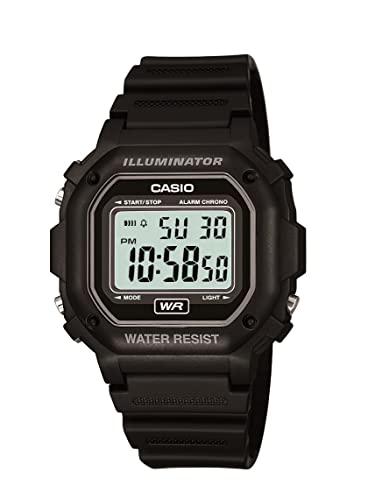 Casio Men's F108WH Illuminator Collection Black Resin Strap6 x 6 x 3 inches0.2 poundsCheck on Amazon
 Casio Men's Quartz Day-Date Indicator Black Resin DiveAdult0 x 0 x 0 inches0.1 poundsCheck on Amazon


What's inside
- What Resin Means in a Watch Case: ABS, Polyurethane and Blends
- Case and Bezel Construction: How the Protection Actually Works
- Integrated Resin Straps and Their Replacement Reality
- Weight Versus Steel: What the Grams Do to a Wrist
- How Resin Ages: Heat, Ultraviolet Light and Solvents
- Cracking Around Lugs and Spring Bars: The Category’s Real Weak Point
- Matte Versus Gloss Finishes in Daily Wear
- Module Protection Structures Inside the Case
- Sizing: Case Dimensions, Lug-to-Lug Length and Different Wrists
- Water Resistance, Buttons and Real-World Use Around Water
- Digital, Analogue and Ana-Digi: Choosing a Display Philosophy
- Care, Servicing and Keeping a Resin Watch Alive for a Decade
- Buttons, Alarms and the Ergonomics of Daily Operation
- Brands, Price Tiers Without Prices and Long-Term Value
- Check prices on Amazon
- Buying Checklist and Final Judgement
As an Amazon Associate I earn from qualifying purchases. This post may contain affiliate links at no extra cost to you.
Readers should know that certain links here may return a small commission to this publication when a purchase follows, funding further guides while leaving the editorial judgements in these pages entirely independent of any seller. Everything stated below draws on manufacturer specification sheets, service manuals, material references and the accumulated experience shared by long-term owners, presented as general information rather than as any claim of personal evaluation. No prices are printed because they change too often to stay honest on a static page.
A black resin watch is easy to recognise and surprisingly hard to define well. The colour suggests stealth, the material suggests sport, and the low weight suggests something disposable, yet the best examples outlast steel watches costing many times more, surviving building sites, engine bays, surf, frost and years of daily knocks without complaint. Casio’s G-Shock line created the category in the early nineteen eighties and still defines its centre of gravity, but Timex, Citizen, Garmin in its rugged lines, and several smaller makers all build black resin watches with their own ideas about protection, sizing and strap design. Choosing among them well requires understanding what resin actually is, how a resin case protects a movement, and where the material’s genuine weaknesses hide.
Buyers usually arrive with one of three needs. Some want a work watch that can be knocked against door frames, scraped along masonry and hosed off at the end of the day without a flicker of worry. Others want the lightest possible watch for running, swimming or sleeping, something that disappears on the wrist until its alarm or timer is needed. A third group simply likes the matte black aesthetic, the way a resin watch sits quietly with workwear, uniforms and outdoor clothing alike, never flashing in sunlight and never asking for polishing. All three needs are legitimate, and the same watch rarely serves all three equally, which is why the sections below separate construction, comfort and ageing rather than collapsing everything into a single ranking.
Specifications in this category can mislead the unwary. Water resistance figures, shock claims and battery lives are quoted under standards that deserve unpacking, while the numbers that govern daily comfort, such as weight in grams, lug-to-lug length and strap hole spacing, are often buried or omitted entirely. This guide treats those everyday numbers as first-class citizens, because a watch that survives everything but annoys its owner every hour will end up in a drawer, and a watch in a drawer protects nothing.
What Resin Means in a Watch Case: ABS, Polyurethane and Blends
Resin in watchmaking is a family name, not a single substance. The rigid inner case of a typical G-Shock-class watch is moulded from ABS, a hard thermoplastic valued for dimensional stability, clean moulding of fine detail and predictable behaviour around the screws and gaskets that seal the movement. Over that rigid core sits a softer outer layer, most often polyurethane, which forms the bezel and the raised guards around buttons and crystal. The two materials divide the labour of survival: ABS holds the geometry, polyurethane absorbs the blows. Cheaper resin watches sometimes use a single softer compound throughout, which feels pleasant but allows the case to flex around its seals in ways that age poorly.
Polyurethane itself comes in grades. Its hardness, measured on the Shore scale, balances abrasion resistance against shock absorption, and makers tune it for the intended role: a diver-style resin watch may wear a slightly softer bezel that grips a wetsuit cuff, while a slim everyday model uses a harder compound that keeps its edges crisp for years. Additives in the compound provide ultraviolet stabilisers and the carbon-based pigments that produce the deep, even black this category is known for. Black is not merely a fashion choice here; carbon black pigment also shields the polymer beneath it from sunlight better than most other colours, one reason black resin ages more gracefully than brightly coloured editions of the same watch.
The strap is usually polyurethane as well, sometimes with a different formulation optimised for flexing rather than impact. A strap bends thousands of times around its tightest curve near the buckle holes, so its compound trades some surface hardness for fatigue resistance. Higher-end models occasionally reinforce the strap with internal inserts or move to fluoroelastomer compounds borrowed from premium smartwatch bands, gaining resistance to sunscreen, insect repellent and workshop solvents at a noticeable step up in cost. Knowing which compound a strap uses explains much of its lifespan, and makers who publish that detail deserve credit for treating buyers as adults.
Glass, gaskets and metal complete the material picture. Most resin watches use mineral glass, which resists shattering and keeps costs sane, while a minority offer sapphire at a premium. Seals are silicone or nitrile rings compressed by the case back, which on resin models is often a steel plate held by four small screws rather than a threaded ring, a construction that keeps the case light and the factory process simple. Spring bars, buckles and case-back screws are stainless steel, and those small metal parts are frequently the first places corrosion appears on a watch whose polymer parts remain sound, a point the ageing sections return to later.
Case and Bezel Construction: How the Protection Actually Works
The founding idea of the G-Shock class is that the movement should never be rigidly married to the outside world. In the classic construction, the quartz module sits inside the rigid inner case with clearance around it, cushioned at key points, while the polyurethane bezel stands proud of the crystal and the case flanks. A knock against a door frame therefore spends itself in the bezel first, deforming soft material and spreading the load, and only a fraction of the energy reaches the module. Casio’s engineers described early targets in terms of surviving a ten-metre drop, and the layered approach they settled on still shapes resin watch design four decades later, copied in spirit by nearly every rival.
Bezel geometry matters more than bezel thickness. Raised corners guard the crystal during face-down drops onto flat surfaces, while recessed lettering and sunken button guards prevent the snagging that tears at softer compounds. Buttons themselves sit inside protective shoulders so that a sideways blow lands on polyurethane rather than driving a button stem into the module. On models with a front light button, that button often sits larger and lower than the others, positioned to be found by feel and shielded by its own raised surround. Examining a bezel closely, ideally in photographs from several angles, reveals whether a design team sweated these details or merely styled a chunky outline.
Some designs add a further layer. Certain models wrap the inner case in an additional resin shroud, or use metal reinforcement plates beneath the bezel at the lug ends where leverage concentrates. Others, particularly in the Master of G families, introduce carbon-fibre-reinforced resin for the inner case, cutting weight while stiffening the structure around the module. Carbon core guard designs moved the mid-case to a carbon composite and allowed slimmer profiles without surrendering the layered protection, which is why recent mid-range models feel noticeably less bulky than their ancestors of similar rating.
The case back deserves attention because it decides both sealing and comfort. A four-screw steel back is flat, thin and easy to service, but its screws thread into resin or into small metal inserts, and careless overtightening during a battery change can strip those threads permanently. Premium resin models sometimes adopt a screw-down back or a monocoque rear case moulded as one piece with the mid-case, improving sealing robustness at the cost of more specialised servicing. Against the wrist, a resin watch’s back sits warmer and less clammy than steel, one of those small comforts owners mention often and brochures never do.
Crystal protection completes the system. The crystal sits below the bezel’s highest points, so flat impacts meet polyurethane first, and many designs add a slight dome or a raised chapter ring that keeps the glass off a tabletop when the watch rests face down. Mineral glass will scratch eventually, usually against masonry or ceramic, and a hairline scratch on a resin beater is best regarded as a record of service rather than a defect. Owners who cannot accept that view should look for sapphire-equipped variants and accept the higher replacement cost if the crystal ever does fail.
Integrated Resin Straps and Their Replacement Reality
Unlike steel watches built around standard lug widths, most resin watches use an integrated strap that meets the case in a proprietary curve. The strap’s end is shaped to the case, sometimes wrapping under it, sometimes meeting it at a stepped joint, and the attachment may involve spring bars, screws through the lugs, or a combination that also clamps the bezel in place. This integration is why a resin watch looks so unified, and it is also why strap replacement demands the correct part rather than any strap of roughly the right width. Owners planning a decade of service should confirm, before buying, that replacement straps and bezels for the exact model remain in production or in healthy circulation.
Replacement itself is straightforward with the right tools and patience. A spring bar tool or a small screwdriver releases the bars, the old strap lifts away, and the new one seats with a click that should be checked by a firm tug on each side. Screw-held designs need the correct driver size and a light touch, because resin threads and small screw heads punish force. Many owners replace bezel and strap together as a set, restoring a tired watch to near-new appearance in twenty minutes, and the availability of these shell sets is one of the category’s quiet triumphs: a steel watch needs polishing and professional refinishing to achieve what a resin watch achieves with two modest parts and a spring bar tool.
Adapters widen the options. For popular G-Shock families, third-party adapters convert the proprietary joint into a standard lug width, opening the door to nylon pass-through straps, leather for dressier contexts and quick-release silicone. Nylon one-piece straps bring a security benefit that matters for water sports: if one spring bar fails, the watch remains captive on the other bar instead of sinking. They also change the watch’s height on the wrist, adding a layer beneath the case, which owners of slim wrists should factor into the comfort equation. Adapters vary in quality, and a sloppy adapter that rattles or stresses the lugs at an angle can cause the very lug damage discussed later, so reviews from owners of the same model are worth more than a seller’s compatibility list.
Strap design details repay inspection. Ventilation channels moulded into the underside reduce sweat build-up during sport. A keeper system with a locking bump or a second loop keeps the tail from flapping loose during activity. The buckle, usually resin with a metal pin or fully metal on better models, should close without sharp edges against the wrist’s underside. Hole spacing governs fine adjustment: holes spaced closely let more wrists find a setting that is snug without being tight, and a watch worn too loose slides and twists, hammering its lugs with leverage the designers never intended.
Finally, consider the strap as a consumable with a planned life. Depending on climate, chemistry exposure and activity, a polyurethane strap commonly serves between two and five years before stiffness, surface crazing or a tear at a buckle hole ends its career. Budgeting for one replacement strap across a watch’s life, and buying it while the model is current rather than hunting later, is the sort of unglamorous foresight that keeps a favourite watch in service for a decade.
Weight Versus Steel: What the Grams Do to a Wrist
Numbers make the contrast vivid. A mid-size resin digital watch commonly weighs between forty and seventy grams complete with strap, while a comparable steel sports watch on a bracelet often weighs one hundred twenty to one hundred eighty grams. Even steel-cased resin-strap models sit in between, which is why the category’s lightest members feel startling to anyone arriving from traditional watches. On the wrist, that difference registers not as a percentage but as a sensation: the resin watch is simply absent from awareness during typing, running, sleeping and swimming, while the steel watch announces itself with every gesture and temperature change.
Low mass also changes impact physics in the wearer’s favour. A lighter watch strikes a door frame with less energy, swings less on the wrist during a fall, and is less likely to injure the opposite hand or a training partner during sport. Coaches in martial arts and climbing instructors often require soft, light watches or none at all, and black resin models pass those informal rules where a steel bracelet would be refused. For manual workers, low weight reduces the fatigue that accumulates across a long shift, a benefit that sounds trivial in the morning and feels decisive by late afternoon.
There are honest counterweights to the featherweight story. Some wearers associate heft with quality and find a very light watch unsatisfying, even faintly toy-like, especially in ana-digi or analogue resin models where the hands and dial invite comparison with traditional pieces. Resin also lacks the thermal behaviour people expect: it neither cools the wrist on a hot day nor carries the reassuring chill of metal in winter. And a light watch on a loose strap migrates around the wrist more readily, so the fit discipline described in the sizing section matters more, not less, as weight falls.
Distribution matters alongside total grams. A tall resin case with most of its mass high above the wrist can feel top-heavy despite a modest scale reading, rocking as the wrist turns, while a lower, wider case of similar weight hugs the wrist and feels planted. Lug-to-lug length and case curvature decide much of this, which is why two watches of identical weight can feel entirely different after an hour. Specification sheets publish weight reliably but say nothing about distribution, so owner reports describing whether a model wears large or small for its dimensions are unusually valuable in this category.
For readers comparing resin pieces with connected alternatives, the overviews at best mens smartwatches set out the broader landscape of what modern wrists are asked to carry.
How Resin Ages: Heat, Ultraviolet Light and Solvents
Polyurethane is tough, not immortal, and its ageing follows recognisable chemistry. Heat accelerates every degradation pathway the material has, which is why a resin watch left on a sunny dashboard or stored against a radiator ages faster than one kept in a drawer. Sustained warmth dries plasticisers from the compound, leaving the bezel and strap progressively stiffer and more brittle, and thermal cycling between hot days and cool nights works micro-cracks open at stress points such as strap holes and lug roots. None of this matters across a single summer; across ten summers it is the difference between a watch that remains supple and one that snaps a strap at a routine flex.
Ultraviolet light attacks the polymer chains at the surface. Black pigment shields the bulk of the material, as noted earlier, but the outermost layer still oxidises, showing first as a dulling or slight whitening at exposed edges, a phenomenon owners sometimes call bloom. Coloured resin suffers far worse, fading and chalking visibly, which is one practical reason this guide’s black focus is more than aesthetic conservatism. Storing a resin watch in darkness when it is not worn, and rinsing beach-day salt and sunscreen from it, slows surface ageing more effectively than any restorative product applied later.
Solvents are the third enemy, and the most avoidable. Petrol, paint thinners, acetone-based removers, strong degreasers and some insect repellents can soften, swell or craze polyurethane within minutes of contact. DEET-based repellent is the classic culprit in owner reports, melting a strap’s surface into a tacky fingerprint-retaining finish during a single fishing trip. Workshops present the same risk in less obvious forms: parts washers, brake cleaners and adhesive removers all belong to chemical families that resin dislikes. The defence is simple awareness, removing the watch before solvent work or choosing a sacrificial older piece for those tasks, plus an immediate rinse in plain water after any accidental splash.
Hydrolysis deserves mention for completeness, because older polyurethane formulations could break down in warm, humid storage, the infamous crumbling bezel syndrome that afflicted some watches from earlier decades after years in tropical drawers. Modern compounds have improved markedly, and regular wear, which keeps a watch dry and ventilated, is protective rather than harmful. A resin watch worn daily in a humid climate generally outlasts an identical one stored sealed in that same climate, a counterintuitive fact that collectors of vintage pieces learn the hard way.
When ageing does take hold, it announces itself in stages: surface dulling, then fine crazing visible under a loupe or bright light, then stiffness, then cracking at flex points. A bezel in the early stages remains fully protective, and many owners deliberately keep an aged bezel in service because its replacement is better saved for the day a chunk actually tears away. Straps deserve less sentimentality, since a strap failure drops the watch, and any strap showing cracks around its holes should be retired immediately regardless of how sound it still feels.
Cracking Around Lugs and Spring Bars: The Category’s Real Weak Point
Ask repairers where resin watches die and the answer is rarely the module. The lug area, where the strap’s leverage concentrates into two small bridges of material, is the structural frontier of the whole design. Each time a wearer pulls a tight watch over a hand, catches the strap on a jacket cuff, or wears the watch loose enough to swing, the lug roots absorb a bending load. In ABS inner cases the load path is strong but unforgiving; in designs where the spring bar passes through resin alone, a hard enough snatch can tear the bar out through the lug, ending the case’s useful life in a single incident.
Designers fight this with geometry and reinforcement. Generous fillets where lug meets case, metal inserts moulded into the lug holes, and strap ends shaped to spread the load across a broad contact face all raise the failure threshold substantially. Models intended for military and outdoor use often advertise reinforced lug structures for exactly this reason, and cross-sections published in maker literature show how much material surrounds the bar in a serious design compared with a fashion-led one. Buyers examining product photographs should look for that substance: thin, sharp lug bridges on a large heavy case are a warning sign no specification table will state plainly.
Spring bars themselves are consumables with a service life. Their internal springs weaken, their shoulders wear, and corrosion roughens them until they no longer seat with a positive click. A bar that can be shifted with a fingernail push is asking to leave. Replacing bars during every strap change costs almost nothing and eliminates a whole class of loss, particularly for watches worn in the sea, where a failed bar means a watch on the seabed. Shoulderless bars and bars of the correct diameter matter too: an undersized bar rattles in its holes and wallows them wider over time, slowly manufacturing the looseness that eventually tears a lug.
Wearer behaviour completes the picture. Putting a resin watch on over a wetsuit or a thick cuff multiplies strap leverage; sliding the watch up the forearm rather than forcing the strap earns the lugs years. Storing a watch with its strap buckled tightly around a hard watch pillow stresses the lug joint constantly for no benefit, so pillows should support the strap loosely. And any visible hairline at a lug root, checked under bright light a few times a year, is a retirement notice for hard use: the watch may serve gently for years afterwards, but it should no longer be the piece trusted on a boat or a building site.
Analogue and ana-digi resin models add one more consideration, since their cases are often larger and their mass higher, loading the same lug concept harder. Carbon-reinforced cases help here, as does the spreading effect of a well-designed integrated strap. The lesson generalises across the category: in resin watches, strength lives in shapes and interfaces more than in exotic materials, and the buyer who studies joints and junctions learns more than the buyer who studies headline shock claims.
Matte Versus Gloss Finishes in Daily Wear
Black resin arrives in two broad finishes, and the choice between them shapes how a watch ages in public. Matte finishes scatter light, hide micro-scratches and fingerprints, and keep the watch visually quiet on the wrist, which is why tool-oriented models overwhelmingly choose them. A matte bezel can accumulate years of small abrasions and still look intentional, because the texture breaks up reflections that would otherwise betray every mark. Matte surfaces do have one weakness: oils from skin gradually polish the high spots, producing a subtle sheen on strap sections and bezel corners that contrasts with the untouched texture, though most owners read that evolution as character rather than damage.
Gloss black resin makes a different bargain. It looks sharper when new, pairs more naturally with office clothing, and gives analogue models a dressier presence that matte cannot match. Its cost is honesty: every hairline scratch and swirl catches light, fingerprints show immediately, and the finish demands occasional wiping to look its best. Gloss straps also feel different against skin, slightly tackier in hot weather, where a matte strap’s texture reduces the contact area and the clammy sensation that comes with it. Several makers split the difference with a semi-matte or satin finish, and those middle finishes often prove the most forgiving of all across a long ownership.
Finish interacts with legibility too. A glossy bezel reflects sky and ceiling lights across the crystal at some angles, while a matte bezel stays visually silent and lets the dial or display hold attention. Digital models with negative displays, where pale digits sit on a dark background, are especially sensitive to reflections, and pairing a negative display with a gloss bezel compounds the readability challenge in bright sun. Positive displays on matte cases remain the most legible combination the category offers, a fact worth weighting heavily for buyers whose eyesight or working conditions make glanceability a priority.
Care routines differ by finish. Matte resin cleans happily with lukewarm water, a drop of mild soap and a soft brush in the strap channels, then air drying away from radiators. Gloss resin benefits from a microfibre cloth rather than a brush, since stiff bristles can leave the very swirls the owner hopes to avoid. Silicone sprays and shine restorers are best avoided on both finishes: they leave films that attract dust, can make straps slippery against the wrist, and their long-term effect on polyurethane compounds is not something makers endorse. Clean and dry beats shiny and coated, every time.
Module Protection Structures Inside the Case
Beneath the bezel theatre sits the quieter engineering that keeps a quartz module alive. In the classic floating structure, the module is held within the inner case with resilient spacers at its perimeter, so a shock arriving through the case meets elastic material before it meets circuit boards or the liquid crystal panel. The crystal itself is often isolated by a gasket ring that doubles as a cushion, and the case back’s inner face may carry a soft pad pressing gently on the module’s rear, keeping the whole assembly located without rigid clamping. Every interface in that stack is a small act of mercy toward solder joints and display connections.
Digital modules tolerate this treatment superbly because they have no moving parts beyond a piezo buzzer and, in solar models, a rechargeable cell. Analogue and ana-digi modules add hands, gears and motors, each with its own fragility: a severe shock can dislodge a hand or shift a gear mesh even when the case emerges unmarked. Makers answer with hand-retention designs, shock-absorbing motor mounts and, in some premium models, structures that decouple the entire analogue movement within its own suspended frame. Buyers drawn to analogue resin watches for their looks should understand that their protection, while genuinely strong, rests on more delicate internals than a pure digital’s, and service costs after a truly hard knock reflect that.
Sensors complicate the architecture further. Models carrying altimeters, barometers, compasses or temperature sensors must give those sensors a path to the outside air or the wearer’s skin while keeping water out, which leads to sensor guards, protected vents and membranes that themselves need shielding from impact. Heart-rate sensing on resin-cased connected models adds an optical window on the case back that must stay in skin contact and survive abrasion against desks and kit. Each added sense erodes the beautiful simplicity of the original floating digital module, and the best designs acknowledge the tension openly with honest water-resistance guidance for each mode of use.
Solar charging and radio time signals, common in the mid-range of this category, change the ownership equation rather than the protection story. A solar resin watch removes battery changes, and with them the repeated opening of the case back that risks gasket damage and stripped screw threads, which is a genuine longevity advantage. Radio signal reception asks only that the watch rest near a window overnight in regions covered by the transmitters. For connected models, the comparisons in best running smartwatches explain how resin-cased sport watches balance sensors, battery life and durability for runners specifically.
Battery-powered digitals retain one advantage worth stating plainly: predictability. A quality cell in a simple digital module runs for years, sometimes a decade in low-drain models, and its replacement is a routine service any competent watchmaker handles. The gasket should be renewed at the same visit and the case resealed and pressure-checked where the equipment exists, because a resin watch’s water resistance after a battery change is only as good as the care taken in that half hour.
Sizing: Case Dimensions, Lug-to-Lug Length and Different Wrists
Resin watches wear larger than their numbers suggest, for a simple reason: the protective bezel adds millimetres in every direction, and those millimetres are visually loud in matte black. A case quoted at forty-five millimetres across may span closer to fifty including its guards, and its height often reaches fourteen to seventeen millimetres, enough to catch on shirt cuffs and jacket sleeves that a slimmer watch slips under. None of this is a flaw, since the bulk is the protection, but buyers with wrists under sixteen centimetres in circumference should gravitate toward the compact families that every major maker now offers, often labelled as mini, slim or mid-size versions of flagship designs.
Lug-to-lug length predicts comfort better than diameter does. This measurement, from the tip of one lug to the tip of the other, decides whether the case sits within the flat of the wrist or overhangs its edges, and overhang creates pressure points and the rocking motion that fatigues lug joints. As a working guide drawn from owner experience, a lug-to-lug span approaching or exceeding the wrist’s width across the bones will feel cumbersome regardless of weight. Curved case backs and straps that drop steeply from the lugs forgive extra length by wrapping the wrist, while flat cases with shallow strap angles do not, which is why two models of identical span can wear so differently.
Strap architecture completes the fit. Integrated straps on large resin watches often hold their first section rigidly outward from the case, effectively extending the lug-to-lug footprint before the strap begins to bend, a design that suits broad wrists and strands narrow ones. Some models articulate that first link or soften its angle, and those small kindnesses transform wearability for smaller owners. Hole count and spacing decide the fine fit, and a strap whose holes end before reaching a snug setting for a slim wrist condemns that owner to a loose, sliding watch or to punching an extra hole, which weakens the strap at precisely its most stressed point.
Large wrists have their own grievances. Standard resin straps may run short on wrists above twenty centimetres, leaving the tail barely reaching the keeper and the buckle sitting off-centre under the wrist. Several makers offer long-strap variants or extension-friendly designs, and adapter-plus-nylon combinations solve the problem elegantly because nylon straps come in generous lengths. Case size also scales differently at this end: a compact resin watch can look lost on a broad wrist and its buttons become fiddly under large fingers, so the generous flagship sizes earn their bulk honestly for this audience.
Children and teenagers form a real constituency for this category, drawn by durability and alarms for school life, and the compact lines serve them well provided the strap’s minimum setting grips a small wrist without the case swallowing the whole forearm. For elderly wearers, light weight and high-contrast displays are kindnesses, while small recessed buttons can frustrate arthritic fingers; front-button designs and larger pushers deserve preference there. Fit, in short, is personal in ways no size chart settles, and the category’s breadth means almost every wrist has a correct answer somewhere inside it.
Water Resistance, Buttons and Real-World Use Around Water
Resin watches carry water resistance ratings that follow the usual conventions of the watch industry, and those conventions confuse newcomers every year. A rating of fifty metres describes performance in a static laboratory pressure check, not a licence to dive fifty metres down, and industry guidance treats such watches as splash and shower resistant rather than swimming companions. One hundred metres is the practical threshold for confident swimming, and two hundred metres, the rating most G-Shock-class watches carry, supports recreational diving within its limits and, more relevantly for most owners, complete indifference to any water a normal life produces.
Buttons are the rating’s fine print. Operating pushers underwater invites water past their seals on many models, because the seal geometry assumes a resting button, so maker manuals commonly forbid pressing buttons while submerged except on designs explicitly built for it. Owners of dive-capable resin models should learn their specific model’s guidance rather than assuming the headline rating covers every interaction. After salt water, a rinse in fresh water and a patient dry prevent salt crystals from working into button shafts and spring bar holes, where they abrade seals and corrode metal quietly between swims.
Temperature shocks matter around water too. A watch baked on a hot poolside lounger and then plunged into a cold pool experiences rapid contraction at its seals, and ageing gaskets tolerate that insult less gracefully than new ones. This is one reason water resistance is best understood as a maintained condition rather than a permanent property: gaskets age on a schedule of years whether the watch swims or not, and a resin watch expected to keep diving in its second decade should have its seals renewed by a service centre on that schedule. The case construction helps here, since four-screw backs and widely available gaskets make resealing a routine, inexpensive service for mainstream models.
For swimmers and triathletes comparing resin traditionals against connected training tools, best activity smartwatches surveys the activity-focused alternatives and their own water guidance.
Digital, Analogue and Ana-Digi: Choosing a Display Philosophy
The pure digital resin watch remains the category’s purest expression: no moving parts, a display readable at a glance under load, timers and alarms operated by muscle memory, and a battery that outlasts fashion cycles. Its compromises are aesthetic and social rather than functional, since a large digital still reads as sport equipment in formal settings, and its thicket of subdials and indicators can overwhelm owners who only wanted the time. Makers answer with cleaner display layouts on lifestyle-leaning models, trading some data density for calm, and those restrained digitals make excellent everyday watches for people whose work forbids ornament.
Analogue resin watches trade that purity for familiarity. Hands are readable without waking a display, suit more settings, and reassure wearers who never warmed to digits. The costs are real: analogue modules are thicker, their shock tolerance rests on more delicate mechanics, setting alarms and timers through button combinations is slower than on a digital, and a resin analogue’s hands and dial demand protection from magnetic fields that a digital shrugs off. Hybrid ana-digi designs attempt both worlds, hands over a small digital window, and succeed often enough to have earned their large following, though the digital window’s small size limits its usefulness for timers at a glance.
Backlights separate thoughtful designs from careless ones across all three philosophies. A digital’s electroluminescent or LED backlight should illuminate the whole display evenly without blasting the wearer’s night vision, and an afterglow setting that holds the light for a few seconds after release helps when hands are full. Analogue models rely on luminous paint whose quality varies enormously; good compounds glow through a night after a day’s exposure, while poor ones fade within the hour, and specification sheets rarely say which a buyer is getting. Owner photographs taken in darkness, shared generously in enthusiast communities, answer that question better than any brochure.
Legibility in motion deserves a final word. Runners, cyclists and swimmers read a watch while bouncing, squinting and breathing hard, and large primary digits with strong contrast outperform dense data fields in that reality every time. Buyers intending serious sport use should weight display clarity over feature count, a principle that the specialist discussion in the activity category reinforces from a different direction.
Care, Servicing and Keeping a Resin Watch Alive for a Decade
Routine care for a resin watch is blissfully short. Rinse it after sweat, salt or dust exposure, wash it weekly in lukewarm water with a trace of mild soap worked into the strap channels with a soft brush, and let it dry in open air rather than on a heat source. Inspect the strap holes, lug joints and spring bars while it dries, because that two-minute inspection catches the cracks and loose bars that precede every loss story owners tell. Store it away from windowsills and radiators, ideally in a drawer or a fabric pouch, and a watch bought for a tough life will paradoxically last longest when its rest hours are gentle.
Battery service is the main professional touchpoint for quartz models. A competent watchmaker replaces the cell, renews the case-back gasket, checks the button seals and confirms the module’s functions in a single visit, and requesting that full sequence matters, because a battery swapped without a gasket renews the watch’s life while quietly surrendering its water resistance. Solar models skip most of this but ask for light discipline instead: long sleeves and drawer storage can starve a solar cell across a winter, and makers publish charging guidance that a sunny windowsill hour each week comfortably satisfies. Radio-controlled models additionally need an occasional night within signal reach to stay synchronised, a habit that pairs naturally with the windowsill routine.
Replacement shells extend the story indefinitely. Because bezels and straps are user-replaceable on mainstream models, a resin watch’s exterior can be renewed repeatedly while its module continues untouched, an arrangement with no real parallel in traditional watchmaking. Owners who buy a spare bezel and strap set while their model is current hold insurance against discontinuation, and storing those spares in darkness, away from heat, keeps the polyurethane fresh for the day it is needed. This parts ecology is a genuine buying criterion: a slightly less exciting model with deep parts availability will outserve a limited edition whose shell becomes unobtainable within a few years.
Know the honest end points too. A cracked inner case at the lug, a module with a failing display segment, or seals whose seats have corroded beyond renewal are legitimate retirements, and a watch that has given a decade of service has nothing to apologise for. Many owners keep such pieces as clocks for a workshop wall or pass them to children for low-stakes wear, which suits the material’s humble, unpretentious spirit. Sentiment in this category attaches to service rendered rather than to materials preserved, and that is a healthy relationship with an object.
Adventure-leaning readers weighing resin traditionals against connected outdoor instruments will find the specialist options gathered in best adventure fit smartwatches.
Buttons, Alarms and the Ergonomics of Daily Operation
A resin watch is operated through four or five small pushers, and the quality of that interaction decides whether its features get used or ignored. Good buttons have a defined travel and a positive click transmitted through the glove of their protective shoulders, so a wearer can start a stopwatch by feel while running or wearing thin work gloves. Poor buttons feel vague, demand a fingernail, or sit so deeply recessed that adjusting the time becomes a pen-tip exercise at a desk. Makers balance recess against accidental presses, and the better designs err toward protection while shaping the guards so a fingertip still finds a purchase from the natural angle of the opposite hand.
Button layout conventions help more than owners realise. Keeping the mode button in the same corner across a product family lets long-term users move between models without relearning, and a dedicated front button for the light, positioned below the display, remains one of the most praised ergonomic choices in the category because it works in the dark, under a blanket, or inside a sleeping bag without any visual confirmation. Reverse-position buttons that require the watch to be removed for adjustment are a genuine usability failure, and they appear often enough on style-led models that buyers should check adjustment photographs before committing.
Alarms and timers reveal similar care or carelessness. A daily alarm loud enough to wake a light sleeper through a piezo buzzer is a modest acoustic challenge, and case construction influences it: a resin case with a steel back radiates the buzzer’s note differently from an all-resin rear, and watches worn loosely lose volume against the wrist. Multiple alarms, a snooze function and a countdown timer with an auto-repeat option cover the real patterns of working life, from medication reminders to interval sessions, and models that allow the hourly signal to be silenced independently of the alarms show an understanding of shared bedrooms and quiet offices. Vibration alerts, where fitted, change the game for swimmers, industrial workers in hearing protection and anyone who sleeps beside a partner on a different schedule.
Menu depth is the final ergonomic frontier. Features buried four button-presses deep in a mode sequence effectively do not exist during a busy day, which is why experienced owners value a mode order they can customise or at least predict. World time, sunrise data, tide graphs and moon phases all serve particular lives, and a watch that surfaces its owner’s two or three chosen functions quickly will be loved longer than a richer rival that makes every interaction a small expedition through its own cleverness.
Brands, Price Tiers Without Prices and Long-Term Value
The category’s landscape divides naturally into tiers defined by construction and support rather than by decoration. Entry models from Casio’s standard lines, Timex’s Expedition family and similar ranges offer honest resin cases, basic protection structures and proven digital modules, and for many owners they are not a compromise but the correct tool, cheap to replace and free of anxiety. Their limitations show in thinner lug substance, simpler straps with shorter service lives and parts availability that ends sooner after a model is discontinued.
The middle tier is where the classic G-Shock families and their direct rivals live, and it represents the category’s centre of excellence: full layered protection, two-hundred-metre ratings, deep parts catalogues, solar and radio options, and straps and bezels that remain obtainable for years. Watches here justify themselves across a decade in a way that makes their higher initial cost the smaller number in any honest accounting, particularly for owners who renew shells instead of replacing watches. This tier also carries the widest sizing spread, from compact models for narrow wrists to oversized pieces built for gloved hands and large frames.
Premium resin reaches into carbon composites, metal-reinforced structures, sapphire crystals, satellite time synchronisation and sensor suites, in lines such as the Master of G families and their competitors. The engineering is real, and for professionals whose work genuinely involves altitude, navigation or extreme environments, the added capability earns its place. For everyone else, the premium tier sells refinement of feel and finish more than survival, since a mid-tier resin watch already survives impacts far beyond anything a human wrist should experience. Buying premium for pleasure is perfectly respectable; buying it from fear that the middle tier is fragile is a misunderstanding of how strong the middle tier is.
Value across all tiers improves when the buyer thinks in cost per year of service. A watch renewed with one strap and one bezel across ten years, serviced with two battery changes and fresh gaskets, delivers its protection at a yearly figure that undercuts nearly every other category of watch, while asking almost nothing in daily attention. That arithmetic, more than any single feature, explains the loyalty these black resin instruments inspire among people who measure tools by what they survive and how little they demand in return.
Check prices on Amazon
Live listings for the shortlist in this guide are pulled from Amazon below, so prices and availability are always current at the moment you look.



Buying Checklist and Final Judgement
A disciplined purchase in this category can be reduced to a short sequence of checks. Confirm the case construction first: a rigid inner case, a proud polyurethane bezel with real button guards, and lug joints with visible substance around the spring bars. Confirm the fit second, using lug-to-lug span and strap minimum and maximum settings against an honest measurement of the wrist, rather than trusting diameter alone. Confirm the water rating against the wettest use the watch will genuinely see, and read the maker’s button guidance before assuming the rating covers underwater operation. Then check the unglamorous infrastructure: replacement strap and bezel availability, battery or solar arrangements, and the maker’s service network in the buyer’s country.
Match the display philosophy to the life the watch will lead. Pure digitals serve sport, site work and travel with the least fuss and the longest intervals between services. Analogue resin suits wearers who move between rough and respectable settings in a single day. Ana-digi hybrids reward owners who genuinely use both readouts and forgive the small digital window. Connected resin-cased models add notifications, satellite positioning and health sensing at the cost of charging routines and shorter product support horizons, and they should be bought for those features specifically rather than as a default upgrade.
Finish the decision with temperament. A matte black resin watch is an appliance in the noblest sense: bought to be used hard, maintained lightly and replaced in parts rather than in whole. Buyers who want an heirloom should look to steel and accept its weight and servicing costs with open eyes. Buyers who want a watch that vanishes on the wrist at dawn and is still ticking, unscathed and unremarked, after the hardest day of the year already know their answer, and it is moulded in black polyurethane over a core of ABS.
Somewhere between the first scratch on its bezel and the second strap of its long career, a black resin watch stops being equipment and becomes the quiet witness that was on the wrist for everything.


