Our Top Picks
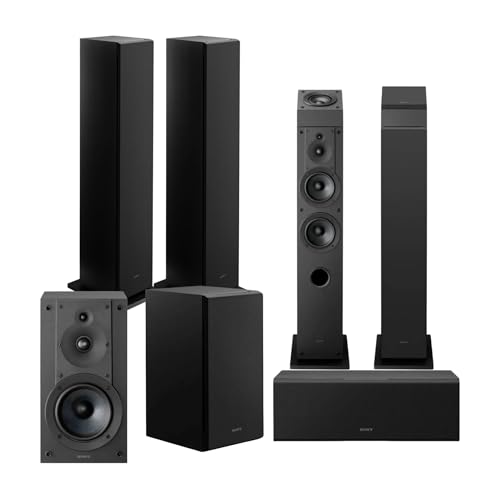
 Sony SS-CS5M2 3-Way 3-Driver Hi-Res Compact Bookshelf Speakers8.7 x 7 x 13.2 inches1 poundsCheck on Amazon
 Sony SS-CS3M2 3-Way 4-Driver Hi-Res Floorstanding Speaker10.24 x 9.05 x 36.3 inches1 poundsCheck on Amazon


What's inside
- What counts as a Sony system and what does not
- The main Sony system formats
- 360 Spatial Sound Mapping and calibration
- Driver and cabinet design in the SS and Core Series
- Centre channel and dialogue clarity
- Subwoofer sizing by room volume
- HDMI eARC, optical, and wireless links between components
- Impedance, sensitivity, and receiver matching for passive Sony speakers
- When a packaged Sony system beats separates, and when it does not
- Placement geometry for surround and height channels
- Choosing between Sony lines for different rooms
- Formats, decoding, and what the labels mean
- Setup sequence that avoids most problems
- Common mistakes with Sony speaker systems
- Check prices on Amazon
- Questions to answer before choosing
As an Amazon Associate I earn from qualifying purchases. This post may contain affiliate links at no extra cost to you.
A Sony speaker system means speakers designed, voiced, and sold by Sony as a coordinated set, not a collection of unrelated boxes that happen to connect to a Sony television or receiver. That distinction matters because compatibility is a very low bar: almost any passive speaker with standard binding posts will work with almost any receiver that provides enough power at the right impedance, and almost any soundbar with an HDMI ARC or eARC port will accept audio from almost any modern television. A system, in the sense used in this guide, is something narrower and more useful. It is a group of Sony loudspeakers, and in some cases a Sony soundbar, wireless subwoofer, and wireless rear speakers, that were engineered to share a tonal balance, a calibration routine, and a control scheme, so the sound arriving from the centre, the front left and right, the surrounds, and the height positions belongs to the same acoustic family.
This guide is based on manufacturer documentation and published specifications, including Sony support pages, product manuals, and specification sheets that list channel counts, driver complements, rated impedance, sensitivity where Sony publishes it, terminal types, wireless link requirements, and supported audio formats. Where Sony does not publish a figure, this guide says so rather than filling the gap with a guess. That approach is especially important for loudspeakers, where a single headline number such as total system power can describe very different things depending on how it was measured, at what distortion, into what load, and for how long.
Readers will find four broad families covered here. The first is the traditional packaged home theatre set built around an AV receiver and passive Sony speakers from lines such as the SS and Core Series. The second is the soundbar-centred system, where a Sony bar handles the front and centre channels and can be expanded with a wireless subwoofer and wireless rear speakers. The third is the HT-A and Bravia Theatre family of theatre systems that use Sony processing, including 360 Spatial Sound Mapping, to create phantom speakers and a wider sound field from a small number of physical units. The fourth is the simpler stereo or 2.1 arrangement for music and television in a smaller room, where two well placed Sony speakers and a correctly sized subwoofer can outperform a larger system that has been squeezed into the wrong geometry.
What counts as a Sony system and what does not
A speaker that is merely compatible with Sony equipment is not a Sony speaker. A third party bookshelf model connected to a Sony receiver remains a third party speaker, however well the pairing works, and a generic soundbar plugged into a Sony Bravia television remains a generic soundbar. The reason for insisting on the distinction is practical rather than snobbish. When every loudspeaker in a system comes from the same design programme, the manufacturer can match sensitivity so one channel does not dominate, match the crossover behaviour between the subwoofer and the satellites, and write calibration software that knows the capabilities of the hardware it is measuring. When the parts come from unrelated makers, none of that coordination can be assumed, even though the result can still be enjoyable.
Sony passive speakers carry model prefixes that help identify them in documentation. The SS prefix has been used for many Sony loudspeaker models over several generations, covering bookshelf, floorstanding, centre, and surround designs. The Core Series name has been applied to a group of Sony speakers that includes floorstanding towers, bookshelf models, a centre speaker, and upfiring Dolby Atmos enabled speakers designed to sit on top of the front speakers. Checking the exact model suffix matters, because Sony has reused broad series names across years while changing driver sizes, cabinet dimensions, and rated impedance, and two speakers with similar names can have different rear panel terminals and different recommended amplifier ranges.
Powered Sony systems work differently. In a soundbar package, the amplification lives inside the bar and, where a separate subwoofer is included, inside the subwoofer enclosure as well. There is no receiver to match, and the speakers cannot be separated from their electronics. That integration is a strength for setup and a limitation for upgrading, because a failed amplifier section or an outdated HDMI board cannot be swapped the way a receiver can. Buyers should therefore weigh a powered Sony package as a single appliance with a service life, and a passive Sony set as a group of long lived transducers that can survive several generations of electronics.
Television speakers themselves are not covered as a system here, even when a Sony television offers an acoustic centre channel mode that uses the screen as the centre speaker in combination with a compatible Sony soundbar. That feature, often described in Sony documentation as Acoustic Center Sync, is relevant because it changes where dialogue appears to come from, but the television is a display first. Readers choosing a system should treat screen-as-centre as a bonus for specific Sony bar and television combinations, documented model by model, rather than as a substitute for a dedicated centre loudspeaker in a passive layout.
The main Sony system formats
5.1 packages built around a receiver
A 5.1 system uses five ear level channels and one low frequency effects channel: front left, centre, front right, surround left, and surround right, plus a subwoofer. In a Sony passive package this usually means a pair of floorstanding or bookshelf speakers at the front, a dedicated centre, a pair of smaller speakers at the sides or rear, and a powered subwoofer. The receiver decodes Dolby and DTS formats, assigns bass according to the crossover settings, and supplies the amplification. Because the components are separate, the owner controls speaker size settings, crossover frequencies, channel levels, and distance entries, and the automatic calibration in the receiver refines those values using a supplied microphone.
The appeal of 5.1 is that it remains the format most film and television mixes assume as a baseline. A well set up 5.1 Sony system places dialogue in the centre, pans effects across the front stage, and puts ambience and off screen action into the surrounds without requiring ceiling speakers or a large room. Its weakness is cable: five speaker runs plus a subwoofer connection, with the surround cables usually the longest and hardest to hide. In rented homes or rooms with doorways on both side walls, that cabling problem alone can be a legitimate reason to choose a wireless rear solution instead.
7.1 and height channel layouts
A 7.1 layout adds two rear surround channels behind the listener to the 5.1 arrangement, which helps in longer rooms where there is genuine distance between the seating and the back wall. Adding height information produces layouts described as 5.1.2, 5.1.4, 7.1.2, or 7.1.4, where the final number counts height or overhead channels used for Dolby Atmos and DTS:X object based audio. Sony supports these layouts in two different ways: through receivers that drive passive upfiring or ceiling speakers, and through theatre systems that synthesise height impressions with processing and upward firing drivers in a bar or satellite.
More channels only help when the room can hold them. A 7.1 system in a room where the sofa is pushed against the back wall leaves no space for the rear surrounds to do their job, and the extra speakers can end up so close to listeners that they call attention to themselves. Sony documentation for receivers and theatre systems repeatedly assumes a listening position with space around it, and the diagrams in the manuals show separation between surround and rear surround positions. Readers with a sofa against the wall will usually get a cleaner result from a strong 5.1 or 5.1.2 layout than from a crowded 7.1 layout that exists mainly on a specification sheet.
Soundbar plus subwoofer and rear speakers
Sony soundbar systems start with a bar that contains the front left, centre, and front right channels, often along with upfiring drivers for height effects and side firing drivers intended to widen the stage. Models in the HT-A series, such as the bars documented with built in dual subwoofers, centre speaker circuitry, and support for optional wireless subwoofers and rear speakers, illustrate the pattern. Adding a Sony wireless subwoofer moves deep bass out of the slim bar cabinet, and adding Sony wireless rear speakers gives real surround envelopment instead of relying entirely on reflections and signal processing.
The modular order matters. A bar alone is a large step up from television speakers for dialogue and dynamic range. A bar with a subwoofer adds weight to effects and music and lets the bar concentrate on the midrange and treble. A bar with rear speakers changes the geometry of the experience, because sounds can genuinely arrive from behind. Buyers working to a budget will usually gain more from adding the subwoofer first for action heavy viewing, and more from adding rears first for sports, games, and films where surround ambience is a priority. Sony sells these additions separately for many models, so the exact compatibility list for a given bar should be checked in that bar manual rather than assumed from the series name.
HT-A and Bravia Theatre wireless theatre systems
Sony theatre systems built around four wireless speakers, sold in the HT-A9 and later Bravia Theatre Quad families, take a different approach from both bars and receiver packages. Four identical or near identical units are placed at the corners of the listening area, each containing forward and upward firing drivers, and the control box connects to the television by HDMI eARC. The system measures the positions of the speakers and the listening area, then uses 360 Spatial Sound Mapping to create phantom channels, so the listener hears a centre image and surround positions that do not correspond one to one with physical boxes.
Flexibility is the main advantage. The speakers do not need to be perfectly symmetrical, and the calibration is designed to compensate for real rooms where one front speaker sits on a shelf and the other on a stand. The trade offs are dependence on the control box and its software, the need for a power outlet at each speaker position, and the absence of a true dedicated centre loudspeaker in the basic four speaker arrangement, although some Sony televisions can supply the centre function for these systems. A separate wireless subwoofer is an optional addition and, for film use in anything larger than a small room, documentation and basic physics both point in the same direction: four compact cabinets cannot move enough air at low frequencies to replace a subwoofer.
360 Spatial Sound Mapping and calibration
360 Spatial Sound Mapping is Sony processing used in its theatre systems and some soundbars and receivers to build a sound field that extends beyond the physical speaker positions. In Sony descriptions, the system measures the distance and relative position of the connected speakers, using microphones built into the speakers or supplied with the system, and then creates additional phantom speakers. The practical claim is not that processing invents information that is absent from the recording, but that it places the existing channels and audio objects in a bubble of sound around the listener even when the physical speakers are few or imperfectly placed.
Calibration microphones are central to that process and to receiver based Sony systems as well. A measurement microphone at the listening position hears test tones from each speaker in turn. The system estimates distance from the delay before the tone arrives, estimates level from the loudness it records, and in more advanced routines measures aspects of the room response. Small errors in microphone placement produce small errors everywhere else, so the microphone belongs at ear height where the main listener sits, pointed as the manual directs, away from cushions that block sound and away from walls that reflect it immediately. Running calibration with the microphone on a coffee table or held in a hand gives the system a false picture of the room.
Multiple listening positions complicate calibration. Some Sony routines measure a single main position, while theatre systems describe optimising for the viewing area. A system tuned perfectly for one seat will be less accurate for a seat a metre to the side, because the distance to the left and right speakers changes and the balance shifts. Households that watch mainly from two central seats should calibrate for the midpoint between them rather than for one favourite chair, accepting a small compromise for both listeners instead of perfection for one and a noticeably off centre image for the other.
Calibration is not a substitute for placement. Processing can adjust level and delay with great precision, and it can apply equalisation within limits, but it cannot move a speaker that is firing into the side of a bookcase, and it cannot fully correct a centre speaker buried inside a closed cabinet. Sony manuals still specify clear space around speakers, distances from walls, and unobstructed paths for upward firing drivers. Readers should treat calibration as the final correction after sensible placement, in that order, and rerun it whenever a speaker moves, a large piece of furniture changes, or the seating position shifts.
Driver and cabinet design in the SS and Core Series
Sony bookshelf and floorstanding speakers in the Core Series are documented with soft dome tweeters, mica reinforced cellular woofer cones in several models, and bass reflex cabinets with rear or front ports depending on the model. Mica reinforced cellular material is Sony description for a cone material intended to be light and stiff, two properties that pull in opposite directions in loudspeaker design. A light cone responds quickly and needs less power to move, while a stiff cone resists bending and breakup at higher frequencies, which helps a woofer hand over cleanly to the tweeter at the crossover.
Tweeter design influences how forgiving a speaker is about seating position. A wide dispersion tweeter spreads high frequencies over a broader angle, so listeners sitting off the central axis still hear treble detail, while a narrow dispersion design rewards the central seat and penalises the edges. Sony publishes dispersion related descriptions for some models and not for others, so the specification sheet for the exact speaker matters more than general claims about the series. In family rooms where people watch from sofas and armchairs spread across the width of the room, dispersion is not a minor detail; it decides whether the person at the end of the sofa hears the same film as the person in the middle.
Cabinet construction affects sound in ways that are easy to overlook because the cabinet makes no sound of its own when it behaves. A rigid, well braced enclosure reduces panel resonance that would otherwise add a boxy colouration to voices and acoustic instruments. Weight and dimensions in Sony specifications give a rough indication of cabinet size and internal volume, which in turn relate to how much bass a passive design can produce before a port or the driver reaches its limits. A small bookshelf cabinet cannot produce deep bass at high volume regardless of processing, which is why Sony systems pair such speakers with a subwoofer and why receiver settings should mark them as small when a subwoofer is present.
Ports need room to work. A rear ported Sony bookshelf speaker placed hard against a wall will reinforce bass unevenly and can sound thick or boomy, because the wall becomes part of the acoustic system. Sony manuals for passive speakers typically recommend clearance behind and to the sides, and the specific distance in the manual for the model in question should govern. Where shelves or wall mounting make clearance impossible, a front ported design or a sealed design is easier to place, and using the receiver crossover to hand bass to a subwoofer reduces the port contribution that causes the problem.
Centre channel and dialogue clarity
The centre speaker carries most film and television dialogue, along with much of the on screen action. In a Sony 5.1 or 7.1 passive system, using the matching Sony centre from the same series as the front speakers keeps voices consistent as a character moves across the screen and the sound pans from left to centre to right. A mismatched centre can be louder, brighter, or thinner than its neighbours, and the ear notices the change every time dialogue crosses a boundary. Matching does not require identical drivers, which would be impractical in a horizontal centre cabinet, but it does require a shared voicing intent from the same design programme.
Placement decides dialogue quality as much as the speaker itself. The centre belongs as close to the height of the screen centre as the furniture allows, angled toward the listeners ears, at the front edge of its shelf rather than pushed back where reflections from the shelf surface smear speech. A centre placed low inside a cabinet and aimed at viewers knees will underperform a modest centre placed correctly on an open stand. Sony documentation for centre speakers shows them in open positions below or above the display, and that guidance should be followed even when a tidier hidden placement is tempting.
Dialogue enhancement features in Sony bars and receivers raise the centre information or apply processing to the vocal frequency range, and they are genuinely useful for programmes with dense mixes, unfamiliar accents, or actors who mumble. They work best as a modest correction. Pushing dialogue processing to its maximum can make voices sound detached from the scene and can raise background sounds that share the same frequencies. Listeners who need maximum clarity for hearing reasons may also benefit from reducing the level of the surround channels slightly, because competing ambience is a common and under recognised cause of unclear speech in home systems.
Readers comparing options for smaller rooms sometimes ask whether a bar format helps dialogue, and anyone weighing a compact setup alongside wider speaker categories will find the placeholder best 2 1 bluetooth speakers useful as a reminder that a simple stereo arrangement and a dialogue focused theatre system solve different problems. A 2.1 arrangement can sound clean and musical, but it has no dedicated centre, so dialogue is a phantom image created by the left and right speakers. That image is stable only near the midpoint between them. A Sony bar with a real centre channel, or a passive system with a real centre speaker, holds dialogue in place for a wider range of seats.
Subwoofer sizing by room volume
Subwoofer sizing starts with room volume, not screen size. A room that measures five metres by four metres with a ceiling of two and a half metres contains about fifty cubic metres of air, and openings into hallways, kitchens, or stairwells add to the volume the subwoofer effectively works in. Driver diameter, amplifier power, cabinet type, and placement all interact, but the basic relationship is stable: larger spaces and listeners who enjoy film effects at high level need a subwoofer that can move more air with less strain. Sony publishes driver sizes and amplifier figures for its wireless and powered subwoofers, and those figures should be compared within the context of the room rather than as abstract bragging rights.
An undersized subwoofer does not simply sound quieter. When asked for deep bass beyond its comfortable range it produces distortion, port noise in a ported design, or compression where loud passages stop getting louder. An oversized subwoofer in a small room is easier to manage, because its level can be turned down and calibration can integrate it, although a very powerful unit in a lightweight building can disturb neighbouring rooms in ways no setting fully solves. For most living rooms, a single good Sony subwoofer placed well will integrate better than two poorly placed units, while larger or irregular rooms can benefit from a second subwoofer smoothing the response across seats, where the Sony system in question supports it.
Placement changes subwoofer output dramatically because low frequencies interact with room boundaries. A subwoofer in a corner gains reinforcement from the walls and floor, which increases output but can exaggerate particular frequencies. A subwoofer along a wall sits between extremes. Moving a unit even half a metre can change the balance at the listening seat, which is why the familiar method of placing the subwoofer temporarily at the listening position, playing bass heavy material, and listening around the room for the smoothest response remains practical advice. After placement, the crossover and phase or distance settings in the receiver or bar determine how the subwoofer hands over to the main speakers, and a poor handover produces a hole or a bump in the upper bass that listeners describe as disconnected effects.
Crossover frequency deserves a specific number in most setups. The widely used starting point of eighty hertz for speakers set to small in a receiver suits many Sony bookshelf and satellite combinations, because it relieves the small speakers of deep bass while keeping the subwoofer below the range where the ear localises it easily. Large floorstanding front speakers can be crossed lower or run with more of their own bass, but in film systems there is still an argument for letting the subwoofer handle the lowest octaves, since it is the component designed and positioned for that job. Whatever value is chosen, the same value and the calibration result should be checked together, not adjusted independently on different days.
HDMI eARC, optical, and wireless links between components
HDMI eARC is the connection that makes modern Sony systems practical. The enhanced Audio Return Channel carries high bandwidth audio from the television to a bar, theatre control box, or receiver, including multichannel formats and object based audio that the older ARC standard could not pass in full quality, while also allowing the television remote to control system volume through HDMI Consumer Electronics Control. Sony documentation lists eARC support model by model, and the television must support it too; a chain is only as capable as its weakest link, so an eARC bar connected to an ARC only television behaves like an ARC system.
Setup problems with eARC are usually configuration problems rather than faults. The cable must connect to the HDMI port labelled ARC or eARC on both devices, the television audio output must be set to the external system, and the digital audio output format must match what the system can decode. Passthrough settings matter when a games console or disc player connects through the television, because a television set to convert audio can strip formats the Sony system would otherwise have handled natively. Sony manuals provide the menu names for their own televisions and audio products, and following those exact labels is faster than guessing through generic advice.
Optical connections remain a useful fallback. An optical digital cable carries stereo and compressed multichannel audio reliably and is immune to the handshake quirks that occasionally affect HDMI, but it cannot carry the highest bandwidth formats or the control features of eARC. Bluetooth connections between a television and a bar serve casual viewing and late night listening convenience, at the cost of compression and sometimes noticeable delay between picture and sound. For a primary film system, wired eARC is the connection Sony designs around, and the alternatives should be treated as fallbacks rather than equivalents.
Wireless links inside a Sony system are a different matter from Bluetooth to the television. Sony wireless subwoofers and rear speakers use a dedicated link to their bar or control box, established by pairing and maintained automatically, with the manual specifying range and placement limits. These links remove the long cable runs that make surround speakers impractical in many rooms. They do not remove the need for power, because each wireless speaker still plugs into a wall outlet, and they can be affected by severe radio congestion or by placing the bar inside a metal cabinet that blocks the signal. A short test of the intended positions before committing to furniture arrangements prevents most surprises.
Impedance, sensitivity, and receiver matching for passive Sony speakers
Impedance, measured in ohms, describes the load a speaker presents to an amplifier, and it varies with frequency rather than sitting at one fixed value. Sony publishes a rated or nominal impedance for its passive speakers, commonly values such as six or eight ohms in the documentation for home models, and receivers publish the impedance range they are designed to drive. A lower impedance speaker draws more current at a given volume setting, which is why matching matters most at high listening levels in large rooms. Selecting the correct impedance setting on a receiver, where the manual instructs it, and ensuring ventilation around the receiver are part of the same matching exercise.
Sensitivity describes how loud a speaker plays with a given input, conventionally expressed as decibels at one metre with one watt or with a standard voltage, and Sony publishes sensitivity for some passive models. A difference of three decibels is significant: a speaker with higher sensitivity needs roughly half the amplifier power to reach the same level as a less sensitive speaker, all else being equal. In practice this means a sensitive Sony bookshelf speaker can fill a bedroom or study with a modest receiver, while a less sensitive floorstanding model in a large open plan space deserves a receiver with genuine current capability rather than an impressive wattage figure measured under lenient conditions.
Amplifier power ratings need careful reading wherever they appear. A rating stated per channel with two channels driven, across the full audio band, at low distortion, describes something very different from a rating for one channel at one kilohertz into a low impedance with high distortion allowed. Sony receiver and speaker documentation uses several conventions across product generations, so comparing the test conditions matters more than comparing the headline watts. Headroom is the real goal: an amplifier that is comfortable at the loudest level the household actually uses will sound cleaner than a strained amplifier with a larger number on the box.
Speaker cable is part of matching in a simple electrical sense. Long runs to surround speakers benefit from thicker cable, because resistance in a thin, very long cable wastes power and can slightly alter the frequency balance with low impedance speakers. For typical living room distances the effect is modest, and exotic cable claims go well beyond anything Sony documentation supports. Secure, clean connections matter more: bare wire strands that stray toward the neighbouring terminal cause intermittent shorts that receivers detect as protection faults, and banana plugs or carefully twisted and inserted bare wire prevent that mundane but common failure.
When a packaged Sony system beats separates, and when it does not
A packaged Sony system wins on integration. The calibration knows the speakers, the wireless links pair without configuration, the remote and the television remote cooperate, and the tonal balance across channels has been decided by the manufacturer rather than left to chance. For households that want film sound to work every evening without adjustment, that integration is worth real money. Packaged systems also win on footprint and appearance, because bars and compact wireless satellites were designed for living rooms rather than for dedicated media rooms with equipment racks.
Separates win on longevity and upgrade paths. Passive Sony speakers can remain in service through two or three receivers as HDMI standards and streaming features evolve, and a single damaged speaker can be repaired or replaced without discarding the whole system. Separates also win at the extremes of room size and listening level, because a receiver with substantial amplification and full size speakers can fill a large space in a way no slim bar can match, whatever its processing. Readers building a dedicated room, or listeners who play music at concert levels, should start from separates and treat packaged systems as the compromise they are.
Music listening changes the calculation again. A stereo pair of Sony floorstanding speakers with a good receiver or amplifier gives a stable stereo image, full range sound without a subwoofer handover, and a simpler signal path. Multichannel systems can play stereo music well when set to a direct mode, but their default immersive modes may spread a recording in ways the artist never intended. Households split evenly between music and film often do best with a receiver based system built on strong front speakers, because the same front pair serves both purposes honestly.
Anyone comparing physical driver sizes across brands as part of a separates build will run into large format options, and the reference point best 12 inch speakers belongs in that wider research rather than in a Sony package decision, because a twelve inch driver in a PA or studio context answers a different question about output and dispersion. Sony home systems achieve their results with smaller drivers working together, subwoofers handling the lowest range, and placement and calibration doing much of the work. Judging a Sony theatre package by driver diameter alone therefore misreads the design.
Budget allocation follows from these trade offs. In a receiver based Sony system, the front three speakers and the subwoofer deserve the largest share, because they carry almost everything the listener hears in a film. Surround speakers matter, but they reproduce ambience and effects rather than dialogue, and the matching smaller Sony models are appropriate there. In a bar based system, the equivalent decision is whether to buy a higher bar or a lower bar plus its subwoofer and rears, and for most rooms the complete lower system sounds more like a theatre than the better bar standing alone.
Placement geometry for surround and height channels
Front speaker geometry begins with an equilateral idea: the left and right speakers and the listener form a triangle in which the distance between the speakers is similar to the distance from each speaker to the listener. Tweeters should sit near ear height for seated listeners, and toe in, the angle at which speakers point inward toward the listener, adjusts the balance between a precise central image and a wide soundstage. Sony manuals illustrate front speakers angled toward the listening position, and small adjustments of a few degrees are worth trying because they cost nothing and can sharpen dialogue and stereo imaging noticeably.
Surround speakers in a 5.1 layout belong to the sides of the listening position or slightly behind it, above ear height by a modest amount, so their sound envelops rather than blasts the nearest listener. In a 7.1 layout the side surrounds and rear surrounds divide that work, with the rears behind the seating and separated from each other. Wireless Sony rear speakers follow the same geometry; being wireless changes the cabling, not the acoustics. Placing rears on the arms of the sofa or on the floor behind it collapses the surround field into the listeners laps and wastes the main advantage of owning rear speakers at all.
Height channels add a vertical dimension with stricter physical demands. Upfiring Sony speakers, including Atmos enabled models designed to sit on top of front speakers, bounce sound from the ceiling, so they need a flat, reflective ceiling at a reasonable height and a clear path upward. Vaulted, beamed, or acoustically treated ceilings absorb or scatter that reflection, and in such rooms ceiling mounted or height speakers on walls are the honest solution where a receiver system allows them. Sony theatre systems with upward firing drivers in each unit face the same ceiling dependency, and their documentation assumes a ceiling that can reflect sound toward the seating.
Distance and level calibration translate geometry into numbers. Each speaker distance entry tells the processor how long to delay channels so sounds arrive together, and each level entry compensates for the fact that a surround speaker two metres away sounds louder than a front speaker four metres away at the same output. Automatic routines handle this well when the microphone is placed correctly, but owners should verify the results, because a routine that reports a surround speaker at an implausible distance has usually measured a reflection or been blocked. Correcting one wrong distance by measuring with a tape and entering it manually is legitimate and often improves the coherence of effects that move around the room.
Room surfaces complete the geometry. Bare parallel walls, hardwood floors, and large windows create strong reflections that blur imaging, while soft furnishings, rugs, curtains, and bookcases absorb and scatter sound in helpful ways. A Sony system does not need a treated studio, but a rug between the front speakers and the sofa and curtains over a large window behind the seating are the two highest value acoustic improvements in most living rooms. These changes also improve conversation in the room, which makes them easier to justify than panels bought only for the system.
Choosing between Sony lines for different rooms
Small rooms and apartments
A small room rewards restraint. A Sony bar with a compact wireless subwoofer, or a stereo pair of Sony bookshelf speakers with a small subwoofer, fills a bedroom, study, or apartment living room without exciting every room mode or overwhelming the seating two metres away. Neighbour considerations are part of the specification in an apartment: a system with a good night mode and a subwoofer that can be placed near the seating, so it can run at lower level for the same perceived bass, is a better neighbour than a large system turned down reluctantly. Wall mounting options and cabinet depth, both listed in Sony dimensions, decide whether a bar fits under a television on a shallow stand, a detail that has ended more purchases than any audio specification.
Family living rooms
The typical family room needs width of good sound more than it needs peak performance in one chair. A Sony bar system with real rear speakers, or a 5.1 passive system with wide dispersion front speakers, serves a three seat sofa and an armchair more evenly than a narrowly focused audiophile pair. Durability and simplicity matter here: wireless rears avoid cables across doorways, grilles stay on, and the system must return to correct behaviour after a child presses every button on the remote. Sony systems that store calibration and settings through power loss, and that default to the television input on start up, earn their place in a family room through these unglamorous behaviours.
Dedicated media rooms
A dedicated room justifies the full separates approach: a receiver with the channel count the room can hold, Sony floorstanding front speakers, the matching centre, surrounds and height speakers in their correct positions, and subwoofer capacity matched to the room volume with headroom to spare. Acoustic treatment, seating distance, and screen size can all be planned together, and speaker cable can be run in walls before furniture arrives. In this setting the packaged theatre systems still have a role for owners who value minimal equipment, but the ceiling for performance sits with separates, and the budget should reflect the room rather than the brochure.
Shoppers who start their research with very large passive cabinets will encounter specialist categories such as best 15 inch passive speakers during broad reading, and that detour is useful mainly for clarifying that domestic Sony systems pursue integration and controlled dispersion rather than raw cone area. A fifteen inch passive design belongs to high output applications where a single driver must move a great deal of air. A Sony home theatre distributes that work across a subwoofer and multiple smaller drivers, each operating in the range it handles best, which is a different and for living rooms usually better engineering answer.
Formats, decoding, and what the labels mean
Dolby Atmos and DTS:X are object based formats in which sounds are placed in a three dimensional space and rendered according to the speakers available. A Sony system that supports these formats can use height information when the source provides it and will render standard multichannel or stereo sources without it. Support in the specification means the decoder is present; it does not guarantee that a particular streaming service, television application, or console will deliver the format to the system, because each device in the chain must pass it through. Checking the whole chain against documentation prevents the frustration of owning an Atmos system fed by a source that never sends Atmos.
Sony 360 Reality Audio is a separate spatial format used mainly for music, supported by some Sony bars, theatre systems, and receivers, and delivered by specific streaming services. It places instruments and voices in a spherical field around the listener. Its relevance to a speaker system purchase is that a household subscribing to a supporting service gains something from a supporting system, while a household that does not will never encounter the format. It should therefore be treated as a bonus feature rather than a reason to choose one system over another with better basics.
High resolution audio support, Bluetooth codec support such as LDAC on compatible Sony products, and HDMI features such as variable refresh rate passthrough on receivers matter to specific users. Gamers should check that a receiver or bar passes the video features their console and television support, because routing a console through a system that limits refresh rate or variable refresh rate trades picture performance for audio convenience. The alternative connection, console to television and television to system by eARC, avoids many such limits and is the arrangement Sony diagrams recommend for several of its products.
Readers who have followed the format discussion this far and are now weighing premium stereo separates for a music first room may also be browsing best 1000 tower speakers as a price led category, which is a sensible cross check on value even though this guide stays with Sony systems. The comparison clarifies what a given budget buys in cabinet size, driver complement, and finish across the market. Within a Sony home theatre budget, however, the centre speaker and subwoofer deserve funding before any upgrade to the front pair, because a theatre system is judged by its weakest channel and not by its best two speakers.
Setup sequence that avoids most problems
Start with the room, not the boxes. Decide where the seating will be, because every speaker position is defined relative to it, and confirm that power outlets exist where wireless speakers or a subwoofer will stand. Place the front speakers and centre, then the subwoofer, then surrounds and heights, following the geometry described earlier. Connect the system to the television by the eARC port with a cable rated for the bandwidth, update firmware if the manual directs it, and only then run calibration with the microphone at the main seat.
After calibration, verify rather than assume. Play a film scene with dialogue, a pan across the front, and a surround effect, and confirm that each element appears where it should. Check that the television reports the audio format expected from the source, that the subwoofer is neither silent nor dominant, and that volume control from the television remote works. Save or note the settings, because a future firmware update, power cut, or curious guest can change them, and a written record turns a mystery into a five minute restoration.
Level adjustments after calibration should be small and purposeful. Raising the centre by a decibel or two for dialogue is a common and reasonable preference, and lowering a subwoofer that excites a room boom is equally reasonable. Large corrections suggest a placement or calibration problem that processing is masking, and revisiting the microphone position or the subwoofer location will usually produce a better result than stacking adjustments. Keeping a note of every change, with the reason, prevents the slow drift into a collection of compensations nobody remembers making.
Common mistakes with Sony speaker systems
The most common mistake is buying channels the room cannot hold, then placing the extra speakers wherever they fit and concluding that surround sound is disappointing. The second is placing the centre speaker badly, because it is the speaker most often compromised by furniture. The third is running a subwoofer far too loud, which impresses for ten minutes and fatigues for the rest of the film, while also masking the mid bass detail that makes effects sound powerful rather than merely heavy. Each of these mistakes is free to avoid and expensive to fix by buying different equipment that will be installed the same way.
Another frequent error is judging a system in a shop or in the first hour at home using only loud action scenes. Dialogue intelligibility at modest volume, stereo music imaging, and the behaviour of the system at night levels reveal more about long term satisfaction. Sony systems offer sound modes that flatter action material, and a mode that sounds exciting in a demonstration can sound exhausting across a whole series. Evaluating with the material the household actually watches, at the volume it actually uses, is the closest thing to a reliable test available outside a laboratory.
Ignoring documentation is the mistake behind many others. Sony manuals specify speaker distances, ceiling conditions for upfiring drivers, wireless pairing procedures, impedance settings, ventilation clearances, and compatible optional speakers for each model. These are not legal decorations; they are the conditions under which the published specifications were achieved. A system installed against its manual and then judged harshly has not really been judged at all, and support departments will ask about exactly these points before treating a problem as a defect.
Check prices on Amazon
Live listings for the shortlist in this guide are pulled from Amazon below, so prices and availability are always current at the moment you look.

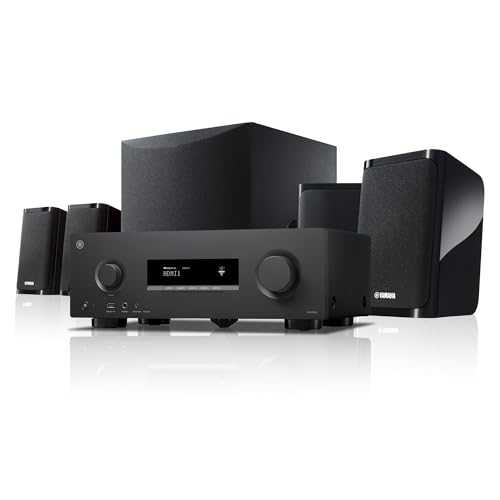
Sony HT-S40R 5.1ch Home Theater Soundbar System,black


Questions to answer before choosing
How large is the room, including openings into other spaces, and how far is the seating from the screen? Is there space behind the seating for rear surrounds, and is the ceiling flat enough for upfiring height speakers? Can speaker cable be run to surround positions, or must the rears be wireless and therefore near power outlets? Does the television have an eARC port, and do the sources deliver the formats the system can decode? Will the system be used mainly for film, mainly for music, or evenly for both, and who else in the household must be able to operate it without help?
Honest answers narrow the Sony range quickly. A small room, a sofa against the wall, and no cable routes point to a bar with a wireless subwoofer or a four speaker theatre system. A large room with space behind the seating and a willingness to run cable points to a receiver and passive Sony speakers. A music first household points to strong front speakers whichever route is chosen. A household that values simplicity above all should count the remotes, applications, and setup steps a system requires, because those are specifications too, even though they never appear in a table.
Some links in this article lead to a retailer, and this site may earn a commission from qualifying purchases at no extra cost to you, which helps fund guides built from manufacturer documentation and published specifications like this one.
The right Sony speaker system is the one whose channels your room can place correctly, whose centre keeps dialogue clear from every seat you care about, and whose subwoofer is sized to your space rather than to a headline, because a modest Sony layout installed with care will satisfy its owners long after a larger system squeezed into the wrong geometry has been sold on.

