Our Top Picks


What's inside
- What integrated speakers can and cannot do
- Dell’s conferencing monitors: cameras, microphones and speaker bars
- The P-series, UltraSharp and S-series: where speakers appear
- Speaker placement: down-firing, rear-firing and front-facing
- USB-C hub models and the one-cable desk
- How to check a spec sheet for actual speakers
- Panel specifications that matter alongside the audio
- Pairing a Dell monitor with dedicated speakers
- Setup, operating-system settings and troubleshooting silence
- Buying checks before ordering
- Use cases: telehealth, teaching, reception and the shared desk
- Two monitors, daisy-chaining and where the sound goes
- Accessibility, volume safety and listening comfort
- Standards behind the specification sheet
- Check prices on Amazon
- Verdict: match the audio claim to the document, then to the desk
As an Amazon Associate I earn from qualifying purchases. This post may contain affiliate links at no extra cost to you.
A monitor with speakers built in sounds like a minor convenience until a desk has to host video calls every day, and then it becomes a question of space, cabling and intelligibility. This guide covers Dell monitors that genuinely contain loudspeakers, across the conferencing models with pop-up cameras and speaker bars, the P-series business range, the UltraSharp variants that include audio, and the S-series home and entertainment models. It is equally concerned with the monitors that do not contain speakers despite having audio sockets, because Dell’s catalogue uses near-identical model numbers for variants that differ on exactly this feature, and a buyer who assumes rather than checks can end up with a silent display and a headphone jack they mistook for a speaker system.
The honest starting point is that integrated monitor speakers are a tool for voices, alerts and casual media, not a replacement for dedicated loudspeakers. The drivers that fit inside a display bezel or a slim soundbar are small, the amplifiers behind them typically deliver between 2 watts and 5 watts per channel in the models documented by Dell, and the cabinets have almost no internal volume with which to produce bass. Within those limits, a well-designed integrated system can be entirely successful at its actual job: making a colleague’s voice clear at conversational level from half a metre away, keeping notification sounds audible, and letting a short video play without reaching for headphones. Judged against that job description, rather than against a hi-fi standard it never claimed, the better Dell implementations are genuinely useful, and this guide uses Dell’s published specifications, user guides and setup documentation as the basis for every figure it quotes.
Why integration matters goes beyond tidiness. A desk with separate speakers needs two more objects, two more positions to get right, a power supply and at least one more cable, and on a small or shared desk those objects compete with documents, laptops and coffee. Integrated speakers occupy space that already exists, point roughly where the screen points, which is to say at the user, and switch on and off with the display. For hot-desking offices, reception desks, telehealth workstations, teaching stations and home offices in spare corners, that consolidation is the product. The counterargument is equally practical: a buyer who watches films, edits video or listens to music at the desk for hours will outgrow integrated audio quickly, and the later sections of this guide explain how to pair a speaker-equipped Dell with a dedicated speaker set so each does the work it is good at.
What integrated speakers can and cannot do
The physics are unforgiving and worth stating plainly. Bass reproduction requires moving air, and moving air requires cone area and excursion inside an enclosure of useful volume. A monitor is a few centimetres thick, most of that thickness is panel, backlight and electronics, and the space left for a loudspeaker is a shallow strip along the bottom edge, a pair of small chambers at the rear, or a detachable bar. Drivers in such spaces are commonly in the range of a few centimetres across. They can reproduce the frequency band where speech intelligibility lives, roughly from a few hundred hertz to several kilohertz, with clarity, but the fundamental frequencies of a male voice, a bass guitar or a film score sit below what they can move enough air to reproduce, so those sounds arrive thin, carried by their harmonics rather than their foundations.
Output figures tell the same story in numbers. Dell’s documentation for speaker-equipped models commonly specifies stereo output in the region of 2 watts by two channels at the modest end, rising to 5 watts by two channels on better-equipped business and conferencing models, with dedicated speaker bars and conferencing systems sometimes offering more. Those figures are not directly comparable with the headline wattage of desktop speaker systems, which may quote peak rather than continuous power, but the order of magnitude is the message: integrated audio is designed for nearfield listening at a desk, where the listener sits perhaps 50 to 80 centimetres away and modest power produces adequate level because of that short distance. At three metres across a living room, the same system will sound lost, which is a statement about intended use rather than a defect.
Distortion behaviour follows from size as well. A small driver asked to play loud, especially with bass-heavy material, reaches the end of its excursion quickly and produces a strained, rattling quality, sometimes exciting vibration in the monitor’s own plastic panels or in objects on the desk. The practical technique with any integrated system is to run the monitor’s volume in its middle range and control level from the computer, or the reverse, whichever combination the specific model’s documentation supports cleanly, and to accept the level the system gives gracefully rather than forcing the last few steps of the volume control. Speech will remain clear well beyond the point where music has stopped being enjoyable, which is why call quality, not music playback, is the correct headline test for this entire category.
Dell’s conferencing monitors: cameras, microphones and speaker bars
Dell’s conferencing line, sold under model designations that have included the letter C and, in later line-ups, integrated into video-conferencing variants of its business ranges, is where integrated audio receives the most engineering attention, because the product’s purpose is the call itself. These monitors combine a pop-up camera, typically a Full HD or higher-resolution sensor that retracts into the top bezel when not in use, an array of microphones designed to isolate a voice at desk distance and reject room noise, and speakers voiced for speech, in some models implemented as a front-facing speaker bar integrated into the lower bezel or as a substantial soundbar section. Dedicated call controls on the bezel, including buttons for launching conferencing software, muting, and adjusting volume, complete a design in which the monitor is the meeting appliance and the computer merely hosts the application.
The pop-up camera deserves attention because it solves a privacy and framing problem simultaneously. Retracted, the sensor is physically hidden, which answers the privacy question more convincingly than a software indicator. Raised, it sits at the top centre of the screen, close to the eye line of the person being spoken to in a typical call window, which reduces the downward-gaze effect of a laptop camera. Camera specifications in Dell’s documentation include resolution, field of view and, on models with infrared sensors, support for facial-recognition sign-in. Buyers comparing conferencing models should read those camera figures alongside the audio figures, because the value of the category is the combination; a model with excellent speakers but a mediocre camera and microphone array will still produce poor meetings, since the people at the other end experience your microphone and camera, not your speakers.
Microphone arrays and echo cancellation are the invisible half of call clarity. When a monitor’s speakers play the far end of a call into a room and its microphones are open, the system must prevent that output from being sent straight back as echo, and must suppress keyboard noise, fan noise and room reverberation enough for speech to remain intelligible. Dell’s conferencing documentation describes noise-cancelling microphone arrangements and, on some models, dedicated processing for this task. The specification-sheet consequence is that a conferencing monitor should be evaluated on its microphone count and stated features, its speaker output, and its camera, as a three-part system. It is also why these models command a premium over a standard business monitor plus a separate webcam: the integration, certification for major conferencing platforms where stated, and one-cable connection are the product being bought.
The P-series, UltraSharp and S-series: where speakers appear
Dell’s P-series is its mainstream business line, and speaker provision across it is inconsistent in a way that makes spec-sheet checking essential. Some P-series models include modest integrated speakers aimed at call and alert duty, many do not, and the range has historically relied on an optional or bundled soundbar, a slim speaker unit that clips beneath the monitor and draws power and audio from the display or the computer, to provide sound where the panel itself has none. Dell’s soundbar approach has a certain logic: one accessory serves many monitor models, keeps the base monitor cheaper for fleets that use headsets, and can be replaced independently. For a buyer, however, it means the words that matter are in the detailed specification under the audio heading, not in the range name, and a listing photograph showing a bar beneath a screen does not prove the bar is included in the box.
UltraSharp, Dell’s premium line, prioritises panel quality, colour performance, connectivity and ergonomics, and its speaker provision follows the same variant discipline. Certain UltraSharp models, particularly those designed as USB-C hub monitors for professional desks and the conferencing-oriented UltraSharp variants, include speakers, while many colour-critical models omit them entirely on the reasoning that their users work with headphones or studio audio. Where an UltraSharp does include speakers, they sit alongside the features that define the line: high-resolution IPS or IPS Black panels with wide colour gamuts, factory colour calibration documentation, extensive USB hubs and daisy-chaining. The buyer paying UltraSharp prices for audio should therefore be clear that the money buys the panel and the hub, with speakers as a supporting feature of typically modest wattage, not the headline.
The S-series addresses home, entertainment and home-office buyers, and here speakers appear more often as a deliberate selling point, because a home user is more likely to want a single device that plays a video, a tutorial or a casual game soundtrack without extra hardware. S-series models with speakers have commonly offered output at the upper end of the integrated range, sometimes with tuning emphasis intended to flatter media playback, alongside features such as HDR support on suitable panels, higher refresh rates on gaming-adjacent variants, and styling with thinner bezels and fabric or metallic finishes suited to visible living spaces. Even so, the same physical limits apply, and Dell’s own documentation for these models states wattage figures that confirm their nearfield, casual-media role.
Alienware and Dell’s dedicated gaming lines sit outside this guide’s centre of gravity, since gaming monitors generally omit speakers or treat them as incidental, on the assumption that players use headsets or external systems; readers whose priority is high-refresh play rather than calls will find the relevant panel-first comparison in best 1080 gaming monitors, and should treat any integrated audio on such a monitor as a bonus rather than a buying reason.
Speaker placement: down-firing, rear-firing and front-facing
Where a monitor puts its speakers changes what the listener hears as much as the wattage does. Down-firing speakers, mounted along the bottom edge and aimed at the desk surface, are the most common arrangement in slim business monitors because they preserve a clean bezel and need no visible grille. The desk becomes part of the acoustic system: sound reflects off the surface toward the listener, which can add a degree of reinforcement and spread, but a desk covered with papers, a mat or equipment absorbs and scatters that reflection unpredictably, and a monitor mounted on an arm above the desk loses the reflection altogether, leaving down-firing output sounding thinner and quieter than its specification suggests. Rear-firing designs, with drivers on the back panel, depend even more on reflection, this time from a wall behind the desk, and are the most variable of all in real rooms.
Front-facing speakers, found on conferencing models and integrated speaker bars, aim the drivers at the listener and remove the desk and wall from the equation. For speech this is a clear advantage: consonants, which carry intelligibility and live at higher frequencies that beam more directionally, travel straight to the ears rather than arriving after a reflection that smears their timing. A front-facing bar also places the drivers wider apart than a bottom-edge pair squeezed into a slim chassis sometimes manages, giving stereo material a modest sense of width and helping a listener separate two voices in a panel discussion or a film scene. When Dell’s documentation includes a photograph or diagram of speaker location, that detail deserves as much weight as the wattage line, and buyers for whom calls are the primary purpose should prefer front-facing designs where the choice exists.
Call clarity, in the end, is a chain: the far end’s microphone, the network, the conferencing software’s processing, the monitor’s digital-to-analogue conversion and amplification, the drivers, their placement, the room, and the listener’s distance all contribute. A monitor controls only its links in that chain, which is why two models with identical wattage can perform differently, and why features such as dedicated voice-oriented tuning, adequate undistorted level at desk distance and sensible placement separate the conferencing designs from a token pair of drivers added to a general-purpose display. It also explains the value of a mute button and a volume control reachable on the monitor itself: in a live call, the fastest control is the one that gets used.
USB-C hub models and the one-cable desk
The natural partner to integrated speakers is the USB-C hub monitor, because both serve the same goal of a desk that connects with one cable. A USB-C connection using DisplayPort alternate mode carries the video signal, while the same cable can carry USB data to the monitor’s built-in hub and power from the monitor to a laptop, with Dell’s hub models commonly documenting power delivery figures sufficient for mainstream business laptops, in many cases in the region of 65 to 90 watts depending on the model. Audio travels as part of the digital stream from the computer, so the laptop’s sound emerges from the monitor’s speakers without any separate audio cable, and peripherals plugged into the monitor’s USB ports, a keyboard receiver, a headset dongle, a storage device, remain connected when the laptop leaves and returns.
Building a one-cable setup requires checking three specifications together rather than any one in isolation. First, the monitor’s USB-C port must support video input, not merely data and power, which Dell’s documentation states explicitly for hub models. Second, the power delivery wattage must meet or exceed the laptop’s requirement, or the laptop will charge slowly or discharge under heavy load despite being plugged in. Third, the hub’s USB ports, Ethernet pass-through where fitted, and any daisy-chain output for a second monitor should match the desk’s actual peripherals, because a hub that lacks the one port a user needs daily reintroduces the dongle the purchase was meant to eliminate. KVM functionality, fitted to many Dell hub and UltraSharp models, extends the idea to two computers sharing one display, one set of peripherals and the monitor’s speakers, switching audio along with video and USB, which is a substantial quality-of-life feature for a desk that hosts both a work laptop and a personal machine.
Cable quality and length are the mundane failure points of one-cable desks. The cable must be rated for USB-C video and for the power being delivered, and longer passive cables may not sustain the highest resolutions and refresh rates, a limitation described in both Dell guidance and the underlying USB and DisplayPort standards literature. Use the cable supplied with the monitor where one is included, keep the run as short as the desk layout allows, and when a setup misbehaves, test with the supplied cable before suspecting the monitor, because substitution of an unknown charging cable, which may carry power but no video at all, is the single most common cause of a blank screen in this category.
How to check a spec sheet for actual speakers
This section exists because the most expensive mistake in this category costs nothing to avoid. Dell monitors provide several kinds of audio connection, and only one of them means the monitor can make sound. A headphone or line-out jack passes audio through the monitor to something else; it is a convenience for reaching a socket, and it implies no speakers whatsoever. An audio input, on models that accept one, feeds external sound toward the monitor’s speakers where fitted, or toward the output jack. HDMI and DisplayPort connections carry digital audio to the monitor, which again only becomes audible if speakers or an output socket exist to receive it. The specification that settles the question is an explicit speakers entry in Dell’s technical specifications, stating the number of channels and the output wattage, for example a stereo configuration with a stated number of watts per channel, supported by a speakers line in the model’s user guide describing their location and volume control.
The checking routine takes minutes and should be performed on the exact model number, including every suffix character. Open Dell’s official support or product documentation for that precise designation, find the audio or speakers heading in the technical specifications, and confirm a wattage figure is stated. Cross-check in the model’s user guide, where a diagram of the monitor’s controls and ports will show speaker grilles or a volume function if speakers are fitted, and where the on-screen display description will include audio settings. If both documents are silent on speakers while listing an audio output jack, the monitor has no speakers, whatever a retail listing’s bullet points imply. Retail copy in this category is frequently assembled from range-level text, and a bullet that belongs to a sibling variant can migrate into the wrong listing; the manufacturer’s document for the exact model outranks it.
Model suffixes are where this discipline pays for itself. Dell’s naming system encodes size, series, year or generation and feature variants in a compact string, and two monitors whose names differ by a single letter or digit can differ in panel, hub, stand and speaker provision simultaneously. A suffix associated with a conferencing variant may add the camera, microphones and speakers as a bundle; a hub suffix may add USB-C and Ethernet while leaving audio absent; a regional or channel suffix may change the included cables or the bundled soundbar. None of this is guessable from the name alone with confidence, which is precisely why the routine above anchors on documents rather than on naming folklore. When ordering for an office, record the full designation from the quote and verify it against the same document set, because a purchasing system that truncates a suffix can silently substitute a silent monitor.
Soundbars: included, optional or merely compatible
Dell’s soundbar ecosystem deserves its own check, because compatibility, availability and inclusion are three different claims. A monitor described as soundbar-compatible has the mounting points or the power and audio provision for a bar; the bar itself may be a separate purchase. A bundle listing may include the bar, and fleet orders sometimes add it as a line item that can be value-engineered out of a quote without the headline monitor description changing. Dell’s soundbars themselves range from simple stereo bars for conferencing and general office sound to more elaborate models with their own microphone provision for meeting rooms. Their specifications state output power separately from any monitor, and their advantage over integrated drivers is real: a bar gives the designer a dedicated enclosure, front-facing drivers and freedom from the panel’s thickness, so a good bar on a speakerless P-series monitor can outperform the token integrated speakers of a lesser model. The buyer’s task is simply to establish, from the order documents, which physical objects will actually arrive.
Panel specifications that matter alongside the audio
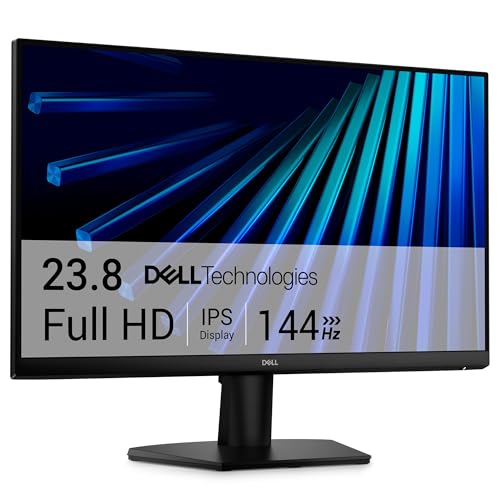
No one should buy a monitor for its speakers alone, because the panel is what the buyer will look at for every minute of the product’s life. Dell’s speaker-equipped models are overwhelmingly built on IPS or IPS-derived panels, valued for wide viewing angles that keep colour and contrast stable when the viewer shifts position, leans back for a call or shares the screen with a colleague standing beside the desk. IPS Black variants in the UltraSharp line improve contrast over conventional IPS by roughly doubling the native contrast ratio in Dell’s published figures, which benefits video content and dark-room work. Vertical-alignment and twisted-nematic panels appear elsewhere in the wider market, but within the Dell ranges covered here, IPS characteristics, good angles, consistent colour, moderate native contrast, are the baseline expectation, and any specific model’s colour gamut coverage, stated as a percentage of sRGB or DCI-P3 in the documentation, should be matched to the work: full sRGB for general and office use, wide-gamut DCI-P3 coverage for photo and video work.
Resolution should be chosen against screen size, because pixel density determines text sharpness at desk distance. At 24 inches, Full HD at 1920 by 1080 gives adequate but visibly soft text by current standards; at 27 inches, 2560 by 1440 is the comfortable mainstream choice, keeping text crisp while remaining easy for ordinary graphics hardware to drive; at 32 inches and above, 4K at 3840 by 2160 restores density and provides the workspace that makes a large screen worthwhile, while ultrawide models trade height for width that suits timelines, spreadsheets and side-by-side documents. Brightness figures in Dell’s specifications, commonly in the 250 to 400 candelas per square metre range across these lines, should be read against the room: a bright office with windows needs the upper part of that range, while a dim home office does not, and contrast and anti-glare coating matter more to perceived quality than a brightness contest conducted on paper.
Ergonomics decide whether a monitor is comfortable for the eight hours it may be used, long after its speakers have been forgotten between calls. The stands on Dell’s business and UltraSharp models typically offer height adjustment, tilt, swivel and pivot to portrait, and those adjustments matter to neck posture and to camera framing on conferencing models alike: a screen whose top sits near eye level and whose camera therefore looks level at the user produces both a healthier posture and a better meeting image. Speakerless-looking specification lines such as VESA mount dimensions, commonly 100 by 100 millimetres in this class, determine compatibility with monitor arms, which in turn affect the down-firing speaker question discussed earlier. Cable management through the stand, a small feature in the documentation, is part of whether the one-cable desk described above stays tidy in practice.
For evenings when the same desk turns to entertainment, a work monitor’s speakers will handle dialogue adequately while a television-class display does the picture better, and readers comparing that separate route can consult best 10 tv monitors before expecting a business panel to double as a living-room screen.
Pairing a Dell monitor with dedicated speakers
The mature setup for a desk that hosts both calls and media uses each audio system for its strength. The monitor’s integrated speakers, or its conferencing array, handle the working day: calls, alerts, tutorials and short clips, with zero footprint and zero setup. A dedicated speaker set handles everything else, and the connection strategy determines how gracefully the two coexist. The cleanest arrangement routes the computer’s audio to the external speakers as the default output device in the operating system, while conferencing software is configured to use the monitor for its speaker and microphone, a per-application routing that both major desktop operating systems and the main conferencing platforms support. Calls then emerge from the monitor at the screen, media emerges from the real speakers, and neither task disturbs the other’s settings.
Choosing the external set for a desk is a study in nearfield restraint: the listener is close, the required output is modest, and placement either side of the monitor at ear height matters more than power. Readers who want the straightforward stereo option for music and film at a desk will find the dedicated category set out in best 2 0 computer speakers, which covers the powered pairs designed for exactly this distance and purpose.
Connection details reward care. External speakers can be fed from the computer directly, which keeps their signal independent of the monitor, or from the monitor’s audio output jack where one exists, which lets the monitor’s volume control and input switching govern them but makes them dependent on the display being awake and correctly routed. USB audio, analogue 3.5 millimetre connections and Bluetooth all appear in this ecosystem; for speakers that will also serve calls in a fallback role, a wired connection avoids the latency and battery questions of wireless. Subwoofers at a desk should be approached with restraint, since a small room and near neighbours punish excess bass, and a modest stereo pair correctly placed will satisfy most music listening at desk distance without one.
Volume discipline across two systems prevents the classic accident of this setup, in which a call arrives at media volume through the wrong device. Set the monitor’s own volume to a fixed, moderate level and leave it there, control call level in the conferencing application, and control media level at the external speakers or in the operating system, so each path has one habitual control. Label the output devices in the operating system’s sound settings with recognisable names where the system allows it, because a list containing two entries both called by a generic driver name is an invitation to route a confidential call to the room’s loudest speakers.
Setup, operating-system settings and troubleshooting silence
When a speaker-equipped Dell produces no sound, the cause is almost always routing rather than hardware, and a fixed diagnostic order finds it quickly. Confirm the monitor’s own volume in its on-screen display is raised and not muted, because the display has an independent level from the computer. Confirm the computer is sending audio to the monitor at all: over HDMI, DisplayPort or USB-C, the monitor appears as a digital audio output device in the operating system’s sound settings, and a laptop left configured for its internal speakers or a remembered Bluetooth device will play there instead, silently as far as the desk is concerned. Confirm the cable carries audio in the configuration used; a DisplayPort-to-HDMI adapter or a dock in the chain can interrupt the audio path while passing video perfectly, which is why testing with a direct cable is the standard isolation step in Dell’s support guidance.
Analogue paths have their own simple failures. If speakers or headphones connect through the monitor’s audio output, the monitor must be receiving digital audio from the computer in the first place, and the output jack must not be confused with any audio input the model may also carry. If a soundbar is fitted, check its power source and its volume control as separate items, and confirm whether it takes audio from the monitor or directly from the computer, because bars in Dell’s ecosystem have used both arrangements across generations. A bar clipped neatly beneath a screen and connected to nothing but its mounting bracket is a more common sight in offices than any manufacturer would wish.
Conferencing-specific problems follow the same logic one layer up. If colleagues sound clear but report that you are muffled, the monitor’s speakers are innocent and its microphone path is the suspect: check which microphone the conferencing application has selected, since an operating system may default to a laptop’s internal microphone with the lid half-closed or to a webcam that is no longer connected. If your own voice returns as echo at the far end, check that only one device in the room has an open microphone and active speakers, a frequent failure when a laptop’s built-in array remains enabled alongside a conferencing monitor. Dell’s documentation for conferencing models describes their intended single-device role; letting the laptop’s audio stay live as well defeats the echo cancellation that assumes it controls the room’s only microphone and speakers.
Firmware and drivers complete the checklist. Monitor firmware updates, delivered over USB on models that support them, have historically addressed hub, audio and compatibility behaviour, and Dell publishes them through the same support page as the model’s drivers and manuals, keyed to the exact model designation. Graphics drivers on the computer govern digital audio over display connections, so a machine whose picture works but whose monitor never appears as an audio device may need its graphics driver updated before the monitor is suspected. These are unglamorous steps, but they resolve the overwhelming majority of silent-monitor reports without any hardware being faulty.
Buying checks before ordering
Gather the decision into a checklist that can be applied to any candidate in minutes. One: the exact, complete model designation, copied character for character from the quote or listing. Two: an explicit speakers entry with channel count and wattage in Dell’s technical specifications for that designation, not an audio output jack and not range-level marketing text. Three: speaker location, front, bottom or rear, from the user guide’s diagrams, weighted toward front-facing for call-heavy use. Four: if a camera and microphones are wanted, their specifications confirmed in the same documents, including whether sign-in features such as infrared facial recognition are present on this variant. Five: USB-C video support and power delivery wattage against the laptop’s requirement, plus hub ports, Ethernet and KVM against the desk’s peripherals. Six: panel size, resolution, gamut and brightness against the room and the work, using the density logic set out earlier. Seven: stand adjustments or VESA compatibility against the intended mounting, remembering the effect of an arm on down-firing speakers. Eight: what is physically in the box, including any soundbar, the USB-C cable and its length, itemised in the order rather than assumed from photographs.
Two further checks protect fleets and second-hand buyers respectively. For fleets, confirm that the designation being standardised on will remain orderable for the deployment period, because a silent mid-contract substitution of a lookalike variant is how mixed estates of speaking and silent monitors happen, and they are miserable to support. For used purchases, test the speakers before paying if at all possible, with speech at moderate volume, listening for rattles that indicate a damaged small driver or a loose panel, and verify the camera shutter and microphone on conferencing models, since those moving and electronic parts, not the panel, are where a used conferencing monitor’s value can quietly evaporate. A used UltraSharp bought for its panel remains a good buy with a dead speaker; a used conferencing monitor bought for meetings is not, if its microphone array is the part that has failed.
Readers assembling a mixed desk should also decide the headset question honestly. In open offices, integrated speakers are for alerts and the occasional shared call in a side room, and a headset remains the professional default for sustained meetings, both for privacy and for colleagues’ sanity. Several Dell ecosystems assume exactly this division, which is why so many business variants omit speakers without apology. Buying a speaker model for a desk that will live on a headset wastes little money, since the premium is modest, but buying a conferencing monitor for a hot-desking pool where personal headsets are policy wastes a great deal, and the specification effort is better spent on hubs and ergonomics.
Anyone tempted to skip the monitor speakers entirely and spend the whole audio budget on the desk system instead can weigh that simpler architecture against the studio-style option described in best 100 watt studio monitors, keeping in mind that such speakers serve music production distances and volumes rather than the call-first brief of the conferencing models above.
Use cases: telehealth, teaching, reception and the shared desk
Certain workplaces extract more value from integrated audio than the generic home office does, and their requirements sharpen the buying criteria. In telehealth, a clinician’s workstation must reproduce a patient’s voice with maximum intelligibility, present the clinician’s own voice cleanly through the microphone, and keep the camera framing consistent across hundreds of consultations. A conferencing monitor serves all three needs from one device, and its physical camera shutter answers a privacy expectation that is especially strong in a clinical room. The specification emphasis shifts accordingly: microphone quality and camera resolution matter as much as speaker wattage, certification or stated optimisation for the conferencing platform in use carries weight, and the panel’s colour and brightness consistency matter because the same screen may display imaging or documents during the consultation.
Teaching and training stations reward a different balance. A tutor working one-to-one over video needs exactly the conferencing feature set, but a small classroom or training room quickly exceeds what integrated speakers can fill, because their nearfield design assumes a listener within about a metre. Dell’s documentation figures make this boundary easy to respect: a system specified at a few watts per channel into small drivers is a desk device, and a room of trainees needs a room solution, whether that is a dedicated meeting-room bar, ceiling speakers or a portable system fed from the computer. Recognising the boundary before purchase prevents the familiar disappointment of a monitor blamed for failing at a job its own specification never described.
Reception desks, service counters and shared workstations sit at the opposite extreme, where integrated speakers are close to ideal. The tasks are alerts, queue announcements at low level, short instructional videos and occasional calls, the listener is always at the desk, and the absence of separate speakers removes objects that get knocked, unplugged or taken. Here the buying emphasis falls on reliability, a stand that resists being knocked out of alignment, a screen that can be cleaned and adjusted by many hands, and speaker provision that is simply present and adequate. Fleet managers in these environments should still run the exact-model check, because a shared desk with a silently substituted speakerless variant generates a stream of support tickets out of all proportion to the saving.
For the individual home worker, the deciding question is how the desk is used across a whole week rather than on its busiest day. A worker whose week is calls, documents and short videos is the integrated category’s natural customer, and a conferencing or speaker-equipped hub model will simplify every day of it. A worker who edits audio or video, teaches music, or relies on sound as primary work material needs monitoring accuracy that no integrated system claims, and should budget for proper external speakers or headphones first and treat any monitor speakers as a convenience for calls. The honest middle majority, calls by day and media by evening, is exactly the audience for the paired setup described earlier, in which the monitor handles the day and a modest dedicated set handles the evening.
Two monitors, daisy-chaining and where the sound goes
Dual-monitor desks complicate audio routing in ways that catch buyers out, because only one display in a chain can be the computer’s chosen audio output at a time, and it may not be the one with the better speakers. Dell hub and UltraSharp models frequently support DisplayPort daisy-chaining, in which a second monitor connects to the first rather than to the computer, reducing cables and hub load. Video passes happily down the chain, but audio behaviour follows the operating system’s device list, in which each display may appear as a separate output; the user must choose one, and the speakers in the other display stay silent regardless of their specification. A buyer planning a two-screen desk should therefore decide which screen is the audio screen, ideally the one directly in front of the main seat and, for calls, the one carrying the camera, so that voices appear to come from the faces on display.
Asymmetric pairs are common and legitimate: a large, high-resolution main display without speakers beside a smaller conferencing model that carries camera, microphones and sound, or a colour-critical UltraSharp for visual work paired with a P-series screen for documents and calls. In such setups the specification check runs per monitor with different priorities, panel first on the visual screen, audio and camera first on the conferencing screen, and the system works because each device was bought for a defined role. What fails is the accidental asymmetric pair, created when a buyer assumes both units in a two-box order share the same features because they share a range name. The checklist in this guide, applied to each designation separately, is the entire defence.
KVM switching adds one more routing consideration. When two computers share a monitor through its built-in KVM, the monitor’s speakers follow the currently selected source, which is normally the desired behaviour: the active machine owns the desk’s sound. Headphones or external speakers connected through the monitor’s hub may switch with it as well, depending on how they are attached, while externally powered speakers connected directly to one computer will not. Mapping these paths on paper before purchase, source by source and device by device, takes ten minutes and prevents the slow accumulation of workarounds that makes a shared desk feel unreliable when the design was actually sound and only the routing was never decided.
Accessibility, volume safety and listening comfort
Integrated audio has accessibility implications that specification sheets express indirectly. A listener with reduced hearing benefits disproportionately from a front-facing speaker close to the seat, from clear midrange reproduction of the kind conferencing models are tuned for, and from a physical volume control that can be reached and adjusted without navigating software menus. Mono operation, available in the accessibility settings of the major operating systems, can help listeners with single-sided hearing by ensuring no part of a stereo mix is lost, and it works identically through monitor speakers and any other output. Captioning in conferencing platforms complements rather than replaces audible clarity, and a monitor purchase for an accessibility-sensitive workstation should be assessed alongside those software settings as one system.
Volume safety at a desk is mostly a matter of habit and of the short listening distance that defines this category. Because the speakers are close, adequate call level is reached at modest output, and there is rarely a reason to run an integrated system near its maximum for speech. Sustained high volume at nearfield distance, whether from monitor speakers, desktop speakers or headphones, is the exposure pattern that hearing guidance from occupational and public-health bodies consistently warns against, and the practical rules are universal: keep level as low as intelligibility comfortably allows, take breaks during long listening sessions, and treat any need to keep raising the volume as a signal to fix the cause, background noise, poor microphone performance at the far end, or a badly placed rear-firing speaker, rather than as a reason to push a small driver harder.
Listening comfort also has a room dimension. A bare-walled home office with a hard desk reflects sound energetically, making small speakers seem harsher and less intelligible than the same system in a furnished room, because reflections arrive close behind the direct sound and blur it. Soft furnishings, a desk mat and even a bookshelf behind the listening seat measurably calm this behaviour, and they cost less than any hardware change. Buyers who find a conferencing monitor unexpectedly shrill should experiment with the room and with modest reductions in the operating system’s output level, feeding the monitor a healthy signal in its comfortable range, before concluding that the hardware is at fault.
Standards behind the specification sheet
Several published standards quietly underpin the figures quoted throughout this guide, and knowing them helps a buyer read any manufacturer’s document with confidence. USB-C video travels using DisplayPort alternate mode, governed by the USB Implementers Forum and VESA specifications, and power delivery follows the USB Power Delivery standard, whose negotiated wattage is what a hub monitor’s stated figure refers to. Digital audio over HDMI and DisplayPort is carried as part of those interface standards, which is why a monitor needs no separate audio lead on those connections. Colour gamut claims reference standard colour spaces maintained by international bodies, and brightness is expressed in candelas per square metre, the standard photometric unit. None of this requires the buyer to read the standards themselves, but it explains why Dell’s documents express things as they do, and why figures from different manufacturers can be compared when each is quoting the same standard quantity in the same unit.
The same standards literacy exposes the few figures that should be treated cautiously wherever they appear. A wattage quoted without stating whether it is per channel or total, continuous or peak, is incomplete; Dell’s technical specifications generally state speaker output clearly enough to resolve the question, and a figure that cannot be resolved from the document should be assumed modest. A response or gamut percentage quoted without naming the colour space or the measurement condition is similarly incomplete. The remedy in both cases is the habit this guide has recommended throughout: return to the primary document for the exact model, and let it, rather than any summary, carry the decision.
Warranty and support complete the picture for a product category in which the audio components are small parts of a large device. Dell’s business monitors typically carry multi-year panel and backlight warranties with advance exchange arrangements in many regions, and a failed speaker or microphone on a conferencing model is a warranty matter under those terms rather than a reason to replace the whole workstation setup. Keep the service tag recorded with the asset information, because support for the exact variant, its firmware and its documentation all key from that identifier. For home buyers, registering the purchase and downloading the model’s full manual at setup time, rather than in a panic when something goes silent, is the simplest future-proofing this category offers.
Check prices on Amazon
Live listings for the shortlist in this guide are pulled from Amazon below, so prices and availability are always current at the moment you look.


Verdict: match the audio claim to the document, then to the desk
The Dell catalogue contains genuinely good answers to the built-in audio question, and they are concentrated where the need is real. Conferencing models integrate camera, microphones and front-facing speakers into a meeting appliance that earns its premium in daily use. Speaker-equipped S-series models give home users a single tidy device for work and casual media. P-series and UltraSharp buyers should treat speakers as a per-variant feature to be verified, valued where present for calls and alerts, and never allowed to outrank the panel, hub and ergonomics that define those lines. In every case the discipline is the same: the manufacturer’s specification for the exact model designation is the only authority on whether speakers exist, what they output and where they point.
Set expectations by the physics and the category becomes satisfying rather than disappointing. Integrated speakers that make voices clear at a desk, keep a workstation free of extra boxes and cables, and hand over gracefully to a dedicated speaker set when the working day ends are doing their job completely. The failures in this market are almost never acoustic; they are failures of assumption, a jack mistaken for a speaker, a suffix misread, a bar assumed to be in the box. Every one of those is preventable with the documents Dell itself publishes, read before the order rather than after the unboxing.
Disclosure: This article may contain links that take you to a retailer, and the site behind this guide can receive a commission on qualifying purchases, which costs you nothing additional; the specifications and model distinctions discussed here come from manufacturer documentation and published standards, not from retailer listings.
Check the wattage line, trust the manual over the photograph, and the Dell that arrives on your desk will be the one whose voice you actually heard in the specification.

