Our Top Picks
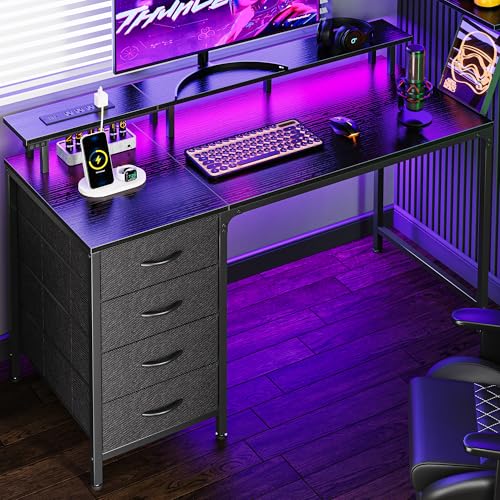
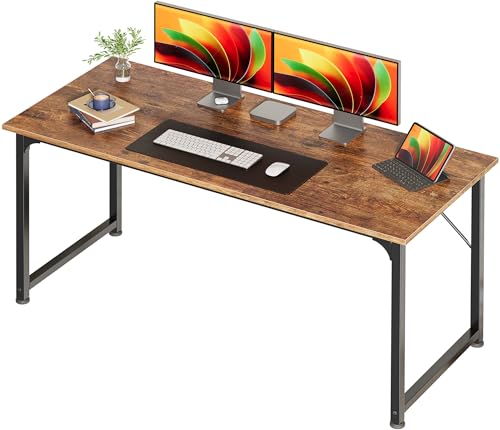
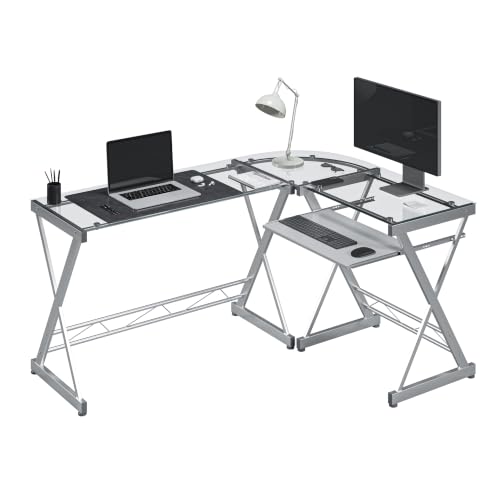
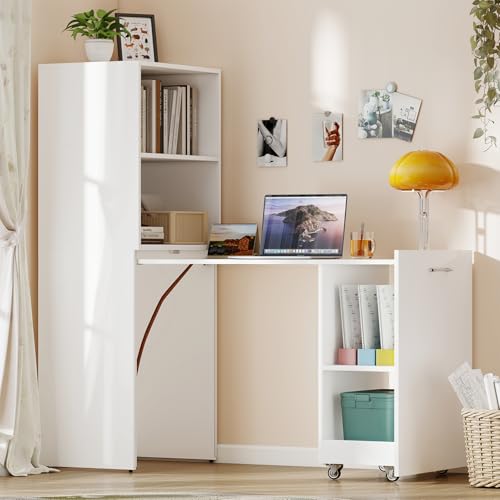
 Folding Convertible Writing Table Fold-Out Murphy Desk Computer31.1 x 27.6 x 66.3 inches41.89 poundsCheck on Amazon
 Yaheetech Computer Desk with Keyboard Tray41.7 x 19.7 x 37 inches20 x 42 x 37 inches60.52 poundsCheck on Amazon
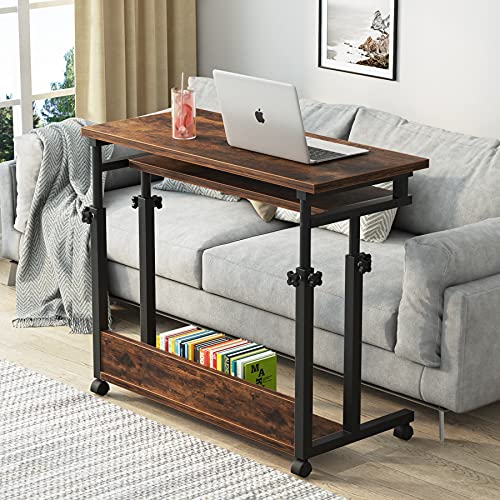
 Tangkula Rolling Computer Desk Cart with Keyboard TrayLarge19.5 x 31.5 x 31 inches29 poundsCheck on Amazon
 GIANTEX Small Computer Desk with Hutch & DrawersCompact25 x 38 x 35 inches57.5 poundsCheck on Amazon

What's inside
- What a pull-out surface actually adds
- A note on how this guide is funded
- Slide hardware: wooden runners, ball-bearing slides, and load ratings
- Wobble, racking, and the physics of a surface on slides
- Weight limits for a leaf used as a working surface
- Under-desk clearance, legroom, and the seated body
- Materials around moving joints: solid wood, veneer, and board
- Measuring a room for a footprint that changes
- Assembly tolerances: why one leaf glides and another binds
- Who benefits, and who should buy something else
- Daily use, care, and the small habits that preserve the action
- Choosing well: the specification checklist
- The main designs, compared in use
- Height, posture, and working on two levels
- Safety details that listings rarely mention
- Buying second-hand, and judging a used mechanism
- Environmental and longevity considerations
- Check prices on Amazon
- A short acceptance routine for delivery day
As an Amazon Associate I earn from qualifying purchases. This post may contain affiliate links at no extra cost to you.
A desk with a pull-out table promises two sizes in one footprint: a compact piece of furniture for most of the day, and a deeper or wider work surface for the hours when a project spreads out. The pull-out element takes several forms. Some desks hide a sliding leaf beneath the main top that draws forward toward the seated user. Some extend a side table outward, turning a straight desk into an L-shape. Others carry a broad pull-out tray, somewhere between a keyboard tray and a second desktop, that supports a laptop, a sewing machine, or a spread of drawings. All of them stand or fall on the same unglamorous details: the slide hardware, the stiffness of the extended surface, and the honesty of the stated load limit.
This guide works through those details in the order a buyer meets them. It explains how much usable depth an extension really adds, why two desks with identical closed dimensions behave completely differently when open, how materials behave around moving joints, and how to measure a room for a footprint that changes shape. The aim is not to crown a single model but to give readers the measurements and failure modes that predict whether a pull-out surface will be used daily or will jam, sag, and stay shut within a year.
Readers who are still deciding whether they need an extending design at all can compare the closed footprints discussed here with the fixed layouts in best 60 computer desks, where a permanently larger top may solve the same problem without any moving parts.
What a pull-out surface actually adds
The headline figure in most listings is the extended dimension, and it deserves translation before it deserves belief. A pull-out leaf that adds 30 centimetres of depth on paper adds less in practice, because the rear few centimetres of the leaf slide under the main top and remain overlapped, and because a user cannot work right up to the junction without items catching on the seam. The usable gain is the flat, fully supported area in front of that seam, measured with the leaf pulled to its stop and a straight edge laid across the junction. On well-made desks the two surfaces sit flush within a millimetre or so; on cheaper ones the leaf sits low, and every sheet of paper dragged across the junction catches its edge.
Depth and width extensions solve different problems. A forward-pulling leaf deepens the surface toward the user, which suits handwriting, drawing, and craft work where the task comes to the front edge, and it gives a keyboard and a notebook room to coexist. A side extension widens the surface, which suits a second screen, a printer moved within reach, or a sewing machine parked beside the main task. A buyer should name the activity first, because a desk that extends in the wrong direction adds area where it is not needed while leaving the original crowding untouched. Listings that show the extended shape only in a rendered image, without a dimensioned diagram, leave the most important question unanswered.
The closed footprint matters as much as the open one, since the desk spends most of its life closed in most homes. Pull-out designs earn their premium in rooms where the open shape would block a door swing, a wardrobe, or a walkway if it were permanent. Where the open shape could simply stay open, a fixed desk of that size is cheaper, stiffer, and simpler. The pull-out mechanism is therefore best understood as payment for flexibility, and the rest of this guide is about judging whether a given mechanism delivers that flexibility without charging it back in wobble, noise, and maintenance.
A note on how this guide is funded
Furniture dimensions in this guide come from maker documentation and published engineering data for slide hardware, and readers who buy through affiliate links at the retailer help fund the work at no extra cost to themselves. That funding does not soften the criteria below, which favour load ratings, material thickness, and tolerance information over styling language, and which treat any unstated load limit for an extended surface as a warning sign in itself. Because makers revise hardware between production runs, readers should confirm slide type and rated load for the exact version on sale before ordering.
Slide hardware: wooden runners, ball-bearing slides, and load ratings
The oldest mechanism is the wooden runner: a hardwood strip fixed inside the desk carcass, running in a groove cut into the side of the pull-out leaf or its supporting frame. Wooden runners are quiet when waxed, tolerate dust that would grind in a bearing, and can be repaired with a plane and a candle stub a century after manufacture. Their limits are friction and wear. The leaf must be pulled evenly from the centre or it binds diagonally in its grooves, the sliding resistance rises sharply with load, and years of use wear the groove wider until the leaf drops slightly and rattles. A traditional desk with wooden runners suits a light writing leaf that moves twice a day; it is a poor match for a heavy surface loaded with equipment and dragged open hourly.
Ball-bearing drawer slides are the modern default, and their published ratings give buyers real numbers to compare. A typical full-extension slide pair is rated by the mass it can carry at full extension over a stated number of cycles, with ratings stepping from light-duty pairs suitable for a keyboard surface up to heavy pairs intended for equipment drawers. Two points in the small print matter. First, the rating assumes the slides are mounted exactly as the maker specifies, on flat, parallel surfaces at the stated spacing; a carcass that is slightly out of square transfers side loads into the bearings and shortens life dramatically. Second, the rating is for the pair at the tested extension length, and a longer slide carrying the same load at full stretch experiences greater leverage, so a long pull-out leaf needs a higher-rated slide than a short tray with the same load.
Undermount and side-mount slides behave differently in furniture. Side-mount slides are visible when the leaf is open, need a defined clearance between leaf frame and carcass on each side, and are simple to replace because they screw to accessible faces. Undermount slides hide beneath the leaf, give a cleaner look and a slightly smoother action, but demand precise boring and are harder to swap without removing the leaf entirely. Concealed soft-close variants add a damper that prevents the leaf slamming home, which protects both the carcass joints and anything standing on the main top. The damper is a genuine benefit in a quiet household and one more component that can fail, so documentation that lists the slide maker and model, allowing a like-for-like replacement, is worth more than a generic promise of smooth gliding.
Cycle ratings translate directly into service life. A slide tested for tens of thousands of open-close cycles will outlast the furniture around it at a few cycles a day. A slide with no stated cycle life, fitted to a desk marketed for daily transforming between office and dining use, is an unknown at exactly the point of greatest wear. Buyers should also note whether the slides include a lock-out feature that holds the leaf firmly at full extension. Without it, leaning on the front edge can roll the leaf slowly inward on its bearings during use, a small creep that is maddening during handwriting and dangerous with a full mug near the edge.
Wobble, racking, and the physics of a surface on slides
Every pull-out surface wobbles to some degree, because a slide is a controlled clearance, not a rigid joint. The question is how much movement appears at the front edge under ordinary loads, and whether that movement grows as the leaf extends. Lateral play in ball-bearing slides is small when new, typically a fraction of a millimetre at the slide itself, but the leaf acts as a lever: play at a slide mounted near the back of the carcass becomes several millimetres of sway at a front edge 50 centimetres away. Longer extensions therefore feel looser than short ones on identical hardware, which is why a deep pull-out table needs either widely spaced slides, a supporting frame that engages the carcass along its length, or drop-down legs or castors that carry the front edge once open.
Racking is the twisting failure mode, distinct from simple sway. When a user pulls one corner of a wide leaf, or leans on one front corner while standing up, the leaf tries to rotate in its horizontal plane. Slides resist racking only through their mounting screws and the stiffness of the leaf frame. A leaf built as a framed panel with rails on all four sides resists far better than a single flat board screwed to two slides, because the frame distributes the twisting force instead of concentrating it at the nearest screws. Over months, racking loads loosen screw fixings in particleboard quickly, which connects this section to the materials discussion below: the same desk can feel solid for a season and then develop a permanent looseness that no tightening cures, because the screw holes themselves have enlarged.
Support legs and castors change the equation when they are present. Some larger pull-out tables carry a hinged leg that swings down at full extension, or small wheels under the front rail that roll on the floor as the leaf moves. A leg removes most of the cantilever load from the slides and transforms the feel of the surface, at the cost of a fixed open position and a leg that must land on the floor exactly where the room allows. Castors share the load while preserving some adjustability, but they track floor unevenness into the surface: a castor crossing from a rug onto boards lifts or drops its corner by the rug’s thickness, and the leaf tilts accordingly. On hard, level floors castors work well; on deep carpet they drag, steer sideways, and mark the pile.
A buyer reading maker documentation should look for a stated deflection or load-at-extension figure rather than adjectives. Where no figure exists, the construction details still predict behaviour: slide spacing, frame rails, board thickness, and the presence of a front support together describe the extended stiffness more honestly than any lifestyle photograph of the desk holding a laptop and a coffee cup, a load of perhaps four kilograms placed gently for a camera.
Weight limits for a leaf used as a working surface
Load limits for pull-out surfaces are commonly quoted as a single number, and that number hides three different questions. The first is the slide rating, discussed above. The second is the bending strength of the leaf itself across its span between supports. The third, and the one most often ignored, is the tipping and joint load imposed on the whole desk when mass sits on a fully extended cantilever. A leaf can be within its slide rating while the desk as a whole becomes unstable, especially a narrow desk whose main top carries little balancing weight. Documentation that gives a lower limit for the extended leaf than for the main top is being honest about cantilever physics; a listing that quotes one generous figure for every surface is simplifying past the point of safety.
Different uses load the leaf in different ways. A keyboard and forearms impose a modest, distributed, mostly static load, though a typist’s repeated downward pulses add a dynamic element that static ratings understate. A laptop adds a concentrated mass on four small feet, plus the leverage of a user pressing on the palm rests. Handwriting concentrates force through one hand near the front edge, the worst position for both deflection and slide leverage. A sewing machine is the sternest common load: heavier than a laptop, vibrating continuously, and usually placed centrally where its feet can set the whole leaf resonating if the surface is springy. Craft cutting with a rotary cutter or a craft knife adds sharp downward strokes at the front edge. A leaf that serves a keyboard happily may be entirely wrong for a sewing machine, and makers who publish per-use guidance are rare enough that buyers should map their own heaviest intended load against the lowest stated limit in the documentation.
Dynamic and point loads explain many disappointing purchases. A rating established with sandbags spread evenly across a surface does not describe a person leaning both elbows on the front corners to read, or a child pulling up on the edge, or a cat landing on the leaf from the main top. Prudent use keeps heavy items toward the rear of the extended leaf, near the carcass where support is greatest, reserves the front strip for hands and paper, and treats the stated limit as a ceiling for a static, centred, evenly spread load rather than as a working allowance. Desks that include a physical stop preventing over-extension protect the slides from the worst leverage case, and that small detail deserves credit in any comparison.
Under-desk clearance, legroom, and the seated body
A pull-out surface lives in the same space as the user’s legs, and the conflict is geometric. When the leaf is closed, its thickness, its supporting frame, and its slides hang below the main top, reducing the clear height available for thighs and for the arms of a chair being tucked in. When the leaf is open and used as a keyboard or writing surface, the user’s legs sit beneath the leaf itself, so the clearance that matters is from floor to the underside of the leaf and its rails. Ergonomic guidance for seated work generally wants roughly 60 centimetres or more of clear knee height for an average adult, more for taller users, and a cross-rail at the wrong height can consume the margin that the headline dimensions appear to leave.
Chair arms create a second, frequently missed clash. A desk whose closed leaf and frame hang low may prevent an armchair-style office chair from rolling under the top, leaving the chair projecting into the room and the user sitting too far from the surface. Measuring the chair’s arm height against the desk’s lowest under-top obstruction, not against the underside of the main top panel, prevents that mistake. The compact rooms where pull-out desks are most attractive are exactly the rooms where a chair that cannot tuck in costs the most floor space, undoing the saving the desk was bought for.
The comparison with the shallower footprints in best 47 inch desks is instructive here, because a smaller fixed desk with an open leg design sometimes leaves a room feeling larger than a pull-out model whose chair can never be stored beneath it.
Depth of legroom matters as well as height. A modesty panel, a rear crossbar, or a storage unit built into the carcass can limit how far knees and feet extend, forcing a seated user into a perched posture during long sessions. Pull-out trays used for keyboards shift the user’s position forward relative to the desk, which can either relieve or worsen that limit depending on where the rear obstruction sits. Buyers should measure from the front edge of the extended leaf to the nearest rear obstruction and compare it with the space their own chair and legs occupy, a measurement best taken by sitting at an existing table with a tape measure rather than by estimating from a dimensioned drawing.
Materials around moving joints: solid wood, veneer, and board
Moving joints concentrate every weakness a material has. Solid wood is strong along its grain, repairable, and tolerant of screws being removed and refitted, which is why traditional pull-out leaves in solid timber survive generations of use. Its movement with humidity is the counterweight: a solid leaf expands and contracts across its width with the seasons, and a carcass built too tightly in a dry workshop can bind in a humid summer. Traditional makers allowed for this with clearances that look generous on a drawing. A modern solid-wood desk whose leaf fits with hairline precision in a showroom may be the one that sticks in August, and documentation that mentions seasonal movement is a sign the maker understands the material.
Veneered particleboard and medium-density fibreboard behave oppositely. They are dimensionally stable, flat, and consistent, which suits precise slide mounting, and a good veneer gives a convincing surface at a fraction of solid timber cost. Their weakness is local: screw fixings near board edges have limited holding strength, repeated racking enlarges the holes, and once the veneer chips at a corner or the edge banding lifts where hands pull the leaf daily, moisture enters and the board swells irreversibly at exactly the point of greatest wear. The front rail of a pull-out leaf, gripped and pulled thousands of times, is the highest-risk area on a board desk. A solid lipping on that rail, rather than thin edge banding, is a small specification that predicts years of difference.
Thickness figures need careful reading. A main top described as thick may achieve that figure with a framed, hollow construction whose solid material is a skin of a few millimetres over a honeycomb or void, which is legitimate engineering for a static top and poor material around slide screws. Where slides mount, what matters is the thickness and density of the material the screws actually bite into, and whether the maker uses threaded inserts or through-bolts at those points. Metal threaded inserts in board are a strong positive signal: they convert a weak screw-in-board fixing into a repeatable machine-screw joint that survives disassembly for a house move and reassembly without losing grip.
Finish durability around the junction deserves a mention of its own. The overlapping zone where leaf slides under top is abraded a little on every cycle, and a soft finish there wears to a pale track that shows whenever the leaf is open. Hard wax oils and lacquers cope differently, and a maker who specifies the finish system allows an owner to maintain it. Felt or low-friction pads at the overlap, replaceable and cheap, protect both surfaces; their presence in a parts list suggests the designer thought about the ten-thousandth cycle rather than the first photograph.
Measuring a room for a footprint that changes
Room measuring for an extending desk starts with the open shape, drawn on the floor. Masking tape marking the extended outline, including the chair pulled out behind it and a person seated there, reveals clashes that a tape measure against a wall cannot: the door that now strikes the chair, the drawer unit that can no longer open, the walkway narrowed below comfortable passage. Building regulations and common sense both value a clear route through a room, and a desk that blocks its own room’s door swing in the open position will simply stop being opened, which wastes the entire premise of the purchase.
Allow for the human envelope, not only the furniture outline. A seated user occupies roughly 60 to 75 centimetres of depth behind the desk edge, and standing up pushes the chair further back again. A pull-out leaf extends toward the user, so the chair sits further into the room in the open state than the closed dimensions suggest, by the full amount of the extension. In a guest room, check the open desk against the bed made up, not against the bed frame; bedding overhang closes gaps that drawings say exist. In a child’s room, check against the future, larger bed if the desk is expected to serve for years.
Flooring belongs in the measurement pass. Castor-supported leaves need a hard, level run of floor for their full travel; a rug edge inside that run is a step the castors must climb on every opening. Radiators under windows, the classic desk position, project from the wall and steal depth exactly where a side extension may want to travel. Skirting boards hold the desk a centimetre or two off the wall, which matters when a rear overhang or a cable tray is part of the design. None of these details appears in a product dimension list, and all of them decide fit in real rooms.
For households weighing an extending desk against a height-adjustable alternative, the measurements gathered here transfer directly to the options in best adjustable desks, where legroom and chair clearance follow the same geometry even though the moving axis is vertical rather than horizontal.
Assembly tolerances: why one leaf glides and another binds
A pull-out mechanism is a tolerance chain. The carcass sides must be parallel, the slides must be mounted level and at equal heights, the leaf frame must be square, and every error adds to the same small clearance budget. Flat-pack desks put that chain in the buyer’s hands. A carcass assembled a few millimetres out of square, because a cam lock was tightened before all panels were seated, presents slides that converge toward the front; the leaf then runs freely for most of its travel and binds hard in the last stretch, a symptom owners often blame on the slides. Assembling on a flat floor, checking the carcass diagonals are equal before final tightening, and testing the leaf’s travel before fitting the back panel or top are the steps that prevent it, and instructions that sequence those checks explicitly are a mark of a maker who has watched real customers assemble the product.
Screw pilot holes and their placement decide how much correction is possible. Slides typically have slotted holes for adjustment before final fixing through round holes, and an installer who uses that sequence can nudge a slide a millimetre to perfect the action. Pilot holes drilled slightly off line pull the slide back to the wrong position as the screw tightens, defeating the slots. In board materials, an over-tightened screw strips its hole and loses clamping force silently, leaving the slide held by its remaining fixings and free to shift under racking loads. A torque-limiting habit, driving fixings firmly rather than maximally, is the difference between a desk that stays adjusted and one that works loose.
Factory-assembled desks move the tolerance problem rather than removing it. Transport can rack a carcass, and a leaf that glided in the factory may bind after a courier’s drop. Reputable sellers describe a simple adjustment procedure for that case. Whether flat-pack or assembled, the acceptance test on day one should be specific: the leaf opens fully with a straight, central pull; it opens without binding when pulled slightly off-centre, as it will be in daily life; it stays where it is left at half extension; and it closes flush without being lifted or forced. A desk that fails any of those when new will not improve with use, because wear adds clearance unevenly and converts a bind into a bind with a rattle.
Who benefits, and who should buy something else
Small rooms with a single, shifting purpose are the natural home of the pull-out desk. A studio flat where the desk is a laptop perch on weekdays and a craft table at weekends uses both shapes fully. A guest room that is an office four days a week gains a real second surface for a visiting colleague or a spread of paperwork, then closes back to a tidy piece that does not dominate the room when family stays. A sewing and general-work crossover is the classic case: the machine lives on the main top or in a cupboard, the pull-out surface carries cutting and pinning at a comfortable forward position, and the whole arrangement closes away without a machine being lifted onto a dining table and off again the same evening.
Households sharing one desk between generations benefit in a quieter way. A pull-out tray set lower than the main top gives a child a writing surface nearer the right height while an adult uses the main top, and the tray disappears when not needed rather than requiring a second small desk in the room. Laptop users who dock and undock daily benefit from a leaf that carries the machine forward for a quick task without the full desk being cleared, a pattern explored from the portable side in best 17 laptop desks, where the smallest work surfaces solve a similar problem by moving the surface to the person instead.
Other buyers should walk away from the mechanism entirely. Anyone whose work surface is permanently covered, with monitors, reference books, and equipment that never moves, will leave the leaf open forever and should buy the larger fixed desk that the open shape imitates, gaining stiffness and losing cost. Anyone needing a heavy, vibrating machine running for hours daily should prefer a fixed, massive bench whose joints cannot work loose. Anyone in a humid, unheated space should be wary of timber runners and board edges alike, and should favour the simplest construction that local conditions cannot spoil. Naming these exclusions is not a criticism of pull-out desks; it is the recognition that a moving surface is a tool for changeable work, and changeable work is not everyone’s pattern.
Daily use, care, and the small habits that preserve the action
Slides ask for little care and repay it disproportionately. Ball-bearing slides arrive greased and should not be oiled casually, because thin oil migrates, collects dust, and turns a smooth bearing into a grinding paste over a season; a dry cloth wiped along the exposed members, and a check that no grit from craft work has entered the tracks, covers most needs. Wooden runners want the opposite treatment: a periodic rub of plain candle wax or a furniture wax along the bearing faces restores the glide and silences the creak that announces dry timber. In both systems, crumbs, paper clips, and sewing pins falling into the mechanism are the commonest cause of a sudden stiffness, and the first response to a leaf that changes character is to open it fully and look, rather than to pull harder.
Pulling technique matters more than most owners expect. A straight pull from the centre of the front rail keeps the leaf square in its slides; a habitual one-handed pull from a corner racks the leaf on every cycle and works the fixings loose over months. Two handles fitted at the corners of a wide leaf invite exactly that error unless the user draws both together, which is why many wide leaves use a single central pull or a full-width front rail that spreads the hand’s force. Teaching everyone in the household the central pull is a thirty-second conversation that adds years to the mechanism.
Load habits preserve the rest. Heavy objects should travel on the main top, not be dragged across the junction onto the leaf, because a dragging load catches the seam and chips the leaf’s rear edge. Liquids standing on an open leaf are a spill waiting for the moment someone bumps the front edge and the whole surface answers with a springy jolt that a fixed top would absorb. The leaf should be closed before the desk is moved, even a short shuffle across a room, because an open leaf turns the desk’s mass into leverage against its own slides if a castor or leg catches on the floor. These are small disciplines, and together they are most of the difference between a mechanism that feels new at five years and one that feels tired at one.
Choosing well: the specification checklist
Begin with the mechanism, because it cannot be upgraded later without rebuilding the desk. Identify the slide type, its rated load as a pair at full extension, its cycle life, whether it locks open, and whether replacements are obtainable by model number. Then the leaf itself: its material, thickness where the slides attach, whether fixings use threaded inserts, whether the front rail is solid-lipped, and the maker’s stated load limit for the extended surface specifically. Then the geometry: usable added depth or width measured in front of the seam, the under-leaf clearance at knee height, the lowest obstruction for chair arms, and the open footprint including a seated user. A listing that answers all of those is competing on engineering; a listing that answers none of them is competing on photography.
Compare like with like on price by including what the design displaces. A pull-out desk that removes the need for a separate craft table, a second small desk, or a larger room’s rent premium is not expensive in the way its ticket suggests. A pull-out desk bought instead of a fixed desk of the open size, in a room that could have taken the fixed desk all along, charges a premium for a transformation that will happen twice. The honest comparison is against the household’s actual alternative, and it often reverses the apparent bargain in either direction.
Finally, weigh the maker’s support horizon. Slides wear, dampers fail, castors crack, and a leaf damaged by a spill may need replacement. A maker who lists spare parts, sells slide sets separately, and publishes assembly documents that remain available years later is planning for the desk’s second decade. A maker whose support ends at a returns window is selling a first season. For furniture whose entire point is a moving part, that horizon is not an afterthought; it is part of the product, and it should weigh in the decision alongside timber, steel, and dimensions.
Choose the desk whose extended surface you can picture opening with one straight pull on an ordinary tired evening, holding exactly the task you named at the start, and sliding shut again without a negotiation — because a pull-out table that behaves that way stops being a mechanism and becomes simply the size of desk the day requires.
The main designs, compared in use
The forward-sliding leaf beneath the main top is the most common arrangement, and the easiest to live with when it is done well. Because the leaf travels toward the user, its slides run front to back, a direction in which carcasses are naturally deep enough to give the slides a long bearing length. The leaf doubles as a keyboard tray on shallower versions and as a true second worktop on deeper ones, and the distinction is in the depth: a tray of 25 centimetres carries a keyboard and little else, while a leaf of 35 centimetres or more carries a notebook in front of the user with room for forearms, which changes posture for the better. Shallow trays set too high force raised shoulders; deeper leaves set at a proper writing height, a few centimetres below the main top, suit handwriting precisely because elbows can rest naturally.
The side-extending table works on a different logic. Slides run left to right, often under a hinged or sliding side panel, and the extension converts a straight desk into a return. This shape suits a user whose main task stays in front of them while a secondary task, a printer, a reference book, a second person with a laptop, lives at the elbow. Side extensions are more sensitive to floor level than forward leaves because their travel is longer in proportion to the carcass that supports them, and a side leaf on castors crossing an uneven floor announces every millimetre of that unevenness at the seam. They also interact with handedness: a return on the wrong side for the user’s dominant hand and usual layout is floor space spent on the least-used area of the desk.
Pull-out tray desks built around a single broad tray, sometimes with its own shallow drawer or a raised rear shelf for a screen, occupy the compact end of the family. They are often bought for bedrooms and spare corners, where the tray carries a laptop forward over the user’s lap while the main top holds the rest of life. Their slides are lightly rated because their intended load is light, and the failure pattern to watch is a tray used progressively for heavier duties, books, a desktop monitor placed optimistically, until the action roughens. Used within their intention, they are the cheapest honest version of the idea; used beyond it, they are the commonest source of the complaint that pull-out desks are flimsy, a complaint that properly belongs to the mismatch rather than the mechanism.
Gate-leg and hinged variants, where a surface folds out and is supported by a swinging leg frame rather than slides, deserve mention because listings blur them into the same category. A hinged top has no slide wear and can be very stiff once its leg is placed, but it offers one fixed open size, needs clear floor for the leg’s swing, and presents a hinge line rather than a sliding seam. Buyers comparing a hinged design with a sliding one should decide whether intermediate positions matter: a slide can stop anywhere along its travel, which in a tight room can mean a half-open leaf that clears a passing person, while a hinged top is open or shut and nothing between.
Height, posture, and working on two levels
Two surfaces at two heights can be an ergonomic gift or a slow strain, depending on the size of the step between them. A pull-out leaf necessarily sits below the main top by at least the thickness of its own construction plus the slide clearance, commonly a total step of three to six centimetres. For keyboard work that step is usually welcome, because keying height should sit below elbow height while a screen on the main top sits higher. For handwriting transferred constantly between leaf and main top, the same step means the hand climbs and drops hundreds of times in a session, and items rolled between levels, pens especially, collect at the seam. A leaf whose top lands close to flush with the main top when open minimises that friction but demands the most precise construction, which is why flush designs cluster at higher prices.
Monitor and laptop geometry interacts with the leaf in ways worth planning. A laptop used on the leaf places its screen lower and nearer than the same machine on the main top, which suits short tasks and strains the neck in long ones unless a stand and separate keyboard restore the geometry. A desktop monitor on the main top, with keyboard and notes on the leaf, is the arrangement the two-level design serves best, and it is worth measuring eye-to-screen distance in the open state, because the leaf moves the seated user back by its full extension and a screen that was correctly placed for the closed desk can end up too close or, once the chair rolls back, oddly far. Cable length follows the same shift: a keyboard lead, a laptop charger, or a lamp cable that reaches comfortably in the closed state may pull taut in the open one, and a taut cable dragging on the leaf is a spill and a fall recorded in advance. Planning cable slack for the open shape, with a tray or clips at the rear, is part of fitting the desk rather than an afterthought.
Standing work is occasionally claimed for tall pull-out designs and should be treated sceptically. A leaf extended at standing height multiplies every leverage and stability question in this guide, and few domestic desks are built or rated for it. Buyers whose real need is to alternate sitting and standing should follow the adjustable-desk route already linked above, and treat the pull-out surface as a seated-work feature. Keeping each mechanism to the job its engineering supports is the recurring theme of this guide, in posture as in load.
Safety details that listings rarely mention
A sliding surface introduces pinch and shear points that a fixed desk does not have. The gap between leaf and carcass closes with real force when a heavy leaf is pushed home, and small fingers exploring that gap are the predictable household accident. Designs that keep the closing gap small, add a soft-close damper that governs the last centimetres, or shape the front rail so the leaf is pushed from a point away from the gap all reduce that risk, and households with toddlers should weigh those features heavily. The same damper that protects fingers protects the carcass, so its presence is doubly informative about the maker’s priorities.
Stability in the open state is the second safety question. A narrow desk, heavily loaded on a fully extended leaf and lightly loaded on its main top, can tip toward the user if someone leans or a child climbs. Wall fixing, supplied as a strap or bracket with many tall or narrow furniture designs, is not optional decoration in that configuration; it is the control for the exact failure the geometry invites. Buyers should check whether fixing hardware is included, whether the desk’s manual addresses the open-state load position, and should test stability progressively on delivery day, loading the leaf gradually and watching for any lift at the rear feet, rather than discovering the limit with a full setup in place.
Trailing cables and castors complete the household list. A castor-supported leaf rolling over a charger cable on the floor will cut its insulation eventually, and a leaf that can be pushed shut onto a cable draped across its path will pinch it daily. Routing cables behind or beneath, never across the travel path or the floor run, removes both hazards at the planning stage. None of these points requires engineering knowledge to check; all of them require the buyer to think about the open desk in a lived-in room rather than in a studio photograph, which is the habit this entire guide has been arguing for.
Buying second-hand, and judging a used mechanism
Pull-out desks appear on the second-hand market in unusual numbers, because households that move to larger homes graduate to fixed desks and sell the flexible one. A used example offers a rare advantage: its mechanism has a history that can be read. Open the leaf fully and look along the slides for bright wear tracks that are even on both sides; one polished track and one dull one suggest the leaf has run out of square for years. Sight along the leaf’s front edge for a sagging centre, place a straight edge across the junction to feel the step, and work the leaf through its travel listening for the gritty note of a bearing carrying debris or the clunk of a loose mounting. Check the screw fixings around the slides for the dark halo in board that announces an enlarged hole, and smell, without embarrassment, for the mustiness of a board edge that swelled from a spill and was dried in place.
A used desk that passes those checks can be the best value in this entire category, because honest slide hardware ages slowly and timber improves with wax. A used desk that fails them is rarely economical to rescue, since replacement slides demand exact mounting geometry and board repairs around fixings are specialist work. Price the rescue honestly before buying the project, and remember that a seller’s demonstration will always pull the leaf from its centre, smoothly, once; the buyer’s own off-centre pull, repeated three times, is the examination that counts.
Environmental and longevity considerations
A desk is a large object to manufacture, ship, and eventually discard, and the pull-out variant’s moving parts sharpen the longevity question. A design with replaceable slides, a repairable timber leaf, and spare parts listed by the maker can stay in service through several households. A design whose mechanism is riveted into a board carcass becomes landfill the day a bearing fails, taking a large volume of material with it for the sake of one small component. Buyers who care about that outcome will find the same specifications doing double duty: threaded inserts, named slide models, solid lipping, and published parts lists are simultaneously the durability signals and the environmental ones, because the greenest desk is the one that never needs replacing.
Material sourcing claims deserve the same calm scrutiny as load claims. Certified timber schemes, recycled board content, and low-emission board grades all exist and are documented by makers who use them; a vague claim of eco materials without a named scheme or grade is decoration. Board grade matters practically as well as environmentally, since lower-emission boards are often denser and better made, which returns the discussion, as so often in this guide, to the screw fixings around the slides and whether they will still be holding in a decade.
Taken together, the evidence a careful buyer gathers, slide ratings, usable added area, clearance heights, material around the fixings, open-state stability, and parts support, describes a desk far more completely than its styling does, and styling is the one quality a buyer can judge from a photograph without help. Spend the research effort where photographs cannot help, choose the mechanism whose numbers match the heaviest and most frequent use it will actually see, and the pull-out surface will repay that diligence every time it glides open to exactly the size the day’s work needs and no larger.
Check prices on Amazon
Live listings for the shortlist in this guide are pulled from Amazon below, so prices and availability are always current at the moment you look.

A short acceptance routine for delivery day
Whatever design is chosen, the first day offers the easiest moment to reject a bad example, while packaging survives and returns are simple. Work through a short routine before the desk earns its place. Assemble or position it on the floor it will live on, not on a different surface elsewhere in the home. Open and close the leaf twenty times, varying the pull between centre and slightly off-centre, and note whether the action is consistent or whether a bind appears at the same point of travel each time, which marks a local defect rather than a settling quirk. Load the open leaf progressively with books to the maker’s stated limit, spread as the limit assumes, and watch the front edge for deflection and the rear feet for any hint of lift. Sit at the desk in the chair that will live with it, arms in place, knees under the leaf, and stay there for ten minutes of real work, because clearance faults announce themselves to the body faster than to a tape measure. Check that the chair tucks away afterwards. Photograph the slide labels and the underside fixings, and file those images with the receipt, so that a parts enquiry years later starts from evidence. A desk that passes that routine has demonstrated, in the buyer’s own room, every quality this guide has discussed; a desk that fails it has given fair warning at the cheapest possible moment.
For a pull-out desk, satisfaction rarely comes from the photograph that sold it, but from the hundredth ordinary opening, when the leaf still runs true, carries the day’s spread without a tremor, and closes flush into a room that gets its floor back.