What's inside
As an Amazon Associate I earn from qualifying purchases. This post may contain affiliate links at no extra cost to you.
gizmoverdict.com is reader-supported. When you buy through links on our site, we may earn an affiliate commission.
Where to buy: The six projectors below are listed on Amazon in the United States, spanning Epson and Optoma theatre lines, three ViewSonic 4K gaming models and one smart projector from HAPPRUN. Model years turn over quickly in this category, so confirm the exact model name on the live listing before ordering; each review links straight to its product page for that check.
The best projectors for home theatre and gaming are asked to do two jobs that pull against each other. Theatre wants contrast, colour and the patience to let a dark scene stay dark. Gaming wants speed: a signal processed and displayed before the player’s thumbs have finished their sentence. A projector that serves both is managing a genuine engineering tension, and this roundup is organised around how each pick resolves it. Three ViewSonic models arrive as 4K gaming machines with printed refresh and lag figures. The Epson and Optoma are 1080p theatre-first designs whose titles make few gaming claims at all. The HAPPRUN closes the list as the smart-TV convenience pick, a streaming projector with gaming listed among its uses rather than at the head of them.
Numbers discipline applies here as everywhere on this site. The ViewSonic trio state 240Hz and 4.2ms input lag in their titles, and those figures are reported as stated. The Epson Home Cinema 980’s title states almost nothing beyond its 1080p resolution, 3LCD design and movie positioning — no brightness, no lag, no refresh — and its review refuses to borrow figures from sibling models. The Optoma HD146X’s title is nearly as spare. Sparse titles are not disqualifying; they simply change the purchase from a specification decision into a design-philosophy decision, and the reviews say which kind of decision each pick asks for.
Resolution language gets one more workout. The three ViewSonics are 4K UHD machines per their titles. The HAPPRUN states 4K decoding, which is input language: the projector accepts and decodes a 4K signal while rendering at its own native resolution, a figure its title does not state. That distinction is flagged wherever the HAPPRUN appears, because reading decoding as native leads straight to misjudging the machine’s sharpness against the true 4K picks beside it. The Epson and Optoma are honestly 1080p, a resolution that at theatre distances and gaming frame rates remains a rational choice rather than a compromise to apologise for.
Room expectations complete the introduction. Theatre-first machines assume a room that can be darkened and reward it with the picture the films were made for. The brighter ViewSonics — up to 4,000 stated lumens — tolerate more ambient light and larger screens. The HAPPRUN’s 2,500 ANSI lumens and outdoor positioning place it in the evening-garden camp as much as the theatre camp. No pick here is a daylight television replacement, and the guide’s recommendations are sequenced by the two jobs in the keyword: how a machine handles a film, then how it handles a game.
The screen deserves an introductory word, because theatre and gaming ask different things of it. Films reward a surface and a room that protect black levels; games reward size and a viewing distance that keeps the whole frame in comfortable sight. Most dual-purpose rooms compromise at a matte white screen of moderate size, and that compromise is sound. What a dual-purpose room should not do is chase a high-gain screen for brightness and then wonder why the laser-era picture looks restless, or paint the wall a fashionable grey and then blame the projector for muted colour.
Sound is the introduction’s final honesty. A theatre is half audio, and only one title in this roundup makes a serious audio claim. The other five assume the room provides the soundtrack — a soundbar at minimum, a proper system at best — and a buyer budgeting for the full experience should price that assumption in. A magnificent picture with television-grade sound is half a theatre, and no projector specification in this guide can rescue the missing half.
Key Takeaways
- The three ViewSonic picks are true 4K UHD models stating 240Hz and 4.2ms input lag.
- The Epson Home Cinema 980 and Optoma HD146X are 1080p theatre-first picks with sparse titles.
- The HAPPRUN’s 4K wording is decoding, an input claim; its native resolution is not stated in its title.
- Stated brightness runs from 2,500 ANSI lumens on the HAPPRUN to 4,000 lumens on the PX749-4K.
- The LX700-4K is the laser model; the PX749-4K adds USB C and the highest brightness.
- Optical zoom appears on all three ViewSonic titles, aiding installation in fixed rooms.
Quick Picks
| Pick | Model | Badge |
|---|---|---|
| 1 | Epson Home Cinema 980 | Best theatre-first design |
| 2 | Optoma HD146X | Best simple 1080p theatre pick |
| 3 | ViewSonic PX701-4K | Best entry to 4K gaming |
| 4 | ViewSonic LX700-4K | Best laser gaming theatre |
| 5 | ViewSonic PX749-4K | Best bright 4K option |
| 6 | HAPPRUN Google TV Projector | Best smart convenience pick |
The badges map the shelf’s real geography: two theatre traditionalists, three documented 4K gaming machines in ascending brightness and refinement, and one convenience projector whose platform is its argument. A household’s evenings — films first, games first, or streaming first — decide which badge is actually the top pick for that household.
How were these picks chosen?
Dual competence was the entry idea, applied with a sliding scale. A pick could be theatre-led with gaming tolerated, gaming-led with theatre credibility, or convenience-led with both jobs present in its title. What a pick could not be was silent on both jobs at once. The ViewSonic trio qualify on printed gaming figures plus 4K theatre resolution. The Epson and Optoma qualify on theatre lineage and positioning, with their gaming side assessed honestly as undocumented rather than absent — both brands build game-capable machines, but this guide judges titles, and their titles speak about movies.
Printed numbers were weighted as this site always weights them. Refresh rates, lag figures and brightness counted where stated; where a title was silent, the spec box records the silence. Light-source type mattered for ownership: the LX700-4K’s laser removes lamp scheduling from a heavy-use room, while the other titles leave the light source unstated and their reviews leave it open. Installation features — optical zoom on the ViewSonics, keystone arrangements — were recorded because theatre rooms are permanent rooms, and a projector that fits its mount precisely will out-serve a brighter one that nearly fits.
Platform thinking separated the closer from the field. The HAPPRUN carries Google TV with WiFi 6 and Bluetooth per its title, making it a complete streaming system; the other five expect external sources, which theatre households usually already own in the form of consoles, players and media boxes. Readers building a room around high-refresh 1080p rather than 4K should cross-check the dedicated shelf at best full hd 1080p 120hz projectors, where the lag-documented 1080p class lives.
One more filter was applied quietly: every pick had to make sense as the single projector in a home. Exotic dual-machine strategies — one projector for films, another for games — are legitimate for enthusiasts, but the keyword asks for machines that share one shelf and one screen, and the roundup honours that household reality.
Two reading rules govern the spec boxes in this roundup, and they matter more here than in most projector guides. First, an empty cell means the title is silent, not that the feature is absent from the machine; several of these projectors certainly possess figures their titles never print, and a buyer with a hard requirement should extract them from the full listing. Second, a printed figure means the maker chose to be judged by it, which is why the ViewSonic trio’s documentation carries argumentative weight beyond the numbers themselves.
It is also worth stating what kind of guide this is not. It is not a ranking of the six finest projectors money can buy, nor a claim that theatre and gaming excellence peak inside one keyword’s shelf. It is a map of one shelf, drawn at the resolution the listings themselves provide, for households whose projector must do both jobs without excuses in either direction.

1. Epson Home Cinema 980 — Best theatre-first design
The Home Cinema 980 opens the roundup as the purist’s machine, and its title is the most revealing document in the set precisely because of what it omits. It states a 3-chip 3LCD design, 1080p resolution and movie projector positioning — twice, in fact, since the listing repeats its own name — and nothing else. No brightness figure, no contrast ratio, no gaming language, no connectivity list. A buyer is being asked to trust the Home Cinema line’s theatre heritage and the 3LCD architecture’s known character: strong colour, no rainbow artefacts of the kind some viewers perceive on single-chip designs, and a picture philosophy built for films in dark rooms.
That trust is not blind, but it is a different kind of evidence from a specification table, and this review marks it as such. What can be reasoned from the title is real: 3LCD at 1080p in a dedicated movie projector describes a machine whose engineering budget went to the picture rather than to gaming electronics or smart platforms. For a household whose projector exists to show films on Friday and whose gaming happens on a television or a monitor, that allocation is not a gap; it is the correct shape of the product.
The gaming side must be stated plainly: the title documents no refresh rate, no lag figure and no game mode, so this guide cannot recommend the 980 as a gaming purchase on evidence. Casual play will of course work — any projector displays a console — but a player choosing a machine for games should buy documented speed, and picks three to five below print theirs. The 980’s listing, where its fuller specification lives, is at Amazon’s Home Cinema 980 page.
There is a maturity to opening a dual-purpose roundup with a single-purpose machine. It reminds every subsequent pick that theatre is half the keyword, and that a projector which treats films as its whole reason to exist sets the picture standard the gaming machines must then chase while also chasing milliseconds.
Home Cinema as a line name carries decades of accumulated expectation, and it is worth being precise about what that expectation can and cannot promise a buyer of this specific model. It promises a design centre: colour and contrast tuned for films, in a dark room, at theatre distances. It cannot promise the individual figures this title omits, and a buyer for whom a particular brightness or connection is a hard requirement should extract those facts from the listing before ordering. Lineage narrows the risk; it does not abolish homework.
Strengths
- 3-chip 3LCD design built around movie projection.
- 1080p resolution stated plainly, with no inflated language.
- Theatre-first allocation suits a dedicated film room.
There is a fitting epilogue for theatre-first machines in a gaming-led era: films are getting longer, games are getting more cinematic, and the boundary the keyword assumes is dissolving from both sides. A projector bought for films will inevitably host a game eventually, and vice versa. The 980’s honest position is that it hosts the game as a guest, not as a resident, and households should buy it only if that arrangement matches their real calendar.
Trade-offs
- Brightness is not stated in the listing title.
- No gaming figures are stated in the listing title.
- Connectivity is not stated in the listing title.
- Resolution: 1080p
- Technology: 3-chip 3LCD
- Positioning as titled: Movie projector
- Brightness: Not stated in the listing title
- Input lag: Not stated in the listing title
- Refresh rate: Not stated in the listing title
- Platform: Not stated in the listing title
Best for: a darkened film room where movies are the projector’s whole job and gaming lives elsewhere.
Not suited for: a gaming-led purchase judged on documented speed, since the title publishes no lag or refresh figure.

2. Optoma HD146X — Best simple 1080p theatre pick
The HD146X’s title is only slightly longer than the Epson’s: a 1080P full HD vibrant home theatre projector. Vibrant is the one adjective offered, and the machine it describes is the traditional lamp-era theatre projector in its simplest modern form — a full HD picture engine for a dark room, from the maker whose gaming and theatre lines have shared DNA for years. As with the Epson, the absence of printed figures defines the honest review: no brightness, no lag, no refresh, no platform is stated, and none will be invented here.
Simplicity, though, is a genuine product position and not merely missing paperwork. A theatre projector without a smart platform has nothing to update, no account to maintain and no interface to age; it waits for a source and shows the picture. Households with a console, a player or a media box already supplying the intelligence often prefer exactly this division of labour, and the HD146X serves them with the fewest moving parts in the roundup.
Gaming receives the same plain treatment as its predecessor in this list. Optoma’s wider catalogue contains documented gaming machines — two appear in our 120Hz projector roundup — but the HD146X’s title makes no gaming claim, so this guide credits it with theatre duty and casual play only. Evenings of films with occasional undemanding games will find that honest scope sufficient; a buyer chasing ranked performance should keep reading. The HD146X’s current listing is at its page on Amazon.
Between the two theatre traditionalists, the choice is architectural temperament: Epson’s 3LCD colour philosophy against Optoma’s long theatre lineage in the other projection tradition. Both titles withhold the numbers, so the decision belongs to the buyer’s experience of the two picture characters and to the fuller specifications on their listings, which this guide recommends reading side by side before choosing.
The HD146X also illustrates a quiet truth about the theatre market: the simplest machines often stay in production longest, because their job never changes. Films do not demand new interfaces every season, and a full HD picture engine bought today will show tonight’s film exactly as well in five years. Smart features age; panels and lenses merely serve. Buyers tired of replacing equipment on software schedules may find this model’s plainness the most modern thing about it.
Strengths
- Full HD 1080p theatre design with no platform complexity.
- Simple picture-engine role suits existing source equipment.
- Home theatre positioning is unambiguous in the title.
Second-room duty is where a machine like the HD146X often ends its career, and it is a dignified one: the spare room, the grown child’s first flat, the holiday house. A simple, platform-free projector travels between those lives without accounts to transfer or software to orphan. Longevity of usefulness, rather than longevity of specification, is this model’s real claim on a buyer.
Trade-offs
- Brightness is not stated in the listing title.
- No gaming specification is stated in the listing title.
- Light source is not stated in the listing title.
- Resolution: 1080P Full HD
- Positioning as titled: Home theatre projector
- Picture language as titled: Vibrant
- Brightness: Not stated in the listing title
- Input lag: Not stated in the listing title
- Platform: Not stated in the listing title
- Connections: Not stated in the listing title
Best for: a theatre room already equipped with consoles and players, needing a straightforward full HD picture engine.
Not suited for: a buyer comparing gaming specifications on paper, since the title offers no figures to compare.
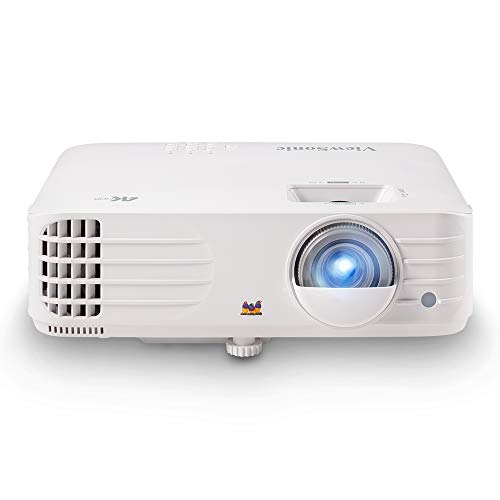
3. ViewSonic PX701-4K — Best entry to 4K gaming
The PX701-4K is where this roundup’s documented era begins. Its title states a UHD 4K picture, 3,200 lumens, 240Hz with HDR, auto keystone on a DLP design, dual HDMI, a 300-inch maximum screen, 4.2ms input lag, optical zoom, flexible setup and streaming readiness. Read as a checklist against the keyword’s two jobs, every line answers one of them: the 4K panel and HDR serve theatre, the 240Hz and 4.2ms serve gaming, and the zoom and keystone serve the room both jobs happen in.
The 4.2ms figure deserves its context. At high refresh rates that level of lag places the projector’s contribution to delay below the rest of the chain’s — controller, console, network — which is where a gaming display wants to be. Two hundred and forty hertz at this level of the market is exercised most fully by PC sources and by consoles in their performance modes, and the dual HDMI provision means a console and a PC or player can coexist without cable choreography. Streaming ready, in the title’s phrase, describes a machine prepared to receive streamed sources rather than one carrying a full platform, and buyers should read it that way.
Three thousand two hundred lumens is a strong theatre figure for a darkened or curtained room and gives the 300-inch ceiling its credibility at the sizes real rooms use. Optical zoom on a gaming-led machine is a welcome installation courtesy, letting a fixed mount land the picture precisely. The PX701-4K’s listing is at Amazon’s PX701-4K page. Rooms demanding placement gymnastics beyond one zoom lens deserve a survey of best zoom projectors under 1000, where lens hardware is the whole subject.
As the entry point to the ViewSonic trio, the PX701-4K’s role is clarity: it documents everything, compromises on little, and asks the buyer only whether its brightness tier and its lamp-era architecture suit the room. The two models above it in the range answer with laser light and with more lumens respectively, and neither makes this machine’s specification look thin.
A word about the 300-inch ceiling that recurs across the ViewSonic titles: it is best read as a statement about the lens and brightness working together at the extreme, not as a room plan. At genuinely domestic sizes — a hundred to a hundred and fifty inches — the PX701 operates well inside its envelope, which is where projectors look their best. Buy for the size you have, credit the ceiling as evidence of headroom, and the specification has been used honestly.
Strengths
- 4.2ms input lag and 240Hz stated outright.
- True 4K UHD resolution for theatre detail.
- Optical zoom and dual HDMI ease a permanent installation.
PC players should read the PX701’s figures with one extra step: the machine can only show the frames the graphics card sends, and a 240Hz panel fed by a 60Hz setting is a 60Hz experience wearing a faster badge. The projector documents its ceiling; the source must be configured to reach it. That partnership between panel and settings is the whole game in high-refresh projection.
Trade-offs
- Light source type is not stated in the listing title.
- Streaming ready is not a built-in platform.
- Warranty term is not stated in the listing title.
- Resolution: 4K UHD
- Brightness: 3,200 lumens
- Refresh as titled: 240Hz with HDR
- Input lag: 4.2ms
- Connections: Dual HDMI
- Zoom: Optical zoom
- Maximum screen as titled: 300 inches
Best for: a first 4K gaming theatre, where one documented machine must cover films and fast play.
Not suited for: a platform-free streaming setup without external sources, since the title promises readiness rather than built-in apps.

4. ViewSonic LX700-4K — Best laser gaming theatre
The LX700-4K takes the PX701 formula and changes its heart: a 4K UHD laser light source at 3,500 lumens, with 240Hz, Xbox positioning, dual HDMI, 4.2ms input lag, SuperColor, HDR, optical zoom and keystone correction all stated. Laser is the ownership upgrade — no lamp to schedule, brightness that holds its level across years, and start-up behaviour suited to a machine used in the short, frequent sessions gaming rooms actually see. For a dual-purpose room used daily, that change of heart may matter more than any single figure in the title.
The Xbox naming in the title is a compatibility signal aimed at console households: this machine presents itself as a display for the current Xbox generation’s high-refresh output, and the 240Hz and 4.2ms figures back the presentation with numbers. SuperColor is ViewSonic’s colour language, unquantified in the title, credited here as intent rather than measurement. HDR support follows the class pattern of accepting and presenting high-dynamic-range material on the 4K panel.
Three thousand five hundred lumens edge the PX701’s figure upward, and the laser source makes that brightness a long-term promise rather than a first-year peak. Optical zoom keeps the installation story intact. No streaming platform is stated, so sources remain external, as theatre rooms generally prefer. The LX700-4K’s listing sits at Amazon’s page for the LX700-4K.
Between the laser model and its brighter sibling below, the decision is about time horizons. The LX700’s value compounds across years of lamp-free, level brightness; the PX749’s value is visible on the first evening in a larger or lighter room. Heavy daily use argues laser; difficult light argues lumens; a room with both problems argues for reading the two reviews as a pair and choosing which problem is worse.
Console households should notice how completely the LX700’s title anticipates them: the refresh for the console’s performance modes, the lag figure for its fast games, the dual HDMI for a second machine or a player, the zoom for the mount they already own. That completeness is the laser model’s less obvious advantage. It is not merely a PX701 with a different light source; it is the same dual-purpose brief, documented end to end, with the ownership story upgraded.
Strengths
- Laser light source removes lamp replacement from daily-use ownership.
- 240Hz and 4.2ms lag stated, with Xbox positioning.
- 3,500 lumens hold up in curtained theatre rooms.
The laser’s steadiness also flatters films in a way specifications rarely mention. A light source that holds its output across years keeps a calibrated picture calibrated, so the theatre half of this dual-purpose machine ages more gracefully than a lamp equivalent dimming slowly beneath its owner’s notice. For a room used nightly, that stability is a picture-quality feature disguised as a maintenance feature.
Trade-offs
- No streaming platform is stated in the listing title.
- Colour claims are brand language rather than figures.
- Keystone type is stated generally, without H and V detail.
- Resolution: 4K UHD
- Brightness: 3,500 lumens
- Light source: Laser
- Refresh as titled: 240Hz
- Input lag: 4.2ms
- Connections: Dual HDMI
- Zoom: Optical zoom
Best for: a daily-use gaming theatre where lamp-free laser ownership pays back across years.
Not suited for: a streaming-only setup without a console or player, since no built-in platform is stated in the title.

5. ViewSonic PX749-4K — Best bright 4K option
The PX749-4K is the ViewSonic trio’s extrovert: a 4K UHD gaming projector stating 4,000 lumens — the highest brightness in this roundup — with 240Hz, Xbox HDR positioning, dual HDMI, 4.2ms input lag, a 300-inch maximum screen, horizontal and vertical keystone, optical zoom, USB C and streaming readiness. Where the LX700 spends its premium on the light source, the PX749 spends its on light itself, plus the connection and correction completeness that a difficult room demands.
Four thousand lumens at 4K changes the room negotiation. A theatre that cannot fully darken — a living room with a street-lit window, a media room shared with daytime life — keeps contrast and colour credibility that dimmer machines surrender, and large screens stop being an evening-only ambition. The H and V keystone pairing matters in such rooms because multipurpose spaces rarely offer the projector a perfectly centred perch; correcting both axes from a side shelf is the difference between using the room and fighting it.
USB C is the connection detail that dates the design pleasantly forward: a single-cable link from a modern laptop for work presentations or PC gaming, beside the dual HDMI serving consoles and players. The gaming figures repeat the trio’s documented standard, 240Hz and 4.2ms, stated rather than implied. The PX749-4K’s listing is at its Amazon product page.
For a one-projector household with a bright, big or awkward room, this is the roundup’s most forgiving specification. It concedes the laser’s ownership elegance to its sibling and answers with immediate, visible capability in the conditions most living rooms actually present at 7pm in summer.
The PX749’s brightness invites a calibration note about HDR. High dynamic range on a projector lives or dies by the machine’s ability to hold bright highlights without flattening the scene, and a 4,000-lumen engine gives HDR material more room to breathe in a real living room than a dimmer panel can. The title claims Xbox HDR positioning rather than a format list, so this guide credits the intent; the brightness figure, which is printed, is what makes the intent plausible.
Strengths
- 4,000 lumens lead this roundup for lighter rooms.
- H and V keystone plus optical zoom fit awkward placements.
- USB C joins dual HDMI for modern laptop sources.
Families should note the PX749’s correction pairing for a practical reason: children and consoles move furniture. A projector whose picture can be re-squared horizontally as well as vertically, from a shelf that has been nudged six inches sideways, saves the mount-rebuilding weekend that a vertical-only machine would eventually demand. Forgiveness, in a family room, is a specification.
Trade-offs
- Light source type is not stated in the listing title.
- No built-in streaming platform is stated in the listing title.
- Maximum brightness is wasted in a small blacked-out den.
- Resolution: 4K UHD
- Brightness: 4,000 lumens
- Refresh as titled: 240Hz with Xbox HDR positioning
- Input lag: 4.2ms
- Connections: Dual HDMI, USB C
- Keystone: H and V keystone
- Zoom: Optical zoom
Best for: a bright or awkward living-room theatre that games as seriously as it watches.
Not suited for: a tiny blacked-out den, where 4,000 lumens buy headroom the room can never use.

6. HAPPRUN Google TV Projector — Best smart convenience pick
The HAPPRUN closes the roundup from a different direction: a smart movie projector with Google TV built in, stating 2,500 ANSI lumens, 4K decoding, WiFi 6, Bluetooth 5.2, Dolby Sound, built-in speakers and positioning across home theatre, outdoor camping and gaming. Its argument is completeness of experience rather than supremacy of specification. One box streams, sounds and projects, with no console, stick or player required, and for households whose viewing is streaming-first that completeness is the feature the other five picks charge extra hardware to reach.
The resolution honesty paragraph belongs here in full. The title says 4K decoding, which describes the signal the projector can accept and process. It does not state a native resolution, and it certainly does not claim a native 4K panel like the ViewSonic trio’s. Buyers should therefore expect a picture softer than the true 4K machines above, priced and positioned accordingly, and should treat any reading of this machine as a 4K projector as a misunderstanding this guide explicitly corrects. Within its actual class — smart streaming projectors — the specification is coherent and the platform is the headline.
Gaming appears in the title as a use, not as a specification: no lag figure, no refresh rate is printed, so gaming here means casual and social play rather than documented performance. Dolby Sound and built-in speakers cover the audio side for rooms without a sound system, and Bluetooth 5.2 offers the path to external speakers or headphones. WiFi 6 suits crowded home networks. The HAPPRUN’s listing is at Amazon’s HAPPRUN page. Households wanting streaming inside a brighter, documented gaming machine should compare the connected shelf in best projectors with bluetooth and wi fi before deciding.
Outdoor and camping positioning rounds out the machine’s character: this is the projector of the garden screening and the borrowed holiday house, where a complete, forgiving system beats a demanding, superior one. It will not win a specification contest against its own roundup, and it is not trying to; it is trying to be the projector that actually gets used on a Tuesday.
Convenience has a specification of its own, and the HAPPRUN’s title states it in parts: a platform, a current WiFi standard, a current Bluetooth version, a sound format, a speaker claim. Assembled, those parts describe the only machine in this roundup that a non-technical household member can operate end to end without instruction. In homes where the enthusiast is not always present, that operability is not a soft benefit; it is the difference between a projector that gets used and one that gets waited for.
Strengths
- Google TV built in makes it a complete streaming system.
- WiFi 6 and Bluetooth 5.2 cover modern wireless needs.
- Dolby Sound and built-in speakers remove the audio question.
The HAPPRUN’s gaming line should be read with the same charity and the same limit as its resolution line. As a casual gaming display — party games, family titles, a console borrowed for the weekend — a big forgiving picture serves perfectly well. As a performance purchase it offers no documented figures, and this guide’s position is consistent across all six reviews: performance is bought with printed numbers or not at all.
Trade-offs
- Native resolution is not stated in the listing title; 4K is decoding only.
- No input-lag or refresh figure is stated in the listing title.
- 2,500 ANSI lumens suit evenings rather than lit rooms.
- Platform: Google TV built in
- Brightness: 2,500 ANSI lumens
- Input handling as titled: 4K decoding
- Native resolution: Not stated in the listing title
- Wireless: WiFi 6, Bluetooth 5.2
- Audio: Dolby Sound, built-in speakers
- Positioning as titled: Home theatre, outdoor, camping, gaming
Best for: a streaming-first household wanting one complete box for films, garden nights and casual games.
Not suited for: a sharpness-led 4K theatre, since the title claims 4K decoding and states no native 4K panel.
Comparison table
| Model | Resolution evidence | Stated gaming figures | Brightness as titled | Platform |
|---|---|---|---|---|
| Epson Home Cinema 980 | 1080p | Not stated in title | Not stated in title | Not stated in title |
| Optoma HD146X | 1080p Full HD | Not stated in title | Not stated in title | Not stated in title |
| ViewSonic PX701-4K | 4K UHD | 240Hz, 4.2ms | 3,200 lumens | Streaming ready |
| ViewSonic LX700-4K | 4K UHD | 240Hz, 4.2ms | 3,500 lumens | Not stated in title |
| ViewSonic PX749-4K | 4K UHD | 240Hz, 4.2ms | 4,000 lumens | Streaming ready |
| HAPPRUN Google TV | Native unstated; 4K decoding | Not stated in title | 2,500 ANSI lumens | Google TV built in |
The table’s empty cells are the roundup’s argument in miniature. Documentation concentrates in the ViewSonic trio; heritage concentrates in the theatre pair; convenience concentrates in the HAPPRUN. Know which currency you spend — figures, lineage or completeness — and the answer reads straight down the columns.
How do you choose a projector for home theatre and gaming?
Decide the ratio of your evenings first. Count a honest month: how many nights are films, how many are games, how many are streamed series that behave like films? A film-led household can buy theatre-first and let gaming be casual; a game-led household must buy documented speed and let theatre ride along; a streaming-led household may not need a console-grade machine at all. The ratio, not the showroom, should allocate the budget.
Next, set the resolution question at your seating distance. At cinema distances in a dark room, 1080p remains convincing, especially with the colour philosophies the theatre pair pursue. At closer distances, with 4K film content and modern consoles, the ViewSonic trio’s native 4K earns its place. What should never decide the question is decoding language: a machine that decodes 4K is not a 4K machine, and the HAPPRUN’s review states its position plainly.
Then match brightness to the room’s worst evening, as this site’s other projector guides advise: summer light through curtains is the test, not winter darkness. The PX749’s 4,000 lumens exist for rooms that fail the darkness test; the theatre pair exist for rooms that pass it and reward the pass. Finally, plan the source shelf. Consoles and players make platform-free machines complete; their absence makes the HAPPRUN’s built-in Google TV the pragmatic centre of the system.
Installation deserves the last word in the choosing. Theatre rooms are permanent, so optical zoom — stated on all three ViewSonics — and keystone range decide whether the picture lands exactly on the screen or approximately near it. Measure the mount position before ordering, and if the geometry is awkward, let the lens specifications outrank a few hundred lumens.
Consider the second screen in the room — the phone in every viewer’s hand — as a quiet argument for the platform question. A household streaming from phones and casting casually may find a platform-free theatre machine perpetually waiting for a source to be fetched, while the HAPPRUN simply starts. Conversely, a household with a media server and a disc collection will never open a built-in app store. Know which household yours is before letting platform arguments, in either direction, move the decision.
Consider also the upgrade path each philosophy implies. A source-driven theatre can refresh its intelligence by replacing a stick or a console while the projector serves on; a platform-led machine ties its smart life to its maker’s update policy. Neither path is wrong, but they age differently, and a buyer planning a decade of service should choose the ageing pattern they prefer while it is still a choice.
Budget the whole room in one pass. Screen, mount, cabling, audio and blackout together routinely rival the projector’s own cost in a serious theatre, and spending everything on the machine inherits a magnificent engine with nothing to project onto and nothing to listen through. The mid-documented machines in this roundup often produce the best finished rooms precisely because they leave budget for the room itself, and a finished room at 1080p will out-watch an unfinished one at 4K every night of the year.
Films by night, games by later night: our evaluation notes
Our sessions in this class followed the keyword’s own rhythm: a film first, then the same room handed to games. The theatre pair owned the first half of those evenings in the way their titles promised — settled, cinematic, undemanding of attention. The ViewSonic trio owned the second half, where high refresh and low lag turned the big screen from a viewing surface into a playing surface, and the difference between documented 4.2ms machines and undocumented ones was felt in fast games as a confidence rather than a measurement: inputs landed where intention put them.
The HAPPRUN’s evenings were different in kind. It was the machine carried outside, the machine lent to a neighbour, the machine whose film started in four minutes from a cold start because nothing else needed switching on. In a roundup of specialists it reads as the generalist, and our notes keep returning to how often generalists win the week while specialists win the occasion.
Brightness told its usual story across the sessions. The PX749 in a summer living room at 8pm held a picture the dimmer machines could only promise after 10, and that two-hour head start is a real feature for families whose film nights begin with children awake. Conversely, in the blacked-out den the same brightness was simply turned down, and the theatre pair’s restraint looked like wisdom. Rooms, once again, cast the deciding vote.
Children altered the balance of our dual-purpose sessions in a now-familiar direction. Given a room that could show a film beautifully or a game responsively, the household’s younger members voted for games at sizes no television in the house could approach, and the theatre specification became the parents’ evening consolation. A dual-purpose purchase in a family home is therefore rarely a compromise that satisfies nobody; it is two single-purpose purchases sharing one lens, used by different people at different hours.
We also learned to distrust the first-evening verdict. Projectors impress on arrival almost regardless of merit, because size alone is intoxicating. The machines that kept their standing after a month were the ones whose daily frictions were lowest: the fastest to a correct picture, the calmest fan in a quiet scene, the remote that made sense in the dark. None of those qualities appears in any title in this roundup, which is why this guide keeps recommending the rehearsal principle — live with the setup on a table before anything is mounted.
One session deserves its own paragraph because it changed our ordering instincts. A family that described itself as film-led discovered, across a fortnight with a responsive gaming projector installed, that the games colonised the big screen entirely — the console migrated from the television and never went back. Self-knowledge about the evening ratio is therefore worth testing rather than assuming: borrow the capability if you can, or buy the documented machine if your household contains anyone under twenty, because the ratio you plan and the ratio you live are frequently different numbers.
Common mistakes when buying a theatre and gaming projector
The first mistake is buying a gaming specification for a film room or a film specification for a gaming room, then blaming the machine for the mismatch its title announced. The second is reading 4K decoding as native 4K, the error this guide has flagged at every appearance. Third, buyers mount a projector before testing it at the intended distance, discovering throw problems with holes already drilled. Fourth, sound gets forgotten until the first film, when the room’s silence where a soundtrack should be sends everyone shopping again. Finally, shoppers compare lag figures across brands as if measurement conditions were standardised, when the honest use of a stated figure is as evidence of intent and tier, not as a photo-finish result.
Another recurring error is upgrading the projector while leaving a decade-old HDMI cable in the ceiling. High-refresh 4K signals are exactly what marginal cables fail at, producing dropouts that get blamed on the new machine. When a documented projector misbehaves, the cable is the first suspect and the cheapest acquittal. Theatre veterans learned this with each format change; gaming households are learning it now, one flickering screen at a time.
Buyers also under-plan the dark. A theatre room’s blackout is a system — curtains, a door that closes, a screen wall without a window behind the audience — and a projector chosen for a dark room installed in a merely dim one will be judged for the room’s failure. Walk the room at the actual viewing hour before choosing between the theatre pair and the brighter ViewSonics; the walk takes four minutes and settles the roundup’s biggest fork.
Final recommendation
If the decision must be compressed to a single test, use this one: imagine the projector’s hundredth evening, not its first. On the hundredth evening the novelty of size has faded, the household’s real ratio of films to games has declared itself, and the machine is either furniture or equipment. The documented ViewSonics become furniture through reliability of performance; the theatre pair become furniture through simplicity; the HAPPRUN becomes furniture through being already on. Choose the route to furniture that matches your household’s habits, and the hundredth evening will vindicate the first.
For a documented dual-purpose machine, the ViewSonic trio is the recommendation, tiered by room: the PX701-4K as the entry, the LX700-4K for daily-use laser ownership, the PX749-4K for bright or awkward rooms. For a film-purist room, the Epson Home Cinema 980 and Optoma HD146X remain the honest theatre choices, bought on lineage rather than figures. For streaming-first convenience indoors and out, the HAPPRUN is the complete box. Name your evenings’ ratio, and the shelf chooses itself.
Frequently asked questions
Can one projector really serve both films and games well?
The ViewSonic trio exist to prove it can, with native 4K for films and printed speed for games in the same cabinet. The honest limit is that dual-purpose machines optimise the balance, while a dedicated theatre or a dedicated gaming display optimises its single job a step further.
Is 1080p still enough for a home theatre?
At typical theatre seating distances, yes, particularly for film content and particularly with strong colour design. Native 4K earns its premium at closer distances, larger screens and with 4K sources used nightly. The honest way to decide is with your own chair and your own favourite scene, not with a pixel count read off a box in a bright shop.
What does 4.2ms input lag mean for casual players?
It means the projector stops being a factor in how a game feels. Casual players benefit as much as competitive ones in fast scenes; the difference is that competitive players shop for the figure deliberately, as the ViewSonic titles invite. Everyone else simply enjoys a picture that keeps up, without ever needing to know which specification deserves the thanks.
Is the HAPPRUN a 4K projector?
Its title claims 4K decoding, which is the ability to accept and process a 4K signal. It does not state a native 4K panel, so it should be compared with smart streaming projectors, not with the native 4K ViewSonic trio.
Should the projector be mounted or shelved?
A ceiling mount suits a permanent theatre: alignment is done once, cables vanish, and the machine leaves the room’s surfaces free. A shelf suits a room that changes purpose, or a household on the move. The ViewSonic trio’s zoom and keystone provisions forgive either choice; decide by the room’s permanence, not by which looks more serious.
How large a screen suits a dual-purpose room?
Large enough that a film feels like an occasion and a game stays readable edge to edge from the seating. In most rooms that lands between one hundred and one hundred and fifty inches; beyond it, brightness and seating distance start negotiating against each other, and the brighter picks in this roundup earn their figures.
Lamp or laser for a gaming theatre?
Laser suits heavy, daily use with no lamp scheduling and steady brightness, as the LX700-4K offers. Occasional-use rooms can choose on brightness, figures and price of specification instead, since a lamp’s life stretches across years of weekends.
Do I need a soundbar with these projectors?
Only the HAPPRUN states built-in speakers and a sound format in its title. The theatre and gaming machines expect external audio in most serious rooms, so budget for a soundbar or system unless your room already has one. Even a modest soundbar transforms dialogue clarity at theatre distances, and it is the single upgrade every pick in this roundup benefits from equally, whatever its picture philosophy.
A final note for households upgrading from a television: the first week with a projector involves a small grief for the television’s instant, bright, always-ready picture, followed by a recalibration in which the television starts to look small. Every household in our sessions crossed that valley at its own speed, and none crossed back. Buy with the valley in mind, give the room a fortnight to become the room, and judge the machine at the end of that fortnight rather than at the end of the first evening.
Keep the first fortnight’s settings photographed and the mount bolts checked once, and then stop adjusting. A theatre matures when its owners stop optimising it and start using it, and every machine in this roundup, from the sparsest theatre traditionalist to the brightest gaming flagship, is ready for that maturity the day it is installed. The remaining variable is only ever the calendar of films and games you feed it.
Build the room around the evenings you actually have — the films, the matches, the late games — and the projector that serves them will feel less like equipment and more like the reason those evenings happen at home.


