Our Top Picks
 Aurosports 10x25 Compact Binoculars for Bird Watching10x253.7 x 2.1 x 3.6 inches0.55 poundsCheck on Amazon


What's inside
- Two venues, two completely different viewing problems
- Magnification: why 8x is the sensible default and 10x is the specialist
- Field of view: width is what lets you follow the game
- Exit pupil: the arithmetic that decides how bright the stage looks
- Stadium choices: the 8×42 all-rounder and its bigger rivals
- Concerts and theatre: small glass, close focus and good manners
- Prisms and glass: roof against Porro, BaK-4 against BK-7
- Coatings: what multi-coated actually promises
- Eye relief, dioptres and the focus wheel
- Weight, straps and the three-hour problem
- Check prices on Amazon
- Venue reality: bag policies, security checks and cold concourses
As an Amazon Associate I earn from qualifying purchases. This post may contain affiliate links at no extra cost to you.
This site is reader-supported, and when you follow a retail link on this page and buy something, we may earn a commission that helps pay for the research behind guides like this one. Stock levels shift during big fixtures and touring seasons, listed details can change without much warning, and the figure attached to any model today may not be the figure attached to it next week, so check the current listing before you commit.
Two venues, two completely different viewing problems
A football pitch on a Saturday afternoon and a theatre stage on a wet Tuesday evening ask almost opposite things of the same instrument. Outdoors, the action sits sixty to a hundred metres away, lit by flat daylight or by floodlights strong enough to read a programme by, and it moves sideways faster than it moves toward you. Indoors, the singer or the lead actor might be only fifteen to thirty metres from a seat in the stalls, yet the lighting designer has deliberately left half the stage in shadow, and the detail you came for is a raised eyebrow rather than a sprinting winger. Distance dominates one problem. Darkness dominates the other.
That contrast explains why a single binocular so rarely tops both kinds of shortlist at once. Glass optimised for reach across a stadium bowl tends to carry magnification and objective size that feel clumsy in a velvet seat, where the stage already fills much of your view and a wide, bright image matters more than raw power. Conversely, a dainty theatre glass that disappears into a jacket pocket will leave a supporter in the upper tier of a large ground squinting at shirt numbers that stay stubbornly unreadable. Neither instrument is badly made. Each is simply tuned for a different geometry of light, distance and movement.
Consider the distances more carefully, because they shape everything that follows. At eighty metres, a player roughly 1.8 metres tall subtends a small angle, and the number on a shirt occupies a tiny fraction of that again. Bringing that number up to comfortable reading size is a magnification task, pure and simple. At twenty metres, by contrast, a performer’s face is already reasonably large in the unaided view, and the challenge is separating expression from gloom. Enlarging a dim image without brightening it only gives you a bigger version of the same murk, which is why theatre buyers obsess over pupil size and coatings while stadium buyers talk about power and field width.
Movement draws a second dividing line. Sport refuses to stay where you pointed the binocular. Play breaks from midfield, a pass travels forty metres in a couple of seconds, and the useful instrument is the one that lets you relocate the ball without a frantic sweep of the whole stand. Theatre movement is slower but less predictable in a different way: a dancer crosses into a pool of light, a guitarist steps forward for eight bars, then the scene resets into shadow. Following that kind of motion rewards a focus wheel that turns quickly and a view wide enough that the subject rarely escapes the edge.
There is also the matter of duration. A concert might hold you in your seat for ninety minutes with one interval, while a day at a test match or a tournament fixture can stretch past three hours of intermittent viewing. Weight that feels trivial during a thirty-second lift in a shop becomes a genuine ache across an afternoon. Readers who attend both kinds of event often end up, sensibly, with two instruments rather than one compromised all-rounder: a mid-size glass for the ground, and something smaller and brighter for the hall. This guide works through the specifications in the order that helps you decide whether you need that pair, or whether one careful purchase can cover your calendar.
Magnification: why 8x is the sensible default and 10x is the specialist
Magnification sounds like the simplest number on the box, and in one sense it is: an 8x binocular makes a subject eighty metres away appear as though it stood ten metres off, while a 10x model closes the same gap to eight virtual metres. The catch hides in what else gets multiplied. Every tremor in your hands is enlarged by exactly the same factor as the view, so the handshake that barely registers at 8x becomes a visible swim at 10x, and excitement makes it worse. A last-minute attack, a standing ovation, cold fingers in an open stand — all of these feed shake straight into the image, and no optical quality can subtract motion that your own body supplied.
Picture two supporters tracking the same breakaway. The one holding 8x glass sees slightly smaller players, yet the frame stays composed enough that the runner, the nearest defender and a slice of open grass all remain in view together. Beside them, the 10x user enjoys a larger figure but keeps losing the ball carrier at the edge, then overcorrects, then loses him again on the other side. Coaches call this chasing the play. In optical terms it is angular shake amplification meeting a narrower field, and it is the main reason experienced stadium regulars so often settle on 8x despite the apparently modest specification.
None of this makes 10x a mistake. In the largest bowls, from seats set well back and high above the far touchline, the extra reach genuinely helps: shirt numbers resolve sooner, a linesman’s flag signal reads more clearly, and a golfer’s ball position on a distant green becomes easier to confirm. The honest condition is steadiness. A 10x binocular rewards a seated user who can brace elbows on knees or rest forearms on a rail, and it punishes anyone standing in a swaying crowd. If your viewing is mostly seated and your venues are mostly vast, 10x earns its place. If you stand, travel, or split time between sport and theatre, 8x will please you more often.
Zoom binoculars occasionally tempt buyers with ranges printed like 10–30x, and they deserve a direct warning. At their higher settings the image darkens sharply, the field narrows to a tunnel, and the mechanism that varies power adds alignment tolerances that fixed-power designs avoid. Almost nobody at a match actually plays with a zoom lever mid-play; they set something moderate and leave it there. A fixed 8x or 10x of decent quality will outperform a variable design at the magnifications people really use, which is why this guide discusses fixed powers only.
Lower powers deserve a mention at the other end of the scale. A 6x or 7x binocular trades reach for an exceptionally calm, wide view, and for theatre work that trade is frequently worth making, as a later section explores. For now, hold onto the hierarchy: magnification buys apparent closeness, charges you in steadiness and field width, and interacts with brightness through the exit pupil. Choosing power first, before those linked quantities, is how buyers end up with glass that impresses in the shop and disappoints in the seat.
Field of view: width is what lets you follow the game
Manufacturers quote field of view two ways, and converting between them removes a lot of brochure fog. The real field, given in degrees, describes the angular slice of the world visible through the binocular. Multiply that angle by roughly 52.5 and you get the width in feet visible at 1,000 yards, the other common quotation. A binocular with a 6.5-degree real field therefore shows about 341 feet across at 1,000 yards. Shrink the distance to a more typical hundred yards and the same instrument frames roughly 34 feet across — about the width of a penalty box’s most interesting traffic, or a generous slice of stage.
Now scale that thinking to a winger taking off down the flank. At sixty metres, a 6.5-degree field covers a little under seven metres of pitch width in the view, which sounds ample until the winger is travelling at eight metres per second and your own panning lags by half a second. Width buys forgiveness. A 7.5-degree or 8-degree instrument covers eight to nine metres at that range, giving the runner room to stay framed while you catch up, and giving you peripheral sight of the overlapping full-back arriving late. Striker, winger, through ball: following football is a width problem at least as much as a reach problem, and the specification sheet tells you so if you read the degrees line before the magnification line.
Apparent field of view is the other term worth untangling, because it explains why two binoculars with identical real fields can feel different. Multiply the real field by the magnification and you approximate the apparent field — the angle the image seems to occupy in front of your eyes. An 8x glass with a 7-degree real field presents an apparent field near 56 degrees, which feels open and immersive. A compact 10x with a 5.5-degree real field lands around 55 degrees apparent, similar in feel despite the tighter slice of the scene, because the slice is enlarged more. Feel matters during long events; a view that seems like a porthole tires the eyes and the attention faster than one that seems like a window.
Edge quality complicates the raw numbers. Many binoculars deliver a sweet spot of sharpness across the central two-thirds of the field, with the outer band softening noticeably. For following sport that softness is mostly harmless, since your subject lives in the centre and the edges serve as early-warning space. For scanning a chorus line or reading the whole defensive line at once, edge softness is more annoying. Either way, a slightly narrower field that stays crisp usually serves better than a headline-grabbing wide field whose edges smear, and spec sheets rarely confess the difference, which is one reason handling a binocular before buying remains valuable where a retailer allows it.
For readers comparing models on paper, a practical shortlist rule emerges. For 8x glass aimed at stadiums, look for a real field of at least 7 degrees, ideally nearer 7.5 or 8. For 10x models, 6 to 6.5 degrees is respectable and anything wider is a genuine bonus worth paying for. Theatre buyers can relax about extreme width because the stage is bounded, yet even there a field below about 6 degrees at 8x starts to feel restrictive when a full ensemble spreads across the boards. If you enjoy other binocular-friendly pastimes, guidance written for different subjects still transfers: the framing discipline discussed in best cameras allowed into concerts applies just as much to glass as to lenses.
Exit pupil: the arithmetic that decides how bright the stage looks
Divide the objective lens diameter by the magnification and you get the exit pupil, the width of the light beam that leaves each eyepiece and enters your eye. The sums for common configurations are worth memorising. An 8×42 gives 42 divided by 8, which is 5.25 millimetres. A 10×42 gives 4.2 millimetres. A 10×32 shrinks the beam to 3.2 millimetres, and a 10×50 opens it back up to a full 5 millimetres. These are not marketing figures; they are geometry, and they predict low-light behaviour more reliably than any trademarked twilight index printed on a carton.
Your own pupil sets the other half of the equation, and it changes with the venue. In noon sunshine the iris closes down to roughly two or three millimetres, so even a modest 3.2-millimetre exit pupil delivers more light than the eye can accept, and compact glass looks perfectly bright at a summer fixture. Move into a darkened auditorium and the pupil opens toward five, six or even seven millimetres in younger eyes, somewhat less with age. Now the binocular becomes the bottleneck. Feed a six-millimetre pupil with a 3.2-millimetre beam and the stage looks dim no matter how clean the glass, because the eye is asking for light the instrument never collected.
This is why the same 10×32 that delights its owner at an afternoon race meeting can disappoint so thoroughly at an evening recital. Nothing broke between venues. The match between beam and pupil simply inverted. Theatre-first buyers should therefore treat an exit pupil of at least four millimetres as a floor and five millimetres as a comfort zone, which in practice points toward 8×42, 7×42, 6×30 or 8×32 configurations depending on how much size the seat allows. Stadium-first buyers who attend mostly daylight events can accept smaller beams, though floodlit evening fixtures pull the requirement back up again.
A note of caution about chasing brightness through sheer objective size: a bigger front lens only helps if the rest of the system passes the light along. Poor coatings, undersized prisms and sloppy internal baffling can waste what a 50-millimetre objective gathers, while a well-made 42-millimetre instrument keeps nearly all of its smaller harvest. Exit pupil tells you the size of the delivery; it does not guarantee the quality of what is delivered. Read it alongside the coating and prism sections below rather than as a standalone verdict.
Twilight deserves its own sentence or two because so much sport happens there. The last half hour of a day-night match, an evening kickoff under lights that have not yet taken full effect, a concert hall during a deliberately hushed scene — these in-between conditions are where a 5.25-millimetre pupil earns its keep. Colours stay distinguishable longer, shadow detail in dark kits or dark costumes survives, and your eyes fatigue more slowly because they are not straining to interpret a starved image. Buyers who know most of their viewing happens at dusk should weight this section heavily and forgive the extra size that a generous pupil usually requires.
Stadium choices: the 8×42 all-rounder and its bigger rivals
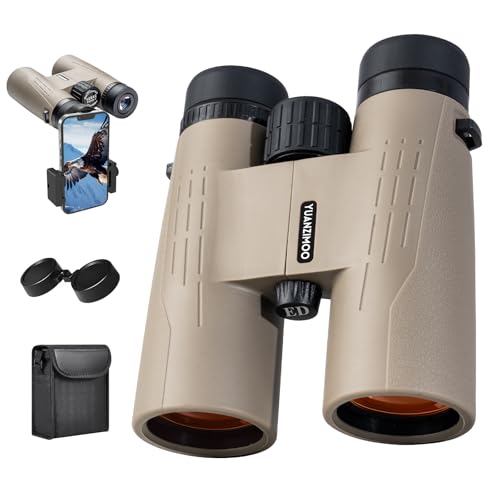
If a single recommendation had to cover the widest range of grounds, it would be the 8×42. The configuration pairs the steadier magnification with a pupil of 5.25 millimetres, a field that in good designs reaches seven degrees or beyond, and a size that hangs around the neck for an afternoon without becoming a grievance. It reads a goalkeeper’s gestures from the far end, follows a winger without constant reframing, and still behaves itself at an evening performance if a dual-purpose buyer asks it to. Most of the sensible mid-priced market clusters exactly here, which also means choice, availability of cases and straps, and resale interest all run in the buyer’s favour.
The 10×42 steps forward when the venue itself is the problem. In the largest bowls — national stadiums, huge oval cricket and athletics grounds, upper tiers that sit a long way back from the action — the extra two powers of magnification convert directly into legibility. A shirt number at eighty metres through 10x glass carries the apparent size it would have at eight metres unaided, and that margin is often the difference between reading the number and merely guessing at its shape. Expect to pay for the reach with a 4.2-millimetre pupil, a slightly narrower field, and a view that demands braced elbows. Supporters who mostly watch from the gods in enormous arenas accept that bargain gladly.
Then there is the 10×50, the traditional low-light heavyweight. Its five-millimetre pupil restores the brightness that 10×42 surrenders, which helps at floodlit fixtures and winter afternoon games that finish in gloom. The cost arrives in the hand and on the chest: many 10×50 models weigh 800 grams or more, with front-heavy balance that tires the wrists during long passages of play. For a seated spectator at a fixed seat with a rail to lean on, that weight is manageable and the bright, powerful view is genuinely luxurious. For anyone walking a concourse, standing on a terrace or travelling light to away fixtures, it is usually the first configuration to cross off the list.
Reading shirt numbers deserves a concrete expectation, because it is the test supporters actually care about. At eighty metres in decent light, a good 8×42 resolves a high-contrast number on a moving shirt most of the time, though low-contrast kits — pale digits on pale fabric — will defeat any binocular at that range. A 10×42 improves the success rate and shortens the squint, while at a hundred metres both configurations benefit enormously from the player turning square to you for a moment. Numbers are a fair benchmark, but judge a stadium binocular equally on how calmly it tracks play, since most of your afternoon is spent following movement rather than deciphering digits. Filming youngsters’ matches raises parallel questions about reach and steadiness, covered from the camera side in best cameras to film children s sports.
Smaller stadium options still have their defenders. An 8×32 trims weight and bulk noticeably and, in bright conditions, gives up surprisingly little to its 42-millimetre sibling; the 4-millimetre pupil only tells against it as light fades. Travelling supporters who fly to away games or cycle to the ground often prefer exactly this compromise. What matters is choosing the compromise consciously, with the pupil arithmetic in front of you, rather than discovering at a December evening kickoff that your delightfully light binocular has gone dim precisely when the match got interesting.
Concerts and theatre: small glass, close focus and good manners
Theatre binoculars begin from the opposite assumption: the subject is near, the light is scarce, and discretion is part of the product. Opera glasses are the historic answer, typically offering around 3x magnification through a Galilean design with no prisms at all. That simplicity keeps them tiny, elegant and inexpensive, and at fifteen metres 3x is honestly enough to turn a distant face into a readable one. Their limits are equally real. The field of view is narrow, the image dims quickly as house lights fall, there is usually no meaningful dioptre correction, and the little focusing wheel or fixed-focus arrangement offers little help when your seat sits farther back than the design assumed.
Modern compacts serve most concertgoers better. A 6×30 Porro or an 8×32 roof-prism model delivers a pupil between four and five millimetres, a field wide enough to hold a full stage picture, and focusing that works from the front row of the circle to the back of the balcony. The 6×30 in particular has a devoted following among theatre regulars: six powers enlarge a face at twenty metres to a comfortable apparent distance of just over three metres, shake is nearly a non-issue, and the depth of field is so generous that focus adjustments become rare even as performers move upstage and down.
Close focus sounds like a specification for butterfly watchers, yet it matters in a hall for a subtler reason. A binocular that focuses down to two or three metres also tends to have a focus mechanism with fine control through the middle distances where stage action lives, and a model whose near limit is six metres sometimes feels coarse exactly where you need delicacy. Fast centre focus matters more: when the lights drop and a soloist steps forward, you have perhaps a second to sharpen the view before the moment passes. A wheel that travels from near to far in under a full turn, with enough resistance to stop precisely, is worth more in that second than another half-millimetre of pupil.
Etiquette shapes hardware choices in ways stadium buyers never consider. Shiny finishes catch stage light and flash it toward performers and neighbours, so matte, dark, low-reflection housings are the polite default, and some traditional opera glasses come in deep red or burgundy enamel — the so-called red-skin finish — partly because it looks rich under house lighting and partly because it does not glint. Size is courtesy too. A full-size 42-millimetre binocular raised in a cramped row blocks sightlines and elbows neighbours; a compact disappears between uses into a lap or a small bag. Even the strap matters, since a dangling full-length neck strap swings into the person beside you every time you applaud.
One more concert-specific trap: balcony rails and seat arms invite you to rest the binocular, which steadies the view beautifully, but vibration from the building travels through that contact during bass-heavy music. A hand-held compact with a modest 6x or 8x power often looks calmer than a braced 10x during a loud set, simply because your hands absorb what the architecture transmits. If your calendar leans toward amplified gigs rather than acoustic theatre, weight the steadiness argument even more heavily than the brightness one, and let the pupil floor of four millimetres be your only non-negotiable.
Prisms and glass: roof against Porro, BaK-4 against BK-7
Every conventional binocular folds its light path with prisms, and the two classic arrangements behave differently in the hand. Porro prism designs offset the objective lenses wider than the eyepieces, producing that familiar zigzag silhouette, a strong sense of depth because the objectives sit farther apart than your eyes, and — historically — excellent optical value for the money. Roof prism designs run the barrels straight, which makes the binocular slimmer, easier to seal against weather and more comfortable to slip into a venue bag. The straight tube is why nearly every modern stadium and theatre compact uses roof prisms, while Porro survives proudly in larger, budget-friendly and marine-flavoured models.
Prism glass is the specification that separates careful makers from careless ones. BaK-4, a barium crown glass with a high refractive index, lets the prism pass the full cone of light, and the exit pupil you see when holding the binocular at arm’s length appears as a clean, even circle. BK-7, a cheaper borosilicate, can clip that cone in some designs, and the tell-tale sign is a squared-off shadow intruding into the edges of the pupil circle — diamond-shaped grey facets that quietly announce lost light and a slightly compromised image. Not every BK-7 binocular is poor, and not every BaK-4 badge guarantees excellence elsewhere, but given two otherwise similar models, the BaK-4 version is the safer purchase.
Roof prisms need one extra treatment that Porro prisms do not. Because of how light reflects inside a roof prism, the two halves of the wavefront can fall out of step, softening contrast unless the maker applies phase-correction coatings to the roof surfaces. Phase-coated roof prisms have become standard in respectable mid-priced glass, and their absence on a modern roof model is a legitimate reason to walk away. Porro designs sidestep the issue entirely, one of several reasons a good Porro binocular can embarrass a mediocre roof model costing noticeably more.
Extra-low dispersion glass — ED glass in the brochures — addresses a different flaw: chromatic aberration, the colour fringing that appears when a lens cannot focus all wavelengths to the same point. At a floodlit match the symptom is unmistakable, a violet or green fringe shimmering along the white line markings and around players silhouetted against bright boards. ED elements suppress most of that fringing and keep edges looking carved rather than smeared. On a dim stage the benefit shrinks, because fringing needs contrast and brightness to show itself, which is why theatre-first buyers can rank ED glass lower than stadium buyers should.
Field flatteners, dielectric mirror coatings on certain prism faces, and other refinements appear as you climb the price ladder, each chasing small gains in edge sharpness or total transmission. The sensible reading order for a buyer is unglamorous: confirm the prism type suits your size needs, confirm BaK-4 glass, confirm phase coating on any roof model, then treat ED glass as a strong preference for floodlit sport and a pleasant extra elsewhere. A binocular that gets those four things right and fits your hands will satisfy you for years, whatever badge it wears.
Coatings: what multi-coated actually promises
Every air-to-glass surface inside a binocular reflects a small share of the light hitting it, and an uncoated surface can throw away around four percent. A binocular contains many such surfaces, so untreated optics would lose a serious fraction of the image’s brightness before it ever reached your eye, besides scattering stray light that washes out contrast. Anti-reflective coatings fix this by applying microscopically thin layers that cancel reflections through interference. A single layer helps; multiple layers tuned to different wavelengths help across the whole visible spectrum, which is why good modern glass transmits light in the low ninety percent range overall rather than the seventy-something percent of cheap untreated designs.
The vocabulary on the box, unfortunately, has no legal precision, so learn to translate. Coated means at least one surface carries one layer, which is nearly meaningless as a quality claim. Fully coated means every air-to-glass surface carries at least a single layer. Multi-coated means at least one important surface carries multiple layers, with the rest possibly single-coated. Fully multi-coated is the phrase worth seeking: every surface, multiple layers. Even that top claim is self-declared by each manufacturer, with no independent body policing it, so treat the wording as a filter rather than a guarantee — reject anything below fully multi-coated in a serious purchase, then judge the survivors by reviews, reputation and the view itself.
What does the difference look like from a seat? Against strong floodlights or a bright stage wash, a well-coated binocular holds its contrast: dark kits stay dark instead of greying, faces keep their modelling, and ghost images of bright lights stay faint. A poorly coated one veils the whole scene in a low haze that no focusing can cure, because the flaw is scattered light, not blur. In dim conditions the transmission gap compounds the exit-pupil arithmetic from earlier — a binocular passing ninety-two percent of its gathered light to a five-millimetre pupil will visibly outrun one passing eighty percent to the same pupil, and the second instrument cannot recover that loss anywhere else in its design.
Exterior lens coatings deserve a brief separate mention. Hard, water-shedding treatments on the outer surfaces — sold under various trade names — make rain droplets bead and run off, and they ease the cleaning of the inevitable fingerprint. They do not change the optical fundamentals, but at an uncovered seat in drizzle they can be the difference between a usable view and a smeared one. Whatever the coating claims, clean lenses with a blower first, a soft brush second and lens fluid on a microfibre cloth only when needed; grinding dry grit across any coating with a shirt tail is how good glass gets ruined in a single careless minute.
Eye relief, dioptres and the focus wheel
Eye relief is the distance behind the eyepiece at which your eye can still see the full field, and it decides whether glasses wearers get the whole picture or a keyhole version of it. Spectacle frames hold the eye roughly twelve to fourteen millimetres behind where a bare eye would sit, so wearers should look for relief figures of at least fifteen millimetres, with seventeen to twenty being genuinely comfortable. Twist-up eyecups make the adjustment practical: extended for bare eyes, retracted for glasses, with intermediate stops on better models. A binocular with generous relief and cups that stay where you set them will be shared happily between wearers and non-wearers in the same row.
The dioptre adjustment compensates for the difference between your own two eyes, and nearly every binocular provides it on one eyepiece, usually the right. Set it once, properly, and the centre wheel then focuses both barrels together for the rest of the event. The reliable method takes twenty seconds: cover the dioptre-side objective, focus the other eye sharply on a distant sign with the centre wheel, then swap sides and use only the dioptre ring to sharpen that eye, without touching the centre wheel. Adjustment ranges of plus or minus three or four dioptres cover most prescriptions’ imbalance, though a binocular never replaces the glasses themselves for astigmatism, which is why relief matters more than raw dioptre range for most wearers.
Focus wheel behaviour divides sport glass from other kinds. Following play demands speed: a wheel that runs from close focus to the far end of the stadium in roughly one turn lets you snap from a near-touchline incident to a counterattack without your finger walking around the wheel twice. Individual-focus designs, common on marine binoculars, set each eyepiece once and rely on depth of field; they are rugged and simple but hopeless for a striker breaking from thirty metres to eighty. For theatre, a slightly slower, finer wheel can be a virtue, since the distances are shorter and the adjustments smaller, but even there a wheel needing multiple turns will lose moments you cannot get back.
Depth of field quietly assists all of this. Lower magnification and smaller objectives deepen the band of distances that look sharp at a single focus setting, which is another hidden reason 6x and 8x glass feels so forgiving at events: much of the pitch or stage sits acceptably sharp without constant adjustment. At 10x the sharp band thins, the wheel gets busier, and the user’s workload rises along with the magnification. When a specification sheet lists close focus, check it too — two to three metres is typical for good event glass, and anything beyond four metres suggests a design aimed at distant scenery rather than seats and stages. Readers setting up a home cinema corner may enjoy the projector comparisons in best 1080p home theater projectors once the live season ends.
Weight, straps and the three-hour problem
Binocular weight classes map neatly onto event endurance. Compacts in the 300-to-450-gram range vanish against the chest and suit concerts, racing and any event where the glass is raised for seconds at a time. The mainstream 8×42 and 10×42 models cluster between roughly 600 and 750 grams, a load most adults manage across a match with a decent strap, though shoulders begin filing complaints during extra time. Full-size 10×50 and larger instruments run from 800 grams toward a kilogram and beyond, and they belong to seated, settled viewing rather than terraces and travel. Nobody regrets weighing these classes against their own habits before buying; plenty of people regret doing it afterwards.
The strap, oddly, is where comfort is won or lost. The thin cord supplied with many binoculars concentrates the load on a narrow strip of neck and turns a 650-gram instrument into a pendulum that swings every time you stand to applaud. A wide neoprene strap spreads the weight, adds a little bounce-damping stretch, and keeps the binocular riding close. A chest harness goes further, transferring the load to the shoulders and holding the glass pinned during celebrations, at the cost of looking like expedition gear in a theatre row. Match the carrying system to the venue: harness for the open terrace and the racecourse, discreet strap for the stalls, and the lightest option you own for standing concerts where security already limits what you carry.
Halftime and intervals expose handling details that spec sheets ignore. Objective lens caps that tether to the barrels cannot be lost in a dark row; caps that live loose in a pocket eventually live permanently under a seat. A rain guard covering both eyepieces in one piece, clipped to the strap, goes on in one motion when the sky opens or when you set the binocular down on a wet ledge. Cases matter less inside the venue than on the journey, but a soft pouch that fits a jacket pocket beats a rigid case that demands its own bag — a distinction the next section shows becoming decisive at the gate.
Tripods and monopods enter the conversation only for the steadiest, longest sessions: a day at the cricket, bird hides near a ground, or astronomy after the match. Most binoculars accept a small adapter on the front hinge, and even a light support transforms a 10x view. Inside a concert hall or a football stand, though, supports are usually impractical or unwelcome, taking space your neighbours paid for. Plan on hand-holding, choose a magnification your hands can govern, and let bracing against knees, rails and seat backs supply whatever extra stability the venue allows.
Sharing a binocular between two seats introduces a negotiation that couples and families learn quickly. Every handover disturbs the interpupillary setting if the hinge is loose, and the dioptre dial can wander when a strap catches it, so models whose adjustments move with deliberate resistance save repeated recalibration. Setting the hinge width is itself a small skill: fold the barrels until the two circles of view merge into one clean circle without dark crescents at the sides, and note that children, with narrower-set eyes, need a hinge that closes further than many adult-sized designs allow. A compact whose minimum interpupillary distance dips toward fifty millimetres will serve a ten-year-old at a first match; a full-size model that stops at fifty-eight will show that child two overlapping moons instead of a single picture.
Buying in a shop, where that is still possible, rewards a short routine rather than a glance at the ceiling tiles. Take the binocular to the doorway and look at the farthest detailed target available — a sign across the street, brickwork, a number plate — because indoor distances are too short to expose weak focus travel or a gritty wheel. Check that the image snaps into sharpness rather than oozing toward it, that both barrels agree on where sharpness lives, and that no doubling appears when you relax your eyes, since misaligned optics announce themselves as a faint ghost edge and a headache that arrives twenty minutes later. Roll the binocular slowly while watching a vertical edge; a view that swims oddly can betray loose elements or poor collimation that no adjustment at home will cure.
Second-hand glass deserves the same routine plus two extra checks. Shine a phone light through the objectives at an angle and look for the pale bloom of fungus on internal elements, which spreads in damp storage and cannot be cleaned without a workshop. Then work every control through its full travel: focus wheels that stiffen at one point, dioptre rings seized solid, and eyecups whose clicks have worn into free spin all tell a story about how the instrument was kept. Event binoculars live hard lives in bags and gloveboxes, so cosmetic scuffs matter little, but optical neglect is forever, and a pristine-looking case proves nothing about the glass inside it.
Renting or borrowing before a major purchase is underused advice, yet big fixtures create exactly the conditions a shop cannot simulate. One afternoon in a real seat teaches you whether your hands govern 10x as well as you hoped, whether your glasses and the eyecups get along for three hours rather than three minutes, and whether the strap length suits the coat you actually wear in January. Libraries of things, camera rental counters and outdoor shops in many cities now lend binoculars by the weekend for a modest fee, and a single rental that prevents a mismatched purchase is money recovered several times over. Borrowed glass also reveals your true habits: many borrowers discover they reach for the binocular mainly at set pieces and key moments, which argues for lighter glass than the all-afternoon specification they had planned.
Weather sealing sits on a spectrum that marketing language tends to blur. A binocular described as weather-resistant may survive a light shower and resent a downpour, while genuinely waterproof models carry sealed, gas-filled construction that tolerates being caught in sustained rain at an uncovered ground. For theatre-only use none of this matters, and paying for deep sealing buys weight and cost without benefit. For supporters whose seats sit beyond the roofline, sealing ranks alongside pupil size as a first-order concern, because a single internal fogging episode during a winter fixture can end the instrument’s useful life unless a service centre dries it. Match the sealing to the wettest event on your calendar, not the average one.
Colour rendition rarely headlines a review, yet it shapes how easily you read a game. Some binoculars render the scene slightly warm, others lean cool or faintly green, and under floodlights a cool cast can make a white kit glow against the pitch while a warm cast flatters skin tones on stage. Neither is objectively correct for event use; what matters is that colours stay distinguishable, so that the yellow of a card, the red of a shirt and the orange of a steward’s jacket never collapse toward one another. When comparing two models side by side, look at the most saturated target available and ask which instrument keeps its hues separated at the edge of the field, not merely which looks brighter in the centre.
Longevity, finally, is a specification nobody prints. Hinges loosen, armour peels, focus mechanisms develop play, and the difference between brands often shows up in year five rather than week one. A binocular bought for a season ticket or a subscription series should come from a maker with a real service network and a warranty measured in decades rather than months, and the purchase receipt deserves the same careful filing as the instrument deserves a dry shelf. Event glass is not delicate jewellery; it is a tool that will be rained on, dropped on concrete once, and lent to a nephew — buy the one built and backed for that life.
Different sports quietly rewrite the priority list one more time. Cricket rewards patience and reach in equal measure, since the ball is small, the boundary is far, and long spells pass where a steady 10x on rested elbows earns its keep. Horse racing asks for width and fast focus during a forty-second burst, then nothing for half an hour, which suits a bright compact you can raise and lower all afternoon without fatigue. Motor sport punishes narrow fields mercilessly because the subject crosses the view in a blink, and regulars at circuits often choose 7x or 8x glass with the widest field they can find, accepting smaller images of the cars in exchange for never losing them. Golf spectators walk, stand and climb, so weight climbs the ranking until a light 8×32 starts to look less like a compromise and more like the correct answer.
Indoor sports split the difference between stadium and stage. Basketball and ice hockey arenas light their playing surfaces brightly, often more evenly than a floodlit pitch, so exit pupil matters less and magnification can rise a step for the far seats. Boxing and darts concentrate attention on a small, static area, which flatters higher power and narrower fields that would frustrate a football supporter. Knowing which pattern your own calendar follows prevents the classic error of buying for the one annual visit to a giant stadium while ignoring the monthly trips to a modest arena where a smaller, calmer instrument would serve better nine times out of ten.
Concert genres pull the theatre advice in their own directions as well. Classical audiences sit still in hushed halls, where a slightly larger 8×42 is welcome and its brightness flatters soloists picked out in a single spotlight. Arena rock adds standing crowds, moving lights and sheer distance, pushing the choice back toward stadium logic: 8x, a generous field, and a housing that shrugs off the occasional splash from a neighbour’s drink. Open-air festivals combine daylight, dusk and distance in a single day, the one setting where a good 8×42 truly has no rival, because it handles the afternoon glare and the headline set after dark without asking you to carry a second instrument through the mud.
Price tiers, finally, buy different things at different heights, and knowing the pattern prevents both overspending and false economy. Entry-level glass now delivers honest 8×42 performance for daylight sport, with its compromises concentrated in edge sharpness and low-light coatings. The middle tier is where phase coatings, BaK-4 prisms, ED elements and proper sealing converge, and for most event-goers it represents the ceiling of useful spending. Above that, prices climb steeply for refinements in field flatness, transmission and mechanical finish that delight connoisseurs yet change little about whether a shirt number resolves at eighty metres on a grey afternoon in November.
Check prices on Amazon
Live listings for the shortlist in this guide are pulled from Amazon below, so prices and availability are always current at the moment you look.

Venue reality: bag policies, security checks and cold concourses
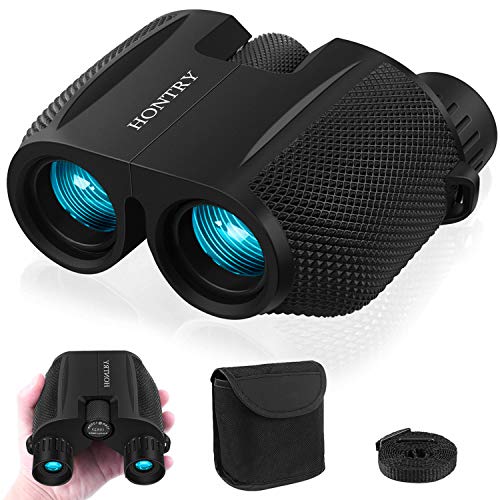
Modern arenas increasingly restrict bag size, and many enforce clear-bag rules or a simple nothing-larger-than-a-small-clutch policy for certain events. A full-size binocular in a hard case can fail that test at the gate even though the binocular itself is welcome inside. This single practical fact pushes many regulars toward compacts for arena sports and concerts: an 8×32 or even an 8×25 slips into a coat pocket or a permitted small bag, passes the visual inspection in seconds, and never becomes the reason you are sent back to the car. Check the venue’s published policy before a big event, because policies differ between stadiums in the same city and sometimes between events in the same stadium.
Security staff generally view binoculars benignly, and there is a structural reason they survive where big camera lenses are turned away. A binocular only views; it cannot record, broadcast or produce a saleable image, so it raises none of the rights and commercial-photography concerns that make venues nervous about long detachable lenses. You may be asked to look through it at the checkpoint or to show that the case holds nothing else, and a moment’s cooperation settles it. The etiquette counterpart is real, though: glass trained persistently on private boxes, benches or other spectators rather than the event will attract attention anywhere, and rightly so.
Fogging is the final venue hazard, and it follows simple physics. Walk from a cold concourse or a winter street into a warm, humid stand and moisture condenses on the cooler lens surfaces, sometimes inside poorly sealed instruments where it cannot be wiped away. Nitrogen-filled, sealed binoculars resist internal fogging, which is a genuine argument for weather-sealed models if your calendar includes winter fixtures. External misting clears with patience and a cloth; give the binocular a few minutes to equalise with the room before an indoor event, and avoid breathing directly onto the eyepieces while you wait. Storing the glass overnight in a sealed bag with a small desiccant sachet keeps the problem from compounding across a season.
Bringing the whole decision together: start from your seats, not from a catalogue. Measure your typical distance honestly, decide whether daylight or darkness dominates your calendar, set an exit-pupil floor from that answer, then choose the steadiest magnification whose field still covers your sport’s fastest movement. Let bag policy arbitrate between the 32-millimetre and 42-millimetre classes, insist on BaK-4 prisms with phase coating in any roof design, demand fully multi-coated optics and at least fifteen millimetres of eye relief if glasses are involved, and carry the result on a strap wide enough for the third hour. Readers furnishing a dedicated viewing room instead might weigh the larger-scale options in best 4k projectors home theater against the charms of the live crowd. Choose the binocular that fits the seat you actually sit in, and it will keep earning its place in your pocket long after the fixtures that prompted the purchase have blurred into one another.