Our Top Picks
 CITIZEN Men's Eco-Drive Promaster Dive 4 44mm Stainless44 mm4.9 x 4.5 x 4 inches0.9 poundsCheck on Amazon


What's inside
- What a 4 O’Clock Crown Actually Is
- The Problem the Offset Crown Solves
- The Seiko Tradition: From Skin Divers to an Icon
- The Turtle, the Samurai and the Wider Family Tree
- Citizen, Orient and the Wider Offset-Crown World
- Crown Engineering: Threads, Guards and Grip
- Day and Date: The Alignment Consequences Nobody Mentions
- Left Wrist, Right Wrist and the Prominent Wrist Bone
- The Trade-Offs: Symmetry, Access and Habit
- What to Check Before You Buy
- Other Crown Positions: Three, Eight and the Lefty Logic
- Movements Behind the Offset Crown
- Who Benefits Most From the Layout
- Straps, Bracelets and How the Case Sits
- Buying Used: Vintage Offset-Crown Divers
- All-Day and Overnight Comfort
- Servicing, Stems and Long-Term Ownership
- The Aesthetics Debate, Taken Seriously
- Making the Decision: A Practical Shortlist Method
- Chronographs, GMTs and Other Complications on Offset Cases
- How the Layout Photographs Versus How It Wears
- Check prices on Amazon
- Disclosure and Sources Behind This Guide
As an Amazon Associate I earn from qualifying purchases. This post may contain affiliate links at no extra cost to you.
What a 4 O’Clock Crown Actually Is
On a conventional watch the crown, the knurled knob used to wind the movement and set the time, sits at three o’clock, aligned with the marker on the right side of the dial. A watch with a four o’clock crown moves that knob down and to the right, settling it in the space between the three and five markers, roughly where the diagonal of a square would point. The dial itself does not move, the hands still pivot from the centre, and the movement inside is fundamentally the same. Only the stem’s exit point from the case, and the case machining that surrounds it, has changed.
That small relocation has outsized consequences for comfort, protection, and appearance, which is why a design choice made for working divers more than half a century ago still anchors entire model families today. Seiko is the name inseparable from the layout, because the Japanese maker built generation after generation of dive watches and field watches around the offset crown until it became a signature as recognisable as any logo. Other makers, Citizen and Orient among them, have used offset crowns on documented diver lines of their own, yet the depth of catalogue and the continuity of the tradition belong to Seiko, and any honest survey of the style begins and largely stays there.
Understanding the layout matters before shopping for it, because a four o’clock crown is neither a gimmick nor a universal improvement. It solves specific problems: a crown that digs into the back of the hand, a crown exposed to knocks at the most vulnerable point of the case, a winding stem that must be operated with wet or gloved fingers. It also creates specific compromises involving symmetry, date alignment, and access while the watch is worn. This guide works through the engineering, the documented model families, and the checks that separate a well-executed offset crown from a merely unusual one.
The Problem the Offset Crown Solves
Flex your wrist upward, as if reaching for a high shelf or pushing off a pool wall, and the back of your hand rises toward the watch on your wrist. With a three o’clock crown of generous diameter, that motion presses the crown’s edge into the hand’s tendons and skin. On a slim dress watch with a small crown the pressure is trivial. On a dive watch, whose crown must be large enough to grip with gloves and sturdy enough to seal against serious water resistance, the pressure becomes a genuine ache during active wear, and repeated flexing can even work an unscrewed crown’s gaskets in ways designers prefer to avoid.
Moving the crown to four o’clock rotates it away from that collision zone. The knob now points diagonally downward, toward the forearm rather than toward the hand, so wrist flexion carries the hand past empty case flank instead of into metal. Divers noticed the benefit first because their work involves constant wrist movement under load, but the same relief applies to anyone whose day involves typing with a bent wrist, riding a bicycle on drop bars, climbing, paddling, or working with tools. Owner reports across decades of Seiko diver production return to this single point with remarkable consistency: the watch disappears during activity in a way its three o’clock rivals do not.
Protection follows from the same geometry. The three o’clock position leaves the crown standing proud at the case’s widest point, first in line for door frames and desk edges. At four o’clock the crown tucks into the lee of the case’s lower shoulder, where Seiko’s designers learned to carve guards directly from the case mass, sheltering the stem from lateral blows. A bent stem is among the most disabling injuries a mechanical watch can suffer, since it compromises water resistance and winding at once, so relocating and guarding the crown amounts to armour placed exactly where experience showed damage arriving.
The Seiko Tradition: From Skin Divers to an Icon
Seiko’s association with the offset crown grew out of its nineteen-sixties dive watch development, when the company was refining compact underwater watches that Japanese divers wore on the wrist rather than the forearm. The slim-cased skin divers of that era, produced in families that collectors now study in detail, experimented with crown placement as part of a broader ergonomic programme that also shaped case curves and bezel profiles. By the nineteen-seventies, as Seiko’s professional and recreational divers grew more substantial, the four o’clock crown had settled into the house pattern, paired with crown guards sculpted from the case rather than attached as separate pieces.
The layout reached its widest audience through the SKX line, and specifically the SKX007 and its smaller sibling the SKX013. Documented across two decades of production, these watches placed a large screw-down crown at four o’clock within deeply machined guards, drove it with the 7S26 automatic movement, and surrounded it with a case whose flowing right side is essentially a single protective ramp for the crown. The SKX013 repeated the formula at a reduced diameter for smaller wrists, proving the geometry scaled. When Seiko retired the SKX family, the volume of collector commentary mourning it confirmed how completely the offset crown had become the diver’s default expectation.
The Seiko 5 Sports family carried the idea to an even broader public. The SRP-generation Seiko 5 Sports models, sharing the SKX case architecture with its four o’clock crown and integrated guards, added the 4R36 movement with hacking and hand-winding, features the older 7S26 lacked. Later Seiko 5 Sports generations kept the crown position while restyling dials and bezels for a fashion-aware audience, and Seiko’s own marketing for the line leans on the heritage of the shape. A layout that began as underwater ergonomics had become, fifty years on, a style language fluent enough to sell watches to people who will never dive in them.
The Turtle, the Samurai and the Wider Family Tree
Seiko’s Prospex line organises the offset-crown inheritance into distinct case families, each with its own character. The Turtle family takes its name from a cushion-shaped case whose broad, rounded flanks swell protectively around the four o’clock crown, leaving it recessed between two smooth shoulders. Modern Turtle references run the 4R36 movement, and their cases demonstrate the guard philosophy at its most organic: there is no visible guard part at all, because the entire case side is the guard. On the wrist the Turtle wears smaller than its diameter implies, since the cushion shape keeps lug-to-lug span in check and the crown never touches the hand.
The Samurai family answers with angles. Its case is sharply faceted, with a more architectural relationship between the crown guards and the lugs, and its knurled crown and bezel edge carry an aggressive texture meant for grip. Where the Turtle’s crown shelter is a smooth ramp, the Samurai’s is a machined notch, and handling both families side by side, as collector comparisons often do, shows how one ergonomic idea supports opposite aesthetic temperaments. Both keep the crown at four, both use screw-down construction, and both trace their design logic to the same nineteen-seventies working divers, yet nobody would mistake one for the other across a room.
Beyond the headline families, the offset crown appears across Seiko’s catalogue in field watches, dressier sports models, and back-catalogue references that reward patient searching. The SNK809, the small automatic field watch that introduced a generation to mechanical watches, places its modest crown slightly off the three o’clock line toward four, a detail visible in its published case photography and often remarked in owner discussions of its wearing comfort. The SNK’s crown does not screw down and its guards are minimal, which makes it a useful reminder that crown position and crown protection are separate variables: four o’clock placement helps comfort everywhere, while guards and screw-down threads are what convert placement into durability.
Citizen, Orient and the Wider Offset-Crown World
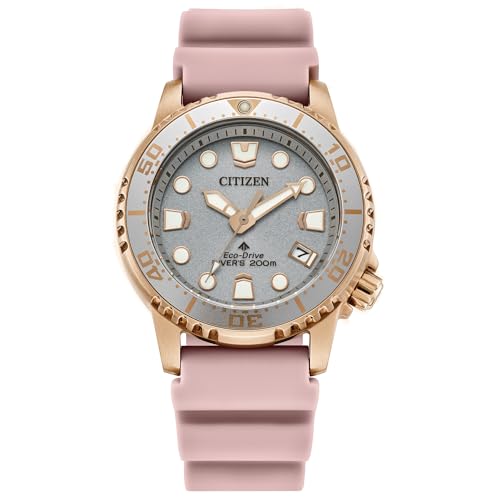
Seiko anchors this category, but it does not own it outright. Citizen’s Promaster dive lines include Eco-Drive models whose crowns sit at four o’clock, documented in the brand’s own product photography and specifications for references in the BN0150 family and its relatives, pairing the offset position with solar charging that removes any need to open the case for battery changes. For a diver, that combination is quietly ideal: the crown is sheltered, the movement needs no routine intrusion, and the watch can spend years as a sealed instrument. Citizen’s execution tends toward a more conventional guard shape than Seiko’s sculpted ramps, which gives cross-shoppers a genuine stylistic choice within the same layout.
Orient’s dive-style families have likewise used offset crowns on documented references, and the broader Japanese industry of the nineteen-seventies produced many divers with crowns at four as makers converged on the ergonomic answer independently. Swiss and European makers mostly stayed at three o’clock for their divers, preferring larger guards at the conventional position, which is why the four o’clock crown reads as a distinctly Japanese design dialect today. Vintage hunting widens the field further, though buyers of older offset-crown divers should budget for servicing and gasket renewal before trusting any water resistance claim, whatever the crown position promises.
A caution belongs here, because crown position is easy to misread in photographs taken at an angle. Some watches photographed carelessly appear to carry offset crowns when the crown is in fact at three, and some listings describe any crown with guards as a four o’clock design. The reliable checks are the manufacturer’s own specification imagery, which shows the watch square-on, and the position of the crown relative to the dial markers: a true four o’clock crown aligns with the gap between the three and five indices and usually pairs with a date window and case flank shaped around that geometry. When documentation is ambiguous, treat the claim as unproven rather than repeating it, a discipline this guide applies to every family named above.
Crown Engineering: Threads, Guards and Grip
The screw-down crown is the offset crown’s usual partner, and its mechanics deserve understanding. The crown carries an internal thread that engages a threaded tube fixed in the case; screwing the crown home compresses a gasket, sealing the most vulnerable penetration in the case against water and dust. Unscrewed, the crown pops out to a winding position and pulls further for setting. On Seiko’s dive families the crown at four o’clock screws down against the case’s sculpted shoulder, and the travel between fully sealed and fully free is short and definite, a tactile signature owners learn to read by fingertip in the dark or underwater-adjacent gloom of a boat deck.
Guards machined from the case itself, rather than soldered or screwed on, represent the strongest form of crown protection, because a blow that would shear an attached guard instead meets the case’s full mass. The SKX and Turtle cases show the principle at its clearest: the metal rises on both sides of the crown in a continuous flow, leaving a channel just wide enough for fingertips to grip the crown’s edge. Guard design is a negotiation between shelter and access. Guards that hug too closely defeat gloved fingers; guards that stand too far off abandon the crown they exist to protect. The documented families above sit at slightly different points in that negotiation, which is one reason handling two rival models teaches more than reading about either.
Grip diameter and knurling complete the engineering picture. Dive crowns run large, commonly in the six-to-seven millimetre class across the families discussed, with deep knurling or coin-edge machining that wet fingers can still turn. Signed crowns, bearing a brand emblem on their end cap, add no function but signal the tier of finishing a maker applied to parts most buyers never inspect. A crown that wobbles on its stem, turns with gritty resistance, or shows uneven thread engagement is telling you about the whole watch’s assembly quality, because the crown and stem assembly is where manufacturing tolerances become touchable. Few components repay close inspection at purchase time as directly as this one does.
Day and Date: The Alignment Consequences Nobody Mentions
Moving the crown moves the stem, and the stem’s angle reaches into the movement’s calendar mechanics in ways that surface on the dial. A mechanical movement is built around a stem entering at three o’clock; rotating the movement inside the case so the stem exits at four also rotates everything rigidly attached to the dial’s layout unless the maker intervenes. Seiko’s long practice with the layout shows the interventions clearly. On the SKX family, the day and date wheels were engineered so the window at three o’clock displays them level and centred even though the crown sits lower, an alignment achieved through the calendar works’ design rather than by tilting the dial, and collectors verify it in the crisp horizontal sit of the text inside the window.
On simpler executions, compromises appear. Some offset-crown watches show a date window whose numerals sit a fraction high or low, or a day disc whose lettering leans almost imperceptibly, traces of a movement rotated within its case without full calendar redesign. These are not faults that affect function, yet they are exactly the details that separate the mature families from the imitators, and they are invisible in spec sheets. Macro photography in collector reviews, shot square to the dial, reveals window alignment honestly, making it one of the most useful images to seek before buying any offset-crown watch you cannot handle in person.
The crown’s lower position also changes how setting feels. Pulling the crown to its date position and turning it engages the quickset mechanism through a stem angled toward your lower fingers rather than your index fingertip, and many owners find the four o’clock setting action easier to control precisely because the hand approaches from below with the watch still on a stand or in the palm. Day-date models add a second quickset direction, and the bilingual day wheels fitted to many Seiko references remind buyers to confirm which language pair a specific watch carries before assuming the display they saw in a photograph is the one that will arrive.
Left Wrist, Right Wrist and the Prominent Wrist Bone
Most wearers carry a watch on the left wrist, and the four o’clock crown was optimised for exactly that arrangement, clearing the left hand’s upward flex. Right-wrist wearers, including most left-handed people who wear a watch on their dominant side, should think through the geometry mirrored. On the right wrist, a conventional crown points toward the hand just as it does on the left, and a four o’clock crown still rotates away from the flexion zone, because the watch case itself is not mirrored, merely worn on the other arm. In practice, right-wrist wearers in owner communities report the same comfort benefit, with the crown ending up low on the wrist’s outer edge where it rarely meets anything at all.
The ulna bone, the knob at the wrist’s outer side, decides many individual verdicts. Wearers with a prominent wrist bone often find that a large three o’clock crown on a long-lugged case creates a pressure sandwich between crown and bone during the day’s ordinary rotations. Shifting the crown to four moves the pressure point off that axis entirely, and shortening the lug span compounds the relief. This is why trying an offset-crown watch matters most for the people most likely to benefit: the advantage is anatomical, and anatomy varies enough that photographs and measurements only predict it approximately.
Active wearers form the layout’s natural constituency, and their use cases overlap heavily with the world of dedicated sports instruments. Someone comparing mechanical divers against connected training tools will find the training side surveyed in the roundup at best running smartwatches, where crown placement gives way to button placement as the ergonomic question. The underlying principle survives the category jump intact: controls belong where the wrist’s motion will not punish them, and where the fingers can reach them without a fight. Mechanical tradition reached that conclusion through divers; sports electronics reached it through runners, and both conclusions describe the same wrist.
The Trade-Offs: Symmetry, Access and Habit
Honesty requires the other side of the ledger. A four o’clock crown breaks the horizontal symmetry that classical watch design prizes, and some eyes never reconcile themselves to it. The dial’s right side carries visual weight low, the case flank flows asymmetrically, and on dress-leaning models the effect can read as sportiness that the rest of the design did not intend. Seiko’s dressier offset-crown models soften the guards and shrink the crown to compensate, yet the fundamental asymmetry remains the price of the comfort, and buyers who prize formal balance above ergonomics are not wrong to pay a different price instead.
Access while worn is the second compromise. A three o’clock crown can be pinched and turned, for a small winding top-up, without removing the watch, because it faces the free hand’s approach along the wrist’s axis. A four o’clock crown, tucked against its guards and angled downward, usually asks to be operated with the watch off the wrist or at least loosened, particularly on the deeply guarded dive cases. For an automatic worn daily this hardly matters, since the rotor does the winding. For a hand-wound piece or a watch rotated through a collection and frequently reset, the small friction repeats often enough to deserve a place in the decision.
Habit forms the third, quietest trade-off. Decades of three o’clock crowns have trained owners’ fingers to reach for a position that, on these watches, holds only smooth case. The adjustment takes days, not weeks, and most owners stop noticing within the first week of wear, but the first fumbled date change on the morning of a month with thirty days is a shared rite of passage in owner forums. Weigh it honestly if you rotate watches constantly, because a layout you must relearn every fortnight delivers less of its comfort dividend than one you live with daily.
What to Check Before You Buy
Crown action tells the truth about an individual watch faster than any other single check. On a new offset-crown diver, unscrewing should require firm, even torque, the threads should release with a clean pop as the crown springs to its winding position, and screwing home should engage without cross-threading hesitation or gritty patches along the travel. Wind the watch and feel for even resistance; set the time and watch the minute hand for slack as you reverse direction slightly; run the quickset date through a full month and confirm each numeral lands centred in its window. Every one of these behaviours passes through the stem whose angle defines this entire category, so flaws announce themselves here before they appear anywhere else.
Thread smoothness deserves its own moment because it predicts longevity. The crown tube’s threads are fine, exposed to salt, sand, and sunscreen in real dive use, and damaged threads eventually mean a tube replacement that not every watchmaker stocks for every reference. A crown that starts its thread engagement reluctantly when new will not improve with age. Equally, check the guard clearance with your own fingers: you should be able to grip the crown’s edge fully, with the guards guiding rather than blocking your grip, and if you plan to operate the crown with thin gloves, test that too while a return is still simple. Retailers with established return processes make these checks low-stakes, which is a practical argument for buying current families through large, documented channels.
Case shape around the crown is the third check, and the one photographs convey worst. Run a fingertip along the case flank where the guards rise: transitions should be smooth, without sharp parting lines or unfinished edges where the machining changed direction. On brushed cases the grain should flow through the guard area coherently rather than swirling, a detail that distinguishes careful production finishing from hurried work. Check also that the crown, when fully screwed home, sits evenly in its channel with consistent gaps on both sides; a crown that leans in its seat suggests a stem or tube alignment issue that no amount of attractive dial design can excuse.
Other Crown Positions: Three, Eight and the Lefty Logic
Three o’clock remains the industry’s default for sound reasons: it suits the largest number of wearers, keeps movements and dials in their standard orientation, and presents the classical face most buyers expect. Its dominance means parts, service knowledge, and design references all assume it, which quietly lowers ownership friction across a watch’s life. Choosing four o’clock means choosing a minority layout whose benefits are ergonomic rather than universal, and the mature families earn their place by executing that minority choice completely rather than treating it as a styling garnish on an otherwise standard watch.
Eight o’clock crowns serve the opposite wrist logic. A crown at eight sits on the case’s left side, low, where a watch worn on the right wrist gains the same clearance a four o’clock crown gives the left wrist, and where left-wrist wearers gain a crown that the hand can never flex into because it faces the forearm entirely. Documented left-handed dive references, including Citizen’s Promaster variants built with the crown on the left, demonstrate the layout’s seriousness, and some makers place crowns at eight or ten on tool watches so the crown can be operated by the opposite hand without crossing the dial. The trade-off is operational: most wearers find a left-side crown awkward to wind with the watch held normally, which is why eight o’clock remains a specialist’s choice.
Between these poles sit rarer experiments: crowns at two, crowns at twelve on pocket-watch-derived designs, and bullhead chronographs with pushers and crown along the top edge. They matter to this discussion as evidence that crown position has always been a design variable rather than a law, adjusted whenever a use case argued loudly enough. Divers argued loudest and longest, which is why four o’clock, their answer, is the alternative position with a genuine production heritage behind it rather than a season’s novelty. When a seller presents an unusual crown position as innovation, the documented families in this guide provide the yardstick for judging whether the claim carries engineering or merely eccentricity.
Movements Behind the Offset Crown
The movements powering the documented families span three decades of Japanese automatic design, and knowing their characters sharpens any purchase. The 7S26 that drove the SKX007 and SKX013 is a study in durable simplicity: twenty-one jewels, a beat rate documented at three hertz, no hand-winding and no hacking seconds, and a reputation for running for years beyond its service guidance without complaint. Its limitations are the price of its robustness philosophy, and collectors who prize the SKX accept the ritual of shaking the watch awake and setting the time without a stopped seconds hand as part of the object’s character rather than a defect to apologise for.
The 4R36 family that succeeded it in the Seiko 5 Sports SRP models and the modern Turtle line adds exactly the two features the older movement lacked, hacking and hand-winding, while retaining the architecture’s serviceability and parts availability. Published specifications credit it with a power reserve in the region of forty-one hours and a day-date display engineered for the offset-crown case geometry. Higher in the Prospex range, the 6R family extends the reserve substantially, into the seventy-hour class on its current generation, and refines accuracy tolerances, showing how a single case idea scales across movement tiers without altering the wearing experience that defines it.
Citizen’s Eco-Drive movements change the ownership equation entirely by removing winding from it. A solar cell beneath the dial charges a rechargeable cell, the crown exists for setting rather than feeding, and the offset position’s job narrows to comfort and protection alone. For buyers who want the four o’clock diver silhouette without any mechanical rituals, a documented Eco-Drive Promaster with the crown at four is the most maintenance-light route into the style. Comparing the categories honestly, mechanical tradition offers ritual and longevity through servicing, while solar quartz offers indifference to ritual altogether, and the crown position serves both with equal indifference to which you choose.
Who Benefits Most From the Layout
Active wearers benefit first and most obviously. Anyone whose sport or work drives the wrist through loaded flexion, divers, swimmers, climbers, paddlers, riders, mechanics, and warehouse staff among them, removes a daily pressure point by moving the crown out of the hand’s path. The benefit compounds over years, because the alternative is not merely discomfort but the habit of wearing a watch loosely to escape it, and a loose watch rotates, slides toward the wrist bone, and exposes itself to the very knocks its owner was avoiding. A watch that can be worn snugly without punishment stays where its designers intended, which is also where its water resistance and its looks perform best.
People with prominent wrist bones form the second natural constituency, joined by wearers with smaller wrists who favour substantial dive cases. On a small wrist a forty-two millimetre case already uses the available real estate fully; a large crown jutting at three o’clock adds a protrusion exactly where the hand begins, while the four o’clock layout folds that protrusion into the case’s own diagonal. The SKX013’s long popularity among smaller-wristed enthusiasts rests substantially on this arithmetic. Conversely, wearers with flat, broad wrists and no bone prominence may feel no benefit at all, and for them the choice reverts to aesthetics, which is a legitimate basis for choosing provided it is recognised as the actual basis.
Daily-activity tracking offers an instructive contrast in how wearables solve wearability. The activity-focused models gathered at best activity smartwatches distribute buttons along both case sides and rely on straps to stabilise the device, an approach that works because the devices are light and their controls need no sealing torque. A mechanical diver’s crown must instead be a single, strong, sealed control, and concentrating it at four o’clock inside machined guards is the mechanical era’s equivalent answer. Readers who move between both worlds often conclude that each category’s solution exposes the other’s compromises, which is a healthier verdict than declaring either obsolete.
Straps, Bracelets and How the Case Sits
An offset crown changes the case’s balance in a small but perceptible way, and strap choice can amplify or cancel the effect. The crown and its guards add metal low on the case’s right side, tipping the watch head very slightly toward that diagonal; a stiff strap that holds the head rigid makes the bias irrelevant, while a soft, thin strap lets the head settle into its preferred tilt, which most wearers experience as the watch hugging the wrist’s natural curve. Rubber straps, the traditional dive partner, split the difference with shaped ends that stabilise the head while flexing with the wrist, one reason the documented families so often ship on rubber or steel rather than leather.
Bracelets interact with the layout through their end links and clasp position. A bracelet that articulates immediately from the case lets the crown’s side of the watch drop close to the wrist, maximising the clearance the position was designed to create. If the first links stand stiffly outward, the case rides higher and the crown’s advantage shrinks, which is why owner reports about the same reference can disagree between its bracelet and strap versions. Checking drape, by viewing the watch from the side in wrist photographs rather than from above, predicts your experience better than diameter figures do. The goal is a case whose highest point is its crystal, not its hardware.
For adventurous use, the strap conversation widens to security: spring-bar strength, buckle design, and whether a single failure point can drop the watch. The expedition-oriented discussion at best adventure fit smartwatches approaches the same problem from the electronics side, and its conclusions about redundancy translate directly. A mechanical diver on a one-piece pass-through strap cannot fall even if a spring bar fails, because the strap threads beneath the case and holds it captive, and that old solution pairs naturally with the offset crown’s whole philosophy of designing for the day things go wrong rather than the day everything goes right.
Buying Used: Vintage Offset-Crown Divers
The used market holds decades of offset-crown divers at every condition level, and it rewards a specific scepticism. Crowns and tubes are wear parts on working divers: threads strip, gaskets harden, stems corrode where salt water sat unrinsed, and a vintage watch whose crown action feels vague or whose threads catch may be one firm twist from an expensive repair. Sellers’ descriptions that mention a crown screwing down smoothly are making a claim worth verifying on arrival, during the return window, before any other judgement about the watch. Dial and hand originality matter to value, yet crown function matters to survival, and confusing those priorities is the classic beginner’s error in this corner of collecting.
Service history carries unusual weight here because the offset-crown families were built as tools and often used as tools. A documented recent service with gasket replacement converts a vintage diver back into a watch that can be worn without anxiety, while an unserviced example, however charming its faded bezel, should be worn as a dry-land watch until a watchmaker has renewed its seals. Pressure figures quoted from a watch’s youth describe its past, not its present, and reputable sellers of vintage divers say so plainly. Budgeting the service into the purchase figure from the start produces a realistic total and prevents the resentment that curdles many first vintage experiences.
Reference literacy protects the wallet as effectively as mechanical checks protect the watch. The SKX, Turtle, and Samurai names cover multiple generations, dial variants, and regional editions whose values diverge considerably, and Seiko’s caseback reference codes, documented in collector databases, identify exactly which variant is in front of you. Cross-checking a listing’s claimed reference against those codes, the dial text, and the crown and guard shape in photographs takes minutes and prevents the commonest disappointment in this market, paying a scarce variant’s figure for a common one. Knowledge compounds in this hobby, and few corners repay it as reliably as the offset-crown back catalogue.
All-Day and Overnight Comfort
Comfort claims usually stop at the office door, but a watch worn around the clock meets its sternest ergonomic examination after dark. Sleeping with a watch on, whether from habit, shift work, or a desire to read the time at three in the morning, brings the case against pillows, bedding, and the wearer’s own face and arms in positions no desk ever produces. A large crown at three o’clock is the part most often blamed in owner accounts of overnight wear, pressing into the wrist when the hand tucks under a pillow. The offset crown’s relocation removes that particular complaint so completely that long-distance travellers and military personnel, groups who historically slept in their watches, feature prominently in the layout’s folklore.
Modern sleep culture approaches the wrist from the data side instead. The devices collected at best smartwatches with sleep tracking are engineered to vanish overnight, with low profiles and soft straps, and their wearers accept charging rituals as the price of information. A mechanical watch offers no data at all, only time, yet asks even less: no charging, no notifications, and a case whose crown placement was refined by people who also needed to forget the watch was there. Choosing between those philosophies for overnight wear clarifies what you actually want from the object on your wrist while you sleep, information or simply orientation, and both answers have honourable histories.
Desk work deserves a final ergonomic note, because it is where most modern wearers spend most modern hours. Typing with the wrist resting or hovering brings the case’s lower edge and crown zone into repeated soft contact with the desk surface and the wrist’s own tendons. The four o’clock crown’s downward angle keeps it clear of the tendon path that a three o’clock crown crosses during mouse work, a subtlety that office-bound owners mention as often as divers mention water. Comfort in this category is rarely dramatic; it is the accumulation of small absences, the pressure that never arrives, the edge that never catches, compounding quietly across thousands of ordinary days.
Servicing, Stems and Long-Term Ownership
Owning an offset-crown watch for decades involves one component more intimately than any other: the stem-and-crown assembly, which you will handle thousands of times across the watch’s life. Its enemies are cross-threading, grit in the threads, and the temptation to force a reluctant crown. The correct habits cost nothing. Engage the threads gently and back off at the first sign of resistance rather than muscling through it, rinse a dive watch in fresh water after salt exposure with the crown confirmed screwed home, and never operate the crown underwater or with wet hands on a watch whose maker does not explicitly permit it. These rituals, repeated calmly, are why so many thirty-year-old Seiko divers still seal and set like instruments rather than antiques.
At service time, the crown assembly’s placement creates one specific conversation worth having with your watchmaker. Because the stem enters the case at an angle relative to the dial’s furniture, alignment of the day and date in their window after reassembly is a workmanship detail to confirm when the watch returns, alongside the usual checks of timing and water resistance. Gaskets for the crown tube are reference-specific, and the mature families benefit from deep parts availability through Seiko’s service network and the independent trade, one more dividend of choosing a layout with genuine production volume behind it. Obscure offset-crown experiments from defunct makers cannot promise the same, which belongs in any vintage purchase calculation.
Long-term owners also learn the crown’s diagnostic language. A crown that grows harder to screw home may be reporting thread wear or a perished gasket; a winding feel that turns sandy reports contamination travelling down the stem; a date that begins changing hours early or late reports the calendar works asking for attention. None of these signals requires panic, and all of them reward promptness, because the stem is a path into the movement for moisture as well as a control. Listening to the one component you touch daily is the closest thing mechanical watch ownership has to a dashboard warning light, and the offset families put that component where your fingers naturally spend time.
The Aesthetics Debate, Taken Seriously
Critics of the layout make an argument worth hearing in full: classical watch design is a study in balanced circles, and moving the crown low on the right flank disturbs a harmony that centuries of refinement established. Photographed square-on, a four o’clock crown diver does carry its visual weight unevenly, and product photography, which is how most watches are now bought, exaggerates the effect because the camera never experiences the comfort that justifies it. Defenders answer that the asymmetry is honest, the visible trace of a decision made for the wearer’s body rather than the camera, and that the flowing guard sculpture of the best families turns necessity into the case’s most distinctive beauty.
Both positions can be true of different watches. Where a maker simply relocates a crown on an otherwise conventional case, the result can look like an error, a standard watch assembled slightly wrong. Where the whole case is composed around the position, Turtle shoulders, Samurai facets, the SKX’s continuous ramp, the asymmetry reads as intention and the watch acquires a silhouette no three o’clock rival can copy. Judging individual references on that compositional completeness, rather than voting on the layout in the abstract, is the critic’s skill this category most rewards. The families that endure are the ones whose designers treated four o’clock as the premise of the drawing, not as an edit applied to a finished one.
Fashion cycles will keep rediscovering the style, because its difference is visible across a room while its purpose stays invisible until worn. That combination, recognisable but not fully understood at a glance, is precisely what gives a design language longevity in a market driven by images. Buyers immune to cycles can ignore the fashion entirely and choose on anatomy and engineering alone, secure in the knowledge that the layout predates its trendiness by half a century and will outlast the current wave of attention with the same indifference it showed the previous ones.
Making the Decision: A Practical Shortlist Method
Begin by establishing whether your anatomy and habits give the layout anything to solve. Flex your wrist through its working range while wearing your current watch and note honestly whether its crown ever touches your hand; if the answer is never, the four o’clock case becomes a styling preference, and styling preferences should be bought at styling prices rather than justified with borrowed ergonomics. If contact happens daily, the layout is a functional upgrade, and the shortlist writes itself from the documented families: SKX-generation references on the used market, current Seiko 5 Sports for the accessible modern route, Turtle or Samurai within Prospex for the fullest expression of the guard philosophy, and Citizen’s Eco-Drive divers where solar convenience matters more than mechanical tradition.
Next, match case dimensions to the wrist with the same rigour applied to any diver, remembering that offset-crown cases often wear smaller than their figures because the guards and cushion forms shorten the visual span. Published diameters for the headline families sit in the forty-two to forty-five millimetre class for Turtle and Samurai, with the SKX013 and smaller Seiko 5 references serving wrists that find those spans excessive. Lug-to-lug figures and side-profile photographs remain the trustworthy guides, and a retailer whose returns process tolerates an unworn trial at home removes most of the remaining risk from ordering a shape you have never worn.
Finally, interrogate your own tolerance for the layout’s two honest costs before money moves. You will set the watch off the wrist more often than a three o’clock habit expects, and you will look at an asymmetric case every day you own it. Neither cost is large, yet both are permanent, and the owners who thrive with these watches are the ones who chose the costs knowingly in exchange for comfort they feel hourly. A week of deliberately noticing your current crown’s behaviour, its contacts, its knocks, its small negotiations with your hand, gives you the evidence your own body offers on the question, and that evidence outranks any review, including this one.
Chronographs, GMTs and Other Complications on Offset Cases
The layout is most familiar on three-hand divers, yet it has carried complications throughout its history, and each complication negotiates with the crown position differently. Offset-crown chronographs move the winding crown low while the pushers stay near two and four or migrate with it, producing cases whose right side becomes a whole control cluster angled toward the forearm. Seiko’s nineteen-seventies chronograph production included such arrangements, and vintage examples show how naturally the pushers settle into the guard sculpture when the designer treats the flank as one composition. Reading those references today explains why modern reissues that copy only the crown position, leaving pushers stranded conventionally, can look unresolved beside their ancestors.
GMT and dual-time variants raise a subtler question, because their crowns carry more setting duties: independent hour hands, quickset dates, and second time-zone adjustments all pass through the same stem positions. An offset crown performing four jobs must remain easy to grip and precise to index between its pulled positions, which argues for the larger crown diameters and pronounced knurling the dive families already favour. Owners of complicated offset-crown models should verify, reference by reference, which functions the crown controls and which require a pusher or corrector, since brands divide those duties inconsistently and the documentation for the specific model is the only trustworthy map.
Alarm and depth-gauge watches from the Japanese industry’s adventurous decades pushed the idea furthest, adding second crowns at two or four to work inner bezels, alarms, and sensor functions. Those multi-crown cases look busy to modern eyes, yet they prove the founding insight from the opposite direction: once a maker accepts that control placement should follow the hand’s anatomy rather than a template, every control becomes a candidate for relocation. The single four o’clock crown on a contemporary diver is the conservative survivor of that experimental era, the one relocation that proved so useful it stopped looking like an experiment at all.
How the Layout Photographs Versus How It Wears
Almost every buyer meets these watches first as images, and images systematically underrate the design. A square-on product photograph flattens the guard sculpture into silhouette, exaggerates the dial’s asymmetry, and cannot convey the one property the layout exists for, which is an absence: the pressure that never reaches the back of the hand. Video improves matters slightly when a presenter flexes a wrist on camera, yet the honest evidence remains distributed across thousands of owner accounts describing the same quiet relief in different words. Weighting that distributed testimony above any single dramatic review is sound method here, because the benefit is cumulative and undramatic by design.
Side-profile imagery deserves special attention, since the offset crown’s case tells its story in cross-section. Look for how the guards rise from the flank, whether the crown sits recessed below the bezel’s outer line, and how the caseback’s curve will meet the wrist’s own curve beneath the crown zone. A reference whose crown protrudes beyond the guard channel in profile has kept the position but surrendered much of the protection, a distinction invisible from the front. Retail listings more often include a profile shot among their galleries, and sellers who publish one pass a small, practical filter for seriousness.
The wearing reality, once the watch arrives, tends to resolve into a verdict within the first fortnight. Owners who feel the benefit describe the watch with the vocabulary of good tools: it stays put, it stays silent, it asks nothing. Owners who feel nothing often conclude the layout is a taste they happen not to share, and the healthy used market for the major families means that conclusion need not be expensive. Either verdict counts as a successful process when it comes from wearing the genuine article rather than studying renders.
Check prices on Amazon
Live listings for the shortlist in this guide are pulled from Amazon below, so prices and availability are always current at the moment you look.

Disclosure and Sources Behind This Guide
Everything asserted here traces back to documentation and community reporting that any reader can consult independently, from brand catalogues to collector reference databases. As an Amazon Associate we earn from qualifying purchases. That arrangement plays no part in which families this guide names, and several of the most important references discussed, the discontinued SKX line above all, are watches a reader can now obtain only through the used market in any case. Crown positions, movement features, and case dimensions are stated at the level the manufacturers themselves publish for each family, and any specific reference under consideration deserves a final check against its own current documentation before a purchase is completed.
A crown moved by a few millimetres sounds like a footnote in watch design, yet following that small decision outward leads through diver ergonomics, calendar engineering, case sculpture, and half a century of Japanese production history. Choose a family whose case was composed around the position rather than decorated with it, verify the crown’s own action before anything else, and the watch will make its argument silently every time your wrist bends and meets nothing but smooth, guarded steel where a knob used to argue back.


