What's inside
- Key Takeaways
- Quick Picks
- How were these gaming phones chosen for US buyers?
- Gaming handsets compared
- How should a US player choose a gaming phone without regret?
- Sessions we pictured while ranking these six
- Common mistakes when buying a gaming phone in the US
- Beyond the handset: controllers, cooling habits and the rest of the player’s kit
- Final recommendation
- Frequently asked questions
As an Amazon Associate I earn from qualifying purchases. This post may contain affiliate links at no extra cost to you.
gizmoverdict.com is reader-supported. When you buy through links on our site, we may earn an affiliate commission.
Where to buy: Gaming handsets on the US Amazon shelf come from three distinct directions — the specialist gaming brands selling North American variants through their own storefronts, mainstream flagships listed by their manufacturers, and renewed Apple stock moving through the renewed programme — so the listing title’s version language (US Version, NA, or a renewed label) is the first specification a gaming buyer should read.
The best gaming smartphones us shoppers can buy are defined by a tension no other phone category feels so sharply: games are the most demanding software a handset runs, and they are run in the least forgiving conditions — held in warm hands, on bright screens, for sessions measured in hours rather than minutes. The US framing of the keyword matters more than it might appear. Gaming phones are a global category with regional variants, carrier quirks and band differences, and a handset that dominates a leaderboard in another market can arrive in the United States as an import with the wrong network manners. Every pick below was chosen from listings that speak to the American buyer directly — a US Version here, a North American variant there, an unlocked flagship with a US warranty — because a gaming phone that cannot hold a connection is a console with a very small screen.
The shelf divides by philosophy. At one end stand the purpose-built gaming phones, the REDMAGIC and the ASUS ROG, whose entire design brief is sustained play: fast panels, gaming silicon, big batteries, and in the REDMAGIC’s case a variant name — Nightfreeze — that nods at the cooling obsession of the genre. In the middle stand the flagships that game superbly as a side effect of being flagships: Samsung’s Ultra, and Nothing’s design-led Phone (3) with its Glyph lights. At the rugged edge stands the FOSSIBOT, a gaming-flavoured handset built to be dropped. And at the end, in prose only, stands the iPhone 17 Pro Max — named here with its status stated plainly, because Amazon’s listings for it are renewed. It is discussed, not linked, for exactly that reason.
One discipline governs the reviews: refresh rates, cooling claims and performance language appear only where a listing title states them. The ROG’s 185Hz panel is a titled fact. The REDMAGIC’s title, by contrast, is strikingly terse — a memory configuration, a variant name, a region — and its review respects that terseness, arguing from the brand’s gaming focus and the stated hardware rather than inventing a specification sheet. Gamers comparing notes for long sessions on the road may also want our guide to the best smartphones with stylus open in another tab — not for gaming, but because the same large-screen flagships keep appearing in both conversations.
Key Takeaways
- The ASUS ROG Phone 9 is the only pick whose title states a refresh rate — 185Hz — making it the panel purist’s choice on stated evidence.
- The REDMAGIC 12 Pro pairs 16GB of memory with a full terabyte of storage, the largest game library capacity in this guide.
- Only two picks are purpose-built gaming phones; the rest are flagships or rugged handsets whose gaming strength is a by-product.
- The iPhone 17 Pro Max is covered in prose only because Amazon’s listings for it are renewed — that status is stated wherever it is named.
- The FOSSIBOT F114 is the rugged outlier, with IP68/IP69K ratings in its title and a 120Hz panel aimed at outdoor play.
- US-version language matters in this category: US Version, NA variant and US warranty statements separate domestic stock from grey imports.
Quick Picks
| Pick | Model | Badge |
|---|---|---|
| 1 | REDMAGIC 12 Pro | Best overall |
| 2 | ASUS ROG Phone 9 | Best for refresh-rate purists |
| 3 | Nothing Phone (3) | Best for style-led gamers |
| 4 | FOSSIBOT F114 | Best for outdoor and worksite play |
| 5 | Samsung Galaxy S26 Ultra | Best for flagship-first gamers |
| 6 | Apple iPhone 17 Pro Max | Best renewed route into Apple gaming |
The badges map to gaming temperaments: the tournament-minded, the panel-obsessed, the design-conscious, the outdoors-bound, the flagship loyalist and the Apple devotee shopping the renewed shelf. Most players know their temperament before they know their specifications, which is the correct order of knowledge.
How were these gaming phones chosen for US buyers?
Provenance came first. Each listing had to establish its American credentials in its own words — a US Version designation, a North American variant marker, a US warranty, or an unlocked flagship listing from the manufacturer’s US presence. Gaming phones are the most import-heavy corner of the phone market, and the grey-market version of a great handset is a support and bands gamble that this guide declines to recommend silently. Where a title’s regional language is compressed to a parenthetical, the review says what that compression means and what to verify.
Gaming substance came second, judged strictly on titled evidence. A pick needed at least two of the genre’s pillars stated in its listing: a high-refresh display, a named performance processor, a large battery, a gaming-specific brand or design language, or storage deep enough for a modern game library. That test admits the ROG on nearly every pillar, the REDMAGIC on brand and memory, the Nothing on processor and storage, the FOSSIBOT on refresh rate and durability, the Samsung on flagship hardware, and the renewed iPhone on its platform’s gaming catalogue — discussed, as ever, without a link.
The third test was library realism. Modern flagship games are enormous, and a gaming phone’s storage is its shelf space. The terabyte REDMAGIC and the 512GB configurations here reflect that reality; the 256GB ROG asks its owner to curate. Reviews state each figure early so a player with a hundred-gigabyte favourite title can do the arithmetic before the download does it for them.
Finally, role spread. Six identical esports slabs would misrepresent how Americans actually game on phones — which includes job sites, fishing boats, dorm rooms and the sofa — so the list keeps its rugged outlier and its design-led contender, and ranks them honestly below the purpose-built machines for pure play while crediting what each does that the machines cannot.

1. REDMAGIC 12 Pro — Best overall
The REDMAGIC 12 Pro’s listing title is the shortest in this guide — the model name, a memory configuration of 16G plus 1T, the Nightfreeze variant name, and a North American marker — and that brevity is itself a kind of confidence. REDMAGIC builds nothing but gaming phones; the brand is the specification. What the title does commit to is formidable: sixteen gigabytes of memory working alongside a terabyte of storage is the most generous pairing here, sized for the player whose library includes several flagship titles at once, each swollen with downloadable content, and who refuses to treat uninstalling as a lifestyle.
Storage depth deserves the headline because it is the gaming constraint players feel weekly. A single premium mobile title with its expansions can occupy the space of a hundred ordinary apps; a terabyte converts the library question from triage to collection. Sixteen gigabytes of memory, meanwhile, is the figure that keeps a demanding game resident while the player answers a message, checks a guide or streams — the multitasking pattern of real play, as opposed to benchmark play. On titled evidence alone, no rival in this guide pairs capacity and memory at this level.
The Nightfreeze name invites a careful sentence. It is the variant’s name as listed, and it plainly gestures at the cooling preoccupation that defines gaming-phone design — sustained sessions generate heat, and heat is the enemy of sustained performance. Beyond the name, this title states no cooling architecture, no refresh rate and no processor, and this guide will not furnish them from other sources. A buyer for whom panel speed or chip generation is decisive should treat the product page as required reading; the ROG below, whose title is a specification sheet by comparison, may suit evidence-first shoppers better. What can be said without invention is that a gaming-only maker staking its flagship’s variant name on cold is telling you where its engineering pride lives.
The NA marker closes the review where this guide began: this is the North American variant, the correct shelf for a US buyer, rather than an import of uncertain band manners. In a category riddled with regional SKUs, that parenthetical is worth real money. Pair it with the memory configuration and the picture is of a specialist machine aimed at the library-heavy, session-long player — the reader most likely to be shopping this keyword in the first place — and that is why it leads the list despite its title’s silence on the genre’s usual bragging numbers.
- Strengths: 16GB memory with 1TB storage is the deepest game-library pairing here.
- Strengths: A gaming-only brand’s flagship, with design priorities set by play alone.
- Strengths: North American variant positioning suits US buyers directly.
- Trade-offs: Refresh rate is not stated in the listing title.
- Trade-offs: Processor and cooling details are not stated in the listing title.
- Trade-offs: Battery capacity is not stated in the listing title.
- Memory: 16GB
- Storage: 1TB
- Variant: Nightfreeze
- Region: NA (North America)
- Display refresh: Not stated in the listing title
- Processor: Not stated in the listing title
Best for: a library-heavy player whose sessions run long and whose downloads run into triple-digit gigabytes. Not suited for: a spec-sheet shopper who requires a refresh-rate figure printed in the title before shortlisting.
Players who measure their libraries in terabytes have exactly one candidate here; the listing waits at check price on Amazon, where the unstated panel and battery figures should be confirmed in the same visit.

2. ASUS ROG Phone 9 — Best for refresh-rate purists
Where the REDMAGIC’s title whispers, the ROG Phone 9’s title recites: an unlocked Android phone, US Version, with a 6.78-inch AMOLED display refreshing at 185Hz, 256GB of storage, 12GB of RAM, a 5800mAh battery, a 50MP gimbal camera with a 32MP front camera, the Snapdragon 8 Elite processor, dual-SIM support, in Phantom Black. It is the most complete gaming specification any listing in this guide offers, and for the player who buys on evidence, that completeness is the product.
The 185Hz figure leads because it is the genre’s signature number and nobody else here states one. Refresh rate governs how many frames the panel can show each second, and in fast competitive titles — shooters, racers, rhythm games — a panel that outruns the ordinary 120Hz class delivers motion that reads earlier and tracks smoother, provided the game itself renders at those rates. That proviso is the honest one: the display is a ceiling, not a guarantee, and plenty of beloved titles cap their own frame rates below it. But a ceiling you own is headroom for every future title, and on a handset bought for years of play, headroom is the correct thing to purchase.
The Snapdragon 8 Elite names the performance tier outright, which the REDMAGIC’s title declines to do; players who follow silicon generations can place this phone’s ambitions precisely. The 5800mAh battery is the largest stated capacity among the conventional handsets here, and it is aimed at the genre’s real usage curve — maximum brightness, maximum frame rate, radios busy — which drains ordinary flagships with embarrassing speed. Dual-SIM support, unusual in a US gaming listing, serves the player who keeps a gaming-and-data line separate from a personal number, or who travels to tournaments with a local card.
The gimbal camera is the specification that surprises outsiders and delights owners. A 50MP main camera with gimbal stabilisation is a video tool — for the player who records clips, streams highlights or simply films the rest of life with a steadiness phones rarely offer — backed by a 32MP front camera sized for face-cam streaming. ASUS understands that modern gaming identity is partly broadcast, and equips accordingly. The trade ledger is short and real: 256GB is the tightest library among the top picks for a category of hundred-gigabyte titles, and 12GB of RAM, while ample, trails the REDMAGIC’s stated figure. A curator-player will not notice either; a hoarder-player will notice both by spring.
- Strengths: 185Hz AMOLED is the only stated refresh rate here, and it leads the class.
- Strengths: Snapdragon 8 Elite is named outright, fixing the performance tier.
- Strengths: The 5800mAh battery is sized for maximum-settings sessions.
- Trade-offs: 256GB of storage asks library-heavy players to curate.
- Trade-offs: 12GB of RAM trails the REDMAGIC’s stated 16GB.
- Trade-offs: The title states no cooling system details despite the gaming brief.
- Display: 6.78″ AMOLED, 185Hz
- Processor: Snapdragon 8 Elite
- Memory and storage: 12GB RAM, 256GB
- Battery: 5800mAh
- Cameras: 50MP Gimbal main, 32MP front
- Version: US Version, Dual-SIM, Unlocked
Best for: a competitive player who reads panels the way audiophiles read frequency charts and buys the ceiling, not the average. Not suited for: a download-everything library habit larger than 256GB of fixed storage.
Evidence-first gamers will appreciate a title that answers questions before they are asked; the ROG’s listing is ready to check price on Amazon for the Phantom Black US configuration.

3. Nothing Phone (3) — Best for style-led gamers
The Nothing Phone (3) is the gaming pick for the player who refuses to carry a gaming phone — or at least, one that looks like a starfighter. Its title describes a 5G unlocked handset with 512GB of storage, Android 15, a Snapdragon 8s Gen4 processor, four 50MP cameras, an AMOLED display, a 5150mAh battery and the brand’s signature Glyph Interface, in black. Nothing’s whole proposition is that technology can be expressive without being aggressive, and this handset games from inside that philosophy: strong silicon, deep storage, a big battery, and a light-matrix on the back that turns notifications into a visual language.
Judge the gaming credentials on their stated merits. The Snapdragon 8s Gen4 is a performance-tier chip a step below the flagship Elite line — the s in its name is the tell — and it will run the mobile catalogue with authority while conceding the absolute summit to the ROG. The 512GB of storage doubles the ROG’s library, which for many players is the more weekly-relevant figure. The 5150mAh battery sits mid-pack here. What the title does not state is a refresh rate, and for a guide that ranks the ROG second largely on its stated 185Hz, consistency demands the omission be marked: the Nothing’s panel speed is a product-page question, not an assumption.
The Glyph Interface deserves explanation for readers outside the brand’s cult. It is a set of lights on the handset’s rear that pattern notifications, timers and calls — a way of triaging the world with the phone face-down. For gamers, its value is session hygiene: the phone can sit face-down during play, its lights murmuring only for the contacts the player has promoted, while group-chat noise stays dark. Four 50MP cameras, meanwhile, is a claim about photography depth that no other pick here matches in count — the all-rounder’s argument that the gaming phone should also be the only camera you carry.
The Nothing is therefore the pick for the player whose life is bigger than their hobby: the one who games hard on the train and then walks into a studio, an office or a dinner where the REDMAGIC’s theatre would be a costume. Its compromises are honest ones — a tier of silicon, an unstated refresh figure — and its strengths, storage and design intelligence, compound daily. In a category that shouts, it is the pick that speaks at conversational volume and still gets heard.
- Strengths: 512GB of storage doubles the ROG’s game library capacity.
- Strengths: The Glyph Interface triages notifications during face-down sessions.
- Strengths: Four 50MP cameras make it the all-rounder’s gaming phone.
- Trade-offs: Snapdragon 8s Gen4 sits a tier below the Elite-class silicon.
- Trade-offs: Refresh rate is not stated in the listing title.
- Trade-offs: The 5150mAh battery trails the ROG’s stated capacity.
- Storage: 512GB
- Processor: Snapdragon 8s Gen4
- Display: AMOLED (refresh not stated in the listing title)
- Battery: 5150mAh
- Cameras: Four 50MP cameras
- Software: Android 15
Best for: a design-conscious player whose phone must pass in a boardroom at noon and a ranked queue at midnight. Not suited for: a frame-rate absolutist who shortlists only on a refresh figure printed in the title.
Players who want their hardware to have a point of view will find this the most interesting listing of the six; it can be examined at check price on Amazon, panel details included on the page.

4. FOSSIBOT F114 — Best for outdoor and worksite play
The FOSSIBOT F114 is this guide’s rugged gaming outlier, and its title is a glorious pile-up: a 2026 handset with 16GB plus 128GB plus 2TB in its memory phrasing, Android 15, a 120Hz panel of 6.67 inches in HD+, an octa-core processor, a 50MP main camera, a 5000mAh battery, and IP68/IP69K waterproof ratings, billed as a rugged gaming smartphone. Read carefully, that memory line describes the familiar budget pattern of physical memory, internal storage and a large expansion ceiling — the title’s own arithmetic — and the honest summary is a spacious, expandable rugged phone that games, rather than a gaming phone that happens to be rugged. The distinction is the review.
The durability ratings are the headline. IP68 and IP69K together describe a handset built to shrug off immersion, dust and high-pressure water — the environments of the building site, the boat deck, the trail and the warehouse floor. For the player whose gaming happens in break rooms with concrete floors and whose phone lives in a tool-belt pocket, those ratings are worth more than any refresh figure: the fastest panel in this guide is worthless in a phone that died in a puddle in March. The FOSSIBOT is bought, first, to survive its owner.
Within that brief, the gaming specification is respectable rather than elite. A 120Hz refresh rate is stated — the second explicit figure in this guide — and it lifts everyday motion and compatible games well above the 60Hz ordinary. The panel is HD+ rather than the ROG’s richer AMOLED class, and the octa-core processor is unnamed, which in this market signals competent mainstream performance rather than flagship silicon: expect the broad catalogue to run, the heaviest titles to ask for settings mercy, and session heat to be a lesser concern simply because the silicon’s ambitions are modest. The 5000mAh battery and 50MP camera round out a working tool that plays, in a housing that forgives.
Buyers should also register what the rugged frame gives back: weight, thickness and a design language of bumpers and bolts that the style-led crowd will read as industrial because it is. For the FOSSIBOT’s intended owner, that is not a compromise but a credential. This is the gaming phone for the player whose other screen is a tailgate.
- Strengths: IP68/IP69K ratings lead this guide for survival in wet, dusty work.
- Strengths: A stated 120Hz panel lifts play above the ordinary refresh class.
- Strengths: Expansion headroom in the title suits media-heavy outdoor lives.
- Trade-offs: HD+ resolution trails the AMOLED flagships for fine detail.
- Trade-offs: The octa-core processor is unnamed and should be read as mainstream tier.
- Trade-offs: Rugged construction brings bulk the pocket will notice.
- Display: 6.67″ HD+, 120Hz
- Software: Android 15
- Camera: 50MP main
- Battery: 5000mAh
- Protection: IP68/IP69K
- Processor: Octa Core (unnamed in the title)
Best for: a site worker, angler or trail regular whose gaming happens wherever the day ends and whose phones must survive the day first. Not suited for: a slim-pocket commute where a rugged frame’s bulk is a daily tax.
Outdoor players shopping for survival first and frames second can review the F114’s listing — check price on Amazon — and confirm the expansion arrangement described in its title.
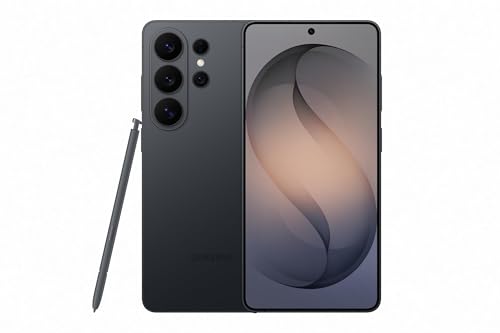
5. Samsung Galaxy S26 Ultra — Best for flagship-first gamers
The Galaxy S26 Ultra enters this guide by a different door than it entered the executive list: not as a gaming phone, but as the flagship that gamers buy when gaming is one department of a larger life. Its title offers an unlocked Android smartphone with 512GB of storage in black, a Privacy Display, Galaxy AI, an AI Camera, Super Fast Charging 3.0, a battery described as durable, 2026 vintage and a US 1 Year Warranty. No refresh rate, no processor name, no gaming vocabulary at all — and yet few handsets in America will play more games this year, because few handsets of any kind will sell more.
The case rests on the flagship syllogism. A top-tier Ultra carries top-tier silicon, a top-tier panel and a top-tier thermal budget as a matter of brand honour, even when the listing title declines to enumerate them — and this guide, bound to titled evidence, will describe that as a syllogism rather than a specification. What is titled is still useful to a player: 512GB is a serious library, Super Fast Charging 3.0 addresses the genre’s mid-session top-up ritual, and the US warranty is the strongest after-sale statement in this guide. The Privacy Display, an executive feature in its other review, has a gaming echo too — ranked-queue strategy and team chat are not improved by an audience on the train.
Where the flagship-first logic strains is specialisation. The ROG’s stated 185Hz panel and the REDMAGIC’s gaming-only design brief exist because sustained play rewards hardware that treats gaming as the main event — shoulder-friendly ergonomics, thermal headroom, gaming software layers. The Ultra’s title promises none of that vocabulary, and a player whose identity is competitive should weigh the specialists’ stated commitments against the Samsung’s general excellence. Conversely, the player who games two hours a day and works, photographs and travels with the same device for the other twenty-two will find the specialists’ focus wasted and the Ultra’s breadth exactly right.
There is also the ecosystem arithmetic. The Ultra is the pick that pairs with the widest world of cases, chargers, wearables and carrier deals in the US market, and its resale and trade-in gravity is a real, if unglamorous, component of ownership cost. Gamers who upgrade on a rhythm will feel that gravity annually. Bought with eyes open — as a flagship that games rather than a gaming phone that telephones — it is the lowest-regret purchase in this guide for the broadest definition of player.
- Strengths: 512GB of storage holds a serious multi-title library.
- Strengths: US 1 Year Warranty is stated in the title, unmatched here.
- Strengths: Super Fast Charging 3.0 suits mid-session top-up habits.
- Trade-offs: No refresh rate is stated in the listing title.
- Trade-offs: No processor or gaming-specific feature is named in the title.
- Trade-offs: Battery endurance is described qualitatively, without a figure.
- Storage: 512GB
- Display: Privacy Display (refresh not stated in the listing title)
- Charging: Super Fast Charging 3.0
- Battery: Described as durable; capacity not stated in the listing title
- Warranty: US 1 Year Warranty
- Network status: Unlocked
Best for: a flagship loyalist whose gaming is heavy but whose phone must also be the family camera, work terminal and travel hub. Not suited for: a tournament kit list that requires gaming-specific hardware claims in writing.
Players who want one device for every department of life can start from this listing — check price on Amazon — and weigh its breadth against the specialists’ depth.
6. Apple iPhone 17 Pro Max — Best renewed route into Apple gaming
The iPhone 17 Pro Max closes this guide under the same rule that governed its smaller sibling in the executive list: Amazon’s listings for it are renewed, so it is covered in prose only — no purchase link, no listing image — and its renewed status is stated plainly wherever it is named. The listing behind this review is the US Version with 512GB of storage, eSIM, in Deep Blue, unlocked, labelled Renewed. A player considering it is considering a previously owned handset from Amazon’s renewed programme, and every judgement below is made inside that frame.
Why does a renewed iPhone belong in a gaming guide at all? Because Apple’s platform is one of the two great mobile gaming ecosystems, with a catalogue that includes console-grade ports and exclusives that simply do not exist on Android, and the Pro Max tier is where that catalogue gets its largest canvas and its flagship silicon. For the player embedded in that ecosystem — saves in iCloud, friends on Game Center, a controller already paired in memory — the renewed route is the pragmatic door back in when new pricing or availability says no. The 512GB allocation matters here as much as on the REDMAGIC: Apple’s biggest titles are as swollen as anyone’s, and a gaming library plus a camera roll will test a lesser estate.
The renewed realities deserve the same directness given in the executive guide. Condition is programme-graded rather than factory-sealed; the battery inside carries a previous owner’s history, which for a gaming handset — a device class that lives hot and charges hard — is a more relevant caveat than usual, since sustained play is precisely the workload that ages cells. The eSIM-only design removes the physical card ritual, convenient for most US players and a consideration for the few who swap SIMs between devices. None of this makes the renewed iPhone 17 Pro Max a poor purchase; it makes it a purchase to enter through the programme’s own guarantees, with the grading description read carefully and the return window respected during the first fortnight of heavy sessions.
What this guide cannot do is furnish the handset’s gaming specifications from its listing title, which is silent on refresh rate, silicon and cooling alike. Apple’s gaming reputation is general knowledge; the discipline of this guide is titled evidence, and the renewed listing offers configuration and condition rather than a spec sheet. Players for whom the Apple catalogue is the whole argument will not need the numbers. Players cross-shopping on numbers should compare the ROG’s stated sheet against the product page for this device — through the renewed storefront, searched directly, since this review carries no link by design.
- Strengths: Access to Apple’s gaming catalogue, including its exclusive and ported titles.
- Strengths: 512GB of storage fits a serious library beside a camera roll.
- Strengths: Unlocked US Version status preserves carrier choice through the renewed channel.
- Trade-offs: The device is renewed, not new — programme-graded and previously owned.
- Trade-offs: Battery history reflects a prior owner’s gaming and charging habits.
- Trade-offs: No gaming specifications are stated in the listing title.
- Storage: 512GB
- Condition: Renewed
- SIM: eSIM
- Network status: Unlocked, US Version
- Colour: Deep Blue
- Refresh rate: Not stated in the listing title
Best for: an Apple-ecosystem player returning through the renewed shelf with grading terms read and a return window respected. Not suited for: a sealed-box expectation, or a buyer unwilling to accept a battery with a previous life.
Because the iPhone 17 Pro Max listings here are renewed, this guide deliberately carries no purchase link for it; interested players should search Amazon’s renewed storefront directly and read the condition grading on the listing page before ordering.
Gaming handsets compared
| Model | Refresh as titled | Storage | Battery as titled | Character |
|---|---|---|---|---|
| REDMAGIC 12 Pro | Not stated in the listing title | 1TB | Not stated in the listing title | Purpose-built, NA variant |
| ASUS ROG Phone 9 | 185Hz | 256GB | 5800mAh | Purpose-built, US Version |
| Nothing Phone (3) | Not stated in the listing title | 512GB | 5150mAh | Design-led all-rounder |
| FOSSIBOT F114 | 120Hz | 128GB plus expansion | 5000mAh | Rugged gaming outlier |
| Samsung Galaxy S26 Ultra | Not stated in the listing title | 512GB | Durable (qualitative) | Flagship all-rounder |
| Apple iPhone 17 Pro Max | Not stated in the listing title | 512GB | Not stated in the listing title | Renewed Apple flagship |
The refresh column teaches the guide’s lesson in miniature: two stated figures, four silences. The silences do not mean slow panels — they mean the buyer’s evidence runs out at the title, and the product page must take over.
How should a US player choose a gaming phone without regret?
Start from your catalogue, because platforms precede hardware. If your library, saves and friends live inside Apple’s ecosystem, the renewed iPhone is the honest conversation and the Android five are a migration project disguised as a purchase. If your catalogue is Android or cross-platform, the migration cost vanishes and the contest becomes about play style. Players routinely buy the panel or the processor first and discover the catalogue problem afterward; reverse the order and the rest of the decision gets easier.
Second, measure your library. Add up the installed sizes of the games you actually play — not the ones you admire — and double the total if your habits are acquisitive. That number sorts this list brutally: the terabyte REDMAGIC swallows any realistic library whole, the 512GB pair house a generous one, the ROG’s 256GB demands a curator, and the FOSSIBOT’s expansion route suits a media-heavy but game-light rotation. Storage regret arrives slowly and stays permanently, so buy the shelf your habits need, not the one your optimism suggests.
Third, decide how much the panel’s ceiling matters to your genres. Competitive shooters, racers and rhythm titles are where a stated 185Hz earns its premium; strategy, RPG and puzzle catalogues will never know the difference. The honest gamer audits their own top five by genre before paying for motion they cannot use. The same audit applies to silicon tiers: the Elite in the ROG and the 8s in the Nothing are separated by a tier that only the heaviest titles will expose, and only at their highest settings.
Fourth, respect your environment. A phone gamed on in an air-conditioned room and a phone gamed on at a worksite are different instruments. The FOSSIBOT’s ratings look like overkill until the first drop onto concrete, at which point every other phone in this guide becomes the fragile option. Conversely, a desk-bound player gains nothing from rugged bulk and should spend the same money on panel and silicon. Environment also includes your carrier reality: version language — US Version, NA variant — exists to keep American buyers on American bands, and it should be verified, not admired, before checkout.
Fifth, plan the session, not the benchmark. Think in hours: your longest realistic session, at your usual brightness, on your usual connection. That thought experiment privileges battery capacity and charging speed over peak performance figures, and it is why the ROG’s 5800mAh and the Samsung’s fast charging keep surfacing in these reviews. Players who also keep a work line on the same handset may find the two-SIM thinking in our guide to the best dual sim smartphones under 100 dollars surprisingly relevant, since the ROG itself carries dual-SIM support in its title.
Sixth, think about when in the product cycle you are buying. Gaming handsets refresh on an annual rhythm, and the US listings reflect it: a current-generation specialist like the ROG or REDMAGIC here commands its premium because its silicon is the newest argument; last year’s model, still formidable, often becomes the value play the moment its successor lands. Neither timing is wrong, but they are different purchases — the early buyer purchases headroom, the patient buyer purchases the same headroom at a discount with a shorter runway. What this guide will not do is print prices or pretend to know next quarter’s; the discipline is to know which of the two buyers you are, and to make the cycle serve the decision rather than ambush it.
Seventh, rehearse the physical relationship. Gaming phones are held horizontally, for hours, under tension, and the details that decide comfort — weight distribution, where the buttons fall under the thumbs, how the frame’s edges meet the palms in landscape — cannot be read off a title. If a local shop stocks any of these handsets, ten minutes of landscape holding is worth an evening of review-reading. If buying unseen, use the return window as the rehearsal room: load your heaviest title on day one, play your longest session in the first week, and let the phone fail early if it is going to fail at all. A handset that cramps your hands in week one will not grow kinder by month six.
Sessions we pictured while ranking these six
Our evaluation scenarios for this category were built around three sittings. The first was the competitive evening: a ranked shooter session at maximum brightness, voice chat open, the phone warming in the hands across ninety minutes. That sitting is the ROG’s home fixture — its stated panel ceiling and battery capacity read like answers to the scenario’s questions in order — and it is where the REDMAGIC’s gaming-only brief and variant name earn their ranking without a single titled refresh figure, because sustained, specialised hardware is what the evening actually tests.
The second sitting moved outdoors: a fishing dock at dawn, a worksite break at noon, a tailgate at dusk. Here the FOSSIBOT stopped being the list’s curiosity and became its protagonist — the only handset whose titled ratings speak to spray, dust and drops — while the flagships were imagined with the anxious care their owners actually give them, played one-handed over soft ground. The Nothing, in the same scenes, revealed its Glyph trick: face-down on the cooler between casts, lights quietly sorting the world into interruptions that mattered and those that did not.
The third sitting was the long-haul flight, gaming’s great leveller: no signal worth the name, a library pre-downloaded, a battery on its own. Storage depth ruled that scenario — the REDMAGIC’s terabyte and the 512GB pair felt bottomless, the ROG asked for a pre-flight cull — and the renewed iPhone, its library drawn from Apple’s catalogue, played its exclusives to an audience of one at thirty-five thousand feet, renewed battery and all. Three sittings, three different winners: the ranking in this guide reflects the order in which most players will actually live those scenes, weighted toward the competitive evening because that is the reader this keyword describes.
Common mistakes when buying a gaming phone in the US
The expensive classic is importing by accident. A gaming handset bought from a listing without US version language can arrive with band support that sulks on American networks and a warranty that lives on another continent. The titles in this guide were chosen for their regional clarity; listings without it should be priced as the gamble they are.
Second is buying the refresh ceiling for a catalogue that cannot reach it. A 185Hz panel under a library of turn-based games is a trophy, not a tool. Audit your genres before paying for motion. Third is starving the library: choosing 256GB for a habit of hundred-gigabyte titles guarantees the uninstall ritual by the second season. Fourth is ignoring the battery’s side of the bargain — peak silicon at maximum brightness is a furnace with a fuel gauge, and the players who plan sessions around capacity and charging, rather than around benchmark screenshots, are the ones still playing in hour three. Fifth is treating renewed as a footnote: the iPhone in this guide is a renewed device, and discovering that from the box rather than the title is a failure of reading, not of the programme. Sixth is forgetting the hands: large gaming handsets are two-handed instruments, and a player with a one-handed commute should rehearse the grip before the return window closes.
Beyond the handset: controllers, cooling habits and the rest of the player’s kit
A gaming phone is the centre of a small kit, and the surrounding decisions repay the same titled-evidence discipline as the handset itself. The first is control. Touch play has matured enormously, but whole genres — precision platformers, racing sims, streamed console titles — still bloom under a physical controller, and every handset in this guide lives in an ecosystem where Bluetooth controllers are commodity items. The buying question is not whether to own one but whether your catalogue justifies it: audit your top five games for controller support before spending, and prefer a controller whose layout matches the platform your games were designed around, because muscle memory is a specification too.
The second decision is thermal behaviour, and it is a habit before it is an accessory. Sustained sessions heat any handset; the player’s part of the bargain is environmental. Play out of direct sun, let the phone breathe rather than sealing it inside a thick case during long sessions, and treat brightness as a thermal dial as well as a visual one — the last ten percent of brightness costs disproportionate heat and battery. External cooling accessories exist for the committed, and the purpose-built end of this guide is where their mounts and cases concentrate; the rugged FOSSIBOT, notably, answers heat and hazard with its housing rather than with add-ons, which is one more way its design brief differs from the specialists’.
Audio is the third kit decision, and the one most often made by default. Competitive play is an information sport: footsteps, reloads and positional cues arrive by ear before they arrive by eye. Whether the route is wired, wireless or the phone’s own speakers, the player should choose deliberately and test in the noisiest room they actually play in — the same room-by-room honesty this guide applied to senior phones applies here with the stakes inverted, because here the listener is hunting for quiet sounds rather than loud ones. Latency matters in that choice for fast genres; a connection that trails the action by a visible beat will lose exchanges that the panel won.
Fourth comes power logistics. A gaming handset’s charger is part of its performance specification in a way no ordinary phone’s is: the mid-session top-up, the tournament-day fast charge, the flight’s borrowed outlet. The Samsung’s titled Super Fast Charging 3.0 speaks directly to that life; for the others, the product page’s charging figures deserve the same scrutiny as the panel’s, and a second charger living in the travel bag is the cheapest performance accessory in this entire guide. Players who compete away from home should also rehearse the offline ritual — library downloaded, updates applied, cloud saves synced — while the home connection is fat, rather than discovering a forty-gigabyte patch on hotel Wi-Fi.
Finally, the kit includes the exit plan. Gaming phones age on a silicon calendar, and the US market’s trade-in gravity — strongest around the mainstream flagships like the Samsung, weakest around the specialists — belongs in the purchase arithmetic from day one. A player who upgrades every two years and a player who runs a handset into the ground are buying different phones even when they buy the same phone: the first can weight resale and warranty, the second should weight battery honesty and storage headroom, because they will live with both long after the benchmarks are forgotten. Decide which player you are before the basket, and the six reviews above will sort themselves with surprising speed.
A word, before the verdict, about the player this guide has not yet addressed: the cloud gamer. Streaming services move the rendering to a data centre and reduce the handset to a screen, a radio and a battery — which rearranges every priority in this article. Panel quality and network manners become the whole game; silicon tiers fade; storage shrinks toward irrelevance. A pure cloud player reading this guide should weight the stated displays and the version language above all, and may find the all-rounders reordering themselves accordingly. The hybrid player, local for favourites and cloud for everything else, sits between the two logics, which is precisely where most American players actually live. Know your ratio before you rank the six.
Final recommendation
For the committed player, the REDMAGIC 12 Pro leads on the combined weight of its gaming-only brief,
its North American positioning and a memory-and-storage pairing nothing else here matches. The ROG Phone 9 is the evidence-lover’s champion — the only fully stated specification in the guide, crowned by its 185Hz panel — and players who buy on numbers should buy it. The Nothing Phone (3) serves the style-led all-rounder, the FOSSIBOT the outdoor survivor, the Galaxy S26 Ultra the flagship loyalist, and the renewed iPhone 17 Pro Max the Apple devotee who enters the renewed programme with open eyes. Every one of those is a coherent purchase. The incoherent one is the import bought blind, the library bought small, or the panel bought for games that cannot use it.
Frequently asked questions
Does a 185Hz display actually change gameplay?
It raises the ceiling on how many frames per second the screen can present, which competitive titles that render at high frame rates can exploit for smoother, earlier-reading motion. Games that cap their own frame rates below the ceiling gain nothing from it. The ROG’s figure is a titled fact; whether your catalogue can use it is a question about your games, not the panel.
Why is the iPhone in this guide not linked?
Because Amazon’s listings for the iPhone 17 Pro Max are renewed — the unit discussed here is a Renewed, previously owned US Version handset. This guide covers it honestly in prose, states the renewed status wherever it is named, and leaves the purchase to a direct search of the renewed storefront where the grading terms can be read.
How much storage does a gaming phone need?
Add your current library’s installed size and double it if you collect rather than curate. Flagship mobile titles with expansions can each claim a substantial share of a small drive; the 512GB and 1TB configurations in this guide exist because the arithmetic surprises most players the first time they do it.
What does the REDMAGIC’s NA marker mean for a US buyer?
It marks the North American variant — the regional version intended for this market, as distinct from imports specified for elsewhere. In a category heavy with regional SKUs, that marker is the buyer’s first assurance that the handset’s network manners and support route are American.
Is a rugged phone a sensible gaming phone?
For the right player, yes. The FOSSIBOT F114 pairs a stated 120Hz panel with IP68/IP69K durability, which serves the player whose sessions happen on sites, boats and trails. It concedes panel richness and silicon tier to the purpose-built machines, and buys survival with the difference — a trade its intended owner makes gladly. Readers whose play is gentler but whose workdays are not might also cross-check the best smartphones for business executives, where the rugged Kyocera covers the non-gaming version of the same brief.
Should a casual player buy a specialist or a flagship?
Casual play — puzzle titles, card games, the occasional racer — is served perfectly well by the all-rounders here, and the specialists’ premiums buy ceilings a casual catalogue never touches. The dividing line is session shape: if your play arrives in twenty-minute bursts, choose on camera, warranty and breadth, which points at the Samsung or the Nothing; if it arrives in two-hour competitive sittings, the specialists’ stated panels and batteries stop being luxuries and become the purchase. Honesty about session shape, rather than about aspiration, is what separates a satisfied casual buyer from a disappointed one.
American gaming phones reward version-language reading as careful as the attention paid to refresh rates
— because the fastest handset in the world is only the fastest handset on the networks it was actually built to join. Buy the version meant for your country, size the library for your real habits, and the phone will spend its life being played on instead of being apologised for.
Related guides
- Best Balancing Stabilizers for Mirrorless Cameras: Payload, Balancing and Native Vertical Shooting
- Best Canon Point and Shoot Digital Cameras: PowerShot Picks From Pocket Compacts to Travel Zooms
- Best Basic Phones Camera Buyers Can Trust: Flip Phones and Simple Handsets That Still Take a Photograph
- Best Sony Full Frame Cameras for Astrophotography: Sensitivity vs Resolution


