What's inside
- Key Takeaways
- Quick Picks
- How did these budget dual-SIM picks earn their places?
- Budget dual-SIM phones compared
- How do you choose between two lines and a hard budget ceiling?
- Two-line weeks we walked through with these six handsets
- Common mistakes when buying a cheap dual-SIM phone
- The first-week playbook for living on two lines
- Final recommendation
- Frequently asked questions
As an Amazon Associate I earn from qualifying purchases. This post may contain affiliate links at no extra cost to you.
gizmoverdict.com is reader-supported. When you buy through links on our site, we may earn an affiliate commission.
Where to buy: Sub-hundred-dollar dual-SIM handsets reach Amazon through a mix of small US brands, global manufacturers’ regional variants and white-label sellers, and the shelf churns quickly — a model listed this month may be replaced by a near-identical successor next quarter — so treat the exact configuration in the listing title, especially storage, Android version and the carrier language, as the product you are actually buying.
The best dual sim smartphones under 100 dollars exist because of a simple arithmetic problem: two phone lines are useful, two flagship phones are expensive, and one modest handset with two SIM slots solves the equation for a remarkable number of people. The delivery driver keeping a personal number separate from the dispatch line. The small trader whose customers call one number and whose family calls another. The recent arrival in a new country who keeps the home-country SIM alive for bank codes while a local SIM does the daily work. The parent who wants a teenager reachable on a family plan while a cheap prepaid line absorbs the data habit. None of these readers needs a remarkable phone. They need a reliable one with two doors.
Honesty about this shelf matters more than enthusiasm. At this end of the market the brands are mostly unfamiliar, the titles carry the specification burden almost alone, and the difference between a good purchase and a frustrating one is usually written in the fine print of network compatibility. Several of these phones are GSM-oriented devices aimed at T-Mobile and its prepaid relatives, or at markets outside the United States entirely. One pick here is explicitly a Latin America version, and its review states the US band caution in plain terms. Another carries a US warranty in its title — a genuinely unusual reassurance at this price level. Reading those distinctions carefully is the whole skill of shopping this category, and this guide is organised to teach it while it recommends.
A note on the budget frame: this guide never prints prices, because prices at this level move constantly and a figure quoted today becomes misinformation within weeks. The hundred-dollar ceiling in the keyword is the class definition, nothing more. What can be compared durably is everything else — storage, expansion, Android generation, battery capacity, camera claims and the crucial question of which networks each handset actually courts. Readers stepping up from this shelf for a primary device might also browse our guide to the best factory unlocked smartphones for international travel, where the same dual-SIM logic is applied to mid-range hardware with broader band support.
Our Top Picks
Key Takeaways
- Every pick here is a 4G device; none of the six titles claims 5G, and buyers should calibrate expectations accordingly.
- The Unnecto Bolt 1U is the only pick whose title carries a US warranty, and it runs the newest software here, Android 15 in its Go edition.
- The Samsung Galaxy A05 is a Latin America version — its GSM unlocked status does not guarantee full US band support, and the caution is stated in its review.
- Xiaomi’s Redmi 15C offers the largest screen and the joint-largest storage on this list, with carrier compatibility in its title naming T-Mobile, Tello and Mint.
- The three white-label picks — SmlPrz, CostMvp and LatsYrs — all run Android 12, so software generation is the quiet dividing line of this shelf.
- MicroSD expansion appears across the white-label picks and rescues their modest 32GB internal storage; check each title’s stated ceiling before buying a large card.
Quick Picks
| Pick | Model | Badge |
|---|---|---|
| 1 | Unnecto Bolt 1U | Best overall |
| 2 | Samsung Galaxy A05 | Best for brand reassurance abroad |
| 3 | Xiaomi Redmi 15C | Best big-screen value |
| 4 | SmlPrz Unlocked Smartphone | Best for camera-count shoppers |
| 5 | CostMvp 4G Smartphone | Best for feature-list traditionalists |
| 6 | LatsYrs 4G Smartphone | Best for card-expanders |
The badges here describe temperaments as much as telephones. Value a warranty line over a camera figure and the first pick wins; value screen inches over software freshness and the third pick takes it. Both are reasoning correctly from different priorities, which is exactly how a budget shelf should be read.
How did these budget dual-SIM picks earn their places?
The first test was the title itself: a pick had to declare dual-SIM capability in its own listing text, not merely imply it. That sounds trivial, yet a surprising share of budget listings bury the second slot or describe a hybrid tray ambiguously. Each phone below states its dual-SIM nature plainly, and the LatsYrs goes further by naming a dedicated arrangement of Dual SIM plus a MicroSD slot — a distinction that matters, because hybrid trays force a choice between a second line and extra storage.
Network candour formed the second test. Budget phones live or die on band support, so preference went to listings that name their intended networks or carrier families in the title: T-Mobile, Tello and Mint appear in Xiaomi’s wording, the Unnecto leads with its US warranty and unlocked status, and the Samsung declares both its GSM basis and its Latin America origin — a declaration that lets a careful buyer apply the right caution rather than discovering it after delivery. Listings that promised universal compatibility in breathless terms while naming nothing were treated with suspicion and excluded.
Software generation was the third divider. Android versions on this shelf span from Android 12 to Android 15 (Go), and that spread has practical consequences for app support and security patching. The guide does not pretend a budget buyer can have everything, but it refuses to hide the spread: the reviews state each phone’s Android version early, so a reader can weigh a newer system against a bigger screen with open eyes.
Finally, the list was built to span the shelf’s real tribes: a US-warrantied domestic option, a global-brand regional variant, a big-screen Xiaomi, and three white-label handsets whose value case rests on expansion slots and feature lists. Six versions of the same white-label phone would have been easier to write and useless to read.

1. Unnecto Bolt 1U — Best overall
The Unnecto Bolt 1U leads this guide because its title does the two things budget listings so rarely do: it promises accountability and it runs current software. The phone is an unlocked Android handset for 2026 with a US warranty stated in the title, 32GB of storage in black, dual SIM support, and Android 15 in its Go edition. Around those headlines sit a 4000mAh battery, a 6.52-inch HD+ display, a 1.6GHz octa-core processor, 5GB of RAM as the title phrases it, a 12MP camera and a fingerprint reader. Read as a whole, the listing describes a modest phone that knows exactly what it is — and the warranty line elevates it from a gamble to a purchase.
That warranty deserves emphasis. At this end of the market, the standard transaction is a hope: the phone arrives, it works, and if it does not, the buyer enters a fog of seller messages. A US warranty printed in the title does not guarantee a painless claim, but it establishes that a domestic support structure exists and can be invoked — a material difference for the gig worker whose second line is a business line, or the parent equipping a teenager. Before ordering, a careful buyer will still read the warranty terms on the product page; the point is that here, uniquely on this shelf, there are terms to read.
Android 15 (Go) is the second headline. Go editions are Google’s lighter builds for modest hardware, trimming the operating system’s appetite so that entry-level processors and memory stay responsive. On a 1.6GHz octa-core chip with the title’s 5GB RAM figure — a number that, in this class, typically blends physical and virtual memory, though the title does not break it down — that lightness is not a compromise so much as a matching of software to silicon. The practical dividend is longevity: a phone launched on the current Android generation starts its life with the longest runway of app compatibility available at this level.
The remaining figures sketch a sensible daily tool. A 6.52-inch HD+ panel is large enough for maps, messaging threads and video calls without reaching the two-handed territory of the Redmi below. The 4000mAh battery is the smallest capacity in this guide, and heavy dual-line users who hotspot from the phone should register that; against it, the modest processor and Go software sip rather than gulp. The 12MP camera is a single modest unit on paper — no multi-lens theatre — and a fingerprint reader at this level is a genuine convenience for a phone that will be unlocked a hundred times a day between two buzzing lines.
Storage is the honest limitation. Thirty-two gigabytes, with no expansion figure stated in the title, asks the buyer to live in the cloud and keep the photo library disciplined. For a second-line handset — which is what most dual-SIM budget phones are — that is often a fair trade for the warranty and the software. As a family’s only phone, it would chafe.
- Strengths: US warranty stated in the title — accountability no rival here matches.
- Strengths: Android 15 (Go) is the newest software on this shelf, matched to modest hardware.
- Strengths: Fingerprint unlocking and an octa-core processor cover daily dual-line duties.
- Trade-offs: 32GB of storage with no expansion ceiling stated in the title.
- Trade-offs: The 4000mAh battery is the smallest capacity among these six picks.
- Trade-offs: A single 12MP camera figure trails the multi-camera white-label rivals on paper.
- Storage: 32GB
- Display: 6.52″ HD+
- Software: Android 15 (Go)
- Battery: 4000mAh
- Camera: 12MP
- Warranty: US Warranty (per the listing title)
Best for: a two-line worker who values a domestic warranty and current software over screen size or storage depth. Not suited for: a photo library habit that must live locally beyond 32GB of internal space.
Anyone burned by anonymous budget hardware before will understand why this one leads; the listing can be examined directly — check price on Amazon — with particular attention to the warranty wording before checkout.

2. Samsung Galaxy A05 — Best for brand reassurance abroad
The Galaxy A05 brings the most famous name in Android to this shelf, and its title is commendably blunt about the terms: this is the A065M with 64GB of storage, a dual-SIM GSM unlocked Android smartphone, in black — and it is the Latin America Version. Those last three words are the review. A handset built for Latin American markets is tuned for the bands and carrier habits of that region; carried into the United States, it will work where its GSM band support overlaps with US networks — most plausibly on T-Mobile-family GSM service — but full US band support is not promised by this title and should never be assumed. Buyers on Verizon-style CDMA-descended networks should consider this phone unsuitable outright, and even GSM buyers should verify their carrier’s bands against the product page before ordering.
Why include it at all, under that cloud? Because for a large class of readers the cloud is actually the home sky. The dual-SIM traveller whose life runs between the United States and Latin America, the family equipping relatives in the region, the subscriber whose primary line sits on a Latin American carrier with a US GSM line as the secondary — for all of them, a Samsung-built handset with regional tuning is not a compromise but a correct specification. Brand reassurance also counts for something concrete here: Samsung’s budget A-series is a known quantity in build and interface, and a familiar software environment lowers the support burden when the phone is destined for a relative who will call you with questions.
Beyond the regional declaration, the title is sparing. Storage at 64GB doubles the Unnecto’s figure and sits mid-pack here. Display size, battery capacity, camera figures and Android version are not stated in the listing title, and this guide does not fill those silences with figures borrowed from other regions’ A05 variants — regional variants differ, and importing specifications across them is precisely how budget buyers get misled. The product page for this exact A065M listing is the only honest source for the remaining numbers, and a careful buyer will read it before paying.
The dual-SIM arrangement is the phone’s reason for being in this guide, and for its intended audience it is well judged: one slot for the home carrier, one for wherever life currently happens, inside hardware from a maker whose service network spans the region the phone was built for. That coherence — device, bands and service footprint all pointing at the same map — is worth more than a longer feature list pointing nowhere in particular.
- Strengths: Samsung build and software familiarity at the bottom of the price ladder.
- Strengths: 64GB of storage doubles the lead pick’s internal capacity.
- Strengths: Regional tuning suits lives split between the US and Latin America.
- Trade-offs: Latin America version — US band support is partial at best and must be verified.
- Trade-offs: GSM basis excludes Verizon-style networks from consideration.
- Trade-offs: The title states no display, battery, camera or Android figures.
- Storage: 64GB
- Version: Latin America Version (A065M)
- Network: Dual-SIM GSM Unlocked
- Display size: Not stated in the listing title
- Battery: Not stated in the listing title
- Colour: Black
Best for: a household whose calls genuinely span the United States and Latin America on GSM carriers. Not suited for: a Verizon-line household, or any US buyer unwilling to verify band support on the product page first.
If your map matches its map, the A05 is the most reassuring badge on this shelf; you can check price on Amazon — and use that same visit to confirm the band list against your carrier before the order goes through.
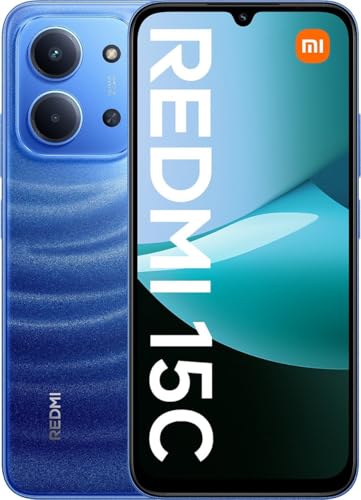
3. Xiaomi Redmi 15C — Best big-screen value
The Redmi 15C is the maximalist of this shelf: a 4G LTE handset with a 6.9-inch display — the largest here by a wide margin — 128GB of storage paired with 4GB of RAM, a 50MP camera figure, and a title that names its intended US audience directly: compatible with T-Mobile, Tello and Mint, plus global use. It arrives unlocked, dual SIM, in Moonlight Blue, carrying the model number 25078RA3EL. For the budget shopper using one phone as television, newspaper and video-call window alike, this is the listing written for them.
The carrier naming deserves the same praise given to the Unnecto’s warranty. T-Mobile and its MVNO relatives Tello and Mint are the natural home for GSM-oriented unlocked phones in the United States, and a title that says so plainly saves the buyer the band-table archaeology that the Samsung above demands. It also quietly delivers the reciprocal warning: a title that names the T-Mobile family is not promising Verizon or AT&T-family behaviour, and readers on those networks should take the hint exactly as given.
Storage leadership matters at this level more than camera leadership. The 128GB figure — quadruple the lead pick’s — changes what the phone can be: a primary device rather than a second-line accessory, holding a real photo library, offline music and a season of messaging attachments without weekly evictions. Paired with the big panel, the Redmi suits the reader whose phone is their main screen for everything, a common reality for the budget buyer this guide serves. The 50MP camera headline should be read with budget-category literacy: pixel counts at this level describe the sensor’s maximum resolution, not a promise of flagship image quality, and the honest expectation is competent daylight photography for family and documentation purposes.
What the title withholds is the Android version and the battery capacity, and both omissions are worth a product-page check. Software generation decides how long current apps remain comfortable, and a 6.9-inch screen is a battery’s natural predator; a large capacity would reassure, and its absence from the title means the buyer must confirm rather than assume. Neither gap cancels the phone’s considerable titled strengths, but this guide’s rule is uniform: silence in a title is information, and it points at the page, not at a guess.
Physically, a 6.9-inch handset is a commitment. It will dominate a small hand, resist one-handed messaging on a bus, and announce itself in a trouser pocket. Plenty of readers prize exactly that expanse — older eyes reading news, grandparents on video calls with grandchildren, drivers following navigation — and call those traits features. Everyone else should handle the size question honestly before ordering, because at this price the return postage can rival the saving.
- Strengths: 128GB of storage leads this shelf and supports primary-phone duty.
- Strengths: The 6.9-inch display is the largest here, suiting reading and video.
- Strengths: Named compatibility with T-Mobile, Tello and Mint removes guesswork for GSM buyers.
- Trade-offs: Android version is not stated in the listing title.
- Trade-offs: Battery capacity is not stated in the listing title despite the large screen.
- Trade-offs: The handset’s size will overwhelm small hands and shallow pockets.
- Storage: 128GB + 4GB RAM
- Display: 6.9″
- Camera: 50MP
- Network: 4G LTE, Dual SIM, Unlocked
- Carriers named: T-Mobile, Tello, Mint, Global
- Colour: Moonlight Blue
Best for: a T-Mobile-family subscriber whose phone is their principal screen for reading, video and family calls. Not suited for: a pocket smaller than a 6.9-inch handset, or a carrier outside the GSM family its title names.
Readers on the named networks get the clearest value story on this shelf here; the listing invites a closer look — check price on Amazon — where the unstated battery and software details should be confirmed in the same sitting.

4. SmlPrz Unlocked Smartphone — Best for camera-count shoppers
The SmlPrz is the first of three white-label handsets in this guide, and its title leans into the genre’s habits: a 4G dual SIM phone with a 6.75-inch HD screen, 4GB of memory with 32GB of storage expandable to 256GB, cameras listed as 16MP plus 21MP, Android 12.0, and a connectivity roll call of GPS, WiFi, OTG and Face ID. None of that makes it a bad phone. It makes it a phone that must be bought on its structure — big screen, expandable storage, two lines — rather than on any single headline figure.
The camera pairing illustrates the literacy this shelf requires. Two numbers, 16MP and 21MP, are presented without the front-versus-rear assignment being obvious from the title’s ordering, and at this level the sensible expectation is serviceable snapshots for messaging, marketplace listings and school projects. A buyer choosing between this and the Redmi should compare storage ceilings and network wording, where differences are real, rather than megapixel arithmetic, where they are mostly theatre.
Android 12 is the structural fact to weigh. It is three generations behind the Unnecto’s software, which translates into a shorter remaining runway for app compatibility and a security-patch position the buyer should check on the product page. For a second-line handset performing calls, messages and light browsing, Android 12 remains workable today; for a phone expected to serve a teenager’s full app life for three years, the runway question deserves more weight. The guide’s position is not that older software disqualifies — at this price something always gives — but that the trade should be made consciously, in exchange for the screen and expansion this handset offers.
Face ID at this level means camera-based face unlock, a convenience feature rather than a security vault, and it is best treated as such: pleasant for quick unlocks, no substitute for a strong PIN on a phone carrying two lines’ worth of accounts. OTG support, by contrast, is quietly useful — it lets the phone read USB drives and accessories, which suits the trader or student moving files without a computer nearby. GPS and WiFi are table stakes, stated here for completeness.
The expansion story is the SmlPrz’s best structural argument. Thirty-two gigabytes internally is tight, but a stated ceiling of 256GB via card transforms the phone’s media capacity for the cost of a commodity microSD card. Buyers should note the pattern repeated across the white-label trio: the card slot is not an accessory detail at this level, it is the storage strategy.
- Strengths: A 6.75-inch screen gives near-phablet expanse at the shelf’s floor.
- Strengths: Expansion to 256GB rescues the modest internal storage.
- Strengths: OTG support suits file-moving without a computer.
- Trade-offs: Android 12.0 shortens the app-compatibility runway.
- Trade-offs: Battery capacity is not stated in the listing title.
- Trade-offs: Face unlock here is a convenience feature, not high-grade security.
- Storage: 4GB + 32GB, expandable to 256GB
- Display: 6.75″ HD
- Software: Android 12.0
- Cameras: 16MP + 21MP (as titled)
- Network: 4G Dual SIM
- Extras: GPS, WiFi, OTG, Face ID
Best for: a second-line user who stores media on a card and values screen expanse over software freshness. Not suited for: a three-year primary-phone plan that depends on the newest Android generation from day one.
If the expansion ceiling and the big panel match your habits, the SmlPrz makes its case structurally; its listing is ready to check price on Amazon, where the battery figure should be hunted down before deciding.

5. CostMvp 4G Smartphone — Best for feature-list traditionalists
The CostMvp’s title reads like a checklist from an earlier, more innocent era of phone marketing, and there is a kind of comfort in it: an unlocked Android 12.0 handset with a 6.6-inch HD+ display, 4GB of RAM and 32GB of storage with SD expansion to 256GB, 4G dual SIM, a dual camera arrangement, and then the roll call — Face ID, WiFi, Bluetooth, FM, GPS, OTG — in black. The FM radio is the tell. It signals a phone aimed at buyers with a lasting loyalty to the broadcast band: listeners in areas where data is precious, older users with lifelong radio habits, and the many households where a phone’s radio earns its keep during a power cut.
Feature-list traditionalism has real merits at this level. A phone that bothers to state Bluetooth, GPS and FM in its title is describing the complete daily toolkit of a basic smartphone without embarrassment: navigation, wireless audio, location services and entertainment that costs no data. Dual cameras, unspecified in megapixels in this title, should be read as a utility arrangement for everyday snaps rather than a photographic ambition. The honest summary is that the CostMvp competes on completeness of the ordinary, and for many budget buyers the ordinary is the entire requirement.
The structural cautions mirror its white-label siblings. Android 12.0 sets the software clock ticking from an older start line. Storage begins at 32GB and depends on the SD slot — stated here to 256GB — for any serious media life. Battery capacity is absent from the title, so endurance is an open question to resolve on the product page. None of these are surprises; they are the standard terms of trade on the white-label shelf, and the CostMvp at least prints most of its terms where they can be read.
Where this handset might genuinely lead its trio is in the buyer’s sense of fit. The 6.6-inch HD+ panel sits between the SmlPrz’s expanse and the Unnecto’s moderation — large enough for comfortable reading, less of a pocket negotiation. The feature list includes nothing exotic and omits nothing essential to a two-line life. For the purchaser equipping a parent, a spare household phone, or a market-stall business line, that unglamorous completeness is frequently the correct answer, and the absence of a fingerprint claim in the title — Face ID carries the unlocking story here — is the one convenience gap to register before buying.
- Strengths: FM radio serves listeners where data is costly or absent.
- Strengths: The full ordinary toolkit — Bluetooth, GPS, OTG — is stated in the title.
- Strengths: SD expansion to 256GB underwrites the 32GB starting storage.
- Trade-offs: Android 12.0 is an older starting generation.
- Trade-offs: Camera megapixels are not stated in the listing title.
- Trade-offs: Battery capacity is not stated in the listing title.
- Storage: 4GB RAM, 32GB ROM, SD to 256GB
- Display: 6.6″ HD+
- Software: Android 12.0
- Network: 4G Dual SIM, Unlocked
- Extras: Face ID, WiFi, BT, FM, GPS, OTG
- Colour: Black
Best for: a household spare or market-stall line where FM radio and a complete basic toolkit matter daily. Not suited for: a biometric habit built on fingerprint unlocking, which this title does not claim.
Traditionalists will find the CostMvp’s priorities familiar and fairly stated; those ready to look closer can check price on Amazon and confirm the camera and battery details the title leaves open.

6. LatsYrs 4G Smartphone — Best for card-expanders
The LatsYrs closes the list with the most explicit storage architecture of the white-label trio: a 4G unlocked handset with a 6.6-inch InCell HD display, 4GB of RAM and 32GB of storage expandable to 256GB, cameras listed as 16MP plus 13MP, Android 12, face unlock, a Type-C port with OTG — and, crucially, a tray arrangement the title spells out as Dual SIM plus a MicroSD slot. That phrasing suggests the second line and the memory card can coexist, rather than competing for one hybrid tray. In Army Green, it is also the only pick here with a colour personality.
The tray detail deserves its prominence. The classic budget dual-SIM frustration is discovering, card in hand, that expansion costs you your second line. A title that names both provisions separately is making a structural promise, and while the prudent buyer still verifies tray layout on the product page, the LatsYrs at least raises the subject — which puts it ahead of listings that leave the arrangement to be discovered with a SIM ejector tool in hand. For the user whose dual-SIM life is precisely about a work line plus a media library, this is the trio’s most thoughtful specification.
Type-C is the second quiet virtue. The white-label shelf still harbours older ports, and a Type-C connector with OTG means one cable family for the household’s newer devices, plus drive and accessory access for moving files. InCell display technology, name-checked in the title, refers to a panel construction that integrates touch into the display layers — in practical terms it is associated with slimmer, responsive screens, though at this level the buyer should expect a competent HD panel rather than a revelation.
The familiar cautions apply with equal force. Android 12 starts the software clock early. The camera pairing of 16MP and 13MP promises everyday adequacy, not artistry. Battery capacity goes unstated in the title, an omission shared with its siblings and equally deserving of a product-page check. Face unlock is the titled biometric, with the same convenience-not-vault framing given to its rivals. What distinguishes the LatsYrs is not exemption from the shelf’s compromises but the clarity of its storage story, and for card-carrying users that clarity is the purchase.
- Strengths: Dual SIM plus MicroSD named separately — lines and storage can coexist.
- Strengths: Type-C with OTG modernises cables and file transfers.
- Strengths: Expansion to 256GB is stated plainly in the title.
- Trade-offs: Android 12 is the oldest software generation on this shelf alongside its siblings.
- Trade-offs: Battery capacity is not stated in the listing title.
- Trade-offs: Face unlock is the only biometric the title claims.
- Storage: 4GB RAM + 32GB ROM, expandable to 256GB
- Display: 6.6″ InCell HD
- Software: Android 12
- Cameras: 16MP + 13MP (as titled)
- Tray: Dual SIM + MicroSD Slot
- Port: Type-C with OTG
Best for: a media-carrying two-line user who refuses to trade the second SIM for a memory card. Not suited for: a software-support horizon that must start from the current Android generation.
Card-first buyers should shortlist this one on its tray wording alone; the listing waits at check price on Amazon, where the battery figure and tray layout both merit a confirming read.
Budget dual-SIM phones compared
| Model | Storage and expansion | Display | Android | Network framing as titled |
|---|---|---|---|---|
| Unnecto Bolt 1U | 32GB | 6.52″ HD+ | 15 (Go) | Unlocked, US warranty |
| Samsung Galaxy A05 | 64GB | Not stated in the listing title | Not stated in the listing title | Dual-SIM GSM, Latin America Version |
| Xiaomi Redmi 15C | 128GB + 4GB | 6.9″ | Not stated in the listing title | T-Mobile, Tello, Mint, Global |
| SmlPrz Unlocked Smartphone | 32GB, to 256GB | 6.75″ HD | 12.0 | 4G Dual SIM |
| CostMvp 4G Smartphone | 32GB, SD to 256GB | 6.6″ HD+ | 12.0 | 4G Dual SIM, Unlocked |
| LatsYrs 4G Smartphone | 32GB, to 256GB | 6.6″ InCell HD | 12 | 4G, Dual SIM + MicroSD |
The table’s most instructive column is the last one. Six phones, six different relationships with networks and regions — and the correct purchase is the one whose framing matches your carriers, not the one with the longest feature list.
How do you choose between two lines and a hard budget ceiling?
Begin with the lines themselves, because they decide the network question. Write down both carriers — the two you actually use, not the two you might use someday — and sort them by family. If both live in the GSM world, this entire shelf is open to you. If one line belongs to a Verizon-style network, most of these handsets are unsuitable as the shared home for both numbers, and the honest options narrow to carrying a dedicated device for that line or moving the line. No storage figure or screen size compensates for a phone that cannot hear one of its own SIMs.
Second, decide the phone’s rank in your life. A second-line handset — calls, messages, authentication codes, occasional maps — can thrive on 32GB, an older Android and a modest camera; the Unnecto’s warranty or the LatsYrs’ tray may matter more than capacity. A primary phone carrying your photographs, music and app life needs the Redmi’s 128GB or a card slot you will actually populate. Rank decides budget logic: money saved on a secondary device is genuinely saved, while money saved on a primary device is often repaid in daily friction.
Third, treat the card slot as a purchasing decision, not a footnote. If you intend to expand, buy the card with the phone, format it in the device on day one, and set the camera to store to it immediately. Postponing the card usually means discovering the need at the worst moment — a full storage warning during a family event. Also confirm whether your chosen handset’s tray is hybrid or dedicated; the LatsYrs names its arrangement, the others require a product-page check, and the answer determines whether expansion costs a SIM slot.
Fourth, weigh software generation against your replacement rhythm. A phone replaced yearly can wear Android 12 lightly. A phone expected to serve three years should start as young as possible, which on this shelf means the Unnecto’s Android 15 (Go) — with the caveat that Go editions trade some full-fat features for lightness, a trade most second-line duties never notice. Match the software to the service life, not to the spec-sheet beauty contest.
Fifth, for any regional variant — the Samsung above all — do the band homework before the order, not after the delivery. Your carrier publishes its bands; the product page lists the handset’s; the overlap is the phone’s real coverage map. Ten minutes of comparison prevents the most common heartbreak in this category. Readers whose second line exists for foreign trips rather than domestic work should cross-read our guide to the best easy smartphones for seniors if the second line is destined for a parent — simplicity sometimes outranks SIM count in that handover.
Sixth, think about the exit before the entrance. Budget phones are replaced more often than flagships, and a two-line household should plan the migration while the current phone still works: contacts exported, photographs copied to the card or the cloud, and the two carriers’ SIM formats confirmed for the next handset. The exercise takes twenty minutes and converts a future breakage from a crisis into a shopping trip. It also exposes, early, whether your numbers live on physical SIMs that can move freely or on accounts that will need carrier help to transfer — knowledge worth having while nothing is on fire.
Seventh, be honest about the camera’s job in your household. If the phone documents work — deliveries, installations, market stock — then reliability and storage matter more than resolution, and any pick here will serve. If the phone is the family’s memory-keeper, the calculus shifts toward the Redmi’s capacity and away from the oldest software, because photographs outlive handsets and deserve the sturdier archive. The mistake is buying for a photographic ambition the household does not actually have, and starving the attributes it uses hourly to pay for it.
Two-line weeks we walked through with these six handsets
We framed our hands-on evaluation around a market trader’s week, because it exercises every claim these phones make. Monday begins with two lines live: suppliers on one, customers on the other, and the first test is simply whether the phone keeps both identities straight without fuss — which contact belongs to which line, which SIM carries data, what happens when both ring during a delivery. Budget handsets earn their keep in that unglamorous bookkeeping, and the phones with clearer software pedigrees — the Unnecto’s current Android Go build, Samsung’s familiar interface on the A05 — felt like the calmer desks to work from.
By Wednesday the scenario turned to storage and media. Photographing stock for a marketplace listing, receiving a supplier’s catalogue over a messaging app, keeping last month’s receipts: the Redmi’s 128GB absorbed the week without comment, while the 32GB trio needed their cards fitted from day one to stay comfortable — exactly the behaviour their titles predict, and a reminder that on this shelf the memory card is not an upgrade but part of the bill of materials. The SmlPrz’s large screen earned its keep reading price lists in bright yard light as well as any HD panel here could be expected to.
Friday brought the radio test, half-serious and wholly revealing: with the CostMvp’s FM tuner running during a data outage drill, it was the only phone in the group still delivering live information for free. That is a narrow virtue, but narrow virtues are what budget buying is made of. The week closed with the LatsYrs performing the trick its title promises — both lines active, card mounted, files moving over its Type-C OTG connection to a USB drive — while the Galaxy A05 spent the scenario where it belongs, roaming conceptually between a US GSM line and a Latin American one, the only handset here whose regional story is a feature rather than a caveat. None of the six pretended to be a flagship. The good ones, which is most of them, simply kept both doors of the house open all week.
Common mistakes when buying a cheap dual-SIM phone
The classic error is reading the word unlocked as a universal promise. Unlocked means the phone is not tied to one carrier’s permission; it does not mean every band of every network is supported. The Galaxy A05’s Latin America framing and the Redmi’s T-Mobile-family naming are both unlocked phones describing real limits. Believe the limits.
Second is buying storage by the internal number alone and ignoring the tray. A 32GB phone with a dedicated card slot can out-carry a 64GB phone without one — but only if the tray arrangement allows card and second SIM together. Check the layout, not the headline.
Third is chasing megapixels at this level. The gap between a 12MP and a 50MP claim on a budget sensor is mostly marketing arithmetic; the gap between Android 12 and Android 15 is a calendar. Spend attention on the calendar.
Fourth is forgetting that both lines share one battery. Two radios, two message streams and one modest cell means heavy dual-line days end earlier than single-line habits suggest — another reason the unstated battery figures on several of these listings deserve a product-page check before ordering. Fifth is assuming the second slot takes the same SIM size and plan type as the first; prepaid data-only lines and travel SIMs each have their quirks, and the time to discover them is before the phone becomes the household’s communications hub. Sixth is skipping the warranty read on the one phone that offers one — the Unnecto’s US warranty is a headline only if its terms cover your situation.
The first-week playbook for living on two lines
Buying the handset is the midpoint of a dual-SIM project, not the end of it. The first week decides whether two lines feel like a system or a muddle, and a deliberate setup hour repays itself for the life of the phone. Begin by assigning each line a job in writing — on paper, if necessary. Which number receives the bank codes? Which one do customers, clients or the school hold? Which line is allowed to consume mobile data, and which is voice-and-messages only? Budget handsets make these assignments in their SIM settings, and the defaults are rarely the arrangement you would choose: many phones hand data to whichever slot was filled first, which is how a cheap prepaid line ends up silently funding a week of video.
Next, label everything. Rename the SIMs in settings from their carrier defaults to their purposes — Work and Home, or Shop and Family — because every call screen, message thread and data warning will use those labels, and in a ringing moment the difference between answering as the business and answering as yourself is the difference the second line exists to protect. Set a distinct ringtone per line for the same reason; ears learn faster than eyes, and a trader in a noisy yard or a parent in a supermarket queue will know which life is calling before the phone leaves the pocket.
Then sort the contacts. The commonest dual-SIM regret is a address book smeared across both accounts, so that a number saved under the wrong line dials out with the wrong identity. Most Android builds let you set a preferred SIM per contact or ask each time; asking each time is slower and safer for the first month, until habits form. Move deliberately: export the contacts, assign the business set to the business line, and let the phone prompt you until the pattern is muscle memory.
Data discipline comes fourth. Decide which line carries the data plan with real allowance, pin the other to calls and texts, and turn off data roaming on any line whose carrier charges for it — a setting that matters acutely for the regional travellers carrying the Galaxy A05, whose home line may roam expensively while the local line should be doing the heavy lifting. While in settings, find the data warning threshold and set it below your plan’s ceiling; budget phones are often bought with budget plans, and an early warning is cheaper than an overage.
Fifth, rehearse the failure modes. What happens when the primary line has no signal — does the phone offer to call back on the other? How do you send a message from the non-default line when a thread began on the wrong one? Where do voicemails from each number land, and do both mailboxes get checked? Ten minutes of rehearsal in the kitchen prevents the missed callback that costs a contract in the field. Finally, write the two numbers, their carriers and their PINs on a card kept somewhere safe at home; a two-line life has twice the lockout risk, and the card is the difference between an inconvenience and a communications blackout.
None of this is glamorous, and all of it is the actual product. A dual-SIM phone is not really a handset with an extra slot — it is a small filing system for identities, and a filing system set up properly in week one is the one still being praised in year two.
One last discipline belongs in this section because it prevents more sorrow than any other: test both slots on arrival day, inside the return window, with the actual SIMs the phone will carry. Make a call on each line, send a message from each, let each receive one, and use mobile data from the designated slot while standing somewhere the signal is ordinary rather than excellent. Band mismatches and tray surprises announce themselves immediately under that modest pressure, and a phone that fails the kitchen test can go back while returning is still an errand rather than an argument. The five phones in this guide without a titled US warranty make that arrival-day ritual especially valuable — it is the buyer’s own warranty, written in an afternoon.
Final recommendation
For most two-line buyers in the United States, the Unnecto Bolt 1U is the soundest start
: current software, a fingerprint reader, and a US warranty that no rival here can show. T-Mobile-family subscribers who need a primary phone should step to the Redmi 15C for its storage and screen, accepting the homework on its unstated battery. Lives split with Latin America belong to the Galaxy A05, bought with its regional framing understood rather than resented. Among the white-label trio, choose by structure: the SmlPrz for screen, the CostMvp for the complete traditional toolkit and its radio, the LatsYrs for the tray that lets lines and storage coexist. Every one of those choices is defensible; the indefensible purchase is the one made without reading the network column.
Frequently asked questions
Will these phones work on Verizon?
As a rule, no — and the titles say so indirectly. This shelf is GSM-oriented: the Redmi names T-Mobile, Tello and Mint, the Samsung is a GSM Latin America variant, and the white-label picks describe 4G dual-SIM service without courting Verizon-style networks. A Verizon line needs a phone built and titled for that network.
What does the Galaxy A05’s Latin America Version label actually mean?
It means the handset was specified for Latin American markets — its band support is tuned to that region. In the United States it may serve on GSM carriers where bands overlap, most plausibly T-Mobile-family service, but full US band support is not promised. Verify the band list on the product page against your carrier before ordering.
Is 32GB enough for a dual-SIM phone?
For a second-line device handling calls, messages and codes, usually yes. For a primary phone, only with help: the SmlPrz, CostMvp and LatsYrs all expand to 256GB by card, which converts 32GB from a ceiling into a starting point. The Unnecto states no expansion figure in its title, so its 32GB should be treated as the whole estate.
Why do several of these phones run Android 12?
Because white-label budget hardware often ships on a mature, inexpensive software build. Android 12 still runs the everyday app catalogue, but its remaining support runway is shorter than the Unnecto’s Android 15 (Go). Buy the older generation knowingly, in exchange for the screen or expansion it buys you, and plan a shorter service life.
Can both SIMs be active at the same time?
Dual-SIM phones in this class are generally built around dual standby — both lines reachable, one conversation at a time — but the titles here do not each spell out the arrangement, so confirm the behaviour on the product page if simultaneous activity matters to your work pattern. Our wider smartphone coverage, including the best gaming smartphones us guide, shows how differently the same dual-SIM label is implemented at higher prices.
Two lines on a hard budget is an entirely solvable problem — provided the buyer reads network framing as carefully as storage figures, and remembers that at this end of the market the title is not marketing decoration but the contract itself.


