Our Top Picks



What's inside
- Why a triathlon watch is a different instrument from a running watch
- One-button transitions and the anatomy of a multisport profile
- Open-water swimming: satellites above the surface, compromise below it
- Pool swimming: lengths, SWOLF, and stroke recognition
- Cycling: power meters, sensor pairing, and the ANT+ question
- Running dynamics and the final leg
- Satellite systems: multi-band GNSS and what it buys on race day
- Battery life: the arithmetic of a long-course finish
- Recovery, readiness, and the numbers between races
- Displays, straps, and living with the watch for a full season
- The three tiers of the triathlon market, described honestly
- A pre-purchase checklist drawn from the specification sheets
- Structured workouts, pacing plans, and race simulation features
- Heart rate hardware: wrist optics, straps, and armbands
- Choosing by race distance: sprint, Olympic, half, and full
- Care, firmware, and the second season
- What the numbers cannot tell you
- Check prices on Amazon
- Verdict: match the watch to the race you actually entered
As an Amazon Associate I earn from qualifying purchases. This post may contain affiliate links at no extra cost to you.
Why a triathlon watch is a different instrument from a running watch
A triathlon watch earns its place on a start line by surviving three sports inside one continuous clock. A runner asks a watch to record pace, distance, and heart rate along a road. A triathlete asks the same device to count pool lengths at dawn, hold a satellite fix while an arm breaks the surface of a lake, pair with a power meter on the bike, split the run by kilometre, and still have charge left when the finish chute finally appears. Every design choice in this category flows from that chain of demands, and a model that shines in one leg can quietly fail in another.
The defining feature is a dedicated multisport or triathlon activity profile. In that profile the watch sequences swim, transition, bike, transition, and run as chapters of a single recorded event rather than five separate files. One press of a button at the swim exit closes the water chapter and opens the first transition timer. Another press leaving the rack starts the cycling chapter. Because race officials, coaches, and the athletes themselves analyse transition time separately, a watch that merges everything into one undifferentiated workout hides exactly the seconds that age-group racers train hardest to save.
Button behaviour matters more than touchscreen glamour here. Wet hands, wetsuit cuffs, and gloves on a cold morning all defeat capacitive glass, so serious multisport models keep full control on physical buttons, usually five of them, arranged so the lap or transition button sits under the thumb of the opposite hand. Specifications show whether a screen locks automatically during the swim leg, whether button presses can be disabled against wetsuit sleeves, and whether the transition button can be remapped. Those small lines in a manual decide whether a race file survives contact with a timing mat.
Size and weight shape the whole experience as well. Multisport cases commonly span roughly 42 to 51 millimetres, with weights from under 40 grams in resin builds to well above 70 grams in titanium and sapphire editions. A heavy watch that feels reassuring on a training ride can chafe under a wetsuit cuff and bounce on tired wrists late in a marathon. Conversely, the lightest racing shells sometimes shrink battery capacity, and the trade between grams and hours runs through every comparison in this guide.
Water resistance is the entry ticket rather than a bonus. Look for a 5 ATM rating at minimum, which manufacturers define as suitable for swimming and showering, while 10 ATM ratings add margin for rough open-water starts and repeated button presses underwater. Buttons rated for use while submerged matter because a transition press often happens with dripping hands in the first metres out of the water. A watch whose manual forbids pressing buttons in the water forces awkward workarounds at exactly the wrong moment.
Finally, consider the ecosystem behind the hardware. Training platforms ingest the single multisport file and split it into discipline summaries, transition analysis, and device comparisons. Export formats such as FIT files carry laps, sensor channels, and course data between services. A triathlete who changes analysis software mid-season needs that file fidelity, so our research weighs documented export behaviour alongside the headline sensor list.
One-button transitions and the anatomy of a multisport profile
The promise of a triathlon profile sounds simple: press once, move to the next leg. Underneath that promise sits a sequence of configurable decisions. Most platforms let the athlete reorder legs for duathlon, aquathlon, or swim-run formats, insert a brick segment, or repeat legs for events that alternate swim and run several times. The profile should also decide whether transition zones count toward total elapsed time while pausing discipline-specific metrics such as pace or stroke rate, because official results always run the clock through transition.
Auto-transition features exist on some high-end models, using motion patterns and sensor context to guess when the swim becomes a run to the rack. Documentation describes these systems as assistants rather than replacements for the button, and experienced racers usually keep manual control switched on for championship events. A false automatic split recorded while adjusting goggles can scramble an entire pacing plan, whereas a missed manual press costs only a few seconds of mislabelled data.
Transition screens deserve scrutiny in the specification sheet and the manual alike. During the first transition the useful numbers are elapsed race time, heart rate settling from the swim, and a large prompt confirming the leg change registered. Some watches vibrate and display the next discipline icon for several seconds, which helps in noisy transition zones where a beep disappears under crowd noise and PA announcements. Haptic confirmation strength varies, so athletes who race in wetsuits should check whether vibration intensity is adjustable.
Multisport profiles also govern sensor behaviour per leg. The watch can disable optical heart rate in the water, enable it on the bike, connect to a chest strap only for the run, and record power solely during cycling. That per-leg sensor choreography reduces dropouts and saves battery. When comparing models, trace how each one handles the handover of sensors between legs, because a power meter that needs manual reconnection after the swim wastes the very transition seconds the profile exists to protect.
Race files grow long, and memory specifications quietly matter. A full-distance event can run beyond twelve hours of continuous recording with one-second sampling across heart rate, position, power, cadence, and temperature channels. Documentation lists recording capacities in hours or activity counts; athletes racing ultra-distance events should confirm that a single file will not be split or truncated, and that the watch can charge from a portable battery mid-activity for multi-day formats where rules allow it.
For readers whose training leans heavily toward the run leg alone, our companion coverage of best running smartwatches looks at lighter designs that skip the swim and cycling machinery entirely.
Open-water swimming: satellites above the surface, compromise below it
Open-water tracking challenges physics. A satellite signal penetrates only the first few centimetres of water, so the receiver catches usable fixes only during the brief moments when the wrist breaks the surface in the recovery phase of each stroke. Algorithms therefore stitch together intermittent fixes, smoothing the jagged zigzag of individual arm cycles into a plausible course line. Specifications describe this as GPS-based open-water distance, and the quality of the smoothing separates mature multisport platforms from general fitness watches that added a swim icon later.
Stroke style influences accuracy. Freestyle lifts the wrist clear on every cycle, giving the antenna regular sky views. Breaststroke keeps the hands submerged far longer, starving the receiver and producing shorter, noisier tracks. Backstroke in open water inverts the antenna orientation again. Manuals rarely promise equal accuracy across strokes, so a triathlete whose technique leans on drill sets should expect open-water figures to be estimates refined by accelerometer-based dead reckoning between fixes.
Wrist heart rate faces a harder limit in the water. Optical sensors shine light into the skin and read reflections from blood flow, yet a thin film of water between sensor and skin scatters that light, and cold water constricts the vessels the sensor needs to see. Manufacturers state plainly in support documents that optical readings during swimming may be reduced, delayed, or unavailable. Serious athletes route around the limit with a chest strap designed for swimming, which stores heart rate onboard while submerged and forwards the stored series to the watch after the session or at each surfacing, depending on the transmission standard used.
Transmission standards explain that behaviour. Classic Bluetooth signals attenuate almost immediately underwater, which is why accessories cannot stream live data through a lake. ANT+ behaves similarly at swimming depths. Straps built for triathlon therefore record internally, using memory in the strap itself, then synchronise when the athlete exits the water. When a specification lists swim heart rate support, read whether it means live display, stored download, or merely post-race estimation from wrist data on land.
Open-water screens should show a restrained set of fields: total distance, average pace per hundred metres, stroke rate, and elapsed time. Some platforms add course navigation toward buoys, with a bearing arrow and off-course alerts, useful on foggy mornings when sighting landmarks vanish. Battery-saving satellite modes stretch recording time but widen track error, a poor bargain on a measured race course where the recorded line feeds qualification analysis.
Buoy turns and mass starts add chaos that laboratory figures never capture. Arms collide, watches strike other watches, and the first hundred metres resemble a washing machine more than a swim. A recessed button layout and a strap that cannot snag a wetsuit zip cord both matter here. Case depth also plays a role: a slim profile slides under a wetsuit sleeve for removal at the first transition, while a tall case catches the cuff and can cost the seconds the swim training bought.
Pool swimming: lengths, SWOLF, and stroke recognition
The pool is a friendlier laboratory. With no satellite role to play, the watch leans on its accelerometer and gyroscope to detect turns, count lengths, and classify strokes. The athlete enters the pool length once — 25 metres, 25 yards, 50 metres, or a custom figure for the odd hotel pool — and the firmware converts motion signatures into laps. Every comparison in this section starts from that single setting, because a wrong pool length corrupts every derived number downstream.
SWOLF is the signature pool metric, built by adding the seconds for one length to the number of strokes taken across it. Lower totals suggest a more efficient length: fewer strokes, less time, or both. Coaches use SWOLF trends rather than absolutes, watching whether the figure holds steady as pace rises late in a set. A watch that reports SWOLF per length, per interval, and per session gives the athlete three lenses on the same technique question.
Stroke recognition separates freestyle, backstroke, breaststroke, and butterfly by their acceleration signatures. Freestyle shows a rhythmic alternating pattern, breaststroke a symmetric glide, butterfly a paired surge. Recognition stumbles during drill work: single-arm freestyle, kicking with a board, or sculling can be logged as rest or mislabelled entirely. Platforms that allow post-session editing of drill lengths protect the integrity of weekly volume totals, and triathletes logging technique sessions should look for a dedicated drill mode that simply records time and distance by manual entry.
Interval structure is where pool software earns loyalty. Configurable work and rest timers, audible and vibrating send-off alerts, and automatic rest detection let a squad session flow without button fumbling at the wall. Some models display a pace clock emulation, counting seconds since the last turn in large digits readable through fogged goggles. Others export structured swim workouts from coaching platforms, stepping the athlete through warm-up, main set, and cool-down with prompts at each wall.
Push-off quality quietly governs counting accuracy. The firmware detects the wall by the glide signature after the turn, so a weak push or a mid-pool stop to adjust goggles can merge two lengths into one. Manuals advise consistent turns for reliable counts, and most platforms let users correct length totals after the fact. When reading specifications, note whether stroke data includes distance per stroke and stroke rate in addition to raw counts, since those two series reveal fatigue patterns that totals hide.
Chlorine, salt, and sunscreen attack straps and seals over a season. Fluoroelastomer and silicone bands tolerate pool chemicals well, while woven nylon dries slowly and can hold odour after daily sessions. Quick-release spring bars or proprietary quick-fit mechanisms let the athlete swap a soaked training band for a dry one in seconds, and rinse guidance in the manual — fresh water after salt exposure, no solvents on seals — predicts how the watch ages across a heavy training block.
Cycling: power meters, sensor pairing, and the ANT+ question
On the bike, the watch becomes a hub. It gathers satellite position and speed, cadence from a crank or wheel sensor, heart rate from a strap, and — for athletes training by wattage — power from pedals, cranks, or a rear hub meter. Pairing happens over ANT+ or Bluetooth Low Energy, and the strongest multisport platforms speak both fluently, because a household of sensors accumulated over years rarely shares one radio standard.
ANT+ remains the lingua franca of cycling hardware. A single ANT+ broadcast can feed a watch, a head unit, and a smart trainer simultaneously, since the protocol lets many receivers listen to one transmitter. Bluetooth connections, by contrast, historically allow a sensor to hold only one or two simultaneous links. A triathlete who wants power on both the watch and a bike computer during a brick session benefits from that broadcast model, and specification sheets that list ANT+ support signal a design team that understands the discipline.
Power metrics go far beyond the headline watt figure. Platforms compute normalised power for variable efforts, intensity factor against threshold, and training stress scores that quantify a ride’s cost. Left-right balance from dual-sided pedals exposes pedalling asymmetry after injury, while torque effectiveness and pedal smoothness describe how force is applied through the stroke. Cycling dynamics from compatible pedals add platform offset and power phase arcs. None of these numbers appears unless the watch implements the corresponding sensor profile, so the supported-profile list in the manual is the document that matters.
Calibration routines deserve a line in any serious comparison. Power meters ask for a zero-offset calibration before rides, and watches differ in how gracefully they prompt for it, store temperature compensation, and report crank length settings for pedal systems. A missed calibration on a cold morning can skew an entire pacing strategy for a hilly course, so one-tap calibration from the pre-ride screen is a genuine competitive feature rather than a convenience.
Safety and awareness accessories extend the hub further. Rear radar units report approaching vehicles with visual and audible alerts on the watch screen, smart lights change behaviour with ambient conditions, and electronic shifting systems display gear selection and battery warnings. For triathletes training on open roads at dawn, radar integration often justifies a platform choice on its own. Readers comparing broader training wearables will find overlapping sensor discussion in our roundup of best activity smartwatches, though that coverage stops short of full multisport sequencing.
Mounting options complete the cycling picture. Quick-release kits let the watch body twist out of its strap and click into a handlebar mount, placing data in the rider’s eyeline without a second computer. The same mechanism serves transition speed: the watch leaves the wrist, locks to the bike, and returns to the wrist for the run with quarter-turn motions rehearsed in training. Check whether the mount standard matches the strap system, because mixing generations of quick-fit hardware produces rattles that erode confidence on rough roads.
Running dynamics and the final leg
The run decides most triathlon outcomes, and it begins on legs already emptied by two disciplines. Running dynamics give that struggle a vocabulary. Cadence counts steps per minute. Ground contact time measures how long each foot stays planted, in milliseconds. Vertical oscillation tracks the bounce of the torso, while vertical ratio relates that bounce to stride length. Ground contact balance compares left and right feet, flagging the drift that appears when one hip tires before the other.
Modern platforms harvest these metrics from the wrist alone, estimating stride mechanics from arm swing and impact signatures. Chest straps and small foot pods refine the picture, adding braking and form power channels that wrist algorithms approximate. Running power itself — expressed in watts — responds instantly to hills and headwinds where pace lags, letting an athlete hold effort steady up a climb instead of hunting a pace number into the red during the first kilometre off the bike.
Pacing tools built on these channels include virtual partners, metronome alerts, and grade-adjusted pace that converts a climb into its flat-land equivalent. Race predictors draw on recent training history, heart rate variability trends, and recorded race efforts to estimate finish times across standard distances. Coaches treat those predictions as weather vanes rather than verdicts: useful direction, sensitive to input quality, and most honest after several weeks of consistent data with a properly fitted strap.
The first kilometre off the bike deserves its own screen design. Heart rate spikes, cadence stumbles, and perceived effort lies outrageously during the transition from pedalling circles to running strides. Watches that support a dedicated brick profile — bike followed immediately by run, with transition timing between — let athletes rehearse that jelly-legged interval weekly until the sensation becomes data rather than surprise. Auto-detection of the brick changeover exists on some platforms, though most athletes still prefer the certainty of a button press.
Footwear and surface interact with the numbers in ways manuals rarely discuss. Carbon-plated racing shoes alter ground contact time and vertical oscillation baselines, so a sudden metric shift after a shoe change may describe equipment rather than fitness. Trail sections on run courses scatter cadence readings. Comparing dynamics across a season therefore demands consistent shoes and similar courses, a discipline of interpretation that separates useful analysis from numerology.
Stride length and speed accuracy improve when satellite reception is strong, which leads directly to the positioning question. Dual-frequency reception, covered in the next section, tightens pace stability under tree cover and between tall buildings on city-centre courses. Instant pace — the number an athlete actually glances at mid-stride — depends on that stability more than on any smoothing setting buried in a menu.
Satellite systems: multi-band GNSS and what it buys on race day
GNSS is the umbrella term covering the American GPS constellation plus Galileo, GLONASS, BeiDou, and QZSS. A watch that listens to several constellations sees more satellites at any moment, filling gaps when a hillside or a stand of trees hides part of the sky. Multi-band, also called dual-frequency, reception goes further: the receiver tracks two signal frequencies from each satellite, and the comparison between them cancels much of the error introduced when signals bounce off buildings or cliffs before arriving.
The practical dividend shows up in three places. Urban courses that thread between towers hold a cleaner line through corners. Wooded trails keep pace steadier under canopy. Open-water tracks straighten, because each brief surface fix carries less error for the smoothing algorithm to forgive. Specification sheets express these tiers as GPS-only, all-systems, and all-systems plus multi-band modes, with battery estimates attached to each tier — the honest way to compare, since the most accurate mode always drinks deepest from the battery.
Satellite preloading shortens the wait at the start line. Watches sync predicted satellite positions over Bluetooth or Wi-Fi during the week, storing ephemeris data so the receiver knows where to listen on race morning. Without a recent sync, a cold fix in a crowded transition zone can take minutes the athlete does not have. Checking that the watch synced the night before belongs on every pre-race checklist beside tyre pressure and nutrition.
Course navigation builds on the same receiver. Athletes load the race route as a GPX or FIT course, receiving turn prompts, off-course warnings, and a breadcrumb map on larger displays. Climb profiles derived from the course file preview elevation ahead, pacing the effort before a hill arrives. For destination races on unfamiliar roads, that preview function converts an anxious unknown into a rehearsed sequence, and it costs only the planning minutes spent at a laptop the week before.
Altitude measurement blends satellite elevation with a barometric altimeter, calibrated automatically at known points or manually at the start. Barometers respond to weather as well as height, so a storm crossing mid-race can bend the elevation trace; platforms that fuse both sources and let users review the calibration history produce the most trustworthy ascent totals. Triathletes racing mountainous bike courses lean on those totals when judging whether a climbing day matched the plan.
Explorers who take the same hardware onto trails and ridgelines after race season will recognise several of these systems in our survey of best adventure fit smartwatches, where mapping and battery endurance outweigh transition speed.
Battery life: the arithmetic of a long-course finish
Battery claims in this category demand translation. Manufacturers quote hours per satellite mode, and the spread is enormous: compact racing models may offer roughly fifteen to twenty hours in full GPS mode, mid-size multisport designs stretch toward thirty or forty, and large expedition-grade cases with efficient displays or solar assistance can multiply those figures several times over. A full-distance triathlon — swim, 180 kilometres of cycling, then a marathon — keeps most age-group athletes moving for eleven to seventeen hours. The watch must outlast the athlete with margin for the walk back to the car.
Every enabled feature spends from the same account. Multi-band reception costs more than single-frequency. A bright always-on AMOLED display costs more than a memory-in-pixel screen that sips power and turns brilliant in sunlight. Optical heart rate, music playback, course navigation, and live tracking each draw their share. The specification table’s footnotes reveal which combination produced the headline figure, and the honest comparison rebuilds the estimate using the settings an athlete actually races with.
Solar charging complicates the arithmetic in a welcome way. Models with photovoltaic lens rings harvest energy during long sunny bike legs, offsetting part of the satellite drain. Manufacturer figures express solar gains under defined light intensity assumptions, typically long exposures at bright midday levels. A cloudy northern race will not reproduce those conditions, so solar should be treated as insurance that slows decline rather than as capacity that can be planned around.
Battery-saving modes offer a different bargain. Ultra-endurance profiles sample position every minute or two instead of every second, extending recording to several days while coarsening the track into connected dots. For a standard triathlon that trade is unacceptable; for a multi-day adventure race it is the only way to finish with a file at all. Mid-tier compromises exist: full-rate recording with the display sleeping, sensors trimmed to heart rate only, and satellite constellations reduced to the strongest two.
Charging behaviour matters across a training week as much as race-day totals. Fast-charge implementations recover a day of training in the time a shower takes, and proprietary puck or clip connectors differ in how securely they hold during a charge from a bouncing car outlet. Contact corrosion from sweat and salt is the slow enemy; rinse and dry guidance in manuals, plus occasional contact cleaning, keeps charge times honest across seasons. A watch that dies in the final hour of a long race usually began failing months earlier at the charging pins.
Temperature bends every estimate. Cold water starts and frosty spring races reduce effective lithium capacity, while extreme heat stresses cells during long sun-exposed rides. Athletes racing early-season events in cold climates should budget an extra margin beyond the summer figures, and those in desert races should shade the watch in transition where possible. The number printed on a box assumes a laboratory the race course never visits.
Recovery, readiness, and the numbers between races
A triathlon watch works hardest between sessions, when it decides what tomorrow should hold. Overnight heart rate variability anchors most readiness systems. The watch tracks the small fluctuations between heartbeats during sleep, compares the pattern against a personal baseline built over roughly three weeks, and reports whether the nervous system looks primed, strained, or suppressed. Illness, alcohol, altitude, and accumulated fatigue all bend the reading, which is precisely its value: the metric notices stress the athlete has not yet admitted to feeling.
Sleep staging adds the second layer. Platforms estimate light, deep, and REM phases from movement and heart rate patterns, score the night, and feed the result into recovery calculations alongside training load. Laboratory polysomnography remains the reference standard, and manufacturers describe wrist staging as estimation, yet the trends across weeks still guide real decisions: a collapsing deep-sleep share during a heavy block is a signal worth respecting even if any single night is approximate.
Training load systems quantify the block itself. Acute load tallies the last week, chronic load the last month, and their ratio flags spikes associated with injury risk. Status labels summarise the balance — productive, maintaining, strained, detraining — by combining load with performance indicators such as estimated aerobic capacity and threshold pace. Recovery advisors then translate status into hours: a suggested rest window before the next hard session, scaled by the effort just recorded and the sleep that followed it.
Body battery style gauges compress the same inputs into an energy metaphor, draining with activity and stress, refilling with rest. Purists debate the compression, but many athletes find a single glanceable figure easier to act on at 5 a.m. than five charts. The mature approach treats all readiness outputs as counsel rather than command: when the watch urges rest and the legs agree, rest; when they disagree before a key session, a short warm-up usually arbitrates better than either voice alone.
Health sensors beyond sport broaden the picture. Wrist temperature trends feed illness detection and, where supported, cycle tracking. Blood oxygen spot checks and overnight sampling matter most at altitude camps. ECG-capable models record single-lead traces for rhythm screening, with regional regulatory limits on availability. None of these replaces medical care, and manufacturers frame them as wellness information; the triathlete’s use is longitudinal awareness, watching personal baselines for the deviation that precedes a lost training week.
Because recovery metrics live or die by overnight wear, comfort and sleep features deserve the same scrutiny as satellite modes; our separate examination of best smartwatches with sleep tracking follows that thread into bedroom-specific hardware choices.
Displays, straps, and living with the watch for a full season
Two display philosophies divide the category. Memory-in-pixel screens stay readable in fierce sunlight, sip battery, and look muted indoors. AMOLED panels deliver rich colour maps, crisp data fields, and genuine smartwatch beauty, at the cost of charge frequency and a wrist-raise gesture to wake the full brightness. Neither is objectively correct. An athlete racing sunny long-course events may prize the transflective panel’s endurance, while a city-based sprinter who charges nightly may prefer AMOLED clarity for maps and messages.
Touchscreens sit awkwardly in a sport of wet fingers and gloves, so the strongest designs treat touch as a supplement: useful for map panning in a café, locked out automatically once an activity starts. Button-only operation through every menu remains the multisport orthodoxy, and specifications that confirm full button control — including during activities — deserve highlighting in any comparison chart.
Glass and case materials set the durability ceiling. Gorilla Glass variants shrug off pool tiles and transition asphalt; sapphire resists scratches from sand and bike tools at a weight and cost premium. Polymer cases keep racing models feather-light, titanium trims grams from metal builds while resisting corrosion, and stainless steel anchors the heaviest, most traditional designs. Bezel markings, lug width, and strap compatibility decide whether the watch can dress up for the awards dinner or remains unmistakably a timing instrument.
Strap logistics sound trivial until race morning. Quick-release systems — spring bars with finger levers, or proprietary click mechanisms in 20, 22, or 26 millimetre widths — allow a swap from a perforated racing band to a dry everyday strap in seconds. Perforation density governs fit precision over a wetsuit or bare skin, and a keeper design that cannot slide prevents the loose tail from flapping through a marathon. Spare straps in the transition bag are cheap insurance against a torn band discovered at dawn.
Smart features fill the remaining hours of the day. Contactless payments settle the post-race coffee, onboard music storage feeds Bluetooth earbuds without a phone on easy runs, and notification mirroring keeps family logistics visible during training camps. Storage figures in the specifications — expressed in gigabytes or song counts — separate models that carry a full race-week library from those that stream only. These conveniences never justify a multisport purchase alone, yet they decide daily satisfaction across the forty-nine weeks that are not race week.
The three tiers of the triathlon market, described honestly
Flagship multisport watches gather every system in this guide into one case: multi-band satellite reception, full mapping, complete cycling dynamics, stored swim heart rate compatibility, the longest battery tables, and metal or sapphire construction. They suit long-course athletes, data-driven competitors pursuing qualification slots, and anyone whose race calendar justifies treating the watch as a multi-year platform. Their size and complexity are the honest costs — more menus to learn, more case to fit under a wetsuit sleeve.
Mid-range models keep the triathlon profile, one-button transitions, pool and open-water modes, and dual-radio sensor pairing, while trimming mapping depth, some dynamics channels, or the most exotic battery modes. For sprint, Olympic, and half-distance racing, that trim rarely touches the race-day experience. Most athletes entering structured triathlon training land happiest here, where the hardware outgrows the beginner phase without demanding flagship commitment.
Entry-level options reframe the question. They cover pool swimming, basic open-water distance, cycling speed and heart rate, and run pacing in a multisport sequence, but may simplify transitions, shorten GPS battery life, or omit power meter support. A first-season triathlete racing sprint distances on dry land courses can thrive on such a watch and upgrade when long-course ambitions arrive. The trap is buying below power support while already owning a power meter — an incompatibility no firmware update can be assumed to fix.
A comparison table condenses the tiers:
| Capability | Flagship tier | Mid-range tier | Entry tier |
|---|---|---|---|
| Triathlon profile | Full, with auto options | Full, manual transitions | Basic sequencing |
| Satellite reception | Multi-band, all systems | All systems | GPS plus one system |
| GPS battery span | Longest, solar options | Moderate to long | Shortest of the three |
| Cycling power | Full dynamics suite | Core power metrics | Often absent |
| Mapping | Routable colour maps | Breadcrumb courses | Course line only |
Reading the table vertically matters more than reading it across. A mid-range watch with the exact sensor support an athlete owns defeats a flagship missing a needed profile, and an entry model with twenty honest GPS hours beats a premium design whose battery table assumes settings nobody races with. Fit the tier to the race calendar first, then to the sensor shelf, then to the wrist.
A pre-purchase checklist drawn from the specification sheets
- Confirm the triathlon profile exists natively, with manual transition control and configurable leg order for duathlon or aquathlon variants.
- Check the water rating — 5 ATM minimum, 10 ATM preferred — and whether buttons may be pressed while wet or submerged.
- Verify open-water mode uses satellite fixes plus motion smoothing, and whether swim heart rate requires a storing chest strap.
- Enter your pool lengths: the watch should accept 25 and 50 metre pools, yard pools, and custom lengths, with drill logging and editable lengths.
- List your cycling sensors and match each against the supported ANT+ and Bluetooth profiles, including power, radar, and electronic shifting.
- Rebuild the battery estimate with your real settings: satellite mode, display type, heart rate source, navigation, and music.
- Measure your wrist and compare case diameter, lug-to-lug span, and weight against the wetsuit and racing kit you actually wear.
- Confirm course file support in GPX or FIT form, plus export of complete multisport files to the analysis platform you use.
- Review strap width and the quick-release standard so spare bands, mounts, and chargers can be ordered before race week.
- Read the recovery feature list for heart rate variability baselines and sleep tracking, noting any subscription the platform attaches to advanced analytics.
Work through that list with a specific race in mind — its distance, its water, its course profile — and the field of candidates usually narrows to two or three designs whose compromises align with your own. At that point the decision becomes personal: screen philosophy, button feel, and the platform whose analysis language you think in.
One disclosure before the verdict, in our own words: this guide is reader-supported, and as an Amazon Associate the site may earn from qualifying purchases made through links that appear alongside the published version of this article, at no additional cost to the reader; that support never influences which specifications we highlight or which compromises we name.
Structured workouts, pacing plans, and race simulation features
Beyond recording, the modern multisport watch coaches. Structured workout builders let an athlete or a remote coach assemble a session from warm-up, intervals, recovery steps, and cool-down, each step bounded by time, distance, heart rate zone, pace range, or power target. The watch then prompts at every boundary with tones and vibration, displays the target band beside the live figure, and warns when effort drifts outside the prescription. For triathlon the builder must span disciplines: a Tuesday might pair a pool set with a short brick run, and the strongest platforms schedule both inside one calendar day with the transition rehearsed between them.
Daily suggested workouts add an adaptive layer. Drawing on recent load, sleep, and variability baselines, the watch proposes a session each morning — a recovery spin, threshold intervals, a long aerobic ride — scaled to the athlete’s current state rather than a rigid plan written months earlier. Suggestions respect the primary discipline rotation a triathlete sets, so the algorithm does not offer a hard run the day before a long ride. Coaches remain divided on algorithmic planning, yet as a guardrail against stacking three heroic days in a row the feature earns its keep.
Race pacing tools translate fitness into a plan for a specific course. The athlete loads the event route, sets a target, and the watch divides the effort across climbs and descents, adjusting segment goals by gradient so the rider does not burn matches on the first ascent. Some implementations learn from the athlete’s recorded power and pace history to suggest a realistic target rather than an aspirational one. During the event, a single screen shows time ahead or behind plan, distance remaining, and the current segment’s demand — the three numbers a tired brain can still process at kilometre thirty of the run.
Simulation extends to the swim start and the transition zone in smaller ways. Countdown timers with vibration suit pool decks and noisy start corrals. Taping a rehearsal mode to the multisport profile lets athletes practise the button sequence itself, because the press that changes disciplines must be automatic long before it must be fast. Teams that drill transitions weekly treat the watch handling as part of the drill: rack, helmet, press, ride, dismount, press, run, in an unbroken choreography.
Virtual racing and segment features fill the competitive gaps between events. Recorded efforts on favourite loops become ghosts to chase, and live segments announce a personal course record attempt as it unfolds. For athletes training alone through winter, those small contests preserve intensity honesty that solo riding erodes. The data all flows back into the same training history, so a February segment chase informs the readiness score that shapes a June taper.
Heart rate hardware: wrist optics, straps, and armbands
Three heart rate sources compete for the triathlete’s trust. Wrist optical sensors are always present, cost nothing extra, and have improved through multi-LED arrays and smarter filtering that rejects cadence artefacts. Their weaknesses remain water, cold skin, loose fit, and the violent arm carriage of the first running kilometre. Chest straps measure the heart’s electrical signal directly, respond fastest to interval changes, and hold steady through every discipline when the model includes swim storage. Forearm and bicep optical bands occupy the middle ground, moving the sensor to calmer tissue where readings stabilise, while pairing like any external sensor.
Fit decides optical quality more than sensor generation does. The watch should sit snug, a finger’s width above the wrist bone, with the strap firm enough that the case does not rock during arm swing. Tattoos, dense hair, and very cold conditions degrade readings for every brand, which is why manuals suggest the strap for key sessions regardless of marketing confidence. Athletes who see heart rate lock onto cadence — the classic artefact where the trace mirrors step rate — learn to read the symptom instantly and reach for the strap.
Broadcasting is the strap’s quiet superpower. A triathlete can send heart rate from the watch or strap to gym equipment, a bike computer, a rowing machine, or a virtual cycling platform, using the same ANT+ or Bluetooth channels discussed for power. During indoor winter blocks that interoperability keeps one continuous record across treadmill, trainer, and pool deck. When comparing watches, confirm the device can both receive external heart rate and broadcast its own wrist reading outward; the two directions serve different sessions.
Data resolution also varies. Some platforms record heart rate every second during activities and sample periodically at rest, while others smooth aggressively to save storage and battery. For interval analysis and variability calculations, one-second recording preserves the truth. Resting series feed the overnight baselines described earlier, so a watch worn loosely to bed undermines the readiness score it proudly displays at breakfast. The hardware chain is only as honest as its weakest night’s fit.
Choosing by race distance: sprint, Olympic, half, and full
Distance reframes every priority in this guide. A sprint triathlon may end inside ninety minutes; almost any multisport watch covers it, and the deciding factors shrink to swim counting quality, button confidence, and price-free considerations like comfort and screen clarity. Olympic distance racing stretches toward three hours and adds open-water navigation value on unfamiliar courses, yet battery remains a minor concern for any current design.
The half distance — a 1.9 kilometre swim, ninety kilometres of cycling, and a half marathon — is where mid-range watches prove themselves. Total recording of five to seven hours sits comfortably inside their satellite endurance, power support becomes genuinely useful across the long ride, and pacing tools start repaying their complexity. Most age-group athletes racing this distance need nothing beyond a well-chosen mid-tier model, and the savings fund the aero helmet or the coaching block that actually moves finish times.
Full-distance racing changes the contract. Eleven to seventeen hours of continuous recording with navigation, power, and heart rate active will expose optimistic battery tables without mercy. Athletes at this level should demand published endurance figures for their exact intended settings, verify the watch can top up from a small battery in special-needs bags where rules permit, and rehearse the low-battery warnings in training so the alerts never debut during the event. Solar assistance, efficient displays, and disciplined feature trimming stop being preferences and become the plan.
Ultra and multi-day formats — double-distance events, stage triathlons, swim-run epics — push into expedition territory where per-minute sampling modes and multi-day recording take over. The analysis also changes: at those durations, heart rate variability and sleep between stages guide pacing more than any single session’s pace. Choosing for the extreme calendar means accepting a larger case all year, a trade the everyday training wrist must forgive.
Care, firmware, and the second season
A multisport watch ages through its seals, its battery, and its software. Rinse protocols after salt water, periodic checks of strap spring bars, and keeping charging contacts clean preserve the hardware. Firmware updates arrive through the companion app and can add sensor profiles, refine satellite behaviour, or extend battery efficiency; reading release notes before a race week is wise, while installing a major update the night before an event is not. Stable configurations win races, and the update will still exist on Monday.
Battery longevity across years follows ordinary lithium rules: avoid storing the watch empty or fully charged for months, keep it from baking in a hot car, and expect gradual capacity decline rather than sudden failure. Athletes who track the percentage used by a standard long ride each month spot the decline early and can plan a replacement cycle around the race calendar instead of discovering it in October.
Support ecosystems deserve a final look. Spare straps, charging cables, screen protectors, and handlebar mounts should be orderable without detective work, and the manufacturer’s support pages should publish clear manuals for the exact model generation in hand. A triathlon watch is a three-season companion at minimum; the brand’s documentation discipline predicts that companionship better than any launch-day headline.
What the numbers cannot tell you
Specification sheets end where ownership begins, and a few truths only emerge across a season. Button feel with winter gloves, the legibility of a data screen through rain-spattered sunglasses, the way a strap keeper behaves after two hundred swims — these details live in long-term reviews and owner forums rather than datasheets. Our research reads those sources alongside the manuals, weighting recurring complaints about a specific generation more heavily than launch impressions written in a single afternoon.
Regional details matter too. Satellite augmentation coverage, map availability for your home training roads, language support in voice prompts, and warranty handling in your country can all differ quietly between markets. A watch bought while travelling may carry a different support path from the same model bought at home. Checking the regional product page for your exact variant takes minutes and prevents the particular disappointment of a missing map region discovered on the first long ride.
Above all, remember that the watch is a witness, not a coach, a mechanic, or a guarantee. It records the training you actually did, in the conditions you actually faced, and its most valuable output is honesty: the session cut short, the easy day that drifted hard, the sleep that never recovered. Athletes who read that honesty without flinching improve fastest, whatever tier of hardware sits on their wrist.
Check prices on Amazon
Live listings for the shortlist in this guide are pulled from Amazon below, so prices and availability are always current at the moment you look.

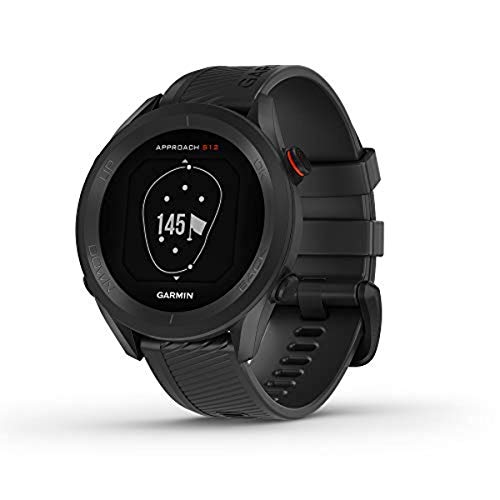
Garmin Approach S12, Easy-to-Use GPS Golf Watch, 42k+ Preloaded Courses, Black, 010-02472-00


Verdict: match the watch to the race you actually entered
Strip away marketing tiers and a triathlon watch reduces to four promises. It must change disciplines as fast as you do, with one certain press. It must measure three sports with the sensors you already own, in water that fights every signal. It must keep recording until you stop, not until its battery negotiates. And it must turn the whole effort into analysis honest enough to build the next training block on.
Long-course athletes should weight battery tables and multi-band reception heaviest, accepting larger cases as the price of certainty. Sprint and Olympic racers can trade some endurance for lightness and speed of operation. Pool-heavy trainers should interrogate swim software — intervals, drill modes, SWOLF detail — harder than satellite specifications. Cyclists with power meters must treat full profile support as non-negotiable, whatever the tier.
Whichever direction you choose, rehearse the watch before race day: transitions in the garden, a brick session with the mount, an open-water outing to learn its track personality. The best GPS watch for a triathlete is ultimately the one whose behaviour has become so familiar by start morning that, when the horn sounds and the water churns white, your thumb finds the right button without a single thought wasted on the machine.


