What's inside
- Key Takeaways
- Quick Picks
- How did we choose the best external hard drives seagate or western digital makes for this comparison?
- How do the two brands compare across these six drives?
- What should a buyer settle before choosing between the two brands?
- How do you bring a new external drive into safe service?
- Which mistakes do external drive buyers repeat?
- How do portable and desktop drives age differently?
- What does brand loyalty actually consist of in external storage?
- How do households end up owning several external drives, and how should the fleet be run?
- What should happen to an external drive at the end of its service?
- How does travelling with a portable drive actually go wrong, and how is it prevented?
- What does the first month with a new external drive reveal?
- How should the two makers’ drives be mixed across a household’s backup plan?
- Final Recommendation
- Frequently Asked Questions
- Related Guides
As an Amazon Associate I earn from qualifying purchases. This post may contain affiliate links at no extra cost to you.
gizmoverdict.com is reader-supported. When you buy through links on our site, we may earn an affiliate commission.
Where to buy: The six drives below link to listings verified in this site’s pool, three from Seagate and three from Western Digital — the only two brands in this guide, by the keyword’s own design. Details are quoted only where listing titles state them; everything else is marked not stated in the spec boxes.
The best external hard drives seagate or western digital is a search with the shortlist already written into it, and that constraint is a gift rather than a limitation. Seagate and Western Digital have divided the external storage market between them for so long that choosing between their portable and desktop lines covers nearly every real need: a pocket-sized drive that travels with a laptop, a desk drive that anchors a home archive, and capacities from two terabytes to a remarkable twenty. This guide honours the two-brand frame completely — no third badge appears among the picks — and spends its energy where the decision actually lives, in the differences between these six.
External drives divide first by form, before brand ever enters the argument. Portable models draw their power from the USB cable itself, travel in a bag without a second thought, and top out at capacities suited to a working life on the move. Desktop models carry their own power supply, live in one place, and stretch to capacities that swallow entire archives. The six picks here split evenly across that divide in spirit: Seagate offers portables at 2TB and 4TB and a desktop at 8TB; Western Digital offers portables at 2TB and 4TB and a desktop at a vast 20TB. Every buyer should settle the form question before the brand question, because a brilliant desktop drive is a useless travel companion and a brilliant portable is a cramped archive.
Brand character forms the second layer. Seagate’s portable line here includes one listing that names a data-rescue service in its title, a detail worth real attention from owners carrying work in progress on their drives. Western Digital’s Elements line, represented at all three of its sizes here, is the industry’s plain-clothes staple — unadorned, ubiquitous, and bought by the millions for exactly the jobs this guide describes. Neither badge is a shortcut past the details, and the details in these listings are sometimes sparse: several titles state little beyond brand, capacity and connection, so the spec boxes mark the rest as not stated and point to each maker’s documentation.
Key Takeaways
- Only Seagate and Western Digital appear here, three drives each, by the terms of the comparison itself.
- Form comes before brand: portables run from the USB cable and travel; desktop models need their own power and stay put.
- Capacities span 2TB portables to a 20TB WD Elements desktop, the largest external drive in this guide.
- One Seagate title names a 1-year Rescue service; the other listings leave service details to their makers’ pages.
- Several titles state little beyond capacity and connection, so documentation checks close the remaining gaps.
Quick Picks
| Pick | Badge | Why it earns its place |
|---|---|---|
| Seagate 2TB Portable | Travel-size Seagate | A 2TB portable for laptop companionship and everyday carry between desks. |
| Seagate Portable 4TB | Rescue service named | A 4TB portable whose title states USB 3.0 and a 1-year Rescue service. |
| Seagate 8TB Expansion Desktop | Seagate desk archive | An 8TB desktop drive from Seagate’s Expansion line for a stationary store. |
| WD 2TB Elements Portable | Travel-size WD | A 2TB Elements portable stating USB 3.2 Gen 1 and USB 3.0 compatibility. |
| WD 4TB Elements Portable | Roomier WD portable | Four terabytes of Elements portability with the same stated USB compatibility. |
| WD 20TB Elements Desktop | Largest capacity here | A 20TB desktop Elements drive, USB 3.0, described in its title as plug-and-play storage. |
How did we choose the best external hard drives seagate or western digital makes for this comparison?
We accepted the keyword’s frame as the first rule: Seagate and Western Digital only. That frame is not a marketing narrowing but a description of the actual shelf, where these two makers’ portable and desktop lines account for the overwhelming majority of external drives a household will ever meet. Smuggling a third badge into the picks would have answered a question the reader did not ask, so the discipline here was to compare deeply inside the frame rather than widely outside it.
Within the frame, we balanced form and capacity deliberately: two 2TB portables for the travellers, two 4TB portables for the travellers with libraries, and two desktop drives at 8TB and 20TB for the stationary archives. That symmetry lets the brand comparison happen at like-for-like sizes, which is the only comparison worth printing. A 2TB Seagate against a 2TB WD Elements is a real decision; a 2TB portable against a 20TB desktop is a category error wearing a comparison’s clothes.
We scored stated evidence where listings offered it. The Seagate 4TB portable’s title names its USB generation and its Rescue service; the WD Elements portable titles name their USB compatibility in detail; the desktop titles are terser. Where a title went quiet — on rotational speed, on cache, on the internal mechanism entirely — the spec boxes record the silence rather than filling it, because an external drive’s enclosure hides its mechanism by design and the honest sources for those figures are the makers’ own documents.
Finally, we judged each drive against the life its form implies. A portable is judged on carry, cable-power and the bumps of a working week. A desktop drive is judged on capacity, placement and the discipline of the backup plan around it. Brand loyalty, the force that actually sells most of these drives, is treated respectfully but not decisively: both makers have earned their followings, and the sections below try to show what each following is actually loyal to.

Seagate 2TB Portable — Travel-size Seagate
Seagate’s 2TB portable is the comparison’s simplest object: a pocket drive, a cable, two terabytes. Its listing title states brand, capacity and portable purpose and little else, which is honest in its way — a drive in this class is bought for the life it enables rather than for a spec sheet. That life is specific: the drive lives in a laptop bag, absorbs the week’s work at a client’s desk or a library table, comes home and pours its contents into the household’s main storage, then goes back out. Two terabytes is a generous working envelope for documents, photographs in progress and a media selection for the road.
The portable form’s virtues are all consequences of its power arrangement. Drawing energy from the USB cable means one less adapter to carry, one less socket to hunt in a café, and a drive that wakes and sleeps with the computer it serves. The corresponding duty is gentleness: a portable drive is the most handled storage in any household, and its owner should treat disconnection as a ritual — eject through the system, wait for the activity light, then unplug — because the small corruption that follows a yanked cable is the portable class’s signature injury, entirely preventable and entirely self-inflicted.
Against the WD Elements 2TB further down the page, the choice at this size is genuinely close and will be decided by temperament and by the documentation each buyer reads. Seagate’s title here is the terser of the two, leaving even the USB generation to the maker’s pages, so a buyer for whom connection details matter should make that check before ordering either. What can be said without the check: both are the standard-bearers of their makers at the standard travel size, and a household picking either, then treating it gently and backing it up at home, has made the decision correctly in every way that will matter in three years.
- Capacity: 2 TB, per the listing title
- Form: Portable hard drive, per the listing title
- Brand line: Seagate portable, per the listing title
- USB generation: Not stated in the listing title — verify with Seagate documentation
- Internal mechanism details: Not stated in the listing title — verify with Seagate documentation
Strengths
- The classic travel capacity in a cable-powered portable form
- Suits the shuttle rhythm between field work and home storage
- Seagate’s portable line is stocked everywhere laptops are sold
Trade-offs
- Title is terse; even the connection generation needs verification
- 2TB bounds its use to working sets rather than archives
- Portable handling demands eject discipline to stay healthy
Best for: a mobile worker seeking a 2TB Seagate portable as a laptop’s travelling companion. Not suited for: a stationary archive or a sole copy of anything.
Seagate Portable 4TB — Rescue service named
The 4TB Seagate portable carries the most informative title among the portable picks: external hard drive, USB 3.0, and a 1-year Rescue service named outright. That service deserves the reader’s full attention, because it addresses the portable drive’s defining risk. Rescue is Seagate’s data-recovery offering — the maker’s own attempt to retrieve data from a failed drive — and its presence in the title signals that Seagate expects this drive to hold things its owner would grieve. A year of that coverage is not a backup and does not replace one, but as an acknowledgement of what portable drives endure, it is the most owner-minded detail printed on any listing in this guide.
Four terabytes changes the portable’s role from shuttle to residence. At this capacity the drive can hold a photographer’s working archive entire, a video editor’s current projects with room to breathe, or a family’s media library in travelling form. The owner should notice what that residency implies: a drive that holds the archive, rather than ferrying a copy of it, graduates from luggage to infrastructure, and infrastructure deserves a twin. The household pattern that works is two residences — this portable and a home store — synchronised often enough that either could fail without a story worth telling.
The USB 3.0 statement in the title settles the connection generation honestly, and the remaining interior details — the mechanism’s own characteristics — stay with Seagate’s documentation, as the spec box records. For the buyer comparing across the aisle, the WD Elements 4TB below offers the same capacity with its USB compatibility spelled out in its own title and no service named in it. That contrast is the two makers’ temperaments in miniature, and it is a legitimate basis for a decision: the service-minded buyer and the specification-minded buyer can each find their drive on this page without either being wrong.
- Capacity: 4 TB, per the listing title
- Form: Portable external hard drive, per the listing title
- Connection: USB 3.0, per the listing title
- Service: 1-Year Rescue, per the listing title
- Internal mechanism details: Not stated in the listing title — verify with Seagate documentation
Strengths
- A data-rescue service named in the title, unique among these listings
- 4TB lets a portable hold a working archive, not just a shuttle load
- USB generation stated, removing one verification errand
Trade-offs
- Rescue coverage is a recovery attempt, not a substitute for backups
- Residency at 4TB raises the stakes on the drive’s handling
- Mechanism details still rest with Seagate’s documentation
Best for: a travelling creator seeking a 4TB portable with a named data-rescue service behind it. Not suited for: an owner who would treat the Rescue service as a backup plan.
Seagate 8TB Expansion Desktop — Seagate desk archive
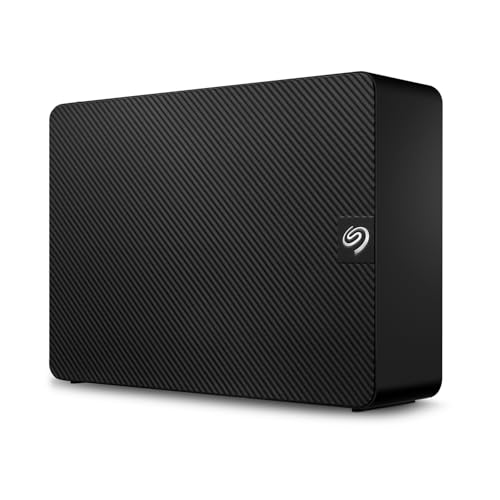
Seagate’s desktop entry is the Expansion line’s 8TB model, and its title is a model of economy: brand, capacity, Expansion Desktop. Behind that economy sits the stationary half of the external world — a powered drive that lives beside a computer or a media setup, holding the archive that portables visit. Eight terabytes is the capacity at which a household’s entire digital estate — photographs, video, music, documents, the backups of its laptops — can plausibly live in one box, and the Expansion line exists to be that box without ceremony.
Desktop external drives ask different questions from portables. Placement leads: the drive needs its own power socket, air around its case, and a surface where it will not be knocked by the daily traffic of a desk. Duty follows: a desktop archive works in long sessions — the evening backup, the weekend media organisation — and rests between them, a rhythm gentler than a portable’s travel but more demanding in total hours. The owner who gives this drive a cool, stable, unmolested home has made the only decision that really governs its lifespan, because the mechanism inside an Expansion is asked to do nothing exotic; it is asked to be left alone, powered and breathing, for years.
Against the WD Elements desktop below, the Seagate offers the moderate summit: eight terabytes against twenty. That is not a defeat but a sizing question. Most households’ estates, honestly inventoried, fit the 8TB figure with room to grow, and the larger WD is aimed at estates — video archives, many-machine backups, media collections of genuine scale — that have already outgrown single digits. The owner measuring first will know which summit is theirs, and the owner guessing will usually guess upward, paying for terabytes that sit empty while the backup discipline that actually protects data goes unfunded.
- Capacity: 8 TB, per the listing title
- Form: Expansion Desktop hard drive, per the listing title
- Brand line: Seagate Expansion, per the listing title
- Connection details: Not stated in the listing title — verify with Seagate documentation
- Internal mechanism details: Not stated in the listing title — verify with Seagate documentation
Strengths
- 8TB holds most households’ complete digital estate in one box
- Desktop form suits the stationary archive role without travel wear
- The Expansion line’s plain, purpose-built character
Trade-offs
- Title states little beyond capacity and line; verification is required
- Powered desktop form is furniture, not a travelling companion
- A single box holding an estate still needs a backup twin
Best for: a household seeking an 8TB Seagate desktop drive as its stationary archive. Not suited for: an estate already pressing past eight terabytes, or a bag.

WD 2TB Elements Portable — Travel-size WD
Western Digital’s answer at the travel size is the Elements 2TB, and its title is the more communicative of the two 2TB listings: Elements portable external hard drive, for Windows, with USB 3.2 Gen 1 and USB 3.0 compatibility both stated. That connection detail is worth having on the record, because a portable’s whole life is connections — to the owner’s laptop, to a colleague’s machine, to the desktop at home — and a title that certifies the generations it speaks removes a small but real uncertainty from every one of those meetings.
The Elements line’s character is deliberate plainness. No bundled software theatre, no design gestures, just the drive, the cable and the capacity, which is why the line has become the default portable for offices and households that buy storage the way they buy stationery. In an enclosure market full of personalities, the Elements personality is reliability-through-boredom, and for a drive that will hold the week’s only copy of a project during a trip, boredom is a genuinely desirable trait. The Windows framing in the title deserves one note: the drive’s intended audience is stated plainly, and owners in mixed households should check the maker’s documentation for formatting guidance before assuming cross-platform behaviour.
Set against the Seagate 2TB above, the decision at this size comes down to which maker’s ecosystem the household already inhabits and which title’s evidence the buyer prefers. The WD states its connections; the Seagate states less and leans on its line’s ubiquity. Neither is a wrong answer, and the guide’s honest counsel is that at 2TB portable, the owner’s habits — eject discipline, a home backup waiting, a padded sleeve in the bag — will determine the drive’s fate far more than the badge on its case.
- Capacity: 2 TB, per the listing title
- Form: Elements Portable external hard drive, per the listing title
- Connection: USB 3.2 Gen 1 / USB 3.0, per the listing title
- Platform framing: for Windows, per the listing title
- Internal mechanism details: Not stated in the listing title — verify with Western Digital documentation
Strengths
- USB compatibility stated in the title in unusual detail
- The Elements line’s plain, office-proven character
- Travel capacity with cable-powered simplicity
Trade-offs
- Windows framing means mixed-platform households should verify formatting
- 2TB is a working set, not an archive
- No service or recovery offering is named in the title
Best for: a Windows-based traveller seeking a plainly specified 2TB portable for everyday carry. Not suited for: a mixed-platform household unwilling to check formatting guidance first.
WD 4TB Elements Portable — Roomier WD portable
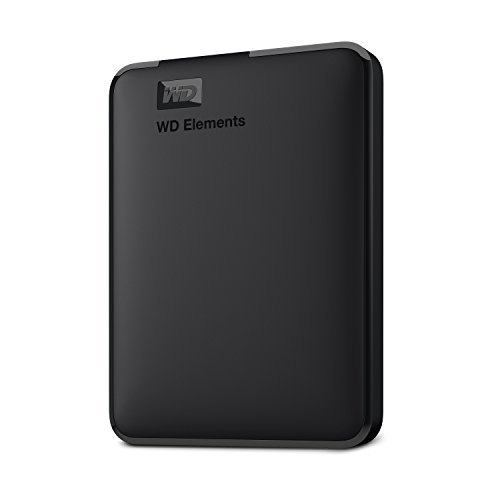
The Elements line at 4TB is the portable for owners whose travelling load outgrew the shuttle class: the photographer carrying the whole working archive, the consultant whose project history travels, the family member transporting the media library between two homes. Its title mirrors its smaller sibling’s candour — Elements portable, for Windows, USB 3.2 Gen 1 and USB 3.0 compatibility stated — so the connection story is settled on the listing itself, and the buyer’s remaining homework is the mechanism detail that Western Digital’s documentation holds.
Capacity at this level changes the risk conversation, as it did for the Seagate 4TB across the page. A portable holding four terabytes is no longer carrying copies by default; it is carrying originals unless the household deliberately keeps it a copy. The deliberate pattern is synchronisation: the portable mirrors the home store on a rhythm — nightly for active projects, weekly for archives — so its loss or failure is an inconvenience with a date on it rather than a bereavement. Owners who build that rhythm get the best of the form, a residence that travels; owners who skip it are carrying a single point of failure in a bag, at four-terabyte scale.
Between the two 4TB portables, the comparison sharpens into the guide’s clearest brand-temperament choice. Seagate names a Rescue service in its title; Western Digital names its USB compatibility in its title. One speaks to failure, the other to connection. An owner anxious about data loss will feel the Seagate’s pull; an owner living across a chain of different computers will feel the WD’s. Both anxieties are rational, both drives are their makers’ mainstream answers, and the household naming its own anxiety honestly will choose correctly without further help from any guide.
- Capacity: 4 TB, per the listing title
- Form: Elements Portable external hard drive, per the listing title
- Connection: USB 3.2 Gen 1 / USB 3.0, per the listing title
- Platform framing: for Windows, per the listing title
- Internal mechanism details: Not stated in the listing title — verify with Western Digital documentation
Strengths
- 4TB of travelling capacity with connections certified in the title
- The Elements line’s unadorned, widely stocked character
- Suits a synchronised residence-that-travels pattern
Trade-offs
- At this capacity the drive holds originals unless deliberately mirrored
- Windows framing requires a formatting check for other platforms
- No recovery service is named in the title
Best for: a traveller seeking a 4TB WD portable with its USB compatibility stated outright. Not suited for: an owner who would carry it as the sole copy of a large archive.

WD 20TB Elements Desktop — Largest capacity here
Twenty terabytes is a number that changes the conversation from storage to estate management, and the WD Elements Desktop at that capacity is this guide’s summit. Its title describes a desktop external hard drive on USB 3.0, offered as plug-and-play storage, and the plainness of that description against the enormity of the capacity is pure Elements character: the largest drive in the comparison presented as if it were the smallest, a box to be plugged in and forgotten at a scale where forgetting requires genuine discipline.
Who honestly needs twenty terabytes in one external box? The video archivist whose projects accumulate in hours of high-resolution footage. The household running backups for many computers across many years, with history retained rather than rotated away. The media collector whose library has become a genuine collection, curated across decades. For those estates, a single 20TB desktop drive consolidates what would otherwise sprawl across four or five smaller boxes, each with its own cable, its own power supply and its own chance of being the one that was not backed up. Consolidation is this pick’s real feature, and capacity is merely how it is measured.
Consolidation’s price is concentration, and it must be stated without flinching: twenty terabytes behind one mechanism, one power supply and one household accident is the largest single point of failure in this guide. The owner of this drive owes its contents a protection plan of matching seriousness — a second copy of the irreplaceable share, held in a different place, verified on a schedule. With that plan in place, the Elements 20TB is a magnificent simplification of a large estate. Without it, the drive is a wager. The title’s own phrase, plug-and-play, describes the connection honestly; the stewardship, as ever, is the owner’s to supply.
- Capacity: 20 TB, per the listing title
- Form: Elements Desktop external hard drive, per the listing title
- Connection: USB 3.0, per the listing title
- Setup character: plug-and-play storage, per the listing title
- Internal mechanism details: Not stated in the listing title — verify with Western Digital documentation
Strengths
- 20TB consolidates a sprawling multi-drive estate into one box
- Elements plainness at flagship scale, with USB 3.0 stated
- Suits many-machine backup histories and large media collections
Trade-offs
- The guide’s largest single point of failure if used alone
- Desktop form with its own power supply; entirely stationary
- Capacity far beyond most households’ measured need
Best for: a large-estate owner seeking to consolidate many drives into one 20TB desktop box, with a protection plan to match. Not suited for: a household whose whole archive would rattle inside a fifth of its capacity.
How do the two brands compare across these six drives?
Read the table by pairs: each capacity tier holds one drive from each maker, which is how the comparison was designed. The stated-evidence column shows where each title speaks and where it leaves the conversation to documentation.
| Drive | Capacity | Form | Stated in title |
|---|---|---|---|
| Seagate 2TB Portable | 2 TB | Portable | Brand, capacity, portable form |
| Seagate Portable 4TB | 4 TB | Portable | USB 3.0, 1-Year Rescue |
| Seagate 8TB Expansion Desktop | 8 TB | Desktop | Brand, capacity, Expansion line |
| WD 2TB Elements Portable | 2 TB | Portable | USB 3.2 Gen 1 / USB 3.0, Windows |
| WD 4TB Elements Portable | 4 TB | Portable | USB 3.2 Gen 1 / USB 3.0, Windows |
| WD 20TB Elements Desktop | 20 TB | Desktop | USB 3.0, plug-and-play |
What should a buyer settle before choosing between the two brands?
Settle the form first, as the introduction urged: portable for the travelling working set, desktop for the stationary estate, and no drive in either class apologises for the other class’s virtues. Settle the capacity second, by inventory rather than by appetite — measure the data, add its growth across the drive’s expected years, and notice which tier the arithmetic actually lands in. Most households discover they are a 4TB portable household or an 8TB desktop household, and the brand decision then happens inside a tier where both makers field a genuine contender.
Settle the protection plan third, before the brand is even named. Every drive in this guide, from whichever maker, is one mechanism that will someday fail, be dropped, be left in a taxi or be stolen from a car. The household having already decided where the second copy lives can choose between Seagate and WD on temperament and evidence. The household still undecided is not choosing a drive at all; it is choosing which single point of failure to adopt, and no badge makes that a good decision.
There is a fourth settlement, quieter than the others: the household’s platform habits. The WD Elements portable titles frame their drives for Windows, and a household split between operating systems should treat that framing as a prompt to read the formatting guidance before the drives arrive, not after a deadline discovers the mismatch. Mixed households solve this routinely — a format both systems read, or a drive per platform — but they solve it on purpose, at purchase time, in daylight. Seagate’s listings here make no platform claim in their titles, which is its own kind of prompt: silence on a point that matters is a question addressed to the documentation, and the documentation answers it in a paragraph.
Only then does brand temperament deserve its vote. Seagate’s listings here speak of service, naming Rescue on the 4TB portable as a standing offer of help after failure. Western Digital’s listings speak of connection and plainness, certifying USB generations on the portables and presenting even 20TB as plug-and-play. Households tend to know which language they trust. That trust, earned by whichever maker’s drives already sit in the house behaving themselves, is a legitimate tiebreaker — provided the form, the capacity and the protection plan have already had their say.
How do you bring a new external drive into safe service?
Connect the drive, confirm the computer reports the capacity the listing promised, and format it only if the household’s platform requires it, since a drive reformatted casually can erase the maker’s intended setup and, on a drive that arrived holding anything, the contents themselves. Name the volume for its role — the archive, the travel copy, the project drive — because anonymous volumes invite anonymous mistakes in every future storage screen.
Populate it in stages, verifying by opening files from the drive itself rather than trusting copy dialogs, and keep the source intact until the new drive has carried a week of ordinary life. Then wire it into the backup rhythm formally: the portable synchronised with the home store, the desktop drive itself holding a copy of something and being copied by something else. An external drive’s commissioning ends not when it is full but when its failure has been rehearsed — when the household can answer, without pausing, what happens the day this box does not wake up.
One small ceremony repays itself immediately: before the drive takes its first real load, copy one large folder to it, copy it back, and compare a handful of files by opening them. That round trip exercises the cable, the connection and the mechanism together, and it converts the household’s confidence from a hope about a new object into knowledge about a tested one. Every later copy in the drive’s life is then a repetition of a proven act rather than an act of faith, and the distinction colours the whole ownership.
Record the purchase date, the model and the serial number in the household’s notes, and store the cable it came with beside it rather than in the general cable drawer, because a portable separated from its cable at the moment of need is a small, perfect example of how storage plans actually fail: not in the mechanism, but in the accessories around it.
Which mistakes do external drive buyers repeat?
The classic mistake is the sole copy, already flagged and worth its repetition: an external drive, the most losable object in the storage plan, holding the only version of a family’s photographs. The second mistake is capacity by appetite — buying the largest drive on the page because the number felt safe, then discovering that an estate of three terabytes rattling inside twenty has purchased no safety at all, only a larger eventual migration. The third is form confusion: a desktop drive bought for travel, condemned to a life of power bricks and borrowed sockets, or a portable bought as an archive and filled past its comfortable role within a year.
The fourth mistake is treating a named recovery service as a backup. The Seagate 4TB’s Rescue offering is a genuine virtue, and it remains a recovery attempt after a failure, with no promise attached that this guide can print. The household synchronising its portable to a home store owns its data’s future; the household relying on rescue has rented a hope. The fifth mistake is disconnection by yank, the portable class’s daily wound, cured entirely by the two-second eject habit that costs nothing and is skipped by nearly everyone who later tells a corruption story. A sixth, quieter mistake completes the set: buying a drive for a role and then never retiring it from that role, so the portable bought for a finished project keeps riding in the bag as an unexamined copy of stale data, and the desktop bought for a small archive keeps absorbing an estate it was never sized for. Roles expire, and a household reassigning its drives as its data changes gets the fleet it actually needs, while a household never reassigning them gets a museum that occasionally corrupts.
How do portable and desktop drives age differently?
A portable drive ages in journeys. Its risks are kinetic — the bag dropped, the cable snagged, the drive slid off a café table — and its health report tells only half its story, because a mechanism can be mechanically sound and one fall away from retirement at all times. Owners of portables should therefore hold their expectations differently: the drive is a working tool with a working life, its contents always mirrored at home, its replacement a budgeted event rather than a catastrophe. Judged by that standard, both makers’ portables here are built for exactly the life described, and their owners’ discipline — the sleeve, the eject, the synchronisation, the refusal to let a travelling drive become a sole copy — is the variable that decides how long it lasts and how gracefully it ends.
A desktop drive ages in hours. Stationary, powered, breathing the same room air for years, it accumulates the slow variables — heat cycles, dust in its vents, the power supply’s own ageing — and its health report tells nearly the whole story to an owner who reads it. The desktop’s discipline is placement and attention rather than handling: a cool shelf away from radiators and sunlit glass, clear vents checked when the room is dusted, a glance at the health report each season and after any power cut that reached the desk. The 8TB Expansion and the 20TB Elements will both reward that discipline with long, dull service, which in storage is the highest praise available.
What does brand loyalty actually consist of in external storage?
Brand loyalty in this category is rarely about specifications, because the specifications of mainstream external drives are close enough that few households could tell the two makers’ equivalent models apart in a blind week of use. Loyalty here is biographical. A household trusts the maker whose drive survived the house move, whose earlier model still spins in a drawer a decade on, whose box was on the shelf the day the previous drive was needed urgently. That biography is real evidence — a sample of one, honestly gathered — and this guide does not mock it. It merely insists the biography be allowed to break ties rather than make decisions, because a trusted badge on the wrong form or the wrong capacity still produces the wrong drive.
The two biographies on offer differ in flavour. Seagate’s household story leans toward services and recovery, the Rescue name in a title standing as the visible tip of a maker presenting itself as a partner after things go wrong. Western Digital’s story leans toward ubiquity and plainness, the Elements line’s refusal of ornament presenting itself as honesty about what a drive is. Households that have lived with either story will recognise their own; households starting fresh can choose the story whose anxieties match their own, service after failure or simplicity before it, and be rational either way.
What loyalty should never do is exempt the purchase from the guide’s standing checks. A beloved maker’s drive still needs its capacity measured, its form settled, its unstated figures verified and its contents backed up. The brands in this comparison are both good enough that the remaining risk in any purchase lives almost entirely in the buyer’s process, not in the badge — which is, in the end, the most useful thing a two-brand guide can say.
How do households end up owning several external drives, and how should the fleet be run?
Nobody plans a fleet; fleets accumulate. A portable bought for a job, a desktop bought for an archive, a second portable inherited from a relative’s upgrade, a drive that came with a computer long since recycled. Within a few years the household owns four external drives of assorted ages and badges, holding overlapping copies of overlapping archives, with no record of which copy is newest or which drive is healthiest. The accumulation is normal, and running it well requires only a catalogue and a hierarchy.
The catalogue is a single page: each drive’s maker, capacity, purchase year, health status and assigned role, plus a label on the drive itself matching the page. The hierarchy assigns the soundest, largest desktop drive as the archive of record; the portables as synchronised copies and working sets; the oldest drives as extra copies of the irreplaceable share, stored away from the main machine. Reviewed once a year — health read, catalogue updated, the genuinely tired retired and wiped — the fleet becomes a system with redundancy designed into it, rather than a drawer of coincidences. Households discover, doing this exercise, that they often already own a respectable backup plan; it was merely undocumented.
The two brands in this guide mix happily inside such a fleet, and there is a quiet argument for letting them: a household whose copies live on both makers’ mechanisms is diversified against the small chance of a model-specific weakness, in the same spirit as any other diversification. Brand purity is an aesthetic; brand mixture with a catalogue is a strategy.
What should happen to an external drive at the end of its service?
Retirement is a data ceremony before it is a disposal errand. The drive’s contents should be audited one final time against the archive of record, anything unique copied across and verified, and the mechanism then wiped with a thorough overwrite or the maker’s secure-erase facility — because an external drive, by the nature of its life, holds a portable copy of the household’s private world, and its next owner, at a charity shop or a recycling centre, should meet a blank. Drives too old or too doubtful to wipe reliably should be physically destroyed rather than donated; the small value of a tired drive never outweighs the archive it carries.
The fleet catalogue gets its final entry: retired, wiped, date. That closing line matters more than it appears, because a household recording retirements never wastes an anxious evening wondering whether the drive in the drawer is a live copy or a wiped shell. Storage, across this whole guide, has been a story about knowing where the data is and what condition it is in. The retirement record is simply that story’s last chapter, and writing it takes less time than the anxiety it prevents.
How does travelling with a portable drive actually go wrong, and how is it prevented?
Travel failures follow a short and depressingly familiar script, repeated in airports and hotel rooms everywhere, usually at the least convenient moment of the entire trip. The drive is unplugged in a hurry and corrupts a directory. The drive rides loose in a bag against keys and adapters and arrives with a new rattle. The drive is left in a hotel room, a hire car, a conference centre — the portable’s portability being also its losability. Each act of the script has a dull, complete prevention: the eject habit performed every single time without exception, a padded sleeve that costs less than the data it protects, and a synchronisation at home current enough that a lost drive is a purchase, not a loss. Travellers who perform those three dull things for years describe portable drives as utterly reliable, and they are describing their own discipline reflected back at them, which is the closest thing to a universal law that external storage has ever produced.
The desktop drive’s travel story is shorter: it should not travel. Its power supply, its size and its stationary design make it furniture, and households that need an estate to move between two homes are better served by a synchronised pair — one desktop at each end, or a 4TB portable as the ferry — than by carrying a 20TB box through airports. The form question, settled at purchase, keeps answering questions for the whole of the drive’s life, which is why this guide placed it before the brand question and returns to it here at the end.
What does the first month with a new external drive reveal?
The first month is when a drive shows its household whether the purchase was truly understood. A portable that spends the month in a padded sleeve, synchronised twice a week, ejected properly forty times, has established the rhythm that will carry it for years. A desktop drive that spends the month in a cool corner, absorbing the archive in verified stages and joining the backup schedule on time, has done the same. Problems that appear in this window — a connection that drops under load, a case that runs hot, a capacity that was misjudged — appear while returns are easy and the old arrangement still exists as a fallback, which is precisely why the staged commissioning this guide prescribed is worth its patience.
By the month’s end the household should be able to answer three questions without thinking: where the second copy of everything on the new drive lives, what the drive’s normal warmth and voice are on an ordinary evening, and what happens on the day it does not wake. A drive whose household can answer all three, promptly and without searching, has been bought properly, whichever badge it wears. A drive whose household cannot has been merely purchased, and the difference between those two states — not Seagate, not Western Digital — is what the next several years of its service will be made of.
How should the two makers’ drives be mixed across a household’s backup plan?
A resilient household plan can be sketched on one line: originals on the computer, a copy on a desktop external sitting beside it, a second copy on a portable kept away from the desk entirely, and the irreplaceable core mirrored to a cloud tier if the household uses one. Assigning the two makers across those legs is a matter of taste with one practical tilt — let the leg that travels be the drive whose owner’s habits suit travel, with the sleeve bought and the eject habit already formed, and let the leg that anchors be the largest, soundest desktop box available. A Seagate desktop anchoring with a WD portable travelling, or the reverse arrangement entirely, are equally coherent plans; coherence lives in the legs and the rhythm, not in badge symmetry.
The rhythm deserves the final word in this section, because copies decay the moment they are made. A portable synchronised monthly protects against the loss of a month; synchronised nightly, against the loss of a day. Households should choose the rhythm by asking what a month of their data is worth — a month of photographs, of project work, of the children’s school terms — and then automate the answer so the rhythm survives busy seasons and holidays. Automation is the difference between a backup plan and a backup intention, and every drive in this guide — Seagate or Western Digital, portable or desktop, two terabytes or twenty — performs its role better inside the former, where the copies happen because the schedule says so and not because somebody remembered on a Sunday.
Final Recommendation
At the travel sizes, the choice is a coin the household should weight with its own history: the WD Elements portables state their connections with unusual completeness, while the Seagate 4TB portable names a Rescue service that speaks directly to the travelling owner’s real fear, and the Seagate 2TB keeps the classic shuttle form at its simplest. At the desk, the Seagate Expansion 8TB fits the honestly measured household estate, and the WD Elements 20TB stands alone for the estate that has genuinely outgrown single digits and can fund the protection plan its capacity demands. Two brands, six drives, one discipline that outranks every badge: measure the data, settle the form, arrange the second copy, keep the rhythm of synchronisation through busy seasons and quiet ones alike, and the drive that follows from those answers will serve under either name for years, carrying the household’s work and memory between desks and decades with the unremarkable dependability that both of these makers built their names on.
Frequently Asked Questions
Why does this guide include only Seagate and Western Digital?
Because the comparison’s own terms name the two brands, and because their portable and desktop lines cover the overwhelming majority of real external-drive needs between them. Every pick here is a Seagate or a Western Digital; no third maker appears. Depth inside that frame serves the reader better than a token outsider added for breadth.
What is the difference between the portable and desktop models here?
Portables — the 2TB and 4TB models from both makers — draw power from the USB cable and are built to travel. Desktop models — Seagate’s 8TB Expansion and WD’s 20TB Elements — use their own power supply, live in one place and reach capacities no portable attempts. Form should be settled before brand, since the two classes serve different lives.
Does the Seagate Rescue service replace a backup?
No. The 1-year Rescue service named in the Seagate 4TB portable’s title is a data-recovery offering — an attempt to retrieve data after a failure. It is a genuine extra layer of help, but the only arrangement that protects data reliably is a second copy kept current, whether that copy lives on a home drive, another portable or a cloud tier.
How much capacity does an external drive need?
Enough for the data, its growth and its role. A travelling working set fits the 2TB class; a travelling archive wants 4TB; a stationary household estate typically lands at 8TB; and the 20TB Elements serves estates built from many machines’ backups or very large media collections. Measuring the existing data before buying prevents both the cramped drive and the echoing one.
Why do several spec boxes say not stated?
Because those listing titles do not print the figure, and external drives hide their mechanisms inside sealed enclosures by design. This guide takes specifications from titles and marks the rest as not stated, pointing to each maker’s documentation for the exact model. That check matters most for connection details and platform formatting, where the titles sometimes speak and sometimes stay silent.
Can an external drive be the household’s only backup?
It can be one leg of a backup plan, and for many households a desktop external drive is exactly that. It should not be the only leg: the same event — theft, fire, a spill, a dropped bag — can take the computer and the drive beside it together. The irreplaceable material deserves a second copy in a different place, which is the arrangement every pick in this guide assumes.
Related Guides
External storage planning continues in our neighbouring coverage of bare drives for external enclosures, the stationary alternative in drives for a home NAS server, and the desktop route in internal drives for everyday PCs.


