Our Top Picks
 TP-Link Tapo 1080P Outdoor Wired Pan/Tilt Security Camera4.88 x 4.84 x 3.54 inches0.8 poundsCheck on Amazon
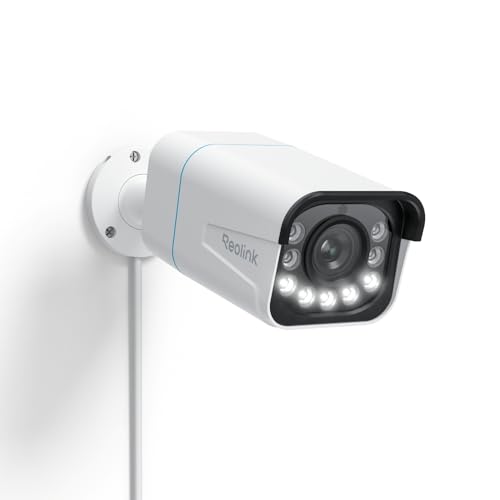 REOLINK PoE Security Camera RLC-811A 5X Optical Zoom1 Count (Pack of 1)11.4 x 4.7 x 5.5 inches1.8 poundsCheck on Amazon


What's inside
- Ingress protection: what IP66 and IP67 actually promise
- Operating temperature, heaters and cooling
- Power and networking on a tall pole: PoE versus Wi-Fi
- Streams, protocols and talking to recorders
- Snapshots, FTP upload and weather networks
- Night performance and watching storms after dark
- Lenses: fixed focal length, varifocal and framing the sky
- Lightning, surges and protecting a pole installation
- Recording strategy: NVR, local cards and storm resilience
- Resolution, frame rate and honest image expectations
- Siting the camera for meaningful weather evidence
- Configuration discipline for weather scenes
- Maintenance in exposed locations
- Matching camera classes to weather-watching goals
- Budgeting the whole installation honestly
- Frequently asked questions from weather watchers
- Worked siting examples
- Security hygiene for a camera that never sleeps
- Reading a datasheet like an engineer
- A commissioning sequence that pays for itself
- Extreme-weather case notes for planners
- Pairing the camera with instruments and archives
- Check prices on Amazon
- Disclosure about funding for this guide
As an Amazon Associate I earn from qualifying purchases. This post may contain affiliate links at no extra cost to you.
A camera bought to watch the weather lives a harder life than one guarding a doorway. It stares at the sky for years from a rooftop, a mast or a fence line, enduring driven rain, ice accretion, summer heat radiating off shingles and the occasional nearby lightning strike, while its owner asks it for a very particular kind of evidence: trustworthy still images and video of cloud development, approaching fronts, snowfall rates, flooding creeks and storm damage as events unfold. Choosing the best IP cameras for weather tracking therefore starts with environmental survival, continues through networking and image discipline, and only then arrives at resolution and lens questions.
Weather watchers feed several different audiences with the same hardware. A rural household wants early visual warning of a rising creek or a whiteout on the only road out. An amateur meteorologist contributes timed snapshots to community observation networks that assemble stills from hundreds of private stations into regional time-lapses. A sailing club, gliding field or small airfield publishes a current sky view so members can judge conditions before travelling. Each purpose rewards slightly different trade-offs, yet all of them punish cameras that fog internally, drop off the network in a frost, or produce overexposed white skies with no cloud detail.
Ingress protection: what IP66 and IP67 actually promise
The two-digit ingress code defined by the IEC 60529 standard gives weather-camera shoppers a rare thing, a rating with a published test behind it. The first digit describes protection against solid objects and reaches six when an enclosure is dust-tight. The second digit describes liquid protection on a rising scale of severity: a rating of six in that position means the housing withstands powerful water jets from any direction, while seven means it survives temporary immersion at a specified depth and duration. A camera marked IP66 therefore shrugs off wind-driven rain and hose-directed spray indefinitely, whereas IP67 adds insurance against standing water, flooded mounting trays and brief submersion during an exceptional storm surge.
Neither rating, on its own, guarantees a clear picture or a long life. The standard tests enclosures under laboratory conditions with seals in new condition, and it says nothing about ultraviolet degradation of gaskets, cable glands loosened by thermal cycling, or condensation forming inside a housing that breathes humid air through a tired seal and then cools at night. Manufacturer specification sheets for serious outdoor models therefore supplement the headline code with details about cable gland design, sunshield construction, housing material and whether the stated rating covers the complete assembly including its pigtail connections, or only the camera body on a bench.
Condensation management separates experienced designs from optimistic ones. Better housings include a breathable membrane vent that equalises pressure while blocking liquid water, desiccant packs that absorb the moisture sealed in during assembly, or a fully potted construction that leaves no internal air volume to fog. When a camera fogs, the mist almost always forms on the coldest internal surface, which is the inside of the front window on a clear night, precisely when frost watchers want a crisp view. A specification that mentions anti-condensation measures by name signals that the maker has confronted the physics rather than leaving owners to bake silica gel beside a ladder.
Operating temperature, heaters and cooling
The operating temperature range printed on a datasheet deserves reading as two separate promises. The lower figure states the coldest ambient condition in which the camera will run once already powered and warm from its own electronics, while cold-start behaviour at that same temperature can be quite different for a unit that sat unpowered overnight. Models intended for continental winters incorporate an internal heater that holds the imager and lens assembly above the point where lubricants stiffen, focus mechanisms stall and image sensors drift out of their calibrated behaviour. The heater draws real power, which matters for the Power over Ethernet budget discussed later, and its thermostat cycling should appear in the electrical specification.
At the opposite extreme, a camera bolted above a dark roof in a desert summer absorbs solar loading that pushes its housing far beyond the shaded air temperature a weather station reports. Manufacturers address that load with pale housing finishes, ventilated sunshields that shade the body while allowing convective airflow, and in larger housings a small thermostatically controlled fan. Published maximum ratings for such models often assume the sunshield is fitted, so removing it for a cleaner silhouette quietly voids the thermal design. Shoppers in hot climates should also note the storage temperature range, because a spare camera kept in a metal shed can cook itself before it ever sees a mounting pole.
Cold climates add mechanical stresses beyond electronics. Ice forming on a fixed camera window can be shed by a heated front element on better models, while cheaper units rely on a hydrophobic coating that helps raindrops bead but does little against freezing fog that deposits rime feather by feather. Wiper-equipped housings exist for larger installations and exposed coastal sites where salt spray dries into an opaque film, and their maintenance schedule, blade replacement and washer fluid in smaller systems, becomes part of the ownership cost that a specification sheet only hints at.
Power and networking on a tall pole: PoE versus Wi-Fi
Height improves a weather view and complicates everything else. A camera on a six-metre mast sees over hedges and roof ridges, but every service visit involves a ladder or a tilt-over pole, and every cable run is exposed to wind, ultraviolet light and induced surges. Power over Ethernet answers that situation elegantly by carrying direct-current power and data on a single outdoor-rated cable, so one run up the pole feeds the camera, its heater and its network connection together. The relevant standards, IEEE 802.3af and the higher-capacity 802.3at, define how much power a switch or injector may supply and how the camera negotiates for it, and a heater-equipped model in midwinter can exceed the smaller budget and demand the larger class.
Ethernet also imposes a discipline that suits weather duty. The one-hundred-metre channel limit of twisted-pair cabling is generous for houses and smallholdings, yet voltage drop on the power pairs and data integrity both degrade when installers substitute thin indoor cable for outdoor-rated, gel-filled or shielded runs. A wired link does not fade when rain sheets through the air, does not compete with household devices for airtime during a storm when everyone reaches for a connection, and keeps delivering frames while a wireless signal is being scattered by wet foliage. For a fixed installation whose entire purpose is reliability during severe weather, that determinism is the central argument.
Wireless cameras still earn their place where trenching or drilling is impossible, on rented property, across a farmyard where a cable would cross a working lane, or for a temporary deployment ahead of a forecast flood. Their costs arrive as operational chores: a solar panel and battery sized for the shortest winter day rather than the average one, a radio link budget that accounts for wet-tree attenuation, and a maintenance rhythm of panel cleaning and battery replacement. Owners choosing the wireless route should confirm the camera can store images locally during link outages and forward them when service returns, because a storm that knocks out the radio path is exactly the event the camera exists to document.
Streams, protocols and talking to recorders
An IP camera earns the IP half of its name through the streams and protocols it speaks. Real Time Streaming Protocol, universally shortened to RTSP, remains the workhorse method by which recorders, viewing software and home automation systems pull a live video feed from a camera without depending on a vendor cloud. A weather camera should expose its main stream and a lower-resolution sub-stream simultaneously, so a recorder can archive full detail while a public web page or a slow rural connection receives a lighter feed that will not saturate the uplink whenever a neighbour opens the sky view.
ONVIF conformance widens those choices further. The ONVIF profiles define standard ways for compliant recorders and software to discover a camera, configure its streams and receive event notifications, which frees the owner from a single manufacturer application and makes a future recorder swap a configuration exercise rather than a forklift replacement. Shoppers should verify which profiles a model claims, check that the claim appears in the conformance documentation rather than only in marketing copy, and confirm that basic settings such as frame rate, shutter behaviour and image orientation remain adjustable through standard interfaces rather than being locked inside a proprietary tool.
Compression choices shape both storage and image quality in weather scenes. Modern codecs such as H.265 encode a largely static sky view very efficiently, yet fast-moving storm footage with rain streaks, hail and thrashing trees is the opposite of static, and bitrates climb sharply exactly when the content matters most. A variable bitrate setting with a sensibly chosen ceiling, or a constant quality mode where the recorder supports it, preserves storm detail better than an aggressive fixed bitrate chosen on a calm day. Readers comparing baseline resolution options will find the category overview at best 1080p ip cameras useful for understanding where full high definition remains entirely adequate, particularly for snapshot publication rather than forensic zooming.
Snapshots, FTP upload and weather networks
Continuous video impresses visitors, but the snapshot is the currency of organised weather watching. Networks of private stations assemble still images captured at fixed intervals, often every few minutes, into public archives and time-lapse sequences that reveal frontal passages and convective development far better than any single frame. A camera suited to that work offers scheduled snapshot capture at full sensor resolution, a choice of file naming that embeds date and time without characters that break server scripts, and an upload client that pushes each image to a remote server without owner intervention.
File Transfer Protocol remains the lingua franca of those uploads, increasingly in its secure variants, and the details of the implementation decide whether participation is effortless or exasperating. Look for support for scheduled uploads independent of motion detection, adjustable intervals, retry behaviour after a failed connection, and the option to upload to a primary server with a fallback address. Equally important is what the camera does between uploads: buffering snapshots internally when the network fails, then sending the backlog in order, preserves the continuity that makes a time-lapse scientifically interesting rather than merely pretty.
Image discipline at capture time matters as much as transport. A fixed white balance matched to daylight prevents the colour of a storm sky from wandering as clouds thicken, a restrained exposure programme protects highlight detail in bright cumulus while still opening shadows enough to show rain curtains, and a burned-in timestamp, where a network requires one, should sit in a corner that does not cover the horizon line where the weather actually happens. Wide dynamic range processing helps when a bright sky shares the frame with a dark foreground of fields or water, though aggressive settings can flatten the subtle tonal gradations that distinguish one cloud layer from another.
Night performance and watching storms after dark
Severe weather keeps no office hours, and a tracking camera must stay useful when a squall line arrives at midnight. Infrared illumination built around an array of emitters gives most fixed cameras a monochrome night view whose reach is quoted on specification sheets under ideal conditions. Rain, fog and airborne dust scatter that infrared energy back toward the lens, producing the familiar white-out bloom that can make a storm look like a snow globe, so experienced installers often reduce emitter intensity during precipitation, rely on a separate floodlight positioned away from the lens axis, or accept ambient light from yard lamps and lightning itself for sky observation while infrared handles the ground foreground.
Sensor behaviour in darkness matters more than emitter count for sky watching. A larger image sensor with generous pixel pitch gathers more light per pixel, and a camera offering a genuine low-light colour mode with a slow minimum shutter can hold a usable view of cloud silhouettes and lightning-lit cumulonimbus long after smaller sensors have collapsed into noise. Lightning presents its own exposure puzzle: individual flashes last milliseconds, and a camera running a very slow shutter with heavy frame integration may smear the event, while a faster configuration catches structure in the illuminated cloud. There is no single correct setting, only an informed compromise matched to whether the owner values ground security coverage or atmospheric drama.
Owners comparing higher-resolution night performers can use best 4k ip cameras as a reference point for how sensor size, rather than pixel count alone, governs low-light quality, since cramming more pixels onto the same small sensor shrinks each light-gathering site and can leave a nominally superior camera looking worse after dark than a modest model with a larger imager.
Lenses: fixed focal length, varifocal and framing the sky
A weather camera frames a landscape, not a doorway, and lens choice decides how much of that landscape survives in each frame. A fixed focal length lens in the wide range captures a broad sweep of sky and horizon, letting viewers judge cloud motion and the approach of a front across the whole visible arc. The cost of that breadth is miniature detail: a distant waterspout, a shelf cloud feature or a flooded bridge at the valley floor occupies few pixels and resists enlargement. Fixed lenses reward their simplicity with no focus drift, no moving parts to ice up and a depth of field that keeps everything from the near fence to the horizon acceptably sharp.
Varifocal lenses, adjustable across a range such as a few millimetres to a dozen or more, let the installer tune the frame after mounting, tightening on a flood-prone crossing or widening to include a second horizon direction. Motorised varifocal designs allow that adjustment from the ground, a genuine safety benefit on a tall pole, and they hold focus through the adjustment when the mechanism is properly designed. The discipline varifocal demands is restraint: framing should be settled once, documented, and then left alone, because a weather archive loses comparative value every time the field of view changes and yesterday cloud scale no longer matches today.
Distortion and horizon placement complete the optical picture. Very wide lenses bend the horizon near the frame edges and compress the vertical space where cloud towers develop, so a moderate wide angle often renders weather more honestly than an extreme fisheye. Tilting the camera so the horizon sits in the lower third of the frame dedicates most pixels to the sky, which suits cloud observation, while a level split serves sites where ground conditions, snow accumulation, river level or sea state, carry equal interest. A small spirit level used during mounting, and a saved reference frame for later comparison, keep that deliberate composition from drifting after storms shake the pole.
Lightning, surges and protecting a pole installation
A camera on a tall conductive pole, connected to a building by a long cable, sits in the path of induced surges whenever lightning strikes nearby, even when the installation itself is never hit directly. The electromagnetic pulse from a close discharge drives transient voltages onto both the Ethernet pairs and any separate power feed, and those transients travel cheerfully down the cable into the camera at one end and the network switch at the other. Protecting the installation means placing rated surge protective devices at both ends of the outdoor run, bonding them to a proper earth point with short, direct conductors, and treating the camera itself as the last component in that chain rather than the first line of defence.
Shielded outdoor cable earns its cost in this environment when its screen is bonded correctly at the building entry, giving induced energy a path that does not run through delicate electronics. Installers should follow the earthing guidance for the specific surge devices chosen, keep the protected and unprotected cable sections separated so a surge cannot simply jump across, and remember that a gas discharge or diode-based Ethernet protector must be rated for the power levels that Power over Ethernet places on the same pairs, or the cure will throttle the camera heater in January. Fibre optic conversion for the building link, where budget allows, breaks the conductive path entirely and remains the most complete isolation strategy for genuinely exposed hilltop sites.
Physical storm readiness extends beyond electrics. Mounts should be rated for the wind loading of the camera and its sunshield at the local design wind speed, fasteners should be stainless or otherwise corrosion-protected, and cable should be clipped at intervals that prevent it slapping against the pole until its jacket wears through. A tilt-over or hinged pole, though a larger initial project, transforms every later task, cleaning, surge device replacement, heater checks, into ground-level work, and for ageing owners or exposed sites that accessibility may be the most valuable specification of the entire installation.
Recording strategy: NVR, local cards and storm resilience
Where footage lives determines whether the most important storm of the decade survives to be reviewed. A network video recorder in the building offers capacity measured in weeks, centralised search across several cameras and storage hardware that can be protected by an uninterruptible power supply. Its weakness is dependence: if the cable run, the switch or the building power fails during the event, the recorder faithfully archives nothing. A memory card inside the camera inverts that profile, recording through network outages at the pole itself, but with capacity measured in hours or a few days and with the inconvenience that retrieving the card means visiting the camera.
Serious weather installations commonly layer both. The recorder handles continuous archiving and convenient playback, while the in-camera card is configured to fill gaps, either recording continuously in parallel or activating when the network connection drops, with the recorder later backfilling its timeline from the card where the platform supports that reconciliation. Card selection then becomes a reliability decision rather than a capacity afterthought: endurance-rated cards designed for continuous video overwriting survive the relentless write cycles that quickly exhaust ordinary consumer cards, and formatting the card in the camera, then confirming that test footage plays back, belongs in the commissioning routine.
Power continuity ties the strategy together during storms, when mains interruptions cluster. A modest uninterruptible supply carrying the recorder, the network switch and the Power over Ethernet injector keeps the whole chain alive through short outages and graceful through longer ones, while cameras on separate supplies that die instantly can corrupt the very recording that captured a roof failing. Owners should also configure automatic recovery behaviour: cameras and recorders that resume recording unattended after power returns, clocks that resynchronise from a network time source so timestamps across devices agree, and storage alerts that warn before a filling disk quietly begins overwriting the archive of an unfolding flood.
Resolution, frame rate and honest image expectations
Resolution marketing invites weather watchers to overbuy pixels and underbuy everything else. A higher pixel count genuinely helps when the frame covers a wide valley and the owner wants to crop into a distant gauge, a far bank or a single stand of trees bending in a gale. It helps far less for judging cloud type, where tonal rendering and exposure behaviour dominate, and it costs storage, bandwidth and low-light sensitivity on every frame forever. The balanced view treats resolution as one variable in a system that includes sensor size, lens quality, compression settings and the physical stability of the mount, because a sharp image from a camera trembling on an undersized pole in storm winds is a contradiction no pixel count can repair.
Frame rate deserves the same demystification. Weather evolves slowly compared with the subjects security cameras usually chase, and many tracking installations record at modest frame rates that still render cloud motion, lightning flicker in aggregate and rising water convincingly while multiplying archive retention. Time-lapse recording modes extend that logic further for long archives of snowpack change or construction-season weather, capturing frames at intervals that compress a month into minutes. Where a site also performs a genuine security role, a higher rate can be scheduled for night hours or triggered by motion, separating the two duties instead of forcing one compromise on both.
For readers weighing wide-area outdoor coverage beyond weather duty, the panoramic category surveyed in best 360 degrees dome outdoor security cameras illustrates how multi-sensor and fisheye designs trade distortion and dewarping complexity against total scene awareness, a trade that weather watchers occasionally borrow for exposed hilltop sites even though a conventional fixed view usually serves sky observation better.
Siting the camera for meaningful weather evidence
The finest hardware records trivia from a poor position. A weather view should include a stable horizon reference, some foreground whose state carries information, standing water behaviour, snow depth against a known post, trees that register wind, and as much unobstructed sky as the surroundings allow. Rooflines, chimneys and neighbouring trees will intrude on most real sites, and the craft lies in choosing which intrusions inform rather than obstruct: a familiar roofline gives scale to a hail accumulation, while a fast-growing conifer slowly eating the western horizon is pure loss that an annual review of reference frames will catch early.
Orientation interacts with the sun in ways that decide whether the archive stays readable. A camera pointed near the sunrise or sunset bearing endures daily periods of glare, lens flare and exposure hunting, and a north-facing view in northern latitudes, or the equivalent pole-facing orientation elsewhere, keeps illumination consistent and the sensor out of direct solar assault. Where the interesting weather reliably arrives from one quarter, as with sea-breeze fronts or mountain wave clouds, biasing the frame toward that approach direction earns more useful footage than a geometrically perfect compass alignment.
Privacy and neighbourliness belong in siting decisions too. A sky camera inevitably captures rooftops, gardens and occasionally windows at the frame edges, and responsible owners angle, mask or apply the privacy-zone features most cameras provide so that published snapshots show weather rather than a neighbour daily routine. Several weather networks require contributors to confirm that their published view respects local privacy expectations, and observing that discipline protects the hobby reputation as surely as surge protection protects the hardware.
Configuration discipline for weather scenes
Default camera settings are tuned for entrances and car parks, not for the sky, and a tracking installation improves markedly when its image profile is deliberately rebuilt. Exposure metering that averages the whole frame will be bullied by a bright sky into silhouetting the ground, while centre-weighted or region-based metering anchored on the horizon band balances both. Fixing the maximum shutter and gain ceilings prevents the camera from smearing fast rain streaks into mush or amplifying sensor noise into false texture on a clear night, and disabling overly enthusiastic digital noise reduction preserves the fine structure of virga, mammatus and distant precipitation shafts that aggressive processing erases as if they were defects.
Sharpness and contrast defaults deserve the same scepticism. Edge enhancement that flatters a number plate invents halos around cloud boundaries, and heavy contrast curves crush the shadow gradations that reveal an approaching gust front dust line. Our research for this guide, grounded in manufacturer specification sheets and published network-operator guidance, consistently favours restrained image settings for weather duty: moderate sharpness, gentle contrast, saturation left near neutral so that the colour of a hail core or a dust-laden outflow reads truthfully, and any scene-specific enhancements switched off unless their effect has been compared against a plain reference frame of the same sky.
Time handling sounds administrative until two cameras disagree about when a front passed. Synchronising every device to a reliable network time source, confirming the daylight-saving rules for the locality, and checking that snapshot filenames, recorder timelines and burned-in overlays all derive from the same clock prevents the archival confusion that quietly undermines an otherwise careful installation. A monthly glance at a reference frame, checking focus, horizon level, timestamp accuracy and the slow creep of vegetation into the frame, catches drift while it is still a five-minute correction.
Maintenance in exposed locations
Weather cameras ask for a small, regular maintenance rhythm rather than heroic intervention. The front window accumulates pollen film in spring, salt in coastal districts, insect debris in summer and soot near solid-fuel heating in winter, and each deposit softens contrast in a way owners often misread as failing optics. Cleaning with a soft microfibre cloth and a lens-safe solution, performed when the surface is cool and shaded, restores the image without scratching coatings. Spider webs across the housing are the classic night fault, glowing brilliantly in infrared and triggering endless motion events, and a brush mounted beside the camera position, or a periodic sweep during other roof work, keeps the night view honest.
Electrical and mechanical checks follow the seasons. Before the storm season, confirm surge devices show healthy indicators where fitted, cable clips remain secure, pole guys or brackets show no corrosion at their threads, and the recorder has free capacity for an eventful month. Before winter, verify heater operation by the current draw or status reporting the model provides, confirm the memory card health report, and replace desiccant or inspect housing seals if the maker schedule calls for it. Logging those checks with dates, alongside a saved still from the same day, builds the maintenance evidence that separates a camera that merely survives from one whose archive can be trusted year after year.
Firmware stewardship requires a steadier hand than consumer gadgets suggest. Updates can close security vulnerabilities, which matters for any camera reachable from the internet, yet an update applied on the eve of a forecast hurricane risks an unfamiliar interface or an unexpected fault at the worst possible moment. Prudent owners read release notes, update during quiet weather, export the working configuration beforehand, and verify afterwards that streams, snapshot schedules and upload destinations survived intact. Direct exposure of a camera management interface to the public internet should be avoided entirely in favour of recorder-mediated access or a properly configured private network tunnel.
Matching camera classes to weather-watching goals
A household sentinel, tasked with watching a creek, a driveway and the western sky from one eave, is well served by a sealed fixed-lens model with Power over Ethernet, a moderate wide view, in-camera card backup and a snapshot schedule feeding a private archive. Its specification priorities are survival and simplicity, because its owner values a dependable glance at conditions over cinematic detail, and every feature beyond that mission adds configuration surface without adding evidence.
A contributing station for a public weather network steps up the emphasis on image discipline and upload reliability. Snapshot resolution at the full sensor size, secure and scheduled uploads with sensible retry behaviour, stable exposure and white balance, and a documented, unchanging field of view matter more than elaborate detection analytics that the network will never use. Such owners should also favour makers whose cameras behave predictably across firmware generations, because a public archive spanning years is quietly damaged by a model that changes its rendering character with every update.
An exposed professional or club installation, on a mast at an airfield, a marina or a mountain facility, justifies the heavy end of the catalogue: heated and possibly wiped housings, motorised varifocal optics, fibre-isolated networking, layered recording and mounts engineered for serious wind. Readers surveying that tier will encounter overlap with the demanding outdoor category collected at best 4k outdoor security cameras, where housings, heaters and optical packages are compared for sites that cannot be visited casually, and the same survival-first reasoning applies even though the mission there is security rather than sky observation.
Budgeting the whole installation honestly
The camera itself is often the smaller half of a weather installation true cost. Outdoor-rated cable, a Power over Ethernet switch or injector with surge headroom, protective devices for both cable ends, a pole or mast with proper brackets, an uninterruptible supply for the recording chain, endurance memory cards and the ladder or access equipment for safe installation all belong in the same honest tally. Omitting them from the plan does not remove them from the project; it merely converts them into mid-installation surprises or, worse, into silent weaknesses such as an unprotected cable run waiting for the first nearby strike.
Running costs stay modest but not zero. Electricity for a heated camera and recorder across a winter, card replacement on an endurance schedule, occasional desiccant and seal renewal, and a data connection with enough uplink capacity for snapshot uploads and remote viewing form the recurring picture. Owners publishing to public networks should also weigh the small courtesy cost of bandwidth discipline, configuring sub-streams for casual viewers so that a popular storm does not turn the station connection into a bottleneck for the household behind it.
Frequently asked questions from weather watchers
Is a higher ingress rating always better for a sky camera?
Not in any simple way. A housing rated for temporary immersion brings confidence for flood-prone or exceptionally exposed sites, yet a jet-rated enclosure with a well-designed pressure vent, quality cable glands and a heated window may deliver clearer images and longer seal life in ordinary rain. The rating certifies performance in a defined test, not a ranking of total weather wisdom, so it should be read alongside the condensation strategy, the housing material and the maker record in outdoor service. Chasing the largest second digit while ignoring window heating buys a camera that survives storms it cannot see through.
Can one camera serve both weather watching and security?
It can, with negotiated compromises. Security duty prefers a view rich in entrances, paths and identifiable detail at ground level, while weather duty sacrifices ground detail for sky. A varifocal camera framed between the two, or a recorder that crops a region of interest from a wider frame for publication, can satisfy both households reasonably. Where the two missions genuinely conflict, a modest second camera almost always outperforms a single expensive unit twisted into serving neither master well, and the shared recorder, switch and surge protection keep the incremental cost contained.
Why do published snapshots from some stations look washed out?
Washed-out skies usually trace to exposure and processing rather than to the sensor. A camera metering for a dark foreground lifts the sky beyond recovery, aggressive wide dynamic range flattens cloud modelling, and a dirty or sun-degraded front window scatters light across the whole frame. The remedies are correspondingly plain: meter for the horizon region, restrain processing, shade the housing where the design allows, and clean the window on schedule. Comparing a suspect frame with a saved reference from commissioning day quickly shows whether the change crept in through settings, grime or genuine hardware decline.
How long should storm footage be kept?
Retention is a judgement shaped by purpose and capacity. Public contributors often preserve the snapshot archive indefinitely, since stills are cheap to store and gain value with age, while continuous video is kept for a rolling window long enough to retrieve an event after reports arrive, commonly a few weeks. Exceptional events deserve deliberate export to separate storage with notes on time, conditions and any instrument readings from a companion weather station, because the rolling archive will otherwise overwrite the very footage that future questions, insurance discussions or simple family storytelling will ask for.
Worked siting examples
A coastal household mounting a camera beneath a gable, aimed across a harbour entrance, illustrates the salt regime. The view rewards a housing with proven corrosion resistance, a sunshield that also deflects spray, and a cleaning rhythm measured in weeks rather than seasons. Power over Ethernet through a single sealed entry keeps the wall penetration count low, surge protection guards against the long exposed cable run, and the snapshot schedule is set briskly enough to catch squalls that cross the harbour faster than a casual glance would suggest.
An inland farm at the end of a long lane presents the opposite emphasis. The camera watches a flood-prone crossing and the approach of summer convection from a barn gable, far enough from the house that the Ethernet run approaches its practical limit and voltage drop on the power pairs must be calculated rather than assumed. A mid-span power arrangement or a fibre link with local power at the barn answers that geometry, while the recorder back at the house leans on the in-camera card whenever storm damage interrupts the yard link, which is precisely the insurance the layered recording design exists to provide.
A mountain club site completes the trio with altitude as the defining hardship. Rime ice, ultraviolet intensity, violent gusts and weeks between visits demand the heated housing, the engineered mount and the tilt-over pole, together with remote health reporting so a silent camera is discovered from a status page rather than from a member arriving to find no current view. At such a site the buying conversation starts with access and survival, and resolution is chosen almost last, which is the correct order for every weather camera and merely impossible to ignore on a mountain.
Security hygiene for a camera that never sleeps
A weather camera runs unattended for years, often on a network that also carries household banking and work, so its digital housekeeping deserves the same seriousness as its seals. Default credentials must be replaced before the camera is mounted, not after, and each device should carry its own unique password stored in the owner records rather than a shared phrase reused across the recorder and the router. Where the platform supports it, the cameras belong on a separated network segment that can reach the recorder and the upload destination but cannot wander freely into every other device in the building.
Outbound behaviour deserves a sceptical review during commissioning. A camera configured for local recording and scheduled snapshot upload has no need to maintain unexplained connections to unfamiliar servers, and disabling unused services, cloud relays that will never be used, peer-to-peer viewing helpers, unused streaming ports, reduces the attack surface to the functions the mission actually requires. Owners who publish a live view should serve it through the recorder, a web service or a snapshot page rather than exposing the camera own interface, both for security and because a small embedded web server wilts quickly when a storm makes the view popular.
Reading a datasheet like an engineer
The documents behind a weather camera tell a careful reader where the maker confidence ends. A thorough specification states the ingress code with its test basis, the operating and storage temperature ranges, heater and fan behaviour with their power consequences, the Power over Ethernet class the camera negotiates, sensor size alongside resolution, lens focal range with its field of view at each end, stream and protocol support with named ONVIF profiles, snapshot and upload capabilities, and the surge or transient immunity the maker claims for the ports. Gaps in that list are information too: a camera silent about cold-start temperature is telling a northern buyer something important.
Independent corroboration strengthens the reading. Standards documents define what the ingress digits and Ethernet power classes actually mean, recorder compatibility lists confirm protocol claims against real firmware, and the operating manuals of weather networks describe the snapshot formats and upload behaviour their archives accept. Cross-checking a candidate model against those three sources takes an evening and prevents the classic disappointment of a beautifully sealed camera that cannot speak to the recorder, cannot feed the network archive, or quietly requires a proprietary service for a function the brochure implied was standard.
A commissioning sequence that pays for itself
New installations benefit from a deliberate first week rather than immediate forgetfulness. Bench-configure the camera indoors, set credentials, time, streams, snapshot schedule and upload destination, and confirm the recorder sees it before anything is mounted outdoors. After mounting, save reference frames by day and by night, record the exact lens setting and camera orientation, and keep those frames with the installation notes. During the first significant weather, resist adjusting anything; instead, note where exposure struggled, where infrared bloomed, and where water sat on the window, then make one considered round of changes when conditions calm.
That patience converts anecdotes into evidence. A station whose owner can compare a storm frame against a commissioning reference, a maintenance log and a settings export is a station whose problems get solved rather than merely discussed. It also protects the long archive: every undocumented change to framing, exposure character or upload interval is a small discontinuity that future viewers must guess at, while a dated note in the log turns the same change into understood history.
Extreme-weather case notes for planners
Blizzard duty tests a camera in ways a rainstorm never attempts. Wind-driven snow finds every imperfect seal by pressure rather than by gravity, accumulates on any upward-facing ledge of the housing, and can bury a low-mounted camera field of view behind a drift while the electronics remain perfectly healthy. Northern installations answer with mounting height chosen against local drift behaviour, housings without snow-catching shelves, heated windows that keep the optical path open through freezing fog, and a snapshot cadence brisk enough that the progression of a whiteout reads clearly in the archive rather than as two disconnected worlds, one before the storm and one after.
Hurricane and typhoon exposure rearranges priorities again. The camera may lose mains power, network infrastructure and even its mounting structure during the very event it exists to document, so resilience planning accepts graceful degradation: the in-camera card keeps recording on battery-backed power for as long as the supply holds, the last snapshots before failure carry timestamps that responders later value, and the mount is engineered so that if something must fail, a replaceable bracket yields before the building fabric tears. Coastal owners in cyclone regions often treat the camera as semi-expendable while treating its archive, continuously mirrored off the device, as the asset worth protecting.
Wildfire smoke and dust storms create a third, quieter regime in which nothing breaks and everything degrades. Fine particulate coats the window in a matte film, scatters sunlight into a directionless glare and infiltrates marginal seals to settle on internal surfaces over a season. Cameras serving fire-weather regions benefit from housings whose windows can be cleaned without tools at height, from air-quality-aware maintenance intervals rather than calendar ones, and from owners who understand that a smoke-reddened sun in the frame is data, not a colour fault to be corrected away by an overeager white balance. Preserving that honesty in the image pipeline is part of the scientific value of the station.
Desert installations close the survey with heat, ultraviolet and abrasion in combination. Sand driven by afternoon winds sandblasts exposed windows over years, slowly frosting the optical surface in a way no cleaning reverses, so sacrificial protective windows or hoods that keep the direct blast off the glass appear in serious desert specification sheets. Thermal design dominates the electronics conversation, cable jackets must be rated for the ultraviolet dose of an unshaded pole, and the daily thermal cycle works every fastener and seal through an expansion rhythm that temperate-climate hardware rarely survives unchanged. Choosing components with published ratings for that environment, rather than hoping domestic equipment will cope, is the recurring lesson of every extreme regime described here.
Pairing the camera with instruments and archives
A weather camera grows more valuable when its images can be read beside measurements. A companion station logging temperature, pressure tendency, rainfall and wind gives each frame a quantitative caption, and synchronised clocks across camera and instruments let a viewer match the minute a gust front crossed the field with the anemometer spike it produced. Even a simple rain gauge in the frame, read against a saved scale reference, turns a dramatic picture into a usable record. Owners building toward that pairing should choose cameras and instruments that share a time source and an archive folder discipline from the beginning, because retrofitting order onto years of unsynchronised files is miserable work.
Archival habits decide whether that value survives. A folder structure by year, month and day, filenames that sort naturally, and a backup copy held away from the recorder, on a separate drive or a remote service, protect the collection against the disk failure that statistics eventually promise every owner. Exceptional events deserve a short written note stored beside the footage: what the instruments recorded, what damage occurred, what the camera missed and why. Those notes, unglamorous as they seem, are what transform a folder of images into a local climate record that neighbours, researchers and the owner own family will still be consulting decades later, long after the camera itself has been replaced twice over.
One final habit separates stations that improve from stations that merely persist: an annual review conducted on a calm day, reference frame in hand. Walk the installation from the recorder outward, compare the current view against the commissioning picture, read the maintenance log as a story rather than a formality, and write down the single weakness the coming season is most likely to expose, whether that is a tree gaining on the horizon, a card nearing its endurance limit or a surge device that has already absorbed one event too many. Acting on that one identified weakness each year costs little, compounds quietly, and keeps the whole system younger than its installation date suggests.
That annual review also offers the right moment to reconsider the mission itself. A station installed to watch one creek may, years later, be valued chiefly for its sky archive, and a camera bought for storm drama may have become a quiet tool for deciding whether a school run is safe on an icy morning. Letting the configuration follow the mission as it truly stands, adjusting the frame, the snapshot rhythm or the retention window to match, keeps the installation honest. Equipment serves the questions its owner actually asks of the weather, and those questions, like the climate recorded in the archive, change slowly but unmistakably with time.
Check prices on Amazon
Live listings for the shortlist in this guide are pulled from Amazon below, so prices and availability are always current at the moment you look.


Disclosure about funding for this guide
Reader support keeps this publication running, and part of that support arrives as commissions earned through affiliate arrangements when purchases follow retailer links from pages like this one, at no extra cost to the buyer. That relationship is stated plainly here so that every recommendation in the preceding sections can be judged in the open, on the strength of its specification evidence and reasoning, with the commercial background fully visible rather than tucked away.
Mount the camera where the horizon tells the truth, protect it like the exposed instrument it is, and its patient frames will still be narrating your local sky long after the storm that prompted the purchase has passed into family legend.
Related guides
- Best Barn Cameras: 4G LTE, Long-Range Wi-Fi and Hub Systems Compared
- Best 400 FPS High Speed Cameras: The Honest Truth About Burst Slow Motion
- Best Airbnb Security Cameras: Compliant Outdoor Cameras and Noise Sensors for Hosts
- Best 1080p IP Cameras: PoE Domes, Turrets, Bullets and a PTZ That Earn Their Cable


