Our Top Picks


What's inside
- Identifying the G900A and its original battery
- The NFC antenna hidden inside the genuine pack
- Capacity honesty for a 2,800 milliamp-hour design
- Signs that the fitted pack is swelling or failing
- Preparing for a safe battery swap
- The swap itself, step by step
- First charges and the calibration question
- Distinguishing genuine packs from counterfeits
- Weight, thickness, and other measurable checks
- Charging habits with a replacement pack fitted
- When a new pack still drains quickly
- Carrying and storing spare packs
- Disposing of the old pack
- Compatibility traps across the wider S5 family
- Deciding between one premium pack and two ordinary ones
- A maintenance rhythm for the months after fitting
- Testing NFC after fitting, properly
- The gasket, the cover, and keeping water out
- Buying a used G900A: battery questions to ask
- Heat: the quiet variable behind most failures
- Reading the battery usage screen like a technician
- Labels, codes, and what the small print reveals
- When the phone itself reaches the end
- A short glossary for battery conversations
- Check prices on Amazon
- Disclosure
As an Amazon Associate I earn from qualifying purchases. This post may contain affiliate links at no extra cost to you.
Identifying the G900A and its original battery
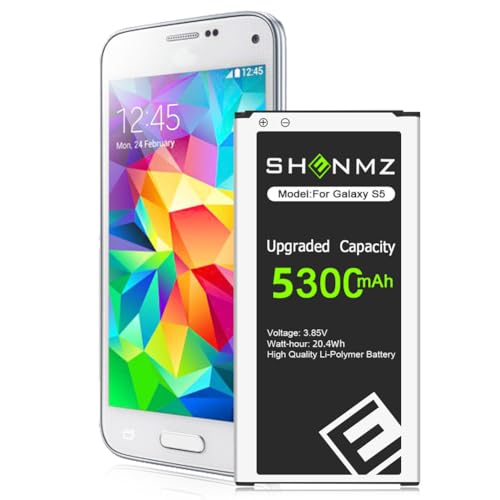
The Samsung Galaxy S5 variant carrying model code SM-G900A was the version supplied through AT&T channels in the United States, sharing the core hardware of the wider S5 family while differing in network bands and preloaded software. Its removable back cover and user-replaceable battery defined an era when a tired phone could be revived in a minute without tools. The original pack is designated EB-BG900, with regional suffix letters following that core code, and it carries a rated capacity of 2,800 milliamp-hours at a nominal 3.85 volts, figures printed on the label that any replacement should match or honestly approximate.
Removability shapes every part of the replacement question. The battery sits in a shallow well beneath the cover, contacts meeting spring pins at one end, and a small fingernail recess allows lifting it free once the cover is off. No adhesive holds it, no ribbon cable crosses it, and the design assumes owners will swap packs routinely, even daily among travellers carrying spares. That assumption also means counterfeiters targeted this pack heavily during the phone’s long service life, because a part designed for easy swapping is equally easy to imitate, package, and sell through informal channels.
Our research draws on manufacturer specifications, carrier documentation, and battery-safety guidance published by standards bodies, and those sources frame the buying task clearly: verify the model code, verify the EB-BG900 designation, and treat the near-field communication antenna question as a primary decision rather than a footnote. Charging accessories interact with the finished phone as well, and readers standardising their cables and adapters can consult best android cell phone chargers for the wider Android charging picture while this guide stays focused on the cell inside the handset.
The NFC antenna hidden inside the genuine pack
Unlike many phones that build their near-field communication antenna into the chassis or rear cover, the Galaxy S5 integrates the NFC antenna into the battery itself. The genuine EB-BG900 contains a flat coil and associated contacts that connect through the pack, so the battery is simultaneously a power source and a radio component. Published specifications and Samsung documentation describe this arrangement plainly, yet it surprises owners who assume a battery only stores energy. Remove the genuine pack and the phone loses more than charge; the antenna path that payment terminals and tag readers expect simply ceases to exist in its designed form.
The consequence of buying a pack without that antenna is specific and permanent for as long as the pack is fitted: NFC functions stop working. Contactless payments configured on the device will not complete at a terminal, transit or access tags cannot be read, and quick-pairing or file-sharing features that begin with an NFC tap have nothing to begin with. Bluetooth and Wi-Fi continue normally, which confuses diagnosis, because the phone otherwise behaves perfectly. Owners who never use NFC may accept the trade knowingly; owners who discover it at a checkout counter experience it as a defect rather than a disclosed compromise.
Listings handle this distinction unevenly. Some state clearly that a pack includes an NFC antenna, others bury the omission in fine print, and many say nothing at all while using photographs of genuine labelled stock. The reliable checks are textual and physical: the listing should name NFC support explicitly, the delivered label should carry the NFC marking found on genuine packs, and the phone itself provides the verdict, since enabling NFC in settings and tapping a known tag either responds or does not. Buying two packs from different sources and comparing that behaviour turns an abstract warning into personal, verifiable knowledge.
Capacity honesty for a 2,800 milliamp-hour design
The EB-BG900 rating of 2,800 milliamp-hours at 3.85 volts corresponds to roughly 10.78 watt-hours, the energy figure that allows fair comparison across voltages. Replacement packs claiming dramatically higher capacity inside identical dimensions deserve the same scepticism applied to any lithium cell: energy density improves gradually across the industry, and a same-size pouch or prismatic cell cannot quietly double its storage. Claims of 3,500 or more milliamp-hours in a standard-thickness S5 pack should be read as marketing unless the pack is visibly thicker, in which case the rear cover may bulge, seal poorly, and lose whatever water-resistance rating the gasket once provided.
Age matters as much as printed rating. This phone family launched in 2014, so supposedly new old-stock genuine packs have spent years on shelves losing capacity through calendar ageing even if never cycled. A genuine pack manufactured long ago may deliver less real endurance than a fresh, honestly rated third-party cell made recently. Date codes on labels, where present and legible, help judge that trade-off. Sellers of old stock rarely advertise production dates, and asking directly separates warehouses rotating inventory from those clearing decade-old shelves at confident prices.
Runtime expectations should be calibrated to the platform rather than to modern handsets. A healthy 2,800 milliamp-hour pack powering a 5.1-inch display and a processor of its generation delivers a working day for moderate use, less under sustained navigation or weak-signal conditions where the radio works harder. Judging a replacement against a brand-new flagship’s endurance guarantees disappointment regardless of pack quality. The fair comparison is against your own phone’s behaviour when its original pack was young: similar screen-on hours, similar overnight drain, and a percentage gauge that falls evenly rather than plunging in steps.
Signs that the fitted pack is swelling or failing
A removable battery offers a diagnostic luxury modern sealed phones deny: you can hold the suspect component in your hand and inspect it directly. Place the pack on a flat surface and spin it gently; a healthy prismatic cell sits dead flat, while a swelling one rocks or spins freely because gas generation has bowed its faces outward. The rear cover provides another clue, since a cover that once sat flush begins lifting at one corner or refusing its clips near the middle. Even a millimetre of new gap along the cover seam, on a phone whose cover previously sealed tightly, warrants removing and inspecting the pack that day.
Behavioural symptoms accompany the physical ones. Sudden shutdowns at thirty or forty percent indicated charge, a gauge that leaps upward implausibly within minutes of connecting a charger, or a back panel that feels warm during light use all describe a cell whose internal resistance and chemistry have deteriorated. Heat deserves particular respect: a pack noticeably warm while the phone merely idles is generating that warmth from internal fault or extreme degradation, and continued charging of such a pack concentrates risk exactly where the chemistry is already unstable. Stop, remove, and isolate first; diagnose afterwards.
Swelling changes the safety classification of every later decision. A bowed pack must not be pressed back under the cover to squeeze out another week, charged overnight to see whether it settles, or punctured by anyone for any reason. Place it in a rigid non-flammable container, keep it away from other batteries and household heat sources, and route it toward a collection point that accepts damaged lithium cells, telling staff what they are receiving. The phone itself usually survives a promptly removed swollen pack unharmed, which is the practical reward for acting at the first rocking spin rather than the final cover failure.
Preparing for a safe battery swap
Preparation begins with power and data rather than tools. Shut the phone down completely through its power menu instead of merely sleeping the screen, because a live device whose battery is pulled mid-write can corrupt storage or lose the message being composed. If the failing pack still holds enough charge, run a backup first, since any phone old enough to need a battery deserves the insurance of a recent copy of its photographs and contacts. Remove the handset from its case, work at a clean table with decent light, and keep a small container nearby for the SIM and memory card if you choose to remove them before handling the battery well.
The G900A cover releases by prising gently from the notch near the charging port area, working around the perimeter clips with a fingernail or a soft plastic tool rather than a metal blade. The original design carried an IP67 rating when the cover and port flap were sealed correctly, which means the gasket around the battery compartment matters: note its condition while the cover is off, because a perished or displaced gasket explains water damage that owners sometimes blame on the battery swap itself. Keep the cover’s inside surface clean, since grit trapped under the gasket defeats the seal invisibly.
Static and moisture discipline are modest but real. Dry hands, a dry work surface, and no drinks balanced beside the phone cover most of the risk for a swap this simple. Avoid working immediately after handling the phone outdoors in rain, and let a handset brought in from cold air reach room temperature before opening it, so condensation does not form on internal contacts. Travellers who routinely carry a charged spare and swap in the field should still observe the shutdown step; the thirty seconds saved by hot-swapping are repaid eventually in a corrupted card or a lost unsaved note.
The swap itself, step by step
With the cover off and the phone powered down, lift the old pack from its recess using the fingernail notch at its base, drawing it out and upward so its contact end clears the spring pins without scraping across them. Note the orientation before the pack leaves the well: contacts toward the pins, label facing outward, and the pack’s shaped corners matching the moulded corners of the compartment. That observation makes fitting the replacement a matter of copying rather than reasoning, and it takes only a moment while the old pack is still halfway seated and able to demonstrate the answer.
Seat the new pack contact-end first, aligning it into the well and pressing it down flat with even fingertip pressure across its face rather than force at one corner. It should sit level with the surrounding frame, neither proud nor sunken, and it should not rock when pressed at diagonal corners. A pack requiring real force is either misaligned, thicker than the design allows, or beginning to swell despite its new packaging, and each of those possibilities merits removal and inspection rather than a firmer push. The cover then refits by aligning its top edge and pressing around the perimeter until every clip engages with a small, definite click.
First power-up after a swap is a verification exercise. The phone should boot normally, show a plausible percentage for a partially charged new pack, and recognise its network and cards without complaint. Open settings to confirm the battery status reads as charging when a cable is connected, and enable NFC to confirm the antenna question was settled correctly if that feature matters to you. Portable power for travel days is covered separately in best affordable phone portable chargers, which suits owners who prefer topping up externally rather than carrying a second internal pack. Either strategy works; mixing a verified spare with honest expectations works best of all.
First charges and the calibration question
New replacement packs typically arrive near half charge, the storage level manufacturers favour, and the sensible first move is simply to use the phone or charge it normally to full with a known-good adapter. Modern lithium cells require no priming cycles, no overnight inaugural charge, and no deliberate draining to empty before first use; those rituals belong to nickel-based chemistries retired long before this handset appeared. Charging to one hundred percent and using the phone as normal from the first day is not laziness but correct practice, endorsed by the cell makers whose documentation our research draws on for this section.
Calibration concerns the gauge, not the battery. The percentage displayed is an estimate maintained by system software that learns the pack’s behaviour, and after fitting a different cell the estimate can drift, showing optimistic figures before a sudden drop or lingering near full suspiciously long. The remedy is ordinary use across a few charge cycles, allowing the software to observe the new pack between high and low states naturally. Deliberately running a lithium pack to absolute exhaustion to teach the gauge trades real cell longevity for a marginal display improvement, a poor bargain repeated across the pack’s life.
Several persistent myths deserve direct correction. Leaving the phone plugged in overnight does not overcharge a healthy pack, because the charging circuitry terminates and manages the top of the range itself. Using the phone while it charges is normal and expected. A replacement pack does not need to rest for a day before fitting, and freezing a failing pack restores nothing except condensation. What genuinely helps longevity is avoiding habitual deep discharge, keeping the phone out of sustained heat such as a summer dashboard, and accepting that a consumable cell fitted today will itself age across roughly two to three years of daily service.
Distinguishing genuine packs from counterfeits
Counterfeit EB-BG900 packs copy the label artwork closely enough to pass a glance and fail every closer examination. Genuine labels carry crisp, evenly printed text with consistent fonts, a legible serial and date information, regulatory markings that match the region of sale, and a hologram or equivalent security feature on authentic retail packaging of the period. Fakes often betray themselves through slightly fuzzy printing, spelling slips in the caution paragraphs, labels applied crookedly or bubbling at the corners, and weight: a genuine pack weighs close to its published figure of roughly forty-five grams, while copies stuffed with a smaller cell and filler can land several grams light on a kitchen scale.
Electrical behaviour completes the identification. A counterfeit may report itself through runtime that collapses under load, a gauge that falls in sudden steps, charging that finishes implausibly fast for the capacity claimed, or a handset that grows warm during ordinary browsing. None of these signs alone convicts, since a genuinely old genuine pack can mimic several, but combined with light weight and fuzzy printing the pattern is decisive. NFC behaviour adds one more test on this model: a pack sold as antenna-equipped that never responds to a known tag has failed a functional promise regardless of how convincing its label appears.
Buying channels shift the odds before any inspection begins. Authorised service stock, reputable battery specialists who publish specifications and accept returns, and sellers whose listings state NFC inclusion, weight, and date information plainly all reduce counterfeit exposure. Marketplace listings using genuine photographs at unusually low prices, with seller histories measured in weeks, concentrate the risk. Keep the packaging and receipt until the pack has survived a fortnight of normal use, because the return window is the buyer’s real quality-control department for a product category whereappearance can lie so fluently. Photographing the delivered label beside the listing description preserves evidence if a dispute becomes necessary.
Weight, thickness, and other measurable checks
Three measurements settle most arguments about a delivered pack: weight on a kitchen scale, thickness against the original, and runtime across a defined day. Weight near the published figure for a genuine EB-BG900 suggests the cell inside matches the label’s ambition; a shortfall of five grams or more in a prismatic pack of this size represents a substantial fraction of its active material and predicts disappointing endurance with near certainty. Weigh the old genuine pack as well if one is available, because a same-scale comparison removes calibration doubt from the exercise entirely.
Thickness protects the phone as well as the schedule. Lay both packs side by side on a flat surface and sight across their top faces; the replacement should match the original’s height closely, since the compartment and cover were moulded around that dimension with little surplus. An extended-capacity pack that is honestly thicker demands its own deeper cover, and reputable kits supply one. Forcing a thick pack under the standard cover stresses the display assembly from behind, distorts the gasket line, and can produce a faint pressure mark on the screen that owners misattribute to a failing panel weeks later.
Runtime logging finishes the audit. For the first week, note the percentage at morning unplug, the rough screen-on time, and the level at bedtime, keeping usage patterns ordinary rather than staged. A healthy replacement settles into a predictable daily curve by the third or fourth cycle as the gauge learns it. A pack still losing a fifth of its charge to an idle night, with radios behaving normally and no rogue application identified, is telling you its self-discharge or capacity is wrong. Numbers written down persuade sellers; impressions formed from memory rarely do, which is why the humble notebook outperforms the angry review.
Charging habits with a replacement pack fitted
The Galaxy S5 charges through a USB 3.0 Micro-B port whose wider connector also accepts an ordinary Micro-USB cable in its narrower section, a backward-compatible arrangement that confused owners then and still does. Either cable type charges the phone correctly; the wider plug merely adds data-transfer capability that charging does not use. Adapter output around five volts at up to two amps matches the phone’s charging design, and the handset regulates intake itself, so a higher-rated adapter does not force energy faster than the circuitry accepts. Heat during charging should remain mild and concentrated near the port and battery area without becoming uncomfortable to hold.
Cable quality influences charging more than adapter branding does. A long, thin, damaged cable drops voltage along its length, slowing charge rates and sometimes producing the odd state where the phone reports charging while the percentage barely climbs during use. Testing a suspect setup with a short known-good cable isolates that variable in a minute. Dual-port adapters shared between a phone and a tablet divide attention conveniently for travel, and the options gathered under best 2 port usb chargers address that desk-and-suitcase problem directly. For this handset, the decisive factor remains a sound cable meeting a sound pack, not exotic charging claims.
Overnight charging on a healthy pack with healthy circuitry is acceptable, though owners who keep phones for many years sometimes adopt a gentler pattern of charging during the evening and unplugging at full. Avoid charging under pillows or inside bedding, where heat cannot dissipate and a fault would have fuel and time to develop. A phone that becomes hot enough to be notable during charging, especially with a newly fitted pack of uncertain origin, should be unplugged and inspected rather than monitored hopefully. Charging behaviour is diagnostic information delivered daily; treat changes in it as messages worth reading.
When a new pack still drains quickly
A fresh pack that drains fast invites two suspects: the pack itself and everything else in the phone. Separate them methodically. Check the battery usage screen for an application or service consuming an abnormal share, restart the handset to clear a stuck process, and observe overnight drain in aeroplane mode, which removes weak-signal radio effort from the equation. A phone losing only a few percent overnight with radios off but haemorrhaging charge by day may be suffering signal conditions, a misbehaving account synchronisation, or an ageing radio working hard in a fringe coverage area rather than a defective cell.
Software age contributes honestly here. An older Android installation accumulating years of applications, widgets, and background services asks more of any battery than the same phone did when new. Removing or disabling the worst offenders, clearing a corrupted cache partition through recovery where appropriate, and in stubborn cases backing up and resetting the device can restore endurance that no battery purchase could. Owners sometimes fit three successive packs chasing a drain that lived in software all along, and the packs were innocent each time. The usage screen, read carefully across two ordinary days, usually names the culprit if one exists.
If drain persists across a reset with minimal applications installed, hardware beyond the battery enters the frame: a damaged charging port causing partial connections, a board-level fault from historic water ingress past that gasket, or a display drawing abnormal current. At that point the economics of professional diagnosis deserve weighing against the phone’s remaining role in your life. Many G900A handsets now serve as spare devices, media players, or first phones for younger family members, roles where a modest drain is tolerable and a costly board repair is not. Matching the repair budget to the role keeps nostalgia from writing cheques.
Carrying and storing spare packs
The removable design invites carrying a charged spare, and safe carriage is mostly about protecting terminals and preventing crushing. A spare should travel in its own small rigid case or at minimum a sealed individual bag, never loose in a pocket or bag compartment shared with coins and keys that can bridge contacts. Terminals on this pack sit at one end as recessed contacts, which reduces but does not eliminate short risk, and a strip of tape across the contact face adds cheap insurance during travel. Keep spares away from the heat of a parked car, where cabin temperatures age lithium cells rapidly and swell marginal ones.
Storage charge for spares follows the same middle path as other lithium cells: roughly half charged, cool, dry, and labelled with the month they were last cycled. A spare stored full for a year emerges diminished; one stored empty may drift toward a voltage from which ordinary charging becomes reluctant. Rotating two packs through the phone monthly keeps both exercised and both gauges calibrated, and it spreads wear so evenly that the pair tends to age as a unit. Date labels sound fussy until the day three visually identical packs of different ages sit on a table and nobody can rank them.
Air travel rules treat spare lithium batteries as cabin items, protected individually, with damaged or swollen packs excluded from carriage entirely. Owners flying with an S5 spare should confirm current airline and regulator guidance before departure, because watt-hour limits and quantity allowances are stated there rather than in handset manuals. At roughly 10.78 watt-hours this pack sits far below the thresholds that trigger special approvals, which simplifies compliance to the basics: cabin baggage, terminals protected, no damaged cells. Arriving with a working spare remains one of the quiet pleasures of owning a phone from the removable era.
Disposing of the old pack
The removed pack remains a lithium battery with stored energy and reactive chemistry regardless of how tired it feels, so household rubbish is never its destination. Tape its contacts, place it in a small bag or container of its own, and take it to a battery collection point, electronics retailer take-back scheme, or household hazardous-waste facility serving your area. Staff at such points handle swollen examples routinely when told plainly what they are receiving, and concealing damage inside a general recycling bin transfers risk to people who did not agree to carry it. The five minutes of honesty at a counter is the cheapest safety measure in this entire guide.
Timing matters: dispose promptly rather than accumulating a drawer of retired cells across years. Forgotten packs continue ageing, a marginal one can swell unnoticed against its neighbours, and the household loses track of which unit was removed for which symptom. If collection must wait a few days, store the pack somewhere cool, visible, and separated from other batteries and metal objects, in the rigid container already described for swollen examples. Marking the container with the removal date turns an indefinite postponement into a scheduled errand with a visible age.
Data and accessories deserve a final thought during the same clear-out. The old pack holds no data, but the ritual of replacing it is a natural moment to confirm backups, retire a frayed charging cable before it becomes a hazard, and record the new pack’s purchase date and source in the same note that tracks the phone’s service history. Owners who maintain that small record make every later decision easier, from warranty conversations to judging when the next replacement is genuinely due. Stewardship of an ageing handset is mostly this: small, documented acts of care performed on time.
Compatibility traps across the wider S5 family
Most Galaxy S5 variants share the EB-BG900 battery physically, which tempts sellers to list one pack for every model from the G900A through international and regional editions, and in this case the broad claim is largely justified by the shared compartment design. The traps live at the edges: sport and ruggedised variants with altered covers, mini editions with entirely different smaller packs, and the later Neo model whose battery differs despite a similar name and appearance. Checking your exact model code in settings or beneath the battery, then matching it against the listing, takes under a minute and eliminates the entire category of error.
Photographs mislead when sellers reuse images across listings for different S5 sub-models, showing a standard pack while shipping a mini pack or the reverse. Dimensions stated in text deserve more trust than images, and a listing that omits dimensions while claiming universal S5 fit has told you something about its author’s care. The genuine pack measures roughly seventy-nine millimetres long, forty-seven wide, and just over five thick, figures worth comparing against any candidate description. A tape measure applied to the delivered item, before the return window closes, converts suspicion into evidence while remedies still exist.
Software will not rescue a physically wrong pack, and a physically correct pack needs no software blessing: there is no pairing process, no authentication handshake, and no setting to toggle before the phone accepts a replacement. That openness is precisely why the market contains both excellent third-party cells and worthless imitations wearing identical labels. The owner’s defence is verification, not loyalty to a single source. Modern charging standards discussed in best usb c chargers belong to newer handsets entirely; the G900A predates that connector, and no adapter changes the fundamentals of choosing its internal pack carefully.
Deciding between one premium pack and two ordinary ones
Budget strategy for an ageing handset deserves the same clear thinking as specification checking. One well-made pack from a specialist seller, verified by weight and runtime logging, usually serves a daily-carried phone better than two bargain packs whose combined real capacity may not exceed it. Conversely, a phone kept as a household spare or travel backup benefits from two adequate packs rotated monthly, because redundancy matters more than peak endurance in that role and a single point of failure is the true risk. The deciding question is how the handset actually lives now, not how it lived at purchase.
Warranty and return terms belong in that calculation as price equivalents. A seller offering a clear twelve-month battery warranty and painless returns is selling confidence earned from low failure rates, while a marginally cheaper listing with a seven-day window is pricing its own expected problems. Read the warranty’s capacity promise if one is stated, since some define failure as falling below a stated fraction of rated capacity within the term, a measurable commitment. Keep proof of purchase with the phone’s service note so the promise remains usable when memory of which marketplace hosted the transaction has faded.
There is also an honest endpoint to consider. When a handset needs a battery, a cable, and a charging port in the same season, the combined spend approaches the cost of a newer used device, and sentiment should make that decision consciously rather than by instalments. Many owners will still choose the repairs, valuing a familiar device, a headphone socket, and a form factor they like. That is a legitimate preference, and a good replacement pack honours it by restoring the phone to dependable service. The goal throughout has been a G900A that behaves predictably from morning to night, not a museum piece preserved beyond its useful life.
A maintenance rhythm for the months after fitting
The first month with a new pack establishes the baseline every later judgement relies on, so keep the small runtime notes going until the daily pattern feels boringly familiar. Once a month thereafter, remove the cover and glance at the pack: flat faces, clean contacts, a label intact, and no new warmth habits during charging. That inspection takes less time than making tea and catches swelling at the rocking-spin stage rather than the cover-lifting stage. Contacts that look dull can be wiped gently with a dry cloth; anything stronger belongs to a repair bench, not a kitchen table.
Seasonal heat deserves a calendar note of its own. Summer cars, sunny windowsills, and charging beneath bedding are the three environments that age this battery fastest, and all three are avoidable with habits rather than equipment. If the phone must live in a hot workplace, removing it from a thick case during charging improves airflow meaningfully. Winter brings the opposite illusion, where a cold pack reports pessimistic percentages that recover indoors; judging a replacement’s health should always happen at room temperature across full days, never from a single frosty morning’s alarming gauge.
Share what you learn in the places owners of this handset still gather, because the collective record of which production batches aged well now exceeds anything a single listing can tell you. Report weights, date codes, NFC behaviour, and six-month runtime in plain numbers when you post, since those are the data points that helped you. Ageing platforms survive on exactly this kind of documented generosity between strangers. Your G900A, fitted with a verified pack and inspected on a calm monthly rhythm, can keep its side of that tradition for years.
Testing NFC after fitting, properly
A meaningful NFC check needs a known working tag or terminal rather than another phone of uncertain configuration. Library cards with contactless chips, transit cards, and the programmable tags sold for automation experiments all serve, provided the same object responded to the genuine pack beforehand. Hold the back of the handset within a centimetre or two of the tag, keep it still for a full second, and try two positions along the rear cover, because the antenna location inside the pack makes placement less forgiving than on phones with chassis-mounted aerials.
Settings can imitate hardware failure convincingly. Confirm that NFC is actually enabled, that any payment application is set as the default handler where the system asks, and that a thick case or a metal plate for a magnetic mount is not shielding the rear of the phone during the attempt. Remove the case for the verification attempt even if you intend to restore it later, since a pack should be judged in the configuration the manufacturer designed. A replacement that responds bare but not cased has still proven its antenna exists and functions.
Record the result in the service note beside the pack’s purchase details, because months later, when a payment fails for an unrelated network reason, that note prevents an innocent battery from being blamed and replaced. Diagnostic memory is short and confident; written records are neither. The habit of writing down verification outcomes, begun with something as small as an NFC tap, generalises into the calm troubleshooting style that keeps old devices useful instead of mysterious.
The gasket, the cover, and keeping water out
The G900A was sold with an IP67 rating, meaning the sealed handset was designed to survive immersion at one metre for thirty minutes under laboratory conditions, and that rating depends on the rear cover gasket and the charging port flap rather than on the battery. Every swap opens that system, so every swap is an opportunity to inspect it. Run a fingertip around the gasket channel, remove any grit with a soft dry brush, and confirm the rubber sits evenly without twists, nicks, or a section pinched flat by an earlier careless closure.
Cover clips fatigue across hundreds of removals, and a clip that no longer clicks leaves a section of seam held by hope. Press around the perimeter after refitting and listen for uniform engagement, then sight along each edge for gaps. A cover that seals imperfectly does not endanger the battery, yet it quietly retires the water resistance the model was bought for, and owners who still trust the rating while showering a podcast into existence deserve to know the trust may be misplaced. Replacement covers and gaskets remain available through parts channels for exactly this reason.
The port flap deserves the same glance, because its hinge tears gradually and its seal is the other half of the rating. If the flap no longer sits flush, treat the phone as splash-cautious regardless of the cover’s condition. None of this makes the battery swap risky; it makes it thorough. A two-minute inspection performed while the phone is already open protects against the water damage that otherwise arrives months later and gets blamed on rain, fate, or the last person to change the battery.
Buying a used G900A: battery questions to ask
Anyone acquiring a used example of this handset should treat the battery as a consumable with a price, not as a permanent component included by default. Ask the seller which pack is fitted, whether it is the genuine antenna-equipped item, how old it is, and whether the cover sits flush all round. A seller who answers precisely probably maintained the phone; a seller surprised by the questions is telling you the pack’s history is unknown, which should be priced as a replacement purchase added to the handset cost before you agree on anything.
Inspect in person where possible with the flat-surface spin check, a glance at the label for crisp printing and legible codes, and a few minutes of ordinary use watching whether the percentage behaves calmly. Bring a known charging cable so a charging test reflects the phone rather than a stranger’s damaged lead. Check NFC with a card from your own wallet if the feature matters to your plans, because discovering its absence after purchase converts a negotiable point into an argument nobody enjoys.
Factor the memory card, the cover condition, and the port flap into the same inspection visit, since small parts define the ownership experience of a phone this age. A handset with a healthy board, a tired battery, and an honest price is often a better purchase than a polished example whose swollen pack has been pressing on its display for months. The removable design means your inspection can be genuinely thorough in five minutes, an advantage no sealed modern handset offers a buyer, and it should be used without embarrassment.
Heat: the quiet variable behind most failures
Lithium cells age in proportion to the heat they endure, and a phone lives a hotter life than its owner notices. Navigation on a windscreen mount combines direct sun, a working processor, a bright display, and charging current in a single worst-case stack that can hold the battery at temperatures its chemistry would prefer to avoid. Breaking the stack helps disproportionately: shade the mount, remove the case during long drives, or charge before departure and navigate unplugged. Each degree avoided is capacity retained, compounded across hundreds of journeys.
Charging habits interact with ambient heat in the same direction. A pack charged nightly on a bedside table in a cool room lives a gentler life than one charged on a sunny kitchen sill beside a kettle, even with identical adapters. Fast warmth during charging that fades when the phone moves to a cooler spot is environmental; warmth that follows the phone everywhere is internal and deserves investigation. Learning to distinguish the two saves both unnecessary replacements and dangerous delays, depending on which way the evidence points on a given day.
Heat also explains many disagreements between owners comparing identical packs. Two households rarely share ambient conditions, case choices, signal strength, or charging geography, so endurance anecdotes diverge without anyone lying. That is why this guide keeps returning to measurements made on your own handset: your scale, your runtime log, your spin check on your table. Borrowed conclusions fit borrowed phones. Documented observations fit the one in your hand, which is the only unit your money and safety actually depend on.
Reading the battery usage screen like a technician
The usage screen ranks consumers since the last full charge, and reading it well requires distinguishing percentage share from absolute appetite. A service showing a modest share on a day when the phone died by noon may still be innocent, while the largest consumer deserves questions first. Screen share is usually dominant and legitimate; the suspicious entries are unfamiliar services, a media server entry suggesting a corrupted file being indexed endlessly, or an operating-system share far beyond its customary band, which often signals a stuck process that one restart resolves.
Signal quality hides inside several entries at once. In weak coverage the radio raises power, wakes more often, and drags the system and telephony services upward together, so a cluster of moderately elevated consumers in a rural week may describe geography rather than defect. Compare like with like: judge the new pack across days in your normal places, not against a holiday in a city with transmitters on every corner. Fair comparisons are a discipline, and the usage screen rewards owners who bring context to it instead of reading percentages as verdicts.
Screenshots of the usage screen at a consistent moment, perhaps at bedtime across the first week with a new pack, create a small dataset that settles arguments with sellers and with memory alike. If a claimed defect is real, the pattern repeats visibly; if the first day was an anomaly of updates and synchronisation after the swap, later screenshots show the calm returning. Either way the owner decides from evidence. That, in one sentence, is the difference between maintaining a device and merely worrying about it.
Labels, codes, and what the small print reveals
A genuine EB-BG900 label carries more than branding: the model designation, nominal voltage, rated capacity, watt-hour figure, manufacturing information, recycling symbols, and caution text in several languages, all printed with the alignment and density of an industrial label rather than a photocopy. Reading that small print on a delivered replacement takes a minute and remains the fastest authenticity screen available without instruments. Misspellings in the caution block are particularly telling, because regulated warning text is copied from templates that legitimate factories do not improvise upon.
Date and serial information, where present, should be plausible for the claimed stock. A pack sold as recently manufactured wearing codes that decode to many years earlier is old stock regardless of its packaging’s freshness, and old stock is not automatically bad stock, yet it must be priced and expected accordingly. Photograph the label before fitting, while it is fully visible, and keep the image with the purchase record. After months under a cover, nobody remembers which of two visually identical packs arrived from which seller.
Regulatory markings also expose region mismatches that occasionally matter. A pack manufactured for a distant market may carry unfamiliar certification marks and instructions in unexpected languages while remaining electrically correct for the phone. That alone is not disqualifying, though it should prompt the weight and runtime checks with extra care, because the supply chain behind it was longer and less supervised. Verification effort should scale with uncertainty: the further a product has travelled from an authorised channel, the more evidence a careful owner gathers before trusting it under a cover.
When the phone itself reaches the end
Every replaceable-battery phone eventually meets a failure its battery cannot fix: a worn charging port, a display losing touch sensitivity, a board corroded by an old leak. Recognising that moment honestly protects the budget that sentiment would otherwise spend in instalments. The signs are cumulative rather than dramatic, several small systems declining together, each repair revealing the next candidate. At that point the correct purchase may be a successor handset, and the faithful G900A retires to a drawer role where its remaining strengths still serve without demanding investment.
Retirement done well mirrors the disposal discipline elsewhere in this guide. Back up and then erase personal data through a factory reset, remove accounts, and extract the memory card and SIM before the handset is sold, donated, or recycled. Decide the battery’s fate separately: a healthy verified pack can accompany the phone to its next owner with its history disclosed, while a tired or swollen one goes to collection even if the phone is being kept. Bundling a suspect pack into a sale merely exports a hazard to someone less informed.
There is genuine satisfaction in having kept a well-designed device working across a decade through nothing more exotic than verified parts and calm maintenance. The G900A rewards that approach because its designers assumed owners would open it, swap its cell, and carry on. Honouring the assumption, with honest packs and documented care, is how a phone from 2014 still earns its place in a pocket today. Few objects in a household offer so direct a relationship between attention given and service returned.
A short glossary for battery conversations
Capacity, stated in milliamp-hours, describes charge quantity, while watt-hours describe total energy once voltage joins the calculation, which is why the roughly 10.78 watt-hour figure for this pack allows comparison with batteries of other voltages. Cycle means one full discharge and recharge in aggregate, so two half discharges count as roughly one cycle of wear. Self-discharge names the slow loss a stored cell suffers doing nothing, and internal resistance names the invisible friction that turns stored energy into heat under load and grows with age and abuse.
Nominal voltage is the working average used for labelling, 3.85 volts here, distinct from the higher voltage present immediately after charging and the lower voltage near empty. A cell protection circuit, where fitted in a pack, guards against gross overcharge, over-discharge, and short circuits, though it cannot repair chemistry already degraded. Counterfeit describes a pack imitating genuine branding, while compatible merely claims fit and function; the words are not synonyms, and a listing that blurs them deliberately deserves the full battery of checks described throughout this guide.
Armed with those few definitions, an owner can read listings, warranties, and recycling instructions without translation anxiety. Sellers write more carefully to buyers who use terms precisely, and disputes resolve faster when both sides share vocabulary. Keep the glossary beside the service note if it helps. The aim was never expertise for its own sake; it is the modest, durable confidence of someone who can open the back of their phone, understand what they are looking at, and make a decision they can defend with measurements.
Check prices on Amazon
Live listings for the shortlist in this guide are pulled from Amazon below, so prices and availability are always current at the moment you look.


Disclosure
Readers should know that this publication may earn an affiliate commission from outbound links, a relationship disclosed here plainly because it funds the research behind pages like this one without altering the specifications, safety advice, or verification steps set out above. Manufacturer documentation and battery-recycling guidance in your own region remain the final authorities wherever their instructions are more specific.
Somewhere in a drawer, a retired EB-BG900 with taped contacts waits for its collection day, while its successor carries a G900A through one more ordinary, dependable day.