Our Top Picks
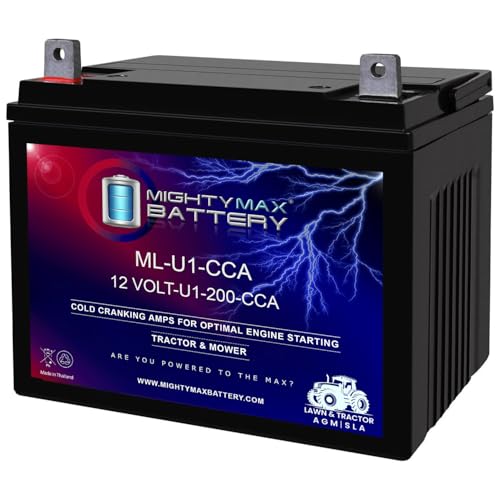
 Mighty Max Battery ML-U1-CCALI U1 Lithium Battery forStandard7.75 x 5.25 x 7.25 inchesCheck on Amazon



What's inside
- U1 dimensions and the meaning of the group code
- U1 versus U1R: terminal position is the difference
- Cranking ratings in the 230 to 350 CCA band
- Sealed lead-acid versus flooded U1 batteries
- Inside a jump box: how the U1 earns its place
- Power stations and backup roles built on U1
- Charging a U1 correctly
- Storage habits that keep a jump battery ready
- Checking health before trusting the box
- Safe jump technique, step by step in prose
- Replacing the battery inside portable equipment
- Reading a U1 label and comparing listings
- Safety and recycling for small lead-acid batteries
- U1 batteries back in their original home: tractors and utility gear
- Buying checklist for a replacement U1 or U1R
- Troubleshooting a jump box that disappoints
- A readiness program for emergency batteries
- Why small batteries fade: sulfation and internal resistance
- Neighboring small groups and why they do not substitute
- Service life expectations, stated plainly
- Check prices on Amazon
- Disclosure
As an Amazon Associate I earn from qualifying purchases. This post may contain affiliate links at no extra cost to you.
Small batteries rarely get much respect until the morning a car will not start and the only help in the garage is a portable jump box. Inside most of those boxes sits a U1 battery, a compact lead-acid unit whose group designation comes from lawn and garden tractor service rather than from passenger cars. Understanding what a U1 can and cannot do explains both the usefulness and the limits of jump boxes, small power stations, and emergency lighting rigs built around this size. Dimensions, terminal layout, cranking ratings, and chemistry vary within the group, and each variation changes how the battery behaves when it is asked to rescue a stalled engine. This guide works through those details in order, from the case outward to charging, storage, and safe jump procedure.
Utility tractors adopted the U1 footprint because mower decks and compact frames left little room for a full-size automotive battery, yet the starter motors on garden equipment still demanded real cranking current. Manufacturers answered with a short, narrow case that one person can lift with one hand and install in a tight compartment under a seat or hood panel. Jump box designers later borrowed the same unit because it was mass-produced, inexpensive to source, and shaped conveniently for a portable enclosure with a handle. Power station builders followed for similar reasons, adding outlets and inverters around a battery that was never originally designed for household backup duty. Knowing that origin story sets realistic expectations: a U1 is a capable small starting battery pressed into emergency service, not a miniature substitute for a car battery in every respect.
U1 dimensions and the meaning of the group code
Catalogue dimensions for the U1 group cluster near 7.7 inches long, 5.1 inches wide, and 7.2 inches tall, with small variations between brands and between measurement conventions. Height figures deserve the same caution applied to larger groups, because some tables quote case height while others include the terminals, and a jump box lid closes on total height rather than on case height alone. Weight typically falls in the mid-teens to low twenties of pounds depending on capacity and construction, light enough for portable equipment but heavy enough to remind handlers that lead and acid are inside. Replacement buyers should measure the compartment in the jump box or tractor, including foam pads and hold-down straps, before assuming any U1 will drop in. Cable length inside portable enclosures is cut for a specific terminal position, which links the size question directly to the polarity question covered next.
Variations within the group extend beyond the headline dimensions. Some U1 cases carry a raised lid profile, others sit flat, and terminal hardware ranges from automotive-style posts to threaded studs, flag terminals, and bolt-through lugs. Equipment manufacturers choose terminal styles to suit their internal wiring, so a replacement with the wrong hardware may fit the compartment yet refuse the connectors. Photographing the original installation before removal records both the terminal style and the cable routing in one step. Cross-reference listings sometimes group U1 with neighboring utility sizes such as U1R, 22NF, or larger garden tractor fitments, and those neighbors are not interchangeable without measurement. A careful buyer treats the group code as the start of the specification rather than the whole of it, then confirms height, terminals, and polarity against the equipment in hand.
U1 versus U1R: terminal position is the difference
Polarity placement is the entire distinction between U1 and U1R, and it matters more in compact equipment than in a car because cables inside a jump box have almost no slack. With the terminals facing the viewer, a standard U1 places the positive terminal on the left and the negative on the right. U1R reverses that arrangement, putting positive on the right, and the R in the designation signals that reversal. Installing the wrong variant forces short internal cables to cross, strain, or connect with polarity reversed, and reversed connection in a jump box can damage its electronics, blow internal fuses, or create a direct short. Tractor applications split between the two layouts by brand and model, which is why parts counters ask the question routinely. Checking the plus marking molded beside the terminal settles the matter more reliably than cable color, which may have faded or been replaced.
Terminal hardware styles complicate the swap further. Post terminals accept clamp-style connectors common in tractors, while stud and flag terminals suit the ring lugs and spade connectors used inside sealed jump boxes. Some replacement batteries ship with adapters or dual hardware, and adapters add a joint that must stay tight under vibration. Bolt size and thread pitch vary between makers, so reusing original hardware is not always possible, and forcing a mismatched bolt can crack a terminal insert. Buyers replacing a battery inside portable equipment should match hardware exactly or confirm that the new unit includes correct fittings. Keeping the removed battery beside the new one during the swap allows a side-by-side comparison of height, terminal position, and hardware before anything is connected.
Cranking ratings in the 230 to 350 CCA band
Cold cranking amps for U1 batteries commonly fall between about 230 and 350, measured under the same standardized definition used for automotive batteries: current delivered for 30 seconds at 0 degrees Fahrenheit while holding at least 7.2 volts. Position within that band reflects plate design and intended duty, with higher figures aimed at larger tractor engines and more demanding jump service. A healthy U1 at the upper end can start many four-cylinder and small six-cylinder engines, especially in mild weather, because starter draw for a brief crank is well within its short-burst capability. Repeated cranking attempts drain the small reserve quickly, however, and each failed attempt leaves less for the next. Jump box instructions that limit crank duration to a few seconds with rest intervals between attempts exist precisely because a U1 stores limited total energy despite respectable peak current.
Capacity figures tell the other half of the story. Amp-hour ratings for this group often sit in the high twenties to mid thirties at the 20-hour rate for flooded and sealed utility versions, though jump-box-specific units sometimes publish cranking figures without a full capacity specification. Reserve capacity, where published, runs far below automotive group values, reflecting the small case. Those numbers explain why a U1 excels at a thirty-second rescue and disappoints as an all-day power source for heavy loads. Running a large inverter, a high-draw pump, or extended lighting from a U1 shortens its life through deep discharge even when each individual session seems successful. Matching expectations to capacity is the central skill in owning equipment built around this group, and it shapes the charging and storage habits discussed later.
Temperature bends both ratings in familiar directions. Cold thickens engine oil and slows battery chemistry simultaneously, so a jump box stored in an unheated garage delivers noticeably less on a January morning than the same box in September. Warm storage before anticipated use, such as keeping the box indoors the night before a cold snap, recovers part of that margin. Age bends the ratings too: a three-year-old U1 that has sat partially discharged may retain only a fraction of its original cranking strength while still showing a reassuring voltage at rest. Voltage alone cannot certify jump readiness, which is why load checks and honest replacement intervals matter for emergency equipment. Equipment kept for safety should be treated like a smoke alarm battery in one respect: replacement on schedule beats discovery of failure during the emergency itself.
Sealed lead-acid versus flooded U1 batteries
Sealed lead-acid construction dominates jump boxes and indoor power stations for practical reasons. Electrolyte held in absorbent glass mat separators cannot spill when the enclosure tips, vents recombine most gases internally during normal charging, and the case needs no watering access, which suits a battery hidden inside equipment that owners rarely open. Jump box makers also prefer sealed units because owners store boxes in trunks, closets, and garages where a flooded battery venting or leaking would create problems. Sealed U1 batteries tolerate the vibration of portable service well and can be mounted in any orientation inside the enclosure, although upright remains the common arrangement. Charging discipline matters more than orientation, since a sealed unit damaged by overvoltage cannot be topped up or revived with water. When a sealed U1 swells, vents noticeably, or refuses charge, replacement is the only sound remedy.
Flooded U1 batteries remain common in tractors and outdoor equipment where the battery sits accessible in a ventilated compartment. Removable caps on serviceable versions allow electrolyte checks and distilled water top-ups, extending life for owners willing to perform that maintenance. Cost per unit of capacity often favors flooded construction, and charging profiles are forgiving compared with sealed limits. Drawbacks follow the battery indoors poorly: acid can escape through vents if the case tips, gases escape during charging, and corrosion forms around terminals in enclosed spaces. Equipment designers therefore rarely specify flooded units inside consumer jump boxes, and substituting one into a sealed enclosure invites acid damage to electronics. Tractor owners, by contrast, may reasonably choose flooded replacements indefinitely, provided caps, levels, and terminal cleanliness receive seasonal attention.
Choosing between the two constructions for a replacement starts with the equipment rather than with preference. Enclosed portable gear should receive the sealed type it was built around, matched for terminal hardware and polarity variant. Open tractor compartments accept either, with the decision turning on maintenance habits and charging equipment available. Absorbent glass mat versions of the U1, covered in the charger selection notes under best agm chargers, need chargers with a sealed or AGM setting to respect their voltage ceiling. Mixing chemistries on one charger without adjusting settings shortens the life of whichever battery the settings suit less. Households running tractors, jump boxes, and a mobility scooter or alarm panel on similar small batteries benefit from labeling each unit with its chemistry and purchase date, because look-alike cases hide different charging needs.
Inside a jump box: how the U1 earns its place
Anatomy of a typical jump box explains why the U1 sits at its center. Heavy internal cables connect the battery to external booster clamps through a switch or relay, while a charging circuit, a fuse or circuit breaker, and often a small air compressor, light, or USB outlet draw from the same source. Every accessory function subtracts from the reserve available for cranking, which is why experienced owners recharge after using the light or compressor rather than waiting for a jump event. Clamp cable gauge inside consumer boxes is thinner than professional booster cables, adding resistance that the battery must overcome, and corroded clamp jaws add more. Keeping clamps clean, fully closed on clean metal, and cables untangled preserves the limited margin the design provides. Boxes that sit unused for a year often fail from battery self-discharge rather than from any defect, a point the storage section returns to.
Jump procedure with a U1 box follows the same electrical logic as vehicle-to-vehicle boosting, scaled down. Clamps connect positive to the positive terminal of the discharged vehicle battery and negative to a solid engine ground away from the battery, reducing spark risk near vented gases. Polarity must be verified before the box is switched on, because most consumer boxes lack full reverse-polarity protection and a mistake can destroy the unit instantly. Cranking attempts should stay brief, with pauses that let the small battery recover voltage and the starter cool. Once the engine runs, clamps come off in reverse order and the box goes on charge the same day, since a U1 left discharged after a rescue sulfates quickly. Engines that refuse to start after several attempts usually have faults beyond a weak battery, and continued cranking only deepens the box discharge while overheating its cables.
Realistic expectations separate a useful rescue tool from a disappointment. A U1 box in good health starts most passenger cars with discharged-but-sound batteries, particularly in moderate weather, and handles tractors, mowers, motorcycles, and small generators with ease. Large diesel engines, V8 trucks in deep cold, and vehicles whose batteries have failed internally with shorted cells exceed what this class can promise. Internal shorts in the vehicle battery can drag the jump box down without turning the engine, a scenario owners misread as a weak box. Testing the vehicle battery after any failed rescue protects both the vehicle and the box from repeated abuse. Owners of large vehicles sometimes keep a U1 box for accessories and a heavier solution for starting, which is a rational division of labor rather than an admission of defeat.
Power stations and backup roles built on U1
Small power stations pair a U1 with an inverter, outlets, and meters to run modest loads during outages or field work. Runtime arithmetic is unforgiving: a battery storing roughly 400 watt-hours of nominal energy delivers perhaps half that through an inverter before reaching a discharge depth that harms lead-acid longevity. Lamps, radios, phone charging, and a laptop fit that budget comfortably for an evening, while refrigerators, power tools, and heating devices exhaust it quickly. Builders of homemade stations should include a fuse close to the battery terminal, cables sized for inverter surge current, and ventilation even for sealed units. Commercial stations package those protections internally, one reason they cost more than a bare battery and inverter bought separately. Either way, the U1 defines the ceiling, and loads planned around its capacity produce satisfaction instead of midnight surprises.
Multi-battery arrangements extend the concept for workshops and cabins. Several U1 units charged in rotation keep one ready while others recover, and the charging infrastructure for that rotation is compared under best 3 bank chargers, where independent bank control prevents a weak unit from dictating the charge of healthy ones. Parallel connection of matched units can raise capacity for a stationary station, provided age, chemistry, and state of charge match closely and cabling keeps current sharing balanced. Mismatched parallel strings age unevenly and can circulate currents that waste energy as heat. Series connection has no place in improvised 12-volt stations, since the equipment expects a single 12-volt source. Owners scaling beyond a couple of units generally graduate to larger deep-cycle sizes, but the U1 remains attractive where lifting weight and shelf space limit the design.
Charging a U1 correctly
Charge rate for a U1 should respect its modest capacity. Small smart chargers in the one to four amp range suit most units in this group, restoring a discharged battery over several hours without the heat that higher rates produce in a small case. Manufacturer guidance commonly caps charge current near a fraction of the amp-hour rating, often expressed as a maximum in the specifications printed on the case or data sheet. Exceeding that ceiling on a sealed unit risks venting and permanent dry-out, while chronically tiny rates may never overcome self-discharge plus charger inefficiency on a deeply drained example. The selection framework under best 12 volt battery chargers helps owners match a charger to small 12-volt batteries generally, with attention to automatic shutoff and maintenance modes. Wall adapters supplied with jump boxes are sized for their internal battery and should not be borrowed to charge unrelated batteries of different capacity.
Voltage limits matter as much as current. Sealed U1 batteries typically specify a cycle-use charging voltage around 14.4 to 14.7 volts and a float voltage near 13.5 to 13.8 volts at room temperature, with exact figures printed by the maker. Flooded versions tolerate a similar absorption range but lose water faster at the top of it. Chargers with temperature compensation adjust these targets modestly in hot or cold rooms, improving accuracy in unheated garages. Leaving a basic unregulated charger connected for days is the classic way to cook a small sealed battery, because voltage climbs as the battery fills and nothing reduces it. Smart maintainers avoid that trap by dropping to float once absorption completes. Owners should verify which mode a charger occupies after an overnight session rather than assuming the indicator light tells the whole story.
Recovery of a neglected U1 follows a narrow path. A battery resting below roughly 10.5 volts after sitting may be deeply sulfated, and some smart chargers refuse to start into such a low reading as a safety behavior. Manufacturer-approved recovery modes pulse or gently raise voltage under supervision, and any battery that heats, swells, or smells during recovery should be disconnected and recycled instead of coaxed further. Successful recovery still leaves reduced capacity, so a revived unit belongs in low-stakes duty such as a workshop light rather than in the household only jump box. Honest assessment after recovery includes a load check, not merely a green charger light. Batteries that recover voltage overnight but collapse under a modest load have high internal resistance and will strand their owner at the first real demand. Replacing a questionable U1 is inexpensive insurance compared with the cost of a roadside service call.
Storage habits that keep a jump battery ready
Self-discharge never sleeps, and it defines the storage routine for emergency batteries. Flooded U1 units lose charge faster than sealed ones, and both lose it faster in warm rooms, so a jump box stored beside a furnace ages its battery quicker than the same box in a cool closet. A monthly voltage check, or a maintainer connection where the equipment design allows it, keeps state of charge in the healthy zone. Many jump box makers specify a recharge interval on the case, commonly every few months even without use, and that instruction reflects battery chemistry rather than marketing caution. Marking recharge dates on a label stuck to the box converts intention into a visible record. Households that assign the check to a fixed day, such as the first weekend of each month alongside smoke alarm checks, report far fewer dead-box surprises.
Environment shapes storage outcomes beyond temperature. Damp basements corrode terminals and clamp jaws, while dusty workshops coat connections with resistive grime, so a clean, dry shelf serves the battery and the clamps alike. Storing the box with clamps secured in their holsters prevents accidental contact between jaws and keeps cable insulation from taking a permanent kink. Freezing risk applies mainly to discharged units, whose electrolyte weakens toward water and can crack a case in hard cold; a charged sealed battery tolerates winter garage temperatures far better. Before storm seasons or long trips, a deliberate top-up charge and a brief accessory test confirm readiness while there is still time to replace a failing unit. Readiness, for emergency gear, is a maintained condition rather than a purchase attribute, and the U1 rewards owners who treat it that way.
Checking health before trusting the box
Resting voltage gives a first estimate of state of charge for a U1: near 12.7 to 12.9 volts suggests full charge for many sealed units, readings around 12.2 volts indicate roughly half charge, and anything near or below 11.9 volts after rest points to deep discharge or damage. Surface charge inflates readings taken right after charging, so waiting several hours improves accuracy. Voltage under load reveals what resting voltage hides. A modest load, such as the box compressor or a headlamp bulb load specified by a technician, should not drag a healthy small battery below roughly 10.5 volts within seconds. Rapid collapse under light load signals high internal resistance, the most common end-of-life pattern in sealed units that were stored discharged. Conductance testers sized for small batteries can quantify that decline when owners want a number rather than an impression.
Physical inspection adds evidence that meters miss. Swelling along the case sides, a lid lifting at one corner, powdery deposits around vents, or a sour chemical smell all argue for retirement regardless of voltage. Inside tractors, flooded units add electrolyte level and specific gravity checks to the routine, with a spread between cells pointing to a failing cell. Terminal posts that wiggle in the case indicate internal connection damage from overtightening or impact. Jump box enclosures hide most of the battery, so owners should open the case according to the maker instructions during annual checks, or have a shop do it, rather than trusting external indicators alone. Indicator windows and built-in gauges on some boxes estimate charge from voltage and share its blind spots. A dated label recording checks and replacements turns those inspections into a service history that the next owner, or the same owner two years later, can actually use.
Safe jump technique, step by step in prose
Preparation prevents most jump-box accidents. Park or position the box so its short cables reach comfortably without stretching, switch the box off before clamps touch anything, and remove rings or metal watch straps that could bridge terminals. Identify the vehicle battery terminals by their molded markings rather than by cable color, and clear corrosion or loose caps that might interfere with clamp contact. Anyone nearby should stand clear of the engine compartment during cranking, and smoking or open flame has no place near a battery that has been charging or cranking. Reading the vehicle owner manual for jump points matters on modern cars, where remote terminals under the hood may be the approved connection rather than the battery itself, which can hide in a trunk or under a seat. Following the approved points protects sensitive electronics that a careless clamp placement can expose to voltage spikes.
Connection order follows a fixed logic. Red clamp first goes to the positive terminal of the discharged battery or its approved remote point, then the black clamp connects to a heavy unpainted metal ground on the engine, away from the battery and away from fuel lines or moving belts. Connecting the negative directly to the discharged battery negative post is discouraged because the final connection can spark near gases vented by a weak battery. With clamps secure and cables routed clear of fans and belts, the box switch turns on and a single cranking attempt of a few seconds follows. Rest intervals of half a minute between attempts let the U1 recover surface voltage and give the starter motor time to shed heat. Success is followed by disconnection in reverse order, black ground clamp first, then red, with each clamp parked in its holster immediately so loose jaws cannot touch.
Failure after several correct attempts is information, not an invitation to keep cranking. A vehicle battery with a shorted cell, a failed starter, seized accessories, or fuel and ignition faults will not respond to any jump source, and draining the U1 completely only adds a sulfated jump battery to the original problem. Disconnecting, recharging the box, and arranging diagnosis respects both pieces of equipment. Jump boxes should never be used to run a vehicle with its battery removed, because the alternator needs the battery as an electrical buffer and voltage can spike destructively without it. Nor should a small U1 box be connected in parallel with a running vehicle for extended charging; its internal wiring and fusing were not designed for alternator output. Each of those boundaries traces back to the same fact: the U1 is a sprinter, built for seconds of high current, and treating it as a marathon runner ruins it.
Replacing the battery inside portable equipment
Eventually every jump box needs its U1 replaced, and the job rewards patience. Opening the enclosure after unplugging its charger, photographing internal wiring before touching a terminal, and insulating tools with tape on exposed shafts all reduce the chance of a short inside a crowded case. Internal cables connect in a defined order during reassembly, negative often last, mirroring automotive practice. The replacement must match the original on four points simultaneously: case dimensions including height, polarity variant, terminal hardware, and chemistry, because the internal charger was calibrated for the original type. Substituting a flooded unit for a sealed original inside an enclosure is unsafe even when it fits, and substituting a higher-capacity variant that raises case height can prevent the lid from closing on its seals. Disposal of the removed battery follows the same retail return channels as automotive batteries, described below.
After installation, the new battery deserves a full charge before its first standby period, since retail stock sits at partial charge by design of shelf life management. Recording the replacement date on the enclosure label restarts the maintenance clock visibly. A brief functional check, running the built-in light or compressor for a minute and confirming clamp voltage with a meter, verifies the reassembly before an emergency does it instead. Owners who keep several small devices on rechargeable cells as well as a jump box sometimes organize all of that charging in one workshop corner, where the multi-bay arrangements compared under best 16 bay battery chargers handle loose cells while the U1 equipment charges on its own dedicated maintainers nearby. Separating the two systems on the bench prevents the classic error of feeding a lead-acid battery from a charger meant for cylindrical cells. Clear labeling of each charger with the battery type it serves costs a minute and saves equipment.
Reading a U1 label and comparing listings
Labels on U1 batteries compress the buying decision into group code, variant letter, cranking figure, capacity figure, and date code. Shoppers should confirm whether the headline cranking number is CCA at 0 degrees Fahrenheit or a warmer marine or plain cranking figure, because small-battery marketing sometimes leads with the warmer number in larger type. Amp-hour capacity, when present, should state its discharge rate, since a figure quoted at a very slow rate flatters the battery relative to a 20-hour standard figure. Date codes follow the same sticker or stamp conventions as larger batteries, and freshness matters even more for small sealed units that may sit in distribution longer. Warranty on utility batteries is often shorter than on automotive units, with free replacement measured in months rather than years, so expectations should be set by the printed terms rather than by car battery habits. Listings that omit chemistry, variant, or terminal style are incomplete, and a seller unable to clarify those points should lose the sale to one who can.
Terminal photographs in listings deserve as much attention as the numbers. Flag terminals with a single bolt hole, threaded studs, and automotive posts all appear in this group, and adapters exist for some conversions but add resistance and loosening risk inside equipment. Height listings should be checked for whether terminals are included, using the compartment measurement taken earlier as the referee. Weight offers a rough honesty check on capacity claims, because lead-acid energy storage scales with lead mass and a suspiciously light U1 claiming top capacity figures deserves skepticism. Brand support matters in a quiet way: makers who publish data sheets with charge voltages, maximum currents, and expected cycle life give owners the information needed to maintain the battery correctly. Documentation quality, in this category, correlates with manufacturing quality often enough to serve as a buying signal in its own right.
Safety and recycling for small lead-acid batteries
Size does not dilute the hazards of lead-acid chemistry. Electrolyte in a flooded U1 is the same sulfuric acid found in a car battery, and even sealed units contain acid that can escape from a cracked case, so eye protection belongs on during replacement work inside equipment just as it does under a hood. Short circuits across U1 terminals produce sparks and heat capable of melting small tools or igniting nearby solvents, and internal jump box wiring concentrates that risk in a space full of plastic. Children should not carry or open jump boxes, and damaged enclosures with exposed battery terminals should be retired from service until repaired. Charging belongs in ventilated areas away from ignition sources for flooded units, and sealed units that hiss, swell, or grow hot during charging should be unplugged and handled as failures rather than curiosities. First response to acid contact remains immediate flushing with clean water and medical attention for eye exposure.
End-of-life handling mirrors the automotive system. Retailers that sell U1 batteries accept spent units for recycling, often with a small core charge refunded on return, and municipal hazardous waste programs take them as well. Lead, plastic, and acid from a U1 re-enter the same recovery stream as larger batteries, and none of it belongs in household trash or in a garage corner indefinitely. Transport a spent unit upright in a leak-resistant container with terminals taped or covered, particularly when the case is cracked. Removing a battery from a discarded jump box before recycling the enclosure matters, because collection points for electronics may not be equipped for lead-acid units. Prompt return also closes the purchase record cleanly while receipts and dates are still easy to find. Responsible disposal is the least technical part of U1 ownership and the easiest to do exactly right.
U1 batteries back in their original home: tractors and utility gear
Garden tractors remain the highest-volume home for this group, and their service pattern teaches lessons that transfer to jump duty. Seasonal use means long storage punctuated by demanding starts, exactly the pattern that sulfates neglected batteries, so tractor owners who remove the battery for indoor winter storage on a maintainer routinely double its service life. Vibration on mower decks loosens hold-downs and terminal bolts, making a mid-season tightness check worthwhile. Electric power take-off clutches, lights, and fuel solenoids draw modestly but steadily, and a charging system fault on a tractor can hide for weeks because the battery absorbs the deficit silently until it cannot. Utility vehicles, generators, floor scrubbers, and mobility equipment share variants of this group, each with its own terminal and variant preferences documented in equipment manuals. Cross-shopping between those applications is legitimate when dimensions, variant, hardware, and chemistry all match, and risky when any one of them is merely close.
When a U1 is the wrong tool
Honest limits protect wallets and equipment. Jump-starting large diesel trucks, running high-wattage inverters for hours, or serving as the sole house battery in a camper all ask more than this group stores, and repeated deep discharge in those roles destroys even a quality unit within a season. Lithium jump packs occupy a different niche, offering high cranking bursts from a pocketable case with their own storage and temperature rules, and owners choosing between the technologies should compare readiness maintenance as much as peak claims. A lead-acid jump box forgives being left on a maintainer indefinitely, while lithium packs prefer partial storage charge and periodic checks of a different kind. Neither technology rescues a vehicle whose fault lies outside the battery. Recognizing the boundary of the U1 keeps it excellent inside its proper territory: tractors, small engines, passenger car rescues, and modest emergency power.
Buying checklist for a replacement U1 or U1R
Measure first, because compartment height including terminals decides fit inside equipment more often than length or width. Confirm the variant letter against the old battery markings, then match terminal hardware exactly, then verify chemistry against what the equipment charger expects. Compare CCA within the standardized definition and treat warmer cranking figures as secondary information, and weigh amp-hour capacity honestly against the loads the battery will actually serve. Choose the freshest date code available, since small sealed batteries can spend long months in warehouses. Read the warranty terms printed for utility service rather than assuming automotive norms, and buy from a seller who accepts the spent unit back. Photograph the original wiring before removal, keep the receipt with the equipment manual, and label the new battery with its installation date in marker on the case where the enclosure allows it.
After purchase, the ownership routine matters more than the brand debate. Full initial charge, a recorded baseline voltage, monthly readiness checks for emergency equipment, prompt recharge after every use, and replacement on evidence or schedule rather than on hope: those five habits determine whether a U1 answers when called. Owners who follow them find this small battery punching at the top of its class for years, while identical units neglected on a shelf fail quietly and completely. Emergency equipment earns trust through maintenance, and no label specification can substitute for a battery that was actually cared for. That is the whole secret of the U1 in jump service, and it is refreshingly unglamorous.
Troubleshooting a jump box that disappoints
Box shows full charge but the engine barely turns
Indicators on many boxes read voltage rather than true capacity, so a sulfated U1 can display a reassuring green light while collapsing the moment a starter draws real current. Confirming the suspicion takes a load check: a technician applies a controlled draw sized for small batteries, or the owner watches voltage while the box runs its own compressor and then attempts a start on a known-good vehicle battery circuit. Voltage that dives below roughly 9.6 volts under a moderate load marks a battery at the end of its service, regardless of its resting reading. Clamp condition deserves inspection in the same visit, because jaws packed with corrosion or weakened springs waste a healthy battery output before it reaches the vehicle. Cable damage near the clamp, often hidden under insulation, adds resistance that mimics battery failure. Separating battery health from delivery hardware prevents replacing a sound U1 for the sins of a two-dollar clamp spring.
Box will not accept charge
Charging refusal splits into charger faults, battery faults, and protection behavior. Verifying the wall adapter output with a meter, where the design exposes test points, or substituting a known suitable smart charger distinguishes the first category quickly. Deeply discharged batteries trigger refusal in many automatic chargers, which interpret very low voltage as a fault or as a different battery type entirely. Manufacturer recovery instructions govern that situation, and improvised parallel connections to force a charger awake carry short-circuit risk inside enclosures. A battery that warms noticeably, emits odor, or shows case distortion during any recovery attempt should be disconnected and recycled. Internal fuses inside some boxes open after a reverse-polarity event and present as total refusal to charge or discharge, a repairable condition for a service shop. Owners without electronics experience should treat internal fuse replacement as professional work, since the battery inside remains energetic even when the fuse has failed.
Tractor battery dies every spring
Seasonal death in tractor service follows a predictable script: the machine is parked in autumn with a partially discharged battery, cold slows but does not stop self-discharge and sulfation, and spring cranking demand meets a battery that quietly lost a third of its capacity over winter. Breaking the script requires only a full charge at parking, cable disconnection, and either indoor storage with periodic checks or a maintainer connection through the off-season. Batteries that have survived one winter of neglect may recover partially with slow charging, but capacity lost to hard sulfation rarely returns fully. Owners who track replacement dates often discover their tractor batteries died on a three-year rhythm that was really a storage rhythm. Changing the routine is cheaper than changing the battery brand, and the same routine applied to a jump box stored in the same barn produces the same improvement.
A readiness program for emergency batteries
Households that depend on a jump box during winter or storm season benefit from treating readiness as a small system. A calendar reminder drives the monthly voltage or indicator check, a charger within reach removes the friction from topping up, and a label on the enclosure records each check so gaps become visible. Positioning matters as well: a box stored in the vehicle it serves travels with the risk, while a box stored in the house serves vehicles at home but not on the road, and some owners solve the dilemma with a second unit rotated between locations. Rotation spreads wear and guarantees that at least one unit was checked recently. Spare fuses for the box, a tire gauge, and a flashlight sharing the same shelf turn a single-purpose rescue tool into a coherent roadside kit. None of this requires expertise, only the decision that emergency gear gets maintained like emergency gear.
Workplaces with small fleets extend the same program across several units. Numbering each jump box, logging its battery replacement date, and assigning monthly checks to a named person prevents the diffusion of responsibility that leaves every box half charged. Fleet experience consistently shows that the battery, not the enclosure electronics, accounts for nearly all readiness failures, so replacement budgeting should follow battery age rather than box age. Retired U1 batteries from fleet boxes still flow into the recycling stream, and keeping a spare new battery on the shelf shortens downtime when a check reveals a failure. Documentation from manufacturers supports the program with specified recharge intervals and storage temperatures that fleet managers can adopt verbatim into their checklists. Small batteries reward systematic owners out of proportion to their size, because the cost of the system is minutes per month while the cost of failure is a stranded vehicle at the worst hour.
Why small batteries fade: sulfation and internal resistance
Discharge converts plate material into lead sulfate as a normal part of every cycle, and recharge normally converts it back, but time spent sitting at partial charge lets those sulfate crystals grow coarse and hard. Coarse crystals resist conversion during charging, so capacity shrinks in a process called sulfation, the dominant aging mechanism for U1 batteries in seasonal and emergency service. Early sulfation responds partially to long, slow charging, while advanced sulfation is effectively permanent. Prevention costs almost nothing: keep the battery charged, recharge promptly after use, and never store a unit in a discharged state. Products marketed as desulfators apply pulsing techniques whose results vary by battery condition, and manufacturer guidance should govern their use on sealed units. Understanding sulfation reframes maintenance from superstition into chemistry: every week spent discharged is quite literally crystallizing the battery capacity away.
Internal resistance rises alongside sulfation and plate corrosion, and it explains the most confusing U1 symptom, a battery that shows full voltage yet cannot crank. Resistance inside the battery consumes voltage under load, so terminal voltage collapses exactly when current demand peaks, while a resting meter reading taken with almost no current flowing looks perfectly healthy. Conductance and impedance testers estimate that resistance electronically and report a health percentage or an equivalent cranking figure. Readings trending upward across annual checks predict failure months ahead, giving owners a planned replacement instead of a roadside discovery. Heat accelerates the corrosion component of resistance, which is why batteries stored beside engines or in hot sheds age faster than their calendar age suggests. Cool storage, full charge, and gentle charging rates attack all three variables at once, and no buying decision compensates for ignoring them.
Neighboring small groups and why they do not substitute
Shelves near the U1 display carry other compact groups that tempt buyers with similar footprints. Group 22NF runs longer and narrower, serving mobility and floor machine applications, while group 24 small-format variants and garden-specific sizes crowd the same aisle. Each group fixes its own terminal positions and heights, so physical similarity in a photograph guarantees nothing about fit inside a jump box or tractor compartment. Cross-reference charts published by battery makers map equipment models to their correct group, and those charts deserve priority over shelf intuition. Adapters and modified cables can force a substitution electrically, yet inside sealed equipment there is no room for improvisation and under a tractor seat there is rarely slack to spare. Resale and warranty complications follow forced fits as well, since equipment makers specify the group their charging systems and compartments were built around. Buying the correct group the first time is the cheapest version of this lesson.
Motorcycle and powersport batteries create another false trail, because their cranking figures per pound look impressive and their cases are smaller. Those batteries use different terminal styles, different case proportions, and charging assumptions tied to powersport regulators, and they lack the amp-hour reserve a jump box needs for its accessory loads. Golf car and deep-cycle small formats err in the opposite direction, offering capacity with modest cranking design that may not match starter demand. The U1 occupies its middle ground deliberately: real cranking strength, modest reserve, standardized dimensions, and mass availability through tractor supply channels. Staying inside that design brief is why the group has endured for decades across brands. Owners tempted by exotic substitutes usually return to a standard U1 after one experiment, having relearned why standards exist.
Service life expectations, stated plainly
Realistic lifespan for a U1 in tractor service commonly runs three to five seasons when storage and charging habits are sound, while jump box duty can stretch or shorten that span depending almost entirely on how the box is kept between emergencies. A box maintained on schedule often outlasts two enclosure generations of cheaper rivals, whereas a neglected box may need a battery before its second winter. Calendar age alone misleads, because a lightly used but chronically discharged unit can be older internally than a hard-worked unit that was always recharged promptly. Owners should therefore judge replacement by measured health and by the criticality of the role, not by birthday arithmetic alone. Emergency equipment justifies earlier replacement than a mower battery, since the cost of failure differs so sharply between a lawn left uncut and a family stranded at midnight. Setting a personal replacement threshold, such as retiring a jump battery when load performance falls visibly or at a fixed age chosen in advance, removes hesitation when the evidence arrives. Deciding that threshold on a calm afternoon, rather than during a storm with a dead car in the driveway, is the final maintenance habit this guide recommends.
Geography quietly shapes that threshold as well. Owners in regions with severe winters or hurricane seasons lean on jump equipment more often and replace its battery sooner, while mild-climate households may stretch intervals safely with diligent monthly checks. Vehicles that live outdoors, boats on trailers, and tractors in unheated barns all expose their U1 batteries to wider temperature swings than garaged equipment endures. Factoring local climate into the replacement calendar takes a moment and aligns the plan with the conditions the battery actually faces. Preparedness, measured in volts and dates rather than in hope, is what turns a small utility battery into dependable emergency insurance.
One closing observation ties the whole subject together: nearly every U1 failure story begins months before the failure itself, in a skipped recharge, an unheated shed, or a clamp left corroding quietly in its holster. Nearly every success story, by contrast, sounds boring, because nothing dramatic ever happened. Owners who prefer the boring version now know exactly which habits produce it, and none of them requires more than a calendar, a suitable charger, and a few honest minutes each month.
Check prices on Amazon
Live listings for the shortlist in this guide are pulled from Amazon below, so prices and availability are always current at the moment you look.

Disclosure
Readers who buy through links on Gizmo Verdict help fund the site, since qualifying purchases may return a commission that never changes the price paid. Ratings and procedures summarized here rely on published manufacturer data and Battery Council International definitions, and equipment manuals remain the final authority for a specific jump box or tractor. Charge it before you need it, and the smallest battery in the building becomes the one everyone asks for.