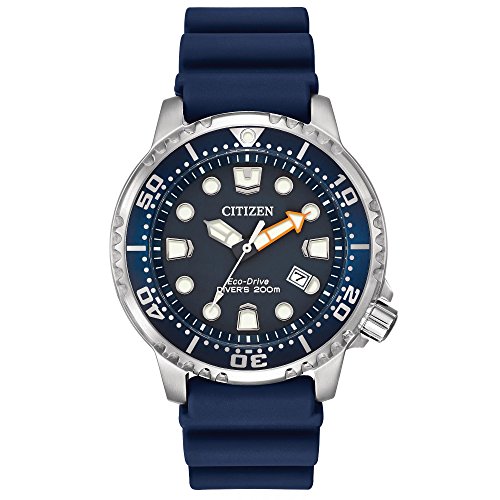
Our Top Picks
 Invicta Men's Pro Diver Collection Coin-Edge Automatic Watch40 mm8.3 x 0 x 0 inches0.3 poundsCheck on Amazon
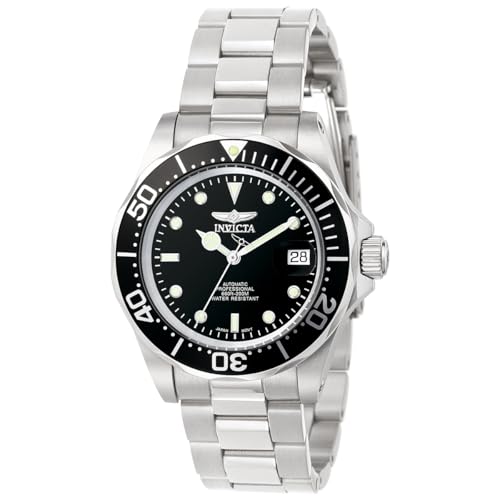 Invicta Men's 8926 Pro Diver Collection Automatic Watch40mm5.91 x 5.91 x 5.91 inches0.3 poundsCheck on Amazon
 Invicta Men's 8928 Pro Diver Collection Automatic Watch40 mm0.59 x 0.59 x 0.59 inches0.4 poundsCheck on Amazon
 Invicta Men's 8927OB Pro Diver Analog Display Japanese8.3 x 0.8 x 0.6 inches0.3 poundsCheck on Amazon
What's inside
- What makes a diver genuinely automatic and genuinely waterproof
- Movements: beat rates, reserves and accuracy expectations
- Case sizing from 38 to 44 millimetres
- The unidirectional bezel: safety device first, toy second
- Lume: chemistry, colour and staying power
- Crystals, dials and legibility under water
- Steel bracelet or rubber strap
- Notable model families worth shortlisting
- Accuracy in daily life and regulation basics
- Ownership costs: servicing, seals and straps
- Matching the watch to your diving reality
- Common misconceptions worth discarding
- Depth ratings decoded beyond the dial print
- Calibre families compared in depth
- Fit science: wrist shape, balance and clasp design
- Reading a diver in difficult conditions
- Materials innovation and sustainability claims
- Choosing by budget tier without chasing prices
- A dive day with an automatic watch, hour by hour
- Warranty, grey market and service networks
- What desk divers get right
- Check prices on Amazon
- Final guidance by buyer type
As an Amazon Associate I earn from qualifying purchases. This post may contain affiliate links at no extra cost to you.
An automatic diver watch earns its place through engineering rather than styling cues borrowed from the sea. Beneath the rotating bezel sits a self-winding mechanical movement, sealed inside a case tested to resist pressure at 200 metres or beyond, with luminous markers readable in murky water and a crown that screws down against its gasket. This guide works through every element that separates a genuine dive instrument from a desk-diver lookalike: the ISO 6425 standard, calibre behaviour, case geometry between 38 and 44 millimetres, bezel action, lume chemistry, crystal choices, and the practical contest between steel bracelets and rubber straps. Each section grounds its advice in measurable specifications, because depth ratings, lug-to-lug spans, beat rates and power reserves are facts a buyer can verify before spending anything.
Disclosure: this page carries affiliate links, and purchases made through them may earn a commission that supports our editorial work at no extra cost to you. Our research draws on manufacturer specification sheets, published standard documents and owner documentation rather than any sales ranking, and inclusion here reflects technical merit within each category discussed below.
What makes a diver genuinely automatic and genuinely waterproof
The word automatic describes how the movement winds itself. A semicircular rotor, free to swing with wrist motion, transfers energy through a reversing gear train into the mainspring barrel. Wear the watch for a normal active day and the spring reaches full tension; set it down and a typical modern calibre runs between 38 and 80 hours depending on its design. Nothing about that mechanism involves a battery, a capacitor or a solar cell, which is precisely why collectors value the category. Servicing follows mechanical logic too: lubricants age, gaskets compress, and most brands suggest inspection intervals measured in years rather than months.
Water resistance comes from an entirely separate set of parts. Caseback gaskets, crown tube seals, crystal gaskets and pusher seals where fitted create the barrier, and depth figures printed on dials describe static pressure testing rather than a guarantee for every real-world condition. A rating of 200 metres corresponds to 20 bar of pressure, the long-standing threshold at which a watch qualifies for scuba use under industry convention. Ratings of 100 metres suit swimming and snorkelling; anything below that belongs near sinks and rain showers, not reef walls. Temperature shocks, ageing seals and a crown left unscrewed defeat ratings faster than depth itself ever will.
The ISO 6425 standard explained
ISO 6425 is the international specification that turns marketing language into testable requirements for divers watches. A compliant model must carry a unidirectional bezel with a luminous marker at the zero position, remain legible from 25 centimetres in total darkness, and indicate clearly that it is running, usually through a luminous tip on the seconds hand. Every individual watch, not merely a sample from the batch, undergoes pressure testing to 125 percent of its stated depth. The standard also demands resistance to thermal shock, magnetic fields up to a defined level, salt water corrosion and strap attachment strength, plus shock resistance after a controlled drop. When a dial reads DIVER’S 200m in the style used by Seiko or Citizen, that wording signals compliance; the plain words water resistant signal no such thing.
Buyers should understand what certification does not cover. ISO testing happens at the factory on a new watch with fresh seals. Five years later, after hot showers, sunscreen, knocks against door frames and one battery-free but gasket-ageing half-decade, the same watch deserves a pressure test before serious diving. Reputable service centres perform wet or dry pressure checks quickly, and the cost is trivial beside either a flooded calibre or a ruined holiday dive trip.
Movements: beat rates, reserves and accuracy expectations
Most automatic divers in the accessible half of the market run Japanese or Swiss calibres with well documented behaviour. Seiko’s 4R35 and 4R36 families beat at 21,600 vibrations per hour, hold roughly 41 hours of reserve, and add hacking seconds plus hand-winding to the older 7S generation they replaced. The 6R35 lifts reserve to about 70 hours while keeping that same three-hertz rhythm. Citizen’s Miyota 8200 series offers similar reserves with a unidirectional winding rotor, while the Miyota 9000 series raises frequency to 28,800 vibrations per hour, producing a smoother seconds sweep and often tighter regulation from the factory.
Swiss entries typically centre on the ETA 2824-2 architecture or its Sellita SW200 twin, both four-hertz movements with reserves near 38 hours in standard form. Powermatic 80 derivatives from the Swatch Group slow the beat to 21,600 vibrations per hour and stretch autonomy toward 80 hours, a trade some divers accept gladly because a watch worn on Friday still ticks on Monday morning. Accuracy specifications cluster between minus 20 and plus 40 seconds daily for entry Japanese calibres, tightening toward chronometer territory only in certified models such as the Certina DS Action Diver or Tudor’s manufacture-calibre divers, where minus two to plus four seconds per day is promised.
Hacking, hand-winding and the crown routine
Hacking means the seconds hand halts when the crown is pulled to its setting position, letting two divers synchronise watches before a shared descent. Hand-winding through the crown matters after a quiet weekend: twenty to thirty turns restore enough torque for stable amplitude. Neither feature existed on the archetypal vintage divers that inspire today’s designs, yet both have become baseline expectations below almost every price tier. The daily ritual is simple. Unscrew the crown counterclockwise until it pops free, wind if needed, set, then push and screw it home clockwise with gentle fingertip pressure. Cross-threading a crown tube is an expensive mistake, so any gritty resistance means stop, back off, and begin again.
Calendar mechanisms deserve a caution of their own. Most quickset date systems dislike adjustment between roughly 9 p.m. and 3 a.m., when the changeover gears are engaged. Divers with day-date displays, such as Seiko’s 4R36-powered models, double the reason for care. GMT divers complicate things further by adding an independently adjustable hour or hand; Orient, Citizen and Seiko all sell automatic GMT divers now, and their manuals specify distinct crown positions that reward ten minutes of reading before the first flight abroad.
Case sizing from 38 to 44 millimetres
Diameter alone misleads. A 44 millimetre case with short, curved lugs can sit more comfortably than a slab-sided 41, because lug-to-lug length determines whether the case overhangs the wrist bones. As a working rule, measure your wrist, then compare that figure against lug-to-lug spans between 44 and 54 millimetres across this category. Thickness interacts too: dive cases must house gaskets, tall crystals and antimagnetic shielding in some models, so heights between 12 and 15 millimetres are normal. Under a wetsuit cuff or a winter jacket, those extra millimetres announce themselves constantly.
At the compact end, 38 to 40 millimetre divers have multiplied for good reason. The Citizen Promaster Dive Automatic in its smaller housings, the Seiko 38 millimetre 5 Sports divers rated to 100 metres for lighter duties, and midsize Oris Divers Sixty-Five variants all prove that legibility survives downsizing when handset length and marker diameter stay generous. Slim wrists under 16 centimetres around generally look balanced with lug-to-lug figures below 47 millimetres. Collectors with wrists above 18 centimetres often prefer 42 to 44 millimetre cases, where dials gain breathing room and bezels accept gloved operation without fumbling.
Materials and finishing choices
Stainless steel in the 316L grade dominates because it balances corrosion resistance, machinability and cost. Titanium cuts weight by roughly forty percent for an equivalent case, which transforms a 44 millimetre tool watch into something forgettable on the wrist during long surface intervals; Citizen’s Super Titanium Promaster line demonstrates the benefit while adding surface hardening against scratches. Bronze cases patina individually and suit heritage styling, though salt water accelerates the green oxidation many owners romanticise. Ceramic and sapphire bezel inserts resist fading and scratching far better than aluminium, at the price of brittleness under a direct strike against rock or pool concrete.
Case finishing carries practical consequences beyond appearance. Brushed flanks hide the scuffs that polished surfaces advertise. A signed, deeply knurled crown improves grip with wet hands. Drilled lug holes, once universal on tool divers, simplify strap changes with a spring bar tool and remain a quiet mark of a maker thinking about owners rather than boutiques. Readers comparing everyday carry across categories may also enjoy our roundup of best mens smartwatches, where case dimensions follow very different rules.
The unidirectional bezel: safety device first, toy second
Every certified diver carries a bezel that turns in one direction only, counterclockwise, so that an accidental knock can only shorten the indicated remaining bottom time, never extend it. The diver aligns the luminous pip with the minute hand at descent, then reads elapsed minutes against the graduated scale during the dive. Sixty-click mechanisms feel deliberate and agricultural; 120-click mechanisms feel finer and suit smaller cases. What matters underwater is not click count but security: the bezel must resist salt, sand and glove pressure while never drifting once set. Coin edges, scalloped profiles and deep knurling all pursue grip through different geometry.
Insert markings follow two philosophies. Fully graduated inserts minute-track the first fifteen or twenty minutes, emphasising the shallow-stop zone where decompression discipline matters most for recreational profiles. Count-up timing for surface intervals, cooking or parking meters comes free with either style on dry land, which explains why so many owners fidget with bezels in offices. Sapphire inserts with luminous numerals beneath the surface, seen on higher-end Christopher Ward and Squale models, glow as complete rings after dark. Painted aluminium fades gracefully and costs little to replace during a service, an argument traditionalists raise whenever ceramic fans boast about permanence.
Bezel action quality signals
Run a fingernail around the action during any hands-on inspection in a shop. Healthy bezels exhibit even resistance through the full rotation, a crisp stop at each detent, and zero back-play when pressed at the pip. Grit, uneven stiffness or a pip that refuses to align exactly at twelve o’clock betray worn springs or poor assembly. Misalignment of half a minute marker is cosmetic on land and genuinely irritating at depth, where the eye wants one unambiguous reading. Some makers, notably Seiko across its Prospex range, have faced persistent owner commentary about alignment variance, so checking the individual example before purchase remains sensible advice rather than brand criticism.
Lume: chemistry, colour and staying power
Luminous material converts stored light into a slow green or blue glow. Swiss Super-LumiNova dominates current production, with grades such as BGW9 shining blue-white and C3 shining green at higher initial intensity. Seiko’s Lumibrite charges quickly under ordinary room lighting and sustains a strong output through the first hours of darkness, a trait night divers praise because dives rarely last beyond an hour. Tritium gas tubes, used by Marathon and Ball in some tool models, glow without charging for a decade or more, though regulations and tube fragility keep them niche within the broader automatic diver field.
Application matters as much as compound. Applied markers with generous lume plots outperform thin printed layers, and a fully luminous seconds tip satisfies the ISO requirement that a running indication remain visible in darkness. Colour choice involves a real trade: green emission sits near peak human night sensitivity, so equal quantities of green lume appear brighter than blue. Faux-aged lume tints, fashionable on heritage reissues, sacrifice measurable output for vintage warmth. Buyers planning genuine night dives should prioritise modern white or green plots, broad sword or baton hands, and a bezel pip filled as generously as the dial markers surrounding it.
Crystals, dials and legibility under water
Sapphire crystal resists scratches from sand and coral contact better than mineral glass, while Seiko’s Hardlex occupies a middle ground tuned for shatter resistance. Flat crystals minimise distortion; domed crystals evoke acrylic-era divers and bend light dramatically at oblique angles, which some wearers love and others find unreadable at a glance. Anti-reflective coatings on the underside reduce glare without the smudge-prone fragility of external coatings. Beneath the surface, refraction magnifies the dial by roughly a quarter and flattens viewing angles, so high-contrast layouts with minimal text age best. Orange dials, pioneered for visibility research decades ago, actually lose their hue quickly with depth as water absorbs longer wavelengths; black and deep blue remain the pragmatic defaults.
Dial furniture follows function. Circles for most hours, a rectangle at six and nine, a triangle at twelve: that Seiko grammar exists so orientation reads instantly through a mask. Date windows at three o’clock can disrupt symmetry yet earn their keep for travellers. Cyclops magnifiers, associated with Rolex and copied widely, divide opinion and add a snag point. Text should stay restrained; the most respected dials print a name, a depth figure and very little else, trusting the hardware to speak. Anyone who tracks activity on land as seriously as depth below it might compare approaches in best activity smartwatches after finishing this guide.
Steel bracelet or rubber strap
A stainless bracelet suits the automatic diver’s weight, balances a heavy case head, and carries the watch securely when clasps include a diver’s extension for wetsuit compression. Solid end links, screwed link pins and a milled clasp separate serious bracelets from the folded, rattly jewellery fitted to fashion divers. Micro-adjustment holes or sliding ratchets matter because wrists swell in heat and shrink in cold water; a bracelet sized perfectly in an air-conditioned shop can throttle circulation on a tropical boat deck. Expect total weights between 150 and 190 grams for a 42 millimetre steel diver on a full bracelet, a presence some owners relish and others abandon within a week.
Rubber straps cut that burden dramatically and shrug off salt, chlorine and sunscreen. Quality compounds include natural rubber, silicone and FKM fluoroelastomer, the latter resisting chemical degradation and dust attraction best. Vent or waffle patterns descend from 1960s Seiko straps designed to flex over wetsuits; tropic and tropic-style perforations suit warm climates. A rubber strap also lowers the visual profile, useful when a polished diver might otherwise attract unwanted attention while travelling. Many experienced owners keep both: bracelet for the desk, rubber for the reef, NATO webbing as the loss-proof backup if a spring bar fails in surf.
Spring bars, lug widths and changeover discipline
Lug widths cluster at 20 and 22 millimetres, with 21 millimetre oddities complicating strap shopping on certain Citizen and Orient models. Fat spring bars, 2.5 millimetres thick with sturdy shoulders, belong on any watch entering the water. Change straps over a table, never over a boat deck, and press each bar end until it clicks positively into both holes. Quick-release bars simplify swaps but introduce a lever that determined sand or a snagged line could theoretically disturb; traditional shouldered bars remain the conservative choice for actual diving holidays.
Notable model families worth shortlisting
Seiko’s Prospex line anchors the category. The Turtle family wears smaller than its 45 millimetre headline thanks to a cushion case and 47.7 millimetre lug span, runs the hacking 4R36 with day and date, and carries full DIVER’S 200m certification. The Samurai adds angular geometry and a knurled bezel edge; the King Seiko-derived 62MAS reissues trade some toughness for slimmer profiles and the 70-hour 6R35. Below Prospex, the Seiko 5 Sports range offers automatic diver styling at 100 metres without screw-down crowns on some references, a distinction buyers must check model by model rather than assume across the catalogue.
Citizen answers with the Promaster Dive Automatic series, including the long-running NY0040 pattern: 42 millimetres, left-side crown at eight o’clock that never digs into the wrist, Miyota automatic power, and an official depth rating printed honestly on the dial. Newer Promaster releases in titanium reduce heft while adding sapphire on selected references. Orient’s Mako and Kamasu lines use the in-house F6922 calibre with hacking, hand-winding and a 40-hour reserve; the Kamasu adds sapphire crystal, making it a specification benchmark among entry-level automatic divers. Casio’s MDV-106 Duro deserves an honourable footnote as a quartz watch only, useful for readers calibrating how much of a diver’s price buys the mechanical movement itself.
Swiss and European names begin where Tissot’s Seastar 1000 Powermatic 80 pushes depth to 300 metres with an 80-hour reserve in a 43 millimetre case. Certina’s DS Action Diver matches that depth and adds COSC chronometer certification in selected versions, a rarity worth noting for accuracy-focused buyers. Hamilton’s Khaki Navy Scuba stretches reserve similarly in a 40 millimetre case rated to 100 metres in some variants and 300 in others, so reference-level checking matters again. Glycine’s Combat Sub trims thickness impressively for its price band, Squale builds 1521-series cases with genuine Italian diving heritage, and Christopher Ward’s C60 Trident Pro reaches 600 metres with a light-catcher case whose facets reward close inspection under shop lighting.
Heritage reissues versus original designs
Reissues recreate dimensions and dial art from the 1960s and 1970s while quietly modernising movements, crystals and seals. The Oris Divers Sixty-Five, Seiko’s 62MAS interpretations and the Doxa Sub 300 family all trade on archive credibility. Original designs such as the Marathon GSAR, built to a North American military search-and-rescue specification with tritium tubes and a 41 millimetre case, follow procurement logic instead of nostalgia. Neither approach is inherently superior. Heritage pieces wear slimmer and charm daily; contract-built tools prioritise glove handling and legibility over elegance. Decide which life the watch will actually lead, because the premium for archive storytelling buys nothing underwater.
Homage watches occupy a contested middle lane. A homage borrows design language openly under its own brand name; a replica copies trademarks and intends deception, and no replica belongs on any shortlist in this guide. Brands such as Steinhart and San Martin sell the former with respectable components, including ceramic inserts and regulated movements. Purists debate originality; pragmatic buyers weigh finishing per unit of currency. Either way, verify the maker’s stated water resistance testing rather than trusting a dial print, since small brands vary widely in how rigorously individual pieces are checked before shipping.
Accuracy in daily life and regulation basics
Mechanical accuracy shifts with position, temperature and state of wind. A diver resting crown-up overnight may gain seconds its owner never sees during daytime wear dial-up on a nightstand. This positional variance explains why published tolerances span wide bands and why individual examples often outperform their paperwork. Owners can exploit the effect deliberately: storing a fast watch crown-down and a slow one dial-up trims small daily errors without opening the case. Smartphone timing applications that listen to the escapement give a rough health snapshot, though a watchmaker’s timegrapher remains the authoritative instrument for amplitude, beat error and rate across positions.
Magnetism quietly sabotages more automatic divers than impact ever will. Speakers, tablet covers, magnetic clasps and medical equipment can magnetise a hairspring, after which rates jump to minutes per day. The symptom is sudden, dramatic gain rather than gradual drift. Demagnetisers cost little, jewellers often perform the fix free, and higher-specification divers increasingly specify resistance well beyond the ISO baseline. Silicon hairsprings in premium calibres sidestep the issue entirely, one reason manufacture movements from Tudor, Omega and Rolex command their premiums among buyers who work around strong fields daily. Omega’s Seamaster Diver 300M, with its co-axial Master Chronometer calibre, ceramic dial and helium escape valve, represents that upper tier even though its price removes it from most shortlists built around value.
Helium valves, saturation diving and honest needs
Helium escape valves serve saturation divers who live for days in pressurised chambers breathing helium mixtures; the tiny gas atoms seep past seals, then expand during decompression until a crystal can pop without a release path. Recreational scuba never creates that scenario. A valve therefore signals professional ambition rather than practical necessity for nearly every buyer, and it introduces one more seal to maintain. Depth figures beyond 300 metres follow similar logic: impressive engineering, bragging rights at the dive shop, and no bearing on a 40-metre recreational limit. Spend instead on fit, lume and service support, which affect every single outing. Readers curious about wrist technology that measures the body rather than the ocean can browse best smartwatches with sleep tracking for a different philosophy entirely.
Ownership costs: servicing, seals and straps
Budget for a full mechanical service every five to seven years under typical guidance, sooner if the watch dives frequently. A service strips the calibre, cleans and re-oils components, replaces worn parts, renews gaskets and re-tests pressure integrity. Independent watchmakers often charge less than factory centres and return watches faster, but factory service preserves warranty pathways and supplies proprietary parts such as signed crowns or specific bezel assemblies. Between services, rinse the watch in fresh water after every salt immersion, operate the bezel under the tap to flush grit from its spring, and dry it away from radiators that cook lubricants and accelerate gasket ageing.
Straps and bracelets are consumables with different clocks. Rubber hardens and cracks after years of ultraviolet exposure; inspect the keeper and the holes nearest your usual setting, where flex stress concentrates. Steel bracelets stretch as link pins wear, a slow elongation that a jeweller can assess by comparing the bracelet’s drape against new examples. Spring bars deserve replacement at every service regardless of appearance, since their internal springs corrode invisibly. Crown gaskets flatten with each unscrewing, one more argument for choosing a calibre whose reserve spans a weekend, reducing how often the crown must move at all.
During each pressure test, ask the watchmaker to inspect the crown stem gaskets and the caseback O-ring for flattening, cracking, or loss of elasticity, because rubber hardens gradually even when a watch sits unworn. Replacing those seals on schedule, then lightly lubricating fresh gaskets with silicone grease, preserves the seal compression that keeps water out.
Matching the watch to your diving reality
Warm-water recreational divers in rash guards can wear almost anything in this category comfortably. Drysuit divers need extension systems and taller bezels that clear thick gloves. Freedivers benefit from slim cases that slide under suit cuffs and from straps that tolerate repeated flexing. Dive computers now carry the primary timing and depth duties for most certified divers, which reframes the automatic watch as backup instrument and surface companion; a backup still must be trustworthy, hence the insistence on certified models rather than fashion pieces throughout this guide. If the watch will never submerge beyond a pool, a 100-metre automatic with a screw-down crown delivers the aesthetic with less thickness and cost, provided its owner respects that ceiling honestly.
Travel introduces separate calculations. A diver doubles as a robust holiday watch: it tolerates beach sand, pool chemicals, knocks in security trays and the occasional scooter rental mishap. GMT variants track home time across zones; three-hand versions with elapsed bezels time layovers and boarding calls. Theft risk argues for mid-tier pieces rather than flagship names in unfamiliar cities. Insurance riders, photographic records of serial numbers and a hotel safe habit complete a sensible travel protocol that no specification sheet will ever mention.
Buying checks before paying
- Confirm the exact reference number, then verify its depth rating, crystal material and calibre against the manufacturer’s own listing for that reference.
- Measure lug-to-lug length and compare it with your wrist width rather than relying on diameter photographs shot on unknown wrists.
- Rotate the bezel through a full turn and check pip alignment at twelve o’clock on the specific example being sold.
- Unscrew the crown, wind slowly, and feel for smooth engagement without grit or cross-threading resistance.
- Ask when seals were last replaced on pre-owned examples, and factor an immediate pressure test into the purchase budget.
- Charge the lume under a bright lamp for thirty seconds, then judge its evenness in a dark room, including the bezel pip and seconds tip.
- Verify bracelet clasp extension function and count the removable links included, especially when buying second-hand.
Pre-owned automatic divers offer strong value because depreciation hits mechanical watches early while their engineering lifespan stretches for decades. Service history documentation separates careful sellers from flippers; a watch with papers proving a recent overhaul can be a smarter buy than a newer example with unknown seals. Grey-market purchases from reputable dealers carry valid warranties in many regions, but confirm who honours the guarantee before assuming factory coverage. Serial numbers should match between case, warranty card and any service invoices, and mismatches justify walking away without negotiation.
Common misconceptions worth discarding
First, depth ratings do not scale linearly with safety for swimming: dynamic pressure from a diving board entry or a powerful stroke can spike loads, which is why 200 metres remains the confident recommendation for regular water use. Second, a thicker case does not automatically mean a tougher watch; gasket design, caseback threading and crystal seating decide outcomes. Third, higher beat rates do not guarantee better accuracy in an unregulated movement, because regulation quality and positional adjustment dominate the result owners actually observe. Fourth, ceramic inserts do not make a bezel indestructible; they trade scratch resistance for shatter risk. Fifth, automatic movements do not need daily wearing rituals or watch winders to stay healthy, though winders keep calendars convenient on complicated pieces. Finally, vintage divers belong in collections, not in the sea, because aged seals and irreplaceable dials make immersion a gamble no certification from 1968 can underwrite today.
Shower use generates endless argument, yet the physics is simple. Hot water, soap surfactants and steam challenge seals differently from cold immersion, and thermal expansion cycles loosen tolerances over years. Makers split on guidance; conservative owners remove the watch, liberal owners rinse it afterwards in cool water. Either camp should agree on one rule: never operate the crown or pushers while the watch is wet, because that action invites moisture past dynamic seals designed for static defence. For a lighter take on wrist gear after all this salt and steel, our editors also maintain best apple watch chargers for readers who split time between mechanical and electronic companions.
Depth ratings decoded beyond the dial print
Manufacturers test water resistance under controlled laboratory conditions: still water, steady temperature, new gaskets, and pressure applied gradually. Real immersion adds variables that laboratories deliberately exclude. A watch striking the surface during a giant-stride entry experiences a brief pressure spike. Arm strokes during vigorous freestyle swimming flex the wrist and momentarily load seals unevenly. Hot climates expand case metal at rates different from gasket rubber, and repeated cycles gradually work sealing surfaces. None of this invalidates the rating system; it explains why experienced divers treat 200 metres as the floor for scuba rather than an extravagant margin, and why a 300-metre case buys engineering headroom instead of permission to visit depths recreational limits forbid anyway.
Caseback architecture underpins those numbers. Screw-down casebacks compress a thick O-ring evenly around its full circumference and resist loosening from vibration. Snap-on backs, adequate for dress watches, have no place in this category. Monocoque cases, machined from a single block with movement access through the front, eliminate the back seal entirely; Seiko has used the construction on professional models, accepting specialised servicing as the trade. Crown tubes deserve equal scrutiny, because the crown is the only seal routinely disturbed by its owner. Twin-gasket crowns and triple-seal systems from Citizen add redundancy exactly where human handling introduces risk.
Chronograph divers and their extra seals
Automatic chronograph divers exist, though they remain a minority because each pusher adds a penetration through the case wall. Quality examples seal pushers with multiple gaskets and, in some designs, screw-down collars that lock the pushers when timing is not needed. Operating chronograph pushers underwater is prohibited on most references regardless of rating, since the act of pressing momentarily opens a pathway. Thickness grows too, often beyond 16 millimetres, which pushes these pieces toward committed enthusiasts. Buyers who simply enjoy the chronograph aesthetic for surface life should weigh whether a three-hand diver plus a separate timing bezel covers the same jobs with fewer seals to maintain and a slimmer profile under cuffs.
Calibre families compared in depth
Understanding movement families helps buyers decode dozens of model names quickly. Seiko builds its 4R and 6R families in-house, prioritising durability and serviceability; parts availability through independent watchmakers is excellent worldwide. Miyota, Citizen’s movement arm, supplies the 8200 and 9000 series to scores of smaller brands, so a microbrand diver often hides a thoroughly proven Japanese engine beneath its custom dial. The 9000 series in particular, with its 28,800 beat rate and slim profile, enables thinner cases than many rivals manage. Swiss Sellita and ETA architectures dominate European mid-market divers, bringing four-hertz smoothness and a vast ecosystem of technicians who know the gear trains intimately.
Microbrands layer value through specification rather than heritage. A typical enthusiast-focused release pairs a Miyota 9039 or Seiko NH35 with sapphire glass, ceramic insert, signed crown and 200-metre resistance, assembled in limited runs. The NH35, Seiko’s unbranded export calibre, deserves respect: it hacks, hand-winds, tolerates neglect and can be regulated by any competent watchmaker. What microbrands cannot always guarantee is longevity of support, so buyers should ask who services the watch in five years and whether standard movement architecture makes the answer reassuringly simple. Where the calibre is a commodity part, support risk falls sharply.
Power reserve behaviour in real rotation
Reserve figures describe a fully wound spring, yet daily wear rarely tops a movement completely unless the wearer is active. Office workers may hover near half wind, where isochronism errors widen slightly and amplitude drops. This is why two owners of identical models report different accuracy: their activity patterns differ. A diver worn only on dive days benefits from deliberate hand-winding before a trip, both to stabilise rate and to confirm crown function before the watch meets salt water. Rotating collections spread wear across pieces, so a diver returning to the wrist after a fortnight should be wound, set, and worn for a day on land before anyone trusts it as a backup timer below the surface.
Date mechanisms add another ownership nuance during travel. Quickset systems let the date jump independently, while older calibres require rolling the hands past midnight repeatedly. Travellers crossing zones frequently may prefer no-date dials, which also preserve the symmetrical marker layout many purists consider the archetypal diver face. Symmetry is not mere vanity underwater: an uninterrupted three o’clock marker keeps the orientation grammar consistent in peripheral vision through a fogged mask.
Fit science: wrist shape, balance and clasp design
Two wrists with identical circumference can wear the same watch very differently. Flat wrists present a broad platform that tolerates longer lug spans; round wrists let cases roll toward the outer bone unless lugs curve sharply downward. Caseback profile matters as well, because a protruding back lifts the case and concentrates pressure, while a flush back spreads load. Weight distribution between head and bracelet decides whether a watch feels anchored or top-heavy. Titanium heads on rubber straps minimise fatigue during long boat days; steel on steel suits shorter, deliberate wear where presence is part of the pleasure.
Clasp engineering has advanced quietly. Milled clasps with push-button deployment and on-the-fly micro-adjustment, once reserved for flagship Swiss divers, now appear on mid-market Japanese and microbrand pieces. A ratcheting extension that opens several millimetres without tools solves the wetsuit problem and the August-afternoon problem with the same mechanism. Safety folds and twin-trigger releases reduce accidental opening when a clasp catches on gear webbing. When comparing two finalists, operate both clasps repeatedly; the one that pinches, rattles or demands fingernail force will annoy its owner thousands of times across the watch’s life.
Smaller wrists and the new midsize wave
The industry spent decades assuming divers must be large, then discovered an underserved audience. Modern 36 to 39 millimetre divers from Oris, Tudor, Seiko and numerous independents preserve 200-metre ratings in many cases while trimming lug spans below 46 millimetres. Dial legibility survives because handset proportions shrink less than case diameter. Women divers, long offered only jewellery-adjacent designs, increasingly buy these same references, and makers have responded with colour variety rather than tokenised shrinking. The practical advice is identical for everyone: ignore gendered marketing, measure your wrist, and choose the lug span that sits flat without overhang.
Reading a diver in difficult conditions
Legibility research shapes details casual buyers overlook. Matte dials suppress reflections that glossy surfaces throw under angled sunlight at the surface. Hands must differ unmistakably in silhouette, because at depth, with nitrogen narcosis dulling cognition at recreational limits for some divers, distinguishing an hour hand from a minute hand should require zero thought. That is why classic divers pair a broad arrow or sword hour hand with a long, thin minute hand reaching the track. Arabic numerals appear sparingly, usually at six, nine and twelve on designs descended from military specifications, where printed clarity beat applied elegance.
Colour contrast behaves counterintuitively below the surface. Red disappears first, turning black within the first few metres; orange follows; yellow-green persists longest among common dial colours, while white markers against black remain readable through simple luminance contrast after hue information dies. Blue dials, beloved in showrooms, merge toward monochrome at depth but retain adequate contrast when markers are bold. None of this matters for the pool-and-photograph life most divers’ watches actually lead, yet it explains why professional instruments look conservative: their palette was chosen by physics, not fashion cycles.
Materials innovation and sustainability claims
Recycled stainless steel has entered case production, with several Swiss and Japanese makers sourcing reclaimed 316L that metallurgists certify to identical composition. Titanium recycling streams are maturing more slowly. Strap makers now weave ocean-plastic yarns into NATO webbing and mould straps from reclaimed fishing nets, options that suit the diver’s environmental narrative without changing any functional specification. Buyers should treat sustainability language as a secondary virtue: a watch engineered to serve thirty years is inherently less wasteful than a disposable alternative replaced annually, regardless of marketing around its alloy.
Coatings require scepticism. Diamond-like carbon and proprietary hard layers genuinely resist surface scratches on cases and bracelets, but a deep strike still dents the substrate beneath, and refinishing a coated case during service is complicated or impossible. Uncoated steel can be brushed back to freshness repeatedly across decades. This repairability argument recurs throughout mechanical watch ownership and quietly favours traditional materials for buyers planning genuinely long relationships with a single piece.
Choosing by budget tier without chasing prices
Entry tiers buy honest Japanese calibres, mineral or Hardlex crystals on some models, aluminium inserts and folded clasps, with genuine certification available from the big Japanese houses. The middle tier adds sapphire, ceramic, milled clasps, better regulation and slimmer cases. Upper tiers purchase manufacture calibres, chronometer certification, superior finishing, helium valves and brand heritage. Diminishing returns arrive steeply after the middle tier for pure function; what grows beyond it is refinement, pride of ownership and resale resilience. A rational buyer sets the functional requirements first, buys the cheapest tier meeting all of them from a maker with local service, and redirects the savings toward diving itself, straps, and the servicing fund the watch will eventually need.
Gift purchases follow a modified logic. Recipients rarely share the giver’s wrist measurements or taste in dial colour, so classic black dials, midsize cases and bracelet-plus-strap packages maximise the chance of a happy match. Engraving a caseback is permanent and can complicate returns; a handwritten note inside the box ages better. Where the recipient dives seriously, a gift card toward a chosen model plus a pressure test for their current watch shows more understanding than a surprise flagship.
A dive day with an automatic watch, hour by hour
The morning begins with a crown check on land, because boats are poor workshops. The owner unscrews the crown, confirms smooth winding, sets the time against a phone, and screws the crown home with fingertip torque only. At the dock, the bezel pip rotates to the minute hand as tanks are prepared, even though the planned descent is an hour away; surface intervals timed casually on land become second nature with repetition. On the boat ride, a steel bracelet feels secure but can clank against tank valves and railings, which is why many regulars switch to rubber before boarding and keep the bracelet in a padded roll below deck.
During descent, the watch’s job narrows to one glanceable number: elapsed minutes on the bezel scale. The primary computer governs depth, no-decompression limits and ascent rate, while the analogue dial offers an independent cross-check that no battery warning can interrupt. At the safety stop, three minutes at five metres, the bezel reading and the computer should tell the same story; any disagreement earns investigation on the surface, not improvisation underwater. After the final ascent, fresh-water rinsing on the boat, where available, prevents salt crystals from forming inside the bezel mechanism as the watch dries in tropical sun.
Evening brings the quiet rituals. The watch dries on a soft cloth, crown still screwed, away from the magnetic clasp of a laptop bag. If the day’s second dive ran long, the owner might note the watch’s rate against the phone clock in a dive log margin, building the personal accuracy record that predicts when regulation or service is due. None of these habits requires obsession; each takes seconds, and together they explain why well-kept automatic divers from the 1990s still pass pressure tests today while neglected examples half their age fail.
Storage, winders and long absences
Storage advice divides owners into camps. Winder advocates value readiness: a watch kept turning holds its date correct and its lubricants distributed. Sceptics counter that modern synthetic oils resist migration, that constant running accumulates wear, and that a stopped watch suffers nothing beyond inconvenience. The balanced position is practical. Keep a daily wearer on the wrist or the nightstand; let occasional pieces rest unwound in a dry, dark roll; wind any piece fully once a month if it sits for seasons. Before any dive trip after long storage, wear the watch for two full days, confirm rate stability, and check that the date changes crisply near midnight rather than dragging across hours, a symptom of dried calendar works.
Humidity is the silent enemy of stored mechanical watches. Silica gel packs inside a watch box, a room kept below roughly sixty percent relative humidity, and distance from bathroom steam all protect dials and lume from the moisture spots that destroy vintage value. Insurance documentation belongs in the same routine: photographs of dial, caseback and serial, plus purchase and service receipts stored digitally, turn a potential loss into a straightforward claim. These unglamorous habits separate collectors whose watches appreciate from owners whose watches merely age.
Warranty, grey market and service networks
Warranty terms in this category typically span two to five years, with some Japanese and Swiss makers extending coverage for registered owners. A warranty covers manufacturing defects, not flooded cases after a crown was left open, and brands can detect moisture ingress patterns that reveal user error. Grey-market sellers discount by sourcing through authorised dealers abroad; the watches are genuine, but the stamped warranty card may name a foreign dealer, and some regional service centres insist on the seller’s own warranty instead. The savings can be rational for experienced buyers who understand the trade, while first-time purchasers usually benefit from the simplicity of an authorised channel and the goodwill that accompanies a local relationship.
Service networks differ sharply by brand scale. Seiko, Citizen and the Swatch Group maintain centres on most continents with published turnaround targets. Microbrands typically route repairs through a small number of partner watchmakers or back to a central workshop, which can mean international shipping and longer waits. Asking a seller one question — where exactly does this watch go when it needs a gasket set in year six — reveals more about ownership reality than any specification comparison. Keep the answer, the warranty card and the first service invoice together; a documented chain of care is the strongest resale asset a used diver can carry, stronger even than its original box.
Regulation as a first service step
Owners sometimes rush to full servicing when a watch merely needs regulation, a fifteen-minute adjustment of rate on a timegrapher that any competent watchmaker performs cheaply. A healthy watch shows strong amplitude above roughly 270 degrees in horizontal positions and minimal beat error; those numbers, not the daily rate alone, indicate whether oil and wear remain acceptable. If amplitude has sagged and positions diverge wildly, regulation only masks decline. Learning to ask for amplitude figures transforms service conversations, because the data separates honest workshops from parts-swappers and gives the owner a baseline for the next inspection years later.
What desk divers get right
Most automatic divers will spend their lives far from coral, and there is no dishonesty in that. The qualities engineered for the ocean — sealed cases, legible dials, bracelets that survive knocks, movements indifferent to neglect — translate directly into a watch that tolerates gardening, toddlers, travel and workshop accidents without complaint. The rotating bezel times pasta, parking and presentation slots. The lume reads the hour during night feeds and red-eye flights. Judging such a watch purely by whether its owner scuba dives misses the point of overengineering, which has always been to remove worry from ordinary days. Buy the certified tool, wear it everywhere, service it on schedule, and the question of whether it ever meets a reef becomes a detail rather than a verdict on the purchase.
That philosophy also settles the one-watch-versus-collection debate for many readers. A single midsize automatic diver on a bracelet, supplemented by one rubber strap and one fabric strap, covers formal, casual and sporting contexts more completely than a drawer of fragile specialists. Its dial colour does the heavy lifting: black for versatility, blue for personality, white for summer legibility. Everything else in this guide exists to help a buyer reach that simple outcome with open eyes about standards, seals and servicing.
Check prices on Amazon
Live listings for the shortlist in this guide are pulled from Amazon below, so prices and availability are always current at the moment you look.


Final guidance by buyer type
Choose a 38 to 40 millimetre titanium or steel model with a rubber strap if your wrist is slim and your diving is recreational; the Promaster and midsize Prospex families cover that brief thoroughly. Choose 42 to 44 millimetres with a bracelet and extension clasp if you dive in thick gloves or simply prefer the traditional tool-watch silhouette. Prioritise chronometer or well-regulated calibres when daily accuracy matters for work schedules. Favour sapphire crystals and ceramic inserts for rocky entries, aluminium inserts for easy servicing, and always favour the brand whose service network exists in your own country. An automatic diver remains one of the few consumer objects engineered to outlive its purchaser with routine care, which reframes its price as decades of cost spread thin.
When the boat ladder comes up and the salt dries white across the bezel, a good automatic diver simply keeps sweeping, indifferent to chargers, signals and software, ready for tomorrow’s descent. It asks only for a rinse, an occasional service and a wrist that shows up, and in exchange it returns a small mechanical certainty that few modern objects still offer their owners anywhere.