Our Top Picks


What's inside
- A cylinder with a code in its name
- Flat-top and button-top are different lengths wearing one name
- Protection circuits add length, safety, and a current ceiling
- The capacity lie and the impossible 9900 milliamp-hour cell
- Continuous discharge rating is the number that keeps cells calm
- Chemistry letters decode what a cell prefers to do
- The short list of factories that actually make cells
- Torches reveal cell quality faster than any other device
- Beyond torches: fans, power banks, and handheld gear
- Voltage literacy prevents most beginner mistakes
- Internal resistance is the cell’s pulse reading
- Authenticity checks before the first charge
- Choosing between capacity and current for your own load
- Handling rules that prevent the classic short circuit
- Charging habits that double a cell’s working life
- Travel, shipping, and the rules of the road
- Reading a datasheet in five minutes
- Common failures and what they are really telling you
- Where 18650 sits among neighbouring formats
- A buying checklist to run in order
- Cycle life, calendar life, and honest expectations
- Environmental corners: winter cold and summer heat
- Rewrapping, labelling, and keeping your own records
- When a device and a cell disagree, measure before blaming
- Check prices on Amazon
- The quiet satisfaction of a well-kept cell drawer
As an Amazon Associate I earn from qualifying purchases. This post may contain affiliate links at no extra cost to you.
How this guide earns its keep: some outbound links on this page are referral links, and if a reader follows one and completes a purchase, the site may receive a small commission from the seller. That commission comes out of the seller’s margin rather than being added to the reader’s bill, it never decides which cells get recommended here, and readers remain free to buy the same battery anywhere else they prefer.
A cylinder with a code in its name
The numbers in 18650 are not marketing decoration. They describe a cylinder roughly eighteen millimetres across and sixty-five millimetres long, with the final zero signalling a round cross-section. That modest can, about the size of an adult thumb, became one of the most widely produced lithium-ion formats on earth because it balances energy, manufacturability, and mechanical robustness in a way few rival sizes manage. Laptop packs once consumed them by the pallet, electric tools and garden machines still draw on close relatives, and high-output torches turned the bare cell into a consumer purchase in its own right.
Understanding the format starts with accepting that an 18650 is an industrial component pressed into retail service. The big cell factories designed it for equipment makers who would weld cells into packs, add electronic supervision, and seal the assembly away from curious fingers. Sold singly with a printed wrapper, the same cell behaves beautifully when matched to a suitable device and charger, yet it carries none of the forgiving protections built into a phone battery. Every section that follows grows out of that single fact: the buyer supplies the judgement that a sealed product would normally supply invisibly.
Nominal voltage sits near three point six or three point seven volts depending on the maker’s labelling convention, rising to about four point two volts straight off a charger and falling toward three volts as the stored charge drains away. Capacity from a reputable factory cell lands somewhere between roughly two thousand and three thousand six hundred milliamp-hours. Current capability varies far more dramatically than capacity, which is why two cells sharing identical dimensions can suit utterly different jobs.
Flat-top and button-top are different lengths wearing one name
Peer into the positive end of an 18650 and you will meet one of two faces. A flat-top cell ends in a broad, nearly flush metal disc, exactly as it left the factory. A button-top cell carries a small raised nub, added later by a distributor who solders or welds a cap onto that disc so the cell mimics the familiar silhouette of an ordinary household battery. The underlying electrochemistry is often identical; the difference is a few millimetres of metal and a surprising amount of compatibility trouble.
Those extra millimetres matter because device designers work to tight tolerances. A torch built around flat-top cells, with a stiff spring or a solid contact post calculated for sixty-five millimetres, may refuse to close its tailcap over a button-top cell, or may crush the spring and dent the cell’s positive terminal if forced. Reverse the pairing and trouble flips direction: a light whose contact is a shallow recessed plate may never touch a flat terminal at all, leaving the owner shaking a dead torch that holds a perfectly charged cell.
Physical fit is only half the story. Some devices use the shape of the terminal as a crude polarity guard, relying on a raised button entering a shaped recess so a reversed cell cannot complete the circuit. Others place a plastic ring or a raised collar around the positive contact for the same purpose. Before buying, read the device manual’s battery wording literally. Phrases such as unprotected flat-top required are engineering instructions, not suggestions, and they usually reflect clearances measured in fractions of a millimetre.
Owners sometimes ask whether a button can be removed or a flat top raised with a magnet. Both improvisations deserve a firm refusal. A magnet slipped onto a terminal can slide sideways under shock, bridge against a metal torch body, and create a short circuit carrying currents that heat the cell dangerously fast. Peeling hardware off a modified cell risks tearing the wrapper and exposing the can, which on most 18650 designs forms the negative terminal along its entire length. Buy the terminal shape the device specifies; the correct cell costs less than the lesson.
Protection circuits add length, safety, and a current ceiling
A protected 18650 hides a small electronic board, usually tucked against the negative end beneath the wrapper, connected to the cell by a thin metal strip running along the can. That board watches for the classic lithium-ion failure triggers: voltage climbing too high during charging, voltage sagging too low during discharge, and current surging beyond a preset threshold. When any limit trips, the board disconnects the cell until conditions return to sanity. Think of it as a vigilant circuit breaker shrink-wrapped onto an otherwise trusting power source.
Protection is not free, mechanically or electrically. The board and its connecting strip add two to four millimetres, pushing overall length toward sixty-nine or seventy millimetres, and they add width at one end where the strip rides under the wrap. A protected cell therefore fails to fit many devices designed strictly around bare factory dimensions. The board also imposes a current ceiling, commonly somewhere between five and ten amps depending on the components chosen, and it introduces a small voltage drop under load that a bare cell would not produce.
Unprotected cells suit high-drain equipment precisely because nothing throttles them and nothing lengthens them. Multi-emitter torches that pull fifteen or twenty amps on their highest setting simply cannot run through a protection board rated at a third of that figure; the board trips, the light dies, and the owner files a confused complaint. Regulated devices with their own low-voltage warning and cutoff often manage an unprotected cell responsibly, because the supervision lives in the host instead of on the cell. The honest question is never which type is better in the abstract, but where the safety oversight for your particular pairing actually resides.
One more subtlety deserves attention. A protection board guards against electrical abuse, not against crushing, puncture, water ingress, or a wrapper torn to bare metal. It also cannot rescue a cell already damaged internally by a previous drop onto concrete. Treat protected cells as electrically supervised, not invulnerable, and retire any example that arrives dented, swollen at the ends, or smelling faintly sweet and chemical.
The capacity lie and the impossible 9900 milliamp-hour cell
Few numbers in consumer electronics are printed with more creative freedom than the capacity stamped on a budget 18650 wrapper. Genuine factory cells from the major makers top out near three thousand six hundred milliamp-hours, a figure earned through decades of incremental chemistry refinement. When a marketplace listing advertises nine thousand nine hundred milliamp-hours from the same steel can, physics files its objection: there is no commercially produced lithium-ion chemistry that packs nearly triple the established ceiling into identical volume. Such cells, when measured on analysing chargers by patient hobbyists, routinely deliver a few hundred to perhaps fifteen hundred milliamp-hours.
The fraud follows a recognisable pattern. Ultra-cheap cells wear wrappers in loud colours, carry invented brand names one letter away from famous ones, and quote capacity figures that climb with each production run, as if the number were a model year rather than a measurement. Some are factory rejects reclaimed from scrapped packs, rewrapped, and sold into a market where most buyers own no equipment capable of exposing the shortfall. Others are smaller, weaker cells hidden inside an 18650-sized shell with filler taking up the slack, a deception sometimes betrayed by suspiciously light weight.
Weight is the shopper’s quickest field check. A genuine high-capacity 18650 typically weighs around forty-five to forty-eight grams. A feather-light cell near thirty grams is announcing, in the only honest language available to it, that its interior cannot contain the claimed chemistry. A small kitchen scale therefore belongs in the same drawer as the charger for anyone buying cells from unfamiliar sellers. Pair that check with an analysing charger that measures delivered capacity over a full discharge, and inflated claims collapse within one cycle.
Real capacity also depends on how it is measured. Manufacturers rate cells at gentle discharge currents, often a fifth of capacity per hour, down to a specified cutoff voltage. Draw three amps continuously from a high-capacity cell and the delivered figure shrinks, because internal losses grow with current and the voltage sags earlier toward the cutoff. A cell honestly rated at three thousand five hundred milliamp-hours might return three thousand one hundred in a hard-working torch. That gap is engineering, not deception, and it explains why discharge curves matter more than headline numbers.
Continuous discharge rating is the number that keeps cells calm
Every 18650 carries a continuous discharge rating, usually shortened to CDR, expressing the current it can deliver steadily without overheating or suffering accelerated damage. Low-drain energy cells might be rated near five to eight amps. Middle-ground designs handle ten to fifteen. Purpose-built power cells sustain twenty, twenty-five, or even thirty amps, trading some capacity for thicker internal conductors, lower resistance, and chemistry tuned to stay composed under punishment. Selecting a cell begins with matching this rating, with comfortable headroom, to the hungriest device it will ever feed.
Exceeding the rating does not usually produce instant drama, which is exactly why people keep doing it. Instead the cell runs hot, its voltage sags so the device dims or underperforms, and internal degradation accelerates quietly. Cycle life that should have numbered in the hundreds collapses to dozens. In the worst corner of the envelope, sustained overcurrent drives internal temperature toward the point where the electrolyte decomposes in a self-feeding reaction. The distance between a warm cell and a venting cell is mostly a matter of how long the abuse continues.
Beware the marketing habit of advertising pulse ratings in enormous type. A pulse figure describes a burst lasting seconds, separated by rests, under test conditions rarely printed beside the claim. Devices do not sip current in polite laboratory pulses unless their designers say so; a torch on turbo draws hard and keeps drawing until its own thermal regulation steps in. Shop by the continuous figure, insist on seeing it in the maker’s datasheet rather than on a reseller’s banner, and treat any cell whose seller cannot produce a datasheet as a cell whose rating is decorative.
Headroom is cheap insurance. If a light draws nine amps at its peak, a fifteen-amp cell will run cooler, hold voltage higher, and last more seasons than a ten-amp cell working near its limit. The higher-rated cell may store a little less energy on paper, yet deliver more usable light in practice because less of that energy is wasted as internal heat. Experienced users consistently describe the same discovery: the right cell makes a mid-priced torch feel like an upgrade, while the wrong cell makes an expensive torch feel faulty.
Chemistry letters decode what a cell prefers to do
The alphabet soup printed on wrappers encodes cathode chemistry, and each recipe leans toward a different virtue. INR cells blend nickel, manganese, and cobalt in proportions favouring balanced performance, respectable capacity alongside strong current delivery, which is why they dominate quality torches and portable power. IMR designs use manganese-rich cathodes prized for thermal stability and high discharge, traditionally at some cost in capacity. ICR, the older cobalt-heavy recipe, offers generous energy density but demands the most respect under load and appears mainly in lower-drain roles today. NCR designations, associated with one major Japanese maker, pair nickel and cobalt with aluminium for class-leading capacity at moderate currents.
These distinctions matter less as trivia than as a filter for nonsense. A seller claiming cobalt-rich energy chemistry simultaneously delivering thirty continuous amps and record capacity is describing a cell that the laws of electrochemistry have not yet permitted anyone to manufacture. When specifications contradict the known trade-offs of every established chemistry, the specifications are fiction regardless of how professionally the wrapper is printed. Datasheets from the original factory resolve such questions in seconds, listing capacity, maximum current, charge limits, and operating temperatures in dry, checkable rows.
Hybrid designs blur the old categories productively. Modern high-drain cells achieve their composure through electrode engineering, separator quality, and electrolyte additives as much as through headline chemistry. That is another reason to buy the maker’s documented product rather than a reseller’s reinterpretation of it: two cells can share a chemistry code and still behave quite differently because one factory controlled its coating thickness and formation process tightly while the other merely bought similar raw materials.
The short list of factories that actually make cells
Global 18650 production concentrates in a remarkably small club. A handful of large manufacturers in Japan, South Korea, and increasingly China operate the coating lines, winding machines, and formation halls that genuine cells require. Names long familiar from electronics — the Japanese and Korean giants whose logos appear on televisions and appliances — supply most of the cells that independent measurements consistently praise. Their best-known models become reference points: certain high-capacity lines for runtime, certain power lines for current, each documented across years of published discharge curves.
Below that tier sits a second rank of legitimate factories whose cells serve power-tool packs and domestic equipment brands, often perfectly serviceable when bought through traceable channels with honest ratings. Below them again churns the rewrapper economy, companies that manufacture nothing, purchase cells of variable origin, apply distinctive printed skins, and market the result with ratings inflated beyond the source material. Some rewrappers perform a useful service, adding protection boards and button tops to genuine factory cells and labelling the conversion honestly. Others exist purely to arbitrage buyer ignorance.
Learning to separate those roles is the core buying skill for this format. Ask of any cell: who made the can, who wrapped it, and who measured the claims? When all three answers point to one accountable factory, confidence follows naturally. When the trail dissolves into a trading company, a marketplace storefront opened last spring, and a rating no instrument has ever reproduced, the low price stops looking like a bargain and starts looking like the entire business model.
Torches reveal cell quality faster than any other device
High-output flashlights became the proving ground for consumer 18650 knowledge because they stress every cell attribute at once. Turbo modes draw currents that separate power cells from energy cells within a minute. Sustained medium modes reward capacity and low internal resistance with flat, steady output. Cold nights outdoors expose weak cells whose voltage collapses when the electrolyte thickens. A torch owner learns quickly that brightness specifications assume a cell capable of feeding the emitter, and that many disappointing lights were merely underfed.
Fit inside a torch adds its own curriculum. Some lights accept only unprotected flat-top cells because their battery tubes were machined to exact length and their drivers already include low-voltage protection. Others, often older or simpler designs, need the extra length and raised terminal of a button-top protected cell to make contact and to guard against over-discharge. Springs at both ends forgive small variations; a spring at one end and a solid post at the other forgive almost none. Measuring your existing working cell with calipers, length and diameter both, gives a buying template more reliable than any listing description.
Multi-cell torches raise the stakes further. Cells sharing a load must match in model, age, and state of charge, because the weakest member of a series set discharges deepest, risks reversal under load, and drags the whole set toward trouble. Dedicated sets, bought together, charged together, and labelled with a set number in marker, are the established discipline among careful owners. Mixing a tired cell rescued from a laptop pack with two fresh purchases, because all three happen to share a size, is precisely the improvisation this format punishes.
For readers comparing charging equipment alongside cells, our companion guide to best 18650 chargers walks through slot independence, charge-rate selection, and analysing functions in detail. The short version is that a charger which reports capacity and internal resistance turns guesswork about ageing cells into routine measurement, and torch owners benefit from that visibility more than most.
Beyond torches: fans, power banks, and handheld gear
Camping fans, portable work lights, laser pointers of the serious kind, handheld gimbals, and DIY power banks all draw on the same format, each with a distinct appetite. A fan sipping an amp or two for hours wants capacity above all and will happily accept an energy cell whose modest discharge rating would disgrace it in a turbo torch. A power bank’s internal electronics typically specify the cell characteristics during manufacture, which is why opening sealed units to harvest their contents for unrelated projects transfers cells into roles nobody validated.
Salvaged laptop cells deserve their own warning paragraph because they circulate so widely. A retired pack yields cells of unknown cycle history, frequently unbalanced, sometimes internally damaged by years of heat, and almost always low-drain designs intended for a supervised pack environment. In a gentle single-cell application with a protected, analysing charger and modest expectations, some hobbyists accept them. In high-drain or multi-cell service they are an unjustifiable gamble, and their true capacity must be measured individually before any use at all. Free cells that vent are the most expensive kind.
Headlamps occupy a middle ground worth noting. Their cells work close to the wearer’s forehead, through hours of sweat, rain, and knocks against rock or scaffolding. That proximity argues for impeccable wrappers, reputable sourcing, and prompt retirement of any cell that takes a hard fall, even when it continues to function. It also argues for carrying the spare in a rigid plastic case rather than loose beside keys and coins, a habit the safety section below treats as non-negotiable.
Voltage literacy prevents most beginner mistakes
A freshly charged 18650 rests near four point two volts, spends much of its working life between three point nine and three point five, and should be considered empty around three volts under load, with two point five volts as the absolute floor in most datasheets. Devices that keep drawing below that floor inflict damage that no charger can fully reverse: copper dissolves internally, capacity shrinks permanently, and subsequent charging grows less predictable. Quality hosts flash a warning or step down brightness as voltage fades; quality chargers refuse or gently attempt recovery on cells found far below the floor, and a cell recovered from deep over-discharge belongs on the retirement list, not back in rotation.
Storage voltage sits near the middle of the range. A cell parked at roughly three point six to three point seven volts, around forty to sixty percent charge, ages far more slowly than one stored brim-full on a shelf. Calendar ageing accelerates at full charge and at high temperature in combination, which is why a spare kept fully charged in a hot car loses capacity depressingly fast even though it never powered anything. The practical routine is simple: charge fully before a trip or a shift, store the rotation stock half-charged in a cool drawer, and top up on a schedule rather than in a panic.
Charging current deserves the same calm arithmetic. Most 18650 cells accept half an amp to one amp indefinitely without complaint, and many datasheets permit faster rates, yet heat is the tax on haste. A cell that finishes charging noticeably warm has been pushed; a cell that finishes hot has been abused. Slower charging overnight, on a reputable charger with proper termination, extends service life measurably. Owners of related household formats will find the charging discussion in best aa and aaa battery chargers useful for contrasting how nickel-based cells signal fullness differently from lithium-ion.
Internal resistance is the cell’s pulse reading
Inside every cell, current crosses materials that resist its passage, and that opposition grows as the cell ages, suffers heat, or endures deep discharges. Fresh quality cells measure in the low tens of milliohms. As resistance climbs, voltage under load sags further, runtime in demanding devices shortens disproportionately, and more energy converts to internal heat. A cell can still show respectable capacity on a gentle analyser cycle while performing miserably in a turbo torch, because the gentle cycle never exposes the resistance that the torch punishes.
Tracking resistance over time turns retirement into a decision based on evidence. Record the figure when a cell enters service, then compare later readings taken at similar charge and temperature. A cell whose resistance has doubled, or one that warms noticeably at currents it once handled coolly, is telling you its remaining life is short and its margin for error shorter. Demote it to undemanding single-cell duty if it still behaves, or recycle it. Keeping visibly declining cells in front-line service because they still light a lamp is how small problems graduate.
Temperature during measurement matters, since a cold cell reads higher resistance than the same cell at room warmth. Consistency beats precision here: measure in the same room conditions, at a similar state of charge, on the same charger, and the trend line will speak clearly even if the absolute figures differ slightly from a laboratory instrument.
Authenticity checks before the first charge
Counterfeit versions of famous cells circulate persistently, sometimes wearing wrappers good enough to pass a casual glance. Defence begins with the seller: established battery specialists with physical premises, batch traceability, and a reputation to lose. It continues on arrival. Weigh every cell. Inspect the wrapper for printing errors, crooked seams, and spelling that drifts from the genuine article. Examine the positive terminal’s vent structure and insulator ring; factory cells show crisp, consistent tooling, while copies often reveal rough edges or subtly wrong proportions beneath the wrap’s top ring.
Date codes and factory markings under the wrapper provide deeper evidence for those who know a given model’s conventions, though rewrapping complicates that detective work. The pragmatic final arbiter is performance: an analysing charge and discharge cycle comparing delivered capacity and resistance against the model’s published behaviour. A genuine high-capacity cell lands within a few percent of its rating at gentle current. A fake misses by margins no measurement error explains. Buy one or two cells from a new source first, validate them thoroughly, and only then commit to a full rotation set.
Packaging tells its own story. Factory cells sold for industrial use often arrive in plain bulk trays, and legitimate distributors repack them into simple labelled boxes or pairs of plastic cases. Glossy retail cartons covered in superlatives, by contrast, correlate strongly with the rewrapper end of the market. Judge the contents by measurement, not by the carton, but let elaborate packaging raise the standard of proof rather than lower it.
Choosing between capacity and current for your own load
The buying decision condenses into one honest question: what is the largest current any of your devices will draw, and for how long? Answer with the device’s highest sustained mode, not its momentary strobe or its marketing burst. If nothing you own exceeds five amps, the highest-capacity genuine cells reward you with the longest runtime per charge and entirely adequate composure. If a flagship torch pulls eighteen amps on turbo, capacity rankings become secondary; choose a documented power cell whose continuous rating clears that draw with room to spare, and accept its smaller energy reserve as the price of authority.
Between those poles lies the popular middle: balanced cells rated around ten to fifteen amps with capacities near three thousand milliamp-hours. For most households owning a mixture of lights, fans, and modest electronics, that middle is the sensible default, flexible enough for an occasional demanding device and capacious enough for overnight camp duty. Buying one cell type for the whole drawer also simplifies the married-set discipline described earlier, since any two cells of the same batch can pair safely.
Households running larger charging bays for extended families, scout groups, or event crews should read best 16 bay battery chargers before scaling up, because charger throughput, not cell supply, usually becomes the bottleneck once a dozen cells rotate through nightly service. Planning the charger and the cell stock as one system prevents the familiar drawer of half-charged cells nobody can confidently identify.
Handling rules that prevent the classic short circuit
An 18650’s steel can is its negative terminal, end to end. The positive terminal sits millimetres away at the top, separated only by a thin insulating ring and the wrapper itself. If that wrapper tears near the top and the exposed can touches the positive contact or a metal surface bridging both, the cell discharges through the contact with everything it has. This is the mechanism behind the pocket incidents that make local news: a loose cell, a bunch of keys, a coin, and a wrapper nicked by months of casual storage.
The countermeasures cost almost nothing. Carry spares only in individual plastic cases or silicone sleeves. Inspect wrappers monthly under good light, rotating the cell slowly, and rewrap or retire any example with nicks, tears, or lifting edges, especially near the positive end. Never drop a bare cell into a tool bag, glovebox, or junk drawer. Keep cells away from water, and dry any cell that gets wet thoroughly while watching for corrosion at the terminals before deciding whether it stays in service.
Dents demand retirement, not evaluation. A crushed can may have displaced internal layers into contact that only declares itself during a later charge or a hot discharge. Likewise, a cell that has vented — recognised by a sharp chemical odour, residue at the top, or a sudden loss of performance after an overheating episode — has finished its career. Isolate it in a non-flammable container, keep it away from other cells, and take it to a battery recycling point rather than the household bin.
Children and visitors form part of the safety system too. Loose high-energy cells look like the batteries of childhood while behaving like nothing of the sort. Store them out of reach, explain to older children that these particular cylinders are tools rather than toys, and never hand a loose cell to anyone as a fidget object. Households where that discipline cannot hold should favour devices with sealed, built-in packs instead.
Charging habits that double a cell’s working life
Heat, fullness, and emptiness are the three levers of lithium-ion ageing, and charging routine touches all three. Charge at room temperature, never immediately after bringing cells in from a freezing car or a scorching dashboard; let them settle to ambient first. Remove cells reasonably promptly after termination rather than leaving them baking on a warm charger for days, even though a good charger stops delivering current, because the charger’s own warmth keeps the cells’ neighbourhood unnecessarily hot.
Partial cycling is a friend. A cell used between eighty and thirty percent charge, topped up little and often, accumulates far less wear than one repeatedly drained to the cutoff and refilled completely. Torch users cannot always arrange such gentleness outdoors, but household rotation stock benefits from it across years. When a device will sit unused for a season, remove its cell entirely; parasitic drain in standby electronics has quietly murdered more stored cells than any charger fault.
Charge only on a surface that would forgive an accident: a ceramic tile, a metal tray, a clear stretch of workbench away from paper and solvents. Stay within earshot during charging when practical, and investigate any cell that becomes more than mildly warm, hisses, or smells unusual by removing power and letting it cool untouched before handling. Chargers with per-slot monitoring, temperature sensing, and independent channels earn their price the first time one ageing cell misbehaves in a bay of healthy ones.
Travel, shipping, and the rules of the road
Airlines treat loose lithium-ion cells as cabin-only items, carried in hand baggage inside protective cases, with terminals guarded against contact. Checked baggage is prohibited territory for spares because a fire in the hold sits beyond crew reach. Watt-hour limits rarely trouble individual 18650 owners, since a single cell stores around twelve watt-hours, far below the thresholds that trigger airline approval processes, but a large collection travelling together still deserves a conversation with the carrier before departure day.
Postal and courier rules tighten further, often requiring cells to travel inside equipment or under specific packaging declarations. Sellers who ship loose cells in a padded envelope with no terminal protection are advertising their standards; choose suppliers whose parcels arrive with each cell cased or sleeved. When posting a faulty cell for warranty assessment, ask the recipient how they want it packed rather than improvising, because damaged lithium cells fall under stricter dangerous-goods handling than healthy ones.
In cars, the rules reduce to temperature and containment. A cased spare in the cabin beats a loose cell in a sun-baked boot, and no cell belongs on a dashboard in summer. Boats add salt air and corrosion to the calculation, arguing for sealed cases and a freshwater rinse of hands before handling terminals. None of this is burdensome once habitual; all of it is cheaper than the alternative.
Reading a datasheet in five minutes
A genuine datasheet rewards a short, structured read. Start with nominal capacity and the conditions attached to it: discharge current, cutoff voltage, and temperature. Move to maximum continuous discharge and any temperature limit paired with it, noting whether the rating holds to full discharge or only until the can reaches a stated heat. Check the standard and maximum charge currents, the permitted storage range, and the cycle-life claim with its end-of-life definition, usually the cycle count at which capacity falls to eighty percent of initial.
Compare those rows across two or three candidate cells and the marketing fog thins quickly. One cell’s superior capacity may exist only at a whisper of current. Another’s heroic discharge rating may carry a temperature cutoff that ends the party early in a sealed torch. The datasheet also settles terminal and protection questions indirectly, since factory documents describe the bare cell; any button or board was added downstream, and the seller of the modified version owes you its finished dimensions.
Keep the datasheets for cells you own. When a torch maker publishes current draws, when a charger firmware update changes termination behaviour, or when a cell starts ageing oddly, those saved documents turn forum speculation into arithmetic. A small folder, digital or paper, is part of owning this format responsibly.
Common failures and what they are really telling you
A torch that flickers only on high modes usually reports a cell whose resistance has climbed or whose protection board resents the current. Swap in a known strong cell before blaming the driver. A charger that terminates one slot suspiciously early may be meeting a cell with diminished capacity or a poor contact; clean the terminals with a dry cloth, rotate the cell, and watch whether the behaviour follows the cell or stays with the slot. A cell that self-discharges noticeably over a fortnight on the shelf has internal leakage and should leave service even if it still performs on the day.
Runtime shrinking evenly across a matched set signals honest ageing, and the remedy is a new set bought together. Runtime collapsing in one member of a set signals individual damage; replace the set anyway for series duty, demoting the survivors to single-cell jobs if they measure well. Cells that swell a wrapper tight, refuse to sit flat on a bench, or rock on their ends have internal gas or deformation and must not be charged again.
Occasionally the device, not the cell, is the culprit. Corroded springs add resistance that mimics a tired cell. A tailcap cross-threaded by a fraction steals contact pressure. Before retiring a cell on suspicion, give it one analysing cycle and one trial in a different host. Evidence first, verdict second, is the rhythm this entire guide has been arguing for.
Where 18650 sits among neighbouring formats
The wider 21700 format has captured many new torch and power-tool designs by offering roughly a third more capacity and higher current ceilings in a slightly larger can. The two sizes are not interchangeable, and no adapter makes a 21700 fit an 18650 tube machined to size. Owners choosing a new device today should weigh whether they value the enormous accessory and cell ecosystem of the older format or the performance headroom of the newer one. Neither answer is wrong; buying cells for a device you do not own, in a size it cannot accept, is the only clearly wrong move.
Smaller siblings serve smaller lights. The 16340 and 14500 formats bring lithium-ion voltage to compact torches, each with proportionally smaller capacity and lower current ceilings, and each demanding the same wrapper discipline in miniature. At the other end, hobbyists building portable projection or field-monitor rigs sometimes weigh multi-cell packs against larger integrated batteries, a comparison explored in best battery powered projectors, where runtime claims face the same datasheet scrutiny applied throughout this page.
Nickel-based rechargeable households cells, the familiar AA and AAA, remain better citizens for low-drain remotes and children’s toys, because their failure modes are gentler and their chargers simpler. The 18650 earns its place where energy density and current delivery justify its stricter handling: serious light, sustained portable power, and equipment designed by people who specified the format on purpose.
A buying checklist to run in order
First, name the device and read its battery specification literally, noting terminal shape, protection expectation, maximum length, and peak current. Second, choose the cell class that matches that current with headroom, accepting lower capacity when the load demands it. Third, select a factory model with a published datasheet whose measured behaviour, in independent discharge curves, matches its claims. Fourth, buy from a seller whose business depends on battery buyers returning, and whose stock arrives cased, weighed correctly, and consistent from cell to cell.
Fifth, on arrival, inspect wrappers, weigh each cell, and run an analysing cycle before first service, recording capacity and resistance as the cell’s birth certificate. Sixth, label sets that will work together and keep them together through charging and storage. Seventh, review the drawer twice a year, rewrapping the scuffed, retiring the tired, and refreshing your memory of which cells serve which hosts. That unglamorous routine, repeated, is the entire difference between owners who praise this format and owners who fear it.
Resist the two classic temptations at the end of the checklist. The first is the impossibly cheap multipack whose arithmetic only works if the cells inside are somebody else’s rejects. The second is the impossibly specified flagship whose wrapper promises capacity and current no factory has reconciled. Between those fictions sits a well-documented middle where real cells, honestly rated and properly kept, deliver years of strong light and reliable portable power.
Cycle life, calendar life, and honest expectations
Manufacturers quote cycle life under laboratory courtesy: moderate currents, room temperature, full cycles between defined voltage limits, and an end point declared when capacity fades to a stated fraction of its beginning. Real owners charge in cold garages, drain cells to the warning flicker on night walks, and leave spares full through summer. Expect a quality cell in kind service to deliver several hundred useful cycles across several years, and expect each shortcut in care to shave that inheritance noticeably. The encouraging news is that decline arrives gradually and measurably, not as a cliff edge, provided the cell began life genuine.
Calendar life runs in parallel, indifferent to how gently a cell is cycled. A drawer queen stored full and warm can age faster than a working cell cycled weekly but stored cool and half-charged. Households that buy in bulk should therefore resist stocking years of inventory during a tempting sale. Cells are perishable goods wearing industrial clothing. Purchase roughly the rotation you will actually use across the next year or two, date each arrival, and let fresh stock replace tired stock in an orderly queue rather than discovering a forgotten bargain box whose contents quietly expired unopened.
End-of-life judgement blends the measurements gathered earlier. Capacity down by a fifth, resistance doubled, self-discharge newly noticeable, or any physical blemish from the retirement list — each alone justifies demotion, and two together justify recycling without sentimentality. A cell owes nobody a final heroic cycle. Its remaining value is highest as training material for your records: note what it powered, how it was charged, and how long it lasted, because that notebook improves every future purchase more than another speculative bargain ever will.
Environmental corners: winter cold and summer heat
Cold thickens electrolyte and slows the reactions that deliver current, so a cell that feels mighty in a kitchen drawer may sag early during a frosty hill walk. Voltage dips, devices interpret the dip as emptiness, and runtime appears to vanish — then mysteriously returns when the cell warms in a pocket and the supposedly spent charge becomes available again. Winter carriers exploit that reversibility by rotating a warm spare from an inside pocket, keeping the working cell’s replacement close to body heat until the swap. Charging a frozen cell, however, is a different matter entirely: lithium plates onto internal surfaces when charge arrives below freezing, causing permanent damage, so cold cells must warm to room temperature before they meet a charger.
Heat attacks from the opposite direction, accelerating every parasitic reaction that consumes a cell from within. A torch left on a sunny windowsill, a spare stored above a boiler, a power bank forgotten in a parked car through August — each accumulates invisible ageing that no later kindness can repay. Sustained high temperature during discharge also narrows the safety margin discussed in the discharge section, because a cell generating internal heat inside a hot environment starts its climb from a higher floor. Shade, ventilation, and modest expectations on the hottest days are genuine performance strategies, not fussiness.
Altitude and air travel add pressure changes that healthy cells tolerate without drama, while damaged or counterfeit cells occasionally reveal themselves by venting under reduced pressure. That is one more argument, beyond the airline rules already covered, for travelling only with cells you would trust at home. Field workers who rely on lights for safety should treat battery inspection as part of kit inspection, with the same unhurried seriousness given to ropes, blades, or brakes.
Rewrapping, labelling, and keeping your own records
A torn wrapper is not automatically a death sentence, because the steel can beneath usually remains sound and the damage is often confined to the printed skin. Rewrapping is an established hobby skill: the old skin comes off carefully, a fresh insulating ring is seated at the positive end, a new heat-shrink sleeve slides over the can, and gentle heat snugs it into place. The non-negotiable details are that ring, which must never be discarded or forgotten during the process, and complete coverage at the top edge where can and terminal sit closest. Anyone unsure of their technique should retire the cell instead, since a rewrapping mistake recreates exactly the short-circuit geometry the wrapper existed to prevent.
Whether rewrapped or factory fresh, every cell benefits from a small label carrying its arrival date and a simple identifier. Paint pens and fine markers write legibly on most wrappers without solvents that might attack the print. That humble date transforms later arguments about age into readings of fact, and it exposes the quiet truth that the cell failing today is frequently the cell bought half a decade ago, not the recent purchase being blamed. Sets share a letter or number as well as a date, making the married-set discipline visible at a glance inside a crowded drawer.
Records need not be elaborate to be useful. A notebook page or a plain text file noting identifier, source, first measured capacity, and resistance gives each cell a biography in four facts. Add a line whenever a measurement changes materially or a cell changes duty. Over several years those lines become a private reliability survey of sellers and models, grounded in your own instruments rather than in anyone else’s enthusiasm. Few buying guides, including this one, can compete with evidence gathered at your own charger.
When a device and a cell disagree, measure before blaming
Intermittent cutouts, chargers refusing a slot, and lights that behave on one cell but sulk on another all invite hasty verdicts. A caliper settles length disputes in seconds, revealing the protected cell that is simply two millimetres too ambitious for its tube. A multimeter reading rested voltage separates a genuinely empty cell from a full one being ignored because of a corroded spring or a tailcap assembled a quarter-turn shy of tight. Even the humble trick of rotating a cell slowly inside its bay, watching for flicker, locates contact trouble that masquerades convincingly as electronic failure.
Document the swap result beside the cell’s record while the details remain fresh, because memory edits timelines mercilessly and a note written tonight will out-argue a recollection formed next spring. Photographing a suspect wrapper beside a ruler, saving the charger’s final readings, and marking the calendar date of any overheating episode builds the same quiet archive. When a seller later asks what happened, or when you weigh whether a model deserves a repeat order, that archive answers with dates and numbers instead of impressions gathered under frustration.
Keep one reference cell whose health you have verified and whose history you trust completely. Swapping that known quantity into a suspect device divides the world cleanly: if the fault follows the original cell, the device is innocent; if the fault persists with the reference installed, the cell was never the problem. That single disciplined swap, repeated calmly whenever confusion appears, gradually teaches an owner the personalities of individual devices as thoroughly as the personalities of individual cells, until fault-finding becomes a short methodical conversation rather than a guessing contest conducted with a wallet open on the table. It prevents more unnecessary purchases and more unfair retirements than any other habit described in these pages, and it costs nothing beyond the patience to label one cell clearly and reserve it for diagnosis.
Check prices on Amazon
Live listings for the shortlist in this guide are pulled from Amazon below, so prices and availability are always current at the moment you look.


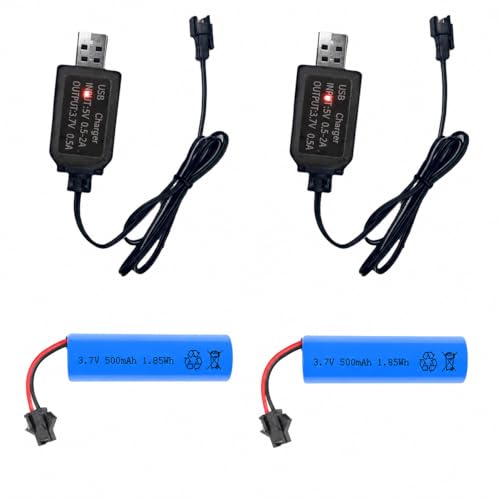
4 -P Replacement Batteries | 18650 Replacement Battery 9900mAh 3.7V Flat Top Lithium-ion Rechargeable for Headlamps


The quiet satisfaction of a well-kept cell drawer
There is a particular pleasure in picking up a torch after a year of neglect and finding it ready, because its cell was stored half-charged, its wrapper intact, its record card honest about its age. Nothing about that readiness is luck. It is the compound interest of small correct decisions: the right terminal shape, the right discharge class, a charger that reports rather than guesses, a case instead of a pocket, a scale instead of a hope.
Buy fewer cells than the bargains urge and better cells than the listings flatter, keep them like the concentrated energy they are, and let measurement arbitrate every dispute between expectation and performance. Do that, and the humble steel cylinder with the coded name stops being a gamble purchased by the handful and becomes what its designers intended all along — a dependable, rechargeable reservoir that asks only competence in exchange for years of light carried wherever the dark happens to be waiting.