Our Top Picks
 SUREFIRE 123A Rechargeable Batteries Includes Charger SFLFP123-KIT1.505.63 x 5 x 1.46 inches0 poundsCheck on Amazon
 Streamlight 20237 USB-C Rechargeable Capable BatteryOne Size1.36 x 0.67 x 0.67 inches0 poundsCheck on Amazon
 FARSAIL 8-Pack 123A 17335 Ni-MH Rechargeable Batteries and3.35 x 3.35 x 1.7 inches0.5 poundsCheck on Amazon


What's inside
- One short cylinder, two very different voltages
- Why equipment designed for primaries reacts badly to extra voltage
- Three rechargeable families, explained without sales language
- Capacity: why 700 to 900 milliamp-hours is the believable range
- Flashlights: brightness, heat, and honest compatibility
- Security cameras, trail cameras, and unattended service
- The charger is part of the product, not an accessory
- Fit, length, and the millimetre that decides everything
- Safety habits proportionate to a very energetic little can
- Cold, heat, storage, and realistic service life
- How to judge a product listing in five minutes
- A practical buying order for different households
- Common myths that keep causing returns
- Questions to ask before any set enters service
- Names on wrappers: RCR123A, 16340, and other aliases
- Checking a cell with a multimeter without fooling yourself
- Troubleshooting symptoms that owners commonly misread
- Travel, spares, and keeping incompatible sets apart
- Environmental and cost arithmetic done honestly
- What a first purchase should actually look like
- Check prices on Amazon
- The sensible conclusion for a confusing format
As an Amazon Associate I earn from qualifying purchases. This post may contain affiliate links at no extra cost to you.
Reader funding, stated plainly: readers keep this site running, and if somebody buys something after following a link on this page, a small referral payment may return here without raising the price paid. That income does not choose the products discussed, shorten the warnings, or soften any conclusion. Everything that follows comes from maker datasheets, official support documents, published safety guidance, and owner reports that anyone can read.
One short cylinder, two very different voltages
Few battery purchases go wrong as quietly as this one. A disposable CR123A and a rechargeable cell sold under almost the same name share a stubby shape, a similar wrapper, and a place in the same drawer, yet they can leave a charger at voltages far enough apart to confuse a camera, overdrive a lamp, or simply refuse to work. Shoppers see the familiar numbers, assume interchangeability, and only discover the catch after a device behaves strangely. The entire subject therefore begins with a single discipline: ignore the nickname on the listing until you know which electrical family sits underneath it.
Primary CR123A cells use lithium manganese dioxide chemistry. Fresh examples sit a little above three volts, deliver most of their service near that level, and hold charge remarkably well during years of storage. Designers of older flashlights, weapon lights, alarms, and early wireless cameras built circuits around that behaviour. Their battery tubes, springs, seals, and low-power warnings all presume a source that starts modestly and declines gradually toward the end of its life.
Rechargeable versions divide into separate camps. The size code 16340 describes dimensions first: roughly sixteen millimetres across and thirty-four millimetres long, with the final zero signalling a round cell. Many 16340 products contain ordinary lithium-ion chemistry charged to 4.2 volts and marketed around a nominal 3.7 volts. Others use lithium iron phosphate, charge to a lower ceiling, and operate nearer 3.2 volts. A third group adds electronics that accept a lithium-ion charge and then regulate output down toward three volts for equipment designed around primaries.
Those distinctions sound technical, but the practical consequence is blunt. Put two fully charged unregulated lithium-ion cells in series inside equipment expecting a pair of primaries, and the stack can present well over eight volts where roughly six were intended. Some modern lights welcome that extra headroom and reward it with greater output. Others tolerate it briefly, run hot, flicker, lose lower modes, or suffer shortened driver life. A camera may report a full battery right up until protection cuts power, leaving no gentle decline and no useful warning.
Regulated three-volt rechargeable cells exist precisely to bridge that gap. Inside the wrapper, a small circuit limits what the device receives, while charging circuitry or a companion charger handles the higher voltage needed to fill the underlying cell. Lithium iron phosphate variants take a different route: their chemistry naturally sits lower, though they still need a charger built for their specific termination voltage. Neither solution should be treated as a universal substitute without checking the device manual, because regulation method, physical length, discharge capability, and cutoff behaviour all vary.
The safest mental model is to treat 123A as a family name rather than a promise. Ask four questions before anything else. What voltage does the equipment allow? What chemistry is inside the rechargeable cell? At what voltage does its charger stop? Does the finished product, including any protection board and button top, actually fit the compartment? If a seller cannot answer those points clearly, the listing has not earned your money, however attractive the bundle looks.
Why equipment designed for primaries reacts badly to extra voltage
Electronic drivers do not experience voltage as a vague suggestion. A boost or buck circuit designed for a narrow input range converts power within limits set by its components, heat path, and firmware thresholds. Exceed the ceiling and the driver may pass surplus energy as heat, misread remaining capacity, or shut down to protect itself. Incandescent lamps from an earlier era were even less forgiving, since a modest voltage rise could dramatically shorten bulb life or end it instantly.
Flashlights illustrate the split especially well. Contemporary dual-fuel models are engineered to accept either a rechargeable lithium-ion cell or a pair of disposable cells, and their makers state that compatibility openly. Older single-purpose lights often lack such breadth. Their manuals may permit only primaries, and that restriction deserves respect even when an unregulated rechargeable physically drops into the tube. A successful first switch-on proves very little; stress accumulates in components, seals, and solder joints over repeated heat cycles.
Wireless security cameras present another pattern. They sip current while idle, wake for motion, power infrared illuminators at night, transmit video in bursts, and then return to sleep. Firmware estimates remaining energy by watching voltage under those changing loads. A regulated rechargeable can hold its output nearly flat for most of a cycle and then fall sharply near depletion, so the on-screen gauge stays optimistic until service ends abruptly. Owner reports repeatedly describe cameras that appeared healthy at bedtime and missed events before morning, not because capacity vanished mysteriously, but because the gauge had been calibrated for a sloping primary discharge curve.
Series wiring magnifies every mismatch. Devices using two cells multiply both nominal voltage and any error. They also depend on balanced partners: if one cell empties first, the stronger partner can drive it into deep discharge or reverse stress during continued use. Protection circuits reduce some hazards, yet they do not transform mismatched, elderly, or different-brand cells into a matched set. Pairs bought together, charged together, labelled together, and retired together remain the sensible unit of management.
There is also a subtler failure mode involving physical contact. Protection boards and raised terminals add length, sometimes enough to compress springs fully or prevent a tailcap from seating. A partially seated cap can compromise water resistance, interrupt the electrical path over rough handling, or create intermittent flicker mistaken for driver failure. Diameter matters too, particularly in machined aluminium tubes with little clearance. A wrapper that looks identical on a desk may bind once inserted, making removal awkward and damaging the outer film.
Three rechargeable families, explained without sales language
Unregulated lithium-ion 16340 cells
The most common rechargeable substitute belongs here. Its nominal voltage is usually printed as 3.7, its full-charge voltage reaches 4.2, and its useful output stays comparatively high under load. Enthusiast lights built for this input can exploit that strength, producing impressive output from a tiny package. Capacity typically lands in the honest band discussed later in this guide, despite creative labels suggesting otherwise. Protected versions carry a circuit that disconnects during overcharge, excessive discharge, or a short, while unprotected versions rely entirely on a suitable charger and a device with its own safeguards.
Choose this family only when documentation explicitly allows lithium-ion input at the relevant voltage. That permission might appear in a printed manual, an official support article, or markings beside the battery tube. Verbal reassurance from a marketplace seller is not equivalent evidence. If the device maker stays silent, assume the safer interpretation and look elsewhere, particularly for sealed cameras, medical-adjacent equipment, alarms, and anything expected to work unattended for months.
Lithium iron phosphate cells
Lithium iron phosphate, often abbreviated in product literature, offers a lower operating voltage and a reputation for thermal stability and long cycle life. Its nominal figure sits around 3.2 volts, closer to a primary, although a freshly charged example still differs from a disposable cell. Energy density is lower, so runtime per charge may trail lithium-ion equivalents. Special charging is mandatory: a charger intended for 4.2-volt lithium-ion cells can overcharge this chemistry unless it provides a dedicated mode with the correct lower termination.
For owners of compatible lights, this chemistry can be appealing where longevity and tolerant behaviour matter more than maximum brightness. For camera owners, compatibility remains device-specific. Some equipment accepts the voltage happily but interprets remaining capacity poorly. Others refuse to start because their minimum threshold and the cell discharge profile do not align under cold or heavy load. Published discharge curves from the cell maker are far more useful here than a generic compatibility claim copied across dozens of listings.
Regulated three-volt rechargeable cells
Regulated designs try to imitate a primary more closely. Electronics inside step output down and hold it near three volts across much of the usable charge. That behaviour suits certain cameras and lights whose makers approve rechargeable cells only at primary-like voltage. There are compromises. Conversion consumes some energy, maximum current may be lower than an unregulated cell can deliver, and the sudden endpoint can surprise equipment expecting a long taper. Physical size also needs attention because the added electronics occupy space inside an already tiny can.
Charging arrangements differ among brands. Some regulated products charge in a proprietary cradle, some accept a dedicated charger matched to their internal chemistry, and a smaller number incorporate charging hardware in the cell itself. Never infer the method from appearance. A regulated output does not imply that any lithium-ion charger is safe to use, nor does a similar connector guarantee the right algorithm. Follow the cell maker instructions as a matched system: cell, charger, voltage setting, and charge rate belong together.
Capacity: why 700 to 900 milliamp-hours is the believable range
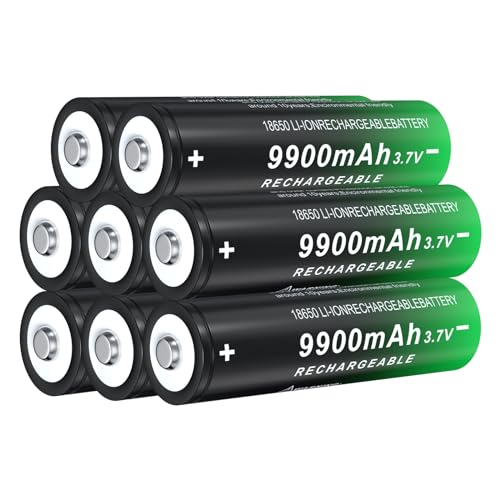
Small cells invite inflated numbers. A 16340 can holds limited active material, and physics sets an unforgiving ceiling on how much energy fits once the steel wall, separator, terminals, and safety hardware take their share. For mainstream lithium-ion versions, ratings around seven hundred to nine hundred milliamp-hours deserve consideration. Claims far beyond that band should prompt scepticism, especially when paired with vague discharge conditions or no downloadable datasheet.
Milliamp-hours alone can mislead when voltages differ. Energy is better compared in watt-hours, found by multiplying capacity by nominal voltage. A lower-voltage lithium iron phosphate cell with a respectable milliamp-hour figure may store less total energy than a lithium-ion rival. Conversely, a regulated product may deliver energy at a voltage the device can use more effectively, even if conversion losses reduce the theoretical total. Runtime depends on the complete chain: stored energy, conversion efficiency, device cutoff, load current, temperature, and how much capacity remains accessible before protection intervenes.
Discharge rate changes the answer as well. Datasheets often quote capacity at a gentle current that resembles a sensor or low light mode. A turbo flashlight drawing several amps extracts less usable energy and generates more internal heat. Cameras impose a different profile: tiny standby drain punctuated by motor, radio, and illuminator bursts. A cell that looks strong in a constant low-load graph may sag during those bursts late in its cycle, triggering a shutdown earlier than the headline capacity predicts.
Age matters from the first year onward. Calendar ageing proceeds even while a cell rests, faster at high charge and high temperature. Cycling adds wear, particularly when owners repeatedly drain cells until protection disconnects them. Two packs bought on the same day can diverge if one lives in a hot garage camera and the other rotates through an indoor torch. Sensible expectations beat disappointment: plan rotation around conservative runtime, keep a charged spare set ready, and replace cells when service time falls noticeably rather than waiting for complete failure.
When comparing brands, look for the test current, cutoff voltage, temperature, and tolerance printed beside the capacity figure. Reputable makers publish curves showing voltage over time at several loads. Marketplace-only brands often provide a single bold number and nothing else. That absence does not automatically prove poor quality, but it transfers all risk to the buyer. Given the modest price difference between obscure cells and documented ones, evidence is usually worth paying for.
Flashlights: brightness, heat, and honest compatibility
Handheld and weapon-mounted lights reward careful reading more than almost any other category. A modern driver may accept a broad input window, regulate output across both rechargeable and primary power, and step down automatically when temperature rises. In such a light, an approved 16340 can be economical and convenient, particularly for daily carry where cells cycle frequently. The manual will normally name acceptable chemistries, maximum voltage, and whether protected cells fit.
Problems arise when owners extrapolate from one model to another within the same brand. product lines change drivers without changing the external silhouette. A later revision may gain dual-fuel support while an earlier unit retains narrower limits, or the reverse may occur after a component substitution. Serial-specific documentation matters. Check the support page for your exact model and revision rather than relying on a forum post describing a light bought several years earlier.
Output claims deserve the same scrutiny as capacity claims. A rechargeable cell can unlock a higher peak mode in a compatible light, but peak output is rarely sustainable in a small host. Thermal step-down arrives quickly, sometimes within a minute or two, after which output settles to a level the body can dissipate. For practical tasks around a house, vehicle, or campsite, sustained medium modes often matter more than a spectacular opening burst. A primary may deliver less drama yet run those middle modes for a long stretch without attention.
Beam behaviour can change subtly with voltage. Some drivers hold constant output until cutoff; others dim progressively. Owners who depend on predictable illumination for inspection work may prefer the gradual warning offered by primaries or by lights with sophisticated low-voltage signalling. Others value constant brightness and accept an abrupt end because they carry spares. Neither preference is wrong. Trouble starts when the behaviour is discovered during a power cut, on a trail, or while working under a vehicle rather than during a calm check at home.
Button-top versus flat-top construction can decide whether a light works at all. Certain models use physical reverse-polarity protection that requires a raised positive terminal. Others accept either style but have springs stiff enough to dent an unsuitable contact. Protected cells add a disc at one end and a conductor strip along the side beneath the wrapper. If that wrapper tears, the strip can create a short risk. Inspect cells after drops, forced insertions, or difficult removals, and retire any example with damaged insulation instead of covering a serious tear and hoping for the best.
best aa and aaa battery chargers
Security cameras, trail cameras, and unattended service
Outdoor cameras seduce owners toward rechargeables because disposable consumption feels relentless. Every motion event, false trigger, live view, and cold night consumes part of a set, and popular models using multiple cells can turn battery replacement into a recurring chore. Rechargeable power can cut waste and running cost, but only where the camera maker permits it and the voltage profile suits the electronics. Official support pages should be the first stop, not an afterthought once a bundle is already in the basket.
Some manufacturers approve only primaries. That stance may reflect voltage tolerance, gauge calibration, weather sealing, warranty terms, or all four. Ignoring it can produce confusing symptoms rather than immediate destruction: offline periods, corrupted clips, failed firmware updates, inaccurate battery percentages, or infrared illumination that weakens before the camera admits trouble. During a firmware update, stable power is especially important, so many makers advise fresh primaries or external power regardless of everyday arrangements.
Regulated rechargeable cells solve the headline voltage issue for certain approved models, yet runtime expectations still need resetting. A primary set may last months in a quiet location because its total energy and low self-discharge suit standby service. A rechargeable set can require swaps far more often, particularly where a camera records frequent clips or faces winter temperatures. Owners who accept a shorter, predictable rotation often report satisfaction; owners expecting primary-like intervals from a much smaller energy reservoir usually do not.
Placement changes the calculation. A camera above a reachable porch can be serviced in minutes, making frequent rotation painless. A unit mounted high on a gable, deep in woodland, or at a vacant property carries a very different labour cost. For remote installations, the price of a ladder visit dwarfs any saving from recharging. Solar accessories, external packs approved by the maker, or primaries with excellent shelf life may be the rational choice even when rechargeable cells are technically permitted.
Trail cameras add cold exposure, moisture, and long gaps between visits. Lithium primaries have earned their reputation in that setting because they tolerate low temperatures and retain charge during storage. Rechargeable lithium-ion cells can work for shorter deployments near home, but capacity falls in the cold and self-discharge continues while the camera waits. A responsible trial involves one camera, one location, and notes on trigger count, night images, temperature, and days served. Generalising from a mild week indoors would tell you almost nothing.
Battery gauges and the sudden endpoint
Do not ask a percentage display to perform magic. Unless firmware was designed around a specific rechargeable profile, it estimates by translating voltage into a familiar primary scale. Regulated cells frustrate that translation by design. Lithium iron phosphate has a famously flat middle section too, so a gauge can linger near full and then move quickly. Build your routine around elapsed days, event counts, or scheduled swaps rather than a reassuring icon. Where the camera supports external power or a maker-approved rechargeable pack with integrated metering, those purpose-built options usually report more honestly.
The charger is part of the product, not an accessory
More small lithium cells are ruined by casual charging than by dramatic accidents. Each chemistry and regulated design expects a defined algorithm, usually described as constant current followed by constant voltage, ending at a specified ceiling. Lithium-ion 16340 cells generally charge to 4.2 volts. Lithium iron phosphate requires a lower endpoint, commonly around 3.6 or 3.65 volts depending on the maker. Regulated three-volt products may need a proprietary method entirely. A charger that physically accepts the cell has not thereby proved it can charge that cell correctly.
Dedicated modes matter more than a forest of marketing badges. Look for explicit support naming the chemistry, selectable termination where appropriate, and clear labelling that cannot be confused between slots. Automatic detection is convenient when it works, but chemistry pairs with similar size and different endpoints create room for error. A simple charger with the correct fixed algorithm can be safer than a sophisticated unit left in the wrong mode by a tired owner at midnight.
Charge current should respect the small format. A useful rule from many datasheets is to stay at or below half the cell capacity per hour unless the maker permits faster input; for a typical eight-hundred milliamp-hour cell, that points toward a gentle few hundred milliamps. High-current slots designed for larger cylinders may overwhelm a tiny cell, shorten its life, and generate unnecessary heat. Adjustable chargers should be set deliberately for every session, because a slot may retain a previous setting intended for a much bigger battery.
Termination behaviour deserves attention too. Quality chargers stop cleanly rather than trickling lithium cells indefinitely. Indicators should distinguish charging, complete, and error states without ambiguity. If a cell remains on a charger for days because nobody noticed a finished light, remove that habit from your routine. Charge on a non-flammable surface, stay within reach of the room, and investigate any cell that becomes unusually warm, hisses, swells, smells sweet or chemical, or refuses to finish within a plausible time.
Spring-loaded bays can damage wrappers when users drag cells sideways during removal. Lift or roll them out as the charger design intends. Short cells may need spacers in universal chargers, but improvised metal objects have no place near exposed terminals. Prefer a charger whose contacts suit the format natively. If a maker supplies a spacer, keep it with the unit and inspect it for cracks or corrosion. Loose contact produces heat, erratic readings, and incomplete charging that later masquerades as poor cell capacity.
Why a general-purpose bay can still be the wrong bay
Owners often own one smart charger for several formats and understandably want it to cover everything. That works when the manufacturer lists the small size, offers suitable low current, and provides the correct chemistry mode. It fails when minimum current is too high, contact geometry is marginal, or the charger revives deeply discharged cells with a boost feature inappropriate for a damaged pack. Read the charger manual with the same care given to the device manual. Compatibility is a chain, and the weakest document in that chain determines confidence.
Fit, length, and the millimetre that decides everything
The nominal 16340 length sounds reassuringly standard until protection, terminals, and manufacturing tolerance enter the picture. An unprotected flat-top may measure close to the base dimension. Add a protection board and a button, and overall length can grow by several millimetres. Some lights swallow that growth easily. Others rely on a tailcap that must screw fully home to seal against rain or maintain a ground path. If threads stop early, do not force them. Mechanical pressure can crack a board, deform a spring, or damage the cell end.
Measure the space if the maker publishes no guidance. A digital caliper helps, though even a careful comparison against a primary reveals obvious excess. Remember that springs need travel remaining after installation; a cell that fits only with the spring fully crushed leaves no compliance for shock. In a weapon light or helmet light, recoil and impact make that reserve important. In a camera, an overlong cell can stress a plastic door or latch until it creeps open outdoors.
Diameter discrepancies are less common but more annoying. Thick wrappers, double wrapping on some protected products, and labels with raised seams can bind in precision tubes. Never sand a wrapper, trim insulation, or lubricate a cell to make it enter. Those interventions attack the very material preventing a short. Choose a slimmer documented product instead. If a cell becomes stuck, stop, keep the device upright, and follow maker guidance rather than prying with conductive tools.
Contact shape interacts with device design in quieter ways. Recessed positive contacts in some equipment reject flat tops electrically even though the cell occupies the tube. Mechanical polarity guards may block insertion entirely. Conversely, a protruding button can concentrate force on a delicate contact pad. Product photographs rarely convey these details at useful scale, so dimension drawings and owner measurements in specialist discussions become valuable corroboration.
Safety habits proportionate to a very energetic little can
Small size can breed casual handling. A 16340 fits in a coin pocket, rolls off a desk, and disappears into a sofa cushion, yet it stores enough energy to become dangerously hot if its terminals bridge through keys or loose change. Carry spares in a plastic case that isolates each cell. Keep them away from water, metal tools, magnets that might move them into contact, and children who may mistake the shiny cylinder for a toy component. These are ordinary precautions, not alarmism.
Inspect wrappers routinely. The outer film insulates much of the can, which on many lithium-ion cells forms part of the negative path. Nicks near the positive end are particularly serious because exposed metal surfaces sit close together. Rewrapping is a skilled repair using correct materials and a new insulator ring; tape is not a durable substitute. Most households should simply recycle a damaged cell through an approved collection point, taping its terminals first if local guidance requests that step.
Heat is information. A cell that warms during moderate discharge, charges unevenly beside its partner, or loses charge rapidly while resting may be ageing or damaged internally. Separate it from service and monitor it in a safe place. Do not puncture, crush, incinerate, solder directly to, or attempt to open any lithium cell. If swelling, leakage, venting, smoke, or intense heat occurs, move people away and follow local emergency guidance rather than improvising with water or a household extinguisher unless authorities advise otherwise for the situation.
Storage at partial charge suits lithium-ion cells that will rest for weeks or months. Many makers suggest keeping them cool, dry, and somewhere near the middle of their range rather than brim-full. Lithium iron phosphate tolerates storage somewhat differently, so follow its datasheet where available. Whatever chemistry you own, label the date and keep pairs together in the same case. A marker on the wrapper can work, though a labelled case avoids adding thickness or obscuring safety printing.
Disposal deserves the same seriousness as purchase. Rechargeable lithium cells do not belong in household rubbish or curbside recycling carts unless a local programme explicitly accepts them. Retail take-back schemes, municipal hazardous-waste events, and dedicated battery collection points exist because damaged cells in collection vehicles cause real fires. Primaries should also follow local rules, which vary by jurisdiction and chemistry. Checking a council or sanitation department page takes less time than sorting out a preventable incident.
Cold, heat, storage, and realistic service life
Temperature exposes the difference between laboratory capacity and field capacity. Cold electrolyte conducts ions less readily, voltage sags earlier under load, and a protection circuit may disconnect during a burst that would be unremarkable in spring. Cameras mounted outdoors therefore show shorter rechargeable service in winter even when the same cells performed admirably during autumn trials. Warming a spare set indoors before installation can help initial operation, but the device will cool again once mounted.
Heat accelerates degradation more permanently. A camera baking on a sunlit wall or a torch forgotten on a vehicle dashboard subjects cells to conditions no datasheet would endorse as storage. Over successive summers, internal resistance rises, capacity falls, and voltage under load becomes less stable. If an installation routinely runs hot, primaries rated for wide temperature ranges or an external power solution may outlast rechargeables by a margin large enough to change the economics completely.
Cycle-life figures need context. A maker may define one cycle as a full equivalent discharge accumulated across partial uses, and may promise a certain number of cycles before capacity falls to a stated fraction of its original value. Gentle currents, moderate temperatures, and avoidance of deep discharge generally extend life. Repeated protection cutoffs do the opposite. Owners who rotate two sets before either is exhausted often obtain better total service than owners who squeeze every final minute from a single set.
Self-discharge is modest for quality lithium cells compared with older rechargeable chemistries, but protection and regulation circuits consume a trickle. A cell stored fully charged for a season may not be ready for a critical task without a top-up and voltage check. Before relying on spares during travel or severe weather, inspect and recharge them on a schedule. A simple calendar reminder every few months beats discovering stale spares during an outage.
How to judge a product listing in five minutes
Begin with identity. Does the page state chemistry, nominal voltage, full-charge voltage, dimensions, protection status, and terminal style in unambiguous language? Or does it hide behind the generic phrase rechargeable 123A while photographs show contradictory labels? Screenshots of the actual cell printing are useful, although they cannot substitute for a datasheet. Search the exact model designation on the maker website and compare every figure. Discrepancies in capacity or voltage between listings for the same product are a warning sign.
Next, examine the charger bundle. Bundling can be excellent value when the included unit matches the cells and offers an appropriate rate. It can also be a way to move generic stock whose termination voltage suits a different chemistry. Photographs of the charger display, a model number, and a downloadable manual allow verification. If the bundle provides no way to confirm its settings, price it as though the charger contributes nothing.
Then read owner feedback with a filter for device context. A glowing comment from someone using an approved dual-fuel torch tells little about an older camera. A complaint about short life may reveal misuse, counterfeit stock, or an unregulated cell placed in primary-only equipment. Look for repeated observations about wrapper durability, actual length, charger heat, and consistency between cells. Patterns across independent reports matter more than any single dramatic anecdote.
Warranty and traceability round out the picture. Established makers publish addresses, safety certifications where applicable, batch information, and support channels. Certifications should be checked carefully because marks can be copied and because a test standard may apply to a different model. Still, a business willing to attach its name, documentation, and recall responsibility to a cell offers accountability that anonymous bundles cannot match.
A practical buying order for different households
If your main device is a current dual-fuel flashlight, start with the maker-approved lithium-ion option, protected if the host accepts the extra length and if that maker recommends protection. Buy two matched sets so one can rest while the other works. Select a charger with a suitably low current setting. This is the straightforward case, and it is where rechargeable economics shine because frequent use spreads the initial cost across many cycles.
If your main device is a camera whose maker approves regulated rechargeable cells, begin with a single set from a documented brand. Trial it on the least critical camera position, record installation date, event volume, night performance, and swap date, then decide whether the rotation interval suits the household. Do not convert every camera at once based on a promising first weekend. Seasonal change may alter the verdict, and keeping one primary-powered unit provides a useful comparison.
If documentation prohibits rechargeable cells, believe it. The prohibition may frustrate owners, but it reflects engineering and warranty decisions made with knowledge of the circuit. Spend effort instead on reducing consumption: sensible motion sensitivity, fewer live views, firmware kept current, vegetation trimmed away from the detection zone, and placement that avoids headlights or moving shadows. Those changes can extend a primary set more safely than an electrical gamble.
If your equipment lives outdoors and unattended for long stretches, primaries often remain the rational benchmark. Their shelf life, cold tolerance, and predictable taper suit infrequent service visits. Rechargeables become more attractive as access improves and intervals shorten. There is no moral prize for recharging when each swap requires a long drive or a tall ladder. Environmental calculations should include travel, failed recordings, and prematurely discarded damaged cells, not merely the number of disposable wrappers avoided.
Matching cells as pairs and retiring them gracefully
Write a purchase month on the storage case, not across critical wrapper information. Keep series partners together through every charge and deployment. If one member fails, swells, suffers wrapper damage, or ages dramatically faster, retire the pair from series duty rather than introducing a fresh stranger beside an old survivor. A lone healthy cell might still serve in a suitable single-cell device if inspection and capacity suggest it is sound, but many households prefer simple retirement to complicated exceptions. Simplicity prevents mistakes by guests, teenagers, and anyone reorganising a drawer at speed.
Common myths that keep causing returns
The first myth says voltage only matters at the moment of switch-on. In reality, heat, regulation, and component stress unfold over time. A device can appear to work during a brief demonstration and still be operating outside specification. The second myth treats protection as permission. A protection board guards against certain electrical extremes; it does not lower nominal voltage, rewrite a manual, or guarantee physical fit. The third myth assumes all chargers labelled lithium understand every lithium chemistry. They do not, and termination voltage is the detail that exposes the difference.
A fourth myth imagines capacity as a fixed tank independent of load. Real cells deliver different usable energy at different currents and temperatures, and devices stop at different thresholds. A fifth myth blames every abrupt camera shutdown on a defective cell when the true culprit is a gauge interpreting a flat regulated curve. Finally, many shoppers believe a higher printed milliamp-hour number signals a newer generation. In this format, restraint in a claim often signals greater honesty than exuberance.
Questions to ask before any set enters service
Can the device maker name the chemistry you intend to use? Does the cell maker publish a discharge curve and charging specification? Will the charger terminate at exactly the required voltage and at a current gentle enough for such a small can? Does overall length leave spring travel and allow seals to close? Have you planned for a flat discharge profile if the product is regulated? Do you own a case for transport, a labelling method for pairs, and a recycling route for retirement? Answering those questions on paper takes ten minutes and prevents most disappointments described in owner forums.
For households managing several devices, a small inventory page helps. Note which product each set belongs to, chemistry, purchase date, charger setting, and any runtime observations worth remembering. That record sounds fussy until two similar-looking sets with different voltages end up side by side on a counter. Clear segregation matters because wrappers can be misread in poor light. Store lithium-ion, lithium iron phosphate, regulated, and primary cells in separate labelled cases rather than trusting memory.
Names on wrappers: RCR123A, 16340, and other aliases
Confusion deepens because sellers use several labels interchangeably even though they do not carry identical meaning. RCR123A suggests a rechargeable counterpart to the primary format, yet it reveals nothing reliable about chemistry or output regulation. One brand applies it to lithium iron phosphate, another to regulated lithium-ion, and a third to an ordinary high-voltage cell. The printed nominal voltage, usually found in smaller type, tells the truth that the large brand lettering avoids.
The numeric code 16340 is more precise about size and less informative about everything else. It says nothing concerning protection, terminal shape, discharge rating, or charging endpoint. Two products sharing that code can behave like distant cousins once installed. Meanwhile, a handful of makers use proprietary model names with no obvious reference to either system. Shoppers who search by alias alone will gather incompatible products into one comparison table and then wonder why prices and specifications refuse to align.
A disciplined shopper reads a wrapper in a fixed order. Chemistry comes first, written as a full name or a recognised abbreviation explained on the maker site. Nominal voltage follows, then full-charge voltage in the charging instructions. Capacity appears next, ideally with a discharge rate attached. Dimensions, protection status, and terminal form complete the identity. If any element is missing, treat the product as unidentified until the manufacturer supplies it through documentation rather than through a chat reply from a reseller.
Checking a cell with a multimeter without fooling yourself
A handheld meter can answer narrow questions well. Fresh off a charger, an ordinary lithium-ion example should read close to its intended ceiling, allowing for meter accuracy and a small settling drop. A lithium iron phosphate example should sit near its own lower ceiling. A regulated product may display its controlled output rather than the voltage of the internal cell, depending on design, so a three-volt reading does not reveal how full the reservoir behind the regulator truly is.
Voltage at rest cannot measure capacity. A tired cell can show a healthy surface figure and collapse once a light or camera draws current. Proper capacity measurement requires a controlled load, a defined cutoff, and time, which is why analyser chargers and published discharge curves exist. Home users can still gather useful clues: note how long a known device runs, whether partners finish together, and whether runtime changes abruptly over a few cycles. Sudden divergence between twins deserves investigation long before either fails in service.
Never short a cell deliberately to see whether protection trips, and never connect a meter set to current measurement directly across terminals. Those experiments create the hazard they claim to evaluate. If a meter reading looks impossible, remove the cell, inspect contacts, confirm the dial position, and measure a known primary for comparison. Methodical checks prevent a simple instrument error from sending a good product to recycling or, worse, returning a damaged one to a camera.
Troubleshooting symptoms that owners commonly misread
Flicker after installing rechargeables may arise from excess length, a dirty contact, a protection board tripping under peak demand, or a driver objecting to input voltage. Change one variable at a time. Clean contacts with a dry cloth, confirm the tailcap closes fully, and compare behaviour using primaries known to be fresh. If primaries restore calm operation, the rechargeable system is implicated even if each cell measures well at rest.
A camera that records daytime clips but misses night events points toward voltage sag under illuminator load. Cold air compounds that weakness. Bring the camera indoors, allow everything to reach room temperature, and run the same set through a controlled evening. Improvement indoors implicates temperature or marginal capacity rather than a networking fault. Persistent failure across temperatures suggests the cell profile and camera thresholds simply do not agree.
Short life in a flashlight used mainly on its highest mode may be normal physics disguised as disappointment. Small hosts shed heat poorly, drivers draw heavily, and protection limits arrive sooner as internal resistance rises with age. Compare runtime on a middle setting against maker figures for that mode before condemning a purchase. Many owners discover their real complaint concerns the light appetite, not the cell quality, and solve it by carrying a second set rather than hunting for a miraculous replacement.
Uneven finishing on a charger deserves attention. Partners used together should complete within a broadly similar period, although small differences occur. A cell that consistently lags, feels warmer, or drops charge overnight is announcing decline. Remove it from series work, label it clearly, and decide on retirement based on repeated behaviour rather than a single odd session caused by poor contact.
Travel, spares, and keeping incompatible sets apart
People who carry photographic lights, backup torches, or camera spares while travelling face an organisational problem more than an electrical one. Several visually similar cylinders may represent three voltages and two charging systems. Colour-coded cases help, as does a rule that only one chemistry travels in any given pouch. Loose cells in a wash bag or glove compartment invite terminal contact and wrapper abrasion, quite apart from airline rules that require lithium spares to ride in cabin baggage with terminals protected.
Hotels add another temptation: charging unfamiliar cells from whatever adapter happens to be nearby. A regulated product with its own specified method should not be improvised into a travel routine. Pack the correct charger or choose primaries for the trip. Simplicity during travel has value because fatigue and unfamiliar rooms multiply small mistakes. A written card inside the case stating chemistry, charger setting, and pairing partner can save a companion from making a well-intentioned error.
Environmental and cost arithmetic done honestly
Rechargeables reduce discarded material only when they survive long enough to displace many primaries. A set ruined early by the wrong charger, or abandoned because it never suited the device, delivers little environmental benefit. Likewise, a camera that misses an important recording may prompt a return to disposables plus the sunk cost of the failed experiment. Counting cycles actually achieved, rather than cycles promised on packaging, produces a fairer ledger.
Money follows a similar pattern. Frequent users recover the price of cells and a dedicated charger quickly because primaries would otherwise be bought in a steady stream. Occasional users may wait years to break even, during which calendar ageing erodes the asset sitting in a drawer. For a torch used twice annually during power cuts, fresh primaries stored correctly can be cheaper, simpler, and more dependable. Sustainability and thrift both favour matching the technology to genuine usage instead of adopting rechargeables as a reflex.
What a first purchase should actually look like
Start smaller than enthusiasm suggests. One documented set, the correct charger, and a rigid storage case form a complete trial kit. Resist bundles containing large quantities of unbranded cells, because a compatibility mistake multiplied by twelve is still a mistake, merely a better stocked one. Run the set through the intended device during an ordinary week, note swap intervals and any odd behaviour, and only then decide whether a second set deserves space in the drawer.
Record the charger setting on a card kept with the case. Households forget settings between rotations separated by months, and housemates cannot be expected to guess chemistry from a wrapper glimpsed under kitchen lighting. A note reading chemistry, termination, current, and pairing partner removes ambiguity at the moment it matters. Photographing the card and storing that image with other appliance manuals gives the household a backup when paper goes astray.
Finally, decide the retirement rule before emotion enters the decision. Examples might include runtime falling to roughly two thirds of its early performance, visible wrapper damage, repeated protection trips during normal duty, or a partner failing. A rule chosen in advance turns disposal into routine maintenance rather than a debate repeated every time a camera misses a clip. It also stops elderly cells drifting into critical devices simply because they still produce a reassuring reading at rest on a quiet afternoon at home.
Keep the packaging and datasheet printout until the trial ends. If a return becomes necessary, those papers establish exactly what was promised, and if the set performs well, they become the reference for ordering identical replacements later. Manufacturers revise products quietly, so a familiar listing title months from now may conceal altered length, revised protection limits, or a different charger in the box. Comparing new arrivals against retained documentation takes minutes and prevents a trusted routine from drifting into incompatibility unnoticed. That small filing habit, dull as it sounds, protects every later purchase and gives the household a stable record when support staff ask which revision produced a fault during a warranty conversation held long after the excitement of buying has faded away completely.
Share the outcome of that trial with whoever else uses the equipment. A partner who knows why one case holds camera cells while another holds torch cells will not undo careful segregation during a hurried tidy. Brief explanations attached to the storage boxes themselves work better than a lecture, because they appear precisely where a tired person reaches for spares during darkness, bad weather, or an unexpected visitor arriving at the gate after midnight tonight.
Check prices on Amazon
Live listings for the shortlist in this guide are pulled from Amazon below, so prices and availability are always current at the moment you look.


The sensible conclusion for a confusing format
Rechargeable 123A cells are neither a scam nor a drop-in miracle. They are several distinct technologies borrowing one familiar silhouette. Unregulated lithium-ion versions excel in lights explicitly built for them. Lithium iron phosphate brings lower voltage and durability where its special charger and runtime profile fit the job. Regulated three-volt designs can serve approved cameras and legacy equipment, provided owners accept conversion losses and abrupt endpoints. Primaries continue to win for long unattended deployments, severe cold, and devices whose makers draw a firm line.
Buy evidence before hardware: a manual that permits the chemistry, a datasheet that states believable capacity, a charger that terminates correctly, and dimensions that respect the compartment. Keep pairs matched, charge gently, store spares safely, and judge runtime in the actual device through an actual week of use. Follow that unglamorous sequence and this notoriously confusing little cylinder becomes a dependable part of the household kit instead of a recurring lesson bought one disappointing bundle at a time.