What's inside
- Where to buy
- Key Takeaways
- Quick Picks
- How We Chose These Picks
- How Much Brightness Does a Sunroom Actually Demand?
- Six Screens, Three Kinds of Sunroom: A Placement Map
- How Do You Arrange a Sunroom So the TV Can Win?
- What Mistakes Ruin Sunroom TV Purchases?
- How Does the Sunroom’s Day Actually Unfold on Screen?
- What About Heat, Condensation and the Life of the Set?
- How Do You Handle Sound in a Room Made of Glass?
- Which Purchase Path Suits Which Household?
- What Should You Verify in the First Week of Ownership?
- How Do Plants, Pets and Sunroom Life Treat a Television?
- What About the View From the Garden Looking In?
- How Should You Think About the Money?
- A Seasonal Calendar for the Sunroom Screen
- What If the Sunroom Is Still Being Planned?
- Final Recommendation
- Frequently Asked Questions
- Related Guides
As an Amazon Associate I earn from qualifying purchases. This post may contain affiliate links at no extra cost to you.
gizmoverdict.com is reader-supported. When you buy through links on our site, we may earn an affiliate commission.
Where to buy
These six sets are sold through Amazon in the US, and for a sunroom purchase the listing deserves a slower read than usual: confirm whether the model is an indoor television or a genuine outdoor-rated one, check the operating guidance the maker publishes, and note the mount and cover options offered alongside it. In a bright room, the accessories are not upsells; they are half the installation.
The best tvs for sunrooms are fighting the most honest enemy in home entertainment: daylight. A sunroom is glass on two or three sides, furnished like a garden that wandered indoors, and used at exactly the hours when televisions are at their weakest — morning coffee with the news, a long bright afternoon of sport, the golden hour when every west-facing pane turns into a lamp aimed at the screen. A set that looks magnificent in a showroom’s gloom can dissolve into a grey mirror out here, and the specification that decides survival is not resolution or smart features. It is the contest between the panel’s brightness and the room’s, refereed by whatever anti-glare treatment the glass is wearing.
This guide therefore sorts its six picks into two honest families. Two of them — Samsung’s The Terrace and the SYLVOX outdoor television — are outdoor-rated designs, built to live with weather at their backs and brightness as their birthright; they are the step-ups for sunrooms that open fully to a terrace, rooms that are effectively covered porches. The other four are indoor televisions chosen because their brightness headroom and anti-glare behaviour give them a fighting chance in a glazed room: they belong inside the house’s envelope, in a proper sunroom that stays dry, and nothing in these pages should be read as permission to expose them to rain. That distinction is the most important sentence in the guide, and each review repeats its own side of it.
Sizes run from 43 to 65 inches because sunrooms vary more than living rooms do: a narrow conservatory breakfast room and a wide garden room are different briefs wearing the same name. Judge the picks against your glass, your seating and your sun path — the sections below will help you do exactly that.
Key Takeaways
- Samsung’s The Terrace is the sunroom reference: an outdoor-rated Neo QLED with anti-glare treatment and weather resistance, made for partial-sun life.
- The Hisense U8QG at 55 inches is the indoor brightness bargain — mini-LED muscle with headline brightness that lets a glazed room keep its colour at noon.
- Samsung’s QN80H answers reflections with anti-glare behaviour and processing polish, for the sunroom that stays firmly indoors.
- TCL’s QM7L stretches the argument to 65 inches for wide garden rooms where the seating sits far back among the plants.
- LG’s QNED85B defends the corner seats: viewing angles are its brief, in the room where nobody sits square to the screen.
- The SYLVOX outdoor set is the full-sun step-up — IP56 weatherproofing and a 1,000-nit panel for sunrooms that are really covered terraces.
Quick Picks
| Pick | Badge | Why it is here |
|---|---|---|
| Samsung The Terrace 55″ | Best Overall | Outdoor-rated, anti-glare and weather resistant — the sunroom brief answered without asterisks. |
| Hisense U8QG 55″ | Best Brightness Value | Mini-LED brightness at a value badge for enclosed sunrooms that flood with light. |
| Samsung QN80H 55″ | Best Anti-Glare | Neo QLED processing and reflection control for glass-heavy indoor rooms. |
| TCL QM7L 65″ | Best Big and Bright | Sixty-five inches of mini-LED output for wide garden rooms and distant seating. |
| LG QNED85B 65″ | Best Viewing Angles | A big QNED panel that keeps the corner chairs in the picture. |
| SYLVOX Outdoor 43″ Full Sun | Best Full-Sun Step-Up | IP56 weatherproofing and a 1,000-nit screen for the sunroom that is really a terrace. |
How We Chose These Picks
Brightness came first, but brightness read honestly: a panel’s ability to hold contrast and colour in a lit room is a marriage of raw output, anti-glare treatment and processing, and a dim screen with a matte finish can beat a bright screen wearing a mirror. We favoured sets whose listings speak directly to that contest — anti-glare claims, outdoor ratings, headline brightness figures — and we treated manufacturer peak figures as framing rather than as laboratory results, the same discipline applied throughout this batch.
The second criterion was the room’s legal status, so to speak: is this sunroom inside the house’s weather envelope, or is it a covered outdoor space that happens to have furniture? The outdoor-rated pair answer the second case; the indoor four answer the first, and we have kept the boundary bright and uncrossed in every review, because confusing the two is how televisions die young and warranties die with them. Third came the geometry — sizes and viewing angles matched to rooms where seating wraps around plant stands and coffee tables rather than lining up in a row.
Platform and polish were judged last, deliberately. In a sunroom, the finest smart interface in the world cannot rescue a washed-out picture, while a merely good interface on a visible screen serves the room for years. All six sets here are complete, current smart televisions; they differ in emphasis, and the reviews spend their words where the sunroom spends its problems.
How Much Brightness Does a Sunroom Actually Demand?
More than any other room in the house, and the honest way to feel the scale is to compare the sunroom with the living room it adjoins. A living room’s ambient light is a few lamps and a window; a sunroom’s is a wall of sky. Panels that cruise in the first are outnumbered in the second, which is why outdoor televisions exist as a category at all and why their brightness figures — the Terrace class, the SYLVOX’s stated 1,000 nits — run so far beyond domestic norms. The indoor picks here survive by a different route: high brightness for their class plus coatings that refuse to mirror the garden back at the viewer.
Direction matters as much as quantity. A screen facing a window fights the sky head-on; a screen with its back to the glass, watched from seats facing inward, fights only the room’s general glow — a contest any of these six can win. Before ordering anything, stand where the set would hang at the brightest hour you actually use the room and look at the wall. If you are squinting at the wall itself, no indoor panel will save that position; move the screen, plan a blind, or promote the purchase to the outdoor-rated pair. Sunroom television is landscape architecture first and electronics second.
Time of day completes the picture. Many sunrooms are morning rooms, gentle by afternoon; others are evening traps for the setting sun. A room whose worst hour is one you rarely spend there does not need to be specified for that hour. Buy for your room’s real timetable, and the indoor picks become entirely sufficient for most enclosed sunrooms — which is, in the end, why four of the six places in this guide belong to them.

Samsung The Terrace 55″ — Best Overall
The Terrace is what happens when a manufacturer designs for this exact brief instead of adapting a living-room set to it. Samsung’s listing describes a 55-inch Neo QLED 4K outdoor television for partial sun: weather resistant, anti-glare, with a wide viewing angle, Quantum HDR+ and Dolby Atmos, and Alexa built in. Every clause of that sentence is load-bearing in a sunroom. Weather resistance covers the room that opens its folding doors to the garden all summer; the anti-glare screen fights the glass; the wide angle serves seating scattered among the furniture rather than ranked before it.
The partial-sun designation deserves respect rather than disappointment. The Terrace is engineered for outdoor spaces that receive shade for part of the day — under a roof line, behind a pergola’s shadow, on the wall the sun leaves by noon — which describes the great majority of sunrooms precisely, since a sunroom by definition has a roof. In that habitat its combination of outdoor build and flagship Neo QLED picture has no rival in this guide: it is simultaneously the safest installation and, in bright conditions, very likely the best picture, because its panel was specified against daylight rather than apologised for in it.
The costs are the honest ones: outdoor engineering is expensive, and 55 inches is the size on offer here, so the widest garden rooms may still look to the 65-inch indoor picks for scale. But for the classic sunroom — glazed, roofed, bright, beloved — The Terrace is not merely the top pick. It is the pick the category is named after.
- Screen: 55-inch Neo QLED 4K, anti-glare
- Rating: weather resistant outdoor TV, partial-sun design
- HDR/audio: Quantum HDR+, Dolby Atmos
- Viewing: wide viewing angle per listing
- Platform: Samsung smart TV with Alexa built in
Strengths
- The only flagship here designed from the start for bright, semi-outdoor life.
- Anti-glare plus Neo QLED output holds colour where domestic sets wash out.
- Weather resistance forgives the open-doors, garden-adjacent reality of sunrooms.
Trade-offs
- Outdoor engineering carries a flagship price.
- Partial-sun design still prefers a shaded wall to a sun-blasted one.
- At 55 inches, the very largest garden rooms may want more canvas.
Best for: the classic glazed sunroom that opens to the garden and hosts viewing all day. Not suited for: a fully exposed, unroofed deck in direct all-day sun, where even this design is outside its stated habitat.

Hisense U8QG 55″ — Best Brightness Value
Read this review as a daylight argument, because that is the only argument this set needs to make in a sunroom. The 55-inch U8QG brings Hisense’s ULED mini-LED engine indoors: QLED colour, a native 165Hz panel with variable refresh quoted up to 288, local dimming described in the listing’s LD5600 framing, brightness quoted up to 5,000 nits at peak, and a 4.1.2-channel audio system. Those are the manufacturer’s headline framings rather than bench measurements — but in a room defined by excess light, a panel engineered to produce light in unusual quantity is exactly the tool, and at 55 inches this is the most brightness a sunroom dollar buys in this guide.
Its sunroom virtues are specific. Peak brightness is what HDR highlights and sunlit sport consume; a panel with headroom to spare can run its daylight picture without straining at its ceiling, and colours stay saturated instead of thinning into pastel. The high refresh keeps a bright afternoon’s football or tennis clean in motion, when a washed-out, juddering picture would compound the room’s difficulties. And the multi-channel built-in audio matters out here more than in a carpeted lounge, because sunrooms are hard-surfaced — glass, tile, rattan — and a fuller sound system fills them without shouting.
The boundary must be stated as plainly as the praise: this is an indoor television. It has no weather rating, and its place is the enclosed sunroom that stays dry when the doors are shut — which is most sunrooms, most of the time. Keep it inside that envelope and it is a formidable bright-room set; ask it to live on an open terrace and you have bought the wrong tool, however bright it is.
- Screen: 55-inch ULED Mini-LED QLED 4K
- Refresh: native 165Hz, VRR quoted to 288 per listing
- Brightness: up to 5,000 nits claimed in the listing
- Audio: 4.1.2-channel built-in system
- Placement: indoor, enclosed sunroom only — no weather rating
Strengths
- Brightness headroom that lets a glazed room keep its colour at midday.
- High-refresh motion suits bright-afternoon sport.
- The fullest built-in sound here, welcome in a hard-surfaced room.
Trade-offs
- No weatherproofing — the enclosed sunroom is its whole world.
- Peak figures are peaks; the everyday picture is strong, not supernatural.
- Its glossy ambition still prefers a wall that avoids direct sun strikes.
Best for: enclosed, light-flooded sunrooms where the picture has been washing out for years. Not suited for: covered porches or any spot where rain can reach the wall, whatever the roof salesman promised.
Samsung QN80H 55″ — Best Anti-Glare
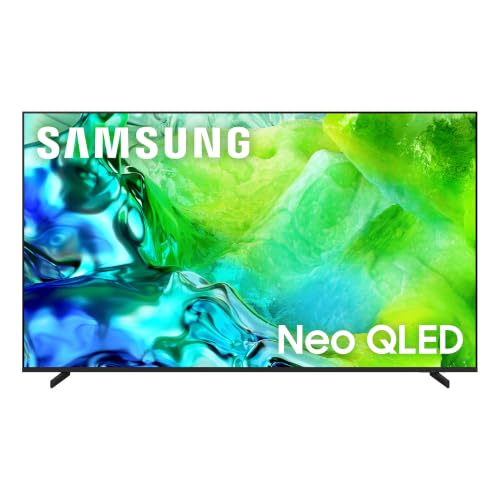
Where the Hisense fights daylight with output, the Samsung QN80H fights it with manners. This 55-inch Neo QLED mini-LED — Quantum Mini LED full-array backlighting, Motion Xcelerator 144Hz, 4K AI upscaling and Color Booster Pro under Samsung’s Vision AI — is the polished indoor option, the set for the sunroom that is unmistakably a room: insulated, dry, and used from breakfast to the evening news. Its anti-glare behaviour and processing discipline are aimed at the sunroom’s subtler problem, which is not raw brightness but reflection — the garden’s bright ghost floating over the programme.
Samsung’s processing earns its fee in this setting for a specific reason: sunroom content is daytime content — news, talk, sport, the grandchildren’s programme during a visit — much of it in ordinary resolutions that a lesser scaler leaves soft. The QN80H’s upscaling keeps that diet composed, and its colour work keeps faces natural when the room’s light is doing its worst. The 144Hz motion handling, meanwhile, is sport insurance for the room’s big afternoons.
It shares its family’s known footnote — Samsung backs the alternative HDR formats rather than Dolby Vision — and, like the Hisense, it is an indoor set with no claim on the weather. Within those honest borders it is the connoisseur’s sunroom answer: less shout than the brightness pick, more finish, and a picture that behaves as if the room were easy, which is the most luxurious trick a sunroom television can perform.
- Screen: 55-inch Neo QLED Mini LED 4K
- Motion: Motion Xcelerator 144Hz per listing
- Processing: 4K AI upscaling, Color Booster Pro
- Platform: Samsung Vision AI smart TV, Alexa built in
- Placement: indoor sunroom — no weather rating
Strengths
- Reflection control and processing polish for the civilised glazed room.
- Upscaling keeps daytime’s ordinary-resolution diet looking composed.
- Flagship platform familiarity for the whole household.
Trade-offs
- No Dolby Vision, per Samsung’s standing position.
- Indoor only — the terrace conversation belongs to other picks.
- Brightness hunters can buy more raw output elsewhere in this guide.
Best for: proper indoor sunrooms where reflections, not darkness, are the enemy. Not suited for: semi-outdoor spaces, where its polish has no weather armour to protect it.

TCL QM7L 65″ — Best Big and Bright
Wide garden rooms break the 55-inch spell. When the seating sits ten or twelve feet back among the furniture — because the room is a room, with a dining end and a reading corner and plants with ambitions — a bigger canvas stops being a luxury and becomes legibility. The TCL QM7L supplies it: a 65-inch SQD-Mini LED QLED with a 144Hz Google TV platform, Dolby Vision IQ that adapts the picture to the room’s light, Dolby Atmos and TCL’s ultimate brightness and contrast framing. In a sunroom, Dolby Vision IQ’s room adaptation is not a brochure phrase; a room whose light changes by the hour is precisely the room an adaptive picture was invented for.
The mini-LED output scales the brightness argument to the larger canvas, so the garden room’s distant seats still receive colour rather than a pale suggestion of it, and Google TV keeps the household’s apps and casting in their familiar places. TCL’s flagship-tier panels have been the value disruptors of recent seasons, and the QM7L continues that pattern at the size where value is hardest to find.
Two cautions keep the review honest. Sixty-five inches of glass in a glass room is a lot of reflective surface, so wall choice and a blind for the worst hour matter more here, not less; and this remains an indoor television, to be kept inside the weather envelope like the Hisense and the QN80H. Give it the right wall in an enclosed room and it turns the garden room into the house’s favourite cinema-with-a-view.
- Screen: 65-inch SQD-Mini LED QLED 4K, 144Hz
- HDR: Dolby Vision IQ with room adaptation, HDR10
- Audio: Dolby Atmos support
- Platform: Google TV with Gemini per listing
- Placement: indoor, enclosed rooms only
Strengths
- Size plus brightness for rooms where the seats are genuinely far away.
- Room-adaptive HDR suits a space whose light will not sit still.
- Flagship-class panel at TCL’s customary value posture.
Trade-offs
- The largest reflective surface here — wall and blind planning are mandatory.
- Indoor only, despite its outdoor levels of brightness.
- Overwhelms a narrow conservatory; measure the room before the romance.
Best for: wide, enclosed garden rooms with distant seating and all-day use. Not suited for: small glazed breakfast rooms, where its canvas crowds the plants and the people alike.

LG QNED85B 65″ — Best Viewing Angles
Sunroom seating refuses to line up. There is the chair by the door, the sofa along the glass, the seat at the dining end that joins the viewing at an angle — and a panel that only performs square-on quietly disenfranchises half the room. The LG QNED85B is this guide’s answer to that geometry: a 65-inch QNED mini-LED with LG’s AI webOS platform, from the family whose viewing-angle behaviour has long been its calling card. Sixty-five inches helps the angles too — a bigger picture forgives a sideways seat in a way a small, dim one never does.
LG’s QNED recipe — quantum dot colour over a mini-LED backlight — gives the set the brightness to remain a sunroom citizen rather than a refugee from the lounge, while webOS keeps the interface quick and the app shelf complete for a room that hosts everything from morning news to the grandchildren’s afternoon film. It is the most relaxed pick in this guide: no headline number to defend, no single superlative, just a big, capable, angle-friendly screen that treats a scattered room kindly.
The familiar borders apply. It is an indoor television without weather claims, and pure brightness specialists out-shout it at noon on the sun-facing wall. Its kingdom is the enclosed room with sociable seating — which, if we are honest about how sunrooms are actually furnished, is most of them.
- Screen: 65-inch QNED Mini LED 4K
- Platform: LG webOS smart TV with AI features
- Geometry: chosen for wide, scattered seating
- Series: QNED85B per listing
- Placement: indoor, enclosed sunroom only
Strengths
- Angle-friendly picture for rooms where nobody sits square to the screen.
- Big-canvas legibility for the dining-end seats.
- webOS pace suits a room used in short, frequent sessions.
Trade-offs
- Brightness specialists beat it on the hardest sun-struck wall.
- No weather rating — an indoor set, full stop.
- Its all-round calm means no single category crown beyond its angle brief.
Best for: sociable sunrooms with seating wrapped around the room’s life. Not suited for: a single armchair square to a sun-blasted wall, where brightness, not angles, is the whole war.

SYLVOX Outdoor 43″ Full Sun — Best Full-Sun Step-Up
Some “sunrooms” are a roof and a prayer: the covered terrace, the open-sided garden room, the porch where the weather visits even if the rain mostly does not. For those spaces the indoor four are disqualified by their own honesty, The Terrace asks for partial sun — and the SYLVOX is the pick that remains standing. Its listing states the credentials plainly: a 43-inch 4K smart outdoor television, IP56 waterproof and weatherproof, with Dolby Atmos support and a 1,000-nit panel, positioned by its maker for partial sun and full shade in the Deck Pro line. IP56 is a defined, testable claim — dust-protected, resistant to powerful water jets — and it is the strongest weather language in this guide.
The trade the SYLVOX offers is size for survivability. Forty-three inches will not fill a wide garden room, and it does not pretend to; it fills a terrace seating cluster, a hot-tub corner, an outdoor kitchen’s wall — the places where people actually gather outside — with a 4K picture bright enough to hold its own in serious daylight. For the household whose sunroom is genuinely outdoors, that is the correct exchange: a smaller screen that is alive in August beats a larger one that died in March, every single time.
Installation respect is the final word. An outdoor set still wants a shaded-or-sheltered mounting where possible, cable entries made properly, and a cover for the worst of winter if the climate is harsh — IP56 is armour, not immortality. Treat it as the serious outdoor equipment it is, and it will out-serve any indoor panel that ever got carried hopefully onto a porch.
- Screen: 43-inch 4K outdoor television, 1,000-nit brightness
- Rating: IP56 waterproof / weatherproof per listing
- Audio: Dolby Atmos support
- Line: Deck Pro series, positioned for partial sun and full shade
- Role: the step-up where indoor sets are disqualified
Strengths
- IP56 weatherproofing — the strongest protection claim in this guide.
- A 1,000-nit panel specified for real daylight, not a lit room.
- 4K resolution keeps the smaller canvas sharp at terrace distances.
Trade-offs
- Forty-three inches caps the room size it can serve.
- Outdoor installation done properly is a project, not an unboxing.
- In a fully enclosed, gentle sunroom its armour is more than the room requires.
Best for: covered terraces, open-sided garden rooms and hot-tub corners. Not suited for: the big enclosed garden room, where its smaller canvas leaves the far seats squinting.
Six Screens, Three Kinds of Sunroom: A Placement Map
Start with the room’s legal status and the map draws itself. Fully enclosed and dry: the indoor four compete, and the choice runs on size, angles and brightness — Hisense for raw output at 55 inches, Samsung for polish, the two 65-inch sets for scale and seating geometry. Roofed but open to the garden’s weather: The Terrace takes the wall it was designed for. Open-sided or exposed: the SYLVOX, without further discussion. The costliest sunroom mistake is buying across those borders in either direction — an indoor set dying outdoors, or outdoor money spent where a blind and an indoor panel would have triumphed.
| Pick | Size | Weather status | Brightness/glare route |
|---|---|---|---|
| Samsung The Terrace | 55″ | Outdoor-rated, weather resistant | Anti-glare outdoor panel |
| Hisense U8QG | 55″ | Indoor only | Mini-LED peak output |
| Samsung QN80H | 55″ | Indoor only | Anti-glare behaviour, processing |
| TCL QM7L | 65″ | Indoor only | Mini-LED scale, adaptive HDR |
| LG QNED85B | 65″ | Indoor only | Angles and evenness |
| SYLVOX Outdoor | 43″ | IP56 weatherproof | 1,000-nit outdoor panel |
How Do You Arrange a Sunroom So the TV Can Win?
Give the screen the room’s least-struck wall — usually the house wall itself, which is also conveniently where the power and the structure live. Angle matters more than altitude: a tilt mount that turns the panel a few degrees away from the dominant window can delete a reflection entirely, a trick worth more than a model step-up. Then manage the light you cannot move. Sheer blinds that cut glare while keeping the garden visible are the sunroom’s classic compromise; blackout is neither possible nor desirable in a room whose purpose is light, and every pick here was chosen to live with glow rather than demand darkness.
Seating follows the screen’s verdict. Put the main chairs where the chosen panel performs — square and close for the brightness picks, anywhere sociable for the LG and The Terrace — and let the plants fill the seats’ leftovers rather than the reverse. Sound, finally, in a glass box: hard surfaces echo, so soft furnishings, rugs and upholstered pieces are acoustic equipment in disguise, and a modest soundbar under the screen will still out-speak any cabinet in a room made of windows.
What Mistakes Ruin Sunroom TV Purchases?
The fatal one is category confusion: an indoor television installed where weather reaches it, justified by a roof that keeps off most of the rain. Most is not a rating. The second is the mirror mistake — a glossy, modest-brightness set hung facing the glass, returning a perfect view of the garden and a rumour of the programme. The third is specifying for the showroom hour: sunrooms are bought on a cloudy Tuesday and live their real lives on blazing Sundays, so judge every claim at the room’s brightest, not its kindest.
Owners also forget the seasons. The sun’s path in June is not its path in December; a wall that is safe in winter can be struck in summer, and the mount or blind plan should be made for the worst month, not the month of purchase. And the last mistake is thermal: a sunroom that bakes in the afternoon bakes its electronics too, so ventilation behind the panel and a cover habit for outdoor sets in heatwaves are longevity measures, not fussiness.
How Does the Sunroom’s Day Actually Unfold on Screen?
Breakfast is headlines and weather, watched at an angle from the table with the day arriving through the glass — the hour the LG’s angles and every set’s quick, simple platform earn their keep. Mid-morning belongs to nobody; the room is a suntrap for the cat. Afternoon is the test the whole guide is written for: sport or a film with the sun at its most theatrical, the blinds half-drawn, the brightness picks straining happily at their work while the outdoor pair treat the hour as their natural shift. Evening reverses the room completely — the glass goes black, the sunroom becomes the cosiest seat in the house, and suddenly contrast and sound matter more than output, which is why none of these picks is a one-trick daylight panel: each remains a complete television when the sun clocks off.
That daily arc is the real argument against buying a sunroom screen on a single specification. The set that wins the afternoon and embarrasses the evening, or the reverse, will be resented at one end of every day. The six here were chosen as all-day citizens of the brightest room in the house, and the owner’s remaining task is placement — the wall, the tilt, the blind — which decides how much of their ability the room allows them to show.
What About Heat, Condensation and the Life of the Set?
A sunroom is a greenhouse that hosts furniture, and its climate swings exceed any other room’s: hot afternoons, cold nights, condensation on the glass at dawn. Electronics dislike all three, and the installation should answer them in advance. Ventilation behind the panel — a mount that holds the set off the wall with air in the gap — lets heat escape instead of marinating the board. A room that mists its windows nightly is telling you its humidity story; an indoor set in such a room wants the wall away from the worst of it and the room’s vents used as their maker intended, while a room that drips belongs, again, to the outdoor-rated pair.
Cold deserves a sentence of its own. In unheated sunrooms in hard climates, a screen powered up from near-freezing is being asked to work in conditions its maker specified against; the gentle habit is to let the room — and the set — warm toward the day before the marathon viewing session, and to consider a cover or even indoor storage for an outdoor set through the worst weeks if the maker advises it. None of this is exotic care. It is the same respect the room’s plants receive, extended to the one leaf in the room that shows the football.
How Do You Handle Sound in a Room Made of Glass?
Glass reflects sound the way it reflects light, and a sunroom’s audio is therefore bright, splashy and inclined to echo at volume. Television speakers firing into that space — especially the down- or rear-firing kind — will sound thinner than the same set in a carpeted lounge, and dialogue at breakfast volume can smear. The room itself offers the first fix: rugs, upholstered seating, cushions and the plants themselves all absorb reflections, and a furnished sunroom sounds measurably kinder than an empty one. The second fix is the familiar one — a compact soundbar under the screen, aimed at the seating, which in a hard room outperforms its size because it fires forward, at people, rather than at windows.
The Hisense’s multi-channel built-in system is the one pick that postpones the soundbar decision, and The Terrace’s outdoor design assumes open-air listening, which is its own discipline. For the rest, budget the bar with the set and mount both in the same visit; a sunroom installation is scaffolding-and-ladders work, and doing it once is the whole economy.
Which Purchase Path Suits Which Household?
The household that has suffered through three summers of a washed-out hand-me-down set should skip the incremental step and buy the answer: The Terrace for the classic sunroom, because the years of squinting have already paid the difference in annoyance. The household equipping a newly built enclosed sunroom should start with the indoor contest — Hisense or Samsung at 55 inches for the standard room, TCL or LG at 65 for the grand one — and spend the saving on the blinds, the mount and the soundbar that complete the room. The household whose sunroom is a roofed terrace in fancy dress should not negotiate with the weather at all: the SYLVOX’s IP56 armour is the purchase, and its 43 inches will look exactly right over the outdoor seating it was sized for.
Renters and the commitment-shy have a path too: an indoor brightness pick on a stand rather than a mount, with a sheer blind on a tension rod, transforms a rented sunroom without a single drilled hole — and the set graduates to a bedroom or lounge when the household moves. The sunroom is the brightest room, not necessarily the forever room, and a good panel’s second life indoors is part of its value.
What Should You Verify in the First Week of Ownership?
Watch the room’s worst hour on purpose. Set the panel to its daylight picture mode, put on the kind of content you actually watch at that hour, and sit in every seat the household uses — including the one nobody admits is theirs. If a reflection lives in one seat, try the tilt before you try the returns process; a few degrees is a cure that costs nothing. Check the evening picture too, on the mode you will really use, because the sunroom’s second personality deserves the same scrutiny as its first. Confirm the mount’s fixings after the first week — new installations settle — and register the warranty while the paperwork is still on the kitchen table rather than in the drawer of good intentions.
Then do the most important thing: have people over. A sunroom screen proves itself socially or not at all, and a roomful of guests watching the match with the garden behind them is the acceptance test every pick in this guide was chosen to pass.
How Do Plants, Pets and Sunroom Life Treat a Television?
The sunroom’s other residents have opinions about the installation. Plants grow toward light and will, given a season, colonise the space in front of a screen they were placed beside in spring; leave the panel a margin the greenery cannot claim, and expect to prune the room’s ambitions annually. Watering cans and misting habits belong on the far side of the room from any indoor set — a sentence that sounds obvious and is violated in spirit every summer. Pets, meanwhile, regard a warm television as furniture with benefits: cats will sit on a stand-mounted set’s base and dogs will nose a low screen, both harmless to outdoor-rated glass and worth a thought in houses where the set sits within tail range.
None of this is a reason to exile the television from the room it was bought for. It is a reminder that a sunroom is a living system — light, water, growth, animals — and the installations that thrive there are the ones planned as part of that system rather than as a lounge that happens to have weather. The outdoor pair take the system’s measure by design; the indoor four thrive when the household simply keeps the wet and the wild a respectful distance from the wall the screen hangs on.
What About the View From the Garden Looking In?
A sunroom screen is visible from the garden, which makes it part of the house’s public face in a way no lounge television is. On a summer evening, the glow from the glazed room is the household’s lantern, and what plays on it is, in a small way, a neighbourhood broadcast. Owners discover their own feelings about this — some angle the set inward and keep the room’s life private, others lean into the lantern effect at gatherings and let the match play to the lawn as well. The Terrace and the LG, with their wide angles, serve the second instinct; a tilt mount serves the first. Either way, the decision is worth making deliberately, because the garden’s view of your screen is the one angle no specification sheet mentions and every neighbour notices.
How Should You Think About the Money?
Sunroom money divides into three honest piles: the panel, the light management, and the installation. The recurring mistake is to pour everything into the first pile and starve the other two, producing a magnificent screen defeated by an unmanaged window and a mount at the wrong angle. A mid-priced pick from this guide, plus sheers on the worst window, plus a tilting mount fitted by someone who installs for a living, will beat a flagship panel hung bare on the sun-struck wall in almost every real room. The exception proves the rule: where the room is semi-outdoor, the panel pile must grow to reach The Terrace or the SYLVOX, because no blind ever printed can substitute for a weather rating.
Running costs deserve their calm sentence too. Bright panels run bright, and a sunroom set watched all day in daylight modes will draw accordingly; the adaptive picture modes on picks like the TCL exist partly to spend that energy only when the room demands it. Let the set adapt, switch it truly off overnight, and the brightest room in the house stays a pleasure rather than a line item anyone resents.
A Seasonal Calendar for the Sunroom Screen
Spring asks for the annual inspection: mount fixings checked, vents dusted, the panel cleaned with a microfibre cloth while the room itself is being turned out, and the blinds serviced before they are needed in anger. Summer is the working season — daylight modes confirmed, the tilt set for the high sun, covers off the outdoor sets and the room in full use. Autumn is when the sun drops and starts striking walls it spared in July, so walk the room again at the worst hour and adjust the tilt or the sheers for the low angle; it is also the kindest season to buy, when the new model-year listings settle. Winter is the condensation watch and, for the outdoor sets in hard climates, the season to follow the maker’s storage or covering guidance rather than improvising.
Kept to that gentle rhythm, a sunroom installation stops being a purchase and becomes part of the house’s husbandry — the screen as well kept as the grapevine on the wall beside it, and for the same reason: both were planted, deliberately, in the light.
What If the Sunroom Is Still Being Planned?
Design the television into the room before the glass is ordered and every problem in this guide gets cheaper. Put the screen’s wall where the architect’s sun-path drawing says the shade lives; run the power and a spare conduit to that wall while the builders are present rather than after the plaster dries; choose glazing with the room’s viewing hours in mind, because a pane specified for the afternoon’s comfort serves the screen as faithfully as it serves the people. Even the furniture plan benefits from deciding early — the seating that will watch deserves the room’s best orientation, with the plants arranged around the sightlines instead of competing with them.
And if the room is being built around the idea of evening films with the garden beyond the glass, say so at the design stage: that brief argues for the larger indoor canvases, blackout-capable blinds on the viewing axis, and sound treated as part of the build. A sunroom planned with its screen in mind is the one room where the television never has to apologise for the light — because the light was invited, on terms the screen agreed to in advance.
One more test separates a good sunroom purchase from a great one, and it costs an afternoon: borrow the room at its worst. Before ordering, spend the brightest hour you actually use the space sitting where the seats will be, looking at the blank wall where the screen will hang, and imagine the programme you most want to watch there. If the wall is a glare field, the outdoor pair or a different wall is the answer; if it is merely bright, the indoor four are in their element; if it is gentle, almost anything here will delight you and the choice can be made on size and platform alone. The room has been telling you its specification all along — the whole art of this purchase is listening before the box arrives.
Resist, finally, the temptation to judge the installed result on its first evening. A sunroom screen reveals itself across a week of weathers — the grey morning, the blazing noon, the storm that turns the glass into a waterfall and the room into a cinema of a different kind. Live with the daylight mode, the tilt and the sheers through that week before changing anything; most installations settle into excellence once the household stops adjusting and starts watching, and the few that do not will have shown you, honestly and in every light, exactly what they need.
Keep the paperwork with the house, not with the television: the rating evidence for the outdoor sets, the mount’s fixing record and the warranty dates belong in the same folder as the sunroom’s own guarantees, because a future buyer of the house will inherit the installation and deserve to know exactly what is hanging on that wall and what it was built to withstand. It is a small professionalism that costs one envelope and completes the purchase properly.
And spare a thought for the screen’s retirement, years from now: every set here has a second life waiting in a dimmer room — a bedroom, a study, a child’s first room of their own — where its brightness will feel like abundance and its size like luxury. Buy well today and the sunroom’s panel becomes the house’s heirloom-in-waiting, which is one more reason the honest categories in this guide matter: a set that spent its youth in the right room arrives at its second life unexhausted, ready to be loved all over again.
Guests will judge the room before they judge the picture, so let the first thing a visitor sees be the garden and the second be the screen at its ease — never the screen fighting for its life. Every recommendation in this guide bends toward that order of impressions, because a sunroom that has solved its light is a room people remember, and the television inside it gets to be a pleasure instead of an apology.
Write the chosen picture settings down once they are dialled in — the daylight mode, the evening mode, the tilt angle that killed the reflection — and keep the note with the house paperwork. Sunrooms get rearranged, sets get updated, memories fade; the note turns a season of patient adjustment into a permanent asset of the room.
Above all, buy the room a screen it does not have to forgive. The sunroom is where the house keeps its mornings, its plants and its best light; the right television joins that company quietly, and the wrong one argues with it daily.
Choose once, install carefully, and let the brightest room in the house finally watch television the way it watches the weather — comfortably, and in every light.
That comfort, once installed, tends to spread: households report the sunroom quietly becoming the default room for morning news, afternoon sport and evening films alike, which is the surest sign the screen and the room have made their peace.
Final Recommendation
Let the room cast the deciding vote. If your sunroom opens to the garden and lives half-outdoors, buy The Terrace and enjoy the rare purchase with no asterisks; if it is open-sided enough that weather truly visits, step to the SYLVOX and accept its smaller canvas as the price of survival. If the room is honestly indoors, spend on the contest that matters there: the Hisense’s output for a light-flooded box, the QN80H’s polish where reflections rule, the TCL’s scale for the wide room, the LG’s kindness for the scattered seats. Then hang the winner on the shaded wall, tilt it a breath away from the glass, and watch the garden and the game share the afternoon.
Frequently Asked Questions
Can I put a normal indoor TV in my sunroom?
In a fully enclosed, dry sunroom, yes — that is exactly the habitat of the four indoor picks here, chosen for brightness and glare behaviour. The line is weather: if rain, spray or heavy condensation can reach the wall, the set must be outdoor-rated, and no indoor panel’s brightness changes that.
What does partial sun mean for The Terrace?
It means the set is designed for outdoor spaces that receive shade for part of the day — under a roof, an awning or a pergola’s shadow — rather than for unbroken direct sun from dawn to dusk. Most sunrooms, being roofed, live in partial sun by construction, which is why the designation fits them so well.
Is 1,000 nits enough for the SYLVOX in real daylight?
It is the figure its maker specifies for outdoor use in partial sun and full shade, and outdoor panels are engineered as systems — brightness, coating and contrast together — rather than as a single number. Place it as its listing intends, in shade-leaning outdoor spots, and it performs as an outdoor television should.
Will blinds solve my glare problem on their own?
Sheers and blinds are half the answer and worth having regardless — they cut the room’s overall glare and protect furnishings too. The other half is the panel: anti-glare treatment and brightness headroom decide what the screen itself contributes. The happiest sunrooms use both, which is why this guide’s picks assume a blind exists and still fight for their living.
Do outdoor TVs need covers?
A cover is cheap insurance for an outdoor set in a harsh climate or a long absence — it keeps dust, pollen and the worst weather off the screen — but it is a supplement to the rating, not a substitute for one. An indoor television under a cover on an open porch is still an indoor television outdoors.
What size should I choose for a narrow conservatory?
Measure the viewing distance, not the room’s pride. Narrow conservatories seat viewers close, where 43 to 55 inches is generous and a 65-inch panel becomes a wall you sit inside rather than a picture you watch. The SYLVOX and the 55-inch picks exist precisely for these rooms.
Related Guides
Still furnishing the bright end of the house? Our guide to outdoor televisions for patios, decks and porches takes the weatherproof conversation further, the roundup of anti-glare televisions for bright living rooms covers the indoor side of the same fight, and our picks for televisions for kitchens and breakfast rooms handle the smaller glazed spaces.



[…] the rest of the room? Our guide to soundbars and surround systems for movie rooms covers the audio half of the cave, the roundup of gaming televisions with high refresh rates goes […]