What's inside
- Key Takeaways
- Quick Picks
- How Did We Rank DSLRs for Property Work Specifically?
- Why Does the Lens Matter More Than the Body in a Listing Photo?
- What Should a Property Kit Cost Beyond the Body?
- How Do You Shoot a Room So It Looks Like the Room?
- What Does a Full Day of Listings Demand From Batteries, Cards and Backups?
- How Does Video Fit Into a Still-First Property Business?
- Which Accessories Actually Earn Their Place in the Bag?
- How Should the Edit Be Organised So Brackets Become Listings by Morning?
- What Changes When the Property Is Luxury, Rural or Commercial?
- How Long Will a DSLR Kit Stay Viable for This Work?
- How Do You Rescue the Rooms That Fight Back?
- Why Does Colour Accuracy Decide Repeat Business?
- How Do the Bodies Line Up on Files, Screens and Glass?
- Which Buying Mistakes Cost Property Photographers Money?
- Final Recommendation
- Frequently Asked Questions
- Related Guides
As an Amazon Associate I earn from qualifying purchases. This post may contain affiliate links at no extra cost to you.
gizmoverdict.com is reader-supported. When you buy through links on our site, we may earn an affiliate commission.
Where to buy: DSLR production has wound down, so the listings behind the links on this page are remaining stock, dealer bundles and clean late-run bodies rather than a fresh model-year shelf. Check exactly what a listing includes — body only is the norm here — and budget for the wide lens separately, because no camera on this page ships with the glass that actually sells a room.
Real estate photography punishes the wrong camera in a very specific way: the files look fine on the back screen, then fall apart when an agent crops a dark corner, brightens a shadowed hallway, or prints a feature sheet. The best dslr cameras for real estate photography are therefore not the fastest or the newest bodies. They are the ones with sensors that hold highlight detail in a window-lit room, screens that tilt so you can compose from tripod height in a cramped bathroom, and lens mounts with a deep bench of affordable ultra-wide glass behind them.
That last point deserves emphasis before any body is discussed. A listing photograph is made by the lens far more than by the camera. On a full-frame body, a 16-35mm zoom is the working tool of the trade; on an APS-C body, a 10-18mm or 10-24mm zoom covers the same ground. Every body below was chosen partly for the wide-angle ecosystem standing behind its mount, because a superb sensor with no affordable ultra-wide to bolt onto it is a dead end for property work. Megapixels matter, but they rank third here, behind dynamic range and glass.
There is also an honesty point about the class itself. Canon and Nikon have both ended DSLR development, and Pentax remains the lone maker still committed to the format. Buying a DSLR for property work in this market is a value decision: mature bodies, deep used lens shelves, optical viewfinders that never lag in a dim interior, and prices softened by the industry’s move to mirrorless. It is not a growth platform. If that trade suits your business — and for a working property shooter billing per listing, it often suits it very well — the six bodies below cover the sensible ground.
Key Takeaways
- The wide-angle lens decides a listing photo more than the body does, so each pick below was judged on the glass available for its mount.
- Full-frame sensors hold window highlights and shadow detail together in mixed interior light better than APS-C sensors do.
- A tilting or vari-angle screen is close to essential for tripod work in bathrooms, kitchens and low hallway angles.
- DSLRs are an end-of-line class: expect remaining stock and bundles, and treat the deep used lens market as part of the value case.
- Bracketing for HDR blends is standard practice in this trade, so an easy auto-bracketing routine matters more than burst speed.
- Pentax’s K-3 Mark III is the pick when a shoot schedule includes rain, dust and building sites rather than only finished homes.
Quick Picks
| Pick | Badge | Why it earns its place |
|---|---|---|
| Canon EOS 6D Mark II | Best overall | Full-frame files, a vari-angle screen for awkward rooms, and the deepest affordable wide-lens shelf in the EF mount. |
| Nikon D850 | Best resolution | Its 45.7-megapixel files survive aggressive cropping for feature sheets, brochures and large lobby prints. |
| Canon EOS 5D Mark IV | Best pro workhorse | The body working property firms already trust, with dual card slots for shoots that cannot be repeated. |
| Canon EOS 90D | Best APS-C value | A 32.5-megapixel crop sensor paired with Canon’s inexpensive EF-S 10-18mm wide zoom. |
| Nikon D7500 | Best DX value | Nikon’s tilting-screen DX body at a gentler cost, with a strong bench of used wide DX glass behind it. |
| Pentax K-3 Mark III | Best weather-sealed APS-C | Serious sealing and in-body stabilisation for exteriors, renovations and unfinished properties in bad weather. |
How Did We Rank DSLRs for Property Work Specifically?
The judging started with the deliverable, not the spec sheet. A property photographer’s week is a run of interiors shot on a tripod at low ISO, bracketed in sets of three or five, edited in batches, and delivered as compressed files for listing portals plus a handful of full-resolution images for print. So the ranking weighted four things heavily: sensor behaviour in mixed window light, screen flexibility for tripod composition, the availability and cost of ultra-wide lenses for the mount, and small workflow mercies such as Wi-Fi transfer for a quick preview to the agent standing beside you.
Things that dominate other camera guides barely registered here. Burst rate is nearly irrelevant when the subject is a kitchen. Subject-tracking autofocus matters only in live view, for the occasional walkthrough video clip. Weather sealing earned one pick its place because exteriors, new-build sites and rural acreage are genuinely part of the job, but it did not lift a body above better interior files. Video was treated as a bonus throughout: several of these bodies record respectable footage, yet none was ranked on it, because a dedicated property videographer is shopping in a different guide.
Finally, every body was considered as a purchase in a discontinued or winding-down system. That means the score includes the used market: how easily a second body, a spare battery or a replacement wide zoom can be found if the first one fails the night before a full day of listings. On that measure the two big legacy mounts, Canon EF and Nikon F, are close to unbeatable, and the rankings reflect it.
Why Does the Lens Matter More Than the Body in a Listing Photo?
Stand in the corner of a twelve-foot bedroom and the geometry is unforgiving. To show two walls, the bed and the window in one frame you need a genuinely wide field of view, and no sensor quality compensates for a lens that simply cannot see the room. This is why experienced property shooters talk about their wide zoom first and their camera second, and why the running order below keeps returning to glass: the EF 16-35mm family and the little EF-S 10-18mm on the Canon side, the 14-24mm and 16-35mm full-frame options plus the 10-24mm DX zoom on the Nikon side, and Pentax’s compact limited primes and wide zooms for the K mount.
Width has a discipline of its own. Shooting at the widest end from a badly chosen corner stretches furniture along the edges and makes modest rooms look like bowling lanes, which misleads buyers and annoys agents when viewings disappoint. Most working shooters live a few millimetres in from the widest setting, keep the camera level so verticals stay vertical, and accept a slightly tighter frame as the price of an honest room. A body with a good live-view grid and an electronic level — several below offer one or both — supports that discipline on every frame rather than in the edit.
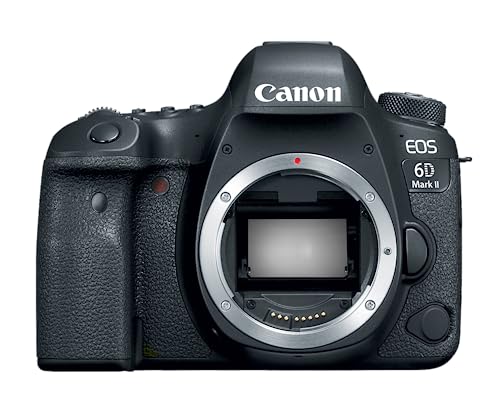
Canon EOS 6D Mark II — Best overall
The 6D Mark II earns the head of this list by being the least complicated route to good listing files. Its 26.2-megapixel full-frame sensor gives you the wide dynamic behaviour interiors demand, its vari-angle touchscreen flips out and rotates for the low tripod positions that bathrooms and hallways force on you, and it mounts the entire EF catalogue — which means the 16-35mm zooms, the affordable 17-40mm, and a mountain of used wide glass at prices mirrorless shooters can only envy. For a solo operator shooting five to ten properties a week, that combination of file quality, screen flexibility and lens economics is very hard to beat.
The live-view experience is the quiet advantage nobody mentions in spec comparisons. Dual Pixel autofocus makes the 6D Mark II focus smoothly and certainly on the rear screen, which is exactly how tripod interior work is done: compose on the screen, tap the focal point, check the corners, fire the bracket set. Add built-in Wi-Fi for sending a preview frame to an agent’s phone before you leave the driveway, GPS tagging that helps organise rural listings, and battery life measured in hundreds of frames per charge through the optical finder, and the body reads like it was specified by someone who shoots houses for a living.
Its honest limitations sit away from the property brief. The autofocus system through the viewfinder is a modest 45-point array that feels dated for moving subjects, the single card slot will worry event shooters, and video tops out at 1080p rather than 4K. A property photographer trips over none of those in a normal week. What you are buying is a full-frame interior tool with the best wide-lens shopping in the business, at remaining-stock pricing.
- Sensor: 26.2-megapixel full-frame CMOS
- Screen: 3.0-inch vari-angle touchscreen, fully articulating
- Live view AF: Dual Pixel CMOS AF for smooth screen-based focusing
- Extras: Built-in Wi-Fi, Bluetooth, NFC and GPS
- Mount: Canon EF, with the deepest used wide-angle market of any system here
Strengths
- Full-frame files that hold window highlights while shadows are lifted in the edit
- Fully articulating screen suits low tripod angles in tight rooms
- EF mount opens the cheapest route to quality ultra-wide zooms, new or used
Trade-offs
- Single memory card slot, so no in-camera backup on unrepeatable shoots
- Viewfinder autofocus array is basic beside newer bodies
- Video stops at 1080p, ruling it out as a serious walkthrough camera
Best for: solo property photographers who want full-frame interior files and Canon’s wide-lens shelf without flagship money
Not suited for: studios that need dual card slots as an insurance policy on every assignment

Nikon D850 — Best resolution
The D850 is the connoisseur’s answer to property work, and its case rests on one number used properly: 45.7 megapixels from a back-illuminated full-frame sensor with no optical low-pass filter. Resolution is not vanity in this trade. It is the freedom to shoot a room slightly wide and crop to the honest frame later, to pull a detail shot of a kitchen finish out of a master frame, and to supply a developer’s brochure or a lobby print without upscaling apologies. Paired with Nikon’s 14-24mm or 16-35mm glass, the D850 produces the most technically accomplished interior files of any body on this page.
Equally important for interiors, the sensor’s base ISO behaviour is superb. Property work lives at base ISO on a tripod, and the D850’s dynamic range at its lowest settings lets a single frame — or a gentle three-frame bracket — hold a bright window and a shaded corner in a way that smaller sensors cannot match. The tilting touchscreen supports tripod composition, the focus-peaking aids manual focus checks in live view, and the body offers proper auto-bracketing routines for HDR workflows. Its build is a step above everything else here bar the 5D Mark IV: magnesium, sealed, and balanced for long days.
The costs are real, in both senses. The body commands the strongest money in this guide even as remaining stock, the files are enormous — a bracketed shoot of a large home becomes a serious storage and editing burden — and there is no fully articulating screen, only a tilt. It is also more camera than a standard listing requires; portals compress uploads ruthlessly. Buy the D850 when your clients include developers, architects, hotels or high-end agencies whose print and large-format needs justify every pixel, not for routine portal listings alone.
- Sensor: 45.7-megapixel full-frame back-illuminated CMOS, no low-pass filter
- Screen: 3.2-inch tilting touchscreen
- Base ISO behaviour: Native ISO 64 for maximum dynamic range on tripod work
- Cards: Dual slots, XQD/CFexpress-type plus SD
- Mount: Nikon F, covering the 14-24mm and 16-35mm professional wide zooms
Strengths
- Resolution that turns one master frame into crops, details and print files
- Outstanding base-ISO dynamic range for window-lit interiors
- Dual card slots and a sealed magnesium body for professional reliability
Trade-offs
- Huge files slow batch editing and eat storage on bracketed shoots
- Tilting screen only, less flexible than a fully articulating panel
- Strongest pricing here, hard to justify for portal-only delivery
Best for: photographers serving developers, architects and premium agencies that print large and crop hard
Not suited for: high-volume listing mills where portal compression throws away the resolution advantage

Canon EOS 5D Mark IV — Best pro workhorse
If the 6D Mark II is the sensible solo operator’s camera, the 5D Mark IV is the one a property firm issues to its staff photographers. Its 30.4-megapixel full-frame sensor sits in the sweet spot for this work — comfortably more resolution than portal delivery needs, with headroom for cropping and print — and it adds the professional safety net the 6D lacks: dual card slots writing to CompactFlash and SD, so a card failure never costs a shoot that cannot be restaged once the stagers have taken the furniture away. That single feature is why working firms standardised on this body, and it remains a rational reason to choose it.
The rest of the package is mature competence. Dual Pixel autofocus makes live-view tripod work as assured as on the 6D, the fixed touchscreen is responsive, GPS and Wi-Fi are built in, and the weather sealing shrugs off the drizzle that seems to schedule itself for exterior days. Its 4K video is present but encumbered by a heavy crop and large files, so treat it as an occasional clip tool rather than a walkthrough solution. In stills — the actual job — the 5D Mark IV’s files are forgiving: colour that edits quickly, highlights that roll off politely, and high-ISO behaviour good enough for the occasional hand-held dusk exterior.
Why not rank it first? Because for the majority of readers — independent photographers buying their own kit — the 6D Mark II delivers the same interior results with a friendlier screen for less money, and the 5D’s advantages are insurance features rather than image features. Insurance is worth paying for when a missed shoot means a breached contract. It is harder to justify when it means a dearer body producing identical listing files. Know which buyer you are, and the choice between the two Canons makes itself.
- Sensor: 30.4-megapixel full-frame CMOS
- Screen: 3.2-inch fixed touchscreen
- Cards: Dual slots, CompactFlash plus SD, for in-camera backup
- Live view AF: Dual Pixel CMOS AF
- Build: Sealed magnesium body, rated for professional daily use
Strengths
- Dual card slots protect unrepeatable, staged shoots against card failure
- Balanced resolution: plenty for print, without the D850’s file burden
- File character edits fast, which matters across hundreds of frames a week
Trade-offs
- Fixed screen is less helpful than the 6D Mark II’s articulating panel
- 4K video is heavily cropped and produces unwieldy files
- You pay for insurance features that solo shooters may never use
Best for: property firms and staff photographers whose contracts make a lost shoot unacceptable
Not suited for: independents on a budget who would rather put the difference into a better wide zoom

Canon EOS 90D — Best APS-C value
The 90D makes the crop-sensor case for property work about as well as it can be made. Its 32.5-megapixel APS-C sensor is the highest-resolution crop sensor Canon fitted to a DSLR, and while a crop sensor gives back some dynamic range to the full-frame bodies above, it fights back with the single most useful lens in budget property photography: the EF-S 10-18mm wide zoom, a small, light, inexpensive lens that covers the full-frame equivalent of 16-29mm and has launched a thousand property businesses. Body plus that lens is the cheapest complete interior kit in this guide, and the files it produces are entirely respectable.
Working habits suit the 90D, too. The vari-angle touchscreen matches the 6D Mark II for tripod composition, live-view focusing is quick and certain, and the smaller sensor’s deeper depth of field is quietly helpful in interiors, where keeping a whole room sharp from a modest aperture is the daily requirement rather than a creative compromise. Battery life is strong, the body handles like a smaller 5D, and its 4K video — uncropped, unlike several rivals — gives the occasional listing clip a genuine chance.
The ceiling shows in the hardest light. A south-facing room at noon, white walls and deep shade in the same frame, will push the 90D to bracket more aggressively and edit more carefully than the full-frame bodies, and its high-ISO files are not where you want to live if you specialise in moody twilight shoots. As a first property camera, or as a second body behind a full-frame main, it is excellent value. As a forever camera for premium interiors, it is a stepping stone — a good one.
- Sensor: 32.5-megapixel APS-C CMOS
- Screen: 3.0-inch vari-angle touchscreen
- Signature pairing: EF-S 10-18mm wide zoom for a low-cost complete interior kit
- Video: 4K without an additional crop
- Mount: Canon EF-S and EF, so full-frame glass carries over on upgrade
Strengths
- Cheapest credible route into serious interior work when paired with the EF-S wide zoom
- Deep depth of field from the crop sensor suits whole-room sharpness
- Articulating screen and assured live-view focus match pricier Canons
Trade-offs
- Less highlight and shadow latitude than the full-frame bodies in brutal window light
- High-ISO files are weaker for twilight exterior specialism
- EF-S lenses do not cover full frame if you upgrade bodies later
Best for: photographers starting a property business who need a complete, affordable interior kit now
Not suited for: twilight and premium interior specialists who live on sensor latitude
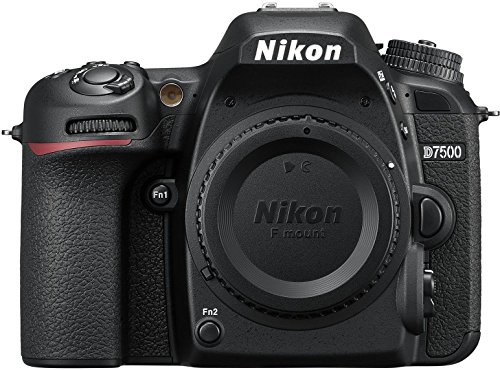
Nikon D7500 — Best DX value
The D7500 is Nikon’s equivalent proposition to the 90D, filtered through Nikon’s own priorities. It borrows its 20.9-megapixel DX sensor and much of its behaviour from the faster D500, trades some professional trimmings for a friendlier price, and — the detail that matters most here — fits a tilting touchscreen, the feature its predecessor lacked and the one tripod interior work keeps asking for. Behind it stands the Nikon F mount’s DX shelf: the 10-24mm and the tiny 10-20mm AF-P wide zooms, both plentiful on the used market, plus decades of full-frame F glass for later.
In the field the D7500’s virtues are composure and economy. Its files at base ISO are clean and grade predictably, its metering is dependable in the mixed light of a hallway opening onto a bright kitchen, and its battery endurance through the optical finder covers a long day of listings without a charger in the car. The tilting screen handles the low angles; the lack of full articulation only bites when you shoot verticals from a corner at an odd height, which happens less often than internet arguments suggest.
Set against the 90D it concedes resolution — 20.9 megapixels is the lowest count here — and its single card slot matches the Canon. Twenty megapixels is enough for portal delivery and modest print, but it leaves the least cropping room of any pick, so composition discipline at the tripod matters more. Choose the D7500 if you are already holding Nikon glass, or if its remaining-stock pricing undercuts the Canon kit in your market; the two crop bodies are closer in practice than their spec sheets imply, and lens loyalty is a perfectly good tiebreaker.
- Sensor: 20.9-megapixel DX-format CMOS, shared lineage with the D500
- Screen: 3.2-inch tilting touchscreen
- Signature pairings: AF-P DX 10-20mm or 10-24mm wide zooms, plentiful used
- Cards: Single SD slot
- Mount: Nikon F DX, with full-frame F glass usable immediately
Strengths
- Clean base-ISO files and dependable metering in mixed interior light
- Tilting touchscreen finally makes the DX line tripod-friendly for interiors
- Long battery life suits full days of back-to-back listings
Trade-offs
- Lowest resolution here, so the least freedom to crop in the edit
- Single card slot, like the other value picks
- Screen tilts rather than fully articulating for awkward vertical compositions
Best for: Nikon shooters entering property work who want a proven DX body and cheap wide glass
Not suited for: photographers whose deliverables include large prints that punish a 20-megapixel starting point

Pentax K-3 Mark III — Best weather-sealed APS-C
The K-3 Mark III looks like the odd one out in a real estate guide — an APS-C flagship built around a superb optical viewfinder, in-body stabilisation and sealing rated for conditions that would send the other bodies back to the car. Its presence here is deliberate. A meaningful slice of property work is not finished interiors at all: it is acreage, farms, construction progress, foreclosures, cabins and coastal homes photographed in whatever weather the closing date dictates. For that work, a body that keeps shooting in rain and dust, with stabilisation that steadies hand-held exteriors at dusk, is not a curiosity. It is the right tool.
The interior case is respectable rather than leading. The 25.7-megapixel sensor delivers clean files, the tilting-free but well-made touchscreen handles tripod composition, and Pentax’s wide options — the 11-18mm zoom and a shelf of compact primes — cover rooms competently, though the K-mount wide shelf is thinner and dearer than Canon’s or Nikon’s. Where the K-3 Mark III genuinely charms is its viewfinder: a 1.05x magnification, 100% coverage optical finder that makes exterior composition at arm’s length a pleasure no electronic screen in bright sun can match.
Be clear-eyed about the ecosystem you are joining. Pentax is the last maker still developing DSLRs, which means commitment rather than abandonment — but the rental houses, second bodies and used bargains that Canon and Nikon shooters take for granted are scarcer. Buy the K-3 Mark III because your property work is substantially outdoors and all-weather, or because you already own K-mount glass. For a pure interior listing business, the Canons above are the straighter path.
- Sensor: 25.7-megapixel APS-C CMOS with in-body 5-axis stabilisation
- Viewfinder: Optical, 1.05x magnification with 100% frame coverage
- Sealing: Dustproof and weather-resistant magnesium alloy body
- Screen: Fixed touchscreen, 3.2-inch
- Mount: Pentax K, backed by the only maker still developing DSLRs
Strengths
- Sealing and stabilisation built for exteriors, sites and acreage in bad weather
- The finest optical viewfinder fitted to any APS-C DSLR
- In-body stabilisation works with every K-mount lens, including old primes
Trade-offs
- Thinner, pricier wide-angle shelf than the Canon or Nikon mounts
- Fixed screen limits low and high tripod compositions
- Fewer rental and second-body options if yours fails mid-season
Best for: rural, coastal and construction-side property work where the weather is part of the assignment
Not suited for: pure interior listing businesses that want the widest, cheapest glass market
What Should a Property Kit Cost Beyond the Body?
New photographers consistently budget for the camera and discover the kit. A realistic property setup adds the wide zoom discussed throughout this guide, a sturdy tripod with a head that levels quickly — a geared head is the trade favourite because it makes verticals exact — a remote release or app control for bracket sets, a circular polariser for cutting reflections on floors and windows, and a flash or two for the rooms where window light cannot be balanced any other way. None of that is exotic, but together it can approach the cost of a value body, which is precisely why the 90D and D7500 kits make sense: money not spent on the body is money available for the tripod and glass that show up in every single frame.
Software belongs in the same honest accounting. HDR merging and batch editing tools are a subscription-shaped fact of this trade, and a monitor you can trust for brightness is worth more than a second lens hood. The encouraging news is that the DSLR route keeps the largest line item — the camera system itself — historically cheap right now, because remaining stock and the used market are both working in the buyer’s favour.
How Do You Shoot a Room So It Looks Like the Room?
Technique decides whether any of these bodies earns its keep, and the core routine is teachable in an afternoon. Set the tripod at roughly chest height or a touch lower — high enough to see counter surfaces, low enough that the room does not feel surveyed from a ladder. Level the camera properly; converging verticals are the single most common amateur tell in listing photos, and fixing them in software costs you image edges every time. Place yourself in the corner that shows the most of the room’s shape and its connection to the next space, because buyers are reading the floor plan as much as the decor.
Exposure is a bracketing habit. Shoot sets of three or five frames either side of the metered value, merge them in editing, and resist the garish HDR look that makes agents wince: the goal is a bright, believable room where the window shows a hint of the garden rather than a white void, and the shadows under the cabinets still have colour. Turn on every light in the room for warmth, then watch for mixed colour temperatures — daylight from the window against tungsten from the pendants — and correct the balance per room in the edit rather than trusting one global setting. Shoot the exterior last or first depending on the light, and save the twilight session, lights glowing against a deep blue sky, for the listings that justify the extra trip: it remains the single most effective hero image in the business.
What Does a Full Day of Listings Demand From Batteries, Cards and Backups?
The arithmetic of a working day is rarely discussed in camera reviews, yet it shapes which of these bodies suits a busy practice. Eight listings at forty bracketed frames each is over a thousand exposures before the twilight exteriors, and a DSLR’s optical viewfinder sips power in a way live-view-heavy workflows do not. All six bodies here will cover that day on one battery when shot conventionally through the finder, and most will do it on two when the rear screen does the composing — which, for tripod interiors, it usually does. The practical habit is simple: start the day with two charged batteries per body, rotate them, and never let the car charger become the plan.
Cards deserve the same dull respect. Bracketed RAW sets fill a card faster than newcomers expect, particularly on the D850, whose full-resolution files are the largest here. Work to a rule of one card per property, or at minimum one card per half-day, and treat the evening offload as part of the shoot: copy to the computer, verify the copy, back up to a second drive, and only then format the card in the camera. The dual-slot bodies — the 5D Mark IV, the D850 and the K-3 Mark III — can write a live backup all day, which is why firms love them, but a disciplined offload routine protects the single-slot bodies almost as well, provided the discipline never takes a day off.
Insurance and maintenance close the loop. A working camera is business equipment: list it on your policy with its serial number, keep the sensor clean enough that sky areas in exteriors do not need spot-removal on every frame, and budget for a shutter that will eventually reach the end of its rated life if your volume is high. None of this is glamorous. All of it is the difference between a kit that earns and a kit that interrupts.
How Does Video Fit Into a Still-First Property Business?
Agents increasingly ask for motion alongside stills: a slow walkthrough for social channels, a short exterior orbit, a teaser clip for the listing page. The honest position of this guide is that a DSLR bought for stills can cover modest video asks without being chosen for them. The 90D is the most willing here, with uncropped 4K and a fully articulating screen that suits a gimbal-free walk at a careful pace. The 6D Mark II and D7500 record clean 1080p, which social platforms accept happily. The 5D Mark IV’s 4K is real but cropped and heavy; the D850’s 4K is competent for locked-off clips; the K-3 Mark III treats video as a side function.
What none of them offers is the stabilised, autofocus-led, walk-and-talk ease of a current mirrorless vlogging body, and pretending otherwise would waste your money in the wrong direction. If video becomes a contracted deliverable rather than an occasional favour, the correct move is a second, dedicated body or a good gimbal-and-phone rig for walkthroughs, keeping the DSLR for the stills it does best. Buy this guide’s bodies for photographs; let their video be a pleasant extra, and the purchase stays honest.
Which Accessories Actually Earn Their Place in the Bag?
Beyond the tripod and wide zoom already discussed, a short list of accessories pays for itself weekly. A circular polariser cuts the glare that washes out hardwood floors and kitchen counters, and it cannot be faked convincingly in software. A simple two-flash kit with wireless triggers rescues north-facing rooms and wood-panelled dens where brackets alone go muddy. A colour-checker card, photographed once per room under mixed light, turns white-balance correction from guesswork into a click. A sturdy step stool buys the slightly elevated corner angle that makes small rooms read clearly, and it doubles as the photographer’s seat during twilight waits.
Just as useful is knowing what to leave behind. Long lenses beyond a short telephoto rarely leave the car on residential work; a tilt-shift lens is a wonderful specialist tool that most listing workflows, with software perspective correction, genuinely do not need at portal resolutions; and a second flashy body impresses nobody at a listing appointment. Spend on light, support and glass width first — the frames will show where the money went.
How Should the Edit Be Organised So Brackets Become Listings by Morning?
The camera decision and the editing decision are secretly the same decision, because the body you buy determines how much of your evening the files consume. A bracketed property shoot arrives home as hundreds of near-duplicate frames, and the photographers who deliver by morning are the ones with a ruthless sequence: ingest with the property’s address as the folder name, let the HDR tool merge each bracket set into a single master per composition, cull the masters rather than the raws, and only then begin correcting. Correct in a fixed order — white balance first, because it changes how brightness feels; exposure and highlight recovery second; verticals third, accepting the small crop as the price of straight walls; and local touches last, lifting a dark corner or calming a neon lawn through the window.
Body choice feeds straight into that sequence. The D850’s files reward the work with the cleanest merges and the most printable masters, but each merge takes longer and the storage grows teeth. The crop bodies produce lighter files that fly through batch processing, which is a genuine competitive advantage when three agents are waiting on galleries the same evening. The Canon bodies’ colour tends to need the least correction under mixed household lighting, a small mercy multiplied by five hundred frames. None of this appears on a spec sheet, and all of it appears in your turnaround time — which, in a trade where the listing goes live when the photos land, is the metric your clients actually grade.
Delivery discipline finishes the job. Export portal images at the size the portal actually displays rather than trusting its compressor with your full-resolution masters, keep an uncompressed archive per property for the inevitable re-ask six months later, and name files so an agent’s assistant can find the kitchen shot without opening twelve thumbnails. A camera guide can only take you to good files; this last mile of organisation is what turns good files into a reputation.
What Changes When the Property Is Luxury, Rural or Commercial?
Standard residential work forgives a lot; the edges of the market do not. Luxury listings raise the deliverable: larger prints for the agency window, detail frames of stone, joinery and fixtures, and twilight sessions as a matter of course rather than an upgrade. That is D850 and 5D Mark IV territory, where resolution and file latitude stop being luxuries themselves. It also raises the lighting expectation — a single on-camera flash bounced hopefully at a ceiling will not survive a marble kitchen — so the luxury step-up is as much a lighting purchase as a camera purchase, and buyers should budget for both halves honestly.
Rural and acreage work pushes the other direction: fewer interiors, more land, outbuildings and weather. The K-3 Mark III’s sealing and stabilisation, dismissed as irrelevant by a city listing shooter, become the working specification, and a short telephoto for compressing a farmhouse against its hills earns the bag space it never earns in the suburbs. Commercial work — offices, restaurants, warehouses — splits the difference: interiors again, but larger, emptier and often shot to an architect’s or a brand team’s brief rather than an agent’s, with perspective discipline and print delivery that favour the high-resolution bodies. The six picks were chosen so that each of these edges has a natural home; the mistake is buying for the edge you admire rather than the work you actually have booked.
How Long Will a DSLR Kit Stay Viable for This Work?
Longer than the industry’s mood suggests. Listing photography’s deliverable — bright, sharp, wide interior files at portal and brochure sizes — has not changed in a decade and shows no sign of changing, because the portals and the buyers’ phones that display them have stabilised too. A body bought today from this page will produce client-acceptable work for as long as it mechanically survives, and DSLR shutters and bodies were built for professional mileage. The support question is real but manageable: Canon and Nikon continue to service their professional DSLRs, batteries and chargers remain widely available, and the used market provides a deep bench of replacement bodies at falling prices.
The sensible buying posture follows from that. Purchase the body that fits your current client list, not an imagined future one; put the larger share of the budget into the wide lens and the tripod, which transfer to any future system through adapters or resale; and treat the whole DSLR kit as equipment that should pay for itself within its first season of listings. Judged that way — as a working tool with a short payback, not as a decade-long platform bet — every body in this guide is an easy decision to defend.
How Do You Rescue the Rooms That Fight Back?
Every property has one: the windowless bathroom lit by a single warm bulb, the basement den with a green cast from the garden doors, the kitchen where polished black counters reflect the ceiling like a mirror. These rooms are where body choice and technique meet. The full-frame bodies buy you editing room — their files tolerate aggressive white-balance correction and shadow lifting without falling into noise and banding — but technique still does the heavy lifting. In the bathroom, kill the overhead light if it fights you and light the room with a bounced flash from the doorway, or embrace the warm cast and balance the whole frame to it so the room reads cosy rather than jaundiced. In the basement, bracket wider than usual and let the merge carry the shadows. On the black counters, the polariser and a small change of camera height kill more reflections than any slider invented.
Small rooms deserve their own paragraph because they are where wide lenses misbehave. A box room shot from the doorway at the widest setting looks cavernous and dishonest; shot from inside the corner with the door in frame, at a slightly longer focal length, it reads as what it is — a compact room with a clear purpose. Agents would rather have an honest small room than a stretched one, because the viewing is where exaggeration gets punished. This is also where the articulating screens on the 6D Mark II and 90D quietly win their keep, letting you compose from positions your eye cannot physically occupy.
Why Does Colour Accuracy Decide Repeat Business?
Agents rebook the photographer whose white walls are white. It sounds trivial until you have seen a listing where the cream kitchen reads green, the grey carpet reads purple, and the vendor — who chose those colours — concludes the photographer is careless. Mixed lighting is the cause: daylight, tungsten and cheap LED bulbs all disagree about what neutral is, and every room in a house can disagree differently. The working defences are unglamorous: shoot a grey reference in each main room, set white balance per room in the edit rather than globally, and be suspicious of full auto white balance in any body, however good its files are in other respects.
There is a body angle, too. Consistent colour across a set matters more than any single frame’s perfection, and a single body shooting a whole property guarantees that consistency in a way mixed kits cannot. It is one more argument for buying one good body and lens, learning its colour behaviour under household light until correction becomes reflex, and only then considering a second body — ideally the same one, which the used market now makes genuinely affordable across the Canon and Nikon lines in this guide.
How Do the Bodies Line Up on Files, Screens and Glass?
| Pick | Sensor | Screen | Wide-lens route | Card slots |
|---|---|---|---|---|
| Canon EOS 6D Mark II | 26.2MP full frame | Fully articulating touchscreen | EF 16-35mm family, deep used shelf | Single SD |
| Nikon D850 | 45.7MP full frame | Tilting touchscreen | 14-24mm and 16-35mm pro zooms | Dual |
| Canon EOS 5D Mark IV | 30.4MP full frame | Fixed touchscreen | EF 16-35mm family, deep used shelf | Dual |
| Canon EOS 90D | 32.5MP APS-C | Fully articulating touchscreen | EF-S 10-18mm budget wide zoom | Single SD |
| Nikon D7500 | 20.9MP DX | Tilting touchscreen | DX 10-20mm and 10-24mm zooms | Single SD |
| Pentax K-3 Mark III | 25.7MP APS-C | Fixed touchscreen | 11-18mm zoom and K primes | Dual SD |
Read the table as three tiers rather than six rivals. The full-frame trio trades on sensor latitude, with the D850 adding resolution, the 5D Mark IV adding backup security, and the 6D Mark II adding the friendliest screen. The two crop value bodies trade a stop of latitude for a far cheaper complete kit, and the Pentax trades lens-market depth for weatherproofing. Any of the six produces portal-ready files; the differences decide how hard the edit works and how the kit survives a bad day.
Which Buying Mistakes Cost Property Photographers Money?
The classic error is buying reach instead of width: a kit built around a 24-70mm or an 18-135mm zoom, then discovering that 24mm on the body you own cannot show a small bedroom. The second error is chasing megapixels while ignoring the screen, then fighting a fixed display at floor level in every bathroom. Third comes the tripod false economy — a wobbly support blurs bracket sets at exactly the shutter speeds interiors demand, and no sensor upgrade repairs soft files.
Two quieter mistakes deserve mention. Ignoring the used lens market when choosing a mount throws away the DSLR route’s biggest financial advantage, and forgetting to ask what a body-only listing actually includes — battery, charger, strap — turns a bargain into a week of accessory orders. Finally, resist buying a second body before buying a second light: in this trade, lighting rescues more rooms than backup cameras rescue shoots.
One more deserves a place on the record because it hides inside good intentions: over-processing. The merged, lifted, saturated style that screams its editing at thumbnail size might win a click, but it teaches buyers to distrust the set, and agents learn quickly which photographer’s viewings disappoint. The bodies in this guide all produce files strong enough to survive a light touch — balanced windows, straight walls, colours the vendor recognises as their own home. Deliver that, consistently, and the camera stops being the topic of conversation with clients at all, which is exactly where a working tool should end up.
Final Recommendation
Most readers should start with the Canon EOS 6D Mark II and the widest EF zoom their budget reaches: it is the most complete interior package here, with the screen, the live-view focusing and the lens market all pointing the same way. Step up to the 5D Mark IV when client contracts make dual card slots a form of insurance you cannot skip, and to the D850 when print, cropping and premium clients make resolution a deliverable rather than a luxury. Begin on the 90D or D7500 without embarrassment if the business is new — the files will sell houses while the kit pays for itself — and choose the K-3 Mark III when your listings come with mud, weather and acreage attached. Buy the wide lens first, level the tripod, and let the rooms do the persuading.
A last word on timing: buy when your client list asks, not when a listing tempts. Remaining-stock pricing on mature bodies moves slowly and the used market is deep, so there is rarely a penalty for waiting until a second weekly client or a first luxury booking makes the step up self-funding. The exception is the wide lens — good used examples of the popular zooms turn over quickly, and the photographer who finds a clean one at a fair price and hesitates usually photographs the next month of listings at the wrong focal length.
Frequently Asked Questions
Is full frame really necessary for real estate photography?
No, but it helps in the hardest light. Full-frame bodies hold window highlights and liftable shadows together more gracefully, which shortens editing time on bright interiors. Crop bodies like the 90D and D7500 produce entirely sellable listing files, especially with bracketing, and their cheaper wide lenses make them the rational start for a new business.
Which lens should I buy first for property work?
An ultra-wide zoom matched to your sensor: a 16-35mm class lens on full frame, or a 10-18mm / 10-24mm class lens on APS-C. It will appear in nearly every interior frame you deliver. A standard zoom and a fast prime can come later; the wide zoom is the business.
Do I need flash, or is HDR bracketing enough?
Bracketing covers most rooms in most light, and it is the faster workflow. Flash earns its place in rooms with strong colour casts, dark wood, or windows so bright that even brackets struggle — a technique often called flambient when blended with ambient frames. Learn bracketing first, add flash when you can name the rooms it would have saved.
Are DSLRs a risky purchase now that production has ended?
The risk is smaller than it looks for this job. The bodies are mature and reliable, service networks still support them, and the used lens markets for Canon EF and Nikon F are enormous. The genuine cost is that the platform will not grow — no future bodies are coming — so buy for the work you have, at the prices remaining stock offers, rather than for a roadmap.
How many megapixels do listing portals actually need?
Far fewer than any body here provides; portals compress and resize aggressively. Resolution beyond the low twenties buys cropping freedom, detail shots pulled from master frames, and print deliverables for brochures and displays. That is why the D850’s count is a professional feature for some buyers and an irrelevance for others.
Should I shoot tethered or to the card?
Most listing work is shot to the card for speed, and the bodies here are all built for that rhythm. Tethering to a laptop earns its setup time on luxury and commercial assignments, where an agent or stylist reviews frames on a large screen while the room is still dressed and a missed detail can be reshot in minutes rather than on a return visit. If your client list grows in that direction, the dual-slot Canon and Nikon bodies with mature tethering software support are the comfortable choices; for standard residential volume, card shooting plus a same-evening offload remains the faster business.
What tripod height works best for interiors?
Around chest height, typically between waist and shoulder, adjusted per room. Too high makes rooms feel observed from above and hides counter surfaces oddly; too low exaggerates ceilings and makes furniture loom. Consistency across a set matters as much as the exact height, because a listing reads as one story.
Related Guides
Broaden the kit around your body with our guide to the best wide-angle lenses for interior photography, compare the mirrorless route in our roundup of cameras for walkthrough video tours, and keep the whole system travelling safely with our pick of camera bags for working location photographers.
Related guides
- Best Canon Point and Shoot Digital Cameras: PowerShot Picks From Pocket Compacts to Travel Zooms
- Best Balancing Stabilizers for Mirrorless Cameras: Payload, Balancing and Native Vertical Shooting
- Best Basic Phones Camera Buyers Can Trust: Flip Phones and Simple Handsets That Still Take a Photograph
- Best Sony Full Frame Cameras for Astrophotography: Sensitivity vs Resolution



[…] the rig with our guide to underwater video lights and trays for compact cameras, protect the investment using our roundup of dry bags and hard cases for dive travel, and plan the […]