What's inside
- Key Takeaways
- Quick Picks
- How Did We Judge the Flagship Class This Year?
- What Does Flagship Money Actually Buy in 2026?
- Why Do Two Generations of the Same Flagship Both Belong Here?
- What About the Fifth Purchase: Service, Support and Staying Power?
- Which of the Best 5G Flagship Phones Merit a Slow, Careful Read?
- How Do the Flagships Compare at a Glance?
- Which Flagship Argument Matches Which Kind of Owner?
- Do Flagships Hold Their Value Better Than Cheaper Phones?
- How Should You Buy a Flagship Without Buyer’s Remorse?
- How Should You Test a Flagship During Its First Week?
- What Do Flagship Buyers Most Often Get Wrong?
- Final Recommendation
- Frequently Asked Questions
- Related Guides
As an Amazon Associate I earn from qualifying purchases. This post may contain affiliate links at no extra cost to you.
gizmoverdict.com is reader-supported. When you buy through links on our site, we may earn an affiliate commission.
Where to buy: flagship listings reward a careful eye, because two of the six phones below reach American buyers through international channels and one is not linked at all, for reasons explained in its review. Read each listing’s version line before anything else, then check price on Amazon when you are certain the model in the basket is the model in the review.
The best 5g flagship phones occupy a strange and wonderful shelf in 2026, because the definition of a flagship has quietly split into three: the domestic flagship with a US warranty and carrier blessing, the international flagship that crosses oceans to reach enthusiasts, and the benchmark flagship that everyone measures against and almost nobody buys from a listing like these. This guide stocks all three kinds and labels them as such. Samsung’s Galaxy S26 Ultra leads the domestic kind. Its predecessor, the S25 Ultra, appears in the international dual-SIM form its listing describes. OnePlus sends two generations of its own speed-obsessed answer. Sony’s Xperia 1 VIII represents the creator minority report. And Apple’s iPhone 17 Pro Max is covered in prose, because honesty about its Amazon situation matters more than a link.
That last decision deserves its reasoning in the open. At the time of writing, Amazon US listings for the current iPhone flagship are renewed units rather than clean new stock; new devices sell through Apple and the carriers. A guide that linked a renewed handset inside a flagship roundup, without that fact shouted from the rooftops, would be trading its readers’ trust for a commission, and this page declines the trade. The iPhone is discussed fully, as the benchmark it is. It simply asks to be bought where it is actually sold new.
Flagship money buys more than speed, and the reviews below keep returning to what the surplus actually purchases: years of updates, cameras that behave like instruments, screens that double as editing desks, charging that rewrites morning routines, and the intangible but real confidence of a device built without a cost engineer in the room. Whether that surplus is worth several multiples of a mid-range phone is a question each reader answers with their own arithmetic. Our job is to make sure the arithmetic uses honest numbers, and honest labels, all the way down.
Key Takeaways
- The Galaxy S26 Ultra is this guide’s domestic flagship anchor, a US-warrantied unlocked handset with Samsung’s Privacy Display and Galaxy AI aboard.
- The linked Galaxy S25 Ultra is the international dual-SIM model, a GSM handset whose 200MP camera and 6.9-inch screen serve travellers best.
- OnePlus 15 pairs a Snapdragon 8 Elite Gen 5 with a 7300mAh battery, the largest cell figure in this guide by a wide margin.
- The OnePlus 13 counters with the listing’s explicit charging figures: 80W wired SUPERVOOC and 50W AIRVOOC wireless.
- Sony’s Xperia 1 VIII is the creator’s outlier, an international GSM model with a 6.5-inch 120Hz OLED and a photographer’s temperament.
- The iPhone 17 Pro Max is covered in prose only, because its Amazon US presence at writing time is renewed stock rather than new.
Quick Picks
| Pick | Badge | Why it earns its place |
|---|---|---|
| Samsung Galaxy S26 Ultra | Domestic flagship | The full Samsung statement for 2026, sold unlocked with a US warranty and a privacy-minded display. |
| Samsung Galaxy S25 Ultra international | Traveller’s Ultra | Last year’s Ultra in dual-SIM international dress, with a 200MP camera for GSM-network globetrotters. |
| OnePlus 15 | Endurance flagship | A 7300mAh battery and 512GB of storage aim squarely at power users who hate chargers. |
| OnePlus 13 | Charging champion | Hasselblad-tuned cameras plus the fastest stated charging figures in this guide. |
| Sony Xperia 1 VIII | Creator flagship | Sony’s camera-first flagship philosophy in a comparatively wieldy 6.5-inch frame. |
| Apple iPhone 17 Pro Max | Benchmark, prose only | The reference point for the class, sold new through Apple and carriers rather than this page’s links. |
How Did We Judge the Flagship Class This Year?
By refusing to let any single metric impersonate the whole verdict. Flagships are bought with the heart’s money, so the judging weighted the experiences owners actually recount a year later: whether the camera was trusted at a wedding, whether the battery survived a festival, whether the screen stayed legible on a sunlit platform, whether the maker kept its update promises. Listing claims were used where listings make them — battery capacities, charging wattages, camera resolutions, display sizes — and maker superlatives were attributed to their makers rather than laundered into facts.
Provenance received unusual weight this year, because the flagship shelf is where version confusion costs the most money. A US-warrantied S26 Ultra and an international S25 Ultra sit one row apart in the Quick Picks table, yet they are different purchases in warranty, SIM arrangement and network tuning, and the reviews treat them as different purchases rather than as a generational footnote. Readers deserve that clarity precisely when the sums are largest.
One further judging habit is worth confessing, because readers should know what they are trusting. We discounted any claim that appeared only in a maker’s keynote language and nowhere in a listing, a specification or a support document; flagship marketing is a fireworks industry, and a buying guide’s loyalty belongs to the morning after the fireworks. Conversely, we weighted boring evidence heavily — a printed wattage, a stated warranty term, a model code that lets a buyer verify exactly which citizen of the phone world is in the box. The result is a guide that may read less breathlessly than a launch recap, and will still be accurate when the launch is a memory.
We also kept a seat at the table for the phone we could not link. Excluding the iPhone from a flagship guide entirely would have been tidier and less truthful; the class is defined partly by Apple’s gravity, and Android buyers cross-shop against it constantly. Covering it in prose, with its retail situation stated plainly, respects both the reader and the facts. The same honesty standard produced the Xperia’s inclusion: a minority flagship with a coherent philosophy earns more respect here than a me-too slab with a larger marketing budget.
What Does Flagship Money Actually Buy in 2026?
Begin with time. Flagship processors carry such surplus performance that their real gift is not today’s speed — every phone in this guide is fast today — but the fourth year’s fluency, when apps have swollen and the mid-range silicon of the same vintage is clearing its throat. Pair that with the long update commitments flagship lines now advertise, and the purchase becomes a lease on relevance: the phone stays current, secure and compatible long after a cheaper handset has been retired to a drawer. Buyers who keep devices longest extract the most from this tier, which is the opposite of the upgrade-every-year caricature.
Cameras are the second purchase, and the honest description is consistency under duress. Any modern phone photographs a sunny street beautifully; flagships earn their keep in the candlelit restaurant, the backlit beach portrait, the school hall filmed from the back row. The S25 Ultra’s listing leads with a 200MP camera, the OnePlus 13 with its Hasselblad partnership, the Xperia with Sony’s camera-division heritage, and each represents a different bet on how that consistency is achieved — resolution, colour science, or optical craft. The megapixel figure is the weakest of the three clues, and this guide weighs it accordingly.
The third purchase is the screen as a workplace. At 6.9 inches in the S25 Ultra’s case, or 6.5 in the Xperia’s, a flagship display is a viewfinder, a lightbox, a document desk and a cinema in rotation, and its brightness and refresh behaviour govern all four jobs. The S26 Ultra’s Privacy Display adds a fifth job, discretion, narrowing the viewing angle so a train neighbour reads nothing. None of these uses appears in a benchmark chart, and all of them appear in your day by Friday.
Charging and endurance form the fourth purchase, and here the class has genuinely diverged. OnePlus treats charging as a headline sport, printing 80W wired and 50W wireless figures in its listing; the same brand’s newer 15 answers with a vast 7300mAh reservoir instead. Samsung speaks of Super Fast Charging 3.0 on the S26 Ultra and of durable battery life. These are rival philosophies — refill quickly versus refill rarely — and the right one depends on whether your life offers you ten-minute windows at sockets or demands two-day absences from them.
Why Do Two Generations of the Same Flagship Both Belong Here?
Sceptical readers will notice that this guide lists the S26 Ultra beside its predecessor and the OnePlus 15 beside the 13, and may suspect padding. The suspicion deserves a direct answer: at the flagship tier, last year’s model is not a consolation prize but a distinct strategy, because flagship hardware ages in dog years reversed — a two-year-old Ultra still out-specifies most of the new mid-range, and its price position, once the successor launches, becomes the thinking buyer’s favourite terrain. The previous generation also carries a year of documented behaviour: known quirks, mature software, an accessory market in full flower.
The generational pairs here are not even the same purchase twice. The S25 Ultra’s listing is the international dual-SIM variant, which makes it a traveller’s instrument rather than a discounted domestic one, while the OnePlus 13 itemises charging figures its successor’s listing leaves unstated. In each pair, the older phone argues something the newer does not. A guide that listed only the freshest models would be a catalogue of launches; a guide that pairs generations is a map of strategies, and strategies are what flagship money actually needs.
There is a discipline attached, and it is the same one this batch of guides applies everywhere: the older model must still be honestly buyable — a current listing, a coherent proposition, a support runway worth having. Both previous-generation picks here clear that bar with room to spare. What neither should be is bought unthinkingly by a reader who simply sorted by the word Ultra or the brand’s badge; the reviews below give each its parish, and parishes, as ever, are where the truth of a phone lives.
What About the Fifth Purchase: Service, Support and Staying Power?
Beyond the four purchases already itemised sits a fifth that owners discover only in adversity: the quality of the maker’s aftercare. A flagship bought domestically, like the S26 Ultra, plugs into a service network with counters, loaner policies and parts pipelines measured in days. An international flagship’s aftercare is a correspondence — courteous, usually effective, and slower — conducted through sellers and global channels. OnePlus and Sony sit between those poles in the American imagination, with enthusiast communities that often solve in an evening what a ticket system solves in a week. None of these arrangements is disqualifying; they are simply different shapes of the same promise, and a buyer paying flagship money should know which shape they have purchased before the day it is needed.
Software support is aftercare’s quieter half, and here the class has become genuinely competitive in recent years, with long commitments now a flagship expectation rather than a Pixel party trick. The practical meaning is that a 2026 flagship from any maker on this page should still be receiving security attention when its owner’s life has changed jobs, cities or both. That longevity is also an environmental argument that deserves its sentence: the most sustainable phone in this guide is whichever one its owner is still using in 2030, and flagship construction is currently the surest route to that outcome.
Which of the Best 5G Flagship Phones Merit a Slow, Careful Read?
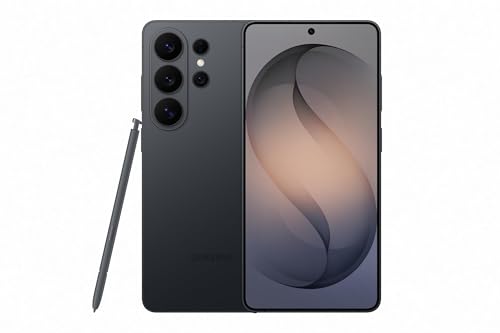
Samsung Galaxy S26 Ultra — Domestic flagship
The S26 Ultra is what Samsung thinks a flagship should be when the accountants are asked to wait outside: an unlocked Android handset in Black with 256GB of storage, a Privacy Display, Galaxy AI, an AI camera, Super Fast Charging 3.0, a battery its maker describes as durable, and a US one-year warranty standing behind the whole proposition. As the only current-generation Ultra sold here in full domestic dress, it is the reference Android purchase of this guide — the one against which the imports and the prose-only benchmark must argue their cases.
The Privacy Display deserves more than a bullet point, because it answers a genuinely modern discomfort. Phones now hold banking sessions, medical messages and work documents in public spaces, and a screen that restricts its own viewing angle turns shoulder-surfing from a risk into a curiosity. Whether you value it daily or merely on flights and trains, it signals where flagship innovation has moved: away from raw spectacle and toward the texture of ownership. Galaxy AI, similarly, should be judged as a set of small daily mercies — summarised pages, assisted edits, tidier photographs — rather than as a keynote performance.
Who should simply buy this phone and stop reading? The Samsung loyalist upgrading from an older Ultra, the professional whose life runs through the S Pen-adjacent Galaxy ecosystem of tablets and watches, and any buyer who wants the flagship experience with the warranty paperwork of a domestic appliance. Its rivals in this guide each beat it somewhere — the OnePlus on charging theatre or battery size, the Xperia on camera philosophy, the iPhone on its own ecosystem’s gravity — but the S26 Ultra is the only one that asks its buyer to make no excuses and learn no caveats. At flagship prices, that absence of homework is itself a luxury feature.
- Storage: 256GB in the listed configuration
- Display feature: Privacy Display, per Samsung
- Charging: Super Fast Charging 3.0 language
- Intelligence: Galaxy AI and an AI camera
- Version: US model, US one-year warranty
- Colour named in listing: Black
Strengths
- Domestic warranty removes the flagship import gamble.
- Privacy Display solves a real public-space problem.
- The Galaxy ecosystem depth rewards existing Samsung owners.
Trade-offs
- Its battery capacity is described in words, not figures.
- Charging drama trails OnePlus’s printed wattages.
- 256GB is the listed tier in a class that eats storage.
Best for: buyers who want the flagship experience with domestic paperwork.
Not suited for: bargain hunters, for whom this entire tier is a postcard from abroad.
It is worth pausing on the word Ultra itself, because Samsung has trained it to mean the absence of a next question. There is no larger Samsung phone to covet in the shop, no higher rung whose existence makes this one feel like a compromise by October. That finality has a psychological value owners rarely name: the purchase ends the shopping. Readers prone to upgrade envy, who experience every launch as a small bereavement, may find the Ultra’s top-of-ladder certainty worth as much as any camera in this guide.
Committed Samsung upgraders can check price on Amazon at the S26 Ultra’s listing, where the US-warrantied unlocked model is the one described.

Samsung Galaxy S25 Ultra international — Traveller’s Ultra
Read the listing title the way a contract lawyer would, because it tells you exactly what this phone is: a Galaxy S25 Ultra 5G, model SM-S938B/DS, with 256GB of storage and 12GB of memory, dual SIM, factory unlocked for GSM networks, carrying a 6.9-inch 120Hz AMOLED display and a 200MP camera, in Titanium Silver Blue — and it is the international version. That final phrase is not a warning label so much as a change of citizenship, and everything useful about this pick follows from understanding the citizenship it holds.
For the right buyer, the international Ultra is a genuinely clever purchase. The dual-SIM tray serves the two-number life that US models increasingly handle by eSIM alone; the GSM tuning suits T-Mobile-family networks at home and most networks abroad; and a previous-generation Ultra remains a formidable camera instrument, with that 200MP headline sensor and the big, bright canvas flagship owners use as an editing desk. Photographers who travel, journalists, aid workers, airline crew — readers whose phones cross borders more often than their suitcases do — will recognise their device immediately.
The terms of the trade must be stated without flinching. Band support should be verified against your carrier before purchase, since an international radio recipe is not a US radio recipe. The warranty route runs through international or seller channels rather than Samsung’s US service network. eSIM behaviour and feature availability can differ from the US model in ways that matter to some owners. None of this makes the phone lesser; it makes it foreign, in the precise sense, and foreign purchases reward literate buyers. If the caveats read as friction to you, the S26 Ultra above is your phone and this review has done its job by telling you so early.
- Model code: SM-S938B/DS, per the listing
- Memory and storage: 12GB and 256GB
- SIM arrangement: dual SIM, factory unlocked GSM
- Screen: 6.9-inch AMOLED at 120Hz
- Camera headline: 200MP, per Samsung
- Finish named in listing: Titanium Silver Blue
Strengths
- Two physical SIMs serve the border-crossing life natively.
- The 200MP camera system remains a serious instrument.
- A prior-generation Ultra carries flagship craft at a step down the ladder.
Trade-offs
- Band verification is the buyer’s responsibility, in writing.
- Warranty service does not run through US channels.
- Some US-model features and eSIM behaviours may differ.
Best for: GSM-network travellers who photograph seriously and roam constantly.
Not suited for: buyers who want a US warranty and carrier-store simplicity.
One more audience should be named, because the comment sections of international listings are full of them: the diaspora buyer, whose phone must be equally at home in Ohio and in the city they were born in, whose family group chat spans three carriers on two continents, and whose second SIM is not a travel accessory but a thread back to a first home. For that reader the dual tray is not a feature among features; it is the entire point, and the Ultra’s camera simply makes the thread a beautiful one.
Globetrotters who have confirmed their bands can check price on Amazon through the S25 Ultra’s international listing, Titanium Silver Blue and all.

OnePlus 15 — Endurance flagship
OnePlus has always sold speed, but the 15 reveals a brand that has started listening to what power users complain about at midnight: not frame rates, but the charger. Its listing pairs a Snapdragon 8 Elite Gen 5 with 16GB of memory, 512GB of storage, dual-SIM support in an unlocked Android handset — and a 7300mAh battery, a figure that would have been a typo in a flagship listing not long ago and now reads as a manifesto. Infinite Black is the finish, and the understatement suits a phone whose drama is stamina.
Consider what that reservoir changes in practice. The two-day flagship stops being a marketing tense and becomes a planning assumption: a weekend trip without the charging brick, a festival day of filming without rationing, a work phone that treats a forgotten overnight charge as a shrug rather than a crisis. Paired with half a terabyte of storage, the 15 is specced like a device that expects to be lived in rather than visited, and its dual-SIM arrangement keeps the traveller and the two-line professional inside the tent as well.
Judgement should still be exercised about the unknowns a listing cannot settle. OnePlus does not print charging wattages in this title, so readers for whom refill speed is sacred should study the maker’s own pages or favour the 13 below, whose figures are stated outright. Camera claims are likewise quiet here next to the Hasselblad branding of its sibling. What is not quiet is the proposition: flagship silicon, flagship memory, and a battery from the class above. For the power user whose current phone dies theatrically at dinner, that proposition needs no garnish.
- Chip named in listing: Snapdragon 8 Elite Gen 5
- Memory and storage: 16GB and 512GB
- Battery: 7300mAh
- SIM arrangement: dual-SIM, unlocked
- Colour named in listing: Infinite Black
- Positioning: current OnePlus flagship generation
Strengths
- The 7300mAh cell rewrites flagship endurance expectations.
- 512GB matches the battery’s live-in philosophy.
- Dual-SIM support widens its professional audience.
Trade-offs
- Charging wattage is not stated in the listing title.
- Camera branding is quieter than the 13’s Hasselblad story.
- Its size follows its battery, as physics insists.
Best for: power users who measure phones by hours away from sockets.
Not suited for: buyers who prioritise the smallest possible handset.
There is a quieter implication in that battery figure for the industry itself. Silicon-carbon cell technology has been promising flagship-class energy density for several product cycles, and a 7300mAh reservoir in a mainstream flagship suggests the promise has started shipping in volume rather than in press releases. If the figure holds up in owners’ hands, the definition of acceptable flagship endurance moves for every maker on this page, and next year’s guides will judge Samsung’s durable-battery language and Apple’s prose-only benchmark against a bar the OnePlus 15 helped to raise.
Endurance seekers can check price on Amazon on the OnePlus 15 listing, which details the 512GB Infinite Black configuration.

OnePlus 13 — Charging champion
If the OnePlus 15 is a reservoir, the 13 is a hosepipe, and its listing is refreshingly specific about the flow: 80W SUPERVOOC wired charging and 50W AIRVOOC wireless charging, printed in the title where competitors print adjectives. Around those figures sits a complete flagship — Snapdragon 8 Elite, 16GB of memory, 512GB of storage, dual-SIM in an unlocked handset, and an advanced Hasselblad camera in Black Eclipse. The 2025 model remains the connoisseur’s OnePlus, the one whose virtues are itemised rather than implied.
The charging numbers deserve translation into a morning. Eighty watts wired is the class of speed that turns a coffee-making interval into a meaningful refill and a forgotten overnight charge into a ten-minute apology rather than a ruined day; fifty watts wireless removes the cable from that rescue entirely. Owners develop new habits around such speeds — charging while dressing, while the kettle boils — and the battery anxiety that structures other owners’ evenings simply dissolves. Readers should note these are the maker’s stated figures for its own charging system, achieved with its own accessories, as such figures always are.
Hasselblad’s presence in the camera story signals OnePlus’s colour ambitions: the partnership has historically pushed the brand toward naturalistic tones rather than the saturated pop of some rivals, a taste photographers tend to prefer and social feeds tend to forgive. Set the 13 beside the 15 and the family argument is plain — last year’s model itemises its charging and camera craft, this year’s maximises memory-era stamina — and either argument, honestly read, beats most of the class. Choose by which morning you would rather have.
- Chip named in listing: Snapdragon 8 Elite
- Memory and storage: 16GB and 512GB
- Wired charging: 80W SUPERVOOC, per OnePlus
- Wireless charging: 50W AIRVOOC, per OnePlus
- Camera partnership: Hasselblad
- Colour named in listing: Black Eclipse
Strengths
- Stated charging speeds lead this entire guide.
- Hasselblad tuning courts photographers who dislike garish colour.
- Memory and storage match the newer model’s generosity.
Trade-offs
- Headline wattages assume the maker’s own charging kit.
- It is the previous generation beside the 15’s newer silicon.
- Dual-SIM buyers must still confirm their bands as usual.
Best for: busy owners whose charging happens in stolen minutes.
Not suited for: readers who always charge overnight and never hurry.
Ownership of the 13 also buys entry into OnePlus’s particular enthusiast culture, which treats its owners less like customers and more like a paddock of friendly critics. Software updates arrive with changelogs written for people who read changelogs; community feedback visibly shapes the next release. That culture is not a specification and cannot be tabulated, yet for a certain temperament it is the difference between a phone that is merely owned and one that is followed, the way supporters follow a club through seasons. The 15 inherits the same culture with newer silicon, for readers torn between the siblings.
Anyone whose mornings are measured in minutes can check price on Amazon via the OnePlus 13 listing, Black Eclipse configuration included.

Sony Xperia 1 VIII — Creator flagship
Sony builds phones the way a camera division that happens to own a phone factory would, and the Xperia 1 VIII is the purest expression of that lineage in this guide. The listing describes a factory-unlocked GSM handset, international version, with 256GB of storage and 12GB of memory, a SIM plus eSIM arrangement, a 6.5-inch 120Hz OLED display and a 48MP camera, in Graphite Black. Note the screen size: in a class marching toward seven inches, Sony’s comparative restraint is itself a design position, and hands of ordinary dimensions will feel the difference by lunchtime.
The Xperia’s audience has never been the median buyer, and the phone is better for knowing it. This is the flagship for the reader who already owns Sony camera gear or thinks in the grammar of lenses, who treats the phone as one instrument in a creative kit rather than as a lifestyle totem, and who values a maker’s refusal to chase every fashion — the tall, cinematic proportions and the camera-first software philosophy have been Sony signatures across generations. The 48MP headline figure, modest beside Samsung’s 200MP banner, should be read as a different wager: fewer, more serious pixels in service of a processing pipeline its maker trusts.
Its international GSM nature places it in the same parish as the S25 Ultra listing above: verify your carrier’s bands, expect the warranty path to run through seller or global channels, and let T-Mobile-family networks be the default assumption in the US. Within that parish, the Xperia offers something no other pick here attempts — a flagship whose identity comes from a camera company rather than a phone company that bought cameras. Creators will either find that sentence thrilling or irrelevant, and both reactions are correct, which is precisely what a minority flagship is for.
- Model code: XQ-GE74, per the listing
- Memory and storage: 12GB and 256GB
- SIM arrangement: SIM plus eSIM, factory unlocked GSM
- Screen: 6.5-inch OLED at 120Hz
- Camera headline: 48MP, per Sony
- Colour named in listing: Graphite Black
Strengths
- A camera maker’s priorities shape every photographic choice.
- The 6.5-inch frame stays friendlier to one-handed use.
- SIM plus eSIM flexibility suits mixed travel routines.
Trade-offs
- International GSM status requires the usual band audit.
- Its ecosystem of cases and services is a village, not a city.
- Buyers wanting maximal screen will look at the Ultras.
Best for: photographers and filmmakers who want a phone with a camera soul.
Not suited for: buyers who equate flagship worth with screen acreage.
Sony’s restraint extends to a philosophy of the phone as a tool that should disappear behind the work. Where rivals compete to be noticed, the Xperia competes to be used — by the wedding videographer’s second shooter, the naturalist recording dawn choruses, the journalist who needs a camera that behaves like a camera at a press conference. That disappearing act is the hardest trick in industrial design, and the readers who value it tend to become the most loyal owners in the industry, replacing Xperia with Xperia across generations while the rest of the market argues about wallpaper.
Creator-minded readers can check price on Amazon at the Xperia 1 VIII listing, where the Graphite Black international model is specified.
Apple iPhone 17 Pro Max — Benchmark, prose only
Coverage note, stated plainly before any praise: at the time of writing, Amazon US listings for this phone are renewed units, and new stock is sold through Apple and the carriers, so this guide discusses it without a purchase link rather than dress a renewed handset in flagship clothing. Readers who buy one should do so from those channels, where the warranty and the provenance are exactly what the price implies.
With that said, the Pro Max remains the benchmark against which this entire page is silently measured, and pretending otherwise would insult the reader’s intelligence. Apple’s flagship defines the class’s expectations for video recording, for app developers’ first priorities, for resale behaviour years later, and for the ecosystem gravity that pulls households toward matching tablets, watches and earbuds. Its camera system is the one wedding guests compare their photographs against; its software support horizon is the one Android makers now chase in their listings; its absence from the linked picks is a retail fact, never an editorial verdict.
Who should leave this page and buy one anyway? The household already invested in Apple’s ecosystem, the videographer whose clients expect its footage characteristics, and the buyer for whom resale value is a line item rather than a hope. Who should not? The dual-SIM traveller served better by the S25 Ultra’s tray, the endurance maximalist eyeing the OnePlus 15’s reservoir, and anyone whose budget would rather fund the S26 Ultra’s domestic warranty. A benchmark’s job is to clarify choices, including the choice not to buy it here.
A note on fairness is owed before leaving the benchmark. Some readers will feel a flagship guide that cannot link its most famous member is a guide with a hole in it, and the feeling is understandable; but the hole is in the retail landscape, not in the coverage, and it may close whenever Amazon’s new-stock situation changes. Until then, the honest sentence is the one printed above: the phone is excellent, the link would be misleading, and a guide’s first product is its word. Readers who value that ordering of priorities will find the rest of this page’s links worth the trust placed in them.
Best for: Apple households and video-first creators buying through Apple or carrier channels.
Not suited for: readers who want a linked, unlocked Android purchase from this page.
How Do the Flagships Compare at a Glance?
| Phone | Version story | Listing’s headline figure | Signature trait |
|---|---|---|---|
| Galaxy S26 Ultra | US unlocked, domestic warranty | Privacy Display | The complete Samsung statement |
| Galaxy S25 Ultra international | International dual-SIM GSM | 200MP camera | An Ultra built for border crossing |
| OnePlus 15 | Unlocked dual-SIM | 7300mAh battery | Endurance as a flagship feature |
| OnePlus 13 | Unlocked dual-SIM | 80W wired charging | Refills measured in minutes |
| Xperia 1 VIII | International GSM, SIM plus eSIM | 6.5-inch 120Hz OLED | The camera company’s flagship |
| iPhone 17 Pro Max | Prose only; new via Apple and carriers | Class benchmark | The reference everyone measures against |
Notice how little the table agrees about what a flagship is for. That disagreement is the healthiest thing about the class in 2026: Samsung sells completeness, OnePlus sells time — either stored or saved — Sony sells craft, and Apple sells an ecosystem’s centre of gravity. Your task is not to find the best phone but to find your argument among those four.
Which Flagship Argument Matches Which Kind of Owner?
The executive’s phone is a privacy surface and a reliability promise before it is anything else, which is why the S26 Ultra’s combination of a discretion-minded display and a domestic warranty reads like a brief written for her. Her photographs are whiteboards and site visits; her battery enemy is the airport day; her catastrophe is a phone failure in a foreign city with a board meeting at nine. She buys the flagship that behaves like infrastructure, and in this guide that is the Samsung, with the iPhone as the ecosystem alternative her IT department may already have chosen for her.
The field photographer’s flagship must be a camera that occasionally makes calls. He shoots in harbours at dawn and in barns at noon, edits on the device because the laptop is an hour away, and needs storage that treats a day’s shooting as a rounding error. The S25 Ultra’s 200MP system and big canvas court him, as does the Xperia’s camera-division pedigree — the first with resolution and reach, the second with philosophy and restraint — and his choice between them will be made by handling both, because instruments are chosen by hand as much as by specification.
The road warrior, distinct from both, lives in the arithmetic of charge. Her phone is a hotspot, a boarding pass, a video-call studio and a payment terminal across fourteen-hour days in other people’s cities. For her the OnePlus pair is the whole guide: the 15’s reservoir for the days no socket appears, the 13’s charging pace for the days one appears for exactly eleven minutes. She will read the Samsung and Sony reviews with respect and buy neither, and the guide counts that as a success, because a flagship recommendation that fits is worth more than one that merely impresses.
Do Flagships Hold Their Value Better Than Cheaper Phones?
Generally, yes, and the reason is demand rather than magic. A flagship remains desirable to second owners because its performance surplus and camera reputation survive the first owner’s tenure, so the used market prices it like a young tool rather than an old toy. Apple’s benchmark is the extreme case — its prose-only presence in this guide does not prevent its handsets from anchoring resale expectations for the whole class — but Samsung’s Ultras have historically been the Android side’s strongest performers in the same market, and a US-warrantied model with its paperwork intact is the easiest flagship of all to sell onward.
International models complicate the arithmetic in an instructive way. A dual-SIM Ultra may be worth more to a specific second buyer — another traveller, another diaspora household — and less to the general market that prefers domestic warranty paperwork, so its resale value is narrower rather than simply lower. OnePlus and Sony flagships, meanwhile, sell to enthusiasts: smaller ponds, keener fish. None of this should lead a purchase, because a phone bought as an investment is a phone misbought, but it legitimately closes one: the reader choosing between two finalists may fairly ask which will return more of its cost when the next upgrade calls, and at flagship prices that answer can fund a set of earbuds.
The deeper value story is cost per year rather than resale at all. A flagship kept four years, updated throughout, and retired while still competent can undercut two successive mid-range phones bought carelessly — once the second purchases, second setups and second accessory sets are counted. That is the arithmetic that makes this tier rational rather than indulgent for long-tenure owners, and it is why this guide keeps asking how long you keep phones before it asks which one you want.
How Should You Buy a Flagship Without Buyer’s Remorse?
Slow the purchase down in proportion to its size. Confirm the version first — domestic or international — using the model code in the listing rather than the photograph, then verify bands if the word international appears anywhere in the title. Decide storage as though the phone were already three years old and full of a life, because it will be; flagship cameras generate flagship-sized files, and the 256GB and 512GB tiers in this guide exist because 128GB flagships became regrets with excellent screens. Price the whole ownership, not the handset: the case, the charging kit that unlocks the stated speeds, the insurance or care plan a device of this value arguably deserves.
While the paperwork is open, settle the protection question with the same honesty. A flagship’s repair costs are flagship-sized, and a cracked display on an Ultra-class device is a bill that can rival a mid-range phone; manufacturer care plans and carrier insurance exist precisely because that arithmetic is unforgiving. Readers who carry phones naked through building sites and festival fields should price protection into the purchase rather than discover it at a repair counter, and readers who baby their devices in cases from hour one may fairly decline it. Either way, decide at the desk. The middle of a disaster is the worst negotiating position ever devised.
Then interrogate your motive once, honestly. A flagship bought for its camera by a photographer is a tool; the same phone bought to quiet a vague status itch will itch again by spring. Both purchases happen daily, but only one of them ages into satisfaction. Finally, keep the old phone for a week after the new one arrives. Flagships reveal their fit across days, not unboxings, and a retained predecessor is the cheapest returns insurance ever devised.
How Should You Test a Flagship During Its First Week?
Treat the returns window as a laboratory with a deadline. Day one belongs to the camera in hard light: a dim interior, a backlit face, a moving child or dog, because flagships separate themselves exactly where light fails. Photograph the same scenes with your old phone alongside, not to humiliate it but to confirm the upgrade is visible in the situations you actually shoot, rather than in a showroom’s forgiving brightness. If the difference is not obvious by day two, the flagship premium has not yet justified itself to your life, whatever the internet thinks.
Day three belongs to endurance honesty. Run the phone as you truly run a phone — hotspot on, brightness unbabied, maps navigating, the camera exercised — and note the hour it asks for mercy. Compare that hour with the maker’s language: durable, in Samsung’s phrasing, or the OnePlus 15’s raw capacity figure, or the 13’s promise that mercy can be refilled in minutes. Then test the refill itself with the charger you actually own, since headline speeds belong to the maker’s own kit and your drawer may tell a slower story. A flagship that survives your worst ordinary day without negotiation has passed the only endurance examination that matters.
The rest of the week belongs to fit. Carry it in your actual pockets, answer it one-handed on an actual staircase, read it in actual sunlight, and let it handle a video call from your weakest-signal room. Test the SIM arrangement you bought it for — the second line, the travel profile — while changing it back is still free. Flagships are long commitments disguised as purchases, and a week of deliberate scepticism at the start is the cheapest premium-reducer in the entire transaction.
What Do Flagship Buyers Most Often Get Wrong?
The expensive classic is version blindness: ordering an international model while picturing a domestic warranty, or the reverse, refusing an import that would have served a travelling life perfectly. Second comes storage optimism, the belief that cloud tiers will absorb a 200MP camera’s appetite without monthly rent. Third is charging literalism — expecting a headline wattage from any cable in any drawer, when the stated figures belong to the maker’s own charging system. Fourth, and most human, is buying the benchmark instead of the fit: choosing the phone the internet argues about rather than the one whose argument matches your days.
There is also the mistake of buying a flagship at the wrong moment in its own story — the launch-week purchase made before owner reports exist, by a reader who would have been happier as the second wave. Flagships reward a few months of patience disproportionately: software matures, quirks acquire names and fixes, and the previous generation’s listings settle into their honest positions. Readers whose current phone still breathes should let the calendar do some of the shopping for them.
A fifth error hides in the ecosystem line. Flagships are not solitary purchases; they recruit watches, earbuds, tablets and cloud tiers in their own image, and the wise buyer prices the recruitment drive before enlisting. None of these errors requires genius to avoid — only the willingness to read a listing as carefully as a menu in a language you half-speak, which is, not coincidentally, the skill this entire guide has been practising on you.
Final Recommendation
A last piece of counsel concerns timing the handover from old phone to new. Flagships invite ceremony — the long transfer, the fresh case, the evening of settings — and the ceremony is worth doing properly, because a flagship configured hastily tends to stay configured hastily for years. Migrate your authenticators deliberately, confirm your banking and work apps on the new device before the old one is wiped or traded, and give the new camera a full weekend of your real life before judging it. The phone you are buying is a four-year companion; it can spare you one careful evening.
Most readers should take the Galaxy S26 Ultra and enjoy the rare flagship that asks nothing of them but the price. Travellers with GSM networks and serious cameras in their intentions should take the international S25 Ultra with their band homework done. Power users split by temperament: the OnePlus 15 if you would rather carry charge, the OnePlus 13 if you would rather conjure it quickly. Creators who think in lenses should hold the Xperia 1 VIII before dismissing it, and Apple households already know their road leads through Apple. Choose the argument that sounds like your life, and the flagship will repay its extravagant rent in the only currency that matters — mornings when the right tool is already in your hand.
Frequently Asked Questions
Is the international S25 Ultra the same phone as the US model?
It is the same model family in international dress: dual physical SIMs, GSM tuning and a model code the listing prints as SM-S938B/DS. Band coverage, warranty routing and some feature details differ from the US version, which is why this guide reviews it as its own pick.
Why is there no purchase link for the iPhone?
Because at writing time its Amazon US listings are renewed units rather than new stock. This guide links only clean listings, so the iPhone is covered in prose and should be bought new through Apple or a carrier.
Which flagship charges fastest?
By the figures printed in the listings, the OnePlus 13, at 80W wired and 50W wireless with its maker’s charging system. The S26 Ultra speaks of Super Fast Charging 3.0 without a wattage in its title, and the OnePlus 15 bets on capacity instead.
Does a 200MP camera take better photographs than a 48MP one?
Not by arithmetic alone. Resolution is one ingredient among sensor size, optics and processing; the Xperia’s 48MP headline serves a different photographic philosophy than the Ultra’s 200MP. Judge by the kind of photographs you take, not by the larger number.
Is a flagship worth it if I mostly message and browse?
Honestly, for many such readers, no — and this guide’s sister pages exist for them. A flagship earns its premium through cameras, endurance, longevity and craft; if your days touch none of those levers, a mid-range handset will serve you identically and leave the difference in your pocket for better purposes.
Should I wait for next year’s flagship instead?
Only if your current phone can comfortably survive the wait. Flagship cycles guarantee a successor every year, so waiting is a permanent strategy with no natural end; buyers who need a phone now gain more from this year’s mature models and their documented behaviour than from a launch-day unknown.
Are dual-SIM flagships useful if I never travel?
They can be: a work number and a personal number on one handset is a domestic convenience too. Just remember the international models carrying those trays also carry GSM tuning, so the band check applies even to stay-at-home buyers.
Related Guides
Brand devotees can trace the full Samsung ladder in Best 5G Samsung Phones, big-screen camera hunters belong in Best Camera Big Screen Phones, and readers whose flagship must carry two numbers should continue to Best Dual Sim 5G Phones. Step down one band and the value ranking lives in the best mid range 5g phones.
Related guides
- Best Balancing Stabilizers for Mirrorless Cameras: Payload, Balancing and Native Vertical Shooting
- Best Basic Phones Camera Buyers Can Trust: Flip Phones and Simple Handsets That Still Take a Photograph
- Best Sony Full Frame Cameras for Astrophotography: Sensitivity vs Resolution
- Best Affordable Android Tablets: Five True Android Slates and One Fire OS Specialist, Clearly Labelled


