Our Top Picks


What's inside
- Choosing between 36, 38 and 40 millimetres
- Crystals, crowns and case backs in the field
- Field maintenance kit and habits
- Power planning for a full itinerary
- Buying used and checking a specific watch
- Reading in vehicles and at the waterhole
- Altitude, seasons and regional variation
- Check prices on Amazon
- When a smartwatch still makes sense
As an Amazon Associate I earn from qualifying purchases. This post may contain affiliate links at no extra cost to you.
A safari places demands on a watch that no office ever will. The light is hard enough to turn a polished dial into a mirror, the dust is fine enough to find any gap in a case, and the day runs from a cold dawn drive to a hot midday stop with the watch knocked against door pillars, camera bodies, and seat frames in between. The watches that suit this work share a recognisable specification: a field watch case of roughly 36 to 40 millimetres, a matte high contrast dial, strong luminous material, a strap that tolerates sweat and dust, and sealing that shrugs off a river crossing and a rinse under a tap. This guide works through those published specifications one by one.
The field watch format was not designed for safaris specifically, but its military origins produced exactly the right priorities: legibility first, robustness second, decoration nowhere. Modern versions add solar charging, sapphire crystals, and second timezone functions, yet the core sheet still reads the same way it has for decades. Understanding why each figure matters in the field, dust particle sizes, luminance decay, strap behaviour when wet, turns a specification list into a decision, and that is the aim of the sections that follow, each grounded in manufacturer documentation and published standards rather than in anecdote.
Connected watches built for trails, such as those gathered in best adventure fit smartwatches, answer some of the same problems with screens, sensors, and rechargeable cells, and the comparison is instructive. A screen can dim or brighten on demand and a battery gauge removes all doubt about charge, but a week of game drives from a lodge with limited generator hours is a hard place to keep a device that needs a cable every few days. The traditional field watch, quartz or solar, asks for nothing for months or years at a time, and that independence is its central safari virtue.
A note on how this guide is put together, before the detail begins. As an affiliate, this site earns a commission from qualifying purchases made through links on this page, at no extra cost to you. Every figure cited comes from manufacturer specification sheets, manuals, or published standards for water resistance and luminous materials, and prices are deliberately omitted because they vary by market and season. Where brands measure the same thing differently, the difference is stated, so the numbers here can be checked against the sheet of any specific model.
Heat is the first stress. Vehicle interiors parked in the sun can pass 60 degrees Celsius, and a watch left on a dashboard or a metal seat frame sees temperatures at the edge of what its manual allows; most quartz manuals quote an operating range topping out near 60 degrees and a storage range a little wider. Heat thins lubricants in mechanical movements and ages battery seals, and it makes a steel bracelet uncomfortable enough that wearers loosen it, which is when a knock knocks it off the wrist entirely. A watch worn on the wrist, shaded by a sleeve between drives, stays near skin temperature, and simply wearing it rather than leaving it in the vehicle is the soundest heat protection there is.
Cold arrives at the other end of the same day. Dawn drives in an open vehicle in the dry season can start near 5 degrees Celsius with wind chill across the back of the hand, and quartz accuracy and battery voltage both dip slightly in the cold, though within published tolerances for any modern calibre. Luminous material also charges less efficiently on a short, shaded wrist, which matters for the night drive home. None of this excludes any mainstream field watch, but it explains why the specification points that follow, sealing, power reserve, lume quantity, strap security, recur in every serious maker’s field line documentation.
Knocks are the third stress, and they are mechanical rather than climatic. The watch sits on the wrist that hauls on door handles, steadies a camera against a door frame, and reaches across seat backs. Door pillars and roll bars are steel; a crystal that stands proud of its bezel will meet them eventually. Recessed crystals, raised bezel lips, and case shapes without sharp decorative edges are the published design answers, and shock resistance figures, discussed in a later section, quantify part of that protection. A safari watch should be bought expecting contact, not hoping to avoid it.
Legibility in equatorial sun is a contrast problem, not a brightness problem. A white or pale dial with dark hands and numerals reflects the sky and reads instantly; a black dial with polished hands can flash mirror bright at the wrong angle and show nothing at all. Matte finishes on both dial and hands are the consistent solution in field lines: matte black dials with matte white or cream furniture, or matte pale dials with blackened hands. Anti-reflective coating on the crystal, listed on sheets as single or double sided, cuts the veil of reflection that otherwise sits over the whole dial at midday.
Dial layout follows from the same logic. Full Arabic numerals at 12, 3, 6, and 9, or a complete 1 to 12 numeral ring, read faster at a glance than batons when the vehicle is moving and the glance is short. A printed minute track with distinct five minute marks supports timing a waterhole watch or a photographic stop without arithmetic. Hands should be broad enough to register at arm’s length on a steering wheel: sword and syringe shapes dominate field designs for this reason, and a contrasting seconds hand, often in a muted orange or simply in white against black, confirms at a glance that the watch is running.
Watches built primarily for training, compared in best activity smartwatches, solve glare with transflective screens that use the sun itself as the light source, and the principle is the same one a matte analogue dial exploits: work with the ambient light rather than against it. The analogue advantage is that it needs no wrist raise, no button, and no backlight decision; the dial is simply always on, always at the same contrast, from the first grey light of a dawn drive to the glare of noon.
Savanna dust is not beach sand. The damaging fraction is a fine silt, much of it under 50 microns across, light enough to stay airborne behind a vehicle and abrasive enough to score a crystal edge or work into a crown stem over days of exposure. Sealing against it is the same engineering that seals against water: gaskets at the crystal, case back, and crown, compressed correctly and kept clean. A screw-down crown is the strongest single feature here, because a push-pull crown leaves its stem gasket as the only barrier and can be pulled out a fraction by a snagged cuff, opening a path for dust exactly when the air is full of it.
Case construction details on the sheet hint at dust performance. A screw back compresses its gasket evenly around the full circle; a snap back depends on a tight friction fit that dust itself can compromise when the case is opened for a battery change in the field, which is one reason field battery changes belong in a clean room or at least a closed tent, never at a dusty tailgate. Crown guards, raised shoulders of case metal either side of the crown, protect the stem from the sideways knocks that bend stems and break the seal at its most vulnerable point.
Habits complete what hardware begins. Rinse or brush dust from the case before operating the crown, never turn a gritty crown, because the grit scores the stem and the gasket in one motion, and check that the crown is screwed fully home each morning as part of the same routine as checking the strap spring bars. Manuals phrase this as keeping the case clean; in the field it is the difference between a watch that stays sealed for a decade and one that fogs from the inside during its second season. A watch that has taken in visible dust or moisture needs a service, not a day in the sun with the crown open, a folk remedy that manuals do not endorse.
The 36 to 40 millimetre case band dominates field watches because it balances dial area against wrist security. Below 36 millimetres the dial shrinks to a point where bold numerals and broad hands crowd each other; above 40 the case gains leverage in a knock, catches more often on straps, cuffs, and door frames, and adds weight that a long day notices. Lug to lug lengths in this band run about 43 to 48 millimetres, fitting the flat of most wrists without overhang, and lug widths settle at 18, 19, or 20 millimetres, with 20 millimetres offering by far the widest strap choice in the field replaceable category.
Thickness in the format runs 10 to 13 millimetres for quartz and solar models, and 11 to 14 for automatics. That is thicker than a dress watch and deliberately so: the extra height carries a raised bezel that stands 0.5 to 1 millimetre proud of the crystal as a first line of defence, room for a soft iron inner component on anti-magnetic designs, and a case back gasket groove deep enough to seal reliably. A field watch should still slide under a shirt cuff for the flight home, and at 12 millimetres most do; at 14, with a thick strap under the case, some cuffs will argue.
Weight completes the format picture. A 38 millimetre steel field watch head weighs roughly 55 to 75 grams; on a fabric strap the total stays near 70 to 90 grams, while a full steel bracelet pushes the same watch to 130 grams or more. Published weights are sometimes case only and sometimes complete, and the sheet wording decides which, a distinction worth checking before comparing two models. Over a ten hour day of drives and walks, the fabric strapped version is simply less present, and presence, not any single knock, is what makes wearers take a watch off and lose it.
Solar quartz is the natural safari power source. A light absorbing dial charges a rechargeable cell whenever the watch sees daylight, and a safari provides daylight in abundance: a sleeve pushed up on a morning drive can deliver a full day’s running in well under an hour of strong sun, based on the charging tables printed in solar manuals, which quote figures from a few minutes of direct sun for a day’s use to several hours under office light for the same. Published dark reserves for solar field models run from about five to ten months on a full charge, so even a watch packed away between trips wakes up working.
Long-life battery quartz is the credible alternative. Calibres built around larger lithium cells quote battery lives of five to ten years on the sheet, against two to three years for a standard silver oxide cell. For a three week safari either is effectively infinite, provided the battery is not already near the end of its life when the trip begins, and that proviso is the real argument in this section: a battery watch should travel with a reasonably fresh cell or a known change date, because a cell that dies in the field is rarely replaceable within reach of a game reserve. The low battery warning, an end of life indicator that jumps the seconds hand in two or four second steps, exists precisely to give weeks of notice before that happens.
Mechanical automatics remove batteries from the question and replace them with a daily one: the watch must be worn, or wound, to keep its 38 to 70 hour reserve alive, figures that vary by calibre and are printed on every sheet. On safari that is usually easy, since the watch is worn all day, every day, and the motion of travel winds it fully. The costs are accuracy, typically quoted between minus 20 and plus 40 seconds a day for entry field calibres and tighter for better grades, and sensitivity to magnetism and shock, covered below. For a traveller whose itinerary is timed by lodge schedules rather than by the minute, that accuracy is entirely sufficient.
Runners planning to log training miles between drives will find the dedicated comparison at best running smartwatches relevant to the charging question, because it shows how quickly sport watches cycle back to a cable. Set against that rhythm, a solar field watch that asks for nothing but daylight, or a lithium quartz that asks for nothing for years, explains its enduring hold on expedition kit lists.
Game drives start before sunrise and end after dark, so a safari watch is read by its own light for a real part of every day. Two luminous technologies dominate published specifications. Photoluminescent pigments, sold under trade names and generically as lume, absorb light and re-emit it, brightest in the first half hour and fading across roughly six to eight hours to a level a dark adapted eye can still read. Tritium gas tubes, sealed glass capsules lined with phosphor, glow continuously without charging and keep a constant output for years, dimming by half over a period of about twelve years as the tritium decays, a figure quoted in the tube makers’ own documentation.
Quantity and placement matter as much as chemistry. Generous lume plots at every hour, filled hands, and a lumed twelve o’clock marker that differs in shape from the rest let the wearer orient the dial instantly in the dark. Sheets rarely quantify lume area, so product drawings and dial photographs scaled to size are the evidence available; a field dial whose indices are mostly lume, rather than thin lume pips inside metal markers, will read at 4 in the morning without any help. A lumed seconds hand is a small luxury that confirms the watch is alive in the dark, useful when a stopped watch would otherwise go unnoticed until morning.
Colour of emission is a practical detail. Green emission sits near the peak sensitivity of the dark adapted human eye, which is why nearly all watch lume glows green or blue green; blue emitting pigments look modern and read slightly less efficiently at the same brightness. For night drives there is also etiquette: a freshly charged, bright dial is a courtesy problem to nobody, unlike a phone screen, and tritium’s constant low output is the most discreet of all, visible to the wearer at a cupped glance and to no one across the vehicle.
A safari watch should not flash. Polished steel acts as a heliograph in hard sun, signalling across a clearing and glaring in the wearer’s own eye at the wrong moment, and guides and photographers have practical reasons beyond wildlife courtesy for preferring dull kit: reflections off a wrist distract subjects and flare in photographs. Manufacturers answer with bead blasted, brushed, and coated finishes in grey, black, olive, and sand tones. A bead blasted case has a uniform matte texture that hides scratches by making the whole surface one fine texture already; a brushed case shows direction lines that are nearly as forgiving.
Coatings need a clear eyed note. Physical vapour deposition and similar black coatings are hard but thin, measured in microns, and on case edges and the bezel rim they will eventually wear to bright metal at the contact points, which on a working watch happens within seasons, not decades. Many owners accept that wear as the record of the trips; a buyer who will not should choose blasted or brushed bare steel or titanium, whose finish is the metal itself all the way through. Dial and hand finishes follow the same rule: matte dial, matte hands, and a crystal with anti-reflective treatment rather than a polished dome that turns the whole watch face into a lens.
Strap hardware belongs to the same audit. A polished buckle on a matte watch is a small mirror worn on the wrist, and field straps are normally supplied with brushed, blasted, or blacked buckles and keepers to match. When replacing a strap in the field, matching the hardware finish to the case keeps the whole watch subdued, and choosing a buckle over a deployment clasp removes the largest single piece of bright metal from the underside of the wrist, where it also happens to be the part that scrapes across vehicle paintwork and door frames.
Safari water is incidental but real: a wet crossing on foot, a dugout canoe with water over the floorboards, a sudden storm, and the daily need to rinse dust from the case under a tap. The ratings ladder is standardised and worth reading literally. A 100 metre rating, also written 10 ATM, suits swimming and all of the above without thought. A 200 metre rating adds a screw-down crown on nearly every model that carries it and a margin that survives ageing gaskets longer. A 50 metre watch tolerates splashes and rain and a careful rinse, but should not be worn through a river crossing, and 30 metres means keep it dry.
As with dust, the rating assumes the crown is closed and the gaskets are sound, and manuals tie the figure to periodic inspection, commonly a pressure check every two to three years or at battery change. Heat interacts with water in one specific safari way: a watch heated in the sun and then plunged into a cold river experiences a sharp temperature change that can draw moist air past a tired gasket, the classic route to a fogged crystal. The defence is the same maintenance, plus the habit of rinsing in water near ambient temperature at the end of the day rather than shocking a hot case under a cold tap at noon.
Depth figures should not be read as permission slips for buttons. Chronograph pushers and any crown should stay untouched while the watch is wet unless the manual explicitly certifies underwater operation, and screw-down pushers exist on only a minority of field chronographs. For the simple three hand field watch this section mostly certifies a buying line: choose 100 metres or better, confirm a screw-down crown if crossings are expected rather than merely possible, and the water question is closed for the life of the gaskets.
Canvas and woven fabric
Canvas and woven nylon straps are the field default for good reasons that specification sheets support indirectly: they weigh a few grams, they dry in hours rather than days, they do not crack in heat, and they keep the watch on the wrist even if one spring bar fails, in the pass-through designs where a single length of webbing runs under the case. Webbing widths of 18 to 20 millimetres match field lug widths, and thickness runs about 1.2 to 1.4 millimetres for single layer nylon. Their weaknesses are honest ones: fabric holds fine dust in the weave until washed, absorbs sweat and needs rinsing to stay fresh, and frays at the holes over seasons of use. Two straps rotated, one drying while one is worn, is the standard field answer.
Rubber and silicone
Rubber and silicone straps are the water and sweat champions. They absorb nothing, rinse clean under the same tap that cleans the case, and stay flexible across the whole temperature range of a safari day. Natural rubber is the softer, more comfortable material and the more expensive; silicone is firmer, attracts lint and dust to its surface more readily, and costs less. Ventilation channels moulded into the underside of many rubber straps reduce the sweat film that builds under a solid strap in heat. For a trip that mixes river work with dry dust, a rubber strap on the watch and a fabric strap in the bag covers both conditions with no compromise at either end.
Leather, and why it struggles here
Leather is the material safari conditions defeat. Sweat soaks the lining, the strap stays damp for days in a humid camp, dust grinds into the wet surface, and the leather stiffens and cracks as it dries, a cycle that can consume a strap in a single long trip. Water resistant treated leathers and rubber backed hybrid straps improve the picture and are published as such by their makers, and a leather strap remains a fine choice for the flights and the lodge evenings. The field verdict from care guides is consistent, though: wear leather to travel, change to fabric or rubber on arrival, and the leather will last for years of such trips instead of one.
Metal bracelets sit outside the usual safari shortlist for weight and glare, but a brushed steel bracelet has one field virtue: it is the easiest option to wash completely clean of dust and sweat, and it never frays, stretches, or stays damp. Its costs are the 130 gram total weight class noted earlier, bright wear spots on the clasp, and discomfort as the wrist swells in afternoon heat, when a fabric strap adjusts by one hole in a second. Travellers who already own the bracelet version of a field watch often travel on it and carry a fabric strap as the working alternative, which is a sensible order of priorities.
For readers who want music and metrics on the same wrist during travel days, the hybrid options in best fitness and music smartwatches show the strap ecosystems built around quick release bars, and the lesson transfers directly: whatever the watch, standard lug widths and quick release spring bars turn a strap change from a workshop task into a thirty second job at a camp table, which is precisely when such changes actually get made.
Safaris usually begin with long haul flights and at least one timezone change, and a second timezone function earns its place on the dial during the travel legs and the calls home. Three implementations appear on published sheets. A GMT hand makes one extra revolution per day against a 24 hour scale, either printed on the dial or carried on a rotating bezel, and reads home time at a glance. A dual time subdial shows a second zone in miniature. A rotating 12 hour bezel, the simplest of all, turns any three hand watch into a two zone watch by offsetting the bezel by the hour difference, no extra mechanism involved.
The distinction that matters on a sheet is between a GMT hand that can be set independently and one that is slaved to the main hour hand. An independently settable GMT hand, sometimes called a traveller or true GMT arrangement in maker literature when the local hour hand jumps instead, keeps home time fixed while local time changes at each stop. A slaved hand must be reset at every change and suits a single destination trip. Either is a convenience rather than a necessity, since lodge schedules run on local time and the phone in the bag knows every zone, but on a watch that is worn for weeks the glanceable second zone is used far more than expected.
A safari day is long, commonly twelve hours from dawn drive to dinner, and watch weight is felt in the last hours, not the first. The practical bands are these: under 90 grams complete, a watch disappears; between 90 and 120 grams it is noticeable when the wrist is tired or sunburnt; above that, wearers start loosening straps and taking the watch off at stops, which is when watches are lost. Sunburn and heat swelling argue for adjustment range as much as for low weight: a strap with holes spaced 5 to 7 millimetres apart, or a micro-adjust clasp, lets the fit follow the wrist through the day instead of fighting it.
Shock resistance on sheets takes two forms. The international standard for shock resistant watches defines a test equivalent to a drop of about one metre onto a hard surface, and watches meeting it may be marked accordingly. Beyond that standard, makers describe reinforced case structures, suspended movement rings, and hardened components in their own terms, which cannot be compared across brands figure for figure. The honest reading is that any mainstream field watch tolerates the knocks of vehicle based travel; the crystal and the spring bars, not the movement, are the parts that actually fail in the field, which returns the decision to recessed crystals, solid end links or pass-through straps, and spare spring bars in the kit.
Magnetism is the quiet specification. Speakers, tablet covers, camera bags with magnetic closures, and vehicle electrics all expose a watch to fields that can magnetise a steel hairspring and send a mechanical movement minutes fast per day. Resistance is quoted in amperes per metre under an international standard, with 4,800 amperes per metre as the baseline anti-magnetic grade and higher figures, achieved with soft iron inner cases or silicon hairsprings, published by makers who build for it. Quartz movements are far less troubled, since a small field may stop a stepper motor briefly without leaving any lasting error. A mechanical safari watch that suddenly gains minutes is almost always magnetised, and a demagnetiser at any watchmaker reverses it in minutes.
Case and dial: 36 to 40 millimetres across, lug to lug 43 to 48 millimetres, thickness 10 to 13 millimetres for quartz or solar; matte dial with full or part Arabic numerals, broad matte hands, anti-reflective crystal treatment, sapphire preferred for its scratch resistance against grit; finish bead blasted, brushed, or coated in a subdued tone, with matching strap hardware and no polished mirror surfaces anywhere on the case head.
Sealing and power: water resistance of 100 metres minimum, 200 metres preferred, with a screw-down crown where river crossings are likely; gaskets inspected within the last two to three years; solar charging with a published dark reserve of five months or more, or a lithium battery calibre quoting five to ten years, or an automatic with a reserve of at least 38 hours and a known service history. Lume on every hour marker and both main hands, green emitting photoluminescent pigment in generous plots or tritium tubes for constant output.
Strap and travel: 20 millimetre lug width for the widest field choice; a pass-through fabric strap fitted for working days, a rubber strap packed for wet work, leather left for travel days only; total worn weight under 90 grams on fabric; a GMT hand or 12 hour bezel if the itinerary crosses zones; spare spring bars, a spring bar tool, and a second strap in the kit bag. Checked line by line against the maker’s own sheet, those figures describe a watch that will still be working, and still be readable, on the last evening of the trip.
Choosing between 36, 38 and 40 millimetres
Within the field band, the three common sizes serve different wrists and different eyes. A 36 millimetre case with a 43 millimetre lug to lug span suits wrists under about 160 millimetres and disappears under a cuff most completely; its dial, at roughly 30 millimetres of visible area, is the smallest that still carries full numerals comfortably. A 38 millimetre case is the centre of the format, with a dial near 32 millimetres across, and it is the size most makers choose for their reference field models, which means it also gathers the widest choice of straps, colours, and movement options in any given catalogue.
A 40 millimetre case earns its extra area when the dial carries more information, a GMT scale, a full 13 to 24 hour inner track, or larger lume plots for ageing eyes, and on wrists above about 175 millimetres it keeps the proportions that 36 millimetres keeps on a slim wrist. Its costs are the format’s usual ones in miniature: a lug to lug span approaching 48 millimetres, a few more grams, and a bezel that meets door frames a little more often. None of the three sizes is the correct one in the abstract; the sheet figures for the individual wrist decide, exactly as they do at smaller sizes.
Crystals, crowns and case backs in the field
Sapphire is the field crystal of choice for a reason specific to this environment: the dust that coats everything on safari is largely silica, and silica grit dragged across a crystal by a wiping thumb is precisely how mineral glass accumulates its fine scratches. Sapphire resists that abrasion almost completely. Its weakness is a hard, sharp impact, where it can chip at the edge or shatter rather than crack, which is why field designs recess it below the bezel line. A domed sapphire raises the profile and the vintage character together; a flat sapphire under a raised bezel is the most protected arrangement the format offers.
Crown size is an underrated field specification. Crowns on field watches run 5.5 to 7 millimetres across, large enough to grip with cold fingers at dawn or with gloves in a winter safari in the Kalahari, and their knurling or coin edge is functional, not decorative. A crown that screws down should engage its threads smoothly through several turns; a crown that seats in half a turn has either fine threads that grit will trouble or a design that depends on a spring, and the manual’s description of the crown operation is worth reading before travel rather than at the first river.
Case backs divide into solid and display, and the field choice is solid, every time. A display back adds a second crystal and a second gasket to a watch whose environment attacks gaskets, usually adds thickness, and shows a movement that field conditions give no reason to view. Solid backs carry the engraved specifications that matter in a service town far from home: the calibre reference, the case reference, the water resistance figure, and the serial number. Photographing that case back before a trip, and keeping the image with travel documents, is a small habit that speeds any repair or insurance conversation that follows a loss.
Field maintenance kit and habits
The watch kit for a safari fits in a shirt pocket: two spare spring bars of the correct width, a slim spring bar tool, a second strap already fitted with its bars, and a soft cloth for the crystal. Spring bars fail by bending after a snag or by a shoulder wearing after repeated strap changes, and they fail at inconvenient moments by definition; the pass-through fabric strap already recommended keeps the watch captive when one bar goes, and the spare restores it in minutes. A small tube of nothing else is required. Solvents, oils, and polishing cloths belong at home, not in a dusty camp.
Daily habits protect the watch more than any kit. Rinse dust off under clean water at the end of the day if the rating allows, or brush it off dry if it does not; check the crown is home before the rinse; dry the strap area so grit does not sit in the lug gap overnight; and leave the watch dial up on a soft surface rather than crown down on a metal tray that will scratch the case side. Once a week on a long trip, work the strap through its holes and check each spring bar shoulder with a fingernail for the step that announces wear.
A watch that fogs, stops, or shows dust under the crystal in the field should be left alone beyond keeping it dry and out of the sun’s heat, which expands the air inside and stresses the seals further. Sealed in a bag with a drying agent from a camera kit if one is available, it will travel home in the condition a watchmaker wants to receive it. Opening a case back at a camp table to dry a movement introduces more dust than the original fault admitted, and converts a gasket service into a full overhaul with notable reliability.
Power planning for a full itinerary
It helps to plan watch power the way camera power is planned, by counting days away from reliable electricity. A typical itinerary of fourteen to twenty one days, with lodge generator hours in the evening and solar charging points in the vehicle, is trivial for a solar watch, comfortable for a lithium battery watch with a known cell date, and a daily routine for an automatic that is worn every day. The only genuine risk in the whole party is the standard battery watch whose cell age nobody knows; its two to three year quoted life may have eighteen months left or eighteen days, and the end of life indicator is the only witness, which is why checking for a stepping seconds hand belongs in the week before departure.
Charging a solar watch deliberately is a skill worth one paragraph. The charging tables in solar manuals give figures such as a handful of minutes in direct sun for a day’s running and tens of hours under a cloudy sky for a full charge from stopped, with interior vehicle dashboards counting as bright shade rather than sun once the windscreen has filtered the light. The practical method is the wrist itself in daylight, sleeve back, during the morning drive; a watch that lives under a cuff all day in winter light is the one solar failure mode that actually occurs, and it is a wardrobe matter, not a watch fault.
Travellers carrying both a field watch and a connected watch should decide in advance which one is the watch of record for alarms and timings, because two devices disagreeing by a minute at a 5 in the morning start is a small confusion that repeats daily. The field watch, needing nothing, usually wins the wrist for the drives; the connected watch, charged at the lodge, serves the flights and the training sessions. That division of labour, rather than any contest between the formats, is how most experienced travellers in fact wear them.
Buying used and checking a specific watch
Field watches have a long second hand market, and the checks for a used example are concrete. Ask for the service history and the date of the last gasket change; examine the crystal edge under a loupe or a phone macro shot for the chips that announce a hard life; turn the crown slowly and feel for grit, roughness, or a wobble that suggests a bent stem; and check that the lume charges evenly, because a dial with one replaced hand often glows a different colour or brightness from the rest, which also reveals the replacement.
Serial and reference numbers on the case back should match any papers offered, and the movement calibre named in the maker’s archive for that reference should match the seller’s description. A watch whose water resistance is described warmly but whose gaskets are a decade old should be priced and planned as a watch that needs a service before its first crossing, not as a watch that has one behind it. Budgeting that service at purchase, and having it done by a watchmaker who will pressure check the case afterwards and say so on the receipt, converts a gamble into a known quantity.
New or used, the final check is a week on the wrist before departure rather than a first wearing at the airport. A week reveals the strap hole that is almost right, the crown that digs at one wrist angle, the lume that is thinner than the photographs promised, and the weight that a long day will notice. Every one of those discoveries is cheap at home, where straps, tools, and alternatives are at hand, and expensive in a camp four hours from the nearest town. The field watch tradition is a tradition of preparation, and the watch itself should be prepared like the rest of the kit.
Reading in vehicles and at the waterhole
Much safari time reading happens in a moving vehicle, and motion changes the legibility sums. A dial that reads perfectly at a desk can blur at arm’s length over corrugations, which is why field dials favour bold numerals over fine ones and why a high contrast matte dial beats a more detailed one with a chronograph layout. Wearing the watch snug, one hole tighter than desk fit, stops it rotating on the wrist over rough ground, and a pass-through strap keeps the dial centred because the case cannot slide along a fixed bar gap.
At a waterhole or a viewpoint the watch becomes a timing instrument for behaviour and light: how long a herd has been drinking, how many minutes of usable light remain after sunset, when the vehicle must start back to reach camp by the gate time printed in the lodge rules. A rotating bezel, even a simple 12 hour or countdown style, turns those timings into a set-and-read operation that needs no memory. Sheets list bezel action as unidirectional or bidirectional; for timing use either serves, and a bezel with a firm, gritty-free action after dusty days is the quality to prize.
Binoculars and cameras change what the wrist meets. A watch worn on the same wrist that supports a heavy lens takes the lens’s weight through the case back, and a watch worn under a binocular strap gets dragged by it. Most photographers settle the watch on the non-dominant wrist, dial upward, and some turn the dial to the inside of the wrist, a military habit that protects the crystal against frames and straps and keeps reflections down. Inside wear makes a slim crown and a smooth case side more comfortable, one more reason the field format avoids decorative case sculpture.
Altitude, seasons and regional variation
Not every safari is hot lowland. Highland reserves and mountain gorilla treks add altitude above 2,000 metres and cold rain to the same dust, and a watch specification travels well if its basics are sound: sealing keeps out driven rain, a fabric or rubber strap tolerates being soaked daily, and a solar cell charges more strongly in thin highland air whenever the sun appears. Quartz accuracy shifts slightly with temperature at altitude cold, within the monthly tolerances quoted on sheets, and a mechanical watch may gain or lose a few extra seconds a day, none of which matters against lodge schedules.
Season changes the emphasis rather than the shortlist. In the wet season the water rating and the rubber strap move up the order, mud replaces dust as the contaminant, and lume matters more under grey dawn skies that delay first light. In the dry season dust sealing, glare control, and heat tolerance lead. A watch bought to the checklist in this guide covers both without modification, which is the practical test of a field specification: it should not need a seasonal variant, only a change of strap and a rinse at a different hour.
Regional rules occasionally reach the wrist. Some reserves and most night drive operators ask that bright lights stay off around animals, and a watch dial, even a brightly charged one, sits far below any threshold of concern, unlike a phone opened at full brightness. A few photographic hides ask for silent equipment; a ticking quartz with a loud movement, rare but real on some fashion calibres, is worth checking at home in a quiet room if hide work is planned, since the sound that is charming on a desk carries surprisingly far in a silent hide at dawn.
Check prices on Amazon
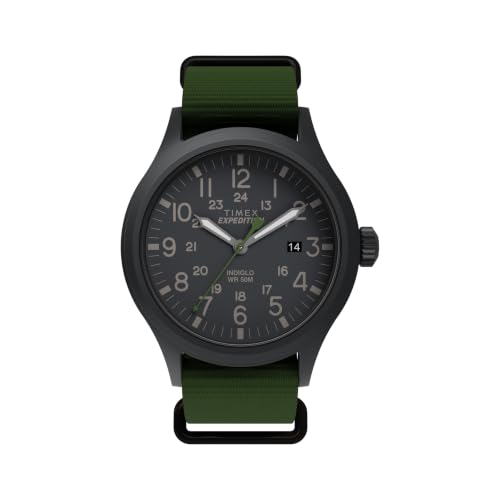
Live listings for the shortlist in this guide are pulled from Amazon below, so prices and availability are always current at the moment you look.



When a smartwatch still makes sense
None of the above argues that a connected watch has no place on a trip. For the flight days, the city stopovers, and the training sessions at the lodge gym, a smartwatch offers notifications, payments, and health tracking that no field watch attempts. The argument of this guide is narrower: for the days in the reserve, the traditional field watch’s published virtues, months of power, instant legibility, sealed simplicity, match the conditions more closely, and it asks nothing of the lodge’s limited charging points, which are usually oversubscribed by cameras and phones already.
Travellers who wear the connected watch into the field should still borrow the field checklist: a matte screen protector against grit, a fabric or rubber strap rather than leather, a case bumper if the model offers one, and a charging plan counted in days, with the watch’s own published battery figure, often between two and fourteen days depending on type, checked against the longest stretch away from the lodge. Read that way, the two formats stop being rivals. The sheet decides which watch goes on which wrist for which leg of the journey, and both can earn their luggage space.
A note on colour choice for straps in the field closes the strap question. Pale canvas shows dust least, because savanna dust is itself pale, while black webbing shows every light speck and olive sits between the two. None of this affects function, and a strap is washable in minutes, but on a long trip the strap that looks clean at breakfast is a small daily satisfaction. Leather aside, colour is the one safari specification that can be chosen purely by preference, and it should be, since every functional box has already been ticked by material and width.
Insurance and documentation are the dull final layer of preparation. A watch of any real value should travel with its purchase record or valuation photographed and stored with the trip documents, its serial number noted from the case back, and its cover checked for the regions on the itinerary, since some policies treat certain destinations differently. None of this improves the watch by a single millimetre or lumen. It simply means that if the worst happens at a river crossing on the last day, the loss is an inconvenience with paperwork rather than an argument without it, and the replacement can be specified from the same sheet that chose the original.
One practical test remains before any field watch is packed, and it takes place in a dark room at home. Charge the lume under a lamp for a minute, then read the dial at arm’s length after five minutes, after half an hour, and, if the evening allows, after two hours. Those three readings predict the dawn drive better than any photograph in a listing, because they measure the actual watch, with its actual lume age and condition, against the actual eyes that will rely on it at five in the morning.
The safari watch is a solved problem, and the solution is written plainly on its specification sheet: a midsize matte case, a dial that reads in glare and in darkness, seals that keep the dust and the river outside, power that asks for nothing, and a strap that treats sweat as weather. Choose the model whose published numbers meet that description most completely, and it will earn its place on the wrist from the first cold dawn drive onward. When the dust has been rinsed off on the final night and the watch is still showing the right time for two timezones at once, that quiet reliability is the whole point of the format.


