Our Top Picks
 Fender Vintage Noiseless Stratocaster Pickups Set White2.6 x 5.4 x 5.7 inches0.75 poundsCheck on Amazon
 Fender Ultra Noiseless Vintage Stratocaster Pickups4 cm x 12.2 cm x 12.9 cm5 x 4.75 x 1.5 inches0.7 poundsCheck on Amazon
 Fender Generation 4 Noiseless Stratocaster Single-Coil Pickups1.5 x 5 x 5 inches0.9 poundsCheck on Amazon


What's inside
- What 60-cycle hum actually is
- How stacked coils cancel hum
- The honest trade: silence for a little air
- Reading the specification sheet
- The main design families, compared
- Output balance across the three positions
- 250K versus 500K pots with stacked coils
- RWRP and the middle pickup question
- Pole-piece stagger, spacing, and string alignment
- Soldered versus solderless installation
- Wiring options worth knowing
- Matching a set to your amplifier and pedals
- How to judge hum performance before buying
- Choosing by playing style
- Common mistakes when buying a noiseless set
- Care, adjustment, and living with the set
- A closer look at resonant peak and cable loading
- Shielding, grounding, and the rest of the noise story
- How the five positions should sound when a set is right
- Left-handed, vintage, and import fit notes
- Budget thinking without price tags
- A simple order-of-work for installation day
- Listening for the differences that matter
- When a noiseless set is the wrong purchase
- Keeping the original parts and the story straight
- Questions buyers ask most
- Check prices on Amazon
- Verdict guidance
As an Amazon Associate I earn from qualifying purchases. This post may contain affiliate links at no extra cost to you.
A Strat-style guitar earns its reputation from three single-coil pickups that chime, quack, and cut through a mix with very little help. That same open, sensitive design also collects hum from the room. In a quiet studio the buzz may sit low enough to ignore, but under stage dimmers, near a neon sign, or beside a wall of LED fixtures, the noise can rise until it competes with soft passages and ruins a clean take. Noiseless pickup sets exist to solve that one problem without turning the guitar into a humbucker instrument. They keep the familiar three-position layout, the familiar footprint, and much of the familiar attack, while cancelling the 60-cycle hum that a true single coil cannot reject on its own.
This guide is built from published specifications and manufacturer documentation: coil construction notes, DC resistance and inductance figures, magnet descriptions, wiring diagrams, pot value recommendations, and dimensional drawings. It explains how stacked coils and dummy-coil systems work, where each design family gives up a little top-end air, how a 250K or 500K control changes the result, and what to check about string spacing, stagger, and wiring before you order. The goal is a set that stays quiet in real rooms and still sounds like the guitar you bought.
What 60-cycle hum actually is
A true single coil is one coil of wire wrapped around six pole pieces, and it works as a very good antenna. Mains power in North America alternates at 60 hertz, and every transformer, dimmer, motor, and poorly shielded fixture in a building radiates a field at that frequency and its harmonics. The coil picks up the guitar string signal and the room field at the same time, and the amplifier treats both as music. Turning your body changes the angle between the coil and the field, which is why players learn to rotate on stage until the buzz dips. That trick helps in one spot and fails the moment you move.
Rooms differ more than guitars do. A rehearsal space with modern LED panels may be nearly silent, while a small club with an old dimmer rack can fill every single-coil guitar with a harsh buzz that swells when the lights fade. Neon transformers are famously unkind. Home wiring adds its own layer: unshielded runs, dimmer switches for ceiling lights, computer monitors, and wall warts all contribute. A pickup that sounds acceptable at home can become unworkable two streets away, which is why hum control is a practical buying criterion rather than a purist debate.
Position matters too. On a traditional Strat set, the middle pickup is often reverse-wound and reverse-polarity, so positions two and four cancel hum when two pickups combine. Positions one, three, and five remain noisy. A noiseless set removes that lottery. Every position, including the bridge alone and the neck alone, stays quiet, and the in-between tones keep their cluck without the underlying buzz.
How stacked coils cancel hum
The most common approach stacks two coils vertically inside a housing that fits a standard single-coil route. The upper coil reads the strings. The lower coil, placed where string vibration barely reaches, reads mostly the room. Because the two coils are wired in opposition, the hum they share cancels while the string signal from the top coil survives. Fender Vintage Noiseless and the later Gen 4 Noiseless designs follow this broad stacked idea, and Seymour Duncan stack designs use a related stacked arrangement with their own voicing choices.
Stacking is not free. The second coil adds resistance and inductance, and the interaction between the coils softens the very top of the frequency range. Designers answer with magnet choice, coil geometry, and sometimes a recommendation for a higher-value volume pot to restore brightness. The result, at its best, is a pickup that behaves like a slightly calmer single coil: the attack remains, the glass remains in reduced measure, and the noise floor drops dramatically.
A second family uses a dummy coil or a separate sensing arrangement placed away from the strings. Kinman-style zero-hum designs are known for careful shielding, tall coil geometry, and a focus on keeping the resonant peak close to a vintage pickup. DiMarzio Area-style virtual vintage designs take yet another route, using refined coil and magnet structures to lower noise while aiming at specific vintage voices, year by year in some cases. The engineering differs, but the buying question is the same: how much noise is removed, and what tonal price is paid for removing it.
The honest trade: silence for a little air
Every noiseless design trades something. The extreme top end that players call air or sparkle sits in the region most affected by extra coil mass and shielding. A noiseless neck pickup may sound a fraction rounder than the finest vintage single coil, and chords may bloom with slightly less shimmer. In isolation, on a good amplifier, most listeners can hear the difference. In a band mix, at stage volume, with a drummer and a bass player filling the room, that small loss usually disappears while the benefit, silence between notes, remains obvious.
Consider where you play. A recording guitarist who works direct, with headphones, hears hum at its most exposed, because there is no room noise to mask it and plug-ins raise quiet passages. A live player who uses high gain hears hum multiplied by every gain stage. Both gain more from a noiseless set than a low-volume home player in a electrically quiet house. Matching the set to your rooms matters more than pursuing an abstract ideal of purity.
There is also a feel element. Some stacked designs respond with a slightly firmer low end and a smoother attack than a vintage coil, which suits modern playing and pedals well. Others aim deliberately at a softer, older response. Published inductance figures help here: higher inductance generally points toward a warmer, stronger midrange voice, while lower inductance tends toward brightness and openness, though magnet type and height adjustment move the result as well.
Reading the specification sheet
DC resistance is the figure most often printed and most often misread. It is measured in kilo-ohms with a simple meter, and it hints at how much wire is on the coil, but it does not equal output. A stacked noiseless pickup can show a high DC reading because two coils contribute to the total, yet sound no louder than a modest vintage pickup. Use resistance to compare members of the same family, to confirm a set is balanced, and to spot a mislabelled position, not to rank loudness across brands.
Inductance, measured in henries, tracks the voice more closely. As a rough guide drawn from manufacturer data, vintage-voiced single coils sit at the lower end, and hotter designs climb from there. When a maker publishes both figures for bridge, middle, and neck, look at the spread. Bridge pickups are usually wound a little stronger to compensate for the smaller string movement near the bridge saddle. A set whose bridge unit carries clearly higher inductance than its neck unit will likely balance better at equal heights.
Magnet descriptions deserve attention as well. Alnico grades shape attack and low-end firmness. Many noiseless sets use Alnico 2, 3, or 5, or blended and bevelled pole pieces, to soften or sharpen the response that the stacked coil would otherwise dull or harden. Samarium cobalt appeared in an earlier Fender noiseless generation and offered a different, very clear character. The magnet alone does not decide the sound, but a spec sheet that names magnet type, stagger pattern, and cable type tells you far more than one that offers only a resistance number.
Finally, check the physical drawing. Overall height matters because a stacked pickup is taller than a vintage coil, and some shallow routes or tight pickup cavities need extra depth. Lead wire exit, cover dimensions, and mounting hole spacing all vary slightly. A minute with the dimensional PDF saves a frustrating afternoon with a router you never wanted to use.
The main design families, compared
Fender Vintage Noiseless and Gen 4 Noiseless
Fender has iterated its noiseless line for decades, and the Vintage Noiseless set remains the reference point many players start from: a stacked design voiced for a warm, vintage-leaning response with smooth highs and a bell-like neck tone. The Gen 4 Noiseless generation moved the voicing toward tighter lows and a more defined top, aiming to close the gap with a true single coil while keeping the noise floor down. Both families use the familiar three-pickup layout, both suit the player who wants the guitar to stay recognisably Fender in character, and both reward careful height adjustment, because stacked coils can sound choked when set too close to the strings and thin when set too far away.
Owners moving from vintage coils often notice two things first. The noise disappears in all five switch positions, which changes how confidently you can use the bridge pickup alone with gain. And the top end feels a touch more controlled, which can read as polish through a bright amplifier or as a small loss through a dark one. Fender documentation pairs these sets with specific control values, and following that guidance matters more than internet folklore about pots.
DiMarzio Area-style virtual vintage designs
The Area approach treats each position as its own voicing problem. Area-style pickups target particular vintage years and positions, with the bridge unit voiced to avoid the thin, piercing quality that plagues weak bridge single coils. The design keeps noise very low while pursuing a specific historical flavour rather than a generic modern smoothness. Players who love position two and four quack often gravitate here, because the in-between tones retain a hollow, vocal quality that some stacked sets flatten.
These designs also tend to be forgiving of standard 250K controls, which makes them attractive for a simple swap that leaves the rest of the wiring harness alone. String pull is another consideration: strong magnets set close can drag on the strings and disturb intonation on the low strings, a phenomenon sometimes called stratitis. Lower magnetic pull designs let you raise the pickup for output without that warbling side effect, and manufacturer height guidance reflects that freedom.
Seymour Duncan stack designs
Seymour Duncan stack pickups cover a wide span, from vintage-voiced stacks that mimic a late-fifties coil to hotter stacks built for rock lead work. The shared thread is the stacked hum-cancelling layout and a catalogue that publishes resistance and inductance data openly, which makes cross-checking balance across a set straightforward. The hotter members of the family trade more top end for output and midrange push, and they pair naturally with gain pedals and channel-switching amplifiers.
A strength of a broad catalogue is calibration. You can build a set that is vintage at the neck, glassy in the middle, and stronger at the bridge without mixing brands and hoping the phase and polarity agree. Polarity and winding direction must match for hum-cancelling in-between tones, and a matched factory set removes that risk entirely. Buying three unrelated singles and expecting quiet positions two and four is a common and avoidable error.
Kinman-style zero-hum designs
Kinman-style pickups built a following on two claims: near-total hum elimination and a determined effort to preserve the complex top end of a good vintage coil. The construction uses extensive shielding and a tall, narrow coil geometry, and the range includes multiple voicings from late-fifties sweetness to stronger, more modern sets. These pickups often cost more and may involve longer ordering times, and the installation guidance is more particular, with attention to grounding and cavity shielding.
For a player whose main complaint about other noiseless sets is a flattened high end, this family is the natural counterpoint. The published approach treats the resonant behaviour of the pickup as the core of the sound, and the documentation discusses capacitance and loading in unusual depth. That depth rewards readers: cable capacitance, control values, and shielding all shift the peak that gives a Strat its cut, and understanding them helps with any brand you choose.
Output balance across the three positions
A Strat set lives or dies on balance. The bridge position sees the least string energy, the neck the most, and a set that ignores that physics leaves you riding the volume control at every switch change. Good sets compensate in the winding: the bridge pickup is wound hottest, the neck mildest, and the middle sits between. When you read a spec table, that staircase should be visible in the inductance figures. A flat table across all three positions usually means the bridge will sound weak or the neck will boom.
Height adjustment fine-tunes what the winding starts. Raising a pickup adds output and bass; lowering it opens the sound and reduces magnetic pull. Start from the maker recommended heights, measured from the pole piece to the string with the string pressed at the last fret, then adjust in small turns while listening for the balance between positions rather than the absolute loudness of one. The in-between positions should sit slightly lower in volume than the single positions by nature, because two pickups share the load, but the drop should feel musical, not like a fault.
Balance also has a tonal side. If the neck pickup is far stronger in the low mids than the bridge, switching mid-song feels like changing guitars. Calibrated sets keep a family resemblance across positions, so a riff moved from neck to bridge changes colour without changing weight. Reviews and spec sheets that discuss calibrated sets are describing exactly this discipline.
250K versus 500K pots with stacked coils
The volume and tone controls load the pickup, and their value shapes the resonant peak. A 250K pot is the traditional Strat choice: it trims a little brightness and gives the classic, slightly softened top. A 500K pot loads the coil less, letting more high end through, which can restore air that a stacked coil loses. That is why some noiseless sets ship with, or recommend, 500K or even 1-meg controls, sometimes with a treble-pass network to keep brightness as you turn down.
Swapping pot value is not a free upgrade in every direction. A vintage-voiced noiseless set designed around 250K can turn brittle with 500K, especially at the bridge. A set designed for higher values can sound muffled on a stock harness, leading owners to blame the pickups for a wiring mismatch. Read the maker recommendation for your exact set, and treat it as part of the product. The harness and the pickups are one system.
Capacitor choice interacts as well. The common 0.022 and 0.047 microfarad tone capacitors roll off highs at different rates as the tone knob turns. With a noiseless set that already runs smooth, the smaller value preserves more usable range on the knob. None of this requires exotic parts; it requires matching ordinary parts to the documented design intent.
RWRP and the middle pickup question
In a traditional set, the middle pickup is reverse-wound, reverse-polarity relative to its neighbours, so combined positions cancel hum and produce the hollow quack. In a noiseless set, each pickup already cancels its own hum, so RWRP is not needed for silence. Makers handle the middle position differently: some keep a dedicated middle design voiced for combination tones, others supply three similar units with correct phase relationships. What matters for the buyer is that positions two and four stay in phase and keep their characteristic dip in the mids.
A mismatched middle pickup reveals itself at once: the in-between tone turns thin, nasal, and quiet, the classic out-of-phase error. Factory sets prevent it. If you assemble a set from separate units, confirm phase and polarity from the documentation before soldering, because swapping two wires after the fact is easy on paper and annoying with the strings on.
The middle pickup alone, position three, is the least used and most revealing voice. A good middle unit sounds clear and neutral, useful for rhythm work that needs to sit under a voice. In noiseless sets it also becomes fully usable on stage for the first time for many players, since the traditional middle position carried full hum on its own despite its RWRP role in combinations.
Pole-piece stagger, spacing, and string alignment
Vintage stagger raises the pole pieces for the middle strings to match an old fingerboard radius and a wound third string. Modern strings, flatter boards, and a plain third string change that maths. A tall pole under the third string can make it jump out, while low outer poles can soften the first string. Many noiseless sets offer flat or modified stagger patterns that suit current string sets better. If your guitar has a flatter radius, a gentler stagger usually balances string-to-string volume more evenly.
Spacing matters at the bridge. Strat-style bridges come in vintage and modern string spacing, and the outer pole pieces should sit under the outer strings, not inside or outside them. A pickup whose poles miss the first string will lose it in bends. Measure your bridge spacing and compare it with the maker dimensional drawing. Most full sets assume standard Strat spacing, but partscasters and import models vary enough to check.
Raised poles also interact with pickup height. A strongly staggered set set very high can put the tallest pole close enough to disturb the string. Follow the height guidance for the specific stagger you bought, and listen for warble on sustained low notes as a warning sign. Lowering the bass side a fraction often cures it while keeping the treble side lively.
Soldered versus solderless installation
Traditional installation means soldering pickup leads to the switch and pots, grounding the bridge and jack, and keeping lead dress tidy so nothing buzzes against the cavity. It is permanent, reliable, and cheap in parts, but it asks for a decent iron, a steady hand, and care around a finished guitar. Heat sinks on pot lugs, short ground runs, and a check of every joint with a meter before the strings go on prevent most faults.
Solderless systems replace joints with connectors and a plug-in harness. They shine for players who swap sets often, for owners who do not solder, and for anyone who wants the original harness preserved untouched in a drawer. The trade-offs are connector bulk in a tight cavity and dependence on a proprietary harness. Several noiseless makers offer solderless versions of popular sets, and the pickup itself is the same; only the connection changes.
Either route benefits from cavity shielding. Copper tape or conductive paint, properly grounded, lowers the noise that wiring itself collects, and it complements the hum-cancelling coils. A noiseless set in an unshielded guitar with long unshielded runs can still hiss and crackle from handling noise even while mains hum is gone. Shielding, star grounding where practical, and a firm jack connection complete the job the pickups start. Readers comparing signal chains for a home setup will also find a useful detour in best pci sound cards for music production, since a quiet guitar deserves a quiet input path.
Wiring options worth knowing
The standard five-way switch gives bridge, bridge plus middle, middle, middle plus neck, and neck. Noiseless sets keep that map, and most players should live with it for a while before modifying anything. Once the base voices are familiar, a few additions earn their keep. A blend control that fades the neck pickup into the bridge position adds a thick, vocal combination the stock switch cannot reach. A switch that puts pickups in series adds a louder, darker voice for lead work, though series wiring changes the hum behaviour and the loading, so follow a diagram written for your pickup type.
Tone control layout is another quiet upgrade. Many stock harnesses run both tone controls on neck and middle, leaving the bright bridge pickup with no tone control at all. Moving the second tone control to the bridge makes the sharpest position far more usable, and with a noiseless bridge that already runs smooth, a small roll-off can take you from cutting to singing without a pedal change. Document what you change, with a photo of the harness, so a future owner or technician can follow your work.
Treble bleed circuits deserve a mention because stacked coils can darken as the volume drops. A small capacitor, sometimes with a resistor, across the volume control keeps highs present at lower settings. Some factory harnesses for noiseless sets include a tuned network for exactly this reason. If your guitar turns muddy at seven on the dial, the network, not the pickups, is the likely fix.
Matching a set to your amplifier and pedals
A noiseless set changes how gain stages behave. With hum gone, high-gain pedals and amplifier channels become far more usable with single-coil-sized pickups, and the noise gate, if you use one, can relax to a gentler threshold that stops choking sustained notes. Clean channels benefit differently: the silence between phrases makes dynamics more obvious, and a compressor stops pumping on buzz that is no longer there.
Bright amplifiers expose the top-end trade most plainly. Through a sparkling clean amp, a warm stacked set can sound rounded to the point of dullness if the pots are wrong, while a brighter noiseless design keeps its cut. Darker amplifiers forgive almost any noiseless set and reward the hotter, mid-focused ones. Think of the set, the harness, and the amplifier as a single chain of small brightness decisions that add up.
Speaker choice completes that chain, and the roundup at best 10 guitar speakers is a sensible companion read, because a speaker that rolls off the top can make a smooth noiseless set feel sleepy while a brighter speaker restores its edge. Small changes at the end of the chain often beat another pickup swap.
How to judge hum performance before buying
Manufacturers rarely publish a single hum figure that can be compared across brands, because test conditions differ. What you can compare is design intent and user evidence at scale: whether the maker describes true hum cancellation in every position, whether the set is fully shielded, and whether the documentation discusses grounding requirements honestly. A set that claims silence but ships with sparse wiring guidance is a warning sign.
Your own environment test comes after installation, and it is simple. Plug straight into the amplifier, set a clean tone at the loudest volume you normally use, and stop playing. Turn slowly through a full circle. A good noiseless set keeps the noise floor low and steady at every angle, with no orientation that suddenly blooms. Repeat with your usual gain pedal engaged. Remaining noise at that point is usually hiss from gain, not mains hum, and the distinction matters: hiss is broadband and constant, hum is tonal and position-sensitive.
Recording players should also listen through their interface at the gain they track with. A set that is quiet through an amplifier but noisy near a monitor or an interface points to shielding and cable issues rather than pickup failure. Move the guitar, swap the cable, and check the ground before concluding anything about the coils.
Choosing by playing style
Clean and funk rhythm
Rhythm players who live on positions two and four need combination tones that stay hollow and percussive, with enough top end for muted strums to speak. Lower-output, vintage-voiced noiseless sets serve this best, because hot windings thicken the in-between sounds and blur the quack. Pair them with the pot value the maker specifies, keep the middle pickup height moderate so combinations stay open, and resist hotter bridge units that tempt you out of balance.
Blues and roots lead
Neck-position lead playing rewards warmth without mud. A noiseless neck pickup with a clear low end and a singing, slightly rounded top suits long bends and touch dynamics. Many blues players also live on the bridge more once hum is gone, because a bridge single coil with a tone control and moderate gain gives a cutting lead voice that used to be too noisy at stage volume. Sets with a modestly stronger bridge unit support that habit well.
Rock and higher gain
Hotter stack designs push an amplifier harder and keep definition under distortion, with tighter lows and more midrange. The cost is a further step from vintage sparkle on clean settings. If your clean tone comes from rolling the guitar volume down, check how the set behaves at partial volume, and consider the treble-pass network discussed earlier. Players who split time between a Strat and a humbucker guitar often prefer hotter noiseless sets because the output jump between guitars shrinks.
Studio and direct recording
Direct recording magnifies everything: hum, fret noise, and the small tonal differences between sets. Quiet operation matters most here, along with consistency across positions so takes comp together without volume jumps. Musicians building a compact writing setup around tablets and interfaces may also appreciate best affordable tablets for musicians for keeping charts, tuners, and session notes in one place beside the guitar.
Common mistakes when buying a noiseless set
The first mistake is judging by DC resistance alone and choosing the hottest set on the page, then wondering why the guitar lost its chime. The second is ignoring the harness: fitting a set designed for high-value pots to a stock 250K harness, or the reverse, and blaming the coils for the mismatch. The third is mixing singles from different makers without checking phase, polarity, and grounding scheme, which produces thin combination tones and fresh noise problems.
Height neglect is another frequent error. Stacked pickups have a sweet range, and owners who set them by eye, very close to the strings for maximum output, get a hard, compressed sound with tuning artefacts on the low strings. Ten minutes with a ruler and the maker guide fixes it. Finally, many buyers skip shielding and then report that the quiet pickups still crackle when they touch the strings, which is a grounding symptom, not a coil symptom. Check the bridge ground wire before ordering a second set.
Expectation errors matter too. A noiseless set will not make a bright guitar dark or a dark guitar bright; it shifts the balance modestly. It will not remove hiss from a high-gain pedal chain. And it will not sound identical to a treasured vintage coil in a silent room. It promises something narrower and very valuable: the Strat voices you know, usable everywhere, at any gain, in any chair in the room.
Care, adjustment, and living with the set
Noiseless pickups need little care beyond what any pickup needs. Keep covers clean with a dry cloth, avoid solvents near the bobbins, and check height screws once in a while, because springs and foam compress over years and let a pickup drift down. When you change string gauge, revisit heights: heavier strings move more air, vibrate wider, and can sit closer to magnetic trouble.
Keep notes on your setup. Record the height for each pickup, bass and treble side, the pot values fitted, and the capacitor value. That small card in the case turns a future harness repair from guesswork into restoration. If you later sell the guitar, the notes and the original pickups, kept safely in their box, protect its value far better than a verbal history.
Strings and picks change the top end as much as many pickup swaps. Before concluding that a noiseless set lacks air, try a fresh set of strings and a lighter touch with the tone control. The resonant peak that defines Strat brightness responds to cable length too; a very long cable trims highs audibly. Shorten the run or add a buffer and judge the set again before spending more.
A closer look at resonant peak and cable loading
The single most useful idea in pickup science is the resonant peak. A coil, together with the capacitance of the cable and the controls, forms a tuned circuit with a peak somewhere in the upper midrange or treble. Frequencies near the peak are emphasised, and frequencies above it fall away steeply. That peak is the glass in a Strat neck pickup and the bite in the bridge. Noiseless designs move the peak through extra coil mass and shielding, and every other choice in this guide, from pot value to cable length, is really an attempt to place that peak where you want it.
Cable capacitance is quoted per metre or per foot, and a long stage cable can carry enough total capacitance to drag the peak down by a clearly audible amount. Players who rehearse with a short cable and perform with a long one sometimes blame the pickups for a dull live sound that is really the cable. A buffer at the start of a pedalboard fixes the loading after that point, though the cable from guitar to buffer still counts. Wireless systems remove cable loading almost entirely, which can make a noiseless set sound brighter than expected; many receivers offer a cable simulation setting for that reason.
Stacked coils also present a different inductance to the first gain stage or fuzz than a vintage coil does, so the interaction at the input of the chain changes even when the audible hum is gone. None of this is a defect. It is the ordinary physics of a different coil, and it explains why two sets with similar resistance figures can feel quite different under the fingers.
Shielding, grounding, and the rest of the noise story
Hum from the coils is only one layer of guitar noise. Single-coil-sized wiring runs, an unshielded control cavity, a loose jack, and a missing bridge ground each add their own crackle, buzz, and handling noise. Noiseless pickups cancel the layer they are built for. The rest belongs to the guitar, and a careful installation addresses all of it at once while the strings are off and the guard is open.
Conductive paint needs continuity to the ground point to work, and copper tape needs overlapping seams with conductive adhesive or solder bridges between strips. A shield that floats, connected to nothing, can make matters worse by acting as another antenna. Continuity checks with a meter, from cavity floor to jack ground, take a minute and settle the question. Foil on the back of the pickguard should meet the cavity shielding at the screw points so the whole enclosure closes electrically.
Ground loops inside a guitar are rare because the ground scheme is simple, but cold solder joints are common, and they announce themselves as intermittent crackle when the cable moves. Reflowing a dull, grainy joint is unglamorous work that pays every time you play. Likewise, a jack whose nut has loosened lets the plug rotate and wear, adding noise that no pickup can cancel. Tighten it with the correct tool rather than pliers on the finish.
How the five positions should sound when a set is right
Position five, the neck alone, should be round, clear, and vocal, with enough top end to hear the pick attack and enough low end to feel weight without boom. Position four keeps the neck warmth and adds the hollow dip and soft quack that define Strat rhythm playing. Position three, the middle alone, is the plainest voice: neutral, present, and useful under vocals or for funk parts that must not crowd the bass. Position two mixes middle clarity with bridge snap, giving the brightest, most percussive combination. Position one, the bridge alone, should cut without ice-pick harshness, especially once its tone control is wired in and set a touch below full.
When a set is wrong, the faults follow patterns. A neck that booms while the bridge whispers points to poor calibration or bad heights. Combination tones that sound thin and quiet point to phase trouble. A set that is pleasant clean but vanishes under gain may be too polite in the midrange for your amplifier. Naming the fault in these terms makes a return, an exchange, or a height adjustment a targeted fix rather than a fresh gamble.
Left-handed, vintage, and import fit notes
Left-handed guitars need stagger patterns mirrored when the stagger is handed, and some makers offer left-handed versions of popular sets while others use a symmetrical stagger that serves both orientations. Check before ordering, because a vintage stagger fitted the wrong way round puts the tallest pole under the wrong string. Vintage reissue bodies may have shallower routes and narrower cavities, which brings the stacked height question back into focus. Import models vary in guard screw pattern, switch depth, and control spacing, so a loaded pickguard built for one specification may not drop into another without small changes to the guard or cavity.
Seven-string and extended-range Strat-style instruments are a separate niche with their own widths and spacing, and mainstream noiseless sets do not cover them. Baritone conversions change string tension and output, and a set balanced for standard tuning may need height changes to stay even. These edge cases reward a message to the maker with your exact measurements rather than an optimistic order.
Budget thinking without price tags
Value in this market is not a simple ladder. A mid-priced calibrated set with the correct harness values will outperform a costly set fitted to the wrong controls. Money spent on shielding, a good switch, and firm pots returns more silence per coin than money spent climbing pickup tiers. Conversely, the cheapest unknown stacks often skimp on shielding and documentation, and the missing wiring guidance alone can cost an evening. Buy the set whose documentation answers your questions before you pay, keep the original pickups and harness intact for reversibility, and treat installation quality as part of the purchase rather than an afterthought.
Resale thinking points the same way. A guitar returned to stock with its original parts sells cleanly, and a documented, reversible noiseless upgrade with tidy wiring reassures a buyer far more than a mystery harness. Keep receipts, diagrams, and your setup notes together in the case pocket.
A simple order-of-work for installation day
Begin by photographing the existing wiring from several angles and noting pot values and capacitor markings. Remove strings, guard, and the old pickups, keeping screws sorted by location. Test-fit the new set for depth and lead routing before any soldering. Complete shielding and let paint dry fully if you use it. Wire the harness on the guard outside the body where access is easy, check continuity and switch logic with a meter, then fit the guard, string up with an old set of strings for the first adjustment, and set heights from the maker guide. Only after the balance pleases you should the fresh strings go on and the final height pass happen, because new strings are brighter and can mislead your ears during setup.
If any position is silent, weak, or thin, stop and consult the diagram before playing harder. A silent position is usually a switch lug or a short to shielding foil, and a thin combination is phase. Both are five-minute fixes on the bench and hour-long mysteries once the guitar is back together and the moment has gone cold.
Listening for the differences that matter
Specification sheets narrow the field, but a few listening habits separate a good match from a poor one when you hear a set in clips or in a shop. Listen first to the neck pickup played clean with slow chords, and notice whether the low strings stay defined as notes ring together. Then listen to the bridge pickup with a little gain, playing the same phrase you heard on the neck, and judge whether the top end cuts or stabs. Combination tones reveal calibration fastest of all: a strong set keeps the hollow character in positions two and four at low volume, where a weak set turns those settings into a thinner copy of the middle pickup.
Dynamic response is the next layer. A musical set follows pick attack honestly, cleaning up when you play softly and pushing the amplifier when you dig in, even though its coils are stacked. Sets that feel compressed at every touch can tire a player who shapes phrases by hand. Sustain matters as well, and it connects back to magnetic pull: pickups that drag less on the strings let notes ring truer, which is one reason lower-pull designs earn loyal followings among players who bend and hold notes at the neck.
Finally, judge the noise floor in context rather than in a silent gap edited out of a clip. Long, unedited passages with pauses, volume swells, and a gain pedal switched in and out tell the truth about hum. A set that stays composed through those moments will stay composed in your rehearsal room, and that composure, more than any single tonal adjective, is what you are buying.
When a noiseless set is the wrong purchase
Honesty about fit saves money. If your rooms are quiet, your gain is low, and you own a vintage-style set whose neck tone you love, the small tonal cost of a stack may buy you nothing you need. If your noise problem is really a faulty cable, a failing jack, or an unshielded cavity, new pickups will mask the symptom poorly and the fault will follow you. If you plan to sell the guitar soon as an all-original example, keep the soldering iron away and preserve its stock state. And if your favourite sound is a specific fuzz interaction with a low-output vintage coil, expect that relationship to change and decide with your ears open.
There is also the player who actually wants a humbucker voice in a Strat route. Rail and blade designs and full humbucker conversions serve that goal directly, and buying a noiseless single-coil set while secretly wanting humbucker weight leads to disappointment. Noiseless sets are for people who love the single-coil map of sounds and simply want the hum removed from it.
Keeping the original parts and the story straight
A reversible upgrade respects both the guitar and its next owner. Coil the original pickups with their screws and springs, label each by position, and store them dry with the original harness diagram and your photographs. If the guitar is a reissue or a limited run, that box of parts is part of its identity. Note the date of the change, the set fitted, the pot and capacitor values chosen, and the final pickup heights on one card. Future you, troubleshooting a crackle in three years, will be grateful for the record, and a technician asked to restore the guitar will work faster and charge less when the story is written down rather than reconstructed from solder joints. Treat documentation as part of musicianship: the same care that keeps a set list, a string gauge, and a tuner in the case pocket keeps the instrument itself in honest, playable order for decades.
One last habit helps every buyer: change one variable at a time. Fit the set, keep the familiar strings and amplifier settings for the first week, and let your ears learn the new baseline before touching pots, capacitors, or pedal order. Players who change everything at once never learn which part helped, and they often undo a good installation while hunting a fault that lived in a cable or a control value all along. Patience at this stage is not caution for its own sake; it is how a careful upgrade becomes knowledge you can reuse on the next guitar, the next rehearsal room, and the next set of strings you fit at home.
Questions buyers ask most
Will a noiseless set fit my guitar without routing?
Most sets fit standard Strat routes, but stacked designs are taller than vintage coils, and some shallow or vintage-correct cavities are tight. Compare the published pickup height with your cavity depth, including the foam or springs beneath. A small number of bodies need a slightly deeper route, and knowing that before ordering turns a surprise into a plan.
Do noiseless pickups need a battery?
The mainstream stacked, Area-style, Duncan stack, and Kinman-style sets discussed here are passive: no battery, no preamp, just coils, magnets, and careful geometry. Active systems exist in the wider market and take a different approach with low-impedance coils and electronics. Passive sets keep the guitar simple and avoid a battery compartment, which most Strat owners prefer.
Can I replace only the bridge pickup?
You can, and the bridge is where hum plus gain hurts most, but a single swap raises the phase and balance questions covered earlier. Output, polarity, and voicing must agree with the remaining pair. A matched set costs more and removes the guesswork, and it also quiets the neck position that many players use most.
Why does my noiseless set still buzz when I let go of the strings?
That symptom usually means the guitar ground path is doing its job through you, and the remaining noise is environmental or a grounding fault elsewhere. If the buzz changes when you touch metal parts, check the bridge ground and jack connections. If it never changes, look for a broken ground inside the guitar. The pickups cancel coil hum; they cannot repair a missing ground.
Are noiseless sets good with fuzz pedals?
Classic fuzz circuits interact with pickup impedance and can sound different with stacked coils than with vintage singles, sometimes smoother, sometimes less wild. Many players enjoy the tidier result; devotees of a specific vintage fuzz interaction should expect a small change in character. Trying your main fuzz early in the return window is the practical answer.
Check prices on Amazon
Live listings for the shortlist in this guide are pulled from Amazon below, so prices and availability are always current at the moment you look.

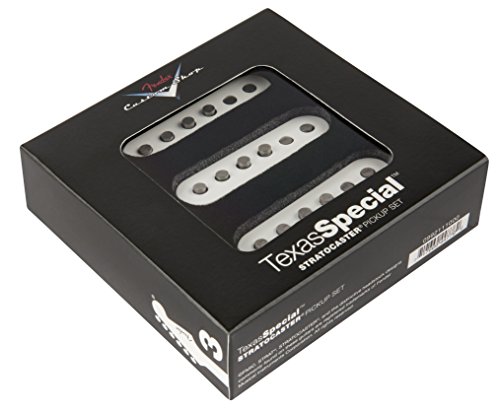
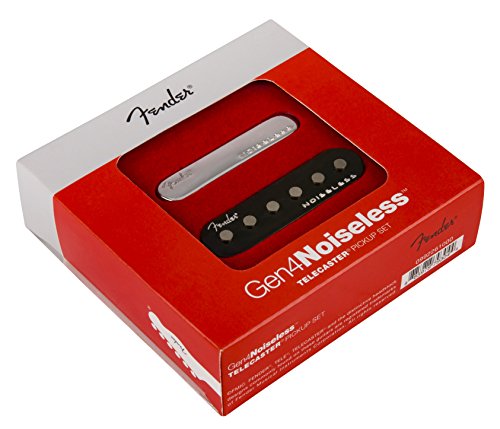
Fender Tex Mex Strat Pickup Set, Single Coil, Alnico 5 Magnets, Reverse Wound, Enhanced Output Warm Tone, 3 Piece


Verdict guidance
Start from your rooms, not from a forum argument. List where the guitar actually plays: the rehearsal space with dimmers, the home desk beside monitors, the stages you know. If hum has ever forced you to change position, angle, or gain, a noiseless set will pay for itself in confidence. Then pick a voicing family: vintage-leaning sets from the Fender noiseless line for familiarity, Area-style designs for year-specific vintage flavour and lively combination tones, Duncan stacks for the widest spread from vintage to hot with open published data, and Kinman-style sets when preserving top-end complexity is the priority and the budget allows.
Match the harness to the documentation, confirm cavity depth and bridge spacing, plan shielding while the guitar is open, and set heights from the maker guide before judging tone. Do those ordinary things carefully and the result is dependable: five quiet positions, a recognisable Strat voice, and a guitar you can point in any direction on any stage. For readers refining the listening end of a small studio, best sound cards audiophile rounds out the chain from pickup to playback.
Disclosure: this guide is based on published specifications and manufacturer documentation, and it contains affiliate links. If you buy through a link on this page, the site may earn a commission at no added cost to you, which helps fund further guides written to the same documentation-first standard.
The right noiseless set disappears into the music, leaving only the chime, the quack, and the quiet between notes.


