Our Top Picks
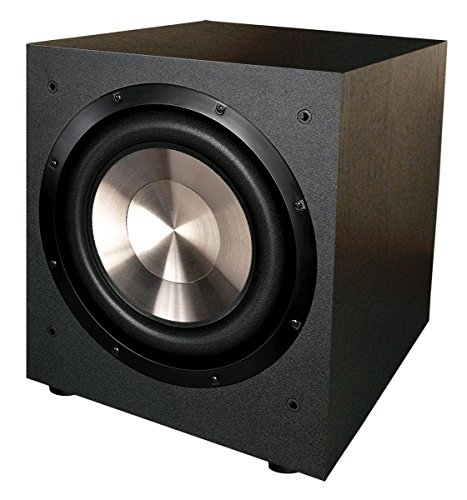 BIC America F12 12-Inch 475-Watt Front Firing Powered17 x 14.8 x 17 inches40.33 poundsCheck on Amazon
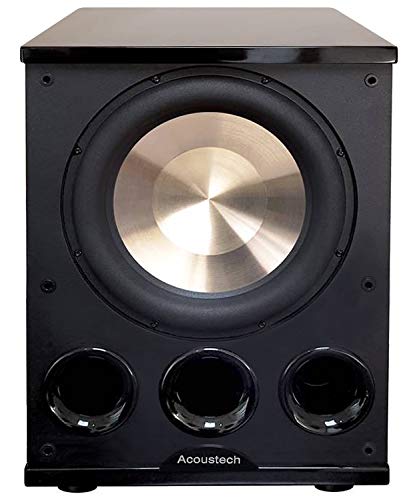
 BIC America PL-200II Acoustech PL-200 II Indoor 250-Watt-Continuous19.5 x 17.25 x 14.85 inches0 poundsCheck on Amazon
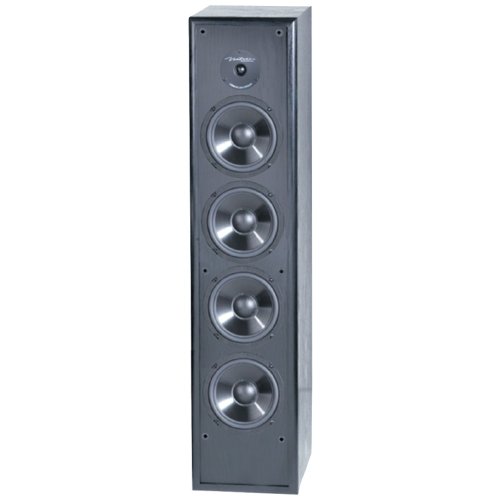
 BIC America DV62SIB 175-Watt 2-Way 6.5-Inch Bookshelf and23.5 x 12.4 x 17.5 inches0.06 poundsCheck on Amazon


What's inside
- What the F12 brings, and what it asks of its partners
- The 80 hertz convention and receiver bass management
- Setting the subwoofer itself when you use the LFE input
- Speaker-level connections and the older amplifier path
- Sensitivity, and why a few decibels matter so much
- Impedance in plain terms
- Bookshelf speakers as the natural partner
- Tower speakers when a subwoofer already owns the bottom
- The centre channel and tonal matching across the front
- Surround and satellite speakers in the same system
- Room size, listening distance and honest output needs
- Placement of the mains, and why the subwoofer freed them
- Placing the F12 itself: the sub crawl and corner loading
- Phase and level matching in practice
- Cables and connections, without mythology
- A short pre-purchase checklist
- Check prices on Amazon
- Frequently raised questions
As an Amazon Associate I earn from qualifying purchases. This post may contain affiliate links at no extra cost to you.
This guide rests entirely on published specifications and manufacturer documentation, and links on this page may earn this site a commission from the retailer at no added cost to the buyer. That basis matters here because pairing speakers with the BIC America F12 is not a matter of taste in isolation. It is a matter of documented figures fitting together: a 12-inch front-firing powered subwoofer rated at 150 watts RMS and 475 watts peak, with a published response of roughly 25 to 200 hertz, needs main speakers whose own published behaviour leaves a clean handover in the region where the receiver will divide the work. Everything that follows works outward from those fixed points.
The F12 occupies a particular niche among powered subwoofers. Its driver is large enough to move serious air in the bottom two octaves, its amplifier is built into its enclosure so your receiver never powers it directly, and it accepts both line-level low-frequency effects input and speaker-level connections. Those three facts shape every sensible pairing. Because the subwoofer carries its own amplification, the receiver budget you would otherwise spend on low-frequency power can go toward cleaner midrange and treble from the main speakers. Because the driver reaches down to about 25 hertz on paper, the main speakers do not need to reach anywhere near that deep. Because both connection types exist, the same subwoofer can serve a modern surround receiver or an older stereo amplifier that lacks a dedicated subwoofer output.
Readers sometimes approach this pairing backwards, shopping first for the largest tower speakers they can afford and then wondering why the subwoofer seems to add little. With a subwoofer of this capability in the system, deep bass extension from the main speakers is the least valuable thing you can buy. What matters instead is clarity and output capability above the crossover point, tonal consistency across the front stage, sensitivity that lets a modest receiver reach satisfying levels, and physical placement that keeps voices and instruments anchored to the screen or the stereo image rather than smeared toward the corner where the subwoofer sits.
What the F12 brings, and what it asks of its partners
The published specification for the F12 describes a vented enclosure housing a 12-inch woofer driven by an amplifier rated at 150 watts continuous and 475 watts peak. The distinction between those two power figures is worth understanding before you judge any pairing. Continuous or RMS power describes what the amplifier can sustain; peak power describes brief momentary capability during transients such as a film explosion or a kick drum strike. For integration purposes the continuous figure is the useful one, because it tells you the subwoofer can hold its output through a sustained passage rather than only touching a level for an instant.
Frequency response is quoted at roughly 25 to 200 hertz, and that span explains both ends of the pairing problem. At the bottom, 25 hertz covers the lowest notes of most film soundtracks and the fundamental of a large pipe organ, though output at the very edge of a published range is normally reduced compared with output in the middle of the range. At the top, 200 hertz is far above where you should ever ask this subwoofer to work in a system with capable main speakers. A crossover set anywhere near 200 hertz would make male voices and the body of many instruments emerge partly from the subwoofer enclosure, and because a single subwoofer sits in one place, that content becomes localisable and pulls the soundstage toward it.
The rear panel controls complete the picture. There is a volume or level control, a continuously adjustable crossover control, a phase switch, and an auto on and off function that wakes the amplifier when signal arrives and lets it sleep when the system is quiet. There are line-level inputs including a dedicated low-frequency effects input, plus speaker-level inputs for amplifiers without a subwoofer output. Each control has a correct role depending on which connection you choose, and confusing those roles is the single most common reason a well-chosen set of speakers still sounds boomy or thin beside this subwoofer. Later sections walk through each control in its proper context.
What the F12 asks of its partners, then, is modest in one sense and demanding in another. It asks little in the way of bass extension: a main speaker that is honest down to 60 or 70 hertz is entirely sufficient when the crossover sits at 80 hertz. It asks a great deal in the way of consistency: the handover region between 60 and 120 hertz is where the subwoofer and the mains overlap in influence, and speakers with ragged published response or a sharply rising treble will make that handover harder to disguise. It also asks for reasonable sensitivity, because the subwoofer can produce high levels in its band while a very inefficient main speaker forces the receiver to work hard everywhere above the crossover.
The 80 hertz convention and receiver bass management
Nearly every surround receiver sold today includes bass management, a system that redirects low frequencies away from speakers designated as small and sends them, together with the dedicated low-frequency effects channel, to the subwoofer output. The widely used starting point for that redirection is 80 hertz, a figure associated with THX guidance and repeated across receiver makers documentation because it balances several competing pressures at once. Set the crossover much lower and smaller speakers are forced to reproduce content they handle poorly, which raises distortion and limits headroom. Set it much higher and the subwoofer begins reproducing directional content, which undermines imaging.
The physics behind that balance is straightforward. Wavelengths at 80 hertz are long, roughly fourteen feet, and human hearing localises sound poorly at such wavelengths in ordinary rooms, which is why a single subwoofer placed away from the main speakers can still blend convincingly. At 150 or 200 hertz, wavelengths shorten enough that listeners begin to sense where the sound originates, especially when the subwoofer sits in a corner off to one side. Meanwhile most bookshelf speakers, even very good ones, show rising distortion below 80 hertz when asked to play loudly, because their smaller woofers must move a long way to produce low notes at volume. The 80 hertz division keeps each device in the region where it behaves best.
In practical receiver menus you will meet this setting under several names. Some brands call it crossover frequency for each speaker group, others present a single global figure, and many offer separate settings for front, centre and surround channels. The sensible approach with the F12 is to begin at 80 hertz for every speaker that cannot reproduce deep bass with authority, which in practice means nearly all bookshelf models, nearly all centre channels, and all small satellites. Large tower speakers may be given a lower figure such as 60 hertz, or in some rooms 40 hertz, provided their published response and driver complement support it, but there is rarely harm in starting them at 80 hertz as well and comparing.
Designating a speaker as small in the receiver menu does not insult it. The label only instructs the receiver to apply the high-pass filter and route the removed bass to the subwoofer. A superb bookshelf speaker set to small with an 80 hertz crossover will usually play louder and cleaner than the same speaker set to large and fed a full-range signal, because its woofer is relieved of the longest excursions and its amplifier channel is relieved of the most power-hungry frequencies. That relief is one of the chief gifts a powered subwoofer gives the rest of the system, and choosing speakers with this configuration in mind is smarter than choosing them for full-range heroics they will never be asked to perform.
Setting the subwoofer itself when you use the LFE input
When the F12 is connected by a single cable from the receiver subwoofer output to its low-frequency effects input, the receiver owns the crossover decision. In that arrangement the crossover knob on the subwoofer should be turned to its highest position, or set according to whatever bypass instruction the product documentation gives for that input, so that the subwoofer own filter does not stack on top of the receiver filter. Two filters in series steepen the rolloff and shift the effective crossover downward in ways the receiver distance and level calibration cannot account for, and the audible result is often a hollow region just above the intended crossover where neither device is fully responsible.
Volume on the subwoofer panel has a different role in this arrangement. It is not a day-to-day listening control; it is a trim that places the subwoofer output within the correction range of the receiver calibration. A practical method described across receiver setup guides is to set the panel level near its midpoint, run the receiver automatic calibration, and then look at the subwoofer channel trim the receiver reports. If that trim sits near either extreme of its range, adjust the panel level in the opposite direction and run calibration again. The goal is a receiver trim reasonably close to zero, which leaves room to nudge bass up or down later from the remote without pushing any stage into clipping.
Phase, on most installations of this type, begins at the zero position when the subwoofer uses the line-level input and the receiver handles distance compensation. Receivers measure or accept a distance figure for the subwoofer and apply delay accordingly, which performs the time alignment that a phase control approximates. If you change the subwoofer position substantially, revisit both the distance figure and the phase switch, because the two interact. A subwoofer whose output arrives out of step with the main speakers at the crossover frequency can cancel energy exactly where the handover happens, leaving a measurable and audible dip that no amount of extra volume will fix.
The auto on and off feature is convenient but deserves a moment of thought during setup. If the receiver subwoofer output level is very low, quiet passages may not present enough signal to keep the amplifier awake, and the first beat of a louder passage can be softened while the amplifier wakes. Raising the receiver subwoofer trim while lowering the panel level by a matching amount keeps the same total output but presents a stronger wake-up signal. Alternatively, where the documentation permits a permanently on setting, that removes the question entirely at the cost of a small standby power draw. Either approach is legitimate; what matters is recognising the behaviour rather than blaming the speakers for a dropout that originates in signal sensing.
Speaker-level connections and the older amplifier path
Not every system that suits the F12 includes a surround receiver. A stereo amplifier or an older receiver without bass management can still integrate this subwoofer through its speaker-level inputs, where the subwoofer samples the amplified signal and passes the main speakers their feed. In that arrangement the roles reverse: the receiver applies no filter, so the crossover knob on the F12 becomes the active crossover for the subwoofer, and it should be set by ear and by published speaker data rather than left at its maximum. If your main speakers are rated down to about 60 hertz, a starting crossover near 60 to 80 hertz on the panel is sensible, refined by listening for a seam at the transition.
Speaker-level wiring also changes how you think about the main speakers low-frequency burden. Unless the subwoofer documentation describes a high-pass filter on its speaker outputs, the main speakers still receive a full-range signal and still attempt whatever bass arrives. That means bookshelf speakers in a speaker-level system benefit from being placed a little farther from walls, which reduces boundary reinforcement in the region where they are weakest, and from not being driven to extreme levels with bass-heavy material. It also means the argument for large tower speakers grows slightly stronger in this configuration than in a bass-managed one, because the towers genuinely carry the bottom of their own range rather than handing it over at 80 hertz.
Cable choice for these connections is undemanding. Ordinary speaker cable of adequate gauge for the run length is what the terminals accept, and the subwoofer draws negligible power from the amplifier through its sensing inputs, so the main run gauge should be chosen for the main speakers themselves. Keep the left and right runs close to equal in length, keep polarity consistent at every terminal, and remember that a single reversed connection will thin the bass of the whole system in a way that mimics a subwoofer fault. Polarity errors are embarrassingly common and entirely free to fix, which makes them the first thing to check whenever a new pairing sounds weaker than its specifications promise.
Sensitivity, and why a few decibels matter so much
Sensitivity is the published figure that tells you how loud a speaker plays for a given input, conventionally expressed as the sound pressure level produced at one metre with one watt of input, or sometimes with 2.83 volts, which equals one watt into eight ohms. Figures for typical home speakers range from about 84 decibels for small, inefficient designs to 92 decibels or more for larger or horn-loaded models. That spread looks narrow on paper and is anything but narrow in practice, because the decibel scale is logarithmic and amplifier power must double for every three decibels of extra output.
Work through a concrete example using only arithmetic from published figures. A bookshelf speaker rated at 85 decibels needs four watts to reach 91 decibels at one metre, sixteen watts to reach 97, and sixty-four watts to reach 103 before distance losses are even considered. A speaker rated at 91 decibels reaches those same levels with one, four and sixteen watts respectively. In a real room, where listening distance might be three metres and each doubling of distance in free space costs about six decibels, the efficient speaker can be the difference between a modest receiver cruising comfortably and the same receiver running out of clean power on film peaks or orchestral climaxes.
Beside a powered subwoofer the sensitivity question has a particular twist. The F12 brings its own 150-watt amplifier to the lowest octaves, so it can reach levels that an inefficient main speaker cannot match above the crossover. The system then becomes unbalanced not in tonal terms but in dynamic terms: bass arrives with authority while dialogue, brass and strings compress or strain at the same master volume. Matching a subwoofer this capable with very low-sensitivity mains wastes much of what the subwoofer offers, because the whole system must be played below the point where the mains complain. Aiming for main speakers in the region of 87 to 91 decibels sensitivity is a pragmatic middle path for typical receivers and typical rooms.
Sensitivity also interacts with the centre channel in a way that is easy to overlook. If the left and right speakers are notably more efficient than the centre, the receiver calibration will trim the louder channels down, which is fine, but the centre will consume more amplifier power for the same dialogue level and may reach its limits earlier in a demanding mix. Choosing a centre from the same family as the mains usually keeps sensitivities within a decibel or two of each other, because the drivers and enclosure philosophy are shared. That quiet numerical closeness translates into a front stage that stays coherent when a voice or an effect pans from one side to the other.
Impedance in plain terms
Impedance, measured in ohms, describes the load a speaker presents to an amplifier, and it varies with frequency rather than sitting at one tidy number. A speaker sold as an eight-ohm model may dip to five or six ohms in parts of its range and rise much higher elsewhere; the nominal figure is a summary, not a constant. Most receivers are happiest driving nominal eight-ohm speakers, which is why the large middle of the bookshelf market is built that way, and why this guide treats eight-ohm mains as the default recommendation beside the F12.
The pairing logic is simple. The subwoofer is self-powered, so it imposes no load on the receiver at all when connected by line level, leaving the receiver full capability for the five or seven passive speakers it does drive. If those speakers are all nominal eight-ohm designs with gentle dips, a mid-priced receiver will drive them to satisfying levels without thermal stress or protective shutdown. If instead you choose four-ohm mains, or models with severe impedance dips paired with difficult phase angles, you narrow the field of receivers that will cope, and you may need separate amplification whose cost dwarfs any saving on the speakers themselves.
Speaker-level connection of the subwoofer does not change this picture in any meaningful way. The high-impedance sensing inputs draw so little current that the amplifier effectively still sees only the main speakers. What does change the load is wiring two speakers to one channel, which this guide does not recommend for a primary system, or running very long thin cable, whose resistance adds to the load and dulls the top end slightly. Sensible cable gauge for the run length, eight-ohm speakers, and a receiver rated for that load form a combination with no hidden traps.
Bookshelf speakers as the natural partner
Bookshelf speakers are the most logical companions for the F12 in most rooms, and the reasoning follows directly from the crossover discussion. Once a receiver redirects everything below 80 hertz to the subwoofer, a bookshelf speaker needs only to perform beautifully from 80 hertz upward, which is precisely what a well-designed compact two-way does. Its smaller enclosure avoids the low-frequency resonances that larger boxes must control, its woofer can be optimised for midrange clarity rather than excursion, and its price can be concentrated on driver quality and crossover components instead of cabinet volume.
Within the bookshelf class, driver size is the main fork in the road. Models built around a woofer of roughly five and a quarter inches tend to be compact, image precisely, and suit desks, shelves and small rooms, but they ask more of the crossover because their output is already falling as 80 hertz approaches. Models with woofers around six and a half inches offer more output and a more relaxed handover at the same crossover, at the cost of a larger enclosure that needs proper stands to perform at its best. Neither is universally better; the room size and listening distance sections below give the framework for deciding between them in your own space.
Ported and sealed bookshelf designs behave differently near the crossover, and the distinction is worth a paragraph. A ported speaker uses a tuned opening to extend its low-frequency output, gaining efficiency near the port tuning frequency but rolling off steeply below it. A sealed speaker rolls off more gradually and often integrates with a subwoofer in a slightly more forgiving way, because its output declines gently through the crossover region rather than dropping away. In a bass-managed system either can work very well, and published response curves, where a maker provides them, tell you more than the ported or sealed label alone. What you want to see is controlled, predictable behaviour between 60 and 120 hertz, not a dramatic peak or a sudden cliff.
Placement flexibility is a further bookshelf advantage that interacts with the subwoofer in a helpful way. Because the mains no longer need wall or corner reinforcement to produce bass, they can be positioned for imaging and for a smooth midrange, often a foot or more into the room on stands, while the subwoofer alone goes wherever bass response is smoothest. Decoupling those two placement problems is one of the great practical benefits of a subwoofer-based system, and it is largely lost with big full-range towers that must satisfy both sets of demands from a single position. For many listeners this freedom, more than any specification, is what makes a bookshelf and subwoofer combination sound larger than it looks.
Tower speakers when a subwoofer already owns the bottom
Tower speakers beside a capable subwoofer are sometimes dismissed as redundant, and that dismissal goes too far. A tower brings genuine advantages that have nothing to do with its deepest published note. Its larger enclosure and multiple woofers give it greater output capability and lower distortion in the 80 to 300 hertz region, which is the foundation of male voices, cello, piano left hand and the weight of a snare drum. Its height places the tweeter near ear level without stands. And for listeners who play two-channel music without the subwoofer engaged, a tower retains a satisfying full-range presentation on its own.
The honest trade-off is cost and footprint. Money spent on the extra enclosure volume and additional woofers of a tower is money not spent on better drivers in a bookshelf design, so at a given total budget a bookshelf and subwoofer system frequently offers finer midrange and treble detail, while the tower system offers more effortless scale in the upper bass. Floor space and visual weight also matter in shared living rooms, and a pair of towers plus a 12-inch subwoofer is a substantial furniture commitment. Rooms that double as family space often absorb bookshelf speakers on stands or on a console far more gracefully.
If you do choose towers with the F12, bass management discipline becomes more important, not less. The temptation is to run towers full range and let the subwoofer overlap beneath them, a configuration sometimes called double bass in receiver menus. Overlap in the 40 to 100 hertz region means two sources in different places producing the same frequencies, and their interaction in a room produces peaks and cancellations that vary by seat. A cleaner method is to cross the towers over like any other speaker, perhaps at 60 hertz if their published response supports it, and let the subwoofer do alone what it does best. The towers extra capability then shows up as headroom and composure above the crossover rather than as a muddled contribution below it.
There is one listening habit that genuinely favours towers in a subwoofer system, and it is high-volume film playback in a large room. When the listening distance grows beyond about four metres, the output demands on the main speakers climb steeply, and the additional woofer area and sensitivity of a good tower keep distortion down at levels where a small bookshelf speaker, however refined, begins to sound strained. The subwoofer cannot help there, because the strain lives in the midrange and upper bass, well above the crossover. Room dimensions, covered shortly, should therefore be measured honestly before the bookshelf-versus-tower decision is treated as settled.
The centre channel and tonal matching across the front
In a surround system the centre channel carries the majority of dialogue and anchors on-screen action, so its relationship with the left and right speakers matters more than any other pairing decision in this guide. Tonal matching means the three front speakers share a family resemblance in frequency response and character, so that a voice moving across the screen does not change its chestiness or its edge as it crosses from one speaker to the next. The most reliable route to that match is a centre designed by the same maker as a companion to your mains, sharing tweeter type and voicing decisions.
The engineering reasons are concrete rather than mystical. A tweeter made from a given material, whether a soft dome, a metal dome or a folded ribbon type, has characteristic behaviour at the top of its range and a characteristic dispersion pattern. Woofers from one family share cone materials and motor design, which shapes their midrange texture. Crossovers in a matched family are voiced with the same target curve in mind. Mix a bright, forward left and right pair with a warm, laid-back centre from another maker and the mismatch will announce itself on every pan, no matter how carefully levels are set, because level calibration can equalise loudness but cannot equalise character.
Centre speakers also present a placement puzzle that affects their published performance. Most are wide, low enclosures designed to sit on a shelf or stand beneath a screen, with woofers flanking a central tweeter. That horizontal array works well for listeners near the centre of the room and less well for seats far off to the sides, where the two woofers can interfere with each other in the midrange. Some designs address this with a raised tweeter, a coaxial driver, or a three-way layout that adds a dedicated midrange driver and narrows the interference problem. If your seating spreads wide, that design detail deserves as much attention as any headline specification.
For crossover purposes the centre should be treated as a small speaker even when it looks substantial. Its enclosure volume is limited, its woofers are usually modest in diameter, and asking it to reproduce deep bass at film levels invites distortion exactly where dialogue intelligibility lives. An 80 hertz crossover, occasionally 90 or 100 hertz for a particularly compact centre, protects its clarity and hands the heavy work to the F12, which reproduces the redirected content without any dialogue penalty because voices themselves contain very little energy below that region. The deep component in a dramatic voice comes from the recording and the room, and the subwoofer supplies the weight while the centre supplies the words.
Surround and satellite speakers in the same system
Surround speakers make smaller demands than the front three, because their content is usually atmospheric, intermittent and less tonally exposed. Even so, the same principles apply in miniature. Satellites should come from the same family where practical, they should be treated as small in the receiver menu, and their crossover may need to sit higher than 80 hertz if their published response starts rolling off early. A very small satellite rated only down to 120 or 150 hertz must be crossed over near its genuine capability; leaving it at 80 hertz opens a gap between where the satellite stops and where the subwoofer, correctly limited, should stop.
That gap scenario is the one situation where the F12 upper reach becomes relevant. Its published response extends to about 200 hertz, so it can cover a higher crossover if small satellites truly require it, but the localisation cost discussed earlier returns with force. A subwoofer reproducing content at 150 hertz in a corner will draw surround effects toward that corner. The better solutions are choosing satellites with enough size to support an 80 to 100 hertz crossover, or placing the subwoofer near the front stage so that whatever localisation remains at least agrees with the picture. Satellite size, in other words, is not merely a matter of output; it determines where the subwoofer can plausibly live.
Room size, listening distance and honest output needs
Room volume is the silent specification in every pairing decision. A compact bookshelf speaker that sounds full and relaxed in a twelve-by-fourteen-foot room with an eight-foot ceiling may sound thin and strained in a twenty-by-thirty-foot open-plan space, not because the speaker changed but because the air volume it must energise grew several times over, and because the listening distance likely grew with it. The F12 faces the same arithmetic at the bottom: a single 12-inch subwoofer is a substantial device for a small or medium room and a modest one for a very large space, where its output near 25 hertz will be spread thin.
Listening distance deserves its own measurement because it drives the sensitivity requirement directly. Sound level falls as distance grows, so a listener seated four metres from the mains needs considerably more speaker output than a listener seated two metres away to hear the same level at the seat. Before choosing speakers, measure your actual distance from the front stage to the main seat, not the distance you imagine when picturing the room. Then read sensitivity figures with that number in mind. Near-field and short-distance systems can thrive with 85-decibel speakers; long-throw living-room systems should look toward the high eighties and beyond.
Room boundaries complicate the simple distance picture in a useful direction. Walls, floor and ceiling reflect energy back toward the listener, so real rooms return some of the level that free-space arithmetic takes away, and a subwoofer placed near a corner gains considerable reinforcement from the meeting of three boundaries, a phenomenon called corner loading. That gain is free output, but it is not free accuracy: corner placement excites the room resonant modes strongly and evenly, which can produce a powerful but uneven bass response at the seat. The placement section below treats that trade-off in detail, because it is central to getting the F12 to sound like music and film rather than like a demonstration of its own power.
Placement of the mains, and why the subwoofer freed them
Start with the front left and right speakers, because their placement governs imaging, midrange smoothness and the sense of a coherent stage. An equilateral triangle between the two speakers and the main seat is the classic starting geometry in stereo and surround guidance alike, with the speakers angled inward so their axes cross near or just behind the listening position. Tweeters should sit close to seated ear height, which for bookshelf speakers means stands of the correct height rather than whatever shelf happens to exist. A tweeter firing at chest height or down from a high shelf tilts the tonal balance and blurs the image in ways no calibration fully repairs.
Distance from the wall behind the speakers shapes their bass and midrange balance. A ported bookshelf speaker placed hard against a wall gains boundary reinforcement that can thicken the upper bass and mask detail, and if its port fires rearward it also needs breathing room to work as designed. Pulling the speakers a foot or two into the room usually cleans the midrange noticeably. In a system without a subwoofer that move costs bass weight; in a system with the F12 handling everything below 80 hertz it costs almost nothing, which is exactly the freedom described earlier. Place the mains for clarity and imaging, and let the subwoofer be placed for bass.
The centre speaker wants to be as close to the screen centreline as its furniture allows, with its front face at or slightly ahead of the shelf edge so that sound does not reflect immediately off the surface beneath it. Reflections from a console top arrive at the listener a fraction after the direct sound and comb-filter the midrange, which is a technical way of saying dialogue loses crispness. Angling the centre slightly upward toward ear height, where the design permits, recovers some of the alignment that a below-screen position sacrifices. These are small adjustments with outsized effects on the channel that carries the words.
Surround placement follows the format guidance for your layout, generally at or slightly behind the listening line for a five-channel system and spread between side and rear positions for seven channels, with tweeters somewhat above ear height. Keep surrounds far enough from the nearest seat that one listener is not overwhelmed by a speaker a foot from an ear; where distance is impossible, a more diffuse design or a modest level trim for the near side helps. None of these positions interacts strongly with the subwoofer, provided crossovers are set as discussed, which is another quiet benefit of disciplined bass management.
Placing the F12 itself: the sub crawl and corner loading
The best-known placement technique in subwoofer documentation is the sub crawl, and it deserves explanation because its oddity hides sound reasoning. The method temporarily places the subwoofer at the main listening position, raised roughly to ear height where practical, then plays bass-heavy material while the listener crawls around the perimeter of the room at floor level, marking spots where the bass sounds smoothest and most even. The principle is acoustic reciprocity: sound travelling from the seat to a candidate position behaves like sound travelling the reverse path, so a spot that sounds good from the floor with the subwoofer at the seat will sound good at the seat with the subwoofer moved to that spot.
Performed carefully, the crawl teaches you your room faster than any diagram. You will hear bass bloom near corners, thin out near the middle of walls, and vary in pitch balance as you move, because room modes create a fixed geography of peaks and nulls at low frequencies. The spots worth marking are those where the bass sounds even across notes rather than loudest on one note and absent on the next. Loudness alone is a trap; a corner will almost always win a loudness contest and often lose an evenness contest, and evenness is what lets film effects and musical bass lines both sound right at the same volume setting.
Corner loading, introduced earlier, is the deliberate use of boundary reinforcement: placing the subwoofer near the junction of two walls, or fully into a corner where three surfaces meet, couples its output to the room more efficiently and raises its maximum level. For the F12 in a large room, or for a listener who wants strong film effects from a single subwoofer, that extra output can be genuinely valuable. The cost is that corners excite every room mode the space supports, which tends to emphasise some notes over others. Many setup guides therefore suggest starting near a corner for output, then pulling the enclosure out along one wall in small steps while listening for the point where bass stays strong but loses its one-note character.
Distance from the subwoofer to the seat also feeds the receiver distance setting, and here a subtlety catches many owners out. The distance that matters is acoustic, not just physical: a ported subwoofer with signal processing in its amplifier path can behave as though it sits farther away than the tape measure says, because processing and the port itself introduce delay. Automatic calibration systems measure that delay directly, which is one reason their reported subwoofer distance often exceeds the physical distance. If you set distance manually, treat the tape figure as a starting point and be willing to adjust it in small steps while listening at the crossover region, where misalignment shows up as a loss of upper-bass weight.
Phase and level matching in practice
Phase describes the timing relationship between the subwoofer output and the main speakers output where their ranges overlap. When the two arrive in step, their energies add and the crossover region sounds full. When they arrive opposed, they subtract, and the region around the crossover thins out even though both devices are working hard. The F12 provides a phase switch, and receivers provide distance-based delay; between those two tools most installations can be aligned well. The key insight from setup documentation is that phase and distance are two handles on the same underlying variable, which is arrival time.
A practical alignment routine needs no instruments beyond a familiar recording with steady bass content and content crossing the 80 hertz region, such as an upright bass line or a male voice with weight. Play the material at a moderate level, sit in the main seat, and have a helper toggle the phase switch or adjust the receiver subwoofer distance in small steps. The correct setting is the one where upper bass sounds fullest and most defined at the seat, not merely loudest in the room. If every setting sounds similar, the crossover region may already be well behaved, or the subwoofer level may be too low for the difference to register, so raise it slightly for the duration of the check and return it afterward.
Level matching is the companion task, and its goal is balance rather than maximum output. A subwoofer set too hot is thrilling for ten minutes and fatiguing for two hours, and it buries the very midrange detail you chose good main speakers to reveal. Receiver calibration with a microphone sets a defensible reference level; many listeners then add a small personal adjustment, a decibel or two in either direction, according to taste and room. Treat that adjustment as seasoning rather than as a correction. If you find yourself wanting the subwoofer six or more decibels above the calibrated level, something else is probably wrong, most often a null at the seat or a phase problem at the crossover, and more level will amplify the problem along with the bass.
Cables and connections, without mythology
The line-level connection between receiver and subwoofer is a shielded interconnect ending in RCA plugs, and for the single-cable arrangement the receiver subwoofer output feeds the F12 low-frequency effects input as its documentation directs. Some owners use a Y-splitter to feed both line inputs on subwoofers whose makers state that doing so raises input sensitivity; whether that applies should be taken from the specific product documentation rather than from forum habit, and it is never a substitute for setting levels correctly. Keep the interconnect away from long parallel runs alongside mains power cords where practical, and if the run across the room is long, a well-shielded cable matters more than any exotic construction.
Speaker cable for the mains should be chosen by gauge and run length, full stop. Short runs in a typical living room are served by common gauges sold for home audio; very long runs to surround positions benefit from a heavier gauge to keep resistance low relative to the speaker impedance. Banana plugs, spade lugs and bare wire all make acceptable terminations when fitted carefully, with the real enemies being stray strands that bridge terminals and loose connections that oxidise over time. None of these choices will transform a pairing, and money withheld from cable extravagance is better spent on the centre channel or on stands that put tweeters at ear height.
best 5 1 home theater speakers without receiver
A short pre-purchase checklist
Before committing to any set of companions for the F12, confirm the following from published documentation rather than from sales copy. The front three speakers come from one family or are explicitly voiced to match. Their nominal impedance is eight ohms, or your receiver is plainly rated for the load they present. Their sensitivity sits in a band your receiver and listening distance can support, ideally the upper eighties or better for a living-room system. Their honest low-frequency capability supports an 80 hertz crossover, or you have accepted a higher crossover and a front-wall subwoofer position to go with it. A matching centre exists in the range at a price you are willing to pay now rather than eventually.
Then confirm the system side. Your receiver offers per-channel crossover settings and a subwoofer output, or your amplifier accepts the speaker-level route and you understand the panel crossover role in that arrangement. You have a plausible subwoofer position along the front wall and at least one alternative the crawl might recommend. You have stands or a placement plan that puts front tweeters near seated ear height. You have interconnect and speaker cable of adequate gauge for the longest run in the room. None of these items is glamorous, and together they decide whether the pairing succeeds more surely than any single specification on a speaker box.
Budget allocation follows from everything above. In a subwoofer-based system the sensible order of spending is the front three speakers first, with the centre protected from false economy, then the subwoofer which you already own in this scenario, then surrounds, then the unglamorous supports of stands, cable and placement time. Shifting money from tower enclosures into better bookshelf drivers, or from exotic cable into a properly matched centre, follows the same logic. The F12 already covers the most expensive octave range to reproduce; let that fact simplify every other decision rather than duplicating its work elsewhere in the system.
Check prices on Amazon
Live listings for the shortlist in this guide are pulled from Amazon below, so prices and availability are always current at the moment you look.
BIC America PL-200II Acoustech PL-200 II Indoor 250-Watt-Continuous Powered Subwoofer, Black


Frequently raised questions
Can the main speakers be smaller than the subwoofer driver by a wide margin?
Yes, and in most systems they should be. Driver diameter comparisons across the crossover are meaningless because the devices work in different frequency bands with different excursion demands. A five-inch woofer reproducing everything above 80 hertz operates well within its comfort zone, while the 12-inch driver below 80 hertz handles the long wavelengths that require large displaced volume. The pairing looks lopsided on a shelf and behaves correctly in a room, which is the only place the comparison matters.
Should the crossover ever be set below 80 hertz with this subwoofer?
It can be, for large towers with published response that stays composed to 50 or 60 hertz at your listening levels, and some listeners prefer the way a lower crossover keeps upper bass in the front speakers for music. The condition is honesty about capability: a lower crossover asks the mains to reproduce more of the range where distortion rises quickly, so the benefit appears only when the speakers and amplifier genuinely have the headroom. When in doubt, 80 hertz remains the safer and more repeatable setting, and changing it should be a comparison you make deliberately rather than a default you drift into.
Does the F12 need a second unit before better mains make sense?
Almost never as a first move. A second subwoofer can smooth bass across multiple seats by exciting room modes from two positions, which is a real and documented benefit, but it does nothing for dialogue clarity, front-stage matching or midrange headroom. Owners with one main seat gain least from a second subwoofer and most from better front speakers. Consider a second unit only after the front stage is matched, placement of the first unit has been worked through, and the remaining complaint is specifically seat-to-seat bass variation in a multi-seat room.
What if a chosen speaker family has no centre channel?
Treat that as a serious objection for a film-centred system and a minor one for a music-first system that happens to play occasional films through a phantom centre. Makers discontinue centre models and some specialist stereo brands never offer one, and in those cases the closest practical substitute is a single unit of the same bookshelf model used as a centre where space and orientation allow, since identical drivers and voicing preserve the tonal match. A centre from an unrelated family should be the last resort, chosen for similar tweeter type and voicing character and accepted as a compromise.
When every thread in this guide is pulled together, the picture that emerges is reassuringly simple: let the F12 do the one job its size, power and published range suit it for, choose main speakers for clarity, sensitivity and family consistency above 80 hertz, divide the work cleanly in the receiver, place each device where its own band behaves best, and the resulting system will sound like a single instrument rather than a negotiation, which is the quiet hallmark of a pairing chosen on evidence instead of impulse and the standard against which every future upgrade to this system should honestly be judged.

