Our Top Picks
 YAMAHA A-S701SL Natural Sound Integrated Stereo Amplifier8.5017.1 x 15.25 x 6 inches24.7 poundsCheck on Amazon
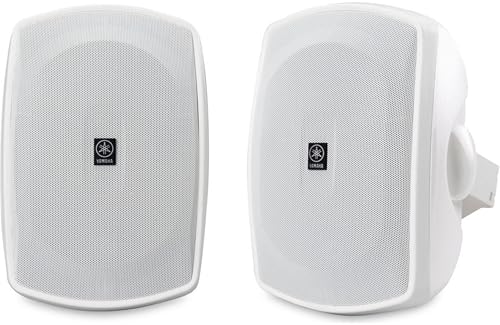 Yamaha NS-AW390 All Weather Indoor/Outdoor 6.5-inch 2-Way SpeakersPair14.2 x 8.8 x 17.6 inches8.3 poundsCheck on Amazon


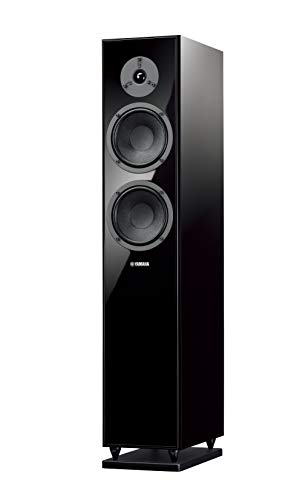
What's inside
- Start With the Amplifier: What the A-S701 Actually Delivers
- Sensitivity Arithmetic: Turning Decibels Into Real Listening Levels
- Impedance Reality: Nominal Labels Versus Minimum Dips
- Bookshelf or Tower: Format Trade-Offs With This Amplifier
- The Amplifier’s Features: Why the Speakers Become the Limit
- Subwoofer Integration Through the Sub Out
- Terminals, Bi-Wiring, and Cable Gauge
- Voicing Families in Specification Terms
- Reading Published Measurements Like an Engineer
- Room Interaction: The Specification Nobody Ships
- Matching Specific Speaker Archetypes to the A-S701
- Check prices on Amazon
- A Final Checklist Ordered by Room, Distance, and Budget
As an Amazon Associate I earn from qualifying purchases. This post may contain affiliate links at no extra cost to you.
Start With the Amplifier: What the A-S701 Actually Delivers
The Yamaha A-S701 is a two-channel integrated amplifier rated at 100 watts per channel into 8 ohms, measured from 20 Hz to 20 kHz with both channels driven and total harmonic distortion held to 0.019 percent. That full-bandwidth rating matters more than the larger dynamic-power figures printed beside it, because it describes sustained output across the whole audible range rather than a brief burst into a single frequency. Any speaker shortlist for this amplifier should begin from that honest 100-watt figure, since it defines the ceiling for clean playback in a typical living room.
A note on how this guide is funded before the technical discussion continues: product links on this page may earn this site a commission from the retailer if a reader buys through them, and that possibility is disclosed here so the recommendations that follow can be judged with the arrangement in the open. The selections and the reasoning rest on published specifications, manufacturer documentation, and measured data released by independent laboratories, and no maker has paid for placement or influenced the order in which options are discussed.
Yamaha also publishes a damping factor of 240, calculated into an 8-ohm load across the 20 Hz to 20 kHz band. Damping factor is the ratio between load impedance and the amplifier’s own output impedance, and a figure this high means the output stage holds a firm electrical grip on the woofer’s voice coil. In practical terms, cone motion after a bass transient stops quickly instead of ringing, which tightens kick drums and double-bass lines. Speakers with loose, underdamped bass alignments benefit most from that control, while already tight sealed designs change less.
The rear panel carries two pairs of speaker terminals, labelled A and B, selected from the front-panel speaker switch. Each pair accepts bare wire, spade lugs, or banana plugs once the protective caps are removed from the binding posts. Running A and B together places the two speaker pairs in parallel, which halves the combined impedance the amplifier sees. Two nominal 8-ohm pairs therefore present a 4-ohm load, and two 6-ohm pairs present roughly 3 ohms, a load this amplifier tolerates only with the impedance selector set correctly and at moderate volume.
That impedance selector sits on the rear panel and offers two positions. In the high position it suits speakers of 6 ohms or higher on a single pair, or 12 ohms or higher per pair when A and B run together. In the low position it covers speakers of 4 ohms or higher singly, or 8 ohms per pair in A plus B mode. The switch does not change the amplifier’s rated power; it adjusts the internal supply behaviour and protection thresholds so the output stage runs safely into heavier current demands.
Setting the selector low for a genuine 4-ohm speaker is not a compromise to avoid but the configuration Yamaha engineered for that load. Owners sometimes leave the switch high out of a vague fear of losing power, yet the manual directs the low setting for low-impedance speakers precisely because current delivery, not voltage swing, becomes the limiting factor. Heat is the tell-tale sign of a mismatch: the top cover of the A-S701 vents through slots, and sustained high-volume listening into a difficult load with the wrong setting warms those vents noticeably faster.
Dynamic power figures in the specification sheet climb as impedance falls, reaching well beyond the continuous rating into 4 and even 2 ohms for short peaks. Those numbers describe musical transients lasting milliseconds, such as the leading edge of a snare hit, and they confirm the power supply has healthy reserves. They should never be used to justify pairing the amplifier with a speaker whose minimum impedance sits near 3 ohms across a wide band, because sustained bass energy, not transient peaks, is what heats output transistors.
The signal-to-noise ratio is quoted at 99 dB for the line inputs with Pure Direct engaged, and the phono stage is specified separately for moving-magnet cartridges. A quiet noise floor like this means efficient speakers will not expose hiss at the listening seat during silent passages, a real consideration with 91 dB sensitivity designs in small rooms. With insensitive 85 dB speakers the volume control simply travels further for the same level, and the noise floor stays equally inaudible because the gain structure is unchanged.
Sensitivity Arithmetic: Turning Decibels Into Real Listening Levels
Speaker sensitivity is conventionally quoted as the sound pressure level produced at one metre with 2.83 volts applied, which equals one watt into an 8-ohm load. An 85 dB speaker therefore produces 85 dB at one metre from a single watt, an 88 dB design produces 88 dB, and a 91 dB design produces 91 dB from that same watt. Because the decibel scale is logarithmic, each doubling of amplifier power adds 3 dB, so reaching a given level with an 85 dB speaker takes four times the wattage required by a 91 dB speaker.
Work the numbers through for the A-S701’s full 100 watts. One hundred watts is 20 dB above one watt, so a single 85 dB speaker reaches about 105 dB at one metre before the amplifier runs out of clean output, an 88 dB speaker reaches roughly 108 dB, and a 91 dB speaker reaches roughly 111 dB. A stereo pair adds approximately 3 dB in a typical room, and boundary reinforcement from nearby walls adds a little more at low frequencies. These are peaks, not continuous levels, and they sit far above sane long-term listening volumes.
Distance erodes those figures quickly. In free-field conditions, sound pressure falls by 6 dB each time distance doubles, so a listener three metres from the speakers loses roughly 9 to 10 dB compared with the one-metre figure, with room reflections returning part of that loss in practice. A realistic planning target is clean 95 dB peaks at the seat for orchestral climaxes or film effects played through a two-channel system. An 88 dB speaker at three metres needs around 25 to 40 watts to hit that target, comfortably inside the A-S701’s envelope.
The same target exposes the weakness of an 85 dB design in a large room. At four metres the arithmetic demands well over 100 watts for 95 dB peaks once room losses are included, which pushes the amplifier to its limit exactly when the music is loudest. The result is not instant failure but a gradual hardening of the sound as the output stage approaches clipping on bass-heavy peaks. Choosing 88 dB or higher sensitivity for listening distances beyond three metres is the single easiest way to keep this amplifier relaxed.
Clipping in a class AB amplifier like the A-S701 begins as a rounding of the waveform’s peaks and progresses to flat-topping as the volume rises further. The distortion products generated are rich in high-frequency harmonics, which is why an underpowered amplifier is a genuine threat to tweeters even when its wattage looks modest on paper. A 100-watt amplifier driven into hard clipping can deliver damaging energy to a tweeter voice coil rated for a fraction of that power. Headroom is therefore a protection feature, not merely a loudness feature.
Musical crest factor complicates the simple arithmetic in the listener’s favour. A well-recorded orchestral track may average 75 dB at the seat while its peaks reach 95 dB, a 20 dB crest that means average power sits near one hundredth of peak power. The amplifier idles along at a watt or two for most of the track and only sprints during climaxes. This is why the A-S701 sounds unstrained with moderately sensitive speakers at normal levels, and why problems appear first on compressed, bass-heavy electronic music played loudly, where crest factor shrinks to 6 dB or less.
Sensitivity figures themselves deserve scepticism. Some manufacturers measure in-room rather than anechoically, some average only the midrange, and some quote the figure for a pair. A speaker honestly specified at 87 dB anechoic may behave like a louder speaker in a small reflective room, while an optimistic 90 dB claim measured under favourable conditions may disappoint. Published independent measurements, when available, usually report sensitivity within a decibel or two of the honest brands and several decibels below the optimistic ones, so treat the printed number as a starting estimate.
Impedance interacts with sensitivity because the 2.83-volt standard delivers more than one watt into low-impedance speakers. Into 4 ohms, 2.83 volts equals two watts, so a 4-ohm speaker quoted at 88 dB per 2.83 volts is really an 85 dB per watt design wearing flattering clothes. When comparing a 4-ohm candidate against an 8-ohm candidate, subtract 3 dB from the low-impedance speaker’s quoted sensitivity to compare efficiency fairly. The A-S701 will still drive it, but the apparent sensitivity advantage evaporates.
Impedance Reality: Nominal Labels Versus Minimum Dips
A speaker’s nominal impedance is a rough average, not a promise. A nominal 8-ohm bookshelf speaker might measure 12 ohms through the midrange, dip to 5.5 ohms in the upper bass where the port tuning and woofer resonance interact, and rise above 20 ohms at its bass resonance peak. The amplifier never sees a tidy 8 ohms; it sees a curve that changes with frequency, and its workload at any moment depends on where the music’s energy sits on that curve. Bass-heavy content concentrates energy exactly where dips usually live.
Phase angle matters as much as magnitude. Where the impedance phase swings strongly capacitive or inductive, voltage and current fall out of step, and the output stage must deliver current at moments when its transistors are least able to dissipate heat. A dip to 4 ohms combined with a phase angle beyond plus or minus 45 degrees in the same region is a genuinely difficult load, sometimes summarised by the EPDR figure used in some published measurements, which can fall near 2 ohms for speakers whose simple impedance minimum looks harmless.
For the A-S701, the comfortable zone is a speaker whose impedance minimum stays at or above roughly 4 ohms and whose worst dips avoid extreme phase angles in the 60 to 200 Hz power band. Most mainstream 6-ohm and 8-ohm bookshelf and tower designs from established makers sit safely in that zone. The speakers that demand caution are certain low-priced towers with twin woofers wired to produce a 4-ohm nominal rating and dips toward 3 ohms, and some exotic designs whose crossovers create severe phase behaviour despite a benign nominal label.
Heat is the long-term consequence of a difficult load. The A-S701 relies on a substantial internal heatsink and natural convection through its vented cover, with no fan assistance. Sustained loud playback into a 3-ohm dip region raises heatsink temperature steadily, and the protection circuit will eventually mute the output if temperatures exceed safe limits. Occasional brief muting during a party is an annoyance; habitual thermal cycling shortens component life. Matching the impedance selector to the speaker and choosing sane speakers prevents the issue entirely.
Six-ohm speakers occupy a friendly middle ground for this amplifier. They draw somewhat more current than 8-ohm designs at a given volume setting, which the A-S701 supplies without complaint on the high selector setting, and many Japanese and European bookshelf models carry this rating. Their sensitivity is often quoted per 2.83 volts, so apply a correction of about 1.2 dB when comparing efficiency against true 8-ohm speakers. In every other respect they behave like conventional loads, and no special wiring or settings are needed beyond the manual’s guidance.
Owners planning to run two pairs simultaneously should re-read the parallel-load arithmetic before shopping. A pair of 8-ohm speakers in the main room and a pair of 6-ohm speakers elsewhere combine to roughly 3.4 ohms, which falls below the manual’s guidance for A plus B operation even on the low setting. The safer pattern for multi-room listening from this amplifier is two pairs of true 8-ohm speakers, or a single pair plus a separate solution for the second room. Speaker choice for the second zone is therefore constrained by the first. best 8 ohm bookshelf speakers
Bookshelf or Tower: Format Trade-Offs With This Amplifier
A typical two-way bookshelf speaker with a 130 to 165 mm woofer reaches a minus 3 dB point somewhere between 55 and 70 Hz in free space, while a comparable tower with twin woofers and a larger cabinet extends to 38 to 48 Hz. That extra octave of genuine bass changes how kick drums, bass guitars, and orchestral weight register without a subwoofer. The A-S701 has the current delivery to exploit a tower’s extra bass drivers, provided the tower’s impedance curve stays civilised, which most mainstream designs manage despite their extra drivers.
Cabinet volume explains most of the difference. A tower’s taller enclosure gives the designer room for a longer port, a larger internal volume, or a transmission-line path, all of which lower the bass cutoff for a given driver. Bookshelf speakers fight physics with smaller boxes, accepting higher cutoffs or lower efficiency. Designers can trade sensitivity for bass in a small cabinet, which is why some compact speakers with impressive quoted bass extension also carry 84 or 85 dB sensitivity and lean harder on the amplifier.
Stand height determines whether a bookshelf speaker performs as designed. The tweeter should sit at ear level for a seated listener, typically 95 to 105 centimetres from the floor, which means stands of about 60 centimetres for most bookshelf models once the cabinet height is added. A bookshelf speaker placed on an actual bookshelf or sideboard usually ends up too low or too high, tilting its vertical dispersion away from the listener and dulling the treble. Budget for proper stands as part of a bookshelf purchase, filled with sand or shot if the maker allows it.
Towers solve the height problem by construction, with tweeters factory-placed near seated ear level, and they add stability that top-heavy stand-mounts cannot match in homes with children or large dogs. Their footprint is often no larger than a stand’s base, so the common belief that towers need more floor space is mostly wrong; they need more visual tolerance, not more area. In rooms under about 12 square metres, however, a tower’s extra bass output can overwhelm the space, exciting room modes that a bookshelf speaker leaves alone.
Room size should steer the format decision more than budget does. In a small study or bedroom of 8 to 12 square metres, a quality bookshelf pair on stands, pulled 30 to 50 centimetres from the rear wall, gives balanced bass and precise imaging at the short listening distances involved. In a 20 to 35 square metre living room, towers fill the volume with less amplifier effort and deliver the scale that large spaces absorb. The A-S701 drives either format happily; the room, not the amplifier, is the constraint.
Placement flexibility differs between formats in ways specifications hint at. Rear-ported bookshelf speakers need breathing room behind them or their bass becomes thick and one-note; front-ported and sealed designs tolerate placement close to a wall or on a console. Towers are almost always ported, many through the base or rear, and most need 30 centimetres or more of rear clearance. Measure your intended positions before choosing, because a theoretically superior speaker squeezed against a wall will lose to a lesser speaker placed correctly every time. best 5 25 bookshelf speakers
Imaging behaviour also splits along format lines. A compact bookshelf cabinet presents a narrow baffle that diffracts less and disappears more completely, producing the pinpoint stereo images that nearfield and small-room listeners prize. Towers with wide baffles and multiple drivers must manage driver integration carefully, and the best designs do, but at a given budget the bookshelf usually images more precisely while the tower plays deeper and louder. Listeners who value image focus over bass weight, and who sit close, should weight the bookshelf’s strengths accordingly.
The Amplifier’s Features: Why the Speakers Become the Limit
Pure Direct mode bypasses the tone controls, balance, and loudness circuitry, shortening the signal path and dropping the already low noise floor further. With Pure Direct engaged, the A-S701 contributes so little coloration of its own that differences between speakers stand in full relief; a bright speaker sounds bright and a warm speaker sounds warm, with nowhere for either to hide. This transparency is the core reason speaker selection matters so much with this amplifier: the electronics deliberately step aside, leaving the transducers as the dominant voice of the system.
The continuously variable loudness control deserves explanation because it changes how speakers behave at low volume. Human hearing loses sensitivity to bass and treble at low levels, so the control progressively boosts the frequency extremes as volume falls, using a variable curve rather than a simple loudness button. Speakers with a naturally lean bass balance can sound fuller during late-night listening with modest loudness compensation, while bass-heavy towers may need none. The control effectively widens the range of speaker voicings that remain satisfying at apartment-friendly volumes.
Tone controls with sensible turnover frequencies let owners trim room problems rather than speaker problems. A room with extensive glass and bare floors adds treble energy that the treble control can tame by a few decibels, rescuing a metal-dome speaker that would otherwise fatigue. Conversely, a heavily furnished room absorbs treble, and a gentle lift restores presence to a soft-dome design. These adjustments are blunt instruments with wide curves, so they correct broad balance trends only; they cannot fix a narrow resonance or a ragged midrange, which remain the speaker’s own responsibility.
The moving-magnet phono input accepts cartridges with outputs in the typical 2.5 to 5 millivolt range and applies RIAA equalisation internally. Vinyl listeners should note that the phono stage’s overload margin and noise performance are respectable for an integrated amplifier at this level, so the speakers will reveal record surface noise and cartridge character faithfully. Efficient speakers make low-level vinyl hiss more apparent during quiet passages, a minor trade-off that the loudness and tone facilities can soften but not erase.
Digital sources enter through optical and coaxial inputs feeding an internal DAC, alongside the analogue line inputs and a front-panel headphone socket. The DAC stage resolves standard and high-resolution PCM streams, so streaming and CD sources arrive at the power amplifier cleanly. Once again the pattern repeats: every source path in the A-S701 is competent and neutral enough that money spent improving the speakers returns more audible change than money spent on source upgrades, at least until the speakers reach a genuinely high standard.
A recording output loop and a pre-out style subwoofer connection round out the connectivity, and the amplifier supports a remote control with source selection. None of these features colour the sound, but they shape system planning: the subwoofer output in particular invites the small-speaker-plus-subwoofer architecture examined next. Owners should view the A-S701 as a stable platform expected to serve through several speaker upgrades, which argues for buying the best speakers the room and budget allow rather than treating them as a temporary match.
Subwoofer Integration Through the Sub Out
The A-S701 provides a dedicated subwoofer pre-out on its rear panel, a mono line-level feed taken after the volume control so the subwoofer tracks the main speakers’ level as volume changes. The output is full-range rather than low-pass filtered inside the amplifier, which means the subwoofer’s own crossover control must be set to blend with the main speakers. This arrangement is standard for two-channel integrated amplifiers and works well once the owner understands that all bass management happens in the subwoofer itself.
Set the subwoofer’s low-pass filter near the main speakers’ natural rolloff. Bookshelf speakers with a 65 Hz cutoff blend well with a subwoofer crossover between 60 and 80 Hz, letting the subwoofer handle the region where the small woofers strain. Towers rated to 40 Hz can run full-range with the subwoofer crossed at 40 to 50 Hz merely reinforcing the bottom octave, or the owner can leave the subwoofer off for music and engage it for films. Because the A-S701 applies no high-pass filter to the main speakers, they always receive the full signal regardless of subwoofer settings.
That absence of a high-pass filter has a real consequence for small bookshelf speakers. Their woofers still attempt deep bass they cannot reproduce, consuming cone excursion and amplifier power on signals that emerge mostly as distortion. A subwoofer relieves the perceived bass burden and cleans up the midrange by filling the bottom, but it does not unload the bookshelf woofers electrically. Owners pursuing very high levels from compact speakers should recognise this ceiling; the combination plays deeper, not dramatically louder, than the bookshelves alone.
Phase and placement decide whether the blend succeeds. Most subwoofers offer a phase switch or variable control; the correct setting is the one that produces the strongest, smoothest bass at the listening seat through the crossover region, and it changes with subwoofer position. Corner placement maximises output and excites all room modes, while placement along a wall near the main speakers usually integrates more evenly. A single subwoofer placed asymmetrically can also even out seat-to-seat variation less well than two smaller units, an upgrade path the single pre-out supports through a Y-splitter cable.
Level calibration needs no instruments beyond patience. Start with the subwoofer gain low, play familiar bass-rich music, and raise the gain until the bass foundation firms up without drawing attention to the subwoofer’s location. If individual bass notes boom while others vanish, the problem is placement or room modes rather than level, and moving the subwoofer a half metre often helps more than any control. The goal is a system where the speakers appear to produce the deep bass themselves, which is the signature of a correct blend.
For tower owners, the subwoofer question inverts: the issue is not missing bass but uneven bass. Large rooms and square rooms generate standing waves that leave some seats bass-heavy and others bass-light, and a subwoofer placed independently of the towers can fill the nulls. Running towers full-range alongside a carefully placed subwoofer crossed low is a legitimate high-performance arrangement, not an admission of failure. The A-S701’s sub out makes the experiment cheap to try with any powered subwoofer borrowed or bought on return terms. best 1000 tower speakers
Terminals, Bi-Wiring, and Cable Gauge
Many mid-range speakers provide two pairs of binding posts joined by metal straps, enabling bi-wiring or bi-amping. With the A-S701, the honest assessment is that bi-wiring from a single amplifier changes nothing electrical that matters: both cable runs originate at the same amplifier terminals, so the crossover sections share the same source. Removing the straps and running separate cables may tidy a setup, but owners should not expect the transformation sometimes claimed for the practice. Keep the straps clean and tight, and spend remaining budget on the speakers themselves.
The A plus B trick is the one legitimate use of the second terminal pair with a single speaker pair: connect the A terminals to the woofers’ posts and the B terminals to the tweeters’ posts, remove the straps, and select A plus B. This is bi-amping only in the loosest sense, because both outputs come from the same power amplifier stage inside the A-S701; the A and B terminals are parallel taps, not separate amplifiers. The arrangement doubles cable cost for no additional power, so it ranks as harmless experimentation rather than a recommended upgrade.
Banana plugs offer convenience and consistent contact pressure, and the A-S701’s posts accept them once the small plastic caps in the post centres are prised out, a step the manual describes for regions where the caps are fitted. Bare wire works equally well electrically if the strands are twisted neatly, kept free of strays that could short adjacent terminals, and re-tightened after a week as the copper settles. Spade lugs suit owners who swap speakers often. Whichever method is chosen, a short circuit across the terminals is the one wiring error that can damage the amplifier, so inspect every connection before powering on.
Cable gauge follows run length and speaker impedance. For runs up to about 8 metres into 8-ohm speakers, 16-gauge copper keeps resistance losses below audibility; extend to 15 metres and 14-gauge becomes the prudent choice. Low-impedance 4-ohm speakers double the current for a given power, so step one gauge thicker for equivalent runs. The governing principle is keeping total cable resistance under roughly five percent of the speaker’s impedance, which preserves the amplifier’s effective damping factor and prevents thin cables from acting as tone controls that dull the bass.
Exotic cable construction matters far less than these basics. Oxygen-free copper of adequate gauge, sound terminations, and sensible routing away from mains cables deliver everything the A-S701 and its speakers can use. Owners tempted by costly cables should first confirm stand height, placement, and room treatment, each of which changes the sound more than any cable swap at sane price levels. A measuring check also helps: if one channel sounds quieter, swap cables at the amplifier end to see whether the fault follows the cable or stays with the speaker.
Voicing Families in Specification Terms
Tweeter material shapes the top octave’s character in ways frequency-response graphs partially reveal. Soft domes of silk or treated fabric typically show a smooth response with a gentle rolloff above 15 kHz and well-controlled breakup behaviour outside the audible band. Metal domes of aluminium, titanium, or beryllium extend flatter to 20 kHz and beyond, with breakup resonances pushed higher in frequency, but a poorly managed metal dome can emphasise the 8 to 12 kHz presence region in a way listeners describe as brightness. The dome material alone does not decide the outcome; crossover design and waveguide shaping matter as much.
Ring radiators and planar magnetic tweeters occupy their own niches. Ring radiators offer wide dispersion and low distortion at high frequencies in compact packages, while planar and ribbon designs present a large radiating area with very low moving mass, giving fast transient response and, in the case of true ribbons, narrower vertical dispersion that reduces ceiling reflections. In a room with a low reflective ceiling, that vertical control is a genuine advantage. In a room where listeners move around, wide-dispersion domes keep the tonal balance steadier off-axis.
Woofer cone materials carry their own signatures. Paper and paper-composite cones break up gradually and are often paired with simple crossovers, polypropylene cones offer consistency and weather resistance at modest cost, and woven or metal cones stay pistonic to higher frequencies but demand steeper crossover slopes to hide their breakup peaks. None of these is inherently superior; the published frequency response and distortion figures of the finished speaker reveal how well the designer managed the chosen material’s behaviour. Judge the complete measurement set, not the material story.
Ported and sealed alignments define the bass character more than any other single choice. A ported design uses a tuned vent to extend bass and raise efficiency near the tuning frequency, then rolls off steeply below it; driven hard below tuning, the woofer unloads and distortion climbs quickly. A sealed design rolls off gently, keeps cone control at the lowest frequencies, and often sounds tighter in small rooms, at the cost of output and extension. With the A-S701’s high damping factor, sealed speakers sound particularly controlled, while ported designs gain welcome weight in larger spaces.
Room brightness should arbitrate between voicing families. A bright room with hardwood, glass, and minimal soft furnishing adds its own treble emphasis, favouring soft-dome speakers with a slightly shelved-down top octave. A dead room full of upholstery, carpet, and curtains absorbs treble, letting a metal-dome speaker’s extra air and detail through without fatigue. The A-S701’s neutrality means it will not correct a mismatch in either direction, although its treble control can trim a few decibels of excess or shortage at the extremes of the range.
Dispersion width is the under-discussed specification in this matching process. Speakers with narrow, controlled dispersion put less energy into side walls, suiting narrow rooms and listeners who sit centred; speakers with wide dispersion energise the room more, creating a spacious presentation that flatters large spaces but can smear imaging in small ones. Published off-axis measurements, where available, show this behaviour clearly in the horizontal response family. When two speakers measure similarly on-axis, dispersion is often the deciding difference in a real room. best 2 0 passive speakers
Reading Published Measurements Like an Engineer
A frequency-response graph rewards a reader who knows its conventions. The horizontal axis is logarithmic, so the bass decade from 20 to 200 Hz occupies as much width as the decade from 2 to 20 kHz, and small wiggles in the treble represent narrow events while broad tilts in the bass represent wide ones. A speaker that holds within plus or minus 3 dB from 80 Hz to 15 kHz is respectably flat; one that holds plus or minus 2 dB across the same span is genuinely well engineered. Compare graphs only when the measurement conditions match, because smoothing, microphone distance, and whether the measurement is anechoic or in-room all change the trace.
The listening-window average matters more than the single on-axis curve. Listeners hear the direct sound blended with early reflections, so a measurement family that averages responses across a window of angles around the main axis predicts perceived tonal balance better than the on-axis line alone. A speaker with a flat on-axis response but ragged off-axis behaviour will sound coloured in a reflective room, because the reflections carry a different spectrum from the direct sound. When a manufacturer or a review publishes a full spin of off-axis curves, study the trend of the family rather than hunting for a single perfect line.
Distortion measurements separate good speakers from loud ones. Total harmonic distortion below one percent through the midrange at a 90 dB test level indicates a driver operating comfortably within its linear range, while distortion that climbs past three percent in the upper bass warns that the woofer is running out of excursion or the port is beginning to compress. Multitone and intermodulation tests are harsher still, revealing how a woofer’s bass output modulates the midrange it simultaneously reproduces. Two-way speakers asked to play deep bass loudly suffer most here, which is a technical argument for crossing bookshelf speakers to a subwoofer.
Cumulative spectral decay, often called a waterfall plot, shows how long the speaker keeps sounding after the signal stops. Clean plots fade quickly and evenly, while ridges that persist at particular frequencies reveal resonances in cones, cabinets, or ports storing energy and giving it back late. A ridge near a cone’s breakup frequency confirms what the response graph hints at. These plots explain why two speakers with near-identical frequency response can differ in clarity: the one that stops sooner sounds cleaner on transients and dense mixes, even though a simple response comparison calls them equal.
Cabinet construction shows up in measurements as well as in knuckle tests. A well-braced enclosure with walls of 18 mm or thicker medium-density fibreboard, plus internal damping material, keeps panel resonances low in level and pushes them where they mask less. Some designs use curved walls, laminated layers, or constrained-layer damping to the same end. The practical test in a showroom is crude but useful: rap the side panel and listen for a hollow boom versus a short, dead thock, then check the published weight, because inert cabinets are rarely light for their size.
Crossover Design, the Hidden Half of Every Speaker
The crossover divides the signal between drivers and shapes each driver’s response, and its order describes how steeply it filters. First-order networks use a single component per driver and roll off at 6 dB per octave, demanding drivers that behave well far outside their assigned band. Fourth-order designs roll off at 24 dB per octave, protecting tweeters firmly and confining woofers below their breakup, at the cost of more components and more phase rotation through the crossover region. Neither is automatically better; the measured result around the crossover frequency is the verdict.
Crossover frequency placement interacts directly with the A-S701’s workload. A low crossover point near 2 kHz hands more of the power-hungry upper midrange to the tweeter’s side of the network, while a higher point near 3.5 kHz asks the woofer to play further into its beaming and breakup region. What matters for the amplifier is the impedance the completed network presents: crossovers with impedance-compensation components flatten the load, while minimal networks can leave dips and peaks that the amplifier must drive. Published impedance curves therefore describe the crossover as much as the drivers.
Component quality inside the crossover is a legitimate specification topic. Air-core inductors avoid the saturation that iron-core parts can introduce at high power, film capacitors hold their values over decades where electrolytic types drift, and non-inductive resistors keep the network behaving at high frequencies. None of this is visible from outside the cabinet, which is why teardown photographs and detailed reviews carry weight. A speaker whose crossover uses film capacitors throughout and generously rated inductors is signalling engineering budget spent where it protects long-term consistency.
Room Interaction: The Specification Nobody Ships
Every room imposes its own response curve on the speakers placed in it. Below the room’s transition frequency, often somewhere between 200 and 300 Hz in domestic spaces, standing waves dominate and the response at the seat depends on where the speakers and the listener sit relative to the room’s dimensions. Peaks and nulls of 10 dB or more are normal in this region and no speaker choice eliminates them. Moving the speakers or the seat by half a metre changes the pattern measurably, which is why placement experiments outperform equipment swaps for bass problems.
The speaker boundary interference response is the predictable dip caused by the reflection from the wall behind the speaker arriving out of phase with the direct sound. A speaker 60 centimetres from the rear wall suffers a cancellation centred near 140 Hz; at one metre the dip moves near 85 Hz. Designers of wall-friendly speakers sometimes build compensation for a specific placement into the crossover, and some speakers offer boundary switches or port plugs for this purpose. Port plugs, usually foam bungs supplied in the box, convert a ported speaker toward sealed behaviour and are the correct first response to boomy bass near walls.
Toe-in trades image focus against tonal balance. Aiming the speakers directly at the listener puts the flattest on-axis response at the seat and sharpens the centre image, while reducing toe-in softens the treble for speakers with a rising top end and widens the soundstage at some cost to focus. Because dome tweeters narrow their dispersion at the highest frequencies, listeners seated off-centre hear a duller balance from the far speaker; crossing the speakers’ axes in front of the listening position is a recognised remedy in wide seating arrangements. Experiment in small angular steps, since five degrees is audible.
Floor and ceiling reflections deserve the same attention as walls. A thick rug between the speakers and the seat absorbs the floor bounce that otherwise smears midrange clarity, and it costs less than any equipment change. Ceiling reflections matter most with speakers whose vertical dispersion is wide; ribbons and planars, with their naturally narrow vertical pattern, sidestep much of this. Listening height interacts too: stand-mounts on stands that place the tweeter below ear level tilt the perceived balance toward dullness, because most two-way speakers are voiced for an axis at or between the tweeter and the midpoint of the drivers.
Symmetry is the cheapest acoustic treatment available. A system placed asymmetrically, with one speaker near a side wall and the other in open space, produces a lopsided image that no balance control fully repairs, because the two channels’ reflection patterns differ in timing as well as level. Where the room forces asymmetry, bring the nearer speaker’s output down slightly, increase its toe-in, and add absorption at the first reflection point on the close wall. The A-S701’s balance control handles the level part of this correction; the rest is furniture and patience.
Matching Specific Speaker Archetypes to the A-S701
Consider the classic efficient tower archetype: twin 165 mm woofers, a soft-dome tweeter in a shallow waveguide, 90 dB sensitivity, and a 6-ohm nominal impedance with a minimum near 4.5 ohms. On the A-S701 this combination reaches high levels with the volume control barely past halfway, the waveguide keeps dispersion controlled in reflective rooms, and the impedance curve never troubles the high selector setting. Its bass reaches the low 40 Hz region, enough for most music without a subwoofer. This archetype suits the amplifier so well because every one of its specifications lands in the amplifier’s comfort zone simultaneously.
Now consider the compact low-sensitivity archetype: a 130 mm woofer in a small sealed cabinet, 84 dB sensitivity, bass rolling off from 75 Hz, and a benign 8-ohm load. The A-S701 drives it safely and cleanly, and in a desktop or small-room nearfield role it never needs more than a few watts. Its limitations appear only when the room grows or the volume rises, and they appear as amplifier strain rather than speaker failure. Pair it with a subwoofer crossed near 90 Hz and keep listening distances short, and the combination is coherent; ask it to fill a large lounge and no amplifier at this level would rescue it.
A third archetype, the large vintage-style bookshelf with a 250 mm woofer and 92 dB sensitivity, plays loudly with ease and produces generous bass from its big cabinet, but its impedance may wander and its tweeter may be a simple cone or dome with limited top-octave extension. The A-S701’s damping factor keeps the big woofer disciplined, and the loudness control flatters this style of speaker at low volumes. Owners drawn to this archetype should verify the minimum impedance carefully, since older design schools were casual about low dips that modern amplifiers tolerate less happily.
Horn-loaded designs form a fourth archetype, with sensitivities of 95 dB and beyond from compression drivers and folded or flared horns. With the A-S701, a single watt produces levels that other speakers need sixteen watts to match, so the amplifier cruises and its low noise floor matters: any hiss would be reproduced efficiently too, and the A-S701’s 99 dB signal-to-noise performance keeps backgrounds silent. Horn speakers focus dispersion narrowly, suiting longer rooms and listeners who sit in the sweet spot, and their dynamic ease on orchestral peaks is the closest domestic audio comes to the behaviour of live unamplified sound.
One more specification deserves a place in the notebook: the A-S701’s frequency response is quoted as 10 Hz to 100 kHz within a decibel for the line inputs, far wider than any speaker in this discussion can reproduce. That bandwidth is not about audible extension; it indicates an amplifier whose behaviour inside the audible band is unforced and free of early rolloff at either extreme. When a system sounds dull or boomy, the cause therefore sits downstream, in the speakers or the room, and troubleshooting should start there rather than with cable swaps or source changes.
Speaker break-in is often overstated, but the mechanical reality behind it is simple: a new woofer’s suspension is stiff, and its compliance loosens measurably over the first hours of use, typically lowering the resonant frequency slightly and adding a little bass weight. The change is a few percent, not a transformation, and it never rescues a mismatched pairing. Judge a new speaker’s balance after a weekend of ordinary listening rather than in the first ten minutes, and make placement decisions only after that settling period, because early impressions of lean bass often correct themselves.
Check prices on Amazon
Live listings for the shortlist in this guide are pulled from Amazon below, so prices and availability are always current at the moment you look.


A Final Checklist Ordered by Room, Distance, and Budget
Begin with the room. Measure its dimensions, note the surfaces, and decide where the speakers can realistically stand, including their distance from rear and side walls. Rooms under 12 square metres point to bookshelf speakers on stands or a compact tower with modest bass output; rooms from 12 to 25 square metres accept either format; rooms beyond 25 square metres reward towers or bookshelves reinforced by a subwoofer. Write the room’s constraints down before reading a single product page, because they eliminate half the market immediately and correctly.
Next, fix the listening distance and let it set the sensitivity floor. Under two metres, even an 85 dB speaker reaches satisfying peaks on the A-S701’s power. Between two and three and a half metres, target 88 dB or better. Beyond three and a half metres, or in rooms where films and dynamic music feature heavily, insist on 90 dB or a plan that includes high sensitivity as a deliberate priority. Cross-check every candidate’s sensitivity claim for the 4-ohm measurement trick described earlier before trusting the comparison.
Then verify the impedance story for each surviving candidate. Look for a published impedance curve or at least a stated minimum impedance, and prefer designs whose minimum stays at or above 4 ohms without severe phase angles in the bass. Set the A-S701’s impedance selector to match the lowest-impedance speaker you will connect, remembering the stricter arithmetic if a second pair will ever run simultaneously. A speaker that fails this check is not a bargain at any price, because it taxes the amplifier on every loud passage.
Decide the bass strategy explicitly. If the room and format deliver adequate bass alone, keep the system simple and spend the whole budget on the main speakers. If bookshelf speakers are chosen for a larger room, reserve part of the budget for a powered subwoofer and the time to integrate it through the A-S701’s subwoofer output. If towers are chosen, confirm their bass output suits the room rather than overwhelming it, and remember that a subwoofer can still join later to smooth room modes even when extension is already sufficient.
Budget tiers are best described by what they buy rather than by figures. The entry tier buys competent two-way bookshelf speakers with honest sensitivity and civilised impedance, a combination that already flatters this amplifier. The middle tier buys better drivers, stiffer cabinets, and either refined bookshelves or honest towers with genuine 40 Hz extension. The upper tier buys low-distortion drivers, carefully engineered crossovers, and finishes that survive a decade of ownership. At every tier, stands, cable of adequate gauge, and placement effort belong inside the budget, not as afterthoughts.
Finally, plan the wiring and the first evening’s setup before the speakers arrive. Confirm banana plug or bare-wire termination at both ends, order cable one gauge thicker than the minimum for your longest run, and clear the stands or floor positions in advance. When the speakers land, set the impedance selector first, connect with the amplifier powered off, begin at low volume with Pure Direct engaged, and only then experiment with loudness compensation and tone trims. That order of operations protects the equipment and gives the new speakers a fair first hearing.
Match the speakers to the room you actually have, let the A-S701 do the quiet, neutral work it was designed for, and the system will reward every record you own.

